Tag: Injury

  • Maritime Expert’s Testimony on Security Staff Excluded

    Maritime Expert’s Testimony on Security Staff Excluded

    On January 10, 2025, Plaintiffs filed their First Amended Complaint against Defendant, alleging they suffered injuries when a wholly unprovoked group of highly intoxicated passengers (“the Aden Family”) physically assaulted and battered them while attending a “White Party” on the Defendant’s Vessel. The Plaintiffs, other than Daniella Dos Santos Vieira (“Plaintiff”), settled their claims with Defendant. As a result, the First Amended Complaint’s three remaining claims are: general negligence (Count I), negligent failure to warn (Count V), and premises liability (Count IX).

    Defendant sought to strike the proposed testimony of Plaintiff’s expert, Ronald J. Thomason.
    Maritime Expert Witness

    Ronald J. Thomason has over 25 years of experience in providing security assessment, planning, and training services to commercial maritime industry, government, and law enforcement personnel responsible for oversight and enforcement of regulatory compliance of security standards and practices.

    Discover more cases with Ronald Thomason as an expert witness by ordering her comprehensive Expert Witness Profile report.

    Discussion by the Court

    In preparing his report, Thomason reviewed the Cruise Vessel Security and Safety Act of 2010 (“CVSSA”), the International Ship and Port Facility Security (ISPS) Code, as well as various case documents.

    First, Thomason opined that Defendant did not have enough security staff dedicated to provide a presence for deterrence and appropriate response at the “White Party”. Second, Thomason opined that Defendant did not comply with the requirements of the CVSSA. Third, Thomason opined that the Plaintiffs acted reasonably in response to a foreseeable and preventable unprovoked attack. Fourth, Thomason opined that Defendant failed to follow its own published policy, and the “White Party” bar staff failed to follow the established procedures for identifying inebriated guests, terminating their consumption of alcohol, and notifying security of their possible threat to the safety and enjoyment of other event attendees. Fifth, Thomason opined that had Defendant complied with the requirements of the CVSSA, this incident could have been detected and deterred before escalating into a physical assault.

    I. Methodology and Helpfulness

    First Opinion

    First, Thomason opined that based on his years of training, education, and experience Defendant did not have enough security staff present for deterrence. He opined that all of Defendant’s security staff are required to be trained in the CVSSA, which provides specific instruction on the detection, prevention, evidence collection, and reporting of specific criminal threats.

    However, the Court found that Thomason’s opinion improperly relied upon regulations that are inapplicable based on the facts of this case.

    As to Thomason’s suggestion that more security would have prevented the altercation, Thomason did not explain how additional security would have prevented the sudden punch in this case. To the contrary, the CCTV camera shows at least two employees in the vicinity of Plaintiff and her assailant at the time of the punch.

    Second Opinion

    Thomason’s second opinion is that Defendant failed to comply with the requirements of the CVSSA. As the Court previously determined, the CVSSA is not implicated because the incident does not involve a homicide, kidnapping, sexual assault, suspicious death, theft of money over $10,000, or a physical assault with serious bodily injury.

    Third Opinion

    Thomason’s third opinion is that, based on his experience, Plaintiff acted reasonably in response to a foreseeable and preventable unprovoked physical attack. Thomason’s opinion relied only on his experience. Moreover, his opinion did not explain how his experience led to that conclusion, why his experience is a sufficient basis for the “reasonable” actions of the Plaintiff or the “foreseeability” of the assault.

    Fourth Opinion

    Thomason’s fourth opinion argued Defendant failed to follow its own published policy. However, Thomason failed to articulate what these established procedures are, how the bar staff failed to follow them, or how the unreferenced procedures would have prevented the sudden punch thrown at Plaintiff.

    Fifth Opinion

    Fifth, Thomason opined that had Defendant complied with the CVSSA and Defendant’s published policies for dealing with the intoxicated guests, this incident would have been detected and deterred prior to ever escalating into a fight. However, this summation of Thomason’s prior opinions is entirely speculative and not rooted in a methodology that relies on anything other than his experience.

    The Court found that Thomason’s analysis lacked a reliable methodology and would not be helpful. 

    Held

    The Court granted Defendant’s Daubert motion to strike the testimony of Ronald J. Thomason.

    Key Takeaway

    The trial court’s gatekeeping function requires more than simply taking the expert’s word for it. Moreover, Thomason’s first opinion pivots from security measures to the suggestion that the ship staff was improperly trained on how to detect intoxicated guests. Thomason provided no support for this assertion either in his experience or an applicable regulation.

    Case Details:

    Case Caption: Vieira v. MSC Cruises S.A.
    Docket Number: 1:24cv24991
    Court Name: United States District Court, Florida Southern
    Order Date: July 15, 2026
  • Economics Expert Was Not Allowed to Opine on Punitive Damages

    Economics Expert Was Not Allowed to Opine on Punitive Damages

    Plaintiff Kimberly McKinney filed a wrongful termination action against Land O’Lakes, citing its failure to accommodate her disability and work limitations stemming from injuries she sustained due to an unsafe condition at work.

    Defendant sought to preclude the testimony of Plaintiff’s retained experts Dr. Joseph Penbera and Dr. Julie Armstrong.

    Economics Expert Witness

    Joseph J. Penbera earned a B.A. from Rutgers in 1969, a masters in public administration from The Baruch School (CUNY) in 1970 and a Ph.D. from American University in 1973.

    He is forensic economist whose work has been accepted in local, state, and
    Federal jurisdictions as well as in various international venues.

    Want to know more about the challenges Joseph Penbera has faced? Get the full details with our Challenge Study report.

    Psychology Expert Witness

    Julie Armstrong earned a bachelor of science in nursing from the Consortium of Cal. State Colleges and Universities in 1988, a Masters in nursing/clinical nurse specialist from U.C.L.A. in 1990 with a specialty in psychiatric/mental health nursing, and a Doctor of Psychology degree from Pepperdine University in 1996.

    She has conducted more than a thousand clinical interviews or evaluations for psychological injury or impairment for the Workers’ Compensation Appeals Board in California. As of 2025, she has testified in Court or Administrative hearings approximately 60 times.

    Get the full story on challenges to Julie Armstrong’s expert opinions and testimony with an in-depth Challenge Study.

    Discussion by the Court

    I. MOTION IN LIMINE TO PRECLUDE TESTIMONY BY PENBERA

    Defendant sought to preclude Plaintiff’s expert, Dr. Joseph Penbera, from: (1) testifying to lost wages that allegedly accrued after January 1, 2024 through trial, (2) offering opinions based on unreliable methodology and testifying as to legal conclusions; and (3) testifying as to punitive damages.

    A. Opinions on lost income and benefits since May 28, 2023

    1. Admissibility of Penbera’s expert testimony

    Penbera calculated Plaintiff’s lost income and benefits based on Plaintiff’s past wages. Defendant raised several objections regarding the method Penbera utilized in calculating lost wages, but such objections go to the weight of Penbera’s opinion, not its admissibility. Penbera’s report indicates that, among other information, he reviewed Plaintiff’s earnings statements from “12/23/2018 to 1/13/2024” and from “6/15/2023 to 5/15/2025.” Those include Plaintiff’s earnings statements showing her 2023 income and deductions through May 2023, when she was put on leave or terminated, and showing her 2024 income and deductions through mid-December 2024.

    To the extent the Defendant argued that Penbera relied on incomplete pay data from the relevant years or failed to adequately consider Plaintiff’s earnings in earlier years, “it is not the role of the trial court to evaluate the correctness of facts underlying one expert’s testimony.”

    The Court made it clear that Penbera is not precluded as a general matter from offering expert opinions on Plaintiff’s lost income and benefits.

    2. Lost income and benefits damages based on events occurring between Plaintiff’s 2022 injury and her starting a new position in March 2024

    Defendant asserted that Penbera’s opinions rest “entirely” on 2024 and 2025 factual allegations that are not part of plaintiff’s claims in this action. But that is incorrect. For example, Penbera’s report reflects that, among other data, he considered Plaintiff’s past wages from January through May 2023 in calculating Plaintiff’s lost income for the period from her alleged constructive termination in May 2023 through her starting a new position in March 2024.

    Penbera’s report also included calculations of Plaintiff’s future lost income and benefits after December 2024. But the parties agreed that Plaintiff obtained a new job position with Defendant in March 2024. And while Plaintiff was allegedly terminated from that new position in December 2024, that termination is not part of Plaintiff’s claims in this action. 

    To the extent Plaintiff’s future lost income and benefits are based on Plaintiff’s alleged wrongful termination in December 2024, which is not a claim at issue in this case, testimony as to such damages would not be relevant to Plaintiff’s claims at trial. The Court held that Penbera will be precluded from testifying as to lost income and benefits damages that are due to Plaintiff’s December 2024 termination. However, to the extent certain such future losses are attributable to actions that are the subject of Plaintiff’s claims—for example, Plaintiff’s loss of future benefits due to her lost income in the period from May 2023 to March 2024—then Penbera’s testimony as to such specific future losses would be admissible to that extent.

    B. Punitive Damages

    Defendant argued that Penbera should be precluded from testifying about punitive damages because he was not designated to testify about punitive damages.

    Plaintiff appeared to concede that Penbera cannot provide expert testimony as to punitive damages. Plaintiff did not disclose Penbera as an expert on any punitive damages issue, and Penbera’s expert report did not include an opinion regarding punitive damages. 

    Penbera was therefore precluded from testifying as an expert as to punitive damages and may not offer any opinion as to Defendant’s financial documents or financial condition. Plaintiff did not dispute the exclusion of expert opinion or expert testimony on this issue.

    II. MOTION IN LIMINE TO PRECLUDE TESTIMONY BY ARMSTRONG

    Defendant sought (1) to preclude Plaintiff’s expert Julie Armstrong from testifying as to Plaintiff’s emotional distress and non-economic damages because, Defendant claims, Armstrong’s testimony is based on events in 2024 that are outside the scope of the litigation, (2) to preclude Armstrong’s testimony because it is not based on any medical or employment records, and (3) to preclude Armstrong from offering opinions regarding the causation of Plaintiff’s emotional distress damages.

    Analysis

    First, Defendant argued that Armstrong’s opinions should be precluded because they are based on Plaintiff’s factual allegations concerning events outside the scope of Plaintiff’s claims, including Plaintiff’s assertion that in December 2024 Defendant wrongfully terminated her from her new position, and that in September 2024 Defendant posted graphic photos of Plaintiff’s injury.

    While Defendant argued that Armstrong relied insufficiently on the relevant period in reaching her expert opinions, that is incorrect. Armstrong’s report refers at length to Plaintiff’s account of her circumstances from her injury in November 2022 to her re-hiring by Defendant in March 2024.

    Second, Defendant also objects that Armstrong’s opinion relies solely on her experience and her interview and testing of Plaintiff and not on medical or employment records. This argument likewise goes to the weight of Armstrong’s testimony, not to its admissibility.

    Armstrong explained that her opinion is based largely on her clinical interview of Plaintiff, during which Armstrong administrated the Structured Inventory of Malingered Symptoms (SIMS) and Millon Clinical Multiaxial Inventory-IV (MCMI-IV) tests.

    Third, Defendant sought to preclude Armstrong from offering opinions regarding the causation of Plaintiff’s emotional distress damages. Armstrong was not Plaintiff’s treating provider and did not review Plaintiff’s contemporaneous medical records, and she did not observe Plaintiff’s emotional state or symptoms during the period from 2022 to March 2024.

    But the Court held that Armstrong may testify to her observations of Plaintiff’s emotional distress symptoms and disorder when she evaluated plaintiff in July 2025, and the extent to which plaintiff’s account of her alleged adverse workplace experiences from her 2022 injury to her rehiring in March 2024, if true, could substantially contribute to such ongoing emotional distress symptoms.

    Held

    The Court granted in part and denied in part Defendant’s motions in limine to preclude the testimony of Dr. Joseph Penbera and Dr. Julie Armstrong.

    Key Takeaway

    Under Daubert, the district court is not tasked with deciding whether the expert is right or wrong, just whether his testimony has substance such that it would be helpful to a jury.

    Case Details:

    Case Caption: McKinney V. Land O’Lakes, Inc.
    Docket Number: 1:23cv1304
    Court Name: United States District Court, California Eastern
    Order Date: June 21, 2026
  • Architecture Expert Was Not Allowed to Opine on Toilet Seats

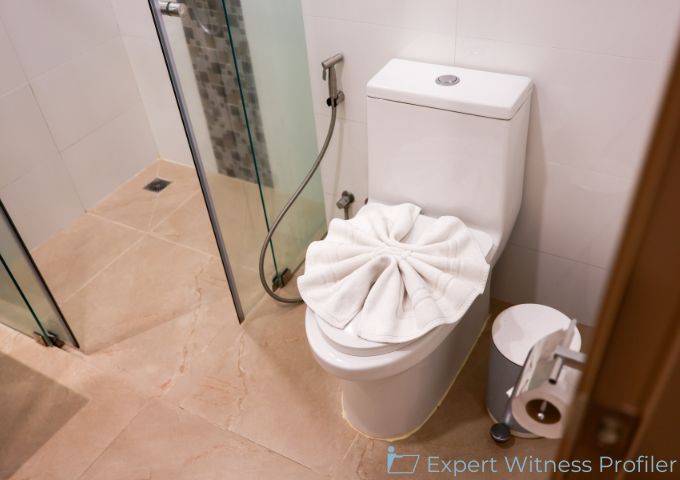
    Architecture Expert Was Not Allowed to Opine on Toilet Seats

    Plaintiff Tony Joyner alleged that on January 19, 2024, he went to a Walmart store located at 8730 Liberty Road, Randallstown, Maryland. While Joyner “was in the process of utilizing the customer restroom facilities . . . the toilet seat disconnected from the toilet bowl, causing him to fall from the toilet, hit his head, and suffer personal injuries.”

    Plaintiff designated licensed architect Sylvia B. Deyé as a liability expert to opine on whether the water closet where Plaintiff’s fall occurred was dangerous in a manner that caused Plaintiff’s fall, and whether Walmart created the dangerous condition.

    Walmart filed a motion to exclude the testimony of Deyé on the grounds that her opinions were not based on scientific, technical, or specialized knowledge; lacked a sufficient factual basis; intruded upon the ultimate issue to be decided by the jury; and encompassed legal conclusions.

    Architecture Expert Witness

    Sylvia Beatrice Deyé has a master’s degree in architecture and is a registered architect in Maryland and other states. She is a member of several professional associations for architects and has over 30 years’ experience working as an architect.

    In connection with her work as an architect, Deyé has selected plumbing fixtures, specified plumbing fixtures on drawings, and inspected plumbing fixtures after installation. Since 2018, Deyé has also served as an expert consultant in commercial and personal injury litigation. 

    Get the full story on challenges to Sylvia Deyé’s expert opinions and testimony with an in-depth Challenge Study.

    Discussion by the Court

    Deyé’s report consisted of four findings. Deyé opined that: (1) “the unsecured toilet seat was unreasonably dangerous”; (2) “Walmart should have known through adequate inspections and cleaning procedures that the incident toilet seat was not secured to the toilet bowl”; (3) Walmart’s “failure to identify that the incident toilet seat was not secure created the unreasonably dangerous condition that was the cause of Joyner’s injury”; and (4) “Walmart’s failure to have replaced the incident toilet seat and identify that the seat was not stable failed to comply with nationally recognized and accepted industry standards for safe plumbing fixtures and created the unreasonably dangerous condition that was the cause of Joyner’s injury.”

    Following a January 15, 2026 site visit to the Walmart store in question, Deyé supplemented her original report. In her supplemental report, Deyé discussed her inspection of the incident toilet, other toilets, and the conclusions of Walmart’s expert, and concluded that the opinions stated in her original report remain unchanged.

    Analysis

    Although Walmart argued that Deyé lacked expertise regarding commercial toilets, her deposition testimony reflected that she had experience inspecting toilets installed in both residential and commercial settings.

    First, Deyé’s observations regarding the method of installing the toilet seat at issue and the fact that an unstable toilet seat can be dangerous are matters of common knowledge.

    Second, the fact that Deyé’s proposed testimony was not based on scientific, technical, or specialized knowledge, rendered it unreliable and thus inadmissible. Deyé offered no more than her own ipse dixit to support her four proffered opinions, which is “the hallmark of an unreliable opinion.”

    The Court held that Deyé’s opinions were not based on specialized or technical knowledge, which detrimentally affected both the relevance and reliability of her proposed testimony.

    The opinions offered in Deyé’s supplemental report were also excluded. Because Deyé’s supplemental report sought to “add information that is missing from the original report” and does “not attempt to correct the original report because it is misleading,” it is untimely.

    In her supplemental report, Deyé noted that during her site inspection—which occurred nearly two years after the incident in question—she observed that toilet seats in the men’s and women’s restrooms were not secured. The condition of the restrooms, one of which is not at issue in this case, nearly two years after the fact has no bearing on whether Walmart had actual or constructive notice of the defective condition at the time Joyner was injured.

    Held

    The Court granted Defendants’ motion to exclude the testimony of Sylvia B. Deyé.

    Key Takeaway

    Installing a toilet seat does not require specialized or technical knowledge. Accordingly, Deyé’s testimony on this issue was not helpful to the jury and warranted exclusion.

    Case Details:

    Case Caption: Joyner V. Walmart, Inc.
    Docket Number: 1:25cv1300
    Court Name: United States District Court for the District of Maryland
    Order Date: June 03, 2026
  • Law Enforcement Expert Was Not Allowed to Opine on the Officers’ Intent

    Law Enforcement Expert Was Not Allowed to Opine on the Officers’ Intent

    This case arises from officers’ alleged excessive use of force during an investigation of a 911 call regarding Plaintiff Henry Barnhill (“Barnhill”).

    Defendants City of Hemet, Brett Maynard, Joshua Bishop, Pedro Aguila, Douglas Klinzing, Jamie Gonzalez, and Catherine Tipton (collectively, “Defendants”) filed two motions (1) to exclude certain opinion and testimony of expert Dr. Ryan O’Connor and (2) to exclude certain opinion and testimony of expert Roger Clark.

    Emergency Medicine Expert Witness

    Ryan Scarritt O’Connor is a 20-year attending ER physician who is board-certified and has completed several clinical rotations in neurology, ophthalmology, biomechanics, general surgery, and traumatic medicine, among others, and holds a Master of Science in criminalistics with education in crime scene reconstruction.

    Discover more cases with Ryan O’Connor as an expert witness by ordering his comprehensive Expert Witness Profile report.

    Law Enforcement Expert Witness

    Roger Alma Clark is a retired law enforcement professional with 27 years of experience in the Los Angeles County Sheriff’s Department (LASD). He was hired on December 1, 1965, and served until his retirement on March 31, 1993. Throughout his distinguished career, he held several key positions, including six years as a Deputy Sheriff, six years as a Sergeant, and 15 years as a Lieutenant. Roger retired with a California Peace Officer Standards and Training (POST) Advanced Certificate and is a graduate of the POST Command College, class #5, 1988.

    Get the full story on challenges to Roger Clark’s expert opinions and testimony with an in-depth Challenge Study.

    Discussion by the Court

    Ryan O’Connor

    Defendants sought to exclude the opinions of Barnhill’s medical expert, O’Connor, regarding his conclusions that the incident resulted in Barnhill sustaining certain injuries.

    Defendants based their arguments on the fact that (1) O’Connor is an ER doctor, rather than a specialist in ophthalmology; (2) O’Connor relied more heavily on the officers’ statements as opposed to the video evidence; and (3) O’Connor failed to take into consideration all of Barnhill’s medical history. However, given O’Connor’s education, credentials, and experience, the Court held that Defendants’ concerns speak to the weight, rather than admissibility under FRE 702 and Daubert.

    Roger Clark

    To begin with, Defendants sought to exclude opinions by Barnhill’s police-practices expert, Roger Clark, regarding his “legal conclusions concerning the officers’ use of force, standards within the City of Hemet and the Hemet Police Department, the officers’ mental and emotional states and intentions, interpretations of the videos taken from officers’ body cameras, and all other conclusions and opinions based on Clark’s flawed methodology, which omits important information contained in the footage and is admittedly impermissibly intertwined with Plaintiff’s counsel’s opinions.”

    To the extent that Clark offered legal conclusions, such as that the officers used unreasonable or excessive force during the incident, the Court granted the motion to exclude. Clark was also precluded from opining on the officers’ intent or emotional states and on the medical cause of Barnhill’s injuries.

    However, to the extent that Clark’s testimony was limited to whether the officers’ conduct was consistent with California Peace Officer Standards and Training (“POST”) standards governing the use of force, the Court denied the motion. This basically included determinations based on Clark’s review of the video evidence demonstrating how Barnhill was responding during the incident, which were relevant to whether the officers’ conduct comported with POST standards in light of Barnhill’s actions.

    Held

    • The Court denied Defendants’ motion to exclude the testimony of Ryan O’Connor.
    • The Court granted in part and denied in part the motion to exclude the testimony of Roger Clark.

    Key Takeaway

    In conclusion, a jury could rely on expert testimony as to whether police conduct comported with POST standards.

    Case Details:

    Case Caption: Henry Barnhill V. City Of Hemet
    Docket Number: 5:23cv589
    Court Name: United States District Court, California Central
    Order Date: June 03, 2026
  • Orthopedic Surgery Expert Not Allowed to Opine on Foot and Ankle Swelling

    Orthopedic Surgery Expert Not Allowed to Opine on Foot and Ankle Swelling

    On October 5, 2022, Plaintiff John Caton, then 77 years old, was crossing the street, when he was struck by a USPS postal truck. Plaintiff claimed injury to and future medical care needs for not just his right hip and cervical spine, but also for his right shoulder, right foot and ankle, right thumb, and spine. While the parties agreed that Plaintiff injured his hip in the collision and required treatment, the parties disputed which of his other body parts were injured due to the collision, as well as the appropriate course of treatment.

    Plaintiff submitted expert reports from two retained experts in this case: Dr. Piers Barry, an orthopedic surgeon who examined Plaintiff and his medical records; and Dr. Kelly S. Harvey, a life care planner who estimated medical costs. Barry submitted five expert reports in this case, dated: November 29, 2024; December 20, 2024; April 8, 2025; July 31, 2025; and September 16, 2025. The April 8, 2025 and July 31, 2025 reports contain his causation opinions. Harvey’s life care plan report estimated the cost of carrying out Dr. Barry’s treatment plan. 

    Defendant United States filed a motion to exclude certain testimony of Plaintiff’s experts.

    Orthopedic Surgery Expert Witness

    Dr. Piers A. Barry is a board certified orthopedic surgeon with extensive clinical and hands on experience. He has published scientific journal articles and has given presentations on subjects such as arthroscopic treatment of knee, shoulder, and ankle, and hip injuries. Barry is a member of the Arthroscopy Association of North America (AANA).

    Discover more cases with Piers Barry as an expert witness by ordering his comprehensive Expert Witness Profile report.

    Life Care Planning Expert Witness

    Kelly Sandy Harvey is a credentialed and certified Life Care Planner. She specializes in the treatment of complex orthopedic trauma, traumatic brain injury, spinal cord injury, amputations, and burns.

    Want to know more about the challenges Kelly Harvey has faced? Get the full details with our Challenge Study report.

    Discussion by the Court

    A. Barry’s Opinion

    Defendant sought to exclude certain expert testimony from Barry and Harvey for four reasons: 1) Barry’s causation opinions for Plaintiff’s foot, ankle, shoulder, and thumb injuries were unreliable; 2) Barry’s opinions regarding Plaintiff’s hip care were unreliable; 3) Barry’s report, served on September 16, 2025, was untimely; and 4) Harvey’s opinions on the cost of Plaintiff’s injuries lacked foundation.

    i. Testimony that Plaintiff’s foot, ankle, shoulder or thumb were injured in the collision

    Defendant sought to exclude Barry’s testimony that Plaintiff’s foot, ankle, shoulder, and thumb were injured in the collision. Defendant argued that Barry did not provide a clear explanation as to why he believes the collision injured Plaintiff’s shoulder, foot, ankle, or thumb.

    a. Right foot and ankle

    Barry noted that Plaintiff felt significant pain in his right foot and ankle after regaining consciousness immediately following the collision. Furthermore, Barry’s report stated that Plaintiff later underwent a cardiovascular evaluation to rule out a cardiac cause for the persistent swelling, but he did not address what caused the swelling.

    While Plaintiff’s ankle and foot pain could be considered a symptom of the injuries sustained during the collision—Barry’s reports are silent on how the swelling was caused by the collision. Given the passage of time between the collision and the symptoms, the Court found that Barry’s reports did not explain how the injuries can be attributed to the collision and allowing him to testify regarding these injuries would only confuse the finder of fact.

    b. Shoulder and thumb

    Barry explained that Plaintiff saw Eric Stuffman, an orthopedic surgeon from July 25 to August 10, 2023 for ongoing right shoulder pain. Barry’s summary of Plaintiff’s medical records noted limited range of motion in his shoulders as early as October 7, 2022, which was only two days after the accident. The earliest mention of a thumb injury was December 11, 2024, when Plaintiff had an MRI.

    The Court noted that Barry did not explain how these injuries are related to the accident other than Plaintiff denying any prior injuries. That is not enough.

    ii. Testimony regarding future medical care needs for Plaintiff’s hip

    Second, Defendant contended that Barry’s opinion regarding Plaintiff’s hip recovery needs are unreliable and will not assist the trier of fact, because Plaintiff underwent hip replacement surgery in January 2026, and Barry admitted at deposition that he had no basis of knowing whether Plaintiff required extended inpatient care or rehabilitation, as originally opined, or whether he was discharged home immediately.

    Plaintiff’s opposition did not meaningfully address this argument. Nonetheless, Defendant essentially sought to penalize Plaintiff for having surgery after expert reports were due. That is no reason to exclude testimony regarding the anticipated course of treatment and recovery. If anything, any divergence between Barry’s report and Plaintiff’s post-operative care needs would serve as grounds for impeachment, rather than exclusion.

    Accordingly, the Court declined to exclude Barry’s testimony on future medical care needs pertaining to Plaintiff’s hip.

    iii. Whether Barry’s report received on September 16, 2025 should be stricken as untimely

    Finally, Defendant filed a motion to strike Barry’s rebuttal report, served on September 16, 2025, as untimely. The deadline to serve rebuttal reports was August 27, 2025.

    In opposition, Plaintiff argued that the two-week delay was inconsequential, not prejudicial and was unintentional. Specifically, Plaintiff contended that the report was provided well in advance of any expert depositions and that defense counsel had the report for approximately four months prior to Barry’s deposition.

    Even with the two-week delay, Defendant had the rebuttal report several months before Barry’s deposition and before any other experts were deposed, which effectively rendered the delay harmless. Thus, exclusion would be a harsh sanction under the circumstances.

    B. Harvey’s Opinion

    Finally, Defendant argued that, to the extent that the Court excluded Barry’s opinions, it should also exclude any of Harvey’s cost analysis that relied on those excluded opinions.

    The Court agreed. Since Barry’s opinions regarding Plaintiff’s right foot and ankle, shoulder, and thumb injuries were excluded, Harvey’s opinions regarding the cost of care for those injuries were also similarly excluded. Her other opinions, however, were not excluded.

    Held

    The Court granted in part and denied in part Defendant’s motion to exclude certain testimony of Plaintiff’s experts.

    Key Takeaway

    The purpose of a ‘detailed and complete’ expert report is, in part, to minimize the expense of deposing experts, and to shorten direct examination and prevent an ambush at trial.

    Case Details:

    Case Caption: Caton V. United States
    Docket Number: 4:23cv5451
    Court Name: United States District Court for the Northern District of California
    Order Date: April 28, 2026
  • Safety Expert Was Not Allowed to Opine on the Display Shelf

    Safety Expert Was Not Allowed to Opine on the Display Shelf

    Linda Jackson sustained a fall injury while visiting an ALDI store in Kansas City after getting her foot caught in a display with an unprotected opening at floor level.

    Defendant filed a motion to exclude the testimony of Plaintiff’s expert, Kristen Cooper VanWieren.

    Safety Expert Witness

    Kristen Cooper VanWieren is a certified safety professional and her specialty is safety programs and risk management with a focus on retail settings. She has expertise in developing and executing safety programs in a wide variety of business sizes and types, as well as several years of experience with injury and general liability insurance claims.

    Want to know more about the challenges Kristen Cooper VanWieren has faced? Get the full details with our Challenge Study report.

    Discussion by the Court

    Defendant stated that VanWieren’s opinions should be excluded because: (1) the opinions were directed to matters for which expert testimony was unnecessary and inappropriate; and (2) VanWieren’s opinions were not relevant to the issues in the case.

    Defendant argued that VanWieren’s opinion regarding whether the display shelf constituted a dangerous condition would not assist the jury because the subject did not require specialized skill or expertise and was based solely on VanWieren’s review of video footage of the incident and photographs of the alleged hazardous condition, without the use of any specialized techniques or methodology.

    The Court found that the three opinions VanWieren sought to offer in this case—(1) the hazard was consistent with one that would cause Plaintiff’s fall; (2) ALDI failed to implement, execute, and enforce the type of fall-prevention procedures expected of it; and (3) ALDI failed to warn or protect patrons from the hazard—did not satisfy Rule 702’s helpfulness requirement.

    In this case, the jury could review the store’s video footage showing the endcap and documenting how Plaintiff tripped and fell, just as VanWieren did, and determine for itself whether the endcap constituted a hazard and whether it was consistent with or caused Plaintiff’s fall. The jury could also determine from the video footage whether ALDI failed to warn or protect its patrons from the shelving unit.

    Held

    The Court granted Defendant’s motion to exclude the opinions of Kristen Cooper VanWieren.

    Key Takeaway

    Because expert testimony must be helpful to the jury, courts must guard against invading the province of the jury on a question which the jury is entirely capable of answering without the benefit of expert opinion.

    Case Details:

    Case Caption: Jackson V. Aldi, Inc.
    Docket Number: 4:24cv473
    Court Name: United States District Court, Missouri Western
    Order Date: February 02, 2026
  • Economics Expert’s Earning Capacity Analysis Admitted

    Economics Expert’s Earning Capacity Analysis Admitted

    This case involves a workplace accident that occurred on July 13, 2023, while Plaintiff Jason Flores (“Plaintiff”) was working at ACS Manufacturing, Inc. (“ACS”) with a press brake machine (“Subject Press Brake”) manufactured by Accurpress.

    Plaintiff’s left hand was severely injured when the ram on the Subject Press Brake came down on his hand after he reached into the machine’s point of operation to retrieve a piece of debris.

    Plaintiff has brought a strict product liability claim alleging a marketing defect and a negligence claim alleging that Accurpress failed to exercise reasonable care in warning operators.

    Accurpress America, Inc. raised several arguments for excluding the opinions of Plaintiff’s economist, Lisa McGuff and prosthetics expert, Chris Lake.

    Economics Expert Witness

    Lisa McGuff has over 20 years of experience in economics and decision analysis. McGuff specializes in litigation and policy support for individuals, government, and the private sector. Her experience includes valuation and damages analysis, pricing, forecasting, royalties, and statistical analysis across a range of industries including energy, employment, real estate, and franchises.

    Get the full story on challenges to Lisa McGuff’s expert opinions and testimony with an in-depth Challenge Study.

    Prosthetics Expert Witness

    Chris Lake, L/CPO, FAAOP(D) is a Licensed and Certified Prosthetist Orthotist. Lake is a Fellow with Distinction of the American Academy of Orthotics and Prosthetics.

    Lake graduated from the University of Texas Southwestern Medical Center Prosthetics and Orthotics program in 1995. He completed a Prosthetic Residency (1996) at Southern Illinois University and an Orthotic Residency (1997) at the University of Oklahoma.

    Lake has specialized in upper-limb prosthetics since 1997.

    Want to know more about the challenges Chris Lake has faced? Get the full details with our Challenge Study report.

    Discussion by the Court

    1. McGuff Daubert

    First, Accurpress argued that McGuff’s earning capacity analysis should be excluded under Daubert because she allegedly failed to calculate damages as a measure of Plaintiff’s future earning potential subtracted from his past potential. Second, Accurpress complained that these same capacity opinions are improper because McGuff assumed he would be employed as a “steel worker” until the age of sixty-seven, a job in which he had his highest earnings, and which he left before the time of his accident. Third, Accurpress argued that McGuff’s analysis of household labor should be excluded because she allegedly does not account for Plaintiff’s post-injury capability to perform household labor. Fourth, Accurpress argued that McGuff’s earning capacity and household labor analyses should be excluded under Rule 403 because such analyses will be “confusing and misleading” without comparison to Plaintiff’s post-injury abilities.

    As the Court explained during the hearing, loss of earning capacity is different from lost wages, and, while it is helpful to compare after-injury earnings, that is not required here. Plaintiff counsel also persuasively raised during the hearing that there will be evidence that his current position is as a sheltered employee, which could end prematurely and may not properly reflect his future earnings. Moreover, McGuff’s calculations represented familiar calculations within the purview of an economist based on actuarial data that is typical in a tort case such as this one.

    Therefore, the Court found that McGuff’s earning capacity and household labor opinions are sufficiently relevant and reliable to survive Daubert.

    2. Lake Daubert

    First, Accurpress argued that Lake’s opinion that Plaintiff needed prosthetics is unreliable because he did not consult “treating physicians” or conduct “functional capacity exams.” Second, Accurpress complained that Lake’s opinions on the maintenance costs (ranging from 10-20% of the cost of the prosthesis) of the three he recommends are based solely on his experience and are inconsistent with alleged normative industry data (reflecting 3%). During the hearing, Accurpress’ counsel raised an additional argument that Lake’s opinions on the prosthesis are unreliable because Plaintiff has not had an amputation yet in the two-and-a-half years since his accident, which is a prerequisite to fitting a prosthesis.

    While Accurpress raised a slew of additional arguments, it provided no basis for such arguments grounded in Lake’s opinions or the facts. As a result, the Court found that Lake’s prosthetics opinions are sufficiently reliable.

    Held

    The Court denied Accurpress’ motions to exclude the opinions of Lisa McGuff and Chris Lake.

    Key Takeaway

    For expert testimony on topics that lack exactness, courts should consider factors such as the expert’s professional experience. Rule 702 does not prohibit an expert from reaching an opinion based on the expert’s experience and a witness’ experience can provide a reliable basis.

    Case Details:

    Case Caption: Flores V. Capital Machine Technologies, Inc.
    Docket Number: 2:24cv81
    Court Name: United States District Court, Texas Eastern
    Order Date: March 16, 2026
  • Bioengineering Expert’s Testimony on Medical Causation Admitted

    Bioengineering Expert’s Testimony on Medical Causation Admitted

    Plaintiff Kai Evers commenced this diversity action against Defendants Bella Logistics, Inc. and Bradley Hoffman (collectively, “Defendants”) alleging that Hoffman, while acting in the scope of his employment for Bella Logistics, Inc., negligently operated a commercial tractor-trailer and caused the parties’ motor vehicles to collide.

    Plaintiff filed a motion in limine seeking to preclude Defendants from calling Kevin K. Toosi, M.D., Ph.D. as an expert witness.

    Bioengineering Expert Witness

    Kevin Khashayar Toosi, M.D., Ph.D. is a biomechanical forensic engineer and consultant, with a bachelor’s degree in engineering and master’s and doctoral degrees in bioengineering from the University of Pittsburgh. 

    Toosi also has post-doctoral fellowships in physical medicine and rehabilitation as well as urology from the University of Pittsburgh. Toosi received his medical degree in 1994 from Mashhad University of Medical Sciences in Iran and “went on to practice medicine as a Primary Care Physician for more than five years” prior to attending the University of Pittsburgh.

    Toosi has more than thirty years of experience in the areas of clinical medicine, injury biomechanics and injury causation.

    Get the full story on challenges to Kevin Toosi’s expert opinions and testimony with an in-depth Challenge Study.

    Discussion by the Court

    Plaintiff sought to preclude Toosi from testifying as to whether the accident at issue “caused or contributed” to Plaintiff’s injuries because “(1) he lacked the qualifications to render the medical causation opinions contained in his report, and (2) his opinions are not based on sufficient facts or data and therefore fail the reliability requirements of Federal Rule of Evidence 702.”

    Toosi’s Qualifications to Opine about Medical Causation

    The Court found that Toosi is qualified to testify about medical causation because he does indeed have medical training. Moreover, there is no basis to, as Plaintiff suggests, order the blanket preclusion of Toosi’s testimony.

    Plaintiff also overlooked the multiple New York state court decisions finding Toosi qualified to opine about medical causation.

    Accordingly, as the rejection of expert testimony is the exception rather than the rule, “vigorous cross-examination” and “the presentation of contrary evidence” are the appropriate remedies for Plaintiff’s objections to Toosi’s qualifications, rather than preclusion.

    The Reliability of Toosi’s Opinion

    Plaintiff argued that “Toosi lacked critical factual information when forming his conclusions” because “he did not inspect either vehicle, visit the accident scene, review repair records, or examine photographs of the damaged side of Defendants’ vehicle.”

    The fact that Toosi did not visit the accident location did not render his opinion unreliable. At bottom, Plaintiff’s contentions go to the weight of the evidence and are a subject for cross-examination, not admissibility. The Court held that Toosi’s opinion therefore rests on reliable principles and methods and reliable application of those principles and methods for purposes of his expert testimony.

    Toosi’s Opinion Is Relevant to the Case and Will Assist the Trier of Fact

    Toosi’s opinion is certainly relevant to the issues in this case. His specialized expertise in biomechanics, an issue that is complex and technical, is one that will also assist the jury in understanding causation of injury. The parties may disagree as to the conclusions reached by Toosi, “but ultimately the jury will be the judge of whether Plaintiff’s alleged injuries were caused by the accident, and it is the jury’s responsibility to assess what weight to give the proffered testimony as it attempts to answer this question.”

    Held

    The Court denied Plaintiff’s motion in limine to preclude Defendants from calling Kevin K. Toosi, M.D., Ph.D. as an expert witness.

    Key Takeaway

    Expert engineering testimony may rest on scientific foundations, the examination of which invokes the Daubert factors directly, but may also rest on the personal knowledge or experience of the engineer.

    Case Details:

    Case Caption: Evers V. Hoffman
    Docket Number: 1:25cv2423
    Court Name: United States District Court, New York Eastern
    Order Date: February 27, 2026
  • Architecture Expert Was Not Allowed to Opine on the Mechanism of Injury

    Architecture Expert Was Not Allowed to Opine on the Mechanism of Injury

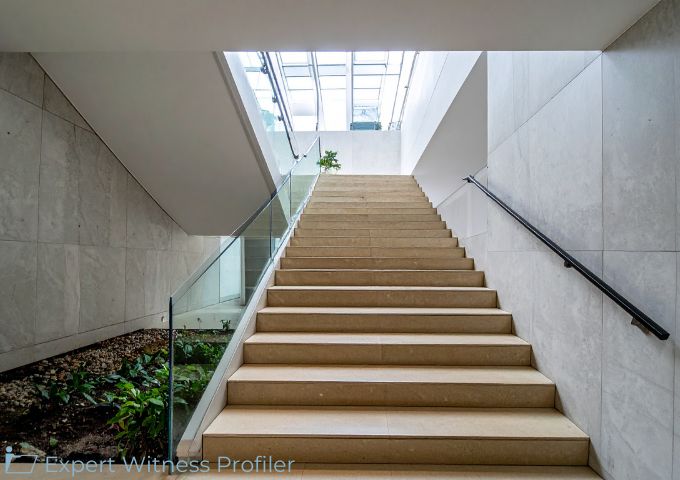
    On the morning of November 21, 2023, Plaintiff Marie Iddriss (“Plaintiff”) fell down a flight of stairs in a building located at 123 West 20th Street in Manhattan after she exited the elevator on the second floor. Hong Diep Realty Incorporated (“Hong Diep”) was the landlord of the building with contractual responsibility for repairs in common areas and Kids At Work (“KAW”) was a tenant of space on the second floor. Plaintiff claimed that Hong Diep and KAW are responsible in negligence for her injuries. In particular, she claimed that Defendants failed to maintain handrails on the stairs which could have broken, and thereby prevented, her fall.

    Plaintiff expected to call Douglas W. Peden as an expert at trial. Peden is a registered architect. Hong Diep filed a motion to preclude Plaintiff from offering Peden’s testimony “about the mechanism of Plaintiff’s fall and whether a handrail would have prevented it.”

    Architecture Expert Witness

    Douglas W. Peden provides expert analysis of construction and construction material defects, walkway construction, vertical misalignments, maintenance and safety, identification and delineation of hazards in stairs, ramps, corridors, platforms and level changes both outdoors and inside buildings and other structures.

    Among other things, he has training and experience in the analysis and testimony for failure analysis and towards the resolution of personal injury litigation involving trip and fall injuries and code compliance issues.

    Want to know more about the challenges Douglas Peden has faced? Get the full details with our Challenge Study report.

    Discussion by the Court

    According to Peden, the unprotected stair landing was unreasonably dangerous and that the failure to provide required handrails on the stair violated the standard of care and applicable building codes.

    Hong Diep claimed that these opinions implicate issues of biomechanics and causation, outside of Peden’s expertise, are not supported by a reliable methodology, and would mislead the jury and therefore not be helpful to it.

    Plaintiff admitted that Peden cannot offer evidence regarding “the force of Plaintiff’s fall, her body position at the time of her fall, or the impact the absence of handrails had on Plaintiff’s body or injuries.” Plaintiff further offered no evidence of Peden’s qualifications to opine on the mechanism of injury in this case.

    Peden will be able to testify regarding the function of handrails along stairs in preventing people from falling off elevated surfaces, preventing people from falling over the edge of a landing, and providing a point of anchorage. Those opinions fall within Peden’s area of expertise. He can also testify that a handrail would provide a person who was falling off the second floor landing and into the stair case “with an opportunity to arrest her fall and injury.” That general testimony too falls within Peden’s expertise and is supported by a reliable methodology.

    However, because he lacked the expertise to opine on what caused Plaintiff’s injury or what would have prevented it, and because he identified no methodology supporting such opinions, he may not testify regarding Plaintiff’s particular mechanism of injury.

    Held

    The Court granted Hong Diep’s motion to exclude the testimony of Douglas Peden.

    Key Takeaway

    The district court must ensure that an expert, whether basing testimony on professional studies or personal experience, employs in the courtroom the same level of intellectual rigor that characterizes the practice of experts in the relevant field.

    Peden lacked the qualifications to opine on the mechanism of injury in this case and failed to identify any methodology supporting such opinions.

    Case Details:

    Case Caption: Iddriss V. Hong Diep Realty Incorporated
    Docket Number: 1:25cv2799
    Court Name: United States District Court, New York Southern
    Order Date: February 17, 2026
  • Mechanical Engineering Expert Allowed to Opine on Hand Placement

    Mechanical Engineering Expert Allowed to Opine on Hand Placement

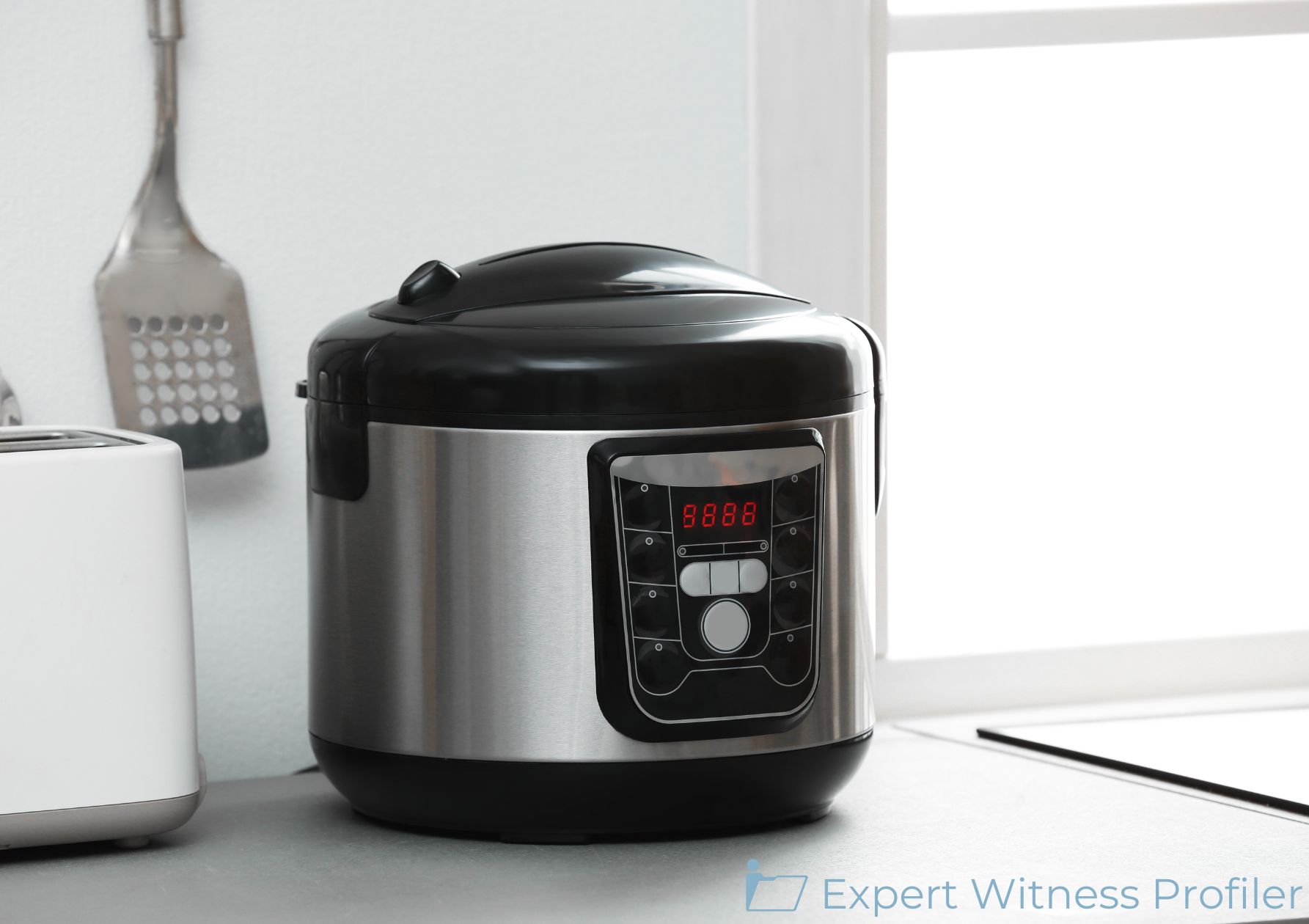
    This action arises from an explosion and resulting injuries Dawn Clary incurred while using a Power Quick Pot model Y6D-36 pressure cooker (the “pressure cooker”), marketed and distributed by Defendant Tristar Products, Inc. (“Tristar”).

    Clary brought this action against Tristar for her injuries from the explosion, alleging defective design, negligence, breach of express warranty, breach of implied warranty of merchantability, and failure to warn.

    Also, Clary filed a motion to exclude Tristar’s expert witness, Robert S. Giachetti’s “opinions as to the placement of Plaintiff’s arms at the time of the explosion.”

    Mechanical Engineering Expert Witness

    Robert Salvatore Giachetti is a licensed professional engineer who holds a Ph.D., M.S. and B.S. in Mechanical Engineering. He has participated in numerous joint examinations of pressure cookers and performed independent research on the trajectory of expulsed contents from a pressurized pressure cooker and its potential for scald injuries, which was published in the Journal of Burns.

    Get the full story on challenges to Robert Giachetti’s expert opinions and testimony with an in-depth Challenge Study.

    Discussion by the Court

    Based on his analysis and the materials provided to him, Giachetti opined at his deposition that Clary “should have substantial burns on both forearms, which are not recorded in the medical records” if Clary had her hands on the lid as she claims.

    However, Clary asserted that Giachetti’s expertise as a biomechanical engineer and his methodology did not enable him to render a reliable opinion on burn injuries or a derivative opinion on the placement of Clary’s hands based on her burn injuries.

    The issue before the Court was not whether Giachetti is qualified to testify as an expert generally, but whether his proffered opinion on Clary’s hand placement is within his expertise.

    First, Clary contended that Giachetti relied on inconsistent evidence to develop his opinion because the photograph of Clary’s injuries “clearly demonstrates” Clary had burns on her forearms. Second, Clary contended that Giachetti failed to adequately consider or test the effect of Clary’s clothing at the time of the incident on the severity of her burns. Finally, Clary contended that the Giachetti conducted did not account for the trajectory of the lid and the pressure cooker’s contents when the user had her hands on the lid, like Clary has repeatedly testified.

    Analysis

    The Court agreed that Giachetti was qualified to testify as to the trajectory of the pressure cooker’s expulsed contents based on burn placement. His analysis based on burn placement is based on sufficiently reliable methodology. As Giachetti outlined, his analysis was premised on two scientific facts (1) hot fluids burn skin, and (2) fluids cannot permeate the solid walls of a pressure cooker. Based on his scientific study, which was peer-reviewed, Giachetti determined the trajectory of the expulsed fluids would have contacted Clary’s hands had they been on the lid at the time of the explosion. Because Clary’s shirt was not protective of other areas of skin, whether the shirt was long-sleeved or short-sleeved was irrelevant to Giachetti’s analysis.

    Giachetti premised his opinion on the placement of Clary’s hands during the incident on the location of “severe burns” on her body.

    As a result, the Court found that Defendant has shown that it is more likely than not that Giachetti’s expert knowledge will help the jury understand the evidence and help them determine how this accident happened.

    However, the Court is not satisfied that Giachetti’s expertise in biomechanical engineering enables him to make any burn diagnoses additional to those made by the medical professionals at University of Nebraska Medical Center, even if to diagnose the burns to Clary’s forearms as minor. In sum, Giachetti’s background and experience does not indicate that he has the qualifications or experience to diagnose burns.

    Held

    The Court granted in part and denied in part the Plaintiff’s motion to exclude the testimony of Robert Giachetti, Ph.D.

    Key Takeaway:

    Any testimony about Giachetti’s diagnosis of Clary’s injuries was excluded because Giachetti’s background and experience did not indicate that he had the qualifications or experience to diagnose burns.

    Case Details:

    Case Caption: Clary V. Tristar Products, Inc.
    Docket Number: 4:22cv3230
    Court Name: United States District Court, Nebraska
    Order Date: November 05, 2025