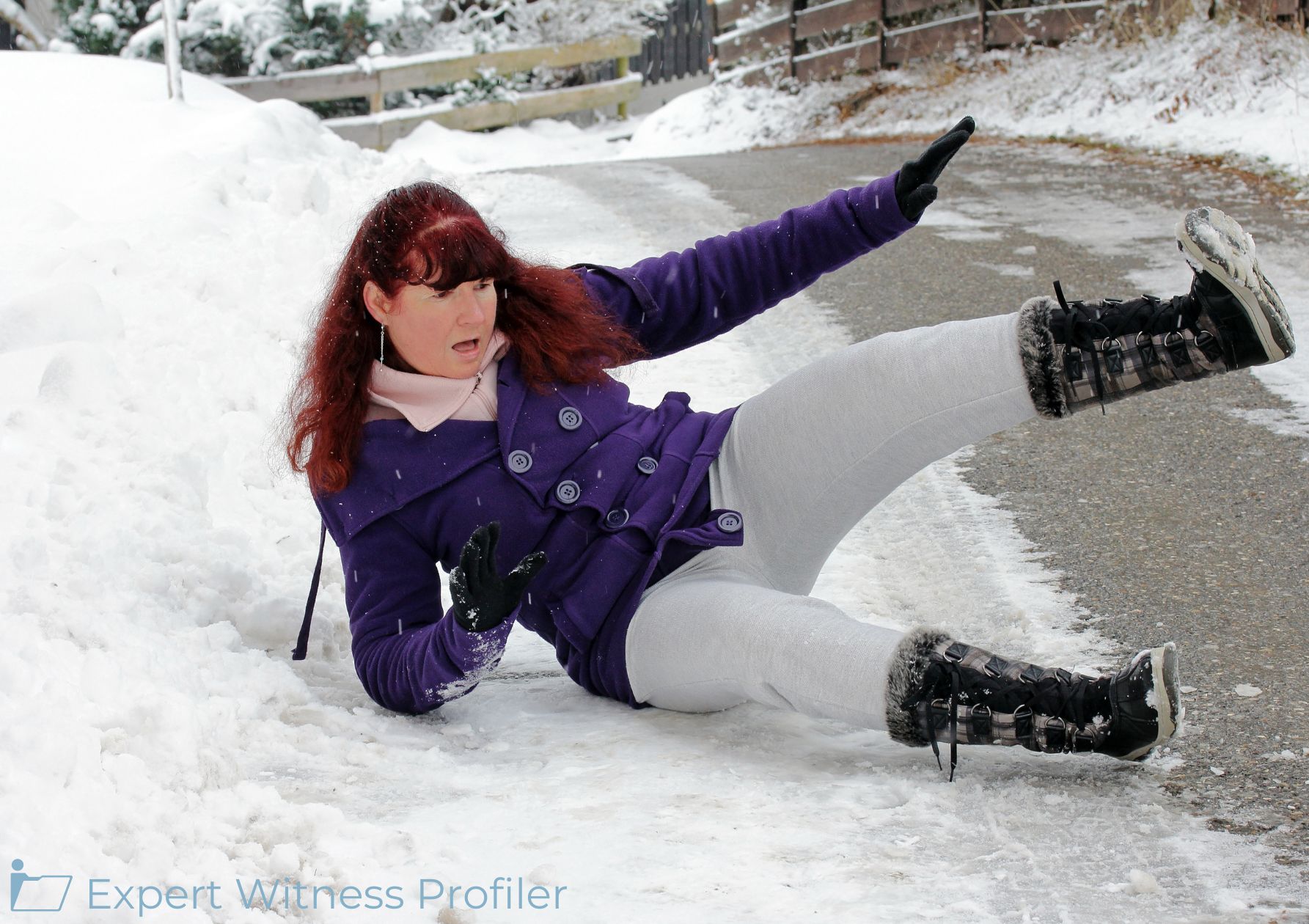
This is a premises liability action in which the Plaintiff Natasha Walkowicz Shea (“Plaintiff’) sought to hold the Defendants, Kalahari Resorts & Conventions-Poconos; Kalahari Resorts, PA, LLC; and Kalahari Resorts, LLC (hereinafter, collectively, “Kalahari”) liable in negligence for her alleged injuries sustained as a result of slipping and falling on snow and/or ice in a parking lot owned by the Defendants.
Kalahari filed a motion in limine to preclude the testimony of Plaintiff’s engineering expert Keith A. Bergman, P.E.
Engineering Expert Witness
Keith Alan Bergman, P.E. is a Consulting Engineer in Civil Engineering and obtained a bachelor’s degree in civil engineering from San Diego State University in 1991. He is a licensed professional engineer in numerous states throughout the country and represents that his professional background experience includes “[e]valuations of ice, snow control, grading, storm water management, detention and retention basins, and soil and sedimentation control.”
He purports to specialize in “Highway and Street Design, Traffic Engineering, Utilities Construction, Storm Drainage, Pedestrian Safety, Walkway Surface Evaluations, Concrete and Asphalt Pavement Evaluations” and represents that he has extensive experience “in Construction Management, Project Management, Project Related Claims, Job Site Safety, Codes and Standards, and ADA Compliance.”
Bergman report indicated that he examined the incident site and the incident circumstances in order to determine the nature and cause of the accident.
In this matter, Defendants argued that Plaintiff’s engineering expert, lacked the qualification to offer many the opinions set forth in his expert report. In other words, Defendants claimed that the opinions offered by Bergman lacked scientific, technical, or other specialized knowledge that will help the trier of fact to understand the evidence or to determine a fact in issue and therefore he is not qualified and his report and testimony does not “fit.”
Although the Court agreed with Defendants that many of the opinions offered by Bergman may be improper and concern areas outside his engineering expertise, it will not wholly preclude Bergman from offering opinions as to either deviation from the standard of care or causation. While certain of Bergman’s opinions and conclusions related to snow/ice removal process and his legal conclusions concerning the Defendants’ negligence may be improper or inadmissible, Defendants may raise these issues again prior to trial.
Similarly, many of the opinions offered by Bergman may not satisfy either the “reliability” or “fit” Daubert requirements, in that certain of his opinions may not assist the jury in determining a fact in dispute. Nevertheless, the Court is not inclined to wholly preclude each and every opinion offered by Bergman, who does in fact offer opinions within his area of engineering expertise.
For example, Bergman opined that “Kalahari Resorts knew, or should have known, that the parking lot slopes towards the inlets from the building which would facilitate drainage flow and have the potential for water freeze/re-freeze conditions with changing temperature.” According to Bergman, the presence of snow/ice on the parking lot created an unsafe walking surface for pedestrians, like Shea.
Defendants’ motion in limine to preclude the testimony of Bergman was denied without prejudice, subject to renewal prior to trial and a Daubert hearing should any party request one.
Held
The Court denied without prejudice the Defendants’ motion in limine to preclude the testimony of Plaintiffs expert Keith A. Bergman, P.E.
Key Takeaway:
The Daubert standard is not intended to be a high one, nor is it to be applied in a manner that requires the Plaintiffs to prove their case twice—they do not have to demonstrate to the judge by a preponderance of the evidence that the assessment of their experts are correct, they only have to demonstrate by a preponderance of evidence that their opinions are reliable.
This case arises out of an accident in which Nolan Gorney slipped and fell at a Safeway store. Gorney designated Dr. Michael A. Steingart, an orthopedic surgeon, as an expert. Steingart conducted an independent medical examination and opined that the accident aggravated Gorney’s preexisting condition. He also stated that Gorney’s “vascular status had changed from this fall and in all medical probability caused progression of his clot or for the need of treatment.” Safeway filed a motion to exclude Steingart’s opinions.
Orthopedic Surgery Expert Witness
Michael A. Steingart has a busy orthopedic practice for more than 24 years. He was trained in general orthopedic surgery and has specialized in back/spine issues and extremities for surgical and non-surgical orthopedics. Steingart has extensive training and experience in proper diagnosis and treatment of injuries and ailments of the musculoskeletal system.
Safeway argued that Steingart’s expert opinions must be excluded because (1) he did not review all of Gorney’s relevant medical records, so his opinions are not based on sufficient facts and data or a reliable methodology and (2) as an orthopedic surgeon, he is not qualified to opine on areas that touch on venous issues and wound care.
Failure to Examine All Relevant Medical Records
Steingart based his opinion on a review of Gorney’s medical records—one set of records contained 600 pages, his examination of Gorney, and Gorney’s oral medical history. The Court refused to exclude Steingart’s opinions on this ground.
Safeway argued that, for his opinions to be reliable, Steingart was required to review the medical records from IYA Medical, LLC and from Gorney’s primary care physician, in addition to the records he already reviewed from Arizona Pain Doctors, Chandler Regional Medical Center, Arizona General Hospital, and MRI scans from SimonMed. However, Steingart was not required to do so.
Rule 702 requires only that Steingart’s opinions be based on “sufficient”—not exhaustive—“facts and data.”
Safeway also argued that Steingart’s opinions are unreliable because he relied on summaries of the medical records prepared by Safeway’s experts, Dr. Michael Domer and Dr. David Feuer, rather than on the records themselves.
It was not per se improper for Steingart to consider Domer’s and Feuer’s summaries, especially with regard to Domer because Steingart testified that he has known Domer for years and that Domer prepares honest opinions.
Finally, although Safeway took issue with Steingart’s reliance on Gorney’s self-reported medical history, this is not a proper basis to exclude Steingart’s opinions because the Court permitted Steingart to rely on Gorney’s oral medical history in forming his opinions.
Qualification to Opine on Venous Issues and Wound Care
Although Safeway is correct that a medical doctor’s qualification to opine in one area “does not mean he is qualified to testify on all other medical topics,” Steingart did not venture into territories in which he has no specialized knowledge or experience. Steingart has extensive experience in wound care because, for part of his career, wound management specialists did not exist, so orthopedic surgeons treated such injuries.
That Steingart did not primarily or exclusively practice in wound care does not mean he cannot opine on it based on his years of experience.
As for Steingart’s opinions that touch on venous issues, Steingart is sufficiently qualified to opine on the effect of Gorney’s fall on his body from an orthopedic surgeon’s perspective, even if that includes the fall’s effect on Gorney’s vascular system at large. An orthopedic surgeon specializes in “injuries and diseases of the musculoskeletal system,” including “the bones, joints, tendons, ligaments, and muscles.”
Additionally, considering how intricately connected the human body’s systems are, it is not surprising that Steingart has knowledge about other parts of the body, including the vascular system, that are affected by or which themselves affect injuries to the systems in which he specializes.
The Court held that Steingart is qualified to offer opinions on areas that touch on venous issues and wound care due to his knowledge and experience.
Held
The Court denied Safeway’s motion to exclude Dr. Michael Steingart’s opinions.
Key Takeaway:
An expert witness can review experimental, statistical, or other scientific data generated by others in the field in demonstrating that their opinion adheres to the same standards of intellectual rigor that are demanded in their professional work and are thus reliable.
This lawsuit arises out of medical care and treatment Courtney L. Mapes rendered to Plaintiff Bradley Medina on February 8, 2019 at Family Health Care Network. Medina brought a cause of action against Mapes for medical negligence based on the allegation that Mapes misdiagnosed him with a hamstring injury rather than an infection in his leg.
Defendant filed a motion to exclude or limit “the scope of the opinions from Plaintiff’s designated rebuttal expert, Daria Majzoubi, M.D.,” asserting Majzoubi’s “proposed testimony exceeded the permissible scope of a rebuttal expert witness.”
Family Medicine Expert Witness
Daria Majzoubi, M.D. specializes in family medicine, and has been practicing medicine for over 13 years, starting his practice in the Central Valley in 2003.
Trained at George Washington University, Majzoubi did his Residency at Northwestern University.
Defendant explained, “Plaintiffs were given leave to designate Majzoubi strictly to rebut the opinions of Defendant’s Infectious Disease expert as it relates to issues of medical causation presented in this case” however, “Majzoubi’s report testimony focuses nearly entirely on the issue of standard of care” and “goes beyond the scope of her designation as rebuttal expert in this case.”
Plaintiffs contended that Majzoubi’s expert report and causation testimony is essential to its case and precluding it would be unfair.
Majzoubi spoke to standard of care only, which is an issue Plaintiffs must prove in their case in chief. The fact that he disagreed with the defense experts does not make him a rebuttal expert. Therefore, the Court held that Majzoubi’s designation cannot properly be characterized as rebuttal testimony.
Plaintiffs also asserted that the Defendant would not suffer any prejudice or unfairness because Defendant has retained an expert. However, the Court granted Plaintiffs several extensions solely for the purpose of designating a rebuttal expert to respond to the opinions of Defendant’s retained infectious disease expert, but they did not do so. Also, Plaintiffs failed to provide the Court any explanation or argument relating to untimely/improper disclosure.
Held
The Court granted the Defendant’s motion to exclude or limit the scope of the opinions from Plaintiff’s designated rebuttal expert, Daria Majzoubi, M.D.
Key Takeaway:
If a party fails to provide information or identify a witness as required by Rule 26, the party is not allowed to use that information or witness to supply evidence on a motion, at a hearing, or at a trial, unless the failure was substantially justified or is harmless.
The Court did not find the failure to timely designate Majzoubi to be “substantially justified or harmless.”
Plaintiff, Lori Mendez suffered a head injury while she was shopping at a Hobby Lobby store in Reno on June 5, 2021. It all started when she reached for an item on a shelf that was higher up. The shelves were close together and as Mendez grabbed an item off of the lower shelf, the top shelf came unhooked and crashed down on her head.
Plaintiff filed a motion to to strike the Defendant’s supplemental expert report of Dr. Saman Hazany, MD, DABR.
Neuroradiology Expert Witness
Dr. Saman Hazany is an award‑winning, Harvard‑trained neuroradiologist based in greater Los Angeles, with extensive experience in the care of patients with traumatic brain injury, spinal cord injury, stroke, epilepsy, and brain tumor.
He holds board certification and the Certificate of Added Qualification (CAQ) in radiology and neuroradiology.
According to the Court’s scheduling order, the deadline for initial expert reports was March 25, 2024. On that date, Hobby Lobby served Plaintiff with its initial expert disclosure, which disclosed Hazany and included his November 22, 2023 initial expert report. That report listed 29 images that Hazany reviewed. On October 8, 2024, Hobby Lobby served Plaintiff with a supplemental report from Hazany, in which he reviewed an additional seven images. It is undisputed that these seven images were available to Hazany at the time of his initial expert report.
The Supplemental Report was Untimely
The Defendants did not appear to dispute that the disclosure was untimely. Because the parties agreed that Hazany had access to the seven images at the time of his initial report, the supplemental report was improper under Rule 26(e).
Striking is Warranted Under Rule 37
The Defendant primarily argued that sanctions are not warranted because the improper supplemental report was harmless. However, there is no dispute that the Defendants supplemental report reviews seven images not reviewed at all in the initial report. The supplemental report makes findings and conclusions as to several of these images, such as “No CT evidence for traumatic brain injury,” “Other etiologies including traumatic brain injury are unlikely,” and “No post-traumatic findings.”
In this case, the deadline for rebuttal expert disclosure was May 22, 2024. The Defendants did not serve the supplemental disclosure until October 8, 2024, which was only 15 days before discovery closed. As Plaintiffs pointed out, this meant that Plaintiff’s rebuttal expert had no opportunity to review and rebut the supplement.
The Court granted the parties multiple extensions of time during the discovery period, including an extension of the rebuttal expert deadline. Moreover, the prejudice cannot be cured when the discovery is closed.
Held
The Court granted the Plaintiff’s motion to strike the Defendant’s supplemental expert report of Dr. Saman Hazany.
Key Takeaway:
The late disclosure meant that Plaintiff’s rebuttal expert was not able to review and rebut the new conclusions and opinions present in Hazany’s supplemental report.
Any risk of prejudice or surprise cannot be easily be cured at this stage.
This action arises from injuries sustained by Christopher Fabricant, a 52-year-old pelvic surgeon, while riding the Kingda Ka rollercoaster at the Six Flags amusement park located in Jackson, New Jersey.
Defendants challenged the admissibility of Plaintiffs’ expert Edward M. Pribonic, who was retained to “conduct an engineering review and mechanical analysis to determine the mechanisms by which Fabricant received the injuries to his spine, as the result of riding on the Kingda Ka roller coaster,” and, if necessary, opine on “the kinematics or movements that created the injury mechanisms.”
Engineering Expert Witness
Edward Mark Pribonic holds a Bachelor of Mechanical Engineering degree from the University of Pittsburgh; he is a registered professional engineer and is licensed in California. He specializes in “engineering design, rehabilitation, safety improvement, maintenance, ride safety inspections and accident investigation in the amusement ride industry.” Pribonic has held engineering related positions at Walt Disney Imagineering and Disneyland, has provided consultation to theme parks and ride manufacturers pertaining to ride equipment design, and has taught ride safety and inspection courses to California ride inspectors and to industry members. He has previously been qualified as an expert in the field of engineering in approximately twenty cases in both state and federal court in New Jersey.
In his July 15, 2019 declaration, Pribonic opined that the seats and restraints on Kingda Ka were standardized and mass-produced.
Pribonic’s opinions regarding functionality, design, and structure are based solely on a visual comparison of photographs pulled from the internet that purport to be other Intamin and Intaride rollercoasters. Pribonic did not identify the dimensions, designs, or the nature of the materials of the seats, restraints, and/or locking mechanisms in reaching his conclusions. Moreover, Pribonic did not identify any testable hypothesis, standard, or technique used to formulate his conclusions.
As a result, the Court found that the opinions set forth in Pribonic’s July 15, 2019 declaration were inadmissible as they were unreliable and constituted net opinions.
Given the technical expertise being offered here, the Court found that Pribonic’s opinion is impermissibly speculative because it is grounded only in his superficial observations of seat exteriors through photographs. Moreover, Pribonic’s declaration is not based on any methodology, but rather his own intuition.
Held
The Court held that any testimony regarding the opinions set forth in Edward Pribonic’s July 15, 2019 declaration failed to meet the Daubert standard and was therefore inadmissible.
Key Takeaway:
The Court noted that an expert may focus upon personal knowledge or experience rather than scientific foundations. But even considering Pribonic’s experience in the amusement park industry and his time as an engineer, the Court found that his opinions in the July 15, 2019 declaration fell within the category of subjective belief and unsupported speculation.
Case Details:
Case Caption:
Fabricant Et Al V. Intamin Amusement Rides Int. Corp. Est. Et Al
Plaintiff Kimberly Breuil claimed that she was injured in a motor vehicle accident that took place on October 8, 2021.
Breuil claimed that her injuries have made it painful to look downward and difficult to lift objects. As a result, she is seeking future lost wages and diminished earning capacity totaling between $483,273 and $1,085,644. She alleged that these injuries forced her to resign from her job at the United States Postal Service and take a lower-paying job at Pizza Hut or a similar employer for the remainder of her career. Breuil asserted that she has already experienced, and will continue to experience, loss of income and earning potential.
Brooke A. Liggett is a Certified Public Accountant, a Master Analyst in Financial Forensics, a Certified Valuation Analyst, and is also certified in Financial Forensics. She is the owner of Liggett Forensic Accounting and Economics.
She specializes in calculating economic damages in personal injury and wrongful death cases, as well as in business-related economic damages.
Dr. Brett Anthony Miller is a board-certified orthopedic surgeon and sports medicine specialist. Miller finished his undergraduate education at Washburn University in Topeka, Kansas, before earning his Doctor of Medicine degree from the University of Kansas School of Medicine in Kansas City, Kansas. There, he went on to complete both his internship and orthopedic surgery residency at the University of Kansas Medical Center.
Miller joined Orthopedic and Sports Medicine Center in 2004. At the practice’s office in St. Joseph, Missouri, Miller offers specialized care for sports-related and acute injuries using evidence-based medicine and modern operative techniques, including shoulder arthroscopy.
Brendan P. Bourdage holds an M.S. in Kinesiology from California Polytechnic University, Humboldt. He has successfully completed numerous continuing education courses in crash analysis, collision reconstruction and investigation, as well as other training related to motor vehicle accidents. He holds licenses and registrations in engineering, traffic accident reconstruction, and functional movement, and has published articles and presented seminars on these topics.
Liggett, a Certified Public Accountant, initially calculated that the Plaintiff’s change in employment had resulted in a lifetime loss of earnings between $488,273 and $1,085,644.
However, the Plaintiff clarified that Liggett did not offer any opinions on whether the accident caused the Plaintiff to leave her job at the United States Postal Service (USPS), whether she could have continued working there, or on any other causation-related issues. Instead, Liggett’s role was limited to comparing the Plaintiff’s former earning capacity at USPS to her income at the time. She relied on the Plaintiff’s own statements about her inability to continue working at USPS and based her calculations on the Plaintiff’s then-current job and income.
Moreover, Liggett explicitly stated that she was not a vocational expert and was not offering vocational opinions. Her testimony was confined to calculating the financial losses related to earning capacity and retirement benefits, which was within the scope of her expertise as a CPA. Additionally, the Plaintiff asserted that Liggett had no opinions about whether the Defendants caused the Plaintiff’s injuries or whether those injuries led to a reduction in earnings.
Consequently, the Plaintiff contended that, if the jury concluded the Defendants were responsible for the Plaintiff’s job loss, Liggett’s testimony would assist the jury in determining the amount of damages. Ultimately, the Court found that Liggett was qualified to testify about present value calculations. Any concerns raised by the Defendants could be addressed through cross-examination or the presentation of contrary evidence. Importantly, the record contained no indication that Liggett intended to offer opinions on causation or vocational matters, and any such testimony would not be permitted. She was allowed to testify strictly in her capacity as an accountant, relying on admissible evidence.
Brett Miller
Miller, an orthopedic surgeon, conducted an independent medical examination of the Plaintiff. The Defendants sought to prevent him from offering any opinions on the Plaintiff’s mental health conditions allegedly caused by the accident, arguing that he is not qualified to do so. In response, the Plaintiffs stated that they have withdrawn any opinions Miller may have had regarding the Plaintiff’s mental health or depression. Therefore, they argued, the Defendants’ motion is now moot.
In reply, the Defendants maintained that the Court should formally exclude any such opinions, since Miller, as an orthopedic surgeon, is not qualified to opine on mental health issues. The Court noted that the Plaintiffs had clearly stated—both in their filings and on the record—that Miller would not offer any testimony or opinions related to the Plaintiff’s mental health or depression.
If the Plaintiffs later attempt to introduce such opinions from Miller at trial, the Court will address any objections from the Defendants at that time. However, since the Plaintiffs have already withdrawn these opinions, they will not be allowed at trial. As a result, the motion to exclude is denied as moot.
Brendan Bourdage
The Defendants argued that Bourdage was not qualified to offer expert testimony on several issues, including the speed of impact during the collision, the change in velocity of the Plaintiff’s vehicle, the effect of the collision on the Plaintiff, and the Plaintiff’s injuries. Specifically, they claimed that Bourdage was not a medical expert and, therefore, should not have been permitted to testify about the Plaintiff’s injuries or their causes. Moreover, they contended that he lacked the necessary engineering background to provide biomechanical opinions.
In addition, the Defendants moved to exclude Bourdage’s opinions entirely, asserting that his conclusions were not sufficiently connected to the facts of the case and would not assist the jury in resolving any factual disputes. Furthermore, they challenged the reliability of Bourdage’s methodology.
After reviewing Bourdage’s CV and expert report, the Court found that the Defendants’ concerns were more appropriately addressed through cross-examination. Accordingly, Bourdage was permitted to present the opinions set forth in his report regarding how rear-end collisions could cause injuries, along with the general mechanisms and contributing factors involved in such injuries. However, because Bourdage was not a medical doctor, the Court ruled that he could not—and would not—be allowed to testify about the specific injuries the Plaintiff may have suffered in this collision.
Held
To begin with, all rulings by this Court on Daubert motions are preliminary in nature. The Court’s rulings are subject to change based on the evidence and testimony presented during trial.
The Court denied the Defendants’ motion to exclude the testimony of Brooke Liggett.
The Defendants’ motion to exclude the testimony of Dr. Brett Miller was denied as moot.
The Court denied the Defendants’ motion to exclude the testimony of Brendan Bourdage, PhD.
Key Takeaways:
There is nothing in the record to suggest that Liggett has any opinion about causation or any vocational opinions. Liggett may testify as an accountant relying on other admissible testimony.
Bourdage is not a medical doctor and cannot, and will not, be allowed to testify as to what injuries this Plaintiff actually suffered in this collision.
Plaintiff Deven Barrette (“Plaintiff) brings this action against Defendants the Village of Swanton; Kyle Gagne (“Defendant Gagne”); Jordan M. Mosher (“Defendant Mosher”); Robert Recore (“Defendant Recore”); and Leonard Stell (“Defendant Stell”); as well as John and Jane Does I-X (the “Doe Defendants”).
Plaintiff’s claims arose from his detention by Swanton Village Police Department (“SVPD”) officers on the night of April 2, 2020, and subsequent treatment by those officers and Northwest State Correctional Facility (“NWSCF”) employees. Barrette argued that Mosher, a corrections officer, used excessive force and unlawfully seized him when Mosher removed Barrette from a police cruiser. He also asserted assault and battery and intentional infliction of emotional distress.
Steve Ijames, Defendant Mosher’s use-of-force expert, opined that the injury suffered by Plaintiff “was not the result of force intentionally applied, but the accidental and unintended consequence of appropriate action taken while overcoming his resistance to control.”
Moreover, Michael J. Kuzel, Defendant Mosher’s human factors expert, opined that the action used by Defendant Mosher to pull Plaintiff out of the vehicle “involved a ballistic muscle contraction.”
Police Practices & Procedures Expert Witness
Steve Ijames has forty-six years of experience in policing and has acted as an instructor, presenter, and consultant on the use of force.
To begin with, Ijames bases this opinion, in part, upon his reconstruction of the incident in which he met with Defendant Mosher, drove a Vermont State Police vehicle to a similar location where the vehicle transporting Plaintiff was parked, and allowed Defendant Mosher to extract him from the vehicle approximately twenty times in varying ways, including one in which a second officer grabbed him as he was being pulled out of the vehicle.
The Court held that the opinions of Steve Ijames that Plaintiff’s injuries were “accidental” are inadmissible because they are opinions regarding Defendant Mosher’s intent.
Correspondingly, expert opinions regarding whether Defendant Mosher acted “reasonably” under the circumstances are inadmissible because they not only usurp the role of the finder of fact, but also “express a legal conclusion or instruct the jury what conclusion to reach.”
Basically, the Court held that the Plaintiff’s challenge to opinions based on the attempts by Ijames to re-create the event are grounded in the absence of a need for expert witness testimony on this point.
Human Factors Expert Opinion
Based on his review of the video of Defendant Mosher’s use of force and Defendant Mosher’s testimony about the incident, Kuzel opined that the action used by Defendant Mosher to pull Plaintiff out of the vehicle “involved a ballistic muscle contraction.” According to Kuzel, “there is an accuracy tradeoff associated with ballistic contractions, leading to the actual force differing from the intended force.”
However, Plaintiff argued that Kuzel’s engineering background did not qualify him to opine on Defendant Mosher’s use of force, and that his conclusions were “speculative and conclusory.”
Because Kuzel provided no scientific basis for his conclusions that Defendant Mosher’s use of force on Plaintiff was a “ballistic muscle contraction” or that it is “unrealistic and near impossible” to predict Plaintiff’s resistance to such a movement or for his opinions regarding Defendant Mosher’s intent, and because his alleged scientific sources offer only broad generalizations about human behavior, such that “[t]hinking and decision-making are guided by two Systems[,]” one characterized by “instantaneous, automatic thinking” and another that “is analytical, deliberate, and rational,” the Court held that his opinions were inadmissible.
Held
The Court held that the opinions of both Steve Ijames and Michael J. Kuzel were unreasonable.
Key Takeaway:
To allow an expert to assume the role of an actor in his or her own incident reconstruction which involves no special expertise lies far afield of an opinion based upon specialized knowledge grounded in the expert’s education, experience, or training.
Plaintiffs are the wheelchair-bound current or former inmates of the New York State Department of Corrections and Community Supervision (“DOCCS”) who must self-catheterize themselves multiple times per day in order to urinate. Plaintiffs claimed that they experienced violation of their federal civil rights, and discrimination on the basis of their disabilities.
Urologist Ezekiel Young, M.D., opined that the DOCCS’ policy of requiring inmates to re-use single-use catheters fell well-below the accepted standard of care.
However, DOCCS relied entirely on the expert report of Gabriel Haas, M.D. According to Haas, “the United Kingdom National Health Service Trust Guidelines currently state that catheters may be re-used up to a week and provide instruction how to re-use catheters.”
Plaintiff contended that the Court should preclude Haas’s opinion as unreliable, under Daubert and Rule 702.
Urology Expert Witness
Gabriel Haas, M.D., is a physician licensed to practice medicine in the state of New York. He is board certified by the American Board of Urology.
Haas is employed as Professor and Chairman of the Department of Urology of SUNY Upstate Medical University in Syracuse, New York. He has held this position for 10 years.
He has worked as a clinical urologist for 15 years.
Plaintiffs contended that they were entitled to summary judgment since the opinion of their medical expert, Young, that re-using single use catheters violated the standard of care, is essentially undisputed inasmuch as the contrary opinion of Haas is unreliable.
The Court found that there is a triable issue of fact precluding summary judgment, due to the disagreement between the opinions of Young and Haas regarding the propriety of re-using single-use catheters. In particular, Young opined that such catheters should never be re-used, while Haas indicated that they may safely be re-used.
Plaintiffs contended that Haas’ entire opinion should be precluded as unreliable, since it is partially based on a mistaken reading of one of its supporting documents, “the United Kingdom National Health Service Trust Guidelines.”
However, the Court found that Plaintiffs’ objection goes to the weight, and not the admissibility, of Haas’ report.
Contrary to both Young’s opinion that it was clearly improper to require Plaintiffs’ to re-use single use catheters and Plaintiffs’ assertion that such re-use caused their urinary tract infections, Haas indicated that such catheters may be safely re-used, and that urinary tract infections are not necessarily caused by such re-use. Moreover, neither Young’s expert report nor his supporting declaration opined that Plaintiffs were given and/or injured by improperly-sized catheters.
The Court found that Plaintiffs’ motion for partial summary judgment must be denied since there is a triable issue of fact concerning the standard of care.
Held
The Court denied the Plaintiff’s request to preclude Gabriel Haas’ expert report.
Key Takeaway:
The Court held that Haas’ overall opinion is not unreliable just because it is partially based on a reading of one of its supporting documents, “the United Kingdom National Health Service Trust Guidelines.” Haas indicated that single use catheters may be safely re-used, and that urinary tract infections are not necessarily caused by such re-use.
Plaintiff Manuel G. Milan commenced this action against New Jersey Transit Rail Operations, Inc. seeking damages for injuries sustained to his ankle and low back under the Federal Employers’ Liability Act.
Defendant challenged the expert medical opinions of Dr. Aaron Bellew, DPM and Dr. Jason Smith, M.D. Bellew and Smith offered testimony as to the Plaintiff’s disability, permanency of injuries and limitations.
Podiatry Expert Witness
Aaron Bellew holds a Bachelor’s degree from St. Francis College and a medical degree from the New York College of Podiatric Medicine. He completed a four-year residency in Foot & Ankle Trauma/Reconstructive Surgery at New York Hospital, Queens, and has advanced training in various surgical techniques from New York-Presbyterian/Columbia University Medical Center. He is a member of the American College of Foot & Ankle Surgeons and the American Podiatric Medical Association.
Dr. Jason Smith is board-certified in physical medicine and rehabilitation. He earned his medical degree from UMDNJ-New Jersey Medical School, completed a physiatry residency at JFK-Johnson Rehabilitation Institute (serving as chief resident), and a fellowship in interventional spine and sports medicine at Coordinated Health in Bethlehem, PA. He practices at Atlantic Medical Group, emphasizing patient-centered care.
The Defendant moved to dismiss the Plaintiff’s case, arguing their experts’ opinions were inadmissible. The Plaintiff countered that expert testimony wasn’t even needed, but if it was, one expert (Bellew) was qualified. The Court, noting the Plaintiff’s burden to prove admissibility, found the parties’ arguments regarding Bellew insufficient for a ruling. Therefore, the Defendant’s motion was denied without prejudice on that point, allowing them to re-argue Bellew’s admissibility and address the qualification, reliability and fit prongs later. However, the Plaintiff conceded the inadmissibility of the other expert’s (Smith) causation opinion, so the Court granted the Defendant’s motion regarding Smith.
Because the Defendant failed to adequately brief the Daubert issues, the Court is not in a position to evaluate the Plaintiff’s ability to prove medical causation.
Held
The Court granted in part Defendant’s motion with respect to excluding Dr. Jason Smith’s opinion.
Key Takeaway:
While the Court excluded one expert’s opinion (Smith) due to the Plaintiff’s concession, it deferred ruling on the admissibility of another expert’s opinion (Bellew) due to the Defendant’s inadequate legal arguments, specifically regarding the Daubert standards. Furthermore, the Court was unable to rule on medical causation due to the Defendant’s improper briefing of the Daubert issues. This emphasizes the importance of proper legal briefing, especially regarding expert testimony, and the Court’s adherence to Daubert standards for admissibility.
Case Details:
Case Caption:
Milan V. New Jersey Transit Rail Operations, Inc.
Docket Number:
2:18cv13735
Court:
United States District Court for the District of New Jersey
This is a dispute regarding uninsured motorist (“UIM”) coverage. Perez was a passenger in a car accident on April 18, 2018, and sought coverage for past and future medical expenses arising from this accident under an Allstate insurance policy. Perez intended to rely on the expert opinion of Dr. David Badger at trial.
The March 2022 report summarized Perez’s medical treatment after the accident, her current symptoms, notes from the in-person examination, and states four diagnoses, with a treatment plan and estimated cumulative cost. Badger also stated, “All diagnoses listed above are due to the motor vehicle accident of 04/28/2018 on a more probable than not basis.”
The June 2024 report reiterates Perez’s medical treatments since the accident and ends with Badger discussing specific questions, including whether Perez’s current symptoms relate to a preexisting condition, whether Perez suffered permanent injury, and whether and to what extent Perez will need future treatment.
Perez then attempted to deliver a third “report” to Allstate in the form of a letter attached to an email on November 22, 2024, but the email and attachments were not received by Allstate until January 14, 2025. Allstate moved to exclude portions of Badger’s opinion.
Orthopedic Surgery Expert Witness
David Badger is a board-certified orthopedic surgeon with over thirty-five years’ experience, including treating trauma-related injuries from motor vehicle accidents and a concentration in sports medicine. He has performed over ten thousand rotator cuff surgeries over the course of his thirty-five year career, and has provided expert medical opinion testimony on thirteen previous occasions in other Superior Court cases in Washington.
Allstate sought to exclude multiple portions of Badger’s opinion. The Court will address each argument in turn.
Badger May Testify About Perez’s Headaches
Allstate avers that Badger’s opinion diagnosing Perez with “posttraumatic cervicogenic pain with headaches” should be excluded because Badger is not qualified, and his opinions are not reliable or relevant.
Badger identified various examples in his career when he diagnosed or was exposed to patients with cervicogenic headaches. The evidence showed that Badger did not just “believe he can diagnose” cervicogenic headaches, but that he has done so in his practice.
While Allstate’s arguments that Badger has not received specialized training or is unaware of certain diagnostic criteria are areas ripe for cross-examination, the Court held that Allstate has not shown that Badger is unqualified to diagnose cervicogenic headaches such that his testimony is inadmissible.
Allstate also pointed to conflicting evidence to undermine Badger’s diagnosis, which is proper for cross-examination but does not make Badger’s testimony inadmissible.
Lastly, Allstate argued that Badger “provided no information about how he reached [this diagnoses] or what information he relied upon to determine that she had an impaction injury to her greater occipital nerve at the base of her skull.” However, Badger can “expand or explain information contained in his report during oral testimony.” Thus, while any new opinions would be improper, the Court held that Badger may connect his diagnoses with the facts and assessments provided in his report.
Badger May Testify About Perez’s Shoulder
Allstate argued that Badger’s opinion on Perez’s shoulder pain and diagnosis of a right rotator cuff tear should be excluded because it lacks corroborating evidence. Like Allstate’s argument about the reliability of Badger’s opinion on Perez’s headaches, the Court held that the lack of shoulder imaging, other doctors’ corroboration, or fulsome explanation connecting the injury and accident is appropriate for cross-examination, but did not go to admissibility.
Badger May Testify About Perez’s Pre-Existing Conditions
Next, Allstate asserted that Badger cannot opine on Perez’s past medical conditions because he did not review any medical records from before the 2018 accident.
But Badger’s report included a section entitled “Past Medical History” indicating he obtained some information regarding Perez’s past medical conditions and history. There is some basis for Badger’s opinion. The Court held that whether more reliable or conflicting evidence on any pre-existing conditions exists is a matter appropriate for cross-examination or Allstate’s case-in-chief.
The Court LimitsBadger’s Testimony on the Permanency of Perez’s Injuries
Badger’s March 2022 report did not state any opinions regarding the permanency of Perez’s injuries or pain. The June 2024 report stated Perez “has not undergone sufficient treatment to determine whether she has permanent injury.”
Badger’s deposition testimony reiterated this opinion. But during Badger’s deposition, Perez’s counsel attempted to obtain testimony about her ongoing pain and symptoms. Perez then attempted to submit an untimely third expert report in the form of a November 22, 2024 letter stating
“However, even if she were to undergo some or all of the recommended treatments she will still have some degree of residual symptoms and limitations from her collision related injuries for the remainder of her life. This is on a more probable than not basis, to a reasonable degree of medical certainty.”
Perez’s efforts to add a new opinion about the permanency of Perez’s injuries to Badger’s report failed when the deposition testimony went beyond, and conflicted, with Badger’s report. The Court held that Badger’s only properly disclosed opinion on the permanency of Perez’s injuries is that he could not opine on the topic.
Second, the November 2024 letter is untimely, whether sent on November 22, 2024 or January 14, 2025. The deadline to disclose expert reports was July 8, 2024. Perez’s argument that the November 2024 letter was timely because it was delivered on the deadline to complete fact discovery improperly ignores the July 2024 deadline for expert reports. The Court held that Perez did not provide any reason why this untimely disclosure should be accepted.
Badger May Testify Regarding His Opinion on Perez’s Future Treatment
Lastly, Allstate argued that Badger’s opinions on Perez’s future treatment were too speculative. Allstate pointed to the lack of imaging, the factors that could impact future treatment, and various other reasons this opinion is uncertain. Again, the Court held that these topics are appropriate for cross-examination and/or rebuttal testimony but did not warrant exclusion.
Held
The Court granted in part and denied in part Allstate’s motion to exclude portions of Dr. David Badger’s testimony.
The Court held that Badger can only testify about his opinions on the permanency of Perez’s injuries that were disclosed in the March and June 2024 reports; any opinion outside those bounds is excluded. The remainder of Allstate’s arguments are denied.
Key Takeaways:
While any new opinions would be improper, Badger may connect his diagnoses with the facts and assessments provided in his report.
An expert cannot salvage a deficient report by supplementing it with later deposition testimony.
Case Details:
Case Caption:
Perez V. Allstate Fire And Casualty Insurance Company