Tag: Legal Conclusions

  • Court limits the testimony of Metallurgical Engineering Expert Witness for rendering legal conclusions by stating that certain information was not a trade secret

    Court limits the testimony of Metallurgical Engineering Expert Witness for rendering legal conclusions by stating that certain information was not a trade secret

    On March 24, 2021, BPS initiated legal action against Inashco, accusing it of having breached a non-disclosure agreement (NDA) (Claim 1), misappropriation of trade secrets (Claim 2), and unjust enrichment (Claim 3). The first claim alleged that Inashco violated the NDA by using BPS’ confidential information. Similarly, Claim 2 asserted that Inashco had used BPS’ trade secrets without authorization.

    BPS was a manufacturer of bulk processing and recycling equipment, with a notable recycling equipment system called the RecoverMax Fines Process. This system allowed for the recovery of minute metal pieces from incinerator bottom ash and auto shredder residue, including valuable metals like copper, silver, and gold and other precious metals that could have been reused in other applications. 

    Inashco, the North American branch of a Netherlands company, had processed incinerator bottom ash from power stations to recover low-grade metals to be further processed to separate the metals from the waste components. In July 2016, Inashco had become interested in BPS’ RecoverMax process, and had initiated discussions about a Mutual Non-Disclosure Agreement (NDA) to continue business discussions and the testing process. On August 2, 2016, Inashco’s president, John Joyner, signed the NDA with BPS, wherein the definition of Confidential Information included, “proprietary information
    concerning the components, construction, and processes of BPS’ RecoverMax technology used
    for crushing the mineral components of a non-ferrous metal concentrate as derived from
    municipal solid waste ash by means of [Inashco’s] process.”

    After reviewing the internal structure of the RecoverMax machine, Inashco questioned its similarities to technology manufactured by Palla Mill. BPS had clarified the distinctions, emphasizing the RecoverMax system’s focus on recovering metals from friable materials, i.e., glass, rock, and other minerals.

    Shortly after installation, Inashco raised concerns about the performance of the RecoverMax system and its hourly tonnage capacity. BPS attempted to address these issues but Inashco put BPS on notice that it
    was in breach of the RecoverMax Purchase Agreement. While the communication between BPS and Inashco regarding the purported breach was ongoing, Inashco had reached out to one of BPS’ suppliers to obtain a quote for a dust control system for the facility in Lancaster, Pennsylvania. On January 25, 2019, Inashco presented BPS with a proposed Mutual Release and Termination Agreement, initiating negotiations for the termination of the RecoverMax Agreement. During these negotiations, Inashco imported a Palla Mill system to the United States on August 25, 2019. One month later, on September 25, 2019, BPS and Inashco executed a Mutual Release and Termination Agreement. The Mutual Release and Termination Agreement explicitly stipulated that the previous NDA between Inashco and BPS would persist beyond the termination of the RecoverMax Agreement and would remain in effect until August 3, 2031, unless both parties mutually terminated it in writing before that date.

    On December 20, 2020, Inashco imported a second Palla Mill system to the United States. It was implied that Inashco utilized information and technology acquired from BPS via the exchange of information governed by the NDA to achieve comparable outcomes to the RecoverMax system by importing the Palla Mill systems and incorporating additional components from the same vendors used by BPS.

    In July 2022, Inashco enlisted the services of Dr. Jerome P. Downey, Ph.D., P.E., as an expert in the “design, development, and operation of material processing equipment.” Downey had been deposed by BPS. During his testimony, Downey revealed that Inashco’s attorneys had aided him in drafting his report. He had approximated that seventy-five percent of the 117-page report had been composed in his own words, emphasizing that any technical aspects had been directly from him.

    On August 25, 2023, BPS submitted a Motion to Strike and Exclude Downey’s Expert Report and Testimony. BPS had contended that the Court should invalidate Downey’s expert report and testimony for two primary reasons. Firstly, Downey had opined about ultimate legal conclusions, specifically stating what information is confidential and had constituted a trade secret. Secondly, Downey had not personally drafted the entire content of his expert report.

    Inashco had filed an Opposition, disputing BPS’ mischaracterization of the substance of Downey’s report and asserting that the law had permitted counsel to assist an expert in drafting the report.

    Metallurgical Engineering Expert Witness

    Jerome P. Downey earned his Ph.D. in Metallurgical and Materials Engineering at Colorado School of Mines and his B.S. and M.S. degrees in Metallurgical Engineering at Montana Tech. He is currently the Goldcorp Professor of Extractive Metallurgy at Montana Tech, where he also serves as the campus Director of the Montana University System Materials Science Ph.D. program. He is also the Chief Executive and General Manager at J. P. Downey & Associates, P.L.L.C. Downey has over 25 years of experience managing research and development projects in the chemical, metallurgical, and materials industries. 

    Discussions by the Court

    BPS contended that Downey’s testimony consisted of “impermissible legal conclusions,” when he opined that (1) BPS failed to meet the legal requirements for trade secrets or confidentiality protection; (2) Inashco did not misappropriate BPS’ trade secrets; and (3) Inashco did not violate the NDA.

    In response, Inashco argued that Courts usually permitted experts to testify as to whether the information was generally known or readily ascertainable and whether it was entitled to trade secret protection.

    Federal Rule of Evidence 704, as of the relevant time, did not prohibit an expert’s opinion from embracing an ultimate issue, as stated in Fed. R. Evid. 704(a). However, it clarified that the issue embraced by the expert must be a factual one, as was cited in Berry v. City of Detroit, 25 F.3d 1342. The Sixth Circuit, emphasized the subtle but crucial distinction between opining on the ultimate question of liability (deemed impermissible) and stating opinions that offer information for the jury to draw inferences about the ultimate issue (considered permissible). Downey could opine as to the factors underlying whether certain information constitutes a trade secret. However, he would be restricted from directly opining on whether that information is, in fact, a trade secret.

    Therefore, the Court granted BPS’ Motion to Strike and Exclude Downey’s Expert Report and Testimony, specifying that it would not take into account the portions of Downey’s report and deposition testimony that presented legal conclusions. 

    BPS also asserted that Downey’s report, was not entirely drafted by him and contained substantial portions which matched with Inashco’s interrogatory responses, violating Federal Rule of Civil Procedure 26. Inashco countered, asserting that the law allowed the counsel to aid an expert in drafting the report and that it was acceptable to incorporate discovery responses into an expert report.

    Federal Rule of Civil Procedure 26 stipulates that expert witness disclosures must be accompanied by a written report, which must be prepared and signed by the witness. Even though the rule prohibits counsel from preparing the report on behalf of the witness, it allows counsel to assist the witness, with the assistance typically limited to ensuring compliance with Rule 26’s requirements. Counsel may participate in the fine-tuning of an expert report to ensure Rule 26(a)(2)(B) compliance, but they are not permitted to create the expert’s opinion entirely and then have the expert sign it. The key question in determining the appropriateness of counsel’s participation is whether it exceeds the bounds of legitimate assistance to the point of negating the possibility that the expert genuinely prepared their own report.

    For the following reasons, the Court concluded that Downey’s expert report should not be entirely stricken.

    Firstly, Downey’s deposition testimony didn’t indicate that Inashco’s counsel had entirely fabricated the report or crossed the limits of legitimate assistance. When questioned about the report’s content in his own words, Downey specified that a substantial portion of the report was his own work, particularly any technical aspects. He estimated about “seventy-five” percent was his own work, stating that the portions he did not write primarily consisted of legal standards and italicized trade secret portion of the report. As to the italicized trade secret portion of the report, Downey mentioned that Inashco’s counsel took his opinions almost verbatim and put them in there. However, Downey clarified in the deposition that his signing of the report signified his thorough review to ensure factual accuracy and consistency with his rendered opinions. He admitted his discomfort with certain legal terminologies, indicating that this was where Inashco’s counsel provided assistance.

    No evidence suggested that the report did not accurately reflect Downey’s views. Inashco’s counsel’s assistance amounted to, at most, twenty-five percent of the report, signifying that Downey had personally drafted a significant portion of the report as a whole.

    Secondly, BPS’ argument to strike Downey’s report on account of significant portions matching with Inashco’s discovery responses failed to persuade the Court. Downey testified that his responses or evaluations of the interrogatories were included in his report. Downey also added that he considered “Inashco’s Third Supplemental Response to BPS’ Interrogatory No. 13” before drafting his expert report. Therefore, it logically follows that portions of Downey’s expert report would align with Inashco’s discovery responses.

    BPS asserted that Inashco had formulated its initial and first supplemental responses to BPS’ interrogatories before it retained Downey. These discovery responses were then carried forward into the Third Supplemental Discovery Responses, which BPS claims were directly copied into Downey’s report. According to BPS, this sequence indicated that Downey could not have participated in drafting those discovery responses.

    However, the Court observed that since those responses were carried forward, Downey would have reviewed those prior responses while assisting Inashco with the third supplemental responses. Downey’s testimony also affirmed that he had thoroughly reviewed everything in the report to ensure factual accuracy and consistency with his opinions. Consequently, the fact that portions of Inashco’s discovery responses appear in Downey’s report was thus insufficient evidence to indicate that Inashco’s counsel had entirely fabricated the report in violation of Rule 26(a)(2)(B).

    Held

    The Court has granted in part and denied in part BPS’ Motion to Strike and Exclude the Expert Report and Testimony of Inashco’ expert Jerome P. Downey. The Court has not arrived on an outcome for this case since the remaining issues involved in this case still await resolution.

    Key Takeaways:

    1) An expert cannot opine on ultimate legal conclusions, such as whether certain information constitutes a trade secret. However, the expert can testify to the underlying factors and analysis that may lead the jury towards that legal conclusion. 

    2) Counsel may assist an expert in drafting the report to ensure compliance with Rule 26, but cannot prepare the substantive opinions themselves.

    3) Mere overlap between an expert report and discovery responses does not warrant striking the report, as long as the expert reviewed the responses and adopted them as his own opinions. 

    4) The Court struck the legal conclusions in Downey’s report, but denied striking the report entirely. The Court found Downey’s testimony showed the report reflected his actual views, even if counsel helped draft portions.

  • Modifications to an expert report are allowed as long as there are no additions or substantive changes whatsoever; Court limits the testimony of both parties’ experts regarding the customs brokerage industry 

    Modifications to an expert report are allowed as long as there are no additions or substantive changes whatsoever; Court limits the testimony of both parties’ experts regarding the customs brokerage industry 

    This case involves a dispute between JAS Supply, Inc. (“Plaintiff”) and Radiant Customs Services, Inc. and Radiant Global Logistics, Inc. (“Defendants”) regarding the importation of alcohol wipes from foreign manufacturers. In 2020, Plaintiff contracted with Defendants to assist with importing alcohol wipes into the United States for the first time. Defendant Radiant Global Logistics provided freight forwarding services, while its related company Radiant Customs Services provided customs broker services to ensure compliance with customs regulations.  

    Plaintiff successfully imported 15 of 19 containers, but the final 4 were detained and eventually refused by U.S. Customs and Border Protection (“CBP”) due to missing information required by the FDA about the originating manufacturer. Plaintiff alleged that Defendants’ misconduct led to the damages from the refused products. Both sides retained experts on importation and customs brokerage industries – Plaintiff retained Kelli R. Thompson and Defendants retained Cameron W. Roberts. The parties filed motions to exclude each other’s expert testimony.  

    Customs Expert Witnesses 

    Kelli Thompson is a highly experienced Customs and International Trade Advisor with a diverse background. She is a licensed customs broker and certified customs specialist with extensive private sector and public sector experience in various areas of customs and trade, including classification, valuation, rules of origin, free trade agreements, drawback, and intellectual property rights. She also served for nearly seven years with U.S. Customs and Border Protection, rising from Import Specialist to Supervisory Import Specialist. 

    She founded her own trade consulting firm, which has catered to a wide range of clients, from small start-ups to large Fortune 500 companies. Kelli Thompson has a Master’s degree in Business Management from North Park University (2001-2003) and a Bachelor’s degree in Health Promotion & Education from the University of Cincinnati (1994-1999). 

    Cameron Roberts, a partner at Roberts & Kehagiaras LLP in Long Beach, California, brings over three decades of expertise in international trade to his practice. His focus areas encompass customs law, export compliance, domestic and international transportation law, maritime law, and trade and insurance matters. Cameron is an active member of various customs, international trade, and legal associations. He has served as President of the Foreign Trade Association and the Harbor Transportation Club. 

    In addition to his legal career, Mr. Roberts serves as an adjunct professor at California State University, Long Beach. He is a frequent presenter and author on topics within his practice areas. His qualifications include being a licensed customs broker since 1989 and having prior experience as a transportation executive. 

    Cameron holds a B.A. degree in political science and international relations from California State University, Long Beach, and has earned his J.D. degree from the Seattle University School of Law. He is recognized as an expert witness in both State and Federal courts, and he is admitted to practice in California and Washington. Cameron is also qualified to appear before the Court of International Trade and the Federal Maritime Commission. 

    Discussions by the Court 

    The Court first set forth the legal standard for expert testimony under Federal Rule of Evidence 702, which requires expert opinion to be both relevant and reliable. The Court acted as a gatekeeper to evaluate admissibility of expert opinions. General qualifications of both experts were not disputed and the focus was on assessing the reliability and relevance of the expert testimony.  

    The Plaintiff sought to limit Cameron Roberts’ anticipated testimony related to the COVID pandemic, arguing that he lacked the qualifications and that his testimony would lack relevance and reliability. The Defendants intended for Roberts to provide insights into “the pandemic’s effects on the import industry” and how it specifically impacted individuals involved in the case and their ability to work. The Plaintiff’s main contention was that Roberts did not possess relevant education or specialized knowledge about the COVID pandemic, particularly in areas like medicine or public health. However, it’s important to note that Roberts did not claim to be a pandemic expert in those fields. Instead, his opinions were rooted in his expertise in the customs brokerage industry, shaped by his observations and personal experiences during the pandemic. 

    The Plaintiff did not appear to dispute Roberts’ general industry expertise, which formed the basis of his opinions. As such, Roberts was considered qualified to offer expert insights into the relevant industries during the pandemic based on his personal knowledge, experience, and observations during that time. 

    The Plaintiff attempted to challenge the reliability and relevance of Roberts’ opinions as they applied to the specific facts of the case. They pointed out that Roberts’ opinions were often based on facts that were either in dispute or about which he had limited personal knowledge. However, it was clarified that this argument primarily called in question the weight and credibility of Roberts’ opinion testimony, rather than its reliability or relevance. 

    The Defendants’ primary argument for excluding Thompson as an expert was based on the assertion that her disclosed affirmative report contained numerous improper legal conclusions. Thompson had made numerous legal conclusions within her testimony, specifically regarding whether the Defendants’ conduct constituted negligence, whether they breached a fiduciary duty, or otherwise violated federal regulations. She even made express credibility determinations.  Similarly, the Plaintiff contended that Roberts’ anticipated testimony was improper because it extensively included inadmissible legal opinions on contested issues. For instance, he had defined gross negligence, mistake of fact, and inadvertence based on case law that was irrelevant to the facts of the specific case. Ultimately, he had arrived at a legal conclusion, stating that the Radiant Defendants were not grossly negligent but had committed a mistake of fact. He found that the Radiant Defendants’ belief that they had submitted the appropriate paperwork was reasonable. The Court concurred that such testimony would not be admissible. 

    Consequently, the Court partially granted the Plaintiff’s motion to limit Roberts’ testimony and partially granted the Defendants’ motion to exclude Thompson’s testimony. The Court’s order stipulated that neither expert would be allowed to offer testimony during the trial that purported to provide impermissible legal conclusions or interpretations. 

     
    Court assessed the dispute regarding whether Thompson should be disqualified as an expert due to the form of her report. Defendants argued that her conclusions were based on a skewed version of the factual record consisting of “regurgitated facts” provided by the Plaintiff’s counsel. They contended that within her report, Thompson made improper determinations on the credibility and culpability of lay witnesses, and these issues, coupled with the alleged formulation of her opinions as legal conclusions, led them to seek her disqualification as an expert witness. 

    Concerning the formulation of her opinions in her report, it was noted that Thompson’s written report, as disclosed to the Defendants, wouldn’t be admitted into evidence since it would be redundant with the testimony she would provide at trial. The Court emphasized that objections to the form of her testimony could be raised during the trial, but disqualifying her as an expert wasn’t warranted. Instead, traditional means such as cross-examination, presenting opposing evidence, and instructing the jury on the burden of proof were deemed appropriate for challenging her testimony. 

    Plaintiff recognized that Thompson’s opinions regarding the credibility of lay witnesses were improper and had shown a willingness to address and correct this issue. However, there was one statement challenged by the Defendants that Thompson had not rectified, and the Court determined it to be improper. Specifically, the Court ruled that Thompson could not provide opinions on the state of mind or understanding of other potential witnesses. The Court prohibited Thompson from opining on the credibility or culpability of lay witnesses. 

    Regarding the potentially inadmissible formulations of Thompson’s opinions, it was argued that these issues were curable. Plaintiff provided revised language to address the alleged improper conclusions, demonstrating how they could be presented as admissible opinions without altering their substance. Defendants contested this amended report, claiming it was an untimely supplement. However, the Court noted that it could excuse the untimeliness if it found the disclosure error to be harmless. Furthermore, it highlighted that even without the modified report, Thompson could still provide admissible opinions within the scope of her original disclosure. 

    The Court’s role was to determine whether Thompson was qualified to offer relevant and reliable testimony. Since there were no challenges to the experts’ general qualifications, and given that both parties had dueling expert testimonies on the same subject matter, the Court believed the intended dueling testimony would be relevant and reliable as long as it was presented appropriately and in an admissible form at trial. 

    Held 

    The Court granted the motions only to the extent of excluding improper legal conclusions and credibility opinions. It denied excluding the experts themselves. The Court found Roberts qualified to opine on the pandemic’s industry impact from his experience. The Court held Thompson’s opinions could be presented in an admissible manner, finding her report did not warrant blanket exclusion. With improper opinions excluded, the Court found both experts could offer helpful industry testimony. 

    The Court has not arrived on an outcome for this case since the remaining issues involved in this case still await resolution. 

    Key Takeaways:

    – Experts can testify to industry practices and standards based on their qualifications and experience in the field. However, experts cannot offer legal conclusions or interpretations.  

    – Minor deficiencies in an expert report do not always warrant blanket exclusion of the expert. Their opinions can still be presented in admissible form through testimony.  

    – While experts cannot opine on lay witness credibility, they can otherwise testify to the reasonableness of parties’ actions based on industry standards and their expertise. 

    – Untimely supplementation of an expert report may be excused when it does not substantively alter the opinions and causes no prejudice. 

    In summary, the Court set a high bar for exclusion of otherwise qualified experts. Their opinions must be screened for legal conclusions, but as long as their testimony assists the factfinder and clearance requirements are met, exclusion is disfavored. 

  • Court held that the original intent of the expert report does not serve as sufficient grounds for its exclusion but nevertheless rejected some of food safety expert’s conclusions which were not based on his expertise 

    Court held that the original intent of the expert report does not serve as sufficient grounds for its exclusion but nevertheless rejected some of food safety expert’s conclusions which were not based on his expertise 

    This product liability case involved a dispute between Mountain Country Foods (MCF) and Great West-Teeuwissen (Great West) regarding pet treats that MCF manufactured using mechanically deboned beef (MDB) purchased from Great West.  

    On March 27, 2017, the FDA issued a notice regarding a possible link between hyperthyroidism in dogs and products containing animal gullets that had not been completely cleared of thyroid glands. The notice made two suggestions to manufacturers to ensure their products did not contain thyroid hormones. 

    First, the notice recommended avoiding the use of livestock gullets as a way to guarantee the absence of thyroid in pet food. Second, it advised suppliers and manufacturers to ensure the complete removal of thyroid glands from gullets used in pet food production. Suppliers were encouraged to verify the thorough removal of thyroid glands from gullets before supplying them to manufacturers, and manufacturers were advised to assess their suppliers’ practices carefully to ensure they received raw materials and ingredients devoid of thyroid hormone-secreting tissue. 
     

    The treats were recalled in March 2018 due to potentially elevated levels of thyroid hormone by JM Smucker Company (Smuckers). On March 22, 2018, Smuckers issued a recall for dog treats that it had bought from MCF due to potential elevated levels of thyroid hormones in the products. MCF credited Smuckers $1,311,211.14 to compensate for the damages resulting from the recall. 
     

    MCF sued Great West alleging it was liable for damages caused by the product recall.  

    Great West disclosed John N. Schultz, a food safety expert, to provide expert testimony. Schultz had previously submitted two investigation reports to Great West’s insurer in February, 2020 and July, 2022. These reports were based on Schultz’s review of documents and deposition transcripts.  

    Schultz arrived at the following conclusions based on his investigation determining whether [Great West] knowingly sold MDB containing gullet meat with the thyroid gland still intact to [MCF] and subsequently listed them on his February 03, 2020 report as follows: 

    1. It was the expert opinion of John Schultz, Senior Food Safety Rimkus Consultant, that there had been no proof presented by MCF that the MDB shipped to MCF after the March 2017 FDA announcement by [Great West] contained thyroid glands. 

    2. All the MDB shipped by [Great West] to MCF was received and accepted for use as animal by-products for the manufacture of pet food. 

    3. Gullets were removed from the MDB and sold for pharmaceutical purposes. 

    In January 2021, MCF sued Great West. On June 9, 2022, Great West disclosed Schultz as an expert. On July 14, 2022, Schultz submitted an updated report based on his review of additional documents disclosed during the litigation and transcripts of deposition testimony wherein he presented the following conclusions: 

    1. Milo’s Kitchen Pet Treats recall announcement read: a voluntary recall of shipments of dog treats relating to the possibility of elevated levels of thyroid hormone. “Limited Shipments of Two Varieties of Milo’s Kitchen Dog Treats Voluntarily Recalled Due to Potentially Elevated Levels of Thyroid Hormone”, per the company’s announcement March 22, 2018: 

    a. ‘Potential elevations’ is the term that indicates that it may have been due to this issue. If the raw materials or finished pet products were not analyzed there is no definitive proof the raw materials came from [Great West]. MDB may have been traced back to Mountain Country Foods, but no definite proof that [Great West] product had elevated thyroid hormone or that the raw material contained any thyroid material. 

    2. Revised specifications for MDB were completed on April 18, 2018, and approved to be sent out to raw material suppliers by Brian Ford. 

    3. The FDA published a notice on March 27, 2017, stating that thyroid hormone elevated amounts in dogs that became sick were possibly due to possible elevated thyroid hormone levels. “The source of thyroid hormones is likely the use of gullets from which the thyroid glands were not completely removed before adding to pet food or treats.” 

    4. As part of the FDA notice discussed in #3, “Manufacturers can carefully assess their suppliers’ practices and take steps to ensure that they are receiving raw materials and ingredients that do not contain thyroid hormone secreting tissue.” The responsibility ultimately was the responsibility of MCF and all testing of raw materials was the sole responsibility and cost of the manufacturing facility, MCF, not the raw material producing company [Great West]. 

    5. No chemical analysis was completed on raw materials to confirm that any of the raw material, MDB, supplied by [Great West] to MCF contained the thyroid hormone. 

    a. There were several important pieces of information that needed to be addressed 

    i. The percentage (%) of the gullet that may contain a portion of the thyroid gland 

    ii. What amounts, percentage, of the total ground pet product was gullet meat 

    6. It had been discussed that [Great West] did not conduct a “complete breakdown cleaning” of equipment between the processing or gullet meat and MDB not containing gullet meat. Whole gullets were never used, per Douglas Haycock for MDB products. The standard in the meat industry was as long as processing the same species of animal, a complete breakdown cleaning was not mandatory. USDA inspectors were in the plant during the processing and found no apparent violation in the GWB process [sic]. 

     7. It is unclear if any of the MDB from [Great West] was used in any other finished pet products not [sic] that were recalled. 

    8. All MDB does not contain gullet meat. Other companies purchasing the MDB from [Great West] were Nestle, Mars Petcare, Smucker’s, and Simmons. 

    9. By April 2017, all gullet meat was not used in MDB by MW [sic] in their products, it was used for the collection of the cartilage only, and the remaining product was rendered. 

    10. Based on the information in a letter from [Great West] to Simmons on March 13, 2017, it stated that they ‘could not and did not guarantee that 100% of the thyroid gland will be removed in every case’. [sic] Due to the processing of gullet meat ‘residual levels of thyroid gland remaining in the gullet meat when this product is processed’ was possible. 

    MCF filed a motion to exclude the expert testimony of John Schultz that was disclosed in two investigation reports he had previously submitted to Great West’s insurer.  

    Food Safety Expert Witness 

    John Schultz has extensive experience in food safety and quality assurance. He obtained a Bachelor of Science degree in Animal Science with a minor in Chemistry from Auburn University. Schultz was responsible for ensuring that only the highest quality products arrived at the restaurants and retail food outlets, and that they were sold to customers in a Food Safe environment and condition. He oversaw the research and development of new products, from idea creation to the supplier, and ultimately to the store for sale. He established programs and coordinated all restaurant and supplier plant audits for Quality and Food Safety, as well as adherence to specifications. Schultz developed QA/Food Safety Programs that encompassed supplier and company restaurant audits. He also developed various new products for use in restaurants, from idea development to commercialization, and modified existing products to achieve higher quality and lower cost while coordinating efforts with the culinary team. Additionally, he developed Food Safety standards and auditing programs/processes for sauces, condiments, coffee, bakery, and protein suppliers. He is currently a senior consultant with the Rimkus Consulting Group, Inc. 

    Discussions by the Court 

    The Court first addressed MCF’s argument that Schultz’s opinions would not assist the jury. The Court explained that under Rule 702, expert testimony must help the jury understand the evidence or determine a fact at issue. The Court insisted on the expert offering valid expert opinions based on his expertise if called to assess the evidence on record instead of merely reciting factual evidence, citing Graystone Funding Co. v. Network Funding, L.P.. The Court found that many of Schultz’s conclusions were bare recitations of factual evidence he reviewed such as when he stated that MCF accepted the shipments of MD beef shipped by Great West and that Great  West sold the cartilage extracted from the gullets for pharmaceutical purposes. The Court ruled these factual recitations were not proper expert opinions helpful to the jury. The Court also excluded several of Schultz’s conclusions where he interpreted or weighed the evidence, like when he pointed out that MCF did not present any proof that the MDB shipped to them after the March 2017 FDA announcement by [Great West] contained thyroid glands, since he did not use his expertise in food quality and safety to arrive at those opinions. The Court determined the only proper expert opinion was Schultz’s statement about Great West not conducting complete breakdown cleaning of equipment since it was not mandated between the processing of gullet meat and MDB not containing gullet meat. 

    The Court next addressed MCF’s argument that the opinions should be excluded because the reports were originally prepared to determine insurance coverage for Great West’s insurer. The Court found that the original intent did not warrant outright exclusion if the opinions satisfied the rules for admission of expert testimony under the federal rules of evidence. Therefore, it denied the request to exclude Schultz’s surviving opinion on that basis.  

    Finally, MCF asserted that Schultz’s opinions should be excluded because they believe they violate the rule against expert testimony that tells the jury what decision they should make. MCF specifically points to Schultz’s opinion that “The standard in the meat industry is as long as processing the same species of animal, a complete breakdown cleaning is not mandatory” as problematic. But the Court held that since the standard in the meat processing industry for cleaning equipment was not an ultimate issue in this litigation, the legal conclusion Schultz’s opinion intended to proffer was not prohibited since it did not dictate the jury about the conclusions it should reach on MCF’ claims. 

    Held 

    The Court granted the motion to exclude in large part, allowing Schultz to testify only regarding the equipment cleaning standards in the meat processing industry. 

    The Court has not arrived on an outcome for this case since the remaining issues involved in this case still await resolution. 

    Key Takeaways 

    This case illustrates several important principles regarding expert witness testimony. First, it shows that experts cannot simply recite factual evidence or weigh the facts for the jury. To be helpful, expert opinions must add specialized knowledge beyond the jury’s abilities. Second, the case demonstrates that just because a report was originally prepared for a different purpose, like insurance coverage, does not necessarily render it inadmissible. The critical issue is whether the expert opinions satisfy evidentiary standards for relevance and reliability.  

    Third, the case clarifies that experts cannot offer legal conclusions that tell the jury how to decide the ultimate issues. However, opinions regarding industry standards and norms may be permissible if they do not direct the verdict. Finally, the court’s rigorous examination of each opinion underscores the importance of judicial gatekeeping to ensure expert testimony assists the trier of fact rather than merely telling a party’s version of events. Together, these key takeaways emphasize the care courts must exercise to admit only proper expert opinions that will aid the jury based on the expert’s specialized knowledge and experience. 

  • Vermont Court limits executive search and recruitment expert’s opinions regarding Plaintiff’s job qualifications and associated compensation range

    Vermont Court limits executive search and recruitment expert’s opinions regarding Plaintiff’s job qualifications and associated compensation range

    This case involved a claim of malicious prosecution brought by Plaintiffs Robert Wolfe and Crossfield, Inc. against Defendants Enochian BioSciences Denmark ApS, Enochian BioSciences, Inc., Rene Sindlev, and Luisa Puche. Wolfe was a citizen of Vermont and the CEO and sole shareholder of Crossfield. Enochian BioSciences was a publicly traded Delaware corporation and the parent company of Enochian Denmark, which was located in Denmark. Sindlev was the Chairman of Enochian BioSciences and Puche was its CFO. 

    Enochian Denmark had hired Wolfe as a consultant and CFO in 2017. His employment agreement contained confidentiality provisions barring disclosure of Enochian’s confidential information during or after his employment. In December 2018, Sindlev informed Wolfe he would be terminated as CFO. The Enochian Board of Directors then voted to terminate him later that month. 

    After Wolfe’s termination, a dispute arose over payments he sought related to his employment. In February 2019, Wolfe filed a lawsuit in Denmark against Enochian seeking these payments. Prior to filing, Wolfe’s attorney had emailed Enochian a draft complaint containing allegedly confidential information about payments Enochian had made for security services for its scientific advisor Serhat Gumrukcu. 

    Enochian then filed a lawsuit against Wolfe in Vermont state court in February 2019, alleging he had disclosed Enochian’s confidential information and seeking injunctive relief to bar further disclosures. Enochian was initially granted a temporary restraining order but in December 2019, after a hearing, the Court dissolved the TRO and held Enochian had failed to satisfy the requirements for a preliminary injunction. In April 2020, Enochian moved to dismiss its Vermont lawsuit with prejudice. The Court conditionally granted the motion in November 2020 and awarded Wolfe his costs but not attorney’s fees.

    In April 2022, Wolfe withdrew his Danish lawsuit and brought his claim before an arbitrator. The Danish Court still found Wolfe to be the unsuccessful party and ordered him to pay costs to Enochian, which he had not done.

    In the current federal case, Wolfe and Crossfield brought a malicious prosecution claim against Enochian, Sindlev, and Puche. They alleged the Vermont lawsuit was improperly initiated to gain leverage in the Danish case and harm them professionally and financially. 

    Enochian filed two motions: (1) a motion demanding the exclusion of speculative expert opinions of Wolfe’s executive recruitment expert witness Jeffrey Ketchum, and (2) a motion for summary judgment. 

    Vermont Court limits executive search and recruitment expert’s opinions regarding Plaintiff’s job qualifications and associated compensation range

    Executive Search and Recruitment Expert Witness

    Jeffrey R. Ketchum has over 27 years of experience in executive search and leadership consulting. He has personally completed 200 engagements focused on executive recruiting, management appraisal and assessment, executive compensation, and succession planning for organizations ranging from two million dollars to sixty million dollars in revenue across various industries. 

    Ketchum graduated from Cornell University’s Advanced Program for Executive Search and Leadership Consulting, an MBA-level certificate program designed for senior consultants with over 10 years of experience. He also holds the Certified Researcher/Associate certification from the Association of Executive Search and Leadership Consultants, the only comprehensive external certification for researchers in executive search. 

    Through his executive search firm Lordstone Corporation and its subsidiaries, Ketchum has experience performing executive job search analysis, interviewing, media research, and assessing executive skills, performance, and compensation for recruiting purposes. He previously worked for Management Recruiters International where he conducted over 60 executive/professional searches.

    Ketchum has also received training in behavioral analysis for deception detection, business brokerage, executive assessment using the Topgrading methodology, and coaching. He is a member of professional associations like the Turnaround Management Association and has published extensively on business management topics.

    Ketchum’s qualifications include his advanced education, certifications, decades of experience in executive recruiting and consulting, training in relevant methodologies, publications, and memberships that demonstrate his expertise. The Defendant pressed for exclusion of speculative expert opinions provided by Jeffrey R. Ketchum in the instant case.

    Discussions by the Court

    Jeffrey R. Ketchum was the Plaintiffs’ expert witness in this case. He has extensive professional experience in executive recruitment and continuing education in the field. Based on his qualifications, the Court found Ketchum was an expert on executive salaries, job searches, and recruitment. 

    The Defendants filed a motion to exclude Ketchum’s expert opinions as unreliable, arguing his opinions were not based on a discernible methodology but were reverse engineered to reach a desired conclusion. The Defendants claimed that Rule 702 of the Federal Rules of Evidence warranted exclusion of speculative expert opinions of the kind.

    Regarding Ketchum’s opinion on the career opportunities Wolfe would be qualified for and the associated compensation range, the Court found the factual support established Ketchum’s opinion that Wolfe was qualified for a Chief Financial Officer role was grounded in reliable evidence and admissible. However, it excluded Ketchum’s opinion on Wolfe’s probable compensation range of $240,000-$500,000. Ketchum failed to explain why he believed Wolfe’s compensation should fall in this range. His opinion relied solely on Wolfe’s prior Enochian salary and the compensation of Wolfe’s successor, without comparing their qualifications or services as CFO. Ketchum did not evaluate Wolfe’s prior compensation history or the market rates for CFO positions. The Court found his compensation range opinion was wholly conclusory and appeared designed to maximize the range without considering Wolfe’s history of lower earnings.

    The Court also excluded Ketchum’s opinion that Wolfe’s job search efforts were reasonable. It concluded that this opinion invaded the province of the jury as an inadmissible legal conclusion, citing United States V. Bilzerian. Ketchum’s assumptions about the reasonableness of Wolfe’s networking efforts were based on unverified data. For example, Ketchum did not independently verify the substance of thousands of emails on a spreadsheet from Wolfe but nonetheless found the spreadsheet reliable. Ketchum also failed to explain how the emails he did review demonstrated Wolfe used networking to find work. Further, Ketchum’s reliance on Wolfe’s job applications to jobs posted on a job board contradicted his own statements that job boards are often unproductive for executive searches. Due to these flaws in Ketchum’s reasoning, the Court found his opinion regarding the reasonableness of Wolfe’s job search efforts was unreliable and excluded it.

    The Court also excluded Ketchum’s opinion that media coverage following Wolfe’s termination would have substantially impeded his job search. Ketchum failed to provide an admissible causation opinion, as he could not identify any specific employers that had rejected Wolfe due to the media coverage. His report also failed to cite any media articles that discussed the Vermont lawsuit itself. By ignoring unfavorable evidence from his own media research that conflicted with the desired outcome, Ketchum appeared to have reverse engineered his conclusion. The Court found his media research opinion was neither reliable nor relevant.

    Held

    In sum, Ketchum’s expert opinions were limited since the Court denied the motion to exclude Ketchum’s opinions regarding Wolfe’s job qualifications and the use of networking in executive searches. However, it granted the motion regarding Ketchum’s opinions on probable compensation, reasonableness of the job search, and the impact of media coverage. It found these opinions were conclusory, speculative, and relied on inadequate methodology under Rule 702.

    The Court also denied Enochian’s motion for summary judgment in its entirety. It found there were genuine disputes of material fact regarding each element of Wolfe’s malicious prosecution claim: whether Enochian lacked probable cause, acted with malice, the Vermont case was terminated in Wolfe’s favor, and Wolfe suffered damages. The Court held a jury must resolve these factual disputes, therefore summary judgment was inappropriate.The court has not yet made a final decision on the case, and there are still unresolved issues that need to be addressed before a final ruling can be issued.

    Key Takeaways

    This case demonstrates the importance of methodology and factual support in determining the admissibility of expert witness opinions under Rule 702. Even though Jeffrey Ketchum was qualified as an expert based on his extensive professional experience in executive recruiting, portions of his opinions were excluded due to inadequate methodology. Specifically, the Court found his opinions regarding the Plaintiff’s probable compensation range and the reasonableness of his job search efforts were conclusory because they relied on limited data points without sufficient explanation of his reasoning which warranted exclusion of speculative expert opinions. This shows experts must thoroughly explain their methodology and have reliable factual support for their conclusions, rather than relying solely on experience or selectively choosing data. 

    Furthermore, the Court excluded opinions that invaded the province of the jury, like reasonableness, or were unhelpful generalizations. This reinforces the fact that experts cannot offer legal conclusions or merely restate common sense. Experts must utilize their specialized knowledge to offer opinions tethered to the facts of the case. Overall, this case demonstrates the importance of methodology and factual support in admitting expert opinions, as well as avoiding legal conclusions or unhelpful generalizations. Thorough explanation of the expert’s reasoning in applying specialized knowledge to the case facts is key under Rule 702.

  • FTX Founder’s Experts Face Exclusion in Cryptocurrency Fraud Case

    FTX Founder’s Experts Face Exclusion in Cryptocurrency Fraud Case

    FTX Trading Ltd. was a cryptocurrency exchange founded in 2019 by Sam Bankman-Fried. It quickly grew to become one of the largest crypto exchanges. Bankman-Fried also founded Alameda Research, a cryptocurrency trading firm. Federal prosecutors alleged that starting in 2019, Bankman-Fried orchestrated a scheme to defraud FTX customers by misappropriating their deposits to support Alameda’s trading activity.

    Specifically, he was accused of diverting billions in customer funds to Alameda without disclosing this practice. Alameda allegedly used the funds to make speculative crypto trades. Prosecutors said Bankman-Fried made false statements about FTX’s financial condition and operations to attract more customer deposits as well as investments into FTX and loans to Alameda.

    In November 2022, concerns about Alameda’s financial condition led to mass withdrawals from FTX. This caused a liquidity crunch at FTX, which did not have sufficient funds to meet withdrawal demands. FTX filed for bankruptcy on November 11, 2022. An estimated 1 million customers and investors suffered billions in losses.

    In December 2022, federal prosecutors filed criminal charges against Bankman-Fried, including wire fraud, commodities and securities fraud, and money laundering conspiracy. Bankman-Fried was arrested in the Bahamas and extradited to face charges in the United States. He pleaded not guilty. Jury selection for his trial is scheduled to begin on October 2, 2023, in New York. Bankman-Fried might face up to 115 years in prison if convicted.

    To summarize, Bankman-Fried is faced with 12 criminal charges, which will be spread across two trials scheduled to begin on October 2, 2023, and March 11, 2024. He has pleaded not guilty to all counts.

    Government Seeks to Exclude 7 Defense Experts in FTX Collapse Case

    Lawrence Akka

    The Government argued that the testimony of all seven experts should be excluded for various reasons. The Government contended that the testimony of Lawrence Akka, an English barrister, should be excluded because he intended to interpret FTX’s terms of service and opine on the legal obligations created by the contract which, according to the Government, usurped the role of the judge in instructing the jury on the law and the jury’s role in applying the law to the facts. The Government also argued that his testimony was also unreliable because it did not consider the full context for interpreting the agreement, and he had not reliably established that there was a uniform definition of “trust” that he could apply. The Government added that his testimony should also be excluded under Rule 403 because it was likely to mislead and confuse the jury about the relevant legal standards.

    Joseph M. Pimbley

    The Government also pushed for excluding the testimony of Joseph M. Pimbley concerning problems with FTX’s software infrastructure, specifically its database and computer code because considering the notice did not adequately disclose his opinions, his testimony would not be relevant to the issues at trial, and it would be an improper attempt to imply through an expert that Bankman-Fried lacked knowledge of alleged infrastructure deficiencies at FTX.

    Bradley A. Smith

    The Government also demanded the exclusion of the proposed testimony of Bradley A. Smith regarding campaign finance laws and practices because not only was it improper for an expert to testify about the legal framework that applied to political contributions at the federal level, it was also irrelevant since the campaign finance charges had been dropped, and his opinions about Defendant’s “good faith” compliance with campaign finance laws constituted inadmissible state of mind testimony under Rule 704(b).

    Pietro (Peter) Umberto Vinella

    The Government asserted that the proposed expert testimony of Pietro (Peter) Umberto Vinella warranted exclusion because he lacked qualifications to opine about cryptocurrency markets and FTX considering much of his proposed testimony was irrelevant or speculative, and his opinions about financial services industry customs and the reasonableness of FTX’s actions were misleading and unfairly prejudicial.

    Andrew Di Wu

    The Government challenged the background testimony of Andrew Di Wu on cryptocurrency’s history and markets which also drew comparisons between FTX and other cryptocurrency exchanges deeming it irrelevant, speculative, and dismissive of the Court’s legal instructions.

    Moreover, the Government also argued that the testimony of Thomas E. Bishop and Brian Y. Kim should be excluded because the defense failed to provide sufficient disclosure about their anticipated expert opinions and the bases for those opinions, as required by Rule 16. The notices for these two experts only identify general topics but do not state any actual opinions or analysis.

    In summary, the Government argued that the seven proposed defense experts had either failed to provide adequate notice of their opinions, intended to provide irrelevant or improper legal opinions and testimony on industry practice, lacked qualifications, or intended to provide speculative and unreliable testimony that was substantially more unfairly prejudicial than probative. For these reasons, Daubert hearings were requested to assess relevance, qualifications, and reliability.

    As the start date of the trial of FTX co-founder Sam “SBF” Bankman-Fried approached, new court filings indicated that SBF could pay his expert witnesses more than $1,000 an hour should they testify on his behalf.

    Some of the witnesses, such as former Federal Election Commission Chairperson Bradley Smith, charged SBF’s legal team $1,200 an hour to testify about issues such as the United States’ campaign finance laws and straw donors, according to a court filing on August 28. Bradley Smith clarified that he had no financial stake in the case’s outcome. He was receiving compensation solely for his time and services, billed at a rate of $1,200 per hour. He emphasized that his compensation was not based on the opinions he provided in the case or on the final outcome of the legal proceedings.

    Additional expert witnesses, such as Akka and Pimbley, might charge £800 (equivalent to $1,000) and $720 per hour, respectively, if they testify, as indicated in the court filings. The hourly rates for other potential expert witnesses for SBF’s case vary, ranging from $400 to $650.

    On the other hand, Peter Easton, an accounting professor at the University of Notre Dame, who is a proposed witness for the prosecution, would charge $1,175 per hour as per the court data.

    SBF seeks to request a trial postponement. If the request is submitted by September 1 and is approved, SBF’s trial will be rescheduled to March 11, 2024.

    Key Takeaways:

    • Experts cannot testify to legal conclusions, interpret contracts, or opine on whether the Defendants had the requisite mental state to commit the crimes. This improperly usurps the role of the judge and jury.
    • Experts noticed by the defense failed to provide adequate disclosure of their opinions and analysis as required by the rules of evidence. Vague topics are insufficient.
    • Proposed testimony on background information, industry practices, actions of third parties, and regulatory uncertainty from several experts is irrelevant to the issues the jury must decide. It is also likely to mislead and confuse the jury.
    • Testimony opining that the Defendants acted reasonably or in good faith compliance with laws and regulations is impermissible state of mind evidence.
    • Some experts lack qualifications to testify about cryptocurrency markets and exchanges. Their opinions are unreliable and speculative.
    • Expert testimony that is cumulative of facts that can be established through percipient witnesses is unnecessary and improper. In summary, the government argues the proposed experts either lack proper qualifications, offer legal opinions and testimony irrelevant to the facts at issue, or provide unreliable and prejudicial opinions. The testimony should therefore be excluded or limited through Daubert hearings.
  • Nebraska Court excludes Employment Law Expert’s testimony in Employment Discrimination suit 

    Nebraska Court excludes Employment Law Expert’s testimony in Employment Discrimination suit 

    Employment Law expert's testimony excluded

    Plaintiff Amanda Benson, a female firefighter/EMT, has initiated legal proceedings alleging violations of her civil rights against multiple defendants, including the City of Lincoln, Nebraska, various city officials, and personnel from Lincoln Fire and Rescue (LFR). Benson was hired by LFR as a Firefighter/EMT on July 1, 2013, and was permanently assigned to Station 8 and the Engine 8 crew for C shift on October 15, 2014. Subsequently, she became Acting Captain on Engine 1 at Station 1 and later Acting Captain of Truck 1 at the same station. 

    Benson contends that she experienced sexual discrimination, harassment, and retaliation throughout her tenure with LFR. The alleged mistreatment were largely linked to conduct attributed to Captain Shawn Mahler, who was the leader of the Truck crew at Station 8. She formally lodged complaints with the Nebraska Equal Opportunity Commission (NEOC) on August 15, 2016, and with the federal Equal Employment Opportunity Commission (EEOC) on October 14, 2020. Notably, many of Benson’s claims regarding discrimination, harassment, and retaliation are tied to Captain Mahler’s actions. 

    A significant incident occurred on April 26, 2021, during which LFR responded to a warehouse fire involving both Benson’s crew in Truck 1 and Mahler’s crew in Truck 8. Benson asserts that Mahler abandoned her during this event, posing a potential threat to her and her crew’s safety. On May 5, 2021, Benson reported the incident and lodged a formal complaint with her superiors at LFR, contending that Mahler’s actions during the warehouse fire could have potentially killed or seriously injured her and her team. 

    Following an internal investigation, Fire Chief David Engler, who is not a party to this litigation, concluded that Benson’s allegations against Mahler were false and that her behavior amounted to obstructing LFR’s operations and casting discredit on the department. Consequently, Engler found “good cause” for her dismissal. 

    Benson disputed the findings of the internal investigation and commenced legal action by filing her original Complaint in Lancaster County, Nebraska’s District Court on July 6, 2018. The defendants opted to remove the case to federal court. However, her Fourth Amended Complaint, submitted on November 11, 2021, stands as her current operative pleading. 

    In her Fourth Amended Complaint, Benson asserts eight distinct causes of action. Her primary claims include allegations of a sexually hostile work environment, retaliatory harassment, sexual discrimination, and retaliation, with some claims brought under the Nebraska Fair Employment Practice Act (NFEPA) and others under Title VII of the Federal Civil Rights Act. Furthermore, she alleges violations of the Equal Protection Clause of the United States Constitution against both the City of Lincoln and individual defendants. 

    The Defendants countered by jointly filing an Answer on December 6, 2021, wherein they denied Benson’s claims and put forth various affirmative defenses. A subsequent court ruling addressed a Motion for Partial Summary Judgment by Benson and a Motion for Summary Judgment by the defendants. The court denied Benson’s motion concerning certain affirmative defenses and rejected the defendants’ motion for summary judgment regarding all claims detailed in Benson’s Fourth Amended Complaint. Benson offered the testimony of a forensic psychiatry expert and employment law expert to substantiate its claims of employment discrimination, harassment, and retaliation. As discussed below, the Court excluded the testimony of the employment law expert but admitted the testimony of the forensic psychiatry expert.

    Forensic Psychiatry and Employment Law Expert Witness

    Defendant filed successive Daubert motions to exclude the testimony of Benson’s experts Dr. Christiane Tellefsen, M.D. and Amy Johanna Oppenheimer J.D., B.A. 

    Dr. Christiane Tellefsen is a board-certified general and forensic psychiatrist, retained to provide opinions regarding Amanda’s medical diagnoses, causation, and damages. 

    Amy Oppenheimer is an attorney retained to offer expert opinions on the acceptable human resources practices of employers in response to complaints of workplace discrimination, harassment, and retaliation and whether Defendants’ actions with respect to Benson met the standard of care. 

    Discussion by the Court 

    Dr. Christiane Tellefsen

    Dr. Christiane Tellefsen was retained by Benson to opine on whether or not Benson had an disorder and if she did, Tellefsen was required to assess the possible effects it could have on Benson’s employment at the Lincoln Fire Department in Lincoln, Nebraska. Tellefsen was of the opinion that Benson had major depressive tendencies which exacerbated her PTSD symptoms resulting from her employment at the Lincoln Fire Department and that the nature of her condition was chronic which necessitated ongoing treatment. 

    Dr. Tellefsen reviewed the report of a neuropsychological evaluation conducted by Defendants’ expert Dr. Robert George Arias, Ph.D. and on her second report dated December 10, 2020 opined that Dr. Arias’ report was inconsistent with Benson’s history and treatment and the symptoms of personality disorder listed by him were either incorrect, such as pill abuse, or more fully consistent with her PTSD. Dr. Tellefsen opined that Benson relapsed into her depressive tendencies and anger issues stemming from her abusive childhood as a result of her situational stress at the Fire Department. She also attributed  Benson’s physical problems resulting from her work related injuries and her loss of relationships to situational work-related stress. 

    Defendants have not challenged the qualifications of Expert Tellefsen but have instead questioned the relevance of Tellefsen’s testimony contending it was of little assistance to the trier of fact. Expert Tellefsen has not elaborated which aspect of Benson’s employment exacerbated her mental health problems or how discrimination, retaliation or harassment worsened her mental health condition and not workplace stressors common to all firefighters.  

    But the Court however held that Tellefsen’s opinions were suggestive of Benson’s deteriorating mental health being linked to the discrimination, retaliation and harassment she was subjected to at her workplace instead of workplace stressors common to all firefighters because Tellefsen had acknowledged, especially in her deposition, that despite the existence of both sources of stress, Benson was able to cope successfully with the common stressors.  

    Defendants also contended that Tellefsen’s testimony lacked a reliable methodological basis considering her diagnosis of the sources of Benson’s mental health issues was not based on verifiable test results or scientific testing. For instance, Tellefsen by her own admission had ceased to use the Minnesota Multiphasic Personality Inventory (MMPI). 

    The Court noted that Tellefsen’s forensic methodology of conducting a psychiatric examination was universally recognized in the psychiatric community as a reliable method for differential diagnosis and causation analysis. Besides, the Court was of the opinion that the jury should take into account the sufficiency and validity of the reasons that Tellefsen stated for precluding the use of MMPI instead of rejecting her testimony for not using that one particular diagnostic tool. The Court admitted the testimony of Expert Tellefsen but nevertheless permitted the defense to pursue the issue through means of cross examination. 

     Amy Oppenheimer

    Oppenheimer is an attorney not licensed in Nebraska who was retained by Benson as a human resources expert to review the Defendant’s human resource practices with regard to allegations of discrimination, harassment and retaliation. Oppenheimer was tasked with opining on typical and acceptable human resource practice with regard to responding to and investigating complaints of employment discrimination.  

    Oppenheimer listed multiple flaws and deficiencies in the Defendant’s response to and investigation of Benson’s workplace discrimination, harassment and retaliation claims and concluded that Defendant’s termination of Benson was wrongful. 

    The Court held that Oppenheimer’s opinions were of no assistance to the trier of fact. The Court does not question the reliability of Oppenheimer’s testimony or her qualifications but held that Oppenheimer opined on matters of law which invaded the province of the Court such as her testimony on the acceptable human resource practices Defendant was supposed to follow to conduct its investigation of Benson’s claims seeks to define the “standard of care” followed by the Defendants by something other than this Court’s statement of the applicable law. Moreover, the testimony by Oppenheimer about reasonable investigation techniques that Defendants could have employed does not properly demonstrate the inadequacy of the investigation techniques Defendants did use. 

    Held 

    The Court denied the Defendants’ Daubert motion to exclude the testimony of Plaintiff’s expert Tellefsen but granted the Defendants’ Daubert motion to exclude the Testimony of Plaintiff’s expert Oppenheimer. Since the issues involved in this case are yet to be resolved, the outcome of the case remains to be seen. 

    Key Takeaways: 

    1. Legal Conclusions: The expert is not allowed to invade the jury and the Court’s province by drawing conclusions as to matters of law. Oppenheimer in the instant case sought to define the “standard of care” by something other than the Court’s statement of the applicable law which served as basis to exclude her testimony. 
    1. Reliability of the testimony: Defendant sought to exclude the testimony of expert Tellefsen primarily because she precluded the usage of MMPI, a standardized diagnostic tool which did not warrant exclusion as was held by the Court because the Defendant was required to look into the sufficiency and validity of the reasons Tellefsen cited for excluding MMPI. 
  • Alaska District Court Limits Insurance Expert’s Testimony  

    Alaska District Court Limits Insurance Expert’s Testimony  

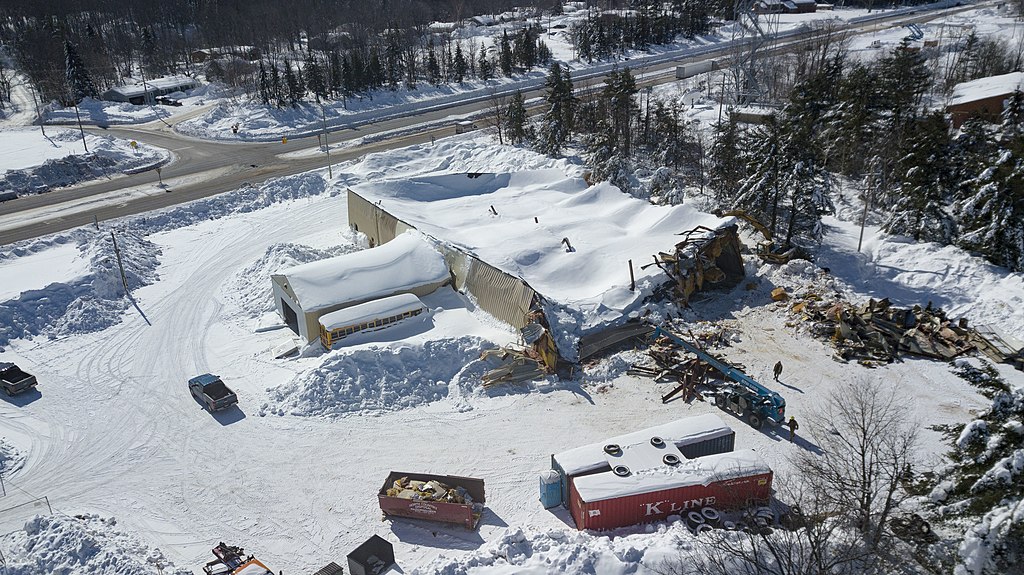
    In the spring of 2018, a building that Plaintiff, Tundra Mountain Holdings, LLC owned allegedly “suffered damages consisting of building roof failure due to snow load.” Plaintiff subsequently submitted a insurance claim to the Defendant, Markel Insurance Company. As per the report of Planning, Design & Compliance Engineers, it was recommended that snow guards be installed as a “life-safety concern” and that all 28 rafters be replaced with new beams but the recommendation of Planning, Design & Compliance Engineers did not state that replacing all 28 rafters was required by any law or ordinance nor was there any mention of replacing the metal roof on the building or anything about the water system or sprinkler system. 

    Rklawton, CC BY-SA 4.0 https://creativecommons.org/licenses/by-sa/4.0, via Wikimedia Commons

    Seim Construction’s proposal for estimate of repair based on the report submitted by Planning, Design & Compliance Engineers was for $687,500. Defendant only paid “$117,406.78” on Plaintiff’s claim because Defendant contended that the $687,500 repair estimate included upgrades that were not required by “ordinance or law.” Defendant subsequently sent Plaintiff a Reservation of Rights Letter stating that Plaintiff’s insurance policy excluded coverage for defective designs which in this case was the roof, the loss or failure of which was due to poor construction and not due to the alleged weight of ice and snow. 

    Plaintiff subsequently commenced this action on April 02, 2020 asserting a breach of contract claim, a tortious bad faith claims handling claim, and a breach of the covenant of good faith and fair dealing claim.  

    Insurance Claims and Accounting Expert Witness

    Plaintiff offered the testimony of Elliott S. Flood J.D., M.P.A to opine on insurance industry customs, practices, and standards. Elliott S. Flood  has over 30 years of experience in the insurance industry and has “worked as an investigator and defense attorney for major insurers, as well as insureds” and “as an executive for an insurance company” serving as “vice president of special investigations” and then as “senior vice president of internal audit.” 

    Defendant filed a motion to exclude some of his opinions. 

    Discussion by the Court 

    Flood opined that the amount of the bid from Seim Construction to repair to minimum code requirements was $687,500 and that Defendant’s payment of $117,406.78 did not meet the minimum code requirements to repair the losses. Flood also opined that Defendant lacked reasonable basis to exclude paying for the cost of repairs necessary to rebuild as per the minimum current building codes requirements as reflected in the Seim proposal.

    The Defendant called into question Flood’s expertise to render opinions related to Seim Construction’s bid, repair costs, building codes, and insurance contract interpretation because he is not a certified engineer or architect and he has no expertise in construction, renovation, or restoration of a commercial building. Flood also had no expertise in the application of the building codes or ordinances that applied at the relevant time. By Flood’s own admission, he lacked expertise in building codes and specifically only dealt with the general concepts of insurance and what they meant. 

    At his deposition, Flood testified that this case was a straightforward adjuster issue of building back to the code standards which involved meeting minimum requirements for repairing the loss that might imposed by the code. Defendant argued Flood’s lack of expertise in building codes made him unqualified to opine on whether Seim’s proposal adhered to legal requirements. His opinions on such issues therefore lacked a reliable basis. 

    Flood opined on the defective design exclusion. He contended that even if there was a flawed design, coverage wouldn’t be negated if a covered peril caused the loss, like collapse due to snow weight. Flood argued that Potter’s theories of the defective design exclusion were unsupported and criticized the Defendant’s decision to send a Reservation of Rights stating the loss or partial failure to the roof was due to poor construction and was not due to the weight of ice and snow letter based on it. Defendant asserted that Flood’s opinions amounted to legal conclusions and thus should be excluded. 

    Flood’s evaluation of the Defendant’s net worth was challenged by the Defendant on grounds of relevance but the Court held that the law found it relevant to a jury’s consideration of the amount of punitive damages citing Flood’s background as the former head auditor and Certified Public Accountant with special expertise in insurance accounting. 

    The Court granted the motion to exclude regarding the rest of Flood’s opinion, admitting Flood’s testimony only in part. 

    The Court also held that Flood opining on:

    • the amount of the bid from Seim Construction to repair to minimum code requirements or
    • the Defendant’s payment being short of the Seim Construction price, the lowest bid, to re-build back up to code or
    • the Defendant lacking reasonable basis to exclude paying for the cost of repairs necessary or
    • the defective design not defeating coverage or Potter’s theories being baseless or the Defendant’s lacking reasonable basis to send the Reservation of Rights letter

    encroached upon the province of the Court and the jury.  

    Held 

    The Court admitted Flood’s testimony in part.

    Key Takeaways: 

    1. Legal Conclusions: An expert witness is expected to examine and analyse the facts of the issues involved based on their training and expertise and opine on matters beyond the understanding of the lay person. Courts always reserve the authority to draw conclusions on matters involving questions of law and the expert is not permitted to breach the province of the Court or the jury. 
    2. Qualifications: The expert is not permitted to opine beyond the scope of their qualifications. Due to Flood’s lack of expertise in construction, renovation, or restoration of a commercial building or in the application of the building codes or ordinances applicable at the relevant time, the Court rejected Flood’s testimony regarding the Defendant’s payment being inadequate to cover the cost of repairs as per the minimum code requirements. 
  • Kentucky Court excludes testimony of Gender Equity Expert on Title IX Violations Case 

    Kentucky Court excludes testimony of Gender Equity Expert on Title IX Violations Case 

    Image: Female Athletes Participating in Sports - Title IX Violations Case

    Title IX violations expert testimony

    Plaintiffs, Elizabeth Niblock and Meredith Newman filed this class action complaint against the University of Kentucky Director of Athletics, Mitch Barnhart, President, Eli Capilouto and Board of Trustees (collectively “UK”) alleging practices violative of the Title IX of the Education Amendments Act of 1972, an act prohibiting sex-based discrimination of any form in any school or any other education program that receives funding from the federal government. UK has refused to add any female sports to help bridge the participation gap between male and female student athletes. Due to lack of women’s opportunities, female student athletes are being deprived of the same scholarship opportunities as male student athletes. In other words UK is promoting men’s sports at the expense and detriment to women’s sports.  

    Gender Equity Expert

    Plaintiffs have offered the testimony of expert, Donna Lopiano, the president of Sports Management Resources, LLC, her own, single-member LLC through which she runs a consulting practice “that focuses on helping educational institutions and sport organizations solve sports program integrity, equity, growth, and management challenges.” Donna Lopiano has opined that UK was not accommodating the interests and abilities of female students under Prongs One, Two, or Three of Title IX’s participation options which emphasize on the number of male and female student-athletes being proportional to the overall male and female student enrolment in the institution, on the school in question demonstrating a history and continuing practice of expanding athletic opportunities for female students to align with their interests and on schools with disproportionate athletics programs not currently expanding, to comply with Title IX by demonstrating that their existing program adequately accommodates the interests of female students. Lopiano further testified that UK failed to regularly and properly assess the interests and abilities of the underrepresented sex for the purpose of identifying unmet interests and abilities.  

    Lopiano also concluded that UK had only considered adding the financially least expensive and alumni/audience appealing women’s sports, women’s sports that have never appeared on UK interest and ability surveys. 

    Lopiano stated that UK would be unable to count its current UK sideline cheerleading squad and the dance team as varsity sports and participants as varsity athletes, whether or not coaches, scholarships or other services were being provided to these programs and also added that UK’s proposed plan to add a women’s Stunt and women’s junior varsity soccer team did not achieve Prong One gender equity. UK demanded exclusion of the testimony of Plaintiff’s expert Donna Lopiano. 

    Discussion by the Court 

    Defendant contended that all of Lopiano’s proposed opinions should be excluded considering they constitute legal conclusions or are otherwise inadmissible for various reasons such as lack of required qualifications or lack of a reliable basis. 

    The Court admitted the Defendant’s argument that Lopiano crossed the line into impermissibility when Lopiano opined about UK’s current compliance with Title IX. Plaintiff replied that Lopiano merely wanted to establish industry standards for compliance yet in her report Lopiano “compares what UK has done on all elements—compares it to what Title IX requires” and stated that her report was “all about the University of Kentucky’s fact situation compared to the Title IX standards.” Moreover, Lopiano’s expert report does not consist of opinions about other universities’ compliance. The Court held that Lopiano’s opinions amounted to legal conclusions. 

    Defendant also alleged that Lopiano’s opinions on participation derived from the Equity in Athletics Disclosure Act (“EADA”) survey analysis are premised on the cursory analysis performed by Lopiano and hence are unreliable, irrelevant, and unhelpful to the trier of fact. Lopiano testified that she compared a University’s EADA submissions with website participant counting data and actual NCAA (National Collegiate Athletic Association) squad lists instead of performing the comparison and using only publicly available EADA data to form the basis of some of her conclusions. 

    The Court also found that Lopiano ceased to examine the specifics of UK’s Cheer or Dance teams in performing her analysis and though Plaintiff contends this argument should go to the weight of Lopiano’s testimony instead of its admissibility, the Court held that whether certain teams should be counted for the purposes of Title IX compliance fell under its domain instead of Lopiano’s and henceforth it could not be reasonably concluded if Lopiano’s testimony was relevant or helpful to the trier of fact. 

    When the Defendant testified that Lopiano’s opinions regarding the UK’s athletic interest surveys should be excluded considering she was unqualified to offer such opinions, the Court observed that despite Lopiano’s extensive history and involvement in women’s sports and the area of Title IX, she was not a survey design expert and by her own admission had relied on another survey design expert’s work to form her own conclusions and held that her opinions regarding athletic interest surveys were beyond her area of expertise. 

    Since the proceedings are ongoing, the outcome of the case remains to be seen. 

    Held 

    The Court excluded the opinions and testimony of Plaintiff’s expert Donna Lopiano because they consisted of legal conclusions, lacked a reliable basis and Lopiano opined on topics beyond her area of expertise. The outcome of the case is yet to be decided since the issued involved in the case still remain unresolved. 

    Key Takeaways:

    1. Legal Conclusions: The Court found that Lopiano compared the University of Kentucky’s fact situation with the standards and requirements of Title IX of the Education Amendments Act of 1972 without following it up with reports of other universities’ compliance as was required for objective assessment. The Court, henceforth, concluded that the testimony of Lopiano amounted to legal conclusions in this case. 
    1. Reliability: The Court held that Lopiano’s conclusions lacked a reliable premise on account of being based on publicly available Equity in Athletics Disclosure Act (“EADA”) data instead of her own comparisons or specifics of UK’s Cheer or Dance teams not being adequately examined by her in performing her analysis. 
    1. Qualification: Though recognized as one of the foremost national experts on gender equity in sport, Lopiano, unfortunately, by her own admission is not a survey design expert. Usually the Court deems an expert qualified to opine if the topic is sufficiently within the confines of the expert’s scope of expertise but athletic interest surveys were not within the confines of Lopiano’s expertise.