Louisiana Minerals, Ltd., as lessor, and Weyerhaeuser, as lessee, are the successors in interest to a 1986 Timber Sale and Lease Contract (“Contract”).
LML asserted that Weyerhaeuser has entered into a significant number of unauthorized third-party agreements that impinge upon or adversely affect LML’s rights under the Contract. Damages were sought for harm caused by Weyerhaeuser’s alleged breach of contract and a declaration of the parties’ rights under the Contract to preclude Weyerhaeuser’s “unauthorized” activity going forward.
Both parties retained multiple experts to offer testimony concerning the interpretation of the parties’ agreement and calculation of damages. Weyerhaeuser Company filed a Daubert motion exclude the testimony of Patrick Ottinger while Louisiana Minerals, Ltd. filed a Daubert motion or alternative motion in limine to exclude or limit the testimony of Keith B. Hall.
Law And Legal Expert Witnesses
Patrick S. Ottinger has practiced mineral law for forty-nine years — including examining title for oil and gas purposes, has taught oil and gas courses at the Paul M. Hebert Law Center, Louisiana State University since 1996, and has authored numerous articles on a variety of issues involved in this field.
Professor Keith B. Hall practiced law for sixteen years focusing on oil and gas litigation and transactions prior to joining the LSU Law faculty in 2012. He has served as an expert on customs and practices within the oil and gas industry on numerous occasions, including disputes that arose in Louisiana. Hall also holds multiple academic and professional appointments that focus on mineral rights and energy law, including serving as Director of the Mineral Law Institute at Louisiana State University (LSU). He is also the co-author of four books on oil and gas law.
LML’s proffered expert, Ottinger was retained to give his “opinion as to the effect and import of the [Contract] … particularly as to the provisions contained therein relative to the right to exploit mineral resources in and under the [Property] affected by the [Contract], and to conduct surface activities, or to grant other surface rights, on the [Property] described in the [Contract].”
Weyerhaeuser sought to exclude Ottinger’s trial testimony on the basis that the opinions rendered in his expert report consisted entirely of legal opinions.
Weyerhaeuser pointed to Ottinger’s deposition testimony stating that his proposed testimony is “fairly characterized as an opinion about how the [Contract] might be interpreted in granting or reserving rights to minerals in the land, including how the Contract would be viewed as a legal instrument within the structure of the Civil Code.”
The Hall Motion
Hall was retained by Weyerhaeuser to opine on “customs, usages and practices of the oil and gas industry, and particularly … relevant to agreements governing a mineral owner’s and its mineral lessee’s right to use the surface of land to conduct mineral operations and the concurrent rights of others to use the surface.”
LML asserted that Hall did not possess the requisite knowledge, skill, experience, training or education to instruct the Court as the fact finder on custom and practices of timber leases or surface use agreements.
LML also claimed that Hall did not review documents showing the opinions or practice of mineral lessees or their interpretations of the Contract as it pertains to surface use on the Property.
Analysis
Having carefully reviewed Ottinger’s expert report and deposition testimony, and particularly considering his years of experience as an oil and gas title examiner, professor of law, and mineral lawyer, the Court is satisfied that he possesses knowledge that may assist the trier of fact in understanding how the issues presented in this case conform to the customs and usages in the oil and gas industry.
As a result, Ottinger was allowed to testify, based on custom and usages, as to how the Contract and third-party agreements of the kind in dispute work in the oil and gas industry. However, Weyerhaeuser’s point is well taken that, “it is inappropriate to allow an expert to opine on legal conclusions, even in a bench trial.” Accordingly, Ottinger was barred from testifying about the legal effect and meaning of the Contract.
Hall’s experience as an oil and gas lawyer and an expert on customs and practices within the industry, coupled with his multiple academic and professional appointments and related authorship, are all indicia that he possesses knowledge that will assist the Court in understanding the custom and practice regarding the agreements that LML now challenges. While Hall was allowed to testify about how the Contract and third-party agreement of the kind in dispute operate in the oil and gas industry, the Court did not permit Hall to testify about the legal effect or meaning of the Contract.
Held
The Court granted in part and denied in part the Defendant Weyerhaeuser Company’s Daubert motion to exclude the testimony of Patrick Ottinger.
The Court granted in part and denied in part LML’s Daubert motion to exclude the testimony of Keith B. Hall.
Key Takeaway:
It is inappropriate to allow an expert to opine on legal conclusions, even in a bench trial. Accordingly, both Ottinger and Hall were barred from testifying about the legal effect and meaning of the Contract.
Please refer to the blog previously published about this case:
This case is a breach of good faith and fair dealing and breach of contract due to Defendant CSAA General Insurance Company denying Plaintiff George Richardson’s roof damage claim that occurred on September 23, 2023.
Defendant filed a Daubert motion to exclude the testimony of Plaintiff’s expert witness, Michael Pruitt.
Engineering Expert Witness
Michael Pruitt, P.E. has over 30 years of experience in engineering, code compliance, and construction. He has conducted more than 1,500 forensic investigations. His expertise spans commercial and residential roof inspections, foundation investigations, building envelopes, and structural evaluations.
Although Defendant did not generally challenge the qualifications of Pruitt to testify as an expert, it did argue that at least one of his opinions should be excluded because he does not have any metallurgy expertise. Plaintiff countered that Pruitt is an engineer who serves primarily as an insurance defense expert witness and, in fact, Pruitt has worked for Defendant in the past and is currently involved in one of Defendant’s cases. Based on Pruitt’s more than 30 years of engineering and construction experience, as well as his extensive forensic investigation experience, the Court concluded that he possessed the necessary skill, experience or knowledge to be qualified to offer the opinions in his report.
As it specifically relates to his opinion regarding degradation of the metal roofing based on loss of granules, Pruitt offered an explanation supporting his opinion based on the manufacturer’s sales materials. Nothing about this opinion indicated that Pruitt needed to be a metallurgist to opine on the effects of loss of granules from the roof at hail impact sites, particularly considering the roof manufacturer’s own product material statements.
Reliable Methodology of Pruitt’s Opinions
Defendant argued that Pruitt’s opinions lacked a reliable methodology because his opinions were contradicted by the roofing manufacturer’s testing and product materials. Defendant further argued that Pruitt’s opinions were inadmissible because he had conducted no independent testing, and his opinions were not supported by peer-reviewed publications.
Pruitt set forth his opinions and the basis upon which he arrived at those opinions in his report. In doing so, he documented the observable damage and explained what damage he believed to be hail damage and its severity.
Much of Defendant’s Daubert Motion appeared to rely not on Pruitt’s report or his opinions expressed therein, but on his responses to deposition questions regarding the roofing materials manufacturer’s product information.
The fact that Defendant disagreed with Pruitt’s conclusions or believed other evidence contradicted those conclusions was not a basis upon which to exclude Pruitt’s opinions. To the extent Defendant disagreed with Pruitt’s opinions and conclusions, “vigorous cross-examination, presentation of contrary evidence, and careful instruction on the burden of proof were the traditional and appropriate means of attacking shaky but admissible evidence.”
Therefore, the Court concluded that Pruitt’s opinions relied on and were based on a sufficiently reliable methodology to be admissible.
Held
The Court denied Defendant’s Daubert motion to exclude the testimony of Plaintiff’s expert witness Michael Pruitt.
Key Takeaway:
An expert’s personal experience, training, method of observation and deductive reasoning could be sufficiently reliable to constitute valid methodology. It should be noted that Pruitt’s method did not involve application of any controversial scientific process or theory.
Case Details:
Case Caption:
Richardson V. CSAA General Insurance Company
Docket Number:
6:24cv247
Court Name:
United States District Court for the Eastern District of Oklahoma
The Plaintiffs had purchased timeshares at the Westgate Smoky Mountain Resort. They alleged that the Defendants, comprising various entities linked to the resort, operated a high-pressure sales scheme. According to the Plaintiffs, this scheme persuaded prospective buyers to invest in the vacation timeshare program without properly disclosing critical and legally mandated information.
On March 13, 2020, Plaintiffs disclosed Alec Fahey as their expert witness. Fahey stated that the Plaintiffs asked him “to determine whether alter ego and control factors [he] analyzed establish, from a financial and accounting standpoint, that the Defendants are alter ego of each other and whether Central Florida Investments, Inc. controlled the other Defendants.”
Alec Fahey is a certified public accountant, a certified fraud examiner, and is certified in financial forensics. He is a member of the American Institute of Certified Public Accountants and to the Association of Certified Fraud Examiners.
Fahey’s professional background includes over 26 years of experience in financial and accounting investigations” and “8 years of experience in tax compliance, auditing, and financial reporting conducted in accordance with Generally Accepted Auditing Standards and Generally Accepted Accounting Principles.” He has also “conducted and managed the accounting and financial evaluation aspects of many litigation and insurance matters related to the measurement of business damages, financial impact analysis, as well as financial fraud investigations.” In addition, he has been the project manager and a participant in financial investigation assignments, including those involving rental property and real estate.
Defendants first argued that Fahey lacked the necessary qualifications. They next claimed that his “sole opinion amounted to a legal conclusion.” They further contended that he disregarded Tennessee law and failed to use a valid methodology. Finally, Defendants maintained that the foundation for his opinions was inadequate and that his conclusions were unreliable.
Fahey’sQualifications
Defendants stated that “Fahey is a forensic accountant who did not analyze a single accounting-related document and whose sole opinion is a legal conclusion that Defendants are all alter egos of one another.” According to Defendants, “Fahey has never before offered opinions without reviewing accounting or financial records.”
Defendants stated that since his work did not involve forensic accounting, “Plaintiffs cannot meet their burden to establish that Fahey is qualified to offer his opinion because they cannot establish that his qualifications provide a basis to answer the specific question, that his supposed specialized knowledge is more than a subjective belief, or that it is more than a summary of information from the parties.”
Defendants’ primary argument is that Fahey “did not look at any financial or accounting records.” But Plaintiffs contended that “Defendants provided few, if any, financial documents for him to review.” And, as Plaintiffs pointed out, Fahey did “review numerous financial records of the Homeowners’ Association, which gave a financial picture of the Defendants and their alleged commingling of funds.”
During his deposition when asked about his alter ego analysis, Fahey testified, “I’ve been doing this work for many years. I have studied, I’ve taken courses, and I have developed from personal education and outside education about this analysis.” As a result, the Court found Fahey qualified to render his opinions in this case.
Fahey’sAlleged Legal Conclusion
According to Defendants, “Fahey’s formal, written opinion is that ‘Defendants are alter egos and interdependent of each other.’” They asserted that this opinion is an inadmissible legal conclusion.
While Fahey may discuss the significance of certain facts that are indicative of Defendants’ alleged alter ego, the Court found that Fahey’s opinion asserting Defendants were alter egos amounted to a legal conclusion.
Fahey’s Methodology
To the extent Fahey employed any methodology,” Defendants asserted that “it was the wrong methodology because it directly contradicted Tennessee law.”
Plaintiffs responded that Fahey “investigated complex business records from an accounting and forensic perspective and drew logical conclusions and opinions about the connectedness and relationships between the entities in question.”
Specifically, Defendants argued that Fahey’s opinions did not address the elements to pierce the corporate veil.
During his deposition, Fahey testified that different states apply different factors, and that he utilized the factors he understood to be applicable, but he did not specifically look at the list of factors that would apply in Tennessee. However, the Court did not find Fahey’s opinions to be so lacking in reliability as to render it to be the “exception to the rule.”
The Basis for Fahey’s Opinions
Defendants claimed that “Fahey’s work consisted of conducting online research as to public records for various Defendants.” They submitted that he did not review Plaintiffs’ depositions and that he was not aware several of Defendants’ practices that he referenced in his report were common in American business.
Fahey details the items that he reviewed to prepare his opinions. During his deposition, Fahey stated that he was not sure if it was common for related entities to share a brand name but that it was possible.
Defendants asked whether it was “common for related entities to use one merchant processing account to accept payments,” and Fahey responded that it was possible, but it would create a problem with separating the operations. As a result, the Court found that Defendants’ challenges were not grounds for excluding Fahey.
Held
The Court granted in part and denied in part the Defendants’ motion to exclude the opinions of Alec Fahey.
Key Takeaways:
Mere weaknesses in the factual basis of an expert witness’ opinion bear on the weight of the evidence rather than on its admissibility.
Rule 704 requires that an expert’s testimony be helpful to the jury. Legal conclusions are not considered helpful because they “do little more than tell the jury what result to reach.”
Please refer to the blog previously published about this case:
This dispute involves injuries sustained by Plaintiff Virginia English (“Plaintiff”) when she fell in a Hollister Co. store at the Greenwood Mall in Bowling Green, KY (the “Hollister Store”). English alleged that she was looking at some clothes while walking out of the right side of the store when she tripped over a clothes rack and fell.
Defendants Abercrombie and Fitch Stores, Inc. d/b/a Hollister Co. and Abercrombie & Fitch Management Co. (collectively, the “Abercrombie Entities” or “Defendants”) filed a motion to exclude the testimony of David Johnson (“Johnson”), English’s expert witness. Meanwhile, English filed a motion to exclude the testimony of Defendants’ expert, Randy Gray (“Gray”).
Safety Expert Witnesses
David Johnson is a board certified safety professional. He performs forensic engineering and safety expert witness work for attorneys and insurance adjusters for cases involving slips, trips, missteps and falls, falls from elevation, stairway falls and industrial accidents.
Randy Gray has over 25 years of conducting OSHA inspections of workplaces based on federal and state regulations, while being employed at Kentucky Labor Cabinet, Division of Compliance, Occupational Safety & Health. He has also worked fifteen years in the private sector as the President of Grayhawk Advantage, Inc., where he provides expert witness investigation services and reports regarding hazardous workplace conditions that caused injuries to clients.
He has a Bachelor of Science degree from Murray State University in Occupational Safety & Health, a Masters degree in Science from Murray State University in Occupational Safety & Health, and twenty-five years of specialized training courses at the Occupational Safety and Health Training Institute.
English offered the opinion of David Johnson to show that the clothing rack “formed a low profile, low contrast, inconspicuous obstruction in a foreseeable passageway/walkway that was unsafe and unreasonably dangerous.”
Defendants asserted that Johnson’s report is not reliable because it is based on his own speculation and on incomplete information. Defendants also asserted that Johnson’s testimony is unreliable because “his own testimony contradicts his assumptions,” and that “Johnson cites no applicable codes or regulations with which the clothing rack failed to comply with.”
Reliability
However, the Court found nothing wrong with Johnson’s assumption that English fell when “her foot be[came] stuck and then unstuck under the clothing rack.” It did not constitute “subjective belief based on speculation and incomplete information” because Johnson did not fabricate that English’s foot became stuck under the rack. In fact, English’s medical records state that she “sustained a Type III RTC from falling when her foot caught on a rolling clothes hanger in the store.” Therefore, the argument that Johnson’s opinion is based on unsupported speculation is unpersuasive, as Johnson’s assumption that English fell when her foot became stuck under the clothing rack is supported by evidence in the record.
Defendants challenged Johnson’s opinion that the clothing rack constitutes a platform or a display base because “the feet of clothing rack were below knee-level and/or under three feet in height.” Defendants also argued that because the feet of the rack cannot be separated from the clothing rack, Johnson’s opinion must be excluded as it is in direct contradiction of his own testimony and would also mislead the jury and confuse the issues. And Defendants challenged Johnson’s opinion because he opines that Hollister did not violate any applicable codes, and because he based his opinion on the existence and placement of the clothing rack, not whether the clothing rack was defective.
The Court held that the objections raised by Defendants regarding Johnson’s reliability go to the weight that should be given to the expert’s opinions, and not to their exclusion.
Relevance
Defendants asserted that Johnson’s opinion regarding the lighting of the clothing rack was irrelevant because “he did not observe the rack with the additional holiday lighting that was placed.”
However, the Court held that Johnson relied upon the testimony taken in the case, including of the store manager who testified that the store is dim, dimmer than most other stores in the mall, and that the lighting can create shadows on the floor.
Moreover, the fact that Johnson did not observe the rack with the additional holiday lighting is a potential limitation to his opinion, the weight of which can be decided by a jury.
Defendants also argued that Johnson’s opinion that the rack was unexpected would confuse the jury because the Sixth Circuit has already taken judicial notice that clothing racks are expected in department stores during the holiday shopping season. The Court ruled that Johnson’s opinion about the rack being unexpected is specific to the facts of this case, not that all clothing racks in a store are unexpected.
Randy Gray
Defendants retained Randy Gray “to render an opinion regarding the December 18, 2022, fall accident of English.”
Qualification
With twenty-five years of specialized training courses at the Occupational Safety and Health Training Institute, Gray was found qualified by the Court under Rule 702 and Daubert to offer expert opinions on whether an unsafe and dangerous condition existed at Hollister, and whether Hollister failed to inspect, maintain, remedy, or warn of that condition.
Relevance and Unduly Prejudicial
English also argued that Gray’s opinion that Defendants did not violate any Codes of Federal Regulation “will not assist the trier of fact and its probative value is substantially outweighed by the danger or confusing the issues or misleading the jury.”
In this case, the Court held that Gray’s testimony will assist the trier of fact in determining whether a dangerous condition existed at the time of English’s fall. First, although OSHA standards apply to employees, Gray’s opinion could still help jurors determine whether an unsafe condition existed at the time of English’s fall. Second, the objections raised by English go to the weight that should be given to the expert’s opinions, and not to their exclusion.
Since this opinion is not unfair or inappropriate, the jury would be within its discretion to credit Gray’s testimony to conclude that a dangerous hazard did not exist.
Held
The Court denied Hollister’s motion to exclude David Johnson’s testimony.
The Court denied English’s motion to exclude Randy Gray’s testimony.
Key Takeaway:
An expert may express an opinion that is based on facts that the expert assumes, but does not know, to be true. Stated another way “an opinion may be based on facts that are ‘assumed,’ or ‘hypothetical’ at the time of the report, provided that those facts are ultimately ‘established’ by other, independent evidence.” Therefore, the argument that Johnson’s opinion is based on unsupported speculation is unpersuasive, as Johnson’s assumption that English fell when her foot became stuck under the clothing rack is supported by evidence in the record.
Plaintiff Mark Sabti, a Slot Technician at Greektown Casino, brought this products liability action against Interblock USA, the manufacturer of the Universal Cabinet Craps machine. Sabti alleged design defects and a breach of implied warranty of fitness by the Defendant after the machine’s gas springs failed. The hood of the machine fell and injured his back.
Dr. Stephen Batzer prepared a Rule 26 Report opining that Defendant should have utilized a prop rod or self-locking gas springs, which are used on other gaming machines to hold the hood in place in its elevated position.
However, Defendant filed a motion to strike Plaintiff’s expert Batzer contending he has no experience in the design of casino games or machines utilizing gas springs.
Mechanical Engineering Expert Witness
Stephen Batzer has a Ph.D. in Mechanical Engineering. He is a board-certified forensic engineer and has worked as a forensic engineer. He holds three safety patents and is a member of the American Society of Mechanical Engineers and the Society of Automotive Engineers.
Batzer is expected to testify, consistent with his report, that Defendant was negligent in its design of the subject machine and that the subject machine is not fit for its intended use. He also identified alternative means that should have been utilized by the Defendant to prevent uncontrolled descent of the hood of the machine after it had been opened.
To begin with, Batzer relied on the testimony of fellow slot technician James Thiellesen, who testified that other gaming machine manufacturers utilize self-locking gas spring which would prevent the uncontrolled descent of the hood.
Moreover, Sean Matson, Slot Technician Manager at Greektown Casino, also testified that both Aristocrat and Light & Wonder gaming machines use prop rods or hinges that hold the hood in place so that it does not come down uncontrollably.
The Court rejected Defendant’s argument that Batzer is not qualified because he has no experience working on casino gaming machines. Nor was the Court persuaded that Batzer’s opinion was unreliable because he did not perform any scientific analysis or testing.
Held
The Court denied the Defendant’s motion to exclude the testimony of Stephen Batzer.
Key Takeaway:
The Court upheld the admissibility of Stephen Batzer’s expert testimony despite his lack of direct experience with casino gaming machines. These issues also go to the weight to be accorded Batzer’s testimony, not to its admissibility. After all, he has specialized in forensic engineering and safety analysis for twenty years.
Case Details:
Case Caption:
Sabti v. Interblock USA A K A Interblock Luxury Gaming Prods., LLC
Docket Number:
23cv12620
Court Name:
United States District Court for the Eastern District of Michigan, Southern Division
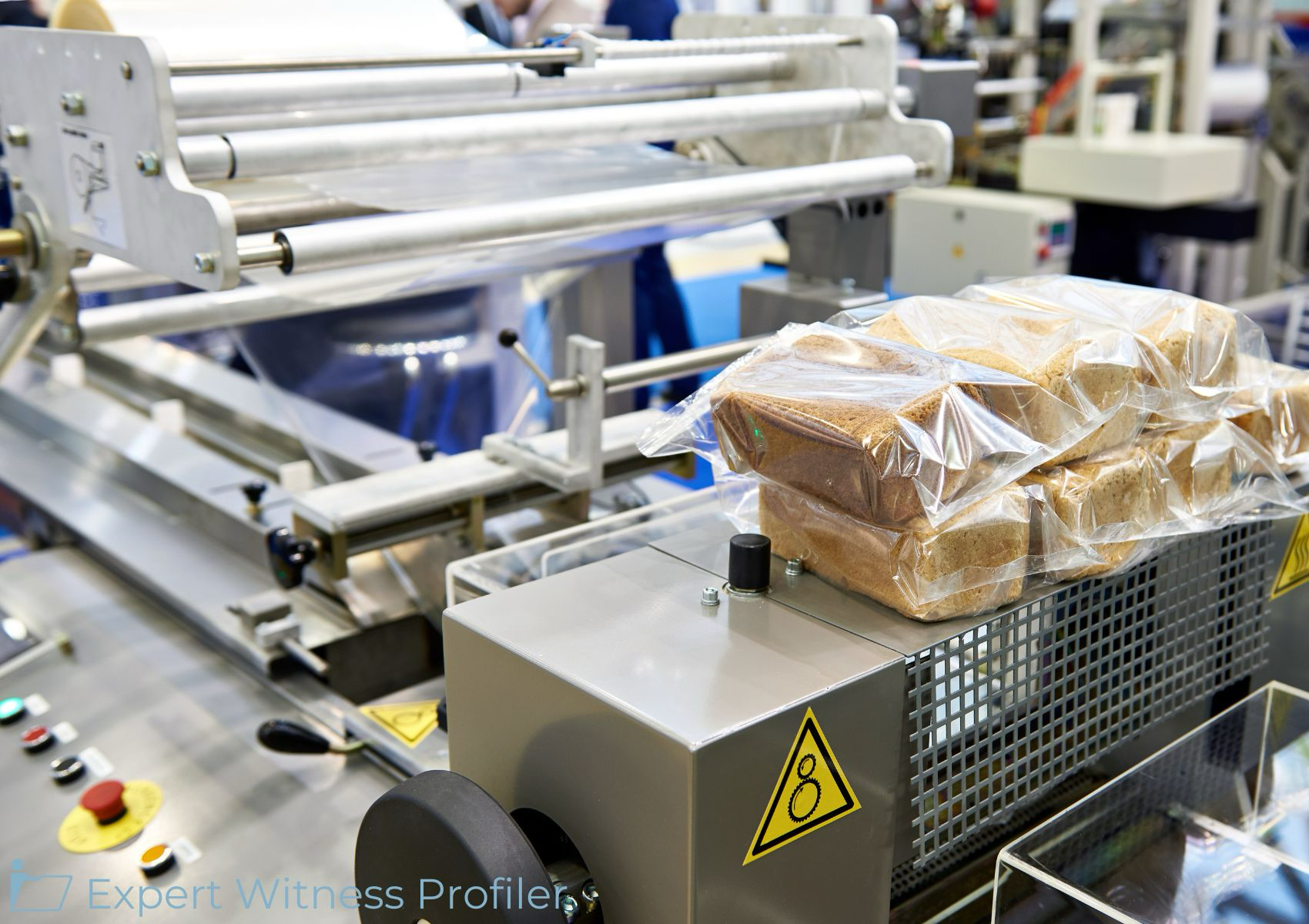
This case arises out of Delta’s delayed donut wrapping system. In late 2021, Bon Appetit Danish, Inc. and Bon Appetit Specialty Snacks, LLC (collectively, “Bon Appetit”) and Delta Systems and Automation, LLC’s (“Delta”) entered into a set of three contracts for Delta to manufacture packaging systems for Bon Appetit’s baked goods.
But the donut packaging system failed to launch. After further testing failed to resolve the performance issue, Bon Appetit terminated all three contacts on April 14, 2023.
Bon Appetit sued Delta over a contract dispute involving Overwrapping Systems, claiming $6,214,505 in labor costs as direct damages resulting from Delta’s alleged breach. Bon Appetit’s expert, Joseph Wheat, testified that these labor costs were directly caused by Delta’s failure to deliver properly functioning systems.
Delta countered, arguing that the labor costs were consequential damages, barred by the Limitation of Liability provision, because they stemmed from Bon Appetit’s internal plan to use the Overwrapping Systems.
Delta moved to exclude Wheat’s testimony, asserting that the labor costs were derivative losses arising from circumstances that are particular to the contract or to the parties.
Additionally, Bon Appetit sought to introduce Lyle Rogalla as an expert to testify about the norms, customs, and practices, of the baked goods overwrapping industry.
Delta opposed, arguing that Rogalla was unqualified to testify specifically about donut overwrapping systems and that his opinions were unreliable under Rule 702.
Accounting Expert Witness
Joseph Wheat, CPA/ABV, CFF, is a Senior Vice President at J.S. Held, a global consulting firm specializing in a wide variety of forensic analysis.
A Certified Public Accountant licensed to practice in California since 1993, Wheat has over 20 years of experience testifying as an expert witness on economic damages issues in both federal and state court matters.
Wheat has performed numerous business valuation related to marital dissolutions, tax and estate matters and partnership disputes.
Lyle Rogalla has led the development of advanced packaging and food processing equipment, delivering innovative, high-value solutions that optimize production processes and reduce costs for clients ranging from small businesses to Fortune 100 companies.
His portfolio is enriched by 29 patents, encompassing both utility and design, for industrial and commercial applications. He has collaborated with over 100 machine manufacturers to deliver extensive automation and equipment solutions tailored to the clients’ specific needs.
A. Motion to Exclude Damages Opinions of Joseph Wheat
The Court considered Delta’s motion to exclude the opinion of Bon Appetit’s expert, Wheat, who attributed $6,214,505 in labor costs to Delta’s alleged breach of contract.
The core issue was whether these costs were direct damages, which may be recoverable, or consequential damages, barred by the the Limitation of Liability provision. Direct damages (also called general damages) flow “directly and necessarily from a breach of contract, or that are a natural result of a breach.”
Consequential damages (also called special damages) are “secondary or derivative losses arising from circumstances that are particular to the contract or to the parties.”
In this case, Bon Appetit’s labor costs are considered consequential damages since they stem from Bon Appetit’s unique plan to use the Overwrapping Systems to streamline production and eliminate certain employee positions, a point Bon Appetit will argue through Wheat’s evidence of the system’s added efficiency.
The Court excluded Wheat’s opinion concerning Bon Appetit’s labor costs pertaining to consequential damages.
B. Motion to Exclude Expert Opinions of Lyle Rogalla
Delta moved to exclude the opinion of Bon Appetit’s expert, Rogalla, arguing that he lacked the necessary qualifications to opine on donut overwrapping systems and that his methodology was unreliable under Daubert and Rule 702 due to an alleged lack of supporting facts or data.
The Court disagreed. It found that Rogalla was qualified to testify based on his decades of experience with “solutions for complex automation and packaging needs . . . with emphasis in the food industry,” including “packaging and process automation, the preparation of specifications for the machines and the goods handled by the machines, testing, and modifying the machines and specifications to address both process quality and efficiency.”
Insofar as the Donut System diverged from Rogalla’s experience with other food packaging systems, the Court held that it concerned the weight of his testimony, not its admissibility.
The Court also found that Rogalla had relied on a sufficient factual basis, including the Complaint, contract documents, Delta’s website, and federal regulations. Challenges to the depth or nature of that evidence, the Court concluded, were issues of credibility and weight, appropriate for cross-examination, not grounds for exclusion.
Held
The Court granted Delta’s Daubert motion to exclude Joseph Wheat’s opinions.
The Court denied Delta’s Daubert motion to exclude the testimony of Lyle Rogalla.
Key Takeaways:
Not all foreseeable damages are direct damages, as consequential damages may be “foreseeable and proximately caused by the breach of a contract.”
An expert might draw a conclusion from a set of observations based on extensive and specialized experience.
Case Details:
Case Caption:
Bon Appetit Danish, Inc. v. Delta Sys. & Automation LLC
Docket Number:
2:23cv04305
Court Name:
United States District Court for the Central District of California
Cindy Jostworth’s insurance carrier, American Strategic Insurance Corp. (ASIC), has filed a negligence claim against Craig and Elizabeth Meyer. ASIC, acting under its right of subrogation, asserted that the Meyers’ negligent burning of yard waste and debris resulted in a fire that spread and destroyed Jostworth’s residential property at 5558 Silverpoint Drive, Cincinnati, Ohio. Plaintiff’s forensic engineer and fire investigator Kevin Cronan, P.E. concluded that the Meyers’ actions caused the fire.
Arguing that Ohio law requires a private investigator license, the Defendants claimed that Cronan’s testimony is inadmissible because neither he nor U.S. Forensic possesses such a license.
Fire Investigation Expert Witness
Kevin Cronan holds a bachelor’s degree in mechanical engineering and is a licensed professional engineer in 27 states, including Ohio. He also possesses numerous fire certifications, has extensive experience in fire investigations, and volunteers with the fire department.
The Court ruled that Cronan’s fire investigation, conducted in accordance with the NFPA 921, provided a reliable basis for his expert opinions. Moreover, the Defendants’ attempt to block Cronan’s testimony on the fire’s origin and cause is misplaced. This testimony is crucial to establishing the Defendants’ alleged negligence and, therefore, is clearly relevant.
Held
The Court denied the Defendants’ motion to exclude the testimony of Kevin Cronan.
Key Takeaway:
Court upheld the admissibility and reliability of expert fire investigation testimony, even in the face of challenges regarding licensing, by confirming that the expert’s qualifications and adherence to established industry standards (NFPA 921) were sufficient.
This matter stems from a motor vehicle accident that occurred on May 21, 2023 when the vehicle driven by Plaintiff, Juwan Brown, and occupied by his parents, Clarence and Tawanna Brown, was struck by a commercial vehicle driven by Dashawn Brooks.
The commercial vehicle was owned by Penske Truck Leasing Co. and leased by Defendant Mayflower Laundry & Linen. As a result of the accident, Plaintiffs have alleged that they have sustained various injuries and damages.
Defendants retained Lynda Kopishke “to provide a rebuttal report in response to the reports of Plaintiffs’ life care planning experts.” In her reports, Kopishke opined on the medical necessity of treatment that is recommended by Plaintiffs’ medical and vocational consultants and included in the life care plan for each Plaintiff. Plaintiffs argued that Kopishke’s opinions are “well beyond the scope of her expertise.”
Nursing Expert Witness
Lynda Kopishke, DL, MSN, RN received her diploma in Nursing from St. Francis Hospital School of Nursing in Wilmington, Delaware. After several years of successful practice, Kopishke attended Wilmington University, where she obtained a Bachelor of Science and a Master of Science in Nursing degree. At Widener University School of Law, Kopishke received her Doctorate of Laws in Health Care Policy. She has served on various nursing boards at both the local and national levels. Kopishke’s practice settings include adult and neonatal intensive care, home health nursing, rehabilitation, Legal Nurse Consulting, and infusion therapy.
Plaintiffs focused on the qualification element of Rule 702, arguing that Kopishke, although she is a qualified nurse and life care planner, is not qualified to offer opinions related to the propriety of treatment recommendations because she is not a physician.
However, the Court held that she holds bachelor of science and master of science degrees in nursing, and a doctor of laws in health care policy. She has worked as an interim care and direct care nurse, providing skilled nursing assessments for home health clients and acted as a manager supervising workers in a home health agency, worked as a rehabilitation specialist and nursing supervisor, and has been a nursing instructor for fifteen years. In addition, she has worked as a consultant for attorneys and insurers, providing medical expertise including in the area of life care planning. Although she may not be the most qualified to offer an opinion on the necessity of future treatments, procedures, and services, that is a matter of weight for the jury to determine.
Held
The Court denied the Plaintiffs’ motion to preclude the testimony of Lynda Kopishke.
Key Takeaway:
Kopishke has extensive experience as a rehabilitation specialist and nursing supervisor. Despite her lack of a medical degree, the Court refused to exclude her opinion on the medical necessity of treatment that is recommended by Plaintiffs’ medical and vocational consultants.
Case Details:
Case Caption:
Brown Et Al V. Brooks Et Al
Docket Number:
5:23cv2966
Court:
United States District Court, Pennsylvania Eastern
Jeremy Knorr (“Plaintiff”) worked as a firefighter for the Daisy Mountain Fire District (“the District”) from 1992 until 2019, when he was terminated at least in part due to his inability to comply with a new fitness policy (“the Health Center Policy”), adopted by the Daisy Mountain Fire District Board (“the Fire Board”) in late 2017, that required all District firefighters to take a yearly treadmill test and receive a Metabolic Equivalent Task (“MET”) score—which is a measure of cardiorespiratory and aerobic fitness—of at least 12.
In this action, Plaintiff has sued the District, the Fire Board, and the individual members of the Fire Board (together, “Defendants”) for age discrimination and retaliation in violation of the Age Discrimination in Employment Act (“ADEA”) and for disability discrimination in violation of the Americans with Disabilities Act (“ADA”).
Defendants retained Mark Hyland to “review and analyze the necessity for, and the requirements of, the Health Center Policy at the Daisy Mountain Fire District and to explain the various tests offered by the District to measure cardiovascular and aerobic fitness ability” while Plaintiff retained Michael Stokes to “calculate and revise the present value of the loss of earnings, income and fringe benefits sustained by Plaintiff.”
Plaintiff moved to exclude the opinions of Hyland while Defendant filed a motion to exclude the opinions of Stokes.
Occupational Therapy Expert Witness
Mark Hyland is a licensed occupational therapist, is “certified in functional capacity evaluation,” has been the director of clinical operations at STI for nearly 30 years, has “performed extensive research and analysis into the health and fitness needs of local business in various industries” including “the Phoenix, Glendale, Goodyear, Prescott and Tempe Fire Departments,” has “consulted on the subject of various government rules, regulations, and laws, including the [ADA] and OOSHA compliance,” and has testified as an expert in multiple occasions since 2001.
Michael J. Stokes earned a Master’s in Business Administration from the Isenberg School of Management at the University of Massachusetts Amherst with a focus in entrepreneurship. He is a partner at Beta Business, a leading consulting firm throughout the Southwest. Beta Business provides economic analysis reports, research and expert testimony for economic damage claims involving personal injury, wrongful death, employment (loss of earning capacity) and more.
Hyland opined that the “the District has a legitimate interest and duty to determine and ensure its employees can perform their duties safely.”
Plaintiff moves to preclude Hyland from testifying on the grounds that “1) Hyland is not medically qualified to testify regarding several areas and 2) the few areas he may have experience with do not require expert testimony.”
Hyland is not medically qualified to testify regarding several areas
Plaintiff’s primary objection to Hyland’s remaining opinions is that Hyland is unqualified to render them because they call for medical expertise but Hyland is not a doctor and did not play a direct role in administering the treadmill tests at STI. Although this challenge is not frivolous, the Ninth Circuit has emphasized that Rule 702 “is broadly phrased and intended to embrace more than a narrow definition of qualified expert.”
The Court is satisfied that this background, training, and experience as the director of clinical operations provides the necessary “minimal foundation” for Hyland to be qualified to opine on the the suitability and necessity of the Health Center Policy for firefighters; whether Plaintiff’s inability to comply with the Health Center Policy precluded Plaintiff from performing the functions of his job; the differences between the treadmill test, the walking test, and the bike test; and how Plaintiff would have fared on the latter two tests.
Nor is there any merit to Plaintiff’s contention that Hyland’s opinions on these topics should be excluded because they are contradicted by other evidence. As the Ninth Circuit has repeatedly emphasized, “[s]haky but admissible evidence is to be attacked by cross examination, contrary evidence, and attention to the burden of proof, not exclusion.”
The few areas Hyland may have experience with do not require expert testimony
As an initial matter, Plaintiff argues in his motion that several of Hyland’s proffered opinions should be excluded as irrelevant and unfairly prejudicial because they relate to obvious, undisputed issues that do not require expertise.
However, Defendants make no effort to respond to these arguments in their response. Instead, they contend— incorrectly—that “the only opinions [Plaintiff] challenges are Hyland’s opinions regarding the fitness tests provided to the District’s employees, the suitability and availability of other tests, and [Plaintiff’s] overall health and fitness levels” and then proceed to offer a defense of those opinions. It follows that Defendants have forfeited any defense of the subset of Hyland’s opinions challenged on relevance/403 grounds and have thus not met their burden of establishing the admissibility of those opinions.
Accordingly, the Court excluded Hyland’s first (“Firefighters require a high standard of physical fitness for safe and efficient job performance for their essential job demands.”), second (“The District had a legitimate interest and duty to determine and ensure its employees can perform their duties safely and that its employees are not a danger to themselves, their coworkers, and members of the public”), and fifth (“Cardiovascular standards are necessary for firefighters to adequately perform their job and for the health and safety of the firefighters, their coworkers, and the public.”) opinions.
Hyland’s opinions are not based on methods and procedures of science, but rather on subjective belief or unsupported speculation
Plaintiff’s motion also raises a fleeting challenge to the reliability of Hyland’s opinions but Hyland explains in his report that the Health Center Policy “was developed and based upon National Fire Protection Association (‘NFPA’) 1500 & 1582,” which “standards include, among other factors, spirometry pulmonary function screening and sub-maximal ECG performance tests”; that Hyland has also reviewed “[r]esearch with firefighters [that] indicates that a minimum aerobic capacity of 12.0 METS . . . is necessary for safe fire ground operations.” The Court held that Hyland has adequately explained how his opinions are “grounded in an accepted body of learning or experience in the expert’s field” and has also adequately “explain[ed] how the conclusion is so grounded.”
Hyland’s opinions are not subject to exclusion based on late disclosure
As background, under the scheduling order in this case, expert opinions were subject to a staggered disclosure schedule—the “party with the burden of proof on an issue” was required to provide expert disclosures by a certain date and the “responding party (not having the burden of proof on the issue)” was required to provide expert disclosures about a month later. Both sides were subject to the same deadline for completing expert depositions, which was about a month after the responding party’s disclosure deadline.
Plaintiff’s hyper-technical argument, raised for the first time in his reply, is that because Defendants have now clarified that Hyland’s opinions are intended to support Defendants’ affirmative defenses (as opposed to being used to undermine Plaintiff’s claims), they should have been disclosed by the first expert disclosure deadline in the scheduling order rather than the second, slightly later one. But even assuming this is correct, the Court held that the fact that Hyland’s opinions were disclosed about one month late would not automatically compel their exclusion.
As per Rule 37, any late disclosure was harmless because Plaintiff still received Hyland’s report more than a month before the expert-deposition deadline and was, in fact, able to depose him by that deadline.
Michael Stokes
Stokes calculated the present value of the loss of earnings, income and fringe benefits sustained by Plaintiff as $749,041. When doing so, Stokes assumed that but for Plaintiff’s termination, Plaintiff would have worked for an additional 13.5 years as a firefighter. Stokes also used Plaintiff’s past earnings as a firefighter as the foundation for his assumptions about what Plaintiff would have earned during this 13.5-year period.
Defendants argued that Stokes’ opinions should be excluded because they are based on the false assumption that Plaintiff would have worked for another 13.5 years as a firefighter but-for his termination. According to Defendants, this assumption is false because Plaintiff successfully applied for disability benefits in 2020, with a disability onset date of February 20, 2019. Defendants conclude: “Stokes’ did not know [Plaintiff] is disabled. This fundamental error permeated throughout Stokes’ entire analysis, including wrongfully relying upon a ‘normal work life expectancy’ rather than a disability work expectancy, and wrongfully assuming no disability exists in his calculation of [Plaintiff’s] claimed economic damages.”
Stokes’ opinion is based upon incorrect and incomplete facts
Stokes assumed, for purposes of his calculations, that Plaintiff would have worked for another 13.5 years as a firefighter (until the age of 64.6) and also used Plaintiff’s past earnings as a firefighter as the foundation for his assumptions about what Plaintiff would have earned during this 13.5-year period. If it were undisputed that Plaintiff became permanently disabled as of 2019, such that Plaintiff was thereafter unable to hold any paying job, there is a strong argument that Stokes’ assumptions would simply be too untethered to reality to permit the admission of his opinions.
However, Plaintiff retained the ability to continue working and earning wages and will continue to work until the age of 64.6, just as Stokes assumed. Furthermore, although the disability finding may eliminate the possibility that Plaintiff could have held one particular job—his previous job as a firefighter—following his termination, this at most means that Stokes’ assumptions about the amount of wages Plaintiff would have earned from his 13.5 years of posttermination work are incorrect. The Court held that the possibility that Stokes’ calculated damages figure may need to be reduced, because it is based on an inaccurate assumption, is not a reason to categorically exclude Stokes from testifying.
Held
The Court granted in part and denied in part the Plaintiff’s motion to exclude Mark Hyland.
The Court denied the Defendants’ motion to exclude Michael Stokes.
Key Takeaway:
Despite Hyland’s lack of medical expertise, the real reason the Court limited his opinions was that the Defendants forfeited any defense of the subset of Hyland’s opinions challenged on relevance/403 grounds, and therefore, they did not meet their burden of establishing the admissibility of those opinions.
Stokes did not know that the Plaintiff is disabled but his testimony was admitted despite this fundamental error.
Case Details:
Case Caption:
Knorr V. Daisy Mountain Fire District Et Al
Docket Number:
2:22cv608
Court:
United States District Court for the District of Arizona
Plaintiff Rickie Russell, Jr. (“Russell) alleged that, on August 13, 2021, Terry Delmer Prater (“Prater”) crashed an 18-wheeler truck into Russell’s roadside work crew Russell claimed he was pinned between two vehicles and suffered serious injuries as a result of that motor vehicle collision. Russell brought suit against Defendants Prater and Big V Feeds, Inc. for the injuries he sustained.
As part of their defense, Defendants retained Randolph Evans, M.D. (“Dr. Evans”) to offer expert testimony. On July 15, 2024, Russell filed his motion to exclude Randolph Evans.
Neurology Expert Witness
Randolph W. Evans, MD received his B.A. from Rice University in 1974 and M.D. from Baylor College of Medicine in 1978. Evans completed his internship and residency in Neurology at Baylor College of Medicine in 1982. He is board certified in Neurology and subspecialty certified in Headache Medicine and a fellow of the American Academy of Neurology, the American Headache Society, and the Texas Neurological Society.
Evans has sufficient qualifications to serve as an expert
First, Russell argued that Evans lacked the requisite qualifications to serve as an expert in the present case because he “has never physically examined Russell, listened to his complaints, and would not even recognize Russell if he was standing across the hall from him.” Further, Russell argued that the medical records Russell produced are “the best evidence of [his] condition after the crash.”
After reviewing Evans’ curriculum vitae, the Court was satisfied with Evans’s education, training and experience to qualify him to offer his opinion on Russell’s alleged traumatic brain injury and the reasonableness and necessity of Russell’s medical treatment.
Evans’ methodology is reliable
Russell next argued that Evans “has provided zero methodology to support how he came to his conclusion” and that there is a “significant analytical gap in Evans’ approach.”
Evans identified the medical records for Russell that he reviewed and then summarized those records in detail in his report. Thereafter, he applied his education, training, experience, and knowledge of the medical facts within the medical records to reach his opinions regarding the potential presence of a mild traumatic brain injury in reasonable medical probability. He cited the Glasgow Coma Scale and various other medical publications in support of his opinions.
Held
The Court denied Plaintiff’s motion to exclude the testimony of Randolph Evans.
Key Takeaway:
The role of district courts at this juncture is to ensure relevance and reliability, not accuracy. Evans applied his education, training, experience, and knowledge of the medical facts within the medical records to reach his opinions regarding the potential presence of a mild traumatic brain injury in reasonable medical probability.