Tag: Rebuttal

  • Neurology Expert Was Not Allowed to Opine on Credibility of Other Witnesses

    Neurology Expert Was Not Allowed to Opine on Credibility of Other Witnesses

    This civil action arises from a motor vehicle accident involving Plaintiff Sarah Kollman on February 20, 2019. The other driver, Taylor Bonello, was at-fault for the collision, which Plaintiff alleged caused her physical injuries.

    At the time of the collision, Bonello was insured for liability with Progressive Insurance company for $100,000.000. Plaintiff had an underinsured motorist (UIM) policy with Defendant State Farm Mutual Automobile Insurance Company. After receiving permission from Defendant, Plaintiff settled with Bonello for the $100,000.000 policy limit. Plaintiff then demanded the full UIM limits of $100,000.000 from Defendant under her policy. Defendant refused to pay, saying that all of Plaintiff’s damages were covered by the money she received from Progressive. In response, Plaintiff brought the instant lawsuit for breach of contract and breach of implied duty of good faith and fair dealing.

    Plaintiff sought to limit the opinions and testimony of two of Defendant’s proposed expert witnesses, Dr. Haley Burke and Keith Olivera while Defendant sought to limit the testimony of Plaintiff’s proposed expert Jeremy A. Sitcoff.

    Neurology Expert Witness

    Haley A. Burke is board-certified in neurology, psychiatry and interventional pain management. Burke has first-hand experience and training working with breast cancer patients who had similar surgeries from when she studied at Anderson Cancer Center in Houston, Texas.

    Get the full story on challenges to Haley Burke’s expert opinions and testimony with an in-depth Challenge Study.

    Insurance Expert Witnesses

    Keith R. Olivera is an attorney duly licensed to practice law in Colorado who has practiced in excess of 30 years in various fields of insurance, including good faith/bad faith law. He is an expert in the fields of civil litigation and insurance industry standards.

    Want to know more about the challenges Keith Olivera has faced? Get the full details with our Challenge Study report.

    Jeremy Andrew Sitcoff has been licensed to practice law in Colorado for over twenty-seven years. For more than twenty-two years approximately 85% of my practice has been devoted to insurance coverage, claims handling practices and procedures, and insurance breach of contract and bad faith on behalf of policyholders.

    Discover more cases with Jeremy Sitcoff as an expert witness by ordering his comprehensive Expert Witness Profile report.

    Discussion by the Court

    A. Haley Burke, MD

    Plaintiff argued that Burke, who is certified in neurology, psychiatry, and pain management, is not qualified to make opinions regarding the Traffic Accident Report or Plaintiff’s lumpectomies and breast reconstructive surgery, Lyme disease, sinus and eye surgery, mental health, dental health, shoulder pain, and gastrointestinal issues.

    1. Burke’s qualifications

    Burke did not render an opinion regarding the Traffic Accident Report; she merely reiterated how the State of Colorado defines an “01” severity for an injury. The Court cannot identify where in Burke’s report Plaintiff claimed that she stated an opinion on the Traffic Accident Report. In addition, Burke’s discussion of PTSD is included as part of a summary of another provider’s neurocognitive testing of Plaintiff. As none of these comments involve Burke’s own opinions or “scientific, technical, or other specialized knowledge,” they are not properly challenged under Rules 702 and 403.

    Next, the fact that Burke did not cite any articles or provide a more detailed basis for her opinion that Plaintiff’s sinus and cataract surgery, mold exposure, fall, gluten intolerance, and Lyme disease potentially contributed to her symptoms did not necessarily make these opinions unreliable.

    The Court found that Burke is qualified to opine on the possible effects of Plaintiff’s lumpectomies, breast reconstructive surgery, shoulder pain, and mental health. The Court also found that Burke is qualified to know that these “are major surgeries and would be expected to contribute to stress and pain for many people.”

    Finally, Burke is also qualified and permitted to comment on the tests and practices employed by other providers who treated Plaintiff. As long as a subject is within an expert’s area of expertise, as is the case here, he or she may conclude whether he or she agrees with another’s data and opinions. Burke’s comments are not attacks on the other providers’ credibility but rather their substantive practices.

    2. Burke’s Rebuttal Report

    In contrast to Burke’s initial report, the rebuttal report is largely an attack on the credibility of Plaintiff’s experts. She specifically called into doubt the qualifications of Plaintiff’s experts and the believability of their testimony.

    Therefore, the Court appropriately excluded portions of Burke’s rebuttal commenting on the qualifications of Plaintiff’s expert witnesses.

    Other parts of the rebuttal report, such as the section discussing the records from Parker Vision Specialists, are appropriately limited to contradicting Plaintiff’s expert’s opinions and do not put forward new arguments or theories. Therefore, these portions of the report are admissible.

    B. Keith Olivera

    Plaintiff argued that several opinions of Defendant’s insurance expert, Olivera, should be excluded because he impermissibly drew legal conclusions, cited unreliable industry standards, and included irrelevant information.

    1. Legal conclusions

    Plaintiff cited 21 opinions that it argued are legal conclusions regarding the reasonableness of Defendant’s actions and complicity with industry standards.

    The Court agreed that throughout Olivera’s report, he impermissibly conflated Colorado insurance industry standards with case law to draw conclusions about the reasonableness of Defendant’s actions.

    Defendant stipulates to striking opinions 10, 11, 15, and 19. In addition, opinion 14 is not an application of either industry or legal standards to the facts of the case. While it is Olivera’s opinion that Burke’s testimony supported Defendant’s position, opinion 14 is not a conclusion regarding whether Defendant’s evaluation of or reliance on Burke’s report was in line with industry or legal standards. Therefore, the Court found Plaintiff’s argument is not applicable to opinion 14 and will not strike it.

    Out of the remainder of the 21 opinions cited by Plaintiff in this section of their motion, opinions 4, 5, 6, 9, 12, 13, 16 are permissible testimony regarding Defendant’s conformity with industry standards, not legal standards. On the other hand, opinions 2, 8, 17, 18, 20 are impermissible conclusions regarding the reasonableness of Defendant’s conduct, which is a matter of law.
    The Court also excluded opinions 1, 3, 7, and part of 21 because they are conclusions resulting from application of case law and statutory law to the facts of the case.

    2. Support for industry standards

    Plaintiff challenged 7 of Olivera’s opinions as based on industry standards that are not codified and have not been shown to be generally accepted. The Court disagreed, finding that at the beginning of his report, Olivera adequately stated a basis for the industry standards he cited.

    In his report, Olivera “identifies what he perceives as the relevant insurance industry standards, explains those standards, and states that he relied on his experience in the insurance industry in forming his opinions as to whether State Farm met those standards.”

    He clearly tied each of his opinions to an identified industry standard and stated the basis for that standard, citing Colorado case law, statutes, and his 40 years of experience in the insurance industry. Therefore, the Court found that the seven challenged opinions are not unsupported ipse dixit statements but are instead based on clearly articulated sources.

    3. Ties to factual observations

    Plaintiff argued that Olivera’s report failed to connect the case law and standards cited in pages 6-7 of his report to the facts of this case.

    As discussed above, Olivera may not directly opine on whether Defendant’s conduct was unlawful under the case law and statutes cited. However, courts in this district have noted that case law and statutes inform insurance industry standards, and experts are permitted to testify whether a Defendant’s conduct “conformed with specific industry standards, including ones identified in Colorado statutes.”

    Therefore, Olivera cannot tie the case law and statutes in pages 6-7 of his report directly to the facts of the case. However, as Olivera used the law and statutes to provide a basis for the industry standards he applied throughout his opinion, his discussion of them is admissible.

    4. Methodology and supporting facts

    Plaintiff argued that Olivera failed to provide any methodology or supporting facts for two of his opinions. However, Plaintiff’s argument reads not as a challenge to Olivera’s methodology but rather as a rehash of her argument that Olivera did not provide a basis for the industry standards cited. The Court has already discussed that Olivera provided sufficient bases for the industry standards he applied. To the extent Plaintiff disagreed with Olivera’s conclusion that it was consistent with industry standards for Defendant to consider Burke’s IME report, she may address her disagreement through cross-examination at trial.

    5. Rebuttal Opinion

    Plaintiff objected to Olivera’s rebuttal statement that he disagreed with Sitcoff’s “discussion of the case law, statutes, and regulations that provide Colorado insurance industry standards” to the extent it is inconsistent with his own.

    Plaintiff argued that it is unclear what Olivera specifically opposes. Olivera’s general statement of disagreement is supported by the lengthy discussion of case law, statutes, and regulations included in his initial report and to which he refers to as the basis for his disagreement in the rebuttal. He did not seek to introduce new facts or information to support his disagreement. Therefore, the Court found that Plaintiff is adequately on notice for the basis upon which Olivera disagreed with any of Sitcoff’s contrasting opinions.

    C. Jeremy Sitcoff

    Defendant argued that eight of Sitcoff’s opinions are not supported by any referenced industry standard and that he impermissibly drew legal conclusions from applying the law to the facts of the case.

    The Court excluded Opinions 2, 5, 6, and 7 as impermissible legal conclusions because they commented on the reasonableness of Defendant’s investigation, which was a legal determination reserved for the jury. In contrast, the Court held that Opinions 3, 4, and 8 drew conclusions based on industry standards rather than legal standards and were therefore admissible.

      Held

      • The Court granted in part and denied in part Plaintiff’s motion to limit the testimony of Defendant’s retained expert Haley Burke.
      • The Court granted in part and denied in part Plaintiff’s motion to limit the testimony of Defendant’s insurance industry expert Keith Olivera.
      • The Court granted in part and denied in part Defendant’s motion to exclude the opinions of Jeremy Sitcoff.

      Key Takeaway

      Physicians frequently rely on medical knowledge, physical examination, and patient history to form opinions, all of which are “routinely admitted in federal courts because this methodology is widely accepted among the relevant scientific community.” 

      Case Details:

      Case Caption: Kollmann V. State Farm Mutual Automobile Insurance Company
      Docket Number: 1:23cv2802
      Court Name: United States District Court, Colorado
      Order Date: April 23, 2026
    1. Accounting Experts’ Testimony on Exclusivity Agreement Limited

      Accounting Experts’ Testimony on Exclusivity Agreement Limited

      CellMark brought several claims against Dinah Bowman, Göran Sohl, and
      Fortex Americas, LLC (collectively the “Fortex Defendants”), as well as Rob Webster arising out of the unamicable end of Webster’s employment at CellMark in 2024.

      Plaintiff CellMark, Inc. retained an expert, Jay Cunningham, to show that it
      suffered various economic damages arising from its claims in this case.

      Webster retained Joshua Shilts to rebut Cunningham’s opinions, and the Fortex Defendants retained Robert Kester for the same purpose.

      CellMark filed a motion to exclude certain testimony from the Defendants’ rebuttal experts.

      Accounting Expert Witnesses

      Joshua James Shilts CPA,ASA, CFF/CGMA/ABV, CFE, has held roles with public accounting firms ranging in size from the “Big Four” to smaller regional and local firms, as well as large public organizations throughout Florida and New York.

      Shilts has provided expert testimony in commercial and family matters involving business valuation, economic damages, fraud, and other disciplines related to economics and accounting issues.

      Get the full story on challenges to Joshua Shilts’ expert opinions and testimony with an in-depth Challenge Study.

      Robert Breece Kester, CPA/ABV/CFF, specializes in the assessment of economic damages, business valuation, and accounting matters. He has provided consulting services related to businesses across a cross-section of industries, including but not limited to financial services, manufacturing, restaurants, retail, distribution, transportation, logistics, construction, professional services, and many other specialized industries.

      Want to know more about the challenges Robert Kester has faced? Get the full details with our Challenge Study report.

      Discussion by the Court

      A. Shilts and Kester may not testify about any legal opinions.

      CellMark argued that Shilts’ and Kester’s reports are littered with legal opinions and that they must be prohibited from testifying as to those points at trial.

      Both Shilts’ report and Kester’s report contain conclusion sections that summarize their criticisms of Cunningham’s report.

      The conclusion sections of the Defendants’ reports veer into the realm of legal opinion by calling Cunningham’s opinion speculative, unreliable, and unsupported by sufficient data. Thus, the Court granted CellMark’s motion to exclude testimony from Shilts and Kester that invaded the province of the Court by stating legal opinions and invaded the province of the jury by telling it how it should weigh the evidence.

      B. Shilts and Kester may critique Cunningham’s reliance on assumptions regarding the exclusivity agreement, but they may not opine as to the ultimate truth of those assumptions.

      Next, CellMark argued that Shilts and Kester may not testify about whether Cunningham correctly assumed for his damages model that CellMark would have renewed an exclusivity agreement.

      Shilts and Kester both criticized Cunningham’s report for assuming that CellMark would have renewed its exclusivity agreement with Asia Pulp and Paper but for Webster’s failure to renew the agreement.

      While Shilts and Kester may critique Cunningham’s assumptions regarding the exclusivity agreement, they must avoid testifying about whether the agreement should have been renewed or whether it would have been renewed but for Webster’s conduct.

      Accordingly, the Court denied CellMark’s motion to the extent it mischaracterized the Defendants’ reports.

      But the Court granted the motion to the extent Shilts and Kester intended to testify that the evidence showed that the exclusivity agreement would not have been renewed in any event and to the extent they intended to testify that Cunningham’s opinions are not based on truthful or objective evidence.

      C. Similarly, Shilts may critique Cunningham’s reliance on assumptions about continued business with Duro-Last, but he may not opine as to the ultimate truth of those assumptions.

      Shilts’ report said that his “understanding is that Duro-Last wanted to consolidate suppliers” and that this could have reduced CellMark’s lost profits attributable to Duro-Last.

      Shilts made it clear that his testimony as a rebuttal expert will criticize Cunningham’s opinion on damages— nothing more.

      But the same concerns for the exclusivity agreement issue apply here. Shilts’ testimony must not state whether it is true that Duro-Last allegedly wished to consolidate suppliers or that Cunningham’s opinions are not supported by truthful or objective evidence.

      Accordingly, the Court denied CellMark’s motion to the extent it mischaracterized Shilts’ report. Shilts may critique the assumptions that Cunningham relied upon regarding the volume of business that CellMark would have continued to receive from Duro-Last. But the Court granted the motion to the extent Shilts intended to testify that the evidence showed that Duro-Last desired to consolidate suppliers and therefore would not have continued to place orders with CellMark.

      D. Shilts and Kester may testify about CellMark’s damages, including by providing quantified examples of how they believe Cunningham’s calculations overstate the potential damages.

      CellMark said that the Defendants’ experts should not be allowed to testify to the total amount of damages that CellMark suffered or what the damages period should be because it would be testimony on an undisclosed opinion and would mislead the jury and confuse the issues.

      Shilts and Kester did not provide a single, quantified total of CellMark’s damages in their reports, unlike Cunningham.

      Instead, their reports took a piecemeal approach to separately criticize various aspects of Cunningham’s model, and they pointed out instances where they believe Cunningham’s calculations have overstated the potential damages by a specific, quantified amount.

      Expert testimony by Shilts and Kester about CellMark’s damages clearly falls within the scope of rebuttal. The Defendants’ expert disclosures were properly made, and testimony consistent with their reports would help the jury understand any perceived problems with Cunningham’s opinions on damages. The lack of a total damages calculation is not a good reason to preemptively exclude such testimony when it was within the experts’ purview to use a piecemeal approach instead.

      The Court recognized that there is a potential for the jury to be confused by the ways in which Shilts and Kester might provide discrete quantified examples of how they believe Cunningham’s calculations overstate CellMark’s prospective damages. If properly explained, those quantified examples can be helpful to the jury in evaluating Cunningham’s opinions and calculations.

      E. Shilts may testify about the decline in the distilled spirits industry.

      Lastly, CellMark argued that Shilts may not testify about a decline in the
      distilled spirits industry to rebut Cunningham’s damages calculations.

      According to CellMark, Shilts’ testimony would unreasonably rely upon an online news article for which Shilts does not know the identity of the author. The news article summarized a variety of surveys and reports about alcohol consumption by Americans to suggest that it is on the decline.

      Whether news articles or reports are a reliable basis for an opinion depends on the context and the kind of expertise at issue.

      It is widely believed that the alcohol industry is on the decline in the United States generally, and Shilts offered testimony on this point to lay out a factor that he believed Cunningham should have considered.

      The Court is satisfied that the article contains the kinds of facts and data that business experts would rely upon, but Cellmark is free during trial to challenge Shilts about his knowledge of the article’s author and publisher.

      For now, the Court concludes that Shilts should be allowed to testify about the decline in the alcohol industry and the impact he believes that has on Cunningham’s opinions.

      Held

      The Court granted in part and denied in part CellMark’s motion to exclude certain opinions of Robert Kester and Joshua Shilts.

      Key Takeaway

      A rebuttal expert’s role is to contradict or rebut evidence on the same subject matter identified by another party’s expert disclosure. They have no burden to produce models or methods of their own; they need only attack those of the opposing experts.

      Case Details:

      Case Caption: Cellmark, Inc. V. Webster
      Docket Number: 2:24cv181
      Court Name: United States District Court, Kentucky Eastern
      Order Date: May 26, 2026
    2. Burns Expert’s Testimony on Conscious Pain Admitted

      Burns Expert’s Testimony on Conscious Pain Admitted

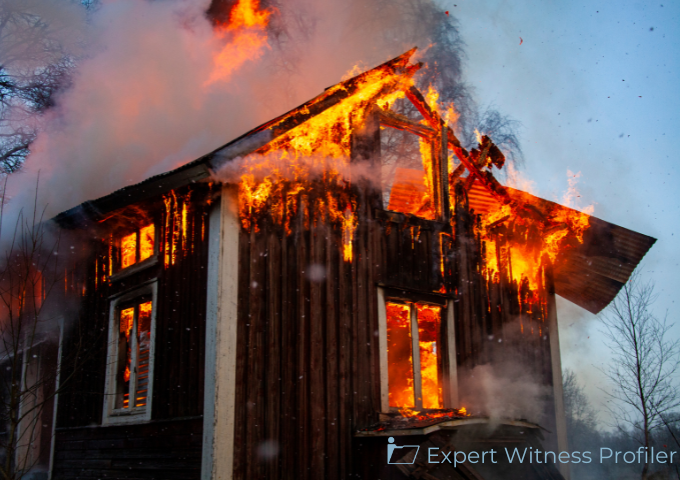
      Defendants owned and managed an apartment complex called The Trails at Flat Rock in Columbus, Georgia. In October of 2022, a fire occurred in Building A of the apartment complex. Kevin Ford, who was staying in unit A-24 with tenant Anthony Thorpe, died in the fire. Plaintiff, the administrator of Ford’s estate, asserted negligence claims against Defendants based on Ford’s death, alleging that Defendants’ negligence caused Ford’s death and pre-death pain and suffering. 

      Plaintiff intended to support these claims with the expert testimony of Kevin Foster and Lisa Detter-Hoskin. Defendants argued that the testimony of these two experts should be excluded. 

      Burns Expert Witness

      Dr. Kevin Foster is the Director of Burn Services at the Diane & Bruce Halle Arizona Burn Center Valleywise Health. Foster is a medical doctor who has specialized in burn care since 1999.

      Want to know more about the challenges Kevin Foster has faced? Get the full details with our Challenge Study report

      Chemistry Expert Witness

      Lisa Detter-Hoskin has a Ph.D. in inorganic chemistry with minor focus in analytical chemistry from Purdue University. She has successfully completed the National Association of Corrosion Engineers Basic Corrosion Science class.
      Detter-Hoskin was a lead expert who worked 10 years on the United States’ largest chlorine spill which occurred when Norfolk Southern Railway derailed a train and released chlorine onto Avondale Mills and residences in Graniteville, SC on January 6, 2005.

      Get the full story on challenges to Lisa Detter-Hoskin’s expert opinions and testimony with an in-depth Challenge Study.

      Discussion by the Court

      Foster opined that Ford’s death was caused by a combination of smoke inhalation and burn injury, as opposed to solely smoke inhalation injury. Foster also concluded that Ford suffered conscious pain and suffering from his burns before his death.

      Defendants contended that Foster’s testimony should be excluded as unreliable because Foster’s opinions are speculative and not based on reliable principles that would assist the trier of fact.

      I. Defendants’ Motion to Exclude Kevin Foster

      To prepare his report, Foster relied on the Georgia Bureau of Investigation’s (“GBI”) autopsy report and photographs, the Muscogee County Coroner’s Report, Columbus Fire Department and Columbus Police Department reports and photographs, Thorpe’s deposition, and other photographs from the fire scene. Defendants did not appear to challenge Foster’s basic methodology, which was to consider all the medical records, photographs, and reports available to him and determine Ford’s cause of death based on that information and his training, experience, and skill as a burn care physician.

      Rather, Defendants challenged Foster’s conclusions—including his conclusion that Ford was conscious at the time of the fire and experienced pain and suffering due to burns before he died. According to Defendants, Foster misinterpreted the evidence and reached the wrong conclusions about whether Ford was asleep at the time of the fire. Foster, though, explained why he interpreted the evidence as he did and how he reached his conclusions that Ford was conscious and trying to escape the fire when he suffered burns. The Court found that Defendants’ criticisms of Foster’s testimony went to its weight, not its admissibility. Thus, based on the present record, the Court did not find that Foster’s methodology was unreliable.

      Defendants also criticized Foster’s analysis as a “cut and paste job” because Foster mistakenly referred to a “Mr. Noble” in two places in his report. The Court declined to exclude Foster’s testimony because of the mistakes in his report.

      II. Defendants’ Motion to Exclude Lisa Detter-Hoskin

      Defendants also sought to exclude the testimony of Plaintiff’s rebuttal expert, Lisa Detter-Hoskin. Plaintiff hired Detter-Hoskin to rebut certain opinions offered by the Defendants’ fire investigation expert.

      Defendants argued that Detter-Hoskin’s opinions are outside the scope of permitted rebuttal testimony under the Federal Rules of Civil Procedure.

      Defendants argued that Detter-Hoskin’s testimony did not rebut expert opinions as to the cause of the damage to the backplate of the cooking range because the expert in question did not “opine as to what caused the damage to the back plate of the range.”

      After examining and analyzing materials from the kitchen of unit A-23, Detter-Hoskin opined that “the damage to the cooking range back plate and aluminum backsplash was not the result of the direct flame impingement, radiant heat, or conductive heat from the fall down debris located to the left of the stove.” Thus, Detter-Hoskin’s conclusions directly contradicted expert opinions as to the cause of the damage to the stove backsplash and back part of the range. Accordingly, the Court found that Detter-Hoskin is a proper rebuttal expert under Rule (26)(a)(2)(D)(ii).

      Held

      The Court denied the Defendants’ motions to exclude the testimony of Kevin Foster and Lisa Detter-Hoskin.

      Key Takeaway:

      A rebuttal report may not advance a completely new legal theory, but courts must examine the primary expert reports to determine whether the rebuttal report is truly “new” or merely uses different terminology to address issues that were raised in the primary expert reports.

      Please refer to the blog previously published about this case:

      Fire Investigation Expert’s Analysis of Burn Patterns Admitted

      Case Details:

      Case Caption: Washington V. GWR Management LLC Et Al
      Docket Number: 4:24cv81
      Court Name: United States District Court, Georgia Middle
      Order Date: October 21, 2025
    3. Insurance Expert’s Testimony on Industry-Accepted Claims Practices Admitted

      Insurance Expert’s Testimony on Industry-Accepted Claims Practices Admitted

      This case arises from a claim made by Richard Bernier under the underinsured motorist (“UIM”) coverage provided in his State Farm policy.

      Bernier was involved in a November 18, 2020 auto accident. He settled the underlying claim for the other driver’s limits of coverage and then sought the maximum available UIM coverage under his own policy of $50,000.

      Bernier’s expert, Mr. Stephen Strzelec, concluded that State Farm “arbitrarily reduced/discounted [medical bills] based on speculation and conjecture by the claim handler.”

      However, State Farm’s expert, Ms. JoAnna Moore, wrote that Bernier’s medical bills “should have been questioned . . . [because] there was no airbag deployment, only slight injuries were noted,” and Moore saw “no physician report tying Bernier’s rotator cuff tear, ulnar nerve injury, or cervical disc disease to the accident.”

      Bernier filed and served his expert report of Stephen Strzelec on December 13, 2024 and on January 7, 2025, State Farm filed its rebuttal expert report of JoAnna Moore “on issues relating to claim handling and specifically with regard to Stephen Strzelec’s report.”

      Bernier asserted that the eight numbered paragraphs in Moore’s report are a valid rebuttal but that the last two and a half pages are “an attempt to testify in Defendant’s case-in-chief” and should be excluded.

      Insurance Expert Witness

      JoAnna Moore is the Principal and Founder of J. Moore Consulting Services. For nearly a decade, Moore served on the Advisory Board for the Center for Insurance Studies, which is part of the Mihaylo College of Business & Economics at California State University, Fullerton. In that capacity, she has been a frequent keynote speaker during the University’s annual Business Week and guest class lecturer, as well as advising the center on curriculum and course offerings.

      In 2009 she received special recognition by the Center for her continuing support of insurance education. Moore is also a participating Advisory Board member of the Women’s Leadership Institute at Auburn University, Auburn, Alabama. She earned a B.S. Degree from Auburn in 1978 and is a member of the National Association of Professional Women (NAPW). 

      Get the full story on challenges to JoAnna Moore’s expert opinions and testimony with an in-depth Challenge Study

      Discussion by the Court

      The topics in Moore’s report are valid rebuttals of Strzelec’s report. Strzelec lays out what he asserts are claims-handling principals and standards, and analyzes State Farm’s handling of Bernier’s first-party underinsured motorist claim. For example, Strzelec lists all the UCSPA standards for insurance companies and asserts that, on top of the standards set in statutes and regulations, “internal standards of fairness by the insurer” help define the parameters required for every specific situation. In response to Strzelec’s assertions regarding standards for insurance companies, Moore detailed what she asserts is the “standard for claim handling.”

      First, Moore summarized what she argued is the applicable “reasonableness, not perfection” standard, and then she listed what she asserted, based on her experience, are “the reasonable and industry-accepted claims practices.” The Court held that this evidence is proper rebuttal evidence, as Moore addressed insurance company standards and practices, which is the same subject matter as the opinions in Strzelec’s report.

      Moore’s report provided “[a] list of things that Moore believes Defendant did correctly,” as well as her “personal opinion on whether Defendant acted reasonably.” These topics are on the same subject matter as the testimony of Strzelec in his expert report. In fact, Strzelec stated at the top of his “analysis and discussion” section that he was asked to “provide [his] opinions regarding State Farm’s handling of the first party underinsured motorist claims.”

      When Strzelec concluded that “State Farm failed to meet minimum industry
      standards for handling claims,” Moore listed the actions she argued demonstrated State Farm complied with industry standards, such as reviewing and utilizing contract language, seeking input from supervisory personnel, and providing appropriate claim note documentation.

      Held

      The Court denied Richard Bernier’s motion to exclude portions of JoAnna Moore’s expert report.

      Key Takeaway:

      Moore’s rebuttal expert report did not merely opine on the same general subject matter as Strzelec’s report. Instead, Moore’s rebuttal expert report properly rebuts and contradicts Strzelec’s expert testimony.

      Case Details:

      Case Caption: Bernier V. State Farm Mutual Automobile Insurance Company
      Docket Number: 4:24cv2
      Court Name: United States District Court, Alaska
      Order Date: May 28, 2025
    4. Intellectual Property Expert Witness’ Untimely Affirmative Opinions Excluded

      Intellectual Property Expert Witness’ Untimely Affirmative Opinions Excluded

      X Social Media LLC (“X Social Media”) and X Corp. both use the letter “X” in association with closely related advertising services. Put simply, X Corp. is a social media company that offers tools and services for advertising and generates the majority of its revenue from ads. X Social Media is an advertising agency that offers services for advertising on social media.

      This is a case for trademark infringement and related claims concerning the parties’ respective use of the letter “X” in connection with distinct product and service offerings.

      On its rebuttal report deadline, Plaintiff X Social Media served the rebuttal report of David Franklyn. Defendant X Corp. argued that Professor Franklyn advanced a host of “affirmative opinions” that rebutted nothing in either of Defendant’s expert reports.

      Intellectual Property Expert Witness

      David Franklyn is currently a law professor at Arizona State University, with an appointment in the Sandra Day O’Connor College of Law. He is also the Executive Director of the McCarthy Institute at ASU Law, which is focused on scholarship and research in intellectual property law, with particular emphasis in the areas of trademark law, branding and consumer perceptions related to brands.

      Franklyn has published extensively on issues relating to intellectual property law and is editor-in-chief and co-author of McCarthy’s Desk Encyclopedia of Intellectual Property Law.

      Get the full story on challenges to David Franklyn’s expert opinions and testimony with an in-depth Challenge Study. 

      Discussion by the Court

      The Franklyn Surveys included:(1) a reverse-confusion survey and (2) an initial-interest-confusion survey. Defendant argued that the Franklyn Surveys are not responsive to its experts’ opinions and improperly advanced new theories of the case beyond the deadline to submit affirmative expert opinions. 

      A. Untimely Affirmative Opinions

      Defendant argued that the Franklyn Surveys are untimely affirmative opinions required to be served by the affirmative expert report deadline, and not the rebuttal report deadline. Nonetheless, the Court will consider whether the Franklyn Surveys constitute proper rebuttal opinion despite their designation in the Franklyn Report as affirmative opinions.

      Furthermore, Defendant argued that the initial-interest-confusion survey was improper because “initial interest confusion” is an entirely new theory that was set forth for the first time in this litigation within the Franklyn Report. In fact, Defendant contended that Plaintiff had only asserted a theory of “reverse confusion” prior to serving the Franklyn Report.

      Thus, the Defendant argued that Professor Franklyn’s initial-interest-confusion survey was not plausibly within the scope of proper rebuttal to Defendant’s experts. 

      The Court found that the Franklyn Surveys constituted untimely affirmative opinions. Basically, the concept of initial-interest confusion was not the subject of Defendant’s experts’ opinions and was introduced for the first time in this litigation within the Franklyn Report. Even if the results of Professor Franklyn’s initial-interest confusion survey could be used to undermine Defendant’s position, the initial-interest confusion survey nevertheless constituted an improper affirmative opinion.

      B. Substantially Justified or Harmless

      Now that the Court has determined that the Franklyn Surveys are untimely affirmative opinions, the subsequent question is whether Plaintiff may rely on them anyway.

      The Defendant contended that permitting the Plaintiff to use the Franklyn Surveys would unfairly prejudice its case. Defendant noted that it exchanged thousands of documents, took many depositions, and selected expert witnesses strategically in response to how Plaintiff litigated its case. Therefore, the Defendant maintained that it would have been unjust to allow the significant affirmative opinions presented in the Franklyn Surveys to be introduced belatedly in a rebuttal report.

      Plaintiff did not address Defendant’s claim that Defendant might have materially changed its strategy over the course of the extensive discovery in this case if Defendant had been timely advised of the Franklyn Surveys.

      Since the Plaintiff was unable to establish that its failure to timely disclose the Franklyn Surveys was substantially justified or harmless, the Court found that Plaintiff has failed to assuage the concern of potential prejudice to Defendant in this case. Thus, the Court exercised its discretion to preclude the use of the Franklyn Surveys.

      Held

      The Court granted the motion to strike portions of Plaintiff’s rebuttal report of
      David J. Franklyn.

      Key Takeaway:

      In determining whether the failure to disclose under Rule 26 was substantially justified or harmless, courts consider “(1) “the surprise to the party against whom the evidence would be offered; (2) the ability of that party to cure the surprise; (3) the extent to which allowing the evidence would disrupt the trial; (4) the importance of the evidence; and (5) the nondisclosing party’s explanation for its failure to disclose the evidence.

      Basically, the burden of establishing that a failure to disclose was substantially justified or harmless rests on the nondisclosing party.

      Case Details:

      Case Caption: X Social Media, LLC V. X Corp.
      Docket Number: 6:23cv1903
      Court Name: United States District Court, Florida Middle
      Order Date: May 05, 2025
    5. Prison Management Expert Allowed to Opine on PREA Compliance

      Prison Management Expert Allowed to Opine on PREA Compliance

      Plaintiff C. Jay Smith is a transgender woman who has been housed in men’s prisons for decades. The facts at issue in this case pertain to Plaintiff’s incarceration at San Quentin State Prison from 2013 to 2019, though she has been housed at the California Medical Facility in Vacaville since June 2019.

      Plaintiff filed a motion to exclude the testimony of Defendants’ expert, Captain Rusty Hickethier.

      Prison Management Expert Witness

      Rusty Hickethier is currently a Captain (A) and PREA Coordinator for California Department of Corrections and Rehabilitation. Prior to this role, he was a Correctional Lieutenant working for the PREA Compliance Unit for CDCR Headquarters, assisting with ensuring the agency maintains compliance with the Federal Standards as well as assisting with DOJ PREA Audits.

      Previously, he was a Correctional Sergeant at CSP-Sacramento which houses primarily Level IV maximum and high security incarcerated person as well as those requiring specialized mental health programming and high-risk medical concerns. Hickethier has over 17 years of service with CDCR.

      Get the full story on challenges to Rusty Hickethier’s expert opinions and testimony with an in-depth Challenge Study. 

      Discussion by the Court

      Plaintiff stated that Defendants first designated Hickethier as a Federal Rule of Civil Procedure 30(b)(6) deponent, then disclosed him as a non-retained expert, and finally as a retained rebuttal expert. Plaintiffs urged that he is not a proper expert and should not be allowed to testify at trial.

      In response, Defendants have confirmed that they do not oppose Plaintiff’s motion to exclude Hickethier as a non-retained expert witness. The Court therefore granted the motion on this basis. The parties disputed, however, whether to exclude Hickethier as a rebuttal expert witness.

      Plaintiff argued that Hickethier cannot offer an opinion that San Quentin was compliant with Prison Rape Elimination Act (“PREA”) requirements because the evidence in the record—including Captain Hickethier’s 30(b)(6) testimony—establishes that it was not. Plaintiff also urged that, although not prohibited, it would be confusing to the jury to have someone testifying as both a 30(b)(6) witness and an expert.

      Defendants did not address Plaintiff’s arguments directly. Instead, they responded that to the extent Plaintiff’s expert is allowed to testify about PREA, they should be allowed to call Hickethier, a member of CDCR’s PREA Compliance Unit, as a rebuttal expert witness.

      Analysis

      The Court has concerns with the cursory manner in which Defendants have responded to this motion. And it is not clear whether, and to what extent, Captain Hickethier may try to contradict his own prior 30(b)(6) testimony. Nevertheless, the Court is not inclined to fashion an order based on suppositions about what the evidence at trial may show, and how Captain Hickethier may rely on that evidence, in fashioning any rebuttal testimony.

      Plaintiff may of course challenge any of Captain Hickethier’s testimony through vigorous cross-examination if he testifies, and the Court will have the opportunity to evaluate any objections in context. Additionally, if this case proceeds to trial, the Court will consider holding a voir dire hearing outside the presence of the jury to confirm in advance that experts, including Captain Hickethier, will only offer reliable and relevant opinions. 

      Held

      The Court granted the motion to exclude Captain Rusty Hickethier’s testimony as a non-retained expert witness, but denied the motion to exclude his testimony as a rebuttal expert.

      Key Takeaway:

      The Court finds it inappropriate to formulate an order predicated on suppositions regarding the evidence to be presented at trial and Captain Hickethier’s potential reliance on that evidence in his rebuttal testimony.

      Case Details:

      Case Caption: Smith V. Diaz Et Al
      Docket Number: 4:20cv4335
      Court: United States District Court, California Northern
      Order Date: March 31, 2025
    6. Insurance Law Expert Witness’ Testimony Does Not Survive the Rule 37 Challenge

      Insurance Law Expert Witness’ Testimony Does Not Survive the Rule 37 Challenge

      A fire took place overnight at Tiffany Keen and Trevor Wogrin’s newly-purchased residence at 45100 County Road 1 in Parker (the “Home”), on June 5-6, 2022 (the “Fire”), causing damage. The Home was insured by a homeowner’s insurance policy issued by Allstate (the “Policy”). The Insureds submitted a claim to Allstate on June 6, 2022 for the payment of covered benefits under the Policy (the “Claim”).

      Allstate refused to pay Dwelling benefits under the Policy. Almost ten (10) months after the Claim was submitted, Allstate filed this action against the Insureds seeking a declaration that the intentional acts exclusion applies to the Claim to bar coverage.

      Defendants designated an insurance industry expert in support of their counterclaims for breach of insurance contract and bad faith. However, Allstate did not designate an affirmative insurance industry standards expert; instead, it designated its industry standards expert, Keith Olivera as a rebuttal expert.

      To begin with, Defendants sought to strike Olivera on the ground that he was not a proper rebuttal expert. Alternatively, they claimed that he was unqualified to offer certain opinions asserted in his expert report and sought to limit other aspects of his testimony as unnecessary, irrelevant, confusing, or usurping the Court’s prerogative to instruct the jury on the law. 

      Insurance Law Expert Witness

      Insurance Law Expert Witness

      Keith R. Olivera has been an attorney practicing in the field of insurance law for 30 years. Much of his practice involves advising insurers on claim handling practices and claims decisions.

      He advises insurers on claim handling decisions involving both first- and third-party claims. Moreover, he has represented or assisted insurers in hundreds of cases or claims where the insurer has been alleged to have engaged in unreasonable claim handling.

      Get the full story on challenges to Keith R. Olivera’s expert opinions and testimony with an in-depth Challenge Study.  

      Discussion by the Court

      As per Fed. R. Civ. P. 26(a)(2)(D)(ii), a rebuttal expert opinion is one “intended solely to contradict or rebut evidence on the same subject matter identified by another party.”

      The Court found that, superficially, this is what Olivera’s opinion appeared to do. In other words, Olivera contradicted the opinions of the Defendants’ industry standards expert witness, Douglas Meier, who asserted that Allstate’s handling of the Defendants’ insurance claim was unreasonable.

      However, where the subject matter of the expert’s testimony concerns a matter the designating party knew or should have known would be part of its opponent’s case-in-chief, that expert is an affirmative expert.

      To prove their substantive claim, Defendants perforce will be required to show Allstate “acted unreasonably and with knowledge of or reckless disregard for the fact that no reasonable basis existed for denying [Defendants’] claim.” Accordingly, Allstate absolutely should have predicted Defendants would offer an industry standards expert. They could not lay behind the log and only designate their own industry standards expert in rebuttal. Accordingly, the Court held that Olivera is not a proper rebuttal witness.

      Under Rule 37, a party is required to show that the violation of the discovery obligations was substantially justified or harmless.

      Allstate has failed to even acknowledge Rule 37 standards, must less attempt to show how they might be satisfied in this case.

      Held

      The Court granted the Defendants/Counterclaim Plaintiff’s motion to strike or limit the opinions and testimony of Plaintiff’s retained insurance law expert witness, Keith Olivera.

      Key Takeaway

      A rebuttal expert addresses “new unforeseen facts” that emerge in the opposing side’s case. Basically, Allstate tried to present Olivera as a rebuttal expert to counter the Defendants’ expert testimony about insurance industry standards. However, where the subject matter of the expert’s testimony concerns a matter the designating party knew or should have known would be part of its opponent’s case-in-chief, that expert is an affirmative expert.

      When given the chance to justify the violation of its discovery obligations under Rule 37(c)(1), Allstate failed to address any of the required factors for showing their violation was either substantially justified or harmless. Allowing Olivera to testify would have prejudiced Defendants and disrupted the trial. This failure further cemented the Court’s decision to strike his opinions and bar him from testifying.

      Case Details:

      Case caption: Allstate Vehicle And Property Insurance Company V. Wogrin Et Al
      Docket Number: 1:23cv803
      Court: United States District Court for the District of Colorado
      Date: December 23, 2024
    7. Psychology Expert Witness’ Opinion on Parental Gatekeeping Excluded Due to Procedural Violations

      Psychology Expert Witness’ Opinion on Parental Gatekeeping Excluded Due to Procedural Violations

      On October 25, 2024, Petitioner Prasanna Sankaranarayanan filed a petition seeking the return of the parties’ minor son, S.A., to his habitual residence. The petition claims that Respondent Dhivya Sashidhar unlawfully took S.A. from Singapore to the United States on October 14, 2024. On November 1, 2024, Sashidhar was served with the summons and complaint in Redmond, Washington.

      Hague Convention cases are typically expedited, with a six-week resolution period recommended. In this case, the Court held a telephone conference with the parties on November 22, 2024, and scheduled an evidentiary hearing for January 6, 2025.

      After the conference, the Court issued a scheduling order that outlined deadlines for filings and disclosures, as proposed by the parties. However, the parties later disagreed on whether the deadlines applied to both sides.

      On December 27, 2024, Sashidhar filed a motion to exclude Petitioner’s psychology expert witness, Peter Favaro. Sashidhar argued that Sankaranarayanan had violated the scheduling order by disclosing the expert witness after the deadlines for such disclosures had passed.

      Psychology Expert Witness

      Psychology Expert Witness

      Peter Favaro is a psychologist licensed in the state of New York and has been in private practice since 1986. His area of expertise is psychology within court-related matters. Since 1986, he has been privately hired or court-appointed to thousands of cases to provide evaluation and expert opinion in matters involving domestic violence, custody disputes, and child abuse. He also offers court-related services such as supervised visitation, family mediation, anger management, family therapy, civility training, and parenting coordination. Additionally, he has been appointed or hired on cases involving the 1980 Hague Child Abduction Convention.

      Want to know more about the challenges Peter Favaro has faced? Get the full details with our Challenge Study report.  

      Discussion by the Court

      A. The Parties’ Arguments

      1. Respondent’s Position

      In its motion, the Respondent sought to exclude the testimony and report of Peter Favaro, Petitioner’s psychology expert witness.

      On December 10, 2024, Petitioner’s counsel emailed Respondent’s counsel to reveal that they had retained Favaro as a rebuttal expert. However, Petitioner had not disclosed Favaro in their initial filings. Following this, Respondent arranged for the child to meet with Favaro on three consecutive days for an evaluation.

      Respondent argued that Favaro should be considered an affirmative expert, not just a rebuttal expert, as Petitioner claimed. Respondent pointed to several factors to support this argument:

      1. The report’s title did not suggest it was a rebuttal report
      2. The content included definitive conclusions, and
      3. The opinions went beyond simply addressing the Respondent’s expert reports.

      In fact, according to the Respondent, Favaro’s report claimed that the Respondent may have been exerting undue influence over the child and potentially mistreating the child.

      Additionally, Respondent asserted that the disclosure of Favaro’s report on December 23, 2024, was untimely and caused significant prejudice. The late disclosure left Respondent with insufficient time to retain a rebuttal expert to challenge Favaro’s conclusions. Furthermore, Respondent was unable to depose Favaro before the Court’s deposition deadline, further hindering its ability to respond effectively.

      2. Petitioner’s Position

      Petitioner argued that they complied with the Court’s scheduling order, as the dates and language were meant for Respondent to disclose experts and serve expert reports. Petitioner opposed the motion to exclude, stating that the order did not set specific dates for Petitioner’s affirmative or rebuttal experts. Therefore, Petitioner claimed they had not missed any deadlines.

      Petitioner further maintained that Favaro was solely a rebuttal expert, a child forensic psychologist retained to address Respondent’s affirmative defenses of grave risk and mature child. Petitioner emphasized that Favaro’s report was properly disclosed on December 23, 2024.

      B. Analysis

      1. The Scheduling Order

      The Court needed to determine whether the expert disclosure deadline applied to both parties. The parties interpreted the scheduling order differently. The order required Respondent to serve expert disclosures by December 2, 2024, and initial expert reports by December 9, 2024. However, the order did not specify deadlines for Petitioner’s affirmative expert disclosures. It only mentioned that both parties were to serve rebuttal expert reports by December 20, 2024.

      The minute entry accompanying the order outlined the schedule, including expert disclosures, initial reports, and rebuttal reports, but it did not address the timing for Petitioner’s disclosures. The entry and the order were silent about rebuttal expert disclosure.

      Petitioner’s attempt to distinguish between the scheduling order’s text and the minute entry was viewed as an attempt at gamesmanship. The Court found the minute entry to be an integral part of the order. If Petitioner found any confusion, they could have sought clarification instead of using the discrepancy for tactical advantage. The Court found the order’s deadlines to be clear and applicable to both parties.

      Petitioner’s claim that they did not know if experts were needed after December 2, 2024, was deemed disingenuous. During the November telephone conference, Petitioner’s counsel repeatedly discussed experts. Respondent’s counsel had also indicated that an expert had been retained and was ready for disclosure.

      The Court concluded that the expert disclosure deadline applied equally to both parties. Petitioner was aware of Respondent’s expert well before the disclosure deadline, as discussed in the telephone conference. The Court then considered the disclosures for both affirmative and rebuttal experts.

      1. Affirmative Expert Testimony

      Although Petitioner argued that all of the testimony was purely rebuttal, the Court was not fully convinced. The 20-page expert report was detailed and appeared to offer opinions and conclusions beyond those necessary for rebutting the affirmative defenses. For instance, Favaro’s opinion that Respondent’s “parental gatekeeping” amounted to maltreatment of the child did not address the grave risk or mature child defenses. As a result, the Court determined that the scope of Favaro’s report went beyond rebuttal testimony. Therefore, Petitioner had untimely disclosed Favaro as an affirmative expert witness.

      2. Rebuttal Expert Testimony

      Since the scheduling order did not specify deadlines for disclosing rebuttal experts, the Court considered the timeframes typically outlined in the Federal Rules of Civil Procedure. According to these Federal Rule of Civil Procedure 26(a)(2)(D)(ii), a rebuttal expert may be disclosed within 30 days after the other party’s expert disclosure, provided the evidence is intended solely to contradict or rebut the other party’s evidence on the same subject. However, this guideline offered limited guidance in this case due to the tight deadlines in expedited Hague Petition cases. Given the silence in the scheduling order and the inapplicability of the Federal Rules, the Court turned to other authorities to resolve the issue.

      Persuasive cases from this District and elsewhere suggested that the party with the burden of proof, in this case, the party asserting an affirmative defense, should disclose its expert testimony before the opposing party discloses an expert to rebut it. The Court referenced several cases supporting this approach.

      Based on this guidance and the lack of clarity in the scheduling order, the Court concluded that Petitioner’s disclosure of Favaro on December 10, 2024, shortly after Respondent served affirmative expert reports, was appropriate. Therefore, the Court determined that Petitioner had timely disclosed Favaro as a rebuttal expert.

      3. Sanctions

      Petitioner has failed to demonstrate that disclosure for any affirmative testimony was substantially justified or harmless. To the extent Favaro’s opinions exceed the scope of Respondent’s affirmative defenses, the late disclosure is harmful to Respondent’s ability to prepare for the evidentiary hearing. The Court will not infer that the violation is harmless from Respondent not deposing one expert to be definitive that Respondent would not have deposed Favaro if properly disclosed as an affirmative expert witness.

      Similarly, in light of the lengthy discussions about experts during the telephone conference, Petitioner cannot reasonably maintain that the knowledge about experts did not arise until December 2, 2024. Therefore, the Court concluded that sanctions are warranted because Petitioner has not shown that the discovery violation was substantially justified or harmless.

      The Court observed that Favaro’s testimony is important to resolving this matter on the merits, but the Court still finds that sanctions are warranted in this matter. Accordingly, the Court will limit Dr. Favaro’s testimony and opinions in the report solely to rebuttal opinions. “[A] rebuttal expert cannot offer evidence that does not contradict or rebut another expert’s disclosure merely because [the expert] also has also offered some proper rebuttal [evidence].”

      Held

      The Court granted in part and denied in part Respondent’s motion to exclude Petitioner’s expert witness Peter Favaro’s testimony.

       It excludes any of Favaro’s testimony or portions of the report that exceed the scope of rebuttal testimony for Respondent’s affirmative defense

      The Court directed Petitioner to provide Respondent an articulation of Favaro’s rebuttal testimony by January 4, 2025 at 12:00 pm (PST). 

      Key Takeaway:

      Portions of Peter Favaro’s report exceeded the scope of permissible rebuttal testimony and the Court deemed the disclosure of his affirmative expert opinions untimely. While the Court accepted Favaro’s rebuttal testimony, it excluded his opinions on matters unrelated to the grave risk or mature child affirmative defenses—such as allegations of “parental gatekeeping” and maltreatment.

      Case Details:

      Case caption: Sankaranarayanan V. Sashidhar
      Docket Number: 2:24cv1745
      Court: United States District Court for the Western District of Washington
      Dated: January 3, 2025
    8. Environmental Science Expert Witness’ Analysis of Historical Emissions Deemed Reliable

      Environmental Science Expert Witness’ Analysis of Historical Emissions Deemed Reliable

      Over sixty Plaintiffs alleged that Defendant Lockheed Martin Corporation’s weapons manufacturing facility in Orlando released toxic chemicals that contaminated the air, soil, and groundwater, leading to various injuries among the Plaintiffs. The instant case formed a part of a group of related toxic tort cases.

      Following a complex history during the dispositive motion stage, the Court resolved the general causation issues. It then shifted focus to specific causation for the limited number of remaining Plaintiffs.

      The Plaintiffs filed motions to exclude several of Defendant Lockheed Martin Corporation’s experts: Michael Ballenger, Kristine Davies, Dr. Rene’ Salazar, Stephen Emsbo-Mattingly, and Dr. Shahrokh Rouhani.

      Air Quality Expert Witnesses

      Michael Ballenger began his career with Trinity in Maryland, where he gained significant experience navigating the stringent environmental requirements of the Mid-Atlantic and Northeast. He has developed a specialty in air permitting and compliance by working with both industry and government to implement business objectives while conforming to complex environmental regulations such as MACT and Nonattainment New Source Review.

      Get the full story on challenges to Michael Ballenger’s expert opinions and testimony with an in-depth Challenge Study. 

      P. Kristine Davies is a Principal Consultant in Trinity’s Salt Lake City Office. She specializes in regulatory applicability analysis, preparation of emission inventories, Nonattainment New Source Review (NNSR)/Prevention of Significant Deterioration (PSD) permit applications, Title V operating permit applications, and Maximum Achievable Control Technology (MACT) compliance. Since joining Trinity, she has assisted in permitting and compliance projects for facilities in every state and U.S. territory.

      Want to know more about the challenges P. Kristine Davies has faced? Get the full details with our Challenge Study report. 

      Industrial Hygiene Expert Witness

      Rene’ Salazar holds an undergraduate degree in Microbiology, and Master’s and Doctor of Philosophy degrees in Public Health, both with specialization in the discipline of Industrial Hygiene and has 30+ years of experience in the field of industrial hygiene, both academically and professionally.

      Discover more cases with Rene’ Salazar as an expert witness by ordering his comprehensive Expert Witness Profile report.

      Environmental Science Expert Witnesses

      Stephen Emsbo-Mattingly possesses more than 30 years of applied chemistry experience. He specializes in the source identification of chlorinated organics, solvents, surfactants, petrochemicals, carbonization byproducts, paper mill wastes, heavy metals, metallurgical wastes, petroleum, fuels, tar, combustion byproducts, soot, ash, slag, dusts, emissions, coke, coal, radiological materials, hydraulic oils, lubricants, asphalts, pesticides, petrochemicals, dielectric fluids, Askarels, and other industrial products in various environmental media.

      Get the full story on challenges to Stephen Emsbo-Mattingly’s expert opinions and testimony with an in-depth Challenge Study. 

      Shahrokh Rouhani is an environmental scientist and professional engineer, a tenured university professor, and a consultant in environmental statistics, modeling, and data analysis. He holds  a Ph.D. in Environmental Sciences (1983) and an S.M. in Environmental Engineering (1980), both from Harvard University, as well as a B.S. in Civil Engineering and B.A. in Economics from the University of California, Berkeley (1978).

      Want to know more about the challenges Shahrokh Rouhani has faced? Get the full details with our Challenge Study report. 

      Discussion by the Court

      Michael Ballenger

      First, Ballenger, an air quality engineer, is one of Lockheed’s rebuttal experts to Ranajit Sahu. Plaintiffs filed a motion to exclude his testimony, arguing essentially that Ballenger merely challenges the reliability of Sahu’s testimony rather than using reliable methodology of his own. But Ballenger’s opinions are admissible for the same reasons Sahu’s are: both sides disagree about the correctness of Sahu’s inputs on the air model and the accuracy of the emissions data provided by Lockheed, a classic clash of two qualified expert views the jury will have to weigh and decide. 

      Kristine Davies

      Davies is another air quality engineer rebutting Sahu’s and other testimony. Plaintiffs filed a motion to exclude her testimony largely for the same reasons as Ballenger—and for the same reasons, her rebuttal testimony is largely admissible.

      That said, the Court held that Davies’ report raises some red flags that can only be addressed fully in context at trial. As an expert, Davies may not testify that facts she was instructed to assume are true—she may only testify that she relied on certain facts as true in forming her conclusions.

      To the extent that certain sections of her report purport to introduce fact testimony, she will not be allowed to give improper lay testimony about facts for which she lacks personal knowledge, nor will she be allowed to indiscriminately merge together fact and expert testimony.

      If Davies did garner personal knowledge of information from Lockheed employees, that information (and the source of the information, including from whom and when it was received) either must have been fully disclosed in her report or must have been provided to Plaintiffs through discovery for her to be permitted to testify to those facts.

      This trial will not devolve into a game of gotcha: the facts are the facts and they must be known to both sides, and the experts can then interpret them as they may. To the extent Plaintiffs are concerned that Davies’ opinions lack support or stray beyond the scope of her expertise, the Court held that they can cross her on those grounds or present contrary evidence. 

      But to the extent Davies begins giving improper undisclosed fact testimony, Plaintiffs should contemporaneously object and the Court will be on guard to limit it.

      Rene Salazar

      Plaintiffs later filed a motion to exclude his testimony because he criticized Plaintiffs’ experts for not performing real-time exposure monitoring—which he purportedly later acknowledged to be impossible.

      The Court held that Salazar may properly point out what he perceives to be flaws in Sahu’s methodology; beyond that, holes in his own conclusions are material for Plaintiffs’ cross.

      Stephen Emsbo-Mattingly

      Plaintiffs filed a motion to exclude his testimony on several grounds. First, they complain about several issues with sampling data he took from a pilot study, arguing that he did not sample deep enough for subsurface soil and sampled from present day but extrapolated to historical conditions. But Emsbo-Mattingly sufficiently explained how he was using the current data to analyze historical emissions and why he sampled the way he did.

      The Court held that Plaintiffs’ other arguments against Emsbo-Mattingly are similarly unpersuasive—they simply disagree with his presumptions and the premise of his study, but a dispute about the correctness of his conclusions does not make his methodology unreliable.

      Dr. Shahrokh Rouhani

      Plaintiffs filed a motion to exclude Rouhani’s testimony purportedly for unreliable methodology—focusing on their competing theory of the case pertaining to historical emissions—but again, the Court held that their attacks amount to nothing more than disagreement with his conclusions and the bases therefore rather than Daubert challenges.

      Held

      Plaintiffs’ Daubert motions to exclude Michael Ballenger, Kristine Davies, Dr. Rene Salazar, Stephen Emsbo-Mattingly, and Dr. Shahrokh Rouhani are denied.

      Key Takeaway:

      Expert testimony may be admitted only if: (1) the expert is qualified; (2) the methodology is reliable; and (3) the testimony is helpful. The proponent of the expert must establish the opinion is admissible, but need not prove it is correct.

      The different experts in this case have different methods of trying to get at historical exposure data, and the perceived flaws in each approach are fodder for cross, not exclusion. 

      Please refer to the blog previously published about this case:

      Environmental Engineering Expert Witness’ Testimony on Toxic Chemical Exposure Admitted

      Case Details:

      Case Caption: Henderson Et Al V. Lockheed Martin Corporation Et Al
      Docket Number: 6:21cv1363
      Court: United States District Court, Florida Middle
      Order Date: December 19, 2024

    9. Law Enforcement Expert Witness’ Testimony on Officers’ Actions Excluded

      Law Enforcement Expert Witness’ Testimony on Officers’ Actions Excluded

      The present lawsuit revolves around Plaintiff Van Aelsytn’s claims of civil rights violations and malicious prosecution against Defendants Coleman Sparks and Scott Carnes. Both Defendants were officers with the Versailles Police Department and were involved in an investigation that led to domestic violence charges against Van Aelsytn. However, the Plaintiff possessed evidence suggesting his innocence. The parties disagreed over whether the Defendants received and reviewed this evidence properly. Van Aelsytn was arrested, and the case went before a grand jury, which ultimately decided not to indict him.

      The Defendants intended to call Assistant Chief Robert Young of the Versailles Police Department as a rebuttal law enforcement expert witness. Young was expected to testify that the Defendants’ actions during the investigation aligned with Kentucky law and the U.S. Constitution.

      Law Enforcement Expert Witness

      Law Enforcement Expert Witness

      Robert Young currently serves as the Assistant Chief at the Versailles Police Department. He is a retired special agent with the Bureau of Alcohol, Tobacco, Firearms and Explosives (ATF).

      Want to know more about the challenges Robert Young has faced? Get the full details with our Challenge Study report.  

      Discussion by the Court

      Van Aelstyn argued that allowing Robert Young to testify about the Defendants’ actions being legal or “consistent with Kentucky law and the United States Constitution” would have been an improper “legal conclusion.” He believed this testimony would have been flagrant and inappropriate.

      In response, the Defendants clarified that Young would not offer legal conclusions in his testimony. They emphasized that Young would not testify whether Officers Carnes or Sparks violated the Constitution. However, they argued that Young could provide an opinion on whether the officers followed Versailles Police Department policies.

      The Plaintiff replied that it was unclear if the Defendants agreed Young could not provide this testimony. However, the Plaintiff did not seek to exclude testimony about the police department’s policies.

      The Court found that the parties agreed that Young’s initial proposed testimony, claiming the Defendants acted consistently with Kentucky law and the U.S. Constitution, would have been a legal conclusion. They also agreed that such a clear-cut legal conclusion would be impermissible. Accepting this assertion as true would have essentially instructed the jury that the Defendants did not violate the law.

      Held

      The Court granted the Plaintiff’s motion to exclude certain parts of Defendants’ law enforcement expert witness, Robert Young’s testimony. The Court held that Young could not testify about whether the Defendants’ actions were consistent with Kentucky law or the United States Constitution.

      Key Takeaways:

      The Court found that Young’s testimony about whether the Defendants’ actions were consistent with Kentucky law or the U.S. Constitution would constitute an impermissible legal conclusion, as it would effectively instruct the jury that the Defendants did not violate the law. This decision emphasized the need for expert testimony to avoid overstepping into legal determinations, ensuring the jury maintains its role in assessing the law’s application.

      Case Details:

      Case caption: Aelstyn v. Sparks
      Docket Number: 5:23cv136
      Court: United States District Court for the Eastern District of Kentucky, Central Division
      Dated: December 4, 2024