Tag: Reliability

  • Credit Reporting Expert Witness’ Opinions Based on his Experience And Research In Understanding Credit Score Risk-Analysis Admitted

    Credit Reporting Expert Witness’ Opinions Based on his Experience And Research In Understanding Credit Score Risk-Analysis Admitted

    A district judge in Florida admitted the opinions of a credit reporting expert witness after ruling that his opinions were an application of industry standards to facts that, if proven, might have helped demonstrate the satisfaction of Fair Credit Reporting Act standards by implication.

    Facts of the Case

    Plaintiff, Pablo Antonio Garcia (“Garcia”), as the owner of Kandela Productions Inc. (“Kandela”) and Real Rebate Realty, LLC (“Real Rebate”), entered into three loan agreements with Synovus pursuant to which Synovus loaned money to his companies and those companies were obligated to repay Synovus (the “Business Loans”).

    Beginning on January 29, 2021, and continuing through May 18, 2021, Garcia received notice that his Business Loans were in default and that, as a result thereof, Synovus was exercising its right to accelerate the remaining unpaid amounts due under the Business Loans.

    In accordance with Synovus’s internal procedures and the default provisions of the LOC Agreement, on August 24, 2021, Synovus elected to charge off all loans encompassed in Garcia’s loan relationship with Synovus, including the Subject Account.

    This case involves Garcia’s disagreement with Synovus’ decision to charge off Garcia’s account with Synovus; Garcia’s disputes as to the accuracy of such charge offs as reflected on his credit reports; and Synovus’ proper investigation and verification that, in fact, Garcia’s subject personal account was charged off.

    Defendant Synovus Bank’s expert John Ulzheimer offered three general opinions in his expert report: Firstly, consumers can default on loans even if they’ve never missed a payment. As such, reporting a charged off loan to a credit reporting agency as a ‘charge off’ does not constitute incorrect information. Secondly, the Bank’s investigation responses to Garcia’s credit reporting disputes regarding the subject account were appropriate and in line with industry standards and practices; and Garcia did not experience the credit related damages as alleged.

    Garcia argued that each of these opinions were impermissible for various reasons and hence outside the scope of Federal Rule of Evidence 702.
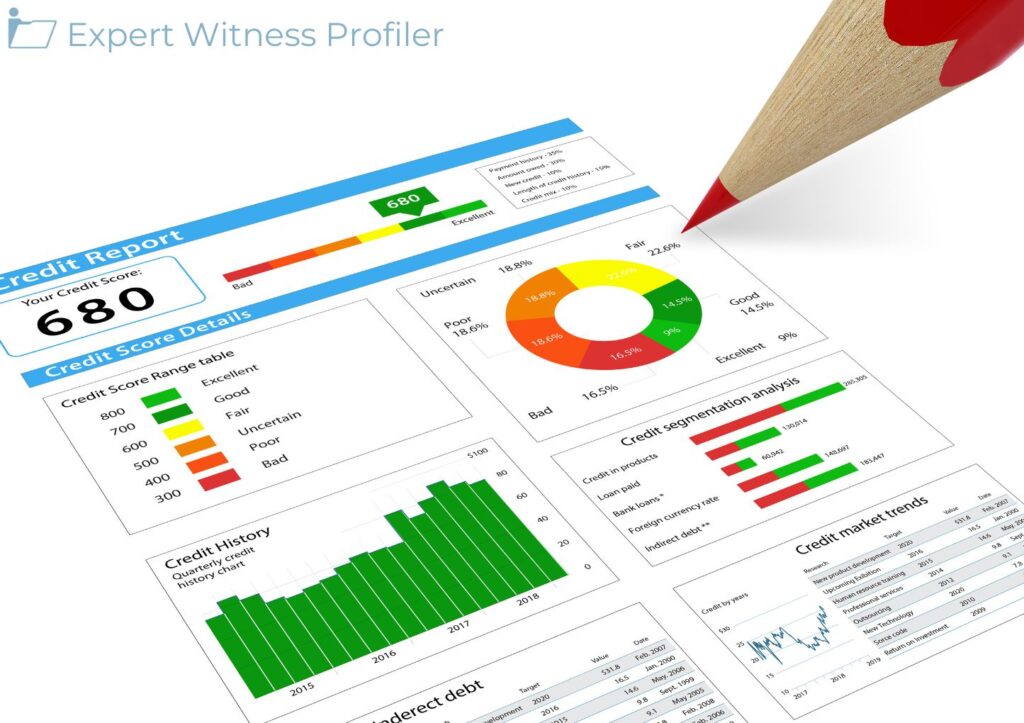
    Credit Reporting Expert Witness

    John Ulzheimer is the President of The Ulzheimer Group, LLC and Founder of www.creditexpertwitness.com. He specializes in credit reporting, credit scoring and identity theft.

    He is twice FCRA certified by the Consumer Data Industry Association (the trade association of the credit reporting agencies) and has over 32 years of experience in the consumer credit industry including positions with Equifax Credit Information Services (6 years), Fair Isaac, which is the inventor of the FICO® credit scoring system (7 years), Credit.com (6 years), and years of concurrent work with a number of consumer credit related companies.

    A nationally recognized expert, Ulzheimer currently is or was the credit blogger for the New York Times, Mint, CreditSesame, CreditSimple, CreditVersio, Zillow, JD Byrider Systems, Credit.com, SmartCredit, VantageScore Solutions, The Simple Dollar and the National Foundation for Credit Counseling. He has authored or coauthored numerous educational materials on the subject of consumer credit.

    To learn about other cases where John Ulzheimer has been involved as an expert witness, order an Expert Witness Profile report.

    Discussion by the Court

    Opinion One

    Garcia first argued that Opinion One consisted of impermissible legal conclusions about an ultimate issue because it stated that “reporting a charged off loan to a credit reporting agency as ‘charge off’ did not constitute inaccurate information.” Garcia pointed out that accuracy or inaccuracy is a threshold issue under the Fair Credit Reporting Act (“FCRA”), 15 U.S.C. § 1681s-2(b). He consequently maintained that the aforementioned statement “usurped the roles of the Court and the jury.” 

    While an expert cannot opine on ultimate issues of law, they “may offer their opinion as to facts that, if found, would support a conclusion that the legal standard at issue was satisfied.” 

    Ulzheimer, instead of opining that the Bank’s reporting was accurate under the FCRA, opined that the Bank’s reporting was not factually “inaccurate” or “incorrect” under industry standards provided by the Consumer Data Industry Association’s Credit Reporting Resource Guide (“CRRG”). The Court is capable of clearing up any jury confusion regarding the relevant meaning of “accuracy” by properly instructing them as to that term’s meaning under the FCRA.

    The Court also found fault with Garcia’s second argument—that Opinion One will confuse the jury by usurping the Court’s authority to define the applicable legal standards. The fact that Opinion One failed to address whether the Bank’s reporting was misleading (a component of FCRA accuracy) provided Garcia with ammunition for cross-examination. It was not grounds for exclusion under Daubert.

    Opinion Two

    Legal Conclusions

    Garcia contended that, like Opinion One, Opinion Two contained impermissible legal conclusions about an ultimate issue. Specifically, Garcia averred that it was improper for Ulzheimer to conclude that the Bank’s investigations of Garcia’s credit reporting disputes were ‘appropriate and in line with industry standards and practices.’ Garcia noted that this was typically a question for the jury, and that Ulzheimer’s reasoning was circular.

    As an expert with significant experience, Ulzheimer was allowed to address whether the Bank’s ‘procedures matched industry standards’ as long as ‘he dissected the basis for his knowledge of industry standards, explained how he applied his experience to the facts, and how such application yielded his opinion.

    Ulzheimer accomplished all these things without attempting to offer legal conclusions concerning “reasonableness” under the FCRA. Of course, the Court recognized that certain aspects of Opinion Two may be circular in nature. This, however, is another matter to be addressed by robust cross-examination.

    Reliability

    Garcia next argued that Opinion Two was unreliable because it failed to account for, or ignored, contradictory facts in evidence. Garcia pointed to Ulzheimer’s failure to address the deposition of William Manning as well as data discrepancies contained within the record.

    Ulzheimer (an expert with over thirty years’ experience in the consumer credit industry) explained that, as a former employee of Equifax, FICO, and Credit.com, he “worked with, helped train, and supervised employees on processes and procedures involved in credit reporting, credit report dispute resolution, Fair Credit Reporting Act compliance, credit score model design and development, and consumer credit risk management.”

    Ulzheimer applied this experience, and as well as his intimate knowledge of the Credit Reporting Resource Guide, to review a number of pertinent documents surrounding Garcia’s charge-off. This review of factual evidence led  Ulzheimer to conclude that “there was simply no reason to believe that Garcia was not liable for the subject account” and that the charge off was proper. Accordingly, Ulzheimer opined that the Bank’s verification of the charge off to credit reporting agencies must have been technically accurate and in line with industry standards because the subject account was itself properly charged-off.

    The Court held that Ulzheimer’s failure to consider the Manning Deposition and other tangential documents did not undermine the reliability of Opinion Two under Rule 702 or suggest that Ulzheimer’s experience was inadequate. It was important to note that Ulzheimer was not offering a legal opinion on whether the Bank’s investigation was ‘reasonable’ under the FCRA. Instead, his opinion was an application of industry standards to facts that, if proven, might have helped demonstrate the satisfaction of FCRA standards by implication.

    Opinion Three

    Qualifications

    As previously mentioned, Opinion Three stated that Garcia “did not experience the credit related damages as alleged.” Garcia offered three arguments for the exclusion of this opinion: (1) Ulzheimer is unqualified to make this opinion; (2) Ulzheimer has no recognizable methodology in formulating this opinion; and (3) Ulzheimer relies on speculation, making this opinion unreliable.

    The Court held that Ulzheimer is undoubtedly the type of person who should or could testify to the thought process of creditors who were evaluating Garcia’s mortgage and loan applications. As previously noted, Ulzheimer has over thirty years’ experience in the consumer credit industry. And, in his first four years at “FICO (formerly known as Fair Isaac Corporation),” Ulzheimer taught “trade associations, large national mortgage lenders, Fannie Mae, and Freddie Mac how FICO scoring worked, how consumer risk changed as deal variables changed, and how to educate their home-buying customers on the importance of solid credit management.”

    His lack of experience in making mortgaged-based credit assessments himself did not render him unqualified. Nor did his apparent failure to specifically address non-qualified mortgages.

    Lack of Scientific Methodology

    Moreover, Ulzheimer’s lack of scientific methodology was also no reason to exclude Opinion Three on the basis of reliability. Courts have found that, where an expert’s testimony is “based on his experience and research in FCRA matters[,]” the expert’s testimony may be reliable even where “‘his method is simply an application of his experience with and understanding of the FCRA and the credit reporting industry to the facts at hand.’”

    Opinion Three was based on Ulzheimer’s experience and research in understanding credit score risk-analysis. His method of reaching the conclusions expressed in Opinion Three were simply an application of this experience and research. 

    The Court recognized that Ulzheimer did not speak to the individuals assessing the subject loan applications. He nevertheless reviewed documents assessing Garcia’s credit and income at the time of the subject loan applications, as well as the subject loan denials, and then applied his extensive experience to opine on the thought process behind said denials.

    Held

    The Court denied Garcia’s Motion to Exclude the Opinions of John Ulzheimer.

    Key Takeaways:

    • The expert’s testimony may be reliable even where his method is simply an application of his experience with and understanding of the FCRA and the credit reporting industry to the facts at hand.
    • Ulzheimer is not offering a legal opinion on whether the Bank’s investigation was “reasonable” under the FCRA. Instead, his opinion is an application of industry standards to facts that, if proven, might help demonstrate the satisfaction of FCRA standards by implication.
    • Ulzheimer’s failure to consider the Manning Deposition and other tangential documents did not undermine the reliability of Opinion Two under Rule 702 or suggest that Ulzheimer’s experience was inadequate. His opinion was an application of industry standards to facts that, if proven, might have helped demonstrate the satisfaction of FCRA standards by implication.

    Case Details:

    Case Caption: Garcia V. Equifax Information Services, Llc Et Al
    Docket Number: 8:22cv1987
    Court Name: United States District Court, Florida Middle
    Order Date: April 23, 2024
  • Podiatry Expert Witness’ Testimony Based on a Meaningful Connection between her Experience and the Cause of Injury Admitted

    Podiatry Expert Witness’ Testimony Based on a Meaningful Connection between her Experience and the Cause of Injury Admitted

    Florida Southern District Court decided that a podiatry expert witness’ causation theory with regard to severe burns was admissible after she compared and contrasted the Plaintiff’s health before and after the incident.

    This is a negligence action in admiralty for damages the Plaintiff suffered while vacationing aboard the Explorer of The Seas on May 14, 2022. The Plaintiff alleged that on May 14, 2022, he sustained severe burns on the soles of his feet while standing on the ship’s heated pool deck. The Plaintiff sought treatment on board, and medical staff diagnosed him with second-degree burns. The Plaintiff’s expert witness and treating podiatrist, Dr. Julia Shauger, evaluated the Plaintiff on May 25, 2022, upon his return home and diagnosed the Plaintiff with third-degree burns to the “entire surface plantar feet.” Shauger also stated that the Plaintiff’s diabetes and neuropathy were complicating factors. 

    Defendant sought to exclude Shauger’s opinion on three grounds: (1) she provided speculative opinions and testimony about the costs of future care; (2) her opinions on causation were unreliable; and (3) Shauger’s expert disclosure was deficient under Federal Rule of Civil Procedure 26(a)(2).

    Podiatry Expert Witness

    Julia Shauger, DPM is a board-certified podiatric physician and surgeon with
    nearly 30 years of experience and specialties in cryoskin, laser fungal toenails, and minimally invasive surgery. Shauger earned her Bachelor of Science in Biology from St. Xavier University before attending the prestigious William M. Scholl College of Podiatric Medicine in Chicago, IL., where she graduated with a Doctorate of Podiatric Medicine in 1993, followed by postgraduate training in podiatric primary care, orthopedics, and surgical medicine.
    Shauger maintains membership with several leading organizations in her
    field, including the American Podiatric Medical Association, the American
    Podiatric Women’s Association, and the American Academy of Podiatric Sports Medicine. She is licensed to practice in both Illinois and Indiana, and speaks three languages: English, French and Spanish.

    Discussion by the Court

    Shauger could only speculate as to the costs of a future procedure of which the Plaintiff is not currently a candidate

    Defendant challenged the reliability and helpfulness of Shauger’s testimony. First, Defendant contended Shauger “could only speculate . . . as to the costs of a future procedure of which the Plaintiff is not currently a candidate.” Shauger referred to her medical procedure codes that estimated the cost of laser oblation, if necessary to treat the Plaintiff’s burned feet, somewhere between $138 to $142 per foot with another roughly $5,000 to $20,000 in hospital costs. Defendant believed this was too speculative to satisfy Daubert.

    The Plaintiff has been a patient of Shauger since October 2022 for fungal infections, ingrown toenails, and diabetes affecting his feet. Shauger stated that before the alleged incident, the Plaintiff did not have burns, blisters, lesions, or injuries to either foot. 

    Moreover, based on the Plaintiff’s injury and her records, she was sure that the Plaintiff’s description of the injury was consistent with the burn injuries she observed on May 25, 2022. Lastly, any nerve damage the Plaintiff sustained was caused by the alleged incident. 

    Shauger added, “The codes I would bill are really negligible.” In reaching her medical conclusion, she looked at her medical notes only. Moreover, she stated that ensuring the Plaintiff always stays protected would rule out the need for procedure.

    The Court held that even though Shauger could not state “how long or how much future treatment is going to cost,” but she did provide an estimate that built a meaningful connection between her experience and the cause of injury.

    Shauger’s medical opinions were unreliable because she did not consult any other of the Plaintiff’s medical records or any of the depositions in this case

    Second, the Plaintiff contended that Shauger’s medical opinions were unreliable because she did not consult “any other of the Plaintiff’s medical records or any of the depositions in this case.” Shauger ultimately opined that ship’s heated pool deck caused the Plaintiff’s burns by comparing the Plaintiff’s visits before the alleged incident and afterward. 

    Defendant contended that since Shauger did not consult shipboard medical records, the Plaintiff’s medical records, or any of the other depositions taken to form a proper causation theory, Rule 702(b) of the Federal Rules of Evidence disqualified her testimony. They challenged her opinion for failure to consult medical documents other than her own notes.

    Defendant relied upon Morrow v. Brenntag Mid-South, Inc. from the Middle District of Florida. Id.; 505 F. Supp. 3d 1287, 1291 (M.D. Fla. 2020)There, the Court held the expert doctor “formed an opinion on medical causation without reviewing any of the prior treatment providers’ records; indeed he was unaware Morrow even underwent conservative treatment with [another doctor].”

    The Plaintiff, however, distinguished Morrow from the facts here because the treating physician in Morrow had not reviewed the Plaintiff’s pre-incident medical records. The Court found weight in this distinction. Shauger had evaluated the Plaintiff less than a month before the incident for an ingrown toenail and had seen him within days after the incident.

    She testified at her deposition that the Plaintiff had feeling on his soles before the incident and had no lesions, burns, injuries, or blisters on either foot. Moreover, this Court has stated that future determinations do not need to be airtight.

    Defendant contends Shauger did not comply with Rule 26(a)(2) by providing details regarding her “qualifications, education/training, and professional experience

    If the Court were to find that Shauger’s disclosure was pursuant to Rule 26(a)(2)(B),  Shauger should be excluded because there was no written report, proper CV, fee schedule, or testimonial history provided with the disclosure as listed. If the Court were to give the Plaintiff the benefit of the doubt, Shauger could be considered to have been disclosed by the Plaintiff as a non-retained expert, treating physician, which would make Shauger’s disclosure subject to Rule 26(a)(2)(C) disclosure requirements.

    Defendant’s argument appeared to boil down to the Plaintiff not meeting the requirements of a Rule 26(a)(2)(C) non-retained expert. Defendant added that the Plaintiff provided no summary of facts and instead included “an ineffective list of broad, proposed opinions.”

    A treating physician/non-retained expert complies with Rule 26(a)(2)(C) when she provides “the subject matter and a summary of facts and opinion as to which [she] [is] expected to testify.” Disclosure under Rule 26(a)(2)(c) follows a much more flexible standard than the required reporting in Rule 26(a)(2)(B) required for retained expert witnesses. 

    Shauger provided thirty-eight pages of medical reports concerning the Plaintiff before and after the alleged incident as Plaintiff’s treating physician. Additionally, the Plaintiff satisfied the “subject matter” prong of Rule 26(a)(2)(C) by describing Shauger’s background and explaining that she will provide testimony concerning “Plaintiff’s shipboard injury, the unreasonably hot ship’s deck as the case of his injury.”

    Shauger based her theory of causation on her own examinations of the Plaintiff as his treating physician. Her medical reports would have ostensibly been made to evaluate and treat the Plaintiff—and not for pursuing litigation. As the Plaintiff’s podiatrist, Shuager concluded that the Plaintiff had third-degree burns and loss of mobility were likely caused from an extremely hot heating deck.

    The Court found that the Plaintiff complied with the disclosure requirements of Rule 26(a)(2)(C).

    Held

    The Court denied the Defendant’s Daubert Motion to Strike the Testimony of Julia Shauger, M.D.

    Key Takeaways:

    • Logical Conclusion: Shauger testified at her deposition that the Plaintiff had feeling on his soles before the incident and had no lesions, burns, injuries, or blisters on either foot. An expert comparing and contrasting a the Plaintiff’s health before and after the incident is fine, so long as the expert reaches a logical conclusion. These facts and the before-and-after reports would be reliable information helpful to a jury.
    • Absolute Certainty: Shauger could not state “how long or how much future treatment is going to cost,” but she did provide an estimate that built a meaningful connection between her experience and the cause of injury. “Absolute certainty” is not the aim of reliable expert testimony.
    • Disclosure Requirements: Disclosure under Rule 26(a)(2)(c) follows a much more flexible standard than the required reporting in Rule 26(a)(2)(B) required for retained expert witnesses.

    Case Details:

    Case Caption: Larocco v. Royal Caribbean Cruises
    Docket Number: 1:23cv20777
    Court: United States District Court, Florida Southern
    Order Date: March 04, 2024
  • Premises Liability Expert Witness’ Testimony Limited due to being based on Observable Contents

    Premises Liability Expert Witness’ Testimony Limited due to being based on Observable Contents

    In May 2021, Plaintiff Drew Krantz visited Adrien Crastes’ apartment at Lewisburg in Pennsylvania. The Defendant, Market Street Investment Corporation, Inc owned the premises. Krantz and others decided to install a window air conditioning unit in Crastes’ window. But when Krantz tried to open the window, the windowpane broke and fell on his wrist, causing the injury which prompted this lawsuit.

    Market Street’s motion in limine sought to preclude the testimony of Brian Krason, one of Krantz’s expert witnesses, on four matters. First, Market Street moved to preclude Krason’s testimony on medical causation, as Krason’s lack of any medical expertise made him unqualified to offer medical testimony about Krantz’s injuries. Krantz agreed and stated that he had never intended to offer any such expert testimony from Krason in the first place. Therefore, Market Street’s motion in limine was granted as to Krason’s testimony on medical causation. Market Street’s motion in limine also moved “to preclude Krason from offering opinions and/or testimony regarding tempered safety glass; adequacy of inspections; [and] the condition of the subject window.”

    The Court decided not to hold a Daubert hearing because there was a full record before the Court on these issues including Brian Krason’s expert report and deposition. Krason provided sufficient responses in his deposition testimony for this Court to rule upon each of the contested issues presented by these motions in limine.

    Premises Liability Expert Witness

    Brian Krason specializes in safety and management across various sectors, including residential, hospitality, and retail. His areas of expertise encompass accident and safety management, premises liability with a focus on slip and fall incidents, fall prevention, property management, workplace safety, hotel security, and hotel administration.

    Krason has experience in the construction management of small projects including window replacements, he was a member of the Institute of Real Estate Management for more than ten years, and he has worked closely with many building inspectors in his capacity as a property manager. Krason has put his inspection expertise to non-judicial uses during his long career.

    Discussion by the Court

    Adequacy of Keystone COG’s Inspection

    Krason stated that Defendants failed to properly inspect the window where Krantz was injured and recklessly disregarded safety of the tenants and guests. Krason accused Scott Stieler and Market Street Investments Corporation of violating common and acceptable industry standards and good practices by believing that the COG inspection was a thorough property inspection.

    The Court found that Krason’s opinion was simply based on a quotation from Keystone COG’s website, and on the contents of the International Property Maintenance Code (IPMC) inspection checklist which may or may not have been used by Keystone COG.

    The Court concluded that simply reading Keystone COG’s website and inspection checklist requires no specialized knowledge.

    Therefore, the Court deemed Krason’s testimony that Keystone COG’s inspection did not ensure that the windows were free of safety hazards inadmissible. Of course, this did not prevent Krason from testifying about the frequency or intensity of inspections required for safe property management based on his own experience in the industry; it merely prevented him from rendering an expert opinion as to the thoroughness and contents of Keystone COG’s inspection specifically because this opinion was based almost solely upon the clearly observable contents of its website and the IPMC inspection checklist.

    Tempered Safety Glass

    Krason opined that tempered glass is the industry standard for property managers. But because an industry standard describes generally accepted
    requirements, personal experience alone cannot reliably demonstrate it.

    Krason being a qualified and experienced expert did not justify his expert testimony that installing tempered safety glass is a “best practice”
    in the property management industry.

    Krason admitted that he was not aware of “any building codes anywhere that required tempered safety glass in apartment buildings;” that he had no “sense for how many apartment units used tempered safety glass versus how many didn’t.”

    Conceding that he was aware of no source opining on the merits of float glass or tempered safety glass at all, Krason contended that he had nevertheless supported his opinion with industry standards, but stated: “[t]he only standard would be that they [the windows] have to be safe.” The Court held that the conclusory “standard” neither required technical knowledge nor assisted the fact-finder. The issue in need of support was not whether windows must be safe; it was what conditions rendered them safe. Krason skipped the important step: explaining the basis on which he concluded that tempered safety glass was the industry standard for property managers.

    Condition of Windows

    Market Street contested the following conclusion in Krason’s report: “The window at 220 South 7th Street, Lewisburg exhibited signs of inadequate maintenance, including dry rotting framing and allowed the dangerous condition to exist causing Krantz’s injury.”

    Krason delivered no explanation of his experience inspecting windows or of how he applied that experience to determine that this window was unsafe because it was improperly. However, Krason’s deposition testimony filled these gaps, demonstrating his relevant experience, the non-judicial contexts in which he had evaluated the safety of residential windows, and his explanation as to how improper maintenance contributed to the accident.

    Although Market Street contended that Krason had not applied any methodology in its brief, Market Street did not otherwise explicitly object to Krason’s methodology for evaluating the condition of the window.

    Unsafe Condition

    First, Market Street objected that because Krason had equivocated on his views during his deposition, he had unreliably applied his methodology for inspecting the condition of windows to the facts of this case. Specifically, Krason testified several times that he had seen “what appeared to be rot” on the window frame. Krason also “guesstimated” that the gap caused by rot in the window corners was about an eighth of an inch, which “meant that the glass could then move and shimmy,” creating a dangerous condition.

    Whether or not the gap was caused by rot, and whether or not Krason’s “guesstimation” as to the gap’s size was slightly too large or small, the Court noted that his testimony was the same; allowing the gap to persist created an unsafe condition.

    Photographs of the Window

    When Market Street alleged that Krason did not know when or by whom the photographs of the window were taken. The Court noted that the photographs were obviously taken after the accident and before the window was repaired; they showed that the glass was still broken. The Court held that Market Street’s objections were without merit.

    Prior Expert Witness Testimony

    Federal Rule of Civil Procedure 26(a)(2)(B)(v) provides that an expert witness’s report “must contain . . . a list of all other cases in which, during the previous 4 years, the witness testified as an expert at trial or by deposition.”

    In his deposition, Krason directly stated that he did not have a list of cases in which he has testified, despite testifying “10 to 20 times” at trial and “25, 30” times in depositions. Krason also claimed that he had not testified in the last five years due to COVID. However, Krason made no statement in his expert report indicating that he had not testified in any cases within the last four years.

    The Court held that Krantz must either provide a list of the matters in which Krason has testified within the last four years, or else certify to Market Street that he has not testified in any matters within the last four years. If Krantz fails to do so, the Cour may exclude Krason’s testimony in full.

    Held

    The Court granted in part and denied in part Market Street Investment Corporation, Inc.’s motion in limine to exclude Brian Krason’s testimony.

    Key Takeaways:

    1. Personal Experience: No matter how qualified and experienced expert an expert may be, his personal experience still does not justify expert testimony if it only speaks to the expert’s own practice.
    2. Equivocations: The Court held that Krason’s minor equivocations over the rot and size of the gap did not render that testimony unreliable in any event. The evidentiary requirement of reliability is lower than the merits standard of correctness.
    3. Specialized Knowledge: Simply reading Keystone COG’s website and inspection checklist requires no specialized knowledge. Laymen or property management experts are equally competent to make these observations, and therefore admitting them as expert testimony has the potential of misleading the jury.

    Case Details:

    Case Caption: Krantz V. Steiler
    Docket Number: 4:21cv1217
    Court: United States District Court, Pennsylvania Middle
    Order Date: April 05, 2024
  • Wind Speed Opinions of Forensic Engineering Expert Witness Admitted

    Wind Speed Opinions of Forensic Engineering Expert Witness Admitted

    This case involves an insurance claim regarding a damaged roof on the Minden residence. Plaintiffs, Michael and Theresa Minden (“Plaintiffs”), purchased a newly-constructed home in 2003 in Nevada. Allstate’s policy of insurance insured the property.

    In September 2019, a wind event occurred resulting in damage to the roof of Plaintiffs’ home but Plaintiffs waited until November 2019 to report this damage to Allstate.

    Plaintiffs alleged that several roof tiles were cracked, exposing the underlying roof felt and that since the time of loss, water penetrated their roof tiles and further damaged the underlying felt and the inside of the Property. This case focused on the cause and manner of the damage to Plaintiffs’ roof, and Allstate’s homeowners’ insurance policy language, which stipulated that it covered these damages only if caused by a singular “occurrence,” and not through regular wear and tear. Allstate, after a thorough evaluation of Plaintiffs’ claim, made the determination that Plaintiffs’ roof damage was the result of faulty installation and subsequently years of wear and tear, and compensated Plaintiffs for the eight (8) roof tiles deemed damaged by a singular wind event. Plaintiffs disagreed with this assessment, and the present suit followed.

    Plaintiff’s expert, Marcor G. Platt, examined Plaintiff’s roof on August 13, 2021 and August 24, 2021. The Defendant alleged that the roof Platt inspected, however, was not the same roof that was on the house in September 2019 when the claim was made. Plaintiffs had almost entirely replaced their roof in October of 2020, almost an entire year before Platt’s site investigations.

    Defendant Allstate Property and Casualty Insurance Company moved to strike the Plaintiffs’ expert witness, Marcor G. Platt. Allstate also filed a duplicate motion in limine to exclude Platt from testifying at trial.

    Forensic Engineering Expert Witness

    Marcor G. Platt has over twelve years engineering and project management experience in the fields of residential, commercial, and industrial building structural design and retrofit, electrical transmission line structural design, and forensic engineering and expert witnessing.

    His forensic engineering experience includes investigating roof failures, wall failures, foundation damage, corrosion, ancillary structure damage, and other miscellaneous damage resulting from hail, wind, snow, tornado, hurricane, lightning, volcano, tropical storm, vehicle impact, or other natural or man-made forces. His expert witness experience includes testifying at depositions and trials regarding project management, structural failures, structural adequacy, structural damage, property compliance with building codes, and other subjects.

    Efficiently evaluate if investing further resources into vetting Marcor G. Platt is merited based on the findings in our Preliminary Screening Report. 

    Discussion by the Court

    Federal Rule of Evidence 702 governed the admissibility of Platt’s opinions. To be admissible, expert testimony must be both relevant and reliable.

    Expert opinion testimony is relevant if the knowledge underlying it has a valid connection to the pertinent inquiry. It is reliable if the knowledge underlying it has a reliable basis in the knowledge and experience of the relevant discipline

    Opinions Based on Relevant Facts and Data

    Allstate also argued that a roofing company had moved the tiles Platt took for testing from their original locations during the roof replacement in 2020. It added that any displaced tiles Platt observed in 2021 were unrelated to the wind event in 2019 because the roof was replaced in 2020. Allstate argued that Platt’s opinions were based on other experts’ reports and interviews, so his “opinions were nothing more than a comparison of the evidence provided by others.”

    Relying on Others’ Reports

    Platt interviewed the Mindens, the contractor who replaced the roof, and a neighbor who experienced wind damage to her roof. The Court found that Platt reviewed documentation, photographs, and reports prepared by others. Platt also conducted two site visits to the Minden residence, conducted weather research, removed tile samples and sent them to a lab for testing, and performed calculations regarding maximum probable wind speed and how that may have impacted the tiles on the roof.

    Moreover, Allstate had not suggested that experts in Platt’s field would not have relied on interviews, photographs, or other secondhand sources that Platt relied on.

    Allstate’s expert likewise did not view the roof before its replacement and similarly relied on photographs of the old roof and information provided by the Mindens. After all, experts in the field would rely on the same or similar materials as Platt did, and Allstate has not shown otherwise.

    Replacement Roof

    When the roof was replaced, the roofer used the original tiles as if they were not damaged. Platt opined that the tiles he sent for testing were the original roof tiles, not replacements. Consequently, the jury could find that the testing performed on those tiles would be consistent with testing done on the original roof tiles.

    The Court could determine whether the tested tiles were original tiles, whether they were in a different location after the roof replacement, and how the tiles were stored or transported to the testing site through cross-examination.

    Displaced Tiles in 2021

    Platt observed displaced and cracked roof tiles during his site visits in 2021. Platt did not feel that the 2019 event displaced the tiles he observed. Rather, he noted that, like the original tiles, the current roof tiles “were susceptible to displacement under the windspeeds which occur at the property.”

    The Court held that this information was relevant to the question of whether wind gusts at the proper speed could displace roof tiles. Moreover, Allstate had not explained why that conclusion was not reliable.

    Unreliable

    Allstate argued that errors in Platt’s report made his opinions unreliable. Specifically, Platt misstated the date of a rainstorm that caused water intrusion into the Mindens’ home after the September 2019 wind event. Allstate also contended that Platt’s testimony about the weather data regarding wind speeds was unsupported.

    The Mindens argued that Platt had explained the source of his wind speed opinion.

    Date of Rainstorm

    In his initial report, Platt stated that Minden told him that there were “torrential rains” in September 2019 that caused water infiltration to the house. At his deposition, Platt acknowledged that was an error and the rainstorms with water intrusion were in November and December 2019. The Court noted that Allstate did not explain what significance the date of the rainstorm had to Platt’s opinions, which were not about water intrusion from a rainstorm.

    Wind Speed

    In his initial report, Platt stated that he reviewed historical weather data from 2013 to 2021 for Clark County and the City of Henderson. Platt stated that according to the National Oceanic and Atmospheric Administration’s (NOAA) Storm Event Database, “four events with wind gusts between 50 and 62 knots were reported within 4 miles of the property from July 2018 to July 2021” and that “[n]no gusts over 62 knots were recorded within four miles of the property from July 2003 to July 2021.” He also stated that, according to NOAA’s Storm Prediction Center, 62 mile per hour gusts were reported at the Henderson Executive Airport, and on September 1, 2019, “winds with gusts exceeding 75 mph crossed the southeastern Las Vegas valley and Henderson.”

    Although Allstate contended that there was no support for Platt’s statement regarding the 75 mph wind gusts, Platt cited the source for this data point. Allstate’s expert noted the same information as Platt, which was that on September 1, 2019, wind gusts “exceeded 75 mph across the southeast side of the Las Vegas valley including the city of Henderson.”

    Supplemental Report

    Allstate sought to exclude Platt’s supplemental report because it referred to wind events on dates unrelated to the September 2019 storm that allegedly damaged the Mindens’ roof. Allstate contended the supplemental report consisted of dates and wind speeds that were not close to the date of the loss or to the alleged threshold rating of the roof tiles. It also argued that Platt had no support for his opinion of a maximum probable windspeed of 70 mph.

    The Court held that the supplemental report referenced additional weather research Platt obtained from NOAA Local Climatological stations, as well as Platt’s explanation for why Allstate’s expert’s reliance on another source, the Weather Underground website, was unreliable.

    The Court saw no reason to exclude his opinion on this basis, as he was cataloguing additional data and responding to data provided in another expert’s report.

    As for Platt’s opinion on the maximum probable windspeed in the supplemental report, Platt explained the basis for his wind speed opinions in his original report, along with the support for those conclusions, and supplemented that analysis in his second report.

    Held

    The Court denied the motions to exclude the testimony of Marcor G. Platt because the arguments Allstate raised were matters for cross- examination and were not bases to strike Platt’s testimony.

    Key Takeaways:

    1. Relying on Others’ Reports: When Allstate argued that Platt’s opinions were based on other experts’ reports and interviews, the Court held that experts can rely on hearsay in forming their opinions so long as the underlying facts or data are of a type experts reasonably rely upon in the particular field in forming opinions or inferences upon the subject.
    2. Reliability: Platt explained the basis for his opinions in his original report, along with the support for those conclusions, and supplemented that analysis in his second report. The Court held that Platt relied upon relevant facts and data to form his conclusions.
    3. Supplemental Report: Cataloguing additional data and responding to data provided in another expert’s report is no basis to exclude an expert’s testimony.

    Case Details:

    Case Caption: Minden Et Al V. Allstate Property And Casualty Insurance Company
    Docket Number: 2:21cv151
    Court: United States District Court, Nevada
    Order Date: April 04, 2024

  • Fire Investigation Expert Witness Deemed Unqualified to Opine on Candle Design

    Fire Investigation Expert Witness Deemed Unqualified to Opine on Candle Design

    On October 15, 2015, the Plaintiff ignited a brand new Bath & Body Works 3-wick candle and left it burning on her kitchen counter while she put her son to bed. Within 30 minutes, she asserted that the entire liquid wax pool inside the candle jar caught fire, resulting in a phenomenon known as a “flashover.” While attempting to extinguish the candle, she sustained burns from hot wax. She testified that less than 30 minutes elapsed from the moment she lit the candle until it was extinguished.

    The product in question, a 3-wick scented candle titled “Eucalyptus Spearmint Stress Relief,” consists of approximately 90% soy wax and 10% fragrance oil. Alene Candles produced this specific candle for BBW in January 2015 at Alene’s Ohio factory, which opened in 2012. The incident candle belonged to a batch of around 5,000 candles mixed and manufactured at the same time.

    The central dispute in this case revolved around whether the Plaintiff’s own misuse (leaving the candle burning unattended for nearly 12 hours) or some sort of manufacturing defect involving how the candle wax and oil were mixed caused the incident. Plaintiff’s expert John J. Golder expressed the opinion that the candle was insufficiently mixed at Alene’s Ohio facility, resulting in “hot pockets” of unmixed fragrance oil, i.e., excess oil in certain locations of the candle, which then enabled the candle to suddenly flashover within just 30 minutes of use.

    The Plaintiff also hired David Xu to varnish her “hot pocket” theory with a scientifically sounding explanation. The Defendant, Bath & Body Works, LLC filed motions to exclude the reports and testimonies of Golder and Xu for not meeting the Rule 702 and Daubert standards.

    Fire Investigation Expert Witness

    John J. Golder is a former law enforcement officer of the U.S. Bureau of Alcohol, Tobacco, Firearms and Explosives (“ATF”). Golder is a well-regarded expert concerning fire investigations and forensics, with over 30 years of experience in the field and a master’s degree in forensic science from the University of New Haven.

    Back in 1991, he taught an undergraduate course in Fire Science Chemistry at the University of New Haven. The course included an examination of the chemical requirements for combustion, the chemistry of fuels and explosive mixtures, the various methods of stopping combustion and an analysis of the properties affecting fire behavior.

    Material Science Expert Witness

    David Xu has served as the principal engineer in Berkeley Engineering And Research, Inc. He used to specialize in chemical, materials and mechanical engineering.

    Xu received his bachelor’s, master’s and doctoral degrees at UC Berkeley.

    Discussion by the Court

    Qualifications

    Golder intended to testify that the “evidence showed the flashovers were caused by the failure to obtain a proper homogenous mix of wax and fragrant oil” and “it was especially dangerous to have a non-homogenous mix of base wax and fragrant oil because 3-wick candles had a greater Heat Release Rate.” The Court found both opinions were within Golder’s realm of expertise and supported by sufficient data as required by Rule 702.

    It found Golder was qualified to opine on the cause of the flashover in this matter, including that a non-homogenous mix of fragrant oil and wax in a candle could lead to flashovers such as the one experienced by Plaintiff.

    It also found that Golder’s opinions were based on (1) his extensive experience investigating fires, (2) his own testing of three Bath & Body Works (“BBW”) candles, and (3) deposition testimony and other experts’ scientific tests in the case, which he was permitted to rely on under Rule 703. The Court held that Golder’s opinions met the reliability test set forth by the Supreme Court in Daubert.

    Golder demonstrated a reasonably sound basis for forming his opinions and  any significant questions concerning the correctness of Golder’s opinions were the province of the jury. 

    When Golder testified that BBW only performed subjective visual inspection to confirm that there was a homogenous mix throughout the candle, the Court held that Golder lacked the necessary qualifications to opine on candle manufacturing and design. As Golder insisted on a constant percentage of fragrance oil mixed homogenously throughout, the Court excluded his testimony regarding the the proper procedure for mixing candles, or about the improperly mixed candle at issue.

    Reliance on Deposition Testimony

    The Court allowed Golder to rely on the depositions of Thomas Donnelly, Stephen Smith, John English, and Andy Fernandez, but did not permit him to simply parrot their testimony on the stand as the jury was capable of reviewing and weighing that testimony themselves. For example, Golder highlighted Stephen Smith’s testimony comparing the candle mixture to a cake batter in which you could get spots of flour and sugar, if you do not mix everything correctly. The Court held that not only did it summarize testimony the jury could hear and consider themselves, but it also fell outside the scope of Golder’s expertise while discussing proper candle manufacturing and design.

    To sum it up, the Court allowed Golder to testify that the failure to obtain a proper homogenous mix of wax and fragrant oil caused the flashovers and a non-homogenous mix of base wax and fragrant oil was especially dangerous. Golder could rely on the testing of David Xu as long he offered opinions only within the scope of his expertise and avoided parroting the testimony of other witnesses.

    Held

    The Court granted in part and denied in part the Defendant’s motion to exclude the expert opinions of John Golder and David Xu.

    Key Takeaways:

    1. Qualification: The Court observed that Golder was qualified to opine on the cause of the flashover in this matter considering his extensive experience  investigating fires. However, Golder lacked the qualifications to opine on candle manufacturing and design. The Court rejected Golder’s insistence on a homogenous mix throughout the candle.
    2. Reliability: Golder demonstrated a reasonably sound basis for forming his opinions considering his extensive experience investigating fires, his own testing of three Bath & Body Works (“BBW”) candles, and reliance on deposition testimony and other experts’ scientific tests in the case.
    3. Parroting Deposition Testimony: The Court did not permit Golder to simply parrot deposition testimony on the stand as the jury was capable of reviewing and weighing that testimony themselves. 

    Case Details:

    Case Caption: Lakes V. Bath & Body Works, LLC
    Docket Number: 2:16cv2989
    Court: United States District Court, California Eastern
    Order Date: March 26, 2024
  • Rejection of Computer Software Expert Witness’ Interpretation Attempt on Contract

    Rejection of Computer Software Expert Witness’ Interpretation Attempt on Contract

    This is a breach of contract dispute between Paired Pay and ClearObject. Paired Pay alleged that ClearObject breached the parties’ contract because ClearObject purportedly did not provide a “dedicated” team during a particular phase of the project.

    Defendant filed a motion to exclude the report and testimony of Larry E. Daniel, one of Plaintiff’s testifying expert witnesses under Federal Rule of Evidence 702.

    Daniel’s expert report stated that Plaintiff’s counsel asked him to “review documents to determine the meaning of ‘dedicated’ as it applies to the software development process in general and the Paired Pay and ClearObject agreements and to explain the significance of a dedicated team as applied to the contract that is the subject of this litigation.”

    Computer Software Expert Witness

    Lawrence E. “Larry” Daniel has over 40 years of experience in software development, data recovery, computer and server diagnosis and repair, and network administration and cybersecurity. Larry has over 20 years of experience in digital forensics and has amassed thousands of hours of experience in these areas.

    Discussion by the Court

    Computer Software Expert Witness Daniel appeared to have consulted four software companies’ websites and performed research on the definition of a ‘dedicated’ development team based on companies offering such. 

    As a matter of fact, ClearObject provided a clear definition of the word dedicated:

    “Dedicated—Full time, only working on Black Inc. workload. This improves efficiency (eliminated downtime due to context shifting), and also allows for development of a deeper domain knowledge.”

    When Daniel concluded that Defendant did not provide Plaintiff a “dedicated” software development team, it was based solely on an email between the parties.

    Under federal law, experts cannot testify as to conclusions of law, and, as stated by the Court, an interpretation of a contract is a conclusion of law. In Marx & Co. v. Diners’ Club Inc., 550 F.2d 505, 508-09 (2d Cir. 1977), the Court held that expert witnesses cannot provide opinions as to the legal obligations of the parties under a contract.

    Moreover, the Court found that Daniel blatantly attempted to interpret the contract at issue instead of attempting to testify regarding the “custom and usage of an industry.” As a result, Daniel’s conclusion was based entirely on his interpretation of evidence from this very case.

    Held

    The Court granted Defendant’s motion to exclude the report and testimony of Computer Software Expert Witness Larry E. Daniel.

    In conclusion, the Court has not arrived on an outcome for this case since the remaining issues involved in this case still await resolution.

    Key Takeaways:

    1. Legal Limitations: Under federal law, expert witnesses cannot testify to conclusions of law. For instance, the Court cited Marx & Co. v. Diners’ Club Inc., emphasizing that expert opinions on contractual obligations are not permissible.
    2. Interpretation vs. Industry Custom: Daniel’s attempt to interpret the contract directly conflicted with the permissible scope of expert testimony, which should focus on the custom and usage of an industry rather than legal interpretations.
    3. Conclusion Basis: Daniel’s conclusion was solely based on his interpretation of evidence from the specific case, instead of broader industry practices or standards.

    Case Details:

    Case Caption: Paired Pay Inc V. Clearobject Inc
    Docket Number: 2:22cv1013
    Court: United States District Court, South Carolina
    Citation: 2024 U.S. Dist. LEXIS 46361
    Order Date: February 1, 2024
  • Environmental Expert Witness barred from testifying about the Applicability of Asbestos National Emissions Standard for Hazardous Air Pollutants

    Environmental Expert Witness barred from testifying about the Applicability of Asbestos National Emissions Standard for Hazardous Air Pollutants

    This case involved two buildings in downtown Burley, Idaho, located at 1222 and 1226 Overland Avenue which burned in late January 2018 and were subsequently demolished in mid-February 2018. A small portion of the debris from the buildings was hauled away to a local gravel pit which also operated as a landfill. Rising concerns about the possible presence of asbestos in the building debris caused the work to cease. Testing at the demolition site after the buildings were demolished was why the presence of asbestos in some of the demolition debris was allegedly confirmed during a clean up by an EPA contractor some six months later. Therefore, the Government asserted that asbestos was present in the buildings before they were demolished. The charges in this case arose from the demolition and clean up of the buildings, which began on February 17, 2018. The fire that damaged the buildings occurred during the early morning hours of January 29, 2018. The cause of the fire was investigated by state and federal law enforcement. Arson was suspected because of circumstances surrounding the fires, including the discovery of an undetonated pipe bomb at the front door of a restaurant located directly across the street from the burned buildings. The presence of this pipe bomb necessitated the involvement of a bomb squad to render it safe. Various individuals were interviewed during the law enforcement investigation of the cause of the fire including Pilling and his former business partner, Brian Tibbets. Pilling and Tibbets were owners of the restaurant where the pipe bomb was found and both were thought to be owners of the Overland buildings that burned. For his part, Pilling was out of the country on a ski trip at the time of the fire. No one was ever criminally charged with causing the fire or for involvement with the pipe bomb found across the street. Pilling was charged by indictment on December 14, 2022, with seven criminal counts related to the demolition and cleanup of the buildings. The Clean Air Act (CAA) provided for criminal penalties if a person knowingly violated the National Emissions Standard for Hazardous Air Pollutants (“NESHAP”) for asbestos that governed the removal of asbestos as the result of demolition and renovation activities. Pilling was charged with failure to thoroughly inspect 1222 and 1226 Overland for asbestos before the demolition commenced (Count One), failure to notify the EPA ten days prior to the commencement of demolition activity (Count Two), failure to remove asbestos prior to demolition (Count Three), failure to have an on-site representative trained in compliance with asbestos work practices (Count Four), failure to adequately wet the asbestos before it was disposed of (Count Five), discharge of visible emissions to the outside air from asbestos-containing waste material (Count Six), and failure to deposit asbestos and components covered with asbestos as soon as practical in a disposal site authorized to accept asbestos (Count Seven).

    The parties have filed various motions in limine, all of which have been addressed by the Court.

    The Defendant filed a motion in limine seeking to exclude six categories of evidence of which the Government opposed the motion as to four of the following categories: (1) Evidence that arson caused the fire at the buildings located at 1222 and 1226 Overland Avenue in Burley, Idaho, in late January 2018, that the buildings caught fire under suspicious circumstances, that a pipe bomb was discovered, or any inference that Pilling was responsible for any of the foregoing; (2) Evidence of any other crime, wrong, or act” of Pilling, if any, pursuant to F.R.E. 404(b); (3) Evidence that asbestos, which was allegedly found in very limited amounts in the Overland buildings debris, is “deadly,” that it may bring on serious diseases, or that “no level of exposure is considered safe;”  and (4) Unsubstantiated belief or opinion held in the local community that Pilling was an “owner” of the buildings or demolition company.

    The Government also filed two motions in limine in response.
    The first motion sought to limit the scope of the Defendant’s cross-examination of Richard Martinez, a Government witness, while the second motion requested a ruling on the admission of certain expert testimony by John Pavitt.

    Chemistry Expert Witness

    Richard Martinez is a Chemist at the United States Environmental Protection Agency’s (EPA) National Enforcement Investigations Center (NEIC), where his areas of work included inorganic and organic chemical analyses and asbestos identification. Martinez has held this position since 2000. He previously held the position of Physical Science Technician at NEIC from 1994 to 2000. Martinez received his Bachelor of Sciences Degree in Biology from the University of Southern Colorado in 1990.

    Environmental Expert Witness

    John Pavitt is a Clean Air Act Inspector and Case Officer with the United States Environmental Protection Agency (“EPA”) and has held that position since 1993. He earned a Bachelor of Science degree in Environmental Studies from Western Washington University in 1986. He has training with respect to the collection of samples for asbestos analysis, and intimate knowledge of the regulations surrounding asbestos treatment and disposal.

    Discussion by the Court

    Defendant sought to prevent the Government from presenting evidence or suggesting that arson caused a fire in Burley, Idaho, in January 2018; the buildings caught fire under suspicious circumstances; a pipe bomb was discovered nearby; or that Defendant was responsible for it. Defendant argued that it was irrelevant and substantially outweighed by the considerations set forth in Rule 403. The Government responded by contending that it needed to provide a coherent and comprehensible story regarding the commission of the crime as well as context for its other evidence such as statements made by the Defendant during an interview with the Bureau of Alcohol, Tobacco, Firearms and Explosives (ATF) investigators, but it never intended to present evidence of alleged arson as other-act evidence under Rule 404(b). The Court ruled that the Government could not suggest or offer evidence of arson, discovery of a pipe bomb nearby, suspicious circumstances surrounding the fire, or the Defendant’s involvement in it. However, the Government was permitted to briefly explain the context of the interview with ATF agents without implying any connection to the fire or suspicious circumstances.

    The Defendant also sought to prevent the Government from offering evidence that asbestos is “deadly,” that it may cause serious diseases, and that “no level of exposure is considered safe.” The Government responded that the dangerousness of asbestos was relevant to the Defendant’s motive for not undertaking proper abatement and demolition measures. The Court held that the dangers of asbestos inhalation were not relevant to any element of the charged offenses. And, to the extent, that those dangers may have been indirectly relevant to the Defendant’s alleged motive, that relevance was substantially outweighed by the undue delay and unfair prejudice that would have accompanied the presentation of such evidence.

    The Defendant sought to exclude evidence of any “unsubstantiated belief or opinion” held in the “local community” about his ownership of the buildings or demolition company. He argued that such “speculative” and “uninformed” testimony would be irrelevant and unfairly prejudicial. In response, the Government explained that it would not offer any “unsubstantiated” beliefs or opinions of community members, but it did intend to introduce an email from the Defendant’s father to the Defendant which ostensibly revealed the father’s belief that the Defendant owned the buildings.

    At first blush, evidence indicating that the Defendant’s father believed the Defendant to be an owner of the buildings did not appear relevant to whether he actually was an owner. However, the Court observed that both parties indicated that the Defendant’s alleged ownership of the buildings and demolition company would be a key issue at trial. And, to the extent that the direct evidence bearing on ownership was inconclusive, evidence of the father’s belief may have had probative value as circumstantial evidence. Moreover, whatever prejudice that evidence may have had against the Defendant would not have been unfair considering the defense counsel would have the opportunity to challenge the weight of the evidence.

    Accordingly, the Court agreed to allow the Government to offer evidence indicating that the Defendant’s father believed the Defendant to be the owner of the buildings.

    As for the motions in limine filed by the Government, the Government sought to prevent the Defendant from cross-examining Richard Martinez, who analyzed samples for asbestos content in this case.

    In 2020, Martinez was suspended from work for five days in connection with failures in his duties as a Waste Control Officer at the NEIC. Following a related investigation, the EPA Office of Inspector General (OIG) issued a report (the “OIG Report”) addressing “Staffing Constraints, Safety and Health Concerns” at the NEIC laboratory. And, in June of 2023, the EPA’s Office of Criminal Enforcement, Forensics and Training Professional Integrity and Quality Assurance (PIQA) disclosed a summary of a statement (the “PIQA Statement”) that Martinez made to investigators about his suspension and the matters addressed in the OIG Report. The PIQA Statement primarily focused on waste-handling concerns at the NEIC but included one reference to the NEIC’s “failing asbestos program.”

    According to the Government, anything related to Martinez’s suspension, the OIG Report, and the PIQA Statement were irrelevant and did not implicate Martinez’s character for truthfulness. The Defendant responded by arguing that all three subjects were relevant. Namely, the suspension bore on Martinez’s expert qualifications and reliability, and the OIG Report and PIQA Statement reflected the “state of affairs at the NEIC at the time of its involvement in this case.”

    The Court held that Martinez’s suspension arguably bore on the reliability of his expert testimony yet how much weight to give, or not give, the Defendant’s credibility challenges was the jury’s call. The Court noted that Martinez was suspended for his duty-related failures while employed at the NEIC, and that the fact of his suspension did appear to have some tendency to discredit his performance of other job duties, such as testing asbestos content.

    The Court, based on the information now available to it, decided that the OIG Report and PIQA Statement addressed largely—if not entirely—unrelated concerns about the NEIC’s waste-disposal program and that the Report and Statement were irrelevant and off-limits on cross-examination to the extent it was true.

    The Court determined that the OIG Report and PIQA Statement were fair game on cross-examination to the extent they addressed problems (1) at the NEIC testing facility and (2) within the asbestos program.

    The Government also argued that Federal Rules of Evidence 404(a)(1) and 404(b)(1) precluded the Defendant from cross-examining Martinez about his prior suspension. Those rules barred the use of character and other act evidence to prove that a person acted in accordance with a certain character trait on a particular occasion. The Court held that the evidence of the suspension was not being offered to prove the witness’s character, but instead to rebut the Government’s representation of Martinez as a reliable expert whose testimony should be given special weight in light of his experience and expertise.

    Next, the Government sought to introduce Pavitt as a “regulatory expert” in order to “orient the jury as to the ‘requirements of federal regulations and what routine practices’ of the regulated community should be ‘according to the regulations.” Pavitt was hired to (1) Explain that the Clean Air Act regulates the handling and removal of asbestos through NESHAP; (2) Explain “the applicability of the asbestos NESHAP;” (3) Provide and explain the regulatory definitions of various terms, such as “facility component,” “owner or operator of a demolition or renovation activity,” “demolition,” “facility,” “regulated asbestos-containing material,” “friable asbestos material,” and “waste generator;” and (4) Explain “what the work practice standards required.”

    Defendant objected that Pavitt’s proposed testimony consisted of legal conclusions, usurped the Court’s role of instructing the jury, usurped the jury’s role of applying the law to the facts, was unhelpful, and created a risk of confusing the jury.

    The Court held that Pavitt may not opine on the applicability of the asbestos NESHAP, what he believes the work practice standards require, or what he believes owners and operators “should” do to comply with those requirements because opinions about the applicability and meaning of the requirements constitute “legal conclusions.” Moreover, testimony about what owners and operators “should” do to comply with the requirements would also invade the province of the jury to apply the law to the facts. The Court observed that allowing Pavitt to explain when the legal requirements apply and what they require would create a risk of juror confusion, were the witness’s interpretation or description to differ in any respect from the Court’s final instructions.

    Pavitt was, however, allowed to explain technical terms and concepts within the regulations that were likely unfamiliar to the jury and that were pertinent to his testimony considering the asbestos work practice standards contained several technical terms that are likely unfamiliar to the average juror.

    The Court held that Pavitt will be allowed to explain the meaning of technical terms used in the NESHAP to the extent it is necessary for the jury to understand his testimony but will not be allowed to interpret ordinary terms that the average juror is likely to understand.

    Held

    The Defendant’s motion in limine to exclude evidence related to the cause of the fire, evidence related to the dangers of asbestos and beliefs and opinions about ownership of the buildings and demolition company was granted in part and denied in part by the Court. Both the motions in limine filed by the Government to limit cross-examination of EPA Witness and introduce regulatory expert testimony was, once again, granted in part and denied in part by the Court.

    Key Takeaways:

    Key takeaways regarding expert testimony include ensuring its relevance to the case, with a focus on addressing pertinent issues and clarifying complex matters for the jury. Challenges to expert qualifications and reliability are admissible, particularly concerning incidents in their professional history that may impact credibility. Limitations exist on the scope of expert testimony, notably restricting it from offering legal conclusions or assuming the role of the court or jury in interpreting and applying the law. Clarity is essential to avoid confusing the jury, with technical terms explained as needed, while overly complex or confusing testimony risks being excluded. Courts balance the probative value of expert testimony against the risk of prejudice, confusion, or misleading the jury, potentially excluding irrelevant or confusing testimony. Ultimately, the jury decides the weight and credibility of expert testimony, applying the law to the facts presented in the case.

    Case Details:

    Case Caption: United States v. Pilling
    Docket Number: 4:22cr282
    Court: United States District Court for the District of Idaho
    Citation: 2024 U.S. Dist. LEXIS 36564
    Order Date: March 01, 2024

  • Insurance Expert Witness with Commercial and Residential Construction Experience Deemed Qualified to Present Observations of Plaintiff’s Property

    Insurance Expert Witness with Commercial and Residential Construction Experience Deemed Qualified to Present Observations of Plaintiff’s Property

    The case arises out of a claim for total replacement of a concrete tile roof due to hail damage under a businessowners insurance policy for a dental office at 550 24th Ave. SW in Norman (the “Property”). The hailstorm occurred on
    April 28, 2021.

    Defendant filed a Daubert motion to strike and exclude certain opinions and testimony of Fred Lupfer, a public adjuster engaged by Plaintiff as an expert witness. Defendant specifically objected to the following three opinions expressed by Lupfer: (1) opinions regarding the methodology and findings of Daniel Hillner, an engineer retained by Defendant who inspected Plaintiff’s property during claims handling; (2) opinions regarding the sufficiency of the claims handling in this case; and (3) opinions on questions of law and legal interpretation of the subject insurance contract in this case (Policy).

    Insurance Expert Witness

    Fred Lupfer is a licensed public adjuster in Texas with decades of commercial and residential construction experience. He has held a HAAG Commercial Roofing Certification since 2019, and has been a certified property appraiser and umpire since 2018. Starting a young age and throughout his life, he has been in and round the construction industry in a variety of ways. Some of those ways include project management, budgeting, estimating, contract negotiating, supervision, working with engineers and architects, and scheduling of subcontractors. He has also physically worked as a part of a crew in almost every aspect of construction from, framing, plumbing, electrical, concrete placement and finishing, roofing, sheetrock, and painting. The projects he has been involved with have varied from multimillion-dollar commercial buildings to residential remodels, including the building of multiple personal residents.

    Discussion by the Court

    The Defendant had asserted that Lupfer was not qualified to provide opinions regarding Hillner’s methodology as Lupfer lacked a engineering license and no engineer had supported his conclusions. It was specifically argued that Lupfer could not determine how an engineer would incorporate weather data into his assessment of storm damage, nor had the technical training to discredit Hillner’s opinion based on his speculation and conjecture that Hillner did not consider wind. After reviewing the submissions from both parties and considering Lupfer’s experience as a public adjuster, the Court concluded that Lupfer was indeed qualified to review, assess, and express opinions on Hillner’s report. Additionally, the Court noted that the majority of Hillner’s report did not seem to rely on specialized engineering knowledge. Any objections from the Defendants regarding Lupfer’s opinions were deemed to pertain to the weight, not the admissibility, of those opinions. It was further determined that Defendants could thoroughly question Lupfer during cross-examination regarding any alleged deficiencies in his opinions. Despite Defendant’s contention that Lupfer’s opinions might be improper credibility opinions, the Court found that Lupfer’s opinions were not improper credibility opinions but rather typical opinions offered by an opposing expert.

    Defendant also asserted that Lupfer was not qualified to opine on the sufficiency of Defendant’s claims handling. In its response, Plaintiff states that it did not intend to solicit any opinions from Lupfer concerning the handling of Plaintiff’s claim and that Lupfer would not critique Defendant’s claim handling. The Court, therefore, deemed that portion of Defendant’s Daubert motion moot.

    Plaintiff, however, stated in its response that Lupfer would be presenting opinions concerning the substantive information and documentation upon which Defendant and its adjuster relied in the context of his expertise followed by his own observations of Plaintiff’s property. The Court deemed Lupfer sufficiently qualified with decades of commercial and residential construction experience to his credit. The Court, once again, held that the objections raised by the Defendant called into question the weight of Lupfer’s opinions, instead of its admissibility. Defendants were presented with ample opportunity to thoroughly question Lupfer regarding any alleged deficiencies in his opinions during cross-examination.

    The Defendant had asserted that any opinions on questions of law or the legal interpretation of the Policy invaded the province of the jury and that such testimony would not be helpful. It was specifically stated by the Defendant that they were not moving to exclude Lupfer’s testimony regarding what he believed damaged the Property or which standards applied to the determination of hail damage. However, objections were raised to any testimony by Lupfer concerning what constituted “direct physical loss” under the policy.

    The Court reviewed Lupfer’s expert report and the parties’ submissions before determining that Lupfer did not appear to be offering prohibited legal opinions. It was noted that Lupfer did not opine on whether Defendant breached the Policy, that the damage must be covered by the Policy, or that Defendant’s actions were unreasonable. The jury was tasked with determining whether that loss/damage was covered by the Policy.

    Held

    The Court denied Defendant’s Daubert motion to exclude certain opinions of Plaintiff’s Expert Fred Lupfer.

    The Court has not arrived on an outcome for this case since the remaining issues involved in this case still await resolution.

    Key Takeaways:

    The case underscores the importance of ensuring that expert witnesses possess the requisite qualifications and relevant experience to offer opinions on the matter at hand. In this instance, the Court carefully assessed Lupfer’s qualifications, ultimately deeming him qualified based on his extensive background as a public adjuster and decades of experience in commercial and residential construction. Additionally, it was crucial for expert witnesses to confine their testimony within the bounds of their expertise and avoid delving into areas requiring legal interpretation or exceeding their qualifications. Lupfer’s testimony was scrutinized to ensure it remained within the scope of his expertise and did not venture into areas of legal interpretation. The Court also emphasized the importance of expert opinions being grounded in factual observations rather than legal conclusions or subjective judgments. Lupfer’s opinions were deemed acceptable as they were based on his observations of the property and the substantive information and documentation provided. Furthermore, the Court underscored the necessity of providing the opposing party with ample opportunity to cross-examine the expert witness to challenge their opinions and highlight any perceived deficiencies. In conclusion, while expert testimony is invaluable in legal proceedings, it must be carefully evaluated to ensure relevance, reliability, and adherence to the expert’s qualifications and the scope of their expertise.

    Case Details:

    Case Caption: Oklahoma Dental Properties Llc V. Ace Property And Casualty Insurance Company
    Docket Number: 5:22cv815
    Court: United States District Court, Oklahoma Western
    Citation: 2024 U.S. Dist. LEXIS 24666
    Order Date: January 29, 2024
  • Testimony of Human Resources Expert Witness Rejected for Failure to Demonstrate how her Experience Informed her Conclusions

    Testimony of Human Resources Expert Witness Rejected for Failure to Demonstrate how her Experience Informed her Conclusions

    In the summer of 2020, Alexandria L. Erwin, the Plaintiff, was hired by OBI Seafoods, LLC, the Defendant, to work as a fish processor at its Egegik, Alaska fish processing plant. Erwin, who is Black, reported instances of racial harassment and discrimination in the workplace. She claimed that coworkers made explicit comments objectifying her and complained of seeing graffiti of swastikas and other derogatory terms on the bunkhouses where she lived for the summer, along with slogans like “white power” being directed toward her in the workplace. After Erwin engaged in OBI’s investigation concerning some of the allegations, Erwin received an unfavorable performance evaluation from OBI managers. Erwin was initially told she was eligible for rehire but her review was subsequently modified by the managers to indicate that she was “ineligible for rehire.”

    On August 21, 2023, Plaintiff listed Judith Clark on her Expert witness Disclosure and provided OBI with a copy of Clark’s report pursuant to Federal Rules of Civil Procedure 26(a)(2)(B). The Plaintiff indicated that Clark, informed by her years of experience and extensive training on human resources practices, would testify regarding typical employer practices and human resources standards related to addressing, investigating, and remedying reports of discrimination and harassment, as well as preventing retaliation in the workplace. According to Erwin, “standard human resources and employment practices” constituted matters central to the case and made Clark’s testimony all the more relevant considering the average person was not typically familiar with such terms.

    Defendant OBI Seafoods, LLC (“OBI”) requested the Court to grant the Motion to Exclude Plaintiff’s Expert Witness, Judith Clark. OBI argued that Clark’s report on the Plaintiff’s employment frequently ventured beyond the scope of permissible expert testimony by making conclusions of law or defining the law. As a result, the report did not meet the standards of reliability and relevance set forth in the Daubert test.

    Human Resources Expert Witness

    Judith Clark, SPHR, CPC, is a highly experienced human resources professional with over 40 years of industry expertise, including more than 30 years in consulting. She has an extensive background in teaching, having served as adjunct faculty at the University of Washington for 27 years and at the Atkinson School of Management at Willamette University. Clark holds multiple certifications, including Senior Professional in Human Resources (SPHR) from the Human Resource Certification Institute, Certified Professional Consultant (CPC) from the International Guild of Professional Consultants, and Certified Professional in Public Sector HR Management (IPMA-CP) from the International Public Management Association – HR Division. She has also made significant contributions to the field through her leadership roles, including serving on the national Board of the Society for Human Resource Management (SHRM) for six years and completing a six-year term on the Board of the SHRM Foundation.

    Discussion by the Court

    Erwin enlisted Clark as a “Human Resources (HR) expert” to provide testimony on typical employer practices and human resources standards regarding responding to, investigating, and remedying reports of discrimination and harassment, as well as preventing retaliation at work. Additionally, Clark was tasked with rebutting the testimony of OBI’s four witnesses. OBI moved to exclude Clark’s testimony, arguing that it was neither reliable nor relevant. Erwin countered that Clark’s testimony was reliable, drawing from her extensive experience and training in human resources practices, and relevant because standard human resources and employment practices are often unfamiliar to the average person and are crucial to the case.

    OBI argued that Clark’s testimony lacked reliability, stating it was based on personal opinions rather than professional expertise. They asserted that Clark’s testimony lacked sufficient methodology and failed to meet the expected analytical rigor of a testifying expert, as it did not sufficiently explain the fundamental basis for her opinions or how exactly her “relevant” experience was applied to the facts. OBI contended that Clark’s report lacked reference to any objective, independent validation to support her conclusions, citing Easton v. Asplundh Tree Experts, Co., Case No. C16-1694RSM (W.D. Wash. Sept. 12, 2017) and Arjangrad v. JP JPMorgan Chase Bank, N.A. Case No. 3:10-cv-01157-PK (D. Or. May 23, 2012) where similar expert testimony was excluded from consideration. 

    Erwin countered by asserting that Clark’s testimony was reliable, arguing that Human Resources (HR) does not fit into the traditional category of science that Daubert considerations are developed to address. Erwin highlighted Clark’s over 40 years of experience in HR and maintained that her extensive professional experience validated her opinions, as they were grounded in well-established industry practices.

    The Court observed that reliability in expert testimony necessitated a solid basis in the knowledge and experience of the relevant discipline. When addressing testimony concerning “non-scientific” issues, the typical Daubert factors like peer review and potential error rates are not applicable. In such cases, the reliability of the testimony heavily relies on the expertise and experience of the expert rather than the methodology or theory behind it. However, when an expert primarily relies on experience, they must elucidate how that experience led to their conclusion, why it constitutes a sufficient basis for their opinion, and how it is reliably applied to the facts. The trial court’s gatekeeping function requires more than merely accepting the expert’s assertions at face value.

    Henceforth, human resources experts, despite operating in a “non-scientific” field, are still subject to scrutiny under Rule 702. In Easton, the district court excluded an HR expert witness because his report failed to identify the source of his cited “HR best practices” before jumping into impermissible conclusions about the defendant employer’s policies and actions being “reasonable, especially despite the lack of explanation or analysis as to how those policies and actions were consistent with any HR ‘best practices.’” Similarly, in the Arjangrad case, the district court deemed an HR specialist’s expert testimony unreliable because the expert failed to clarify how his experience in discrimination investigations or advising employers and HR professionals informed his understanding and definition of generally accepted standards of HR investigation practices.

    Even with a liberal interpretation of Rule 702 in favor of admissibility, Clark’s expert testimony failed to illustrate how her experience informed her conclusions on best or “typical” practices in the HR field. The Court noted a lack of methodological connection between her experience and her conclusions.

    As for OBI’s contention that Clark opined beyond the acceptable bounds of an expert on HR practices and standards, the Court disagreed in part, observing that certain portions—but not all—of Clark’s report threatened to invade the role of the jury and judge by asserting legal conclusions. Nevertheless, because Clark’s expert testimony was unreliable, the Court decided exclude her testimony and declined to address that portion of the Daubert test.

    Held

    The Court granted OBI Seafoods, LLC’s motion to exclude Plaintiff’s Expert Witness Judith Clark.

    The Court has not arrived on an outcome for this case since the remaining issues involved in this case still await resolution.

    Key Takeaways

    The Court’s decision to exclude Judith Clark’s expert testimony in the case Alexandria L. Erwin filed against OBI Seafoods, LLC underscores the critical importance of reliability and relevance in expert testimony. While Clark was designated as a Human Resources (HR) expert to provide insight into typical employer practices and HR standards, the Court ultimately deemed her testimony unreliable. This ruling highlights the necessity for expert witnesses to clearly demonstrate how their experience informs their conclusions, particularly in non-scientific fields like HR. The Court’s discussion emphasized the need for a methodological nexus between an expert’s experience and their conclusions, which Clark’s testimony lacked. The decision draws attention to the rigorous standards that expert witnesses must meet, including the clarification of the basis for their opinions and the reliable application of their experience to the case at hand. In summary, this case underscores the importance of thoroughness, clarity, and methodological rigor in expert testimony, serving as a reminder of the Courts’ gatekeeping function in ensuring the integrity and reliability of evidence presented.

    Case Details

    Case Caption Erwin v. Obi Seafoods, LLC
    Docket Number 2:22cv893
    Court United States District Court, Washington Western
    Citation 2024 U.S. Dist. LEXIS 24461
    Order Date February 12, 2024
  • Slip Resistance Testing Conducted by Biomechanical Engineering Expert Witness Deemed Reliable

    Slip Resistance Testing Conducted by Biomechanical Engineering Expert Witness Deemed Reliable

    The Plaintiffs alleged that on December 24, 2020, Dr. Bruce Bunting slipped and fell outside the automatic exit doors at the CVS Store. Bunting claimed that he slipped on “slick and wet concrete that resulted from a mixture of salt and water.” The Plaintiffs alleged that CVS Pharmacy, LLC created the slick surface by “spreading the salt on a wet and warm day, which caused it to make the ground unsafe and slippery.” According to the Plaintiffs, the CVS Store was “negligently kept, maintained, and operated, creating an unreasonable risk of injury to invitees,” including Bunting. As a result of the fall, Bunting allegedly suffered a “closed fracture dislocation of his right ankle” that required surgery. The Plaintiffs further alleged that CVS’ negligence caused Bunting to suffer “serious bodily and emotional injuries and damages, including physical pain, suffering, emotional distress, inconvenience, loss of the enjoyment of life, and medical expenses.”

    One of CVS’ designated expert witnesses was Alexandra Maddox, a mechanical engineer and biomedical engineer. Maddox’s expert report detailed her investigation, including slip resistance testing she conducted on January 19, 2023, on the incident walkway surface at the CVS Store, and provided her opinions regarding the slip resistance of the walkway surface. According to Maddox, the salt and water solution that Bunting described slipping on “was less lubricating than water on a walking surface, and created greater slip resistance than water alone.” She stated that the incident walking surface was reasonably safe for pedestrian traffic and concluded that there was lack of sufficient evidence to support the claim that the incident walkaway caused Bunting’s fall.

    As part of her slip resistance testing, Maddox used an English XL Variable Incident Tribometer (“VIT”), a device used for slip resistance testing in different environments. A VIT is designed to yield coefficient of friction (“COF”) measurements that correlate to the likelihood of slip incidents occurring on a given surface. Maddox used a VIT that Excel Tribometers, the manufacturer of the English XL VIT, calibrated three days before her field test. Maddox then field calibrated the VIT the day before her field test. According to CVS, Maddox’s VIT was validated and calibrated in accordance with American Society for Testing and Materials (“ASTM”) standard F2508. Maddox also applied American National Standards Institute (“ANSI”) standard A1264.2, which recommends a COF of 0.5 or greater for walking surfaces in the workplace under dry or wet conditions. CVS asserts that Maddox “obtained slip resistance measurements under both wet and dry scenarios” pursuant to ANSI A1264.2. Consistent with the VIT device manual, Maddox used only water for the wet testing. Maddox concluded that the walkway surface had a COF of 0.64 ± .03 when dry and 0.51 ± .03 when wet.

    Plaintiffs’ filed a motion to strike all opinion testimony of Defendant’s Expert Witness Alexandra Maddox.

    Biomechanical Engineering Expert Witness

    Alexandra Maddox holds a Bachelor’s degree in Biomedical Engineering and is in the process of completing her Doctorate in Aerospace Engineering at the University of Cincinnati. During her tenure at Boston Scientific as a Biomedical Engineer, she gained comprehensive experience in medical device production, covering development, design, manufacturing, and production phases. In her undergraduate research, Maddox specialized in tissue biomechanics related to airway collapse during sleep apnea, earning recognition with the University of Cincinnati’s Biomedical Engineering Student Award for exceptional research. Additionally, she provided technical expertise to the U.S. Government as a Post-Doctoral Researcher at the University of Maryland Applied Research Lab for Intelligence and Security, focusing on testing and evaluating voice analytic tools and other biometric devices for personal vetting purposes. She works as a Biomechanical Engineer for CED Technologies, Inc.

    Discussion by the Court

    The Plaintiffs argued that Maddox was not qualified under Rule 702 to provide expert testimony regarding the slip resistance of the walkway surface at the CVS Store citing his lack of qualifications as a licensed professional engineer, a certified safety specialist, a certified Variable Incidence Tribometrist, or even a human factors expert, besides being inexperienced in testing
    or evaluating walking surfaces for slipperiness. Plaintiffs added that neither Maddox’s ongoing work as a PhD. student pertained to walkway surfaces or testing of materials nor did her Occupational Safety and Health Administration (“OSHA”) accreditations in general industry standards reflect an expertise
    in walkway safety because they were minimally focused on walkway safety and fall protection.

    CVS argued that Maddox was qualified under Rule 702 to offer expert opinions on the slip resistance and reasonable safety of the walkway surface because he did qualify as a Certified English XL Tribometrist (“CXLT”) besides possessing a valid CXLT Certificate. CVS added that it was illogical for the Court to deem Maddox unqualified to perform slip resistance testing using a VIT when the company that manufactures the very device that she used has certified that she is qualified to do so.

    It was worth noting that Maddox had a bachelor’s degree in biomedical engineering, had nearly completed her Ph.D., and has completed two accredited courses in OSHA general industry standards, including walkway safety leading the Court to conclude that Maddox was qualified under Rule 702 to offer opinion testimony regarding the slip resistance of the walkway surface at the CVS Store. Maddox obtained her CXLT certification “following
    classroom and field training provided by” the manufacturer of the VIT that Maddox later used to perform a field test of the walkway surface at the CVS Store. The Court held that Maddox’s status as a CXLT rendered her able to help the jury determine the slip resistance of the walkway surface at the CVS Store and, in turn, whether CVS was negligent in its treatment of the walkway surface.

    Plaintiff called Maddox’s VIT testing methodology “unreliable flawed science”. Plaintiff argued that ASTM F2508 failed to establish a safe threshold value for a walkway surface because it was based on VIT measurements from young adults walking in a straight path on a level surface,whereas the incident involved Bunting who was 73 years old at the time of the incident and was stepping over a door onto a slanted surface; its test subjects walked in shoes that were not representative of all shoes; its use fell short of implying proper validation and calibration under all combinations of test materials and walkway surfaces; and it failed to purport to address all safety concerns associated with its use. In addition to citing recent studies and publications, the Plaintiffs also pointed that ASTM withdrew ASTM F1679—a VIT testing standard that ASTM originally published in 2004—because it lacked precision and bias testing back in 2006. Plaintiff added that Maddox did not demonstrate that she complied with ASTM’s calibration requirements to use a VIT. CVS rejected the Plaintiff’s suggestion that ASTM F2508 cannot be used to determine the reasonable safety of a walking surface, considering ASTM F2508 did not purport to establish what did and what did not constitute a safe walking surface.

    CVS also argued that the studies relied upon by the Plaintiffs to assert the unreliability of VIT testing merely recommended accounting for variability in slip resistance measurements, as Maddox’s measurements did. As for the Plaintiffs’ argument about the withdrawal of ASTM F1679, CVS noted that Maddox did not depend on this standard, and a federal court had previously rejected this argument, affirming the reliability of VIT testing. CVS further asserted, contrary to the Plaintiffs’ suggestion, that the manufacturer of Maddox’s VIT had calibrated the device three days before her field test, and Maddox herself had field-calibrated the same device the day before the test. Moreover, CVS argued that Maddox had conducted her testing in accordance with the VIT manual and her training, producing “reliable” and “reproducible” results. CVS concluded that the Plaintiffs’ challenge to Maddox’s conclusions was more appropriately characterized as cross-examination material and not a valid basis for seeking to exclude her opinions under Rule 702 and/or Daubert.

    The Court noted that the Plaintiff could not successfully identify any such instance where the federal court found VIT testing to be an unreliable methodology. The Court found that various arguments made by the Plaintiffs regarding VIT testing went to the weight of the evidence instead of its admissibility. For example, Maddox’s reliance on ASTM F2508 did not render her methodology unreliable considering ASTM F2508 is an international standard that is intended to establish the procedures for validation,
    calibration, and certification of VITs or the studies and publications cited by the Plaintiffs to raise concerns about VIT testing did not establish her testimony to be excludable. These sources discussed the need to
    consider measurement uncertainty when interpreting VIT testing results which Maddox accounted for by testing the surface at different locations and presenting the slip index values as “mean ± standard deviation.”

    Held

    The Court denied the Plaintiff’s motion to strike all opinion testimony of Defendant’s Expert Witness Alexandra Maddox.

    The Court has not arrived on an outcome for this case since the remaining issues involved in this case still await resolution.

    Key Takeaways:

    The Court closely examined Alexandra Maddox’s qualifications under Rule 702 to provide expert testimony, recognizing her background in biomedical and aerospace engineering, ongoing pursuit of a PhD, and completion of accredited courses in OSHA standards as sufficient qualifications despite lacking specific certifications like a licensed professional engineer or certified safety specialist. Maddox’s certification as a Certified English XL Tribometrist (CXLT) was deemed significant, bolstering her credibility in slip resistance testing, especially given the manufacturer’s training and certification process. While Plaintiffs critiqued Maddox’s methodology, particularly regarding calibration and adherence to standards such as ASTM F2508, CVS defended her approach, highlighting compliance with manufacturer guidelines and industry standards. The Court distinguished between challenges to the admissibility of Maddox’s testimony and arguments regarding the weight of the evidence, considering concerns about reliability and adherence to standards as affecting the latter. Maddox’s reliance on ASTM F2508, despite its limitations, was deemed acceptable as it aimed to establish procedures for validation and calibration of Variable Incidence Tribometers (VITs), which Maddox followed in her testing methodology. Moreover, the Court noted Maddox’s efforts to address measurement uncertainty by testing surfaces at different locations and presenting slip index values with statistical measures like mean and standard deviation, demonstrating awareness of and mitigation against potential sources of error in her testing. Overall, the Court’s ruling underscores the importance of evaluating expert testimony based on qualifications, methodology, adherence to standards, and consideration of measurement uncertainties while recognizing the distinction between challenges to admissibility and weight of evidence.

    Case Details

    Case Caption: Bunting Et Al V. District Of Columbia Cvs Pharmacy, LLC
    Docket Number: 1:22cv766
    Court: United States District Court, District of Columbia
    Citation: 2024 U.S. Dist. LEXIS 21129
    Order Date: February 7, 2024