Plaintiff Edgar T. Rodriguez filed this civil rights lawsuit against Defendants, including the City of Eugene as well as individuals Timothy Hunt, Mark Hubbard, and Faith McCready.
This case arises out of a police response to a disturbance at Plaintiff’s apartment on September 10, 2016, during which Plaintiff was shot by Defendants Hubbard and Hunt with the Eugene Police Department.
Wilson Carlyle “Toby” Hayes has a B.S. in Mechanical Engineering from Stanford University, 1964, a M.S. in Mechanical Engineering from Stanford University, 1966, and a Ph.D in Theoretical and Applied Mechanics from Northwestern University, 1970.
From 1969 to 1970, Hayes was a Research Fellow at the Laboratory for Experimental Surgery in Davos, Switzerland, and from 1970 to 1971 he was a Special Research Fellow at the Department of Orthopaedic Surgery at the Karolinska Institute in Stockholm, Sweden.
Hayes served as an Assistant Professor of Mechanical Engineering and Orthopaedic Surgery at Stanford University from 1971-1976; an Associate Professor of Orthopaedic Surgery at the University of Pennsylvania from 1976-1979; and a Professor of Orthopaedic Surgery and later of Biomechanics at Harvard University from 1979-1998.
After leaving Harvard University, Hayes was Vice Provost for Research at Oregon State University between 1998 and 2001 and Professor of Orthopaedics and Rehabilitation and Vice Chair for Research at Oregon Health Sciences University from 1998-2004.
Hayes is Qualified to Testify on Questions of Biomechanical Engineering
Hayes’ report covered a reconstruction of the shooting based on a FARO scan, photographs, post-shooting medical imaging, police reports, deposition testimony, and declarations.
Hayes’ report used biomechanical and anatomical principles and shooting reconstruction techniques, including modeling and the application of specialized software, to opine on the relative positions and physical orientation of Plaintiff and the Defendant officers during the shooting.
Moreover, the Court concluded that Hayes is qualified to testify on questions of biomechanical engineering, including shooting reconstructions; anatomy; the analysis of injuries; and the assessment of medical reports and imaging. The Court concluded that Hayes’ opinions concerning the shooting reconstruction are relevant and sufficiently reliable to meet the Daubert standard.
Hayes is not Qualified to Testify as an Expert on Perception–Response Time
Hayes’ report also consisted of opinions based on perception response time. However, Plaintiff filed a motion to exclude testimony concerning perception response time on the grounds that Hayes is not an expert in the subject. At the hearing, Hayes testified that he took courses on ergonomics while studying for his master’s degree between 1964 and 1966 which included the study of perception response time. The Court concluded that this training and experience is not sufficient to qualify Hayes as an expert on perception response time and so Hayes may not offer testimony on that subject.
The Court added that (1) Hayes may not testify as to the intentions, thoughts, or perceptions of any party or witness in this case; (2) Hayes may not vouch for the testimony of any party or witness in his testimony; (3) Hayes may not testify on the time it took for the Defendant officers to call for an ambulance, both because that opinion falls outside of his area of expertise as a biomechanical engineer and because, by Hayes’ own admission, his opinion is not supported by any data; (4) Hayes may not testify concerning police policy, use-of-force, or deadly force as those topics fall outside of his expertise as a biomechanical engineer; and (5) Hayes may not testify as to ultimate questions of law, such as whether a party acted “reasonably.”
Held
The Court granted in part and denied in part the Plaintiff’s Daubert motion to exclude the testimony of Defendants’ expert Wilson C. “Toby” Hayes.
Key Takeaway:
Hayes took courses on ergonomics while studying for his master’s degree between 1964 and 1966 which included the study of perception response time. The Court, however, concluded that this training and experience is not sufficient to qualify Hayes as an expert on perception response time.
This case arises out of Plaintiff Cheyanne Dixson’s 2022 termination as a police officer with the Issaquah Police Department after Defendant, the City of Issaquah, determined it could not accommodate Plaintiff’s religious exemption to vaccination against SARS-CoV-2, an employment requirement implemented by Defendant during the COVID-19 pandemic. Dixon was a patrol officer in the City’s Police Department.
Defendant produced the expert report of John Lynch, M.D., a board-certified physician in infectious disease. Lynch’s proffered testimony includes background information on the COVID-19 pandemic and the development of the first COVID-19 vaccines. Plaintiff filed a motion to exclude all testimony by Lynch.
Infectious Disease Expert Witness
John B. Lynch is a board-certified physician in infectious disease. He currently works as an Associate Medical Director of Harborview Medical Center and a Professor of Medicine at the University of Washington (UW) and actively practices medicine as an infectious disease clinician.
His work at Harborview included serving as the medical director for the occupational health program, and he also served on the Board of Directors of the Infectious Diseases Society of America from 2019 to 2022.
Lynch earned his Doctor of Medicine (“MD”) from the UW School of Medicine in 2002 and his Master’s in Public Health (“MPH”) in epidemiology and global health from the UW School of Public Health in 2011.
Plaintiff asserted that Lynch is not qualified to opine as an expert except on the “efficacy of [CV-19] vaccines,” that his opinions are irrelevant and unreliable, and that his testimony and report will confuse the issues and should be excluded.
A. Rule 702 Challenge
1. Lynch’s Qualifications
The Court held that Lynch is abundantly qualified by both experience and training to render the opinions he offered. Plaintiff has not produced evidence to negate these qualifications.
2. Relevance of Opinions
Defendant offered Lynch’s testimony in support of its “undue hardship” defense to Plaintiff’s claim, under the Washington Law Against Discrimination, that Defendant discriminated against her by failing to accommodate her sincerely held religious belief.
To prevail on its undue hardship defense, Defendant will need to establish that the accommodation sought by Plaintiff—here, remaining unvaccinated and fulfilling her usual job duties but submitting to twice-weekly COVID-19 tests, masking during work hours while in the presence of others, and eating her meals in her car, outdoors, or off site—would result in “substantial increased costs in relation to the conduct of [Defendant’s] particular business.”
Plaintiff repeatedly asserted that information about vaccines and safety risks is irrelevant but does not explain how the health-and safety-related cost Plaintiff’s unvaccinated status imposed on Defendant can be evaluated without this information.
The one argument that Plaintiff presented as to why these topics are irrelevant—”because the Plaintiff was exempt from the vaccine requirement . . . .” —would appear to foreclose any consideration of health risks or other intrinsic “costs” of waiving an employment requirement for an objecting employee. But it is hard to see how an undue burden defense could ever be adjudicated without information about the purpose and value of the employment requirement from which a Plaintiff is exempt or seeking exemption.
3. Reliability of Opinions
Lynch explained in his declaration that his opinions were formed based on knowledge gained in “decades of working in clinical infectious diseases, infectious disease research, public health, and epidemiology,” the medical studies and public health data he cited in his declaration and report, his review of over a dozen documents from this case, and a visit to the Issaquah Police Department.
Though Defendant provided extensive case law on medical expert testimony in its response, Plaintiff offered no reply. Accordingly, the Court found that Lynch’s opinions have “a reliable basis in the knowledge and experience of the relevant discipline.”
Further, where the particular facts of the case are relevant to Lynch’s opinions, he considered them with specificity. For example, he considers Plaintiff’s work duties, the settings in which she worked, and the people with whom she interacted in her role as a police officer.
4. Plaintiff’s Other Arguments
Repeatedly, in support of her arguments on both relevance and reliability, Plaintiff argued for exclusion based not on opinions Lynch has offered but opinions he has not offered, mostly related to Plaintiff’s preferred framing of “the key issue” in this case: how could masking and testing be safe and effective from October to February and then unsafe or ineffective starting February 16, 2022.
Plaintiff also faults Lynch for not being able to precisely quantify “the residual risk of acquisition and transmission” by an unvaccinated person with Plaintiff’s accommodations and not opining on the actual incidence of breakthrough infections among Defendant’s employees or Defendant’s reliance on recommendations by the Centers for Disease Control and Prevention.
Assuming for the sake of argument that these “missing” opinions are relevant and otherwise admissible, the Court held that their absence is a subject for cross-examination, not a basis for exclusion of Lynch’s testimony under Rule 702.
B. Rule 403 Challenge
5. Testimony on Vaccine Development and Approval
Plaintiff objected to Lynch testifying about the development and Federal Drug Administration (“FDA”) approval of vaccines on the grounds that such testimony is both irrelevant and prejudicial, contending that “the introduction of these facts is more likely to prejudice the trier of fact by implying that [Plaintiff] contests vaccines and FDA approval and/or importance or efficacy. This is simply not true and the inclusion is prejudicial.”
As to the relevance of these issues, the Court agreed with Defendant that “[t]his data provides relevant background information about options available to the City and others to control the spread of COVID-19 in the workplace in late 2021 and early 2022.”
As to any potential undue prejudice, Plaintiff explained neither how facts about vaccine history and development imply anything at all about Plaintiff’s personal opinions, nor how such an implication could be prejudicial when the very basis of this case arises out of Plaintiff’s religious objection to a workplace vaccination requirement.
6. Opinions on Vaccine Hesitancy and Misinformation
Plaintiff also objected to a section of Lynch’s report entitled “Vaccine Hesitancy and Misinformation,” on the grounds that it “is likely to be more prejudicial than beneficial to the inquiry.” Besides this assertion, however, Plaintiff offered no argument on this topic.
According to the Court, this alone is a sufficient basis to reject Plaintiff’s unreasoned request for exclusion.
The Court noted, moreover, that most of the opinions Lynch offered in the challenged section are directly responsive either to specific statements in Plaintiff’s complaint or to arguments advanced by Plaintiff during this litigation.
Finally, Plaintiff argued that Lynch’s purported opinion that Defendant should not have accommodated Plaintiff even temporarily “will likely confuse the trier of fact, not assist them.” The Court need not consider the likelihood of confusion because Plaintiff presented no evidence that Lynch has ever expressed this opinion.
The other testimony cited by Plaintiff arose from a question about why Defendant would have accommodated her; Lynch responded that he was neither a human resources person nor involved in the conversations. Lynch tried to discern the rationale by reading the documents with which he was presented and responded that accommodating Plaintiff was a policy decision by human resources. Nowhere in the referenced material did he opine that Defendant should not have accommodated Plaintiff.
These exchanges, viewed along with their mischaracterization here by Plaintiff’s counsel (who also deposed Lynch), create the impression that counsel, not having solicited the deposition testimony she wanted from Lynch, decided to distort his testimony beyond recognition. The Court will give counsel the benefit of the doubt and assume that this was an honest mistake rather than a willful misrepresentation.
Held
The Court denied the Plaintiff’s motion to exclude the opinions of Defendant’s expert John Lynch.
Key Takeaway:
In ignoring the applicable standards, Plaintiff presented no clear argument that Lynch’s experience did not support his conclusions (and the Court finds that it does); that his reasoning is circular, speculative, or otherwise flawed (and the Court finds that it is not); or that his reasoning is not adequately explained (and the Court finds that is is).
Lynch explained in his declaration that his opinions were formed based on knowledge gained in “decades of working in clinical infectious diseases, infectious disease research, public health, and epidemiology,” the medical studies and public health data he cites in his declaration and report, his review of over a dozen documents from this case, and a visit to the Issaquah Police Department. This is clearly consistent with the types of sources typically relied on by medical professionals.
Case Details:
Case Caption:
Rosa V. City Of Issaquah Et Al
Docket Number:
2:24cv1673
Court Name:
United States District Court for the Western District of Washington
Defendant D.R. Johnson Lumber Co. is an engineered wood products manufacturer located in Riddle, OR. Plaintiff Jasmine Vineyards, Inc. is a grower of table grapes located in Delano, CA.
Plaintiff asserted a negligence claim against Defendant based on allegations that Defendant “fabricated and/or supplied glulam wood beams in connection with a commercial construction project for Plaintiff” in Kern County, California, to contractors hired by Plaintiff to perform the construction services.
On May 9, 2025, Plaintiff disclosed to Defendant pursuant to Rule 26(a)(2) its notice of non-retained expert witness and the report of Joseph Engel. Defendant filed a motion to exclude evidence and testimony anticipated to be offered by expert witness Engel.
Civil Engineering Expert Witness
Joseph C. Engel has a bachelor’s degrees in civil and mechanical engineering from the University of California at Davis. He has been practicing as a licensed civil and structural engineer for over 40 years.
As a part of his practice, Engel has designed at least 75 cold storage rooms.
Engel is Qualified to Render the Challenged Opinions
To begin with, Defendant advanced various complaints about Engel’s lack of qualifications, including his lack of employment history in a glulam beam manufacturing plant and his failure to review discovery documents to inform his opinions and conclusions.
Engel sought to opine that he observed gaps in the glue between the glulam beams’ lamina and that such gaps resulted in shear stresses that compromised the integrity of the beams. He specifically noted that, “regardless of the reason of the glued joint failure, the evidence of the failure can be clearly seen when the failed beam is carefully examined.”
Engel’s degrees in civil and mechanical engineering, his state licensures in civil and structural engineering, his long experience in the field, his experience designing cold storage facilities specifically for table grape storage, including the facility at issue here, and the fact that he has testified at deposition numerous times and recently was qualified in a state court civil case as an expert witness in structural engineering demonstrates sufficient “knowledge, skill, experience, training, or education.”
Moreover, Engel is not being proffered to render opinions concerning the nature and composition of the glue used in the glulam beams, or to offer opinions about why or how any glue deficiencies occurred. Thus, the Court disagreed with Defendant’s proposition that only a “glue or glue performance” expert could opine about the import of gaps observed in a beam and whether such gaps could compromise a beam.
Engel’s Opinions are Relevant and Would Assist the Jury
In arguing that Engel should be precluded from testifying because his testimony would not assist the jury, Defendant relies on the same argument advanced regarding Engel’s lack of qualifications as a “glue expert” and points out that Engel based his opinions only on his physical observations and moisture testing of the beams, but did not take samples from the beams.
Otherwise, Defendant did not directly challenge that Engel relied on improper data or applied unreliable principles and methods in rendering his opinions. This is not surprising given that Defendant’s expert witness, Ali Moradi, similarly relied on his physical observations and moisture measurements of the glulam beams to arrive at competing conclusions regarding the cause of the beams’ alleged failure.
Given that the parties’ two relevant expert witnesses in this case relied on similar types of data and moisture measurements in forming their opinions and conclusions, the Court found that for purposes of Defendant’s pretrial motion to exclude that Plaintiff has shown it is more likely than not that Engel relied on sufficient facts and data and applied reliable principles and methods in rendering his opinions.
Defendant’s argument that Engel’s opinions are irrelevant because they do not squarely address whether Defendant breached the applicable standard of care is unpersuasive. Whether or not expert testimony is necessary in this case on the applicable duty of care and breach thereof, Plaintiff must also prove causation to prevail on its negligence cause of action.
Held
The Court denied Defendant D.R. Johnson Lumber Co.’s motion to exclude the evidence and testimony of Joseph Engel.
Key Takeaway:
The extent of Engel’s specialized knowledge in the specific field of glulam beam failure goes to the weight afforded to his opinion by the trier of fact, not to its admissibility.
Case Details:
Case Caption:
Jasmine Vineyards, Inc. V. D.R. Johnson Lumber Co., Et Al.
Plaintiff Ellen Thomas brought this action against Defendant Smith’s Food & Drug Centers alleging negligence relating to a slip and fall in December 2020.
Defendant filed a motion to strike the testimony of Plaintiff’s expert, Dr. James J. Lynch, regarding future possible medical treatment and the cause thereof.
Plaintiff saw Lynch, at Swift Institute, on March 8, 2023, for low back pain, right lower extremity pain, and right knee pain. Because Plaintiff had failed conservative treatment measures, Lynch recommended a lumbar surgery to treat Plaintiff’s low back pain. Surgery was originally scheduled for April 27, 2023.
On October 5, 2023, the Court entered a discovery plan and scheduling order which set the expert disclosure deadline for January 4, 2024, the rebuttal expert disclosure deadline for February 5, 2024, and the discovery cutoff for March 4, 2024. On January 5, 2024, Plaintiff served her non-retained expert witness disclosure that included Lynch.
After the close of discovery, Defendant moved to exclude any evidence of future damages. The Court specifically denied Defendant’s motion to exclude future back surgery, finding Plaintiff’s failure to formally disclose Lynch as a witness harmless under the circumstances. Pursuant to that holding, the Court allowed a limited re-opening of discovery so that Defendant could depose and review the records and testimony of Lynch.
During his deposition, Lynch testified that Plaintiff’s low back pain was caused by the December 2020 slip and fall, which necessitated surgery. Defendant subsequently filed a motion to strike evidence, testimony, and opinions of Lynch. After Defendant filed the motion to strike, the Court ruled that because Lynch is a treating doctor who was disclosed as a non-retained expert, he did not need to be disclosed as a retained expert.
Neurosurgery Expert Witness
James J. Lynch, MD, FACS, FAANS is a board-certified neurosurgeon with 30 years of experience specializing in complex spine surgery, cervical disorders, degenerative spine, spinal deformities, trauma, tumor infection, and minimally invasive spine surgery. He is also proficient in endoscopic spine surgery techniques.
He earned his medical degree from Trinity College in Dublin, Ireland, followed by a Mayo Clinic residency in Rochester, MN.
While the Defendant did not challenge Lynch’s qualifications as a medical expert, it filed a motion to strike his testimony on the grounds that it: (1) lacks a sufficient basis in facts and data, (2) is not the product of reliable principles and methods; and (3) is internally inconsistent and contradicts both Plaintiff’s testimony and her medical records.
Helpfulness to the Jury
The Court must consider whether Plaintiff has shown that Lynch’s medical expertise regarding low back pain and analysis of Plaintiff’s lumbar pathology will help the jury understand the evidence.
Lynch knows clinical guidelines for treating low back pain; he understands how to interpret medical records and imaging; and he personally treated Plaintiff for her low back pain. Assessing Plaintiff’s damages in this negligence case will require the jury to assess which of Plaintiff’s injuries were caused by the slip and fall. It will also require the jury to understand what future medical treatment is needed. Lynch’s specialized knowledge will be useful to the jury, and Plaintiff has met her burden to show as much.
Sufficient Facts or Data
Defendant argued that Lynch “based his opinions on the recommended surgery on Plaintiff’s statement that ‘she relates that her back pain and leg pain and knee pain began after the fall in December 2020.’”
Lynch has used sufficient facts and data to reach his conclusions regarding Plaintiff’s need for surgery and the cause of her low back pain. He used Plaintiff’s relevant medical records, which showed that Plaintiff had failed conservative treatment methods, as well as medical imaging, to reach his conclusions. Lynch also relied on his medical knowledge and experience.
These sources together form an appropriate basis for Lynch’s opinions. The Court thus held that Plaintiff has shown that Lynch has used sufficient data and facts to survive a motion to strike evidence, opinions, and testimony regarding future possible medical treatment and the cause thereof.
Reliable Principles and Methods
Defendant claimed that the record is “lacking in testing to confirm Lynch’s theories” such as neurological examinations or nerve studies to “determine the source of radiculopathy that Plaintiff alleged was from back pain caused from the incident;” or “review of prior medical records or films to determine when the actual cyst appeared in Plaintiff’s lower back that is the origin of her pain complaints.”
Plaintiff argued that Lynch conducted a differential diagnosis regarding causation of Plaintiff’s back injury after “taking her medical history, physically examining her as her treating physician, and reviewing her MRI and medical history.”
Lynch testified that, based on Plaintiff’s Magnetic Resonance Imaging (MRI) scan and X-rays, he recommended a particular lumbar surgery, that a majority of physicians would recommend for similar pathology. Based on those imaging tests, his appointment with Plaintiff, and a review of Plaintiff’s medical history, Lynch testified that he believed, to a reasonable degree of medical probability, that Plaintiff’s low back pain was caused by the December 2020 slip and fall.
Lynch also considered whether the low back pain was caused by something other than the slip and fall but found that even if Plaintiff had a lumbar disc bulge or cyst prior to the fall, it became symptomatic only after the fall. To the extent that Lynch did not adequately rule out alternative causes for Plaintiff’s injuries, this is a “credibility determination that goes to the weight of his opinions, not their admissibility.” The Court therefore found that Lynch’s testimony used reliable methods and principles.
Discrepancies Regarding Lynch’s Testimony
Defendant centers much of its motion to strike on alleged inconsistencies in Lynch’s deposition testimony, particularly focusing on his answers to questions regarding the cause of certain pathology seen in Plaintiff’s vertebrae.
Defendant contrasts Lynch’s testimony that he could not render an opinion, to a reasonable degree of medical certainty, as to when Plaintiff’s synovial cyst, disc bulge, and disc slippage first occurred, but did render such an opinion as to what caused Plaintiff’s low back pain, noting that issues like cysts and disc bulges could be asymptomatic, until an injury, like the one at Smith’s, precipitated symptoms.
Similarly, Defendant argued that Lynch’s testimony regarding the cause of Plaintiff’s low back pain contradicts both Plaintiff’s own testimony and her medical records, which, according to Defendant, indicate that her low back pain did not become a primary concern until 2022.
However, Lynch testified that her low back pain was not well-documented and may have worsened over time, ultimately resulting in her appointment with him in 2023.
Defendant failed to explain how these answers are irreconcilable and further neglects to cite to any case law standing for the proposition that such discrepancy is sufficient ground to strike evidence, testimony, and opinions of an expert.
The Court declined to strike Lynch’s testimony regarding future possible medical treatment and the cause thereof.
Held
The Court denied the Defendant’s motion to strike the testimony Plaintiff’s expert James Lynch, M.D.
Key Takeaway:
The mere possibility that an expert may be impeached is not a ground for exclusion. The Defendant failed to cite any case law supporting the proposition that such a discrepancy is sufficient to strike an expert’s evidence, testimony, or opinions.
Plaintiff Pietoso, Inc. operates Café Napoli restaurant in Clayton, Missouri. It has a Service Agreement for waste removal from the restaurant with Defendant Allied Services, LLC—a subsidiary of Defendant Republic Services, Inc. The Service Agreement sets a basic-service rate of $323 per month, but it allows Allied to unilaterally increase this rate for certain enumerated reasons. All other rate increases require Pietoso’s consent.
Pietoso’s service rate increased incrementally from $323 per month in 2011 to $870.25 per month in 2018. Discovery revealed that Defendants increase their prices every 10-12 months through a Yield Management Process (YMP) whereby parent company RSI generates budget guidance for its subsidiaries using an algorithm that incorporates local division budgets, costs, and historical average price increases as well as individual customer histories, including prior increases, responses thereto, and profitability.
Plaintiff Pietoso centrally asserted that Defendants’ YMP price increase practice violated the Customer Service Agreement (CSA) Rate Adjustment clause. Pietoso engaged Patrick Kilbourne to calculate damages for the class.
Defendants filed a motion to exclude Kilbourne’s expert testimony because his methodology is insufficiently precise to satisfy the legal standards for admissibility of expert testimony.
Forensic Accounting Expert Witness
Patrick J. Kilbourne is a Managing Director at Berkeley Research Group, a business consulting firm. He has an MBA from the University of Pennsylvania Wharton School of Business.
Kilbourne is a Certified Public Accountant, Certified Management Accountant, and Certified Fraud Examiner. He is also Certified in Financial Forensics and Accredited in Business Valuation by the American Institute of Certified Public Accountants.
Accounting for YMP increases in excess of actual operating cost increases, plus the average fuel recovery fee (FRF) as a percentage of the service price, plus the average environmental recovery fee (ERF) as a percentage of both, Kilbourne estimated total damages for the class at $75.1 million. While his report provided averages beyond the class period, it demonstrated the feasibility of extracting more specific data for each year and customer.
Kilbourne indicated that he was able to calculate damages for each class member by site and service. His report shows several examples calculating damages for specific customers based on YMP price increases within a certain date range. Between 2017 and 2019, Pietoso paid $2,526 over the contractually permissible increases (i.e., operating costs plus CPI). Based on the service rate for each month during that period, Pietoso paid $2,546 in FRF and $3,240 in ERF.
Application of Contract Terms
Defendants challenged Kilbourne’s methodology in several respects. First, the CSA defined the “Company” as a specific local division, but Kilbourne didn’t analyze division-level costs, which vary widely between urban and rural areas. Instead, he combined statewide costs to yield an average.
Further, Kilbourne didn’t isolate disposal or transportation cost increases or those attributable to changes in the law, as the Rate Adjustment clause contemplates. He also didn’t isolate the additional category related to recyclable waste contained in some contracts. Rather, he combined all operating costs, thus diluting the contractual categories such that the result is inaccurate.
Defendants contended that they produced division-level financial data sufficiently specific to facilitate more accurate calculations.
Given the data available in the format produced, the Court held that Kilbourne’s inability to isolate costs corresponding to contractual categories is understandable. This is not a defect in methodology warranting exclusion but rather a limitation due to Defendants’ accounting – one that actually favors Defendants by overstating cost increases and potentially understating damages.
In related points, Defendants criticized Kilbourne’s calculations for failing to account for negotiated credits and rollbacks or customer consent. But whether customers consented to increases is a central fact issue beyond Kilbourne’s assignment here.
CAGR for Average Increase in Operating Costs
Because Defendants’ financial statements don’t separate costs categories as between commercial, industrial, and residential customers or between small and large containers, and also because multiple divisions were combined into one financial statement prior to 2018, Kilbourne examined Defendants’ total operating costs of $152.9 million in 2016 to $203.2 million in 2022 to arrive at an average annual cost increase rate, or compounded annual growth rate (CAGR), of 4.9%.
He compared this with the average annual price increases for customers to estimate damages as the difference between cost increases and price increases.
In their motion to exclude, Defendants argued that Kilbourne’s methodology is flawed in that the time period Kilbourne used (2016-2022) doesn’t match the class period, and the annual average of 4.9%, while perhaps useful to predict future growth, is imprecise and factually inaccurate to calculate damages from historical data.
The Court found Kilbourne’s general approach of calculating damages as the difference between customers’ actual rate hikes and contractually “allowable” increases as a percentage increase in annual operating costs plus CPI logical. While CAGR for 2016-2022 may not be the applicable variable if or when damages are calculated in this case, Kilbourne offered a feasible model using the data available, and his report demonstrates that operating cost increases are ascertainable for any given year and also by local division after 2017, as may be required.
YMP Recommendation
Next, Defendants argued that Kilbourne’s methodology is defective because he erroneously relied on “reason code 64” to identify YMP increases, when in reality local divisions use the code differently, according to some witness testimony. But that same evidence and other testimony in the record confirms that code 64 is indeed the correct code for YMP increases, and any other use of code 64 is viewed as misuse or unintended use.
The Court found Kilbourne’s reliance on Defendants’ own coding system entirely reasonable. Any margin of error in this respect is attributable to flaws in Defendants’ data, not in Kilbourne’s methodology.
Defendants also argued here that Kilbourne’s method is unreliable because he ignored the fact that local divisions often depart from YMP recommendations. But Kilbourne expressly acknowledged this fact and noted that it would be possible to exclude YMP increases that were different from the algorithm amount if needed. The data captured every invoice and corresponding payment. Again, the Court is not persuaded that Kilbourne’s model couldn’t accommodate those adjustments, and error-free perfection is not the standard.
SQL Qualifications
As the Court understands it, Kilbourne and his staff used a computer code called structured query language (SQL, or “sequel”) to identify the characteristics of the Plaintiff class and extract their invoicing and payment records from the voluminous data produced by Defendants. Kilbourne relied on technical staff to perform the query to identify class members, then he verified it for accuracy using a quality control test process. Defendants asserted that Kilbourne’s methodology is unreliable because he isn’t qualified in SQL; rather he adopted a methodology of non-experts that he can’t independently opine on because he lacks the necessary expertise.
Kilbourne is, however, an expert in accounting and financial analysis, not computer science. The Court finds it reasonable that his examination of voluminous financial data might require technical assistance to manipulate, sort, and extract the characteristics and figures relevant to this case.
Staff with SQL expertise assisted Kilbourne, and he tested the accuracy of SQL queries through quality control processes. The Court is satisfied that his method is reliable.
Moreover, even accepting Defendants’ tenuous premise here, expertise with SQL is collateral to Kilbourne’s essential qualifications as a CPA and financial analyst. The Court therefore finds that any arguable deficiency goes only to the weight of his testimony, not its admissibility.
Fuel and Environmental Recovery Fees
Defendants’ financial records showed that fuel and environmental costs are included in Defendants’ annual operating costs incorporated in their price increases under the Rate Adjustment clause. However, Defendants also charged additional fuel and environmental recovery fees (FRF and ERF, respectively) as a percentage of the amount invoiced for the underlying services. Kilbourne was asked to calculate the total amount of these surcharges for each class member during the class period. The data enabled him to isolate amounts specific to these fees and calculate average annual increases for each year.
Defendants asserted that Pietoso has failed to plead a viable theory of damages with respect to these fees, leading Kilbourne to merely perform simple math without any meaningful analysis.
The Court will not exclude Kilbourne’s testimony on these fees. Defendants offered no argument that Kilbourne’s methodology is unreliable; they only dispute the applicability of these fees to a damages calculation. Kilbourne has demonstrated his ability to isolate these fees in the data and calculate them in relation to underlying price increases. If the jury deems some portion of the fees recoverable, Kilbourne’s methodology is reliable, and his testimony is relevant and likely to assist the trier of fact
Held
The Court denied the Defendants’ motion to exclude the testimony of Plaintiff’s damages expert, Patrick Kilbourne.
Key Takeaway:
While individual credits and rollbacks may require further examination, the Court is not persuaded that Kilbourne’s model cannot accommodate such adjustments, as the data captures every customer transaction. In the Court’s view, this doesn’t render Kilbourne’s methodology preclusively unreliable. Nothing in Rule 702 “requires the court to nitpick an expert’s opinion in order to reach a perfect expression of what the basis and methodology can support.”
Even viewing Kilbourne’s technical staff as independent experts, the Court found no basis to exclude his opinions, as experts frequently rely on the expertise of others outside their field.
This action arises from Michael’s Fabric’s LLC’s claim for loss of its inventory of high-end fabrics caused by water damage that was submitted under its insurance policy with Defendant Donegal Mutual Insurance Company. Ultimately, Plaintiff contended “Defendant has intentionally, maliciously and wrongfully denied the claim by Michael’s for replacement value of the inventory.”
David Chadick has been in the fabric business for almost his entire life, working for Rosen & Chadick, his father’s company, from 1983 through 2019, and his own company, David Chadick Fabrics and the Chadick Collection, from 2020 through the present. For nearly 30 years, he was the primary purchaser of all fabrics for Rosen & Chadick.
He has also provided fabric for myriad purchasers, including Broadway productions, Ralph Lauren stores and fashion shows, as well as a number of stores and hotels throughout New York City. Chadick also earned his degree in fashion merchandising in 1983 and is a member of a number of professional organizations concerning fabrics.
William W. Funderburke, CPA, CFE measures business interruption losses, inventory losses, manufacturing/ production losses, gross margin erosion, increased operational expenses, inefficiencies and theft losses for Rollins Accounting and Inventory Services, Inc., a forensic accounting firm that is well-known and highly regarded throughout the loss consulting community.
Defendant’s argument focuses primarily on the following facts: “Chadick never looked at the damaged fabrics to determine the age, condition, thread counts, labels, roll marks, or manufacturer marks. Chadick stated that he never reviewed [Plaintiff’s owner’s] retail prices listed by Michael’s Fabrics for its inventory of fabrics at the time of the water loss. He never reviewed any data from any of the fabric manufacturers to see what they charged for the fabrics. According to Chadick, he didn’t need to do any of the research normally done to determine the value or replacement costs of clothing fabrics, because he just knew the value of each.”
Defendant challenged the reliability of Chadick’s methodology and resulting opinion. However, Chadick valued the damaged fabrics after reviewing the list of fabrics provided by Plaintiff, which “contained a detailed description of the fabric, including the type of fabric, the country of origin, the designer of the fabric, and the yardage of the fabric.” Upon consideration of those factors, he priced the wholesale cost of the fabric based on his education and professional experience in valuing and purchasing fabrics.
Analysis
Plaintiff’s retail prices for the fabric inventory are not data that bear heavily on Chadick’s determination of value; indeed, retail pricing does not appear incredibly relevant, in the common meaning of the word, to the determination of the wholesale or replacement cost of the damaged inventory. And while the Court can imagine some potential benefit of physically examining the damaged fabrics, the Court is not persuaded that failure to look at or examine the damaged fabric undermines Chadick’s opinion, including his methodology and other foundational tenets.
There would, after all, appear to be scant value in reviewing thousands of yards of damaged fabric to opine on the value of that fabric in an undamaged state. As Chadick testified, “there was no need for me to see the rolls of fabrics because I know what every fabric is on the description with my knowledge of doing this for 41 years.”
William Funderburke
Unlike Defendant’s Chadick Motion, the Funderburke Motion did not seek exclusion under Federal Rule of Evidence 702, but instead for non-compliance with Local Rule 103.3 due to Funderburke and his employer’s purported financial interest in the outcome of the claim.
The nature of the relationship is as follows: On January 23, 2023, shortly after the loss at issue in this action, Plaintiff entered into a Public Adjuster Contract with Goodman-Gable-Gould (“GGG”), in which it agreed to pay GGG 10% “of the gross amounts adjusted or otherwise recovered as a result of the losses and/or damages sustained.”
GGG is owned by Molecular Holdings. Funderburke is employed by Rollins Accounting and Inventory Services. Rollins is also owned by Molecular Holdings.
Basically, Defendant contended that common ownership of GGG and Rollins meant that “Funderburke and his employer have a financial interest in the outcome of the claim” that ought to have been disclosed in Plaintiff’s Local Rule 103.3 disclosure statement.
Local Rule 103.3 requirement serves administrative purposes, including aiding the Court in consideration of its jurisdiction. Defendant offered no legal support for the draconian result it seeks; and the Court found no legal support for Defendant’s contention that purported non-compliance with Local Rule 103.3 serves as a basis for disqualifying an expert witness. Moreover, assuming without finding that Plaintiff has not complied with the rule by its non-disclosure of Funderburke, the error and impact is de minimis in nature, and the Court disagreed that such non-compliance calls for exclusion of Funderburke’s testimony.
Held
The Court denied the Defendant’s motions to exclude the opinions of expert witnesses David Chadick and William W. Funderburke.
Key Takeaway:
To sum up, Chadick reached his opinion on value after considering detailed descriptions of the fabrics at issue against the backdrop of his deep knowledge acquired over four decades in the relevant industry.
The Court is satisfied that Chadick’s proffered opinion, grounded in his education and professional experience, is based on and subject to the “the same level of intellectual rigor that characterizes the practice of an expert in the relevant field.”
Case Details:
Case Caption:
Michael’s Fabrics, LLC V. Donegal Mutual Insurance Company
Plaintiff Vicenta Vega was allegedly injured when she slipped on water that had accumulated on the floor of a Ross Stores retail store. She sought damages for past and future medical expenses, past and future pain and suffering, past and future physical impairment, past and future scarring and disfigurement, and lost earning capacity.
Ross Stores designated Patrice Morin-Resch as an expert witness. Her report provided “charge benchmark data,” which she described as “actual medians of ʻcharges’ that doctors and other medical providers have submitted to thirdparty payers and shows how these compare to what the providers have invoiced to the Plaintiff.”
She explained that she used “Context 4 Healthcare data to compare charges made by physicians, chiropractors, outpatient facilities, and hospitals” and that, for medications, she uses GoodRx or Drugs.com. The Context 4 Healthcare data comes “from various clearinghouses that collect the charge information after it is sent from the provider before it is dispatched to a third-party payer,” and Morin-Resch narrowed the data by service date, zip code, and medical code. She explained that her “work is not limited to merely uploading the Context 4 Healthcare comparative fees into a spreadsheet”; she analyzed and compared the billing codes used in medical documentation to determine whether they are correct.
She provided a report that reflected different percentiles showing how much medical providers billed for the same service in the same year and geographic location. As she explained, 50 percent of providers charge equal to or less than the 50th-percentile dollar amount; 60 percent of providers charge equal to or less than the 60th-percentile dollar amount, and so on. The report also included the amount that Medicare paid for those services.
Plaintiff Vicenta Vega filed a motion to strike the testimony of Morin-Resch.
Medical Billing Expert Witness
Patrice Morin-Resch has authored textbooks on medical billing and coding, edited the American Medical Association’s CPT® (Current Procedural Terminology) codebook, and trained thousands of people on the use of CPT® coding.
The report included Morin-Resch’s opinion as to whether the amounts billed by twelve of Vega’s providers were usual, customary, and reasonable when compared with the data compiled from Context 4 Healthcare, Medicare, GoodRx, and Drugs.com.
Vega argued that Morin-Resch’s proposed testimony is irrelevant and based on unreliable data and methodology because it relied on data from Context 4 Healthcare, Inc., Medicare, GoodRx, and Drugs.com and applied a percentile-based methodology to determine the reasonableness of charges.
In response, Ross Stores argued that the data supporting Morin-Resch’s proposed testimony is relevant and reliable and that her methodology reflected her knowledge and expertise. Although Ross Stores spent much of its response reiterating Morin-Resch’s qualifications as an expert, Vega did not challenge her proposed testimony on that basis.
Relevance
Vega argued that Morin-Resch’s opinion, which relied on data from Context 4 Healthcare, Medicare, GoodRx, and Drugs.com, is not relevant because Ross Stores cannot show that Vega had access to services or medications at those prices or that prices available through discount programs are the “benchmark” for reasonableness. Vega specifically asserted that she was not eligible for Medicare and that she did not have a Drugs.com discount card.
However, the Court held that Morin-Resch’s opinion about the reasonableness of charges, based on aggregated data from Context 4 Healthcare, Medicare, Drugs.com, and GoodRx and combined with her own knowledge of billing practices, is relevant to the amount Vega may recover for her medical expenses. That is true even if Vega personally could not access services or medications at the prices charged to other customers.
Reliability
Vega argued that Ross Stores cannot show that Morin-Resch reviewed the data underlying the Context 4 Healthcare reports or that the data has been peer-reviewed or relied on by others to establish usual, customary, and reasonable charges for medical care.
Ross Stores argued that Morin-Resch reviewed the Context 4 Healthcare data to prepare her report and that its data has been used by hundreds of healthcare organizations over the course of decades. Morin-Resch’s report confirmed that she reviewed the report provided by Context 4 Healthcare. According to the Court, her review of the data underlying the report is not determinative of the reliability of her testimony based on that report.
Methodology
Vega challenged Morin-Resch’s conclusion that charges exceeding the 80th percentile are not reasonable because, in her view, there is an insufficient basis to draw the line between reasonable and unreasonable at 80%.
Ross Stores argued that Vega mischaracterized Morin-Resch’s opinion and overlooked the value added by her expert analysis. It pointed to Morin-Resch’s assessments of the billing codes used by Vega’s medical providers, which allowed her to provide additional commentary on how those providers billed. It also noted that Morin-Resch did not reach a blanket conclusion that bills were unreasonable because they exceeded the 80th percentile; instead, she discussed each service billed and compared it to the percentiles, noting that one provider billed 2.33 times the 80th percentile for similar services.
Morin-Resch’s report supported Ross Stores’ position. Morin-Resch’s methodology entailed downloading data from Context 4 Healthcare; filtering it by date, location, and billing code; and extrapolating percentiles from the results. Morin-Resch then analyzed the billing codes used by Vega’s providers, compared them to documentation showing the care Vega actually received, and made corrections as necessary to the billing codes that should have been applied. Morin-Resch then compared the prices charged to Vega with prices charged for the same services, as reflected by the Context 4 Healthcare data. While Vega may be able to criticize the report when it is presented to the jury, the Court held that she cannot show that Morin-Resch employed “no methodology.”
Held
The Court denied Vega’s motion to strike the testimony of Ross Stores, Inc.’s expert witness Patrice Morin-Resch.
Key Takeaway:
Daubert’s “general acceptance” factor goes to whether a theory or technique is reliable. “A proponent need not prove to the judge that the expert’s testimony is correct,” but only that it is based on reliable methods. That means it does not matter, at this stage, whether Morin-Resch is correct that a given charge for a medical service is unreasonable. What matters is how she reached that conclusion, and her report makes that sufficiently clear.
This case arises from Plaintiff Alvin White’s default on five mortgage loans, secured by five separate properties in Fife, Washington. In February 2006, White purchased five properties—Lot 11, Lot 16, Lot 7, Lot 10, and Lot 12—using funds borrowed from Long Beach Mortgage Company. White executed five promissory notes and deeds of trust to secure the loans.
On January 5, 2024, Quality Loan Services Corporation, as successor trustee, sold Lots 11 and 16 at a public auction to Long Beach Mortgage Loan Trust 2006-4, Asset-Backed Certificates, Series 2006-4 (“2006-4 Trust”) and Long Beach Mortgage Loan Trust 2006-5 (“2006-5 Trust”) (collectively “the Trusts”).
Plaintiffs White and Church of the Gardens (“COTG”) alleged that the past or potential future nonjudicial sale of White’s properties violated “the organic law of this Nation and the State of Washington.”
The core allegation is that the Trusts did not possess the original promissory notes because they were lost or destroyed within a year the notes were signed by White.
One of the Defendants, Deutsche Bank, filed a motion to exclude the testimony of Plaintiffs’ two expert witnesses, Dr. James M. Kelley and William J. Paatalo.
Computer Engineering Expert Witness
James M. Kelley holds a Ph.D. in electrical and computer engineering from the University of California, Santa Barbara. He has over 30 years of experience in advanced electrical and computer engineering applications, including digital signal processing, image forensics, cryptography, and radar systems development.
William J. Paatalo is an Oregon licensed private investigator who has worked exclusively over the last 15 years and spent more than 15,000 hours conducting investigatory research and interviews related to mortgage securitization and chain of title analyses.
To begin with, Kelley inspected the five promissory notes, deeds of trust, and riders held at the Trusts’ counsel’s office. Kelley testified that he scanned all five promissory notes, deeds of trust, and riders with an Epson V-550 photo scanner to determine (1) the presence or absence of satellite ink droplets and (2) the presence or absence of CMYK color separation.
After examining the notes, Kelley made the following findings (1) no indentation evidence that is typically left by a ballpoint pen or manual writing instrument; (2) numerous satellite ink droplets that are observable on all five signatures and endorsements; (3) CMYK color consistency between each signature and the body text; (4) in at least two cases, multiple endorsements that appear in precise alignment; and (5) evidence that suggests that at least two different ink jets printers were used.
1. Kelley’s Testimony Must be Excluded
Deutsche Bank argued that since Plaintiffs cannot establish that Kelley is qualified or that he applies a reliable methodology, Kelley’s testimony on the authenticity of the promissory notes should be excluded.
i. Qualifications
Deutsche Bank argued that Kelley “lacks extensive education, training, or experience in handwriting analysis” and admitted during a deposition in a similar case that he does not have a degree in document examination and described himself as “more of a pure science engineering person.”
The Court agreed that Kelley is not qualified to provide expert testimony on forensic document examination because he lacks the requisite “knowledge, skill, experience, training, or education” in the field.
First, Kelley has no formal education or training in forensic science. He received a Bachelor of Arts from San Jose State University in mathematics. He then earned a master’s in electrical engineering and a Ph.D. in electrical and computer engineering from the University of California, Santa Barbara (“UCSB”). Kelley’s formal training at Litton Industries and UCSB is on “image processing & wavelet signal analysis” and “digital signal processing” none of which relate to forensic science or document examination.
Moreover, the only items listed on Kelley’s curriculum vitae related to forensic document examinations are his training in “ultraviolet and infrared signature detection in forensic science” and experience as an “independent forensic engineering consultant.” Under his work as “consultant,” Kelley listed “forensic document analysis using image-processing and scanning technologies,” “specialized in identification of reconstructed mortgage documents used in foreclosure,” and “expert witness and consultant in federal and state litigation.” But none of these items provided any specific work experience in the area of forensic document examination.
ii. Reliability
Kelley stated that his opinion is based on scientifically valid principles and methods consistent with the Scientific Working Group on Standards (SWGDOC). He examined the scanned copies by applying the “Standard for Examination of Documents Produced with Liquid Ink Jet Technology” established by SWGDOC. Based on his observations of the scanned documents, such as an examination of satellite inkjet droplets and CMYK color separation, Kelley concluded that the notes provided by the Trusts did not contain “a wet-ink signature produced by pen.” Each note was instead a “digitally printed copy of a previously existing note, most likely created using archived image files after the destruction of the original document.”
Review of the SWGDOC showed that Kelley did not apply it in the way it was intended. The “Standard for Examination of Documents Produced with Liquid Ink Jet Technology” applied to “examinations involving copiers, printers, facsimile devices, and multifunction devices using ink jet technology.” In other words, this standard is meant for examination of documents originally produced with an ink jet printer.
Here, Kelley applied a method that assumed the document was produced by an inkjet, to then prove that the document was created by an ink jet printer. As a result, the Court held that Kelley’s expert testimony also failed to meet the reliability threshold.
2. William Paatalo’s Testimony Must also be Excluded
Deutsche Bank argued that Paatalo’s testimony should be excluded because “by his own admission, Paatalo has no expertise in forensic document examination or handwriting analysis” and he “offers no methodology regarding the same.”
The Court agreed that Plaintiffs have not established by a preponderance of evidence that Paatalo is qualified to opine about the authenticity of the promissory notes. Paatalo has no qualifying training or experience that would allow him to differentiate original notes from forged notes. Paatalo’s curriculum vitae instead showed that he worked as a police officer, loan officer, and has been working as a private investigator since 2009. And though Paatalo testified that he is “familiar with and has sufficient training and expertise to qualify as an expert,” his declaration did not show what “knowledge, skill, experience, training, or education” he applied to reach his opinion that the promissory notes were fabricated.
Paatalo submitted an expert declaration opining that the assignment of the mortgage to Wilmington was “fraudulent because the endorsement in blank attached to the assignment of the note to Wilmington . . . is a forgery.” The Court found Paatalo’s declaration inadmissible because it failed the first prong of Rule 702‘s expert qualification requirements. The Court explained that “Paatalo appears to have gathered all this foundational information through searching websites on the internet” and “purports to rely on information that is available to the general public through public websites.”
Paatalo’s opinions did not rely on any “knowledge, skill, experience, training, or education” in a relevant discipline to determine the authenticity of the notes. Instead, Paatalo merely offered his own individual interpretation of these documents, devoid of any relevant expertise, to reach the conclusion that Defendants do not possess the original promissory notes.
Held
The Court granted Deutsche Bank’s motion to exclude the testimony of Plaintiffs’ two expert witnesses, Dr. James M. Kelley and William Paatalo.
Key Takeaway:
As a threshold matter, the Court must determine whether a proffered witness is “qualified as an expert by knowledge, skill, experience, training, or education.” Kelley’s testimony, curriculum vitae, and declaration showed that he lacked formal education, experience, or training related to forensic document analysis.
Like Kelley, Paatalo had no qualifying training or experience that would allow him to differentiate original notes from forged notes. Paatalo’s curriculum vitae instead showed that he worked as a police officer, loan officer, and has been working as a private investigator since 2009.
Case Details:
Case Caption:
Church Of The Gardens Et Al V. Quality Loan Services Corporation Et Al
Plaintiff William Ramsey was allegedly injured while visiting the Defendant’s store in Somerset. As a result, the Plaintiff filed a premises liability cause of action against Defendant, Lowe’s Home Centers, LLC.
Plaintiff relied on the testimony and opinions of Keven Moore. According to Moore, “Defendant did not fulfill the requisite duty of care to safeguard Plaintiff on December 7th, 2022,” and such failure “to adhere to the standard professional care and practices mandated in the retail building materials and home improvement industry, which are critical for the safe operation of such establishments, . . . significantly contributed to the injury sustained by Plaintiff.” Defendant, however, sought to exclude all testimony and opinions by Moore.
RetailSafety Expert Witness
Keven G. Moore is a senior risk control consultant/manager/HSE safety manager/independent consultant of demonstrated experience in leading organizations to integrate progressive safety, health, environmental, risk management and claims initiatives within public and private sectors.” He has over 35 years of risk management & safety professional work experience.
Defendant articulated eight reasons why, it argued, Moore’s report and related testimony would fail to satisfy Daubert and Rule 702, namely that Moore:
(1) Lacked experience in the field of retail lumber or home improvement
(2) Did not document or describe any methodology
(3) Attempted to usurp the function of the Court by opining on the duty allegedly owed by [Defendant] to its customers
(4) Is not qualified to give causation opinions because he is not a medical doctor
(5) Contradicted the burden of proof imposed upon Plaintiff and attempted to redirect it to Defendant
(6) Engaged in flat-out speculation
(7) Opined that Defendant should have had signage in the lumber aisle which is moot based on Plaintiff’s own testimony
(8) Relied on questionable online sources for information which are not sources of scientific, technical, professional, or other specialized knowledge. From this, the Court understood that Defendant primarily challenged Moore’s qualifications and the reliability of his testimony, and it also raised concerns about Moore’s ability to make legal determinations, among other things.
Analysis
The Moore report opined that Defendant “did not uphold a reasonable standard of duty of care to safeguard Plaintiff”; “failed to adhere to the professional care and practices that are customary in the retail building materials and home improvement industry, which are essential for operating such an establishment safely”; “failed to exercise their duty of care in safely retrieving awkward, heavy, and oversized stock”; and, along with its employees, engaged in “several reckless and actions and inactions that helped create a very dangerous environment.”
However, Moore failed to identify the alleged industry standard or professional care and practices that are “customary,” and fails to describe how Lowe’s allegedly breached them. Moreover, the Court held that many of these broad-brush statements are legal conclusions or generic recitations of the legal standard to which Moore cannot properly testify.
Plaintiff has utterly failed to provide the Court with any basis to find that Moore’s method—which remains a mystery to the Court other than his listing of “evidence reviewed” and ostensibly his experience—has been “‘tested, accepted, or used by other experts in the field of retail safety.’” In this case, Moore did not even indicate that he read “publications” relevant to retail home improvement standards. Other than his own experience, Moore identified only litigation documents and websites as the basis for his opinions. Websites such as Wikipedia, Zippia, and Yelp are clearly insufficient to meet Plaintiff’s burden under Rule 702.
Moreover, Moore himself admitted that, because he “was retained as an expert witness nearly two years after the incident had occurred, he “determined that there would be no value in . . . visiting the site of the accident.”
Held
The Court granted the Defendant’s motion to exclude the testimony of Plaintiff’s expert witness, Keven Moore.
Key Takeaway:
Moore failed to rely on anything other than the record in this matter, coupled with his extensive experience. This is insufficient on this record to demonstrate reliability. At no point did Moore, who “relied ‘solely or primarily on experience, . . . explain how that experience leads to the conclusions he reached, why that experience is a sufficient basis for the opinion, and how that experience is reliably applied to the facts.’” The Court simply cannot find that any of Moore’s proffered opinions are sufficiently reliable under Rule 702.
Case Details:
Case Caption:
Ramsey V. Lowe’s Home Centers, LLC
Docket Number:
6:24cv1
Court Name:
United States District Court for the Eastern District of Kentucky, Southern Division
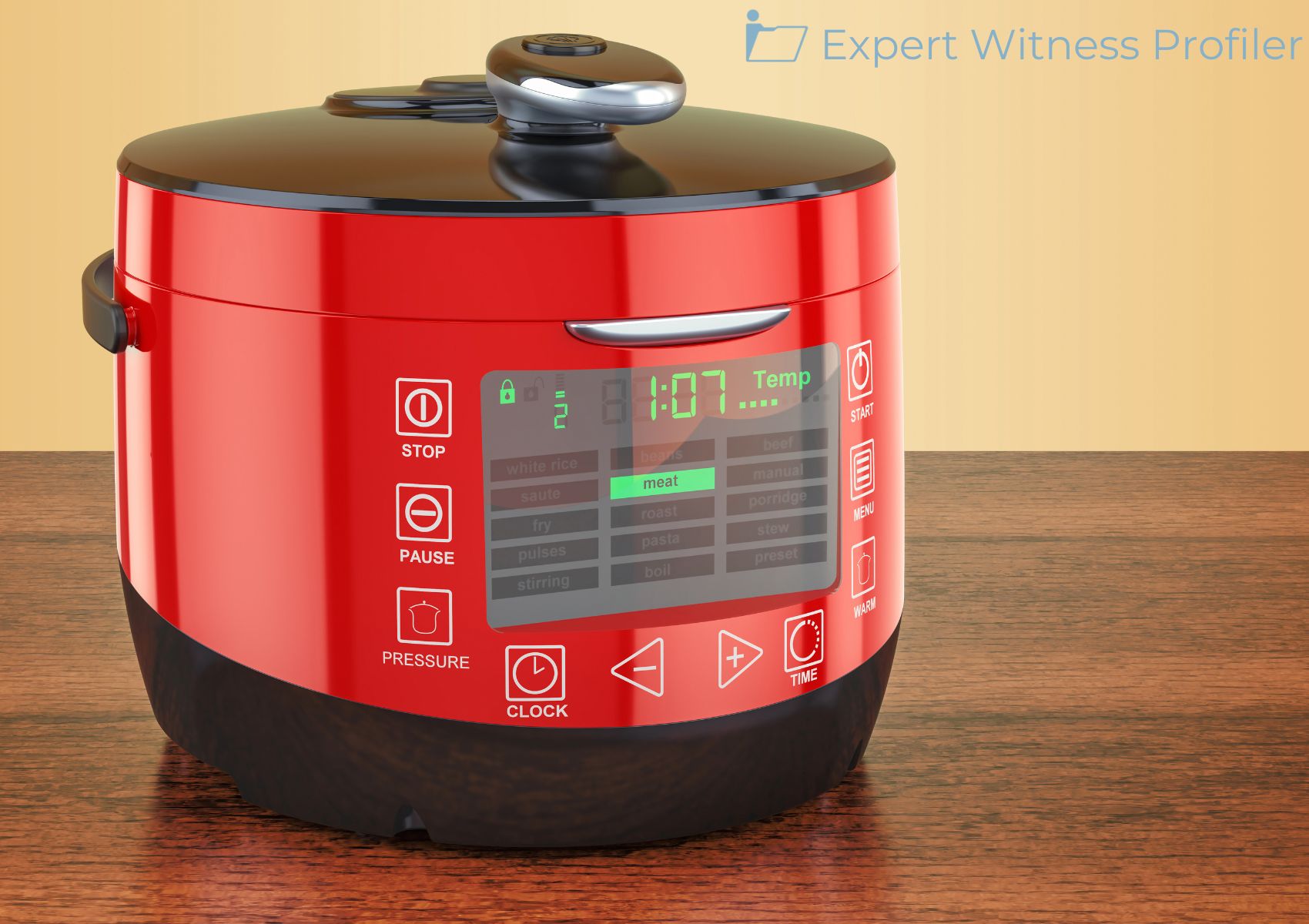
While preparing a roast in her Magic Chef 7-in-1 Multicooker, Tarsha Allgood was injured when the device’s lid opened causing its “scalding hot contents to be forcefully ejected from the pressure cooker.”
Allgood filed this lawsuit against CNA International, Inc. d/b/a MC Appliance Corporation raising claims under North Carolina law for inadequate warning, inadequate design, common law negligence, breach of express warranty, and breach of implied warranty.
CNA filed a motion to exclude the testimony of Allgood’s expert witness, David M. Rondinone, an engineer with Berkeley Engineering and Research, Inc.
Rondinone examined exemplars and other documents and materials, and concluded, among other things, that: (a) the mechanical interlock design intended to lock the lid is defective in that it fails to perform its function. This conclusion is based on, among other things, the geometric dimensions of the pin, lid, and cooker, which results in the interlock “providing very little resistance to the user;” and (b) “the presence of a defective pressure interlock increases the likelihood of the lid being opened and the cooker contents being expelled under pressure.” The touchstone of CNA’s argument is that Allgood threw away the device’s lid, so Rondinone could not test the actual multicooker Allgood used.
Mechanical Engineering Expert Witness
David Michael Rondinone has over 20 years of experience in mechanical engineering including design and failure analysis, fire suppression, explosions, flammability, flame arrestors, ignition, finite element analysis, accident reconstruction and crashworthiness, mechanical testing, failure of mechanical connections, dynamic stability of equipment and structures, pressure vessels and pipelines, medical implants and equipment, automotive component analysis and design.
Rondinone has a Masters and Ph.D in Mechanical Engineering from the University of California, Berkeley, where he previously received his B.S. in Engineering Physics and B.A. in Astrophysics.
The exemplar multicooker that Rondinone examined was used when it was purchased such that its prior history is unknown. CNA noted that the exemplar’s lid had a pre-existing scratch that Rondinone concluded means the lid was “force[d] open while under pressure by a prior user (an interlock override event).” CNA challenged the reliability of Rondinone’s opinion that the device was defectively designed because the mechanical interlock system could not meet the Underwriters Laboratories Cover Opening Standard.
According to CNA, Rondinone’s methodology relied on broad generalizations and failed to account for whether the exemplar met relevant Underwriters Laboratories’ standards before the exemplar was damaged.
Allgood countered that Rondinone set forth his methodology in his report. He explained how he examined and measured the exemplar, including its interlock features, and considered relevant Underwriters Laboratories standards. He then concluded that the mechanical interlock design that is intended to lock the lid of the device is defective in that it fails to perform its intended function.
The Court agreed with Allgood that Rondinone’s conclusions are sufficiently reliable. Among other things, he explained how the exemplar he examined showed “linear defects in the coating which are consistent with wear from the lid locking pin sliding over the tab,” and that the pre-existing scratch on the lid he examined could be the result of the lid being opened under pressure despite the sliding pin lock being held in place by the float valve.
CNA’s remaining arguments failed to persuade the Court. That Rondinone did not take measurements that CNA deems critical, failed to perform a statistical or comparative analysis, or reached his conclusions based on a “single nonrepresentative data point,” are fair points for cross-examination.
Held
The Court denied the Defendant’s motion to exclude the testimony of David Rondinone.
Key Takeaway:
The Court held that Rondinone’s opinions are appropriately based on sufficient data, an examination of an exemplar, and a reliable application to the facts of this case. His testimony would also assist the fact finder with determining whether a defect existed at the relevant time, and the methodology underlying his conclusions is sound and sufficiently reliable for trial.
To the extent CNA wishes to challenge the facts forming the basis of Rondinone’s opinions, including the impact, if any, that examining an exemplar had on his conclusions, it may do so on cross-examination. Although the facts on which an expert bases his opinion must have some basis in the record, there is no requirement that the basis must consist of undisputed evidence.