Tag: Reliable

  • Entertainment Industry Expert Not Allowed to Opine on a Party’s Mental State

    Entertainment Industry Expert Not Allowed to Opine on a Party’s Mental State

    In this breach-of-contract suit stemming from an exclusive license to present a live touring show of the popular children’s show, CoComelon, Plaintiff/Counterclaim Defendant CCM Touring LLC and Counterclaim Defendant S2BN Entertainment Corporation (“S2BN”) (collectively, the “CCM Parties”) sought to exclude the opinions and testimony of Eric Grilly and George Wade, experts for Defendant/Counterclaimant Moonbug Entertainment Ltd. and Counterclaimant Treasure Studio Inc.

    The Moonbug Parties also sought to exclude certain opinions and testimony of Michael Olsen and Felix Barrett, experts for the CCM Parties.

    Entertainment Industry Expert Witnesses

    Eric Grilly is a seasoned live entertainment executive who has worked in the live entertainment industry for over twenty years and in the live family
    entertainment and touring section for over fifteen years.

    Want to know more about the challenges Eric Grilly has faced? Get the full details with our Challenge Study report.

    George Wade is an expert in the licensing of intellectual property rights, specializing in live entertainment licensing practices. Wade has over 44 years of experience in the location-based entertainment industry and has worked in the acquisition and licensing of intellectual property for location-based entertainment applications for the past three decades.

    Discover more cases with George Wade as an expert witness by ordering his comprehensive Expert Witness Profile report.

    Michael Olsen has worked exclusively in the entertainment industries since 1979, during which time he has worked on more than 500 live shows and productions and gained experience in virtually every facet of a live production.

    Get the full story on challenges to Michael Olsen’s expert opinions and testimony with an in-depth Challenge Study.

    Felix Barrett is the founder and artistic director of a British theater company that specializes in participatory and immersive productions and is well-known for creating “Sleep No More,” a retelling of Shakespeare’s “Macbeth.”

    Want to know more about the challenges Felix Barrett has faced? Get the full details with our Challenge Study report.

    Discussion by the Court

    A. Eric Grilly

    First Opinion

    First, the CCM Parties argued that Grilly’s opinion as to Moonbug’s lost royalty revenues is actually a “lost profits” opinion that should be excluded because it “improperly relies on speculative financial projections instead of the actual financial performance of two live CoComelon tours.”

    Grilly based his opinion on financial projections created by others, which he did not independently verify in the context of projecting future earnings for a new business venture.

    To be sure, an expert’s use of assumptions or projections in calculating lost profits is not necessarily fatal, if the assumptions or projections are reliable. But, here, Grilly took no steps to independently assess the reliability of the projections prepared by CCM or Round Room, or the assumptions relied on in preparing those projections.

    Second Opinion

    Next, the CCM Parties attacked Grilly’s opinion that CCM failed to use its best endeavors to tour CoComelon Live. Grilly opined that CCM failed to tour CoComelon Live consistent with industry practice concerning the frequency of live family entertainment shows.

    However, testimony about industry norms and customs in this regard is likely to help a jury evaluate the ultimate issues in the case, not confuse it, because Moonbug contends that the failure of CCM to use its best endeavors to tour—i.e. to tour consistent with industry practice—amounts to a breach of the agreement or a breach of the covenant of good faith and fair dealing. 

    Third Opinion

    Additionally, the CCM Parties misstate Grilly’s testimony when they argue that he opines that CCM breached the best endeavors provision of the CoComelon Live Agreement. But Grilly never opined that CCM breached the agreement. Nor does Grilly opine that CCM breached any best endeavors clause in the contract. Instead, Grilly offered testimony about the industry custom for the frequency with which live family shows typically tour and ultimately opines that CCM’s touring plan did not align with those industry practices.

    Consequently, the Court found that Grilly’s testimony on whether CCM used best endeavors to tour CoComelon Live—as understood in industry parlance—is admissible.

    Fourth Opinion

    Finally, Grilly opined that CoComelon Live did not make a profit because its operational expenses were too high. Moonbug concedes that Grilly “cannot testify” that the high operational costs “is the reason that CCM ultimately stopped touring.”

    But Grilly has not opined that the high operational costs are the reason CCM stopped touring. Instead, Grilly opined that the high operational costs were the reason the tour did not make a profit and was not successful.

    That the tour’s operational costs were high and led to financial losses is well within Grilly’s area expertise and permissible expert testimony.

    In sum, the Court found all of Grilly’s opinions are admissible, save for his lost royalties opinion.

    B. George Wade

    First Opinion

    First, the CCM Parties attacked Wade’s assertion that “the central question is whether CoComelon Party Time should be considered a singular immersive experience or classified as a live theatrical offering.” The CCM Parties argued that this question is irrelevant and will not assist the trier of fact.

    Wade opined that CoComelon Party Time is “a singular immersive experience” and not a “show.” He opined that industry practice distinguishes between “show” rights and “immersive” rights. Wade’s opinion goes to whether CoComelon Party Time is of the same ilk of entertainment offering as CoComelon Live, such that it was a “show” and thus part of the exclusive rights granted under the agreement. Therefore, the Court found that Wade’s testimony is relevant and helpful to the jury.

    Second Opinion

    Second, the CCM Parties aver that Wade “improperly interprets the evidence” by opining that Moonbug mitigated the risks of consumer confusion through “routing insulation.”

    The CCM Parties provided no authority to support their contention that Wade’s opinion about Moonbug’s risk mitigation (or lack thereof) must be excluded because he purportedly ignored two pieces of evidence favorable to the CCM Parties. To the contrary, an expert need not agree with “witness testimony concerning the objects of his analysis.”

    Third Opinion

    Third, the CCM Parties contended that Wade improperly opined on a party’s mental state. Specifically, the CCM Parties pointed to Wade’s opinion that “S2BN appears to be aware of the distinction between theatrical shows (like CoComelon Live) and immersive experiences (like CoComelon Party Time and CoComelon Play Date) and how they utilize different rights.”

    Wade opined that the CCM Parties “appeared to be aware” of the distinction between theatrical shows and immersive experiences in a way that is “consistent with industry custom.”

    This opinion is impermissible because Wade goes beyond the bounds of explaining what another party in the relevant industry would have commonly understood based on industry practice. Instead, Wade extrapolates from the factual record that he believes the CCM Parties were purportedly aware of a distinction between a show and an immersive experience, relying on documents for which he has no personal knowledge. The Court held that Wade is speculating on a party’s mental state and usurping the jury’s role of interpreting the evidence and drawing inferences and conclusions from that evidence.

    Fourth Opinion

    Finally, the CCM Parties faulted Wade for including “irrelevant and unhelpful information” in his report, such as a historical overview of amusement parks, a discussion of the impact of the industrial revolution on amusement parks, a discussion of the impact of virtual and augmented reality on immersive experiences, and a forecast of the future of location-based entertainment, among other things.

    Experts may explain background material to the extent it is relevant to their analyses and useful to the jury, and any excessive factual narration can be curtailed at trial.

    Wade’s testimony in this regard offers a backdrop of the industry at issue—the live entertainment or “location-based entertainment industry”—and provides context for his opinion as to the regular customs and practices of that industry.

    Of course, to the extent Wade at trial provides such historical testimony and the testimony is excessive, duplicative, or irrelevant, the CCM Parties may object, but it is not a basis for exclusion at this stage.

    Accordingly, the Court found all of Wade’s opinions are admissible, except his testimony as to the CCM Parties’ awareness of the distinction between theatrical shows and immersive experiences.

    C. Michael Olsen

    Qualification

    The Moonbug Parties argued that Olsen is not qualified to opine on “licensing practices within the live touring industry” or “matters related to the actual planning of a tour (such as tour routing, touring cadence, or the meaning of ‘show’ within the industry and whether that meaning includes ‘immersive experiences’).”

    The Court held that Olsen’s general live entertainment industry experience, with regards to theatrical shows and concerts, coupled with Olsen’s specific experience at Round Room with live touring family shows specifically, suffice to permit him to testify as an expert here.

    Legal Conclusions

    The Moonbug Parties accused Olsen of providing improper legal conclusions concerning the interpretation of the CoComelon Live Agreement.

    Experts are permitted to testify about the “custom and usage” of terms in a particular industry. In addition to the customary usage of industry terms, experts may also testify about whether a party’s actions comport with industry customs and standards. However, Olsen overstepped his role by opining on a question for the jury—namely, whether Moonbug breached the right of exclusivity, rendering CCM’s decision to stop touring reasonable.

    D. Felix Barrett

    The Moonbug Parties attacked only Barrett’s third opinion—that immersive experiences implicate different rights from live shows—on the grounds that it is an improper legal conclusion.

    Barrett responded to Wade’s opinion, explaining that in his experience, immersive experiences and live shows do not involve separate rights unless there are express contractual provisions saying so.

    That opinion directly responded to Wade’s opinion that the two types of productions involve distinct rights, and it also addresses what Wade believes is industry practice. As the CCM Parties correctly argue, the Moonbug Parties cannot simultaneously argue that Wade is offering testimony about industry custom while attacking the CCM Parties’ expert as impermissibly offering a legal conclusion. At bottom, Wade and Barrett are both offering the same type of opinion about the industry custom surrounding the rights associated with two types of productions. Because Barrett exclusively discusses customs, standards, and generalities surrounding the rights associated with different types of productions, the Court found this testimony both helpful to the jury and admissible.

    Held

    • The Court granted in part and denied in part the CCM Parties’ motion to exclude the testimony of Eric Grilly and George Wade.
    • The Court granted in part and denied in part the Moonbug Parties’ motion to strike the testimony of Michael Olsen and Felix Barrett.

    Key Takeaway

    It is well settled that an expert cannot offer evidence about a party’s state of mind. An expert’s testimony must be directed to matters within the witness’ scientific, technical, or specialized knowledge and not to lay matters which a jury is capable of understanding and deciding without the expert’s help.

    Case Details:

    Case Caption: CCM Touring LLC v. Moonbug Entertainment Ltd.
    Docket Number: 1:23cv7116
    Court Name: United States District Court, New York Southern
    Order Date: March 27, 2026
  • Parking Expert Not Allowed to Opine on Duty to Warn

    Parking Expert Not Allowed to Opine on Duty to Warn

    Plaintiffs Lisa Brun and Daniel Brun ( collectively, “Plaintiffs”) brought this action against Defendants PeakCM Lake Street Hotel, LLP, d/b/a/ Hampton Inn (“Hampton Inn”), the City of St. Albans (“St. Albans”), Integrated Technical Systems, Inc. (“ITS”), Cross Consulting Engineers, P.C. (“Cross”), and Conner Communications, Inc. (“Conner”) ( collectively, “Defendants”) arising out of the injuries Ms. Brun sustained after an access gate at a parking garage owned and operated by St. Albans unexpectedly closed on Ms. Brun. As a result, Plaintiffs asserted a claim of negligence against Defendants.

    Hampton Inn filed a motion in limine to exclude the testimony of Plaintiffs’ expert, George W. Melchior, R.A., P.E., with respect to any duty Hampton Inn had to warn Plaintiffs not to park in the garage.

    Parking Expert Witness

    George William Melchior, R.A., P.E. is a licensed architect and professional engineer with over twenty years of experience.

    Through his experience as a Facilities Management Director for the Department of the Navy and as a parking consultant, Melchior has extensive experience operating and maintaining millions of square feet of parking facilities throughout the northeastern United States.

    Get the full story on challenges to George Melchior’s expert opinions and testimony with an in-depth Challenge Study.

    Discussion by the Court

    Hampton Inn argued that Melchior’s opinions must be excluded because they: (1) are “not made within his expertise as a Registered Architect and Professional Engineer”; (2) are irrelevant; (3) are not the product of reliable principles and methods reliably applied to the facts; and (4) improperly usurp the jury’s role in applying the law to the facts.

    Analysis

    Melchior’s opinion regarding Hampton Inn’s duty to Plaintiffs is grounded in his education and experience in operational risk management rather than his expertise in architecture and engineering.

    Because the jury can determine for itself whether it was reasonable for Hampton Inn to direct Plaintiffs to the garage if it knew the garage prohibited or posed a danger to motorcyclists, Melchior’s opinion regarding Hampton Inn’s duty is not helpful to the jury, usurps the role of the Court, and is therefore inadmissible.

    It is, after all, the Court’s responsibility to decide whether a duty exists.

    Held

    The Court granted Hampton Inn’s motion in limine to exclude the opinion
    of George W. Melchior.

    Key Takeaway

    It is the Court, not an expert witness, who instructs the jury on whether a duty exists and, if so, the law governing that duty.

    Case Details:

    Case Caption: Brun V. Peakcm Lake Street Hotel, LLP
    Docket Number: 2:24cv846
    Court Name: United States District Court, Vermont
    Order Date: June 15, 2026
  • Emergency Medicine Expert Not Allowed to Opine on Loss of Vision

    Emergency Medicine Expert Not Allowed to Opine on Loss of Vision

    Plaintiff, Amaris I Ward, who was seventeen years old during the events of this case, sought medical treatment at Madigan Army Medical Center (“MAMC”) over several weeks in October 2022.

    Plaintiff alleged that emergency care providers at MAMC failed to properly evaluate and diagnose her with acute bacterial rhinosinusitis on October 16, 2022, which led to their failure to determine the extent of the sinusitis so it could be treated in a timely fashion. As a result, Plaintiff alleged that the bacterial infection progressed untreated for more than 30 hours, which caused permanent damage to the optic nerve in her left eye, resulting in permanent blindness in the left eye. Plaintiff alleged that these actions amounted to a breach of the standard of care of reasonably prudent emergency care providers when confronted with symptoms such as Plaintiff’s.

    Defendants filed a motion to exclude the testimony of Plaintiff’s expert, Dr. Richard O. Cummins.

    Emergency Medicine Expert Witness

    Richard Oliver Cummins is board-certified in both internal medicine and emergency medicine.

    He joined the faculty of the Department of Medicine at the University of Washington in 1981, and was promoted to the rank of full Professor in 1993. As a member of the Department of Emergency Medicine he worked as an attending physician in the UWMC Emergency Department, providing clinical care, supervising medical students and emergency medicine residents in training, as well as providing direct patient care.

    Discover more cases with Richard Cummins as an expert witness by ordering his comprehensive Expert Witness Profile report.

    Discussion by the Court

    1. Cummins is qualified as an expert

    Defendants argued that Cummins did not have the clinical experience or educational basis to anchor his causation opinion about the cause of Plaintiff’s infection.

    The Court noted that Cummins is qualified to testify because he has been medical physician for several decades and is board-certified in both internal and emergency medicine.

    Although he is not an infectious disease specialist, he is a board-certified emergency medicine physician with over 39 years of experience. To the extent there is a challenge to Cummins’ qualifications, the Court is satisfied he has demonstrated at least a “minimal foundation of knowledge, skill, and expertise required” to give expert testimony on the issues in this case.

    2. Cummins’ methodology is not reliable

    Defendants argued that Cummins opined that the failure to start Plaintiff on either levofloxacin or moxifloxacin on October 16, 2026 caused her permanent loss of vision—and argued that this opinion is unreliable.

    According to Cummins, a “causal chain” of failures to comply with the standards of reasonable emergency department care led to Plaintiff’s vision loss. Within the “causal chain” was the failure to timely initiate “appropriate treatment,” otherwise identified as “appropriate intravenous antibiotics.”

    Cummins determined from review of available records that Plaintiff’s left eye blindness was caused by “damage to her optic nerve (optic neuropathy) from her infectious sphenoid sinusitis,” which contained fusobacterium necrophorium. But nowhere in Cummins’ expert report or deposition testimony did he explain why or how the failure to diagnose Plaintiff with severe bacterial pan-sinusitis caused damage to her optic nerve.

    Simply put, the Court cannot identify the generally accepted methodology Cummins used in arriving at his medical conclusions on causation. When asked how he reached the opinion that if physicians had given Plaintiff antibiotics on October, the antibiotics would have been effective to prevent Plaintiff’s vision loss, Cummins stated, “A general experience that antibiotics often work.” To the extent Cummins’ opinions are based on his general experience, he did not explain “how that experience leads to the conclusion reached, why that experience is a sufficient basis for the opinion, and how that experience is reliably applied to the facts.”

    Held

    The Court granted Defendants’ motion to exclude the testimony of Dr. Richard Cummins.

    Key Takeaway

    A medical expert may rely heavily on their experience, but they must still explain their methods. Put differently, the opinion must describe a “methodology that can be challenged in some objective sense” because “a subjective, conclusory approach cannot reasonably be assessed for reliability.”

    Case Details:

    Case Caption: Ward V. United States Of America
    Docket Number: 3:24cv5836
    Court Name: United States District Court, Washington Western
    Order Date: June 12, 2026
  • Law And Legal Expert Not Allowed to Opine on Extinguishment of Debt

    Law And Legal Expert Not Allowed to Opine on Extinguishment of Debt

    Plaintiff Charm Hospitality, LLC filed this lawsuit alleging, inter alia, legal malpractice against Defendant Nohayia Javed, Esq. Specifically, Charm made various allegations, in which it contended that Javed fell below the standard of care in her representation of Charm in connection with her prosecution of an insurance claim relating to water damage sustained at a Hotel owned by Charm in Elko, Nevada. The Hotel and the business’ personal property (“BPP”) were insured by General Security and Indemnity Company of Arizona (“GSICA”), and Defendant West Town Bank & Trust (“WTB”) held a Deed of Trust and Promissory Note secured by the Hotel and the BPP, as well as a personal guaranty from Charm’s sole owner and member, Param
    Kaur.

    West Town Bank and Javed filed a motion to strike Plaintiff’s rebuttal expert, Brian P. Worthington.

    Law And Legal Expert Witness

    Brian Paul Worthington is a 1991 graduate of the University of Wisconsin, and a 1995 graduate of the University of San Diego School of Law. He was a partner at Wingert, Grebing, Anello & Brubaker, and then Ryan, Mercaldo & Worthington before starting a solo practice in 2012.

    Get the full story on challenges to Brian Worthington’s expert opinions and testimony with an in-depth Challenge Study.

    Discussion by the Court

    WTB argued that Worthington, in his expert report, offered nothing more than improper legal conclusions about his interpretations of the insurance policy and the application of NRS 40.455.

    Here, Worthington opined that WTB is not entitled to receive policy benefits under the insurance policy based on the language in the loss payable provisions endorsement because it no longer has a financial interest in the property. This is a legal conclusion because it improperly interpreted the insurance policy.

    Moreover, Worthington’s opinion is devoid of any discussion on industry standards, claims-handling practice, underwriting customs, etc.

    Worthington further opined that “the ‘entire’ debt was eliminated, extinguished, and forever barred from collection when the deadline in NRS 40.455(1) elapsed” and that “once the sixth-month deadline in NRS 40.455 passed with no deficiency action, Charm Hospitality’s debt to WTB was extinguished and WTB ceased to have any financial interest in the insurance proceeds.” Again, this is improper because it applies the relevant law to the facts and draws a legal conclusion regarding extinguishment of the debt. 

    Accordingly, the Court struck Worthington’s opinion interpreting the insurance policy and applying NRS 40.455.

    Held

    The Court granted WTB’s motion to strike Plaintiff’s rebuttal expert Brian Worthington.

    Key Takeaway

    Expert testimony cannot be used to provide legal meaning or interpret the policies as written. In other words, expert testimony which purported to interpret a statute and opine as to whether it was violated was an improper legal conclusion. 

    Case Details:

    Case Caption: Charm Hospitality LLC V. Javed
    Docket Number: 2:25cv282
    Court Name: United States District Court, Nevada
    Order Date: June 11, 2026
  • Chemistry Expert Was Allowed to Opine on Phosphine-Air Mixtures

    Chemistry Expert Was Allowed to Opine on Phosphine-Air Mixtures

    Crestbrook Insurance Company, as subrogee of Central Prairie Co-Op, sued Ecolab, Inc., for negligence and breach of contract.

    This case is about a fire that destroyed a grain storage bin and its contents. Central Prairie is a Kansas grain cooperative that stores wheat and other grains in large bins at facilities across the state. In late October 2022, Ecolab—a commercial fumigation company—fumigated two bins at Central Prairie’s remote, unmanned site in Lyons, Kansas. Seventeen days later, a fire broke out in one of the bins, destroying the wheat inside and damaging the bin.

    Crestbrook, which insured the property, paid Central Prairie $573,919.74 for the loss and, as subrogee, then filed suit, asserting claims for negligence and breach of an oral contract.

    Ecolab’s phosphine product at issue here, VAPORPH3OS, addressed the flammability risk through its delivery system. Ecolab applied VAPORPH3OS using a machine called the HDS 200, which automatically dilutes the raw phosphine with carbon dioxide or forced air. The HDS 200 is engineered to ensure the delivered concentration never exceeds 10,000 parts per million—about 55% of the flammability threshold—and its built-in safeguards are designed to keep the concentration from ever crossing that line.

    Between Crestbrook and Ecolab, the parties have filed four motions to exclude expert testimony. Crestbrook sought to exclude two of Ecolab’s experts, Benjamin Streifel and Jeffrey Tucker while Ecolab sought to exclude two of Crestbrook’s experts, Dirk Maier and Peter Dahl.

    Chemistry Expert Witness

    Benjamin Streifel is a chemist. He trained at Johns Hopkins University and has practiced in the field for more than fifteen years.

    Want to know more about the challenges Benjamin Streifel has faced? Get the full details with our Challenge Study report.

    Entomology Expert Witness

    Jeffrey B. Tucker is a board-certified entomologist with more than forty years of experience in commercial fumigation.

    Discover more cases with  Jeffrey Tucker as an expert witness by ordering his comprehensive Expert Witness Profile report.

    Agricultural Engineering Expert Witness

    Dirk E. Maier is an agricultural engineer. He is a professor in the Agricultural & Biosystems Engineering Department at Iowa State University. Maier as worked with fumigation practices at different institutions for close to thirty years.

    Get the full story on challenges to Dirk Maier’s expert opinions and testimony with an in-depth Challenge Study.

    Fire Investigation Expert Witness

    Peter J. Dahl is a Certified Fire Investigator with decades of experience conducting fire origin and causation analyses.

    Gain a comprehensive understanding of Peter Dahl’s qualifications and casework history with his Expert Witness Profile report.

    Discussion by the Court

    Benjamin Streifel

    Ecolab retained Streifel to address the chemistry, properties, and behavior of phosphine gas and phosphine-air mixtures in confined containers.

    He offered four opinions. First, there is no evidence of phosphine separation or concentration once the HDS 200 mixes phosphine into air. Second, gravitational separation based on density alone, as hypothesized by Crestbrook, would require timescales exceeding the ten-day window between the bins’ unsealing and the fire. Third, gravitational separation at the applied concentrations would require length scales far exceeding Bin 2’s 100-foot height. Fourth, phosphine concentrations in grain bins naturally decrease, rather than increase, over time. Each of these opinions challenged Crestbrook’s core causation theory that residual phosphine could have settled and concentrated in Bin 2’s cone bottom to the level required for ignition.

    Analysis

    Crestbrook argued that Streifel’s opinions exceeded the scope of his expertise. In particular, it argued that his opinions are speculative and rest on unreliable methods because he has not worked with phosphine, performed a commercial fumigation, or formally studied conditions inside a grain bin. Crestbrook failed to explain how or why Streifel’s lack of these experiences undermines the reliability of his analysis or methodology.

    Crestbrook next argued that Streifel conducted no independent investigation and relied “exclusively” on information Ecolab supplied. Streifel reviewed the HDS 200 Operator’s Manual, the Fumigation Management Plan, the VAPORPH3OS product label, depositions from those involved with the fumigation, and forty other sources, including fifteen peer-reviewed publications on phosphine and gas diffusion.

    Crestbrook also argued that Streifel did not engage with the scene investigators, did not attend a scene examination, and did not attend a lab examination. Ecolab noted, and Crestbrook did not deny, that scene investigators photographed and measured the empty bin, electrical equipment, and charred aeration fan. At the lab, they examined the removed fan for signs of fire origin. Crestbrook made no concrete argument why Streifel had to experience this in person and could not rely on the recorded observations.

    Crestbrook’s last set of critiques concerned Streifel’s understanding of the HDS 200 on two grounds. First, Crestbrook argued that Streifel’s opinions were unreliable because they rested on a capability the HDS 200 did not have, namely, the ability to create a “new and stable gas.” But nowhere in his report did Streifel discuss this capability. And when the issue arose during his deposition, Streifel explicitly disavowed Crestbrook’s characterization of his opinion.

    Second, Crestbrook argued that Streifel never inspected the HDS 200, never tested its output, and never reviewed maintenance or calibration records to confirm it operated as designed. But this conflates the issue. Streifel did not opine on whether the HDS 200 worked as intended, and, notably, his analysis took into account malfunction scenarios.

    The Court found that none of Crestbrook’s challenges to Streifel’s opinion show that his opinion must be excluded. 

    Jeffrey Tucker

    Crestbrook sought to strike Tucker’s opinion that the industry standard for commercial fumigators is to follow the EPA label physically attached to or accompanying the pesticide at the time of manufacture, rather than the most recently approved EPA label that may have been issued after manufacture.

    Crestbrook first argued that Tucker’s opinion is “flatly contradicted” by federal and Kansas pesticide statutes. But this is not a basis for exclusion. The gist of Crestbrook’s argument on this point appears to be that because Tucker’s conclusion is wrong, his opinion is inadmissible. That argument failed to justify exclusion because the relevant inquiry is whether an expert’s principles and methods are reliable, not whether the moving party agrees with where those methods lead.

    Crestbrook next argued that Tucker’s opinion is an impermissible legal conclusion that “invades the Court’s role” of instructing the jury on the law.

    The bulk of Tucker’s challenged opinion is permissible. He described the training of fumigators and industry customs. He explained the practical reasons for that custom, namely, because labels do not always reach fumigators promptly after a new one is approved, and product purchased earlier may sit in inventory before use.

    In his deposition, however—the testimony on which Crestbrook’s motion rests—Tucker more than once framed that custom in the language of legal obligation, veering into territory reserved for the court. Pressed by Crestbrook’s counsel, he stated that fumigators “are obligated to follow” the cylinder-affixed label and “are not obligated to follow the most recent EPA label.” Because those statements were elicited at deposition rather than offered as report opinions, the limitation is prophylactic.

    The Court granted Crestbrook’s motion to exclude Tucker’s opinion to the extent that it treated the industry custom he described as a matter of legal obligation or compliance.

    Dirk Maier

    Maier offered an interlocking chain of opinions on causation. Specifically, he asserted that residual phosphine remained in Bin 2 after Ecolab unsealed it on November 1, 2022. Then, over the next ten days, the residual gas settled and concentrated in the bin’s cone bottom under the combined effect of natural convection and a day-night “pumping action” through the headspace. The concentration eventually reached phosphine’s 18,000-parts-per-million lower flammability limit and the gas then self-ignited and initiated a “slow pyrolysis” smoldering fire in the wheat surrounding the north aeration duct.

    Maier also opined that Ecolab’s failures to monitor phosphine concentrations and to aerate Bin 2 upon unsealing constitute “violations of State of Kansas and federal law.” Maier’s causation chain provided the foundation of Crestbrook’s negligence theory by supplying chemistry and physics explanations for how residual phosphine settled and concentrated in Bin 2’s cone bottom to the ignition threshold during the ten-day window before aeration.

    Analysis

    Ecolab challenged Maier’s central causation theory. Specifically, it sought to exclude his opinion that residual phosphine, after Ecolab unsealed Bin 2 on November 1, 2022, settled by gravity and convection into the cone bottom of Bin 2 and concentrated to its 18,000 parts per million lower flammability limit during the ten-day window before aeration.

    To begin with, Maier conducted no testing of the theory. Moreover, Maier admitted that he is aware of no peer-reviewed literature documenting gravitational concentration of phosphine within a grain bin. Furthermore, Maier’s own peer-reviewed work on phosphine, which he omitted from his report, undermined his opinion.

    Ecolab next challenged Maier’s calculation that 2,280 grams of phosphine could reach 18,000 parts per million if concentrated into a volume of 3,165 cubic feet within Bin 2. First, it assumed that all 2,280 grams of phosphine introduced into Bin 2 on October 27 remained in the bin on November 1—an assumption Maier conceded is wrong and that he made no attempt to quantify. Second, the calculation’s premise that the gas was “trapped” or “contained” within a small subset of the bin’s interior—the 3,165 cubic feet of the cone bottom—had no basis in the record.

    Ecolab’s third challenge concerned Maier’s opinion that once phosphine reached its 18,000 parts per million self-ignition limit in the cone bottom of Bin 2, it ignited and initiated a “slow pyrolysis” smoldering fire in the wheat surrounding the north aeration duct.

    Maier admitted that he has done “no calculation, modeling, or testing to determine how much thermal energy would have to be given off by a phosphine gas ignition to in fact ignite wheat.”

    Ecolab’s final challenge concerned Maier’s statements that Ecolab’s failure to monitor and failure to aerate “are violations of State of Kansas and federal law.”

    The Court held that the legal-conclusion problem is properly remedied not by wholesale exclusion of the expert’s testimony but by exclusion of the offending statements. Maier remains free to testify—within the boundaries set above—about what the VAPORPH3OS label requires of a licensed fumigator, the industry custom for monitoring and recording phosphine concentrations during fumigation, the content of the Fumigation Management Plan Ecolab submitted, and the practical reasons that label requires the steps it does.

    Peter Dahl

    Dahl opined that the ignition source was a concentrated pocket of residual phosphine that, having settled at the lowest point in the north aeration pipe inside Bin 2, reached its 18,000-parts-per-million lower flammability limit and produced a momentary flame front that ignited adjacent wheat. Dahl’s specific-causation chain depends on the general-causation premise—that residual phosphine could and did concentrate to ignitable levels in Bin 2’s cone bottom—that he obtained from his conversations with Maier and his review of phosphine manufacturers’ Material Safety Data Sheets. Dahl conducted no independent research, testing, modeling, or peer-reviewed-literature analysis of phosphine settling, concentration, or the ignition mechanism his opinion describes.

    Ecolab argued that Dahl’s causation opinion did not satisfy Rule 702 because it depended entirely on a general-causation premise that Dahl did not himself develop, but instead obtained from Maier.

    The evidence on which Dahl relies for his causation case needs to be independently reliable. But, as noted above, Maier’s opinion as to causation—which forms the basis of Dahl’s own opinion—was not reliable. Without that foundation, Dahl’s causation analysis cannot stand and thus, the Court granted Ecolab’s motion to exclude his testimony.

    Held

    • The Court denied Crestbrook’s motion to exclude Benjamin Streifel.
    • The Court granted in part and denied in part Crestbrook’s motion to exclude Jeffrey Tucker.
    • The Court granted in part and denied in part Ecolab’s motion to exclude Dirk Maier.
    • The Court granted Ecolab’s motion to exclude Peter Dahl.

    Key Takeaway

    • An expert may testify where the subject is within “the reasonable confines” of his expertise even if he lacks specialization in the precise application.
    • While testing is not required, when an expert relies on a novel theory and the basis for the expert’s opinion is subject to debate, the importance of testing as a factor in determining reliability is at its highest.

    Case Details:

    Case Caption: Crestbrook Insurance Company V. Ecolab Inc.
    Docket Number: 6:24cv1091
    Court Name: United States District Court, Kansas
    Order Date: June 11, 2026
  • Law And Legal Expert Not Allowed to Opine on Forfeiture

    Law And Legal Expert Not Allowed to Opine on Forfeiture

    Plaintiff Charm Hospitality, LLC filed this lawsuit alleging, inter alia, legal malpractice against Defendant Nohayia Javed, Esq. Specifically, Charm made various allegations, in which it contended that Javed fell below the standard of care in her representation of Charm in connection with her prosecution of an insurance claim relating to water damage sustained at a Hotel owned by Charm in Elko, Nevada. The Hotel and the business’ personal property (“BPP”) were insured by General Security and Indemnity Company of Arizona (“GSICA”).

    Javed filed a motion to strike Plaintiff’s expert, Rob Bare.

    Law And Legal Expert Witness

    Rob Bare worked at the State Bar of Nevada for 17 years (and as the chief attorney for 15 of those years), in which he prosecuted and tried 870 disciplinary hearings.

    A  graduate of the University of Pittsburgh School of Law, he also served as a judge in Department XXXII of the Nevada Eighth Judicial District Court. 

    Get the full story on challenges to Rob Bare’s expert opinions and testimony with an in-depth Challenge Study.

    Discussion by the Court

    A. Bare is qualified to offer an expert opinion

    Javed argued that Bare is not qualified to testify because he lacked knowledge and experience in the areas of law that are relevant to the underlying action. She contended that Bare has no experience performing
    client conflicts, prosecuting first-party insurance claims, or handling commercial litigation.

    Bare opined that Javed (1) breached the duty of competent and diligent representation by failing to research Nevada and Illinois law prior to advising Charm that West Town Bank needed to be a co-client; (2) breached the duty of communication by failing to advise Charm that (a) Javed was not licensed to practice law in Nevada or Illinois, (b) Charm may not receive proceeds under the policy; and (c) West Town Bank could be made a co-claimant; (3) failed to provide a facially valid conflict waiver by not identifying the potential conflict regarding division of proceeds; (4) breached the standard of care by disbursing the settlement payment without Charm’s consent or a court order; and (5) charged unreasonable attorney’s fees and potentially excessive costs.

    Bare’s above opinions are closely related to the rules of professional conduct and his ample experience and knowledge regarding the duties of communication, competence, and diligence, as well as client conflicts. This Court further noted that Bare presided over 15,000 civil and business cases during his tenure as a state court judge for 10 years. This, combined with his 17 years of experience with the rules of professional conduct, make it “more likely than not” that Bare’s “scientific, technical, or other specialized knowledge will help the trier of fact to understand the evidence or to determine a fact in issue.”

    C. Bare’s opinion is supported by sufficient facts or data

    Javed argued that Bare’s opinion is not based on sufficient facts or data because he did not independently analyze the underlying loan documents or the insurance policy.

    Bare’s opinion is based on what Javed did or did not disclose to Charm (given Charm’s version of the facts). He did not need to review the loan documents or insurance policy to form this opinion. In addition, it appeared that he did review the fee contract. Based on the scope of Bare’s opinion, the Court cannot say that his opinion was not based on sufficient facts or data merely because he did not review the loan documents or insurance policy. In sum, it is more likely than not that his above opinions were based on sufficient facts or data.

    As for Javed’s argument regarding the personal guaranty, this argument is based on disputed facts. As the parties have repeated throughout this litigation, much of this case comes down to a he-said-she-said scenario. This Court will not choose between the parties’ competing version of the facts at the admissibility stage.

    D. Bare’s opinion that the GSICA insurance payment was uncontested is not reliable

    Javed argued that Bare’s opinions on the alleged breaches of duties owed by her to Charm are not reliable.

    First, Javed argued that Bare did not explain what, if anything, would have changed about Charm’s position if she had researched Nevada or Illinois law. Second, Javed argued that she had no reason to tell Charm that she was not licensed in Nevada because Charm’s representative already knew that. In his expert report, Bare stated that lawyers have a duty to familiarize themselves with factual and legal elements of a problem and that the facts did not show that Javed familiarized herself with Nevada or Illinois law. He further stated that Javed did not communicate to Charm that she was not licensed to practice law in Nevada or Illinois.

    The Court found that Bare’s opinions are based in his experience with the rules of competence, diligence, and communication governing lawyer conduct. Javed did not contest that she did not familiarize herself with Nevada or Illinois law or that she did not tell Charm she did not practice law in Nevada or Illinois; rather, Javed is arguing that she did not need to do so because it wouldn’t have changed Charm’s position or because Charm already knew.

    Third, Javed argued that Bare incorrectly opined that the GSICA’s initial payment under the policy was uncontested and thus her fees were excessive. Bare identified no facts underlying his “understanding” that the insurance payment was uncontested, nor can the Court find any in his expert report.

    Fourth, Javed argued that Bare incorrectly opined that she disbursed payment without Charm’s knowledge or consent. Javed is merely disputing the conclusion Bare reached, which is not a reason to strike his opinion at the admissibility stage.

    E. Bare’s opinion regarding forfeiture and damages will be stricken as improper legal conclusions and opinions

    Javed argued that Bare’s opinion that her fees are subject to forfeiture is an improper interpretation of the law. The Court agreed. Expert witnesses cannot opine as to legal conclusions, i.e., an opinion on an ultimate issue of law and Bare’s statement that Javed should be required to forfeit some if not all of her
    fees is a legal conclusion.

    Held

    The Court granted in part and denied in part Javed’s motion to strike the testimony of Rob Bare.

    Key Takeaway

    The Court has broad discretion to qualify experts. Bare’s extensive experience with the rules of professional conduct make it more likely than not that his experience and knowledge will help the trier of fact determine whether Javed violated one of those rules.

    Case Details:

    Case Caption: Charm Hospitality LLC V. Javed
    Docket Number: 2:25cv282
    Court Name: United States District Court, Nevada
    Order Date: June 11, 2026
  • Neurology Expert Was Not Allowed to Opine on Credibility of Other Witnesses

    Neurology Expert Was Not Allowed to Opine on Credibility of Other Witnesses

    This civil action arises from a motor vehicle accident involving Plaintiff Sarah Kollman on February 20, 2019. The other driver, Taylor Bonello, was at-fault for the collision, which Plaintiff alleged caused her physical injuries.

    At the time of the collision, Bonello was insured for liability with Progressive Insurance company for $100,000.000. Plaintiff had an underinsured motorist (UIM) policy with Defendant State Farm Mutual Automobile Insurance Company. After receiving permission from Defendant, Plaintiff settled with Bonello for the $100,000.000 policy limit. Plaintiff then demanded the full UIM limits of $100,000.000 from Defendant under her policy. Defendant refused to pay, saying that all of Plaintiff’s damages were covered by the money she received from Progressive. In response, Plaintiff brought the instant lawsuit for breach of contract and breach of implied duty of good faith and fair dealing.

    Plaintiff sought to limit the opinions and testimony of two of Defendant’s proposed expert witnesses, Dr. Haley Burke and Keith Olivera while Defendant sought to limit the testimony of Plaintiff’s proposed expert Jeremy A. Sitcoff.

    Neurology Expert Witness

    Haley A. Burke is board-certified in neurology, psychiatry and interventional pain management. Burke has first-hand experience and training working with breast cancer patients who had similar surgeries from when she studied at Anderson Cancer Center in Houston, Texas.

    Get the full story on challenges to Haley Burke’s expert opinions and testimony with an in-depth Challenge Study.

    Insurance Expert Witnesses

    Keith R. Olivera is an attorney duly licensed to practice law in Colorado who has practiced in excess of 30 years in various fields of insurance, including good faith/bad faith law. He is an expert in the fields of civil litigation and insurance industry standards.

    Want to know more about the challenges Keith Olivera has faced? Get the full details with our Challenge Study report.

    Jeremy Andrew Sitcoff has been licensed to practice law in Colorado for over twenty-seven years. For more than twenty-two years approximately 85% of my practice has been devoted to insurance coverage, claims handling practices and procedures, and insurance breach of contract and bad faith on behalf of policyholders.

    Discover more cases with Jeremy Sitcoff as an expert witness by ordering his comprehensive Expert Witness Profile report.

    Discussion by the Court

    A. Haley Burke, MD

    Plaintiff argued that Burke, who is certified in neurology, psychiatry, and pain management, is not qualified to make opinions regarding the Traffic Accident Report or Plaintiff’s lumpectomies and breast reconstructive surgery, Lyme disease, sinus and eye surgery, mental health, dental health, shoulder pain, and gastrointestinal issues.

    1. Burke’s qualifications

    Burke did not render an opinion regarding the Traffic Accident Report; she merely reiterated how the State of Colorado defines an “01” severity for an injury. The Court cannot identify where in Burke’s report Plaintiff claimed that she stated an opinion on the Traffic Accident Report. In addition, Burke’s discussion of PTSD is included as part of a summary of another provider’s neurocognitive testing of Plaintiff. As none of these comments involve Burke’s own opinions or “scientific, technical, or other specialized knowledge,” they are not properly challenged under Rules 702 and 403.

    Next, the fact that Burke did not cite any articles or provide a more detailed basis for her opinion that Plaintiff’s sinus and cataract surgery, mold exposure, fall, gluten intolerance, and Lyme disease potentially contributed to her symptoms did not necessarily make these opinions unreliable.

    The Court found that Burke is qualified to opine on the possible effects of Plaintiff’s lumpectomies, breast reconstructive surgery, shoulder pain, and mental health. The Court also found that Burke is qualified to know that these “are major surgeries and would be expected to contribute to stress and pain for many people.”

    Finally, Burke is also qualified and permitted to comment on the tests and practices employed by other providers who treated Plaintiff. As long as a subject is within an expert’s area of expertise, as is the case here, he or she may conclude whether he or she agrees with another’s data and opinions. Burke’s comments are not attacks on the other providers’ credibility but rather their substantive practices.

    2. Burke’s Rebuttal Report

    In contrast to Burke’s initial report, the rebuttal report is largely an attack on the credibility of Plaintiff’s experts. She specifically called into doubt the qualifications of Plaintiff’s experts and the believability of their testimony.

    Therefore, the Court appropriately excluded portions of Burke’s rebuttal commenting on the qualifications of Plaintiff’s expert witnesses.

    Other parts of the rebuttal report, such as the section discussing the records from Parker Vision Specialists, are appropriately limited to contradicting Plaintiff’s expert’s opinions and do not put forward new arguments or theories. Therefore, these portions of the report are admissible.

    B. Keith Olivera

    Plaintiff argued that several opinions of Defendant’s insurance expert, Olivera, should be excluded because he impermissibly drew legal conclusions, cited unreliable industry standards, and included irrelevant information.

    1. Legal conclusions

    Plaintiff cited 21 opinions that it argued are legal conclusions regarding the reasonableness of Defendant’s actions and complicity with industry standards.

    The Court agreed that throughout Olivera’s report, he impermissibly conflated Colorado insurance industry standards with case law to draw conclusions about the reasonableness of Defendant’s actions.

    Defendant stipulates to striking opinions 10, 11, 15, and 19. In addition, opinion 14 is not an application of either industry or legal standards to the facts of the case. While it is Olivera’s opinion that Burke’s testimony supported Defendant’s position, opinion 14 is not a conclusion regarding whether Defendant’s evaluation of or reliance on Burke’s report was in line with industry or legal standards. Therefore, the Court found Plaintiff’s argument is not applicable to opinion 14 and will not strike it.

    Out of the remainder of the 21 opinions cited by Plaintiff in this section of their motion, opinions 4, 5, 6, 9, 12, 13, 16 are permissible testimony regarding Defendant’s conformity with industry standards, not legal standards. On the other hand, opinions 2, 8, 17, 18, 20 are impermissible conclusions regarding the reasonableness of Defendant’s conduct, which is a matter of law.
    The Court also excluded opinions 1, 3, 7, and part of 21 because they are conclusions resulting from application of case law and statutory law to the facts of the case.

    2. Support for industry standards

    Plaintiff challenged 7 of Olivera’s opinions as based on industry standards that are not codified and have not been shown to be generally accepted. The Court disagreed, finding that at the beginning of his report, Olivera adequately stated a basis for the industry standards he cited.

    In his report, Olivera “identifies what he perceives as the relevant insurance industry standards, explains those standards, and states that he relied on his experience in the insurance industry in forming his opinions as to whether State Farm met those standards.”

    He clearly tied each of his opinions to an identified industry standard and stated the basis for that standard, citing Colorado case law, statutes, and his 40 years of experience in the insurance industry. Therefore, the Court found that the seven challenged opinions are not unsupported ipse dixit statements but are instead based on clearly articulated sources.

    3. Ties to factual observations

    Plaintiff argued that Olivera’s report failed to connect the case law and standards cited in pages 6-7 of his report to the facts of this case.

    As discussed above, Olivera may not directly opine on whether Defendant’s conduct was unlawful under the case law and statutes cited. However, courts in this district have noted that case law and statutes inform insurance industry standards, and experts are permitted to testify whether a Defendant’s conduct “conformed with specific industry standards, including ones identified in Colorado statutes.”

    Therefore, Olivera cannot tie the case law and statutes in pages 6-7 of his report directly to the facts of the case. However, as Olivera used the law and statutes to provide a basis for the industry standards he applied throughout his opinion, his discussion of them is admissible.

    4. Methodology and supporting facts

    Plaintiff argued that Olivera failed to provide any methodology or supporting facts for two of his opinions. However, Plaintiff’s argument reads not as a challenge to Olivera’s methodology but rather as a rehash of her argument that Olivera did not provide a basis for the industry standards cited. The Court has already discussed that Olivera provided sufficient bases for the industry standards he applied. To the extent Plaintiff disagreed with Olivera’s conclusion that it was consistent with industry standards for Defendant to consider Burke’s IME report, she may address her disagreement through cross-examination at trial.

    5. Rebuttal Opinion

    Plaintiff objected to Olivera’s rebuttal statement that he disagreed with Sitcoff’s “discussion of the case law, statutes, and regulations that provide Colorado insurance industry standards” to the extent it is inconsistent with his own.

    Plaintiff argued that it is unclear what Olivera specifically opposes. Olivera’s general statement of disagreement is supported by the lengthy discussion of case law, statutes, and regulations included in his initial report and to which he refers to as the basis for his disagreement in the rebuttal. He did not seek to introduce new facts or information to support his disagreement. Therefore, the Court found that Plaintiff is adequately on notice for the basis upon which Olivera disagreed with any of Sitcoff’s contrasting opinions.

    C. Jeremy Sitcoff

    Defendant argued that eight of Sitcoff’s opinions are not supported by any referenced industry standard and that he impermissibly drew legal conclusions from applying the law to the facts of the case.

    The Court excluded Opinions 2, 5, 6, and 7 as impermissible legal conclusions because they commented on the reasonableness of Defendant’s investigation, which was a legal determination reserved for the jury. In contrast, the Court held that Opinions 3, 4, and 8 drew conclusions based on industry standards rather than legal standards and were therefore admissible.

      Held

      • The Court granted in part and denied in part Plaintiff’s motion to limit the testimony of Defendant’s retained expert Haley Burke.
      • The Court granted in part and denied in part Plaintiff’s motion to limit the testimony of Defendant’s insurance industry expert Keith Olivera.
      • The Court granted in part and denied in part Defendant’s motion to exclude the opinions of Jeremy Sitcoff.

      Key Takeaway

      Physicians frequently rely on medical knowledge, physical examination, and patient history to form opinions, all of which are “routinely admitted in federal courts because this methodology is widely accepted among the relevant scientific community.” 

      Case Details:

      Case Caption: Kollmann V. State Farm Mutual Automobile Insurance Company
      Docket Number: 1:23cv2802
      Court Name: United States District Court, Colorado
      Order Date: April 23, 2026
    1. Accounting Experts’ Testimony on Exclusivity Agreement Limited

      Accounting Experts’ Testimony on Exclusivity Agreement Limited

      CellMark brought several claims against Dinah Bowman, Göran Sohl, and
      Fortex Americas, LLC (collectively the “Fortex Defendants”), as well as Rob Webster arising out of the unamicable end of Webster’s employment at CellMark in 2024.

      Plaintiff CellMark, Inc. retained an expert, Jay Cunningham, to show that it
      suffered various economic damages arising from its claims in this case.

      Webster retained Joshua Shilts to rebut Cunningham’s opinions, and the Fortex Defendants retained Robert Kester for the same purpose.

      CellMark filed a motion to exclude certain testimony from the Defendants’ rebuttal experts.

      Accounting Expert Witnesses

      Joshua James Shilts CPA,ASA, CFF/CGMA/ABV, CFE, has held roles with public accounting firms ranging in size from the “Big Four” to smaller regional and local firms, as well as large public organizations throughout Florida and New York.

      Shilts has provided expert testimony in commercial and family matters involving business valuation, economic damages, fraud, and other disciplines related to economics and accounting issues.

      Get the full story on challenges to Joshua Shilts’ expert opinions and testimony with an in-depth Challenge Study.

      Robert Breece Kester, CPA/ABV/CFF, specializes in the assessment of economic damages, business valuation, and accounting matters. He has provided consulting services related to businesses across a cross-section of industries, including but not limited to financial services, manufacturing, restaurants, retail, distribution, transportation, logistics, construction, professional services, and many other specialized industries.

      Want to know more about the challenges Robert Kester has faced? Get the full details with our Challenge Study report.

      Discussion by the Court

      A. Shilts and Kester may not testify about any legal opinions.

      CellMark argued that Shilts’ and Kester’s reports are littered with legal opinions and that they must be prohibited from testifying as to those points at trial.

      Both Shilts’ report and Kester’s report contain conclusion sections that summarize their criticisms of Cunningham’s report.

      The conclusion sections of the Defendants’ reports veer into the realm of legal opinion by calling Cunningham’s opinion speculative, unreliable, and unsupported by sufficient data. Thus, the Court granted CellMark’s motion to exclude testimony from Shilts and Kester that invaded the province of the Court by stating legal opinions and invaded the province of the jury by telling it how it should weigh the evidence.

      B. Shilts and Kester may critique Cunningham’s reliance on assumptions regarding the exclusivity agreement, but they may not opine as to the ultimate truth of those assumptions.

      Next, CellMark argued that Shilts and Kester may not testify about whether Cunningham correctly assumed for his damages model that CellMark would have renewed an exclusivity agreement.

      Shilts and Kester both criticized Cunningham’s report for assuming that CellMark would have renewed its exclusivity agreement with Asia Pulp and Paper but for Webster’s failure to renew the agreement.

      While Shilts and Kester may critique Cunningham’s assumptions regarding the exclusivity agreement, they must avoid testifying about whether the agreement should have been renewed or whether it would have been renewed but for Webster’s conduct.

      Accordingly, the Court denied CellMark’s motion to the extent it mischaracterized the Defendants’ reports.

      But the Court granted the motion to the extent Shilts and Kester intended to testify that the evidence showed that the exclusivity agreement would not have been renewed in any event and to the extent they intended to testify that Cunningham’s opinions are not based on truthful or objective evidence.

      C. Similarly, Shilts may critique Cunningham’s reliance on assumptions about continued business with Duro-Last, but he may not opine as to the ultimate truth of those assumptions.

      Shilts’ report said that his “understanding is that Duro-Last wanted to consolidate suppliers” and that this could have reduced CellMark’s lost profits attributable to Duro-Last.

      Shilts made it clear that his testimony as a rebuttal expert will criticize Cunningham’s opinion on damages— nothing more.

      But the same concerns for the exclusivity agreement issue apply here. Shilts’ testimony must not state whether it is true that Duro-Last allegedly wished to consolidate suppliers or that Cunningham’s opinions are not supported by truthful or objective evidence.

      Accordingly, the Court denied CellMark’s motion to the extent it mischaracterized Shilts’ report. Shilts may critique the assumptions that Cunningham relied upon regarding the volume of business that CellMark would have continued to receive from Duro-Last. But the Court granted the motion to the extent Shilts intended to testify that the evidence showed that Duro-Last desired to consolidate suppliers and therefore would not have continued to place orders with CellMark.

      D. Shilts and Kester may testify about CellMark’s damages, including by providing quantified examples of how they believe Cunningham’s calculations overstate the potential damages.

      CellMark said that the Defendants’ experts should not be allowed to testify to the total amount of damages that CellMark suffered or what the damages period should be because it would be testimony on an undisclosed opinion and would mislead the jury and confuse the issues.

      Shilts and Kester did not provide a single, quantified total of CellMark’s damages in their reports, unlike Cunningham.

      Instead, their reports took a piecemeal approach to separately criticize various aspects of Cunningham’s model, and they pointed out instances where they believe Cunningham’s calculations have overstated the potential damages by a specific, quantified amount.

      Expert testimony by Shilts and Kester about CellMark’s damages clearly falls within the scope of rebuttal. The Defendants’ expert disclosures were properly made, and testimony consistent with their reports would help the jury understand any perceived problems with Cunningham’s opinions on damages. The lack of a total damages calculation is not a good reason to preemptively exclude such testimony when it was within the experts’ purview to use a piecemeal approach instead.

      The Court recognized that there is a potential for the jury to be confused by the ways in which Shilts and Kester might provide discrete quantified examples of how they believe Cunningham’s calculations overstate CellMark’s prospective damages. If properly explained, those quantified examples can be helpful to the jury in evaluating Cunningham’s opinions and calculations.

      E. Shilts may testify about the decline in the distilled spirits industry.

      Lastly, CellMark argued that Shilts may not testify about a decline in the
      distilled spirits industry to rebut Cunningham’s damages calculations.

      According to CellMark, Shilts’ testimony would unreasonably rely upon an online news article for which Shilts does not know the identity of the author. The news article summarized a variety of surveys and reports about alcohol consumption by Americans to suggest that it is on the decline.

      Whether news articles or reports are a reliable basis for an opinion depends on the context and the kind of expertise at issue.

      It is widely believed that the alcohol industry is on the decline in the United States generally, and Shilts offered testimony on this point to lay out a factor that he believed Cunningham should have considered.

      The Court is satisfied that the article contains the kinds of facts and data that business experts would rely upon, but Cellmark is free during trial to challenge Shilts about his knowledge of the article’s author and publisher.

      For now, the Court concludes that Shilts should be allowed to testify about the decline in the alcohol industry and the impact he believes that has on Cunningham’s opinions.

      Held

      The Court granted in part and denied in part CellMark’s motion to exclude certain opinions of Robert Kester and Joshua Shilts.

      Key Takeaway

      A rebuttal expert’s role is to contradict or rebut evidence on the same subject matter identified by another party’s expert disclosure. They have no burden to produce models or methods of their own; they need only attack those of the opposing experts.

      Case Details:

      Case Caption: Cellmark, Inc. V. Webster
      Docket Number: 2:24cv181
      Court Name: United States District Court, Kentucky Eastern
      Order Date: May 26, 2026
    2. Industrial Hygiene Expert’s Contaminated House Theory Admitted

      Industrial Hygiene Expert’s Contaminated House Theory Admitted

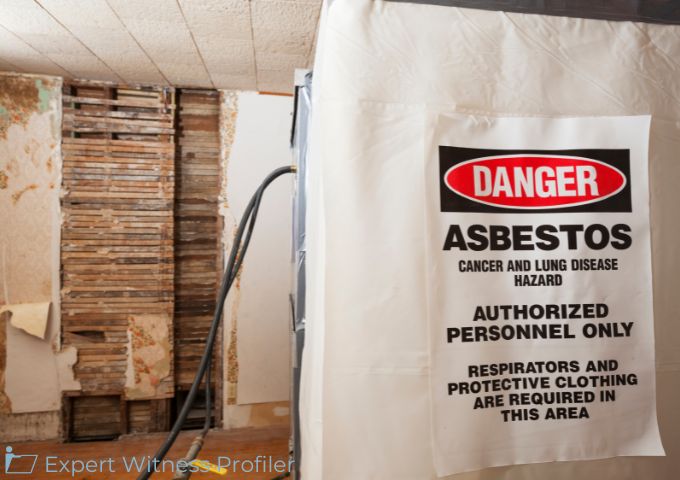
      Plaintiff, Edward Montelongo, alleged that he has developed asbestosis due to exposure to asbestos through his work at various facilities, including Avondale Shipyards, Kaiser Aluminum & Chemical Corp., and Shell Oil Company’s Norco and Yscloskey facilities.

      Defendant Huntington Ingalls Incorporated’s (formerly, “Avondale”) asked the Court to preclude Plaintiff’s industrial hygiene expert, Gerard Baril, from opining at trial that Plaintiff’s work with and around asbestos-containing products contaminated his home because Plaintiff carried asbestos fibers home with him on his clothing, leading to continued asbestos exposure long after Plaintiff ceased that work.

      Industrial Hygiene Expert Witness

      Gerard L. Baril has worked in the field of occupational safety, industrial hygiene, and environmental health since 1978. Baril has practiced industrial hygiene (starting as an industrial hygiene technician) since 1982.

      Over the decades, he has conducted hundreds of industrial hygiene surveys qualifying and quantifying workers’ exposures to a wide array of airborne contaminants including asbestos.

      Get the full story on challenges to Gerard Baril’s expert opinions and testimony with an in-depth Challenge Study.

      Discussion by the Court

      In this case, Avondale did not contest that Baril was qualified to testify as an expert. Rather, Avondale challenged the reliability of Baril’s “contaminated house” opinions, arguing that they were “scientifically unreliable, methodologically unsupported, and inadmissible because they do not follow any accepted procedure, standard, or analytical framework recognized in industrial hygiene for determining whether a residence is contaminated with asbestos.” However, as Plaintiff argued, Baril “cited numerous references that support his opinions, including published, peer-reviewed literature, publications by governmental and scientific organizations, as well as occupational exposure standards and regulations.”

      Therefore, Baril’s testimony is sufficiently reliable to satisfy the Court’s gatekeeping function under Daubert.

      Held

      The Court denied Avondale’s motion to partially exclude the testimony of Plaintiff Edward Montelongo’s retained industrial hygiene expert Gerard Baril.

      Key Takeaway

      It is the role of the adversarial system, not the Court, to highlight weak evidence. The fact that opposing parties do not agree with the facts relied upon by an expert, or with the expert’s interpretation of those facts, does not render the expert’s opinions unreliable. Challenges related to the basis of an expert’s opinions are thus best suited for cross-examination, not exclusion.

      Please refer to the blog previously published about this case:

      Pulmonary Medicine Expert’s COPD Opinions Admitted

      Case Details:

      Case Caption: Montelongo V. Bayer Cropscience, Inc.
      Docket Number: 2:25cv555
      Court Name: United States District Court for the Eastern District of Louisiana
      Order Date: May 19, 2026
    3. Security Expert’s Legal Conclusions Excluded

      Security Expert’s Legal Conclusions Excluded

      This case arises from the shooting death of John Fuller, (the “Decedent”), and wounding of DaJohn Foster at the Winbranch Apartment Complex (the “Property”). Plaintiffs assert a premises liability claim based on Defendants’ alleged failure to take adequate steps to protect them from violent crimes committed by third parties not resident at the Property. Defendant Winbranch Complex, LLC owned the Property and Defendant My Management, LLC served as the third-party fee manager for the Property.

      Plaintiffs retained Jennifer C. St. Clair, an economist, to provide expert testimony on the pecuniary and/or monetary value of the Decedent’s life, and Thomas R. Stutler, a “security specialist.”

      Defendants, Winbranch Complex, LLC, and My Management, LLC d/b/a Apartments Near Me (together, the “Defendants”) filed a Daubert motion to exclude Plaintiff’s experts.

      Security Expert Witness

      Thomas R. Stutler, CPP, JD served as leader for security at two corporations, spanning approximately ten years.

      Want to know more about the challenges Thomas Stutler has faced? Get the full details with our Challenge Study report.

      Economics Expert Witness

      Jennifer Coats St. Clair, MA is a self-employed Labor Economist with over nine years of experience calculating litigation damages, specifically focusing on the economic, financial, and business issues arising in legal disputes. She earned a Master of Arts in Economics from the University of Memphis in 2016, where she also achieved All But Dissertation (“ABD”) status after passing doctoral comprehensive examinations.

      She has taught Economics at the University of Memphis and Christian Brothers University. Since 2017, St. Clair has served as a consulting economist or econometrician on over 130 federal and state cases, with a substantial portion of her practice involving the calculation of economic losses in personal tort claims.

      Get the full story on challenges to Jennifer St. Clair’s expert opinions and testimony with an in-depth Challenge Study.

      Discussion by the Court

      I. Thomas R. Stutler, CPP, JD

      After summarizing a version of the events underlying the lawsuit, Stutler’s report announces various legal conclusions, including that “the victims were legally on the property” and that “as tenants and guests on the property the Defendants owed a duty to the victims to provide a reasonable safe environment.”

      He then summarized crime statistics for the surrounding area—apparently in support of his assertion of foreseeability—before listing various failures that, if they occurred, “would be a major security failure.”

      The Court held that Stutler’s report did not satisfy Rule 702 and therefore must be excluded.

      Finally, Stutler offered a few opinions that could—depending on the analysis—be the stuff of expert testimony, including: an assessment of Property’s security posture, ten bullet-pointed recommendations for improving that posture; something that looks vaguely like an opinion on breach (although couched in terms of inactions that would be a “serious security failure”); and opinions on causation. The problem is that these opinions are wholly unexplained—they are assertions more than opinions, with no indication that they are the result of a reliable methodology reliably applied.

      II. Jennifer C. St. Clair, MA

      Plaintiffs retained St. Clair to calculate the present value of the economic losses arising from the shooting death of Decedent.

      St. Clair first assumed that Fuller worked for the entire duration of his life. She calculated this to be 18.17 years based on the Markov Process Model of Labor Force Activity. In that scenario, St. Clair found that the value loss would be $830,828. In the second scenario, she assumed that Fuller worked until the Social Security retirement age of 67. The value loss would be $896,139 in that case.

      It should be noted that Defendants did not point to any unique facts or specific medical history that might render any opinion concerning Decedent’s future earnings or household services wildly misleading if not accounted for. 

      Next, Defendants argued that St. Clair failed to accurately calculate income lost because she relied on national average wages as opposed to Fuller’s actual income. Defendants also noted that they have never received income information from Plaintiffs. St. Clair relied on the American Community Survey to determine income specifically for barbers. Defendants also argued that St. Clair committed the same errors in her household services calculation, pointing to her failure to consider Fuller’s actual contributions to the household. St. Clair relied on expectancy data from The Dollar Value of a Day: 2020 Dollar Valuation.

      The Court held that historical earnings and household services are “relevant” to the earnings calculation but not dispositive. St. Clair’s determination that Fuller would have earned more over the course of his working life than the earning capacity that may have been suggested by his salary “is not unreasonable as a matter of law.”

      St. Clair’s analysis “involved a degree of speculation, as does all analysis of future damages, but not unrealistic speculation.”

      Held

      The Court denied Defendants’ motion regarding Jennifer St. Clair’s expert report and granted Defendants’ motion regarding Thomas Stutler’s report.

      Key Takeaway

      Stutler purports to rest his opinion on his “knowledge, training, skill, and expertise,” but even experts who base their opinion on honed expertise must explain how they applied their methodology in the case at hand to arrive at their opinions. Experts must show their work, and if they do not, their opinions must be excluded. The Court’s gatekeeping function under Daubert requires more than simply taking the expert’s word for their testimony.

      Case Details:

      Case Caption: Foster V. Winbranch Complex LLC
      Docket Number: 2:24cv2433
      Court Name: United States District Court, Tennessee Western
      Order Date: May 15, 2026