On March 2, 2022, President Biden instructed the Department of Justice (“DOJ”) to seize the assets of wealthy Russians as part of his administration’s response to the Russian operations in Ukraine. Specifically, the Government sought forfeiture of the M/Y Amadea, International Maritime Organization (“IMO”) No. 1012531, including all fixtures, fittings, manuals, stocks, stores, inventories, and each lifeboat, tender, and other appurtenance thereto (the “Amadea”).
Eduard Yurievich Khudainatov commissioned the building of the Amadea in or about 2012. Khudainatov put the Amadea on the market in 2018, but due to its unique style and the Covid pandemic, it never sold. In addition, Khudainatov received and rejected offers to buy the Amadea at prices he considered too low. In a civil in rem forfeiture action, the moving party—here, the government—has the burden of proof to show why the Court should order the property sold.
The government retained Captain Sean P. Meagher to opine on the M/Y Amadea and practices aboard the Amadea while Anders Åslund was engaged to shed light on the “the estimated historical and current net worth of Russian businessman Eduard Khudainatov and the business activities that generated his wealth.”
Eduard Khudainatov and Millemarin Investments, Ltd. (collectively, ‘Claimants’) sought to exclude the testimony of Anders Åslund and Sean P. Meagher. Claimants put forth arguments attacking, inter alia, the experts’ qualifications, the evidentiary basis for their opinions, and the propriety and usefulness of those opinions.
Economics Expert Witness
Anders Åslund is a leading specialist on Eastern European economies, especially Russia and Ukraine. He was a Professor of International Economics and the founding Director of the Stockholm Institute of Transition Economics at the Stockholm School of Economics from 1989-94.
Sean P. Meagher is a managing partner of Marinus Vectors, a company founded by senior professionals in maritime, intelligence, special operations, and international industries. He attended the Naval honors school Tabor Academy, pursued his undergraduate studies at the University of Massachusetts Boston, and continued his education at Massachusetts Maritime Academy.
Here, Claimants asked this Court to perform its “gatekeeping role,” by excluding the Government’s experts’ testimony. However, upon careful review of Claimants’ submissions, the Court found that Claimants’ arguments go to the weight, and not the admissibility, of the Government’s experts’ statements.
To the extent that Claimants wish to challenge the reliability of the Government’s experts, the Court held that they may do so via, inter alia, “vigorous cross-examination” and by “presenting contrary evidence.”
The proceeding for which Claimants sought to exclude these experts’ testimony is an evidentiary hearing to resolve the Government’s motion to strike for lack of standing. In this proceeding, the Court will be the factfinder; there is no jury. It is well established that, in such a proceeding, the trial court’s gatekeeping role is relaxed, and expert evidence should generally be admitted subject to a later finding by the Court that the evidence is not reliable under Rule 702.
At this point, however, the Court will reserve judgment on the substance of the arguments raised in Claimants’ motions in limine with respect to the Government’s experts.
Held
The Court denied without prejudice Claimants’ motions in limine with respect to Anders Åslund and Sean Meagher.
Key Takeaway:
Disagreements over the strength of an expert’s credentials, faults in the expert’s methodology, or the “lack of textual authority” for the expert’s opinion, “go to the weight, not the admissibility, of his testimony.” Claimants make arguments of this nature in their motions in limine. And such arguments are not enough to overcome the fact that the Government’s experts’ testimony facially meets the criteria outlined in Rule 702.
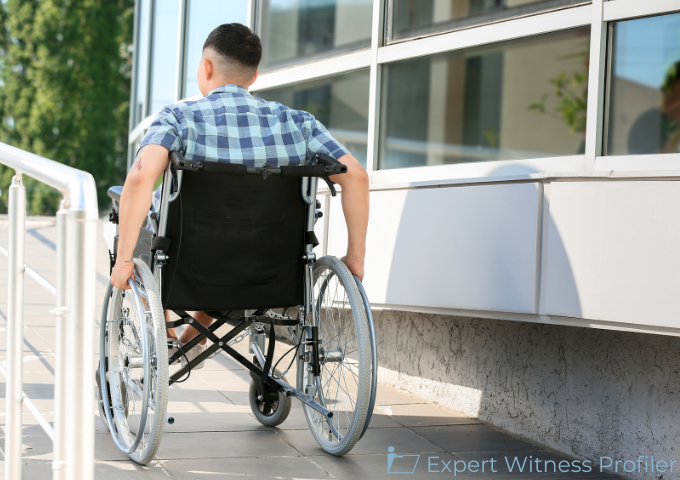
On March 19, 2018, Ralph Monte (“Monte”) visited the Defendant Sherwin-Williams Development Corporation’s store at 4473 South Semoran Boulevard in Orlando, Florida. While attempting to negotiate the ramp from the parking lot to the sidewalk, a wheelchair-bound Monte fell and sustained injuries. He claimed that the fall occurred because Defendant negligently maintained the premises and/or failed to warn him of a dangerous condition. Subsequently, Ralph Monte and his wife, Amarillis Monte filed this premises liability lawsuit under Florida law.
Plaintiffs retained Nizam Razack, who is board-certified in neurological surgery, as an expert witness to review Monte’s medical records and provide an opinion regarding his treatment and care.
One of Razack’s opinions was that the accident on March 19, 2018, caused an infection in Monte’s left elbow. The Defendant filed a motion to exclude Razack’s testimony regarding whether Monte’s accident caused the infection of his left elbow. The Plaintiffs untimely responded in opposition to the motion.
Neurosurgery Expert Witness
Nizam Razack, MD, JD, FAANS, FACS is the founder and president of Spine & Brain Neurosurgery Center.
Razack has completed three post-doctoral fellowships:
Orthopedic spine deformities at the Rancho Los Amigos Medical Center in Los Angeles, California.
Reconstructive & complex spine surgery at the Mayo Clinic in Rochester, Minnesota
Neurosurgical oncology at the M.D. Anderson Cancer in Houston, Texas
The Defendant moved to exclude Razack’s testimony regarding a causal connection between Monte’s accident and the infection in his left elbow. The Defendant argued that:
(1) Razack lacked the qualifications to offer this opinion,
(2) this opinion is contradicted by record evidence, and
(3) this opinion is not predicated on any scientific testing or methodology.
Analysis
Since the Court had struck the Plaintiffs’ response to the Defendant’s motion as being untimely filed, the motion stood unopposed. As a result, the Court granted the Defendant’s motion as the Plaintiffs failed to meet their burden to show Razack’s opinion was admissible.
Even if the Court considered the Plaintiffs’ response, Razack’s opinion on the cause of Monte’s infection would still be excluded under Daubert‘s reliability standard.
Temporal Proximity and Causation
Razack’s report mainly consisted of a review of Monte’s medical records. After reviewing the records and conducting a physical examination of Monte on May 16, 2024, Razack concluded that the accident caused the infection in his left elbow. He based this opinion on the fact that the infection appeared shortly after the accident.
Citing Chapman v. Procter & Gamble Distributing, LLC, 766 F.3d 1296 (11th Cir. 2014), the Court noted that temporal proximity is generally not a reliable indicator of a causal relationship by itself. Courts routinely exclude expert opinions based solely on such reasoning. Accordingly, the Court observed that in the absence of a reliable basis, Razack’s causation opinion regarding the infection of Monte’s left elbow must be excluded.
Differential Diagnosis Argument
Nevertheless, the Plaintiffs argued that Razack’s opinion was a reliable differential diagnosis and was therefore admissible. They asserted that Razack formed his opinion based on comprehensive information, allowing him to establish a differential diagnosis. The Court observed that for a differential diagnosis to be considered reliable, it has to account for other possible factors that could have been the sole cause of the injury, and the expert has to explain why any alternative cause suggested by the defense was not the sole cause.
In his deposition, Razack testified that performing a differential diagnosis was part of his process when reviewing a patient’s records. However, he did not explicitly state that this was the methodology he used to determine that Monte’s infection was caused by the accident. Even assuming that Razack did employ this methodology, the Court still found his opinion unreliable. Razack did not indicate that he had considered other potential causes of Monte’s infection. In fact, during his deposition, Razack acknowledged that Monte’s infection could have been caused by bursitis.
Even if Razack’s opinion was based on a differential diagnosis, the Court found that he did not apply this methodology reliably.
Moreover, even if the opinion were reliable, Razack’s opinion would not be helpful to the jury. The notion of temporal proximity is not beyond the ken of the average lay person, and therefore, Razack’s opinion would not be helpful to the trier of fact in clarifying the cause of the infection. Consequently, the Court excluded Razack’s testimony on these grounds. Indeed, the Eleventh Circuit has noted that it is preferable to leave the question of causation in the hands of the jury where, as here, an expert’s opinion as to causation is based on temporal proximity alone.
Held
The Court granted the Defendant’s motion to exclude certain testimony of Plaintiff’s neurosurgery expert witness, Nizam Razack.
Key Takeaways:
Razack’s testimony regarding the causation of Monte’s elbow infection failed to meet the applicable standard for reliability because:
His opinion relied primarily on temporal proximity (the infection appearing shortly after the accident), which courts generally do not accept as sufficient evidence of causation by itself.
While Razack claimed to use differential diagnosis, he failed to:
Explicitly state this was his methodology for determining causation
Consider or rule out other potential causes of the infection
Adequately address alternative causes (like bursitis, which he acknowledged as a possible cause)
Even if Razack’s opinion were reliable, it is still not helpful because the notion of temporal proximity is not beyond the ken of the average lay person.
Case Details:
Case caption:
Monte V. Sherwin-Williams Dev. Corp.
Docket Number:
6:23cv288
Court:
United States District Court for the Middle District of Florida, Orlando Division
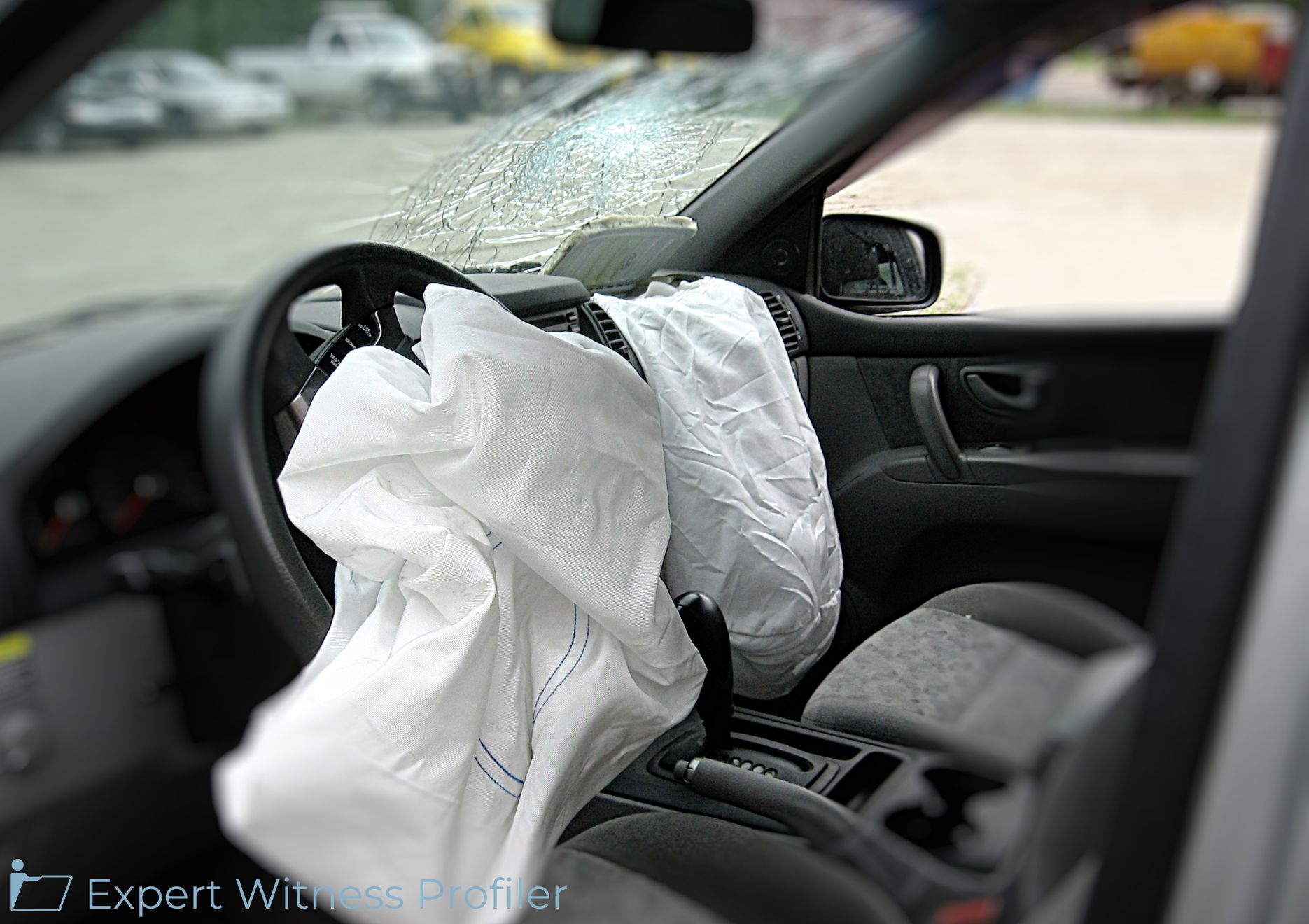
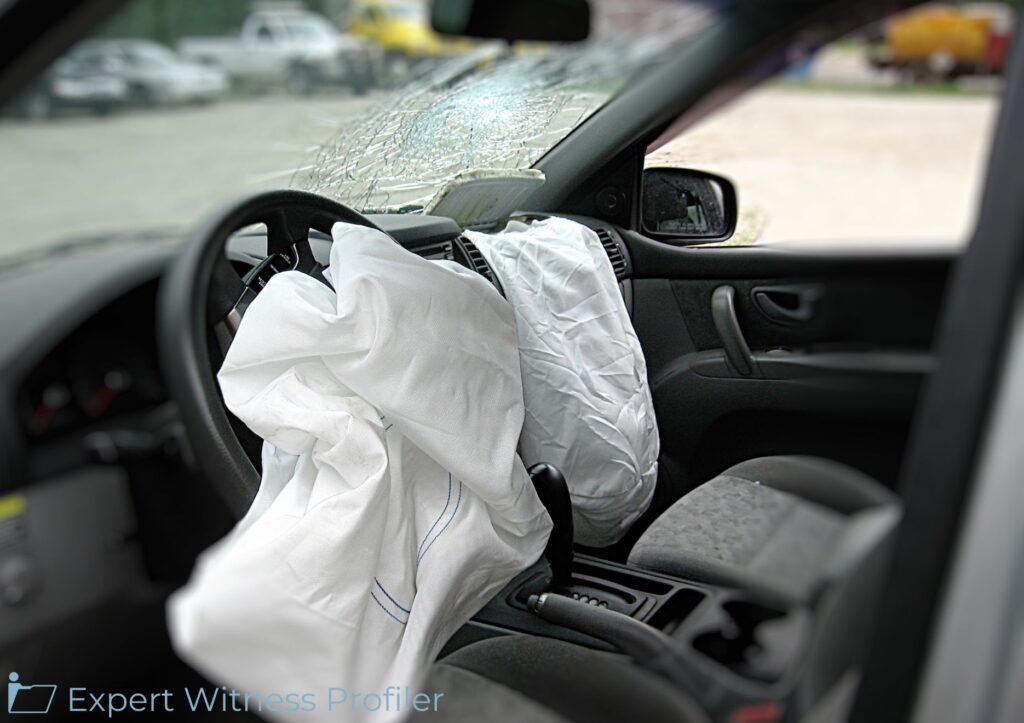
On October 24, 2019, William Harrison Sims (Plaintiff) was driving his 2004 BMW 330Ci (the “Vehicle”) in Florida when another vehicle unexpectedly turned left in front of him, causing a minor accident. As a result of the collision, the Vehicle’s front driver-side airbag was signaled to deploy. However, the airbag inflator unexpectedly ruptured and shot metal shrapnel into Plaintiff’s face and body, leading to severe, permanent, and life-altering injuries.
Defendants, BMW of North America (“BMW NA”) and Bayerische Motoren Werke AG (“BMW AG”), procured and installed the airbag inflator during the process of designing, manufacturing, assembly, and producing the vehicle. Plaintiff filed a lawsuit against both Defendants, alleging strict liability and negligence for procuring and installing the defective airbag.
Defendants moved to exclude testimony from Plaintiff’s expert, Perry Ponder (“Ponder”), and two demonstrative exhibits. Defendants argued that Ponder changed his opinion regarding the lane of travel occupied by the alleged at-fault driver, non-party Tameca Harris-Jackson (“Harris-Jackson”). Ponder testified at deposition that Harris-Jackson turned from one of the through lanes instead of the left lane before colliding with Plaintiff’s vehicle. Defendants also identified two demonstrative exhibits produced before Ponder’s deposition, which depicted the placement the alleged at-fault vehicle and Plaintiff’s vehicles leading up to the collision.
Accident Reconstruction Expert Witness
Perry L. Ponder, P.E., holds a Bachelor of Science in mechanical engineering from Florida State University and is a licensed professional engineer in the states of Florida and Illinois. Ponder specializes in accident reconstruction, failure analysis, and designing semi-trailers, truck components, underride crash protection, and patented adjustable structures. He has significant experience reconstructing accidents of various types: trucks, cars, pedestrian and cycles.
A. Plaintiff Failed to Meet His Fed. R. Civ. P. 26(a) Expert Disclosure Obligations
Defendants argued that Ponder, Plaintiff’s accident reconstruction expert violated Rule 26(a)(2) because he “renounced his former opinion that the Hyundai initiated its turn from the left lane of Good Homes Road while the deposition was underway.” Instead, he testified that the Hyundai turned from one of the through lanes of Good Homes Road and not from the left lane. Defendants contended that this new opinion was disclosed for the first time at the deposition.
Plaintiff countered that Defendants misunderstood or misrepresented the opinions expressed in Ponder’s report as compared to his deposition testimony. The Plaintiff emphasized that Ponder’s report did not specify which lane Harris-Jackson was traveling in when she initiated her left turn, only stating that she started her left turn from the northbound lanes of Good Homes Road. The Court agreed with Plaintiff, stating that Ponder did not offer an opinion in his report that Harris-Jackson was traveling in the left-hand lane when she initiated the turn and collided with Plaintiff
Moreover, Defendants failed to cite Ponder’s report to support their claim that he originally opined Harris-Jackson was traveling in the left-hand lane. Instead, Defendants cited the Crash Report created by the Orlando Police Department, a diagram of the collision prepared by a Trooper, and Harris-Jackson’s deposition. While Ponder reviewed these materials, the Court held that he did not adopt Harris-Jackson’s testimony or the police officer’s reconstruction as his opinion.
i.Reliability of Harris-Jackson’s Testimony
While Ponder cited Harris-Jackson’s testimony, in which she claims she stopped in the left lane and proceeded slowly after the traffic signal changed, he found Harris-Jackson’s testimony unreliable. Accordingly, Ponder did not offer a new opinion at the deposition. Even if he had, the Court held that Defendants had ample opportunity to cross-examine Ponder on the analysis employed to reach this opinion.
Furthermore, Ponder’s relative speed calculation for each vehicle was partially offered as a rebuttal to Defendants’ expert. At his deposition, Ponder conceded that Harris-Jackson could have turned from the left lane into Plaintiff’s path. However, he opined that “her orientation is more consistent with a turn that’s a bit more mature, so to speak, getting herself westward to take the 408 west.” He concluded that if Harris-Jackson had made the turn from the left-hand lane, “you’d expect more of a nose-to-nose kind of orientation as opposed to a square orientation (indicating) that we had in this impact.”
Regardless, the Court held that Ponder did not change his opinion at deposition, which is why the Defendants suffered no surprise or prejudice.
B. Demonstrative Exhibits
Defendants also challenged two demonstrative exhibits that displayed Good Homes Road intersecting with SR 408. Ponder’s report included diagrams prepared by law enforcement, as well as drone-generated top-down images of the crash scene. The Court held that the two demonstrative aids offered at the deposition are neither a surprise nor are they prejudicial because they are cumulative. Expert witnesses routinely create demonstrative exhibits on whiteboards or butcher paper at trial to drive home a point. To the extent that the demonstrative aids were untimely—which the Court does not find—their disclosure is harmless.
C. Ponder’s Testimony is Unreliable and Unhelpful
Defendants challenged Ponder’s accident reconstruction analysis, claiming it was unreliable and unhelpful. They argued that he failed to conduct independent testing, inspect or obtain an exemplar vehicle, drive an exemplar vehicle for work in the case, drive the intersection of the road in a Hyundai Sonata under the conditions to which he testified to or measure g-forces Harris-Jackson would have sustained had she turned from the through lane without stopping.
However, the Court held that the Defendants’ attack on Ponder’s analysis is boilerplate and unconvincing. They listed actions Ponder could have undertaken without explaining why he would need to take these steps. Ponder’s accident reconstruction analysis followed standard procedures, including a detailed crash scene examination, review of relevant documents as well as photographs of the 2010 Hyundai. It also considered the Crash Stiffness Coefficients for BMW vehicles and the deposition testimony. He also identified the final rest location of Plaintiff’s BMW and debris field and conducted a 3D scan of the subject BMW to quantify the damage.
Ponderthen applied the General Momentum Equations to discern that Plaintiff’s BMW was traveling about 29 mph at the moment of impact, while Harris-Jackson’s Hyundai was traveling about 24 mph, with a resulting delta V, or change in velocity of 23 mph and a principle direction of force of 30 degrees counterclockwise of its longitudinal axis for the BMW. Hefactored in the speed and weight of the BMW to opine that the momentum was inadequate to propel the vehicle beyond the south edge of the intersection. Ponder supports this opinion with photographic evidence.
Just because Ponder reached a conclusion that differs from a crash report prepared by a Trooper whose qualifications are unknown, the Court held that it not indicate the failure to employ “the same level of intellectual rigor that characterizes the practice of an expert accident reconstructionist.” The Court noted that Defendants did not articulate how examining or driving an exemplar vehicle would add to the analysis. It would not support the determination of the delta-V, PDOF, or relative speed of the subject vehicles. And while knowing the g-force experienced by Harris-Jackson would be interesting, the Court held that Defendants offered no support for their contention that the failure to calculate g-force undermines Ponder’s analysis.
The Court ruled that Ponder is a highly qualified expert whose analysis was reliable, well-supported, and helpful to the jury. His core opinions remained unchanged, and the two demonstrative exhibits did not prejudice Defendants.
Held
The Court denied Defendants’ motion to exclude the testimony of Perry Ponder, P.E.
Key Takeaway:
While the Court admitted Ponder’s testimony regarding his accident reconstruction analysis, including his calculations of the vehicles’ speeds, momentum, and impact angles, the Court did not accept Defendants’ argument that Ponder had violated Rule 26(a)(2) by changing his opinion during his deposition. The Court found no evidence that Ponder’s core opinion had changed and ruled that Defendants were not prejudiced by the introduction of the two demonstrative exhibits, as they were merely cumulative of the evidence that was already presented. Further, while Defendants challenged Ponder’s failure to conduct independent testing and measure g-forces, the Court found these objections unpersuasive, stating that Ponder’s methodology was consistent with standard practices in accident reconstruction. In conclusion, the Court affirmed that Ponder’s testimony was both reliable and helpful to the jury in understanding the technical aspects of the case.
Please refer to the blog previously published about this case:
Plaintiff, William Harrison Sims’ claims arise out of an October 24, 2019, two-vehicle collision involving Plaintiff, who was operating the 2004 BMW (“Subject BMW”). Tameca Harris-Jackson (“Harris-Jackson”) was operating the Hyundai that collided with the Subject BMW. Plaintiff alleges he sustained “severe, permanent, and life-altering injuries” due to the driver-side Takata airbag unexpectedly rupturing and shooting “metal shrapnel into his face and body.”
Defendants procured and installed the airbag inflator during the process of “designing, manufacturing, assembling, and producing” the vehicle. Plaintiff brought this action for damages against both Defendants BMW of North America (“BMW NA”) and Bayerische Motoren Werke AG (“BMW AG”), alleging strict liability and negligence from procuring and installing the airbag.
BMW of North America, LLC and Bayerische Motoren Werke AG (The “BMW Defendants”) requested the Court to preclude the injury causation testimony of Plaintiff’s neurological expert Paul Buechel, M.D., P.A. because he is not qualified to offer injury causation opinions.
Neurology Expert Witness
Paul Buechel is a board-certified neurologist with over 33 years of experience. His medical degree is from Syracuse. His residency was done at University of Kentucky.
Defendants argued that Buechel is not a biomechanical engineer and that sufficient facts and data do not support his opinions, nor are they based on a reliable methodology. They also averred that Buechel did “no testing” without specifying what testing should have been performed. And Defendants contended that Buechel failed to rule out contact with the steering wheel or dash as the cause of Plaintiff’s neurological injuries. As such, Defendants characterized Buechel’s opinions as pure ipse dixit of an expert based on too great of an analytical gap.
In the introductory section of their Motion, Defendants argued that Buechel testified at deposition that Plaintiff could have sustained “a traumatic brain injury from other blunt trauma to the head.” They contended that this undercuts the reliability of his opinion that the defective inflator and the shrapnel surgically removed from Plaintiff caused his TBI. Defendants also cited Buechel’s deposition, in which he stated he did not inspect the shrapnel. And the defense avers that Plaintiff’s nasal septal deviation, which his ear, nose, and throat physician felt was secondary to striking the wheel or dash, contradicts Buechel’s causation opinion.
Buechel is a board-certified neurologist who conducted two independent medical evaluations of Plaintiff one year apart. He offered an assessment of Plaintiff’s injuries and limitations based on the medical records, patient history, and his independent medical evaluations. Buechel then outlined Plaintiff’s future necessary and reasonable medical needs.
Defendants did not contest Buechel’s qualifications to render these opinions, the reliability of the principles and methodology employed by Buechel, or that his testimony about Plaintiff’s injuries and future medical needs is helpful to the jury.
Analysis
Defendants only contested whether Buechel’s opinion that, “[r]egarding causality, in the greatest medical probability, it is [his] opinion that each of these listed diagnoses and symptoms are indeed directly related to the injuries he sustained in the vehicle airbag explosion which occurred on 10/24/19.”
At deposition, Buechel clarified that even assuming the ENT is correct that Plaintiff’s nasal septal deviation was caused by Plaintiff’s face making contact with the wheel or dash, this is still due to the defective inflator sending shrapnel through the airbag and preventing it from protecting the Plaintiff. Therefore, injuries sustained by contacting the wheel or dash are caused by the airbag exploding. Buechel did not concede that his injury causation opinion is unreliable because the ENT found a septal deviation could have been caused by striking the wheel or dash. To the contrary, Buechel observed that Plaintiff’s nasal bridge exam “looked well on the photographs,” and typically, one would expect a laceration or a bridge abrasion when the patient’s face strikes the wheel or dash.
The Court finds the methodology employed by Buechel to support his injury causation opinion is the product of reliable principles and methods properly applied to the facts of the case. As Plaintiff observes in his response, Buechel reviewed the medical records and evidence collected from the scene. He considered the nature of the injuries as “an indication of the size of the shrapnel” along with the “depth of penetration.” Buechel does not need to be trained as a biomechanical engineer to render his opinions, despite Defendants’ bald assertion.
Held
The Court denied the Defendants’ motion to preclude the testimony of Dr. Paul Buechel.
Key Takeaway:
Buechel does not need to be trained as a biomechanical engineer to render his opinions, despite Defendants’ bald assertion. Buechel’s opinions rest upon his training and experience, combined with the medical evidence showing the size of lacerations caused by the shrapnel and the depth of penetration. This is more than adequate to satisfy Daubert and its progeny.
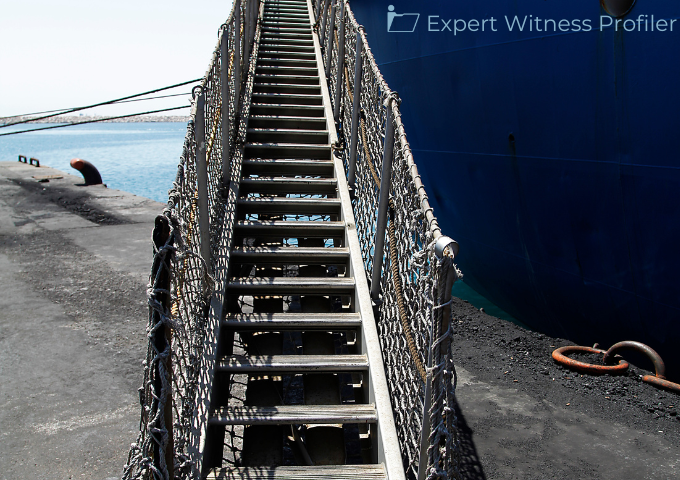
The present lawsuit involves a tort dispute arising from an incident in which Andrés González-Pérez (“Plaintiff” or “González”) was allegedly injured after he fell from a poorly maintained ladder that provided access to a vessel owned and operated by Harley Marine Financing LLC (“HMF”) and Harley Marine NY, Inc. (“HMNY,” collectively “Defendants” or “Harley Marine”).
In the course of the legal proceedings, the Defendants filed the following three motions:
Motion to exclude portions of the Life Care Plan prepared by the Plaintiff’s physical medicine expert witness Gloydian Cruz-Gomez.
Motion to exclude the testimony of Plaintiff’s economics expert witness Kenneth McCoin.
Motion to exclude the testimony of the Plaintiff’s vocational rehabilitation expert witness Ashley G. Lastrapes.
Physical Medicine Expert Witness
Gloydian Cruz-Gomez is a Physical Medicine & Rehabilitation and Pain Medicine specialist who has practiced medicine in Florida since 2011.
Cruz is a licensed physician in the state of Florida, and she is certified by the American Board of Physical Medicine & Rehabilitation and the American Board of Pain Medicine. Cruz is also a Certified Life Care Planner, as designated by the International Commission on Health Care Certification.
Kenneth G. McCoin is a consulting economist and a chartered financial analyst. He holds a Ph.D. in Economics from the University of Houston. His professional experience includes serving as Chief Economist at American General Capital Management. He also taught investments and corporate finance at Houston Baptist University.
Ashley G. Lastrapes has worked in rehabilitation counseling since 2011. She holds a Ph.D. in Counselor Education and Supervision from the University of Holy Cross, a Master of Health Science in Rehabilitation Counseling from Louisiana State University Health Sciences Center, and a Bachelor of Science in Psychology from the University of New Orleans.
The Defendants sought to exclude portions of the life care plan prepared by Gloydian Cruz-Gomez. They argued that her calculation of the cost of medications that González will incur for future use is unreliable. Specifically, they contended that her estimates, which included the cost of NSAIDs, opioids, antidepressants, and Zanaflex for the next 25 years of his life, lacked a reliable foundation.
ii) Plaintiff’s Counter-Argument
In response, the Plaintiff defended the reliability of Cruz-Gomez’s Life Care Plan by pointing out that her estimates were grounded in Plaintiff’s medical records, consultations with treating physicians, and established medical guidelines. Additionally, he argued that she applied well-recognized principles in life care planning and offered a rational basis for her cost estimates.
iii) Analysis
While Harley Marine agreed that Cruz-Gómez is qualified to render the opinions included in her report and that the methodology used in reaching said opinions met the standards of Rule 702, Daubert and its progeny, the Court was still required to examine whether the experts’ opinions on future medications was based on reliable foundations.
In her life care plan, Cruz-Gomez explained that she relied on all past medical, social, psychological, educational, vocational, and rehabilitation data to the extent they are available and applicable. This included records of medications prescribed by González’s treating physician. She used this information, in addition to her education, training, and experience as a board-certified physical medicine and rehabilitation specialist and certified life care planner to determine González’s future medication needs. She based her conclusions on a “reasonable degree of medical probability,” indicating it was more likely than not that González would require the medications outlined in the plan. The Court held that her analysis followed reliable principles and methods and relied on sufficient facts and data, meeting the requirements of Rule 702.
Conclusion
Consequently, it should be noted that Harley Marine objected only to the section of Cruz Gómez’s report addressing the costs of Plaintiff’s future medications. Defendants’ experts’ competing opinion was the sole basis for their challenge to the factual basis of Cruz Gómez’s opinions on Plaintiff’s future medications. Citing United States V. Vargas, 471 F.3d 255 (1st Cir. 2006), the Court held that when the factual underpinning of an expert is weak, it is a matter affecting the weight and credibility of the testimony— a question to be resolved by the jury. Thus, their challenge goes to credibility of the expert, not the reliability of her opinions.
B. Kenneth McCoin
i) Defendants’ Argument
To begin with, Harley Marine sought to exclude Kenneth McCoin’s opinion on González’s earning capacity, arguing that his analysis lacked sufficient facts and data, making it unreliable. Specifically, the Defendants contended that McCoin failed to consider González’s post-injury earnings and relied on an unsupported assumption that wages increase over time when the record did not provide evidence of such a conclusion.
ii) Plaintiff’s Counter-Argument
In response, the Plaintiff defended McCoin’s methodology, asserting that he based his calculations on González’s tax returns and employment contract. These, according to the Plaintiff, provided a valid and reasonable foundation for estimating his earning capacity in the absence of his injuries. The Plaintiff also argued that any income earned by González after his injury was irrelevant to McCoin’s analysis. Moreover, McCoin’s use of a “societal wage growth” factor is a recognized method of forecasting future earning capacity.
iii) Analysis
First, the Court observed that Harley Marine appeared to confuse “earning capacity” with “lost earning capacity.” McCoin was tasked with estimating González’s postinjury economic capacity in the absence of the incident. The jury would then determine the actual loss of income based on this estimate. However, the Court found that Harley Marine incorrectly argued that McCoin’s failure to consider medical information, vocational data, and post-employment history undermined the reliability of his analysis. The Court clarified that McCoin’s role was to provide an estimate of what his earning capacity would have been, but for the accident, from which the jury can make a lost earning capacity determination.
Second, the Court found that McCoin’s assumption that González was not working after the injury did not affect his analysis of his earning capacity. His task was to evaluate earning capacity absent the injury, making post-injury employment irrelevant to this assessment. McCoin relied on González’s tax returns from 2019–2021 and an independent contractor agreement with PETROCARE Marine Consultants, Inc., which provided a sufficient and reliable basis for his calculations.
The Court found that McCoin’s application of a “societal wage growth factor” in his earning capacity analysis does not make his conclusions unreliable. McCoin explained at deposition what a “societal wage growth factor” is and the purpose for including it in his analysis: “Those are wage growth that redounds to employees due to the increase in general labor productivity.” Courts are instructed to consider “societal factors” which contributes to “wages of workers increase over time.” Therefore, the Court held that McCoin’s implementation of a “societal wage factor” in his earning capacity calculation was well-reasoned, not overly speculative.
Conclusion
The Court also rejected Harley Marine’s claim that fluctuations in González’s earnings from 2019–2021 proscribe McCoin from having a reliable basis to apply a societal wage growth factor to the earnings capacity analysis. In other words, variations in income over three years did not undermine the reliability of McCoin’s methodology. As McCoin explained in his deposition, even self-employed individuals experience market changes in wages. For the Court, a fluctuation of earnings over three years does not seem to be sufficient basis to discredit the expert’s methodologies.
C. Ashley G. Lastrapes
i) Defendants’ Argument
Harley Marine sought to exclude Ashley Lastrapes’ vocational assessment for González, claiming it lacked a sufficient factual basis to evaluate his earning capacity under Rule 702.
ii) Plaintiff’s Counter-Argument
González countered that despite Lastrapes issuing a “guarded” assessment of his post-injury earning capacity, her report offered valuable insights with regard to his capacity to work which are relevant to the case, including the following:
a) Lastrapes provided opinions on the Life Care Plan developed by Gloydian Cruz-Gomez. She also assessed González’s physical limitations, decreased ability to perform daily activities, and the resulting loss of vocational opportunities.
b) She analyzed the potential impact of a future surgery, as predicted by Cruz Gómez, on González’s ability to earn income.
c) Lastrapes evaluated González’s inability to travel for work-related tasks, as well as the economic losses stemming from this limitation.
iii) Analysis
Lastrapes was retained to conduct a vocational assessment evaluating the factors affecting González’s post-injury earning capacity following his May 2022 injury. She relied on medical and employment records, litigation case materials, and expert reports from Cruz-Gomez and McCoin, and conducted a clinical interview with González.
Regarding vocational prognosis, Lastrapes concluded it was “guarded,” explaining that she needed additional information to provide a definitive opinion on future wage loss. However, the Court noted this was only one aspect of her report because Lastrapes also addressed other critical issues, including the Life Care Plan by Cruz-Gomez, González’s physical limitations, and his diminished ability to perform daily activities, which reduced his vocational opportunities. She further analyzed how a potential future surgery would impact his earning capacity and highlighted economic losses tied to his inability to travel for work-related tasks.
Harley Marine argued that the absence of a conclusive vocational prognosis warranted the exclusion of all of Lastrapes’ testimony. The Court disagreed, emphasizing that her opinions were grounded in reliable data and aligned with the scope of her assignment.
Therefore, the Court observed that the parties could address any challenges to Lastrapes’ credibility or conclusions through cross-examination and the presentation of contrary evidence, as outlined in Daubert. It refused to penalize González because his expert presented sound opinions within the scope of her task only where a reliable basis existed.
Held
Accordingly, the Court issued the following orders:
Motion in limine to exclude portions of the Life Care Plan prepared by Plaintiff’s physical medicine expert witness Gloydian Cruz-Gomez was denied
Motion in limine to exclude the testimony of Plaintiff’s economics expert witness Kenneth McCoin was denied
Motion in limine to exclude the testimony of Plaintiff’s vocational rehabilitation expert witness Ashley G. Lastrapes was denied.
Key Takeaway:
First, physical medicine expert witness Gloydian Cruz-Gomez’s Life Care Plan, based on medical records and professional expertise, was deemed grounded in sufficient data, despite conflicting opinions from the Defendants’ expert.
Moreover, economics expert witness Kenneth McCoin’s analysis of the Plaintiff’s postinjury economic capacity in the absence of the incident was supported by tax returns and an independent contractor agreement, with the Court affirming that his use of a societal wage growth factor was a valid and recognized method.
Lastly, vocational rehabilitation expert witness Ashley Lastrapes’ vocational assessment was upheld as it was based on comprehensive medical and employment records, despite her “guarded” prognosis, as the Court noted that such conclusions could be addressed during cross-examination.
Case Details:
Case caption:
González-Pérez v. Harley Marine Fin. LLC
Docket Number:
3:22cv1519
Court:
United States District Court for the District of Puerto Rico
Plaintiffs Jennifer Le Pape (“Mother”) and Frederic Le Pape (“Father”) (collectively, “Parents”), on behalf of their child, Alexandre Le Pape (“Alex”), and Alex, individually, (collectively, “Plaintiffs”) bring intentional discrimination claims under the Americans with Disabilities Act (“ADA”) and Section 504 of the Rehabilitation Act (“Section 504”) against Defendant Lower Merion School District (the “District”), alleging that the District failed to take appropriate steps to ensure that communications with Alex were as effective as communications with others and failed to provide Alex with the appropriate auxiliary aids and services necessary to afford Alex an equal opportunity to participate in and enjoy the benefit of various school services and programming.
Alex is a nonspeaker. He learned to communicate using a letterboard and communication support person (“letterboard”). The District precluded Alex from using a letterboard and communication partner at school.
The District filed objections to the qualifications of Plaintiffs’ anticipated expert witnesses—Dr. William Young, Dr. Mary Stephens, and Vanessa von Hagen—to opine on the efficacy of the letterboard and communication partner as a means of communication for Alex.
Young, Stephens, and Von Hagen did not submit expert reports in this case, as Plaintiffs identified these three witnesses pursuant to Federal Rule of Civil Procedure 26(a)(2)(C) as experts who have not been retained or specially employed to provide expert testimony.
Young has provided both in-patient and out-patient treatment for Alex’s migraines since May 2019. Stephens has been Alex’s primary care doctor since Spring 2019, and she has also interacted with Alex “through Alex’s contribution to the education of doctors concerning neurodiversity” while von Hagen served as the lead clinician on Alex’s home behavior team for six years, beginning in 2012.
Neurology Expert Witness
William Young is board-certified in neurology, psychiatry, and headache medicine, and he is the director of the Jefferson Headache Center of Jefferson University Hospitals.
Mary M. Stephens is board-certified in family medicine and is the director of Jefferson University Hospitals’ Continuing Care Program. She has “extensive experience . . . providing medical services to neurodiverse individuals in medical settings.”
Vanessa von Hagen is a board-certified behavior analyst with more than 13 years of experience implementing, planning, and developing client-specific programming and interventions based on the principles of applied behavior analysis.
Plaintiffs intended to call Young to testify that “Alex’s communication with the letter board and communication partner is effective communication for Alex” or “at a minimum,” to testify “as to why he deemed Alex’s communication with the letter board and communication partner sufficiently reliable for purposes of his medical treatment.”
The District argued that Young is not qualified to offer an opinion on the efficacy of the letterboard and communication partner as a means of communication for Alex because he has no education, training, or experience in speech-language pathology or the area of “effective communication.” The District further contended that Young’s alternative opinion as to why he determined Alex’s communication through Spelling to Communicate (S2C) to be sufficiently reliable for purposes of his medical treatment, which Plaintiffs proposed for the first time in their letter brief, is “irrelevant as to whether the District knowingly violated Alex’s rights for deciding not to provide the S2C methodology during the 2017-18 time frame.”
Aside from his interactions with Alex using the letterboard and communication partner, Young does not appear to have any educational background, training, or clinical, research, or other experience related to speech-language pathology, augmentative and alternative communication (“AAC”), facilitated communication, or other facilitator-dependent communication methods used with minimally verbal or non-verbal autistic individuals like Alex. Accordingly, the Court found that Plaintiffs have failed to establish by a preponderance of the evidence that Young has the necessary expertise to opine on the efficacy of Alex’s use of a letterboard and communication partner to communicate.
Mary Stephens
Plaintiffs intended to call Stephens to testify that “Alex’s communication with the letter board and communication partner is effective communication for Alex and that his communications on it are his own” or “at a minimum,” to testify “as to why she deemed Alex’s communication with the letter board and communication partner sufficiently reliable for purposes of [her] medical treatment.”
As it argues with respect to Young, the District similarly contended that Stephens is not qualified to offer an opinion on the efficacy of the letterboard and communication partner as a means of communication for Alex because she has no education, training, or experience in speech-language pathology or the area of “effective communication.” The District further argued that Stephens’ alternative opinion as to why she determined Alex’s communication through S2C to be sufficiently reliable for purposes of her medical treatment, which Plaintiffs again proposed for the first time in their letter brief, is “irrelevant as to whether the District knowingly violated Alex’s rights for deciding not to provide the S2C methodology during the 2017-18 time frame.”
Since Stephens does not appear to have any educational background, training, or clinical, research, or other experience related to speech-language pathology, AAC, or facilitator-dependent communication techniques, the Court found that Plaintiffs have failed to establish by a preponderance of the evidence that Stephens has the necessary expertise to opine on the efficacy of Alex’s use of a letterboard and communication partner to communicate.
Vanessa von Hagen
Plaintiffs intended to call von Hagen to testify that “Alex’s communication with the letter board is effective, that he communicates his wants, needs, and thoughts with it, and that he could not do so without it” or “at a minimum,” to testify “as to why she deemed Alex’s communication with the letter board and communication partner sufficiently reliable for purposes of her clinical work with him.”
The District argued that, like Young and Stephens, von Hagen is not qualified to offer an opinion on the efficacy of the letterboard and communication partner as a means of communication for Alex because she has no education, training, or experience in speech-language pathology or the area of “effective communication.” The District further contended that von Hagen’s alternative opinion as to why she determined Alex’s communication through S2C to be sufficiently reliable for purposes of her clinical work, which as with Young and Stephens, Plaintiffs proposed for the first time in their letter brief, is “irrelevant as to whether the District knowingly violated Alex’s rights for deciding not to provide the S2C methodology during the 2017-18 time frame.”
The Scope of von Hagen’s Clinical Experience is Not Clear
While von Hagen does not appear to have any education or research experience in the fields of speech-language pathology, AAC, or facilitator-dependent communication techniques, the scope of von Hagen’s “clinical experience . . . concerning communication strategies for persons with autism” is not clear from Plaintiffs’ pretrial memorandum or letter brief, von Hagen’s curriculum vitae, or von Hagen’s testimony at the due process hearing.
The Court cannot yet ascertain whether von Hagen’s clinical experience is sufficient to qualify her to opine on the efficacy of Alex’s use of a letterboard and communication partner to communicate.
Held
The Court held that Young and Stephens will not be permitted to opine on the efficacy of the letterboard and communication partner as a communication method for Alex, which includes any testimony about their determinations that Alex’s communication with a letterboard and communication partner is sufficiently reliable for purposes of their medical treatment of Alex. It reserves ruling on the District’s objection to the qualifications of von Hagen to opine on the efficacy of Alex’s use of a letterboard and communication partner to communicate.
Key Takeaway:
Defendants argued that Young, Stephens and von Hagen lacked the qualifications to opine on the efficacy of the letterboard and communication partner as a means of communication for Alex.
While the scope of von Hagen’s experience was not clear, both Young and Stephens did not appear to have any educational background, training, or clinical, research, or other experience related to speech-language pathology, augmentative and alternative communication, or facilitator-dependent communication techniques.
Please refer to the blog previously published about this case:
For over 10 years, Fisher-Price sold a product called the Rock ‘n Play Sleeper (RnP). The Plaintiff, Ameena Brown, argued that the defective design of the RnP was to blame because her infant son, A.B., had died from sleeping in it. The dangers of this inclined sleeper product were widely debated in this case.
It all started when A.B.’s mother, Plaintiff Ameena Brown, was gifted a secondhand Rock ‘n Play for A.B. During naptime and overnight sleep, Ameena would place A.B. supine in the RnP, which she kept in the living room.
On January 15, 2018, the day before A.B.’s death, there was nothing out of the ordinary about A.B.’s health or demeanor. At approximately 6:00 AM the next morning, Ameena awoke and went to check on A.B. A.B. was found dead in the Rock ‘n Play.
Plaintiffs sought to introduce Darlene Calhoun‘s testimony to show: (1) the design of the RnP increased the risk of harm; (2) A.B. died from suffocation after rolling onto his side and pressing his face against the side of the RnP; (3) A.B. could have expected a normal life expectancy despite his premature birth; and (4) A.B. experienced conscious pain and suffering before death. Calhoun’s report also touches on the topic of rebreathing.
Defendants contended Calhoun: (1) lacked the requisite qualifications to opine on cause of death; (2) had no basis to conclude the RnP’s design is defective aside from the opinion of other experts in this case; (3) bases her conclusions on “mere association” as opposed to “reliable scientific opinions;” and (4) relied on a theory of increased risk causation which is impermissible under Pennsylvania law.
Pediatrics Expert Witness
Darlene A. Vasbinder-Calhoun, D.O. is a retired Neonatalist-Perinatalist. She received her D.O. degree in 1991 from the Ohio University College of Osteopathic Medicine. She is board certified in pediatrics. Calhoun describes her experience as “clinical practice in Neonatal-Perinatal Medicine,” working in Neonatal intensive care units, and conducting academic research.
During her deposition, Calhoun stated “[m]y opinion is that [A.B.] died from suffocation related to the compression of his mouth and nose against the fabric of the Rock ‘n Play Sleeper.”
Calhoun formed that opinion based on her review of A.B.’s medical records, the witness statements of A.B.’s mother, various studies Calhoun cited in her report, and her own training and experience.
Calhoun May Not Offer General Causation Testimony
Defendants asserted that Calhoun does not qualify as a biomechanical engineer, or a forensic pathologist, and so cannot opine as to design flaws or cause of death. Further, Defendants contended that Calhoun relies upon “mere association”—the fact A.B. was found deceased in the device—rather than reliable scientific opinions, testing, or data demonstrating causation.
Calhoun’s general causation opinion “is simply saying that here the Rock ‘n Play can cause death.” The Court held that a review of Calhoun’s report as it pertains to general causation shows little analysis based upon her own expertise. Although she bases her general causation opinion on the type of “information reasonably relied upon by experts in the particular field,” she does not add any of her own context as to how the design of the RnP can cause death.
Defendants further contended Calhoun “does not have any experience related to product safety testing” which would render her discussion of Fisher-Price’s testing procedures and recall decisions admissible. The Court held that Calhoun has never conducted tests on infant sleep products, and her discussion about whether Fisher-Price knew the RnP posed a threat to infants amounts to a recounting of alleged facts generated without her particularized skills and education. Admitting this testimony may also mislead the jury and would permit Calhoun to testify about recalls and test procedures of which she has no expertise to testify.
Calhoun’s Specific Causation Testimony Is Admissible
Though Calhoun did not formally label her opinion as the result of a differential diagnosis, Plaintiffs contended that is precisely the methodology Calhoun utilizes in her report. A differential diagnosis involves the doctor creating a list of possible causes of death, and then working through the medical records to exclude each of those potential causes until only one reasonable explanation remains.
In her report, Calhoun considers as possible causes of death, and then excludes: Sudden Infant Death Syndrome; Gastroesophageal Reflux Disease; complications from A.B.’s Atrial Septal Defect; complications from A.B.’s Nasogastric Feeding Tube; and A.B.’s respiratory conditions. She also considered A.B.’s developmental age, his preference to turn to his right side, and the way he was found in the RnP the morning of his death.
Calhoun provides her reasoning, based on her training and experience, for concluding that she can rule out the alternative causes of death she considered. She then concludes, based on those exclusions and the information available to her, that A.B. died of asphyxiation. Further, she concludes due to A.B.’s developmental delays that he would have been unable to roll onto his side, absent the design of the RnP facilitating his roll. Calhoun created a list of possible causes of A.B.’s death, and her report explains why she excluded each alternative.
Defendants raise several specific issues with Calhoun’s methodology, but these issues, according to the Court, relate to the credibility of her opinion, not its admissibility.
For instance, Defendants’ argument based on Calhoun’s inability to know exactly what transpired during the time between Brown placing A.B. in the RnP and his death amounts to an argument against the credibility of Calhoun’s diagnosis, but not its admissibility.
Calhoun Cannot Rely On Increased Risk Of Harm To Establish Causation
Defendants contended Calhoun impermissibly relied on an “increased risk” standard, which Pennsylvania law prohibits in product liability cases. Calhoun’s ultimate conclusion stated, “[i]t is my opinion that the design of the Rock ‘n Play Sleeper increased the risk of harm for and was the direct cause of [A.B.’s] asphyxiation, physical pain and suffering, and death.”
After extensive argument, Defendants conceded their position with Plaintiffs as they “understood counsel to be acknowledging that they were not trying to substitute increased risk for proof of causation.” Here, Calhoun offered a basis for specific causation which goes beyond her reliance on increased risk. Moreover, Defendants have conceded that Plaintiffs are not attempting to substitute increased risk for causation. Accordingly, the Court held that Calhoun may not testify that increased risk establishes causation.
Held
The Court held that Calhoun’s training and expertise qualifies her to opine on the specific cause of death in this case. She may not provide an opinion on general causation based on the design of the RnP. She may not opine that increased risk establishes causation.
Key Takeaway:
The Court concluded that Calhoun’s general causation opinion, which primarily restates the opinions of other experts, lacked analysis rooted in her own expertise and risked misleading the jury; therefore, it must be excluded. However, her specific causation opinion was deemed admissible, as it relied on a reliable differential diagnosis methodology, which considered and ruled out alternative potential causes of death based on her training and experience. The Court also added that while Calhoun may testify that the RnP’s design increased the risk of harm, she cannot assert that increased risk alone establishes causation for A.B.’s death under Pennsylvania law.
Please refer to the blog previously published about this case:
Kyle and Annaleah Justice raised claims of negligence and strict liability against Defendants Bestway (USA), Inc. and Rural King under the Missouri Wrongful Death Statute. Plaintiffs’ claims arose from the drowning death of their minor daughter, E.M.J., in an above-ground pool on August 3, 2019.
Plaintiffs designated Dianna Sullivan as an expert regard the impact of the death on Plaintiffs’ mental health; Peggy Shibata as an expert regarding the pool’s safety and design; and Dr. John Fletemeyer as an expert in aquatics.
Bestway (USA), Inc. filed motions to exclude the opinions of Sullivan, Shibata and Fletemeyer.
Mental Health Expert Witness
Dianna Sullivan graduated from Nova Southeastern University with a Master’s degree in Psychology. She has been in public and private practice for 35 years. Her areas of specialty are family, marital, anxiety, depression, adjustment disorders, grief, bereavement, and chemical dependency.
Peggy Shibata holds a bachelor’s degree in mechanical engineering as well as master’s degrees in both mechanical and biomedical engineering. Shibata specializes in mechanical engineering and biomechanics, with particular expertise in accident reconstruction, rigid body dynamics, computational modeling and analysis, human injury tolerance, and injury analyses associated with transportation, recreational activities and equipment, and falls.
John Fletemeyer has a bachelor’s degree in anthropology and physical education from Ball State University. He holds post-graduate degrees from the University of Wisconsin and the University of Cape Town in South Africa. He has a doctoral degree from Florida International University with an emphasis on coastal science and education. Fletemeyer has “been continuously involved in aquatics for the past 50 years and [has] several professional certifications” related to lifeguarding, first aid, and water rescue. He is currently the executive director of the Aquatic Law Institute and the Aquatic Law Symposium Program.
Sullivan, a Licensed Mental Health Counselor (“LMHC”), conducted phone interviews with Plaintiffs Kyle and Annaleah Justice “to evaluate the psychological process and circumstances that will help [her] understand the duration[,] severity and of [sic] symptoms (if any), to arrive at a diagnosis (if any), and to provide an expert opinion about the grief and bereavement process experienced by the family of the deceased . . . .”
According to Sullivan, both Kyle and Annaleah Justice suffered from Post traumatic stress syndrome (“PTSD”), Major depressive disorder (“MDD”) and complicated grief and bereavement syndrome as a result of the sudden and tragic death of their daughter. Annaleah Justice was also diagnosed with an anxiety disorder.
Bestway USA challenged the admissibility of Sullivan’s opinions because she did not perform any formal diagnostic tests on Plaintiffs before arriving at her conclusions.
Bestway USA asserted that Sullivan’s testimony is about Plaintiffs’ grief and bereavement, a form of damages that is specifically precluded under Missouri’s wrongful death statute. To sum it up, Sullivan’s opinions are not the result of reliable principles or methods and would not be helpful to the jury.
Analysis
The Court found that Sullivan “followed the same procedures that [she] use[s] in [her] practice when conducting an intake” and she specifically followed the “Shea (1998) protocol.” Sullivan did not rely on the Plaintiffs’ previous mental health records because, as she explained, there were none. The report she has produced applies her analysis of Plaintiffs’ symptoms to the diagnostic criteria provided by the DSM-5, a procedure that further supports the finding that she used a reliable methodology to form her opinions in this case. Moreover, Sullivan’s testimony is relevant and admissible for the jury to assess “the reasonable value of the services, consortium, companionship, [and] comfort” that resulted from Plaintiffs’ loss of their daughter.
Bestway USA argued that Sullivan’s opinions did not address the loss of companionship, comfort, counsel, and support and instead focus explicitly on grief and bereavement. The Court will not take such a limited view of the overall value of Sullivan’s opinions in assisting the jury. However, Sullivan will be required to express her opinions within the context of the damages permitted by the statute and may not expressly testify regarding grief or bereavement.
The Shibata Motion
Shibata planned to testify to the following:
Opinions 1-6
1. According to the recorded statements, police investigation, and medical findings, 31-month-old [E.M.J.] was found face down in the subject Bestway above ground pool after apparently using the nylon strap and side of the pool to climb into the water.
2. The nylon strap and climbability of the subject pool wall resulted in [E.M.J.] gaining access to the pool water.
3. Access to filled pools by small children leading to drowning is a well-known hazard in the pool industry as evidenced by standards and guidelines related to pool barriers and publications authored by the safety community related to preventing child drownings.
4. The circumferential horizontal strap on the subject pool creates a foothold, reducing the vertical distance to the top of the pool, and making the pool wall noncompliant withthe requirements for a conforming barrier.
5. The subject pool design is defective and unreasonably dangerous due to the climbability of the pool wall.
6. The instructions provided in the subject pool’s owner’s manual do not clearly inform the user that the pool wall is not a conforming barrier and that a separate conforming barrier other than the pool wall must be provided by the user.
Opinions 10-15
10. Bestway (USA) failed to perform any hazard identification for the subject pool design, prior to, or after, the sale of the subject pool.
11. Bestway (USA) failed to perform any risk assessment for the subject pool design, prior to, or after, the sale of the subject pool.
12. Bestway (USA) failed to perform any testing to identify potential design defects related to the climbability of the subject pool wall prior to, or after, the sale of the subject pool.
13. In the subject pool owner’s manual, Bestway (USA) failed to properly and explicitly instruct the Justice family and other users that since the nylon strap can be used as a foothold, an additional barrier to the subject pool is required.
14. Bestway (USA), through the language provided in the owner’s manual, gave the Justice family a false sense of security and implied to them that they did not need to construct an additional barrier surrounding the subject pool because the pool wall itself could be a barrier.
15. Bestway (USA) knew, or should have known, that the pool wall was not a proper barrier because of the nylon strap foothold.
Analysis
Bestway offered several arguments why Shibata’s opinions should be excluded, including that they are “not based on sufficient facts or data, . . . do not have a reliable basis in accepted principles and methods, nor has she applied those principals to the specific facts of this case, . . . and would not serve to help the jury reach a decision in this matter.”
As an initial matter, because the Court has granted summary judgment for Bestway USA as to Plaintiffs’ negligence claims, some of Shibata’s opinions are no longer relevant.
In particular, opinions relating to Bestway USA’s duty and breach are no longer at issue. Shibata’s Opinions 3, 10, 11, 12, and 15 relate directly to the issue of Bestway USA’s alleged duty or knowledge of the pool’s potential dangers. Because Plaintiffs will no longer need to establish these elements of negligence, these opinions will no longer be helpful to the jury and could mislead the jury as to Bestway USA’s duties.
Opinion 1
The Court held that Opinion 1 is inadmissible because it is a simple statement of fact that does not require expert testimony.
Testimony from witnesses at the scene and the conclusions in the Warren County Sheriff’s Report can establish the facts included in Shibata’s Opinion 1 without her testimony. While Shibata may testify regarding her reliance on those statements and perhaps the conclusions in the Report in forming her conclusions, she cannot testify to them in the form of opinion.
Opinion 2
Plaintiffs have failed to establish by the preponderance of the evidence that Shibata’s Opinion 2—that the nylon strap and the climbability of the pool wall resulted in E.M.J. gaining access to the pool—is based on sufficient facts and data and is the result of a reliable application of a methodology. Shibata is an expert in engineering, biomechanics, product safety, and accident reconstruction, among other topics related to human factors. To form this opinion, Shibata appeared to have relied on the testimony of other witnesses, the police and incident reports following E.M.J.’s death, E.M.J.’s medical records, and reports from saferproducts.gov indicating other instances of toddlers climbing into or attempting to climb into other similarly designed pools.
She did not testify that these are the types of facts and data she would generally rely upon to form opinions about biomechanics, engineering, product safety, accident reconstruction, or human factors analysis. While she stated that she “employed the scientific method as a framework,” Plaintiffs have not come forward with any other evidence of how Shibata applied the scientific method to the issues of this case.
Shibita evaluated E.M.J.’s climbing abilities using only her intuitive understanding of children’s general climbing abilities, and she has been unable to identify a scientific methodology she used to arrive at her conclusion.
Opinion 5
The Court held that Opinion 5 is admissible because Shibata has an expertise in engineering and is offering her engineering opinion regarding the safety of the pool’s design. She is also an expert in product safety generally and can testify using this experience that this pool’s design, specifically as it relates to the nylon support strap, is unreasonably dangerous. Shibata reviewed relevant safety standards regarding above-ground pools and has concluded that the nylon support strap makes the pool’s wall climbable and therefore ineffective as the sole barrier preventing young children from entering the pool.
Opinions 4, 6 and 13
The Court held that Opinion 4 pertains to whether the nylon strap constitutes a foothold and therefore makes the pool wall a non-conforming barrier. Opinions 6 and 13 are substantially the same in that they both state that the pool’s owner’s manual failed to inform consumers that the pool wall included a foothold via the nylon support strap, thus making it a non-conforming barrier and requiring the consumer to construct an additional barrier around the pool to make it safe.
Plaintiffs have met their burden to establish that that Opinions 4, 6, and 13 are admissible. According to the Court, Shibata has extensive experience in the field of product safety analysis. As stated above, in assessing whether the pool’s wall was a conforming barrier or whether the nylon support strap created a foothold, Shibata read several sets of pool safety standards and determined that the measurements of the pool and pictures of the nylon support strap indicate that the nylon support strap was a foothold and therefore the pool’s wall was not a conforming barrier.
Opinion 14
The Court held that Opinion 14 about the pool’s warnings that gave Plaintiff’s a “false sense of security and implied to them that they did not need to construct an additional barrier” will be excluded because it is directly contradicted by other testimony.
Shibata, during her deposition, was confronted with Justice’s deposition testimony where he testified that he and Flake had discussed putting an additional fence around the pool. She admits that she had previously reviewed this testimony and that Justice, in this testimony, described a desire to put an additional barrier around the pool. Shibata did not explain how she could have reliably arrived at her conclusion that Justice had a “false sense of security . . . they that did not need to construct an additional barrier” when he testified to his intention to construct such a barrier. Additionally, there is no evidence in the record that Justice or the Flakes read the pool’s warnings.
The Fletemeyer Motion
Fletemeyer offered the following opinions:
Opinions 1-6
[1.] The fatal drowning of [E.M.J.] was preventable.
[2.] The proximate cause of this fatal drowning was the nylon support strap surrounding the pool’s perimeter. Being only 14.5 inches from the ground, it conveniently provided [E.M.J.] with a foot hold allowing her to climb over the pool’s edge and into the water[.]
[3.] If not for the nylon strap, a toddler of [E.M.J.]’s size and age wouldn’t have been able to gain access into the pool and drown.
Considering that Kyle Justice, the father of the victim, had earlier removed the ladder from the pool, this was the only possible way the victim entered the pool.
[4.] Detective Jeff Doerr observed a child’s footprint near the nylon strap. He concluded that the footprint likely belonged to [E.M.J.] and that the nylon strap was how she managed to get into the pool.
[5.] Without the ladder and without the nylon strap. It would not have been possible for [E.M.J.] to climb over the edge of the pool and drown.
Consequently, any allegation by the defense that the victim entered the pool differently is not supported by the facts.
[6.] The nylon support strap circling the pool represents a serious design flaw responsible for making the pool inherently dangerous especially to young children the victim’s age.
Opinions 7-9
[7.] The fact that there has been similar fatal drownings and near drownings prior to this one where children used the nylon strap as a foot support, this indicates a wanton and conscious disregard for the safety of this product by its manufacturer.
[8.] There are none of the contributing events mentioned earlier in this report that would indicate that this was a passive drowning event. As such, my opinion is that this was an active drowning and consequently, [E.M.J.] experience [sic] horrific pain and suffering before becoming unconscious, progressing from clinical death to biological death.
[9.] Kyle Justice, the father, states in his deposition . . . that earlier he had removed the ladder from the pool. Consequently, he reasonably believed that the pool was safe.
Analysis
Bestway USA argued that Fletemeyer’s opinions should be excluded because they are not based on sufficient facts or data, are not the result of a reliable application of a methodology to the facts, and would not help the jury. Bestway USA stated that Fletemeyer failed to personally conduct an investigation into the scene of the drowning, and therefore does not base his opinions on sufficient facts or data.
Opinion 7
The Court held that Fletemeyer’s Opinion 7, that the pool’s manufacturer acted with wanton and conscious disregard for the safety of the pool, will be excluded because it is no longer relevant to the issues in this case. As stated above, the Court has already granted summary judgment in favor on Bestway USA on the issue of Bestway USA’s alleged negligence and as to punitive damages. Because this opinion relates specifically to the issue of Bestway USA’s knowledge of the pool’s danger—and thus to punitive damages—it will be excluded.
Opinion 1
The Court held that Opinion 1 will be excluded because it is simply not helpful to the jury. While it is likely true that this tragic drowning was preventable, nothing about this opinion will help the jury to decide an issue in this case.
Opinions 2 and 6
The Court held that Fletemeyer’s Opinions 2 and 6 will be excluded. In Opinion 2, Fletemeyer intended to testify that the pool’s nylon support strap was the “proximate cause” of E.M.J.’s death. Similarly, in Opinion 6, Fletemeyer intended to testify that the inclusion of the nylon support strap in the pool’s design renders the design defective. Fletemeyer is an expert in drowning, not pool design or human factors. He has no expertise that permits him to form opinions regarding the design of the pool or the ability of E.M.J. to enter the pool via the nylon support strap.
Additionally, Opinion 6 can also be excluded because it is unnecessarily cumulative. Shibata, an engineering and product safety expert, intended to testify regarding the pool’s design and the nylon support strap and its potential as a foothold. Having Fletemeyer provide essentially the same testimony would be unnecessarily cumulative, especially given that he lacks the necessary expertise to render such an opinion.
Opinions 3 and 5
The Court held that Opinions 3 and 5 are essentially the same opinions and will both be excluded because they are outside of the realm of Fletemeyer’s expertise. In them, Fletemeyer has concluded that the pool’s nylon support strap acted as a foothold by which E.M.J. was able to access the pool, and that this was the only way E.M.J. could have accessed the pool while the ladder was removed.
As already stated, Fletemeyer does not have any special training or experience related to accident reconstruction or human factors that would permit him to arrive at this conclusion. It appears that Fletemeyer arrived at these conclusions by simple inference based on the Warren County Sheriff’s Report and Justice’s deposition testimony. Such testimony will not be helpful to the jury because the jury could also make the same inference when confronted with the Report and Justice’s testimony.
Opinion 4
The Court held that opinion 4 will be excluded because it is not an opinion but is instead a statement of facts that can be established by other means. Again, what is contained the Warren County Sheriff’s Report and the opinion of Detective Doerr is not a matter for opinion testimony.
Opinion 9
The Court held that Opinion 9 will be excluded for two separate reasons. First, like Opinion 4, the first sentence of Opinion 9 regarding what Justice testified to will be excluded because it is simply a statement of fact that requires no expert opinion. Second, whether Justice believed the pool was safe after removing the pool’s ladder is not relevant to the remaining issue in this case. Only two of Plaintiffs’ claims remain against Bestway USA: strict liability design defect and strict liability failure to warn. Justice’s subjective belief regarding the pool’s safety after he removed the ladder is not relevant to either of these claims and will not help the jury to decide any remaining issues. The Court excluded Fletemeyer from testifying to his Opinion 9.
Opinion 8
Plaintiffs have established by the preponderance of the evidence the relevance and reliability of Fletemeyer’s Opinion 8, so the Court denied Bestway USA’s Motion as to this opinion. Fletemeyer is qualified through his extensive experience to testify regarding drowning events and the physiological process of drowning. Fletemeyer arrived at his conclusion through analysis of the drowning event and by consulting his previous, extensive study of the drowning process, a field in which he has published extensively.
Held
The Court denied the Defendant Bestway USA’s motion to exclude the opinions of Dianna Sullivan.
The Court granted in part and denied in part the Defendant Bestway USA’s motion to exclude the opinions of Peggy Shibata.
The Court granted in part and denied in part the Defendant Bestway USA’s motion to exclude the opinions of John Fletemeyer, PhD.
Key Takeaway:
Despite her extensive experience in the field of product safety analysis, Shibata’s opinions about the pool’s warnings was excluded because it was directly contradicted by other testimony. Moreover, Fletemeyer intended to testify that the inclusion of the nylon support strap in the pool’s design renders the design defective. The Court held that Fletemeyer is an expert in drowning, not pool design or human factors. Having Fletemeyer provide essentially the same testimony as Shibata would be unnecessarily cumulative.
Please refer to the blogs previously published about this case:
108 named Plaintiffs admitted that they purchased their Shipyard properties for residential purposes.
Plaintiffs each bought units on Parcel A of the former Hunters Point Naval Shipyard (“HPNS”). HPNS is a Superfund site where Tetra Tech EC, Inc. (“TtEC”) conducted environmental remediation work in certain areas years before the Plaintiffs bought their units. Plaintiffs now bring claims against the Tetra Tech Defendants for purported lost profits, in addition to other damages, under theories of fraud and misrepresentation (among other claims not addressed in this motion).
Plaintiffs sought class certification, citing their claims for negligence, nuisance, common law fraud, and California statutory fraud.
In support of their motion for class certification, the Plaintiffs submitted a nine-page declaration from their expert, Brett Reynolds. He investigated multiple areas of potential damages including appreciation impairment, and excess charges incurred by impacted Shipyards homeowners.
The Defendants moved to exclude Reynolds’ opinions under Federal Rule of Evidence 702. They argued that Reynolds lacked the necessary expertise to offer the opinions in his declaration and that the methodology underlying his conclusions was fundamentally flawed, rendering his testimony unreliable.
Real Estate Valuation Expert Witness
Brett Reynolds is a licensed appraiser with almost 18 years of experience in the real estate industry, with an emphasis on valuation, acquisition, and asset management.
He has a degree in economics from the University of Southern California and holds the top designations in the appraisal profession. Reynolds has been a Designated Member of the Appraisal Institute (MAI) since 2008 and a Certified Commercial Investment Manager (CCIM) since 2009. He has been a licensed appraiser in the State of California (Certified General License 042466) since 2007. He has testified as an expert witness in both Federal Tax Court and California State Court.
Reynolds opined on the two primary sources of economic damages incurred by the class members: (1) appreciation impairment/ diminution in value of the Parcel A homes owned by the putative class members, and (2) excess tax charges/ Mello-Roos damages.
For the appreciation impairment damages, Reynolds stated that he was provided with a list of 241 market-rate homes that had been sold on Parcel A as of August 2, 2018. Assuming an average appreciation impairment of 20.4%, he concluded that these units have suffered a total appreciation impairment of $55,523,536. Additionally, Reynolds calculated the amount of past Mello-Roos liabilities incurred by each of the 241 market-rate homes sold on Parcel A on the same date. Assuming certain Communities Facilities District (CFD) rates as specified in his declaration, Reynolds opined that the Parcel A homeowners have incurred $8,393,735.00 in Mello-Roos liabilities.
Defendants said that Reynolds “has no relevant expertise on which to base his opinion on the cutoff date Plaintiffs use for the class definition.”
However, Reynolds did not express a substantive opinion about the cutoff date for Plaintiffs’ class definition. Reynolds mentioned events that took place in 2018, but that is not in the context of giving an opinion as to why August 2, 2018, and not, say, another date in 2018, might be the proper cut-off date. Consequently, the Court overruled this objection.
For Reynolds’ methodology, Defendants’ main contention is that Reynolds’ choice of index was wrong because it “measures different types of homes than those present at the shipyard” and also “measures non-representative neighborhoods.” The Court decided that the details of what Reynolds “did or didn’t take into account in running his analysis . . . may be grist for a good cross-examination at trial, but they do not play a material role in deciding whether [Reynolds’] work should be admitted under Rule 702.”
According to the Court, Plaintiffs have not identified any common evidence that might warrant class certification. This shortfall is particularly problematic for causation, which is a necessary element of each of the claims for which they are seeking certification. Plaintiffs relied solely on the Reynolds declaration as the ostensible common proof of causation. The Reynolds declaration is also identified as the only common evidence of the damages the class suffered because of Defendants’ alleged fraud and negligent misrepresentation. But the Reynolds’ declaration did not even try to supply class-wide proof on these issues. Also, Reynolds did not offer any opinions whatsoever about causation.
Held
The Court denied Defendants’ motion to exclude the testimony of Brett Reynolds.
Key Takeaway:
Reynolds investigated multiple areas of potential damages. Exclusion is denied because it was the Court’s opinion that the details of what Reynolds “did or didn’t take into account in running his analysis . . . may be grist for a good cross-examination at trial, but they do not play a material role in deciding whether [Reynolds’] work should be admitted.”
Case Details:
Case Caption:
Pennington Et Al V. Tetra Tech, Inc. Et Al
Docket Number:
3:18cv5330
Court:
United States District Court for the Northern District of California
Plaintiff Multiple Energy Technologies, LLC (“MET”) accused Under Armour of false advertising in relation to certain products that contain bioceramic powder. MET contended that Under Armour inaccurately claimed that the Federal Food and Drug Administration had determined that those products enhanced recovery.
Under Armour sells activewear and sleepwear products directly to consumers. This includes the sale of products containing a competing bioceramic product known as Celliant, which is manufactured by Hologenix, LLC (“Hologenix”). Under Armour advertises these products separately from their other product offers and as helping to promote recovery, especially for athletes.
Plaintiff MET brought four claims against Defendant Under Armour, Inc.: violation of the Lanham Act, violation of the Sherman Act, misappropriation of trade secrets; breach of non-disclosure agreement; tortious interference with contract; tortious interference with prospective business expectancies; unjust enrichment; unfair competition; conversion; a claim for an accounting; and a claim for injunctive relief.
MET retained Dr. Thomas J. Maronick, a survey expert who designed “a two-part online consumer study to determine consumers’ perceptions of claims Under Armour [made] about Celliant on the landing pages of its website.” Maronick stated that, under well-established survey principles, “each of the two parts of the survey had a Test Group and a Control Group[.]”
Under Armour filed a motion to exclude the expert report of Thomas J. Maronick.
Marketing Expert Witness
Thomas J. Maronick is an Emeritus Professor of Marketing in the School of Business and Economics at Towson University in Towson, Maryland. His educational background includes a BA in Philosophy from St. Thomas Seminary, an MSBA from the University of Denver with a major in Marketing, a Doctorate in Business Administration (“DBA”) from the University of Kentucky with a major in Marketing, and a JD from the University of Baltimore, School of Law. He is an inactive member of the Maryland Bar.
At Towson University, he taught undergraduate and graduate courses in strategic marketing, consumer behavior, and marketing research. He has also taught graduate and executive development courses in strategic marketing and marketing research at several universities in the Baltimore and Washington, D.C., areas.
His professional background includes serving as the Director of Impact Evaluation in the Bureau of Consumer Protection at the Federal Trade Commission (“FTC”) from 1980 to 1997. In that capacity, he was the in-house marketing expert for all divisions of the Bureau, advising attorneys and senior management on marketing aspects of cases being considered or undertaken by Commission attorneys.
In Survey 1, the test group was shown actual Under Armour landing pages, one of which contained the statement, “Products powered by Celliant have been determined by the FDA to increase localized circulation, leading to faster recovery[.]” The control group was presented with landing pages that contained the statement, “The FDA has not made a determination about whether products powered by Celliant increase localized circulation leading to faster recovery.” The images accompanying these pages were different—the test group saw an image of a woman wearing a jacket, and the control group saw an image of two men wearing jackets.
In Survey 2, the test group was shown an image of a woman wearing shorts with the statement, “Products powered by Celliant have been determined by the FDA to increase localized circulation leading to faster recovery.” Id. at 15. The control group was shown an image of a man wearing a short-sleeved shirt with the language “POWERED BY REDWAVE. Not intended for use as a medical device.” At Maronick’s deposition, he recharacterized his opinion related to Survey 2 by stating that it was not a test/control survey.
Maronick’s Testimony
Maronick concluded based on his two surveys that “Under Armour’s claims about increased circulation and faster recovery are Important or Very Important in consumers’ decision to buy Under Armour products with either Celliant or Redwave fabric.”
Maronick identified three important findings from his surveys:
(1) “a statistically higher percentage of respondents seeing the Under Armour webpage claiming that products ‘Powered by Celliant have been determined by the FDA to increase localized circulation, leading to faster recovery’ believe the Under Armour products will provide the increased circulation and faster recovery benefits claimed than do respondents who saw language that ‘the FDA had not made a determination whether products made with Celliant increase circulation and lead to faster recovery’”
(2) “a statistically higher percentage of respondents seeing Under Armour’s claims made in its webpages for its sleep ware products that the products ‘Powered by Celliant have been determined to increase localized circulation, leading to faster recovery’ believe they will achieve those benefits than do respondents for Under Armour products seeing claims that the Under Armour products that are ‘Powered by Redwave’ and ‘are not intended for use as a medical device’”
(3) “in both Study 1 and Study 2, Under Armour’s claims about increased circulation and faster recovery are Important or Very Important in consumers’ decision to buy Under Armour products with either Celliant or Redwave fabric.”
1.Survey 1
Parties’ Position
As to Survey 1, first, Under Armour argued that Maronick’s survey is flawed because there are material differences in the control image and the test image.
In Maronick’s survey, the images he used for the control and test groups were very different, with one image showing a woman, and the other image showing two men wearing the product. The two images also included different language that had no bearing on the “FDA determined” language and placed the FDA language in different places on the images.
Second, Under Armour argued that the language Maronick used for the control group was a negative statement of the product rather than testing for the absence of the FDA language, which is the proper procedure for test/control surveys.
Third, Under Armour argued Maronick misled survey respondents by using different control language in two different questions that were supposed to use the same control language.
Fourth, Under Armour argued Maronick failed to follow basic rules of survey bias by: (1) failing to rotate multiple choice answers for the survey respondents to guard against order bias; (2) failing to take non-response factors into account; (3) using leading questions and thus failing to guard against demand effects; and (4) failing to describe the target population.
In response, MET argued that the flaws in Maronick’s study go to the weight, and not the admissibility of his opinions.
Analysis
A proper control should be as similar to the experimental stimulus as possible, because if there are multiple differences between them, it may be impossible to determine which of those differences caused any disparity between the respondents’ reactions to them. An improper control undermines the reliability of a survey because the lack of a proper control makes it difficult to assess responses.
The Court held that the control was improper because the test group saw an image of a woman wearing a jacket, and the control group saw an image of two men wearing jackets. In addition to the different images, Maronick also improperly showed the test group language that was not shown to the control group. The test group image included the phrase “ALL DAY ALL NIGHT – ” and ” – RECOVERY[,]” but the control group image did not. The Court held this to be a material difference, as the test group was shown additional recovery-promoting language that could have reinforced or emphasized the FDA’s determination.
The Court added that Maronick’s approach to the language used in the control and test groups was also flawed because rather than excluding the “FDA determined” language, he improperly made it a negative claim—”the FDA has not made a determination . . . .”
Beyond the control issues, at least three of the other flaws Under Armour identified supported exclusion. The Court found that Manorick failed to rotate answers, did not take into account non-response and did not identify the target population.
While these issues with the control and test groups may not warrant exclusion on their own, they weigh in favor of exclusion when viewed in combination with the other flaws in the survey.
2. Survey 2
As to Survey 2, first, Under Armour stated that Maronick admitted that this survey is not a “test/control” survey as he states in his expert report, but was instead two separate consumer perception surveys. Under Armour argued that because of this, any of Maronick’s report and testimony that relate to Survey 2 should be excluded because experts cannot recharacterize or alter their opinions in a deposition. Second, Under Armour argued that even if Survey 2 were two separate consumer perception surveys, Maronick’s opinions on Survey 2 are still inadmissible because: (1) it was not a test/control survey, so Survey 2 “is not a survey capable of measuring any causal impact of any particular language[;]” and (2) the two purported surveys do not “fit” the case.
In response, MET argued that Survey 2 was a consumer perception survey, not a test/control survey, so it should not be excluded because a control group is not necessary when the survey is not seeking to show causality.
It is noteworthy that Maronick claimed in his expert report that Survey 2 was a test/control survey. But at his deposition, he abandoned this opinion. Additionally, even if Survey 2 were still valid without a control, Maronick improperly drew the respondents’ attention to the language in question by drawing a box around the language and asking the respondents “What does the highlighted statement say or suggest about this product?”
Even if the Court were to accept Manorick’s purported explanation that Survey 2 was really two separate surveys, then each of those surveys also lack a control, which is a “fatal flaw[.]”
Held
The Court granted Under Armour’s motion to exclude Dr. Thomas J. Maronick’s expert report.
Key Takeaways:
Survey 1 contained certain flaws that, standing alone, may have been technical and pertained more to the weight of the evidence. However, the distinction between weight and admissibility is sometimes a matter of degree. The Court concludes that the flaws in Survey 1 are of such a degree that they cumulatively render Maronick’s opinion unreliable under Rule 702.
Maronick’s testimony and report on consumer perceptions of Under Armour’s claims do not pass muster under Rule 702.
Case Details:
Case Caption:
Multiple Energy Technologies, Llc V. Under Armour, Inc
Docket Number:
2:20cv664
Court:
United States District Court, Pennsylvania Western