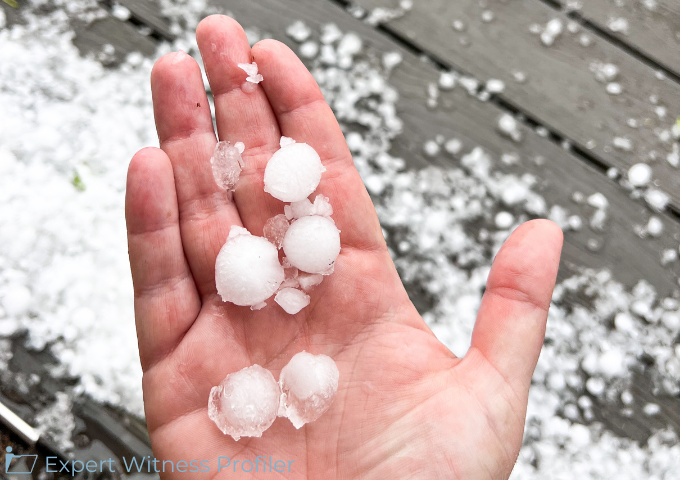
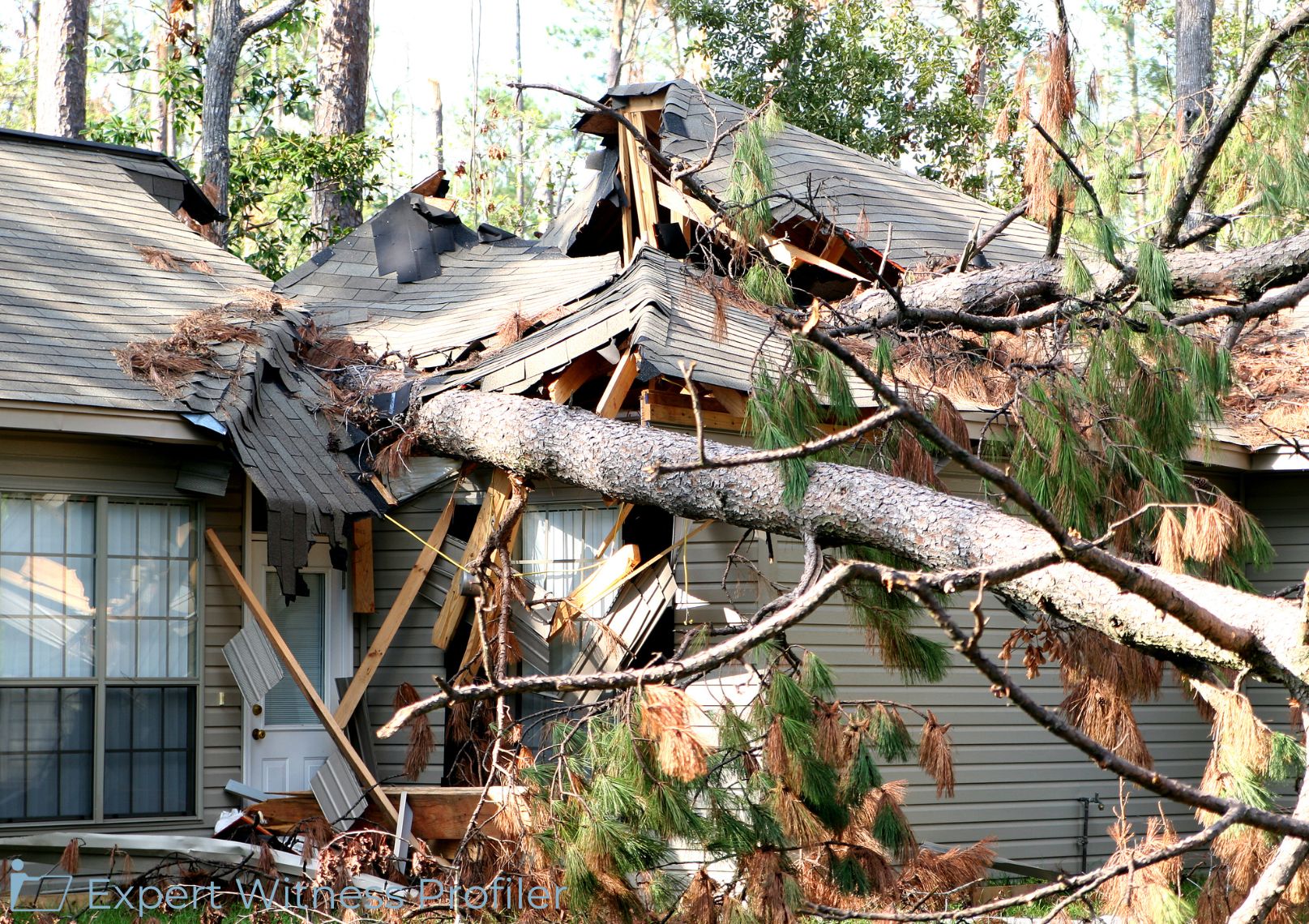
Plaintiffs 4612 S. 88th Street, LLC (“4612”), and OO7, LLC (“OO7”) filed their claims alleged in this matter against Tri-State to obtain the replacement cost insurance benefits provided under Tri-State Policy No. ADV 3188538-21 for direct physical damage sustained to the insured premises at 4612 South 88th Street, Omaha, Nebraska (the “4612 Building”) and 8811 J Street, Omaha, Nebraska (the “8811 Building”) as a result of a hail and wind storm that occurred on or about May 28, 2019 (the “2019 Storm”).
Defendants Tri-State Insurance Company of Minnesota and Auto-Owners Insurance Company filed motions to exclude the testimony of Paul Douglas and Ryan Scribner.
Engineering Expert Witness
Paul M. Douglas, P.E received a Bachelor of Science degree in civil engineering from the University of Nebraska in 1993. He is also registered or licensed as a Professional Engineer in 28 states, including Nebraska.
Douglas is a Structural Engineer and Forensic Consultant with Engineering Specialists, Inc. Douglas has spent 15 years with ESI dedicating a majority of his work to forensic engineering projects which he describes as “investigations to determine why building structures or machines fail to function in the way they were intended to.”
Douglas personally inspected the buildings that are the subject of this lawsuit, as well as others, on April 26, 2023, with two other engineers from ESI.
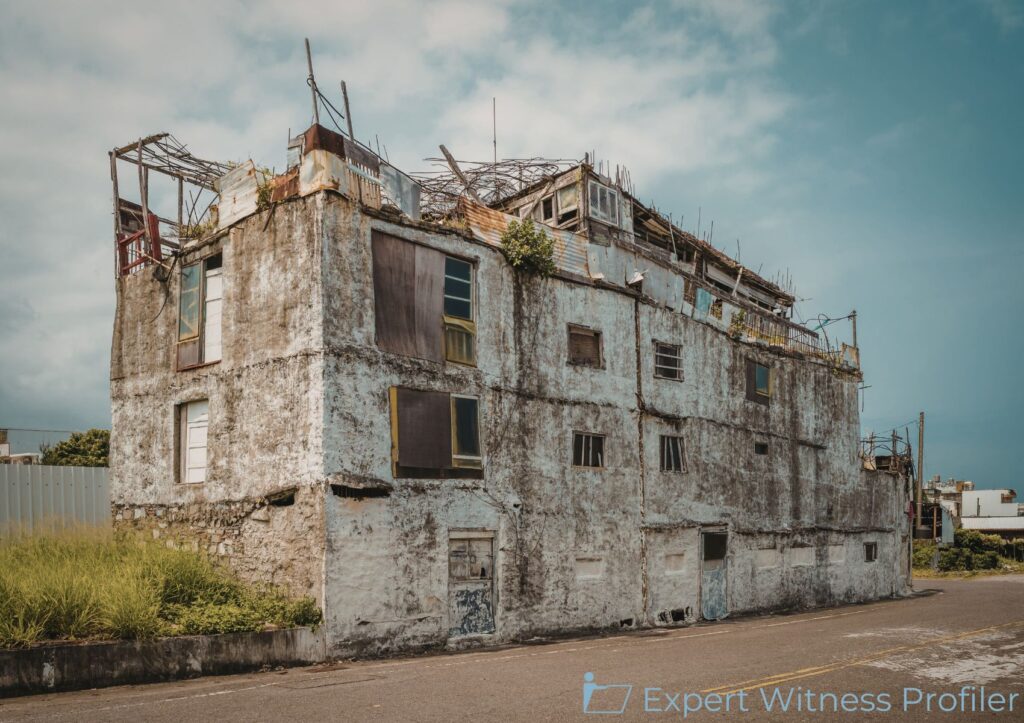
To begin with, Auto-Owners focused on the age and deteriorated condition of the properties. Undoubtedly, Defendants will submit evidence regarding the age of the roofs. On the other hand, Plaintiffs, through Douglas’ opinion and possibly other evidence, will submit contrary views indicating that the damage resulted from wind and hail. Again, these types of factual disputes are for the jury to determine and are not a basis for excluding a witness.
Moreover, Defendants will be able to impeach Douglas’ testimony if they believe the age of the roofs and/or some other weather event contributed to the damage. The fact that the experts disagreed on the cause of the roof damage did not render Douglas’ opinion inadmissible.
In this case, the Court found that Douglas was qualified to offer his opinions and that, based on his knowledge, skill, and experience, he had sufficiently explained the bases for his opinions, including his reasons for concluding that the roof damage was consistent with hail damage and required replacement.
Ryan Scribner
Scribner was retained to testify about the necessary and reasonable costs for labor and material costs relating to the repair and replacement of the roofs. The only issue Auto-Owners had with Scribner’s testimony is that he utilized Douglas’ engineering report when he prepared his estimate for repair.
However, it is clear from Scribner’s disclosure and deposition that he is not going to provide expert testimony as to the condition of the roof himself. He is basically going rely on Douglas’ engineering report to opine on the types of repairs that would need to be done and estimate the material and labor costs associate therewith.
Because the Court has found that Douglas’ expert opinions are admissible, Scribner’s reliance on them for purposes of estimating the repair costs is appropriate.
Held
The Court denied the motions to exclude the testimony of Paul Douglas and Ryan Scribner.
Key Takeaway
The Court found that Paul Douglas and Ryan Scribner are qualified to offer their opinions in their respected fields; that based on their knowledge, skill, and experience, they have sufficiently explained the bases of their opinions; and that these opinions are sufficiently reliable to aid the jury.
Case Details:
Case Caption:
4612 S. 88th LLC V. Tri-State Insurance Company Of Minnesota
Docket Number:
8:24cv245
Court Name:
United States District Court for the District of Nebraska
This case involves allegations of underpayment and nonpayment under an insurance policy.
Ategrity Specialty Insurance Company issued Policy No. 01-C-PK-P20064154-0 to 707 FWY Investments, LLC with effective dates of September 12, 2022, to September 12, 2023. Plaintiff leased out this structure to commercial tenants.
The roof collapsed and then several severe rain and windstorms allowed water infiltration to the roof surfacing and sub-surfacing and the interior of the building. Plaintiff subsequently filed a claim under the policy.
Defendant filed a motion to strike Plaintiff’s expert, Monty Stone, a public adjuster designated to testify on causation.
Insurance Expert Witness
Monty B. Stone has had many years of experience in the construction and roofing industry starting from July 2005 to January 2020 where he owned and operated his own construction company and installed all types of roofing systems, including the one at issue in this case.
Stone has been a licensed Public Insurance Adjuster since 2018.
Plaintiff designated Stone to testify as an expert in damages and causation. Defendant filed a motion to strike Stone’s opinions on causation—but not damages—arguing 1) he is not qualified, and 2) his testimony is not based on a reliable methodology.
Defendant’s argument that Stone is unqualified rests on the fact that he is not an engineer—he is a public adjuster—and “working closely” with engineers is an insufficient basis to make one an expert in engineering. Defendant also pointed to the fact that Stone was not certified as a roof consultant or a roof observer at the time of the loss. Plaintiff responded that 1) Stone has been upheld has an expert in the face of nearly identical challenges, and 2) Defendant’s quibble is better suited for cross-examination.
While he is not currently licensed, he has been in the past and has extensive work experience and training with identifying damage causation, reasonable repairs, and reasonable costs. Stone was also formerly a HAAG Certified Roof Inspector—the same company for which Defendant’s causation expert works. Because Stone is not required to be an engineer to testify as to causation, Defendant’s arguments regarding Stone’s experience are better suited for cross-examination, rather than a challenge based on qualification.
Defendant also objected to the reliability of Stone’s testimony, arguing that he provides only “general statements without concrete examples” which amounts to “ipse dixit.”
Plaintiff argued that “Defendant offered no comparison to other methodologies” and that Defendant’s own engineer relied on the same methodology—visual inspection—and performed no testing.
Defendant presented no other reason for the Court to believe Stone’s physical inspection is not a proper methodology. In light of this, the Court found no reason to think Stone’s methodology was unreliable.
Held
The Court denied Defendant’s motion to strike the testimony of Plaintiff’s expert Monty Stone.
Key Takeaway
Although Defendant makes an argument based on Stone’s lack of schooling, that is only one among many ways to be qualified. Under Federal Rule of Civil Procedure 702, a witness may be qualified as an expert by “knowledge, skill, experience, training, or education.”
Case Details:
Case Caption:
707 FWY Investments LLC V. Ategrity Specialty Insurance Company
This litigation arises from hail damage to a hotel owned by Defendants, Merryton Bossier, LLC, Grace Chiao, and Hui Ping Lee (collectively, “Merryton”) in Bossier City, Louisiana, in 2020.
Merryton engaged Stonewater Roofing LTD. Co., LLC to perform roof repairs, contingent upon insurance approval by Scottsdale Insurance Company (“Scottsdale”).
After appraisers assessed the damage, Scottsdale refused to approve the work based on the estimates provided. The parties proceeded to mediation, and an amount of $1,500,000 was agreed upon. However, the parties never signed the mediation agreement, and Merryton later informed Stonewater that they would not proceed with the work. It is disputed exactly what work Stonewater performed. Following this, Stonewater filed suit, and Scottsdale filed a motion to enforce the settlement agreement, leading to the deposit of the $1,500,000 amount into the court registry. Stonewater now claims a right to those funds, while Merryton disputes it. Stonewater and Merryton both filed motions for summary judgment, and the Court ruled that a contract with a suspensive condition existed, but the question of whether that condition was fulfilled will be determined at trial.
Merryton retained William J. Cowley (“Cowley”) as a rebuttal expert to critique the methodology, assumptions, and pricing analysis of Stonewater’s expert.
Stonewater argued that Cowley’s testimony should be excluded, asserting that his testimony did not meet the requirements of Rules 401–403 and 702.
Construction Expert Witness
William Jeffrey Cowley has 44 years of experience in the construction industry, including expertise in claims adjusting and roofing.
Stonewater argued that Cowley’s opinion regarding the typical overhead and profit being 10% each is unsupported by anything except Cowley’s subjective opinion. Stonewater also contended that Cowley’s reliance on national, generalized data failed to consider the specific circumstances of this case. Additionally, Stonewater argued that Merryton failed to timely provide a signed expert report in compliance with the Court’s Scheduling Order and Federal Rule of Civil Procedure 26, asserting that the signed version of Cowley’s report was produced only after the applicable deadline had passed.
In a separate motion in limine, Stonewater again challenged Cowley’s testimony. The motion made several arguments identical to the Daubertmotion, including arguments on Cowley offering legal conclusion.
Analysis
Cowley’s Qualifications
Cowley’s qualifications are sufficient to offer opinions on the reasonableness of cost estimates and the methodology employed by Norrell. Stonewater does not contest these credentials, so the Court need not consider his qualifications in detail.
Posture of the Issue: Limited Rebuttal Expert
Because Cowley is not offering new opinions about the cost of repairs or liability but instead critiques the assumptions and conclusions of Stonewater’s expert, he is not required to generate an entirely new calculation for repair costs. Merryton contests liability, so it would be illogical for its expert to assume liability for purposes of preparing a competing cost estimate. Thus, the Court held that Cowley is not obligated to offer an independent repair costs estimate.
Untimely Signed Report
Plaintiff raised the procedural issue that Cowley’s report was not signed on time as required by Rule 26 and the Court’s Scheduling Order. Rule 26(a)(2)(B) requires that an expert submit a signed, written report.
The Court must use the following factors to determine whether the failure to disclose was justified or harmless: “(1) the explanation for the failure to disclose; (2) the importance of the evidence; (3) the potential prejudice to the opposing party of admitting the evidence; and (4) the possibility of curing such prejudice by granting a continuance.”
Here, Stonewater argues that Cowley’s expert report should be excluded because it was not signed by the deadline set forth in the Court’s Scheduling Order. The record reflected that although Cowley’s report was initially served without a signature, Cowley later executed the report, and a signed copy was provided to Stonewater. The contents of the report did not change, and Stonewater was fully apprised of Cowley’s opinions prior to delivery of the signed copy.
The Court found that any failure to timely provide a signed report was harmless. First, the omission of the signature appears to have been a mere oversight, rather than an attempt to evade disclosure obligations. Second, Cowley’s testimony is important to Merryton’s rebuttal of the opposing expert’s cost analysis, so exclusion would be a disproportionate sanction given the nature of the deficiency. Third, Stonewater has not demonstrated prejudice arising from the lack of a timely signature, as it received the report itself on time, was aware of the substance of Cowley’s opinions, and had the opportunity to depose Cowley. Accordingly, the Court found that the initial failure to provide a signed expert report did not warrant exclusion under Rule 37(c).
Cowley’s Critique of the $1,500,000 Figure
Stonewater argued that Cowley offered an impermissible legal conclusion by stating that there is no contractual or other basis for using the $1,500,000 mediation amount as the price for the roofing work.
The Court found that Cowley’s discussion of the $1,500,000 mediation amount fell within the proper scope of rebuttal expert testimony and did not constitute an impermissible legal conclusion.
Cowley did not attempt to resolve whether the mediation agreement is legally enforceable or whether Stonewater is ultimately entitled to the insurance proceeds. Rather, he critiqued the opposing expert’s assumption that the mediation amount may be treated as a fixed contract price for purposes of calculating damages.
The Discrepancy Between the Date of Loss and Pricing (2020 vs. 2025)
Cowley’s use of the U.S. Department of Labor Statistics Producer Price Index to highlight price increases in non-residential roofing from 2020 to 2025 is a valid methodology for adjusting for inflation. Under Rule 703, experts may base their opinions on sources that other experts in their particular field would reasonably rely on. Stonewater argued that Cowley’s reliance on government statistics is improper because it is “broad, national data—without a bridge to the specific job or loss date ….”
According to the Court, Cowley is not required to produce an independent cost estimate, and he did not use the Producer Price Index to calculate damages or to offer a substitute cost estimate.
As for whether the Producer Price Index is the best source for this data, it can be explored on cross examination. Any lack of project-specificity goes to the weight of Cowley’s testimony, not its admissibility.
Scope of Rebuttal
The opposing expert’s damages analysis depends on the pricing data he selected, and Cowley’s testimony directly challenges the accuracy of those inputs. Stonewater’s attempt to draw a distinction between critiquing the opposing expert’s “formula” and critiquing the pricing inputs used within that formula is an artificial one. Pricing assumptions are an integral component of the methodology itself, and challenging those assumptions is a proper means of rebutting the resulting conclusions.
Overhead and Profit
Stonewater contended that Cowley’s statement that 10% overhead and 10% profit is the industry standard should be excluded because Cowley did not produce independent research supporting this statement. However, the Court found that Cowley was not required to produce research to support this statement.
With 44 years of experience, Cowley is qualified to testify about standard industry practices in roofing, including typical overhead and profit margins.
Cowley’s Opinion Will Assist the Trier of Fact
Stonewater argued that Cowley’s opinions will not assist the trier of fact and amount to nothing more than subjective commentary supported only by his credentials.
The Court disagreed. Cowley’s testimony assisted the trier of fact by explaining industry practices and by identifying potential deficiencies in the assumptions and inputs underlying Norrell’s damages analysis. These are matters that are not within the common knowledge of a lay juror. Moreover, evaluating the reasonableness of pricing assumptions, inflation adjustments, and customary overhead and profit margins in the commercial roofing industry requires specialized knowledge. Cowley’s opinions provided context and explanation that will help the jury in evaluating Norrell’s conclusions. Any weaknesses in Cowley’s opinions may be explored through cross examination.
Motion in Limine
The Court has already determined that Cowley’s testimony is admissible under Rule 702. The majority of the arguments raised in Stonewater’s motion in limine merely repackaged those same Daubert challenges under the guise of Rules 401, 402, and 403.
However, Stonewater did raise an additional relevance argument. Stonewater contended that Cowley’s opinions are irrelevant under Rules 401 and 402 because Cowley’s assertion that 2020 pricing inputs should have been used would, if applied within Norrell’s model, produce a profit margin higher than the 49% margin Cowley already characterizes as excessive. See Record Document 153 at 5. According to Stonewater, this alleged inconsistency rendered Cowley’s testimony irrelevant and therefore inadmissible.
The Court found that this argument is unpersuasive. Stonewater’s reasoning rests on the assumption that the $1,500,000 mediation amount constitutes a fixed and binding contract price. This is a premise that Cowley did not accept and that remains disputed in this litigation. Framing Cowley’s rebuttal opinions as internally inconsistent requires acceptance of the assumptions Cowley challenges. Because that premise is disputed, this argument did not undermine the relevance of Cowley’s testimony.
Held
The Court denied Stonewater’s Daubert motion to exclude the testimony of William J. Cowley and motion in limine to exclude or limit the opinions and testimony of William J. Cowley.
Key Takeaway
In this context, the standards applicable to rebuttal experts are different from those governing affirmative expert testimony. A rebuttal expert’s function is to identify flaws in the opposing expert’s analysis, not necessarily to construct a competing model. Although courts have recognized that rebuttal experts may, in appropriate circumstances, offer independent opinions or utilize alternative methodologies, nothing in Rule 26 requires them to do so.
Case Details:
Case Caption:
Stonewater Roofting Ltd. Co., LLC V. Merryton Bossier, LLC
Plaintiff Nirangtar LLC (d/b/a Red Roof Inn Cave City) (“Red Roof”) alleged that a storm caused damage to its property. At the time of the loss, Red Roof had an insurance policy with Defendant Navigators Specialty Insurance Company (“Navigators”). Because Navigators has not paid Red Roof for its claimed losses, Red Roof filed suit in Barren Circuit Court (Kentucky), which Navigators removed to Federal Court.
Red Roof has recently disclosed expert witnesses, including Deanna Ramsey (“Ramsey”) and Dennis James Kurttila (“Kurttila”). Ramsey, a certified public accountant, was disclosed to express opinions regarding Red Roof’s lost revenue; Navigators contended that Red Roof provided her with the necessary information, then she “simply multiplied (the number of rooms) times (the number of nights they were allegedly unavailable) times (the average rental rate).” Kurttila, a public insurance adjuster, was offered to provide his cost estimate for Red Roof’s repairs and losses resulting from the storm.
Navigators filed motions to exclude the testimony of these two experts.
Insurance Expert Witness
Dennis James Kurttila has been in the construction and general contracting business since 1996. He has gained substantial work experience since 2007 in the claims industry and submitting/ parent damage claims. He is licensed as a Public Insurance Adjuster in the following states: Kentucky, Tennessee, Indiana and Mississippi.
Deanna Ramsey, CPA, is a certified public accountant. She has a master’s in accounting. She has prepared individual and business tax returns involving several issues related to trusts, estates, adoptions, independent contractors, education trusts, farming (business and sale), and other variations of business issues.
Red Roof did not object to the exclusion of Ramsey’s testimony. Certainly, a jury would be capable of performing simple multiplication without the aid of an expert, so that motion was granted. Red Roof did, however, contest the exclusion of Kurttila’s testimony. Navigators argued that Kurttila’s testimony should be excluded because it is unreliable and unhelpful, but did not question Kurttila’s qualifications.
A. Reliability
Navigators argued that Kurttila’s proffered testimony is unreliable. Navigators asserted that Kurttila is biased and contested the reliability of his methods and the factual basis of Kurttila’s report.
1.Bias
It is not uncommon for employees of parties—and sometimes the parties themselves—to testify as experts. Thus, though Kurttila may have just “switched hats” from public adjuster to expert witness, that is not sufficient reason to exclude his testimony.
2.Methods
a. Overhead and Profit
Navigators asserted that Kurttila’s testimony relating to his overhead and profit (“O&P”) calculations was unreliable because Kurttila did not know whether Red Roof had retained a contractor nor whether Red Roof could be paid for O&P under Kentucky law. He did testify that, in his opinion, Red Roof should be paid for O&P, that this is standard practice in the insurance business, that this is the case in Tennessee, and two Kentucky hotels damaged in the same storm received settlements that included O&P. Thus, Kurttila had a reasonable basis in his knowledge and experience to include O&P in his estimate.
b. Professional Standards
Navigators noted that Kurttila was unable to articulate the professional standards he used in preparing the estimate.
Red Roof did not contradict this assertion. Though unable to name any specific professional standards, Kurttila testified that he used his “years of contracting and public accounting and working with Xactimate” to come to his conclusions.
Courts have held that Xactimate, a program used by insurance companies and public adjusters to develop estimates, is a reliable method for creating estimates.
However, Kurttila’s inability to name any “professional standards” used does not make his estimate unreliable per se—Red Roof has demonstrated that Kurttila’s estimate has a basis in his knowledge of and experience with these sorts of estimates.
c. Date
Navigators highlighted the fact that Kurttila did not know why he used the month reflected in the estimate.
The Court was convinced that Kurttila’s use of November of 2023 in his estimate did not make his testimony so unreliable that it should be excluded.
November 2023 is after the storm loss occurred, and, on a practical note, the use of November 2023 rather than October 2024 is likely favorable for Navigators, as Kurttila believes prices would have only increased, resulting in a higher estimate.
3. Factual Basis
Navigators argued that Kurttila’s testimony should be excluded because he relied on questionable facts and figures provided by Red Roof. In many cases, Kurttila did not know how Red Roof acquired or calculated that underlying data. Additionally, Navigators avers that the claimed damages exceed the scope of Red Roof’s causation expert’s testimony.
However, Kurttila has remedied some of the inaccuracies. Even where Kurtilla’s estimate may be inaccurate, however, it was based on information supplied to him by Red Roof or from his own observation. Kurttila may rely on Red Roof’s data in his estimate without independently verifying it, under the assumption that it was caused by the storm. Navigators may challenge that data and any assumptions at trial; any weakness in the factual support for Kurttila’s estimate goes to weight, not admissibility.
B. Helpfulness
Navigators argued that Kurttila only performed multiplication and addition to construct his estimate. However, Kurtilla did more than just “basic math.” He generated estimates for several line items using Xactimate, relying on his own professional experience and, in one case, own measurements.
Held
The Court granted the Navigators’ motion to exclude the testimony of Deanna Ramsey but denied the Navigators’ motion to exclude the testimony of Dennis Kurttila.
Key Takeaway:
Some courts have held that, because jurors can perform basic math, expert testimony that can be reduced to a simple calculation violates the principle that an expert’s testimony must involve “specialized knowledge” that “will help the trier of fact to understand the evidence or to determine a fact in issue” and is therefore inadmissible. However, courts “have also treated public claims adjusters and their use of Xactimate as within the realm of expert testimony.” Thus, Kurtilla’s preferred testimony will not be excluded on the basis that it is unhelpful.
Case Details:
Case Caption:
Nirangtar LLC V. Navigators Specialty Insurance Company
This case is a breach of good faith and fair dealing and breach of contract due to Defendant CSAA General Insurance Company denying Plaintiff George Richardson’s roof damage claim that occurred on September 23, 2023.
Defendant filed a Daubert motion to exclude the testimony of Plaintiff’s expert witness, Michael Pruitt.
Engineering Expert Witness
Michael Pruitt, P.E. has over 30 years of experience in engineering, code compliance, and construction. He has conducted more than 1,500 forensic investigations. His expertise spans commercial and residential roof inspections, foundation investigations, building envelopes, and structural evaluations.
Although Defendant did not generally challenge the qualifications of Pruitt to testify as an expert, it did argue that at least one of his opinions should be excluded because he does not have any metallurgy expertise. Plaintiff countered that Pruitt is an engineer who serves primarily as an insurance defense expert witness and, in fact, Pruitt has worked for Defendant in the past and is currently involved in one of Defendant’s cases. Based on Pruitt’s more than 30 years of engineering and construction experience, as well as his extensive forensic investigation experience, the Court concluded that he possessed the necessary skill, experience or knowledge to be qualified to offer the opinions in his report.
As it specifically relates to his opinion regarding degradation of the metal roofing based on loss of granules, Pruitt offered an explanation supporting his opinion based on the manufacturer’s sales materials. Nothing about this opinion indicated that Pruitt needed to be a metallurgist to opine on the effects of loss of granules from the roof at hail impact sites, particularly considering the roof manufacturer’s own product material statements.
Reliable Methodology of Pruitt’s Opinions
Defendant argued that Pruitt’s opinions lacked a reliable methodology because his opinions were contradicted by the roofing manufacturer’s testing and product materials. Defendant further argued that Pruitt’s opinions were inadmissible because he had conducted no independent testing, and his opinions were not supported by peer-reviewed publications.
Pruitt set forth his opinions and the basis upon which he arrived at those opinions in his report. In doing so, he documented the observable damage and explained what damage he believed to be hail damage and its severity.
Much of Defendant’s Daubert Motion appeared to rely not on Pruitt’s report or his opinions expressed therein, but on his responses to deposition questions regarding the roofing materials manufacturer’s product information.
The fact that Defendant disagreed with Pruitt’s conclusions or believed other evidence contradicted those conclusions was not a basis upon which to exclude Pruitt’s opinions. To the extent Defendant disagreed with Pruitt’s opinions and conclusions, “vigorous cross-examination, presentation of contrary evidence, and careful instruction on the burden of proof were the traditional and appropriate means of attacking shaky but admissible evidence.”
Therefore, the Court concluded that Pruitt’s opinions relied on and were based on a sufficiently reliable methodology to be admissible.
Held
The Court denied Defendant’s Daubert motion to exclude the testimony of Plaintiff’s expert witness Michael Pruitt.
Key Takeaway:
An expert’s personal experience, training, method of observation and deductive reasoning could be sufficiently reliable to constitute valid methodology. It should be noted that Pruitt’s method did not involve application of any controversial scientific process or theory.
Case Details:
Case Caption:
Richardson V. CSAA General Insurance Company
Docket Number:
6:24cv247
Court Name:
United States District Court for the Eastern District of Oklahoma
Plaintiffs Michael Gerstman and Marie Webster, the insureds, sued Defendant Crestbrook Insurance Company (“Crestbrook”), their insurer, to recover on contractual and extracontractual theories arising from Crestbrook’s denial of their claim in this storm damage insurance coverage dispute.
Crestbrook filed a motion to strike the testimony of Plaintiffs’ experts, Dr. Neil Hall and Kevin Funsch.
Architecture Expert Witness
Neil B. Hall is the owner and principal of Groundtruth Forensics, a consulting firm specializing in building performance, failure analysis and damage assessment.
Hall is a member of the American Institute of Architects, American Society of Civil Engineers, Structural Engineering Institute, Construction Specifications Institute, International Institute of Building Enclosure Consultants, American Society of Safety Professionals and Association of State Floodplain Managers.
Kevin C. Funsch is an insurance adjuster and engineer with a solid background in claims handling and estimating. He has experience in adjusting property losses, performing appraisals, and writing expert reports.
Crestbrook filed a motion to strike Hall’s opinions on the basis that they are irrelevant, and it contended that his opinion regarding the full replacement of the roof should be excluded because it is unreliable and lacked a clear or verifiable methodology.
Crestbrook first contended that Hall’s opinions should be excluded as irrelevant because there is no dispute as to the scope of the damages at issue in this case. Plaintiffs countered that Hall’s opinions on causation and damages will certainly help the trier of fact understand the cause and extent of the damages at issue in this case.
Hall’s expert opinions suggested that there may be more damages at issue than Crestbrook is willing to acknowledge when it maintained that it was only obligated to pay the cost of replacing the individual damaged tiles.
Therefore, the Court declared that Hall’s opinions regarding the cause of the damage would assist the jury in understanding the evidence and in determining a fact in issue.
Crestbrook also contended that Hall’s opinions regarding the necessity of replacing the entire roof in the absence of available matching tiles are unreliable and not based on any clear or verifiable methodology. However, Hall’s report and CV plainly showed that his reliance on his experience makes his opinions on the repairs required to bring the Property back to pre-loss condition sufficiently reliable for purposes of Rule 702.
And to the extent that Crestbrook maintained that Hall did not make “any effort to determine whether ‘matching’ tiles were available,” the Court held that this fact, if true, would not undermine the reliability of his opinion that the entire roof would need to be replaced if matching tiles were unavailable in sufficient quantity.
Kevin Funsch
Crestbrook contended that Funsch’s estimate and opinions related to the full replacement of the roof are irrelevant because they will not assist the jury in determining whether Crestbrook underpaid the claim.
It maintained that they are unreliable insofar as they rely on Hall’s opinion that the roof may need to be completely replaced if there are not sufficient matching tiles with which to replace the damaged tiles.
The Court disagreed with Crestbrook’s assertion that Funsch’s opinions and estimate are irrelevant because they will not assist the jury in determining whether Crestbrook underpaid the claim. This contention is based on Crestbrook’s position that it is not required to replace the entire roof under the Policy and that the estimated cost of replacing the roof is not relevant.
Because there remains a genuine issue of fact as to whether Crestbrook was required to pay the cost of replacing the entire roof in the absence of the availability of matching tiles, the Court held that Funsch’s estimate regarding the cost of replacing the roof is relevant.
Crestbrook contended that Funsch’s estimate and opinions related to the full replacement of the roof are unreliable insofar as they rely on Hall’s opinion that the entire roof may need to be replaced if there are insufficient matching tiles to replace the damaged tiles. However, Crestbrook did not maintain that Funsch has relied on unreliable sources in determining the cost to replace the roof.
Instead, the objection seemed to be that Funsch included in his damages calculation the cost of replacing the roof based on Hall’s opinion that the entire roof may need to be replaced. However, the Court held that this does not make Funsch’s calculation unreliable for purposes of Rule 702.
Held
The Court denied Crestbrook’s motions to strike the testimony of Plaintiffs’ testifying experts Dr. Neil Hall and Kevin Funsch.
Key Takeaway:
Hall relied on his own inspection of the property, as well as weather data. His attached CV demonstrates his extensive education and professional experience in engineering and architecture.
By extension, Funsch’s estimate and opinions are reliable because they are based on Hall’s recommendations, which, in turn, are grounded in reliable weather data and decades of experience. The opinions are also relevant, as they help determine the cost of the repairs.
This is an insurance coverage dispute. Defendant Church Mutual Insurance Company (“Church Mutual”) insured Plaintiffs’ property. Hail damaged the property’s roof. The parties dispute whether the damage falls within Plaintiffs’ insurance policy, which precludes coverage for cosmetic damage.
Plaintiffs sought to exclude the expert testimony of Christine Conner, Mark Kubena, and Ronald Dutton on the grounds that they applied an extracontractual definition of “functional damage,” which, according to Plaintiffs, made their opinions unreliable and irrelevant. Plaintiffs also filed a motion to exclude Dutton’s supplemental expert report.
Forensic Engineering Expert Witness
Christine E. Conner has 10 years of engineering experience, including design, evaluation, inspection, and repair of residential and commercial buildings and other structures, with over 5 years of engineering training and forensic engineering experience in cause and origin failure analysis for structural damage; structural failures, construction deficiencies, roof damage, wind/hail damage, water intrusion, settlement, flooring failures, construction deficiencies, cladding and window failures, foundation damage, flood, surge and wind damage analysis, and preparation of technical reports with findings.
Mark Kubena is an engineer with expertise in the area of property damage causation and the determination of the appropriate scope of repairs for property damage.
Ronald J. Dutton has over 40 years of metallic-coated steel experience with which he provides technical services for product development, failure analysis, and product training for the metal construction industry. He has served in various trade organizations, including the National Coil Coating Association (NCCA) and the Zinc Aluminum Coaters Association (ZAC), and holds BS and MS degrees from Drexel University and Lehigh University.
The Court found that Conner, Dutton, and Kubena’s expert reports do not rely on extracontractual definitions of functional and cosmetic damage. They instead explained how the roof lacked certain types of functional damage. Thus, the expert reports opined that the roof had not been functionally damaged because its service life had not been reduced.
Basically, Church Mutual’s expert reports would help the jury determine whether the policy limitation applies. And they do not confuse the trier of fact by applying a different definition of functional/cosmetic damages. The Court declared these reports admissible.
B. Dutton’s Supplemental Report Is Inadmissible
Dutton’s supplemental disclosure is a three-page summary of a laboratory report that evaluated the hail damage to the Plaintiffs’ roof. Dutton stated that the lab report supports the conclusions from his original report and demonstrates that there is no evidence that the hail diminished the performance of the roof.
The Court found that Dutton’s report is not supplemental because it goes beyond filling the “interstices of an incomplete report” and instead introduces new laboratory testing results and new opinions.
Church Mutual offered a compelling explanation for the tardiness. Dutton did not receive the lab results until after submitting his initial expert report. Moreover, the testimony was important because it provided lab results that helped explain why the roof damage is cosmetic instead of functional.
Even though there is a compelling reason for the delay and the testimony is important, the Court will not admit it because Plaintiffs did not have time to produce rebuttal reports after Dutton disclosed the samples used in his supplemental report one week before the discovery deadline.
Held
The Court granted in part and denied in part the Plaintiffs’ motion.
Key Takeaways:
None of the experts relied on an extracontractual definition of cosmetic or functional damage to reach their conclusions.
Even though Dutton states that his supplemental findings support his original conclusions, they still offer new opinions, because they analyze new laboratory test results.
Case Details:
Case Caption:
Cleburne Training & Fitness Inc Et Al V. Church Mutual Insurance Company
The present case involves an insurance coverage dispute between an East Texas church, Plaintiff Christian Heritage School c/o Youth With a Mission, and its insurance company, Central Mutual Insurance Company. Between May 1, 2020, to May 1, 2022, Defendant insured Plaintiff’s property, which consisted of a twenty-one building campus in Tyler, Texas. The dispute arises from alleged storm-related damage with a date of loss on April 5, 2022.
Pursuant to Federal Rule of Civil Procedure 26(a)(2), Plaintiff retained insurance adjuster expert witness, Duane Smith. Smith was supposed to testify about his inspection, investigation, and observations of the property damaged by a hail and wind event on April 5, 2022. His designation also indicated that he would testify to the reasonable costs to repair and/or replace the property that was damaged by the hail and wind event reported to have occurred on April 5, 2022.
Smith’s report included a discussion of his qualifications and experience, the materials he reviewed, his findings, and relevant weather information. Based on this information, he included line items for the property with the estimated costs to repair and/or replace the property.
Defendant moved to exclude Smith from offering opinion testimony on the timing and cause of the claimed damages to the campus, the necessity of replacing roofs rather than repair, and the cost of Occupational Safety and Health Administration (‘OSHA’) compliance and upcharges in his estimate.
Insurance Adjuster Expert Witness
Darrell Duane Smith has been a licensed public insurance adjuster since 2016. With approximately 19 years of experience as an independent insurance adjuster, he has managed numerous commercial and residential insurance claims.
Through these experiences, Smith has adjusted hundreds of wind and hail events, water damage, and fire damage claims during his career, including both commercial and residential claims.
I. Methodology Regarding Causation and Replacement
Defendant’s Arguments
Defendant argued that Smith’s own weather data showed no hailfall at the campus and that he conducted no testing. Defendant claimed that Smith provided no weather data indicating that wind or hailfall occurred on the campus on April 5, 2022 and that he failed to consider all information to exclude other potential causes of damage to the campus, such as pre-existing damage or post date of loss damages.
Plaintiff’s Counter-Argument
Plaintiff pointed out that Smith examined storm data from May 3, 2017, to April 5, 2022, to assess other potential storms but concluded that “the distinctive size, shape, and pattern of the hail damage conclusively established the April 5, 2022 hailstorm as the cause of damage.” Plaintiff also cited to Smith’s report where he concluded this same fact and explained, based upon coloration of old hail damage (discolored, grey, or whited out), versus the characteristics of hail damage that appeared to be “fresh” and consistent in size and shape with the April 5, 2022 storm. Smith also assessed the storm created openings for the roof and water damage, which was consistent with the April 5, 2022 storm due to lack of “long-term” aging.”
Plaintiff argues that Defendant’s arguments went to the weight of Smith’s opinions, not the admissibility of them.
Causation
Smith reviewed weather information from the National Oceanic Atmospheric Administration (“NOAA”) in order to determine which storms, if any, other than April 5, 2022 storm, affected the property. His search covered the period from May 3, 2017, to April 5, 2022, which he provided rules out any other possible date of loss.
Moreover, Smith testified that when he inspected the property in 2023, he was able to distinguish between old and new damage based upon the repairs that already took place and the fact that the marks seemed to be “fresh” because they were not discolored, old, grey, or turning white like might be expected with aging.
Similarly, Smith opined that water damage observed at the property did not exhibit signs of long-term aging, or indicate a long-term ongoing issue nor are there signs of historical repairs at the affected locations. He stated that he considered alternative causes of loss, including foot traffic, wear and tear, and deterioration and concluded that no evidence consistent with these causes of damage was found.
Replacement Versus Repair
As to the necessity of replacement versus repair, Smith explained how he based his conclusions on his own inspection and experience. Smith line itemed the inspection damage in his expert report. He explained how upon inspection, he observed a significant number of unsealed tabs consistent with high wind, as well as hail damage to shingles and metal roofing. He stated that, based upon the damage he observed, it wouldn’t have been feasible to try to conduct repairs because the damage to the roofs was too widespread. This is the basis of his opinion recommending replacement.
The Court found that Smith’s report and testimony explained how he determined, based upon his experience, inspection, and review of the weather data, that the April 5, 2022 storm caused the damage. This included observations regarding prior storms from the weather data, the condition of the damage upon inspection as it relates to characteristics of time and wear, and the possibility of damage from post-date storms which he found occurred not in the relevant area and were several miles away. It was held that this evidence demonstrated that Smith examined other potential causes, thereby rendering his methodology and opinions reliable for purposes of determining admissibility under Daubert and Rule 702.
The Court held that the Defendant may have identified weaknesses in Smith’s opinions, but it does not render them ipse dixit merely because Defendant disagrees with his conclusion. The credibility of Smith’s opinions remained a matter for the jury to consider.
II. OSHA Compliance
Defendant argued that Smith included Kevin Dandridge’s incomplete estimate for OSHA safety protocols and procedures in his estimate, making it unreliable. Dandridge was retained to testify about to the proper OSHA safety protocol and procedures.
The Court held that Smith’s reliance on Dandridge’s OSHA compliance costs was not atypical. The Court, in a separate order, held that Dandridge’s testimony in this regard is permissible. As Dandridge himself explained, these opinions can be reconciled. To the extent the reliance is flawed, or Dandridge’s opinions are based upon a weak foundation, then, again, that remains a matter for cross examination.
III. 20% Inflation Adjustment
Lastly, Defendant argued that Smith included a 20% blanket inflation adjustment without providing a sufficient methodology.
According to the Court, had Smith simply added a blanket 20% inflation adjustment without explanation, then such a methodology would be unreliable. However, Smith has explained his reasoning for this adjustment. As he testified to this point, “because all the major suppliers are sending out demand surge notices and informing all the contractors that due to the supply and demand, that all the materials have went up at least 20 percent, if not more.”
Smith further explained his experience with typical surge pricing due to storm demand having been involved with hurricanes.
Held
The Court denied the Defendant’s motion to strike the expert testimony of Plaintiff’s insurance adjuster expert witness, Duane Smith.
Key Takeaways:
According to Rule 703, an expert may also rely upon the opinion of another expert, as long as the other expert opinion upon which the expert bases an opinion or inference are of a type reasonably relied upon by experts in the particular field in forming opinions or inferences upon the subject. In conclusion, Smith’s reliance on Dandridge’s OSHA compliance costs was not atypical.
Defendant may have pointed out weaknesses in Smith’s opinions, but it does not render them ipse dixit merely because Defendant disagrees with his conclusion. This is simply a matter of credibility of the expert, which the jury can properly consider.
Smith’s testimony explained how he determined, based upon his experience, inspection, and review of the weather data, that the April 5, 2022 storm caused damage to the property. This included observations regarding prior storms from the weather data, the condition of the damage upon inspection as it relates to characteristics of time and wear, and the possibility of damage from post-date storms which he found occurred not in the relevant area and were several miles away. This evidence demonstrates that Smith examined other potential causes, thereby rendering his methodology and opinions reliable.
Case Details:
Case caption:
Christian Heritage School c/o Youth With A Mission v. Central Mutual Insurance Company
Docket Number:
6:24cv45
Court:
United States District Court for the Eastern District of Texas, Tyler Division
This is a removed action by Plaintiff Wings Platinum LLC , an insured, against its insurer, Defendant Westchester Surplus Lines Insurance Company, arising from the denial of Wings’ claim for coverage following a wind and hail storm. Wings asserted claims for breach of contract; unfair settlement practices, and breach of the duty of good faith and fair dealing.
Wings alleged that, on April 9, 2021, a severe wind and hail storm caused significant damage to the Property’s roof and exterior. Plaintiff submitted a claim under the Policy for wind and hail damage to the Property that it maintained was caused by the storm, seeking the cost to repair the roof. Westchester retained Robert J. Herrera, an engineer at Stephens Engineering, to investigate Wings’ claim. Herrera first inspected the property on September 9, 2021, and he authored three reports. However, Wings filed a motion to strike Herrera’s testimony and opinions.
After Westchester denied Wings’ claim on or about April 21, 2022, Wings sued Westchester in State Court, and Westchester removed the lawsuit to this Court.
Structural Engineering Expert Witness
Robert Herrera was hired by Stephens Engineering Consultants, Inc. in 2020 where he uses his years of design engineering experience in the field of forensic investigations. Herrera has performed forensic investigations for a wide variety of residential and commercial structures to determine cause and/or extent of stormrelated damage to roofing and exterior claddings of buildings, water intrusion, structural damage and collapse, differential foundation movement, vehicle impacts, and construction defects.
Herrera is currently a senior forensic engineer, the team leader for Texas, and an integral part of the training of new forensic engineers for Stephens.
Herrera’s first report, dated September 30, 2021 (the “First Report”), concluded that identified fractures in the thermoplastic membrane of the roof were not caused by wind or hail. The second report, a supplement produced after a follow-up investigation of the building on February 28, 2022 and dated March 22, 2022 (the “Second Report”), identified fractures in the membrane consistent with impact, but it maintained that those fractures were not caused by a weather event in 2021 and were instead caused by a storm in April 2017. The third report, a second supplement dated June 23, 2022 (the “Third Report”), responded to additional materials that Wings had provided and maintained the conclusions reached in the Second Report.
Plaintiff’s Argument in Support of the Motion
Wings sought to exclude Herrera’s testimony on the basis that he is not qualified to opine as an expert on the age of the damage to the roof and that his opinions regarding the age of the hail damage on the roof are not reliable because they lack any reasonable basis and are not the result of sound scientific principles and methods.
Wings posited that Herrera had insufficient training to be qualified as an expert for purposes of determining the time when the roof was damaged by hail.
It contended that Herrera’s prior engineering experience is not relevant to the issue on which he opines—the age of the hail strike damage—and that Herrera’s mere one year and one month of experience at the time of his First Report is insufficient to qualify him as an expert.
Wings also contended that Herrera’s opinions regarding the age of the hail strikes are not reliable because they are entirely subjective and lack “any sort of basis, rubric, metric, or standard” by which to judge them, and because Herrera could not explain how his determination of the age of the damage could be duplicated or tested.
Analysis
Qualification
Neither Westchester nor Herrera articulates how Herrera’s specific experience designing commercial and residential structures as a project engineer qualifies him to opine on the age of the hail damage. The Court held that Herrera’s training and experience at Stephens, however, qualify him to offer these opinions as an expert.
In his affidavit, Herrera avers that he received on-the-job training when he began working at Stephens in 2020 that was “specific to identifying and assessing wind- and hail-related damage to roofs, including the type of roof at issue in this lawsuit.”
He shadowed senior engineers for 3 to 4 months before beginning to inspect buildings independently, and, at the time he inspected the roof at 3950 Platinum Way, he had inspected approximately 200 buildings for storm damage.
At the time of his affidavit, he had inspected approximately 750 properties for storm damage. The Court finds this experience and training sufficient to qualify Herrera to offer his expert opinion on the age and cause of the damage to the roof at 3950 Platinum Way under Rule 702.
Reliability
Herrera testified in his deposition that he was able to examine fractures in the roof and determine, “to a reasonable degree of engineering certainty,” that the fractures were more than one year old and thus were not due to a recent hail event. This observation and judgment, in connection with his review of weather research and Roof Technical Services, Inc.’s (“RTS’s”) report from its analysis of the roof samples, formed the basis for Herrera’s opinion.
The Second Report explained that the fractures on the roof attributed to hail damage were consistent with hailfall on or about April 25, 2017 because the damage was consistent with hail larger than that reported at the property in the April 2021 storm. The Court was satisfied with Westchester’s showing of reliability in this instance.
In other words, Wings’ deepreservations about Herrera’s opinions concerned the weight of his testimony, not its admissibility, and will be better addressed through vigorous cross-examination and the presentation of contrary evidence.
Held
The Court denied Plaintiff’s motion to strike the testimony and opinions of Defendant’s expert Robert J. Herrera.
Key Takeaway:
Herrera received on-the-job training when he began working at Stephens in 2020 that was “specific to identifying and assessing wind- and hail-related damage to roofs, including the type of roof at issue in this lawsuit.”
He reviewed weather research and Roof Technical Services, Inc.’s (“RTS’s”) report from its analysis of the roof samples to conclude that the damage to the roof was not caused by a recent hail event.
Case Details:
Case Caption:
Wings Platinum Llc V. Westchester Surplus Lines Insurance Company
Plaintiff Franklin Square Condominium Owner Association alleged that a hailstorm on April 28, 2021, damaged its property at 817-831 Old Ranch Road 12, San Marcos, Texas 78666.
Franklin Square filed a claim with its insurance company, Defendant AmGuard Insurance Company. Plaintiff alleged that AmGuard breached the insurance contract by failing to pay the full amount of the claim.
Franklin Square designated two expert witnesses: Marc Camacho, a structural and civil engineer who would testify that a severe hailstorm on April 28, 2021, caused functional damage to the roof of the Property that would require full replacement; and Jeremy Duke, a general contractor who would testify on the cost to repair the Property and replace the roof.
Civil Engineering Expert Witness
Marc Camacho has over fifteen years of experience in engineering forensics investigations and/or design related to residential, commercial, and various other buildings and installations. His expertise includes forensic analysis, inspection, evaluation, engineering design, report/repair recommendations, and review/rebuttal of third-party reports. Camacho has extensive experience in various construction material types, installation and evaluation protocols, and component failure mechanisms, with understanding of construction plan implementation, building code interpretation, industry standards, and identification of storm-related damage.
Jeremy Duke holds a degree in Kinesiology and Business from the University of North Texas and an Associate Degree in Science from Navarro Junior College. Jeremy has obtained multiple certifications, including Xactimate 28 Level 1, and holds a Texas Real Estate License, enhancing his expertise in the roofing and general construction industry.
Since November 2014, Duke has been the owner of J. W. Duke Roofing and General Construction, where he has successfully managed various projects.
AmGuard asked the Court to exclude Camacho’s testimony as unreliable. AmGuard also contended that Duke’s testimony should be excluded because his report did not comply with Rule 26, he is not qualified to give expert testimony on the cost to replace a roof, and his estimate on interior repairs is unreliable.
Camacho’s Opinion Is Reliable
For expert testimony to be reliable, it must “be grounded in the methods and procedures of science and . . . be more than unsupported speculation or subjective belief.”
AmGuard argued that Camacho’s testimony that the Property’s roof must be replaced is unreliable because it is not supported by sufficient data or reliable methodology. AmGuard challenged Camacho’s opinion that hail damage to the concrete roof tiles “cannot be feasibly or effectively repaired” and remediation “will require full removal and replacement of concrete tile roof coverings” at the Property.
Camacho visited the Property on March 19, 2024, and inspected the roof and took photographs of the damage. His expert report stated that damage “consistent with historical impacts from hail” was present on roof tiles and metal components on the roof. AmGuard argued that the report is unreliable because Camacho only closely inspected a small percentage of the roof tiles and did not estimate the percentage of damaged tiles. However, Camacho testified that he viewed “all of the roof in general,” but that when performing a hail inspection, he “quite frequently will get down on his hands and knees to like really get up close and attempt to evaluate” only a fraction of a roof’s tiles.
Camacho also stated in his report that he observed several different types of hail damage on the roof and that the damage could not be feasibly or effectively repaired. Moreover, he explained how roofs can be damaged by hail and how functional damage reduces a roof’s water-shedding capability or lifespan. The Court found that Camacho’s opinion that the roof requires full replacement is grounded in a proper methodology and is not mere speculation.
Duke’s Report Does Not Comply with Rule 26
AmGuard argued that Duke’s testimony should be excluded because his report does not comply with Rule 26(a)(2)(B), which requires an expert report to include “a complete statement of all opinions the witness will express and the basis and reasons for them” and “the facts or data considered by the witness,” among other things.
Duke’s report consisted of his resume; photographs of the damage; and a damage estimate report created using “a computer software program known as ‘Xactimate’ which is commonly used by construction contractors and adjusters to create estimate reports.” Duke neither stated the basis and reasons for the damage nor explains how his experience is reliably applied to the facts of this case. Therefore, the Court found that his report does not comply with Rule 26(a)(2)(B).
Franklin Square has not shown that its failure to comply with Rule 26(a)(2)(B) was substantially justified or harmless
Rule 37(c)(1) requires courts to exclude expert testimony for failure to comply with Rule 26(a) unless the failure was substantially justified or harmless. Franklin Square contended that Duke’s report does comply with the rule and does not argue that its failure was substantially justified. Courts weigh four factors to determine whether a party’s violation is harmless: “(1) the importance of the evidence; (2) the prejudice to the opposing party of including the evidence; (3) the possibility of curing such prejudice by granting a continuance; and (4) the explanation for the party’s failure to disclose.”
The Court held that the first factor weighs in favor of Franklin Square because Duke’s testimony on damages would be important to a determination of the amount of Franklin Square’s claim. The second and third factors weigh in favor of AmGuard. Without an adequate statement of the basis for Duke’s opinion, AmGuard is prejudiced in its ability to prepare for his deposition and cross-examination at trial. Moreover, Discovery has closed, AmGuard has filed a motion for summary judgment, and “a continuance would result in additional delay and increase the expense of defending the lawsuit.”
Considering the four factors, the Court found that Franklin Square has not shown that its failure to comply with Rule 26(a)(2)(B) was substantially justified or harmless.
Held
The Court held that Defendant AmGuard Insurance Company’s motion to exclude or limit the testimony of Plaintiff’s designated expert witnesses is denied as to Marc Camacho and granted as to Jeremy Duke.
Key Takeaways:
Camacho’s opinion that the roof requires full replacement is grounded in a proper methodology because he observed several different types of hail damage on the roof to arrive at his conclusions. He explained how roofs can be damaged by hail and how functional damage reduces a roof’s water-shedding capability or lifespan.
If a witness is “relying solely or primarily on experience, then the witness must explain how that experience leads to the conclusion reached, why that experience is a sufficient basis for the opinion, and how that experience is reliably applied to the facts.” Duke neither states the basis and reasons for the damage nor explains how his experience is reliably applied to the facts of this case. Therefore, the Court finds that his report does not comply with Rule 26(a)(2)(B).
Case Details:
Case Caption:
Franklin Square Condominium Owner Association V. Amguard Insurance Company