A district judge in Nevada admitted the testimony of an expert meteorologist despite lack of certain tests or calculations.
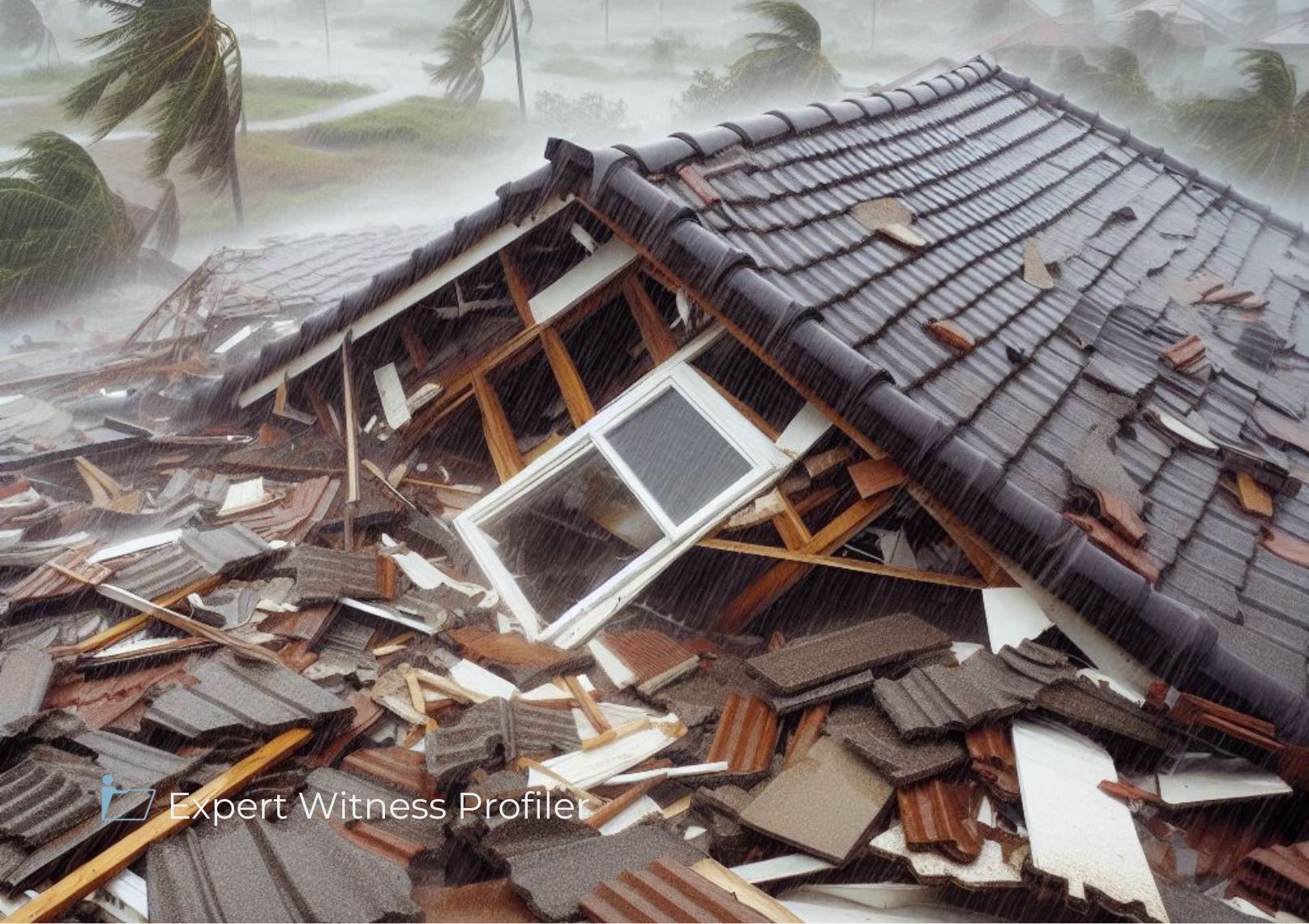
In 2003, the Mindens purchased a new high-end custom home in Henderson, Nevada, where they have resided since then. They maintained an active insurance policy over the property through Allstate. A sudden storm hit the property on or around September 1, 2019, which Allstate determined to be the “time of loss.” The property sustained substantial damage to the roof, exposing the underlying roof membrane or felt.
This dispute stems from Plaintiffs’ deprivation of certain insurance coverage benefits guaranteed to them by Allstate, as Allstate has acted in bad faith and refused to honor the terms of Plaintiffs’ insurance policy. The Mindens’ home suffered hundreds of thousands of dollars in damage, for which Allstate paid the Mindens a mere $2,887.56. After over a year and a half of litigation, Allstate admitted that in its view, it owed the Mindens an additional $29,506.79, about ten times what it initially paid and likely over twenty times less what it actually owes.
Plaintiffs argued that Allstate’s wind and roof damage expert, Timothy Marshall should be excluded from testifying under Daubert because he reached his conclusion that no wind damage occurred to the Mindens’ roof based on an inspection, review of submitted photographs, and weather information, but he did not test the roof tiles in a wind machine and did not perform wind pressure calculations.
Meteorology Expert Witness
Timothy P. Marshall, P.E., M.S., is a Forensic Engineer and a Meteorologist for Haag Engineering Co. in Dallas, Texas. He has been with Haag since 1983, and has inspected tens of thousands of homes and building for damage from hail, wind, and other issues.
Marshall is a member of the American Association of Wind Engineering, American Meteorology Society, American Society of Civil Engineers, International Conference of Building Officials, National Weather Association, and the Southern Building Code Congress International. He earned a Master of Science in Atmospheric Science from Texas Tech University in 1980, and a Master of Science in Civil Engineering from Texas Tech University in 1983.
Marshall is a widely published author, writing and contributing to more than 100 articles, technical papers, and damage surveys.
The Plaintiffs demanded exclusion of Marshall’s testimony due to the inaccuracy of his conclusion about wind damage.
Plaintiff argued that Marshall chose not to do a wind machine test or wind pressure calculations. Marshall explained that he chose not to conduct the wind machine tests or make wind pressure calculations because it was unnecessary to do so as he had already concluded that there was no wind damage. The Court held that his reasoning was based on his inspection of the roof, review of photographs and weather research, and application of his knowledge and experience about wind damage to roofs.
Lastly, the Plaintiffs argued that the exclusion of one wind data point showed that Marshall is biased. The Court held that they failed to provide any authority to explain why the exclusion of one data point made Marshall’s methodology unreliable or showed that he is biased.
Held
The Court denied Plaintiffs’ motions in limine to exclude Allstate’s expert Timothy Marshall.
Key Takeaway:
The key takeaway is that under Daubert, courts scrutinize the reliability of an expert’s methodology and principles. They do this rather than dissecting the accuracy of their specific conclusions.
Criticisms about an expert’s judgment, potential biases, or failure to consider particular information or testing are for the jury to weigh through cross-examination. These are not grounds for excluding the expert’s testimony altogether.
This is an insurance case arising out of a storm occurring on or about April 28, 2021, which allegedly caused damage to the roof of Plaintiff’s hotel located in San Antonio, Texas at 4 Piano Place, 78228. Plaintiff Nehal LLC d/b/a Quality Inn filed a claim to Defendant, Accelerant Specialty Insurance Company (“ASIC”) on or about March 20, 2022, after which the Plaintiff alleged the Defendant underpaid the claim. Nehal LLC then filed this action in state court alleging causes of action for breach of contract, violations of Section 542 of the Texas Insurance Code, unfair insurance practices in violation of Section 541 of the Texas Insurance Code, violations of the Texas Deceptive Trade Practice Act, and breach of the duty of good faith and fair dealing.
Plaintiff designated W. Tom Witherspoon, a licensed engineer in the State of Texas, to testify “regarding the condition of Plaintiff’s roof, the cause and extent of damage to Plaintiff’s roof, the proper method of restoring Plaintiff’s roof to its pre-loss condition, and any other matters within his expertise related to the wind and hail damage to Plaintiff’s roof.”
Witherspoon pointed to evidence of hail impact damage to the roof and recommended that the roof be replaced in his expert report.
So, ASIC filed a motion to exclude Witherspoon from testifying as an expert for Plaintiff on the basis that his report was unreliable and not relevant, and his conclusions were unreliable and not supported by any methodology.
Engineering Expert Witness
W. Tom Witherspoon is a Navy veteran and a licensed professional engineer in the State of Texas. He has been doing forensic analyses of hail damaged roofs for more than 25 years. He is also a certified Structural Repair Specialist. During his career, Witherspoon has done forensic evaluations of various buildings, homes and other structures affected by wind or hail more than 500 times.
Discussion by the Court
ASIC insisted on the inadmissibility of Witherspoon’s opinions due to certain inconsistencies. First, the date Witherspoon marked as the storm date was different from the date Plaintiff alleged as the storm date. Second, Witherspoon failed to explicitly say that the storms he referred to caused the damage at issue. ASIC further contended that Witherspoon’s conclusions were unreliable and not supported by any methodology because the data he relied on was insufficient.
At the hearing, ASIC also further clarified that Plaintiff has admitted it did not replace the roof after obtaining funds to do so from a settlement from a prior insurance claim for roof damage. At the hearing, Plaintiff did not dispute that Plaintiff did not make any repairs to the roof despite receiving funds to do so from a prior claim.
Witherspoon’s testimony is not reliable
Witherspoon’s unreliable methodology and conclusions were objected to by ASIC. They argued that he failed to differentiate between prior damage—since the roof was not replaced or repaired after prior damage for which Plaintiff received a settlement—and the damage Plaintiff alleged occurred due to the 2021 storm. Given this clarification, the Court held that Plaintiff did not meet its burden to show that Witherspoon’s testimony was reliable.
Plaintiff designated Witherspoon as an expert who might testify as to the cause of damage to the Plaintiff’s roof. The Plaintiff previously settled a claim with a reported loss date of April 12, 2016, with another insurer for damage to the property’s roof. The evidence also established that Plaintiff did not replace the roof after it settled that claim.
The Court noted that Witherspoon’s report and affidavit failed to address prior storms and did not attempt to differentiate damage caused by previous storms from that of the 2021 storm. Additionally, Witherspoon had not been deposed, and there is no recorded testimony from him specifically addressing the cause of the roof damage. Plaintiff submitted a sworn affidavit with its response, but the affidavit did not address whether Witherspoon analyzed or attempted to analyze what damage was attributable to prior storms versus the one at issue in this case.
The Court held that there was no proof of Witherspoon incorporating consideration of prior damage, or even that Witherspoon was aware that Plaintiff had received a settlement for a prior storm yet not replaced the roof.
Held
The Court granted Defendant’s motion to strike report and testimony of Engineering Expert Witness W. Tom Witherspoon.
The Court has not arrived on an outcome for this case since the remaining issues involved in this case still await resolution.
Key Takeaways:
ASIC Objected to Witherspoon’s Methodology: ASIC raised objections to the reliability of Witherspoon’s methodology and conclusions regarding the cause of damage to the Plaintiff’s roof. They argued that Witherspoon failed to differentiate between prior damage and damage allegedly caused by the 2021 storm.
Court’s Decision Based on Burden of Proof: The Court determined that Plaintiff failed to meet its burden to demonstrate the reliability of Witherspoon’s testimony. This determination stemmed primarily from Witherspoon’s analysis not accounting for prior damage and its potential impact on the current case.
Plaintiff’s Settlement and Roof Damage History: Plaintiff had settled a previous claim with another insurer for damage to the roof, dated April 12, 2016. Despite this settlement, the roof was not replaced, indicating a history of prior damage.
Witherspoon’s Report Limitations: Witherspoon’s report and affidavit did not address prior storms, and there was no attempt to differentiate damage caused by previous storms versus the 2021 storm. Additionally, Witherspoon had not been deposed, and there was no record of his specific testimony regarding the cause of roof damage.
Lack of Consideration for Prior Damage: The Court found no evidence that Witherspoon considered prior damage, nor was there evidence that he was aware of the Plaintiff’s settlement for a previous storm and the subsequent lack of roof replacement.
Case Details:
Case Caption:
Nehal Llc V. Accelerant Specialty Insurance Company
The case involved a dispute over insurance coverage concerning damages resulting from a roof leak in a residential property. Great Lakes Insurance SE, the Defendant, denied the Plaintiff’s claim, contending that the leak stemmed from rot, wear and tear, and an accumulation of pine needles—causes not covered under the policy. The crux of the matter for the Defendant’s motion for summary judgment was whether the Plaintiff could demonstrate that the leak arose from a storm, a covered cause of loss. The Court ruled in favor of summary judgment, determining that the Plaintiff failed to present sufficient evidence to establish that the loss fell within the policy coverage, thereby supporting the Defendant’s decision to deny the claim.
Apex REI Series, LLC, managed by Rahim Meghani, owned and leased a residential property in Humble, Texas. Great Lakes Insurance SE provided insurance coverage for the property from January 1, 2020, to January 1, 2021, safeguarding against “direct physical loss” unless specifically excluded or limited in the policy.
The insurance policy contained exclusions barring coverage for damages caused, directly or indirectly, by “surface water,” “fungus,” wet or dry rot, and bacteria. Additionally, the policy imposed limitations, specifying that damage to the interior of any building or structure, or personal property within, resulting from rain, snow, sleet, ice, sand, or dust—whether wind-driven or not—was not covered unless the building or structure initially sustained damage to its roof or walls due to a Covered Cause of Loss. In essence, coverage for interior damage resulting from rain, snow, or similar elements required prior damage to the roof or walls caused by a covered incident, through which the rain, snow, sleet, ice sand or dust entered. Put simply, the insurance policy didn’t provide coverage for damage caused by water entering the property through the roof, unless the leak itself resulted from a “Covered Cause of Loss,” specifically a direct physical loss like a windstorm or hailstorm.
In April 2020, tenants informed Meghani about water seeping into the home through the roof, leading to interior damage. Meghani promptly filed a claim with Great Lakes, citing April 6, 2020, as the date of loss. Great Lakes appointed an adjuster who assessed the property without inspecting the roof directly. Upon the adjuster’s findings attributing the interior damage to surface water in the backyard and mold growth—both excluded causes under the policy—Great Lakes rejected the claim.
Around June or July 2020, Meghani requested a second inspection of the property. Interestingly, without a direct request from Meghani, Great Lakes initiated a new claim, dating it June 30, 2020. They then appointed a second adjuster to conduct a reinspection of the property. This subsequent assessment by the adjuster determined that the roof leak hadn’t been a result of a storm and that neither wind nor hail had caused damage to the roof.
In October 2020, Great Lakes appointed a third adjuster to examine the property. This adjuster’s report highlighted findings of “rotted fascia” and “heavy rot on the roof decking.” Additionally, observations noted “heavy granule loss and reduced pliability of the shingles.” The adjuster also remarked that the roof vents seemed to be part of the original construction of the home.
In December 2020, Great Lakes denied the June 30, 2020, claim, explaining that the leak had been caused by rot, wear and tear, and lack of maintenance—all excluded causes of loss under the policy.
Following the denial, Meghani engaged OnPoint Claim Recovery to assess the property damage. OnPoint conducted an inspection and tasked adjuster Ana Nguyen with preparing a loss estimate and report. Nguyen’s assessment attributed the primary cause of the property damage to an “intense wind and hailstorm.”
However, in July 2021, Great Lakes enlisted an engineer to inspect the property. The engineer’s findings diverged, asserting that the roof leak hadn’t stemmed from a windstorm or hailstorm but rather from “pine needles that had accumulated within the roof valley.”
Plaintiff, Apex REI Series, LLC asserted claims for breach of contract, violations of the Texas Insurance Code, § 542.051 et seq., and breach of the duty of good faith and fair dealing against the Defendant, Great Lakes Insurance SE, seeking damages for “the loss of the benefits that should have been paid pursuant to the Policy.”
Great Lakes has moved for summary judgment, and to exclude Ana Nguyen’s expert testimony, report, and estimate.
Insurance Coverage Expert Witness
Ana Nguyen is the Founder and CEO of OnPoint Claim Recovery Services. She is a Licensed Professional Public Adjuster, among other roles, with over 20 years of administrative and managerial experience in the insurance and healthcare sectors. Ana Nguyen has helped victims of flood damage, roof damage and other home damages recovery claims.
Discussion by the Court
According to Texas law, the insured is responsible for demonstrating that a loss falls within the coverage specified in an insurance policy. Once the insurer demonstrates that an exclusion is applicable, the insured must then prove the application of an exception to that exclusion. This was established in the case Fiess v. State Farm Lloyds, 392 F.3d 802, 807 (5th Cir. 2004).
Great Lakes contends that Apex failed to provide evidence that the property sustained damage due to a covered loss within the policy period. They highlighted Meghani’s deposition testimony, noting his lack of recollection regarding specific weather events in April and June 2020, along with Apex’s failure to determine the precise cause of the leak. Great Lakes argued that Meghani’s testimony about a roof leak causing interior damage during the policy period lacked legal sufficiency.
In response, Apex asserted that pinpointing the exact date of loss wasn’t a requirement. They emphasized that every date associated with the claim for roof and property interior damage fell within the policy period. Apex relied on Meghani’s testimony, affirming the prompt filing of the claim following tenant reports and the absence of prior roof or water issues before April 2020. Additionally, they referenced the expert report, estimate, and affidavit from Nguyen to support their position.
Nguyen’s affidavit highlighted that, drawing upon expertise and experience as an adjuster, along with an assessment of Property photos and scope notes from an OnPoint Claim Recovery field adjuster, the evaluation led to a conclusion. Nguyen stated that, considering conversations with Meghani, who possessed knowledge of the Property’s condition before and after the storm, along with the claim’s history, the observed damage detailed in the estimate pointed to being a result of a wind and/or hail storm occurring within the policy period.
Nguyen’s report concluded that the “primary cause” of the property damage was an “intense wind and hailstorm.” This determination was based on findings from a weather report by HailTrace, indicating significant weather conditions with winds reaching 60 mph and hail up to 1.25 inches—conditions capable of causing substantial property damage at the time when the homeowner noticed the damage and leaks. Nguyen also observed that hailstones had created notable dents and punctures on the roof, causing several shingles to be dislodged and exposing the underlying wood. Additionally, there were golf ball-sized indentations on the soft metals, aligning with the reported hail impact.
Rule 702 “charges trial courts to act as ‘gate-keepers,’ making a ‘preliminary assessment of whether the reasoning or methodology underlying the testimony is scientifically valid and of whether that reasoning or methodology properly can be applied to the facts in issue.’”
Great Lakes submitted a motion to exclude Nguyen’s report, estimate, and affidavit based on Federal Rule of Civil Procedure 702. Their argument centered on the assertion that Nguyen’s opinion attributing the damage to a wind or hailstorm during the policy period was considered conclusory. They contended that Nguyen’s conclusion contradicted Meghani’s testimony, leading them to seek the exclusion of Nguyen’s findings and statements from consideration.
The Court determined that Nguyen’s causation opinion lacked specificity and was unduly conclusory. Nguyen’s assertion regarding the damage’s cause rested on her general “skills, knowledge, training, and experience,” without detailing specific observations supporting the conclusion of wind or hail as the cause. Despite referencing a weather report from HailTrace, Nguyen didn’t provide the report’s data or specific dates of relevant wind or hail events. The Court found that that Nguyen’s causation opinion was “connected to existing data only by [her] ipse dixit.”The Court deemed Nguyen’s causation opinions as unsupported and consequently, her report, estimate, and affidavit were excluded from the summary judgment record.
Without Nguyen’s causation opinion, Apex lacked substantial evidence to support its position on the cause of the damage. Meghani’s deposition testimony only indicated that the roof began leaking when reported by tenants in April 2020, falling short of establishing the damage resulted from a covered loss during the policy period. Under the policy, water damage from a roof leak is covered if caused by a “Covered Cause of Loss,” such as a wind or hailstorm. However, all evidence, excluding Nguyen’s inadmissible opinion, indicated that the cause wasn’t covered.
Great Lakes’ adjuster attributed the roof leak to “heavy rot” in the roof decking surrounding the HVAC Vent, also noting “wear and tear,” improper maintenance, and repairs as contributing factors. Furthermore, another adjuster from Great Lakes found no wind or hail damage to the roof. The engineer hired by Great Lakes similarly concluded that neither wind nor hail had caused roof damage, attributing the leak to pine needles accumulating within the roof valley. Apex did not contest that these identified causes were not covered losses under the policy terms. Therefore, considering the evidence, it supported the conclusion that the identified causes were not within the policy coverage.
The Court noted that Apex failed to raise a factual dispute material to determining whether the property was damaged by a covered loss during the policy period.
Great Lakes contends that Apex’s extra-contractual claims beyond breach of contract should be dismissed since Apex’s breach of contract claim itself lacks merit, and Apex hasn’t presented any distinct injury apart from the loss of policy benefits. Apex acknowledges its sole injury as the loss of policy benefits but argues that its extra-contractual claims persist based on the assertion that there’s sufficient evidence linking the damages to a storm within the policy period.
However, according to legal standards, an Insurance Plaintiff can pursue extra-contractual claims distinct from the breach of the insurance policy only if the alleged statutory violations led to an injury separate from the right to recover policy benefits. As clarified, Apex’s breach of contract claim doesn’t stand legally, and Apex hasn’t put forward any separate injury beyond the denial of policy benefits. Consequently, the Court deems summary judgment appropriate concerning Apex’s extra-contractual claims.
Held
The Court granted Great Lakes’ motion for summary judgment as well as motion to exclude Ana Nguyen’s expert testimony, report, and estimate.
The Court has not arrived on an outcome for this case since the remaining issues involved in this case still await resolution.
Key Takeaways:
Expert testimony in insurance claims plays a critical role in establishing causation and substantiating claims within the policy coverage.
In this case, Nguyen’s expertise as an adjuster was essential in linking the property damage to a wind or hailstorm during the policy period. However, the Court excluded Nguyen’s opinions, finding them lacking in specificity and overly conclusory. Without Nguyen’s testimony, Apex struggled to provide substantial evidence supporting their claim of a covered loss.
The exclusion of Nguyen’s opinions left Apex reliant solely on Meghani’s deposition testimony, which fell short in establishing the damage as a covered loss within the policy period. While Apex contested the exclusion, arguing that pinpointing the exact date of loss wasn’t obligatory and emphasizing that reported dates fell within the policy period, this was insufficient without expert testimony to substantiate the claim.
The insurer, Great Lakes, reinforced their stance by presenting adjusters’ and an engineer’s assessments that attributed the roof leak to causes not covered under the policy. These findings, unchallenged by Apex, further undermined the assertion of a covered loss during the policy period.
Ultimately, the exclusion of crucial expert testimony weakened Apex’s position in demonstrating a covered loss, leading the court to rule in favor of Great Lakes on both the breach of contract and extra-contractual claims due to the absence of sufficient evidence and distinct injury beyond the denial of policy benefits.