Category: Expert Witness Laws and Rules

  • Hiring a Neutral Medical Expert Witness is Not Necessary When Complex Questions Are Not Raised

    Hiring a Neutral Medical Expert Witness is Not Necessary When Complex Questions Are Not Raised

    Plaintiff being a state prisoner proceeding pro se with a civil rights complaint sought the appointment of an expert witness in the field of psychiatry and mental health treatment and care and a neutral expert familiar with policies and procedures of the California Department of Corrections and Rehabilitation.

    Plaintiff alleged that while he was housed at Mule Creek State Prison (“MCSP”), defendants A. Chandra, K. Mohr, J. Quiring, J. Charon, and J. Weiss: (a) retaliated against Plaintiff in violation of the First Amendment by, inter alia, verbally threatening plaintiff, and issuing a rules violation report (“RVR”) asserting false allegations in retaliation for Plaintiff filing a grievance against defendant A. Chandra; (b) violated Plaintiff’s Eighth Amendment rights by, inter alia, housing him in segregated housing and detention, resulting in a long term deprivation of outdoor exercise, despite Plaintiff’s chronic depressive disorder and serious medical and mental health needs; and (c) conspired to violate plaintiff’s constitutional rights. In addition, Plaintiff alleged that Defendants Quiring and Weiss violated Plaintiff’s due process rights in connection with the hearing on the rules violation report asserting false allegations.

    Discussion by the Court

    Psychiatric and Mental Health Expert

    In his first motion, Plaintiff sought the appointment of an expert witness in the field of psychiatry and mental health treatment and care.

    Plaintiff argued that this case involved complex issues of fact, and an expert is required to assist the Court in evaluating Plaintiff’s medically diagnosed chronic depressive disorder and serious medical needs and determining whether subjecting him to C-Status segregated housing and detention and the lengthy deprivation of outdoor exercise “severely aggravated [Plaintiff’s] condition or caused him serious harm and injury.” 

    Prison Electronic Records Expert

    Plaintiff sought the appointment of a neutral expert familiar with policies and procedures of the California Department of Corrections and Rehabilitation (“CDCR”) regarding the maintenance and retention of prison records who can audit all existing records kept and maintained within the MCSP Electronic Records Management System (“ERMS”) computer relevant to RVR #006953258 and testify as to “the actual date said RVR was generated with information [inputted] by Defendant A. Chandra reporting the CDCR disciplinary charges against [Plaintiff].”

    Analysis

    First, to the extent Plaintiff seeks appointment of an expert witness for his benefit, or to prove his case, the Court has no authority to grant such motion. Rule 706(a) of the Federal Rules of Evidence permits the Court to appoint only neutral expert witnesses. An expert appointed pursuant to Rule 706 does not serve as an advocate for either party and each party retains the ability to call its own experts. 

    Second, Courts do not invoke Rule 706 simply to “appoint an expert on behalf of an indigent civil party.”

    Third, the Court held that the Plaintiff’s motions for a neutral expert witness are premature. A neutral expert witness may be necessary where there is “some evidence, admissible or otherwise, that demonstrates a serious dispute that could be resolved or understood through expert testimony.”  At the time Plaintiff filed his motions, the parties were still engaged in discovery, and Plaintiff’s motion to compel discovery responses is pending. There are no pending motions on which the Court may require special assistance, such as to resolve a motion for summary judgment.

    Finally, at least at this juncture, the Court held that Plaintiff’s claims of deliberate indifference to serious medical and mental health needs, retaliation and conspiracy are not so complex as to require an expert witness. 

    Held

    The Court found that at this stage of the proceedings an expert witness is not necessary and would not be significantly useful to the factfinder to comprehend a material issue in this case.

    Key Takeaway:

    Plaintiff contended that a neutral medical expert is required to evaluate whether the long term deprivation of outdoor exercise severely aggravated Plaintiff’s medical or mental health needs, causing him injury. However, Plaintiff’s claims do not raise “probing, complex questions” or require consideration of complex scientific evidence.

    Case Details:

    Case Caption: Garcia V. Chandra Et Al
    Docket Number: 2:22cv1221
    Court Name: United States District Court, California Eastern
    Order Date: November 13, 2024
  • James E. Lewis, Transportation Safety Expert Witness Stands Vindicated; Judge Confirms Exclusion was Procedural and Unfortunate

    James E. Lewis, Transportation Safety Expert Witness Stands Vindicated; Judge Confirms Exclusion was Procedural and Unfortunate

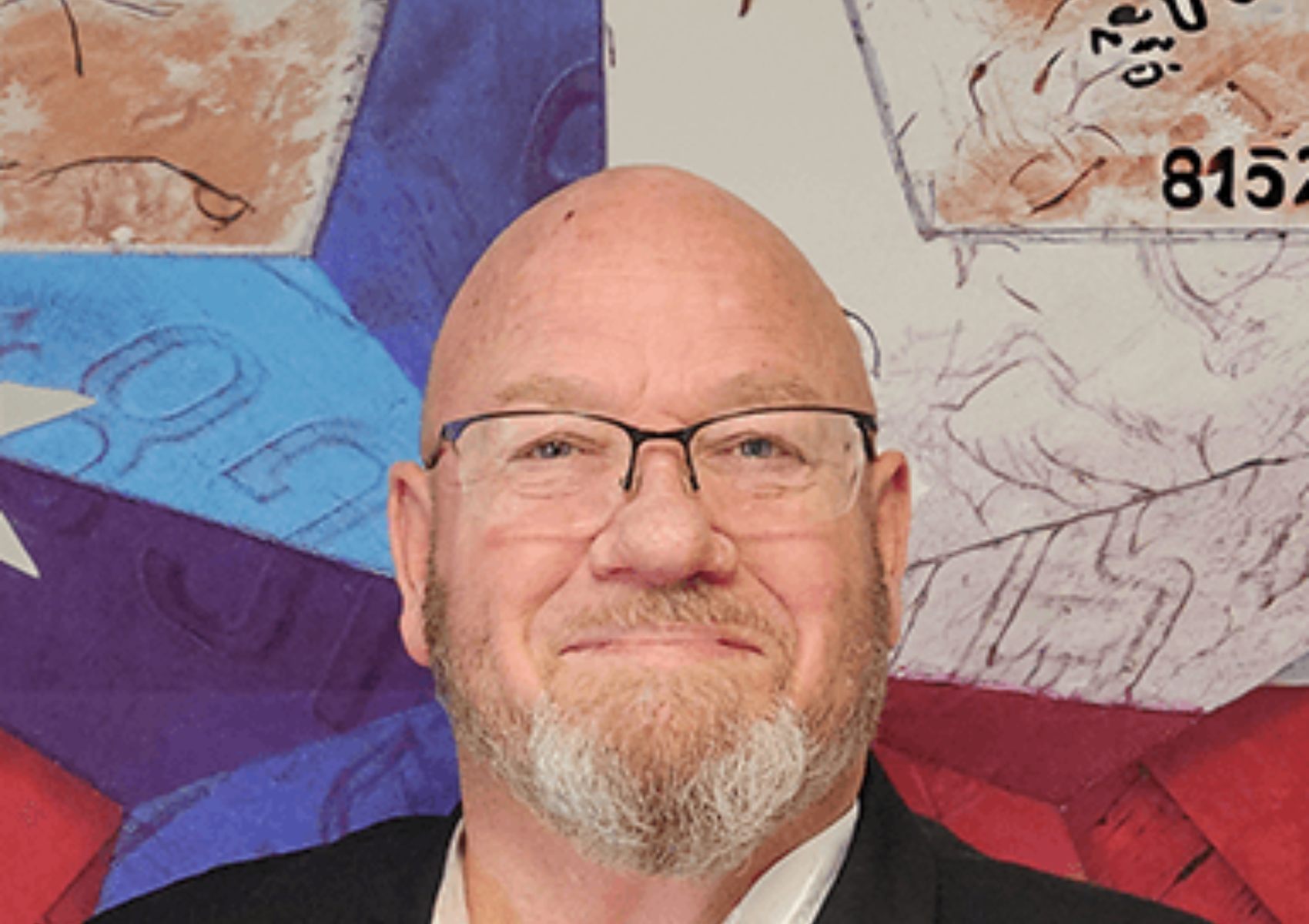
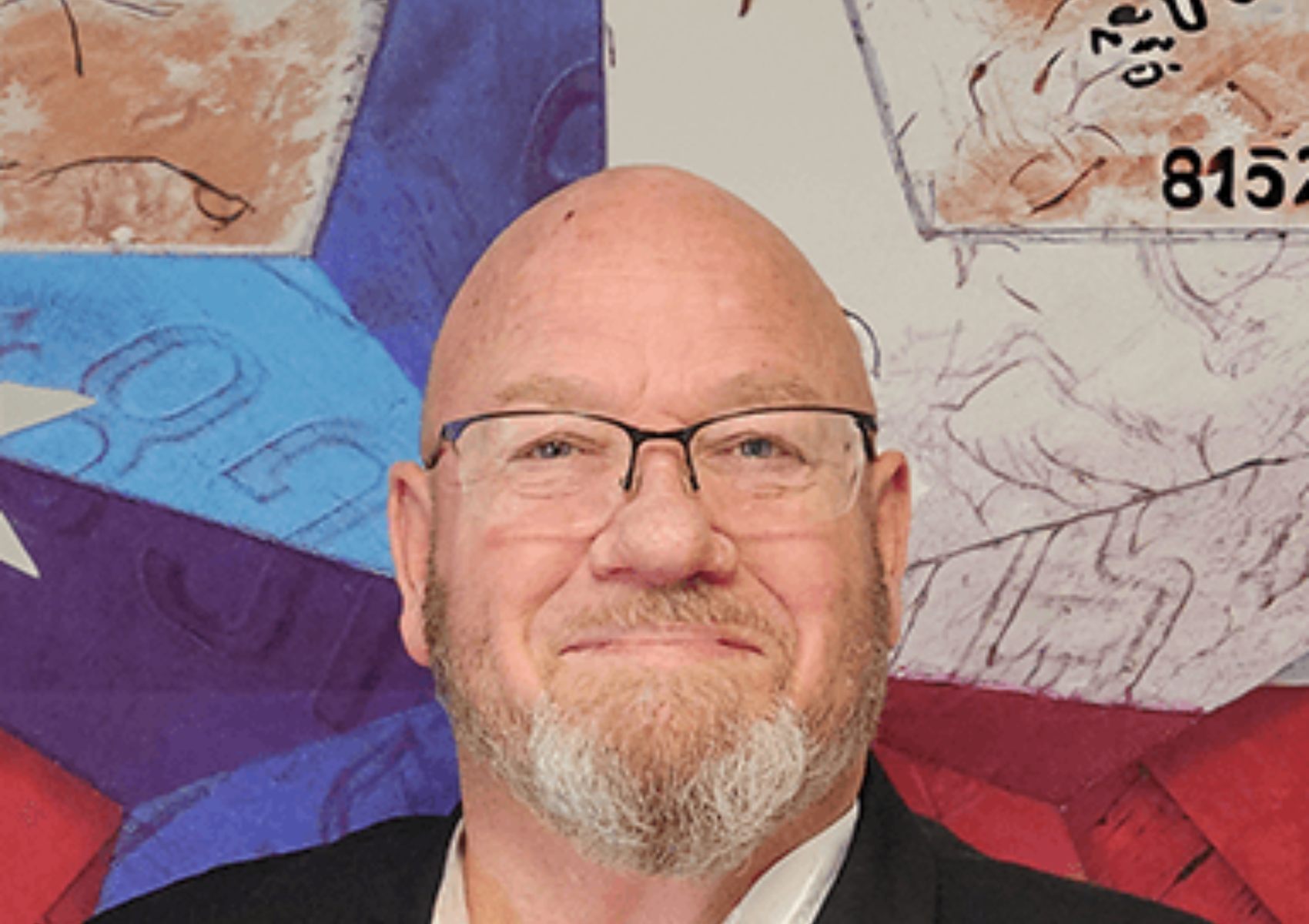
    James E. Lewis, a seasoned transportation safety expert, faced an unfortunate twist in his professional journey. Despite his extensive experience and deep insight into the trucking industry, he found himself disqualified from providing testimony in a significant personal injury case—not due to his lack of expertise, but because of an unnoticed procedural misstep. In the case of Rodney Bibbs v. Molson Coors, Lewis had been retained to testify on the safety of load securement, a critical factor in the accident. However, after the Plaintiff’s attorney withdrew, a motion was filed to strike Lewis’ testimony, a motion he was unaware of. 

    This article explores the misfortune that led to his disqualification and the steps Lewis took to clear his name. More importantly, it serves as a cautionary tale for expert witnesses on the importance of tracking their cases. Had it not been for a blog post on this very website, Lewis might never have known about the exclusion.  

    Background of the Case 

    The case that led to James E. Lewis’ disqualification stemmed from a tragic tractor-trailer accident involving Rodney Bibbs, an independent contractor truck driver. Bibbs had been hired to transport a pre-loaded trailer of beer from Molson Coors’ Shenandoah Brewery in Virginia to a distributor in Ohio. During his journey, while driving through West Virginia, the load allegedly shifted, causing Bibbs to lose control of the truck, leading to a serious accident. Bibbs claimed that the load had been improperly packed and secured by Molson Coors, resulting in his injuries and significant damage to the truck. 

    In the aftermath, Bibbs filed a lawsuit against Molson Coors, alleging negligence in the packing and loading of the beer pallets. Central to his case was the assertion that the company had failed to properly secure the load, which led to the accident. With load securement being a key factor, the Plaintiff needed expert testimony to substantiate these claims. That’s where James E. Lewis, a transportation safety expert with experience in Department of Transportation (DOT) compliance, was brought in to serve as the Plaintiff’s sole liability expert. 

    Initially, Lewis was disclosed as an expert under Federal Rules of Civil Procedure 26(a)(2), allowing Bibbs to put forth expert testimony about the alleged improper load securement. However, procedural delays in the case, coupled with the withdrawal of Bibbs’ legal counsel, resulted in Lewis being unaware of Molson Coors’ motion to exclude his testimony. Despite his extensive experience and background in transportation safety, Lewis’ testimony was challenged on the grounds that his qualifications and methodology did not align with the specific issue of load packing at a brewery. Unopposed due to the procedural lapse, Molson Coors successfully argued for the exclusion of Lewis’ testimony. 

    The Disqualification: A Procedural Setback 

    James E. Lewis’ disqualification from the Bibbs v. Molson Coors case was not due to a lack of expertise, but rather the result of unfortunate procedural circumstances. After the Plaintiff’s attorney withdrew from the case, a motion was filed by Molson Coors to exclude Lewis’ testimony. Due to the absence of opposition—because the attorney had left the case and the pro se Plaintiff did not respond to the motion, the Court had little choice but to strike his testimony.  

    Lewis concluded that—based on his industry experience—Defendant’s workers poorly wrapped the pallets of beer at issue, negligently loaded Plaintiff’s trailer, and therefore “increaseed the probability and magnitude of the potential harm to the victim of the crash.”

    Although Lewis had significant experience in transportation safety and held a master’s degree in education, Molson Coors argued that his subjective industry experience could not be the sole basis for his conclusion.

    The Court subsequently granted summary judgment in favor of Molson Coors, dismissing the case with prejudice. 

    Lewis discovered his exclusion not through the Court or the attorney directly, but from another opposing counsel who asked him about it after reading our blog.  Our blog post detailed the Court’s decision to strike his testimony and highlighted the reasons behind it. Realizing what had happened, Lewis was able to spring into action.  

    The Motion for Reconsideration: A Step Toward Vindication 

    James E. Lewis filed a motion for reconsideration, seeking to correct the Court’s prior ruling. This was his chance to clarify the situation and ensure that the Court recognized his expertise, despite the unfortunate circumstances surrounding the motion to strike. 

    In his motion, Lewis argued that his testimony should not have been excluded, particularly because the disqualification had nothing to do with the merits of his qualifications. Instead, it was the result of a procedural misstep. 

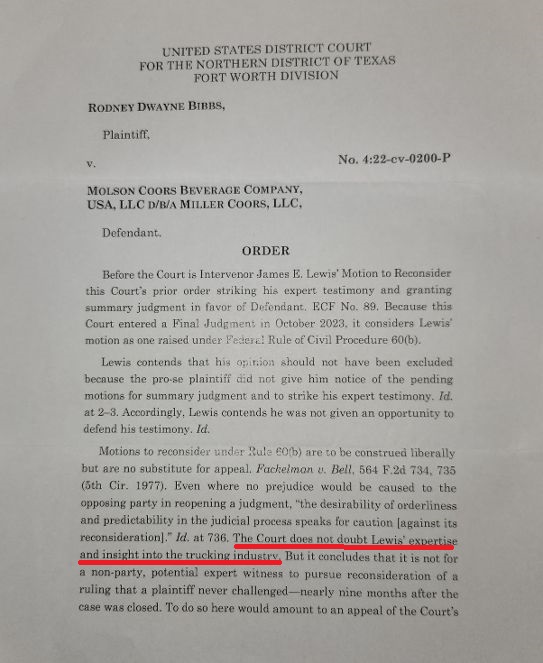
    The Court, in its response, acknowledged Lewis’ expertise and insight into the trucking industry. Judge Pittman specifically stated that the Court did not doubt Lewis’ qualifications. This was an important moment of vindication for Lewis, as it confirmed that his exclusion was not due to any shortcomings in his professional abilities. 

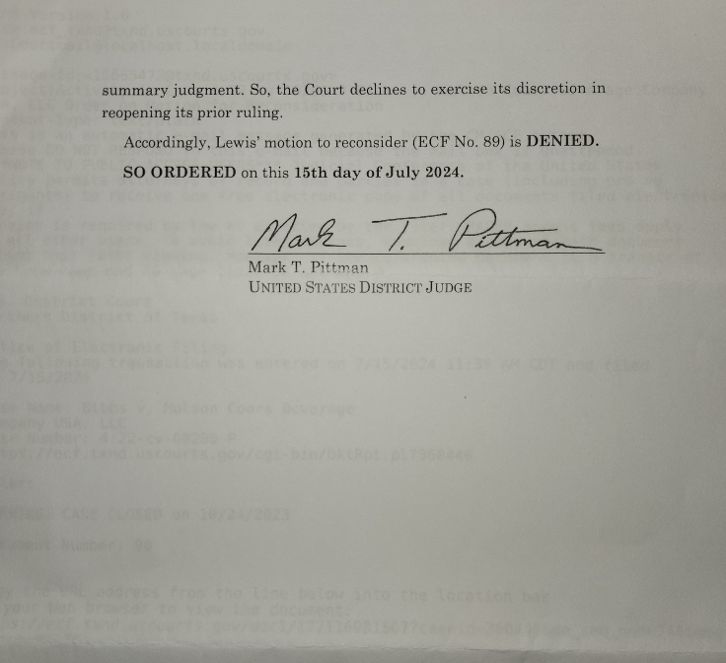
    However, the judge ultimately denied the motion to reconsider, noting that nearly nine months had passed since the case was closed. Despite the Court’s recognition of Lewis’ expertise, the procedural rules did not allow for the case to be reopened. Nevertheless, the written acknowledgment from the Court provided a crucial document that cleared Lewis’ name, proving that the exclusion was not a reflection of his professional capabilities. 

    While Lewis was unable to reverse the ruling, his effort ensured that his reputation remained intact, and the Court’s clarification helped to restore his professional standing. 

    Lessons for Expert Witnesses: Why Tracking Your Cases Matters 

    James E. Lewis’ experience serves as a cautionary tale for expert witnesses everywhere. His disqualification didn’t come from a lack of knowledge or expertise, but from a procedural error that could have been avoided if he had been aware of the motion in time. This incident highlights the critical importance of tracking the cases you’re involved in, even after you’ve submitted your expert report or given your testimony. 

    Many experts think their role ends after they provide testimony or submit their report, but cases are living processes. Motions are filed, decisions are made, and developments happen, sometimes months after the expert has been retained. Keeping a close eye on these developments is vital to protecting your reputation and ensuring your involvement doesn’t get lost in the shuffle. 

    So, what can experts do to stay on top of their cases? Regular communication with the legal team is a start, but it’s also important to set up alerts or follow case-monitoring tools. And of course, keeping an eye on industry blogs like ours can provide key updates that you might not get elsewhere. Staying informed ensures that you remain an active participant in your cases, even when things seem quiet. 

  • Ex parte communications between an attorney and an opposing party’s expert witness is not prohibited under Connecticut law

    Ex parte communications between an attorney and an opposing party’s expert witness is not prohibited under Connecticut law

    Epright sought to recover underinsured motorist benefits from Liberty Mutual in connection with a motor vehicle collision. Epright allegedly sustained multiple injuries, including an injury to her left shoulder. During her deposition, Epright testified that she had experienced shoulder pain since the date of the accident.

    Liberty Mutual retained an orthopedic surgeon, James Depuy, to provide testimony regarding damages and causation. During the deposition, Depuy stated that he had reviewed all of Epright’s medical records and that they contained no indication that Epright complained of shoulder pain until well after the accident. Depuy’s opinion was that the medical treatment Epright received with respect to her left shoulder was not related to the motor vehicle accident.

    Kevin Brignole, an attorney working for the firm representing the Plaintiffs, asked Depuy whether it would change his opinion if Depuy learned that Epright in fact had been complaining of shoulder pain since the date of the accident, to which Depuy responded that such information might change his opinion.

    Subsequently, without informing counsel for Liberty Mutual, Timothy Brignole, another attorney at the firm, instructed his paralegal, Sandra H. Bryan, to contact Depuy’s office to schedule an appointment for Depuy to perform a medical examination on Epright for a fee. That same day, Kevin Brignole filed a detailed expert disclosure with the trial court, indicating that Epright intended to call Depuy as an expert witness.

    Thereafter, Depuy conducted the medical examination of Epright, and opined that Epright’s shoulder injury was causally related to the accident.

    This case requires us to consider whether, under Practice Book § 13-4, an attorney may be sanctioned for engaging in ex parte communications with an expert witness who has been retained and disclosed by the adverse party for the purpose of providing testimony in litigation.

    Discussion by the Court

    The trial court imposed monetary sanctions after finding that attorneys with the firm engaged in impermissible ex parte communications with Depuy. The trial court determined that the firm’s communication with Depuy was a clear violation of the rules of expert discovery set forth in § 13-4. The Appellate Court reversed the order of the trial court, concluding that § 13-4 does not clearly prohibit ex parte communication between an attorney and an opposing party’s disclosed expert witness.

    The firm representing the Plaintiffs argued that neither Connecticut case law nor the rules of practice limit or prohibit a Plaintiff from contacting and thereafter disclosing the Defendant’s disclosed expert witness as the Plaintiff’s own expert.

    In 2008, the judges of the Superior Court amended Practice Book § 13-4, which amendment became effective in 2009. Prior to that time, the rule expressly limited the procedure for communication with an opposing party’s expert to interrogatories to an opposing party and/or formally noticed depositions of the expert.

    In 2009, the rule was amended, and the language that limited the methods of communication with an opposing party’s expert was removed. The current rule did not include the language that existed in the rule before the 2009 amendments, which expressly confined communication with an opposing party’s disclosed expert to interrogatories served on the opposing party or depositions.

    To conclude, the Connecticut Supreme Court affirmed the judgment of the Appellate Court.

    Held

    The Connecticut Supreme Court agreed with the Appellate Court that the trial court improperly imposed sanctions on the firm for conducting ex parte communications with an expert witness previously disclosed by Liberty Mutual.

    Key Takeaway:

    This case requires us to consider whether, under Practice Book § 13-4, an attorney may be sanctioned for engaging in ex parte communications with an expert witness who has been retained and disclosed by the adverse party for the purpose of providing testimony in litigation. The trial court determined that the firm’s communication with Depuy was a clear violation of the rules of expert discovery set forth in § 13-4. The Appellate Court reversed the order of the trial court, concluding that § 13-4 does not clearly prohibit ex parte communications between an attorney and an opposing party’s disclosed expert witness. The Connecticut Supreme Court agreed and, accordingly, affirmed the judgment of the Appellate Court.

    Case Details:

    Case Caption: Epright v. Liberty Mutual Insurance Company
    Docket Number: SC 20751
    Court: Connecticut Supreme Court
    Order Date: July 11, 2024
  • Expert Testimony Admitted Because it Does Not Consist of Opinions on the Defendant’s Mental State

    Expert Testimony Admitted Because it Does Not Consist of Opinions on the Defendant’s Mental State

    Delilah Diaz was stopped at the U.S.-Mexico border with over 54 pounds of methamphetamine hidden in her vehicle. She was charged with importing methamphetamine and she claimed not to know that the drugs were hidden in the car. To rebut Diaz’s claim, the Government planned to call Homeland Security Investigations Special Agent Andrew Flood as an expert witness to testify that drug traffickers generally do not entrust large quantities of drugs to people who are unaware they are transporting them.

    Rule 704(b) provides that “in a criminal case, an expert witness must not state an opinion about whether the Defendant did or did not have a mental state or condition that constitutes an element of the crime charged or of a defense.”

    Discussion by the Court

    Federal Rule of Evidence 704(a) sets out a general rule that “an opinion is not objectionable just because it embraces an ultimate issue.”

    Rule 704(b) in criminal trials aims to prevent expert witnesses from directly stating their opinions about a Defendant’s mental state. This rule is crucial because it ensures that the jury independently evaluates and decides on the Defendant’s mental state, a central issue in the trial. By maintaining this separation, the rule upholds the jury’s primary responsibility to assess evidence and make determinations regarding the Defendant’s state of mind.

    The Court held that Agent Flood’s testimony did not violate Rule 704(b) because Agent Flood did not express an opinion about whether Diaz herself knowingly transported methamphetamine. Instead, he testified about the knowledge of most drug couriers. That opinion does not necessarily describe Diaz’s mental state.

    Diaz argued that Agent Flood functionally stated an opinion about whether she knowingly transported drugs when he opined that most couriers know that they are transporting drugs. The Court stated that an opinion about most couriers is not an opinion about all couriers.

    Agent Flood asserted that Diaz was part of a group of persons that may or may not have a particular mental state. The ultimate issue of Diaz’s mental state was thus left to the jury’s judgment.

    The Court agreed with Diaz that Agent Flood could not testify in absolute terms about whether all couriers knowingly transported drugs. But, insofar as Agent Flood planned to testify only that most couriers know they are transporting drugs, the Court concluded that his testimony was admissible.

    Held

    Agent Flood’s opinion that “most people” in a group have a particular mental state is not an opinion about “the Defendant” and thus did not violate Rule 704(b). Because Agent Flood did not opine about whether Diaz knowingly transported methamphetamine, the Court concluded that the testimony did not violate Rule 704(b).

    Key Takeaway:

    Rule 704(b) applies only to opinions about the Defendant. Because Agent Flood did not express an opinion about whether Diaz herself knowingly transported methamphetamine, his testimony did not violate Rule 704(b). Agent Flood instead testified about the knowledge of most drug couriers.

    Case Details:

    Case Caption: Diaz V. United States
    Docket Number: 23-14
    Court: Supreme Court of the United States
    Order Date: June 20, 2024
  • Eleventh Circuit clarifies the difference between the two types of expert witness disclosures under Rule 26

    Eleventh Circuit clarifies the difference between the two types of expert witness disclosures under Rule 26

    Holds why an expert was hired originally, and not the subject matter of their testimony determines which disclosure rule to apply.

    Federal Rule of Civil Procedure 26(a)(2) outlines two types of pretrial disclosures for expert witnesses— Federal Rule of Civil Procedure 26(a)(2)(B) and 26(a)(2)(C).

    Rule 26(a)(2)(B) applies to retained experts or those employed to regularly provide expert testimony and requires a written report prepared and signed by the expert witness containing 6 components: complete statement of opinions and basis; facts/data considered; exhibits to be used; qualifications and publications; list of other cases testified in past 4 years; and statement of compensation.

    Rule 26(a)(2)(C) applies to non-retained experts who do not regularly testify, such as treating physicians and requires a disclosure instead of a report which can be submitted by an attorney instead of the expert containing summary of opinions the expert will offer and summary of facts/qualifications underlying them. It is less detailed than a written report. 

    The Eleventh Circuit clarified the difference between two types of expert witness disclosures under Rule 26 in this personal injury and torts case.

    Cajule Cedant was involved in an accident with a U.S. Postal Service truck and sued the federal government under the Federal Tort Claims Act, alleging he suffered injuries in the crash and incurred medical expenses. The government disputed the accident caused Cedant’s injuries. A key issue in pretrial proceedings was causation – whether Cedant’s medical problems were caused by the accident, as the government claimed his injuries predated the crash.

    To meet his burden on causation, Cedant planned to offer expert testimony from several doctors who treated him after the accident. The court’s initial scheduling order required “treating physicians offering opinions beyond those arising from treatment” to file a detailed expert report under Federal Rule of Civil Procedure 26(a)(2)(B). Cedant submitted reports he called “Rule 26(a)(2)(B) Disclosures” for his experts. However, he claimed they were not truly “retained experts” needing to file such reports. The government argued the reports did not comply with Rule 26(a)(2)(B). Cedant then tried to get an extension of time for his experts to complete their reports. After various disputes over the reports, the court eventually excluded Cedant’s experts for noncompliance with Rule 26(a)(2)(B) and granted summary judgment to the government. 

    On appeal, the Eleventh Circuit held that the district court was wrong to categorically require Cedant’s treating physicians to submit Rule 26(a)(2)(B) reports just because they were testifying on causation. The Rule focuses on why an expert was hired, not the content of the testimony. Cedant’s doctors were initially hired to treat him, rather than to testify. Therefore, he only needed to file the less extensive Rule 26(a)(2)(C) disclosures for them. 

    However, the court said Rule 26(a)(2) also allows parties and courts discretion to modify the default disclosure rules when appropriate for a case. Here, the district court misunderstood that requiring Cedant’s witnesses to submit detailed reports was discretionary rather than mandatory. Because the court applied an incorrect legal standard in excluding the experts, the appeals court vacated the summary judgment order. But it affirmed denial of Cedant’s own summary judgment motion, since causation evidence was still required. 

    On remand, the district court can evaluate whether Cedant’s filings met Rule 26(a)(2)(C), or it can issue a new order invoking its discretion to require more detailed Rule 26(a)(2)(B) reports on causation. Overall, the appeals court clarified that the retained versus non-retained distinction in Rule 26(a)(2) depends on the original purpose behind hiring an expert. The district court has discretion to tailor requirements beyond the defaults but did not recognize its discretion here. By vacating summary judgment, the appeals court gave Cedant another chance to prove causation, either through Rule 26(a)(2)(C) disclosures or modified expert reports if the district court requires them. 

    Key Takeaways: 

    1. The default disclosure rules focus on why an expert was hired originally, not the subject matter of their testimony. Experts retained specifically for litigation must file detailed 26(a)(2)(B) reports. But experts like treating physicians who are involved first for other reasons only need to provide 26(a)(2)(C) disclosures. 
    1. Just because a non-retained expert like a treating doctor testifies on a particular topic, like causation, does not automatically require a 26(a)(2)(B) report. The district court wrongly imposed this categorical rule. 
    1. However, courts have discretion to order more detailed disclosures beyond the defaults if appropriate for a case. Here, the district court did not recognize its power to request causation experts file reports was discretionary. 
    1. On remand, the district court can evaluate whether Cedant’s filings met 26(a)(2)(C) requirements as written. Or it can issue a new order invoking discretion to require 26(a)(2)(B) reports on causation. 
    1. But imposing more stringent requirements than the defaults must be an exercise of reasoned discretion, not a perceived mandate from the Rules. 
    1. Overall, parties must understand what relationship triggers default disclosure duties for experts under 26(a)(2). But courts may tailor requirements beyond the defaults through orders invoking their case-specific discretion.