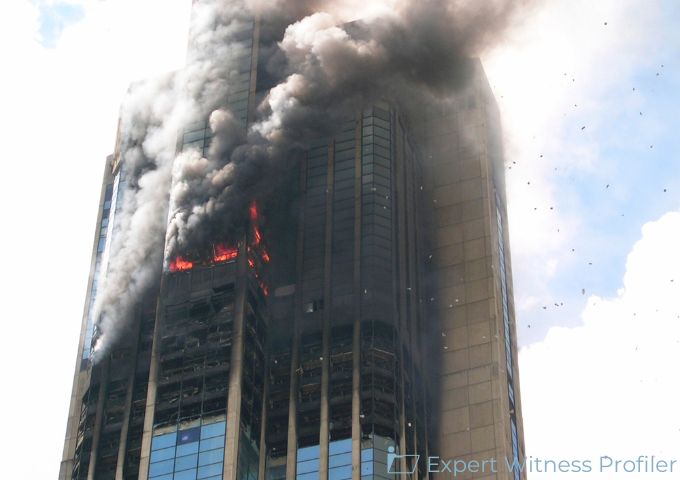
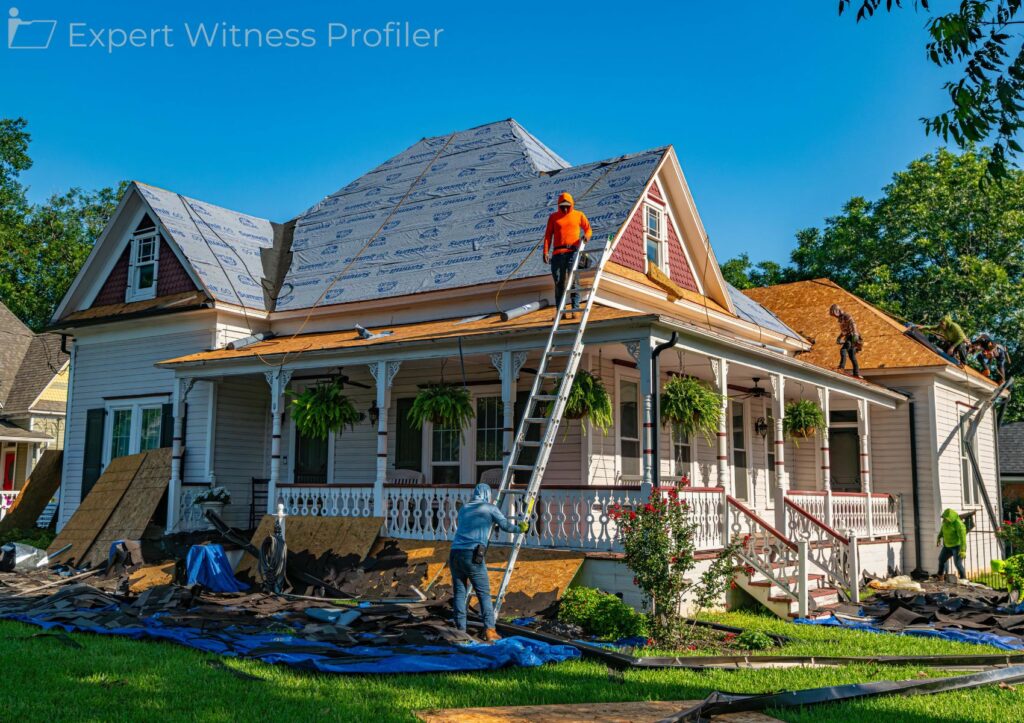
This first-party property damage case arises from a dispute to insurance benefits related to a July 15, 2019 hailstorm. AMCO issued a policy of insurance (the “Policy”) to PTT Properties, Inc. for property located at 411 Sable Boulevard, 525 Sable Boulevard, 501 Sable Boulevard, and 14410 E. 6th Avenue, Aurora, Colorado 80111 (collectively, “the Property”). Plaintiff inspected the Property and advised it sustained hail damage. On January 17, 2020, AMCO advised PTT that the estimate for each location was below the wind/hail deductible, so no payment was owed.
PTT assigned its claim with AMCO to Plaintiff. Following additional review, AMCO amended its repair estimate and issued payment of $421,980.86 for the Actual Cash Value associated with 411 Sable and $154,992.60 for the ACV associated with 501 Sable after applying the respective deductibles. On May 27, 2020, Plaintiff’s counsel provided PTT’s invocation of appraisal. The parties proceeded to appraisal which became binding on September 14, 2021. The award was for $40,113.83 in Replacement Cost Value and ACV without consideration of any deductible or prior payments. Plaintiff asserted claims for breach of contract, and declaratory judgment vacating the appraisal.
Plaintiff disclosed David Herring a building consultant, estimator, umpire, appraiser, and self-described expert in the field of first-party property damage claims.
Defendant filed a motion to strike Herring as an expert because he is generally unqualified to opine on the matters addressed in his report, because he is “not a lawyer and has never adjusted insurance claims before.”
Insurance Expert Witness
David Herring has decades of experience working on insurance claims, including cost estimation, appraisal, umpiring, and testifying as an expert witness.
AMCO argued that several of the opinions expressed in Herring’s report involve improper legal conclusions as well as opinions that improperly invade the province of the jury.
While Herring may offer testimony articulating what he believes to be the relevant industry standards, and explaining—factually—how Defendant’s conduct did or did not comport with those standards, the Court excluded Herring’s opinions that Defendant’s conduct was unreasonable or insufficient as a matter of law, or was in violation of any statute. In other words, he is unqualified to offer such opinions as a matter of legal expertise and such ultimate conclusions would not be helpful to the jury and would improperly intrude on its fact-finding function.
B. Reliability
Next, Defendant sought to exclude the “entirety of Herrings’ opinions” “because they are not based on sufficient facts and are not the product of reliable principles and methods” and are “the type of ipse dixit that courts refuse to accept.”
However, the record reflects Herring has experience as a claims adjuster, providing estimating services for property damage, and investigating insurance claims. Herring is qualified to opine on hail damage to roof systems and the cost to repair such damage. He also appeared qualified to provide opinions regarding the cause of damage and the diagnostic methods used in the industry to detect water damage.
Defendant also argued that Herring’s report is not reliable because he opined that the engineering report from January 20, 2020, did not address the ongoing leaks and water intrusion issues when the Defendant argues it did. The Defendant is free to point out inconsistencies in Herring’s report or that his opinions should be afforded less weight than the expert opinions proffered by its expert. It will be up to the jury to determine which expert to believe.
Held
The Court granted in part and denied in part Defendant’s motion to exclude the testimony of Plaintiff’s expert, David Herring.
Key Takeaway
An insurance industry expert’s methodology has been deemed reliable when the expert “explains what he knew of insurance industry standards and practices based on his experience, explains the facts and evidence he reviewed in the case,” and opines on how the insurer’s handling of the Plaintiff’s claim “fell short of the relevant industry standards or differed from handling of similar claims in his experience.”
On May 19, 2023, Plaintiff John Gianacopoulos filed this action against Defendants Acuity, a mutual insurance company (“Acuity”), and Joyce Jackman & Bell, LLC (“JJB”), concerning a fire that occurred on September 12, 2022, at 1124 Saint Ann Street in Scranton, Pennsylvania (the “Scranton Property”).
According to Plaintiff’s expert witness, James Stevenson, JJB breached its professional duty of care by failing to procure the correct policy for John Gianacopoulos and by failing to explain the differences in coverage between a homeowners’ insurance policy and a dwelling fire insurance policy.
JJB has moved to exclude Stevenson’s expert report and testimony, arguing that they are inadmissible because it lacked the requisite reliability and application to the specific facts of this case in violation of Rule 702.
Insurance Expert Witness
James W. Stevenson is an underwriter, consultant, and broker with over thirty years of experience in the insurance field.
Stevenson’s opinion is supported by his “education, training, experience and expertise in the property and liability insurance industry over the past [thirty-seven] years,” and, moreover, his opinion concerned facts pertinent to this case. He stated in his report that JJB should have been aware of the Plaintiff’s changed residence and that “once [JJB] was made aware that John Gianacopoulos had purchased a new home and was making it his residence, [JJB] was or should have been aware that the [Scranton Property] was no longer [his] residence.” As a result, the Court found that Stevenson has satisfied both contested prongs of Rule 702.
He further opined that JJB breached its duty by failing to procure the correct policy for the Plaintiff’s Scranton Property—a dwelling fire insurance policy—that would have provided property coverage for the fire loss at the property. Stevenson also explained in his deposition that “it’s up to the agent, being the trained expert they are in the insurance industry, to recommend or explain the coverages available and the policies available to the insured/prospect,” and that JJB had an obligation to advise the Plaintiff in this action because “[y]ou can’t have two homeowners’ policies with primary residences.”
Held
The Court denied JJB’s motion to exclude the testimony of James Stevenson.
Key Takeaway
The expert’s testimony must be relevant to the purpose of the case and must assist the trier of fact. Stevenson’s opinion, as expressed in his report and at his deposition, created a genuine dispute of material fact as to the duty that JJB owed the Plaintiff, which must be determined by the factfinder.
Church Mutual renewed an insurance policy issued to Chabad of New Mexico on June 2, 2022, which covered certain real property owned by Chabad in Rio Rancho, New Mexico. The policy includes a vacancy condition providing that if a building has been vacant for more than 60 consecutive days before a loss, coverage is limited. The policy eliminates coverage entirely for losses caused by vandalism, even though vandalism would otherwise be a covered cause of loss, and any otherwise covered loss is subject to a 15% reduction. A building is considered vacant when it lacks sufficient personal property to conduct customary operations.
On December 28, 2022, there was an act of arson committed on a building covered by the Policy. On March 5, 2023, there was a second act of arson committed on the same building. Chabad submitted claims under the Policy to Church Mutual for both fires.
On January 29, 2024, Church Mutual instituted this diversity action, seeking a declaratory judgment that it owes no duty to cover Chabad’s claims because the property was “vacant” for more than sixty consecutive days before the acts of arson, and therefore no coverage is owed pursuant to the Policy’s “Vacancy” loss condition.
Chabad sought to introduce expert testimony “regarding insurance industry standards, customs and practices and about how Church Mutual Insurance Company deviated from those standards in its handling of the property damage claims.”
In this regard, Chabad has hired Stuart Setcavage who purports to be “an expert in the field of insurance industry claim handling, policy interpretation and coverage analysis.” Church Mutual filed a motion to exclude Setcavage’s testimony.
Insurance Expert Witness
Stuart S. Setcavage has considerable experience in the handling and management of third-party, contractual and extracontractual lawsuits. He has learned industry claim handling standards based on personal learning, training, research, and industry experience for over three decades. His adjuster’s licenses in Texas, Florida, and West Virginia enjoy reciprocal agreements with most every state that requires licensing.
He is a past president of the Pennsylvania Defense Institute and also served as chairman of its Coverage and Claims Practices committee. Throughout his career he has attended professional seminars and continuing legal education seminars related to insurance industry claims practices and procedure, auto law, policy, and coverage bad faith. He has given many presentations to both claims and law groups on insurance and claims-related topics, and served as faculty for the Pennsylvania Association for Justice, the Pennsylvania Bar Institute, the West Virginia Association for Justice, the Florida Justice Association, and the Kentucky Justice Association.
Church Mutual initially argued that Setcavage is unqualified to offer expert opinions in this case because he lacks sufficient knowledge of property insurance policy language and property insurance adjusting to offer reliable opinions regarding the subject property.
Church Mutual noted that Setcavage’s background is primarily in handling and supervising automobile insurance claims and most of the cases for which he has provided expert testimony involved automobile insurance claims.
But Church Mutual did not articulate any difference between industry standards applying to claims handling under automobile insurance policies and property insurance policies that would render Setcavage’s knowledge, experience, education, and training as to the former irrelevant to the latter.
As a result, the Court found that Setcavage is qualified by knowledge, skill, experience, training, and/or education to render an opinion on insurance practices and standards and whether Church Mutual deviated from those standards in its handling of Chabad’s claims and in renewing Chabad’s Policy in 2022 with the “Vacancy” loss provision.
b) Usurping the role of the Court
Church Mutual next argued that Setcavage’s interpretation of the Policy’s terms are legal conclusions that usurp the role of the Court. The Court agreed with Church Mutual that the interpretation and construction of an insurance policy is a question of law for the Court.
The motion did not specify which of Setcavage’s opinions Church Mutual believes are legal conclusions. However, it appeared to object to Setcavage’s opinion that the plain language of the Policy’s “Vacancy” provision applies, rather than Church Mutual’s position that “vacancy” means “unused.”
c) Reliability
Church Mutual next argued that Setcavage’s opinion is unreliable because “no discernible methodology exists to guide Setcavage’s interpretation of the Policy.”
The Court first found that Church Mutual’s argument is largely moot because it takes issue primarily with Setcavage’s interpretation of the Policy’s “Vacancy” loss condition, and the Court has already interpreted that provision and found that it does not preclude coverage. Thus, Setcavage’s interpretation of the Policy’s “Vacancy” loss condition will be relevant only to whether Church Mutual’s interpretation of the Policy’s “Vacancy” loss condition was frivolous, unfounded, or otherwise violative of the duty of good faith and fair dealing.
He further stated that “claim professionals are trained to know that the plain meaning of an insurance policy will prevail unless its terms somehow violate public policy” and that “Church Mutual is attempting to redefine ‘vacancy’ to include factors not set forth in the policy it had underwritten and sold to this policyholder.”
As to valuation, Setcavage stated that “claims professionals are trained to know that the plain meaning of an insurance policy will prevail unless its terms somehow violate public policy. Like ignoring policy definitions relative to coverage, calculating the loss differently than what the policy promises to pay violates industry standards.”
It is unclear what more of an explanation Church Mutual believes is necessary in this context.
d) Assist the jury
Finally, Church Mutual argued that Setcavage’s testimony will not assist the jury because there is nothing about Church Mutual’s claim handling procedures or the principles of bad faith that would require any real expert opinion.
Here, Setcavage has offered opinions that may assist the jury in deciding whether Church Mutual has engaged in bad faith insurance conduct. For example, he opines that Church Mutual’s handling of Chabad’s claims was “unfair” and “falls well below industry standards.” He further stated that “the purported investigation in this matter was woefully inadequate as is evidenced by the claim notes. In fact, the claim handling or investigation is indicia of a pre-determination to deny payment for these claims.”
These opinions (and others) may assist the jury in determining whether Church Mutual engaged in bad faith insurance conduct under New Mexico law.
Held
The Court denied Church Mutual Insurance Company’s motion to exclude the testimony of Stuart S. Setcavage
Key Takeaway
District courts evaluating the reliability of non-scientific expert testimony do not have to focus on whether the expert employed an objective standard or methodology and can instead focus on the reliability of the expert’s personal knowledge or experience.
Setcavage’s personal knowledge and experience permits him to offer an expert opinion regarding insurance industry standards, customs and practices and about how Church Mutual deviated from those standards in its handling of Chabad’s claims.
Case Details:
Case Caption:
Church Mutual Insurance Company, S.I. V. Chabad Of New Mexico
On August 27, 2020, Hurricane Laura made landfall in Southwest Louisiana. In the original complaint, The Pentecostal Church of DeQuincy (“TPCD”) alleged that it sustained damage from the hurricane and that Church Mutual underestimated the cost of repairs. The five (5) buildings considered “Covered Property” at issue in this litigation are identified as: (1) the Sanctuary, (2) the Activity Center, (3) the Sunday School/Fellowship Hall, (4) the Mobile Home, and (5) the Pole Barn. During the relevant time period, Church Mutual provided coverage for the Covered Property.
The Church reported its claimed loss on September 1, 2020. TPCD has retained Louis G. Fey, Jr. as their expert on insurance claims handling, underwriting, and bad faith.
Church Mutual filed a motion to preclude Fey from testifying as to any legal conclusion, including using terms or phrases such as “arbitrary,” “capricious,” “without probable cause,” “misrepresented”, “vexatious”, or “untimely” as these are legal terms of art.
Insurance Expert Witness
Louis G. Fey, Jr has over 43 years of practical experience handling complex property casualty claims and related litigation, directing, and overseeing insurance company defense counsel, managing, and directing claim, underwriting, and agency operations.
To begin with, Church Mutual maintained that Fey’s report and opinions contained therein, misstate alleged facts, made irrelevant assumptions and conclusions, made legal conclusions about coverage of TPCD’s claims and Church Mutual’s alleged bad faith, and contains unsupported opinions concerning whether Church Mutual and TPCD complied with certain policy provisions.
Church Mutual moved to preclude Fey from testifying as to any legal conclusion, including using terms or phrases such as “arbitrary,” “capricious,” “without probable cause,” “misrepresented”, “vexatious”, or “untimely” as these are legal terms of art.
However, TPCD informed the Court that Fey will not be testifying or providing legal conclusions at the trial of the matter and reminds the Court that it has permitted Fey in past trials to testify as to “the facts with regard to Defendants’ handling of the claim, the general nature of the claims handling process, and the applicable industry standards in handling property damage claims.”
Moreover, the Court in several of the cases citied herein has denied Daubert motions finding the Fey has a vast amount of experience and will be permitted to testify about insurance claims handling practices, insurance industry standards, customs, and practices applicable to handling insurance claims. However, this Court has never allowed Fey to provide legal opinions.
Held
As a result, the Court granted in part and denied in part Church Mutual’s motion in limine to exclude or limit the testimony of Louis G. Fey, Jr.
Key Takeaway
In conclusion, Fey was prohibited from testifying regarding any legal opinion or legal conclusion including testimony as to Church Mutual’s alleged “bad faith” or use terms or phrases that purport to draw a legal conclusion.
Please refer to the blog previously published about this case:
This is an insurance coverage and bad faith action involving a water loss under a homeowners policy. Safeco issued a homeowners policy to Plaintiffs Tessa and Tyrell Bradley for the policy period from September 24, 2022, to September 24, 2023 (the “Policy”). The claim arose in December 2022, when the Bradleys reported that a hot water line had burst in a bathroom, causing water damage throughout the home.
Rule 26(a)(2)(B) requires that all retained experts produce a report containing a “complete statement” of all opinions the witness will express as well as: (i) “the basis and reasons for them”; (ii) “the facts or data considered by the witness in forming them”; (iii) “any exhibits that will be used”; (v) a “list of all other cases in which, during the previous 4 years, the witness testified as an expert”; and (vi) “a statement of the compensation to be paid for the study and testimony in the case.”
Defendant argued that “the report produced by Plaintiff’s claims handling expert, Jack Thomas, contains none of this information.” The Court found that Thomas’ report is replete with conclusory statements.
However, the report did broadly state that in Thomas’ opinion, based on his experience as a professional adjuster and the facts of this case, Defendant violated unspecified provisions of WAC 284-30-330. Thomas’ report also appeared to provide some reasons for this opinion. For example, his report states: “When the insureds submitted their claim with Proof of Loss many months after the event, Safeco essentially ignored the submission. Safeco’s regulatory obligation was to provide a response to the claim.”
Analysis
Initially, the Court agreed with Defendant that Thomas’ report lacked exhibits that will be used to summarize or support his opinions; a list of all publications authored by Thomas in the previous 10 years; a list of all other cases in which, during the previous four years, Thomas testified as an expert; and a statement of the compensation that Thomas is to be paid for his study and testimony. However, the “Declaration of Jack Thomas” that was filed with Plaintiffs’ response on Nov. 17, 2025, brought his report into sufficient (though hardly exemplary) compliance with Fed. R. Civ. P. 26(a)(2)(B). Moreover, the Court has already forgiven the untimeliness of Plaintiffs’ response.
Held
The Court denied the Defendant’s motion to exclude Plaintiff’s claims handling expert, Jack Thomas.
Key Takeaway
While Plaintiffs’ actions here are unimpressive, the Court found that they are harmless with regard to the Defendant, and thus the automatic exclusion of Thomas’ report was not warranted under Fed. R. Civ. P. 37(c).
This case involves allegations of underpayment and nonpayment under an insurance policy.
Ategrity Specialty Insurance Company issued Policy No. 01-C-PK-P20064154-0 to 707 FWY Investments, LLC with effective dates of September 12, 2022, to September 12, 2023. Plaintiff leased out this structure to commercial tenants.
The roof collapsed and then several severe rain and windstorms allowed water infiltration to the roof surfacing and sub-surfacing and the interior of the building. Plaintiff subsequently filed a claim under the policy.
Defendant filed a motion to strike Plaintiff’s expert, Monty Stone, a public adjuster designated to testify on causation.
Insurance Expert Witness
Monty B. Stone has had many years of experience in the construction and roofing industry starting from July 2005 to January 2020 where he owned and operated his own construction company and installed all types of roofing systems, including the one at issue in this case.
Stone has been a licensed Public Insurance Adjuster since 2018.
Plaintiff designated Stone to testify as an expert in damages and causation. Defendant filed a motion to strike Stone’s opinions on causation—but not damages—arguing 1) he is not qualified, and 2) his testimony is not based on a reliable methodology.
Defendant’s argument that Stone is unqualified rests on the fact that he is not an engineer—he is a public adjuster—and “working closely” with engineers is an insufficient basis to make one an expert in engineering. Defendant also pointed to the fact that Stone was not certified as a roof consultant or a roof observer at the time of the loss. Plaintiff responded that 1) Stone has been upheld has an expert in the face of nearly identical challenges, and 2) Defendant’s quibble is better suited for cross-examination.
While he is not currently licensed, he has been in the past and has extensive work experience and training with identifying damage causation, reasonable repairs, and reasonable costs. Stone was also formerly a HAAG Certified Roof Inspector—the same company for which Defendant’s causation expert works. Because Stone is not required to be an engineer to testify as to causation, Defendant’s arguments regarding Stone’s experience are better suited for cross-examination, rather than a challenge based on qualification.
Defendant also objected to the reliability of Stone’s testimony, arguing that he provides only “general statements without concrete examples” which amounts to “ipse dixit.”
Plaintiff argued that “Defendant offered no comparison to other methodologies” and that Defendant’s own engineer relied on the same methodology—visual inspection—and performed no testing.
Defendant presented no other reason for the Court to believe Stone’s physical inspection is not a proper methodology. In light of this, the Court found no reason to think Stone’s methodology was unreliable.
Held
The Court denied Defendant’s motion to strike the testimony of Plaintiff’s expert Monty Stone.
Key Takeaway
Although Defendant makes an argument based on Stone’s lack of schooling, that is only one among many ways to be qualified. Under Federal Rule of Civil Procedure 702, a witness may be qualified as an expert by “knowledge, skill, experience, training, or education.”
Case Details:
Case Caption:
707 FWY Investments LLC V. Ategrity Specialty Insurance Company
This litigation arises from hail damage to a hotel owned by Defendants, Merryton Bossier, LLC, Grace Chiao, and Hui Ping Lee (collectively, “Merryton”) in Bossier City, Louisiana, in 2020.
Merryton engaged Stonewater Roofing LTD. Co., LLC to perform roof repairs, contingent upon insurance approval by Scottsdale Insurance Company (“Scottsdale”).
After appraisers assessed the damage, Scottsdale refused to approve the work based on the estimates provided. The parties proceeded to mediation, and an amount of $1,500,000 was agreed upon. However, the parties never signed the mediation agreement, and Merryton later informed Stonewater that they would not proceed with the work. It is disputed exactly what work Stonewater performed. Following this, Stonewater filed suit, and Scottsdale filed a motion to enforce the settlement agreement, leading to the deposit of the $1,500,000 amount into the court registry. Stonewater now claims a right to those funds, while Merryton disputes it. Stonewater and Merryton both filed motions for summary judgment, and the Court ruled that a contract with a suspensive condition existed, but the question of whether that condition was fulfilled will be determined at trial.
Merryton retained William J. Cowley (“Cowley”) as a rebuttal expert to critique the methodology, assumptions, and pricing analysis of Stonewater’s expert.
Stonewater argued that Cowley’s testimony should be excluded, asserting that his testimony did not meet the requirements of Rules 401–403 and 702.
Construction Expert Witness
William Jeffrey Cowley has 44 years of experience in the construction industry, including expertise in claims adjusting and roofing.
Stonewater argued that Cowley’s opinion regarding the typical overhead and profit being 10% each is unsupported by anything except Cowley’s subjective opinion. Stonewater also contended that Cowley’s reliance on national, generalized data failed to consider the specific circumstances of this case. Additionally, Stonewater argued that Merryton failed to timely provide a signed expert report in compliance with the Court’s Scheduling Order and Federal Rule of Civil Procedure 26, asserting that the signed version of Cowley’s report was produced only after the applicable deadline had passed.
In a separate motion in limine, Stonewater again challenged Cowley’s testimony. The motion made several arguments identical to the Daubertmotion, including arguments on Cowley offering legal conclusion.
Analysis
Cowley’s Qualifications
Cowley’s qualifications are sufficient to offer opinions on the reasonableness of cost estimates and the methodology employed by Norrell. Stonewater does not contest these credentials, so the Court need not consider his qualifications in detail.
Posture of the Issue: Limited Rebuttal Expert
Because Cowley is not offering new opinions about the cost of repairs or liability but instead critiques the assumptions and conclusions of Stonewater’s expert, he is not required to generate an entirely new calculation for repair costs. Merryton contests liability, so it would be illogical for its expert to assume liability for purposes of preparing a competing cost estimate. Thus, the Court held that Cowley is not obligated to offer an independent repair costs estimate.
Untimely Signed Report
Plaintiff raised the procedural issue that Cowley’s report was not signed on time as required by Rule 26 and the Court’s Scheduling Order. Rule 26(a)(2)(B) requires that an expert submit a signed, written report.
The Court must use the following factors to determine whether the failure to disclose was justified or harmless: “(1) the explanation for the failure to disclose; (2) the importance of the evidence; (3) the potential prejudice to the opposing party of admitting the evidence; and (4) the possibility of curing such prejudice by granting a continuance.”
Here, Stonewater argues that Cowley’s expert report should be excluded because it was not signed by the deadline set forth in the Court’s Scheduling Order. The record reflected that although Cowley’s report was initially served without a signature, Cowley later executed the report, and a signed copy was provided to Stonewater. The contents of the report did not change, and Stonewater was fully apprised of Cowley’s opinions prior to delivery of the signed copy.
The Court found that any failure to timely provide a signed report was harmless. First, the omission of the signature appears to have been a mere oversight, rather than an attempt to evade disclosure obligations. Second, Cowley’s testimony is important to Merryton’s rebuttal of the opposing expert’s cost analysis, so exclusion would be a disproportionate sanction given the nature of the deficiency. Third, Stonewater has not demonstrated prejudice arising from the lack of a timely signature, as it received the report itself on time, was aware of the substance of Cowley’s opinions, and had the opportunity to depose Cowley. Accordingly, the Court found that the initial failure to provide a signed expert report did not warrant exclusion under Rule 37(c).
Cowley’s Critique of the $1,500,000 Figure
Stonewater argued that Cowley offered an impermissible legal conclusion by stating that there is no contractual or other basis for using the $1,500,000 mediation amount as the price for the roofing work.
The Court found that Cowley’s discussion of the $1,500,000 mediation amount fell within the proper scope of rebuttal expert testimony and did not constitute an impermissible legal conclusion.
Cowley did not attempt to resolve whether the mediation agreement is legally enforceable or whether Stonewater is ultimately entitled to the insurance proceeds. Rather, he critiqued the opposing expert’s assumption that the mediation amount may be treated as a fixed contract price for purposes of calculating damages.
The Discrepancy Between the Date of Loss and Pricing (2020 vs. 2025)
Cowley’s use of the U.S. Department of Labor Statistics Producer Price Index to highlight price increases in non-residential roofing from 2020 to 2025 is a valid methodology for adjusting for inflation. Under Rule 703, experts may base their opinions on sources that other experts in their particular field would reasonably rely on. Stonewater argued that Cowley’s reliance on government statistics is improper because it is “broad, national data—without a bridge to the specific job or loss date ….”
According to the Court, Cowley is not required to produce an independent cost estimate, and he did not use the Producer Price Index to calculate damages or to offer a substitute cost estimate.
As for whether the Producer Price Index is the best source for this data, it can be explored on cross examination. Any lack of project-specificity goes to the weight of Cowley’s testimony, not its admissibility.
Scope of Rebuttal
The opposing expert’s damages analysis depends on the pricing data he selected, and Cowley’s testimony directly challenges the accuracy of those inputs. Stonewater’s attempt to draw a distinction between critiquing the opposing expert’s “formula” and critiquing the pricing inputs used within that formula is an artificial one. Pricing assumptions are an integral component of the methodology itself, and challenging those assumptions is a proper means of rebutting the resulting conclusions.
Overhead and Profit
Stonewater contended that Cowley’s statement that 10% overhead and 10% profit is the industry standard should be excluded because Cowley did not produce independent research supporting this statement. However, the Court found that Cowley was not required to produce research to support this statement.
With 44 years of experience, Cowley is qualified to testify about standard industry practices in roofing, including typical overhead and profit margins.
Cowley’s Opinion Will Assist the Trier of Fact
Stonewater argued that Cowley’s opinions will not assist the trier of fact and amount to nothing more than subjective commentary supported only by his credentials.
The Court disagreed. Cowley’s testimony assisted the trier of fact by explaining industry practices and by identifying potential deficiencies in the assumptions and inputs underlying Norrell’s damages analysis. These are matters that are not within the common knowledge of a lay juror. Moreover, evaluating the reasonableness of pricing assumptions, inflation adjustments, and customary overhead and profit margins in the commercial roofing industry requires specialized knowledge. Cowley’s opinions provided context and explanation that will help the jury in evaluating Norrell’s conclusions. Any weaknesses in Cowley’s opinions may be explored through cross examination.
Motion in Limine
The Court has already determined that Cowley’s testimony is admissible under Rule 702. The majority of the arguments raised in Stonewater’s motion in limine merely repackaged those same Daubert challenges under the guise of Rules 401, 402, and 403.
However, Stonewater did raise an additional relevance argument. Stonewater contended that Cowley’s opinions are irrelevant under Rules 401 and 402 because Cowley’s assertion that 2020 pricing inputs should have been used would, if applied within Norrell’s model, produce a profit margin higher than the 49% margin Cowley already characterizes as excessive. See Record Document 153 at 5. According to Stonewater, this alleged inconsistency rendered Cowley’s testimony irrelevant and therefore inadmissible.
The Court found that this argument is unpersuasive. Stonewater’s reasoning rests on the assumption that the $1,500,000 mediation amount constitutes a fixed and binding contract price. This is a premise that Cowley did not accept and that remains disputed in this litigation. Framing Cowley’s rebuttal opinions as internally inconsistent requires acceptance of the assumptions Cowley challenges. Because that premise is disputed, this argument did not undermine the relevance of Cowley’s testimony.
Held
The Court denied Stonewater’s Daubert motion to exclude the testimony of William J. Cowley and motion in limine to exclude or limit the opinions and testimony of William J. Cowley.
Key Takeaway
In this context, the standards applicable to rebuttal experts are different from those governing affirmative expert testimony. A rebuttal expert’s function is to identify flaws in the opposing expert’s analysis, not necessarily to construct a competing model. Although courts have recognized that rebuttal experts may, in appropriate circumstances, offer independent opinions or utilize alternative methodologies, nothing in Rule 26 requires them to do so.
Case Details:
Case Caption:
Stonewater Roofting Ltd. Co., LLC V. Merryton Bossier, LLC
Plaintiff Nirangtar LLC (d/b/a Red Roof Inn Cave City) (“Red Roof”) alleged that a storm caused damage to its property. At the time of the loss, Red Roof had an insurance policy with Defendant Navigators Specialty Insurance Company (“Navigators”). Because Navigators has not paid Red Roof for its claimed losses, Red Roof filed suit in Barren Circuit Court (Kentucky), which Navigators removed to Federal Court.
Red Roof has recently disclosed expert witnesses, including Deanna Ramsey (“Ramsey”) and Dennis James Kurttila (“Kurttila”). Ramsey, a certified public accountant, was disclosed to express opinions regarding Red Roof’s lost revenue; Navigators contended that Red Roof provided her with the necessary information, then she “simply multiplied (the number of rooms) times (the number of nights they were allegedly unavailable) times (the average rental rate).” Kurttila, a public insurance adjuster, was offered to provide his cost estimate for Red Roof’s repairs and losses resulting from the storm.
Navigators filed motions to exclude the testimony of these two experts.
Insurance Expert Witness
Dennis James Kurttila has been in the construction and general contracting business since 1996. He has gained substantial work experience since 2007 in the claims industry and submitting/ parent damage claims. He is licensed as a Public Insurance Adjuster in the following states: Kentucky, Tennessee, Indiana and Mississippi.
Deanna Ramsey, CPA, is a certified public accountant. She has a master’s in accounting. She has prepared individual and business tax returns involving several issues related to trusts, estates, adoptions, independent contractors, education trusts, farming (business and sale), and other variations of business issues.
Red Roof did not object to the exclusion of Ramsey’s testimony. Certainly, a jury would be capable of performing simple multiplication without the aid of an expert, so that motion was granted. Red Roof did, however, contest the exclusion of Kurttila’s testimony. Navigators argued that Kurttila’s testimony should be excluded because it is unreliable and unhelpful, but did not question Kurttila’s qualifications.
A. Reliability
Navigators argued that Kurttila’s proffered testimony is unreliable. Navigators asserted that Kurttila is biased and contested the reliability of his methods and the factual basis of Kurttila’s report.
1.Bias
It is not uncommon for employees of parties—and sometimes the parties themselves—to testify as experts. Thus, though Kurttila may have just “switched hats” from public adjuster to expert witness, that is not sufficient reason to exclude his testimony.
2.Methods
a. Overhead and Profit
Navigators asserted that Kurttila’s testimony relating to his overhead and profit (“O&P”) calculations was unreliable because Kurttila did not know whether Red Roof had retained a contractor nor whether Red Roof could be paid for O&P under Kentucky law. He did testify that, in his opinion, Red Roof should be paid for O&P, that this is standard practice in the insurance business, that this is the case in Tennessee, and two Kentucky hotels damaged in the same storm received settlements that included O&P. Thus, Kurttila had a reasonable basis in his knowledge and experience to include O&P in his estimate.
b. Professional Standards
Navigators noted that Kurttila was unable to articulate the professional standards he used in preparing the estimate.
Red Roof did not contradict this assertion. Though unable to name any specific professional standards, Kurttila testified that he used his “years of contracting and public accounting and working with Xactimate” to come to his conclusions.
Courts have held that Xactimate, a program used by insurance companies and public adjusters to develop estimates, is a reliable method for creating estimates.
However, Kurttila’s inability to name any “professional standards” used does not make his estimate unreliable per se—Red Roof has demonstrated that Kurttila’s estimate has a basis in his knowledge of and experience with these sorts of estimates.
c. Date
Navigators highlighted the fact that Kurttila did not know why he used the month reflected in the estimate.
The Court was convinced that Kurttila’s use of November of 2023 in his estimate did not make his testimony so unreliable that it should be excluded.
November 2023 is after the storm loss occurred, and, on a practical note, the use of November 2023 rather than October 2024 is likely favorable for Navigators, as Kurttila believes prices would have only increased, resulting in a higher estimate.
3. Factual Basis
Navigators argued that Kurttila’s testimony should be excluded because he relied on questionable facts and figures provided by Red Roof. In many cases, Kurttila did not know how Red Roof acquired or calculated that underlying data. Additionally, Navigators avers that the claimed damages exceed the scope of Red Roof’s causation expert’s testimony.
However, Kurttila has remedied some of the inaccuracies. Even where Kurtilla’s estimate may be inaccurate, however, it was based on information supplied to him by Red Roof or from his own observation. Kurttila may rely on Red Roof’s data in his estimate without independently verifying it, under the assumption that it was caused by the storm. Navigators may challenge that data and any assumptions at trial; any weakness in the factual support for Kurttila’s estimate goes to weight, not admissibility.
B. Helpfulness
Navigators argued that Kurttila only performed multiplication and addition to construct his estimate. However, Kurtilla did more than just “basic math.” He generated estimates for several line items using Xactimate, relying on his own professional experience and, in one case, own measurements.
Held
The Court granted the Navigators’ motion to exclude the testimony of Deanna Ramsey but denied the Navigators’ motion to exclude the testimony of Dennis Kurttila.
Key Takeaway:
Some courts have held that, because jurors can perform basic math, expert testimony that can be reduced to a simple calculation violates the principle that an expert’s testimony must involve “specialized knowledge” that “will help the trier of fact to understand the evidence or to determine a fact in issue” and is therefore inadmissible. However, courts “have also treated public claims adjusters and their use of Xactimate as within the realm of expert testimony.” Thus, Kurtilla’s preferred testimony will not be excluded on the basis that it is unhelpful.
Case Details:
Case Caption:
Nirangtar LLC V. Navigators Specialty Insurance Company
Plaintiff The Lucia Family Trust (“Plaintiff” or the “Trust”) and non-party Daniel Unrein had a homeowners insurance policy (the “Policy”) with Defendant American Family Mutual Insurance Company, S.I. (“Defendant” or “American Family”). The policy covered a property located in Denver, Colorado (the “Property”). A fire occurred at the property in September 2021, and Unrein submitted a claim under the policy. Unrein passed away in November 2021, leaving the Trust as the remaining insured listed in the policy.
The repairs to the Property required asbestos abatement.The first contractor selected to perform the abatement, CAT Environmental Services, LLC (“CAT”), failed to complete the job and violated several Colorado Department of Public Health and Environment regulations, among other issues. The Trust then hired other contractors to complete the abatement and perform additional reconstruction work on the Property. Although American Family made some payments, the Trust alleged that American Family has refused to pay for approximately $112,000 of covered abatement and reconstruction work, in violation of the Policy.
American Family filed a motion to exclude certain opinions of Plaintiff’s insurance industry standards expert, Brian Seigal, pursuant to Rule 702.
Insurance Expert Witness
Brian Seigal has been involved in the insurance industry throughout his career for several decades. He served as the lead supervisor and claim manager position in property and casualty claims, the senior adjuster and team manager status of property and casualty claims at Liberty Mutual Group, in which capacity he adjusted, audited, and led multi-disciplinary claim teams.
Seigal is engaged as a consultant in a wide variety of insurance related cases, which include evaluation of first and third-party property claims.
In 1998 he earned and obtained the Associate Insurance Claims (AIC) Designation from the Insurance Institute, which is a nationally recognized insurance claims designation.
American Family first attacked Seigal’s qualifications as an expert under Rule 702(a). American Family argued that Seigal “has not worked in the insurance industry since 2018″—focusing instead on consulting work—and that his industry experience “did not involve property damage claims.”
To the extent American Family contended that Seigal must have specific experience in “homeowners property damage claims involving asbestos abatement,” that is an “overly narrow” test of Seigal’s qualifications. Rather, Seigal’s report reflected a familiarity with the applicable industry and statutory standards for handling property claims in Colorado.
Seigal has “passed the licensing exams for a Colorado Property & Casualty and Life Producer.” And his curriculum vitae and report describe over 20 years of experience at various stages of the claim-shandling process, including “reviewing and auditing thousands of open and closed claim files from 50+ claims departments for the adherence to company standards and practices.” Seigal’s more recent pivot to consulting work does not undermine his extensive industry experience.
The Court accordingly found that Seigal’s opinions regarding American Family’s handling of Plaintiff’s claim are “within the reasonable confines of his subject area” and will assist the jury in evaluating American Family’s conduct.
B. Methodology
American Family next attacked Seigal’s methodology. American Family faults Seigal for failing to analyze American Family’s conduct based on the information it had at the time it handled Plaintiff’s claim.
Seigal’s methodology essentially involved reviewing the facts of the case and relevant documents and then analyzing them based on his knowledge and experience of insurance industry standards. Courts routinely find that such a methodology is reliable for an insurance industry expert.
In light of Seigal’s methodology, the Court respectfully disagreed with American Family that Seigal failed to evaluate American Family’s conduct based on the information available at the time. Seigal’s report spends more than 50 pages detailing the timeline of the claim and specifically references the statements and communications made to and by American Family’s employees during the claim adjustment process.
American Family next argued that Seigal failed to set forth a methodology to support his statement that “liability was reasonably clear.”
In full, the relevant statement in Seigal’s report is:
“Liability was reasonably clear in this matter and the claim was accepted by [American Family]. Nonetheless, [American Family] put [Plaintiff] into a situation where they had to file multiple reports for the abatement process and proof of loss. [American Family] understood the impact on the personal property claim under Coverage B. The process [American Family] used put the Coverage B claim in jeopardy for [Plaintiff]. This influenced the settlements under the insurance policy.”
The Court did not understand this statement to opine that “[l]iability was reasonably clear” for Plaintiff’s claimed reconstruction costs, or that American Family was obligated to automatically pay every dollar demanded by Plaintiff. This portion of Seigal’s opinion exclusively discussed abatement costs and personal property losses, not reconstruction.
C. Specific Opinions
American Family also challenged several specific opinions in Seigal’s report that it contended are ipse dixit, subjective beliefs, legal conclusions, or impermissible statements about litigation conduct.
1. Ipse Dixit
American Family contended that five of Seigal’s opinions are inadmissible ipse dixit. First, American Family challenged Seigal’s description of American Family’s investigation and denial of coverage for Unrein’s and his dog’s injuries as “a heavy-handed approach for an insured who AMF knew was unfamiliar with the insurance process.”
The Court respectfully disagreed that this statement is ipse dixit. Seigal reviews the applicable industry standards in earlier portions of his report, including Colorado’s good faith standard.
The Court likewise found that another challenged opinion is not ipse dixit for substantially the same reasons. This opinion involved Seigal’s criticism of American Family’s “negotiating tactic” of offering Unrein a “lowball” amount to cover his living expenses in order to “force a settlement at a compromised value to [American Family’s] benefit.”
The remaining three challenged opinions relate to Seigal’s references to how other insurers might handle similar claims. The opinions are (1) “In my opinion, [American Family] did not manage this claim in accordance with industry standards regularly embraced by carriers in cases like this one,” (2) “[American Family’s] claim handling fell short of how claims like [Plaintiff’s] are typically investigated,” and (3) “[American Family] offered [Plaintiff] substantially less than the amounts of insureds in these types of matters.”
The Court agreed with American Family that these opinions are unsupported to the extent they imply that Seigal has expertise in the specific type of claim at issue. Seigal’s report and curriculum vitae reflect that he does not specialize in or have particular experience with property damage claims. Nor does his report discuss any comparator cases involving claims “like” Plaintiff’s, let alone how such claims would be investigated, adjusted, and settled.
2. Subjective Beliefs or Opinions
American Family next challenged five more opinions as based only on Seigal’s subjective beliefs. Plaintiff conceded that three of these opinions are inadmissibly speculative. Those opinions involved Seigal’s statements that American Family “utilized a strategy designed to limit its claim costs,” was “more concerned with lowering [its] claim costs,” and possessed “preconceived thoughts and bias” during the claim-handling process. The Court agreed that, as stated in Seigal’s report, these opinions lack foundation and must be excluded as speculative.
The remaining two opinions asserted that American Family’s employees were “focused on reducing [American Family’s] exposure” and hired certain vendors “for this purpose in mind.” In Plaintiff’s view, = Seigal’s conclusion that American Family sought to reduce its exposure is grounded in factual observations. Plaintiff appeared to concede, however, that claiming American Family had a certain “purpose in mind” is improper speculation.
The Court agreed with American Family that, as presented in Seigal’s report, these statements improperly assigned a motive to American Family and its employees. Seigal did not adequately provide a factual basis for his opinions about the “purpose” of certain actions or what certain employees were “focused on.”
3. Legal Conclusions
American Family asked the Court to exclude several of Seigal’s statements that American Family believes are legal conclusions. In these statements, Seigal opined that American Family’s conduct was “unreasonable,” violated the “standards of good faith and fair dealing,” and “occurred intentionally or with reckless disregard.”
The Court will permit Seigal to testify about insurance industry standards and why he believes American Family deviated from those standards in this case. He may also “testify generally about his understanding of the law and how it impacts his understanding of the standards that govern the insurance industry.”
But Seigal may not testify about whether American Family acted unreasonably, in bad faith, or knowingly or recklessly. Nor may he opine about American Family’s legal obligations and whether it complied with them.
4. Opinions About Litigation Conduct
Finally, American Family sought to exclude opinions in Seigal’s report about American Family’s conduct during this litigation. For instance, Seigal stated that American Family’s “claim manual was provided on the eve of the Plaintiff’s expert report being due.” Seigal also opined that based on his review of the Parties’ discovery disclosures, “there appears to be redactions that were taken which are routinely disclosed in cases like this one.” American Family contended that Plaintiff has not shown sufficient facts to permit admission of these opinions under Rules 702 and 403.
However, Plaintiff only made the cursory argument that Seigal’s opinions about American Family’s litigation conduct are based on industry standards and grounded in factual obligations. This does not explain why American Family’s attorneys’ discovery practices are probative of American Family’s alleged bad faith in handling Plaintiff’s claim. Nor is it clear to the Court that Seigal’s discovery-related opinions are based on industry standards.
Held
The Court granted in part and denied in part American Family’s motion to exclude or limit the testimony of Brian Seigal pursuant to Rule 702.
Key Takeaway:
Seigal’s methodology boils down to explaining the applicable industry standards, reviewing the facts of the case, and analyzing whether American Family’s claim-handling practices complied with Seigal’s understanding of the industry standards. Consequently, courts routinely find that such a methodology is reliable for an insurance industry expert.
Courts also routinely preclude experts from opining about whether an insurer acted reasonably or unreasonably in the handling of an insured’s claim. As a result, Seigal may not testify about whether American Family acted unreasonably, in bad faith, or knowingly or recklessly. Nor may he opine about American Family’s legal obligations and whether it complied with them.
Case Details:
Case Caption:
Lucia Family Trust V. American Family Mutual Insurance Company S.I.
Plaintiffs Diane Watts, Anthony Watts, and Adam Pizzitola (collectively, “Plaintiffs”) purchased car insurance policies from Defendants Liberty Mutual Personal Insurance Company.
In relevant part, the policies contained an Optional Transportation Expenses Coverage endorsement which provided that, in the event of an accident, LMPIC would pay the expense of a rental vehicle while repairs were performed on the damaged vehicle. If the vehicle was declared a total loss, then LMPIC would pay for a rental vehicle for the “period of time reasonably required” to replace the total loss vehicle, up to a maximum of 30 days, or $900.
Each Plaintiff alleged that after a car accident in which they received access to and payment for a rental vehicle, Liberty Mutual Personal Insurance Company and Liberty Mutual Insurance Company prematurely terminated the rental car coverage, despite the contractual obligation to first determine the amount of time a policyholder reasonably needs to replace their totaled vehicle.
Jay Angoff is an attorney with a long career working in the insurance industry. At various times over the past 40 years, he has served as the Insurance Commissioner for the State of Missouri, as the Deputy Insurance Commissioner for the State of New Jersey, as the Director of the U.S. Health Care Financing Administration’s Private Health Insurance Group, and as the Director of the HHS Office of Consumer Information and Insurance Oversight.
Defendants contended that the Court should strike the Angoff Report under Rule 702 and Daubertbecause Angoff is not qualified to render the opinions in his report and because Angoff’s opinions are not reliable.
Qualifications
Defendants argued that Angoff is not qualified to render these opinions because he “lacks any education, training, or experience in the field of accounting or financial advisory, or reinsurance” and has no relevant professional certifications or degrees.
Though Angoff has not served as an expert specifically on financial statements, given this extensive history upon which he renders his opinions, the Court concluded that he is appropriately qualified in this case. The Defendants’ attacks on Angoff’s lack of qualifications or specific certifications are an appropriate line of inquiry for cross-examination, but such bases do not disqualify him from serving as an expert in this case.
Reliability
Sufficiency of the Data
Defendants argued that Angoff’s opinions related to LMPIC’s reserves are unreliable because they are based on plainly erroneous assumptions and cherry-picked facts.
Angoff’s opinions are predominantly based off LMPIC’s and LMIC’s 2023 accounting statements, from which Angoff has drawn various conclusions based on his experience in the insurance industry reviewing and analyzing financial statements.
There is no dispute that the accounting statements and the other record evidence considered by Angoff are a reliable basis on which he could form an opinion. While Defendants contended that Angoff’s opinions are based on mistaken assumptions that account only for net numbers and ignore gross numbers, such a challenge is not an appropriate basis for exclusion at this junction. While it is entirely possible that Angoff’s reading of the accounting statements is incorrect, the Court cannot draw that conclusion because would it be appropriate for the Court to do so.
Legal Conclusions
Defendants also argued that Angoff’s opinions that LMPIC’s regulator would not permit it to pay a $45 million judgment and that LMPIC does not “act independently” of LMIC are conclusions without factual basis. Defendants further characterized this second conclusion as a legal opinion.
The Court agreed that some statements in the report are inadmissible conclusions of law. Angoff may testify regarding what, in his experience, a regulator would consider in analyzing an insurance company’s availability and source of funds to pay a judgment, but not the conclusion of law as to whether LMPIC’s regulator would permit LMPIC to pay a $45 million judgment. Similarly, Agnoff may testify as to industry practice in structuring and operating insurance companies and the relationship created in the reinsurance context, but not the conclusion of law that LMPIC does not “act independently” of LMIC.
Bias
Defendants also attacked Angoff as an unreliable expert due to alleged bias. Specially, Defendants argued that, “until recently, [Angoff] was a Plaintiff’s class action lawyer who sued insurance companies for a living, and is not independent of Plaintiffs’ counsel given his prior relationship with them.”
However, an expert’s bias goes to the weight or credibility of his testimony. As such, the Court held that Angoff’s potential bias does not necessitate his exclusion.
Held
The Court denied the Defendant’s motion to strike and exclude the opinions of Plaintiffs’ expert Jay Angoff.
Key Takeaway:
As long as an expert’s scientific testimony rests upon ‘good grounds, based on what is known,’ it should be tested by the adversary process—competing expert testimony and active cross-examination—rather than excluded from jurors’ scrutiny for fear that they will not grasp its complexities or satisfactorily weigh its inadequacies.
Angoff’s report is grounded in his experience regarding insurance companies’ financial statements and regulatory requirements. The report and record together contain sufficient explanation of Angoff’s methodological choices and reasoning to overcome a Daubert challenge in this posture.
Case Details:
Case Caption:
Watts Et Al V. Liberty Mutual Personal Insurance Company Et Al