Category: Mechanical Engineering Expert Witness

  • Mechanical Engineering Expert’s Mix-and-Match Opinions Excluded

    Mechanical Engineering Expert’s Mix-and-Match Opinions Excluded

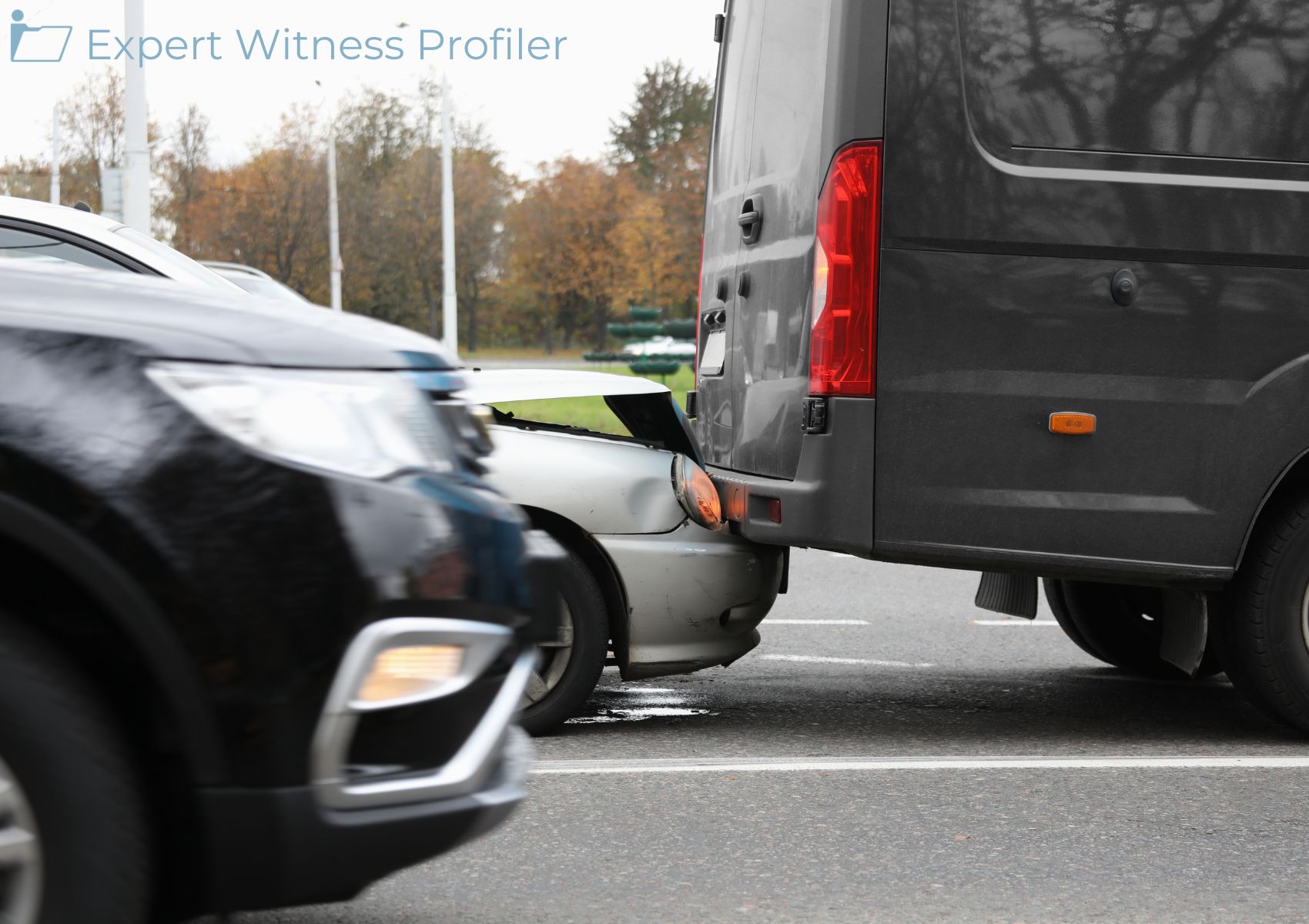
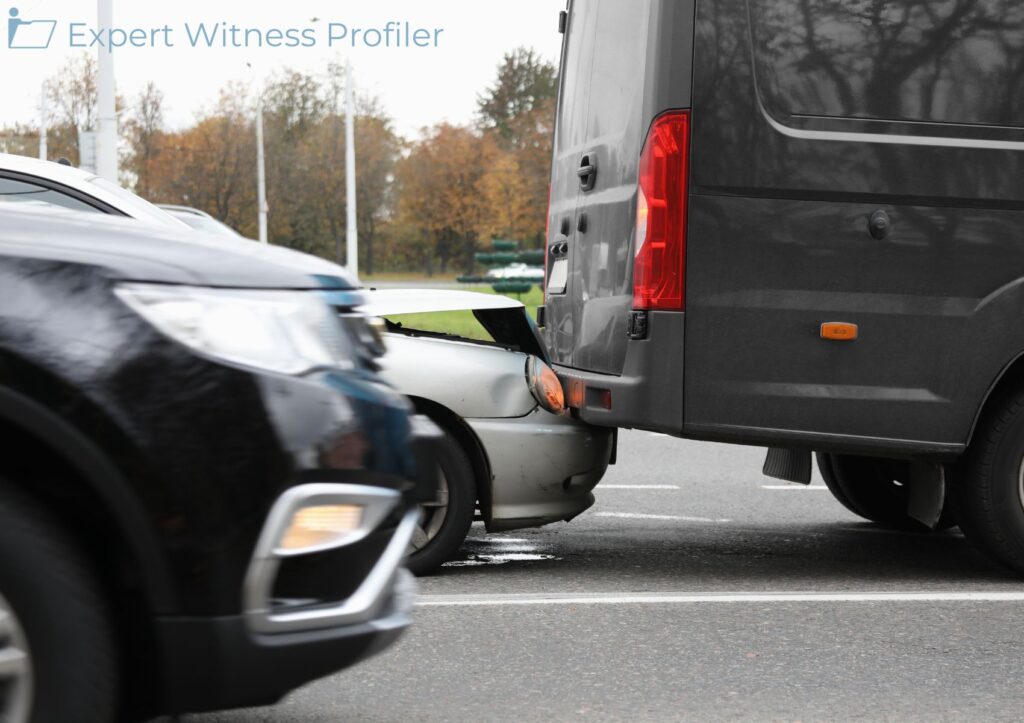
    Plaintiff Taylor Lavergne sued Hyundai Motor Company and Hyundai Motor America (collectively, “Defendants”) in connection with injuries she allegedly sustained during a rear-end collision between a 2013 Jeep Wrangler and a 2016 Hyundai Accent (the “subject vehicle”) in which she was a passenger.

    Plaintiffs designated Brian Herbst as their mechanical engineering expert. Hyundai Motor Company and Hyundai Motor America’s motion to exclude testimony of Brian Herbst under Rule 702.
    Mechanical Engineering Expert Witness

    Brian Ruben Herbst is a principal in the automotive engineering firm of SAFE Laboratories, L.L.C. He is routinely called upon to evaluate vehicle accidents and to analyze, test and evaluate various vehicle safety systems.

    His engineering experience has spanned more than 20 years, almost all of which has related directly to motor vehicle testing, crashworthiness, restraint system, and structural analysis. Herbst has been called upon to analyze several hundred real world accidents. He is a member of the Society of Automotive Engineers (SAE), American Society of Mechanical Engineers (ASME), and the National Society of Professional Engineers (NSPE).

    Want to know more about the challenges Brian Herbst has faced? Get the full details with our Challenge Study report.

    Discussion by the Court

    In his report, Herbst opined that “[w]ith the amount of rear crush that occurred in the accident, the subject vehicle failed to maintain an acceptable survival space.” Herbst also stated that he “could design a rear structure to be much stronger, not much more expensive or heavy, just as attractive and able to dramatically reduce crush and prevent serious occupant injury in a rear impact crash,” compared to the subject vehicle.

    To that end, Herbst outlined various methods to improve a vehicle’s rear strength:

    • “Replacing low-strength steel with high-strength steel (i.e. Boron steel is five times stronger than conventional steel)”;
    • “Implementing and/or improving load paths”;
    • “Implementing internal reinforcements, including tubular steel reinforcements”;
    • “Implementing external reinforcements, such as stiffening ribs or doublers”; and
    • “Reinforcing component voids with structural foam.”

    Herbst opined that each of these modification methods “employ basic engineering principles which are standard industry practices” and that all of the methods “were technologically and economically feasible at the time of the manufacture of the accident vehicle.”

    Additionally, his list of modification options “can be mixed and matched as desired,” and “it is not necessary for all the modification options to be incorporated to produce a strong and non-defective rear structure.”

    Defendants argued that Herbst’s opinions regarding his alternatively designed Hyundai were unreliable and therefore inadmissible because Herbst employed a variable design approach rather than a single design alternative.

    Analysis

    Herbst offered as an alternative design an exemplar 2012 Hyundai Accent reinforced with a combination of higher-strength steel, additional welding and expanding rigid foam.

    Herbst opined that his exemplar alternative design need not be employed in its entirety, but that his proposed “strength improvement design options can be mixed and matched as desired,” and that “it is not necessary for all the modification options to be incorporated to produce a strong and non-defective rear structure.”

    Defendants complained that Herbst is not committed to one alternative design, and that he could not identify the strength of steel used in any other comparator vehicle.

    Moreover, Defendants remarked that Herbst’s opinion includes any unspecified combinations of his five proposed modification methods for a “non-defective rear structure.” Defendants argued that this noncommittal approach would prejudice Defendants because Herbst has not established that any one of those methods individually “was capable of preventing the claimant’s damage.”

    In her opposition, Plaintiff informed the Court that Herbst will testify as to only the alternative design used in Plaintiff’s Rear Impact Test. However, Defendants asked the Court to grant their motion as to “mix-and-match” opinions regarding design options. The Court agreed with Defendant here that the mix-and-match opinions are problematic and should not be permitted at the trial of this matter.

    Defendants contended that Plaintiff’s Rear Impact Test is unreliable due to its position that Plaintiff’s Rear Impact Test was not substantially similar to the subject collision and that Plaintiff failed to show that another way to design the product existed. The Court issued a previous Memorandum Order that found that there was substantial similarity and that non-compliance with FMVSS 301-R did not justify exclusion of the alternative design.

    Held

    The Court granted in part and denied in part Hyundai Motor Company and Hyundai Motor America’s motion to exclude the testimony of Brian Herbst.

    Key Takeaway

    Herbst was prohibited from testifying or offering any evidence of a variable design approach (“mix-and-match”) because he offered no measurements, testing, or other quantification to support his assertion that “mixing and matching” his proposed modifications would result in a “strong ad non-defective rear structure.”

    Case Details:

    Case Caption: Lavergne V. Hyundai Motor Co.
    Docket Number: 2:21cv4236
    Court Name: United States District Court, Louisiana Western
    Order Date: December 12, 2025
  • Mechanical Engineering Expert’s Testimony on  Liability Admitted

    Mechanical Engineering Expert’s Testimony on Liability Admitted

    In June 2019, Plaintiff Anthony Rivieccio severed two fingers on his left hand while using a 10-inch Ryobi table saw, model number BTS10S (“Saw”).

    Rivieccio introduced the liability expert report of Arthur G. Coons, P.E. Coons claimed that the Saw’s blade height adjustment mechanism was defective. According to Coons, the mechanism was defective because “the gap between the washer and the mounting plate . . . was improperly adjusted during assembly at the factory.”

    Defendants filed a motion to strike the Coons Report in March 2025. They argue that the Court should exclude the Coons Report because Coons’ testing constituted spoliation and fraudulent concealment.

    Mechanical Engineering Expert Witness

    Arthur G. Coons is a licensed professional engineer in the state of New York. He has been a licensed engineer for over 45 years. He has a master’s degree in mechanical engineering from Union College. Coons’ professional career has been centered around designing, building, and installing industrial machinery.

    Want to know more about the challenges Arthur Coons has faced? Get the full details with our Challenge Study report.

    Discussion by the Court

    A. Spoliation

    The decision to impose spoliation sanctions follows a two-step inquiry. First, the Court determines if spoliation has occurred. Then, the Court considers whether and what sanctions are warranted. Spoliation occurs if (1) “the evidence was in the [nonmoving] party’s control”; (2) “the evidence is relevant to the claims or defenses in the case”; (3) “there has been actual suppression or withholding of evidence”; and, (4) “the duty to preserve the evidence was reasonably foreseeable to the [non-moving] party.” The party seeking sanctions bears the burden of proof as to each element of the prima facie claim.

    B. Fraudulent Concealment

    New Jersey law permits Plaintiffs to recover in an independent action for harm caused in a prior proceeding by an adversary’s spoliation.

    To prove the tort, a Plaintiff must establish five elements:

    (1) The Defendant had a legal obligation to disclose evidence in connection with an existing or pending litigation;

    (2) the evidence was material to the litigation;

    (3) the Plaintiff could not reasonably have obtained access to the evidence from another source;

    (4) the Defendant intentionally withheld, altered, or destroyed the evidence with purpose to disrupt the litigation; and

    (5) the Plaintiff was damaged in the underlying action by having to rely on an evidential record that did not contain the evidence Defendant concealed.

    Analysis

    The first, second, and fourth prongs of the spoliation test are easily met. Plaintiff had physical possession of the Saw; the Saw is relevant to this case because it purportedly caused Plaintiff’s injury; and because Plaintiff alleges the Saw caused his injuries, he had a reasonably foreseeable duty to preserve it.

    The third prong, “actual suppression,” merits closer consideration; however, “the mere destruction or loss of evidence in and of itself does not make out a claim for actionable spoliation; more must be shown.”

    Defendants offered no proof of bad faith. They did not allege or argue that Plaintiff and Coons ran tests on the Saw “in order to prevent it from being used by the adverse party.” This record “simply does not have evidence . . . supporting bad faith intent.”

    Defendants, therefore, did not establish actual suppression or actionable spoliation. Their fraudulent concealment claim fell short for the same reason: Defendants failed to prove Plaintiff “intentionally withheld, altered, or destroyed the evidence with purpose to disrupt the litigation.”

    The Defendants stated that, if the Court denied the instant motion, they would seek to depose Coons and file a renewed motion to strike pursuant to Daubert. The Court, therefore, denied the instant motion without prejudice and granted the Defendants leave to depose Coons and file a renewed motion to strike.

    Held

    The Defendants’ motion to strike the testimony of Arthur Coons was denied without prejudice by the Court.

    Key Takeaway:

    A finding of bad faith is pivotal to a spoliation determination. Here, Defendants offered no proof of bad faith. Defendants, therefore, did not establish actual suppression or actionable spoliation.

    Case Details:

    Case Caption: Rivieccio V. Ryobi Technologies, Inc.
    Docket Number: 2:21cv14208
    Court Name: United States District Court, New Jersey
    Order Date: October 31, 2025
  • Mechanical Engineering Expert’s Testimony on Shooting Reconstruction Admitted

    Mechanical Engineering Expert’s Testimony on Shooting Reconstruction Admitted

    Plaintiff Edgar T. Rodriguez filed this civil rights lawsuit against Defendants, including the City of Eugene as well as individuals Timothy Hunt, Mark Hubbard, and Faith McCready. 

    This case arises out of a police response to a disturbance at Plaintiff’s apartment on September 10, 2016, during which Plaintiff was shot by Defendants Hubbard and Hunt with the Eugene Police Department.

    Plaintiff filed a Daubert motion to exclude the testimony of Defendants’ expert Wilson C. “Toby” Hayes.

    Mechanical Engineering Expert Witness

    Wilson Carlyle “Toby” Hayes has a B.S. in Mechanical Engineering from Stanford University, 1964, a M.S. in Mechanical Engineering from Stanford University, 1966, and a Ph.D in Theoretical and Applied Mechanics from Northwestern University, 1970. 

    From 1969 to 1970, Hayes was a Research Fellow at the Laboratory for Experimental Surgery in Davos, Switzerland, and from 1970 to 1971 he was a Special Research Fellow at the Department of Orthopaedic Surgery at the Karolinska Institute in Stockholm, Sweden.

    Hayes served as an Assistant Professor of Mechanical Engineering and Orthopaedic Surgery at Stanford University from 1971-1976; an Associate Professor of Orthopaedic Surgery at the University of Pennsylvania from 1976-1979; and a Professor of Orthopaedic Surgery and later of Biomechanics at Harvard University from 1979-1998.

    After leaving Harvard University, Hayes was Vice Provost for Research at Oregon State University between 1998 and 2001 and Professor of Orthopaedics and Rehabilitation and Vice Chair for Research at Oregon Health Sciences University from 1998-2004.

    Want to know more about the challenges Wilson Hayes has faced? Get the full details with our Challenge Study report

    Discussion by the Court

    Hayes is Qualified to Testify on Questions of Biomechanical Engineering

    Hayes’ report covered a reconstruction of the shooting based on a FARO scan, photographs, post-shooting medical imaging, police reports, deposition testimony, and declarations.

    Hayes’ report used biomechanical and anatomical principles and shooting reconstruction techniques, including modeling and the application of specialized software, to opine on the relative positions and physical orientation of Plaintiff and the Defendant officers during the shooting.

    Moreover, the Court concluded that Hayes is qualified to testify on questions of biomechanical engineering, including shooting reconstructions; anatomy; the analysis of injuries; and the assessment of medical reports and imaging. The Court concluded that Hayes’ opinions concerning the shooting reconstruction are relevant and sufficiently reliable to meet the Daubert standard. 

    Hayes is not Qualified to Testify as an Expert on Perception–Response Time

    Hayes’ report also consisted of opinions based on perception response time. However, Plaintiff filed a motion to exclude testimony concerning perception response time on the grounds that Hayes is not an expert in the subject. At the hearing, Hayes testified that he took courses on ergonomics while studying for his master’s degree between 1964 and 1966 which included the study of perception response time. The Court concluded that this training and experience is not sufficient to qualify Hayes as an expert on perception response time and so Hayes may not offer testimony on that subject.

    The Court added that (1) Hayes may not testify as to the intentions, thoughts, or perceptions of any party or witness in this case; (2) Hayes may not vouch for the testimony of any party or witness in his testimony; (3) Hayes may not testify on the time it took for the Defendant officers to call for an ambulance, both because that opinion falls outside of his area of expertise as a biomechanical engineer and because, by Hayes’ own admission, his opinion is not supported by any data; (4) Hayes may not testify concerning police policy, use-of-force, or deadly force as those topics fall outside of his expertise as a biomechanical engineer; and (5) Hayes may not testify as to ultimate questions of law, such as whether a party acted “reasonably.”

    Held

    The Court granted in part and denied in part the Plaintiff’s Daubert motion to exclude the testimony of Defendants’ expert Wilson C. “Toby” Hayes.

    Key Takeaway:

    Hayes took courses on ergonomics while studying for his master’s degree between 1964 and 1966 which included the study of perception response time. The Court, however, concluded that this training and experience is not sufficient to qualify Hayes as an expert on perception response time.

    Case Details:

    Case Caption: Rodriguez V. Hunt Et Al
    Docket Number: 6:18cv1640
    Court Name: United States District Court, Oregon
    Order Date: September 16, 2025
  • Mechanical Engineering Expert’s Testimony on the Mechanical Interlock Design Admitted

    Mechanical Engineering Expert’s Testimony on the Mechanical Interlock Design Admitted

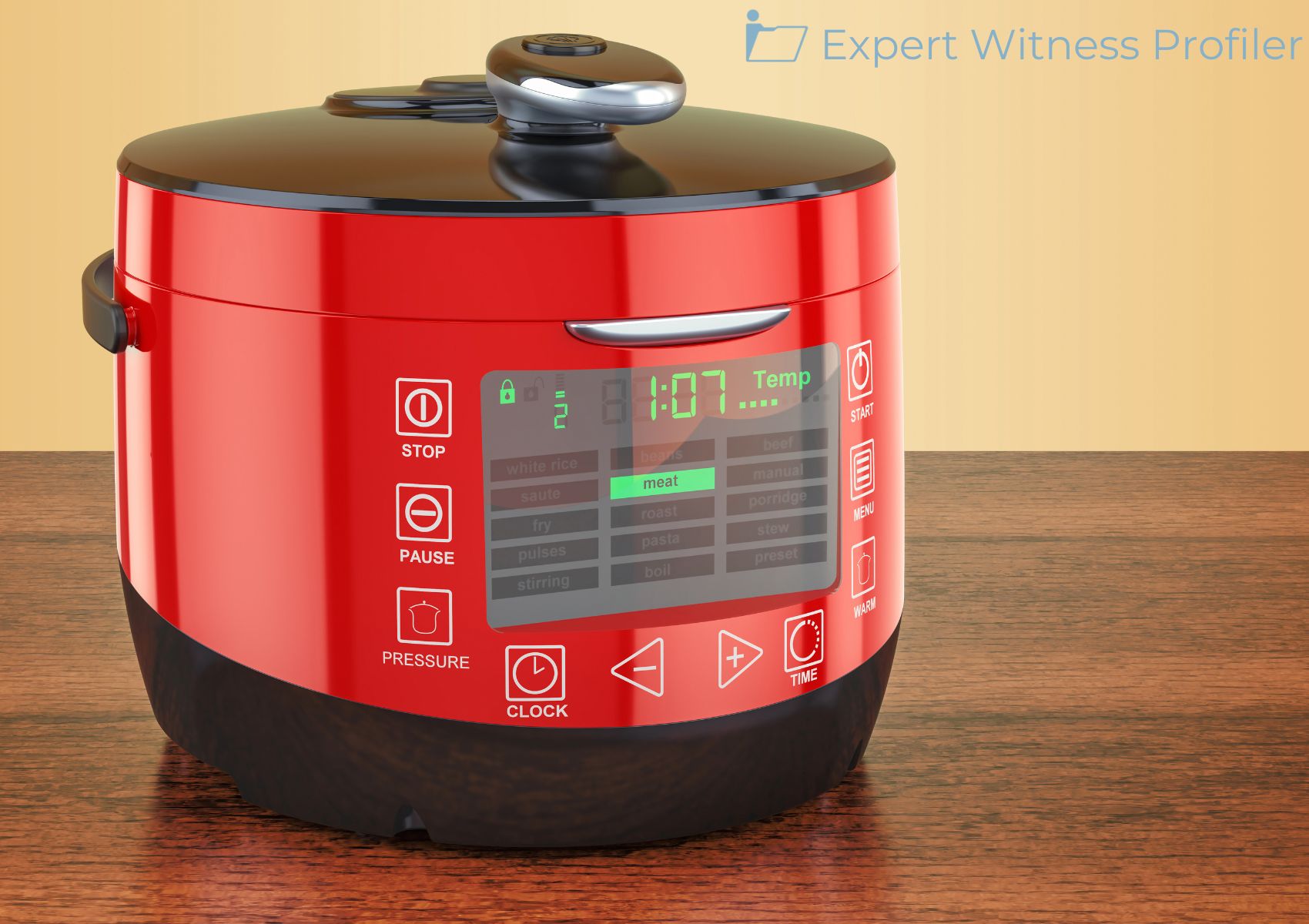
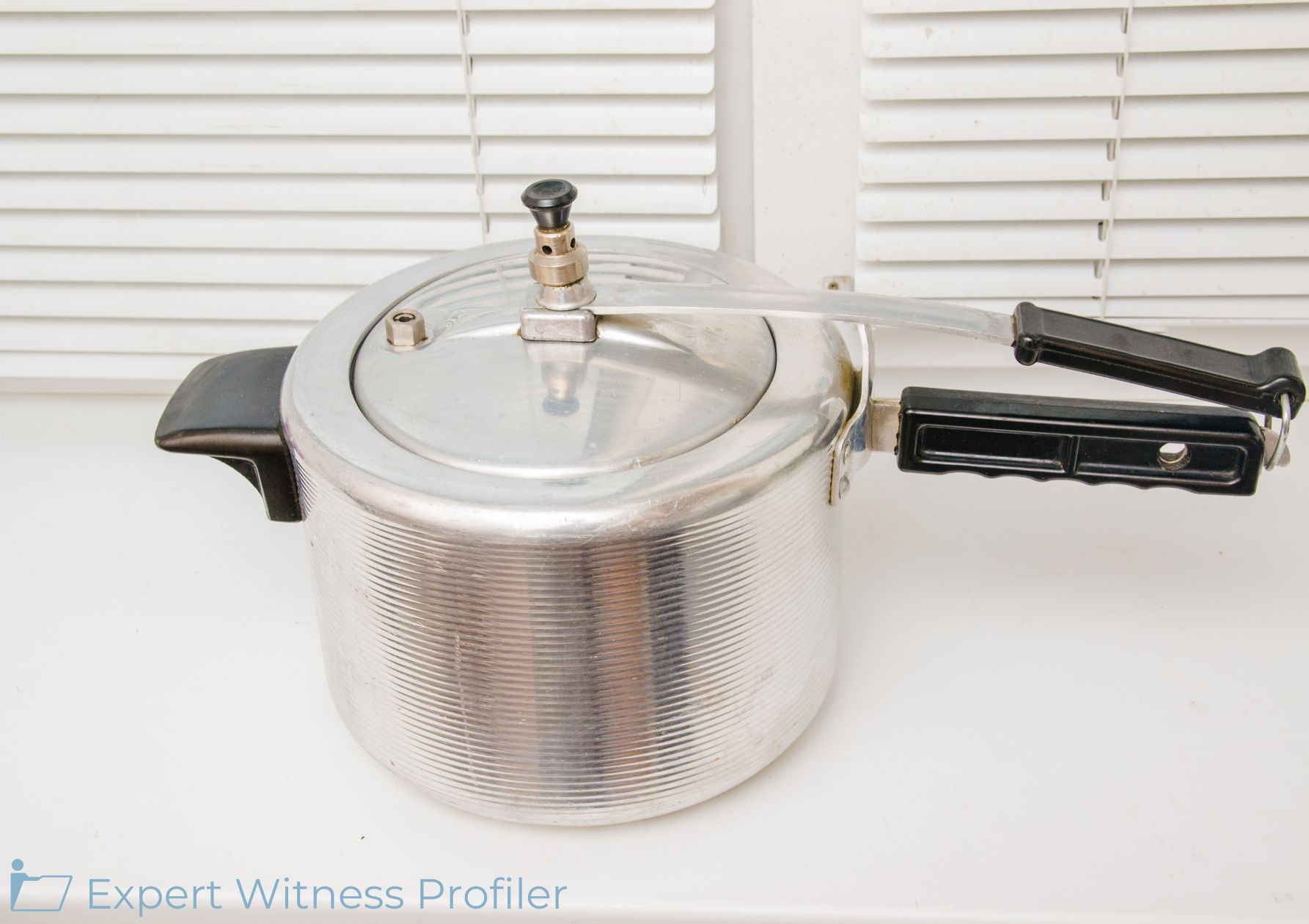
    While preparing a roast in her Magic Chef 7-in-1 Multicooker, Tarsha Allgood was injured when the device’s lid opened causing its “scalding hot contents to be forcefully ejected from the pressure cooker.”

    Allgood filed this lawsuit against CNA International, Inc. d/b/a MC Appliance Corporation raising claims under North Carolina law for inadequate warning, inadequate design, common law negligence, breach of express warranty, and breach of implied warranty.

    CNA filed a motion to exclude the testimony of Allgood’s expert witness, David M. Rondinone, an engineer with Berkeley Engineering and Research, Inc.

    Rondinone examined exemplars and other documents and materials, and concluded, among other things, that: (a) the mechanical interlock design intended to lock the lid is defective in that it fails to perform its function. This conclusion is based on, among other things, the geometric dimensions of the pin, lid, and cooker, which results in the interlock “providing very little resistance to the user;” and (b) “the presence of a defective pressure interlock increases the likelihood of the lid being opened and the cooker contents being expelled under pressure.” The touchstone of CNA’s argument is that Allgood threw away the device’s lid, so Rondinone could not test the actual multicooker Allgood used.

    Mechanical Engineering Expert Witness

    David Michael Rondinone has over 20 years of experience in mechanical engineering including design and failure analysis, fire suppression, explosions, flammability, flame arrestors, ignition, finite element analysis, accident reconstruction and crashworthiness, mechanical testing, failure of mechanical connections, dynamic stability of equipment and structures, pressure vessels and pipelines, medical implants and equipment, automotive component analysis and design.

    Rondinone has a Masters and Ph.D in Mechanical Engineering from the University of California, Berkeley, where he previously received his B.S. in Engineering Physics and B.A. in Astrophysics.

    Want to know more about the challenges David Rondinone has faced? Get the full details with our Challenge Study report.  

    Discussion by the Court

    The exemplar multicooker that Rondinone examined was used when it was purchased such that its prior history is unknown. CNA noted that the exemplar’s lid had a pre-existing scratch that Rondinone concluded means the lid was “force[d] open while under pressure by a prior user (an interlock override event).” CNA challenged the reliability of Rondinone’s opinion that the device was defectively designed because the mechanical interlock system could not meet the Underwriters Laboratories Cover Opening Standard.

    According to CNA, Rondinone’s methodology relied on broad generalizations and failed to account for whether the exemplar met relevant Underwriters Laboratories’ standards before the exemplar was damaged. 

    Allgood countered that Rondinone set forth his methodology in his report. He explained how he examined and measured the exemplar, including its interlock features, and considered relevant Underwriters Laboratories standards. He then concluded that the mechanical interlock design that is intended to lock the lid of the device is defective in that it fails to perform its intended function.

    The Court agreed with Allgood that Rondinone’s conclusions are sufficiently reliable. Among other things, he explained how the exemplar he examined showed “linear defects in the coating which are consistent with wear from the lid locking pin sliding over the tab,” and that the pre-existing scratch on the lid he examined could be the result of the lid being opened under pressure despite the sliding pin lock being held in place by the float valve.

    CNA’s remaining arguments failed to persuade the Court. That Rondinone did not take measurements that CNA deems critical, failed to perform a statistical or comparative analysis, or reached his conclusions based on a “single nonrepresentative data point,” are fair points for cross-examination.

    Held

    The Court denied the Defendant’s motion to exclude the testimony of David Rondinone.

    Key Takeaway:

    The Court held that Rondinone’s opinions are appropriately based on sufficient data, an examination of an exemplar, and a reliable application to the facts of this case. His testimony would also assist the fact finder with determining whether a defect existed at the relevant time, and the methodology underlying his conclusions is sound and sufficiently reliable for trial.

    To the extent CNA wishes to challenge the facts forming the basis of Rondinone’s opinions, including the impact, if any, that examining an exemplar had on his conclusions, it may do so on cross-examination. Although the facts on which an expert bases his opinion must have some basis in the record, there is no requirement that the basis must consist of undisputed evidence.

    Case Details:

    Case Caption: Allgood V. CNA International, Inc.
    Docket Number: 1:23cv462
    Court Name: United States District Court, Illinois Northern
    Order Date: September 3, 2025
  • Mechanical Engineering Expert Barred From Testifying for Not Testing Alternative Design

    Mechanical Engineering Expert Barred From Testifying for Not Testing Alternative Design

    Plaintiff Paul Johnson sustained severe injuries while operating a RIDGID K-6200 drain cleaning machine (“subject machine”) at his workplace. He sued the machine manufacturer, Defendant Ridge Tool Company (incorrectly identified as Ridge Tool Manufacturing Company, Inc.), asserting claims for negligence, product liability, and failure to warn.

    Plaintiff brought this lawsuit contending that Defendant manufactured an unreasonably dangerous and defective machine without an appropriate fixed guard that would have prevented Plaintiff from having to hold a rotating cable in his hand that could suddenly twist and kink and pull him. Plaintiff also challenged the adequacy of Defendant’s warnings and argued that personal protective equipment (PPE) was insufficient to protect users from the known hazards associated with this type of drain cleaning machine.

    In support of his claims, Plaintiff relied on two experts, Chad E. Jones, a mechanical engineer, and Cynthia M. Rando, a certified human factors professional. Following the completion of discovery, Defendant filed motions to exclude the testimony of both experts.

    Mechanical Engineering Expert Witness

    Chad E. Jones is a certified machine safety expert who is licensed in seven states and has worked as an engineer since 1996. He has a Bachelor of Science in Mechanical Engineering from Clemson University. Jones has participated in and led industrial accident investigations and participated in in-depth process safety audits. This work has included equipment design, machine safeguarding, cost estimating and safety compliance. He has designed HVAC and plumbing systems for commercial, industrial, and private clients.

    Want to know more about the challenges Chad Jones has faced? Get the full details with our Challenge Study report

    Human Factors Expert Witness 

    Cynthia M. Rando is a certified human factors professional who has worked in the human factors field for approximately twenty years. She is Vice President of the Board of Certification in Professional Ergonomics (Human Factors). Rando received her B.S. and M.S. in Human Factors Engineering from Clemson University and an MBA from Northeastern University. She has also served as an associate professor at University of Houston Clearlake providing instruction in Human Factors, Safety and Ergonomics course material.

    Fortify your strategy by reviewing a Challenge Study detailing grounds for excluding Cynthia Rando’s expert testimony

    Discussion by the Court

    Chad Jones

    i. Qualifications

    Defendant argued that Jones was not qualified because, despite being a mechanical engineer, he did not have any experience with the machine at issue or with drum-style drain cleaning machines generally. Defendant also contended that Jones’ purported experience with guarding mechanisms as they relate to industrial machine presses bore no relation to this case, as a machine press was entirely different from a drum-style cleaning machine.

    While Jones’ personal experience with drain cleaners is limited, and he is not familiar with the subject machine, the Court held that his professional experiences qualify him to opine here. Jones is certified as a machinery safety expert and has worked in the area of machine safeguarding since March 2019. True, he may not have actual experience with the particular machine in this case, but he need not be the best expert in the field in order to be qualified.

    ii. Reliability

    Defendant argued that even if Jones’ qualifications pass muster, his opinions are nonetheless unreliable because he failed to perform any testing of his purported reasonable alternative design. Jones opined that Defendant was required to include a fixed guard over the rotating cable to prevent injury. It is undisputed that Jones did not engage in any physical testing of the proposed alternative nor did he conduct any mathematical calculations or models.

    Indeed, Jones conceded that he has not spoken to any users of the equipment or industry professionals nor did he design or test his own fixed guard or physical prototype, use a computer program to design or simulate a fixed guard, perform calculations or drawings to demonstrate how an alternative guard would fit onto the machine, take an exemplar guard and try to apply it to the machine, or perform calculations, modeling, or other analysis to assess if an alternative guard would impact the speed or ability of the cable’s rotation. 

    Plaintiff’s contention that Jones need not test his alternative design is premised upon his assumption that the fixed guard is an “industry standard.” On this point, Plaintiff claimed that three of Defendant’s competitors use a fixed guard and thus the Court should presume this is what the industry requires. But that is too great of a leap in logic.

    Jones did not conduct any type of analysis that would make up for his lack of testing of the proposed alternative design. While Plaintiff contended that Jones included detailed designs, an economic study, preliminary drawings, and his own risk-utility testing, the Court does not find that information on the cited references or anywhere else in the report.

    Cynthia Rando

    After reviewing certain materials and taking Plaintiff’s hand measurements, Rando opined as follows:

    ➢ The primary root cause of the incident involving Plaintiff and the K-6200 Drain Cleaning machine was failure to effectively address hazards created by the design and operation of the K-6200 Drain Cleaning machine through standard design controls.

    ➢ Defendant demonstrated negligence through their failure to effectively assess and control risk and the violation of accepted standards of practice pertaining to risk management and the design for human safety.

    ➢ Additionally, the failure to provide the correct personal protective equipment (PPE), including unsafe recommendations made by Defendant to utilize a “one size” glove that allowed for a loose fit for individuals representing a smaller anthropometric hand size range, introduced unacceptable added risk and significant potential for injury.

    ➢ The reliance on the user manual to provide the necessary information regarding safe operation of the device by Defendant and the expectation that the manual was the hazard control method was negligent. This approach passed the responsibility of safety to the end user despite the awareness of the potential for significant injury based on the design of the equipment and recommended method of operation.

    ➢ The user manual was not written in an easy-to-understand manner, including conflicting safety instructions and recommendations for postures that would create increased risk of injury to the operators.

    ➢ The manual violated ANSI Z535 standards and recommended unsafe operations to the end users but advertised them to be “safe.”

    ➢ These issues represent the root cause and contributing factors to the injury incurred by Plaintiff on August 17, 2019.

    i. Reliability

    Defendant argued that Rando’s opinions on the user manual are irrelevant to the causation analysis and unreliable because she failed to either offer or test any reasonable alternative warnings.

    After reviewing Rando’s expert report, the Court concluded that Rando did not offer a specific opinion about the adequacy of the warning label. Indeed, her opinions as to “Caution and Warnings” are couched in the context of analyzing the user manual which, as noted, Plaintiff did not read.

    Rando never addressed whether the warning label affixed to the machine was inadequate or failed to capture Plaintiff’s attention. Because her opinion focused solely on the user manual Plaintiff never read, the Court held that it is not relevant.

    Even if the Court did interpret Rando’s opinion as encompassing the warning label, her failure to draft or test any proposed alternative warnings still rendered any such opinion unreliable.

    Last, Plaintiff pointed to Rando’s opinion on personal protective equipment (PPE) that Defendant’s standard one size fits all glove—which Plaintiff admittedly did not use here—was unsafe, but that has no bearing on his failure to warn claim. In the end, these “unsafe recommendations” were included in the user manual, which, as already discussed, Plaintiff never read. Therefore, the Court held that her opinion on PPE is similarly irrelevant.

    Held

    The Court granted the  Defendant’s motions to bar the testimony of Plaintiff’s expert witnesses, Chad Jones and Cynthia Rando.

    Key Takeaway:

    An expert can overcome the lack of testing by adhering to the standards of intellectual rigor demanded in their professional work. However, Jones did not conduct any type of analysis that would make up for his lack of testing of the proposed alternative design. 

    Case Details:

    Case Caption: Johnson V. Ridge Tool Manufacturing Company, Inc.
    Docket Number: 1:21cv1939
    Court Name: United States District Court, Illinois Northern
    Order Date: August 22, 2025
  • Mechanical Engineering Expert Permitted to Testify Despite Lacking Direct Experience with Debalers

    Mechanical Engineering Expert Permitted to Testify Despite Lacking Direct Experience with Debalers

    On January 21, 2022, James Raeford Hatcher (“Hatcher”), an employee of South East Grinding, was fatally injured while attempting to unjam a debaler at his workplace. His clothing became entangled in the machine, and he was unable to stop its operation. The machine in question—a “Model BBU.90” debaler—was manufactured by Emerging Acquisitions, LLC. Plaintiff Connie Hatcher, on behalf of Hatcher’s estate, brought claims against Defendant for negligence, strict liability, and breach of warranty. 

    According to Plaintiff, Defendant designed, manufactured, and sold the debaler in question and was aware of previous injuries and fatalities involving similar models. Despite this knowledge, Plaintiff alleged that the Defendant failed to implement standard safety features—such as human detection sensors or “light curtains”—unless specifically requested by customers. The debaler that killed Hatcher did not have these features.

    Defendant filed a motion to exclude Plaintiff’s design engineering expert, Dr. James L. Glancey, arguing he lacked specific experience with recycling machinery and failed to test his proposed design alternatives.

    Mechanical Engineering Expert Witness

    Dr. James L. Glancey holds a Ph.D. in mechanical engineering from the University of California, Davis and is a licensed professional engineer with over 20 years of experience in the field. Furthermore, he has published more than 50 engineering articles and has served as an expert in over 200 product-related matters.

    Get the full story on challenges to James Glancey’s expert opinions and testimony with an in-depth Challenge Study. 

    Discussion by the Court

    Specificity of Experience

    While Glancey lacked direct experience with debalers or recycling machinery, his mechanical engineering background qualified him to offer opinions on industrial machine design. After all, Glancey has a Ph.D. in mechanical engineering and thirty years of experience teaching product design. He has designed several machines, consulted on failure analysis for various products, and taught courses on both. 

    The Court held that the Plaintiff was not required to retain an expert specifically in debalers, and found that Glancey was sufficiently qualified to testify under Rule 702.

    Alternative Design

    Glancey’s proposed alternative designs incorporated light curtain technology and interlock safety features. He specifically testified that such technology has been available for incorporation in similar machines since the 1970’s. 

    Indeed, Defendant has incorporated a light curtain in other debalers it has manufactured. Plaintiff cited ample authority, uncontroverted by Defendant, to support the proposition that the existence of the alternative technology in the market subdues the need for expansive feasibility analysis or functional testing.

    As a result, Glancey’s alternative design opinions were deemed sufficiently reliable under Daubert.

    Warnings and Open and Obvious Danger

    Defendant argued that Glancey’s warnings analysis was inadmissible because the danger was open and obvious, and no efficacy testing was done.

    The Court found that Glancey analyzed the original warnings and identified deficiencies, including the lack of clear unjamming instructions. Whether the danger was sufficiently open and obvious to negate a duty to warn is a factual question for the jury.

    Held

    The Court denied Defendant’s motion to exclude Plaintiff’s expert, Dr. James L. Glancey.

    Key Takeaway:

    Plaintiff must present a reasonable alternative design, considering cost, safety, and functionality. The need for testing is blunted if the proposed alternative design is simple or is already used in the industry. In this case, the Plaintiff cited ample authority, uncontroverted by Defendant, to support the proposition that the existence of the alternative technology in the market subdues the need for expansive feasibility analysis or functional testing.

    Case Details:

    Case Caption: Hatcher V. Emerging Acquisitions, LLC
    Docket Number: 4:23cv423
    Court Name: United States District Court, South Carolina
    Order Date: May 27, 2025
  • Mechanical Engineering Expert’s Opinions on the Shattered French Press Limited

    Mechanical Engineering Expert’s Opinions on the Shattered French Press Limited

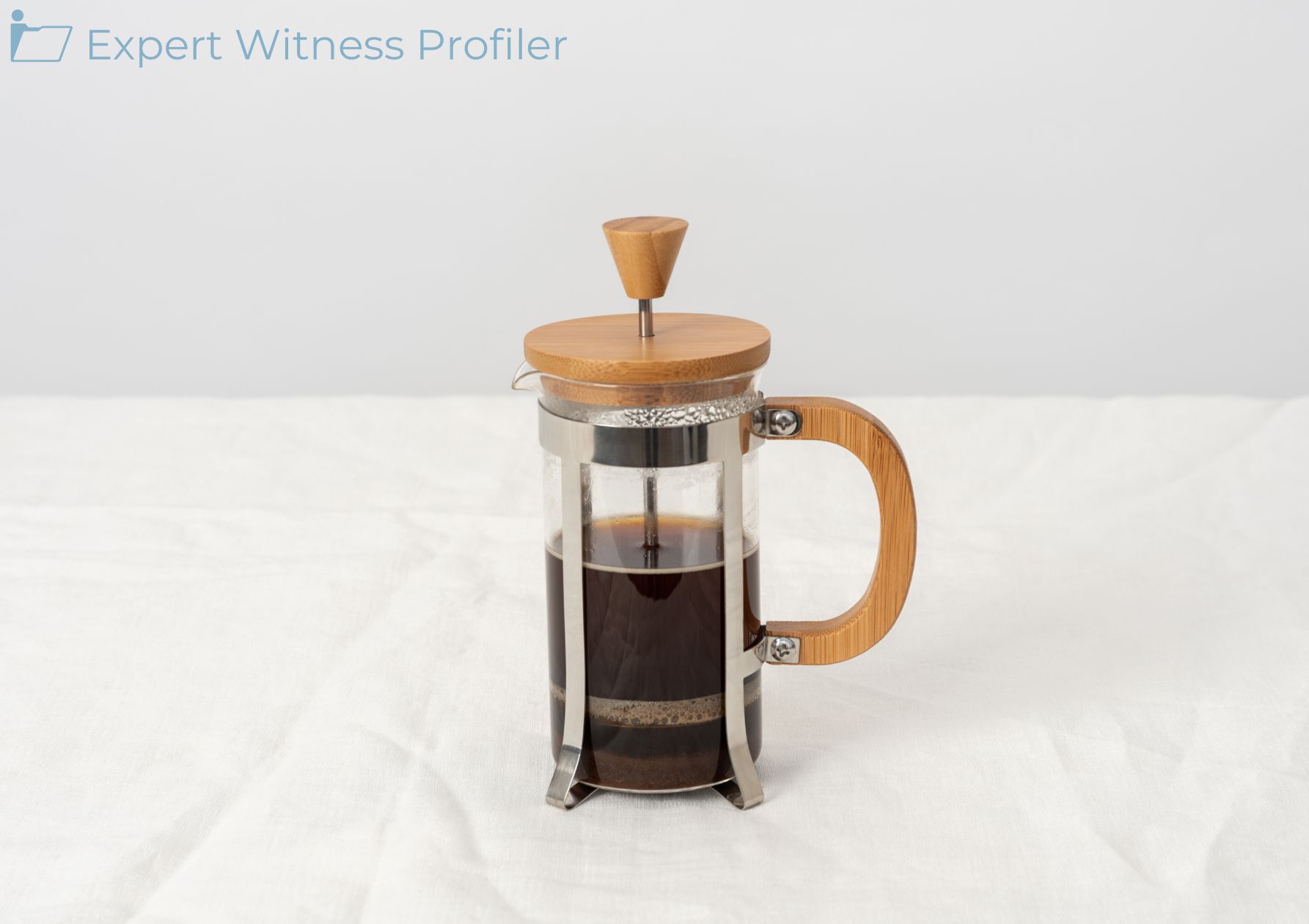
    Plaintiff, Wade Mullen, filed a products liability lawsuit against Defendant Bodum USA, Inc. (“Bodum”), claiming damages for injuries he suffered when his Bodum French press shattered and splashed him with hot coffee.

    Bodum filed a motion to exclude the testimony of Mullen’s expert Mingxi Zheng, an engineer who inspected the shattered French press. 

    Mechanical Engineering Expert Witness

    Mingxi Zheng has 8 years of experience in the general field of materials science, mechanical engineering design, metallurgy, failure analysis and materials characterization. At her previous engineering roles, she has spent time in both active manufacturing environments and R&D phase companies developing new technologies.

    Get the full story on challenges to Mingxi Zheng’s expert opinions and testimony with an in-depth Challenge Study

    Discussion by the Court

    Bodum contended that Zheng’s report should be excluded on reliability grounds, first, because it consisted of analytical gaps concerning what caused the French press to shatter, and second, because Zheng failed to support her analysis of alternative French press designs with any testing of those proposed alternatives.

    To be precise, Bodum argued that that Zheng’s report consisted of four analytical leaps: First, Zheng assumed that the scratches and stainless steel residue found on the inside of the French press’ glass carafe came from the metal coil on the press’ plunger “without having done any testing or analysis to determine if in fact there was any contact between the stainless steel plunger component and the glass.”

    Second, Zheng concluded that the defects resulting from the contact between the plunger’s metal coil and the carafe could cause the French press to shatter without testing to determine whether such contact “could actually cause a scratch of sufficient dimension and depth to reduce the tensile strength to the point where thermal stress could cause a fracture.” 

    Third, Zheng conducted no testing to support her conclusion that thermal stress from the hot coffee caused the French press to facture.  And fourth, Zheng did not rule out alternative causes for the French press’ shattering.

    Causation

    The Court considered Zheng’s opinion that, “more likely than not,” the plunger’s protruding coil is what scratched the press’ glass carafe and created crack initiation sites. Zheng reached this conclusion after she analyzed the metal residue observed by the crack initiation site and found it to be made of stainless steel, the same material contained in the press’ plunger and the protruding coil. Zheng concluded that thermal fracturing occurred after observing (1) Wallner lines perpendicular to the carafe’s surface, (2) cracks that formed near-ninety-degree angles with the edge and surface of the glass, and (3) the absence of branching crack patterns, all of which are indicators of thermal stress.

    While Bodum objected to Zheng’s failure to conduct additional testing to determine what level of thermal shock would be necessary to shatter the French press given the existence of the imperfections observed on the glass carafe, the Court held that testing is not an ‘absolute prerequisite’ for an expert’s theory of causation to be admissible in a design defect case.

    The Court also refused to exclude Zheng’s opinions for failing to rule out fracture due to any other alternative cause.

    Alternative Designs

    In her report, Zheng explained that she reviewed Bodum’s website and found, based on the company’s image of the replacement part containing the metal coil, that a protruding coil “is the normal condition for this part.” She extrapolates that the protruding coil is a design or manufacturing defect because it allows for the extra pressure of a sharp exposed edge to scratch the inner surface  of the glass carafe, which may bring about “compromising contact.” 

    Based on this finding, Zheng concluded that three alternative design options exist that would reduce or eliminate glass fracture. First, Bodum could—and has—designed a French press with a non-glass carafe.  Second, Bodum could use silicone or a different temperature-resistant soft material on the edge of the plunger to act as a barrier between the plunger’s steel components and the carafe.  And third, Bodum could weld or tack down the protruding coil to prevent it from scratching the glass.

    The Court held that Zheng’s opinion on alternative designs is not grounded in the methods and procedures of science but is rather a conclusion that any lay person could draw by visually inspecting the plunger and searching the internet for varieties of French presses.

    Held

    The Court granted in part and denied in part the Defendant’s motion to exclude the testimony of Plaintiff’s expert Mingxi Zheng.

    Key Takeaway:

    The law is clear that an expert need not rule out every alternative in forming an opinion. Although the most convincing expert reports are likely to address alternative causal mechanisms, for an opinion to be admissible, an expert need address only obvious alternative explanations for the phenomenon in question. Here, there is no obvious alternative that could explain the French press’ shattering, nor did Bodum propose any.

    Case Details:

    Case Caption: Mullen V. Bodum USA, Inc.
    Docket Number: 1:23cv1166
    Court Name: United States District Court, New York Southern
    Order Date: June 23, 2025
  • Mechanical Engineering Expert’s Opinion on Alleged Manufacturing Defect in Accident Ladder Excluded

    Mechanical Engineering Expert’s Opinion on Alleged Manufacturing Defect in Accident Ladder Excluded

    In this products liability action, Plaintiff Joshua Cleaveland sued Defendants Tricam Industries, Inc. and Home Depot USA Inc. after he fell from a Tricam model GLX-5B ladder on August 26, 2021. The ladder was manufactured by Tricam and purchased from Home Depot. According to Plaintiff, he was injured because the ladder was defective.

    Defendants filed a motion to exclude the testimony of Plaintiff’s expert, Dr.
    Jonathan Slocum.

    Mechanical Engineering Expert Witness

    Jonathan Slocum is a mechanical engineer who earned his bachelor’s degree in 2014, master’s degree in 2015, and doctorate in 2018 in mechanical engineering from the Massachusetts Institute of Technology.

    He worked at Materials and Engineering Group LLC from 2017 to 2022 as a senior consultant, where he provided forensic and design consulting and failure analysis. Since 2020, his company LTAG Systems, LLC has been developing technology and devices for the United States Department of Defense.

    Get the full story on challenges to Jonathan Slocum’s expert opinions and testimony with an in-depth Challenge Study. 

    Discussion by the Court

    Defendants filed a motion to exclude Slocum’s expert testimony on the grounds that Slocum is not qualified to opine on ladder defects and design and causation, and his expert testimony is unreliable and speculative.

    Initial Matters

    The Court first addressed whether Plaintiff may rely on the First Slocum Affidavit to respond to Defendants’ motion to exclude.

    The Court concluded that Plaintiff may offer the First Slocum Affidavit to defend the principles and methodology used by Slocum in his initial report.

    To the extent that the Plaintiff attempted to use the First Slocum Affidavit to further explain Slocum’s qualifications as an expert in this case, the disclosure was untimely. Under Rule 26(a)(2)(B)(iv), Slocum was required to include all relevant qualifications in his initial expert report. As a result, the Court excluded certain parts of the First Slocum Affidavit.

    Slocum’s Qualifications

    The Court rejected Defendants’ argument that Slocum is unqualified to render an opinion in this case because he has never provided testimony specific to ladder design or accidents, has never designed a ladder or worked in the ladder industry, has no experience researching or addressing the causes of ladder-related accidents, and has never participated in any relevant committees that address ladder safety issues. While it is true that Slocum’s curriculum vitae indicated that he had little to no experience specific to ladder design and ladder-related accidents, his extensive education and professional background in mechanical engineering and metallurgy demonstrated that he is qualified to opine on whether the aluminum ladder in this case was defectively designed and manufactured.

    Reliability of Slocum’s Testimony

    First, the Plaintiff has failed to show that a simple visual inspection is a reliable methodology from which to draw conclusions about whether the ladder suffered from a manufacturing or design defect. While Slocum himself claimed, without proof, that his methodology is generally accepted in the “scientific community,” the Court cannot conclude that Slocum’s methodology is reliable because the Plaintiff has not put forth any evidence or argument that visual inspection alone is a reliable methodology for assessing the causes of ladder-related accidents.

    Based on a visual examination of the accident ladder and the exemplar ladder and calculating the height/wall thickness ratio of the accident ladder’s rear rail, Slocum found “evidence of buckling at the pin joint” and “deformation of the aluminum tubing,” which he concluded to be a manufacturing defect that contributed to Plaintiff’s accident. However, Slocum provided no explanation or testing to demonstrate why the deformity at the “rear-left rail extrusion that the spreader-link pin-joint passes through” could be problematic.

    Slocum concluded that the ladder was defective in design because he found that a “side load” is applied to the ladder’s front and rear rails when a user’s weight is on one of the top two steps of the ladder, leading to deformation of the ladder’s rails and spreader links. However, Slocum did not perform any tests to determine whether Plaintiff’s position on the top step of the ladder would lead to the buckling observed on the accident ladder or to prove that the spreader link of the ladder applied both an “eccentric load” and “torsion to the tube, which would add to the overall stress it experiences when loaded.” He also did not explain how much torsion or eccentric load is acceptable.

    Held

    The Court granted Defendants’ motion to exclude Dr. Jonathan Slocum’s opinion.

    Key Takeaway:

    Rule 702 does not require expertise to be so exacting. Although Slocum’s curriculum vitae shows minimal, if any, direct experience with ladder design or ladder-related accidents, his extensive education and professional background in mechanical engineering and metallurgy support his qualification to offer an opinion on whether the aluminum ladder in question was defectively designed or manufactured.

    Case Details:

    Case Caption: Cleaveland V. Home Depot United States Inc Et Al
    Docket Number: 3:23cv1298
    Court Name: United States District Court, Connecticut
    Order Date: June 10, 2025
  • Mechanical Engineering Expert’s Opinion About the Clogged Float Valve Admitted

    Mechanical Engineering Expert’s Opinion About the Clogged Float Valve Admitted

    This is a product liability case involving Walmart’s sale of a pressure cooker that Plaintiff Vanessa Loftis claims injured her when the lid was able to be removed while the pressure cooker was—unbeknownst to her—still pressurized.

    During the depressurization process, pressure cookers release steam; according to Loftis, the steam on that night “lasted forever,” around thirty to forty-five minutes. Loftis testified that she “kept checking on it, and then, when [the steam] finally did stop, that’s when [she] opened it and it kind of blew up.”

    The contents of the cooker were ejected onto Loftis, causing burns to approximately 12% of her body, mostly on her abdomen, that later required debridement.

    Walmart filed a motion to exclude Loftis’ expert, Dr. David Rondinone, arguing that his opinions are speculative, unreliable, and not tied to any applicable methodology.

    Walmart appeared to make three specific challenges to Rondinone’s opinion: (1) that he proposed only “possible” causes of the incident with no basis in evidence; (2) that he did not physically test the subject cooker or an exemplar; and (3) that he did not rule out alternative causes.

    Mechanical Engineering Expert Witness

    David Rondinone holds an M.S. degree and a Ph.D. degree in Mechanical Engineering from the University of California, Berkeley, majoring in material behavior and design and minoring in structures and dynamics and electronic controls.

    He also holds a B.S. degree in Engineering Physics and a B.A. degree in Astrophysics from the University of California, Berkeley. From 1993 to the present, he has worked as a Mechanical Engineering Consultant, and is a principal of Berkeley Engineering And Research, Inc. (referred to herein as “BEAR”).

    He has worked for more than 30 years in the areas of failure analysis, design, and risk assessment of consumer and industrial equipment, including pressure cookers.

    Want to know more about the challenges David Rondinone has faced? Get the full details with our Challenge Study report. 

    Discussion by the Court

    Rondinone proposed three potential causes of the accident: (1) a float valve clog, resulting from an inadequately designed float valve, that caused the lid to remain unlocked while under pressure; (2) a boil-over event that was not properly warned against; or (3) a failure of the interlocking sliding mechanism.

    Possible Causes

    Walmart contended that Rondinone posits only “possible,” rather than “probable” causes of the accident and failed to ground these in facts.

    However, Rondinone identified a float valve clog as the “most likely scenario” and “would say to a degree of reasonable engineering certainty it’s more likely a clogged or insufficient float valve interlock event” caused Loftis’ injuries “than . . . a boil-over event.”

    Since Rondinone intended to testify that the incident was most likely caused by a clogged float valve, as supported by his expertise, prior testing of pressure cookers, examination of Instant Pots, and Loftis’ description of the incident, the Court refused to exclude his testimony on that basis.

    Physical Testing

    While Walmart conceded that it was not possible for Rondinone to test the subject pressure cooker in this case, as it was not available, it argued that his failure to conduct tests using an exemplar model is unjustified and rendered his testimony inadmissible.

    However, Rondinone explained that in order to help him gain a more precise determination on probability as to whether this was a float valve incident, he would have had to run “an extensive statistical study, probably hundreds of tests,” and he has not “know[n] anybody who ever has” done that.

    Further, he explained that it is “difficult to repeat” a clogged float valve, but his lab has “done tests for clogging on other models of pressure cooker” and shown that a user “can with a single use clog the vent,” which he reports “present[s] a risk of pressurization with the lid in an unlocked state.”

    However, the Court held that Rondinone’s opinion that the float valve was clogged is supported by Loftis’ description of the incident and his prior testing of pressure cookers, not “unfounded assumptions.”

    While Rondinone is “unable to recreate” the incident, the Court held that his opinion is “based on known facts and his expertise.”

    Alternatives

    Walmart challenged the admissibility of Rondinone’s opinion on the argument that he failed to rule out other possible causes.

    In this case, Rondinone did engage with alternative explanations, including a boil-over event, a failed sliding mechanism, or some other accident like a spill. He then applied his expertise in the mechanics of pressure cookers to the facts in this case to deduce that a float valve clog was the most likely mechanical scenario here.

    As for the possibility of a spill, he stated that “physically it’s probably possible,” but he would “have to disregard Loftis’ entire testimony, though, from start to finish for that to be true,” including “disbelieving her explanation of the removal of the lid and how the contents came out.”

    Rondinone refused to say with absolute certainty that a float valve clog occurred here, but he did conclude the most likely cause within a “degree of reasonable engineering certainty.”

    The Court held that Rondinone’s refusal to completely rule out other alternatives goes to the weight of his testimony, not its admissibility.

    Held

    The Court denied Walmart’s motion to exclude Dr. David Rondinone.

    Key Takeaway:

    Despite the fact that Rondinone did not test the subject pressure cooker or an exemplar model in this case, there is no single requirement for admissibility as long as the proffer indicates that the expert evidence is reliable and relevant.

    The Court held that Rondinone’s conclusions are based on his experience and expertise [in pressure cooker cases], general engineering principles, information from Loftis about the accident, examination of an exemplar cooker, its design and specifications, competitors’ cookers, and photos of the accident, including of the subject pressure cooker and Loftis’ burns.

    Case Details:

    Case Caption: Loftis V. Walmart, Inc.
    Docket Number: 5:23cv5228
    Court Name: United States District Court, Arkansas Western
    Order Date: June 02, 2025
  • Mechanical Engineering Expert is Qualified Despite His Lack of Familiarity with Gaming Machines

    Mechanical Engineering Expert is Qualified Despite His Lack of Familiarity with Gaming Machines

    Plaintiff Mark Sabti, a Slot Technician at Greektown Casino, brought this products liability action against Interblock USA, the manufacturer of the Universal Cabinet Craps machine. Sabti alleged design defects and a breach of implied warranty of fitness by the Defendant after the machine’s gas springs failed. The hood of the machine fell and injured his back.

    Dr. Stephen Batzer prepared a Rule 26 Report opining that Defendant should have utilized a prop rod or self-locking gas springs, which are used on other gaming machines to hold the hood in place in its elevated position.

    However, Defendant filed a motion to strike Plaintiff’s expert Batzer contending he has no experience in the design of casino games or machines utilizing gas springs.

    Mechanical Engineering Expert Witness

    Stephen Batzer has a Ph.D. in Mechanical Engineering. He is a board-certified forensic engineer and has worked as a forensic engineer. He holds three safety patents and is a member of the American Society of Mechanical Engineers and the Society of Automotive Engineers.

    Get the full story on challenges to Stephen Batzer’s expert opinions and testimony with an in-depth Challenge Study.  

    Discussion by the Court

    Batzer is expected to testify, consistent with his report, that Defendant was negligent in its design of the subject machine and that the subject machine is not fit for its intended use. He also identified alternative means that should have been utilized by the Defendant to prevent uncontrolled descent of the hood of the machine after it had been opened.

    To begin with, Batzer relied on the testimony of fellow slot technician James Thiellesen, who testified that other gaming machine manufacturers utilize self-locking gas spring which would prevent the uncontrolled descent of the hood.

    Moreover, Sean Matson, Slot Technician Manager at Greektown Casino, also testified that both Aristocrat and Light & Wonder gaming machines use prop rods or hinges that hold the hood in place so that it does not come down uncontrollably.

    The Court rejected Defendant’s argument that Batzer is not qualified because he has no experience working on casino gaming machines. Nor was the Court persuaded that Batzer’s opinion was unreliable because he did not perform any scientific analysis or testing.

    Held

    The Court denied the Defendant’s motion to exclude the testimony of Stephen Batzer.

    Key Takeaway:

    The Court upheld the admissibility of Stephen Batzer’s expert testimony despite his lack of direct experience with casino gaming machines. These issues also go to the weight to be accorded Batzer’s testimony, not to its admissibility. After all, he has specialized in forensic engineering and safety analysis for twenty years.

    Case Details:

    Case Caption: Sabti v. Interblock USA A K A Interblock Luxury Gaming Prods., LLC
    Docket Number: 23cv12620
    Court Name: United States District Court for the Eastern District of Michigan, Southern Division
    Order Date: May 15, 2025