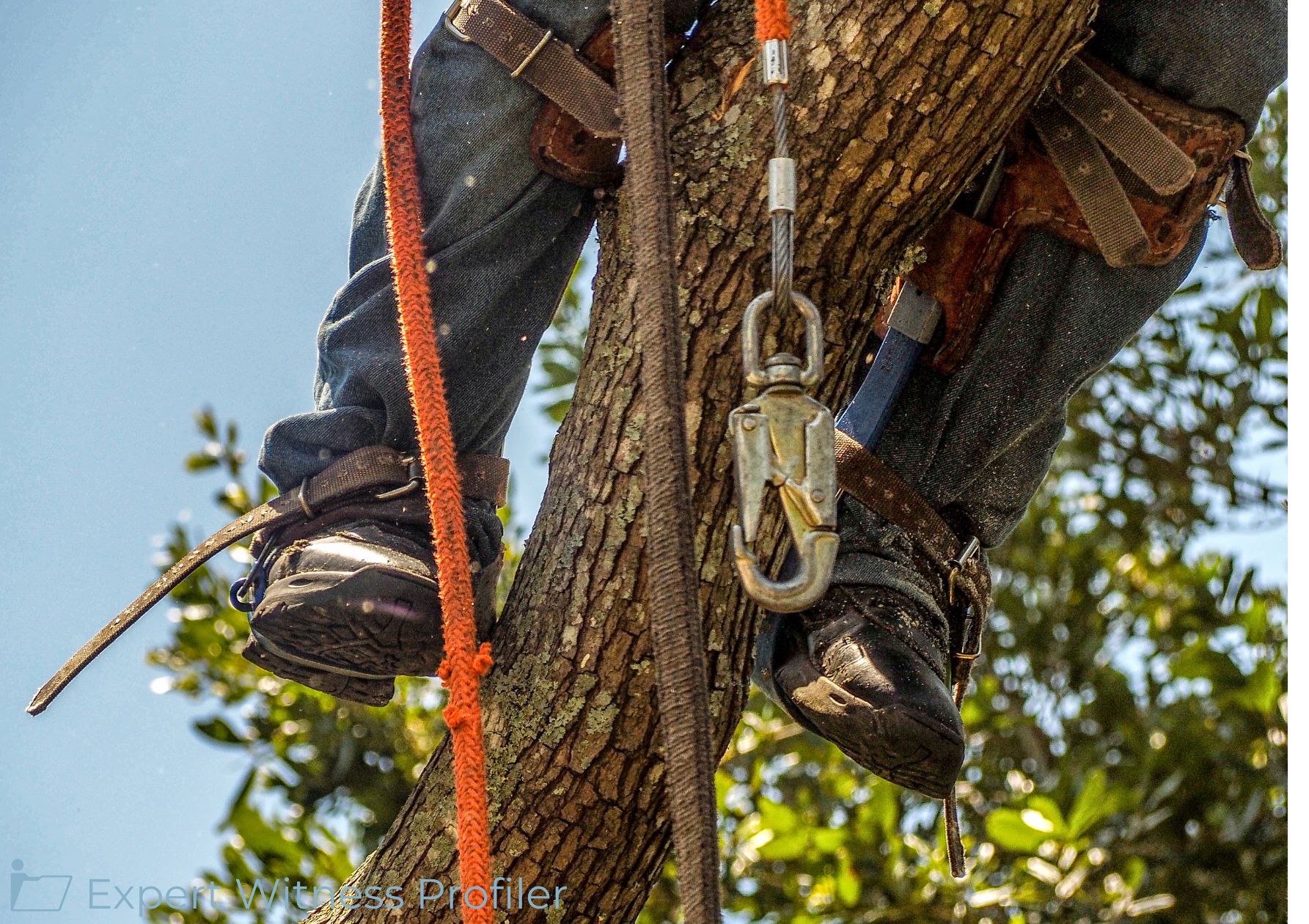
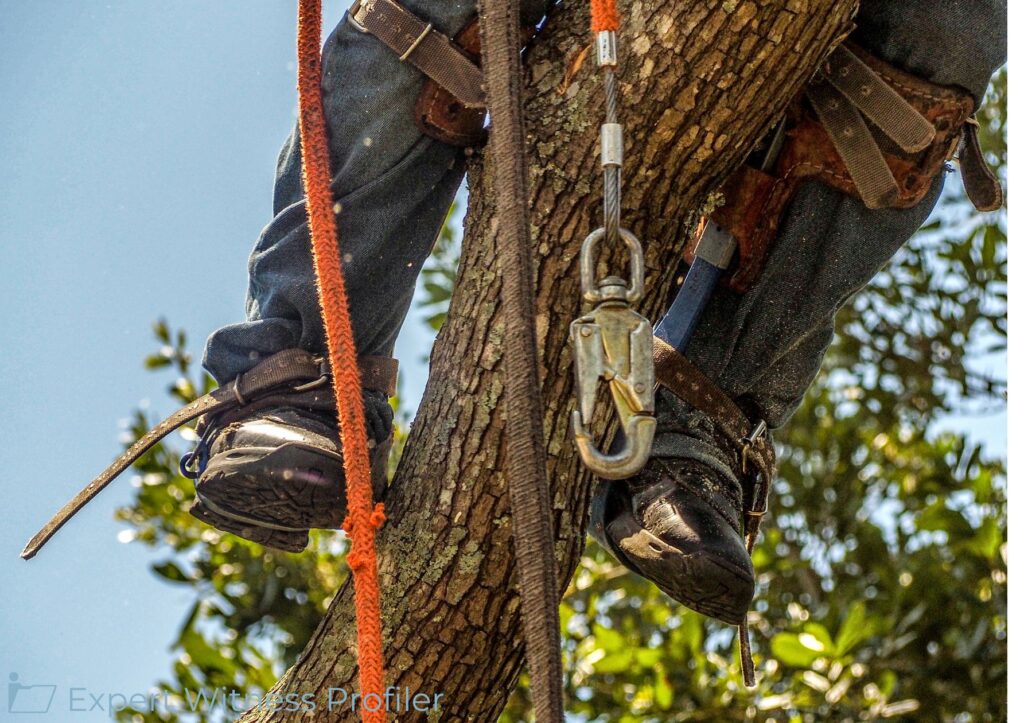
Plaintiff George Land (“Land”) initiated a lawsuit against Rock Exotica, LLC, following a catastrophic fall while using the Unicender, a climbing device manufactured by the company. Land, an experienced arborist with two decades of experience, contended that the Unicender was defectively designed, which led to his accident. He alleged that during his ascent using the device in a double rope technique, it failed to operate as expected after he was struck by a falling tree section.
To support his claims, Land designated Dr. James Glancey, a licensed professional engineer, as his expert witness. Glancey was expected to testify about the design and safety features of the Unicender, arguing that a guard could have prevented the injuries Land sustained during his fall. However, Glancey’s testing methods raised significant concerns, particularly as he did not replicate the conditions under which Land used the device. Instead, he conducted load tests using a single rope technique and failed to provide supportive evidence regarding the proposed guard’s efficacy, leading to questions about the reliability of his testimony.
In response, Rock Exotica filed a motion to exclude Glancey’s testimony under the Daubert standard, asserting it was not based on sufficient data or reliable methods.
Mechanical Engineering Expert Witness
Dr. James Glancey holds a Ph.D. in mechanical engineering from the University of California, Davis and is a licensed professional engineer with over 20 years of experience in the field. Furthermore, he has published more than 50 engineering articles and has served as an expert in over 200 product-related matters.
Dr. James Glancey was expected to opine on the design and safety features of the Unicender, arguing that the lack of a guard could be considered a design defect contributing to Land’s injuries during his climbing accident.
A. Glancey is Unqualified
Rock Exotica challenged Glancey’s qualifications, noting that although he has extensive experience in mechanical design, he has never worked in the arborist industry. The defense emphasized that Glancey has never designed or studied arborist climbing devices, stating:
He compared the guard to helmets or chisels with shields but could not identify any climbing tools with similar safety features.
His familiarity with safety mechanisms in other contexts does not translate directly to the climber’s needs or the functionality of the Unicender.
Furthermore, while he has a robust background in engineering, his lack of direct experience with the particular use case and context of the Unicender significantly undermines his credibility.
B. Glancey’s Opinions are Unreliable
1. Untested and Unengineered Concepts
Glancey proposed that a guard could prevent the injuries sustained by Land. However, his testimony lacked the reliability required by the Court.
a) No Prototypes or Drawings
Glancey did not produce any design drawings or prototypes related to the guard or alternative safety mechanisms. He failed to demonstrate a clear understanding of how such a guard would be integrated or function in the context of the Unicender.
b) Lack of Testing
He conducted tests using a single rope technique and failed to test the device under the double rope technique, which was used by Land at the time of the accident. This omission leaves his conclusions unsubstantiated and speculative.
2. Failure to Establish Causation and Feasibility
Rock Exotica argued that Glancey’s opinions did not establish a reliable causal link between the alleged design defect and Land’s injuries.
a) No Evidence of Impact on Safety
Glancey did not provide data or analysis demonstrating how the proposed guard could have altered the outcome of the incident. He acknowledged that his design concepts were theoretical at best and did not address how they would consistently prevent accidents in real-world scenarios.
b) Inability to Quantify Risks
The expert failed to conduct a comprehensive risk analysis or evaluate how the guard might interact with the conditions that led to Land’s fall. Without empirical assessments or data-driven insights, his conclusions cannot be considered valid under Daubert.
Analysis
The Court held that Glancey is qualified to opine about design defects in the Unicender. His mechanical-engineering background and familiarity with product testing show that he possesses specialized knowledge to analyze how a climbing device functions under various loads.
The Court concluded that Glancey’s opinions were inadequate to support Land’s claims in this case. His failure to generate testable and reliable alternative designs, lack of empirical evidence for his assertions, and inability to connect his proposed modifications to safety improvements rendered his testimony speculative.
The Court found that without supporting documentation or design specifications, Glancey could not meet the burden of proof established under Daubert, leading to the exclusion of his testimony and summary judgment in favor of Rock Exotica.
Glancey’s expertise allowed him to assert that Rock Exotica’s engineering and testing procedures were less structured compared to other manufacturers and his testimony established a duty to manufacture products safely. However, the Court ruled that there’s nothing to tie that failure to the harm that Land suffered.
Held
The Court granted Rock Exotica’s motion to exclude Plaintiff’s mechanical engineering expert witness, Dr. James Glancey’s opinions concerning the ability of a Unicender device to support certain amounts of weight and an alternative design for the Unicender. The motion was otherwise denied as moot.
Key Takeaway:
In this case, Land hangs his hat on Glancey’s testimony to create factual disputes. However, Glancey did not produce a design prototype or any drawings of a guard, nor did he run tests with the Unicender and a guard. Basically, engineering experts routinely rely on conceptual alternatives to highlight potential design shortcomings. Expert testimony about alternative designs requires more than an inventive mind. It requires real science.
Case Details:
Case Caption:
Land V. Case Rock Exotica, LLC
Docket Number:
2:23cv4627
Court Name:
United States District Court for the Eastern District of Pennsylvania
In early 2015, Plaintiffs, US Thrillrides, LLC (“USTR”) and Polercoaster, LLC began discussions with Defendant, Intamin Amusement Rides Int. Corp. Est. about partnering to build Polercoasters for Plaintiffs’ customers. The Polercoaster is a unique attraction that provides a complete roller coaster experience on a very small footprint, unlike traditional roller coasters which require several acres of land.
On January 15, 2015, the Parties entered into a Confidentiality and Non-Disclosure Agreement (the “CNDA”) to allow them to begin conversations. In the CNDA, Defendant agreed that information about the Polercoaster was protected and agreed not to create products similar to those offered by Plaintiffs, or to enable or cause others to do so. Once the CNDA was executed, Plaintiffs began discussions with Defendant about serving as the manufacturing partner for Polercoasters they were selling to their customers in different parts of the United States. Ultimately, Defendant was chosen to be the manufacturer for the US Projects.
Later, Plaintiffs executed a letter of acceptance (the “LOA”) with Emaar Entertainment, LLC (“Emaar”) to build a Polercoaster at the Dubai Hills Mall. Unbeknownst to Plaintiffs, Defendant was actively undercutting them, negotiating directly with Emaar and submitting its own bid, in secret, to build the ride without Plaintiffs’ involvement or permission. The result was that Plaintiffs were terminated and Defendant was hired.
Emaar and Defendant entered into a Letter of Intent, memorializing their agreement to move forward on developing a smaller roller coaster for the Dubai Hills Mall. Ultimately, this roller coaster was built and named the Storm Coaster.
Plaintiffs alleged that Defendant unlawfully breached the CNDA and is also liable under various Florida and federal laws for wrongfully using Plaintiffs’ intellectual property in connection with the Dubai Project.
Defendant filed a motion to exclude the expert testimony of Plaintiffs’ expert Nathan Macdonald.
Mechanical Engineering Expert Witness
Nathan Macdonald is a registered professional engineer, a certified safety professional, and a certified commercial building inspector. He has a Bachelor of Science degree in mechanical engineering and eleven years of experience working as a mechanical engineering consultant, including experience working on the design, manufacture, and testing of amusement rides.
Defendant sought to exclude the following opinions of Plaintiffs’ expert, Nathan Macdonald: (1) designs and drawings created for the Storm Coaster are substantially similar to and incorporate major design features of USTR’s copyrighted materials; and (2) the Storm Coaster design is both similar to the Polercoaster designs developed by USTR and embodies and is derived from Confidential Information and Intellectual Property Rights (as defined by the CNDA) conveyed by USTR to Defendant pursuant to the CNDA.
Qualifications
First, Defendant argued that Macdonald is not qualified to opine on any of the issues here because he did not have specific experience with roller coaster design. While Macdonald has not designed a roller coaster, he has has a significant amount of experience related to coasters and the engineering and design work that is involved. Therefore, Macdonald’s experience and training makes him qualified to opine on the mechanics, engineering, and technical design aspects of the roller coasters and drawings at issue here.
Second, Defendant also challenged Macdonald’s qualifications to opine as to analyzing copyright, trade secret, and misuse of confidential information issues. The Court held that Macdonald is qualified to conduct a technical and engineering comparison between Plaintiffs’ designs and drawings with Defendant’s designs, drawings, and the Storm Coaster. Macdonald is also qualified to testify regarding how confidential information and trade secrets are treated and used within the industry.
On the other hand, Macdonald is not qualified to opine as to whether information constitutes a trade secret or is confidential information as this is a legal analysis, not a technical one. Nor is he qualified to opine as to whether the copyright “substantial similarity” analysis is satisfied. To be clear, Macdonald could testify that certain aspects of Defendant’s design drawings are similar to certain aspects of Polercoaster’s copyrighted drawings from a technical or engineering standpoint. And Plaintiffs’ attorneys could then use that testimony to argue that the “substantial similarity” analysis for copyright infringement is satisfied. But Macdonald is not qualified to opine as to the copyright infringement analysis itself.
Methodology
As to Macdonald’s methodology, Defendant first argued that Macdonald’s copyright opinions must be excluded because Macdonald did not conduct a copyright protectability analysis and because his opinions regarding substantial similarity invade the province of the jury. These issues were addressed in the qualifications analysis—Macdonald is only permitted to testify as to similarities between Defendant’s purportedly infringing drawings and Polercoaster’s copyrighted drawings from a technical and engineering standpoint. He is not permitted to testify as to whether these similarities are protectable under copyright law.
Defendant also objected to Macdonald’s opinions because they assume that the designs and drawings attributed to Polercoaster actually belong to Polercoaster, and Defendant argues that they do not. This is not an issue with Macdonald’s methodology in comparing the designs. The Court held that the Defendant is free to offer evidence at trial that the drawings do not belong to Polercoaster, but an expert is allowed to offer opinions based on assumptions given to them.
Next, Defendant argued that Macdonald’s opinions comparing Polercoaster’s copyrighted works to the as-built Storm Coaster must be excluded because an as-built structure cannot infringe Polercoaster’s copyrights. Polercoaster conceded that Defendant is correct. Additionally, Defendant’s remaining objections to Macdonald’s opinions were rendered moot by the Court because Plaintiffs’ trade secrets and non-copyright-based breach of the CNDA claims failed on the merits.
Held
The Court granted in part and denied in part Defendant’s motion to exclude the testimony of Nathan Macdonald.
Key Takeaway:
Macdonald is only permitted to testify as to similarities between Defendant’s purportedly infringing drawings and Polercoaster’s copyrighted drawings from a technical and engineering standpoint. He is not permitted to testify as to whether these similarities are protectable under copyright law.
Case Details:
Case Caption:
US Thrillrides, LLC & Polercoaster, LLC V. Intamin Amusement Rides Int. Corp. Est.
This case arises from injuries Plaintiff Cherie Ferrell sustained on November 15, 2020 when she fell into a City of Atlanta water utility meter box. Ferrell alleged that the improperly secured water meter lid and the lack of “warning of the uneven pavement elevation change” caused her injuries.
On the morning of November 15, 2020, Ferrell went to 957 Ashby Grove, Atlanta, GA 30318 (property) to meet her son, Joshua Ferrell. It is undisputed that Cherie Ferrell and Joshua Ferrell owned the property at the time she fell.
Ferrell visited the property approximately five times prior to November 15, 2020 and more than five times after November 15, 2020. She had not observed a water meter at the property prior to her fall.
Several months before the incident, Joshua noticed a crack in the sidewalk near the water meter, but he did not contact the City regarding the sidewalk. Both Joshua Ferrell and Christopher Shiver noticed that the water meter was located below the sidewalk’s elevation. It is undisputed that the water meter box and the sidewalk are located within the City of Atlanta and the water meter was a part of the system of waterworks owned by the City of Atlanta.
Ferrell filed suit against the City asserting claims sounding in negligence.
Ferrell identified Christopher Shiver, P.E. as her expert engineer to opine on the condition of the water meter box, the water meter lid, and the sidewalk damage and elevation change. The City challenged Shiver’s testimony as unreliable and not based upon scientific theories, techniques, or principles.
Mechanical Engineering Expert Witness
Christopher Barrow Shiver performs engineering evaluations of equipment and systems involved in failures, accidents, fires/explosions and other abnormal incidents for claims and risk professionals, attorneys and products manufacturers and designers.
He has a degree in mechanical engineering from the Georgia Institute of Technology.
The City argueds Shiver’s opinions are unreliable because they are based on inaccurate temporal information — the date of the incident and when City workers accessed the water meter box and lid — and inaccurate topographical information of the residential neighborhood.
The Court held that Shiver’s opinions based on when the City accessed the water meter box in relation to November 15, 2020 are not wholly speculative: regardless of when Joshua Ferrell contacted the City, at no time did the City repair the sidewalk or water meter prior to Shiver’s February 22, 2021 inspection.
Shiver testified he “did a study of that [incident] area photographically, took measurements, you know, made observations, made notes.” He conducted his inspection on February 22, 2021 which included “visual observations, and [he] took a number of measurements, which [he] noted and are also documented in some of [his] photographs.”
Shiver’s Opinions are based on Inaccurate Timing and Incomplete Knowledge
The City is also critical that Shiver’s opinions are the result of applying legal principles such as the 1997 Georgia Accessibility Code and Federal 2010 ADA Standards for Accessible Design to a property’s neighborhood which was allegedly built in the early to mid-1900s. While the City argues that the codes and standards Shiver relied upon applies to construction or renovations after July 1997 and March 2012 and not a neighborhood build nearly a century prior, the Site Work Plan was developed and permitted in 2019. Shiver admitted he did not “have a full training in everything pertaining to the law, no, but [he does] in the specific areas that [he] practice[s] in and how to interpret those codes, standards, regulations, and ordinances with regards to how features are to be constructed, designed, and maintained.”
Even if Shiver’s opinions are based on inaccurate timing and incomplete knowledge of the neighborhood, the Court held that this does not mandate the exclusion of the opinion, but rather, presents a jury question as to the weight which should be assigned the opinion.
Shiver did not do any Reliable Testing during his February 22, 2021 Inspection
When Shiver went to the property he took photographs, measurements, and made observations. He used tape measurers, rulers, a pocket rod, and angular measurement instruments to measure slopes. He even took photographs of the water meter box. Shiver reviewed “City of Atlanta documentation regarding service activities to the water utility equipment at the subject address from 2008 through 2020.” Shiver spoke with Joshua Ferrell about the site conditions over time.
Ultimately, Shiver evaluated “the results of those measurements with regard to the standard of care and the actual written standards and codes that applied to this type of situation.” He detailed several deficiencies which he opined “could be expected to contribute to a pedestrian trip and/or loss of balance fall occurrence. On this basis, it is probably that deficient paved and unpaved walkway and city utility hardware conditions contributed to the fall incident reported for Cherie Ferrell.”
The Court concluded that Shiver’s measurements, observations, and testimony that he inspected the site and water meter lid were not mere guesses or wholly speculative. Thus, the Court held that the weight to be given to Shiver’s opinions “is a matter to be addressed by the trier of fact.”
Shiver’s testimony may be helpful to the jury
Lastly, the City argued that Shiver’s testimony should be excluded because it is not scientific, specialized, or technical and does not assist the trier of fact.
However, the Court found that Shiver’s testimony fits the pertinent causation inquiry and should be properly considered by the jury.
Held
The Court denied the Defendant’s Daubert motion to exclude the testimony of Christopher Shiver.
Key Takeaway:
Even if Shiver’s opinions are based on inaccurate timing and incomplete knowledge of the neighborhood, the Court held that this does not mandate the exclusion of the opinion. Moreover, Shiver’s measurements, observations, and testimony that he inspected the site and water meter lid were not wholly speculative. When Shiver went to the property he took photographs, measurements, and made observations. He used tape measurers, rulers, a pocket rod, and angular measurement instruments to measure slopes. He even took photographs of the water meter box.
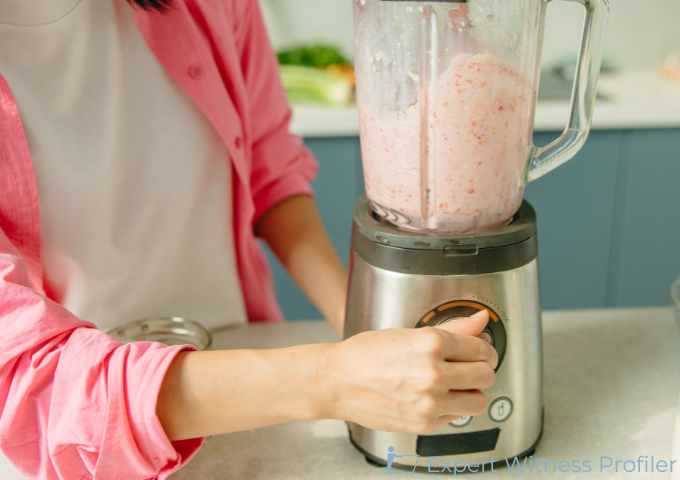
On August 23, 2021, Plaintiff Virginia Huss used a Ninja BL660 blender, designed and manufactured by Defendant SharkNinja Operating LLC, to blend a mixture of chocolate chips that she had microwaved for 60 to 90 seconds. After blending, Huss attempted to twist open the blender lid and the lid shot off the blender cup, causing scalding hot fudge to explode and burn her face, chest, arms, and hands. As a result, Huss initiated this product liability against SharkNinja.
In her amended complaint, Huss focused on the ‘cool to explosively hot’ theory, which posits that the blender’s fast-moving blade heats cool or room temperature food which creates friction and, ultimately, causes the blender contents to explode when the user opens the blender cup.
Huss Filed the Following Allegationsin Support of her Cool to Explosively Hot Theory:
a. The blender is defectively designed because “the extremely fast-moving blade of the blenders heat the contents of the sealed bullet-shaped canister, which can (and does) unexpectedly explode when being used in its normal and intended manner by consumers. In a matter of a short amount of time, the fast-spinning blades can unexpectedly heat up its contents, such that if the blender explodes, the user is at risk of severe burns or lacerations and injuries requiring medication attention.”
b. “During the normal, as-directed use of the blender, a consumer puts cool or room temperature food into the plastic ‘bullet’ cup. Once the cup is secured to the blade assembly and placed onto the unit’s base, the user is able to run the blender by pressing down on the cup. The blades then rotate, creating friction as they cut and chop the cup’s contents, which in turn causes the contents to heat up.”
c. “As the temperature rises inside the cup, the pressure from the frictional energy also rises. The temperature can get so hot that the pressure inside the cup forces the cup to separate from the blade while the blender is still running. This can cause the hot contents of the cup to explosively project outward without warning, landing on anyone and anything nearby.”
d. “Even if the cup does not separate from the blender while in use, the user is still at risk. If the contents of the cup are hot and under pressure when the cup is opened, the hot contents can again be explosively ejected onto the user, causing se[ve]re lacerations from a detached blade.”
Derek King
King set forth three other design defect theories in his expert report:
(i) that the threaded connection between the blender cup and the blade assembly is “susceptible to slippage and so it may separate…before venting can occur” (the “Thread Slippage Theory”)
(ii) that “the threaded connection was under load (from internal pressure) and also at an elevated temperature” and “it is likely that one or both materials experienced some softening due to temperature which contributed to the threads failing to keep the blade assembly fastened to the cup long enough for the pressure to vent” (the “Softening Materials Theory”)
(iii) that Huss had observed that the blade assembly “kind of untwists itself the rest of the way,” which King found was “consistent with the force from internal pressure being transferred into a rotational motion due to the slope of the threaded connection between the cup and blade assembly” (the “Spontaneous Untwisting Theory”)
In response, SharkNinja filed a motion to exclude the expert testimony of Derek King.
Mechanical Engineering Expert Witness
Derek A. King has a Bachelor of Science degree in Mechanical Engineering from the University of California, Berkeley and a Master of Science in Electrical Engineering from Ohio University. He has worked as an engineer for Berkely Engineering and Research since 2009 “in the areas of failure analysis, design, and risk assessment of consumer and industrial equipment, including industrial pressure vessels and consumer propane tanks, pressure cookers and blenders.”
King was tasked with providing his opinions regarding the following topics:
(1) “Whether or not the blender would enable and allow the incident to occur”; and
(2) “What design aspects of the subject blender enable and/or fail to mitigate the risks of pressurization and burn injury.”
By “applying well-established engineering principles” and performing “exemplar testing,” King concluded that “a sealed blender cup will heat and pressurize due to the blending process, thus establishing the possibility that the subject blender could create the hazard and risk consistent with Huss’ description.”
As to his “exemplar testing,” King provided a spreadsheet which reflected the following headings: (1) T(s); (2) External °F; (3) Internal °F; (4) Pressure PSI; (5) Note; (6) T-start; and (7) Recipe. Oddly, the Court noted that King provided no explanation whatsoever in his Report regarding the meaning of the headings, exactly what the variables of his tests were, and what the outcomes of his tests were. SharkNinja described King’s test results as follows:
• “The only testing of the incident recipe that King conducted involved blending a chocolate-chip mixture heated to 121°F. But this testing did not result in any pressurized ejection of hot content.”
• “King blended incident recipe ingredients that were preheated to 121°F for one minute and 49 seconds in a BL660 single-serve cup, and this testing did not demonstrate any explosive projection of the cup’s contents.”
It should be noted that Huss did not dispute SharkNinja’s characterizations of King’s testing and did not otherwise discuss the testing other than to assert that King considered Huss’ testimony that the chocolate chips were “lukewarm” temperature and “applied it to his analysis.”
Analysis
Absent an explanation from King or Huss — or disagreement regarding SharkNinja’s characterization — of the meaning of the data contained on King’s testing spreadsheet or how the testing was carried out in general and what results it yielded, the Court proceeded to analyze King’s opinion with the following premise in mind: King’s testing involved blending ingredients that had previously been heated to 121°F for one minute and 49 seconds, and that testing did not result in an explosive projection of the blender’s contents.
1. Whether King Is Qualified
SharkNinja did not challenge King’s qualifications as to his design defect opinions. However, the Court found, in accordance with its gate-keeping obligation and the standard set forth in Rule 702, that King’s undergraduate and graduate degrees in mechanical and electrical engineering along with his work experience since 2009 “in the areas of failure analysis, design, and risk assessment of consumer and industrial equipment, including blenders” is sufficient to qualify him to testify regarding design defects in blenders.
2. Whether King’s Methodology Is Scientifically Reliable
The Court also considered whether Huss had sustained her burden of showing that that it is more likely than not that King’s methodology is scientifically reliable and that his testimony will aid the trier of fact.
a. Cool to Explosively Hot Theory
SharkNinja argued that King did not have a reliable foundation to provide expert testimony regarding the cool to explosively hot theory because he did not conduct any testing with cool or room temperature ingredients. It asserted that King’s test involved blending a mixture of chocolate chips, sweetened condensed milk, and vanilla extract preheated to 121°F for one minute and 49 seconds in a BL660 single-serve cup blender and that even though he started with preheated ingredients (versus cool or room temperate ingredients) and blended the ingredients longer than Huss did (one minute and 49 seconds versus “probably less than a minute”), “his testing did not demonstrate any explosive projection of the cup’s contents.”
Accordingly, it argued, King “should be precluded from opining that blending cool or room temperature ingredients for any length of time can result in ‘contents being forcefully expelled from the blending cup under pressure and at high temperature.’”
SharkNinja’s main critique of King’s methodology for his opinions regarding the cool to explosively hot theory was that King was not able to re-produce an explosive projection when he blended chocolate chips, sweetened condensed milk, and vanilla extract for a longer period of time than Huss, and that the ingredients he blended were preheated to 121°F rather than being cool or at room temperature as necessary to test the cool to explosively hot theory.
Court’s Decision
The Court acknowledged that “an expert need not wear a lab coat nor cite peer-reviewed studies to reliably lend his expertise to the trier of fact—experience is an equally valuable teacher.”
But, at bottom, King still had to explain the methodology that he used and how his experience led him to his conclusions. He did not do so and, moreover, the testing he did perform used different conditions than the cool to explosively hot theory, making his methodology regarding his opinion that the blender had a design defect based on that theory unreliable.
b. Thread Slippage Theory
While SharkNinja agreed with King’s premise that ‘blending creates friction, friction causes heat, and, given enough time, a marathon blending session can eventually generate sufficient heat and pressure within a sealed cup to cause the blended contents to eject out energetically when the cup is opened,’ it argued, however, that King’s opinions that this can take place after one minute of blending is not supported by testimony or “any other reliable foundation.”
Specifically, SharkNinja noted that King blended preheated ingredients for one minute and 49 seconds and “did not identify any thread slippage or pressurized ejection of contents” from the blender cup, and that the thread slippage theory is speculation and unreliable.
SharkNinja asserted that there is an “analytical gap” in King’s analysis because “whether the blade assembly can ‘shift’ does not address whether the threads between the blade assembly and the BL660 cup can, in fact, ‘slip.’” It noted that King did not identify any testing to support his finding and that Huss does not argue that this theory has been subjected to peer review or publication, is generally accepted in the engineering community, or has a known or potential error rate.
Court’s Decision
The Court rejected Huss’ argument that SharkNinja can simply cross-examine King to address any shortcomings in his methodology. This notion is contrary to the 2023 amendment to Rule 702, which requires the Court to determine whether an expert’s methodology is reliable rather than leaving that determination to the jury.
As to SharkNinja’s issues with King’s methodology, King opined that “a potential opportunity for venting before sudden separation is present in the intermittent thread design, however, geometric analysis shows that the threaded connection is susceptible to slippage and so it may separate…before venting can occur.” He described the blender’s threading in detail, but did not set forth any methodology for how he reached his conclusion that thread slippage could have occurred after less than one minute of blending and caused the contents of Huss’ blender to explode. The Court held that King’s methodology regarding his opinion on the thread slippage theory is non-existent and, therefore, unreliable.
c. Softening Materials Theory
SharkNinja argued that King “did not attempt to substantiate his softening materials theory with any testing or other reliable foundation,” instead simply noting the deflection temperature of the materials that make up the blender’s construction and stating that it is likely those materials softened during use.
SharkNinja noted that King examined the blender but “did not state that he observed any evidence of softening in either the blade assembly or the single-serve cup,” that his testing “did not demonstrate any evidence of either component softening,” and that he did not cite any support for his theory in scientific literature or otherwise.
Court’s Decision
The Court rejected Huss’ contention that SharkNinja can simply address shortcomings in King’s methodology through cross-examination and proceeded to consider the issues that SharkNinja raised.
While King stated in his report that “An overview of the material properties indicates that cup material has a deflection temperature of approximately 200 °F, while the blade assembly deflection temperature is approximately 100 to 300 °F. Huss’ description of a pressurized release and sustaining burn injuries indicates that the threaded connection was under load (from internal pressure) and also at an elevated temperature. It is likely that one or both materials experienced some softening due to temperature which contributed to the threads failing to keep the blade assembly fastened to the cup long enough for the pressure to vent,” he did not indicate that he tested the blender, observed softening of the components’ materials, or employed any other methodology to reach his conclusion.
He merely stated that ‘it is likely’ the materials ‘experienced some softening’ based on their deflection temperatures, which ‘contributed to the threads failing to keep the blade assembly fastened.’ The Court held that his speculative conclusion is not supported by any methodology. In other words, King’s methodology relating to the softening materials theory is not reliable.
d. Spontaneous Untwisting Theory
SharkNinja argued that King simply states that Huss’ observation that the blade assembly untwists itself is consistent with the use of the blender, but “offers no reliable foundation for this opinion,” “does not attempt to substantiate his opinion by citing to any scientific literature (or anything at all other than Plaintiff’s deposition testimony),” and “did not disclose any evidence of the BL660 blade assembly untwisting itself based on the slope of the threaded connection during his own testing of the incident recipe.”
Basically, SharkNinja contended that King “does not identify any testing that would support his spontaneous untwisting theory,” and noted that his testing with preheated ingredients did not result in the blender cup spontaneously untwisting from the blade assembly.
King opined that ‘Huss’ observation that the blade assembly “kind of untwists itself the rest of the way” is consistent with the force from internal pressure being transferred into rotational motion due to the slope of the threaded connection between the cup and blade assembly.’
He did not state that he tested this theory and observed spontaneous untwisting or set forth any other methodology that he used in reaching this conclusion. He simply baldly stated that Huss’ observation is consistent with the use of the blender and the slope of the threaded connection. The Court held that King’s methodology regarding the spontaneous untwisting theory is speculative and not reliable.
The Court found that Huss has not sustained her burden of showing by a preponderance of the evidence that King’s methodology as it relates to the cool to explosively hot theory, the thread slippage theory, the softening materials theory, or the spontaneous untwisting theory is reliable.
3.Whether King’s Testimony Would Aid the Trier of Fact
SharkNinja argued that King’s opinions would not aid the trier of fact because they were speculative in nature and not based on a reliable methodology.
The Court held that King’s opinions are not grounded in a reliable methodology — they are not based on any physical testing and King does not set forth any other methodology to explain how he reached his conclusions. The speculative nature of his opinions relating to all four design defect theories will not aid the trier of fact. The Court found that Huss has not shown that it is more likely than not that King’s testimony will aid the trier of fact.
In sum, Huss has not sustained her burden of showing by a preponderance of the evidence that King’s methodology is reliable and that his opinions would aid the trier of fact.
Held
The Court granted the Defendant’s motion to exclude the testimony of Plaintiff’s expert Derek King.
Key Takeaway:
Despite King’s qualifications in mechanical and electrical engineering and his experience in failure analysis and design, the Court held that he failed to demonstrate a scientific basis for his conclusions regarding the alleged design defects of the Ninja BL660 blender. His testing did not replicate the conditions claimed by the Plaintiff, and he did not substantiate his theories—such as the cool to explosively hot theory, thread slippage theory, softening materials theory, and spontaneous untwisting theory—with physical testing, mathematical models, or citations to scientific literature. The Court determined that King’s unsupported conclusions would not aid the jury in evaluating the alleged design defects, rendering his testimony inadmissible.
Case Details:
Case Caption:
Virginia Iris Huss vs. Sharkninja Operating LLC
Docket Number:
1:23cv1435
Court:
United States District Court for the Southern District of Indiana, Indianapolis Division
F/V Mary Virginia is a vessel owned and operated by Westbank Fishing, LLC. Plaintiff Timothy Milne sustained personal injuries while working as a second engineer aboard the F/V Mary Virginia. Milne alleged that on May 14, 2023, he slipped on a slick substance and fell approximately 14 feet from the gunnel of a purse boat to the deck of the Mary Virginia, injuring his lower back and right wrist.
Milne received emergency medical treatment and was referred to Scott Tucker for an orthopedic evaluation of his back and wrist. Tucker cleared Milne to return to work with no restrictions on September 7, 2023. However, Milne told his captain that he could not work due to back pain. Milne was diagnosed with back strain and sought treatment from Stephen Rynick. Westbank sought a second opinion from Everett Robert, who performed an independent medical examination and opined that Milne’s back pain is attributable to conditions predating the May 14, 2023 accident.
On May 9, 2024, Milne sued Westbank seeking damages under the Jones Act and for maintenance and cure. To defend against Milne’s claims, Westbank hired Marzieh Ardestani. Ardestani visited the Mary Virginia, inspected the ship and purse boats as they were positioned at the time of the accident, and took photographs and measurements. She reviewed these photographs and measurements, schematic diagrams of the purse boat, deposition testimony, Robert’s report, Milne’s medical records, and scholarly articles to prepare her report.
However, Milne argued that Ardestani cannot offer opinions on medical causation and sought to exclude or limit her testimony in that respect.
Mechanical Engineering Expert Witness
Marzieh Ardestani holds a Ph.D. in mechanical engineering with special emphasis on human biomechanics and a certification in accident reconstruction, as a biomechanics expert.
To begin with, Ardestani explained in her report that she analyzed the mechanics of the fall to determine the forces that Milne would have experienced in a 14-foot fall. Specifically, she posits that “Milne’s account, describing a slip-induced fall, sliding down, bracing with right hand and landing on his lower back, cannot coexist within a single dynamic fall.” Moreover, Ardestani further opined that Milne most likely experienced a sliding fall, which “typically results in less forceful contact with the ground,” as opposed to a slip-induced fall. However, she concluded that, in either case, his “spine would not have experienced hyperflexion,” which would have been necessary for the fall to cause his injuries.
Analysis
Milne does not contest Ardestani’s qualifications to testify as an expert in biomechanics. However, Milne specifically argues that Ardestani’s report contains impermissible opinions on medical causation.
The Court held that Ardestani explained the forces involved in Milne’s fall and addressed whether those forces were likely to have caused the injuries alleged by Milne – as this Court has permitted biomechanics experts to do.
To sum up, Ardestani does not opine on the “precise cause of a specific injury,” but posits that the forces of Milne’s fall would not have caused his injuries.
Thus, Ardestani’s report is within the scope of her expertise in biomechanics. In other words, any concerns Milne may have regarding the bases and sources of her opinions go to the weight, not admissibility, of the testimony and can be addressed through cross-examination and the presentation of countervailing expert testimony.
Held
In conclusion, the Court denied Milne’s motion in limine to exclude the testimony of Marzieh Ardestani.
Key Takeaway:
Ardestani’s report is within the scope of her expertise in biomechanics because she does not opine on the “precise cause of a specific injury,” but posits that the forces of Milne’s fall would not have caused his injuries. Her report does not constitute impermissible opinions on medical causation.
Case Details:
Case Caption:
Milne V. Westbank Fishing, LLC
Docket Number:
2:24cv1179
Court:
January 16, 2025
Order Date:
United States District Court for the Eastern District of Louisiana
In March of 2008, serious burn injuries were sustained by a very young infant in a whirlpool bathtub in a rental property in Frederick, Maryland. One of the infant’s young siblings (who were ages 4 and 2 at the time) turned on the hot water in the tub while her mother briefly exited the room. The water caused the infant to suffer second- and third-degree burns and require extensive medical care, continuing to the present day.
Dr. Jason S. Kiddy is the only expert witness the Plaintiff has designated. Defendants raised certain issues with respect to Kiddy’s testimony.
Kiddy’s Testimony
The industry has settled on 120°F as the desired hot water temperature since at least 1993, 15 years prior to [C.W.’s] incident.
Although an ASSE 1016 compliant valve, which is required on all shower installations, would have been adequate and would have protected [C.W.] from her burns, it was not specifically required by the governing codes.
Based on the overall configuration of the subject plumbing system, specifically that the mixing of the hot and cold water occurs within the sidewall of the bathtub, a TAFR valve installed on the hot water supply prior to the bathtub would have been the most practical approach to limiting the bathtub temperature.
The plumbing codes in effect at the time of the original construction in 1995 clearly recognize the hazard of hot water temperatures in excess of 120°F.
The plumbing codes in effect at the time of the accident and all subsequent codes require water temperature limiting devices with a maximum allowable water temperature of 120°F for bathtubs without showers and whirlpool tubs.
The Defendants should have recognized the hazard created by the uncontrolled hot water temperature leading to the subject bathtub.
If no other means exist to provide scald protection, lowering the temperature of the hot water is an option, especially in the short term while other codecompliant measures are put in place. However, the water heater temperature control should never be considered as a permanent solution.
If the water temperature was controlled and limited to 120°F, [Plaintiff] would have had approximately eight minutes to discover that the water had been turned on and to prevent [C.W.’s] injuries.
Mechanical Engineering Expert Witness
Jason Kiddy earned degrees in physics, mechanical engineering, and aerospace engineering. He has worked in engineering since 1996, holds several patents, and belongs to professional associations including the American Society of Mechanical Engineers, the National Association of Fire Investigators, and the National Fire Protection Association.
According to Kiddy, the Defendants had the capability and know-how to install a temperature limiting valve to bring the bathtub up to plumbing code and to provide a safe environment for their tenants. Despite having the knowledge and skills to remedy the hazard, the Defendants chose not to do so thereby ultimately resulting in [C.W.’s] injuries. This failure constitutes a breach of the standard of care in which the Defendants owed [Plaintiff] and her children.
First, Defendants contended that Kiddy improperly relied on the unreliable water temperature reading from the police report to support his opinion that the water temperature at the time of the incident exceeded 120 degrees. Second, Defendants contended that Kiddy admitted that he has no evidence of a code violation at the residence, and that his testimony regarding purportedly applicable “standards” is inherently unreliable because the standards he cites do not apply to whirlpool tubs. Third, Defendants contended that Kiddy lacked the requisite knowledge, skill, and experience to provide testimony establishing the duties owed by plumbers to tenants at residential premises.
Analysis
Plaintiff contended that the police report is admissible but even if that is the case, the Court found that the report provides no information about the equipment used, the calibration of the equipment, the methodology used to take the temperature (including where the sample was taken or the length of time the water ran before measuring), or the number of samples taken. Also, the temperature reading was taken almost seven months after the incident, following a period of time in which the gas at the property had been turned off.
The Court agreed that Kiddy’s opinions regarding applicable codes and standards are not methodologically sound. His statements are not supported by the code provisions he cites. The BOCA provisions he cites refer to showers, not bathtubs or whirlpool tubs.
The Court held that Kiddy’s assessments about what the industry “settled on” or what the plumbing codes “recognized” are not tied to any scientific method, industry standard, or factual premise.
Finally, Kiddy’s CV reflects that he has the knowledge, skill, and experience to serve as an expert witness in certain areas relating to mechanical engineering, aerospace engineering, and physics. However, the Court takes note of the fact that he lacks specific knowledge, skill, experience, training, or education in residential plumbing and the duties owed by plumbers and landlords that would be relevant in this case. Moreover, the “codes and standards” he cites in his report do not suggest use of a reliable methodology to reach his conclusions about industry standards.
Held
The Court granted the Defendants’ motion to exclude the opinions of Plaintiff’s expert Jason Kiddy.
Key Takeaway:
While expert witnesses are allowed to rely on hearsay evidence under Rule 703, the evidence must be of a type that would be reasonably relied upon by experts in the field. The temperature reading here would not meet that requirement, for all the reasons described above. It is simply too farfetched to believe that a temperature reading taken seven months after the incident using unknown methodology and instrumentation represents an accurate assessment of the water temperature in the whirlpool tub back in March, 2008. The Court held that any portion of Kiddy’s testimony relying on that inadmissible temperature reading is itself inadmissible.
Case Details:
Case Caption:
Rich V. Dennison Plumbing & Heating Et Al
Docket Number:
1:23cv705
Court:
United States District Court for the District of Maryland
Kyle and Annaleah Justice raised claims of negligence and strict liability against Defendants Bestway (USA), Inc. and Rural King under the Missouri Wrongful Death Statute. Plaintiffs’ claims arose from the drowning death of their minor daughter, E.M.J., in an above-ground pool on August 3, 2019.
Plaintiffs designated Dianna Sullivan as an expert regard the impact of the death on Plaintiffs’ mental health; Peggy Shibata as an expert regarding the pool’s safety and design; and Dr. John Fletemeyer as an expert in aquatics.
Bestway (USA), Inc. filed motions to exclude the opinions of Sullivan, Shibata and Fletemeyer.
Mental Health Expert Witness
Dianna Sullivan graduated from Nova Southeastern University with a Master’s degree in Psychology. She has been in public and private practice for 35 years. Her areas of specialty are family, marital, anxiety, depression, adjustment disorders, grief, bereavement, and chemical dependency.
Peggy Shibata holds a bachelor’s degree in mechanical engineering as well as master’s degrees in both mechanical and biomedical engineering. Shibata specializes in mechanical engineering and biomechanics, with particular expertise in accident reconstruction, rigid body dynamics, computational modeling and analysis, human injury tolerance, and injury analyses associated with transportation, recreational activities and equipment, and falls.
John Fletemeyer has a bachelor’s degree in anthropology and physical education from Ball State University. He holds post-graduate degrees from the University of Wisconsin and the University of Cape Town in South Africa. He has a doctoral degree from Florida International University with an emphasis on coastal science and education. Fletemeyer has “been continuously involved in aquatics for the past 50 years and [has] several professional certifications” related to lifeguarding, first aid, and water rescue. He is currently the executive director of the Aquatic Law Institute and the Aquatic Law Symposium Program.
Sullivan, a Licensed Mental Health Counselor (“LMHC”), conducted phone interviews with Plaintiffs Kyle and Annaleah Justice “to evaluate the psychological process and circumstances that will help [her] understand the duration[,] severity and of [sic] symptoms (if any), to arrive at a diagnosis (if any), and to provide an expert opinion about the grief and bereavement process experienced by the family of the deceased . . . .”
According to Sullivan, both Kyle and Annaleah Justice suffered from Post traumatic stress syndrome (“PTSD”), Major depressive disorder (“MDD”) and complicated grief and bereavement syndrome as a result of the sudden and tragic death of their daughter. Annaleah Justice was also diagnosed with an anxiety disorder.
Bestway USA challenged the admissibility of Sullivan’s opinions because she did not perform any formal diagnostic tests on Plaintiffs before arriving at her conclusions.
Bestway USA asserted that Sullivan’s testimony is about Plaintiffs’ grief and bereavement, a form of damages that is specifically precluded under Missouri’s wrongful death statute. To sum it up, Sullivan’s opinions are not the result of reliable principles or methods and would not be helpful to the jury.
Analysis
The Court found that Sullivan “followed the same procedures that [she] use[s] in [her] practice when conducting an intake” and she specifically followed the “Shea (1998) protocol.” Sullivan did not rely on the Plaintiffs’ previous mental health records because, as she explained, there were none. The report she has produced applies her analysis of Plaintiffs’ symptoms to the diagnostic criteria provided by the DSM-5, a procedure that further supports the finding that she used a reliable methodology to form her opinions in this case. Moreover, Sullivan’s testimony is relevant and admissible for the jury to assess “the reasonable value of the services, consortium, companionship, [and] comfort” that resulted from Plaintiffs’ loss of their daughter.
Bestway USA argued that Sullivan’s opinions did not address the loss of companionship, comfort, counsel, and support and instead focus explicitly on grief and bereavement. The Court will not take such a limited view of the overall value of Sullivan’s opinions in assisting the jury. However, Sullivan will be required to express her opinions within the context of the damages permitted by the statute and may not expressly testify regarding grief or bereavement.
The Shibata Motion
Shibata planned to testify to the following:
Opinions 1-6
1. According to the recorded statements, police investigation, and medical findings, 31-month-old [E.M.J.] was found face down in the subject Bestway above ground pool after apparently using the nylon strap and side of the pool to climb into the water.
2. The nylon strap and climbability of the subject pool wall resulted in [E.M.J.] gaining access to the pool water.
3. Access to filled pools by small children leading to drowning is a well-known hazard in the pool industry as evidenced by standards and guidelines related to pool barriers and publications authored by the safety community related to preventing child drownings.
4. The circumferential horizontal strap on the subject pool creates a foothold, reducing the vertical distance to the top of the pool, and making the pool wall noncompliant withthe requirements for a conforming barrier.
5. The subject pool design is defective and unreasonably dangerous due to the climbability of the pool wall.
6. The instructions provided in the subject pool’s owner’s manual do not clearly inform the user that the pool wall is not a conforming barrier and that a separate conforming barrier other than the pool wall must be provided by the user.
Opinions 10-15
10. Bestway (USA) failed to perform any hazard identification for the subject pool design, prior to, or after, the sale of the subject pool.
11. Bestway (USA) failed to perform any risk assessment for the subject pool design, prior to, or after, the sale of the subject pool.
12. Bestway (USA) failed to perform any testing to identify potential design defects related to the climbability of the subject pool wall prior to, or after, the sale of the subject pool.
13. In the subject pool owner’s manual, Bestway (USA) failed to properly and explicitly instruct the Justice family and other users that since the nylon strap can be used as a foothold, an additional barrier to the subject pool is required.
14. Bestway (USA), through the language provided in the owner’s manual, gave the Justice family a false sense of security and implied to them that they did not need to construct an additional barrier surrounding the subject pool because the pool wall itself could be a barrier.
15. Bestway (USA) knew, or should have known, that the pool wall was not a proper barrier because of the nylon strap foothold.
Analysis
Bestway offered several arguments why Shibata’s opinions should be excluded, including that they are “not based on sufficient facts or data, . . . do not have a reliable basis in accepted principles and methods, nor has she applied those principals to the specific facts of this case, . . . and would not serve to help the jury reach a decision in this matter.”
As an initial matter, because the Court has granted summary judgment for Bestway USA as to Plaintiffs’ negligence claims, some of Shibata’s opinions are no longer relevant.
In particular, opinions relating to Bestway USA’s duty and breach are no longer at issue. Shibata’s Opinions 3, 10, 11, 12, and 15 relate directly to the issue of Bestway USA’s alleged duty or knowledge of the pool’s potential dangers. Because Plaintiffs will no longer need to establish these elements of negligence, these opinions will no longer be helpful to the jury and could mislead the jury as to Bestway USA’s duties.
Opinion 1
The Court held that Opinion 1 is inadmissible because it is a simple statement of fact that does not require expert testimony.
Testimony from witnesses at the scene and the conclusions in the Warren County Sheriff’s Report can establish the facts included in Shibata’s Opinion 1 without her testimony. While Shibata may testify regarding her reliance on those statements and perhaps the conclusions in the Report in forming her conclusions, she cannot testify to them in the form of opinion.
Opinion 2
Plaintiffs have failed to establish by the preponderance of the evidence that Shibata’s Opinion 2—that the nylon strap and the climbability of the pool wall resulted in E.M.J. gaining access to the pool—is based on sufficient facts and data and is the result of a reliable application of a methodology. Shibata is an expert in engineering, biomechanics, product safety, and accident reconstruction, among other topics related to human factors. To form this opinion, Shibata appeared to have relied on the testimony of other witnesses, the police and incident reports following E.M.J.’s death, E.M.J.’s medical records, and reports from saferproducts.gov indicating other instances of toddlers climbing into or attempting to climb into other similarly designed pools.
She did not testify that these are the types of facts and data she would generally rely upon to form opinions about biomechanics, engineering, product safety, accident reconstruction, or human factors analysis. While she stated that she “employed the scientific method as a framework,” Plaintiffs have not come forward with any other evidence of how Shibata applied the scientific method to the issues of this case.
Shibita evaluated E.M.J.’s climbing abilities using only her intuitive understanding of children’s general climbing abilities, and she has been unable to identify a scientific methodology she used to arrive at her conclusion.
Opinion 5
The Court held that Opinion 5 is admissible because Shibata has an expertise in engineering and is offering her engineering opinion regarding the safety of the pool’s design. She is also an expert in product safety generally and can testify using this experience that this pool’s design, specifically as it relates to the nylon support strap, is unreasonably dangerous. Shibata reviewed relevant safety standards regarding above-ground pools and has concluded that the nylon support strap makes the pool’s wall climbable and therefore ineffective as the sole barrier preventing young children from entering the pool.
Opinions 4, 6 and 13
The Court held that Opinion 4 pertains to whether the nylon strap constitutes a foothold and therefore makes the pool wall a non-conforming barrier. Opinions 6 and 13 are substantially the same in that they both state that the pool’s owner’s manual failed to inform consumers that the pool wall included a foothold via the nylon support strap, thus making it a non-conforming barrier and requiring the consumer to construct an additional barrier around the pool to make it safe.
Plaintiffs have met their burden to establish that that Opinions 4, 6, and 13 are admissible. According to the Court, Shibata has extensive experience in the field of product safety analysis. As stated above, in assessing whether the pool’s wall was a conforming barrier or whether the nylon support strap created a foothold, Shibata read several sets of pool safety standards and determined that the measurements of the pool and pictures of the nylon support strap indicate that the nylon support strap was a foothold and therefore the pool’s wall was not a conforming barrier.
Opinion 14
The Court held that Opinion 14 about the pool’s warnings that gave Plaintiff’s a “false sense of security and implied to them that they did not need to construct an additional barrier” will be excluded because it is directly contradicted by other testimony.
Shibata, during her deposition, was confronted with Justice’s deposition testimony where he testified that he and Flake had discussed putting an additional fence around the pool. She admits that she had previously reviewed this testimony and that Justice, in this testimony, described a desire to put an additional barrier around the pool. Shibata did not explain how she could have reliably arrived at her conclusion that Justice had a “false sense of security . . . they that did not need to construct an additional barrier” when he testified to his intention to construct such a barrier. Additionally, there is no evidence in the record that Justice or the Flakes read the pool’s warnings.
The Fletemeyer Motion
Fletemeyer offered the following opinions:
Opinions 1-6
[1.] The fatal drowning of [E.M.J.] was preventable.
[2.] The proximate cause of this fatal drowning was the nylon support strap surrounding the pool’s perimeter. Being only 14.5 inches from the ground, it conveniently provided [E.M.J.] with a foot hold allowing her to climb over the pool’s edge and into the water[.]
[3.] If not for the nylon strap, a toddler of [E.M.J.]’s size and age wouldn’t have been able to gain access into the pool and drown.
Considering that Kyle Justice, the father of the victim, had earlier removed the ladder from the pool, this was the only possible way the victim entered the pool.
[4.] Detective Jeff Doerr observed a child’s footprint near the nylon strap. He concluded that the footprint likely belonged to [E.M.J.] and that the nylon strap was how she managed to get into the pool.
[5.] Without the ladder and without the nylon strap. It would not have been possible for [E.M.J.] to climb over the edge of the pool and drown.
Consequently, any allegation by the defense that the victim entered the pool differently is not supported by the facts.
[6.] The nylon support strap circling the pool represents a serious design flaw responsible for making the pool inherently dangerous especially to young children the victim’s age.
Opinions 7-9
[7.] The fact that there has been similar fatal drownings and near drownings prior to this one where children used the nylon strap as a foot support, this indicates a wanton and conscious disregard for the safety of this product by its manufacturer.
[8.] There are none of the contributing events mentioned earlier in this report that would indicate that this was a passive drowning event. As such, my opinion is that this was an active drowning and consequently, [E.M.J.] experience [sic] horrific pain and suffering before becoming unconscious, progressing from clinical death to biological death.
[9.] Kyle Justice, the father, states in his deposition . . . that earlier he had removed the ladder from the pool. Consequently, he reasonably believed that the pool was safe.
Analysis
Bestway USA argued that Fletemeyer’s opinions should be excluded because they are not based on sufficient facts or data, are not the result of a reliable application of a methodology to the facts, and would not help the jury. Bestway USA stated that Fletemeyer failed to personally conduct an investigation into the scene of the drowning, and therefore does not base his opinions on sufficient facts or data.
Opinion 7
The Court held that Fletemeyer’s Opinion 7, that the pool’s manufacturer acted with wanton and conscious disregard for the safety of the pool, will be excluded because it is no longer relevant to the issues in this case. As stated above, the Court has already granted summary judgment in favor on Bestway USA on the issue of Bestway USA’s alleged negligence and as to punitive damages. Because this opinion relates specifically to the issue of Bestway USA’s knowledge of the pool’s danger—and thus to punitive damages—it will be excluded.
Opinion 1
The Court held that Opinion 1 will be excluded because it is simply not helpful to the jury. While it is likely true that this tragic drowning was preventable, nothing about this opinion will help the jury to decide an issue in this case.
Opinions 2 and 6
The Court held that Fletemeyer’s Opinions 2 and 6 will be excluded. In Opinion 2, Fletemeyer intended to testify that the pool’s nylon support strap was the “proximate cause” of E.M.J.’s death. Similarly, in Opinion 6, Fletemeyer intended to testify that the inclusion of the nylon support strap in the pool’s design renders the design defective. Fletemeyer is an expert in drowning, not pool design or human factors. He has no expertise that permits him to form opinions regarding the design of the pool or the ability of E.M.J. to enter the pool via the nylon support strap.
Additionally, Opinion 6 can also be excluded because it is unnecessarily cumulative. Shibata, an engineering and product safety expert, intended to testify regarding the pool’s design and the nylon support strap and its potential as a foothold. Having Fletemeyer provide essentially the same testimony would be unnecessarily cumulative, especially given that he lacks the necessary expertise to render such an opinion.
Opinions 3 and 5
The Court held that Opinions 3 and 5 are essentially the same opinions and will both be excluded because they are outside of the realm of Fletemeyer’s expertise. In them, Fletemeyer has concluded that the pool’s nylon support strap acted as a foothold by which E.M.J. was able to access the pool, and that this was the only way E.M.J. could have accessed the pool while the ladder was removed.
As already stated, Fletemeyer does not have any special training or experience related to accident reconstruction or human factors that would permit him to arrive at this conclusion. It appears that Fletemeyer arrived at these conclusions by simple inference based on the Warren County Sheriff’s Report and Justice’s deposition testimony. Such testimony will not be helpful to the jury because the jury could also make the same inference when confronted with the Report and Justice’s testimony.
Opinion 4
The Court held that opinion 4 will be excluded because it is not an opinion but is instead a statement of facts that can be established by other means. Again, what is contained the Warren County Sheriff’s Report and the opinion of Detective Doerr is not a matter for opinion testimony.
Opinion 9
The Court held that Opinion 9 will be excluded for two separate reasons. First, like Opinion 4, the first sentence of Opinion 9 regarding what Justice testified to will be excluded because it is simply a statement of fact that requires no expert opinion. Second, whether Justice believed the pool was safe after removing the pool’s ladder is not relevant to the remaining issue in this case. Only two of Plaintiffs’ claims remain against Bestway USA: strict liability design defect and strict liability failure to warn. Justice’s subjective belief regarding the pool’s safety after he removed the ladder is not relevant to either of these claims and will not help the jury to decide any remaining issues. The Court excluded Fletemeyer from testifying to his Opinion 9.
Opinion 8
Plaintiffs have established by the preponderance of the evidence the relevance and reliability of Fletemeyer’s Opinion 8, so the Court denied Bestway USA’s Motion as to this opinion. Fletemeyer is qualified through his extensive experience to testify regarding drowning events and the physiological process of drowning. Fletemeyer arrived at his conclusion through analysis of the drowning event and by consulting his previous, extensive study of the drowning process, a field in which he has published extensively.
Held
The Court denied the Defendant Bestway USA’s motion to exclude the opinions of Dianna Sullivan.
The Court granted in part and denied in part the Defendant Bestway USA’s motion to exclude the opinions of Peggy Shibata.
The Court granted in part and denied in part the Defendant Bestway USA’s motion to exclude the opinions of John Fletemeyer, PhD.
Key Takeaway:
Despite her extensive experience in the field of product safety analysis, Shibata’s opinions about the pool’s warnings was excluded because it was directly contradicted by other testimony. Moreover, Fletemeyer intended to testify that the inclusion of the nylon support strap in the pool’s design renders the design defective. The Court held that Fletemeyer is an expert in drowning, not pool design or human factors. Having Fletemeyer provide essentially the same testimony as Shibata would be unnecessarily cumulative.
Please refer to the blogs previously published about this case:
The Boppy Newborn Lounger (“BNL”) was on the market for nearly sixteen years, and during that time, Boppy sold over 3.3 million BNLs. Boppy’s warnings and marketing made clear that the BNL was intended to give caregivers a place to lay infants down for supervised awake time only, but never for sleeping. As with any product, there were risks associated with improper use, against which Boppy warned and for which Boppy provided instructions concerning safe use.
On October 2, 2020, Plaintiff Danielle Clark swaddled her infant daughter (“D.B.”) in a blanket that was loosely wrapped around D.B.’s head, but not covering her face. D.B. was then placed “mainly on her side” and in the center of the BNL, which was sitting on the couch. Around 10:30 or 11:00 p.m., Clark fell asleep with her head on the side of the Boppy pillow. When Clark awoke approximately three to four hours later, she found her daughter unresponsive. The decedent was proclaimed dead, and according to the coroner, the cause was “probable asphyxia in the setting of co-sleeping and soft bedding.”
Plaintiffs alleged that the tragic death of their infant was caused by the BNL. Plaintiffs’ purported expert witness, Dr. Erin Mannen opined that “the design of the Boppy Newborn Lounger resulted in a dangerous biomechanical position that explains the death of [D.B.].” Dr. Ian Noy, also retained by the Plaintiffs, opined that the BNL’s warnings were inadequate.
Boppy filed motions to exclude the opinions provided by Erin Mannen and Ian Noy.
Human Factors Expert Witness
Ian Noy has a Ph.D. and M.S. in industrial engineering from the University of Toronto. He is a distinguished human factors and ergonomics consultant and forensic expert with extensive background in innovative and applied safety research, industrial engineering, behavioral sciences, and science management.
Erin M. Mannen earned a Ph.D. in Mechanical Engineering from the University of Kansas in 2014, completed a Postdoctoral Fellowship in the Center for Orthopaedic Biomechanics within the Department of Mechanical and Materials Engineering at the University of Denver in 2017, and has been researching biomechanics for over 14 years.
She is currently employed full-time as an assistant professor in the Mechanical and Biomedical Engineering Department at Boise State University in Boise, Idaho.
Boppy has moved to exclude the report of Plaintiffs’ expert witness, Ian Noy. Most of Boppy’s challenges do not relate to Noy’s qualifications or the relevance of his opinions, but rather, the reliability of his methodology. Specifically, Boppy takes issue with the following: (1) his failure to supply an alternative warning; (2) his reliance on the American National Standard Institute’s (“ANSI”) safety standards; (3) his failure to consider evidence regarding Clark’s refusal to follow the BNL’s warnings; and (4) his opinions about the design of the BNL.
His failure to supply an alternative warning
Boppy argued that an expert testifying on the inadequacy of a product’s warning is required to draft an adequate alternative warning. In the absence of a proposed alternative, Boppy argued, Noy’s opinions are unreliable.
Here, Noy was made personally aware of the label’s content through examining the BNL at issue. After examining the BNL and consulting a myriad of other materials, Noy highlighted alleged design deficiencies in the BNL’s safety alert signs on the product and its carrying case.
Noy appeared to suggest that, for example, the alternative proposed warning would include a safety label with no busy background, the font would be larger, there would be a distinction made between suffocation hazard and positional asphyxia hazard, there would be a description provided as to the nature and severity of hazards, and there would be a more effective message prohibiting “chin-on-chest” and providing contrasting symbols for “chin-on-chest” and “chin-off-chest” positions.
The Court found that “it would be simplistic to view [Noy’s] failure to ‘draft’ an alternative warning as being fatal to his opinion,” in light of the reasoning gleaned from his report and his expertise in human factors engineering.
His reliance on the American National Standard Institute’s (“ANSI”) safety standards
Boppy also challenged Noy’s reliance on standards from the American National Standards Institute (“ANSI”). According to Boppy, there is no ANSI standard that applies to the BNL or any baby lounging products.
It is noteworthy that Noy’s report summarizes ANSI Z535’s key requirements, and uses those requirements to outline the deficiencies in BNL’s warning label. According to the Court, this is not a situation where an expert is attempting to substitute scientific methodology for their personal observations.
Boppy also challenged Noy’s reliance on ANSI standards as a substitute for user testing.
The Court held that Noy’s opinions are not unreliable just because his report offered a comparative analysis based on ANSI standards, rather than results from user testing on the BNL’s warnings. While having expert testimony on this point would certainly aid Plaintiffs in proving causation, it is not essential for Daubert purposes.
His failure to consider evidence regarding Clark’s refusal to follow the BNL’s warnings
Boppy argued that Noy’s opinion is unreliable because he failed to consider evidence regarding Clark’s failure to follow the BNL’s warnings. The Court is unconvinced. In his deposition, Noy stated that Clark’s deposition was made available to him when he generated his expert report. Additionally, Noy confirmed that he knew Clark did not read the BNL’s labels.
His opinions about the design of the BNL
Boppy contended that Noy’s “report is littered with statements” that offer opinions about the BNL’s design, a topic which Noy is not qualified to speak on.
Boppy specifically takes issue with Noy’s statements about the hazard control hierarchy. According to Noy, the hazard control hierarchy is “a widely accepted process for eliminating or mitigating hazards through prioritized intervention strategies.”
As a human factors expert, the Court held that Noy can incorporate the hazard control hierarchy, a theory “[d]eveloped within the fields of safety and human factors,” into his expert report. Moreover, Noy can acknowledge that, for example, Boppy did not explore design alternatives and that Boppy did not conduct studies to inform safe product design, without opining on the biomechanical or related mechanism design defects in the BNL.
Mannen’s Report
Boppy filed a motion to exclude Erin Mannen’s expert report, which relates to the alleged design defects of the BNL. Boppy argued that Mannen (1) failed to consider the material facts of this case, (2) her opinions violate Rule 26, (3) she is not qualified to opine on cause of death, and (4) her opinion fails to account for alternative causes.
She failed to consider the material facts of this case
According to Boppy, Mannen failed to consider the facts and circumstances surrounding D.B.’s death. It is true that Mannen did not review Clark’s deposition before writing her report. Mannen did, however, consider Plaintiff’s Complaint, the autopsy report, photos of the reenactment of the incident, and the coroners file which contained the Howard County Police report.
Mannen explained that even taking into consideration the unsafe sleeping practices exercised by Clark, the BNL’s defective design was a substantial factor in D.B.’s death.
Boppy also takes issue with Mannen’s report being premised on an infant’s “ideal body position” in the product, when here, D.B. was placed on her side. When confronted with this discrepancy, Mannen explained that she “understand[s] that there was a blanket, and . . . that the baby was partially on her side, but that [did not] change the fact that even in an ideal body position, [she had] identified all these hazards in the [BNL].”
Mannen believes that there are inherent hazards in the BNL’s design, even if there is no misuse of the product or unsafe sleeping practices employed. The Court held that Mannen’s opinions are not deprived of a sound factual basis just because her opinion hones the BNL’s alleged inherent design flaws.
Her Opinions Violate Rule 26
According to Boppy, Mannen’s report should be excluded under Rule 26 because she has not shared information about the underlying incidents, products, and manufacturers included in the 2019 and 2022 U.S. Consumer Product Safety Commission (“CPSC”) studies her report relies on. In her report, Mannen concluded that, “[b]ecause of the similarities in the designs of inclined sleep products and the Boppy Newborn Lounger Pillow products . . . the concepts from our published in vivo biomechanics studies can be applied to the Boppy Newborn Lounger Pillow.” This is problematic, Boppy argued, because Mannen has refused to disclose the products involved in the studies. With the products left unidentified, Boppy states that it is “left to simply take her word for it,” that the unidentified products are similar to the BNL.
While Mannen cannot disclose the “incidents, products, and manufacturers” in her previous studies, the 2022 CPSC study provides photos of the sample pillows that were studied, and descriptions of the sample pillows, including their shape, mass, overall diameter or height and length, tube circumference or width, and thickness, as well as their cover and filler material. Albeit the 2019 CPSC study does not similarly provide photos of the fourteen inclined sleep products that were evaluated. However, Mannen’s report summarizes the sample measurements and characteristics of the products.
Thus, Boppy is not simply left to take Mannen’s word for it—Boppy has within its possession sufficient information to challenge Mannen’s assertion that the sample products are functionally similar to the BNL. The Court held that Boppy can surely critique Mannen’s opinions and attempt to distinguish the sample products tested in the 2019 and 2022 studies from the BNL on cross-examination. But exclusion of her testimony under Rule 26(a) is not appropriate in this case.
She is not qualified to opine on cause of death
Boppy also contended that Mannen’s report offers an opinion on D.B.’s cause of death.
Boppy asserts that by stating that “the design of the Newborn Lounger Pillow resulted in a dangerous biomechanical position that is capable of causing suffocation and/or positional asphyxia, like in the death of [D.B.],” Mannen impliedly offered a medical causation opinion.
As a biomechanical expert, the Court held that Mannen can attest to the design deficiencies in the BNL she believes contributed to D.B. rolling and suffocating.
Her opinion fails to account for alternative causes
Boppy expressed its dissatisfaction with Mannen’s failure to consider alternative causes—namely, the blanket, the side-lying, co-sleeping, and misuse of the BNL on the couch. In her rebuttal report, Mannen addressed the foregoing biomechanical problems that Boppy’s expert states played a role in D.B.’s death and offers her dissent.
These alleged contributors to D.B.’s ultimate suffocation certainly may prove problematic for Plaintiffs. That said, the Court held that Boppy can press Mannen on the extent to which these alleged biomechanical problems contributed to D.B.’s movement and ultimate suffocation at trial.
Held
The Court denied Plaintiffs’ motion to exclude the opinions provided by Dr. Ian Noy.
The Court denied Plaintiffs’ motion to exclude the opinions provided by Dr. Erin Mannen.
Key Takeaway:
The Daubert inquiry is a flexible one. Where, as here, an expert’s qualifications are clear and their methodology is sound, “helpful, legitimate expert testimony reaches the jury.”
Boppy’s qualms with Noy and Mannen’s opinion will no doubt be addressed on cross-examination.
This is a products liability case involving an articulating (i.e., multi-position) ladder manufactured by Little Giant Ladder Systems, LLC. On November 10, 2021, Jason Adams fell from a Little Giant ladder and suffered injuries. Adams asserted that he was using the ladder in the usual and ordinary manner when the rung on which he stood separated from the rest of the ladder. He testified that he inspects all ladders, he never dropped the subject ladder, and the subject ladder never fell from anything.
Defendant moved to exclude the testimony of Plaintiffs’ expert, David Kassekert, P.E., on the grounds that he is unqualified and his opinions are unreliable. Kassekert intended to testify that a rung on the Plaintiff’s ladder failed when it separated from the side of the ladder because the welded connection did not penetrate the metal of the rung to which it was being welded, which resulted in a fatigue crack in the rung material.
Plaintiffs moved to exclude the testimony of the Defendant’s expert, Dr. Ellen Wright, P.E., because her testimony does not comport with the facts of this case. Wright examined the subject ladder and performed destructive testing. Plaintiffs did not contest that she is a qualified expert who used reliable scientific methods. Instead, they challenge how she applied her analysis to the facts of the case. Wright intended to testify that the failure of the ladder at issue in this case was the result of a high loading event which overstressed the ladder aluminum, resulting in the detachment of the rung from the side of the ladder.
Mechanical Engineering Expert Witness
David Kassekert specializes in automotive and transportation accident reconstruction and product liability issues, including accidents involving various types of industrial equipment. He has provided technical consultations, investigations, research, analysis, reports and testimony in nearly 1000 cases in more than 18 years of forensic engineering work. Kassekert has been admitted as an expert in courts in seven states, six Federal Districts, 18 Pennsylvania Counties, and the OSHA Administrative Court system. He has testified for both the Plaintiff and Defense over 250 times.
Ellen Wright is a Senior Consultant with ESi and a licensed professional engineer in Metallurgical and Materials Engineering. Wright specializes in failure analysis and prevention, fractography, and characterization of materials. Wright has experience with many modes of failure and forms of material degradation, such as fatigue, fracture, corrosion, wear, creep, distortion, and weld failures. She has conducted investigations involving a diverse array of products across many industries, such as manufacturing, transportation (aviation and aerospace, rail, maritime, and automotive), power generation, chemical processing, medical device, and construction.
The Court held that Kassekert’s opinion in this case is based entirely on “visual examination and photography.” Physical testing is not always required. Basically, Kassekert is not qualified to offer an opinion based on a visual inspection of the ladder because Kassekert has not offered any prior experience in comparing welds, failed or not, and much of his experience with welds is in an amateur context.
Kassekert’s mechanical engineering education and work experience as a professional engineer do not qualify him to comment on every kind of engineering. In his deposition, Kassekert acknowledged that metallurgical engineering was a distinct discipline from his own. Although Kassekert has specialized experience in mechanical engineering, particularly in the automotive industry, he does not have experience in metallurgical science sufficient to assist jurors in deciding whether the ladder collapsed due to an insufficient weld. The Court need not reach the reliability of Kassekert’s methods because he is not qualified based on knowledge, skill, experience, training, or education.
Ellen Wright
The parties agreed that Wright is a qualified expert in the area of metallurgical engineering who used reliable scientific methods. Plaintiffs sought to exclude her testimony because her opinion—that there was a sudden high loading event which overstressed the ladder aluminum—was not supported by the factual record. They emphasized that Adams testified he used the ladder in an ordinary manner.
Plaintiffs focused on the final prong of Rule 702 of the Federal Rules of Evidence: “(d) the expert’s opinion reflects a reliable application of the principles and methods to the facts of the case.” Plaintiffs point to other courts’ descriptions of 702(d) as requiring the opinion “fit” the facts of the case.”
Adams pointed to other courts’ descriptions of 702(d) as requiring the opinion “fit” the facts of the case. The Court held that Plaintiffs misunderstand this case. The issue of “fit” concerns whether the expert opinion as applied to the facts of the case is scientifically valid. Put differently, Wright’s analysis of failure in aluminum material would not fit the facts of this case if the subject ladder was made of plastic. Plaintiffs’ 702(d) argument misses the mark.
Adams also argued that they are not required to exclude alternative causes for the malfunction of the ladder. Indeed, West Virginia law “does not require a Plaintiff, to succeed at the summary judgment stage, to conclusively eliminate all possible contributing causes other than a defect for an accident. This does not mean that the Court must exclude evidence of another possible cause for an accident because it conflicts with Plaintiffs’ theory of the case.
Held
The Court granted Defendants’ motion to exclude the testimony of the Plaintiff’s expert,David Kassekert.
The Court denied Plaintiffs’ motion to exclude the testimony of the Defendant’s expert, Dr. Ellen Wright.
Key Takeaways:
Kassekert does not have experience in metallurgical science sufficient to assist jurors in deciding whether the ladder collapsed due to an insufficient weld.
Wright’s analysis of failure in aluminum material was supported by the factual record.
Case Details:
Case Caption:
Adams Et Al V. Little Giant Ladder Systems, Llc
Docket Number:
3:22cv460
Court:
United States District Court, West Virginia Southern
Plaintiffs Kyle and Annaleah Justice raised claims of negligence and strict liability against Defendants Bestway (USA), Inc. and Rural King under the Missouri Wrongful Death Statute. Plaintiffs’ claims arose from the drowning death of their minor daughter, E.M.J., in an above-ground pool on August 3, 2019.
Rural King argued that certain opinions of Plaintiffs’ retained human factors expert, Peggy Shibata, should be excluded. Shibata opined that Rural King failed to perform any hazard identification or risk assessment for the subject pool design. Moreover, Rural King did not perform any testing to identify potential design defects related to the climbability of the subject pool wall prior to, or after, selling the subject pool. Rural King contended that Shibata is unqualified to provide opinions about retail practices.
Plaintiffs’ consumer product regulatory expert, Joseph Mohorovic, opined that, in sourcing the subject pool from Bestway, Rural King failed to comply with the Consumer Product Safety Commission’s best practices for purchasing professionals procuring consumer products for export to the U.S.
Rural King argued that Mohorovic’s opinions are not relevant because he relied on voluntary guidance of the CPSC to “attempt to create a heightened duty of care under Missouri law.”
Mechanical Engineering Expert Witness
Peggy Shibata holds a bachelor’s degree in mechanical engineering as well as master’s degrees in both mechanical and biomedical engineering. Shibata specializes in mechanical engineering and biomechanics, with particular expertise in accident reconstruction, rigid body dynamics, computational modeling and analysis, human injury tolerance, and injury analyses associated with transportation, recreational activities and equipment, and falls.
Joseph Mohorovic was the former Commissioner of the United States Consumer Products Safety Commission (“CPSC”) and has spent much of his career in the private sector advising companies on hazard analysis, risk assessment, and regulatory compliance. A board-certified product safety expert, he specializes in adverse event analysis, regulatory compliance counseling, expert testimony and dispute resolution.
The Court held that the challenged opinions of Shibata and Mohorovic, which relate specifically to whether Rural King violated a duty of care to Plaintiffs, will be excluded because they are no longer relevant to the issues in this case. Because the Court previously granted summary judgment in favor of Rural King as to Plaintiffs’ negligence claim against it, Rural King’s alleged duty and breach are no longer at issue.
All of Mohorovic’s opinions and the three challenged opinions of Shibata relate specifically to whether Rural King had a duty to Plaintiffs that they breached; the opinions served no other purpose. Without any need to establish the elements of negligence against Rural King, the challenged opinions of these proposed experts will no longer be helpful to the jury and will therefore be excluded. Moreover, the challenged opinions of Shibata could mislead the jury as to Rural King’s duties.
Key Takeaway:
Because the Court previously granted summary judgment in favor of Rural King as to the Plaintiffs’ negligence claim against it, there was no need to establish the elements of negligence against Rural King. Therefore, the Court decided that the challenged opinions of Shibata and Mohorovic will be of little assistance to the jury.
Case Details:
Case Caption:
Kyle Justice V. Bestway USA, Inc. Bestway USA, Inc.