Blog

  • Marketing Expert Not Allowed to Opine on Consumer Reaction

    Marketing Expert Not Allowed to Opine on Consumer Reaction

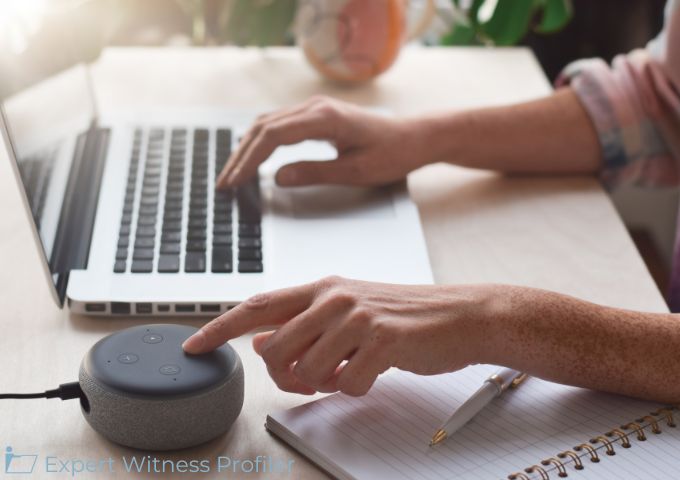
    This class action lawsuit arises out of Amazon’s practice of using smart-speaker technology (“Alexa”) to surreptitiously: (a) intercept; (b) eavesdrop; (c) record; (d) disclose; or (e) use millions of Americans’ voices and communications, all without their knowledge or consent. Such conduct blatantly violates Washington’s wiretapping law, which applies nationwide to Plaintiffs and all members of the Class.

    Defendants here, Amazon.com, Inc. and Amazon.com Services LLC (collectively, “Amazon” or “Defendants”), are therefore liable as a result of their egregious violations of the State Wiretapping laws – and are also liable for their violations of the Washington Consumer Protection Act (“CPA”), the Electronic Communications Privacy Act of 1986 (“Federal Wiretap Act”), and the Stored Communications Act of 1986 (“SCA”). Plaintiffs Kaeli Garner, Jodi Brust, Diane McNealy, Michael McNealy, Ricky Babani, Jeffrey Hoyt, Lorlie Tesoriero, Ronald Johnson, Selena Johnson and Caron Watkins (collectively, “Plaintiffs”) brought this action individually, and on behalf of a Class of similarly situated individuals, to redress those violations of law.

    Plaintiffs sought to exclude Amazon’s expert, Dr. Dominique Hanssens‘ opinions because he is not qualified to opine on privacy issues or the law and because the surveys he conducted are neither scientifically valid nor relevant to the issues in this case.
    Marketing Expert Witness

    Dominique Hanssens is a Distinguished Research Professor of Marketing at the UCLA Anderson School of Management and has been on the UCLA faculty since 1977. Hanssens’ undergraduate degree in applied economics was earned at the University of Antwerp. His M.S. and Ph.D. degrees are in Management from Purdue University. His focus is on strategic marketing problems, and both his research and his legal consultations have involved surveys and analysis regarding consumer perceptions and their response to alternative information disclosures.

    Get the full story on challenges to Dominique Hanssens’ expert opinions and testimony with an in-depth Challenge Study. 

    Discussion by the Court

    A. Knowledge and Expertise

    Plaintiffs argued that, because Hanssens’ expertise is in marketing, not privacy, he should not be permitted to assess consumers’ understanding of Amazon’s privacy policies. But Hanssens does not opine regarding how or whether consumers understood Amazon’s disclosures. Rather, he designed and conducted two surveys, one to see whether providing additional information related to Amazon’s use of Alexa voice recordings impacted consumers’ decisions to register an Alexa device (“Materiality Survey”) and the second to test consumers’ awareness of information regarding how Alexa works and their satisfaction regarding the ease of finding that information (the “Awareness Survey”). Hanssens has knowledge and expertise in consumer marketing and survey design sufficient to offer an expert opinion in this case.

    Plaintiffs also objected to Hanssens’ opinion that “individualized inquiry is needed to assess a particular Proposed Class Member’s awareness of and attitude toward a particular Alexa feature.”

    The objection was abandoned in reply and is overruled. Hanssens describes the data and evidence that led him to that conclusion, including his own survey results.

    B. Materiality Survey

    Plaintiffs argued that Hanssens’ Materiality Survey is irrelevant because it tests a factual scenario that does not apply to any potential class member, one in which the Alexa-enabled device has already been purchased and the consumer must now decide whether to register the device. Although it is possible that a consumer could review Amazon’s policies before purchasing a device, the scenario Hanssens tested appears to be the most common way in which a user becomes familiar with those policies.

    Hanssens ultimately concluded that “the likelihood to register an Alexa Device was statistically indistinguishable between the Test Group (which was shown additional information about Amazon’s practices) and the Control Group.” While the survey results and the conclusion drawn therefrom do not definitively resolve the issue of whether consumers would alter their behavior in the face of effective disclosures, they do suggest that the specific alterations Hanssens tested would not impact consumer behavior. To that extent, they are relevant.

    The problem is that the survey that generated the data underlying Hanssens’ conclusions is unreliable. Hanssens used a participant panel that was already predisposed to share information, excluded anyone who had never purchased or lived with an Alexa device (decisions that may correlate with a heightened concern for privacy), excluded anyone who was uncomfortable sharing personal information (a defect compounded by the fact that demographic information was requested at the beginning of the survey), and excluded anyone who took the time to read the disclosures. Having disqualified 95% of the respondent pool, many for reasons that could bias the responses to the main question of the survey, the results of the survey did not reliably reflect consumer reaction to the tested changes in disclosures.

    C. Awareness Survey

    Hanssens’ awareness survey was designed to test Plaintiffs’ contention that consumers are unaware that Alexa records, transcribes, and stores voice interactions even when the recordings are not intended for Alexa, that the recordings and transcriptions are stored and used by Amazon forever, and that human reviewers listen to and annotate the voice recordings. The survey also assesses whether consumers find these practices acceptable and whether consumers are satisfied with the availability of information regarding Alexa’s features. Plaintiffs argued that the survey results are irrelevant because it is based on consumer knowledge in 2024 and/or at the time they registered their first Alexa device (if in or after 2019).

    While this choice means that the survey results reflect consumer knowledge that has been bolstered by five to ten years of disclosures and may not accurately reflect consumer knowledge when Alexa devices were first introduced, it did not make the results irrelevant. The proposed classes undoubtedly include individuals who first purchased their devices in the studied time frame. While the survey is not coextensive with the class period and cannot reflect the information known to all class members, the results shed light on consumer awareness of the practices covered by the survey.

    Plaintiffs further argued that the Awareness Survey is unreliable because Hanssens did no research or follow-up questioning to confirm the respondents’ recollections, as represented in their survey responses. He did, however, limit the time frame of the questions to five years. As long as a “survey was conducted in accordance with generally accepted survey principles and that the results were used in a statistically correct manner . . ., technical inadequacies in the survey, including the format of the questions or the manner in which it was taken, bear on the weight of the evidence, not its admissibility.”

    Held

    The Court granted in part and denied in part Plaintiffs’ Daubert motion regarding Dr. Dominique Hanssens’ opinions.

    Key Takeaway:

    Shaky but admissible evidence is to be attacked by cross examination, contrary evidence, and attention to the burden of proof, not exclusion. That the opposing party can poke holes in a survey’s design and construction is not surprising: surveys are a scientifically constructed sampling method and, like any scientific method applied in the social sciences, there are bound to be limitations, restrictions, and flaws.

    Please refer to the blog previously published about this case:

    Computer Science Expert’s Testimony on the Value of Data Admitted

    Privacy Expert’s Testimony on Alexa Users Limited

    Case Details:

    Case Caption: Garner V. Amazon.Com, Inc.
    Docket Number: 2:21cv750
    Court Name: United States District Court for the Western District of Washington
    Order Date: March 30, 2026
  • Insurance Expert Allowed to Opine on Diagnostic Methods

    Insurance Expert Allowed to Opine on Diagnostic Methods

    This first-party property damage case arises from a dispute to insurance benefits related to a July 15, 2019 hailstorm. AMCO issued a policy of insurance (the “Policy”) to PTT Properties, Inc. for property located at 411 Sable Boulevard, 525 Sable Boulevard, 501 Sable Boulevard, and 14410 E. 6th Avenue, Aurora, Colorado 80111 (collectively, “the Property”). Plaintiff inspected the Property and advised it sustained hail damage. On January 17, 2020, AMCO advised PTT that the estimate for each location was below the wind/hail deductible, so no payment was owed.

    PTT assigned its claim with AMCO to Plaintiff. Following additional review, AMCO amended its repair estimate and issued payment of $421,980.86 for the Actual Cash Value associated with 411 Sable and $154,992.60 for the ACV associated with 501 Sable after applying the respective deductibles. On May 27, 2020, Plaintiff’s counsel provided PTT’s invocation of appraisal. The parties proceeded to appraisal which became binding on September 14, 2021. The award was for $40,113.83 in Replacement Cost Value and ACV without consideration of any deductible or prior payments. Plaintiff asserted claims for breach of contract, and declaratory judgment vacating the appraisal.

    Plaintiff disclosed David Herring a building consultant, estimator, umpire, appraiser, and self-described expert in the field of first-party property damage claims.

    Defendant filed a motion to strike Herring as an expert because he is generally unqualified to opine on the matters addressed in his report, because he is “not a lawyer and has never adjusted insurance claims before.”

    Insurance Expert Witness

    David Herring has decades of experience working on insurance claims, including cost estimation, appraisal, umpiring, and testifying as an expert witness.

    Get the full story on challenges to David Herring’s expert opinions and testimony with an in-depth Challenge Study.

    Discussion by the Court

    A. Legal Conclusions

    AMCO argued that several of the opinions expressed in Herring’s report involve improper legal conclusions as well as opinions that improperly invade the province of the jury.

    While Herring may offer testimony articulating what he believes to be the relevant industry standards, and explaining—factually—how Defendant’s conduct did or did not comport with those standards, the Court excluded Herring’s opinions that Defendant’s conduct was unreasonable or insufficient as a matter of law, or was in violation of any statute. In other words, he is unqualified to offer such opinions as a matter of legal expertise and such ultimate conclusions would not be helpful to the jury and would improperly intrude on its fact-finding function.

    B. Reliability

    Next, Defendant sought to exclude the “entirety of Herrings’ opinions” “because they are not based on sufficient facts and are not the product of reliable principles and methods” and are “the type of ipse dixit that courts refuse to accept.”

    However, the record reflects Herring has experience as a claims adjuster, providing estimating services for property damage, and investigating insurance claims. Herring is qualified to opine on hail damage to roof systems and the cost to repair such damage. He also appeared qualified to provide opinions regarding the cause of damage and the diagnostic methods used in the industry to detect water damage.

    Defendant also argued that Herring’s report is not reliable because he opined that the engineering report from January 20, 2020, did not address the ongoing leaks and water intrusion issues when the Defendant argues it did. The Defendant is free to point out inconsistencies in Herring’s report or that his opinions should be afforded less weight than the expert opinions proffered by its expert. It will be up to the jury to determine which expert to believe.

    Held

    The Court granted in part and denied in part Defendant’s motion to exclude the testimony of Plaintiff’s expert, David Herring.

    Key Takeaway

    An insurance industry expert’s methodology has been deemed reliable when the expert “explains what he knew of insurance industry standards and practices based on his experience, explains the facts and evidence he reviewed in the case,” and opines on how the insurer’s handling of the Plaintiff’s claim “fell short of the relevant industry standards or differed from handling of similar claims in his experience.”

    Case Details:

    Case Caption: Hettick Contractors LLC V. Amco Insurance Company
    Docket Number: 1:20cv412
    Court Name: United States District Court, Colorado
    Order Date: March 30, 2026
  • Construction Expert’s Testimony on Financial Ability Excluded

    Construction Expert’s Testimony on Financial Ability Excluded

    This case arises out of the Parties’ failed construction contract. Plaintiff Fifth Side Lodging, LLC is an entity formed for the sole purpose of developing a Fairfield Inn and Townplace Suites hotel in Edina, Minnesota. Rise is a commercial contractor specializing in “multifamily and hospitality modular construction projects.”

    In May 2019, Fifth Side and Rise began negotiating the Project in which Rise would serve as general contractor in Fifth Side’s construction of a hotel in Edina, Minnesota. The parties met numerous times for purposes of understanding each other’s financial health, general business practices, history in the industry, and overall ability to timely execute the contemplated Project. 

    On June 1, 2023, Rise and Fifth Side executed a construction contract (Agreement). Fifth Side sued Rise after Rise terminated the construction contract due to Fifth Side’s failure to supply adequate financial assurances.

    Rise filed a motion to exclude the expert testimony of Ben D. Nolan, who opined that Fifth Side had the financial ability to fund the Project, and that Fifth Side met its obligation under the Owner’s Financial Assurances provision.

    Construction Expert Witness

    Ben Davis Nolan has served the construction industry for over thirty-eight years, having worked as a project engineer for the US Army Corps of Engineers (ACOE), project manager for a major general contractor, marine contractor, utility contractor, and president of a general contracting company.

    His career has progressed from hands-on construction and engineering field work to construction dispute resolution and management consulting. Nolan has managed over two hundred consulting engagements for clients since 1992.

    Get the full story on challenges to Ben Nolan’s expert opinions and testimony with an in-depth Challenge Study.

    Discussion by the Court

    Rise filed a motion to exclude the testimony of Nolan, who opined that Fifth Side had the financial ability to fund the Project, and that Fifth Side met its obligation under the Owner’s Financial Assurances provision. Rise argued that Nolan’s first opinion was irrelevant to the narrow contract claims, which center on whether Fifth Side met its obligation under the Agreement’s Owner’s Financial Assurances provision. Rise also argued that Nolan improperly relied on documents Fifth Side did not provide to Rise before contract termination. The Court agreed with Rise.

    The core issues for the jury are whether Fifth Side met its obligation under the Owner’s Financial Assurances provision and, conversely, whether Rise had the right to terminate the Agreement under that provision.

    Because Nolan’s opinion that Fifth Side had the financial ability to complete the project is irrelevant to those issues, he is barred from testifying on that topic. The same is true for any post-termination evidence demonstrating Fifth Side’s financial wherewithal.

    Indeed, the question is not whether Fifth Side could in fact fund the Project, but rather whether it provided Rise with reasonable evidence that it could do so.

    As a result, Nolan may not testify as to Fifth Side’s financial ability to complete the Project, nor may he discuss post-termination documents he relied on to establish Fifth Side’s financial wherewithal. Any post-termination evidence regarding Fifth Side’s financial means is likewise inadmissible. Nolan may testify, however, as to whether the documents Fifth Side provided to Rise pre-termination were sufficient, in his opinion, to meet the Owner’s Financial Assurances provision.

    Held

    The Court granted in part and denied in part Defendants’ motion to exclude the testimony of Ben Nolan.

    Key Takeaway

    The proponent of the expert testimony bears the burden of proving its admissibility by a preponderance of the evidence. While Nolan’s qualifications are not really in dispute, Nolan’s opinion that Fifth Side had the financial ability to complete the project is irrelevant to the core issues.

    Case Details:

    Case Caption: Fifth Side Lodging, LLC V. Rise Construction Services, LLC
    Docket Number: 0:23cv2649
    Court Name: United States District Court, Minnesota
    Order Date: March 30, 2026
  • Healthcare Administration Expert’s Testimony on Consent Form Excluded

    Healthcare Administration Expert’s Testimony on Consent Form Excluded

    Plaintiff Jacqueline Garrison applied for a job as a United Airlines ramp service employee. Garrison, like all ramp service applicants, had to perform a physical capability assessment. Like all applicants, Garrison had to fill out several forms, provided by Datafit, before taking the physical test. Garrison argued that the Consent & Authorization Form solicits family medical history in violation of the Illinois Genetic Information Privacy Act.

    Plaintiff has retained an expert, Dr. J. Richard Ludgin, who will testify that the consent form targets the identification of information that Plaintiff argued constitutes genetic information under GIPA’s broad definitions for same.

    United filed a motion to exclude the testimony of Garrison’s expert, Ludgin, pursuant to Federal Rule of Evidence 702 and the Daubert standard.

    Healthcare Administration Expert Witness

    Dr. John Richard Ludgin is the the former Chief Medical Officer of BayCare Health System, Inc. Since 1998, he has held senior hospital leadership roles, often titled Chief Medical Officer, though his responsibilities have consistently extended beyond traditional clinical leadership. In addition, he has played key roles in Joint Commission compliance, both local and national healthcare initiatives, clinical quality improvement, patient safety, IRB oversight, clinical research, protocol development and implementation, quality outcomes reporting, clinical risk management and regulatory compliance.

    Get the full story on challenges to J. Richard Ludgin’s expert opinions and testimony with an in-depth Challenge Study.

    Discussion by the Court

    Ludgin’s Opinion Is Not the Product of Reliable Principles and Methods

    United argued that Ludgin does not base his opinion on any reliable principle or method. Ludgin’s opinion focuses on the following language from the consent form: “I understand that I must notify the technician administering the assessment if I have any ailments that may impede my performance of the assessment.”

    In a written declaration, Ludgin asserted that this language on the consent form “reasonably and implicitly required” “family history of certain conditions” because these conditions “may constitute inherited bodily disorders which could impede the prospective employee’s performance of the assessment.”

    Then, during his deposition, Ludgin tried to flesh out his analysis. He testified that a job applicant could be inclined to provide more information than what the employer had requested because “people who are looking to get hired are very solicitous, especially when they want the job … they’re usually pretty forthcoming … more broadly than what is asked or what’s required, and maybe even into the realm of what’s prohibited to be requested.”

    Anslysis

    Nothing in Ludgin’s professional experience suggests that he is an expert in human resources, hiring processes, or the psychology of job applicants. At best, he testified that he has hired some unspecified number of people at unspecified times in the past.

    As a result, Ludgin’s testimony to that effect does not support his opinion regarding what information United’s consent form sought.

    The same is true for other support Ludgin proffered for his opinion: that, in his professional experience working in the healthcare industry, patients filling out consent forms construe “words like” “ailment” “much more broadly” and less “precisely” than medical practitioners. This phenomenon of imprecision may be true of patients receiving medical care—where Ludgin’s professional experience lies. Again, however, Ludgin did not connect the dots to the instant case.

    Ludgin did not point to anything in his professional experience that led him to the conclusion that the “common sense” or “just in general” meaning of “ailment” includes family health history.

    A jury is perfectly capable of assessing the “common sense” or “general” meaning of the word “ailment” themselves, without Ludgin’s input. The Court held that his opinion was unhelpful and inadmissible.

    Held

    The Court granted United’s motion to exclude Dr. J. Richard Ludgin’s opinions.

    Key Takeaway

    Ludgin has not connected his decades in healthcare administration to the question at hand: How a reasonable person, filling out the consent form pursuant to their United job application, would understand the statement: “I understand that I must notify the technician administering the assessment if I have any ailments that may impede my performance of the assessment.”

    Case Details:

    Case Caption: McKnight V. United Airlines, Inc
    Docket Number: 1:23cv16118
    Court Name: United States District Court, Illinois Northern
    Order Date: March 30, 2026
  • Emergency Medicine Was Expert Allowed to Opine on Correctional Oversight

    Emergency Medicine Was Expert Allowed to Opine on Correctional Oversight

    Approximately 30 hours after Mark Beckner was booked into the Santa Cruz County Jail, he was found dead in his cell. Beckner’s son, Brandon Beckner, and his estate (“Plaintiffs”) filed suit asserting that the County of Santa Clara, correctional officers, and jail personnel were deliberately indifferent to Beckner’s serious medical needs in violation of federal and state law.

    Plaintiffs filed a motion to exclude the testimony of Patrick Ennis, M.D., who is one of California Forensic Medical Group (“CFMG”) Defendants’ expert witnesses. CFMG Defendants filed a motion to exclude the testimony of Jeffrey E. Keller, M.D., one of Plaintiffs’ expert witnesses.

    Correctional Healthcare Expert Witness

    Patrick K. Ennis, M.D. is a general physician and withdrawal specialist working in the field of corrections in Chicago, Illinois.

    Get the full story on challenges to Patrick Ennis’ expert opinions and testimony with an in-depth Challenge Study.

    Emergency Medicine Expert Witness

    Jeffrey Ernest Keller, M.D. is an emergency medicine physician licensed to practice in Idaho. He has experience providing direct clinical care to incarcerated patients and supervising medical programs in both jails and prisons.

    Want to know more about the challenges Jeffrey Keller has faced? Get the full details with our Challenge Study report.

    Discussion by the Court

    1. Testimony of CFMG Defendants’ Expert Patrick Ennis, M.D.

    CFMG Defendants designated Ennis “to provide expert testimony on the standard of care and actions and inactions of CFMG staff during Beckner’s medical care at the Santa Cruz County Jail.”

    However, Plaintiffs argued that (1) Ennis lacked the requisite qualifications to testify to specific standards of care, likely course of treatment in an emergency room, and the likely outcome of those treatments, and (2) Ennis’ opinions are not sufficiently reliable. The Court disagreed. First, Ennis is sufficiently qualified to testify to the proffered topics given his experience working “as an attending physician for the Department of Correctional Health Services/Cermak Health Services of Cook County in Chicago, Illinois since 2017” and as “the Medical Director of the Cermak Health Services of Cook County Opioid Treatment Program since March of 2022,” where he “works with correctional nurses everyday.”

    CFMG Defendants pointed out that Ennis’ testimony concerning the likely course of treatment in an emergency room and the outcome of those treatments is offered only in rebuttal to Plaintiffs’ expert Keller’s testimony. The Court found that Ennis’ education, training, credentials, and experience as a medical doctor in a correctional setting qualifies him as an expert to discuss standards of care and to rebut Keller’s testimony. Second, Ennis’ opinions are based upon sufficient facts and data given that Ennis conducted a blind review of the records in forming his opinion. Accordingly, the Court found that his opinions are sufficiently reliable.

    2. Testimony of Plaintiffs’ Expert Jeffrey Keller, M.D.

    Plaintiffs designated Keller to testify to correctional medical systems and oversight, clinical correctional care, emergency department care services and procedures, and emergency transport.

    CFMG Defendants did not challenge Keller’s qualifications as a medical professional in a correctional setting. CFMG Defendants instead argued that: (1) Keller’s opinions that Beckner’s death was preventable and that he suffered unnecessarily are speculative, contradict well-established scientific fact, and, as such, are unreliable and more prejudicial than probative; and (2) Keller’s opinions that any actions or omissions by Defendant CFMG caused any harm to Beckner are speculative and are unsupported by sufficient facts. The Court disagreed with both arguments.

    Keller based his opinions on his personal experience as an emergency room physician and his personal experience treating ruptured arteries (though not splanchnic artery ruptures). This is a sufficiently reliable basis for his opinions. Further, Keller’s opinions about Defendant CFMG’s actions are based on the operative complaint, grand jury testimony submitted with the complaint, Beckner’s medical chart, CFMG’s “policies and nursing protocols,” and the testimony of nurse Defendant Sarah Hewett, among other sources. Again, this is a sufficient factual basis for Keller’s opinions in this case. The Court found that Keller’s opinions are sufficiently reliable when coupled with his experience and credentials.

    Held

    The Court denied both Plaintiffs’ motion to exclude the testimony of Patrick Ennis and Defendants’ motion to exclude the testimony of Jeffrey Keller.

    Key Takeaway

    Expert opinion testimony is relevant if the knowledge underlying it has a valid connection to the pertinent inquiry. And it is reliable if the knowledge underlying it has a reliable basis in the knowledge and experience of the relevant discipline.

    Case Details:

    Case Caption: Beckner V. County Of Santa Cruz
    Docket Number: 5:23cv5032
    Court Name: United States District Court, California Northern
    Order Date: March 26, 2026
  • Automotive Expert’s Opinion on Lost Sales Excluded

    Automotive Expert’s Opinion on Lost Sales Excluded

    Plaintiff Sun State Ford initiated this action for monetary, declaratory, and injunctive relief on September 8, 2023. Defendant Ford Motor Company is a manufacturer and distributor of Ford brand vehicles, and Plaintiff is a constituent franchise dealer. This case arises from Defendant’s alleged breach of oral contracts, perpetration of unfair business dealings, and other unlawful practices. 

    Defendant filed a Daubert motion seeking to exclude the testimony of Plaintiff’s expert, Joseph Roesner.

    Automotive Expert Witness

    Joseph F. Roesner possesses a B.A. in business administration and history from the Marymount College of Kansas and an MBA from the University of Arizona.

    Roesner has over 35 years of experience in the retail automotive industry and has conducted analyses and studies of hundreds of new motor vehicle dealerships of various line-makes, including Ford.

    Get the full story on challenges to Joseph Roesner’s expert opinions and testimony with an in-depth Challenge Study.

    Discussion by the Court

    Roesner was retained to determine whether the sale of “new retail Ford light and medium trucks by Rush Truck” impacted new retail Ford sales of Sun State Ford from October 2019 through 2024.

    Roesner was told to accept two assumptions in forming his opinions: (1) Sun State Ford was told that Rush Truck would only be serving the commercial truck market and would not be competing for retail sales, and (2) to assume that “as a matter of law,” Rush Truck should not have made new retail Ford sales, and such sales should have been made by other licensed Ford dealerships.” He outlined two primary opinions. First, he opined that during the relevant time, “Sun State’s sales of new retail Ford vehicles sold by Rush Truck . . . would have at a minimum been 86 vehicles.” Second, he opined that the percentage of new retail Ford vehicles sold by Rush Truck during the relevant period is inconsistent with a dealership only serving the commercial vehicle market.

    The Defendant argued that Roesner’s lost sales opinion is irrelevant and unhelpful because he did not convert the raw numbers or lost sales into damages. The Defendant also claimed that the opinions are unhelpful and unreliable because Roesner accepts assumptions from Plaintiff’s counsel that contradict the pleaded allegations and the testimony of Plaintiff’s main witness and therefore do not align with the facts of the case. Lastly, the Defendant asserted that the Plaintiff’s methodology is unreliable, because “some unknown number of what [Roesner] considered to be ‘retail’ sales could have been commercial sales.”

    A. Calculation of Damages

    The Plaintiff’s calculation of damages was not provided until August 28, 2025, after discovery closed on July 31, 2025, and after the Defendant filed its Daubert Motion. Furthermore, Roesner did not provide an opinion on the damages suffered by the Plaintiff. Since the Plaintiff failed to disclose its damages calculation until after discovery closed, making such evidence inadmissible, Roesner’s estimate of the sales allegedly lost to Rush Truck is unhelpful. Knowing the number of light-duty and medium-duty trucks sold by Rush Truck that should have been sold by the Plaintiff does not assist the jury in calculating damages. In short, nothing in Roesner’s report addresses the types of damages the Plaintiff identified in its Rule 26 disclosure.

    Accordingly, the Court excluded Roesner’s opinions regarding the number of new retail Ford vehicles sold by Rush Truck during the relevant period.

    B. Assumptions and Methodology

    Roesner was asked by Plaintiff’s counsel to assume that Rush Truck would only serve the commercial truck market and would not compete with Plaintiff for retail sales, and to further assume that, as a matter of law, such retail sales should have been made to other licensed Ford dealerships.

    Roesner’s assumption that Rush Truck was prohibited from selling any retail vehicles conflicts with the evidence. The question is whether this inconsistency between the assumptions and the facts renders Roesner’s opinion about Rush Truck’s retail sales, and thus those lost by the Plaintiff, inadmissible. The same issue applied to Roesner’s claim that the percentage of new retail Ford vehicles sold by Rush from 2019 to 2024 is inconsistent with a commercial truck seller.

    Roesner’s reliance on these assumptions undermines his methodology. That is, Roesner’s method for counting the sales that the Plaintiff “lost” to Rush Truck does not consider that Rush was allowed to make retail sales incidental to their heavy-duty truck and fleet customers. This is because he was instructed to assume that Rush Truck was prohibited from making any retail sales. 

    Roesner’s opinion on lost sales suffers from a similar flaw. He relied on the assumption that retail sales made by Rush Truck should have been made by other licensed Ford dealerships. This assumption overlooks the fact that Rush Truck was allowed to make retail sales incidental to its heavy-truck and commercial customers.

    Held

    The Court granted the Defendant’s Daubert motion to exclude Joseph Roesner’s opinions.

    Key Takeaway

    Roesner did not specify the data or analysis supporting his conclusion that if Rush’s retail sales were impermissible, they would have been captured by Plaintiff. 

    Because Roesner’s reliance on assumptions provided by Plaintiff’s counsel weakens his methodology for calculating “lost” retail sales and his characterization of Rush Truck as operating inconsistently with commercial sales, the Court excluded these opinions as unreliable.

    Case Details:

    Case Caption: Sun State Ford, Inc. V. Ford Motor Company
    Docket Number: 6:23cv1728
    Court Name: United States District Court, Florida Middle
    Order Date: March 27, 2026
  • Biogas Expert Allowed to Opine on Oxygen Requirements

    Biogas Expert Allowed to Opine on Oxygen Requirements

    In 2015, the City of Sioux Falls (the “City”) “commissioned the Sioux Falls Water Reclamation Facility Digester Gas Conditioning System Project (the ‘Project’) to add a new digester gas conditioning system to its water reclamation facility that would remove high concentrations of hydrogen sulfide to concentrations below 100 parts per million volume (ppmv), and that would remove siloxane to concentrations below 100 parts per billion by volume (ppbv), which would then enable the City to operate its GE Jenbacher gas engine generator to create electricity for the benefit of the City.”

    For reasons which are disputed by the various parties in this matter, the Project, particularly the Azzuro system meant to remove hydrogen sulfide, was unsuccessful.

    The City brought this litigation seeking damages against some parties involved with the Project. One of those Defendants, Azzuro, Inc., brought a counterclaim against the City.

    The City disclosed Lowell Howard, PE, as a retained expert witness in this matter. Azzuro filed a motion to exclude in part the testimony of Howard.

    Biogas Expert Witness

    Lowell E. Howard, PE has 40 years of experience designing, manufacturing, and installing or supplying biogas treatment systems. He has been involved in 20-40 biogas treatment system projects around the world, including several where the primary goal of the project was to remove hydrogen sulfide from biogas.

    Get the full story on challenges to Lowell Howard’s expert opinions and testimony with an in-depth Challenge Study.

    Discussion by the Court

    Azzuro challenged Howard’s opinions “because he is not qualified as an expert by knowledge, experience, training, or education on issues relating to biological desulfurization systems as required by Rule 702.”

    Azzuro argued that Howard’s testimony demonstrates an unawareness that renders any opinion he may have about a required oxygen level to be a “fundamentally unsupported conclusion based on pure speculation.”

    The City argued that Howard used “his experience and educated understanding of basic biological and chemistry principles and chemical processes at play in the biogas treatment industry, as well as the engineering principles and chemical processes necessary to remove hydrogen sulfide from biogas, to explain why the Azzuro system did not and could not work as designed.” And the City argued that although Azzuro “contended that biological systems are vastly different from media-based systems, it does not cite to any competing expert’s opinion, legal authority, or fact in the record to support that conclusory statement.”

    The City argued that although Howard “has not previously worked on a biological system like the Azzuro system, Howard has certainly demonstrated a sufficient understanding of the biogas industry as a whole, the design of biogas systems, and engineering principles and the chemical processes that must be considered in a biological hydrogen sulfide removal system in order to meet the qualification threshold under Rule 702 and Daubert.”

    Analysis

    The Court is persuaded by the City’s arguments. The Court believed that this is also the case with respect to Azzuro’s argument that Howard’s opinions lack a proper factual foundation. While Howard made the statements quoted above about his unfamiliarity with the Azzuro system, those statements are not automatically fatal to admissibility when the full record is considered. Howard’s report and further testimony suggested that he studied the Azzuro system and that, based upon this review, he does not believe it would work.

    Held

    The Court denied Azzuro, Inc.’s motion to exclude in part the testimony of Lowell E. Howard.

    Key Takeaway

    Howard is a decades-long veteran of the biogas industry. Where he opines on oxygen requirements for hydrogen sulfide removal, he does so relying on concepts of “[b]asic chemistry.” Howard does not hold himself out as an expert on the particular growth media in the Azzuro system or biological solutions in general. Rather, he admits some unfamiliarity with those systems and how they operate except in the broadest sense. Howard supplemented his knowledge by reading a study about biological systems, but he did not start on a clean slate because there are not different periodic tables of elements for fixed-bed media systems and biological systems.

    Case Details:

    Case Caption: City Of Sioux Falls V. Azzuro, Inc.
    Docket Number: 4:22cv4052
    Court Name: United States District Court, South Dakota
    Order Date: March 25, 2026
  • Accident Reconstruction Expert’s Testimony on Traffic Density Excluded

    Accident Reconstruction Expert’s Testimony on Traffic Density Excluded

    This action involves a motor vehicle accident in which James Francis O’Rourke was killed. Plaintiff, as Personal Representative of the Estate of O’Rourke, alleged that Defendants caused the accident by the negligent and wanton transportation of a superload in Alabama. The superload and a vehicle operated by O’Rourke collided on a bridge.

    Plaintiff proffered Travis Gourley as an accident reconstructionist. Gourley obtained data which inform his opinions. He collected EDR information from both O’Rourke’s car and the superload, the GPS and Garmin data from the superload, and photographs of the accident scene. Gourley visited the scene in the daytime and nighttime, reviewed dash camera footage from the superload and an escort vehicle. He reviewed security camera footage from two businesses along the designated route.

    Defendants filed a motion to strike several of Gourley’s opinions. They first challenged his opinion that O’Rourke’s vehicle was likely not stopped on the roadway shoulder prior to the accident. Defendants characterized this opinion as speculative and conjectural. However, they acknowledged that Gourley based his opinion on physical evidence, the acceleration and deceleration capabilities of O’Rourke’s vehicle, the relative spacing of the vehicles in the superload escort convoy as depicted in surveillance and dash camera video, and the time between the superload driver being informed of oncoming vehicles and the moment of impact.

    Defendants argued that Gourley’s opinions should be stricken because he made assumptions for which he “performed no real-world testing or simulations,” and failed to account for alternative variables and other witness testimony.

    Accident Reconstruction Expert Witness

    Travis R. Gourley holds a bachelor’s degree in civil engineering and has graduate education in vehicle dynamics, human factors, engineering, and accident reconstruction.

    Get the full story on challenges to Travis Gourley’s expert opinions and testimony with an in-depth Challenge Study.

    Discussion by the Court

    To begin with, Defendants specified three opinions that they argued fail “to adequately account for obvious alternative explanations for how and why this accident occurred.”

    The three challenged opinions are that the accident could have been avoided if (1) the superload, pilot and Trooper vehicles commenced the move at 9:00 p.m. as opposed to 8:47 p.m., (2) the superload traveled the posted speed limit of 45 mph, and (3) the superload slowed to a complete stop and moved over to the right after being alerted of the oncoming vehicles.

    As for the first challenged opinion, i.e., that the accident could have been avoided if the route had begun at 9:00 p.m. rather than 8:47 p.m., Gourley bases his opinion on the subject ALDOT permit and his “common sense” understanding of traffic density. As a result, the Court concluded that Defendants’ motion is due to be granted as to this opinion. Basically, this opinion is speculative, unhelpful to the jury, an improper subject of expert testimony, and improper testimony regarding a violation of the subject ALDOT permit.

    The Court concluded that Defendants’ motion as to the second and third specified opinions is due to be denied because those opinions may be helpful to the jury and are not subject to exclusion, but rather are proper subjects of cross-examination.

    Held

    The Court granted in part and denied in part Defendants’ Daubert challenge and/or motion to strike certain opinions of Plaintiff’s expert Travis Gourley.

    Key Takeaway

    The failure to include variables in an expert’s testing will affect the analysis’ probativeness, not its admissibility.

    Even if a jury could find some inconsistency between an expert’s report and his deposition that might undermine his testimony at trial, that credibility question is one for the jury to answer.

    Case Details:

    Case Caption: Goodin V. J.H. Walker, Inc.
    Docket Number: 1:24cv286
    Court Name: United States District Court, Alabama Southern
    Order Date: March 24, 2026
  • Architecture Expert Was Allowed to Opine on the Safety Screening Area

    Architecture Expert Was Allowed to Opine on the Safety Screening Area

    This action arises out of a March 18, 2019 trip-and-fall accident (the “Accident”) that occurred in the lobby of the Suffolk County Supreme Court Courthouse located at 1 Court Street, Riverhead, New York (the “Courthouse”).

    Plaintiff Carole Gutterman was using a cane as she went through the Courthouse’s security checkpoint due to a prior, unrelated, motor vehicle accident. Gutterman sustained injuries as a result of stepping onto a platform.

    Defendant Suffolk County sought to preclude the Court from admitting the report of Plaintiff’s expert, Richard J. Robbins, R.A.

    The County asserted that Robbins’ “entire report is based upon the false premises that Plaintiff either stepped up onto the security platform, or attempted to step onto the platform, and that she was reaching for her belongings or attempted to reach for he belongings at the time that her accident occurred.”

    Architecture Expert Witness

    Richard James Robbins, R.A is a professional with over thirty years of experience in the administration and supervision of multi-million dollar design & construction contracts in the public & private sector.

    Get the full story on challenges to Richard Robbins’ expert opinions and testimony with an in-depth Challenge Study.

    Discussion by the Court

    Robbins is an architect who inspected the Courthouse and provided an expert opinion regarding the conditions of its safety screening area.

    Robbins opined that the platform from which Plaintiff sought to retrieve her cane presented three dangerous conditions:

    1. At a height of 6 3/8 inches, the platform adjacent to the conveyer belt is inaccessible to people with a disability;
    2. The color of the floor adjacent to the conveyer belt and the presence of a black-colored mat “makes it difficult for pedestrians to discern the presence of the significant change in level which exists in their immediate path of travel . . . .”; and
    3. The barrier reduced the clear width of the platform to 26 inches, whereas 36 inches of clearance is required.

    Regardless of whether Plaintiff stepped on to the platform, the Robbins Report still reached several relevant conclusions, namely that the platform at 6 3/8 inches was too high, that the color of the floor and platform made it difficult to discern the change in height, and that the width to clear the barrier was too narrow. All of these conclusions could be relevant to determine the cause of the accident, and, therefore, be helpful to the trier of fact in determining whether the County was negligent.

    Held

    The Court denied the motion to preclude Richard Robbins’ expert report.

    Key Takeaway

    The proponent of the expert testimony has the burden of establishing, by a preponderance of the evidence, that the testimony is competent, relevant, and reliable. In evaluating the admissibility of expert testimony, the trial court must consider whether: (i) the witness is qualified as an expert on the topic at issue; (ii) the expert’s opinion is based on reliable data and methodology; and (iii) the expert’s opinion will assist the trier of fact.

    Case Details:

    Case Caption: Gutterman V. Suffolk County
    Docket Number: 2:20cv4168
    Court Name: United States District Court, New York Eastern
    Order Date: March 24, 2026
  • Automotive Expert’s Testimony on Exemplar Testing Excluded

    Automotive Expert’s Testimony on Exemplar Testing Excluded

    This is a products liability action concerning a 1998 Ford Expedition owned by Plaintiff, Lorelle Thompson. On December 27, 2016, Plaintiff was driving the vehicle in her neighborhood and stopped near her mailbox to check her mail. Upon exiting the vehicle, Plaintiff fell to the ground. While Plaintiff was on the ground, the vehicle rolled backward over her left leg.

    Ford Motor Company filed a motion to exclude the testimony of Plaintiff’s expert, Richard A. Hille.

    Automotive Expert Witness

    Richard Allen Hille has been involved in automotive work for virtually all of his adult life beginning with his start in automotive racing in 1968 and continuing through his current racing activities.

    He has reconstructed and analyzed over 3000 motor vehicle accidents, including virtually every kind of motor vehicle accident that can occur, impacts from any direction, rollovers, vaults, falls, submersions and more.

    Want to know more about the challenges Richard Hille has faced? Get the full details with our Challenge Study report.

    Discussion by the Court

    Hille’s expert report places significant reliance on the exemplar testing conducted by him. Defendant challenged the reliability of Hille’s testing, methods, and related testimony.

    Hille conducted testing on an exemplar Ford Expedition on February 17, 2023. This testing was not well documented or controlled. Hille took just eight photographs and no videos during his testing. Thus, the Court was not able to review any footage of the testing. Moreover, Hille apparently did not create any contemporaneous written record of his testing conditions or results.

    Analysis

    Additionally, Hille’s testimony revealed that the testing was inexact in several ways.

    First, he testified that he moved the exemplar vehicle’s shifter from drive to park “approximately 100” times, that “about half the time” the shift lever failed to reach the park detent and instead ended up in false park, and that on “two occasions” the shift lever fell from false park into powered reverse.

    Second, Hille broadly testified “it took seconds” for the shift lever to fall from false park to reverse on those two occasions, but he did not offer an exact time.

    Third, Hille testified that he did not measure the force with which he moved the shifter from drive to park, and that he deliberately perched the shifter into false park “a couple of times.”

    Fourth, although the testing conditions varied throughout the day, there is no indication that these variations were documented or accounted for. Specifically, the exemplar vehicle’s shift cable was initially secured to the shift lever with “gorilla tape” due to a malfunctioning bushing and was later reattached using a newly purchased bushing. Hille testified that “75, 80 percent” of the testing was done with the new bushing, and the rest was done with the tape, but he did not specify how many tests were conducted with tape as opposed to the new bushing.

    Moreover, Hille did not identify which configuration—the tape or the new bushing—was in use when the shifter moved from false park to powered reverse.

    The Court noted that Hille’s lack of documentation essentially requires the Court to “just believe him” in order to admit his opinions. 

    Held

    The Court granted Ford Motor Company’s motion to exclude the testimony of Richard Hille pursuant to Federal Rule of Evidence 702

    Key Takeaway

    While an expert need not adhere to any one documentation protocol, the near-total absence of records here, makes meaningful review of Hille’s methodology impossible.

    Case Details:

    Case Caption: Thompson V. Ford Motor Company
    Docket Number: 1:22cv541
    Court Name: United States District Court, Colorado
    Order Date: March 24, 2026