Blog

  • Architecture Expert Not Allowed to Opine on the Safety of Retail Escalators

    Architecture Expert Not Allowed to Opine on the Safety of Retail Escalators

    Dick’s Sporting Goods, Inc. (“DSG”) operated a retail location in Lyndhurst, Ohio. After the lone up-down escalator in the Lyndhurst Store stopped working, it was not barricaded though the escalator remained non-operational and stationery.

    Tiffiney Jones contended that she felt a sharp pain in her toe while climbing the stationary escalator and had stepped on a metal wire located on
    the escalator steps, which punctured her sandal and sock.

    Architecture Expert Witness

    Richard L. Zimmerman is currently a licensed, registered professional architect in the State of Ohio, and has been so continuously from 1977 to the present.

    He has reviewed and assessed compliance of a wide variety of buildings and sites with local and state building codes and ordinances, and the norms of accepted and reliable architectural, human factors, engineering, construction, maintenance, and safety industry principles, methods and practices.

    Fortify your strategy by reviewing a Challenge Study detailing grounds for excluding Richard Zimmerman’s expert testimony.

    Discussion by the Court

    A. Zimmerman is not Qualified to Give Expert Testimony

    DSG argued that Zimmerman’s education and experience demonstrated that he is a qualified architect, but an expert’s status as a qualified architect does not necessarily mean that he can testify on the “retail maintenance of escalators, which is the issue in this case.” DSG asserted that Zimmerman’s conclusions that DSG violated the Ohio Revised Code, Ohio Building Code, Elevator Code, and Escalator Code cannot be made without knowledge of the retail standards for maintaining escalators.

    The Court agreed with DSG and found that Zimmerman is not qualified to testify on commercial escalator maintenance and safety. Zimmerman’s qualifications are related to his status as a registered architect and his experience with Ohio Codes, retail locations of escalators, and pedestrian traffic flow.

    His experiences as an architect did not provide a foundation for specialized knowledge on the safety, maintenance, and structural integrity of retail escalators. So, without technical or specialized knowledge of the appropriate and relevant standards to maintain escalators, Zimmerman was unqualified to opine on DSG’s adherence to the standard of care to maintain the escalator.

    B. Zimmerman’s Conclusions Are not a Product of Reliable Methods

    In the methodology’s first step, Zimmerman conducted a fact-finding inquiry by reading the incident report, depositions, and DSG’s internal policies. Zimmerman also reviewed photographs and video surveillance. Notably absent from this factual basis examination are visits to the Lyndhurst Store, inspections of the disputed escalator, modeling, or testing of the escalator. In his second step, Zimmerman reviewed and identified relevant safety standards and provisions of the Ohio Code, which required no data collection, testing, or analysis. Finally, the last step in Zimmerman’s methodology simply applied the facts established in the first step to the various Code provisions identified in the second step. From this application, Zimmerman arrived at the conclusion that DSG failed to maintain a safe premises because Plaintiff attests that there was a sharp object on the escalator. This is a significant analytical jump for Zimmerman to make, and he did not stick the landing.

    DSG contended that Zimmerman’s failure to inspect the Lyndhurst Store, examine the escalator, or test Plaintiff’s footwear resulted in untested and unsupported conclusions.

    The Court agreed with DSG and found that Zimmerman’s testimony is not based on reliable procedures.

    C. Zimmerman’s Opinions Will Not Assist the Trier of Fact

    DSG contended that Zimmerman’s testimony contains no new perspectives to assist the jury because his testimony was based on a simple identification of relevant code language and application to readily available documents, which the jury could do themselves.

    Consistent with the above analysis, the Court found that Zimmerman’s testimony would not assist the trier of fact in resolving this litigation.

    Held

    The Court granted DSG’s motion to exclude the testimony of Richard L. Zimmerman.

    Key Takeaway

    Expert opinions that are not based on site-specific data or a generally accepted modeling but are based on anecdotal evidence with improper extrapolations do not comply with Rule 702 requirements.

    Aside from gathering facts and identifying relevant Code provisions, Zimmerman failed to provide a basis for his conclusions that address where the sharp object was located on the escalator, if the object was caused by DSG’s malfeasance, and whether the sharp object caused Plaintiff’s injuries.

    Case Details:

    Case Caption: Jones V. Dick’s Sporting Goods, Inc.
    Docket Number: 1:24cv619
    Court Name: United States District Court, Ohio Northern
    Order Date: April 07, 2026
  • Insurance Expert Not Allowed to Opine on the Cause of Death

    Insurance Expert Not Allowed to Opine on the Cause of Death

    Plaintiffs are the estate and heirs of Timothy Hunt, who was killed in a grain engulfment accident. Defendant is the insurance company who insured the farm (Butts Farms) where the accident occurred. Defendant denied coverage for the accident under the policy. Butts Farms assigned its claims to Plaintiffs as part of an arbitration and non-execution agreement. Plaintiffs secured an arbitration award of approximately $12 million against Butts Farms and seeks to collect that from Defendant.

    Plaintiffs designated Ronald Clifton as an expert on Defendant’s claims handling practices. Clifton’s report outlined the facts of the case, and in doing so concluded that the grain vacuum Hunt was using was attached to the trailer. He opined on the liability of Butts Farms, coverage of the loss under the policy, claims handling deficiencies by Defendant, Defendant’s conformance with its “Claims Best Practices” and the Kansas Unfair Claim Settlement Practices Act, and Defendant’s breach of fiduciary duty toward Butts Farms.

    The Defendant filed a motion to exclude Plaintiffs’ expert Clifton.

    Insurance Expert Witness

    Ronald Clifton has over 37 years of claim handling experience. He has also served as an insurance claims litigation consultant for over 21 years.

    Get the full story on challenges to Ronald Clifton’s expert opinions and testimony with an in-depth Challenge Study.

    Discussion by the Court

    Clifton’s opinion is “that a reasonable insurer would have settled this claim and paid the full available policy limits,” that Defendant acted negligently by failing to settle the claim for policy limits, and that Defendant failed to act in good faith in handling the claim.

    The Court has reviewed Clifton’s report. It shared many of the concerns raised by Defendant. Clifton’s report includes an extensive discussion of policy provisions and a conclusion that the accident is covered under the policy.

    Analysis

    To begin with, Clifton concluded without elaboration that the grain vacuum was attached to the grain trailer. But that is a factual question the jury will be asked to decide—a fact question that does not require expert testimony. If a jury finds the grain vacuum was attached to the trailer (which can include being tied), coverage exists under the policy. It is not Clifton’s role to tell the jury how they should decide by simply declaring there is coverage based on the grain vacuum being attached. 

    To the Court’s knowledge, there are no disputes about any other provisions in the policy. Even to the extent there was an issue about the policy, it is not Clifton’s role to opine on what the policy says or does not say because that is a legal issue for the Court to decide.

    Clifton’s report also repeated opinions of others, including a doctor’s opinion about Hunt’s cause of death. Clifton is not qualified to opine on that issue, nor is it proper for him to simply repeat what others have said. To the Court’s knowledge, Hunt’s cause of death is not an open issue in this case.

    There are other opinions that do not seem to “fit” the case. For example, Clifton’s report included a series of opinions that Butts Farms had a duty to exercise reasonable care toward Hunt, and it breached that duty. To the Court’s knowledge, Butts Farms’ obligations toward Hunt are not an issue the jury will be asked to decide. Additionally, Clifton opined that Defendant breached its fiduciary duty to Butts Farms. This opinion is conclusory and veers into legal opinion.

    Held

    The Court granted in part and denied without prejudice in part the Defendant’s motion to exclude the testimony of Ronald Clifton.

    Key Takeaway

    The Court found that many of Clifton’s opinions are not relevant, would not aid the jury, or touch on legal matters or on matters beyond his expertise. However, Clifton did have some expertise that qualifies him to offer opinions about insurance industry standards and practices. What those opinions are and the basis for them are not clear from the report, however. Accordingly, the Court will voir dire Clifton before the trial.

    Case Details:

    Case Caption: Hodges V. Farm Bureau Property & Casualty Insurance Company
    Docket Number: 6:24cv1031
    Court Name: United States District Court, Kansas
    Order Date: February 10, 2026
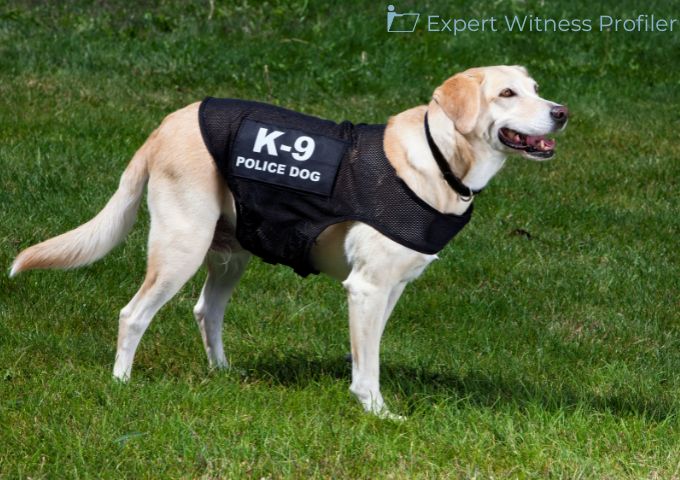
  • Animal Behavior Expert Was Not Allowed to Opine on Drug Detection Dogs

    Animal Behavior Expert Was Not Allowed to Opine on Drug Detection Dogs

    Defendant, Jose Ruiz Flores, has been indicted for one count of possession with intent to distribute 28 grams or more of cocaine.

    The question is whether Officer Eric Rosales had reasonable suspicion to conduct a dog sniff using K9 Sully. Defendant’s expert, James Ha, presented expert testimony related to K9 odor-detection. 

    The government stipulated to Ha’s expertise in animal behavior and dog behavior but objected to his designation as an expert on narcotic detection dogs.

    Animal Behavior Expert Witness

    Dr. James Ha is a Certified Applied Animal Behaviorist (“CAAB”), and is also an Emeritus Research Professor in Psychology (Animal Behavior Program) at the University of Washington. He has taught and conducted research in complex social behavior and cognition of several animal species, including dogs, since 1990.

    Get the full story on challenges to James Ha’s expert opinions and testimony with an in-depth Challenge Study.

    Discussion by the Court

    Beyond providing that he has specialized in the study of the capabilities of odor-detection dogs, including search-and-rescue, K9 detection and tracking of people and drugs, and cadaver locations, Ha did not provide any peer-reviewed research of other publications in this field.

    Moreover, he confirmed during the evidentiary hearing that he has not published research on the topic of drug detection dogs, nor has he ever been designated as an expert on drug detection dogs.

    Held

    As a result, the Court declined to qualify Dr. James Ha as an expert on narcotic detection dogs.

    Key Takeaway

    In conclusion, Ha’s general expertise in animal behavior was insufficient to qualify him as an expert on narcotics detection dogs.

    Case Details:

    Case Caption: USA V. Flores Ruiz
    Docket Number: 3:25cr171
    Court Name: United States District Court for the Northern District of California
    Order Date: April 02, 2026
  • Law Enforcement Expert Was Not Allowed to Opine on the Suspect’s Flight

    Law Enforcement Expert Was Not Allowed to Opine on the Suspect’s Flight

    Hakim Ledbetter was charged with: attempted possession with intent to distribute 500 grams or more of methamphetamine, 5 kilograms or more of cocaine, and 1,000 grams or more of PCP and aiding and abetting; possession of a firearm in furtherance of a drug trafficking crime; and possession of a firearm by a felon.

    The Government intended to present at trial evidence of Ledbetter’s flight, and “argue that his flight establishes his consciousness of guilt.”

    Ledbetter thus sought to introduce Chuck Rylant‘s testimony “regarding psychological and physiological factors that affect human responses to threatening stimuli,” so that the jury could “understand alternative reasons for flight in situations of perceived threat.”

    The Government moved in limine to exclude Rylant’s testimony, or in the alternative, for a pretrial Daubert Hearing, arguing that his opinion is irrelevant and inadmissible.

    Law Enforcement Expert Witness

    Chuck J. Rylant is a former police officer who has investigated and reviewed crimes of violence—including fights, attacks, and homicides—committed with various weapons.

    He earned a doctorate in clinical psychology in addition to completing numerous master’s level classes in psychology.

    Want to know more about the challenges Chuck Rylant has faced? Get the full details with our Challenge Study report.

    Discussion by the Court

    Qualifications

    Rylant is not qualified to testify as to Ledbetter’s psychology. Rylant received his “Psy.D.” degree from “California Southern University,” an exclusively online, unaccredited school. While Rylant purports to be an expert on the psychological and physiological limitations of what humans are capable of, the defense presented nothing to establish that Rylant is trained to evaluate the psychological basis for a suspect’s flight from the police. Most of Rylant’s teaching and lecturing occurred when he had earned only an MBA degree—well before he received his “Psy.D.” in 2020.

    Rylant’s curriculum vitae confirmed that his specialty is limited to police use of force decisions and self-defense. Moreover, Rylant purportedly could not recall in how many federal criminal cases he was qualified to testify as an expert. Although he initially said that his “understanding” was five cases, he then acknowledged it was three. In those cases, he opined only on the decision to use force. Finally, Rylant acknowledged that he had never before offered an expert opinion on the psychological reasons for a person’s flight from police.

    This case does not concern whether police use of force was reasonable, but whether Ledbetter’s flight from police showed consciousness of guilt. In other words, Rylant’s “specialized knowledge” otherwise has nothing to do with Ledbetter or this case. His work on police use of force aside, Rylant has authored two series of books: one titled “How to Be Rich,” and the other, a jiu-jitsu primer.

    Reliability

    According to the Court, Rylant’s “expert report”—which he drafted in an hour—was exceedingly general, including virtually no mention of the facts of this case. Indeed, Rylant testified that he had essentially cut and pasted his Ledbetter report from strikingly similar reports he had prepared for other cases having nothing to do with flight from the police.

    Rylant did not base his “expert” opinion respecting flight from police on reliable methodology. Indeed, Rylant never explained his methodology.

    He never spoke with Ledbetter or anyone else about why Ledbetter fled. He never visited the neighborhood where Ledbetter was arrested. Indeed, although he purported to be uncertain, he apparently has never visited Philadelphia. Rylant offered no studies that he or anyone else conducted about flight from police.

    Fit – Rule 403

    It is apparent that the “fit” of Rylant’s opinion to Ledbetter is poor. He sought to opine that something (which he never clearly identified) other than consciousness of guilt could cause someone in Ledbetter’s circumstances to flee in the manner Ledbetter did. Yet, in forming this opinion, Rylant was ignorant of circumstances that could well have caused Ledbetter to flee from the police. On October 15, 2024, Ledbetter:

    • was in violation of his parole because he had left the state of Georgia
    • effectively possessed three loaded handguns;
    • as a parolee, and a convicted felon, was prohibited from possessing any weapons;
    • was driving a truck containing drugs valued at over $1 million;
    • had previously fled from police when they executed a warrant;
    • had previously been convicted of federal drug charges; and
    • had previously shot someone and been convicted of aggravated assault.

    Rylant then reluctantly acknowledged that this new information could have provided reasons for why someone in Ledbetter’s circumstances would run from police. The potential for prejudice and jury confusion arising from the Government’s “other reasons for flight evidence”—with its attendant cautionary instructions—would plainly outweigh the probative value of Rylant’s unreliable opinion, which he was not qualified to give.

    Rule 704

    Rule 704(b) still prohibits an expert from opining about the “possible” mental state of a Defendant. Accordingly, the Court determined that the defense’s attempt to end-run Rule 704(b) was impermissible.

    Held

    The Court ruled that because Chuck Rylant’s proffered opinion did not pass muster under Rules 702, 704, and 403, he could not testify at trial.

    Key Takeaway

    Although proffered to opine on Hakim Ledbetter’s psychology, Rylant is not and has never been a psychologist. His “Psy.D.” was conferred in 2020 by an unaccredited, exclusively online institution. He appears never to have testified, written, or lectured on the issue he was called to address: the psychology of a suspect fleeing from police. The three federal cases in which he purportedly testified bear no resemblance to Ledbetter. Rylant’s methodology is unknown.

    Although he purported to base his opinion only on generalities, he “revised” that basis and impermissibly strayed into his belief that Defendant lacked mens rea in fleeing from police. Admitting Rylant’s opinion would thus likely open the door to other explanations highly damaging to Ledbetter—about why he fled, as well as cautionary instructions, which would certainly confuse the jury.

    Case Details:

    Case Caption: United States V. Ledbetter
    Docket Number: 2:24cr423
    Court Name: United States District Court, Pennsylvania Eastern
    Order Date: April 02, 2026
  • Industrial Hygiene Expert’s Testimony on Environmental Exposure Limited

    Industrial Hygiene Expert’s Testimony on Environmental Exposure Limited

    Plaintiffs Erica Dandry Constanza and Monica Dandry Hallner alleged that Decedent Michael P. Dandry, Jr., while an employee for Huntington Ingalls Incorporated’s (“Avondale”), was exposed to asbestos and asbestos-containing products manufactured, distributed, sold, and/or handled by Avondale and other parties.

    Decedent was born in 1953, and the family home at the time of his birth was located at 407 Meyers Boulevard in Marrero, Louisiana, where he lived until he was two years old. Decedent also worked at a shoe repair shop located at 409 Meyers Boulevard. Both of these properties were part of a larger property located in the 400 block of Myers Boulevard at the intersection of Fourth Street, which was owned by Decedent’s grandfather.

    Decedent’s sisters and daughters testified that the Dandry family property located in the 400 block of Meyers Boulevard at the intersection of Fourth Street in Marrero was one property owned by Michael Dandry, Jr.’s grandfather, Randolph Dandry. The testimony of Decedent’s sisters confirms that Decedent played in the driveway/courtyard area, they played in a galvanized tub of water in the driveway area, they were always “in and out” of the various Dandry businesses, and they continued to visit the family property even after moving to Oak Street.

    Plaintiffs filed a motion to exclude certain opinions of Defendant Bayer CropScience, Inc.’s expert in industrial hygiene, Michael Holton.

    Industrial Hygiene Expert Witness

    Michael Holton is a Board-Certified Industrial Hygienist (CIH), a Board-Certified Safety Professional (CSP), and a Registered Environmental Health Specialist (REHS) in the state of New Jersey (inactive status) and has comprehensive industrial hygiene experience involving exposure assessment, ventilation system design, regulatory compliance auditing, and program development and training.

    Get the full story on challenges to Michael Holton’s expert opinions and testimony with an in-depth Challenge Study.

    Discussion by the Court

    Holton concluded there is “reasonably significant potential for community asbestos exposures to residents of Marrero, LA” and Decedent “more likely than not had exposure to amphibole forms of asbestos, including crocidolite, from living his entire life in the Westbank, LA area.”

    Reagan Maloney was hired by Avondale to take soil samples from the property. The Court, however, excluded Maloney’s testimony about the testing performed on those soil samples.

    While Holton relied wholly on Maloney’s report to establish that the soil at Decedent’s childhood family property contains asbestos, he did offer one alternative theory for Decedent’s potential environmental exposure. Holton opined that Decedent may have had environmental exposure to asbestos due to the close proximity of various properties he frequented while living and working on the Westbank, and those properties which were found to have soil contaminated with asbestos in the 90s and 2005 reports.

    With Maloney’s report excluded, Holton’s opinions about Decedent’s possible environmental exposures are based solely on the proximity theory and the circumstantial evidence of nearby asbestos-contaminated properties. Testing confirming the presence of asbestos in multiple locations surrounding areas where Decedent frequented on the Westbank is enough to support an opinion regarding what exposure to asbestos Decedent might have had living on the Westbank. However, Holton was not allowed to rely on Maloney’s report or opinions.

    Held

    The Court granted in part and denied in part Plaintiffs’ motion to preclude certain opinions of Michael Holton.

    Key Takeaway

    Although in some cases, “the source upon which an expert opinion relies is of such little weight that the jury should not be permitted to receive that opinion,” Plaintiffs have not demonstrated that this is such a case.

    Please refer to the blog previously published about this case:

    Radiation Oncology Expert’s “State of the Art” Opinions Admitted

    Industrial Hygiene Expert’s Testimony on Asbestos Exposures Admitted

    Case Details:

    Case Caption: Constanza V. Sparta Insurance Company
    Docket Number: 2:24cv871
    Court Name: United States District Court, Louisiana Eastern
    Order Date: February 23, 2026
  • Psychology Expert’s Testimony on Grooming Limited

    Psychology Expert’s Testimony on Grooming Limited

    This case arose from allegations of sexual abuse of a minor that purportedly occurred in 2006 but was not disclosed by the alleged victim until 2020. As the matter proceeded toward trial, both parties intended to introduce testimonial evidence at trial from experts in topics related to psychology. Although the Government did not challenge the qualifications of the Defendant’s proposed expert, Dr. Mary Lyndia Crotteau Huffman, it asked the Court to limit the scope of her testimony. In response, the Defendant agreed that Huffman would not offer opinions regarding the truthfulness or credibility of any witness.

    The remaining expert testimony from Huffman that Defendant sought to exclude follows: characterizations of the victim’s delayed disclosure and the weight the jurors should assign to it in assessing credibility; characterizations of Defendant’s conduct relating to grooming; factually-applied opinions on memory and associated terminology; any testimony on false belief; and opinions on investigator bias.

    Psychology Expert Witness

    Mary Lyndia Crotteau Huffman obtained a PhD in human developmental and family studies and has served as a private consultant on children’s memory, eyewitness testimony, suggestibility, and interview techniques since 1997.

    Huffman’s resume showed that she has authored numerous papers discussing the credibility of child victims, with titles like “Factors affecting the occurrence of lying in children”; “Categories of lies throughout childhood”; and “How reliable are children’s memories?”

    Want to know more about the challenges Mary Lyndia Crotteau Huffman has faced? Get the full details with our Challenge Study report.

    Discussion by the Court

    1. Delayed Disclosure

    The Government asked the Court to limit Huffman’s testimony of delayed disclosure to general concepts and to prevent her from offering opinion on witness credibility.

    Huffman provided scientific support for the general idea that disclosures among children are highly variable. However, reliability of Huffman’s testimony addressing those specific factors and their relationship with delayed disclosure is not supported. In fact, Huffman’s opinion on the variability of delayed disclosure counters Defendant’s argument for admissibility of expert testimony as to the consideration of specific factors to determine credibility.

    Thus, while Huffman may discuss general concepts behind delayed disclosure, she will not be permitted to characterize facts here (long disclosure delay, postincident vacation with Defendant and counseling without disclosure) without providing a reliable basis for that opinion that adds to what the jury can already appropriately assess.

    Huffman may identify general “situational and relational factors” which may influence disclosure; however, she shall not inform the jury what they should consider in determining credibility of the report. Accordingly, the Court denied the Government’s motion to exclude this testimony but imposed limits on Huffman’s testimony consistent with this ruling.

    2. Grooming

    The Government asked the Court to prohibit Huffman from testifying that the Defendant’s conduct was not grooming and whether such conduct contributed to delayed disclosure.

    Huffman provided scientific support for her assertion that, “although grooming is a well-documented factor that can inhibit disclosure, research does not support the claim that it occurs in the majority of cases or that it alone explains disclosure timing.”

    The Government accurately noted that the studies cited by Huffman supported the Government’s expert’s opinion that grooming has a relationship to delayed disclosure.

    However, Huffman’s opinion, considering confounding variables in research, is also true. Accordingly, the Court permitted general discussions of grooming and rebuttal to the Government’s expert’s opinions.

    Defendant also intended to have Huffman indicate that she is surprised by the characterization of Defendant’s conduct – rubbing the stomach of the victim with others in the room or sleeping in the same room as the victim – as grooming, and that grooming would more likely occur in other circumstances like preparing the children for bed, a responsibility of the Defendant’s wife.

    The Government argued that such statements are not scientifically supported and that Huffman should be prohibited from testifying that the under-the-clothes touching was not grooming or whether it contributed to lack of immediate disclosure. If the methodology for such an opinion were sufficiently supported through studies or experience, the testimony may be admissible. Defendant did not indicate how Huffman’s experience or cited research studies informed her methodology characterizing Defendant’s conduct to be outside the definition of grooming. Nor did she support the opinion that other non-grooming conduct negates the Government’s evidence and theory of grooming. Accordingly, the Court granted the Government’s motion to exclude this testimony and imposed limits on Huffman’s testimony consistent with this ruling.

    3. Memory and Suggestibility

    The Government asked the Court to limit Huffman’s testimony about memory, particularly implantations of false memories and suggestibility during interviews, with consideration of the different goals of interviewers. Further, the Government sought to prevent Huffman from using terms such as “investigative bias,” “tainted,” “distorted,” or “memory error.”

    Defendant intended to elicit testimony from Huffman explaining how memories are formed and how suggestibility can influence their formation. The Government is most concerned with her statement that “when conversations, therapy sessions, bias interviews, or repeated interviews cause non-experienced events to sound familiar and plausible, children and even adults may confuse the true source of the information with their actual experience. Because of these memory errors, someone cannot distinguish between the truth and a false belief.”

    The Government argued that the scientific basis for Huffman’s testimony on false memories is too remote in nature to provide reliable methodology for application to the facts of this case. However, the Government has not addressed Huffman’s apparent expertise based on her published material on false memory and suggestibility evident on her resume.

    The Court permitted general discussions on false memory, interviewer goals, and suggestibility. The Court, however, refused to permit application to the facts of this case. Further, without additional support, Huffman will not be permitted to testify that “disclosures made during pastoral counseling sessions may be the result of a biased interviewer who is looking for abuse to explain typical behaviors of alleged victims.”

    Moreover, Huffman will not be permitted to use of phrases “investigative bias,” “tainted,” or “distorted.” However, the Court did not find “memory error” in a generalized context to be argumentative. Thus, Huffman was allowed to opine on false memories and use the term “memory error.”

    4. Investigator Bias

    The Government filed a motion to exclude Huffman’s expert testimony that “text messages Victim 1 sent after she had disclosed the sexual abuse ‘improperly tainted Victim 1 with his preconceived notions of Bowles’ guilt.’”

    Defendant argued for admissibility of Huffman’s opinion as to the soundness of the U.S. Army investigator’s conduct when she sought the collection of evidence through advising the victim to communicate with the Defendant through text.

    While an expert’s experience can validate the methodology used in forming an expert’s opinion, this opinion is not backed by her experience and Defendant does not provide alternative support for her opinion.

    Held

    The Court granted in part and denied in part the United States’ motion in limine to limit the testimony of Mary Lyndia Crotteau Huffman.

    Key Takeaways:

    • An expert’s testimony generally will not help the trier of fact when it offers nothing more than what lawyers for the parties can argue in closing arguments.
    • Opinions based on knowledge or experience of the expert may be admissible if reliable.

    Case Details:

    Case Caption: United States of America V. Bowles
    Docket Number: 3:24cr100
    Court Name: United States District Court, West Virginia Southern
    Order Date: April 01, 2026
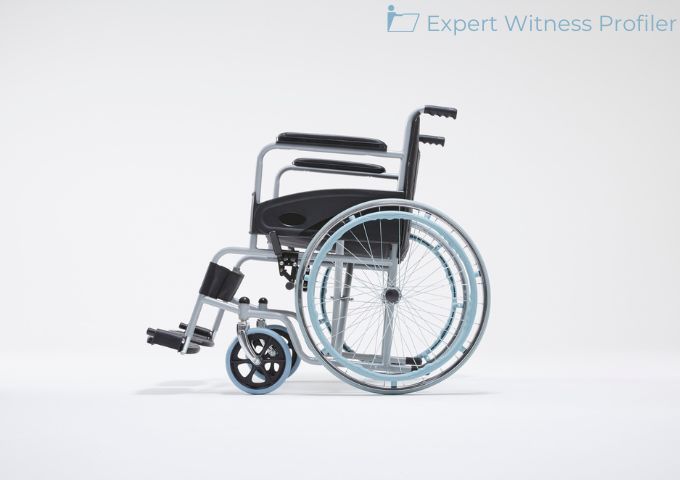
  • Mechanical Engineering Expert Allowed to Opine on the Behavior of Wheelchairs

    Mechanical Engineering Expert Allowed to Opine on the Behavior of Wheelchairs

    This case arises from an incident in which Plaintiff William Dowdy was injured after falling from a temporary wheelchair while using his wheelchair ramp. The temporary wheelchair had been supplied by NuMotion while Dowdy’s regular wheelchair was being serviced and repaired.

    NuMotion sought to exclude the testimony of Plaintiff’s expert Mark Ezra, arguing that he lacks the proper qualifications, that his opinions rest on speculation rather than reliable methodology, and that his testimony will not assist the jury.

    Mechanical Engineering Expert Witness

    Mark A. M. Ezra is a board-certified professional engineer with a degree in mechanical engineering and a diploma in automatic control systems. His professional background includes decades of engineering practice, mechanical failure analysis, and forensic investigation.

    Want to know more about the challenges Mark Ezra has faced? Get the full details with our Challenge Study report.

    Discussion by the Court

    Qualifications

    NuMotion emphasized that Ezra is not a biomechanical engineer, has never worked for a wheelchair supplier, and has no experience as an Assistive Technology Professional (“ATP”).

    Mechanical engineering is directly relevant to the design, stability, braking systems, and mechanical behavior of powered wheelchairs—the very issues at the heart of this case. The Court therefore found that Plaintiff has shown by a preponderance of the evidence that Ezra is qualified to offer expert testimony.

    Reliability

    NuMotion argued that Ezra’s opinions lack a factual foundation, that he improperly relied on the testimony of ATP Vincent Fels, and that he cannot identify the precise electrical defect that caused the wheelchair to stop.

    Ezra’s expert report reflected a systematic engineering analysis grounded in physical inspection, measurements, documentary review, and application of mechanical principles. He personally inspected the TSS 300 wheelchair, took custody of it, and measured the slope of Plaintiff’s ramp. He reviewed the owner’s manuals for both the TSS 300 and the Jazzy 600, analyzed their braking systems, and compared their wheel configurations and stability characteristics. Ezra considered Plaintiff’s prior successful use of both wheelchairs on the same ramp and applied simple Newtonian mechanics to explain how a sudden stop would eject a seated user.

    Based on this analysis, Ezra concluded that the “most probable and direct cause” of the incident was a power failure in the TSS 300’s electrical system, which triggered the automatic deployment of the parking brakes.

    NuMotion also contended that Ezra improperly relied on ATP Fels’ testimony to opine on warnings and training. But Ezra’s core opinions concern mechanical behavior like stability, braking forces, and the consequences of a sudden stop, not ATP standards of care. The Court concluded that his references to Fels’ testimony serve only to contextualize the absence of instruction and the differences between the two wheelchairs, not to substitute himself for an ATP.

    Relevance

    NuMotion argued that Ezra’s testimony will not assist the jury because he cannot say whether NuMotion caused the defect or could have prevented it.

    But Rule 702 does not require an expert to resolve every element of liability. Ezra’s testimony will help the jury understand the mechanical forces at play, the behavior of the TSS 300 during braking, the significance of the design differences between the TSS 300 and the Jazzy 600, and the mechanical plausibility of Plaintiff’s account. These matters are well outside the knowledge of a lay juror. Whether NuMotion caused the defect is a separate question for the jury, informed by, but not dependent on, Ezra’s mechanical analysis.

    Held

    The Court denied NuMotion’s motion to strike the testimony of Mark Ezra.

    Key Takeaway

    This methodology of identifying possible mechanical causes, ruling out alternatives, and applying engineering principles to the physical evidence is consistent with accepted practices in mechanical failure analysis. The fact that Ezra cannot identify the specific electrical component that failed does not render his opinion unreliable. Experts are not required to pinpoint the exact microscopic failure mechanism where the available evidence supports a broader, scientifically grounded conclusion. Ezra’s reasoning is transparent, testable, and rooted in the materials he reviewed.

    Case Details:

    Case Caption: Dowdy V. United Seating And Mobility, LLC
    Docket Number: 3:23cv2875
    Court Name: United States District Court, Illinois Southern
    Order Date: April 01, 2026
  • Insurance Expert Not Allowed to Opine on Industry Standards

    Insurance Expert Not Allowed to Opine on Industry Standards

    This action arises from an insurance claim related to a vehicle fire that occurred on May 31, 2024, in Arkansas while Plaintiff Anthony Nicholas was driving from Tennessee to Oklahoma. Plaintiff submitted a claim to Defendant Progressive Direct Insurance Company that same day. Plaintiff alleged that Defendant failed to handle the claim in good faith and improperly subjected him to a fraud investigation.

    Also, Plaintiff retained Deborah C. Rankin as an expert related to Progressive’s handling of Plaintiff’s comprehensive coverage claim.

    Rankin’s expert report outlined her opinions on standards she asserted formed the basis for properly handling insurance claims and Progressive’s failure to follow those standards.

    Defendant filed a motion to exclude the testimony of Plaintiff’s expert Rankin.

    Insurance Expert Witness

    Deborah C. Rankin worked as a licensed insurance adjuster for thirty-three years, retiring from State Farm Insurance in 2016.

    Get the full story on challenges to Deborah Rankin’s expert opinions and testimony with an in-depth Challenge Study.

    Discussion by the Court

    I. Rankin is not qualified to provide expert testimony in this case

    While Rankin stated that she handled hundreds of property claims earlier in her career, Defendant noted that the last such claim she handled was in 1995.

    The Court found that Rankin is likely not qualified to offer expert testimony in this case. Rankin has been admitted as an expert in another case in this district, though that case dealt with an action for bad faith breach of a UM/UIM motorist policy. This case doesn’t involve a UM/UIM claim, but rather a comprehensive property claim.

    The Court is unconvinced that Plaintiff has met his burden to show that Rankin’s experience is sufficiently timely to qualify her as an expert in testifying to the claims handling process for comprehensive claims such as this. In reviewing the cases in which Rankin represents she’s provided expert testimony, it appears none of these cases were related to comprehensive claims like the one in this case. None of this is to say that Rankin might not be qualified to testify as an expert in a UM/UIM case—indeed, she has been—but that isn’t this case.

    II. Rankin’s opinions are not reliable

    Even if the Court had found Rankin qualified to opine on the issues in this case, the Court did not find Rankin’s methodology and reasoning reliable, for the simple reason that it was not clear to the Court how Rankin arrived at her reported conclusions. Rankin’s report failed to cite any specific industry standards to which insurers were to be held. Rankin vaguely stated that “insurance standards are based on multiple sources that work together to result in best practices.” She went on to say that those standards were based on state law, state case law, industry training, and best practices, but other than a cursory cite to the Unfair Claims Settlement Practices Act, Rankin did not further develop the foundation for the industry standards with which she contrasted Progressive’s actions.

    Further, the Court was uncomfortable admitting Rankin as an expert because, as the Defendant noted in her report, she misstated Oklahoma law in arguing that insurance adjusters were required to be licensed in Oklahoma and meet venue-specific training requirements.

    III. Rankin’s testimony will not assist the triers of fact to determine the facts in issue

    Finally, Plaintiff has failed to demonstrate how Rankin’s testimony will help the trier of fact to understand the evidence or to determine a fact in issue. The question in this case is whether Progressive “unreasonably, and in bad faith,” withheld payment of Plaintiff’s claim. Bad faith is a common law tort that requires the judgment of “reasonable, prudent people.”

    The jury will be called upon to consider the facts of the case and apply its own conceptions of reasonableness to them in rendering its verdict. The jury is not required to determine the reasonableness of Progressive’s actions with respect to any industry standards. That isn’t to say that failure to comport with industry standards can never be probative of bad faith, but when those “industry standards” are based on amorphous, vague, and sometimes incorrect references to supposedly governing laws, the testimony is more likely to confuse the jury than aid it.

    Held

    The Court granted Defendant’s motion to exclude the testimony of Plaintiff’s expert Deborah Rankin.

    Key Takeaway

    Plaintiff has failed to show that Rankin’s opinions reflect a reliable application of principles and methods to the facts of the case due to her inability to properly interpret Oklahoma law related to adjuster licensing.

    Case Details:

    Case Caption: Nicholas V. Progressive Direct Insurance Company
    Docket Number: 5:24cv813
    Court Name: United States District Court, Oklahoma Western
    Order Date: March 31, 2026
  • Credit Reporting Expert Not Allowed to Opine on Intentions

    Credit Reporting Expert Not Allowed to Opine on Intentions

    In 2022, Plaintiff Rick Fox received a letter from his student loan provider stating that it extended condolences to Plaintiff’s family concerning Plaintiff’s death. Several weeks later, Plaintiff learned that his insurance benefits through the Department of Veterans Affairs (“VA”) had been terminated after the VA received a report that Plaintiff was deceased. On July 29, 2022, Plaintiff discovered that the Social Security Administration (“SSA”) had marked him as “deceased.” Plaintiff later discovered that both Equifax and Trans Union were reporting him as deceased on a Discover account listed on his consumer reports. After disputing this designation, Plaintiff alleged that he received a communication from Experian stating that the Discover account had been corrected, and, because credit bureaus share information, Plaintiff assumed that Trans Union would correct the mistake in its report as well.

    On August 15, 2022, Plaintiff applied for a car loan with five non-party entities, each of which obtained a copy of Plaintiff’s Experian credit report, and all five loan applications were ultimately denied. Plaintiff alleged, on information and belief, that all five applications were denied because he was still being reported as “deceased” on his consumer reports.

    Plaintiff proffered the opinion of Evan Hendricks in support of his claims brought in this case. Experian Information Solutions, Inc. filed a motion to exclude or limit the testimony of Hendricks.

    Credit Reporting Expert Witness

    Evan D. Hendricks has worked in the field of data privacy and credit reporting for over forty years. He was the Editor and Publisher of Privacy Times from 1981-2013.

    Hendricks has also given many presentations on the FCRA at conferences offering continuing legal education and other professional seminars. Hendricks has served as an FCRA expert witness since 1992, has testified as an expert in at least 25 trials in both federal and state court, and has testified before Congress and the Federal Trade Commission (“FTC”) on credit reporting practices. He wrote the book Credit Scores and Credit Reports: How the System Really Works, What You Can Do (“Credit Scores and Credit Reports”).

    Want to know more about the challenges Evan Hendricks has faced? Get the full details with our Challenge Study report.

    Discussion by the Court

    In its motion, Defendant sought to exclude the testimony of Hendricks regarding: (1) Defendant’s policies and procedures surrounding its product, Fraud Shield; (2) Plaintiff’s damages; (3) Defendant’s knowledge, motivations, intentions, state of mind, and subjective beliefs; (4) prior cases, administrative actions, and consent orders; and (5) the reasonableness of Defendant’s policies and procedures.

    A. Fraud Shield

    Defendant contended that Hendricks’ opinion regarding its Fraud Shield product must be excluded because Hendricks is unqualified to opine on it.

    As a preliminary matter, Hendricks is not automatically unqualified to offer an opinion about the Fraud Shield product just because he lacked direct experience with it. Even more specifically, the Fraud Shield product is “within the reasonable confines of his subject area” because that product is part of the credit reporting process. Therefore, the Court concluded that Hendricks is qualified to offer an expert opinion about the product and how it functions.

    As to reliability, where, as here, the expert’s opinion is non-scientific in nature, “reliability depends heavily on the knowledge and experience of the expert, rather than the methodology or theory behind it.”

    As noted above, in his report Hendricks stated that he formed his opinions in this case based on, among other things, the allegations of Plaintiff’s complaint and his own extensive experience in the credit reporting industry. These facts establish a sufficient basis as to the reliability of his opinion.

    B. Damages

    Defendant also argued that, as evidenced by his report and deposition testimony, Hendricks is not qualified to offer expert opinion or testimony on Plaintiff’s damages.

    As a preliminary matter, Hendricks’ failure to review certain materials again bears on the weight of his opinion, not its admissibility.

    In his expert report in this case, Hendricks has conceded that, other than the impact on Plaintiff’s creditworthiness, “most, if not all, of the testimony regarding Plaintiff’s specific, actual damages will come from fact witnesses.” Nonetheless, Hendricks’ report addressing damages largely consists of a list of eight categories of “typical negative impacts of unreasonable credit report inaccuracy” that he believes will aid the fact finder in assessing damages in this case, given his belief that Plaintiff experienced “many” of these categories of harm.

    Those eight categories are: (1) inaccurate descriptions of creditworthiness to third parties; (2) improper denial of credit; (3) loss of time, energy, and opportunities due in part to correcting the mistakes on one’s credit report; (4) wrongfully receiving debt collection calls; (5) being chilled from applying for credit; (6) sleeplessness and physical symptoms; (7) sense of helplessness and loss of control over personal data; and (8) emotional distress.

    The Court concluded that Hendricks is qualified to testify regarding the categories of damages that individuals often suffer from inaccurate credit reporting.

    C. Defendant’s State of Mind

    Defendant next argued that Hendricks has proffered opinions regarding Defendant’s knowledge, motivations, intentions, objective state of mind, and subjective beliefs which “plainly failed to satisfy Rule 702” of the Federal Rules of Evidence.

    Upon review of the expert report, the Court observed several instances in which Hendricks opines on Defendant’s state of mind. Courts routinely exclude expert testimony as to intent, motive, or state of mind as issues better left to a jury. Accordingly, the Court held that Hendricks will be prohibited from offering his opinions regarding Defendant’s state of mind, specifically, whether Defendant acted with disregard or knowingly.

    However, Hendricks will not be precluded from offering expert testimony regarding industry standards regarding accurate credit reporting even if that testimony could reasonably reflect Defendant’s subjective awareness about those standards when it developed and launched the Fraud Shield product.

    D. Prior Actions

    Defendant argued that Hendricks’ opinions should be excluded to the extent that he describes consent orders entered into by Defendant’s predecessor, prior cases, and administrative actions.

    Expert testimony as to prior actions, consent orders, and administrative actions “is unnecessary because no specialized knowledge or expertise is needed to understand the existence of those prior actions and to draw reasonable inferences from them.”

    The Court concluded that expert testimony of this nature will not be helpful to the jury in this case.

    E. Legal Conclusions

    Finally, Defendant argued that Hendricks offered several opinions that involved legal conclusions on ultimate issues in this case and that should be excluded as impermissible under Rule 702 of the Federal Rules of Evidence.

    An opinion is not objectionable just because it embraces an ultimate issue. Because he is an expert on credit reporting, the Court held that Hendricks may offer opinions regarding industry standards of credit reporting practices, how Defendant’s practices did or did not comport with those standards, and even what measures Defendant could have implemented to improve credit reporting accuracy.

    Moreover,  it did not appear to the Court that the Defendant sought to exclude any specific opinions regarding the reasonableness of Defendant’s policies

    Held

    The Court granted in part and denied in part the Defendant’s motion to exclude or limit the expert opinion of Evan Hendricks.

    Key Takeaway

    With respect to corporations, the opinions of expert witnesses on the intent, motives, or states of mind of corporations, regulatory agencies and others have no basis in any relevant body of knowledge or expertise.

    Case Details:

    Case Caption: Fox V. Experian Information Solutions, Inc.
    Docket Number: 1:22cv1197
    Court Name: United States District Court, California Eastern
    Order Date: March 31, 2026
  • Consumer Credit Expert Not Allowed to Opine on Policies

    Consumer Credit Expert Not Allowed to Opine on Policies

    Plaintiff Alycia Johns brought this action under the Fair Credit Reporting Act and Fair Debt Collection Practices Act following several years of disputing various tradelines with credit reporting agencies based on her claim of identity theft.

    Johns relied on her expert, Douglas Hollon, to assert that Nelnet failed to conduct an adequate investigation of the disputes.

    Defendant Nelnet Servicing, LLC, along with Equifax, TransUnion, LVNV, Resurgent, and First Premier, filed motions to limit or exclude the testimony of Hollon


    Consumer Credit Expert Witness

    Douglas A. Hollon holds a Bachelor of Science in Business Finance. He has received FCRA certifications from the Consumer Data Industry Association, has a Credit Analysis Certification from the New York Institute of Finance, has certifications in Credit Risk Modeling and Credit Scorecard Development from SASInstitute, Inc., and has completed the American Bankers Association Certification in Lending Compliance for Compliance Professionals.

    He worked at Experian from 2005 until 2019, where he began in a position assisting consumers with their disputes, and then handled escalated credit report disputes for his remaining years with Experian. While at Experian, he received specialized training involving fraud and “mixed file” disputes. Prior to his time at Experian, he was an investigator with the U.S. Army CID, where he conducted investigations for sixteen years.

    Want to know more about the challenges Douglas Hollon has faced? Get the full details with our Challenge Study report

    Discussion by the Court

    A. Qualification

    Defendants asserted that Hollon is not qualified to opine on their investigations, or their policies or procedures. They argued that his opinions are based on the dictionary definition of “investigation” and his personal experience as an investigator with the U.S. Army Criminal Investigation Division (“CID”).

    Hollon’s expertise is based primarily on his experience. In his report, Hollon explained that his experience at Experian involved handling disputes, assisting tens of thousands of customers, explaining credit score factors, and understanding information received from Public Record Vendors.

    While Hollon’s explanation of how his experience led to the conclusions reached in this respect is minimal, the Court found that Hollon is sufficiently qualified to testify as an expert regarding investigations and reinvestigations of credit disputes by CRAs and furnishers.

    The Court also found that Hollon is qualified to speak, “in general terms and as found relevant at trial, about the sort of damages that are typically caused on consumer reports.”

    C. Reliability

    Defendants argued that Hollon’s opinions on Defendants’ investigations, and their policies and procedures, are not reliable. Specifically, they argued that his opinions on policies and procedures are based on prior knowledge of Experian’s procedures, regulatory agency publications, case law, deposition transcripts, and “company manuals or publications and other related documents” that he is unable to identify.

    Johns asserted that there is no standard procedure for a reasonable investigation under the FCRA, and so Hollon’s experience “is the closest the jury will get to a standard, industry-wide practice.”

    While Johns suggested that it is the Defendants’ burden to show why Hollon’s CID investigative experience is not applicable to the FCRA context, that disregarded the burden imposed under Rule 702 on the proponent of the expert testimony.

    Hollon’s reliability further falters as he is unable to identify what he relied on. For instance, he references deposition transcripts involving these Defendants in other cases, but cannot identify what cases they came from.

    Hollon’s opinions are rendered more unreliable because they do not dependably flow from the facts. He asserts: “I believe that she submitted a police report which is — and she was a victim of identity theft. That is my opinion.” His report opens with, “Plaintiff, Alycia Johns, is a victim of identity theft.” But the alleged identity theft in this case is not so clearly established. Rather, it is only Johns’ testimony and the police report—based on her statement, which does not specify which tradelines she asserted are the result of identity theft—which support this conclusion. It is the province of the jury, not an expert, to make credibility determinations.

    The Court found that Hollon’s opinions are unreliable because generalized statements from Hollon regarding the harm other consumers have faced when their consumer reports contained inaccuracies is not relevant to the present case.

    Held

    The Court granted the Defendants’ motions to exclude the testimony of Douglas Hollon.

    Key Takeaway

    An expert’s experience, without an explanation of how that experience supports the conclusion, cannot be a substitute for reliable principles or methods. Hollon repeatedly stated that his opinions are based on his “experience, skills, and knowledge,” yet he offered no explanation of what aspects of that experience, skills, or knowledge he drew upon in reaching his conclusions. An expert’s opinion cannot be deemed reliable when it rests solely on the expert’s ipse dixit.

    Case Details:

    Case Caption: Johns V. Nelnet
    Docket Number: 2:22cv4791
    Court Name: United States District Court, Pennsylvania Eastern
    Order Date: March 31, 2026