Plaintiff January Villareal claimed that during her December 16, 2021 arrest on suspicion of driving under the influence, former San Jose Police Officer Matthew Dominguez inappropriately touched her as she sat handcuffed in the back of his patrol vehicle.
Dominguez filed a motion to exclude one of the opinions offered by Villareal’s retained expert, Dr. Randall C. Epperson, a clinical neuropsychologist, regarding the cognitive decline Villareal claims she suffered as a result of the incident at issue while Villareal filed a motion to preclude all testimony and opinions of Defendants’ retained expert and forensic psychiatrist, Dr. Marc A. Cohen.
Neuropsychology Expert Witness
Randall C. Epperson, Ph.D. has received training in post-traumatic stress disorder and cognitive decline diagnosis and emotional harm related to sexual assault victims as a clinical and forensic neuropsychologist over the last 40 years.
Epperson has testified as a neuropsychology expert in over a hundred state and federal cases regarding emotional harm, including post traumatic stress disorder and cognitive decline.
Marc Alan Cohen obtained a Master’s of Science degree in Physiological Science from the University of California, Los Angeles. He received an M.D. degree from the Keck School of Medicine at the University of Southern California in 2003. Cohen then completed a psychiatric residency training program at the University of California, Los Angeles-San Fernando Valley Psychiatry Residency Training Program, and thereafter completed a fellowship in forensic psychiatry at the University of California, Los Angeles. Cohen is board certified in psychiatry and forensic psychiatry by the American Board of Psychiatry and Neurology.
Dominguez argued that Epperson did not have sufficient data to reliably opine that Villareal has “Neurocognitive Disorder, unspecified (reduction in cognitive efficiency due to emotional stress and depression)” and that she experienced cognitive decline as a result of the alleged incident with Dominguez.
In his report, Epperson stated that Villareal’s “intellectual level has dropped from 112 (high average) to 90 (bottom of average range, 25%).” It appeared to be undisputed that Epperson did not have data regarding Villareal’s intellectual level prior the incident at issue.
Villareal did not dispute that Epperson had no data or other information about Villareal’s intellectual level or her cognitive functioning before the incident. She argued, however, that Epperson’s opinion is admissible because he relied on the Wechsler Test of Premorbid Functioning and the Wonderlic Test in his analysis.
Villareal acknowledged that Epperson’s assessments relied on indicators consisting of “the mean IQ of individuals with her education level (120) and work experience (113, 113, and 114)” as well as two assessment indicators—non-phonetically spelled English words (108) and English vocabulary (104)—that are “relatively resistant to deterioration.”
From these indicators, Epperson concluded that Villareal’s pre-incident IQ was 112 and had dropped to 90 as a result of the incident.
Epperson’s report disclosed the assessments he conducted and their results, but it included no explanation demonstrating that these one-time assessments of intellectual level may be used reliably to measure cognitive decline or to attribute the cause of any such decline to the incident in question. However, the Court will not preclude Epperson from testifying about his assessment that Villareal has “Neurocognitive Disorder, unspecified,” to the extent that testimony reflects his assessment of Villareal’s current cognitive functioning.
Marc Cohen
Villareal did not challenge Cohen’s qualifications. However, she argued that Cohen’s proposed testimony is unreliable because he did not personally examine her or conduct any formal testing. Additionally, Villareal argued that Cohen’s proposed testimony is unhelpful and improperly invaded the fact-finding province of the jury.
Under the circumstances presented, the lack of a psychiatric examination of Villareal diminished the utility of Cohen’s testimony in helping the trier of fact to understand the evidence or to determine a fact in issue regarding, for example, the existence, causes, or sources of Villareal’s claimed emotional distress; the more “plausible” bases for Villareal’s PTSD diagnosis; the validity of her attribution of her symptoms to Dominguez’s alleged conduct; and the reliability of her memories of the events in question.
Cohen’s report included commentary, opinions, and conclusions purporting to tell the jury the import and interpretation of, as well as inferences and conclusions to be drawn from, a timeline of events, Villareal’s medical records, other events or issues in Villareal’s life, Villareal’s statements and conduct, and other evidence of events as they unfolded. Such opinions intrude on the jury’s role in making credibility and other determinations of facts at issue.
While Cohen is permitted to opine that the events as alleged by Villareal, if true, could not result in PTSD, the Court held that Cohen will not be permitted to testify or offer opinions regarding the existence, causes, or sources of Villareal’s claimed emotional distress.
Held
The Court granted in part and denied in part Dominguez’s motion to exclude a portion of Dr. Randall Epperson’s testimony.
The Court granted in part and denied in part Villareal’s motion to exclude the testimony of Dr. Marc Cohen.
Key Takeaway
Cohen offered opinions and conclusions regarding evidence that jurors are capable of reviewing for themselves based on their own experience, without the aid of scientific, technical, or other specialized knowledge.
There was no abuse of discretion in the determination that expert testimony would not aid the jury in evaluating evidence that was fully presented and within the understanding of the average juror.
Plaintiff Rebecca Bell alleged that she fell while an invitee at the Hobby Lobby store in Daphne, Alabama.
She filed suit against Hobby Lobby Stores, Inc. and Alex Mendoza (manager of the Daphne Hobby Lobby store) asserting causes of action for negligence, wantonness, and negligent/wanton hiring, training, supervision or retention.
Plaintiff stepped on an uneven tile while shopping inside the Hobby Lobby store in Daphne, Alabama. She argued that the uneven floor tile caused her to fall. Plaintiff did not trip or slip. Rather, Plaintiff alleges she stepped “half on good tile, half on bad tile,” causing her foot to roll. The depression in the subject tile was not greater than 1/4″.
Plaintiff proffered the testimony of Dr. Ian Noy and an affidavit of John Shepherd. Both Noy and Shepherd opined that the subject tile constituted a hazardous condition. Defendants filed a motion to exclude Noy’s testimony and argued that Shepherd’s affidavit should be disregarded as conclusory.
Human Factors Expert Witness
Ian Yechiam Noy is immensely qualified as an expert in Human Factors and Ergonomics. He is a distinguished Human Factors and Ergonomics consultant and forensic expert with extensive background in innovative and applied safety research, industrial engineering, behavioral sciences, and science management.
John R. Shepherd has worked 40 years in the retail store industry, with 20 years at Walmart and 21 years at Delchamps grocery stores.
Throughout his experience in the retail store industry, he was directly involved in developing and implementing policies and procedures relating to floor safety, customer safety and injury prevention.
Plaintiff retained Noy “to opine on the human factors contributions” to her injuries. Noy opined that the tile was a hazard “because it violated the industry best practice standard set forth in ASTM F-1637.” Noy’s opinion is tied to that standard. The standard mandates walkways be maintained as “flush and even to the extent possible.”
Noy acknowledged that if a walkway is “as flush and even as possible,” the standard allows for up to a one quarter inch (1/4″) change in elevation. It is undisputed the subject walkway had no variation in elevation greater than a 1/4″. However, Noy contended the subject tile nevertheless violated the standard because the 1/4″ allowance applies only if the walkway is as “flush and even to the extent possible.” Noy opines the subject tile was not as “flush and even to the extent possible,” and therefore should have been “repaired.”
Noy acknowledged that “flush and even to the extent possible” is a structural determination. He testified, “if it’s physically possible to make the floor flush and even, it should be done. If there was any structural or functional reason why there needs to be a change in elevation, then it has to be as small as possible.” However, Noy is not proffered as a structural expert. Furthermore, he never visited the Hobby Lobby store where Plaintiff fell. He has no knowledge of the construction of the floor or its substrate. He does not know what caused the depression in the subject tile, or when or how it developed. His opinion, though, that the floor should have been “repaired” and that the 1/4″ depression allowance is inapplicable is based on his belief that the floor was not “flush and even to the extent possible.” This belief is mere unsupported “ipse dixit.”
The Court held that Noy is unqualified to opine that the floor was not “flush and even to the extent possible.” Therefore, he cannot opine the standard 1/4″ depression allowance is inapplicable. Noy’s opinion that “the depressed surface was a foreseeable hazard because it violated the industry best practice standard set forth in ASTM F-1637” is not permissible.
John Shepherd
Plaintiff also offered an affidavit of John Shepherd as evidence that the tile constituted a hazardous condition. Defendants argued that Shepherd’s affidavit is “conclusory” and cannot defeat summary judgment. The Court agreed, and found that Shepherd’s opinion suffered the same fatal defects as Noy’s. Shepherd would opine that the “uneven surface in the floor constitutes a fall hazard,” and that “not only should the tile be replaced but underneath the tile should have been replaced.”
Like Noy, Shepherd is not proffered as a structural expert. He has experience relating to “floor safety, customer safety, and injury prevention.” However, he has no construction or structural expertise or experience. Neither did the record indicate he ever visited the Hobby Lobby store where Plaintiff fell. He had no knowledge of the construction of the floor or its “underneath” substrate, or whether or how it might be “replaced.” He has no knowledge of what caused the depression, or when or how it developed.
The Court concluded that Shepherd is unqualified to opine the subject tile or its “underneath” should have been replaced. That, and his opinion the “uneven surface in the floor . . . constitutes a fall hazard” are mere conclusory statements that cannot satisfy Plaintiff’s burden to produce sufficient evidence of an “unreasonably” dangerous condition or hazard under Alabama law. His conclusory opinion is not based on any methodology.
Held
The Court granted Defendants’ motions to exclude the testimony of Dr. Ian Noy and John Shepherd.
Key Takeaway
Nothing in either Daubert or the Federal Rules of Evidence requires a district court to admit opinion evidence that is connected to existing data only by the ipse dixit of the expert.
Plaintiff Lorenzo Garcia alleged that he was lawfully stopped at a red light when the vehicle Kenneth Childress was driving collided with the vehicle Pasty Ration was driving, causing Ms. Ration’s vehicle to strike the rear of Garcias vehicle. Garcia further alleged that as a result of the accident he sustained permanent, disabling injuries requiring extensive medical treatment.
At the time of the collision, Garcia held a valid automobile insurance policy with State Farm, which included uninsured/underinsured motorist (“UM/UIM”) coverage with policy limits of $600,000. He alleged that the other drivers’ auto insurance coverage was insufficient to compensate him for his injuries. Garcia further alleged that he timely submitted a claim for UM/UIM benefits to State Farm but that State Farm failed to pay him the full benefits he is owed under the policy.
Garcia disclosed Elliott Flood as an expert who may testify on his behalf at trial and produced Flood’s report.
Defendants asked the Court to “confine Flood’s testimony to industry standards and customs relevant to this matter” and to prohibit him from “testifying to any legal conclusions” and from “applying the law to the facts as part of his testimony at trial.”
Insurance Expert Witness
Elliott St. John Flood has 35 years of professional experience in the insurance industry, including in positions of significant responsibility, as well as over a decade of professional experience as an attorney specializing in insurance law.
Defendants argued that the Court should exclude portions of Flood’s proffered opinions because they infringe on the Court’s duty to define the law of the case and the jury’s duty to apply that law to the facts and are thus unhelpful.
Plaintiff is correct that expert testimony is not objectionable merely because it refers to legal concepts and Flood’s opinions are not excludable on that basis. For example, Flood’s opinions are not excludable merely because they address the legal concepts of “damages” and “causation.” Nevertheless, Plaintiff failed to refute Defendants’ charge that some of Flood’s opinions impermissibly state legal conclusions that he has drawn by applying the law to the facts of the case. And based on his report, it certainly appeared that Flood proposed to opine about the propriety of Defendants’ conduct in relation not only to insurance industry customs, practices, and standards, but also to Defendants’ legal duties as he defines them.
Flood proposed to opine that “insurers handling first-party claims owe a heightened standard of fairness and transparency” and have a “fiduciary-like responsibility when handling UM claims for their policyholders.” These opinions appeared to concern Defendants’ legal duties rather than industry standards. But whether a legal duty exists is a question for the Court to decide, and it would not be helpful to the jury for Flood to opine on this topic.
In addition, Flood frequently appeared to draw legal conclusions by directly or indirectly characterizing Defendants’ conduct as unreasonable or in bad faith, where unreasonableness and bad faith are elements of claims asserted in Plaintiff’s Complaint.
The Court excluded Flood’s testimony because such testimony is not helpful, and it is also more unfairly prejudicial than probative.
Held
The Court granted Defendants’ motion to exclude certain opinions of Plaintiff’s expert Elliott Flood.
Key Takeaway
Flood did more than opine about insurance industry customs, practices, and standards and whether Defendants’ handling of Plaintiff’s claim conformed to such norms. Rather, Flood appeared to define the scope of Defendants’ legal duties, including the duties to act reasonably and in good faith, and to apply the law regarding these duties to the facts of the case, impinging on the Court’s and the jury’s performance of these functions.
These two consolidated cases stem from a train derailment involving a National Railroad Passenger Corporation (“Amtrak”) train that occurred on June 27, 2022, on BNSF’s track near Mendon, Missouri.
BNSF filed a motion to exclude the opinions of Defendants’ disclosed experts, Allen Rostron and Jasmine Abdel-khalik, both of whom are law school professors. BNSF argued that the opinions of the two professors should be excluded as improper legal conclusions.
Law And Legal Expert Witnesses
Allen Rostron received a J.D. degree from Yale Law School in 1994. He served as a law clerk for Judge T. S. Ellis III in the U.S. District Court for the Eastern District of Virginia from 1994 to 1995. He also practiced law at the Cravath, Swaine & Moore law firm in New York City from 1995 to 1999, and at the Brady Center to Prevent Gun Violence in Washington, DC from 1999 to 2003. Rostron has been a law professor at UMKC since 2003. The courses that he teaches include Constitutional Law and Torts.
Jasmine C. Abdel-khalik is a full Professor of Law at the University of Missouri – Kansas City (UMKC) School of Law. She received her B.A. degree in history and sociology from Cornell University in 1997 and her J.D. degree from the University of Michigan in 2000. She worked at Baker & McKenzie, in the Chicago office, for three and a half years and then worked at Freeborn and Peters, now Smith Gambrell Russell, for nearly one and a half years.
Allen Rostron was supposed to offer an opinion “on whether Amtrak is a governmental entity, for constitutional purposes, when it sells tickets to passengers.”
In his report, Rostron concluded that “it is his opinion, based on a reasonable degree of certainty as a constitutional scholar, that Amtrak is engaged in government action, for constitutional purposes, when it conducts its activities, and those activities would include selling tickets to train passengers.”
Rostron reached his conclusion by considering the Rail Passenger Service Act of 1970 and other general characteristics of Amtrak, and by examining and applying case law from the United States Supreme Court to the facts and circumstances of these two consolidated cases.
Abdelkhalik was supposed to offer an opinion as to “whether the facts as to the structure of the terms, complexity of the language, punctuation as well as the factual manner in which the Amtrak’s Arbitration Agreement and its delegation clause were made available to the passengers, if at all, speaks to the validity and scope of those alleged agreements.” Abdel-khalik stated in her report: “I have examined Amtrak’s Arbitration Agreement and delegation clause and, in my opinion, have identified issues with contract interpretation, enforceability, and formation.”
Like Rostron, Abdel-khalik based her opinion on case law. In her report, she offered a number of opinions such as whether the language of Amtrak’s Arbitration Agreement, and more specifically its delegation clause, is ambiguous, and whether the delegation clause is unenforceable or invalid as unconscionable. She also offered opinions as to whether the various passengers formed a contract with Amtrak. In reaching her conclusions, she examined the law of agency and legal principles of actual and apparent authority.
Analysis
Rostron and Abdel-khalik are legal experts, who are being offered to provide their legal opinions regarding a number of legal issues in dispute in these two consolidated cases. They are not being offered to assist a factfinder in understanding a disputed fact.
Allen Rostron
With regard to Rostron, Defendants argued that his opinion — that Amtrak is engaged in a government action for constitutional purposes when it sells tickets — is based on a review of the facts. But whether Amtrak is engaged in a government action for purposes of the Constitution is a legal conclusion, and Defendants admitted that Rostron relied extensively on cases from the Supreme Court in reaching his conclusion. They argued that “he reviewed those cases, not for their legal principles, but for their rendition of similar facts essential to answering the question posed by this Court and for the way that the Court treated those facts.” In other words, Rostron formed his opinion by looking for legal precedent, and he then applied his knowledge of the law to the facts. This is legal reasoning and analysis.
As a result, the Court found that Defendants are offering Rostron to provide legal opinion, contrary to Rule 702.
Jasmine C. Abdel-khalik
As for Professor Abdel-khalik, Defendants argued that her expert opinion is being offered to assist the Court in understanding how a consumer might understand Amtrak’s Arbitration Agreement.
Defendants’ characterization of Abdel-khalik’s report is not accurate. Abdel-khalik did more than “occasionally” reference legal terminology or cases. Basically, she applied the facts of the case — which does include the language of the Arbitration Agreement — to what she considered to be relevant case law. She offered opinions on a number of legal issues involved in this dispute including the following: whether Amtrak’s Arbitration Agreement is ambiguous; whether it is unconscionable; whether there was mutual assent; whether a contract was formed; if a contract was formed, what are its terms; and whether the Defendant passengers can be bound by the actions of persons who bought tickets for them.
Held
The Court granted BNSF Railway Company’s motion to exclude the opinions of Defendants’ experts Allen Rostron and Jasmine Abdel-Khalik.
Key Takeaway
Contract formation, interpretation, and construction are legal issues to be determined by the Court. Like Rostron, Abdel-khalik formed her opinions by applying her knowledge of the law to the facts of the case, which is legal reasoning. Abdel-khalik is not being offered to assist a trier-of-fact in understanding a disputed fact, but rather Defendants sought to introduce Abdel-khalik’s legal opinions, which is not allowed.
This class action lawsuit arises out of Amazon’s practice of using smart-speaker technology (“Alexa”) to surreptitiously: (a) intercept; (b) eavesdrop; (c) record; (d) disclose; or (e) use millions of Americans’ voices and communications, all without their knowledge or consent. Such conduct blatantly violates Washington’s wiretapping law, which applies nationwide to Plaintiffs and all members of the Class.
Defendants here, Amazon.com, Inc. and Amazon.com Services LLC (collectively, “Amazon” or “Defendants”), are therefore liable as a result of their egregious violations of the State Wiretapping laws – and are also liable for their violations of the Washington Consumer Protection Act (“CPA”), the Electronic Communications Privacy Act of 1986 (“Federal Wiretap Act”), and the Stored Communications Act of 1986 (“SCA”). Plaintiffs Kaeli Garner, Jodi Brust, Diane McNealy, Michael McNealy, Ricky Babani, Jeffrey Hoyt, Lorlie Tesoriero, Ronald Johnson, Selena Johnson and Caron Watkins (collectively, “Plaintiffs”) brought this action individually, and on behalf of a Class of similarly situated individuals, to redress those violations of law.
Plaintiffs filed a motion to exclude Defendants’ expert, Lorin Hitt, because (a) his opinions do not rebut the opinions offered by Plaintiffs’ experts and are untimely, (b) they are not supported by relevant experience, knowledge, or expertise, and (c) they are unreliable.
Economics Expert Witness
Lorin Moultrie Hitt has decades of experience teaching and researching “the economics of consumer behavior, firm organization, and market structure, with particular emphasis on the role of information on pricing, performance, and competition.” He received his Bachelor and Master of Science degrees in electrical engineering from Brown University in 1988 and 1989, respectively, with a Ph.D. in management from MIT in 1996 that focused on economics and statistics.
Hitt has written on the pricing and management of information products/services, the influence of information on consumer behavior in the online retail sphere, and how privacy concerns influence consumer choices. He has also been involved in consumer class actions, using various modeling techniques to measure economic injury, particularly in class actions involving data security incidents and the misuse of personal information.
Plaintiffs argued that Hitt is not qualified to opine on what the law requires to state an invasion of privacy or intrusion upon seclusion claim.
Hitt is an economist with experience and expertise in the impacts of information and privacy concerns on consumer behavior. He also has experience modeling and measuring damages in consumer class actions. While causation/reliance may be presumed for purposes of a CPA claim where the act or conduct at issue is an omission, the presumption is rebuttable and it may not apply to all of the causes of action asserted by Plaintiffs in this case. Hitt’s opinion that causation and/or damages cannot be accurately determined in this case without considering individualized factors is within his area of expertise and is a legitimate avenue through which to critique Plaintiffs’ damages theory.
2. Hardware and Computer Processing Opinions
Hitt offered opinions regarding the technical difficulties Amazon would face in trying to reduce the number of false wakes and the hidden costs of preventing Amazon from relying on and utilizing the voice recordings of Alexa users.
Hitt studies “markets generally and markets for personal information specifically.” While his expertise and knowledge arguably form a basis for modeling the market for voice recordings (including demand, pricing, and the impact of the seller’s privacy concerns), they are inadequate to support opinions regarding hardware requirements and software limitations or trade-offs. Nor did his regurgitation of “academic literature” serve any purpose or form the basis of any opinion that is within his knowledge and expertise.
3. Markets and Valuation
Plaintiffs argued that Hitt lacked the necessary qualifications to opine regarding the market for voice recordings and that his degrees in economics have no bearing on this case. The Court found these arguments unpersuasive given his experience, expertise, and curriculum vitae.
B. Reliability and Relevance
1. Use of a Research Team
Plaintiffs objected to Hitt’s use of a research team from Cornerstone Research to assist in the collection and analysis of documents. An expert’s use of support staff, be they Ph.D. students, employees, or a third-party, in the preparation of a report is neither unusual nor prohibited. Plaintiffs argued, however, that Hitt had nothing to do with the selection or review of the documents on which his report relies and that his proffered opinions are therefore unsupported by any facts or evidence. This argument ignored significant portions of Hitt’s deposition testimony and misquotes others. The actual testimony showed that, after consultations with counsel and Cornerstone Research, Hitt outlined an initial report, identified relevant documents, and indicated areas where additional support and analysis were needed.
While Cornerstone Research was free to obtain other documents to support the requested analyses, the report was prepared under Hitt’s direction, using an iterative process, and he reviewed any documents on which the report relies. As a result, the Court overruled the Plaintiffs’ objection.
2. Failure to Conduct Independent Research or Identify Supporting Evidence
Plaintiffs argued that Hitt’s opinions regarding consumers’ privacy preferences should be excluded because (a) he failed to conduct his own research and (b) the sources on which he relied are irrelevant or contradict his conclusions. Hitt opined that “consumers (in aggregate) do not appear to materially change their behavior when information about Amazon’s retention and use of Alexa Recordings became more available.”
While Hitt’s conclusions regarding consumer preferences are not unassailable, shaky but admissible evidence is to be attacked by cross examination, contrary evidence, and attention to the burden of proof, not exclusion.
3. Analytical Gaps and Internal Inconsistencies
Plaintiffs argued that Hitt’s opinions regarding consumer privacy preferences are inadmissible because the studies he relied upon relate to other forms of personal information disclosed in other contexts. Those studies are used to support the proposition that there is a “privacy paradox” between what individuals say they intend to or are willing to disclose and their actual behavior. Plaintiffs did not explain why the cited studies are insufficient for that purpose.
Hitt’s opinions regarding consumer privacy preferences are partly based on his analysis of media coverage between 2014 and 2024 regarding how Alexa works and whether there was a change in the number of users or purchases during periods of intensive coverage.
Plaintiffs pointed out the superficiality of this analysis: Hitt searched “major” news and business publications on “Factiva” for articles that mention “Alexa” and/or “Echo” in conjunction with a wide range of marginally relevant “keywords.” He then reviewed the headlines of the 4,995 hits and excluded articles that seemed to be unrelated to false wakes or Amazon’s retention/use of voice recordings. Once periods of heightened media coverage were identified, Hitt (or his team) attempted to identify what precipitated the coverage and included an example quotation in the chart at Figure 2 of his report. As long as Hitt refrained from suggesting that all of the practices and conduct about which plaintiffs complain were disclosed in the articles represented in Figure 2, Plaintiffs’ other criticisms of his analysis go to the weight of the testimony rather than its admissibility.
Held
The Court granted in part and denied in part Plaintiffs’ motion to exclude the testimony of Defendant’s expert, Lorin Hitt.
Key Takeaway:
Ultimately, the test under Daubert is not the correctness of the expert’s conclusions but the soundness of his methodology. The Court is a gatekeeper, not a fact finder. Accordingly, the district court is not tasked with deciding whether the expert is right or wrong, just whether his testimony has substance such that it would be helpful to a jury.
Please refer to the blog previously published about this case:
Plaintiff was a guest at Defendant’s beachfront hotel in Miramar Beach over the Fourth of July holiday weekend in 2024. Defendant owned the dry sand portion of the beach in front of the hotel, and it rented chairs and other concessions to hotel guests using the beach.
On the morning of July 6, Plaintiff entered the water of what is now known as the Gulf of America from the hotel’s private beach despite seeing a yellow flag warning beachgoers to exercise caution in the water due to the presence of “moderate surf and/or currents.” Plaintiff went out to hip-deep water, and after 10 to 15 minutes, she exited the water without any issue.
After lunch, Plaintiff re-entered the water despite noticing that there were more waves than there were in the morning. Plaintiff went further out into the water than she did in the morning, but when the weather started to worsen and the water became more turbulent and “murky,” Plaintiff decided to head back to the beach.
While heading back, Plaintiff allegedly got stuck in an “underwater trench” that was at least waist-deep. While Plaintiff was stuck in the trench, she was allegedly hit by a wave that knocked her forward and caused her to strike her head on an adjacent nearshore sandbar with such force that she suffered a severe cervical spine injury that rendered her quadriplegic.
Defendant filed Daubert motions to limit or exclude the testimony of two of Plaintiff’s experts, John Fletemeyer, Ed.D., and Gary Deel, Ph.D.
Aquatic Safety Expert Witness
John Robert Fletemeyer, Ed.D. has been continuously and professionally involved in aquatic safety for more than 50 years and have acquired several professional certifications including instructor certifications from the American Red Cross (First Responder, BLS, CPR and AED Instructor), YMCA of the USA Lifeguard Instructor, World Lifesaving Training Officer, licensed EMT, NAUI Instructor, PADI instructor, USLA Certification Accreditation officer, and Swift Water Rescue Specialist.
He has been awarded several postgraduate degrees including graduate degrees from the University of Wisconsin (M.A.), University of Cape Town (M.S. Honors) and Florida International University (Ed.D). He has held teaching and research positions at Broward College, Nova University and Florida International University.
Fletemeyer has been retained in over 500 criminal and civil cases involving drowning and serious aquatic incidents.
Gary Lee Deel spent ten years in professional work within the hospitality industry, including hotels, motels, resorts, restaurants, amusement parks, attractions, casinos, golf courses, dayclubs, nightclubs, meetings and events, and other aspects of the industry which are commonly integral to hotel and resort operations.
He has also spent more than 16 years teaching hospitality management for various hospitality schools including the UCF Rosen College of Hospitality Management, the UF Tourism and Hospitality School, and the UNLV Harrah Hotel College.
Fletemeyer’s expert report broadly opined that Defendant was “grossly negligent for not providing guests with any comprehensive and effective beach safety program that prevents foreseeable injuries and drowning/near drownings from occurring.”
1. Qualification
Defendant argued that Fletemeyer is unqualified to opine on “offshore hydrodynamics, sandbar-formation science, and the design, staffing, and operation of professional open-water rescue systems.” The Court agreed in part.
Fletemeyer did not appear to be qualified in the areas of “hydrodynamics” or “sandbar-formation science,” and Plaintiff represents he will not offer opinions on those issues. Thus, consistent with that representation, Fletemeyer may not opine on how certain underwater terrain and features—such as underwater trenches and sandbars—are formed. Nor may he opine on the science of how water and wave forces interact with the human body.
That, however, did not preclude Fletemeyer from testifying about the risks posed by aquatic conditions like trenches and nearshore sandbars. Indeed, Fletemeyer’s extensive experience—which includes work as a beach patrol supervisor and beach patrol chief for about 28 years with over 50,000 hours supervising beaches and observing hazardous water conditions, along with work as a consultant for over 30 government and private entities (including other Hilton hotels) investigating aquatic injuries and evaluating aquatic safety programs—more than adequately qualifies him to offer opinions about aquatic safety issues and trench/sandbar risks on Florida beaches.
Fletemeyer is also qualified to opine on “professional open-water rescue systems” because, as Defendant acknowledged, Fletemeyer’s “background is strongest in lifeguard operations, beach-safety education, and drowning-prevention advocacy.” Moreover, Fletemeyer has worked with “several hotels” to conduct aquatic safety audits and train staff. Thus, contrary to Defendant’s argument, Fletemeyer is adequately qualified to opine on matters pertaining to the design and implementation of open-water rescue systems.
2. Reliability
Defendant argued that Fletemeyer’s opinions are unreliable because they are primarily based only on his own experience and research. For the most part, the Court disagreed.
Fletemeyer is entitled to rely on his experience, and that experience includes designing aquatic safety programs “consistent with the standards at other resorts,” which include “multiple, coordinated layers of hazard identification, guest education, staff training, and emergency planning specifically directed at the nearshore trench/sandbar hazard and its associated injury risks.”
The Court did not overlook Defendant’s argument that Fletemeyer “relied almost entirely on his own experience … and own 1999 book” rather than invoking a “recognized risk-assessment framework, coastal-engineering protocol, or specific industry standard for beachfront hotels in Florida.”
However, putting aside the fact that an expert can rely on his own experience and that his book is published in a peer-reviewed press, Fletemeyer did refer to industry standards when he discussed how he evaluated Defendant’s aquatic safety programs against the “commonly adopted practices” at comparable resorts.
The Court also did not overlook Defendant’s argument that Fletemeyer failed to conduct “tests, measurements, or quantitative analysis” as to the Gulf’s forces that day or the sandbar, but such analysis is not required for Fletemeyer’s experience-based testimony.
However, the Court agreed with Defendant that Fletemeyer provided no reliable basis for his opinion that the proposed safety measures would have prevented Plaintiff from being injured by the sandbar or made her injury less likely. Nor did he explain how his experience led to his conclusion.
3. Helpfulness
Defendant argued that some of Fletemeyer’s opinions are unhelpful because they are impermissible legal conclusions and invade the province of the jury. The Court agreed in part.
Here, Defendant argued that some of Fletemeyer’s opinions—such as his opinions that Defendant was “negligent” or “grossly negligent” and that Plaintiff’s injury occurred in an area that Defendant had a “duty” for guest safety—are impermissible legal conclusions.
The Court agreed. Thus, Fletemeyer will not be permitted to couch his opinions in that manner.
Defendant also argued that some of Fletemeyer’s opinions improperly commented on witness credibility and usurped the role of the jury. Plaintiff conceded that Fletemeyer’s “characterization” of certain testimony as “questionable” and “his inference that [Defendant] ‘failed to take notice’” of the hazards are “immaterial remarks.”
Gary Deel
Deel is a hospitality operations, safety, and risk management professional and academic. His expert report includes three main opinions, which were more succinctly summarized in his affidavit as follows:
[Defendant] had a responsibility to ensure a reasonably safe environment for guests entering the Gulf and failed to meet this responsibility.
[Defendant] knew or should have known of the recurring danger of concealed trenches and sandbars, but it failed to warn guests adequately.
[Defendant] failed to implement reasonable safety measures and failed to investigate or remediate known hazards, demonstrating systemic safety-management failures.
1. Qualification
Defendant challenged portions of Deel’s opinions by arguing that he is unqualified to opine on the “foreseeability of underwater trenches and sandbars,” the design of professional beach rescue programs that would have prevented the incident, and the “hydrodynamic effects of the underwater topography” because he lacks formal education or training in coastal science and open-water lifeguard operations. The Court agreed.
Deel spent ten years in the hospitality industry working in areas such as hotel operations, safety, security, and risk management, and he has spent sixteen years teaching those same subjects at various universities. That experience provided Deel sufficient qualifications to render opinions on hotel risk management practices, but Plaintiff has not shown that his experience qualifies him to render reliable opinions on the foreseeability or danger of underwater trenches/sandbars within the Gulf’s waters, rip-current formation, or open-water lifeguard operations.
On the latter point, although Deel supposedly relied on “aquatic-safety literature and beach-management practice” to opine that Defendant knew or should have known about the “specific and recurring danger of concealed underwater trenches and sandbars in the Gulf waters,” the “industry standards” he cited for that proposition did not mention that type of hazard.
That said, Deel is more than adequately qualified to opine about industry practices relating to risk identification and management. Thus, while he cannot testify as to the dangerousness of underwater trench and sandbar configurations, he may opine, for example, about whether Defendant complied with (or deviated from) industry standards when it did not “inspect the Gulf waters,” conduct a “risk assessment or safety inspection of its beach operations,” or have “established procedures governing guest safety in the water.”
2. Reliability
Defendant argued that Deel’s opinions are unreliable because they lacked a sound methodology and failed to identify industry standards.
Deel cited several standards for his methodology and explained that those standards, combined with his experience in the hospitality industry, require a systematic review of available data and a determination as to whether certain safety practices sufficiently mitigate known hazards.
Defendant did not critique those “process-oriented guidelines” about structuring investigations and conclusions; it merely argued that Deel’s opinions did not establish substantive hotel safety standards.
Deel is entitled to rely on his own experience so long as his methodology is sound, and it is here because he identified a methodology, cites specific “standards of care” from “authoritative sources” (that he knows from his experience in the industry), and evaluates whether Defendant’s risk management program was consistent with those standards.
The Court did not overlook Defendant’s argument that Deel did not identify a specific industry standard requiring a Florida beachfront hotel to survey underwater sandbars, monitor rip currents, and give hazard-specific warnings. However, the industry standards he cited required hotel operators to establish systematic processes of risk identification and management, including identifying water hazard risks, preparing emergency procedures, and warning guests of hazards. And, according to Deel, those standards apply to both pools and beaches. Thus, Deel reliably applied his methodology to reach his conclusions.
That said, the Court agreed with Defendant that Deel’s opinion that Plaintiff’s injury resulted from Defendant’s “systemic breakdown in safety management” and that had Defendant conformed with industry standards, the incident “more than likely could have been prevented” is ipse dixit because, like Fletemeyer’s causation opinion, there is a substantial analytical gap between the facts and conclusion offered.
3. Helpfulness
Defendant argued that some of Deel’s opinions are impermissible legal conclusions and unhelpful. The Court agreed in part.
Like Fletemeyer, Deel may not couch his opinions as impermissible legal conclusions or invade the province of the jury. Thus, Deel may not opine that Defendant, by commercially controlling the beach, had a “duty” to ensure a reasonably safe environment or how far that duty extended; that Defendant held “a legal right to use and control” the beach; or that Defendant “knew or should have known” about the underwater trench/sandbar hazard being foreseeable. However, as discussed above, he may opine—without phrasing his opinions as legal conclusions—on whether Defendant deviated or complied with industry risk management standards.
Defendant also argued that Deel’s opinions will be unhelpful to the jury because Florida hotels owe no duty to warn of naturally occurring conditions like rip currents and sandbars. But as was the case with Fletemeyer, to the extent Defendant is wrong about the law, Deel’s opinions will be helpful to the jury in determining whether Defendant breached the duty it owed to hotel guests like Plaintiff.
Held
The Court granted in part and denied in part Defendant’s Daubert motions to limit or exclude the testimony of Dr. John Fletemeyer and Dr. Gary Deel.
Key Takeaway
Fletemeyer merely asserted a conclusion and asked the Court to take his word for it based on his experience. That, however, is not enough because it is well established that “nothing in either Daubert or the Federal Rules of Evidence requires a district court to admit opinion evidence that is connected to existing data only by the ipse dixit of the expert.” If admissibility could be established merely by the ipse dixit of an admittedly qualified expert, the reliability prong would be, for all practical purposes, subsumed by the qualification prong.
Plaintiff Sheli D. Milam Sams and Dr. Bradley Sams had Safeco Policy No. F335202 (“the Policy”) that included underinsured motorists (“UIM”) coverage. On February 13, 2021, Plaintiff was involved in an automobile accident in Colorado. The other driver, Semega Mahamadou, was at fault, and Mahamadou’s vehicle had an Allstate policy. Mahamadou’s Allstate policy had liability limits of $25,000 per person, and Allstate paid Plaintiff $25,000. Plaintiff’s sole formal doctor’s visit involved an x-ray in 2021. Dr. Charles Menendez interpreted the x-ray as showing a nondisplaced sternal fracture. Plaintiff’s husband provided treatment to her over the course of her recovery.
Defendant Safeco Insurance Company of Illinois (“Safeco”) sought to exclude or limit Sams’ designated experts, Dr. Charles Menendez and Plaintiff’s husband, Dr. Bradley Sams. Plaintiff argued that they acted as treating physicians.
Radiology Expert Witness
Charles Menendez is a board-certified radiologist who specializes in the general practice of radiology.
Bradley C. Sams received his medical degree and completed his residency training in obstetrics and gynecology at Louisiana State University Health Science Center. Sams is a member of the Mississippi Medical Association, the American College of Phlebology, and the American Association of Bariatric Physicians.
The parties contest whether Plaintiff properly disclosed her designated experts as treating physicians.
Plaintiff designated Menendez as a treating physician, so he was not required to provide a written report. But if a treating physician does not provide a written report, the physician’s testimony will be limited to opinions acquired based on the physician’s personal knowledge of the examination, diagnosis and treatment of a patient and not from information acquired from outside sources.
Menendez did not provide a written report, so any testimony he offers will be limited to be personal knowledge contained in his medical records and cannot come from information acquired from outside sources.
In contrast to Menendez, Sams’ disclosure as a treating physician did not satisfy Rule 26. A Plaintiff must provide more information than the treating physician’s facts, data, and symptoms he observed in his patients during treatment. Plaintiff provided no medical records from Sams which contain his expected testimony or a written report for that matter.
Alternatively, the Court determined that Sams admitted that he rendered no formal medical treatment to Plaintiff; this admission took Sams outside the scope of testifying as a treating physician, so he cannot satisfy Rule 26(a)(2)(C).
Held
The Court granted in part and denied in part Defendant Safeco Insurance Company of Illinois’ motion to exclude or limit the testimony of Charles Menendez and Bradley Sams.
Key Takeaway
A court considers the importance of the witnesses’ testimony. Because Sams did not render formal medical treatment to Plaintiff, his alleged expert testimony is not important. Besides, failure to properly disclose an expected expert’s testimony is grounds for prohibiting introduction of that evidence at trial.
Case Details:
Case Caption:
Sams V. Safeco Insurance Company Of Illinois
Docket Number:
1:24cv337
Court Name:
United States District Court, Mississippi Southern
On September 19, 2023, Rita C. Peyton was seen at a local hospital by a physician employed by Blue Ridge Radiology, P.C. for an outpatient CT-guided biopsy of a lesion on her lung. The biopsy required that the doctor insert a biopsy needle into Mrs. Peyton’s lung to reach the lesion. But after nine unsuccessful attempts to reach the lesion, Mrs. Peyton was hemorrhaging so severely that she began coughing up blood. The physician then instructed her to sit upright, an event that is subject to dispute in the case. After her oxygen saturation dropped, she was transferred to the Emergency Department and subsequently went into cardiac arrest. Ultimately, her condition deteriorated, and she suffered a stroke. On September 21, 2023, Mrs. Peyton died.
The Plaintiff, Larry K. Peyton (Mr. Peyton), as her executor, asserted that she died as a direct and proximate result of the physician’s negligence.
However, Blue Ridge responded that the physician did not violate the standard of care applicable to the procedure and that she would have survived had she been treated properly in the Emergency Department.
Blue Ridge has filed motions to exclude or limit the testimony of two of the Plaintiff’s expert witnesses, Dr. Peter Bream and Dr. Matthew Fulton. Mr. Peyton has filed a motion to exclude or limit the testimony of one of Blue Ridge’s expert witnesses, Dr. Michael Mistretta.
Radiology Expert Witness
Dr. Peter R. Bream, Jr., M.D. is a board certified Interventional Radiologist with over 25 years experience. He has worked as Clinical Professor in Radiology at The University of North Carolina at Chapel Hill, where he served as the Diagnostic Radiology Program Director.
To begin with, Blue Ridge took issue with a statement in Bream’s report that the emergency care Mrs. Peyton received after the biopsy was reasonable and appropriate.
Blue Ridge argued that because Bream is not an expert in emergency or critical care, he is not qualified to provide an opinion regarding the reasonableness or necessity of the emergency care that was provided to Peyton.
The Plaintiff responded that Bream is not providing an opinion on the standard of care relevant to emergency and critical care. Rather, he argued that Bream was stating his opinion that it was medically necessary to transfer Mrs. Peyton to the Emergency Department for additional treatment given her condition.
Given the Plaintiff’s stated intention to offer Bream’s opinion on emergency care to show that a radiologist would transfer someone in Mrs. Peyton’s condition to the Emergency Department, the Court found that Bream is not testifying outside his specialty.
B. Testimony by Dr. MatthewFulton
Fulton is an anesthesiologist and expresses in his report that the performing physician did not undertake appropriate airway management when he instructed Mrs. Peyton to sit up after she began coughing up blood. Blue Ridge argued that because Fulton is not a radiologist and did not perform CT-guided lung biopsies, he should not be permitted to render a standard of care opinion regarding the approach to airway management.
There is no indication that the standard of care applicable to pneumothorax, hemorrhage, or hemoptysis is different if those complications emerged after a procedure performed by an interventional radiologist, rather than a physician of another specialty. As an anesthesiologist, Fulton basically has knowledge of and experience with the relevant complications that emerge in surgical contexts. He is not disqualified because he did not perform CT-guided lung biopsies.
C. Testimony by Michael Mistretta
Mistretta opined that Peyton’s death was caused by the emergency treatment she received, not the procedure performed.
Mr. Peyton therefore claimed that Mrs. Peyton’s death is an aggravation of the initial injuries the physician caused, making the alleged negligence of the Emergency Department irrelevant.
Here, whether Mrs. Peyton’s death was an aggravation of injuries inflicted during her biopsy or a separate and distinct injury is a question best left to the jury, after proper instructions by the Court.
According to the Court, the evidence regarding Peyton’s emergency treatment would not unfairly prejudice or confuse the jury. Rather, the jury is best positioned to consider the credibility of experts and evidence in their determinations of causation.
Held
As a result, the Court denied Blue Ridge’s motions to exclude or limit the testimony of two of the Plaintiff’s expert witnesses, Dr. Peter Bream and Dr. Matthew Fulton.
The Court denied Peyton’s motion to exclude or limit the testimony of Blue Ridge’s expert witness, Dr. Michael Mistretta.
Key Takeaway
Whether the physician’s negligent acts cause a mere aggravation of the original injury or cause instead a separate and distinct injury should be left to the determination of a jury, guided by ordinary principles of proximate cause.
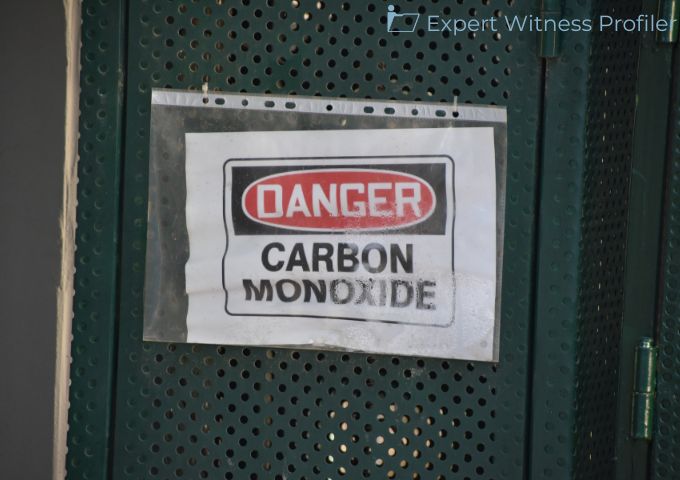
This dispute arises from the death of 88-year-old Ronald Fronckowiak (the “Decedent”) by carbon monoxide toxicity. Specifically, on the evening of February 22, 2022, Rebecca Jaeger, age 72, drove the Decedent in his 2017 Kia Sorento from the hospital-where he was being treated for a dislocated shoulder and confusion-to the couple’s rental home in Spring Hill, Florida.
Jaeger exited the vehicle, assisted the Decedent out of the vehicle, and they both proceeded inside with the key fob, which was ultimately left on the kitchen table. Tragically, they left the car running in the enclosed single-car garage.
The next morning, officers from the Hernando County Sheriff’s Office performed a wellness check on the couple after the Decedent’s family had not made contact with him. Decedent was found deceased in the room next to the garage, and it was later determined that he died from carbon monoxide toxicity.
The 2017 Kia Sorento is designed with keyless ignition technology, but does not include an automatic shutoff feature. More broadly, 83% of 2017 model year vehicles were found to not offer an automatic shutoff feature, and 91% did not include this as a standard feature.
Defendant Kia America, Inc. filed a motion to exclude the testimony of Plaintiffs’ expert witnesses Peter A. Hancock and David J. Bizzak.
Human Factors Expert Witness
Peter Adrian Hancock has served as a past president of the Human Factors and Ergonomics Society and other professional organizations. His work includes decades of research, publication, and application of HF/E principles to real-world systems, including transportation systems and human interaction with vehicle technologies.
David John Bizzak is a Professional Engineer (P.E.) and holds a Ph.D. in Mechanical Engineering. Furthermore, he is also a Certified Fire and Explosion Investigator (C.F.E.I.) and Certified Vehicle Fire Investigator (C.V.F.I.). Bizzak has decades of experience investigating and analyzing automotive systems and other product designs for safety hazards, defects, and failure modes.
According to Hancock, the vehicle appeared to have provided insufficient cues as to its continuing, activated status. However, the Court held that such opinions are not directly relevant to the design defect analysis at hand.
Hancock also opined that there was an “absence of effective, explicitly designed status warning cues.” This opinion, however, is conclusory and unsupported by any articulable methodology.
David Bizzak
Similarly, although Bizzak provided more relevant opinions in his report, these do not necessarily signify that the vehicle failed to perform as safely as expected or was unreasonably dangerous.
According to Bizzak, the subject Kia Sorento was defective by virtue of the fact that it was not equipped with features necessary to guard against carbon monoxide poisoning resulting from an operator inadvertently failing to turn off the ignition before exiting the vehicle.
However, the Court concluded that the key opinion provided in Bizzak’s report that addressed the alleged design defect was conclusory, as no discernable methodology was provided.
Held
Accordingly, the Court granted-in-part Defendant Kia’s motion to exclude the testimony of Peter A. Hancock and David J. Bizzak.
Key Takeaway
Importantly, neither Daubert nor Federal Rule of Evidence 702 requires a trial judge to admit opinion evidence that is connected to existing data only by the ipse dixit of the expert. Instead, the judge is free to conclude that there is simply too great an analytical gap between the data and the opinion proffered.
This case arises from a single, momentary sideswipe on Interstate 95 in which the rightfront tire of the U-Haul truck driven by Corey Hayes-Goode contacted the left-rear corner of Rigoberto Lagunas-Antunez’s GMC van.
The Court dismissed Plaintiffs’ claims against U-Haul that were brought under a design defect theory (the “design defect claims”), but denied the motion as to Plaintiffs’ claims against U-Haul under a failure-to-warn theory, as well as to the Estate of Rigoberto’s wrongful death claim against U-Haul. All of Plaintiffs’ claims against Defendant Hayes-Goode remained.
Human Factors Expert Witness
Ruston M. Hunt holds a B.S. and M.S. in Industrial Engineering and a Ph.D. in Mechanical Engineering from the University of Illinois, where he also taught and conducted applied research on human error and electro-mechanical systems. With over 40 years of experience in human factors engineering, he has led extensive research and development projects for major government agencies and Fortune 500 companies, focusing on operator support systems and human-system interfaces. Hunt has served as a faculty member and administrator at leading institutions, where he taught and developed programs in human factors and systems engineering.
Daniel M. Wolfe has a Bachelor of Science Degree in Engineering and a Doctor of Philosophy degree in Electrical and Electrical and Computer Engineering.
He is a member of the Society of Automotive Engineers, the National Association of Accident Reconstruction Experts, and the Optical Society of America. He is certified by the Society of Automotive Engineers to access and interpret Heavy Vehicle Event Data Recorders in commercial vehicles and is certified as a BOSCH Crash Data Retrieval technician.
Steven T. Kean has over 25 years of experience in traffic crash investigation and reconstruction, including more than 1,000 crash investigations. He has served as an Accident Reconstruction Team member since 2001 and as Team Leader since 2008, and he holds full accreditation as a Traffic Accident Reconstructionist from ACTAR.
Kean’s extensive specialized training—spanning advanced crash reconstruction, event data recorder analysis, heavy vehicle investigations, and human factors—demonstrates his comprehensive expertise in evaluating vehicle dynamics and driver behavior. He has been qualified and testified as an expert in multiple state courts, taught advanced crash reconstruction courses to law enforcement and legal professionals, and is an active member of leading professional organizations, including the National Association of Professional Accident Reconstruction Specialists and the Society of Automotive Engineers.
Brooks Rugemer has over 30 years of experience in trucking safety, driver training, risk management, and accident investigation, including 12 years as a tractor-trailer operator with 1.4 million accident-free miles. He has hired and trained over 5,000 CDL drivers and is intimately familiar with FMCSRs, OSHA regulations, and accepted transportation safety practices.
U-Haul provided that Hunt opined as to the location of the van relative to the Subject Truck at the time of the accident, that the Subject Truck was defective and unreasonably dangerous due to lacking certain technologies, and that U-Haul allegedly failed to provide adequate warnings and training to inexperienced renters.
On review of Hunt’s voluminous report, these opinions primarily involve (1) the Subject Truck being unreasonably dangerous and defective because “insufficient warnings and instructions were provided to renters” and because “it lacked a blind spot detection and warning system,” (2) the dangers of failing to “explicitly train” renters on the proper adjustment of the Subject Truck’s side view mirrors; and (3) the accident-prevention effect that blind-spot detection technologies “likely” would have had in this case, had they been installed on the Subject Truck.
Because Plaintiffs’ design defect claims are no longer viable, Hunt’s opinions that the Subject Truck was defective and unreasonably dangerous due to an alleged design defect are not relevant.
B. Motion to Exclude Expert Daniel Wolfe
Wolfe testified as to the Subject Truck’s alleged design defects and alternative technologies that allegedly could have prevented the instant accident.
As the proposed design-engineering expert, Wolfe’s testimony is relevant only with regard to the now-dismissed design defect claims. Therefore, pursuant to Federal Rule of Evidence 401, the Court granted U-Haul’s motion to exclude the testimony of expert Wolfe.
C. Motion to Exclude Expert Steven Kean
U-Haul took issue with two specific opinions proffered by Kean in his deposition: Plaintiffs’ van was in the Subject Truck’s blind spot prior to the accident, and the van was traveling faster than the Subject Truck at impact.
According to Plaintiffs, Kean’s testimony will “offer critical insight that will help the jury understand the sequence of events and the physical evidence underlying this collision.”
Because the Court can foresee the potential relevance of an accident reconstructionist’s testimony to Plaintiffs’ remaining claims, the Court denied without prejudice U-Haul’s motion to exclude the testimony of expert Steven Kean at this juncture, subject to a Daubert hearing at the appropriate time in the proceedings to ascertain the reliability of his proffered testimony.
D. Motion to Exclude Expert Brooks Rugemer
U-Haul provided that Rugemer’s testimony concerned the countermeasures that U-Haul should have taken in order to prevent the instant accident, such as giving additional training and safety information to inexperienced drivers of rental trucks.
According to Plaintiffs, Rugemer will “explain to the jury how commercial transportation companies manage blind spot and mirror adjustment risks, what reasonable industry practices exist to mitigate foreseeable lane-change collisions, and how U-Haul’s rental procedures fell short of those well-established standards.”
Because the Court can foresee the potential relevance of a commercial safety expert’s testimony to Plaintiffs’ remaining claims, the Court denied without prejudice U-Haul’s motion to exclude the testimony of expert Brooks Rugemer at this juncture, subject to a Daubert hearing at the appropriate time in the proceedings to ascertain the reliability of his proffered testimony.
Held
The Court granted U-Haul’s motions to exclude the testimony of Ruston Hunt and Daniel Wolfe.
The Court denied without prejudice U-Haul’s motions to exclude the testimony of Steven Kean and Brooks Rugemer.
Key Takeaway
Evidence is relevant if it has any tendency to make a fact more or less probable than it would be without the evidence, and the fact is of consequence in determining the action.