In July 2022, while working at Tyoga Container Company’s facility, William Borden stepped onto a mesh belt conveyor manufactured by Mainline Conveyor System, Inc. The conveyor unexpectedly activated and threw him off, causing severe lacerations to his left knee and lower leg. Borden claimed that the conveyor was defective and unreasonably dangerous.
In August 2023, Borden filed a strict liability lawsuit against Mainline in the Pennsylvania Court of Common Pleas of Tioga County. The following month, Mainline removed the case to federal court on diversity grounds.
Borden sought to exclude testimony from Mainline’s engineering expert, George J. Wharton; evidence suggesting product misuse or highly reckless conduct; evidence of assumption of risk; and evidence of his prior DUI conviction.
Safety Engineering Expert Witness
George J. Wharton is a professional engineer with multiple certifications, including C.F.E.I., C.V.F.I., and C.F.P.S., and holds both B.S. and M.S. degrees in mechanical engineering. Wharton serves as an expert in engineering, safety engineering, and personal injury matters.
His work includes evaluating mechanical system design, workplace safety procedures, and incident causation. Wharton has also authored expert reports responding to opposing experts’ claims and opining on industry practices based on decades of engineering experience.
Wharton’s opinion that Tyoga was “required” to assume safety responsibilities under its contract with Mainline crossed into legal interpretation. Since his conclusion relied on contract language rather than engineering practices, the court deemed it inadmissible.
Design vs. Knowledge
Wharton did not offer an opinion on Mainline’s subjective knowledge. Instead, he responded to the opposing expert’s foreseeability claim by analyzing the design differences between conveyors. This design-focused rebuttal was found admissible.
Speculation on Plaintiff’s Behavior
Wharton asserted that a warning decal wouldn’t have influenced Borden’s decision to cross the conveyor. This opinion was based on speculation about Borden’s mindset and was therefore excluded as outside the scope of expert testimony.
Alarm System Commentary
Wharton’s critique of an audio-visual alarm system addressed practical feasibility—highlighting how excessive alarms could lead to desensitization or muting. Grounded in engineering experience, this testimony was allowed.
Post-Accident Procedures
The Court excluded any opinion referencing Tyoga’s post-accident policies, including a sign in Wharton’s report, under the parties’ pretrial agreement.
Held
The Court granted in part and denied in part Plaintiff Borden’s motion to exclude the testimony of Defendant Mainline’s expert witness, George J. Wharton.
Key Takeaway:
An engineering expert may testify about industry practices, product design, and the feasibility of safety features, but cannot interpret contractual obligations or speculate on a party’s mental state or motivations. Courts will exclude expert opinions that cross into legal conclusions or subjective speculation.
Case Details:
Case Caption:
Borden v. Mainline Conveyor Sys., Inc
Docket Number:
4:23cv01486
Court Name:
United States District Court for the Middle District of Pennsylvania
Plaintiffs, Michael Graham (“Michael”) and Barbara Graham, sued Defendant Walmart Stores East LP (“Walmart”) after Michael allegedly slipped and fell on some ice in the parking lot of Walmart’s store on February 24, 2024.
Plaintiffs hired an expert, William L. Wallace, to “review and evaluate whether [Walmart] exercised the necessary high standard of reasonable care to protect Michael Graham from the hazard of ice in the parking lot.” He took photographs months after the incident where water had accumulated in depressions in the parking lot, including the area where Michael fell.
Wallace also obtained the weather data from February 24, 2024. Those records show that, on the date of Michael’s fall, there was one inch of snow with temperatures ranging from 21 to 34 degrees Fahrenheit. The temperature was above freezing until 3:00 a.m., but thereafter temperatures were consistently below freezing. Wallace thus opined that because “there was no plowing or de-icing treatment after 6:00 a.m. By 7:15 p.m. ice would have formed in the depressions” in the parking lot. He also stated that “a reasonable person would understand that a wet surface and/or standing water will freeze if the temperature is below 32 degrees.”
Walmart filed a motion to strike Wallace’s affidavit for a variety of reasons.
Safety Expert Witness
William L. Wallace is a Certified Safety Professional, Certified Healthcare Safety Professional and Certified Emergency Planner. Wallace holds a Masters Degree from Ball State University and has over 30 years of experience in safety and engineering. He is currently a Safety Board Director for Vantage Point Consulting.
Largely based on Wallace’s Affidavit, Plaintiffs argued that it had constructive knowledge of the ice based on the weather conditions on February 24, 2024.
Reliability
Wallace obtained weather data and took photographs of the Maysville Store parking lot. Walmart called the opinions therein “speculation” because the weather data was acquired from the Fort Wayne Airport which is located about 20 miles from the Maysville Store. And Walmart pointed out that the photographs were taken months after the incident and under a different set of circumstances.
The Court did not believe that Wallace purely speculated on the weather conditions at the Maysville Store because the weather data was from a mere 20 miles away. Nor did the Court believe he speculates on the way water pooled in the parking lot simply because they were taken months after the incident when the weather was warmer. Basically, the connections that Wallace drew, though not perfect line for line, are rational.
It is rational to believe that there would be similar weather conditions just 20 miles away from where Michael’s fall occurred. And it is rational to believe that the temperatures in those areas would rise and fall in a similar fashion. It is thus reasonable to assume that the weather data from 20 miles away would reveal similar results to that of the Maysville Store on February 24. As for the pictures, Walmart did not argue that the parking lot has faced substantial changes from the date of Michael’s fall to the date on which they were taken. Although temperatures were not freezing and rain had just fallen, it is still reasonable to assume that water would have pooled in a similar manner.
Legal Conclusion
Admittedly, paragraphs 17-19 of Wallace’s Affidavit are riddled with premises liability legalese. The Court nonetheless believes that they are subject to admissible interpretations. As for paragraph 17, Walmart takes issue with this portion: “By 7:15pm, ice would have formed in the depressions, which created a hazardous condition to business invitees where Michael Graham fell.” But Wallace did not say that ice did form, only that it would have formed absent de-icing or plowing, and created a hazardous condition.
The same held true for paragraph 18 and Plaintiff’s use of “reasonable person” and “reasonable care.” While these terms could be interpreted as defining the standard of care, they could also reflect Wallace’s use of them in offering his opinion as a safety expert. Similarly, paragraph 19’s use of “responsible cause,” though close to causation, could likewise represent his expert opinion.
Held
The Court denied the Walmart’s motion to strike the affidavit of William L. Wallace.
Key Takeaway:
The Court determined that the statement, though it contained legalese, could be interpreted in two ways: one admissible and one not. If the Court construed it as a legal conclusion, it would be inadmissible. But if the statement is understood as [the Plaintiff’s expert] simply trying to use English, rather than legal terms, to express his opinion on [the Defendant’s] conduct, it ceases to be an opinion on the law.
Platinum Services, Inc. filed a lawsuit against the United States, acting through the Department of Defense (DoD), alleging breach of contract. The dispute centered on the transportation of 45 shipments of household goods for military service members during the summers of 2016, 2017, and 2018.
Platinum claimed it had entered into an agreement with the government to provide both line-haul freight services (long-distance transport) and accessorial services (additional moving-related services beyond standard long-distance transportation). According to Platinum, the government had accepted the rates listed on its freight tenders, totaling $17,651,695 million, and despite completing the work, the company asserted it had not been paid.
The government, however, disputed this account. It acknowledged requesting long-distance shipping but denied ever ordering or authorizing any accessorial services. It also argued that it had never accepted Platinum’s tendered rates. Instead, the government maintained that Platinum was owed no more than $400,612, based on the reasonable value of the services actually provided—a legal theory known as quantum meruit.
The government’s expert witness on damages, Mr. A. Mark Gmyr, prepared a report purporting to calculate the value of accessorial services rendered to the government. Plaintiff has filed a motion in limine to exclude Gmyr’s testimony from evidence.
Forensic Accounting Expert Witness
Andrew Mark Gmyr specializes in forensic accounting and assessing contract-based damages claims, including under quantum meruit. Gmyr holds a Bachelor of Science in finance from Virginia Polytechnic and State University (Virginia Tech), he is a Certified Fraud Examiner (CFE), and is a Certified Construction Auditor (CCA).
Gmyr also has 25 years of experience consulting on dozens of construction and Government contracts matters, analyzing Government contracts, preparing contract claims, crafting expert reports, and presenting his analyses through testimony or during mediation and settlement proceedings.
Gmyr’s Expert Report and Plaintiff’s Motion in Limine
Gmyr’s report relied on the “stepped approach” to calculate Platinum’s quantum meruit damages, which is a recommended approach in the litigation cost-accounting industry. That approach (1) determines the type of claim at issue; (2) determines potential financial impacts; (3) determines the approach to quantifying damages based on the facts at issue; (4) reviews, in detail, the relevant documentation; (5) quantifies the financial impacts based on the relevant documentation; and (6) quantifies damages and/or applies adjustments to damages.
Using the stepped approach, Gmyr ultimately concluded that Platinum’s quantum meruit damages amounted to $400,612, including $176,889 for line-haul for all 45 shipments, $3,990 for origin loading for only two shipments, and $219,733 for destination unloading for 43 shipments.
Plaintiff’s motion in limine argued that Gmyr is not qualified to calculate the value of Platinum’s accessorial services, because although Gmyr has experience in financial analysis and forensic accounting, he has no specialized experience in the transportation industry. However, the Court held that Gmyr is qualified to testify on the fair market value of accessorial services performed by Platinum.
Moreover, Gmyr’s report analyzed rate data from other Transportation Service Providers registered in the relevant government system—GFM—during the relevant time periods—2016 through 2018—and for the relevant accessorial services at issue—expedited service, loading and unloading, and handling non-adjacent freight.
The stepped approach is simply a commonsense approach to a mathematical inquiry frequently used in the damages accounting industry. In other words, the Court concluded that Gmyr’s methodology is not unreliable simply because it is straightforward.
However, Gmyr’s damages deductions based on his application of the government’s contract formation and performance arguments was not admitted because he is in no position to instruct the Court on issues of law.
Held
The Court granted in part and denied in part the Plaintiff’s motion in limine to exclude A. Mark Gmyr’s testimony from evidence
Key Takeaway:
An expert’s assessment of damages is not any less relevant or reliable just because it involves simple mathematical calculations. Gmyr’s valuation methodology is reliable as Gmyr based his calculations on the “stepped approach,” which is commonly used in the litigation cost-accounting industry.
In November 2022, while working as a BNSF intermodal equipment operator, Taylor A. Campbell fell several feet from a railcar ledge while attempting to lock a stuck inter-box connector (IBC). No one witnessed the incident. Campbell blamed the fall on BNSF’s failure to ensure a safe working environment.
Fred Reinke, a BNSF manager, had developed and taught the training program Campbell allegedly underwent, but he did not personally train him. That role fell to BNSF employee Mark Knepel.
In April 2025, BNSF disclosed Fred Reinke as a non-retained expert under Rule 26(a)(2)(C). He was expected to testify about Campbell’s training, adherence to safety rules, actions during the incident, and the condition of his equipment. BNSF based his testimony on his industry experience, supervisory role, and inspection of the equipment.
Campbell moved to exclude the testimony, arguing that Fred Reinke relied on hearsay and lacked personal knowledge. BNSF maintained that Reinke’s testimony was admissible based on his expertise.
Automotive Rail Operations ExpertWitness
Fred Reinke was a manager at BNSF. Reinke has experience developing and teaching the training program that Campbell purportedly participated in when he began his employment at BNSF. Reinke has also previously surveyed various BNSF intermodal employees over time to verify they have received consistent training.
The Court applied Federal Rule of Evidence 702, which permits expert testimony if the witness is qualified and the testimony is relevant, reliable, and based on sufficient facts and methods. Quoting Daubert, the Court emphasized its gatekeeping role to ensure that expert opinions are not speculative and are grounded in sound methodology. The Court clarified that while cross-examination is the proper tool for challenging shaky but admissible testimony, it may exclude opinions based solely on the expert’s say-so or hearsay.
Reinke’s Qualifications and Permissible Testimony
The Court acknowledged that Campbell did not dispute Reinke’s qualifications to testify about the general structure and content of BNSF’s standardized training program. It found Reinke competent to describe how BNSF typically trained intermodal equipment operators and what the program expected trainers to convey. This fell within his specialized knowledge and direct experience.
Objections to Reinke’s Testimony
Campbell moved to exclude Reinke’s opinions on four specific points: (1) whether Knepel properly trained him, (2) what he was actually told or instructed to do, (3) whether he used excessive force that led to his fall, and (4) whether he violated BNSF safety rules. The Court found that Reinke had no personal knowledge of these matters and had formed his opinions based on case materials and a post-incident conversation with Knepel. Because Reinke was not present during the training or the fall, his testimony on these issues lacked a sufficient factual basis.
Limits on Non-Retained Expert Testimony
The Court emphasized that as a non-retained expert under Rule 26(a)(2)(C), Reinke could not offer opinions based on information obtained solely in anticipation of litigation. While experts may sometimes rely on hearsay if it is customary in their field, they must apply their expertise to form an independent judgment. The Court concluded that Reinke acted more as a conduit for testimonial hearsay than as an expert applying independent analysis.
Conclusion and Ruling
The Court held that Reinke could testify about the general content and structure of BNSF’s training program and how trainers typically implemented it. However, it barred him from opining on the specific training Campbell received, the circumstances of his fall, or any alleged violation of safety rules. The court clarified that only Knepel, as a lay witness with firsthand knowledge, could testify about what he personally observed during Campbell’s training.
Held
The Court granted in part and denied in part Plaintiff Campbell’s motion to exclude the testimony of Defendant BNSF Railway Company’s expert witness, Fred Reinke.
Key Takeaway:
A non-retained expert like Fred Reinke may testify about general company practices and standardized training based on personal experience, but cannot offer opinions about a specific employee’s training or conduct unless based on firsthand knowledge. Courts strictly limit non-retained experts to what they directly observed or knew prior to litigation.
Plaintiff State of Washington alleged that Novo Nordisk Inc. (“NNI”) caused physicians to prescribe its drug, NovoSeven®, to Washington hemophilia patients by: (1) promoting it “off-label” for prophylaxis and “high dose” use; (2) paying kickbacks to physicians; and (3) paying bribes to patients, all of which rendered claims to Medicare and Washington Medicaid false.
The State of Washington has been investigating this case for almost fifteen years, hoping to find evidence of unlawful conduct that allowed its Medicaid program to recoup money it paid for a medically necessary, life-saving drug.
Novo Nordisk’s expert, Dr. Anupam B. Jena, a medical doctor who also has a Ph.D. in economics opined that NNI’s “alleged publication strategy” did not cause the submission of false claims for NovoSeven.
Washington did not challenge Jena’s credentials or expertise, but it did argue that his “causation” opinions were not admissible because (1) they were based on insufficient or mis-stated facts; (2) his methodology was unreliable because though he is not an expert on the independence of medical publications, he makes “assumptions” about the integrity of the publications at issue, while ignoring other evidence particular to the publications and strategies at issue; (3) he opined about areas of medicine and reimbursement that are outside his expertise; and (4) he opined about the law of causation, a matter better left for jury instructions.
Internal Medicine Expert Witness
Dr. Anupam B. Jena, MD, PhD, is the Joseph P. Newhouse Professor of Health Care Policy at Harvard Medical School and a physician in the Department of Medicine at Massachusetts General Hospital. He is also a faculty research associate at the National Bureau of Economic Research. As an economist and physician, Jena’s research involves several areas of health economics and policy including the use of natural experiments in health care, the economics of physician behavior and the physician workforce, medical malpractice, the economics of health care productivity, and the economics of medical innovation.
Jena graduated Phi Beta Kappa from the Massachusetts Institute of Technology. He received his MD and PhD in Economics from the University of Chicago and completed his residency in internal medicine at Massachusetts General Hospital. He is the host of the Freakonomics, MD podcast, which explores the “hidden side of health care.”
The Court concluded that Jena is qualified to opine on the bulk of topics in his Report, including the reliability of peer-reviewed publications. He has sufficient expertise and experience in the field of physician behavior in connection with writing prescriptions to set out the many factors that can influence treating physicians in their selection of pharmaceuticals to prescribe for their patients.
While Jena’s testimony was largely permitted because he is a qualified expert in the fields of medicine and economics and his report is based on sufficient facts or data, Jena was barred from opining on the ultimate legal conclusion that the physicians who prescribed NovoSeven did not do so because of the inducements and benefits NNI extended to them or their patients.
Held
The Court granted in part and denied in part the Plaintiffs Siegel and Washington’s motion to exclude the testimony of Defendant Novo Nordisk’s expert witness, Dr. Anupam Jena.
Key Takeaway:
As a general rule, an expert opinion is not objectionable simply because it embraces an ultimate issue to be decided by the trier of fact. However, an expert cannot opine as to a legal conclusion, or to the ultimate issue of law; instructing the jury on the applicable law is the Court’s distinct and exclusive province.
Please refer to the blogs previously published about this case:
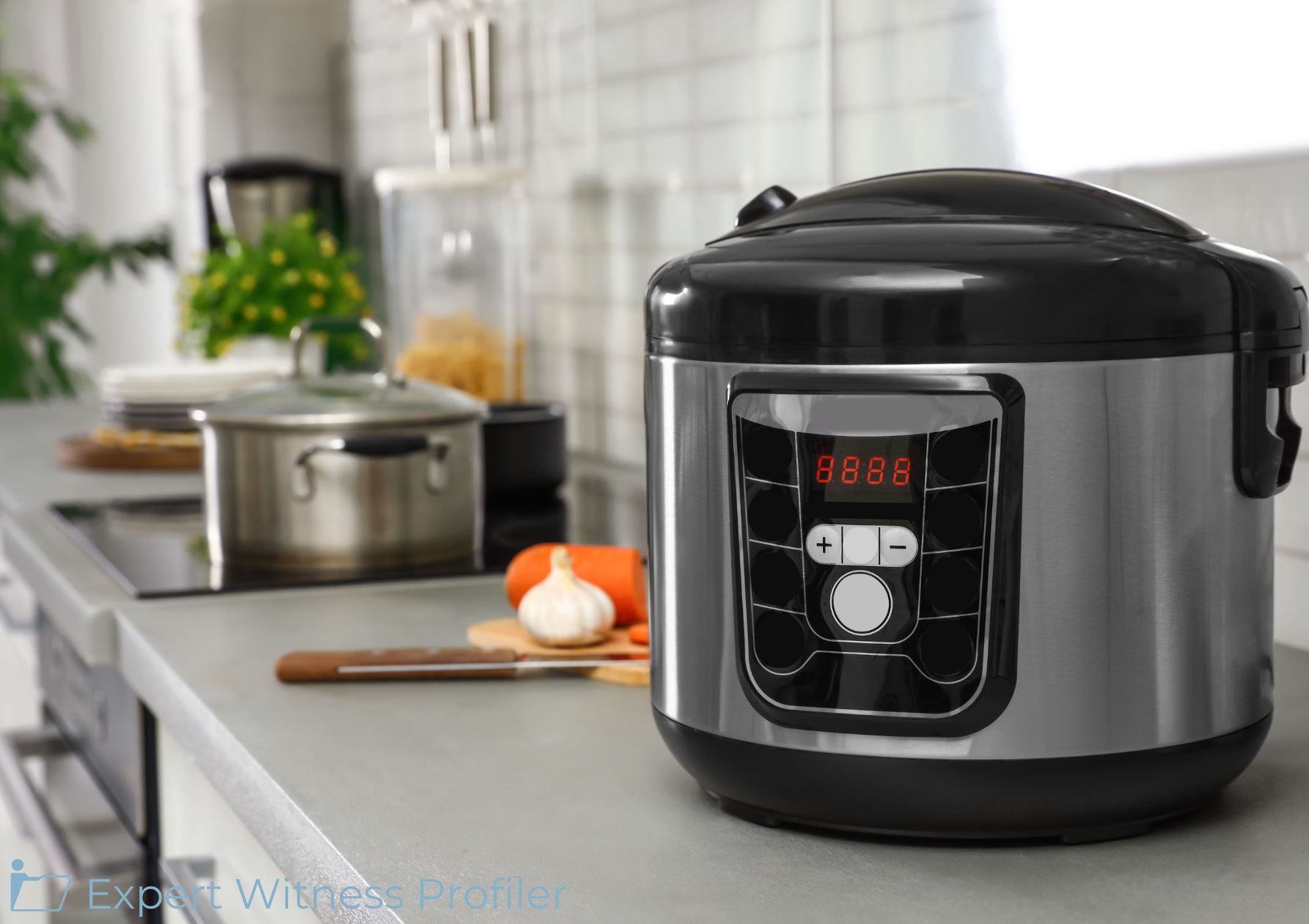
This is a product liability case involving a Breville BPR600XL pressure cooker (the “Pressure Cooker”). Plaintiff, Hannah Frazier, claimed that suffered permanent injuries to her abdomen when the Pressure Cooker exploded, spraying super-heated liquid and steam across her body.
The Plaintiff retained Jeffrey D. Hyatt of Specialized Testing & Forensic Laboratory to inspect and test the Pressure Cooker and provide an expert report (“Hyatt Report” or “Report”). Hyatt inspected and tested the Pressure Cooker using the UL (for “Underwriters Laboratory”) 136 “Standard for Pressure Cookers.” The Defendant, Breville USA, Inc., filed a motion to exclude Hyatt’s testimony under Rule 702 and Daubert.
Accident Reconstruction Expert Witness
Jeffrey D. Hyatt specializes in conducting mechanical component and system testing engineering, mechanical system failure analysis, identification of materials failure mechanisms and scientific accident reconstruction.
Breville did not challenge Hyatt’s qualifications as an expert; instead, it challenged the reliability of his principles and methodology.
UL 136
Breville contended that Hyatt’s testimony must be excluded in its entirety because Hyatt failed to establish that UL 136 applies or should apply to electrical pressure cookers, as opposed to stovetop pressure cookers.
However, the Court held that Hyatt’s testimony is sufficient to create, at a minimum, a question of fact as to whether it is appropriate to apply UL 136 standards to electric pressure cookers.
The Prescribed Testing Methodology
Breville next argued that, even assuming UL 136 applies, Hyatt did not utilize the prescribed testing methodology set out in UL 136. Hyatt, however, acknowledged as much during his deposition and explained why he intentionally chose not to follow precisely some of the procedures recommended in UL 136. It is clear that this was no oversight on his part.
Torque vs. Pounds Force
Breville contended that, “even using the wrong standard and applying that standard’s principles and methodology incorrectly, Hyatt demonstrated that the Pressure Cooker required more force to open than can be exerted by an average male or female.” According to Breville’s expert, the 26.3 pounds of force measured by Hyatt is equivalent to 131.5 “inch-pounds of torque, which is well in excess of what an average [person] has been observed to exert.” However, UL 136 prescribed the method for testing the force necessary to open a pressurized lid, and it speaks in terms of pounds of force, not torque.
The Measurement of the Locking Pin
Breville took issue with Hyatt’s purported failure to measure the lid locking pin while it was under pressure. Breville also contended that “Hyatt does not provide any support for his claim that Breville intended to use all .291 [inches] of the lid locking pin while under pressure” or “include any facts or data to support his conclusion that the Pressure Cooker was designed to use the entire .291 [inches] of the lid locking pin.”
Hyatt, however, explained that he made that assumption because he was not in possession of actual design documents from Breville to show what its intended design was, and he reserved the right to change his opinion if documents produced by Breville showed that, in fact, the manufacturer intended for the compressed pin to extend only .168 inches. In that event, Hyatt would modify his opinion to state that the compressed length of the locking pin was a design defect rather than a manufacturing defect that affected only the plaintiff’s Pressure Cooker.
Hyatt’s opinion, in any event, is that the length of the pin in the case of this particular pot was insufficient to prevent it from opening under pressure. The Court held that Breville’s objections did not make his opinion unreliable or inadmissible.
The Reliability of the Data in Figure 13
Breville pointed out an error on a data chart in Hyatt’s Report purporting to show that the internal pressure of the Pressure Cooker was negative for the majority of the test. It asserted that Hyatt “fails to account for any condition that would make the internal pressure of the cooker less than zero for the majority of the test,” thus making the “data he offers in the chart . . . unreliable and insufficient.” As set forth above, Hyatt did explain this discrepancy in his deposition and accounted for it. It appeared that the only difference this error would have made would be to shift the maximum internal pressure of the Pressure Cooker by .5 psig, but it did not appear to have had any effect on Hyatt’s other calculations.
Although this error might detract from Hyatt’s credibility before the jury, the Court held that it does not render his opinions unreliable or inadmissible.
Breville’s Intentions
Finally, Breville took issue with Hyatt’s finding that Breville intended for the Pressure Cooker to “meet the automatic locking requirements of UL 136” on the basis that this finding is not supported by sufficient evidence, given that the Pressure Cooker itself states that it was intended to comply with US 1026 and UL 1083.
Hyatt made it clear in his deposition that UL 136 is the locking mechanism standard and that the “industry requires” any pressure cooker lid to remain locked while the contents are under sufficient pressure that liquid could be ejected if it were opened.
The fact that the Pressure Cooker here has a locking mechanism that engaged below 0.25 psig of pressure indicated to him that Breville intended to comply with industry safety standards, irrespective of whether it identified UL 136 on the Pressure Cooker’s label. In other words, according to Hyatt, the design of Breville’s locking mechanism itself demonstrated Breville’s intent that its pressure cookers be safe and in compliance with industry standard.
Whether Hyatt’s Testimony Will Assist the Jury
Breville asserted that, for all of the reasons addressed above, Hyatt’s testimony would not assist the jury in understanding the evidence or determining a fact at issue in this case. The Court finds, as set forth above, that Breville’s arguments are more properly directed to the weight to be accorded Hyatt’s testimony by the jury rather than to its admissibility.
Breville contended that Hyatt’s hypothesis—that the lid opened without resistance—contradicted his finding that it took 26.3 pounds of force to open while under pressure and that Hyatt “fails to explain how his conclusion that the Pressure Cooker required 26.3 pounds of force to open while under pressure has any bearing on whether a defect caused Plaintiff to be able to open the Pressure Cooker lid ‘easily’ and ‘with no resistance’ as she has testified to.
But Hyatt addressed this purported inconsistency in his deposition as well. He testified that consumers whose pressure cookers he has tested frequently describe the lid as opening “with “no resistance” or as being “easy to open,” and he did not understand Frazier to mean literally that the lid had no resistance when she opened it.
Held
The Court denied Breville’s motion to exclude the testimony of Jeffrey D. Hyatt.
Key Takeaway:
Hyatt’s opinions are based on sufficient facts and data, are the product of reliable principles and methods, and reflect a reliable application of the principles and methods to the facts of this case.
The Court denied Breville’s motion, insofar as it sought the exclusion of Hyatt’s testimony.
Plaintiff Brian Menge, a former police detective with the City of Highland Park, Michigan, brought a claim against Defendant Khursheed Ash-Shafii, a Highland Park city councilman, alleging that Ash-Shafii unlawfully retaliated against him in violation of the First Amendment because of Menge’s successful settlement of a prior lawsuit against the City. The retaliation consisted of statements published by Ash-Shafii falsely accusing Menge of stealing money from the City’s criminal forfeiture fund while Menge was a police officer there. Menge retained Sameer Somal, to testify to the amount of damages Menge incurred to his income, reputation, and psyche as a result of Ash-Shafii’s false statements.
The Defendant filed a motion to exclude Somal’s testimony arguing that Somal did not meet the requirements of Rule 702.
Defamation Expert Witness
Sameer Singh Somal CFA, CFP®, CAIA is a CFA Charterholder, a CFP® professional, and a Chartered Alternative Investment Analyst. He is the CEO of Blue Ocean Global Technology, a company that assists individuals and entities with building and repairing their online reputation. He has co-authored Continuing Legal Education (CLE) programs about defamation and related topics and is a former member of the Legal Marketing Association (LMA) and the Education Advisory Council (EAC).
Somal opined that Menge suffered “significant” damages based on Defendant Ash-Shafii’s alleged retaliatory statements. Somal separated the damages into four categories: economic, rehabilitative, reputational, and emotional distress. He determined that Menge suffered at least $283,500 in economic damages.
Economic Damages
Ash-Shafii objected first to Somal’s assessment of Menge’s economic damages of $283,500. Somal opined that Menge was entitled to economic damages in that amount based on Somal’s own “conservative estimate” that he lost the opportunity to work over the next three years with between eight and ten attorneys. He reckoned that each of these attorneys would have retained Menge for at least six to eight projects per year for an average of $1,000 per project. Ash-Shafii asserted that this testimony is unreliable because it strays from the facts of the case. He asserted that Somal failed to review certain “Request for Payment” forms that are submitted in indigent criminal cases to obtain payment for Menge’s work on an investigation and did not review Menge’s 2023 tax return.
While these points may all be grounds for impeachment, the Court held that they do not necessarily fatally undermine the admissibility of Somal’s testimony.
The problems with Somal’s testimony are more basic. For one, Somal did not appear to be assessing the economic damage to Menge’s investigation business based on any independent body of expertise — that is, based on any knowledge of the legal field in the metro Detroit region. He did not offer any foundation for innate or acquired knowledge of the practices for assignment or retention of investigators in indigent criminal defense cases or the networking customs among defense attorneys. Instead, his conclusions ultimately were based on “estimate[s]” of Menge’s lost work, which he deemed “conservative.” He projected that Menge lost the opportunity to work with between eight and ten attorneys per year, but the source of this estimate is entirely unexplained and does not correspond with any evidence in the record.
Rehabilitation Damages
Ash-Shafii next asserted that Somal offered no methodology for his opinion that a twelve-to-eighteen-month rehabilitation campaign, costing approximately $180,000, will be necessary to rehabilitate Menge’s online reputation. He pointed out that the recording of the City Council meeting containing the offending comments only has been viewed approximately 300 times on Facebook, and Somal never searched for references to Menge on Google to determine the extent of the spread of the alleged defamatory statements on the internet.
However, Ash-Shafii did not appear to take issue with Somal’s qualifications as an expert in the field of online reputation management, and Somal’s report contains a sufficiently clear basis for his $180,000 estimate. He explained that his team would have to conduct ongoing analysis and testing on important “keywords” related to Menge, and as part of their work to rehabilitate his reputation, the team would create “backlinks” — apparently prioritized by search engine algorithms — to more prominently highlight certain favorable results. In his report he quoted a cost of $15,000 a month for twelve months for these tasks. While this number may well be excessive, the Court held that Somal, by dint of his knowledge of the field, is qualified to offer his view.
While Ash-Shafii faults Somal for failing to assess the extent of the spread of the defamatory content before coming up with this estimate, it did not appear that the amount of work necessary to address harmful online content is dependent on the volume of material circulating on the internet. Moreover, Somal did opine that it was problematic that the alleged defamatory video still was published to Facebook and explained that the fact court documents mentioning the defamatory statement were readily accessible on the internet “adds another layer of complexity to the rehabilitation process.”
Reputational Damages
Ash-Shafii also took issue with Somal’s conclusion that Menge is entitled to $550,000 to $750,000 in damages based on more generalized harm to his reputation.
In his report, Somal stated that “there is no set standard to determine the actual value associated with [reputational damages]” and that calculating damages in this area “is subjective.” He then explained that in his experience, a “solid structure” for assessing damages would consider three “rings”: Menge’s immediate contacts, his prospective contacts, and strangers.
“Adding the three reputational rings together,” he “calculated and estimated that damages” totaled to “no less than $550,000 – $750,000.” How he calculated a value for each ring is not explained, and his deposition does not shed much further light, but it appeared that the figures may be based on his review of damages awards in other defamation cases.
The Court held that this opinion suffers from the twin faults of no stated methodology and no factual tether.
Held
The Court granted in part and denied in part the Defendant’s motion to exclude testimony of Sameer Somal.
Key Takeaway:
Rule 702 requires an expert to articulate some methodological basis before he may present his testimony to a jury. And his work must bear some relation to the facts of the case. The danger of allowing Somal’s opinion based on his calculations is that it could suggest to the jury damages that do not in fact exist.
Moreover, with proper foundation, calculating Menge’s economic damages would not necessarily even require expert testimony. Trial witnesses could testify about the effects of Ash-Shafii’s defamation on Menge’s businesses and his attorney can develop testimony about the size of his business and the comparative reduction in revenue.
This matter arises from Plaintiff Gina Kuhlman’s arrest by Officers David Grasha and Samantha Haggerty of the Cleveland Division of Police, for operating a motor vehicle under the influence (“OVI”) and for refusing to submit to a drug and alcohol test.
To support her case, Kuhlman offered the expert reports of Rajeve Saini and Timothy A. Dimoff. Defendants filed a motion to disqualify the Plaintiff’s experts, Dimoff and Saini.
Law Enforcement Expert Witness
Timothy A. Dimoff has over 40 years of experience in law enforcement procedures, high-risk security issues and private security procedures.
Dimoff graduated from Denison University with a B.A. in Sociology with an emphasis in Criminology. After finishing the police academy, Dimoff served as a patrol officer with the Akron Police Department (“APD”) for approximately two years. During that training period, he obtained “on-the-job training” from a “field training officer” in investigating suspects for driving under the influence.
Following his two (2) years on patrol, Dimoff was “handpicked from the entire department” to be an officer in APD’s “Special Crimes Unit” investigating “higher level types of crimes,” which also required him to be a S.W.A.T. response officer.
Rajeve Saini is the owner of Advanced Medical Services, the company who performed a drug and alcohol screen for Plaintiff at her request on the day after her arrest. He was trained as a phlebotomist and ultimately became certified as a Paramedical Examiner.
He and his company are certified and recognized by the Federal Motor Carrier Safety Administration as Department of Transportation compliant in drug and alcohol collections and training.
Defendants argued that (1) Dimoff lacked specialized knowledge regarding traffic stops or OVI arrests that would help the trier of fact because his only experience with traffic stops and OVI arrests was from “over thirty years ago” and (2) Dimoff’s expert report is predicated upon a flawed methodology.
Analysis
The Court found that Kuhlman has failed to satisfy her burden to show that Dimoff’s testimony is admissible.
First, Kuhlman has not shown what “specialized knowledge” Dimoff possessed that would “help the trier of fact to understand the evidence or to determine a fact in issue” because the determination of whether the Officers had probable cause to arrest Kuhlman is a legal, not a factual issue.
Not only did Dimoff’s testimony demonstrate that he is opining on the ultimate issue or legal conclusion as to whether there was probable cause, but Kuhlman insisted four (4) times in her briefing that the purpose of Dimoff’s expert testimony is to show probable cause.
Therefore, on this basis alone, because Kuhlman exclusively relied on Dimoff’s testimony to establish that probable cause did not exist for the Officers’ arrest of Kuhlman, and because using expert testimony for that purpose is improper, the Court will not consider Dimoff’s testimony.
Second, the Court also agreed with Defendants’ contention that Dimoff’s methodology was insufficient because he failed to consult the Officers’ depositions, Kuhlman’s deposition, Cleveland’s policies and procedures related to the transport of arrestees, or, critically, the bodycam footage of Kuhlman at Chipotle.
Rajeve Saini
Kuhlman claimed that “Saini’s testimony show that on the day after the incident, Plaintiff went into an independent testing lab and gave a urine sample, which provided negative for alcohol and many commonly-ingested drugs.”
Defendants disagreed, arguing that “Saini’s limited testimony as to the test results taken the day after Plaintiff’s arrest is not outside the scope of the knowledge of a juror and is unnecessary for purpose of Rule 702.”
The parties agreed that the test that Saini’s company administered, and the Fairview test results, were negative as to the specific substances tested for. So, that fact is not “in issue.”
And neither is whether Kuhlman actually consumed alcohol or drugs on December 30, 2018, or on December 31, 2018, because the probable cause inquiry turns on what the Officers perceived on the day of the arrest.
It is the Court that must determine the ultimate legal issue of whether the undisputed material evidence demonstrates that the officers had probable cause to arrest Kuhlman. Since Saini’s expert report and deposition testimony offer no assistance in making this determination, the Court concluded that Saini’s expert report and deposition testimony cannot help the trier of fact determine a “fact in issue.”
Held
The Court granted the Defendants’ motion to disqualify the Plaintiff’s experts, Timothy Dimoff and Rajeve Saini.
Key Takeaway:
Dimoff was disqualified as an expert in this case because Kuhlman introduced Dimoff’s testimony for the improper purpose of opining on the existence of probable cause, and because Dimoff did not consult the bodycam footage or depositions in rendering his opinions.
This is a fraud action the Commodity Futures Trading Commission (CFTC) and thirty States (collectively, the “government”) brought against Lucas Asher and Simon Batashvili (Individual Defendants) and the entities through which they operated.
This case deals with Metals.com and the precious metals it sold to consumers from approximately 2017 to 2020. Through Metals.com, TMTE, Inc., Chase Metals, LLC, and Chase Metals, Inc. (collectively, “Metals”), and later through Barrick Capital, Inc. (Barrick), Individual Defendants sold gold and silver bullion to consumers on their website and over the phone—some as retail sales delivered straight to the buyer and some as investments delivered to third-party depositories.
The Individual Defendants filed a motion to exclude the testimony of the government’s expert, Dana Samuelson, and the government, in turn, filed a motion to exclude the testimony of the Individual Defendants’ expert, Armen Moloian.
Numismatics Expert Witnesses
Dana S. Samuelson is a professional numismatist and expert in the precious metals and rare coins markets with more than 42 years of experience. He is the Founder and President of American Gold Exchange, Inc., a leading national precious metals and rare coin company specializing in dealer-to-dealer trading and direct sales to the public. Samuelson is also a member of the American Numismatic Association (since 1983), a nonprofit dedicated to the study of numismatics and the hobby of coin collecting, and the Certified Coin Exchange (since 1998), a national precious metals and rare coin online trading platform.
Armen Moloian is a respected Numismatic Dealer in Southern California. He is currently the president of Moloian Enterprises, a California Corporation. Moloian has been a professional collectibles dealer since 2006, and has been a coin collector since 1970.
Moloian has been trained in Error and Counterfeit Detection.
The government designated Dana Samuelson as an expert on coin classifications, precious metal valuations for the coins Individual Defendants sold, the spread between the prices Individual Defendants paid suppliers for the coins and the price they charged to customers, and the economic impacts of the pricing.
The Individual Defendants argued that his methodology failed to account for certain factors—such as market prices, exclusivity, and the uniqueness of certain ‘Exclusive Coins’—and was subjective rather than based on industry-accepted or scientific approaches to price analysis.
The Court had no doubt that Samuelson’s testimony was relevant, since it addressed how the coins should be classified and what they were worth. And he has years of experience buying and selling precious metals like the ones at issue in this case, including a quarter decade acting as the president of a national exchange specializing in dealer-to-dealer trading and retail sales to the public.
Individual Defendants attacked the reliability, not the relevance of Samuelson’s testimony. They argued that his approach is untested, but Samuelson estimated that nine out of ten dealers would use the same method he did. And while Individual Defendants call that method an economic model, the government counters that it is merely simple math that does not require error calculations. It is, after all, the jury’s role to weigh conflicting opinions such as this.
Armen Moloian
Individual Defendants designated Armen Moloian to testify on Samuelson’s valuation methodology, the appropriate methodology for valuing the relevant precious metals, and the current valuation of their products.
The government sought to exclude Moloian’s testimony on the grounds that it is not the product of reliable methodology, is not based on sufficient facts or data, and is not a reliable application of his methodology to the facts of this case.
The Court found Moloian’s testimony clearly relevant—just like Samuelson’s—and noted that he has substantial industry experience, even if not as extensive as Samuelson’s. It also observed that the criticisms of Moloian’s methods closely mirror those raised against Samuelson’s.
Held
The Court denied the Individual Defendants’ motion to exclude the testimony of Government’s expert, Dana S. Samuelson.
The Court denied the Government’s motion to exclude the testimony of Individual Defendants’ expert Armen Moloian.
Key Takeaway:
Both experts appealed to their experience in the industry to confirm that their approaches aligned with the normal approach, even if there is no technical standard for calculating the market value of precious metal coins.
Case Details:
Case Caption:
Commodity Futures Trading Commission Et Al V. TMTE, Inc
Plaintiffs sued Amazon.com, Inc., claiming that the company violated the Sherman Act. They contended that Amazon denied customers the “benefits of lower prices and fees” that would arise in a competitive market; and they said Amazon did so by imposing on third-party sellers “Most Favored Nation” policies that cause customers to pay supra-competitive prices.
Plaintiffs’ economics expert Dr. Parag A. Pathak, Ph.D. concluded that Amazon’s anti-discounting policies and practices collectively function as a Platform Most Favored Nation (PMFN) restraint.
According to Pathak, Amazon is the largest online marketplace in the United States, with a market share of around 72% in the Online Retail Marketplaces Market. He added that Amazon’s conduct prevents price competition with other online retailers, which in turn allows Amazon to charge “monopoly referral fees—i.e., the price of connecting merchants and consumers to each other and completing the sales transaction between them.”
Amazon filed a motion to exclude Pathak’s expert testimony.
Economics Expert Witness
Dr. Parag A. Pathak, Ph.D. is the Class of 1922 Professor of Economics at Massachusetts Institute of Technology. He is also a Research Associate at the National Bureau of Economic Research (NBER) and is the founding Director of the NBER’s working group on market design.
Pathak explained that microeconomic modeling shows that, “all else equal, a marketplace with market power (like Amazon) sets higher fees when merchants are constrained by an anti-discounting policy than when they are not.” He said that in this situation, “because merchants cannot discount prices, marketplaces have no reason to discount fees. Instead, the presence of the anti-discounting policy incentivizes the marketplace to increase fees.”
The company challenged Pathak’s methodology, arguing that (1) the model Pathak used is not generally accepted in the field of economics; (2) the model has an extraordinary error rate; (3) the model rests upon unreliable and unfounded assumptions; and (4) the model ignores heterogeneity in sellers’ business strategies. Amazon also contended that Pathak’s regression analyses are unreliable because the data sample is too small, and that his regressions do not show a relationship between fees and prices.
General Acceptance of Economic Model
Amazon contended that Pathak’s methodology, derived from a 2016 paper by Andre Boik and Kenneth S. Corts, is unreliable because the model used is not widely accepted in the field of economics.
The company asserted that there are no standards for applying the model beyond simplified assumptions and it does not reflect a generally accepted consensus in the field of economics.
The Court held that Pathak’s application of the Boik-Corts model to Amazon’s transactional data did not render his opinion unreliable. After all, Amazon did not point the Court to any economic literature describing flaws or errors in the model.
Moreover, Amazon’s contention that Pathak improperly extended the Boik-Corts model to the facts of this case is unavailing. Pathak said that he applied the Boik-Corts model to transactional data provided by Amazon to assess the impact of the company’s anti-discounting policies. He analyzed about 236 million individual items sold on Amazon from May 2017 to July 2023 across 30 different categories.
In sum, Pathak took a peer-reviewed economic model and applied that model to transactional data provided by Amazon.
Error Rate
Amazon asserted that Pathak’s model has a 100% false positive rate because it always concludes that a PMFN is inflating all fees and prices even when analyzing data when no PMFN was in effect.
In his rebuttal report, Pathak explained that the Boiks-Corts model “is not a test of whether a PMFN exists, and it does not return ‘positive’ or ‘negative’ results.”
Pathak stated that he reviewed the record, and the facts supported his conclusion that Amazon’s anti-discounting policies constituted a class-wide PMFN. In his report, Pathak explained the facts that lead him to reach this conclusion.
That Pathak’s model assumed the existence of a PMFN did not automatically render it unreliable. The Court held that Pathak reviewed the facts and explained his basis for concluding that Amazon’s anti-discounting policies act as a PMFN. Thus, Amazon’s argument did not show that the economic model Pathak used is unreliable.
The Model’s Underlying Assumptions
Amazon asserted that Pathak “assumes without justification” that Amazon’s policies and practices constitute a PMFN. Amazon added that Pathak’s opinion of class-wide injury and damages contains too many assumptions and was not supported by real-world evidence.
Pathak evaluated (1) the Price Parity Clause, (2) the Select Competitor Featured Offer Disqualification program, (3) the Marketplace Fair Pricing Provision, (4) Amazon’s Standard for Brands, and (5) the Seller Code of Conduct. He discussed these policies, described how Amazon enforced them, and assessed their impact on merchant and consumer conduct.
The Court held that Amazon’s contention—that Pathak’s model was unreliable because its underlying assumptions did not reflect reality—was unpersuasive.
Heterogeneity in Sellers’ Business Practices
Amazon contended that Pathak’s methodology did not account for “focal point” pricing—i.e., a practice in which sellers commonly set prices ending with certain values such as $0.99.
Focal point pricing occurs when retailers set prices at “focal points,” such as prices ending in 99 cents or a round number.
Pathak made it clear in his rebuttal report that “The possibility of focal point pricing behavior does not affect [his] conclusion that all or virtually all class members were harmed by the conduct. This is because virtually all class members made enough purchases to have overpaid on at least one of them, even if they were not harmed on purchases of focally-priced items of merchandise.”
Thus, Pathak accounts for focal point pricing and reasonably explains why focal point pricing does not impact his determinations.
Reliability of Pathak’s Regressions Analyses
Amazon contended that Pathak’s regression analyses are unreliable because they rely on a small, unrepresentative data sample.
Pathak studied how Amazon’s fees affected merchandise prices by analyzing price changes following Amazon’s partial fee reduction in 2019 for four product categories: Baby, Health & Personal Care, Beauty, and Furniture. He stated that the results from his analyses confirmed the model’s predictions: lower fees lead to lower prices. He used a difference-in-difference econometric model to compare the prices of individual goods sold on Amazon to other online marketplaces like Walmart. Pathak said that his analysis “supplements and supports the findings of the economic model.”
In 2019, Amazon lowered its fees in four categories of products: Baby, Health & Personal Care, Beauty, and Furniture. Pathak said that this change applied to a subset of goods within these categories. He explained that he analyzed these fee changes, separately and collectively, to empirically assess whether the change in fees had an impact on product pricing.
In his rebuttal report, Pathak emphasized that he did not “cherry-pick subsets of the data.” He said that he “analyzed all available prices in every category where a fee reduction occurred.”
Moreover, whether the results are statistically significant is testable. Pathak noted that he tested for statistical significance using measures such as the t-statistic. There is nothing to suggest that Pathak selected the data in a biased manner; instead, he appears to have analyzed all the data available to him. Moreover, the Court held that Pathak performed these regression analyses on available empirical data to corroborate the conclusion of his economic modeling.
Held
The Court denied Amazon’s motion to exclude testimony of Dr. Parag A. Pathak, Ph.D.
Key Takeaway:
The Daubert inquiry is flexible, and the listed factors do not apply equally to every type of expert testimony. Here, Pathak’s conclusions are capable of being tested. And his opinions “are supported by rational explanations which [a] reasonable [person] might accept, and none of his methods strike the court as novel or extreme.”