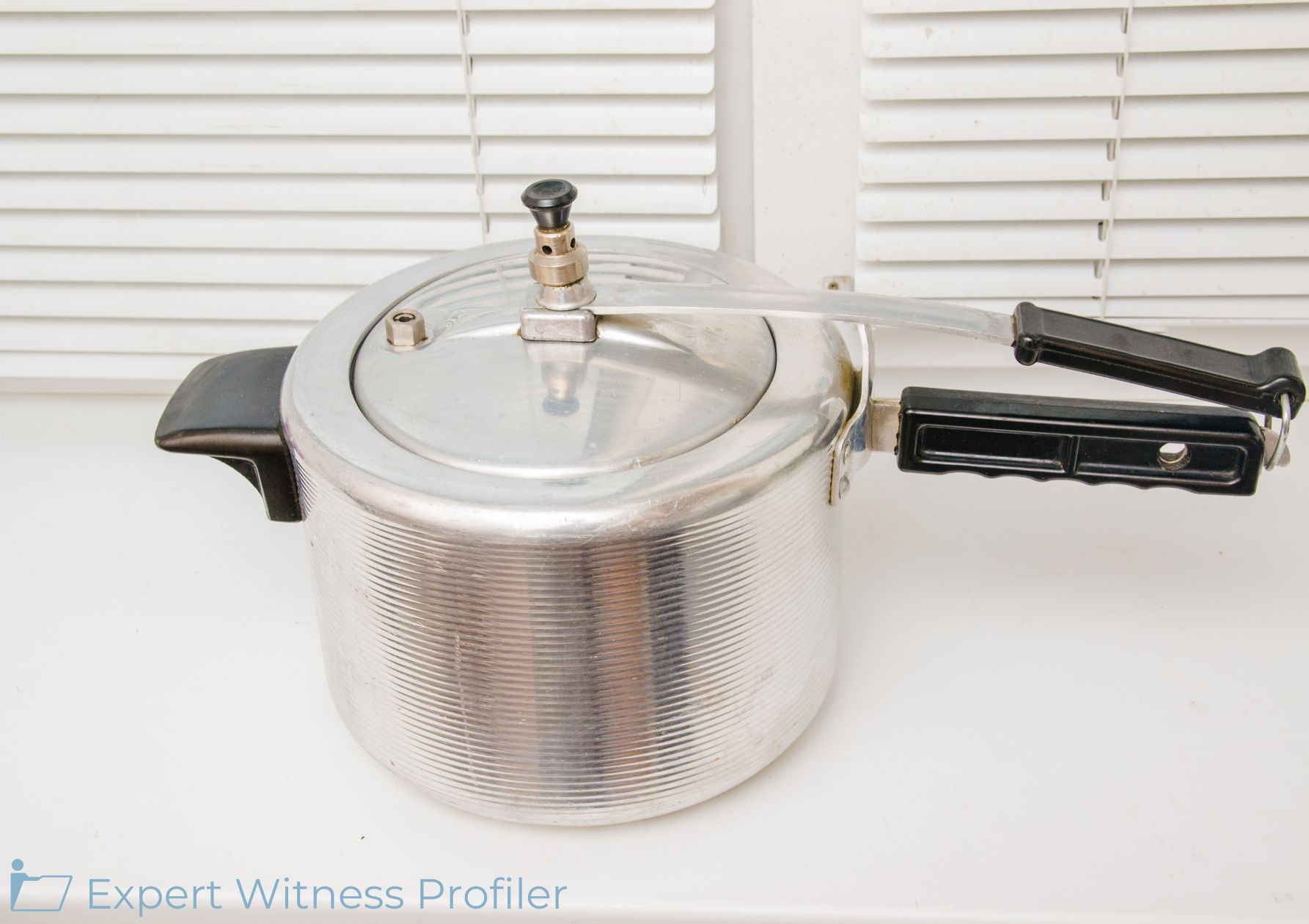
In October 2019, Nan Morgan McCartney was severely burned while attempting to start a fire in her backyard firepit. She used a plastic gasoline container manufactured by Scepter.
McCartney has given multiple different accounts of the incident over time, but the most recent account (in her deposition) is that she was trying to pour gas from the plastic container on the previously lit but not actively burning kindling in the firepit when gas vapor from the container came in contact with an unseen ember in the firepit and caused a “flashback explosion” of the gas in the container.
Scepter disclosed Dr. Charles Weaver as an expert to testify about the science of forming memories and factors that can affect memory recollection.
The Plaintiff filed a Daubert motion to exclude Weaver’s expert testimony.
Psychology Expert Witness
Charles A. Weaver III is currently Professor & Chair of Psychology and Neuroscience at Baylor University. He has published in the areas of memory and language, the relationship between confidence and memory, flashbulb memory (“where were you on 9/11?”), and eyewitness identification.
Weaver has served as a forensic expert in civil and criminal cases in more than 30 states and has testified in both federal and state courts, for both prosecution and defense.
McCartney argued that Weaver’s opinions are not helpful or reliable and that they should be excluded under Fed. R. Evid. 403. According to McCartney, issues of witness memory and veracity are not proper subjects of expert testimony since they are within the exclusive purview of the jury and the common experience of jurors.
Since one witness (expert or not) may not directly testify about the credibility of another witness, the Court held that Weaver cannot testify that McCartney’s current account of the incident was unreliable. Therefore, because Weaver will not be permitted to testify as to the veracity of McCartney’s current description of the incident or comment on the reliability of her memory, there is little danger of the jury being confused about their role in assessing McCartney’s credibility. However, Weaver’s expert testimony about how memories are formed and how they can be influenced over time will be helpful to the jury because those issues are grounded in science and are not entirely within the common experience of jurors.
In other words, Weaver will be permitted in this case to “testify as to the process of [memory] encoding, particularly in a traumatic situation, memory reconstruction, suggestibility, and post-event information,” but he “will not be permitted to opine on the ultimate issue of whether [Plaintiff’s] testimony is credible or incredible.”
Reliability
The Court did not overlook McCartney’s argument that Weaver’s opinions are unreliable because they did not “fit the facts of the case” for a variety of reasons, including the fact that Weaver is a “quintessential expert for hire.” The fact that Weaver did not interview McCartney does not undermine the reliability of his opinions since he is only being allowed to testify about the scientific basis for memory formation and alteration generally, not the veracity of McCartney’s current account of the incident. Finally, the fact that Weaver is a “career witness” and that his testimony has been excluded in other cases might be fodder for cross-examination, but it did not warrant exclusion of his testimony altogether.
Held
The Court granted in part and denied in part the Plaintiff’s motion to exclude Dr. Charles Weaver’s opinion under Daubert.
Key Takeaway:
Weaver’s testimony on the science of forming memories will “provide the jurors with the tools they need to evaluate Plaintiff’s claims of lost and recovered memories” and allow the jury to “decide for itself whether Plaintiff’s ‘newly found’ recollections are reliable and credible, or, alternatively, whether those she shared with emergency medical and police personnel contemporaneous with [the incident] are more credible and reliable.”
Naomi and Christopher Pershing (and their revocable Pecan Trust) sought compensation from Nexus RVs, LLC and Navistar, Inc. for their recreational vehicle, which they called defective.
Thomas Fribley has over 28 years of experience with Coachmen Industries (another recreational vehicle company) where he held many roles in technical services, product evaluation, and sales. Since 2002, he has operated Fribley Technical Services, which offers expertise in RV inspections and technical services.
He has been a certified master RV service technician since 1993 (a level four certification), and he has assisted in the design, manufacture, and repair of RVs and the training of others.
Fribley intended to offer a cost-of-repair opinion. He testified that the RV’s diminished value corresponded to the estimated cost of repairs—approximately $6,000. His assessment was ostensibly based on the condition of the vehicle at the time of his inspection, rather than at the time of its acceptance. Given this difference in timing, the Pershings argued that the opinion should be excluded.
The Pershings said that Indiana law limits damages for a warranty breach to “the difference at the time and place of acceptance between the value of the goods accepted and the value they would have had if they had been as warranted, unless special circumstances show proximate damages of a different amount.”
Nexus argued that Indiana law recognized several alternative means for calculating damages so long as they are reasonable, including the cost of repair. The Court agreed.
The Court noted that the Pershings raised no doubts about his methods or bases. Moreover, the Pershings identified no late, extraneous, or prejudicial opinion of concern.
Held
The Court denied the motion to exclude the testimony of Nexus’ expert Thomas Fribley.
Key Takeaway:
A Court should exclude testimony unless it reliably speaks, without confusing or misleading the jury, on a relevant issue that the jury must decide. However, Fribley’s cost-of-repair opinion helped the jury decide an issue of consequence.
Plaintiffs Syntel Sterling Best Shores Mauritius Limited, and Syntel, Inc., (collectively, “Syntel”) initiated this action against The TriZetto Group, Inc. (“TriZetto”) and Cognizant Technology Solutions Corp. (“Cognizant,” and, collectively, “Defendants”), alleging breach of contract, intentional interference with contractual relations, and misappropriation of confidential information.
Syntel filed a motion to exclude the price erosion damages opinion of TriZetto’s expert, Thomas W. Britven.
Britven’s analysis proceeds in four steps: (1) estimating the average rates TriZetto would have charged absent Syntel’s challenged conduct, assuming annual increases in line with the Consumer Price Index based on Urban Consumers (“CPI”); (2) calculating the difference between projected revenue based on these rates and TriZetto’s actual revenue; (3) limiting the calculation to the six most impacted clients, and certain related clients, based on their share of revenue and (4) further narrowing the analysis work related to Facets, the product Syntel infringed, by applying the proportion of such work (70%) to TriZetto’s overall services.
Accounting Expert Witness
Thomas Britven has more than 30 years of experience as a financial damages consultant and trusted advisor specializing in intellectual property and complex commercial litigations. He has served as an expert in over 600 matters.
His long consulting career has allowed him to develop extensive expertise, including misappropriation of trade secrets, patent infringement, trademark, copyright, licensing disputes, complex financial damage analysis, breach of contract, business interruption, forensic accounting, and business valuation.
Britven is a Certified Licensing Professional, Certified Public Accountant, Certified Valuation Analyst, Chartered Global Management Accountant, and a Certified Fraud Examiner.
The Court held that Britven’s methodology for determining price erosion damages was not unreliable, finding that the analysis presented a reasonable approach to estimating the hypothetical pricing absent infringing competition. The Court noted that Britven applied a benchmark TriZetto itself used for pricing and confined the impact to relevant clients and services.
Syntel objected to Britven’s factual assumptions that (1) absent Syntel’s competition, TriZetto’s prices would have risen in tandem with the CPI and (2) 70% of TriZetto’s work is Facets-related. However, Britven based the assumptions on his interview of TriZetto’s Chief Executive Officer (“CEO”). TriZetto’s CEO stated, among other things, that (a) 70% of TriZetto’s total sales from TriZetto accounts [the parties dispute whether this is all accounts or only Facets accounts] comes from Facets services; (b) TriZetto increases its prices at the same rate as the CPI, but gave several major clients a three-year CPI holiday from annual price increases and (c) the rate reduction for major clients impacted the rest of the clientele. The Court held that the parties’ disagreement over factual assumptions “is precisely the role of cross-examination” not a basis for exclusion.
Price Elasticity
The Court added that Syntel’s additional criticism that Britven’s analysis failed to address price elasticity concerned the weight, not the admissibility, of the testimony.
Britven did address this issue by concluding, based on consumers’ past behavior, that the market was inelastic so long as TriZetto’s price increases continued to track the CPI.
Causation
Syntel further argued that Britven’s price erosion opinion omits any analysis of causation linking Syntel’s infringement with price erosion. However, Britven discussed the (1) the use of, and demand for the Facets platform by major healthcare players due to its complexity and customization; (2) the lack of acceptable alternatives to TriZetto before Syntel’s infringement; (3) TriZetto’s adequate staffing resources and (4) the quantified price erosion damages. Britven’s expert report explained that TriZetto and Syntel competed in a two-supplier market where one’s win is the other’s loss, which — if credited by the fact finder — established causation.
Held
The Court denied Syntel’s motion to exclude the price erosion theory presented by Thomas W. Britven.
Key Takeaway:
Although expert testimony should be excluded if it is speculative or conjectural, or if it is based on assumptions that are so unrealistic and contradictory as to suggest bad faith or to be in essence an apples and oranges comparison, other contentions that the assumptions are unfounded go to the weight, not the admissibility, of the testimony.
Case Details:
Case Caption:
Syntel Sterling Best Shores Mauritius Limited V. The Trizetto Group, Inc. Et Al
This is a personal-injury action arising out of a motor-vehicle accident between Plaintiff Jose Ricardo Olvera-Velazquez and Defendant Jose Hernandez De La Rosa. Defendant MVT Transportation LLC (“MVT”) has stipulated that Defendant De La Rosa was acting in the course and scope of his employment with MVT at the time of the accident.
According to Plaintiff, his vehicle was struck by the 18-wheeler being driven by Defendant De La Rosa, causing severe injuries. Basically, this suit alleged claims of negligence against Defendant De La Rosa and claims against Defendant MVT for negligent hiring, retention, entrustment, supervision, and training of Defendant De La Rosa.
Plaintiff has filed motions to exclude two of the Defendants’ experts, Dr. Mathew Greenston and Dr. Irmo Marini.
Accident Reconstruction Expert Witness
Mathew Greenston is certified by the Accreditation Commission for Traffic Accident Reconstruction and is an emergency medicine physician. His education includes an undergraduate degree in mechanical engineering.
Irmo Marini obtained his PhD in rehabilitation from Auburn University and a master’s degree in clinical psychology from Lakehead University in Thunder Bay, Ontario, Canada.
Also, he is a 2009 recipient of the National Council on Rehabilitation Education’s Distinguished Career Award in rehabilitation education, and 2010 recipient of the American Rehabilitation Counseling Association’s James F. Garrett Distinguished Career Award in rehabilitation research.
The Plaintiff contended that (1) Greenston’s expected testimony included an impermissible legal conclusion; (2) portions of his expected testimony did not require an expert and are not helpful to the jury; and (3) his testimony is unreliable because he did not inspect the truck at issue.
However, Plaintiff did not contend that Greenston is unqualified to testify. And Plaintiff has not identified problems with the reliability of the methodology he used either. Moreover, Defendants have satisfied their burden to demonstrate by a preponderance of the evidence that Greenston’s testimony is reliable. As a result, the Court held that the issues raised by the Plaintiff are matters more appropriately raised at trial with a motion in limine, through contemporaneous objection, or on cross-examination.
Irmo Marini
To begin with, the Plaintiff argued that Marini impermissibly parrots the opinion of a medical doctor. However, the Court held that life planners like Marini must rely upon medical opinions to estimate the quantity of medical care someone will need over their lifetime. Significantly, it is undisputed that the medical doctor is expected to testify at trial to the opinions relied upon by Marini.
Therefore, the Court decided that Greenston and Marini should not be excluded as experts, so that the District Court is able to consider specific objections to aspects of their testimony as they arise at trial and/or through any motions in limine.
Held
In conclusion, the Court denied without prejudice the Plaintiff’s motion to exclude Defendants’ experts Mathew Greenston and Irmo Marini.
Key Takeaway:
According to Rule 703, an expert may base an opinion on facts or data in the case that the expert has been made aware of or personally observed. Thus, life planners like Marini must rely upon medical opinions to estimate the quantity of medical care someone will need over their lifetime.
Marie Rose Lennox Wing was deaf and used American Sign Language (“ASL”) to communicate. She passed away after three visits to Dignity Health hospitals over the course of a month.
Her estate and family members brought this lawsuit following her death. It argued that Dignity Health violated state and federal law by requiring family members interpret for Wing during her hospital visits.
Dignity Health’s expert Ann Witter-Merithew opined Wing had “some proficiency in reading and writing English” and could understand non-ASL communications occurring in a hospital setting. She further opined Dignity Health “was prepared to and perhaps offered [interpretive] services,” but Wing declined those services because she preferred to communicate through family members. Finally, Witter-Merithew opined on the dynamic between deaf parents, their children, and medical providers.
Ann Witter-Merithew spent over fifty years as an ASL translator and instructor. Her career involved working in complex environments, including interpreting for criminal and civil court cases, family and individual counseling, in-patient treatment programs and healthcare and rehabilitative treatments.
Witter-Merithew has experience interpreting for deaf parents in medical settings. She also holds a bachelor of professional studies degree in linguistics and interpreting, a master’s degree in education, and multiple certifications.
Plaintiffs challenged Witter-Merithew’s ability to review and interpret Wing’s medical records instead of her general qualifications as an expert on [ASL], ASL interpreting, and deaf culture.
The Court held that Witter-Merithew is a qualified expert based on her skill, training, education, and experience. She can use Wing’s medical records to the extent they allow her to render an opinion within her area of expertise.
To the extent Witter-Merithew lacked experience using medical records or normally does not rely on them when determining if interpretive services were offered, those arguments are best left for cross examination.
Sufficient Facts or Data
Plaintiffs argued that Witter-Merithew’s opinions largely relied “on a cursory review and interpretation of medical records” and demonstrated a lack of firsthand knowledge about the events leading to this lawsuit.
Plaintiffs pointed to portions of Witter-Merithew’s expert report about the use of Video Remote Interpreting (“VRI”) services with Wing. They argued that the report’s reasoning demonstrated that Witter-Merithew lacked “specific knowledge about the VRI system[s] used at [Dignity Health] facilities and [their] effectiveness for Wing.”
To begin with, Witter-Merithew relied on over 2,000 pages of medical records, filings in this case, policy manuals from Dignity Health, and “research and literature from the field of deafness and ASL-English interpreting” to create her opinions.
The Court held that there is no requirement for the experts to have firsthand knowledge about the events leading to a lawsuit.
Experts also can extrapolate on existing facts, such as medical records and the availability of VRI systems, to generate novel theories.
Reliable Principles and Methods
Plaintiffs argued that Witter-Merithew provided two unreliable opinions. The first concerned Wing’s language use and ability to communicate through mediums like ASL and written English. The second concerned family members interpreting for Wing.
The Ninth Circuit Court of Appeals provided unique factors to assess the reliability of experience-based expert testimony in United States V. Holguin, 51 F.4th 841, 855. The Holguin factors are “whether the expert’s experience supports [their] conclusion; whether the expert’s reasoning is circular, speculative, or otherwise flawed; or whether the expert’s reasoning is adequately explained.”
Language Use by Wing
Due to Wing’s death, Witter-Merithew could not conduct a formal language and communication assessment and could not interview Wing “about the quality and effectiveness of [services] she received” from Dignity Health. Witter-Merithew instead had to rely on “the reporting of others” to assess language usage and Wing’s ability to communicate.
Witter-Merithew opined Wing had “some” proficiency in speech, “some proficiency in reading and writing English,” and was fluent in ASL. She further opined Wing could understand non-ASL communications in a hospital setting.
By relying on medical records and family history, Witter-Merithew attempts to determine language proficiency based on third-party accounts of interactions with Wing. How others perceive Wing’s proficiency is relevant to the analysis. But it is too speculative to be the basis of Witter-Merithew’s opinion.
While Witter-Merithew’s experience allowed her to opine on Wing’s language proficiency, the Court held that Wing’s language proficiency depends on her ability to understand and communicate information.
Witter-Merithew’s opinion relied on medical records and family history to determine Wing’s non-verbal language proficiency. This deviates from the customary approach taken in ASL discrimination cases. ASL discrimination experts typically use scientific tests and methods to assess a hearing-impaired individual’s ability to communicate.
The different approach that Witter-Merithew used is not determinative of reliability. The Court held that language proficiency is not something readily discernible from experience alone. In other words, Witter-Merithew, as a knowledge and experience expert, must provide some methodology explaining how she applied her background to the facts of this case.
The Court found that Witter-Merithew did not make such a showing. Her opinion did not identify any knowledge or experience applicable to her analysis of this issue.
Language Brokering
Witter-Merithew did not interview Wing’s family members. She therefore did not opine on the family member’s ASL proficiency or “whether the means of communication family [members] used with Wing and hospital staff was effective.”
However, she concluded that family members interpreting for Wing was likely due to her personal preference, rather than a lack of resources from Dignity Health.
The Court held that Witter-Merithew’s opinions are reliable. Witter-Merithew can opine on language brokering and Wing’s preference for communicating through family members.
Relevance
Plaintiffs argued that Witter-Merithew’s “[o]pinion about the shortage of sign language interpreters” was irrelevant.
While Witter-Merithew opines there is a general shortage of ASL interpreters in the United States, the Court held that she did not explain how this applies to the facts of this case.
Indeed, Witter-Merithew testified at her deposition that the interpreter shortage did not relate to Dignity Health or its treatment of Wing. Relevance requires that expert testimony have underlying knowledge with “a valid connection to the pertinent inquiry.”
Prejudice
Plaintiffs argued that Witter-Merithew’s testimony and opinions about the use of family members for interpreting poses a significant risk of confusion and misleading jurors.
However, Witter-Merithew provided a valid rebuttal opinion that offered an alternative explanation to the opposing expert’s conclusion about Dignity Health refusing to provide interpretive services, forcing family members to interpret for Wing. The Court held that there is no risk of confusion and jurors will not be misled.
Held
The Court granted in part and denied in part the Plaintiffs’ Daubert Motion regarding the testimony of Defendant’s expert Anna Witter-Merithew.
Key Takeaway:
Witter-Merithew was required to explain why her knowledge or experience led her to believe certain facts demonstrated a certain level of proficiency from Wing. Witter-Merithew, by not connecting her knowledge or experience to the opinion, did not adequately explain why she believes Wing was fluent in ASL and somewhat proficient in other forms of non-verbal communication.
Michelle Young, the surviving spouse of Ernest James Young and Amanda Fries, the daughter and heir of Young filed the underlying lawsuit alleging that Young’s death from pancreatic cancer was caused by his exposure to radioactive contaminants that were released by the Defendants’ negligent operation of a uranium processing plant in Gore, Oklahoma, near where Young grew up.
On December 6, 2024, Plaintiffs disclosed and provided the expert report of James Clark, Ph.D. On March 6, 2025, Plaintiffs submitted a report entitled ‘Supplemental Opinions’ of Clark, Ph.D. (“March Report”).
Defendants filed a motion to strike the March Report pursuant to Fed. R. Civ. P. 37(c)(1), arguing it is an improper attempt to supplement the December Report because it is an unauthorized sur-rebuttal expert report.
Toxicology Expert Witness
James Clark is a well-recognized toxicologist, air modeler, and health scientist specializing in dose reconstruction. He has 30 years of experience in tying together environmental contaminants measurements to human health impacts.
Defendants argued that Clark’s March Report is an improper supplement because it did not correct any inaccuracies or complete an incomplete disclosure in his December Report. Instead, Defendants argued, Clark’s March report added a completely new analysis regarding Young’s radionuclide absorption and exposure and offered four or five new sweeping opinions.
Plaintiffs first argued that Rule 26(a)(2)(D)(ii) expressly allowed rebuttal reports and that the March Report was Clark’s rebuttal response to criticisms set out in the opposing expert’s report. Plaintiffs next argued that Clark’s March Report was an appropriate supplement to his December Report because he simply filled in an incomplete aspect of his December Report – calculated the previously uncalculated radionuclide absorption in Young’s cremains. Finally, Plaintiffs argued that Clark’s March Report was timely because Rule 26(a)(3) provides for such supplement no later than the required pretrial disclosures.
Analysis
The Court noted that Plaintiffs sought neither to amend the schedule nor leave to file the March Report.
Moreover, Clark’s March Report was not a proper supplement to his December Report. In the December Report, Clark opined that Young’s cremains contained from 2 to 4.5 times as much radiation when compared to the average value in cremains of other Colorado residents. In his March Report, Clark took the additional step of calculating the additional radiation exposure by year experienced by Young based on the analysis of radiation in Young’s cremains as compared to other Colorado residents.
Since Clark merely attempted to “strengthen” or “deepen” his opinion expressed in the December Report by making calculations that he could have made in the December Report, the Court held that Clark’s March Report exceeded the bounds of permissible supplementation and is subject to exclusion under Fed. R. Civ. P. 37(c)(1).
Whether a Rule 26(a) Violation is Justified or Harmless
Defendants argued that they are prejudiced because of the late disclosure of Clark’s opinions in the March Report and because they will have to seek leave to file a sur-sur rebuttal report. Plaintiffs argued that Defendants will not suffer any prejudice or, to the extent they do, it is easily curable because the discovery deadline was extended by ninety days. While Plaintiffs are correct that the discovery and related deadlines were extended, the expert disclosure and rebuttal deadlines were not. It is apparent that permitting Clark’s March Report will likely disrupt the trial of this case.
Moreover, Clark acted willfully in that he knew or should have known that his opinions regarding Young’s radiation exposure would be stronger if accompanied by a radionuclide absorption analysis. After all, Clark could have performed the radionuclide absorption analysis as part of his December Report.
Held
The Court granted the Defendants’ motion to strike the Plaintiffs’ purported supplemental expert report of James Clark.
Key Takeaway:
A supplemental expert report that states additional opinions or rationales or seeks to “strengthen” or “deepen” opinions expressed in the original expert report exceeds the bounds of permissible supplementation and is subject to exclusion under Rule 37(c)(1).
This is a product liability case involving Walmart’s sale of a pressure cooker that Plaintiff Vanessa Loftis claims injured her when the lid was able to be removed while the pressure cooker was—unbeknownst to her—still pressurized.
During the depressurization process, pressure cookers release steam; according to Loftis, the steam on that night “lasted forever,” around thirty to forty-five minutes. Loftis testified that she “kept checking on it, and then, when [the steam] finally did stop, that’s when [she] opened it and it kind of blew up.”
The contents of the cooker were ejected onto Loftis, causing burns to approximately 12% of her body, mostly on her abdomen, that later required debridement.
Walmart filed a motion to exclude Loftis’ expert, Dr. David Rondinone, arguing that his opinions are speculative, unreliable, and not tied to any applicable methodology.
Walmart appeared to make three specific challenges to Rondinone’s opinion: (1) that he proposed only “possible” causes of the incident with no basis in evidence; (2) that he did not physically test the subject cooker or an exemplar; and (3) that he did not rule out alternative causes.
Mechanical Engineering Expert Witness
David Rondinone holds an M.S. degree and a Ph.D. degree in Mechanical Engineering from the University of California, Berkeley, majoring in material behavior and design and minoring in structures and dynamics and electronic controls.
He also holds a B.S. degree in Engineering Physics and a B.A. degree in Astrophysics from the University of California, Berkeley. From 1993 to the present, he has worked as a Mechanical Engineering Consultant, and is a principal of Berkeley Engineering And Research, Inc. (referred to herein as “BEAR”).
He has worked for more than 30 years in the areas of failure analysis, design, and risk assessment of consumer and industrial equipment, including pressure cookers.
Rondinone proposed three potential causes of the accident: (1) a float valve clog, resulting from an inadequately designed float valve, that caused the lid to remain unlocked while under pressure; (2) a boil-over event that was not properly warned against; or (3) a failure of the interlocking sliding mechanism.
Possible Causes
Walmart contended that Rondinone posits only “possible,” rather than “probable” causes of the accident and failed to ground these in facts.
However, Rondinone identified a float valve clog as the “most likely scenario” and “would say to a degree of reasonable engineering certainty it’s more likely a clogged or insufficient float valve interlock event” caused Loftis’ injuries “than . . . a boil-over event.”
Since Rondinone intended to testify that the incident was most likely caused by a clogged float valve, as supported by his expertise, prior testing of pressure cookers, examination of Instant Pots, and Loftis’ description of the incident, the Court refused to exclude his testimony on that basis.
Physical Testing
While Walmart conceded that it was not possible for Rondinone to test the subject pressure cooker in this case, as it was not available, it argued that his failure to conduct tests using an exemplar model is unjustified and rendered his testimony inadmissible.
However, Rondinone explained that in order to help him gain a more precise determination on probability as to whether this was a float valve incident, he would have had to run “an extensive statistical study, probably hundreds of tests,” and he has not “know[n] anybody who ever has” done that.
Further, he explained that it is “difficult to repeat” a clogged float valve, but his lab has “done tests for clogging on other models of pressure cooker” and shown that a user “can with a single use clog the vent,” which he reports “present[s] a risk of pressurization with the lid in an unlocked state.”
However, the Court held that Rondinone’s opinion that the float valve was clogged is supported by Loftis’ description of the incident and his prior testing of pressure cookers, not “unfounded assumptions.”
While Rondinone is “unable to recreate” the incident, the Court held that his opinion is “based on known facts and his expertise.”
Alternatives
Walmart challenged the admissibility of Rondinone’s opinion on the argument that he failed to rule out other possible causes.
In this case, Rondinone did engage with alternative explanations, including a boil-over event, a failed sliding mechanism, or some other accident like a spill. He then applied his expertise in the mechanics of pressure cookers to the facts in this case to deduce that a float valve clog was the most likely mechanical scenario here.
As for the possibility of a spill, he stated that “physically it’s probably possible,” but he would “have to disregard Loftis’ entire testimony, though, from start to finish for that to be true,” including “disbelieving her explanation of the removal of the lid and how the contents came out.”
Rondinone refused to say with absolute certainty that a float valve clog occurred here, but he did conclude the most likely cause within a “degree of reasonable engineering certainty.”
The Court held that Rondinone’s refusal to completely rule out other alternatives goes to the weight of his testimony, not its admissibility.
Held
The Court denied Walmart’s motion to exclude Dr. David Rondinone.
Key Takeaway:
Despite the fact that Rondinone did not test the subject pressure cooker or an exemplar model in this case, there is no single requirement for admissibility as long as the proffer indicates that the expert evidence is reliable and relevant.
The Court held that Rondinone’s conclusions are based on his experience and expertise [in pressure cooker cases], general engineering principles, information from Loftis about the accident, examination of an exemplar cooker, its design and specifications, competitors’ cookers, and photos of the accident, including of the subject pressure cooker and Loftis’ burns.
This putative class action was initiated by Plaintiffs, a group of individuals who are leaseholders of oil and gas leases, against Defendant XTO Energy Inc (“XTO”) alleging that XTO breached their leases when it deducted unreasonable and excessive post-production costs from their royalty payments.
John Burritt McArthur has been serving as an arbitrator for 22 years and working as a trial lawyer, representing Plaintiffs and Defendants in courts around the country, for 33 years. He has offices in Berkeley California and in Houston and is a past partner of Susman Godfrey LLP in Houston and Hosie McArthur LLP of San Francisco, both firms with national trial dockets.
Also, McArthur was Editor in Chief of the Texas Law Review, a Chancellor, and a member of the Order of the Coif in law school. He is a Phi Beta Kappa, magna cum laude graduate of Brown University. Moreover, McArthur clerked for Judge Joseph Sneed on the Ninth Circuit after law school.
In addition to his J.D., he holds an M.A. in economics, an M.P.A. from Harvard University’s Kennedy School of Government, and has graduate-level economics training from the London School of Economics and a Ph.D in public policy from the Goldman School of Public Policy at the University of California (Berkeley).
XTO argues that portions of McArthur’s reports should be stricken because McArthur improperly offers legal conclusions advocating for class certification under Fed. R. Civ. P. 23.
Plaintiffs did not dispute that McArthur’s reports consisted of some legal conclusions (and indicated they did not intend to offer that testimony as an expert opinion) but maintained the reports also consisted of testimony based on industry standard in the oil and gas field.
However, the Court held that McArthur’s reports highlighted by XTO largely offered legal opinions about whether Plaintiffs’ proposed class should be certified under the Fed. R. Civ. P. 23 factors and will not be considered in the forthcoming recommendation on the motion for class certification.
However, to the extent McArthur’s expert reports contain opinions based on standards, customs and practices of the oil and gas industry, the Court will consider those opinions where relevant.
Held
The Court granted XTO’s motion to exclude certain legal opinions by Plaintiffs’ expert John Burritt McArthur.
Key Takeaway:
Basically, experts are allowed to testify about customs and practices in a field of business but not whether those customs or practice complied with the law or regulations.
Therefore, where an expert offers a legal opinion, the court must “exclude opinions phrased in terms of inadequately explored legal criteria.”
Case Details:
Case Caption:
Kriley v. Xto Energy Inc.
Docket Number:
2:20cv416
Court Name:
United States District Court for the Western District of Pennsylvania, Pittsburgh Division
Plaintiffs sought the partition and sale of a Boynton Beach property, a Miami property, and a West Palm Beach property (the “Properties”).
The Defendants sought to exclude the opinions, analysis, and testimony of Lara Swanson, an expert witness retained by Plaintiffs to provide an opinion of current market value for the properties at issue in this case.
Land Valuation Expert Witness
Lara Swanson is the President of Swanson Land Company located in Deerfield Beach, Florida. Swanson has over 20 years of experience in land acquisition, entitlement, and development across Florida.
With regard to the Daubert analysis, the Swanson’s qualifications were not in dispute. However, it was noted that she is not a licensed appraiser and has no formal training in appraisal theory or in the Uniform Standards of Professional Appraisal Practice.
The Court also independently found Swanson to be qualified in light of her credentials, to which she testified during her deposition.
Reliability of Swanson’s Methodology
Swanson’s studies were intended to provide opinions on the current market value of the properties at issue.
The Defendants argued that Swanson’s methodology, which relied on Letters of Intent (LOIs), “did not address any real concerns with ‘lag times’ that are not already adequately addressed by traditional appraisal methods.”
The Defendants further contended that Swanson improperly relied on hypothetical future values of the properties after making various assumptions.
The Court held that Swanson shall be permitted to testify about the current market value of the properties. She shall, however, not be permitted to testify about the hypothetical future values of the properties.
Held
The Court denied the Defendant’s motion in limine to exclude the opinions of Lara Swanson.
Key Takeaway:
Swanson, with her extensive experience in land acquisition, entitlement, and development across Florida, was allowed to testify about the current market value of the properties.
Plaintiff Myles Childress brought his claims against Defendant Wal-Mart Stores East I, LP. after he allegedly sustained injuries while delivering goods to a Walmart store in Bridgeton, Missouri.
Plaintiff raised claims against both Defendant Walmart and Walmart’s employee, an unknown Doe Defendant.
Dr. Richard Kube is an orthopedic spine surgeon practicing in Peoria, Illinois. Defendant argued that Kube’s conclusions regarding causation are deficient because Kube relied on Plaintiff’s inaccurate representation of his medical history.
Orthopedic Surgery Expert Witness
Richard A. Kube II, MD, FACSS, FAAOS, CIME is a fellowship trained spine surgeon and Founder/Owner of Prairie Spine & Pain Institute, in Peoria, Illinois. He also founded and owns Prairie Surgicare, an AAAHC certified surgical facility. He holds Board Certifications from the American Board of Spine Surgery, American Board of Orthopaedic Surgery and American Board of Independent Medical Examiners.
While there is no dispute that Plaintiff’s medical records indicate that he had degenerative back problems before the alleged injury occurred, Kube specifically testified that the alleged incident aggravated Plaintiff’s degenerative spine condition, causing it to become symptomatic when it was previously asymptomatic. Kube further testified that surgical intervention was necessary to treat this aggravated condition. Kube also testified that the injuries to Plaintiff’s spine are consistent with the way Plaintiff describes being knocked to the ground by the pallet.
Defendant’s Arguments
Defendant contended that the incident cannot be the “but for” or the proximate cause of Plaintiff’s back injuries because Plaintiff already had records of degenerative changes in his spine before the incident occurred. Essentially Defendant argued that Plaintiff’s degenerative injuries were always present and were not a result of acute trauma, and therefore any treatment he received from Kube was going to occur anyway.
Defendant also raised a side argument regarding whether Plaintiff properly disclosed Kube as an expert witness under Rule 26, and therefore questioned whether Kube can even testify in this matter as an expert.
Defendant contended that (1) to establish causation in this case, Plaintiff must present expert testimony; (2) Kube provides the only causation testimony in this case; and (3) Plaintiff’s failure to properly disclose Kube as an expert within the timeframe permitted by the Court’s case management order precludes the use of his testimony in defeating the Defendant’s motion for summary judgment.
Plaintiff’s Response
Plaintiff contended that Defendant has not filed a motion to exclude Kube’s testimony, and therefore its assertion that there is no record evidence that could establish causation is futile.
Plaintiff stated that Kube is a treating physician and not a retained expert witness, so Plaintiff had no duty to supply a written expert report. Moreover, Defendant’s counsel waived his right to a discovery deposition of Kube.
Analysis
The Court found that Defendant has had sufficient notice of Kube’s opinions regarding causation and has not been prejudiced by Plaintiff’s alleged failure to timely disclose him. The Court has reviewed the email exchange between the parties’ counsel from before the disclosure deadline regarding (1) whether Kube was required to produce an expert report, and (2) what will be the purpose of his deposition.
These emails indicate that Defendant knew as early as July 24, 2024, that Kube was going to testify in this case and that, prior to Kube’s deposition, Defendant stated he was not taking the deposition as a “discovery” deposition.
Kube’s deposition occurred on September 30, 2024, before the deadline for Plaintiff to make his experts available for deposition.
At this stage in the case and on this record, the Court found that Defendant was at least on notice that Kube would be testifying in this case before the deadline for expert witness disclosure and that Defendant’s argument in the motion for summary judgment are not sufficient to exclude Kube from offering his causation testimony at trial without some additional showing of prejudice.
Held
Because Kube’s causation testimony was sufficient to create a genuine issue of material fact that must proceed to trial, so the Court denied Defendant’s motion for summary judgment.
Key Takeaway:
Defendant’s only argument is that Plaintiff did not properly disclose Kube as an expert witness before the deadline set to disclose experts under the Court’s case management order.
The Court found that Defendant has had sufficient notice of Kube’s opinions regarding causation and has not been prejudiced by Plaintiff’s alleged failure to timely disclose him.