Blog

  • Psychology Expert Witness is Unqualified to Testify as to Reputational Damages

    Psychology Expert Witness is Unqualified to Testify as to Reputational Damages

    On June 15, 2020, Michael J. Fitzgerald and Ronda and Will McNae finalized a Settlement Agreement to resolve claims related to alleged rape and sexual assault. This agreement included Fitzgerald paying a sum of money and, in return, the McNaes releasing their claims, agreeing not to contact Fitzgerald’s employer, SoftwareONE, refrain from writing about him directly and indirectly, and avoid disparaging him. Fitzgerald is now pursuing the only claim remaining in this case, a breach of contract claim against Ronda McNae for breach of the Settlement Agreement.

    On March 5, 2025, this Court entered its Order Granting Plaintiff Fitzgerald’s Motion for Partial Summary Judgment as to Liability, finding that Defendant Ronda McNae breached the Settlement Agreement. This case is soon proceeding to trial to determine damages Plaintiff has sustained from Defendant Ronda McNae’s breach of the Settlement Agreement.

    Plaintiff Fitzgerald disclosed three experts in connection with this case. First, he disclosed Sheri Fiske, a certified public accountant, who will testify to Fitzgerald’s purported economic damages. Second, Plaintiff disclosed Dr. Michael DiTomasso, a forensic psychologist, to testify as to his non-economic, reputational damages. Third, Plaintiff disclosed Dr. Kim Fromme, a clinical psychologist to testify that Defendant Ronda McNae’s memory of having been raped and assaulted is false, and that the parties engaged in consensual sexual relations. Defendant Ronda McNae seeks to exclude the expert opinions of these three expert witnesses pursuant to Federal Rule of Evidence 702.

    Accounting Expert Witness

    Sheri Fiske Schultz brings extensive experience to the table, with over 35 years in public accounting and more than 30 years of specialized expertise in the fields of forensic accounting and business valuations.

     In addition to being a licensed CPA, Sheri holds the designation of Accredited in Business Valuation (ABV) and is Certified in Financial Forensics (CFF) by the American Institute of Certified Public Accountants (AICPA).

    Get the full story on challenges to Sheri Fiske Schultz’s expert opinions and testimony with an in-depth Challenge Study. 

    Psychology Expert Witnesses

    Michael DiTomasso has specialized in the clinical and forensic evaluation of children and their parents in cases involving sexual and physical abuse, neglect, domestic violence, and systemic family pathology. He has been recognized by various courts as an expert in the areas of Child Abuse and Neglect, Domestic Violence, and Family Functioning on hundreds of occasions. DiTomasso also handles many Juvenile Delinquency and Adult Criminal cases. He holds a Ph.D. in Clinical Psychology from The University of Miami.

    Want to know more about the challenges Michael DiTomasso has faced? Get the full details with our Challenge Study report. 

    Kim Fromme, Ph.D., is Professor Emeritus of Clinical Psychology at The University of Texas at Austin. She has over 120 peer-reviewed publications focused on alcohol use and the effects of alcohol intoxication, including blackouts, cognitive processes, and behavioral risks. Consequently, she provides unique expertise in legal cases that involve alcohol, behavior, thinking, and memory.

    Fromme has been qualified to opine on these matters in 20 civilian criminal cases, 16 civil and Title IX matters, and 53 military courts-martial. She has successfully passed three Daubert challenges.

    Discover more cases with Kim Fromme as an expert witness by ordering his comprehensive Expert Witness Profile report.

    Discussion by the Court

    Sheri Fiske

    Initially, the Defendant contended that Fiske’s calculations for lost quarterly and annual bonuses were unreliable and not useful. Their primary argument was that Fiske could not accurately determine Fitzgerald’s target bonus earnings. In response, the Plaintiff asserted that the Defendant overlooked the 2022 Salary Review Letter, which guaranteed specific bonus amounts (100,000 GBP quarterly and 120,000 GBP annually) as well as a a salary increase independent of company performance or Fitzgerald’s individual target achievement. Consequently, the Court rejected the Defendant’s motion on this particular point.

    Defendant argued that Fiske’s calculations of the lost value of performance share units (PSU) are unreliable. Specifically, Defendant argued that Fiske’s initial calculation was incorrect. Later, Fiske updated her estimate prior to her deposition to reflect a lower, more conservative estimate of lost PSUs based on more recent information provided to Fiske from SoftwareONE dated June 6, 2023, which Fiske received after issuing her May 15, 2023 Damages Report but before her deposition on June 7, 2023.

    Nonetheless, Defendant still sought to exclude the supplemental report arguing that Fiske does not know the basic facts to allow her to express a reliable opinion about the PSUs. However, when Fiske received the updated information from SoftwareONE, Fiske compared the number of PSUs Fitzgerald actually received to the number he was promised. Therefore, the Court, once again, rejected the Defendant’s motion as to this aspect.

    The Court defers ruling on the following issues:

    • Whether Fiske’s testimony as to calculation of the full contract amount is not helpful 
    • Whether Fiske should not be permitted to testify about facts and evidence that are irrelevant to her purported calculations.

    Should Plaintiff seek to introduce such testimony that Defendant moves to exclude, the parties shall argue this issue to the Court outside the presence of the jury.

    Dr. Michael DiTomasso

    Plaintiff Fitzgerald “sought damages for the reputational harm caused by McNae both in the industry he spent his life working in, and at SoftwareONE, which he dedicated his professional life building” and “sought damages due to the personal harm he has suffered to his mental health, emotional wellbeing, and enjoyment of life.”

    Defendant argued that DiTomasso was unqualified to offer an opinion on damages, specifically because he is not board certified, is not an expert in the technology market, and is not an occupational therapist. This Court agreed with Defendant that DiTomasso was unqualified to testify as to reputational damages. When asked what qualifications he has to opine on the amount of damages that should be awarded in this case, DiTomasso himself stated “none.” As to emotional damages, this Court held in its Order Granting in Part and Denying in Part Defendant Ronda McNae’s Motions in Limine that any evidence or testimony related to emotional distress will be excluded. 

    Kim Fromme

    Defendant sought to exclude Fromme’s testimony arguing it is unreliable, unhelpful, and that the issue of whether a rape occurred is for the determination of the jury. 

    However, Fromme’s testimony will be necessary only if the defense of duress is permitted. Since this Court ruled in its Order Granting Plaintiff’s Motion for Summary Judgment that Defendant Ronda McNae’s duress defense will not be permitted, the Court declared this issue moot. 

    Held

    The Court granted in part and denied in part the Defendant Ronda McNae’s motion to exclude the opinions of Sheri Fiske Schultz, Dr. Michael DiTomasso, and Dr. Kim Fromme.

    Key Takeaway:

    1. Fiske’s calculations of lost quarterly and annual bonuses are not unreliable just because the Defendant overlooked crucial piece of evidence i.e the 2022 Salary Review Letter.
    2. DiTomasso is unqualified to offer an opinion on damages, specifically because he is not board certified, is not an expert in the technology market, and is not an occupational therapist.

      Case Details:

      Case Caption: Fitzgerald v. McNae
      Docket Number: 1:22cv22171
      Court Name: United States District Court, Florida Southern
      Order Date: April 02, 2025
    1. Recreational Vehicle Expert’s Valuation Determination Complies with Rule 702 

      Recreational Vehicle Expert’s Valuation Determination Complies with Rule 702 

      Plaintiff Jason Greene purchased a recreational vehicle (“RV”) from Defendant Thor Motor Coach, Inc. (“Thor”). The purchase included a 12 month / 15,000 mile limited warranty (the “Limited Warranty”). After purchasing the RV, Greene encountered issues with the RV that led him to seek repairs on several occasions. Some issues remained even after the attempted repairs. Greene thus sued Thor for violation of the Magnuson Moss Warranty Act (“MMWA”), breach of express warranty, breach of implied warranty, violation of the Indiana Deceptive Consumer Sales Act (“IDCSA”) and violation of the Pennsylvania Unfair Trade Practices and Consumer Protection Law.

      Thor seeks to exclude the proposed valuation opinions of Greene’s proffered expert, Mr. Dennis Bailey, arguing that Bailey’s opinion is unreliable.

      Recreational Vehicle Expert Witness

      Dennis Bailey had a self-owned recreational vehicle business. He has been directly involved in the daily decisions of retail sales (trade in values-new and used manufacturer purchases) wholesale sales (buying and selling), customer service (determination of warrantable defect for submission to the manufacturer-solutions for repair and actual repair), retail and wholesale parts (determination parts pricing-decisions on what specific inventory to purchase and how much). Bailey has attended technical schools such as Norcold, Dometic, Lippert leveling and slide out certified and is RVIA certified.

      Bailey has experience in appraisals since 1980’s. Other areas of designated certification are Certified Infrared Thermographer through Flir and LP certified gas. Bailey is an experienced appraiser specializing in recreational vehicles. He has conducted over 1,000 specialized RV appraisals and estimates. He is an independent Investigator.

      Get the full story on challenges to Dennis Bailey’s expert opinions and testimony with an in-depth Challenge Study. 

      Discussion by the Court

      Thor concedes that Bailey’s experience “likely endows Bailey with sufficient technical knowledge to render opinions about the presence of defects in a motorhome like the RV” but argues that Bailey’s valuation opinion is inadmissible because it is mere ipse dixit and fails to meet the reliability standards required under Fed. R. Evid. 702 and Daubert.

      Greene purchased the RV for $249,901.59. In Bailey’s report, he opines that, after considering the purported defects, the fair market value of the RV at the time it was purchased was $100,000.00. 

      Bailey’s report details his findings related to purported defects in Greene’s RV. Bailey lists 24 variables that can affect an RV’s value. His report also refers to the National Automobile Dealer Association (“NADA”) guidebook, which he describes as the “generally accepted industry standard for guideline value only. It is not the Bible of the true value as it strictly [sic] a guide only.”

      Thor argues that, when Bailey was deposed and had to elaborate on those 24 variables and describe his methodology, Bailey’s conclusions ultimately rest on Bailey’s “say-so” and amounts to inadmissible ipse dixit. The Court agrees with Thor that, at times Bailey’s testimony suggests that his conclusions are speculative.

      Market Supply and Demand

      However, at Bailey’s deposition, he does provide some additional explanation for his proffered opinions. He testified that several of the 24 variables did not factor into his valuation determination because they were not relevant. As mentioned, one variable Bailey did consider was market supply and demand. When questioned how he evaluated that variable, he testified that he’s been in the business for over “45 years” that he has “seen units” and “used to work at one of the biggest dealerships and we had those. I know about them units. I know about the RVs and which ones sell and which ones don’t.”

      Insurability Risk

      Another variable Bailey considered was insurability risk. Bailey testified that he did not consult any insurance companies in reaching his determination, but that in his experience he has “dealt with insurance companies. I have dealt with them when I did work for the dealers and stuff selling trailers. I know that they won’t insure a lot of these people if they find out that they have damage to them.”

      Economic Cost

      When discussing the economic cost—another valuation factor—Bailey testified that he considered the cost to fuel the RV given the present cost of $6 a gallon for gas and $7 a gallon for diesel, and the cost for bringing the RV back and forth to the dealership to get it fixed.

      Prohibited Use on Highways

      When discussing another factor—prohibited use on highways—Bailey elaborated that it is his opinion that the RV’s alleged defects to the electrical system make it dangerous to take on the highways.

      Such a conclusion does not strike the Court as mere ipse dixit, particularly because Thor does not challenge the admissibility of Bailey’s opinions on the existence of the alleged defects. Bailey also testified that he considered whether the RV could be financed based on his experience selling units and trying to get customers financing. While Bailey was unable to provide itemized deductions for the factors he considered, this Court has held that itemized deductions are not required.

      In conclusion, Greene’s evidence suggests that Bailey’s testimony is the product of reliable principles and methods, and his opinion reflects a reliable application of the principles and methods to the fact of the case under Rule 702.

      Held

      The Court denied Thor’s motion to exclude the valuation opinion of Greene’s expert witness, Dennis Bailey.

      Key Takeaway:

      The experienced appraiser’s opinion is sufficient if the opinion consists of an explanation of the methodologies and principles referenced, and the conclusions are not solely based on subjective opinion or speculation, as appraisals are not an exact science that can be mechanically scrutinized.

      Case Details:

      Case Caption: Greene V. Thor Motor Coach, Inc.
      Docket Number: 3:22cv1011
      Court: United States District Court, Indiana Northern
      Order Date: March 28, 202
    2. Technology Expert Allowed to Testify Despite Not Using the Software Systems at Issue

      Technology Expert Allowed to Testify Despite Not Using the Software Systems at Issue

      Plaintiffs Donna Wood, Caelan Doherty, Max Goldstein, Bridget Logan, James Kyle Newman, Lakisha Watson-Moore, Tristan Angulo, Alexandra Marie Wheatley-Diaz, Robin Ceppos, and Nick Coker (together, “Plaintiffs”), individually and on behalf of all others similarly situated, bring this collective and class action against Mike Bloomberg 2020, Inc. (the “Campaign” or the “Defendant”), asserting claims under the Fair Labor Standards Act (the “FLSA”) and state labor laws.

      In November 2019, Michael Bloomberg announced his candidacy for President of the United States. The Campaign’s purpose was to advance Bloomberg’s presidential candidacy. Plaintiffs worked as Field Organizers (“FOs”) and “were tasked with primarily conducting phone calls and door-to-door canvassing with potential voters in the day-to-day functional work of the Campaign.”

      Plaintiffs offered testimony from Jonathan Jaffe as an expert witness to establish that Plaintiffs communicated data in interstate commerce so as to be individually covered by the FLSA.

      The Campaign presented arguments regarding the admissibility of his testimony under Rule 702 and Rule 403.

      Technology Expert Witness

      Jonathan Jaffe is a technology consultant, data scientist, software developer, and the founder and owner of Its-Your-Internet, an advanced technology software and general litigation support consulting firm, established in 2008.

      His areas of expertise include “how the interne works, how a data center works, how we code things, how these apps work, [and] how these applications work,” and he has testified as an expert in numerous other matters.

      Get the full story on challenges to Jonathan Jaffe’s expert opinions and testimony with an in-depth Challenge Study. 

      Discussion by the Court

      Jaffe opined that “Plaintiffs and opt-in Plaintiffs transmitted data and information across state lines using the NGP Van system” and “the Thru Talk system.”

      Jaffe describes how, based on the material he reviewed, data that Plaintiffs collected would cross state lines (1) when it was stored in a single, national database located in another state, and (2) when it was aggregated to be viewed by employees in the Campaign’s headquarters in New York.

      He relied on evidence that FOs collected voter data and inputted that data into VAN and ThruTalk. Jaffe noted that, in order to transmit the data they had collected across state lines for storage in a database located in another state, Plaintiffs either manually clicked a button to “sync” or enabled an “auto-sync” feature in the software. 

      Jaffe compares the “function of the underlying system” to “a long-distance phone call [by which] an individual would not physically transport their voice across state line[s] [but] effected the transmission of their voice across state lines by dialing the number” or “mailing a package through UPS or FedEx” whereby a delivery person, rather than the sender, physically transports the package. 

      Rule 702

      The Campaign insists that Jaffe’s analysis merely “addresses an entirely different question: whether data and information that was entered in VAN and ThruTalk by Plaintiffs crossed state lines at all, at any point, by operation of the equipment being used, without consideration of whether Plaintiffs were responsible for the purported transmission.”

      The Campaign’s highly technical relevance argument—that “whether Plaintiffs transmitted data” with a specific action is a different question from whether “the software’s internal workings” or a “headquarters request for information from another state” caused the data transmission —is not supported by the case law.

      The Court stated that none of the cases cited by the Campaign establish a causation requirement for individual FLSA coverage.

      The Campaign next insists that Jaffe’s conclusions are unreliable because his “opinions and testimony are based on insufficient facts and data, and they are the product of inappropriate speculation.”

      The Court found that the Campaign’s argument, namely that “Jaffe admittedly never used the software systems at issue, and he also lacked the information required to establish that all Plaintiffs used the software systems,” does not satisfy this high bar.

      While Jaffe never used the software systems at issue, he “utilized [his] 25 years expertise and experience with developing, expanding, and evaluating Enterprise level software systems.”

      The Campaign’s assertion that Jaffe’s opinions lack reliability because “he did not confirm that all Plaintiffs used the VAN and/or ThruTalk software” and “did not have the data required to make determinations regarding the number of days that Plaintiffs may have transmitted data across state lines, the amount of time in each day that Plaintiffs may have spent transmitting data across state lines, or the volume of data that Plaintiffs may have transmitted across state lines” was likewise rejected by the Court.

      Rule 403

      The Campaign first argues that Jaffe’s opinions and testimony are not relevant within the meaning of Daubert  “because they will not assist in understanding or resolving the issue of Plaintiffs’ alleged individual FLSA coverage.” 

      However, Jaffe’s conclusions that “Plaintiffs and opt-in Plaintiffs transmitted data and information across state lines using the NGP Van system” and “the Thru Talk system” are plainly relevant to the question of whether Plaintiffs’ work involved the use of instrumentalities for communication across state lines.

      The Campaign’s argument that “Jaffe fails to present information and opinions that would assist the jury in resolving whether Plaintiffs transmitted data across state lines and whether they did so on a regular and recurrent basis, and he instead opines on whether data was transmitted across state lines at all, without consideration of whose actions caused the transmission or the frequency of transmission” does not present a danger of misleading the jury.

      Basically, Jaffe does not opine on the ultimate legal issue—whether Plaintiffs are individually covered under the FLSA.

      Held

      The Court denied the Campaign’s motion to exclude the opinions and testimony of Jonathan Jaffe.

      Key Takeaway:

      While Jaffe never used the software systems at issue, he “utilized [his] 25 years expertise and experience with developing, expanding, and evaluating Enterprise level software systems.” Moreover, Jaffe’s conclusions are plainly relevant to the question of whether Plaintiffs’ work involved the use of instrumentalities for communication across state lines.

       The Campaign’s arguments, therefore, go to the weight, rather than the admissibility, of the opinion in connection with the determination of whether Plaintiffs have met their burden to establish individual coverage under FLSA.

      Case Details:

      Case Caption: Wood V. Mike Bloomberg 2020, Inc.
      Docket Number: 1:20cv2489
      Court: United States District Court, New York Southern
      Order Date: March 31, 2025
    3. Accident Reconstruction Expert’s Testimony About Each Vehicle’s Damage Admitted

      Accident Reconstruction Expert’s Testimony About Each Vehicle’s Damage Admitted

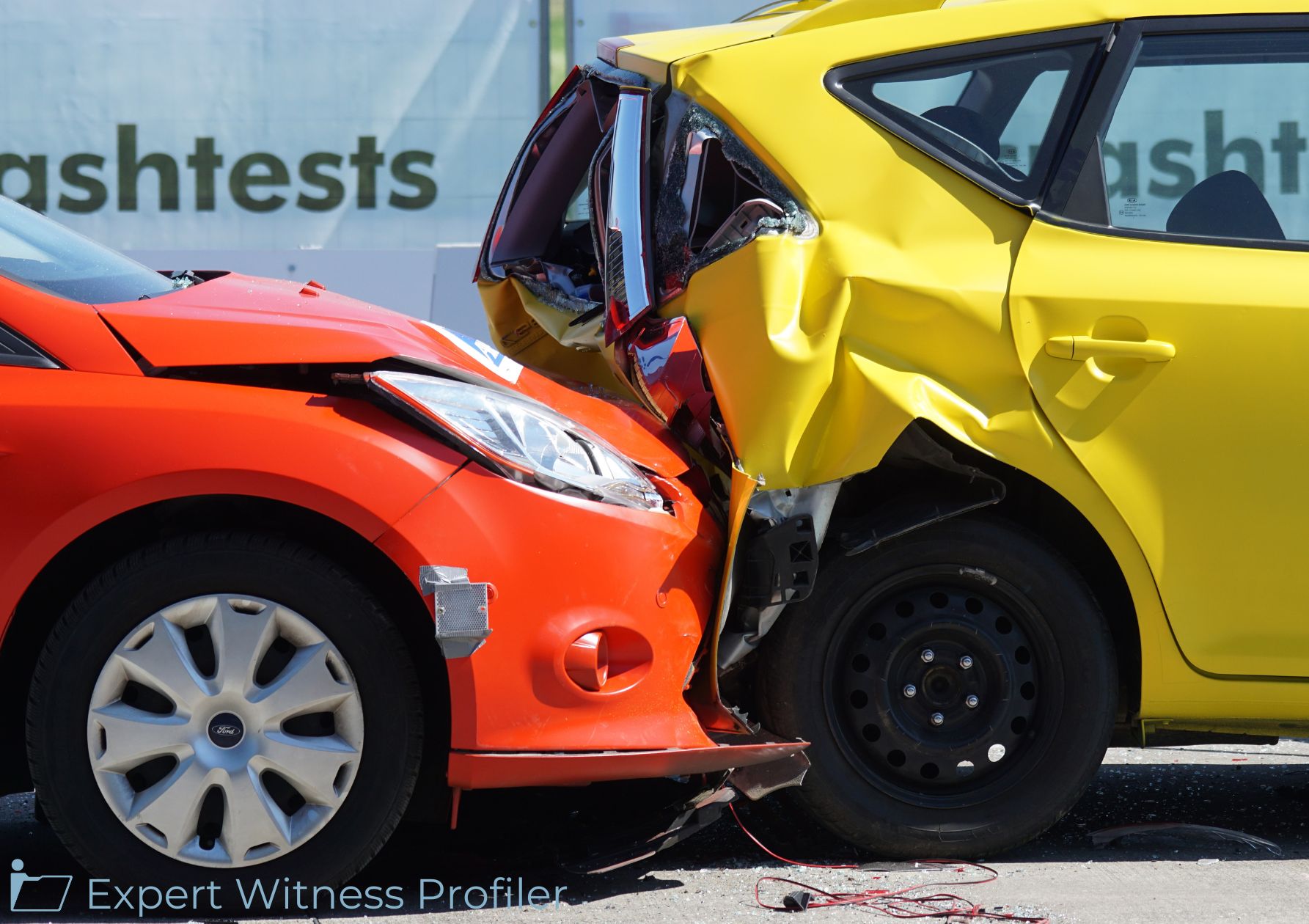
      On March 12, 2021, Linda Maraldo was waiting at a red light in her 2017 Chevrolet Sonic. Behind her, Cynthia O’Hara was operating a United States Postal Service (“USPS”) box truck. When the light turned green, O’Hara took her foot off the brake, causing the truck to move forward and collide with Maraldo’s vehicle. Maraldo claims to have suffered neck and back pain as a result.

      Expert Opinion

      Government expert Dr. Jennifer Yaek conducted accident reconstruction and biomechanical analyses of the rear-end collision between Maraldo’s vehicle and the USPS box truck.

      In preparing her expert report, Yaek reviewed several sources of information, including: (1) information about the accident, (2) eight photographs of the vehicles involved in the crash and the site of the crash, (3) repair and maintenance records for both vehicles, and (4) Maraldo’s medical records.

      Yaek’s assessment of vehicle damage was solely based on the documents and photographs supplied by the government, as she did not conduct a physical inspection of either vehicle.

      1. Accident Reconstruction Analysis

      Yaek’s accident reconstruction analysis led her to conclude that the maximum change in velocity, or delta-V, of Maraldo’s vehicle was approximately 5 miles per hour, that the closing/impact speed of the USPS truck was approximately 6-6.5 miles per hour, and that the principal direction of force applied to Maraldo’s vehicle was 6 o’clock “with 12 o’clock being straight ahead on the vehicle.” 

      Yaek’s crush analysis began with calculating how much force acted on the rear of Maraldo’s vehicle and, similarly, on the front of the USPS truck. To calculate the force that acted on the rear of Maraldo’s vehicle, Yaek used photos of the vehicle’s “undeformed rear bumper and publicly available, peer-reviewed engineering and scientific literature.”

      Yaek next used the Crash Investigation Sampling System from the National Highway Traffic Safety Administration to evaluate her delta-V calculation relative to the delta-V values in two other accidents where a vehicle rear-ended a Chevy Sonic. 

      2. Biomechanical Analysis

      Yaek’s biomechanical analysis led her to conclude that the accident “did not provide sufficient forces to cause motion of Maraldo’s cervical or lumbar spine beyond the physiological range of motion, and would most likely not provide the type or magnitude of loading consistent with mechanisms for acute spinal injury beyond transient spinal strain.”

      Yaek used the laws of physics to determine that Maraldo would have moved initially rearward and then rebound forward during the collision. She compared the loads that Maraldo’s spine would have experienced during the accident to “injury tolerances” and “loading experienced in physical tasks and activities of daily living.”

      Yaek further drew on biomechanical and peer-reviewed studies in finding that Maraldo’s accident could not have resulted in disc herniation, protrusion, or bulging absent damage to adjacent bony structures.

      Daubert Motion

      Maraldo contended that Yaek’s accident reconstruction opinions are unreliable and based on speculation. Specifically, Maraldo asserted that Yaek did not perform a crush analysis and instead based her conclusions on a limited review of only one photograph of each vehicle. Furthermore, Maraldo argues that Yaek lacked crucial information regarding the distance traveled by the USPS truck until impact, the speed of the USPS truck, the starting positions of the vehicles pre-impact, or the resting positions of the vehicles post-impact. 

      Accident Reconstruction Expert Witness

      Jennifer L. Yaek has more than 25 years of extensive experience in accident reconstruction, vehicle dynamics, and data analysis.

      She received her Master’s degree and PhD in biomechanical engineering with a concentration in impact biomechanics and has provided expertise in human injury tolerance, occupant kinematics, and rigid body dynamics associated with transportation related impacts, inter alia, since 2012.

      In addition, Yaek has co-authored numerous publications, including a 2020 article on rear impact.

      Get the full story on challenges to Jennifer Yaek ‘s expert opinions and testimony with an in-depth Challenge Study. 

      Discussion by the Court

      A. Challenges to Accident Reconstruction Opinions

      First, Yaek’s crush analysis consisted of three parts: (1) calculating how much force acted on the rear of Maraldo’s vehicle, (2) calculating how much force acted on the front of the USPS truck, and (3) calculating the total crush that both vehicles dissipated. In performing the crush analysis, Yaek reviewed multiple photos of both vehicles and relied on “publicly available, peer-reviewed engineering and scientific literature” as well as the laws of physics. 

      The Court concluded that Maraldo did not adequately support her contention that a physical inspection of the vehicles was required for Yaek’s analysis. Specifically, Maraldo did not clarify the necessity of a physical inspection, the additional insights Yaek would have gained, or the specific information Yaek overlooked by not conducting one. This failure to provide a clear explanation weakened Maraldo’s position.

      In conducting her accident reconstruction analysis, Yaek reviewed a traffic crash report from Michigan, a USPS accident investigation worksheet, and the deposition testimonies of both Linda Maraldo and Cynthia O’Hara. Notably, Maraldo does not contest the foundation of Yaek’s delta-V calculation and principal direction of force determination. Consequently, the Court finds no apparent issues with Yaek’s accident reconstruction analysis that would render her opinions inadmissible. Furthermore, Maraldo argues that Yaek’s report lacked the expected level of intellectual rigor for an accident reconstruction expert.

      Yaek compared the current accident to two other rear-end collisions involving Chevy Sonics to evaluate her delta-V calculation against other delta-V calculations, utilizing details and calculations sourced from the National Highway Traffic Safety Administration’s Crash Investigation Sampling System. However, Maraldo has not provided any explanation as to why this sampling system is unreliable such that Yaek should have confirmed the details of the accidents in the system herself.

      B. Challenges to the Biomechanics Opinions

      Maraldo argues that Yaek’s biomechanical analysis is grounded on an unreliable accident reconstruction analysis and is unsupported by the literature that Yaek cited in her report.

       Maraldo claims that the peer-reviewed literature that Yaek cites does not address injury tolerance and the effect of forces on an aged spine like Maraldo’s.

      First, as discussed above, Yaek performed a reliable accident reconstruction analysis. To perform her biomechanical analysis, Yaek applied her delta-V calculation, principal direction of force determination, and the circumstances of the collision to describe how Maraldo’s body would have moved during the collision.

      Yaek also compared the forces that Maraldo’s neck and back would have experienced during the accident to the forces that one’s neck and back might experience in accidents of similar or greater severity and in activities of daily living. 

      The Court finds that this analysis and the resulting opinions are reliable.

      Second, Maraldo’s criticisms of the literature that Yaek cites are immaterial to any of the Daubert factors. At best, Maraldo’s critiques of the literature go to the weight of Yaek’s opinion, not its admissibility. 

      Held

      Because Dr. Jennifer Yaek’s opinions meet the admissibility standards of Federal Rule of Evidence 702, the Court will not exclude them. The the Court, therefore, denied Maraldo’s motion to exclude the government’s expert opinions and testimony.

      Key Takeaway:

      The Court affirmed Yaek’s methodologies, including her crush analysis, delta-V calculations, and comparisons to similar accidents and reliance on biomechanical studies, despite the Plaintiff’s challenges regarding the lack of physical inspection and the cited literature. The Court determined that the Plaintiff’s criticisms primarily went to the weight, not the admissibility, of the expert’s opinions.

      Case Details:

      Case Caption: Maraldo V. United States Of America Et Al
      Docket Number: 2:23cv10577
      Court Name: United States District Court, Michigan Eastern
      Order Date: March 31, 2025
      1. Intellectual Property Expert’s Opinions may Assist the Jury’s Statutory Damages Determination

        Intellectual Property Expert’s Opinions may Assist the Jury’s Statutory Damages Determination

        Plaintiffs manufacture, market, and sell premium, luxury, and sports eyewear products, including Ray-Ban, Oakley, and Costa. Plaintiffs own several trademarks for these various brands in the United States.

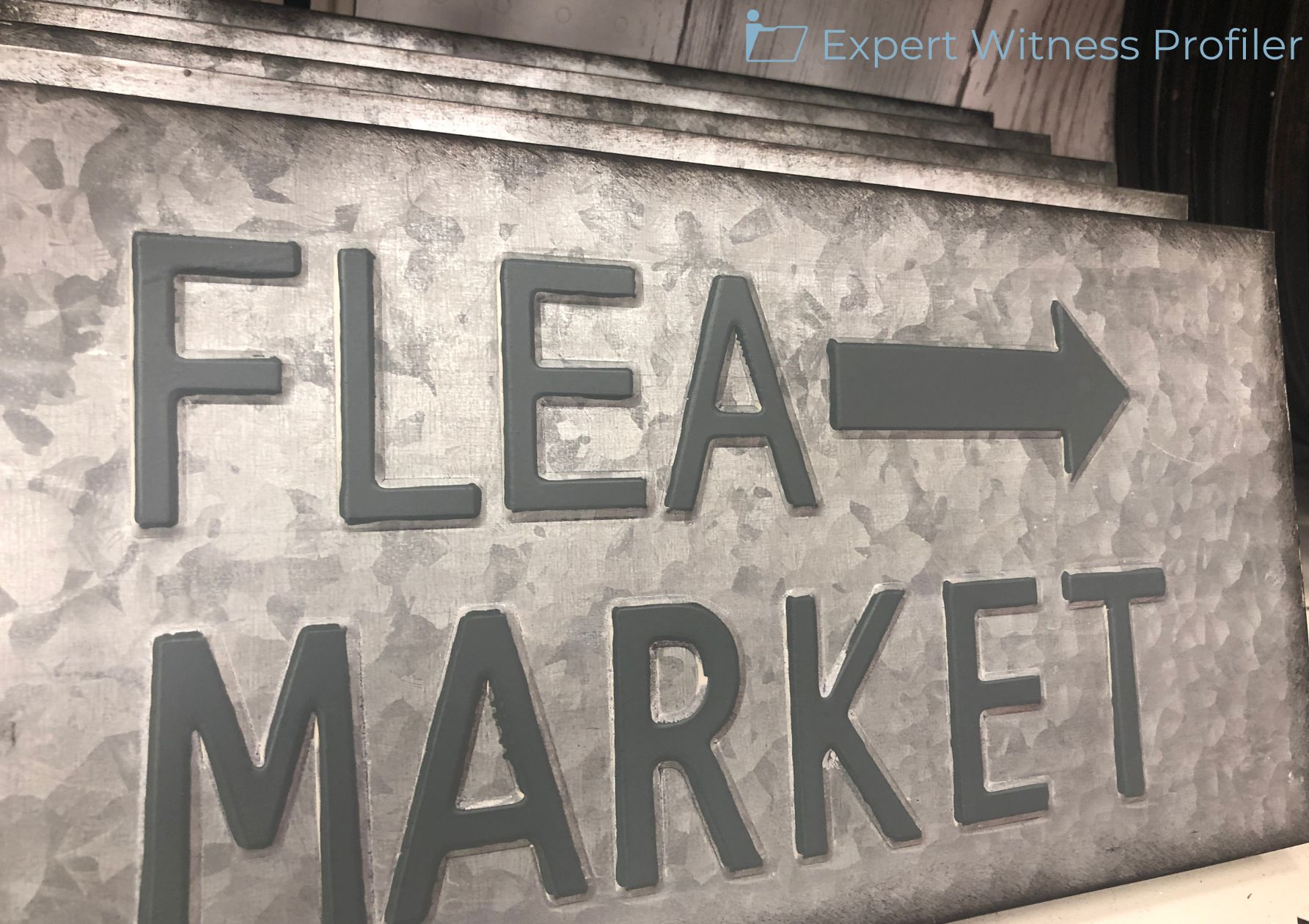
        Defendants own and operate the Beach Blvd. Flea Market (the “Flea Market”), in Jacksonville.

        This is a contributory trademark infringement case involving the repeated display and sale of products bearing counterfeits of Plaintiffs registered trademarks by Defendants’ vendors at the Beach Blvd. Flea Market.

        Initially, Defendants enlisted Kal Raustiala to provide an expert report and opinions regarding the legal and factual contours of harm caused by consumer confusion and how such harm is, or is not, likely to arise.

        Subsequently, Plaintiffs moved to exclude Raustiala’s report and testimony in their entirety on the basis that he is unqualified and his opinions (1) contain improper legal conclusions; (2) do not assist the trier of fact; and (3) mislead the jury.

        Specifically, Raustiala offers three primary opinions: (1) this case, unlike many trademark disputes, does not involve “standard point of sale” consumer confusion, (2) harm from post-sale confusion, which requires a special set of circumstances, “exists but is rare,” and can, in some cases, benefit the intellectual property holder, and (3) in this case, there is no evidence that Plaintiffs have been harmed by post-sale confusion. Furthermore, also embedded in his report are several ancillary or supplemental opinions regarding the goals of trademark law and how harm is caused by consumer confusion, the sequence of events necessary for post-sale confusion to occur, the potential outcomes of such confusion, and how harm to exclusivity should not be protected because it is contrary to the aims of trademark law.

        Intellectual Property Expert Witness

        Kal Raustiala has taught intellectual property and international law at UCLA, Harvard, Yale, Columbia, Chicago, Princeton, Melbourne University in Australia, Hebrew University in Israel, and the National University of Singapore, where he was the Yong Shook Lin Visiting Professor of Intellectual Property Law. He holds a JD from Harvard Law School (1999) and a PhD from the University of California, San Diego (1996), and he attended Duke University (1988).

        Raustiala has taught at UCLA Law School since 2000 and has researched and published widely on intellectual property issues in the realm of fashion, apparel, and luxury goods.

        Want to know more about the challenges Kal Raustiala has faced? Get the full details with our Challenge Study report. 

        Discussion by the Court

        Qualifications

        Kal Raustiala possesses substantial academic credentials, including a PhD and Juris Doctor. His expertise in intellectual property law is further demonstrated by his teaching experience at numerous prominent universities and his publications on intellectual property and fashion design, one of which has been cited by the United States Supreme Court.

        Notably, he has authored an article specifically addressing post-sale confusion in the trademark context and has consulted with firms on intellectual property issues. These accomplishments underscore Raustiala’s extensive knowledge, skill, experience, and education in the field. Recognizing that an expert’s qualifications need not perfectly align with the specific subject matter, the Court concluded that Raustiala is a qualified expert witness in this case.

        Legal Conclusions

        The Plaintiffs contend that Raustiala’s expert opinions are fundamentally flawed because they repeatedly present legal conclusions regarding the definition and application of trademark infringement law to the specific facts of this case. In contrast, the Defendants argue that Raustiala’s analysis merely describes the factual progression of events in the real world that can lead to post-sale consumer confusion.

        The Court finds that many of Raustiala’s opinions, specifically those describing different types of consumer confusion and the sequence of real-world events that can cause one particular form of post-sale confusion, do not constitute inadmissible legal conclusions. In particular, concerning Raustiala’s views on point-of-sale confusion and the existence of one method to establish post-sale confusion, the Court determines that Raustiala does not offer testimony on the legal ramifications of specific conduct or instruct the jury on the ultimate verdict.

        However, the Court will exclude any of Raustiala’s opinions that address whether post-sale confusion or harm to exclusivity are or should be recognized as valid legal theories of harm in trademark law, as these constitute impermissible legal testimony.

        Additionally, the Court notes that Raustiala draws comparisons between real-world confusion scenarios and existing case law to promote a specific argument, namely the absence of harm. The Court deems these statements to be the type of arguments properly presented in legal briefs by counsel and will therefore exclude them as inappropriate expert opinion.

        Raustiala Exceeds the Scope of Proper Expert Witness Testimony

        Furthermore, the Court will exclude Raustiala’s assertions that there is no likelihood of confusion in this case, as this impermissibly concludes that the Plaintiffs have failed to meet a legal standard. Likelihood of confusion is a central element in infringement cases, and by stating that the Plaintiffs have not satisfied this element, Raustiala oversteps the permissible bounds of expert witness testimony.

        Given that binding legal precedent establishes post-sale confusion as a basis for finding a likelihood of confusion, the Court will similarly exclude Raustiala’s opinions stating that no post-sale confusion existed or was demonstrated in this particular case.

        Moreover, the Court observes that Raustiala frequently intertwines his opinion that there was no harm with his ultimate conclusion that there was no likelihood of confusion. Consequently, to the extent that Raustiala’s opinions regarding harm to the Plaintiffs are based on and inseparable from his ultimate conclusion on confusion, this testimony is also inadmissible and will be excluded.

        Helpfulness to the Trier of Fact

        The Plaintiffs next argued that Raustiala’s opinions lack relevance and would therefore not assist the jury in deciding a factual issue in the case. Conversely, the Defendants contended that Raustiala’s opinions are relevant to the matter of standing, the Court’s decision regarding the adoption of a presumption of confusion, and the determination of statutory damages.

        The Court will not consider the relevance of Raustiala’s opinions concerning the Court’s decision to adopt a presumption of confusion, as expert testimony is not used to inform the Court on matters of law.

        In other respects, the Defendants asserted that Raustiala’s expert opinions on post-sale confusion and its potential economic consequences would help the jury in assessing the need to deter other potential infringers and in evaluating the Plaintiffs’ lost revenues when determining the appropriate statutory damages.

        However, the Court did not find a clear connection between Raustiala’s opinions on the sequence of events in one type of post-sale confusion and whether it can lead to economic loss, and the calculation of a damages award intended to deter future infringers.

        Nevertheless, the Court found Raustiala’s opinions to be marginally relevant to the Plaintiffs’ lost revenues. Although statutory damages are available due to the difficulty in calculating actual damages, legal precedent indicates that “[s]tatutory damages are not intended to provide a Plaintiff with a windfall recovery; they should bear some relationship to the actual damages suffered.” Therefore, Raustiala’s insights into how post-sale confusion can or cannot result in economic loss may be helpful to the jury in its consideration of actual damages, specifically the Plaintiffs’ lost revenues. Consequently, the Defendants have demonstrated that Raustiala’s remaining opinions could potentially assist the jury in its determination of statutory damages.

        Rule 403

        The Plaintiffs asserted that Raustiala’s opinions would mislead the jury in several key areas by contradicting established legal precedent. Specifically, they argued that his opinions conflict with binding case law regarding the application of the seven-factor test for determining likelihood of confusion, the existence of a presumption of confusion, and the legal principle that post-sale confusion is sufficient to establish liability under the Lanham Act. Furthermore, the Plaintiffs contended that the jury would be improperly led to believe that Raustiala’s opinions on whether the Plaintiffs suffered a loss of economic revenue are definitive in determining both the likelihood of confusion and the appropriateness of statutory damages.

        Regarding the Plaintiffs’ initial argument as it pertains to Raustiala’s remaining opinions, the Court finds no contradiction between Raustiala’s testimony on the real-world progression of one type of post-sale confusion and the established seven factors used to assess likelihood of confusion. Turning to the presumption of confusion, while courts have applied this presumption when trademarks are identical, no binding legal precedent compels this Court to do so.

        As the Court has already determined that Raustiala’s opinions asserting the absence of post-sale confusion in this case are inadmissible legal conclusions, it is unnecessary to further evaluate their admissibility under Rule 403 concerning the potential for prejudice or confusion.

        Finally, concerning the Plaintiffs’ contention that the jury might be misled into believing that the economic consequences of post-sale confusion are determinative of liability, the Court concludes that any such potential for misinterpretation can be adequately addressed through other procedural means, including cross-examination of the witness, the issuance of limiting instructions to the jury during the trial, and comprehensive jury instructions at the close of evidence.

        Held

        The Court granted in part and denied in part the Plaintiffs’ motion in limine to exclude the proffered opinions of Kal Raustiala.

        Key Takeaway:

        The Court partially excluded the expert testimony of Kal Raustiala. Despite his extensive background in intellectual property law, the Court determined that many of his opinions constituted impermissible legal conclusions (Raustiala’s opinions as to whether post-sale confusion or harm to exclusivity have been or should be recognized as legal theories of harm in trademark cases), exceeded the scope of proper expert testimony, and would potentially mislead the jury. However, the Court allowed some of his testimony regarding how post-sale confusion can or cannot result in economic loss because it may help the jury in its consideration of actual damages, and specifically, Plaintiffs’ lost revenues.

        Although there remains a possibility that Raustiala’s expert opinions could lead to some juror confusion or a less efficient use of trial time, the Court does not find that this risk substantially outweighs the probative value of the remaining testimony, especially considering the exclusion of several other aspects of Raustiala’s original opinions.

        Case Details:

        Case Caption: Luxottica Group S.P.A. Et Al V. Beemer & Associates III, Llc
        Docket Number: 3:23cv551
        Court: United States District Court for the Middle District of Florida, Jacksonville Division
        Order Date: March 28, 2025
      2. Data Privacy Expert Has Sufficient Experience in TCPA Compliance and Wrong Number Issues

        Data Privacy Expert Has Sufficient Experience in TCPA Compliance and Wrong Number Issues

        David Elliot filed a lawsuit against Humana, claiming the company violated the Telephone Consumer Protection Act (TCPA) by repeatedly calling him with robocalls even though he wasn’t a customer and had informed them they had the wrong number. Elliot wants to pursue this as a class action, arguing that many others have experienced similar unwanted robocalls from Humana over a four-year period.

        To support his request for class certification, Elliot offered expert testimony from Anya Verkhovskaya, who believes Humana’s data allows for a reliable and efficient way to identify and notify potential class members, meeting Fed. R. Civ. P. 23 and due process. Humana countered with their own expert, Margaret Daley, who argues that Verkhovskaya’s method for identifying class members who received prerecorded messages as non-customers is unreliable and that individualized investigations would be necessary. Daley also challenges the reliability of Verkhovskaya’s reverse-append methodology, claiming it does not reliably identify people who should receive notice. 

        Daley was admitted to opine on “whether there is a reliable way to determine on a class wide basis whether Humana non-members received prerecorded messages.”

        Data Privacy Expert Witness

        Margaret Daley is the Vice President at Charles River Associates (“CRA”) and a member of its Forensics Services practice group. Daley has specialized experience in TCPA compliance, and digital forensic investigations. She has also authored three publications on TCPA compliance and wrong number issues.

        Daley has significant experience providing expert testimony, litigation and regulatory support, and data analytics to law firms, Fortune 500 corporations, government agencies, and various regulatory bodies. 

        She is is a Certified Information Privacy Professional (CIPP), a Certified Fraud Examiner (CFE) and a licensed attorney in the state of Illinois. 

        Get the full story on challenges to Margaret Daley’s expert opinions and testimony with an in-depth Challenge Study.

        Discussion by the Court

        Qualifications

        Daley possesses ample experience in TCPA compliance, wrong number issues, and the reverse-append procedure proposed by Verkhovskaya. Consequently, her expert opinions will be helpful for the Court. Furthermore, other district courts have recognized Daley’s qualifications to testify on similar matters. Her education, certifications, and extensive experience demonstrate relevant training in the areas she has provided opinions on. Therefore, this Court finds Daley qualified by both training and experience to offer expert testimony on class action notice and TCPA claim issues, and Elliot’s opposing arguments are not persuasive.

        Reliability

        Elliot challenged Daley’s expert opinion, claiming it was based on “unsupported speculation” and a lack of factual knowledge. Humana countered that Daley had access to the same information as Elliot’s expert, Verkhovskaya, including her report, and even conducted her own analysis of that data. Humana emphasized that Daley’s opinion critiques Verkhovskaya’s methodology for identifying and notifying the class, drawing upon Daley’s experience in related fields. Because Daley relied on the same information provided by Humana’s records as Verkhovskaya, Humana argued that experts are permitted to base opinions on data provided by counsel and that a challenge to Daley’s factual basis is essentially a challenge to the already-deemed-reliable report of Verkhovskaya. Moreover, Humana pointed out that Daley went beyond what was required by testing aspects of Verkhovskaya’s methodology to ensure her own opinion’s reliability.

        Humana concluded that Daley’s opinion is sound both factually and methodologically. Finally, the Court asserted that Elliot’s objections regarding Daley’s reliability primarily concern the weight of her testimony, not its admissibility, especially since they target the foundation of her opinion – Verkhovskaya’s own report and data. Humana reminded the Court that Elliot will have the opportunity to cross-examine Daley at trial.

        Relevance

        Elliot challenged the relevance of Daley’s opinion on two grounds. First, he argued that Daley misinterpreted the notice procedure of Federal Rule of Civil Procedure 23. Second, Elliot claimed that Daley misrepresented Verkhovskaya’s testimony.

        In defining the proper scope of rebuttal testimony, courts have held that rebuttal evidence “identifies a flawed premise in an expert report that casts doubt on both that report’s conclusions and its author’s expertise.” The Court determined that Daley’s opinions are relevant because they point out potential weaknesses in Verkhovskaya’s analysis that are important for deciding key aspects of class certification under Federal Rule of Civil Procedure 23, specifically numerosity, typicality, ascertainability, and whether common questions predominate for class certification.

        Daley claimed Verkhovskaya’s opinion is irrelevant because it will misidentify and notice some non-class members

        According to Elliot, Daley claimed Verkhovskaya’s opinion is irrelevant because it will misidentify and notice some non-class members because of a “lack of knowledge of the standards for class notice,” which renders Daley’s opinion irrelevant as she does not know the standard.

        This argument fails for two main reasons. First, the claim that Daley lacks knowledge of class notice standards is essentially an attack on her qualifications, which the Court has already affirmed. Second, Elliot misinterprets Daley’s point. Daley’s argument isn’t simply about some non-class members being noticed improperly; she contends that identifying class members is impossible without individualized investigation, a fundamental flaw in the proposed process and relevant to a question that must be answered at this stage of the case.

        Daley misrepresents Verkhovskaya’ methodology as “a one item, reverse append, review”

        Elliot also argues that Daley mischaracterizes Verkhovskaya’s methodology as simply “a one item, reverse append, review,” but this is not supported by the evidence. Daley’s opinion considers Verkhovskaya’s entire analysis, focusing on the reverse append review because she believes this key component is unreliable for identifying class members. Daley simply dedicates more attention to the aspect of Verkhovskaya’s methodology she finds most problematic.

        Furthermore, Elliot suggests Daley’s opinion is irrelevant because it was developed solely for this lawsuit, not from her regular technical work. While courts may scrutinize such opinions more closely, Elliot provides no specific examples or evidence to support this claim about Daley or her testimony, nor does he explain why this would make her opinion inadmissible. Because Elliot offers only a bare assertion without developed argumentation or record citations, the Court does not need to consider this point, as perfunctory arguments are deemed waived. Elliot retains the right to question Daley about her reliability and the development of her opinion during cross-examination at trial.

        Held

        The Court denied David Elliot’s motion to exclude Margaret Daley’s testimony.

        Key Takeaway:

        Despite Elliot’s challenges arguing that Daley was not qualified, relied on speculation, and misrepresented the opposing expert’s methodology and lacked knowledge of the standards for class notice, the Court upheld Daley’s expertise, noting her extensive experience and the fact that her opinions identified potential flaws in Elliot’s expert’s methodology that are pertinent to the key requirements for class certification under Rule 23. The Court also dismissed Elliot’s argument that Daley’s opinion was solely litigation-driven due to lack of supporting evidence, emphasizing that these concerns could be addressed through cross-examination at trial.

        Case Details:

        Case Caption: Elliot V. Humana, Inc.
        Docket Number: 3:22cv329
        Court: United States District Court, Kentucky Western
        Order Date: March 28, 2025
      3. Forensic Engineering Expert’s Testimony Admitted Despite his Reliance on an Article Written in 2014 

        Forensic Engineering Expert’s Testimony Admitted Despite his Reliance on an Article Written in 2014 

        This case arises from a fire that occurred on Plaintiff’s Insured’s property, for which Plaintiff alleges the following alternative claims against Defendant: (1) strict product liability; (2) negligence (resulting from product defects); (3) breach of implied warranty of merchantability; and (4) breach of implied warranty of fitness.

        The most probable ignition source of the fire was the failure of the exhaust fan motor. The existence of lint shows that the fire originated from inside the subject fan rather than outside the fan.

        The thermal cutoff (“TCO”) in the subject fan did not work as designed or intended in that it failed to shut off the motor to prevent the arcing and overheating from occurring.

        Allstate designated Robert Longseth, PE, a forensic engineer with experience investigating both electrical and mechanical systems, as an expert in this case. On December 29, 2023, Longseth prepared an expert report regarding the cause of the fire.  Broan-Nutone sought to exclude at trial the opinions of Longseth regarding whether the TCO in the fan was defective.

        Forensic Engineering Expert Witness

        Robert Longseth, PE has over 17 years as a Forensic Engineer and has been involved in over 1000 investigations both in electrical and mechanical systems. Longseth is a registered Professional Engineer in 12 states.

        He is a Board-Certified Engineering Diplomat in Forensic Engineering, through the National Academy of Forensic Engineers, a Certified Fire Investigator, through the International Association of Arson Investigators, and a Certified Fire and Explosion Investigator through the National Association of Fire Investigators.

        Get the full story on challenges to Robert Longseth’s expert opinions and testimony with an in-depth Challenge Study. 

        Discussion by the Court

        Initially, Broan-Nutone’s motion to exclude fails to clearly state which part of Rule 702 it relies on. Instead, the motion challenges Longseth’s conclusions about the TCO and the fire’s cause, specifically his reliance on a 2014 article. The Court interprets this challenge as questioning whether Longseth’s opinion regarding the TCO and its role in the fire is based on “sufficient facts or data,” as mandated by Rule 702(b).

        The article at issue is “Ventilation Fan Fires: Overheated Windings Lead to Failed Thermal Limit Switch,” published in the journal Fire Technology in 2014. The article describes a “recent increase in the occurrence of ventilation fan fires.” The focus of the paper is two models of Jakel motors that were manufactured between 2000 and 2003 and were designed for ventilation in small rooms, such as laundry rooms and bathrooms.

        Longseth’s expert report states that “the lead to the thermal cut out was bent significantly as part of its installation.” The report then states that, “while the model number of the specific motor was not the same as the below article the evidence is consistent with [the  article’s] finding.”

        Broan-Nutone’s Arguments

        Broan-Nutone raises the point that the fans and TCOs discussed in the article may not be the same as the particular fan and TCO at issue in this litigation. Longseth counters, acknowledging that the model number of the motor involved in this case was not the same as the model numbers in the article but asserts that the evidence is “consistent with the findings of [the article].” Ultimately, the Court finds no issue with Longseth’s use of the article in reaching his expert opinions.

        Secondly, Broan-Nutone contends that the 2014 article’s reference to TCO installation standards is irrelevant. They argue that 2014 standards are not pertinent and that there’s no evidence about manufacturing and design knowledge relevant to the 2005 fan. However, documents Allstate obtained through supplemental discovery directly contradict this. As Allstate explains, Underwriters Laboratories industry standard notices from 1999-2003, possessed by Broan-Nutone by September 2003, state the same TCO lead bending standard (no closer than three millimeters from the thermal-link seal) as the 2014 article Longseth cites. Consequently, the Court finds Longseth relied on sufficient facts and data and will deny Broan-Nutone’s motion to exclude.

        Held

        The Court denied the Defendant Broan-Nutone, LLC’s motion to exclude Plaintiff’s expert Robert Longseth.

        Key Takeaway:

        The Court found that Longseth’s reliance on a 2014 article about ventilation fan fires, despite differences in motor model numbers, was permissible as the evidence was consistent. Furthermore, the Court rejected Broan-Nutone’s argument that 2014 standards were irrelevant, noting that supplemental discovery revealed identical TCO installation standards were in place and known to Broan-Nutone as early as 2003, supporting Longseth’s conclusions and demonstrating sufficient factual basis for his opinion under Federal Rule of Evidence 702(b).

        Case Details:

        Case Caption: Allstate Indemnity Company V. Broan-Nutone, LLC
        Docket Number: 1:23cv743
        Court Name: United States District Court, Colorado
        Order Date: March 26, 2025
      4. Accounting Expert Has Not Violated the Anti-Corruption Code by Virtue of his Professional Experience

        Accounting Expert Has Not Violated the Anti-Corruption Code by Virtue of his Professional Experience

        Back in 2012, Travelers Casualty & Surety Company of America (Travelers) provided Aluma Construction Corporation with a General Agreement of Indemnity and issued surety bonds guaranteeing Aluma’s completion of three construction projects in Puerto Rico. After being obligated to pay out on these bonds, a situation covered by the indemnity agreement with both the company and individual guarantors, Travelers initiated this lawsuit to recover their surety payments, along with associated costs and expenses, from those indemnifiers.

        Additionally, Travelers claimed to have paid Aluma’s subcontractors, workers, and suppliers, thus asserting their right of subrogation against the Puerto Rico Aqueduct and Sewer Authority (PRASA) for those payments. What began as seemingly direct claims by Travelers against the project owner and the indemnifiers evolved into a complex legal battle involving PRASA, Aluma, and the indemnifiers, all disputing responsibility for construction delays and incurred costs. Chubb Insurance Company, a third-party defendant in this case, is an insurer of PRASA. 

        PRASA filed a motion in limine to exclude Carlos J. Iglesias Colon as Aluma’s financial expert on the grounds that Iglesias Colon has a conflict of interest violative of Puerto Rico’s Anti-Corruption Code.

        Accounting Expert Witness

        Carlos J. Iglesias Colon is a certified public accountant in the Commonwealth of Puerto Rico. He performed business valuations for sale of companies, tax purposes and litigation purposes for numerous companies.

        He has served as an expert witness and consultant in financial matters in over 50 construction projects and court cases, specializing in construction project damages including home office overhead, site overhead and loss of labor productivity, among others.

        Get the full story on challenges to Carlos Iglesias Colon’s expert opinions and testimony with an in-depth Challenge Study. 

        Discussion by the Court

        A. PRASA’s Motion in Limine

        PRASA sought to disqualify Aluma’s expert witness, arguing that a conflict of interest existed due to his professional history with ECOVAL, LLC, where he had previously worked and currently served as Managing Partner. PRASA further contended that ECOVAL, a financial and litigation support firm, is currently retained to provide support to multiple executive agencies of the Puerto Rico government.

        According to PRASA, the Anti-Corruption Code “was instituted by the legislature of the Commonwealth of Puerto Rico specifically to prohibit private contractors from obtaining direct benefits through governmental contracts, and at the same time profiting at the expense of the government by representing private interests against it.”

        PRASA added “Iglesias is currently deriving income from his role as managing partner for ECOVAL, a juridical person who has contracts with the government of Puerto Rico; at the same time and because of this litigation, Iglesias is being paid to testify against PRASA, a public corporation.”

        B. Aluma’s Opposition

        Aluma maintains that “although ECOVAL represents other governmental agencies,” Aluma explains, “it does not represent and has not represented PRASA.” In other words, the contract between ECOVAL and other government agencies did not preclude Iglesias from participating in the trial as an expert witness in a case against other agencies or public corporations.

        Aluma contended that the exclusion of Iglesias was unwarranted under Federal Rules of Civil Procedure 26 and 37, Federal Rule of Evidence 702, or any pertinent professional code of ethics governing CPA conflicts of interest. Furthermore, Aluma asserted that ECOVAL had not represented PRASA and held no confidential information obtained from PRASA; in addition, ECOVAL had no duties or obligations towards PRASA. Therefore, Aluma maintained that no conflict of interest existed for Iglesias in the matter at hand.

        1. The Anti-Corruption Code

        Whether PRASA fits within the Anti-Corruption Code’s definition of “executive agencies”

        The first question is whether PRASA fits within the Anti-Corruption Code’s definition of “executive agencies.” PRASA argues that it is an executive agency; Aluma says it is not. The definition of “executive agencies” is found at §1883(a):

        The bodies and entities of the Executive Branch of the Government of Puerto Rico, including public corporations, departments, agencies, offices, municipalities, or other instrumentalities.

        While Aluma uses the term “independent public corporation,” the Court, however, has no basis to conclude that PRASA is not a public corporation falling within the Anti-Corruption Code’s definition of “executive agency.” Indeed, the parties’ recent joint proposed jury instructions included this very point as a stipulated fact, further supporting this conclusion.

        Whether the Anti-Corruption Code should properly be interpreted as broadly as PRASA maintains in its motion in limine

        Turning to the second, and ultimately determinative, question: whether the Anti-Corruption Code should be interpreted as broadly as PRASA maintains in its motion in limine. Specifically, PRASA argues that if an expert witness performs any work for any executive agency of the Commonwealth of Puerto Rico, that expert is automatically barred from testifying against any other Puerto Rican executive agency. In support of this position, PRASA points to the fact that Iglesias is the “managing partner of ECOVAL, a juridical person who has contacts with the government of Puerto Rico.” While neither PRASA nor Aluma disclose the specific executive agencies with which ECOVAL has dealings, Aluma asserts that Iglesias’ firm’s work does not involve PRASA. For the purpose of ruling on this motion, the Court assumes the truth of that contention.

        Conflict of Interest

        The Court does not conclude that the Puerto Rico Legislature intended the Anti-Corruption Code to bar the expert testimony of a witness against one executive agency simply because their firm does some work for another, unrelated executive agency, particularly when the subjects of their testimony are distinct. Firstly, the Code itself focuses on whether a person has a “conflict of interest” in dealing with the specific executive agency in question. Indeed, in § 1883(b), the Anti-Corruption Code defines “conflict of interest” to mean “a situation in which a personal or financial interest is or could reasonably be incompatible with the public interest.” 

        Furthermore, while it is readily apparent why a person who gains confidential governmental information while working for one executive agency should be prevented from using that same information to gain an unfair advantage against that very agency, the Court held that it is considerably more difficult to understand how a person who possesses no insider information against a particular executive agency should be forbidden from offering expert testimony against that agency.

        Confidential Information

        Secondly, the Anti-Corruption Code provides a detailed definition of “confidential information.” Specifically, the Code expressly prohibits a person from using “confidential information acquired in the course or as [a] result of any task entrusted thereto under a contract by the Government of Puerto Rico.” However, PRASA does not contend that Iglesias proposes to use any confidential information as defined by the Code in offering his expert opinions against PRASA. In fact, all PRASA offers on this point is its conclusory concern that “Iglesias is getting paid to testify against the same government that pays his employer and thus, his conflict of interest goes beyond a mere appearance; it is an unavoidable reality and precisely the conduct that sec. 1883a of the Anti-Corruption Code prohibits.”

        Appearance of a Conflict of Interest

        Thirdly, while PRASA is correct that the Anti-Corruption Code contemplates the “appearance of a conflict of interest,” the precise language of the statute strongly suggests that its reach is limited to work against the executive agency that hired the person. To illustrate this point, the statute states:

        “(n) No person shall enter into contracts with executive agencies if there is any conflict of interests. Every person shall certify that he does not represent private interests in cases or matters that involve conflicts of interest, or of public policy, between the executive agency and the private interests he represents.”

        Notably, the Puerto Rico Legislature was careful to use exact language, forbidding conflicts of interest “between the executive agency and the private interests he represents.” Moreover, while the Anti-Corruption Code prohibits the appearance of conflicts of interest, the Court interprets the statute as preventing the appearance of only those conflicts of interest within the meaning set forth in the Anti-Corruption Code.

        In essence, the Court disagrees with PRASA’s overly broad interpretation of the Anti-Corruption Code. Rather, the Court finds, as Aluma argues, that because Iglesias and his firm have had no dealings with PRASA and have not obtained any relevant confidential information from their work with other executive agencies, no conflict of interest exists under the Anti-Corruption Code that would bar Iglesias from testifying.

        2. Conflicts of Interest Among Expert Witnesses

        Section 3.2(c) of the Anti-Corruption Code provides:

        “Every person shall observe the precepts and principles of excellence and honesty that cover his profession, in addition to the ethical standards or rules of the Association or College of which he is a member and that regulate his trade or profession in the relationship with his competitors as well as with the Government of Puerto Rico and its employees or officials.”

        In this provision, the Anti-Corruption Code incorporates the codes of conduct of the profession or trade of the expert. As Aluma correctly notes, PRASA has failed to identify any professional code of conduct that Iglesias allegedly violated. Consequently, this particular provision of the Anti-Corruption Code did not alter the Court’s determination that PRASA’s motion in limine to disqualify Iglesias under this Code is without merit. In conclusion, the Court held that PRASA has not demonstrated a violation of the Anti-Corruption Code by Iglesias and therefore denied PRASA’s motion in limine to exclude him on this ground.

        Held

        The Court dismissed without prejudice PRASA’s motion in limine regarding disqualification of Carlos J. Iglesias Colon as Aluma’s financial expert.

        Key Takeaway:

        While the Legislature’s determination to eradicate corruption is laudable, an interpretation of the Anti-Corruption Code as broad as the one urged by PRASA would have the counterintuitive impact of severely limiting the pool of experts available to testify against executive agencies, even where there is no conflict of interest. 

        In today’s world, the interrelationship between the government writ large and experts of all types is so ubiquitous that PRASA’s expansive interpretation of the Anti-Corruption Code would eliminate large swaths of potential experts who would otherwise be allowed to testify against the government of Puerto Rico, essentially limiting those who could testify against executive agencies to a miniscule number within Puerto Rico or to experts from outside Puerto Rico.

        Case Details:

        Case Caption: Travelers Casualty & Surety Company Of America Et Al V. Vazquez-Colon Et Al
        Docket Number: 3:18cv1795
        Court Name: United States District Court for the District of Puerto Rico
        Order Date: March 24, 2025
      5. Emergency Medicine Expert Barred from Offering Legal Conclusions Regarding whether EMTALA was Violated

        Emergency Medicine Expert Barred from Offering Legal Conclusions Regarding whether EMTALA was Violated

        The present case stems from incidents occurring around 2:00 a.m. on December 18, 2020, when Angela Cleveland arrived at the Emergency Department (ED) entrance of Bienville Medical Center (BMC) with her 29-year-old son, Kedeldric Dontrez Brown. The Plaintiff has brought claims under the Emergency Medical Treatment and Labor Act (EMTALA), asserting that Brown’s death resulted from BMC’s failure or refusal to provide a necessary medical screening or treatment to assess whether he had an emergency medical condition.

        In response, the Defendant has designated Dr. Rebecca Hutchings, a physician specializing in emergency medicine, as an expert witness regarding the allegations in this case and has presented her expert report, which includes analysis of the EMTALA claims. Plaintiff Brianna Babers filed a motion contesting the admissibility of Hutchings’ expert opinion on whether BMC’s treatment of Brown on December 18, 2020, constituted a violation of EMTALA.

        Emergency Medicine Expert Witness

        Rebecca Hutchings is board certified in both emergency medicine and pediatrics. She has served as the director of medical education for the division of emergency medicine at Children’s Hospital New Orleans.

        Hutchings is also an Associate Adjunct Clinical Professor of Pediatrics at the Tulane University School of Medicine. She attended medical school at New York University followed by an Emergency Medicine residency at Louisiana State University, New Orleans. 

        Get the full story on challenges to Rebecca Hutchings’ expert opinions and testimony with an in-depth Challenge Study. 

        Discussion by the Court

        Babers’ motion argued that Hutchings should not have been allowed to testify about legal conclusions, specifically whether BMC’s actions violated EMTALA. Babers maintained that determining an EMTALA violation was a legal question for the Court, not an expert. Therefore, Babers contended that any testimony from Hutchings interpreting EMTALA or offering legal conclusions should have been excluded under Federal Rule of Evidence 702 and the Daubert standard. In response, BMC agreed that experts could not offer legal conclusions but argued that Hutchings was qualified to provide expert testimony on emergency medicine, which was relevant to the EMTALA claims. BMC asserted that Hutchings’ extensive emergency medicine experience allowed her to testify on the medical aspects of the case, even without stating whether EMTALA was violated. BMC urged the Court to allow Hutchings to testify within her area of expertise.

        Because the parties agreed that experts could not offer legal conclusions, the Court granted Babers’ motion to the extent that it sought to exclude Hutchings’ testimony offering legal conclusions on EMTALA violations. Such testimony was inadmissible and would be excluded. However, Hutchings remained qualified to testify as an emergency medicine expert and could offer opinions within her expertise that did not constitute impermissible legal conclusions.

        Held

        The Court granted the Plaintiff’s Daubert motion/motion in limine to limit/exclude the testimony of Defendants’ expert witness, Dr. Rebecca Hutchings. Hutchings cannot provide legal opinions on EMTALA violations but may testify as an emergency medicine expert.

        Key Takeaway:

        The case centers on a lawsuit alleging Bienville Medical Center (BMC) violated EMTALA in its treatment of Kedeldric Dontrez Brown, who later died after presenting to the emergency department. The Plaintiff challenged the admissibility of the Defendant’s emergency medicine expert, Dr. Rebecca Hutchings, arguing she should not offer legal conclusions on whether BMC violated EMTALA. The Court agreed that experts cannot provide legal conclusions and thus excluded any of Hutchings’s testimony that offered such conclusions. However, Hutchings remained qualified to testify as an emergency medicine expert and could offer opinions within her medical expertise, as long as they did not constitute impermissible legal conclusions

        Case Details:

        Case Caption: Babers V. Bienville Medical Center Inc Et Al
        Docket Number: 5:21cv4338
        Court Name: United States District Court, Louisiana Western
        Order Date: March 25, 2025
      6. Orthopedic Surgery Expert’s Testimony will Assist the Court in Determining Questions of Causation

        Orthopedic Surgery Expert’s Testimony will Assist the Court in Determining Questions of Causation

        Following the May 3, 2017 motor vehicle accident that is the basis of this legal action, the Plaintiff presented to the emergency department of Robert Wood Johnson University Hospital with complaints of neck, back, shoulder, and left knee pain.

        He was then referred to orthopedist Dr. Steven L. Nehmer for evaluation and treatment of his shoulder and knee injuries, and Nehmer saw him four times.

        Nehmer prepared two reports concerning the injuries claimed by Plaintiff in this action. His April 8, 2018 report noted Plaintiff presented with “complaints of pains at his neck, both shoulders, low back, and left knee.” According to the report, Nehmer conducted a physical examination of Plaintiff’s shoulders and knee during his first visit to the office on September 28, 2017, and thereafter saw Plaintiff twice more.

        The report also stated that Nehmer reviewed MRI studies of Plaintiff’s shoulder, left knee, and cervical and lumbar spine, from imaging performed by Ironbound MRI on August 3, 2017. Based on the foregoing, Nehmer determined Plaintiff suffered from cervical disc herniations with multiple bulges, a lumbar disc herniation with bulges, a right shoulder partial rotator cuff and posttraumatic impingement syndrome, and left knee medial meniscal tear. He concluded, based on his overall evaluation, that these injuries “are causally related to the motor vehicle accident of May 3, 2017.” Later, after Plaintiff returned to see Nehmer in 2019 for continuing pain, Nehmer issued his May 30, 2019 report, which stated, in relevant part, that the opinions expressed in the April 8, 2018 report have not changed.

        Late Designation

        Nehmer, though providing reports as the Plaintiff’s treating physician outlining his findings and conclusions, was not identified as an expert witness in this action until 2024, just before the Final Pretrial Order before trial. This belated designation stemmed from the procedural circumstances of the case, where the Plaintiff proceeded pro se for the majority of the pretrial period, including the resolution of summary judgment motions. Pro bono counsel was appointed by the Court to represent the Plaintiff only when the case was ready for trial, at which point expert discovery had already concluded. However, newly appointed counsel determined that expert testimony was necessary to establish the extent and nature of the injuries the Plaintiff allegedly sustained in the accident.

        The Defendant consented to the Plaintiff’s designation of Nehmer as an expert, recognizing his prior involvement and the fact that his records had already been produced during discovery. In preparation for the damages phase of trial, Nehmer participated in a de bene esse deposition on July 25, 2024. During this deposition, the Defendants cross-examined him regarding his opinions, specifically the causal relationship between the accident and the Plaintiff’s injuries. In the current motion, the Defendants seek to exclude any portion of Nehmer’s expert opinion concerning the diagnosis, prognosis, and causation of the Plaintiff’s injuries to his cervical spine and lumbar spine.

        Orthopedic Surgery Expert Witness

        Steven L. Nehmer is a board-certified orthopedic surgeon licensed to practice in New Jersey. He has over 35 years of experience.

        Get the full story on challenges to Steven Nehmer’s expert opinions and testimony with an in-depth Challenge Study. 

        Discussion by the Court

        Rule 702

        The Defendants argued that Nehmer’s opinion regarding the Plaintiff’s spinal injuries should be excluded because it relied solely on MRI reviews, without his own physical examination of the Plaintiff’s cervical and lumbar spine in the course of treatment. They contended this lack of direct examination made his spinal injury opinions inadmissible. The Plaintiff countered that under Rule 702 and Third Circuit precedent, medical experts can base opinions on medical records, making Nehmer’s testimony, including his opinion about Plaintiff’s neck and back injuries, admissible.

        The Defendants challenged Nehmer’s expert testimony on the Plaintiff’s cervical and lumbar spine injuries, arguing it lacked reliability and fit under Rule 702. They asserted his opinion was unreliable as it was based on the doctor’s review of Plaintiff’s medical records, not his own examination or treatment of those areas. Furthermore, they claimed these records were inadmissible hearsay, further undermining the opinion’s reliability and justifying the exclusion of Nehmer’s causation testimony regarding the Plaintiff’s back and neck injuries.

        The Court found that Nehmer’s opinion, as presented in his April 8, 2018 report, met the minimal reliability standard of Rule 702. His conclusions were based on the Plaintiff’s reported symptoms and the accident, along with Nehmer’s review of medical records, including imaging of the Plaintiff’s cervical and lumbar spines taken shortly after the accident. Additionally, Nehmer evaluated the Plaintiff’s shoulder and left knee injuries, performing an examination of those areas. While a physical examination of the Plaintiff’s neck and back would have strengthened his opinion on those injuries, its absence affects the weight, not the admissibility, of his expert testimony under the totality of the circumstances and Rule 702.

        Rule 703

        The Defendants also argued against Nehmer’s opinion as to Plaintiff’s cervical and lumbar spine injuries, claiming it improperly relied on hearsay evidence – the studies of MRI films performed by a radiologist. They asserted the Plaintiff couldn’t introduce the non-testifying radiologist’s inadmissible hearsay statements through Nehmer’s testimony. The Court rejected this argument, citing Federal Rule of Evidence 703, which allows experts to rely on facts or data reasonably relied upon experts in the particular field, even if the facts or data are not admissible in evidence. In this case,  hearsay consists of medical records and films are the type of data doctors typically use for diagnosis and treatment.

        The Court concluded that Nehmer’s opinion relates to the Plaintiff’s alleged injuries from the May 3 accident and will help the Court determine causation, the nature of the injuries, and their extent.

        Held

        The Court denied the Defendants’ motion to strike a portion of the testimony of Plaintiff’s orthopedic expert Dr. Steven Nehmer.

        Key Takeaway:

        • Nehmer’s testimony is relevant for the purposes of the case because his opinion pertains to the injuries Plaintiff allegedly suffered as a result of the May 3 accident and will assist the Court in determining questions of causation, the nature of the injuries, and the extent to which Plaintiff was allegedly injured.
        • While a physical examination of Plaintiff’s neck and back would have strengthened Nehmer’s opinion as to those alleged injuries, the absence of such a diagnostic tool goes to the weight of the expert testimony. In view of the totality of the circumstances, it does not render his opinion unreliable under Rule 702.

        Case Details:

        Case Caption: Lorenzo-Noda V. Kazak Et Al
        Docket Number: 2:18cv13414
        Court Name: United States District Court, New Jersey
        Order Date: March 24, 2025