Blog

  • Radiology Expert Barred From Providing Testimony Related to Biomechanics

    Radiology Expert Barred From Providing Testimony Related to Biomechanics

    This automotive product liability case arises from a rear-end collision involving a 2020 Honda Odyssey (“subject vehicle”) that resulted in serious injuries to Plaintiff James Assey. On June 16, 2021, Plaintiffs James and Joan Assey were traveling in the subject vehicle on Interstate 26 near Columbia, South Carolina, at approximately 55 miles per hour when the subject vehicle was rear ended by a 2018 Dodge Charger traveling approximately 101-108 miles per hour at impact (the “subject accident”).

    Plaintiffs contended that the subject vehicle contained defects that caused or contributed to Assey’s injuries. Specifically, the subject vehicle’s occupant restraint and protection systems, including, but not limited to, its seating system, airbag system, seat belt and head restraint, failed to provide safe and reasonable protection in an allegedly foreseeable rear end collision.

    Plaintiffs originally asserted claims for strict liability (design and manufacturing defect), negligence (design and manufacturing defect), negligent failure to warn, and loss of consortium.

    Defendant filed motions to exclude the expert testimony of Michael Markushewski and Bruce Distell.
    Accident Reconstruction Expert Witness

    Michael Markushewski has extensive experience in crashworthiness, occupant crash protection, emergency escape, crash safety and survival, and life support engineering. His career has focused on the research, design, testing and evaluation of vehicular and aircraft seating systems, seat belt restraint systems, inflatable restraints, ejection seats, crashworthy seating systems and protective devices.

    He is co-inventor of two (2) patents addressing occupant crash protection devices and seat design.

    Over his career Markushewski has been lead investigator and crash reconstructionist in the evaluation of occupant protection system performance in military and civilian aircraft and automotive ground vehicle mishaps to determine the mechanisms of injury. He has worked with the U.S. Army in the development of advanced seating and restraint systems to protect soldiers from mine-blast related injuries. He has also worked with the National Hockey League to research, develop and test designs to improve player safety.

    Get the full story on challenges to Michael Markushewski’s expert opinions and testimony with an in-depth Challenge Study

    Radiology Expert Witness

    Bruce Distell is a board-certified diagnostic radiologist with fellowship training in body, spine, and orthopedic imaging. He graduated from Muhlenberg College in 1982 with a B.S. degree and from the University of Pennsylvania School of Medicine in 1986. He completed his radiology residency and fellowships at Duke University and is currently the Section Chief of the Department of Radiology at Cape Fear Valley Health Systems and the Academic Department Chair of the Methodist University Cape Fear Valley Medical School. Distell is also an assistant professor at the Campbell University School of Osteopathic Medicine. According to Distell’s report, 90% of his time is spent on clinical work, such as reading x-rays, CTs, MRIs, and other imaging modalities, and 10% of his time is dedicated to teaching and administrative duties.

    Want to know more about the challenges Bruce Distell has faced? Get the full details with our Challenge Study report

    Discussion by the Court

    Motion to Exclude the Expert Testimony of Michael Markushewski

    Defendant argued that Markushewski’s opinions failed to meet the reliability requirements of Rule 702 because he relied on data about seat belt performance during 35-mile-per-hour frontal impact barrier crash tests using a fifteenth percentile dummy, and the accident was a rear-impact collision involving a larger than fiftieth percentile driver.

    According to Defendant, these “substantial differences render Markuskewski’s opinions speculative and unreliable.”

    The Court concluded that the issues Defendant raises regarding Markushewski’s methodology are fodder for cross examination and did not render Markushewski’s opinions unreliable.

    Motion to Exclude the Expert Testimony of Bruce Distell, M.D. Regarding Biomechanics

    Defendant contended that Distell’s report is an improper rebuttal opinion under Rule 26(a)(2)(D)(ii) of the Federal Rules of Civil Procedure and, furthermore, argued alternatively that Distell is not qualified to give expert opinions related to biomechanics.

    Regarding the timeline, despite a July 12, 2024 deadline for identifying expert witnesses, the Plaintiffs identified Distell on September 18, 2024.
    In contrast, Defendant’s expert had reviewed Assey’s medical imaging and concluded that Assey had pre-existing conditions that placed him at an increased risk of spinal injury and that there was no evidence of a hyperextension injury to the deep flexor muscles of his upper thoracic spine.
    However, Distell rebutted these conclusions by opining that Assey’s underlying spinal morphology would not have placed him in a higher risk category to suffer this type of injury, and also opined that Assey would not have sustained injuries but for his lower thoracic spine being positioned above the top of the seat back.

    Defendant argued that because he is a diagnostic radiologist trained in interpreting medical images, Distell is not qualified as a biomechanic to testify regarding the causal impact of Assey’s position within the Subject Vehicle.

    As a result, the Court concluded that Distell’s opinion that Assey would not have been injured but for his lower thoracic spine being positioned above the top of the seat back is an improper rebuttal opinion. Moreover, even if this improper rebuttal opinion was not prejudicial to Defendant, as Plaintiffs argue, the Court agreed with Defendant that Plaintiffs have not shown that Distell is qualified to offer an opinion on biomechanics.

    Furthermore, beyond the conclusory argument that Distell’s training as a diagnostic radiologist qualifies him to testify as to causation, Plaintiffs have not shown that Distell has the knowledge, skill, experience, training, or education to provide opinions in biomechanics.

    Held

    • The Court denied Defendant’s motion to exclude the testimony of Michael Markushewski.
    • The Court granted Defendant’s motion to exclude the testimony of Bruce Distell.

    Key Takeaways:

    1. First, Distell is not a biomechanic, and furthermore does not have experience in designing a motor vehicle. Therefore, Plaintiffs have not shown that Distell has the knowledge, skill, experience, training, or education to provide opinions in biomechanics.
    2. Markushewski’s testimony should “be attacked by cross examination, contrary evidence, and attention to the burden of proof, not exclusion.”

    Case Details:

    Case Caption: Assey Et Al V. American Honda Motor Co., Inc.
    Docket Number: 3:22cv2647
    Court Name: United States District Court, South Carolina
    Order Date: April 18, 2025
  • Mechanical Engineering Expert’s Testimony on Unicender Design Shortcomings Excluded

    Mechanical Engineering Expert’s Testimony on Unicender Design Shortcomings Excluded

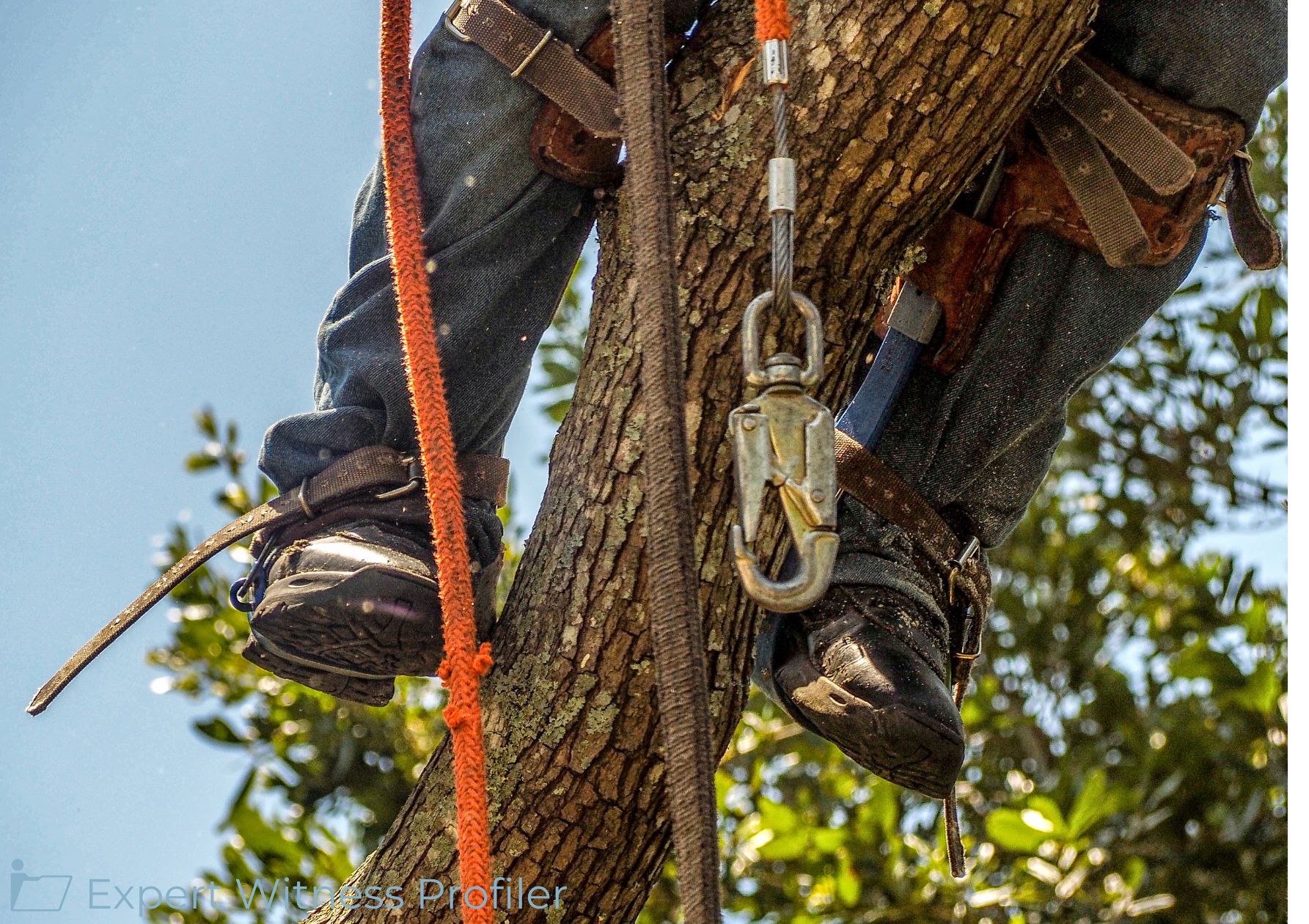
    Plaintiff George Land (“Land”) initiated a lawsuit against Rock Exotica, LLC, following a catastrophic fall while using the Unicender, a climbing device manufactured by the company. Land, an experienced arborist with two decades of experience, contended that the Unicender was defectively designed, which led to his accident. He alleged that during his ascent using the device in a double rope technique, it failed to operate as expected after he was struck by a falling tree section.

    To support his claims, Land designated Dr. James Glancey, a licensed professional engineer, as his expert witness. Glancey was expected to testify about the design and safety features of the Unicender, arguing that a guard could have prevented the injuries Land sustained during his fall. However, Glancey’s testing methods raised significant concerns, particularly as he did not replicate the conditions under which Land used the device. Instead, he conducted load tests using a single rope technique and failed to provide supportive evidence regarding the proposed guard’s efficacy, leading to questions about the reliability of his testimony.

    In response, Rock Exotica filed a motion to exclude Glancey’s testimony under the Daubert standard, asserting it was not based on sufficient data or reliable methods.

    Mechanical Engineering Expert Witness

    Dr. James Glancey holds a Ph.D. in mechanical engineering from the University of California, Davis and is a licensed professional engineer with over 20 years of experience in the field. Furthermore, he has published more than 50 engineering articles and has served as an expert in over 200 product-related matters.

    Get the full story on challenges to James Glancey’s expert opinions and testimony with an in-depth Challenge Study. 

    Discussion by the Court

    Dr. James Glancey was expected to opine on the design and safety features of the Unicender, arguing that the lack of a guard could be considered a design defect contributing to Land’s injuries during his climbing accident.

    A. Glancey is Unqualified

    Rock Exotica challenged Glancey’s qualifications, noting that although he has extensive experience in mechanical design, he has never worked in the arborist industry. The defense emphasized that Glancey has never designed or studied arborist climbing devices, stating:

    • He compared the guard to helmets or chisels with shields but could not identify any climbing tools with similar safety features.
    • His familiarity with safety mechanisms in other contexts does not translate directly to the climber’s needs or the functionality of the Unicender.
    • Furthermore, while he has a robust background in engineering, his lack of direct experience with the particular use case and context of the Unicender significantly undermines his credibility.

    B. Glancey’s Opinions are Unreliable

    1. Untested and Unengineered Concepts

    Glancey proposed that a guard could prevent the injuries sustained by Land. However, his testimony lacked the reliability required by the Court.

    a) No Prototypes or Drawings

    Glancey did not produce any design drawings or prototypes related to the guard or alternative safety mechanisms. He failed to demonstrate a clear understanding of how such a guard would be integrated or function in the context of the Unicender.

    b) Lack of Testing

    He conducted tests using a single rope technique and failed to test the device under the double rope technique, which was used by Land at the time of the accident. This omission leaves his conclusions unsubstantiated and speculative.

    2. Failure to Establish Causation and Feasibility

    Rock Exotica argued that Glancey’s opinions did not establish a reliable causal link between the alleged design defect and Land’s injuries.

    a) No Evidence of Impact on Safety

    Glancey did not provide data or analysis demonstrating how the proposed guard could have altered the outcome of the incident. He acknowledged that his design concepts were theoretical at best and did not address how they would consistently prevent accidents in real-world scenarios.

    b) Inability to Quantify Risks

    The expert failed to conduct a comprehensive risk analysis or evaluate how the guard might interact with the conditions that led to Land’s fall. Without empirical assessments or data-driven insights, his conclusions cannot be considered valid under Daubert.

    Analysis

    The Court held that Glancey is qualified to opine about design defects in the Unicender. His mechanical-engineering background and familiarity with product testing show that he possesses specialized knowledge to analyze how a climbing device functions under various loads.

    The Court concluded that Glancey’s opinions were inadequate to support Land’s claims in this case. His failure to generate testable and reliable alternative designs, lack of empirical evidence for his assertions, and inability to connect his proposed modifications to safety improvements rendered his testimony speculative.

    The Court found that without supporting documentation or design specifications, Glancey could not meet the burden of proof established under Daubert, leading to the exclusion of his testimony and summary judgment in favor of Rock Exotica.

    Glancey’s expertise allowed him to assert that Rock Exotica’s engineering and testing procedures were less structured compared to other manufacturers and his testimony established a duty to manufacture products safely. However, the Court ruled that there’s nothing to tie that failure to the harm that Land suffered.

    Held

    The Court granted Rock Exotica’s motion to exclude Plaintiff’s mechanical engineering expert witness, Dr. James Glancey’s opinions concerning
    the ability of a Unicender device to support certain amounts of weight and an alternative design for the Unicender. The motion was otherwise denied as moot.

    Key Takeaway:

    In this case, Land hangs his hat on Glancey’s testimony to create factual disputes. However, Glancey did not produce a design prototype or any
    drawings of a guard, nor did he run tests with the Unicender and a guard. Basically, engineering experts routinely rely on conceptual alternatives to highlight potential design shortcomings. Expert testimony about alternative designs requires more than an inventive mind. It requires real science.

    Case Details:

    Case Caption: Land V. Case Rock Exotica, LLC
    Docket Number: 2:23cv4627
    Court Name: United States District Court for the Eastern District of Pennsylvania
    Order Date: April 16, 2025
  • Sociology Expert is not Qualified to Offer opinions on the Propriety of an Appraisal

    Sociology Expert is not Qualified to Offer opinions on the Propriety of an Appraisal

    Plaintiffs Nathan Connolly and the Estate of Shani Mott (collectively “Plaintiffs”) alleged that Defendants Shane Lanham and 20/20 Valuations, LLC (collectively “Defendants”) racially discriminated while performing an appraisal of Plaintiffs’ home.

    Defendants have counter-sued for defamation. Each party has offered an expert to provide testimony regarding the propriety of Defendants’ appraisal of Plaintiffs’ home. Plaintiffs sought to strike what they believe is an impermissible sur-rebuttal by Defendants’ appraisal expert, Tobias Peter. Defendants sought to exclude the opinions of Plaintiffs’ appraisal expert, Dr. Junia Howell in their entirety.

    Housing Expert Witness

    Tobias Peter is a senior fellow and the codirector of the American Enterprise Institute’s Housing Center, where he focuses on housing risk and mortgage markets. Working closely with Edward Pinto, codirector of the AEI Housing Center, Peter has coauthored a variety of reports on housing policy, specifically on the impact of federal policy on housing demand and homeownership, housing finance risks, and first-time home buyers.

    He has a master’s in public policy from the Harvard Kennedy School and a bachelor’s degree in history and applied economics from the College of St. Scholastica.

    Get the full story on challenges to Tobias Peter’s expert opinions and testimony with an in-depth Challenge Study.

    Sociology Expert Witness

    Dr. Junia Howell is a visiting Assistant Professor of Sociology at the
    University of Illinois, Chicago. She obtained a Ph.D. in Sociology from Rice
    University in 2017.

    Her research interests include urban sociology, race and ethnicity,
    inequality and mobility, and quantitative methodology. She has published several articles about race and housing.

    Want to know more about the challenges Junia Howell has faced? Get the full details with our Challenge Study report.

    Discussion by the Court

    Plaintiffs’ Motion To Strike

    Plaintiffs have asked this Court to strike a supplemental report by Defendants’ appraisal expert, Tobias Peter, as an improper sur-rebuttal.

    Plaintiff’s rebuttal expert reports— including a report written by Junia Howell in rebuttal to a report by Defendants’ expert, Peter—were due on September 4, 2024.

    Howell’s rebuttal report, which featured substantial data analysis, and its underlying materials was submitted to the Defendants on the due date. Defendants deposed Howell on September 11, 2024. The following day, September 12, 2024, Defendants sent Plaintiffs a thirteen-page document styled as a “supplement” by Peter, which responded to Howell’s data analysis.

    Howell filed her opening report in June, 2024, which consisted of an analysis of Defendants’ appraisals over several years, comparing their work in White neighborhoods to their work in otherwise similar non-White neighborhoods. Defendants’ opening expert reports were due in August, 2024. Their expert, Peter, refuted Howell’s analysis by comparing it to an automated valuation model (“ AVM”) and stating that he believed her findings were without foundation.

    Defendants also provided Peter’s underlying data to Plaintiffs. In her September 4, 2024 rebuttal report, Howell used AVM data she created from publicly available information from Zillow.com (Zestimates).

    Analysis

    Essentially, Defendants argued, “it was not possible for Defendants’ expert to address and rebut Plaintiffs’ expert’s opinions on the Zillow AVM data until after Plaintiffs’ expert disclosed her opinions.” But perhaps more important, the deadline to supplement Rule 26(e)(2) expert disclosures was one week after the last expert deposition. The Defense provided Plaintiffs with Peter’s supplement well before that deadline, and over a month before Peter’s deposition.

    This Court agreed that the supplement was both timely given the parties’ agreed-upon schedule and appropriate under the circumstances. Peter responded to previously unraised arguments that he could not have responded to in his initial report. By submitting his supplement well before his own deposition, Plaintiffs had the opportunity to question him regarding the supplement.

    Defendants’ Motion To Exclude

    Howell issued her opening report on June 21, 2024. She conducted a data analysis of 1,996 appraisals performed by Defendants and compared them with each other and with other appraisers’ work.

    Howell described her report as essentially divided in three sections:

    “So the first bucket is looking just at Lanham’s appraisals and looking to what extent there is a racial difference.

    The second bucket is looking at his appraisals compared to another evaluation of the neighborhood. And that has like — that has four different ways of looking at that. One of those is FHFA data. One is his own evaluations of neighborhood median income. One is now added from the rebuttal, the AVM, and the fourth is the contract price. So that’s that middle bucket.

    The third bucket are examining to what extent his patterns of behavior in selecting comps and making adjustments are also racialized.”

    “Buckets” One and Two

    Defendants argued that errors in Howell’s analysis rendered her conclusions irrelevant, and they thus should be excluded under Rule 702.

    Howell used a regression model to conclude that “Defendant[s] systematically appraised homes in census blocks of color as less valuable than comparable homes in comparable White census blocks.”

    As a general matter, Howell found, homes in predominantly White neighborhoods in the Baltimore area sold for $165,000 more than comparable homes in neighborhoods predominantly populated by non-White people. Howell’s first opinion was, essentially, that Defendants generally appraised homes in White neighborhoods as more valuable than comparable homes in non-White neighborhoods.

    Howell offered five opinions within her second “bucket.” Each of those opinions tends to support the theory that Defendants appraised homes in non-White neighborhoods at a lower value than average, and homes in White neighborhoods at a higher value than average.

    Defendants argued that to the extent there is a differential between Defendants’ appraisals in White and non-White neighborhoods, such a differential exists for all appraisals, and it is therefore misleading to use this statistic alone to suggest that Defendants discriminated against non-White homeowners.

    Rather than striking her testimony, the Court believed the better course of action is to weigh at summary judgment if Howell’s analysis is sufficient to create a genuine issue of material fact regarding whether the Defendants appraised Plaintiffs’ home in a racially discriminatory manner.

    Bucket” Three

    Howell opined that Defendants did not comply with the Uniform Standards of Professional Appraisal Practice (USPAP), which Maryland appraisers are required to follow, and their own practices in other appraisals.

    She continued that had they followed USPAP and their own standard practices, their valuation would have been over $600,000.

    Plaintiffs rejoin that Howell’s research on housing qualifies her to opine on appraisals. Because she is a leading expert on racial inequities in housing, they continue, and her research has included studies of appraisal practices, she has the experience required to opine on appraisals. She has spoken at conferences and written articles discussing appraisal.

    While this Court does not diminish Howell’s substantial expertise in housing, and even some aspects of appraisal, she is a sociologist, not an appraiser. While she certainly has expertise in sociology such that it is proper for her to offer statistical analysis regarding appraisals, she is not qualified to offer opinions on the propriety of an appraisal (including the specific selection of comparative properties and making adjustments) or an appraisal’s compliance with professional standards.

    By contrast, the Court held that Howell may permissibly opine that, based on her statistical analysis, Defendants deviated from their general practices in conducting this appraisal. She of course may not opine as to what Defendants should have done in the appraisal, but Plaintiffs made clear that she is not making any normative argument. As above, Defendants’ critiques of the approach Howell took in her assessment bear on its usefulness in determining whether summary judgment is warranted, and potentially whether liability is appropriate. The Court will consider those arguments in assessing whether Howell’s opinion contributes to the creation of a genuine issue of material fact.

    Held

    • The Court denied the Plaintiffs’ motion to strike a supplemental report by Defendants’ appraisal expert, Tobias Peter, as an improper sur-rebuttal.
    • The Court granted the motion to exclude Junia Howell’s opinions insofar as it applied to Howell opining on the validity of the appraisal of Plaintiffs’ home and whether that appraisal comported with professional standards or norms for appraisers. The motion was denied as to Howell’s opinions based on her statistical analysis comparing Defendants’ work in White neighborhoods with their own work in non-White neighborhoods and comparing Defendant’s work in non-White neighborhoods to the work of other appraisers.

    Key Takeaway:

    This Court does not find that an expert must always be a certified appraiser to opine on any facet of appraising. But even under a standard favoring inclusion, this Court cannot find that Howell is qualified to assess whether an appraisal was done in a manner consistent with professional standards and regulations without having ever conducted an appraisal or been subject to those standards.

    Case Details:

    Case Caption: Connolly Et Al V. Lanham Et Al
    Docket Number: 1:22cv2048
    Court Name: United States District Court, Maryland
    Order Date: April 17, 2025
  • Engineering Expert’s Opinion on Cost Estimates Admitted

    Engineering Expert’s Opinion on Cost Estimates Admitted

    The Great Lakes Insurance Company issued a policy of insurance (the “Policy”) to Gulf Coast Bank and Trust (“Gulf Coast”) covering specific buildings owned by BRH Consultants, specifically, the Burbank Landing Apartments.

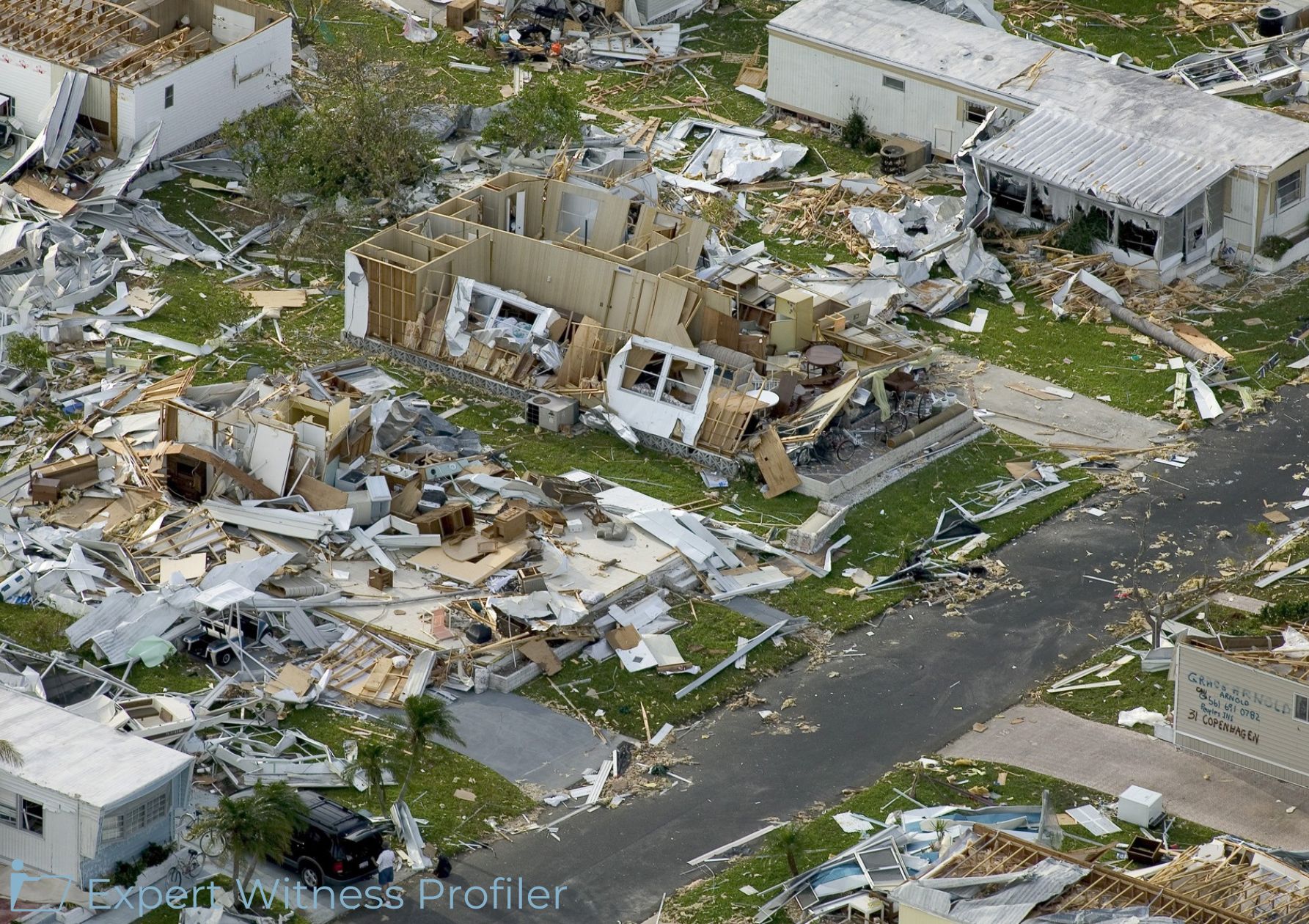
    Subsequently, BRH alleged that on August 29, 2021, Hurricane Ida caused damage to Buildings 1 and 2 of the property. Following this event, on September 9, 2021, a claim for damages resulting from the storm was submitted against the Policy.

    While Great Lakes paid certain sums under the Policy, the Plaintiff, BRH, claimed that these payments “were totally inadequate to pay the covered damage” to the property. Conversely, Great Lakes alleged that it had paid all sums due and contended that the claimed damages were not caused by Hurricane Ida and, therefore, fell outside the scope of coverage of the Policy.

    To substantiate its claim, BRH submitted the expert report of Dr. Jerry Householder, whom BRH described as “an accomplished engineer, construction professional, professor, author, and expert.” Nevertheless, Great Lakes filed a motion to exclude Householder as an expert in this case.

    Engineering Expert Witness

    Jerry Householder has a PhD in engineering and has been a licensed professional engineer since 1971. As an engineer, he has been the designer of record on over two billion dollars worth of constructed facilities, and as a contractor, he has constructed over one thousand projects.

    Householder was the Department Chairman of the Department of Construction Management at LSU, where he held a Distinguished Professorship in the College of Engineering. He has written eight books on construction that have been translated into several foreign languages.

    Want to know more about the challenges Jerry Householder has faced? Get the full details with our Challenge Study report.

    Discussion by the Court

    Rule 26(a)(B)(2) Deficiencies

    Great Lakes complained that Householder’s 2-page report is “wholly devoid of any analysis linking the facts of this case to his conclusory opinions.”

    While the report is short, the Court declared that it is clear from context that Householder used his extensive education and experience along with his review of the photographs and reports mentioned at pages 1 and 2 of his report to reach his conclusion that the cost estimates listed on page two of the report “are reasonable.”

    Furthermore, Householder expanded on his report in his extensive deposition and in a subsequent declaration.

    To the extent that Great Lakes feels it was surprised by any new information in Householder’s Declaration (which came after his deposition), the Court will allow for a follow up deposition of Householder limited to matters raised for the first time in his Declaration, if there are any.

    Methodology

    Great Lakes argued that Householder’s “report lacked crucial information concerning what methodology, if any, was used to produce those estimates” and “failed to explain how his expertise allowed him to arrive at his opinions.”

    Householder explained in his report that he “inspected the project on more than one occasion and reviewed numerous photographs” and reports which he itemized.

    Furthermore, Householder was questioned extensively at his deposition and, in addition, submitted a clarifying declaration. Therefore, the Court believed Householder’s methodology of applying his experience and professional training to the reasonableness of the costs items is a sufficient methodology.

    Great Lakes complained that Householder “did not inspect the [p]roperty, nor did he perform an independent analysis of the damage to the [p]roperty”. Instead, he relied on information provided by owner and others and did not “verify” the estimates. But this Court and others have held that physical inspection of the property by the testifying expert is not required in order for an expert to opine on the subject property as long as he was provided with underlying data sufficient to provide a basis for his opinions.

    Regarding Great Lakes’ argument that Householder was required to verify the data provided by his client and not rely on its accuracy for purposes of his expert testimony, this Court and others have rejected such an argument.

    Sufficiency of Foundation

    Great Lakes argued that Householder’s opinions lacked a sufficient foundation because he “relied on insufficient facts and data,” namely, the “limited, inaccurate, undocumented, and/or selfserving, representations of the [p]roperty’s owner . . . .”

    However, the Court carefully reviewed Householder’s report and found that there is a sufficient foundation for Householder’s opinions.

    But Great Lakes’ attack on sufficiency is really an attack on Householder’s reliance on what it alleges are the “limited, inaccurate, undocumented, and/or self-serving, representations of the [p]roperty’s owner . . . .”

    According to the Court, the alleged weaknesses, insufficiencies, inconsistencies, and inaccuracies of Householder’s opinions and the data upon which he relied may be tested by the Defendant on cross examination before the jury.

    Held

    The Court denied the Defendant Great Lakes Insurance SE’s Daubert motion to exclude the testimony of Dr. Jerry Householder.

    Key Takeaways:

    • In determining a party’s compliance with Rule 26, the Court may consider the information gathered in the deposition taken after the report which supplements or explains more fully the information conveyed in the report. The Court found that the original report, especially when supplemented and clarified by Householder’s extensive deposition and his declaration, met the criteria of Rule 26(a)(2)(B).
    • It is evident that Householder did not merely rely on assumptions but, viewing the photographs and reports of others and relying on his pre-Ida inspections of the property and his extensive experience in construction costs, concluded that the estimates provided were reasonable.

    Case Details:

    Case Caption: Gulf Coast Bank And Trust Company Et Al V. Great Lakes Insurance SE
    Docket Number: 3:23cv1444
    Court Name: United States District Court for the Middle District of Louisiana
    Order Date: April 16, 2025
  • Court Limits Psychiatry Expert’s Testimony, Citing Reliability Concerns 

    Court Limits Psychiatry Expert’s Testimony, Citing Reliability Concerns 

    Kevin Brent Buchanan had been charged with making threatening interstate communications. Specifically, the charges stemmed from five voicemails he allegedly left. The Government alleged that Buchanan recorded these voicemails from Utah. These voicemails, sent in late October 2023, targeted an organization that was headquartered in the District of Columbia.

    To defend himself, Buchanan designated Dr. Glen E. Johnson as an expert witness. Johnson is a board-certified psychiatrist. Evidently, he was expected to testify about Buchanan’s mental state. This testimony would relate to the time of the alleged offenses.

    Johnson was prepared to testify that Buchanan suffered from severe PTSD and recurring panic disorder. According to Johnson, Buchanan’s diagnoses means that Buchanan is prone to react reflexively and with poor impulse control. Johnson also stated that Buchanan “has never demonstrated any violence” or “following through with threats,” and he “poses no risk to anyone.” However, Buchanan has not submitted an expert report from Johnson, and neither his expert disclosure notice nor the accompanying attachments clearly set out the bases and reasons for Johnson’s opinions.

    Consequently, the Government filed a motion in limine requesting an order precluding Buchanan from offering evidence or argument at trial in support of a diminished capacity defense.

    Psychiatry Expert Witness 

    Dr. Glen E. Johnson graduated medical school 54 years ago and has spent the past 54 years in the field of psychiatry. Johnson has been an independently practicing psychiatrist for 47 years. Moreover, he became board-certified nearly 46 years ago. Johnson was a clinical instructor at the University of Utah Medical Center, Department of Psychiatry, for twelve years. Additionally, he was chairman of the Pioneer Valley Hospital Department of Psychiatry from 1986 through 1988, and has otherwise been affiliated with that hospital for 47 years.

    Want to know more about the challenges Glen Johnson has faced? Get the full details with our Challenge Study report.

    Discussion by the Court 

    Johnson’s proffered expert witness testimony about Buchanan’s reflexive and impulsive reactions could be relevant and helpful to the jury’s assessment of whether Buchanan had the requisite mens rea to commit the crimes with which he is charged in this case.

    i. Reliability 

    First of all, Johnson must not express an expert opinion to the jury about whether Buchanan was “unable to formulate the requisite specific intent to violate the statutes pursuant to which he is charged in the indictment.” 

    In other words, the Court held that a core part of the proffered expert opinion testimony described in Buchanan’s witness designation is plainly inadmissible.

    Second, Buchanan’s expert disclosure statement omitted necessary details about the scope of and basis for any other expert opinions that Johnson might be prepared to offer.

    Moreover, the Court observed that Buchanan’s opinion witness designation suggested that he may be planning to call Johnson both as a lay witness and as an expert witness, but Buchanan failed to delineate which topics Johnson will address as a lay witness and which he will address as an expert

    ii. Qualifications 

    The government argued that Johnson’s background lacked specific experience in forensic psychiatry, questioning the relevance of his testimony in assessing Buchanan’s mental state at the time of the alleged offenses.

    However, the Court noted that Johnson was qualified in general-practice psychiatry due to his decades of practice and board certification in that field.

    Therefore, the Court focused on whether Johnson’s experience and board certification in general-practice psychiatry were sufficient to provide expert testimony on Buchanan’s mental health, diagnoses, and related symptoms.
    According to the Court, if Johnson qualifies, his testimony will need to closely adhere to his expertise as a psychiatrist. In other words, he must testify based on expertise. However, the Court deferred final ruling on the reliability and admissibility of this testimony until after the forthcoming evidentiary hearing.

    Held 

    The Court granted in part, denied in part, and held in abeyance in part the government’s motion in limine .

    Specifically: 

    • The Court precluded Dr. Glen Johnson from opining on whether Buchanan did or did not have a mental state that constitutes an element of the crimes charged, including an opinion about whether he was capable of forming that mental state. 
    • Buchanan was ordered to produce a revised Rule 16(b)(1)(C) expert disclosure statement on or before April 25, 2025, containing “a complete statement” of all expert opinions that Buchanan intends to elicit from Johnson.
    • An pretrial evidentiary hearing was set to evaluate Johnson’s qualifications as an expert in general-practice psychiatry and the exact scope for any expert opinion testimony that Johnson intends to offer that would be admissible at trial.
    • Buchanan was allowed to introduce lay witness opinion testimony that is relevant to whether Buchanan was conscious of wrongdoing at the time of the alleged acts for which he is charged in this case.
    • The Court deferred final ruling on the admissibility under Federal Rule of Evidence 403 of the evidence at issue in the Government’s motion until the relevant issues arise at the forthcoming evidentiary hearing or at trial.

    Key Takeaway:

    Expert testimony regarding a Defendant’s mental state is strictly limited. Experts cannot offer opinions on whether the Defendant possessed the required mental state to commit the crime; their testimony must focus on diagnoses, the basis for those diagnoses, and the characteristics of relevant mental conditions.

    Case Details:

    Case Caption: United States V. Buchanan
    Docket Number: 1:24cr256
    Court Name: United States District Court for the District of Columbia
    Order Date: April 14, 2025


  • Electrical Engineering Expert’s Testimony Addressing the Coverage Gap Admitted

    Electrical Engineering Expert’s Testimony Addressing the Coverage Gap Admitted

    Puerto Rico Telephone Company (“Plaintiff” or “Claro”) brought this suit against the Municipality of Aguada, Hon. Christian Cortés-Feliciano, in his capacity as Mayor of the Municipality of Aguada, and Wesley Vega, in his capacity as Planning Director of the Municipality of Aguada (“Defendants” or “the Municipality”), for alleged violations of Federal Telecommunications Act of 1996 (“TCA”) based on Defendants’ denial of an application to install fiber optic cables and poles in the Municipality of Aguada in Puerto Rico.

    Defendants challenged Plaintiff’s expert report prepared by Engineer Ricardo Matos-Acosta (“Eng. Matos-Acosta”), which they argue did not comport with Federal Rule of Evidence 702.

    Electrical Engineering Expert Witness

    Ricardo Matos-Acosta concentrated his practice in the following areas: electrical engineering, design, optimization, and planning of radio frequency (“RF”) wireless networks for voice, data, video and internet.

    He completed a Master’s in Electrical Engineering at the Polytechnic University of Puerto Rico.

    Get the full story on challenges to Ricardo Matos Acosta’s expert opinions and testimony with an in-depth Challenge Study. 

    Discussion by the Court

    Initially, the Defendants argued that Eng. Matos-Acosta’s report did not have any citation to “relevant scientific authorities that validate or otherwise support the methodology being employed” in the report, thus alleging a violation of Federal Rule of Evidence 702. Specifically, Matos-Acosta was hired to conduct an analysis of the current wireless service coverage in the Municipality of Aguada around a site that Claro identifies as “AGD1622,” where there is an existing tower.

    Furthermore, the purpose of his report was to identify the existence of a coverage gap and the alternatives to addressing it. In his defense, Matos-Acosta stated in his sworn affidavit accompanying the report that he utilized his twenty-nine years of experience in electrical engineering, design, optimization, and planning of radio frequency (“RF”) wireless networks, in particular, his work experience in wireless systems for Claro since 1995, in preparing said report.

    Analysis

    To begin with, Eng. Matos-Acosta collected data from Claro’s Element and Network Management Server (the “ENM Server”) during a one-week period in October of 2023 to assess the RF wireless coverage and user experience in Aguada’s Río Grande sector. Moreover, Eng. Matos-Acosta explains each industry term used or relied on in his report. Finally, he provided numerous maps which demonstrated that signal levels in the subject area failed to meet Claro’s service-level standards, thereby supporting his opinion that said levels are insufficient to serve their customers in the area.

    Upon review, a reading of his report makes clear that he gathered data, conducted various tests, and evaluated the findings using his experience in the telecommunications industry to determine whether a coverage gap exists and what options are available to address said gap. In contrast, the Municipality has not provided any testimony or expert opinion to rebut Claro’s showing that a significant gap in coverage exists. Most significantly, the Court held that the Municipality’s Daubert challenge did not point to specific parts of the report that were insufficient or articulate what about Eng. Matos-Acosta’s methodology is not in conformance with widely accepted industry methodologies, practices, and parameters. Instead, it attacks it broadly as unsupported by citations.

    Held

    The Court denied the Defendants’ Daubert motion to exclude Plaintiff’s expert Ricardo Matos-Acosta.

    Key Takeaway:

    Ricardo Matos-Acosta provided numerous maps which demonstrated that signal levels in the subject area failed to meet Claro’s service-level standards to support his opinion that said levels are insufficient to serve their customers in the area. Thus, a reading of his report makes clear that he gathered data, conducted various tests, and evaluated the findings using his experience in the telecommunications industry to determine whether a coverage gap existed and what options were available to address said gap.

    Case Details:

    Case Caption: Puerto Rico Telephone Company V. Municipality Of Aguada Et Al
    Docket Number: 3:22cv1315
    Court Name: United States District Court, Puerto Rico
    Order Date: March 31, 2025
  • Maritime Expert’s Opinion on the Preferred Engine Manufacturer is Based on Hearsay Statements

    Maritime Expert’s Opinion on the Preferred Engine Manufacturer is Based on Hearsay Statements

    This case concerns naval architecture, marine engineering, and a motor vessel called the “Pickle” or the “Pickle Rick.” Plaintiffs Intrepid Oceans Marine, LLC (“IOM”), Intracoastal Marine Fuel, LLC (“IMF”), and Intrepid Tankers, LLC (“IT”) (collectively, “Plaintiffs”) are retailers of marine petroleum in Palm Beach County, Florida. Defendant JMS Naval Architects, LLC (“Defendant”) is a licensed naval architect and marine engineering firm.

    Plaintiffs planned to own and operate a tank barge in furtherance of IOM’s marine petroleum business. On March 27, 2019, IOM contracted with Defendant to design and construct a 10,000 Gallon Double Hull Tank Barge (the “Pickle”). On June 18, 2020, IMF contracted with St. John’s Ship Building, Inc. (“SJSB”) to construct the Pickle. The Pickle was completed on or about February 21, 2022. 

    Plaintiffs alleged that after they took possession of the Pickle, they discovered significant problems with the performance of the propulsion system. 

    The Plaintiffs sued the Defendant for breach of contract and professional negligence, claiming the Defendant’s errors and omissions in naval design, engineering, and owner’s representation caused them significant financial losses.

    Defendant sought to introduce the opinions of its two experts, Captain Christopher Karentz, a senior maritime consultant, and Bryan E. Strawbridge, P.E., CFEI, CVFI, a senior mechanical engineer. Plaintiffs have moved to exclude portions of both experts’ testimony.

    Maritime Expert Witness

    Captain Christopher Karentz has over forty (40) years of experience within the marine industry, including evaluation of collisions, allisions, ship, yacht, and small vessel systems failures, human factors related to losses, and incidents involving proper or improper observance of best marine practices.

    Karentz has been qualified in both State and Federal courts to testify in areas of expertise including but not limited to marine navigation, vessel operations, crewing, management, vessel cargo, and charter operations.

    Get the full story on challenges to Captain Christopher Karentz’s expert opinions and testimony with an in-depth Challenge Study.

    Mechanical Engineering Expert Witness

    Bryan E. Strawbridge, P.E. is a senior mechanical engineer whose experience covers mechanical system failures, including marine engines and vessels; marine propulsion and auxiliary power; marine diesel engines; and more.

    Want to know more about the challenges Bryan Strawbridge has faced? Get the full details with our Challenge Study report.

    Discussion by the Court

    A. Captain Christopher Karentz

    Whether IOM selected the engines under the advice of Cox and Peterson

    Plaintiffs first moved to preclude Captain Karentz from offering his opinion that IOM selected the engines under the advice of Cox (the engine manufacturer), and Peterson Fuels.

    Captain Karentz formed this opinion from his review of email communications between the parties and from his discussions with Defendant.

    According to the Court, whether Plaintiffs selected the engines under the advice of Cox and Peterson Fuels is an issue of fact for the jury to determine after considering the evidence presented. This evidence includes the emails between Plaintiffs and Defendant. Karentz was not a party to these communications. And deciding whether these emails show that Plaintiffs selected the engines under the advice of third parties does not require specialized knowledge. 

    For these reasons, the Court held that Defendant has not met its burden to establish that allowing Captain Karentz to opine on this disputed fact would be helpful to the jury.

    Whether IOM communicated with Cox and presented Cox to JMS as its preferred engine manufacturer

    Plaintiffs moved to exclude Captain Karentz from offering his opinion that IOM communicated with Cox and presented Cox to Defendant as Plaintiffs’ preferred engine manufacturer.

    Again, however, the Court held that these statements are not expert opinions. These are findings of fact that invade the province of the jury. Captain Karentz stated at his deposition that he formed his opinion based on his impression from his discussions with Defendant. Captain Karentz’s proffered expert testimony is not based on specialized knowledge; it is based on hearsay statements from Defendant.

    The jury can weigh the trial evidence, including any admissible testimony from Defendant, to determine whether Plaintiffs communicated with Cox and whether Plaintiffs presented Cox to Defendant as the preferred engine manufacturer. 

    Whether Cox and/or SJSB had any responsibility to determine the suitability of the engines for application on the propulsion system of the Pickle

    Plaintiffs next sought to exclude Captain Karentz from opining that Cox or SJSB had any responsibility to determine the suitability of the engines for the Pickle’s propulsion system.

    In the expert report, Captain Karentz opined that “[a]s the designer and manufacturer of the subject motors, COX is the most knowledgeable entity to know if their motors were suitable.”

    Plaintiff argued that Captain Karentz’s opinion should be excluded because Captain Karentz “is not a naval architect or marine engineer” and because his opinion “is pure speculation that is contradicted by the record evidence.”

    During his testimony, Captain Karentz demonstrated his extensive expertise operating marine vessels and managing fleets; retaining and interacting with naval architects and shipbuilders; and helping to draft specifications for building and refitting vessels, as well as overseeing the related contracts.

    The Court held that Captain Karentz’s testimony on this topic is neither speculative nor unreliable because his testimony is grounded in his relevant technical and specialized experience. His testimony assisted the jury in understanding the evidence to determine a fact in issue: who—Defendant, engine manufacturer, or vessel builder—bore responsibility to ensure that the engine would work as applied on the Pickle Rick.

    The Standard of Care of JMS as a Naval Architect and Marine Engineering Firm

    Plaintiffs next sought to exclude Captain Karentz from testifying as to Defendant’s standard of care as a naval architect and marine engineering firm, and to preclude Captain Karentz from rebutting Plaintiffs’ expert’s opinion that Defendant breached the applicable standard of care in this matter.

    Plaintiff argued that Captain Karentz is unqualified to testify on this issue because he is not a naval architect or marine engineer. Plaintiff also argued that Captain Karentz did not apply “any reasonably accepted standard of care in the naval architect and marine engineering industries.”

    Based on Captain Karentz’s testimony at the hearing on this motion, the Court held that his opinions on this issue are primarily about industry norms, contractual duties, and business obligations. Captain Karentz’s testimony concerned the typical role and behavior of a naval architect and marine engineering firm in the process of designing, building, and testing a vessel—that is, whether Defendant, as the naval architect and marine engineer, bore any responsibility to ensure the engines were suitable for the Pickle Rick.

    The Court found Captain Karentz qualified to testify about Defendant’s responsibility on this issue.

    Regarding whether either party can offer expert testimony as to the legal standard of care in this matter, the Court reserved its ruling.

    Bryan E. Strawbridge, P.E., CFEI, CVFI

    Plaintiffs moved to exclude Strawbridge from offering opinions about the Cox CXO300 engines themselves, including Strawbridge’s opinion that it should have been possible to tune the engines to operate on a displacement hull such as the Pickle Rick. Plaintiffs argued that Strawbridge is not qualified to opine on these particular engines, and that Strawbridge’s opinion on the “tunability” of the engines is purely speculative.

    The Court found Strawbridge qualified when he testified at the hearing about the different ways that engines can be tuned or fitted to a vessel, such as through the engine’s software or making certain physical adjustments. Furthermore, Strawbridge spoke at length about the scientific methodology he applied—explaining, for example, how conducting sea trials results in a wealth of data for experts to review.

    That said, Strawbridge himself stated during the hearing that he did not have access to enough data to support the conclusion that it should have been possible to tune the Cox engines to operate on a displacement hull such as the Pickle Rick. Strawbridge stated that although he applied the scientific method to analyze the situation, he did not personally have prior experience assessing dual diesel outboard engines, he was not permitted to join in troubleshooting the engines, and he did not have access to data from the vessel’s sea trials.

    Without sufficient data, the conclusion that it should have been possible to tune the CXO300 engines is speculative. Because this lack of information has resulted in an unreliable methodology, the Court held that the Defendant has not met its burden of proof to establish the reliability of this expert opinion.

    Held

    The Court granted in part, denied in part and reserved in part Plaintiffs’ motion in limine to exclude certain opinions of Defendant’s experts, Captain Christopher Karentz and Bryan E. Strawbridge, P.E.

    Key Takeaway:

    While Strawbridge spoke at length about the scientific methodology he applies, he did not personally have prior experience assessing dual diesel outboard engines, he was not permitted to join in troubleshooting the engines, and he did not have access to data from the vessel’s sea trials.

    Case Details:

    Case Caption: Intrepid Oceans Marine, LLC V. JMS Naval Architects, LLC
    Docket Number: 9:22cv81964
    Court: United States District Court, Florida Southern
    Order Date: February 24, 2025
  • Safety Engineering Expert  Allowed to Opine on Codes and Industry Standards

    Safety Engineering Expert Allowed to Opine on Codes and Industry Standards

    On January 22, 2022, Sharon Marshall was dining at an Outback Steakhouse in Fort Smith, Arkansas, when she slipped, fell, and received serious injuries. She alleged that she slipped on soup that had spilled in the floor which Outback had negligently failed to clean up.

    Outback has filed motions to exclude or limit the testimony of two of Marshall’s expert witnesses: Dr. Brian Goodman, who is one of her treating physicians, and Jason English, who is an industrial and safety engineer.

    Pain Medicine Expert Witness

    Brian Goodman, M.D. is a board-certified physician in pain medicine and
    anesthesiology. He completed a fellowship in pain medicine. He frequently treats patients suffering from pain caused by slip-and-falls.

    Get the full story on challenges to Brian Goodman’s expert opinions and testimony with an in-depth Challenge Study.

    Safety Engineering Expert Witness

    Jason English is a safety engineer who has two and a half decades of experience as a consultant who performs accident cause analysis, including fall protection and prevention from elevation as well as from the same level.

    Want to know more about the challenges Jason English has faced? Get the full details with our Challenge Study report.

    Discussion by the Court

    A. Motion to Limit Testimony of Plaintiff’s Treating Physician Brian Goodman, M.D.

    Goodman is a physician who has been providing Marshall with pain management treatment for spinal injuries which she alleges were caused by her fall at Outback. Furthermore, Goodman has also been retained to offer opinion testimony as an expert witness in this case. Specifically, those opinions include the opinion that the spinal injuries and associated pain that he has been treating were caused or worsened by Marshall’s fall at Outback.

    However, Outback argued that Goodman should not be allowed to offer these opinions, for two reasons. Firstly, Outback contended that Goodman is not qualified to opine on what caused the injuries that are the subject of this case because he is not a spinal specialist, did not perform surgery in this case, and is not an orthopedic surgeon, neurologist, diagnostic radiologist, or biomechanical engineer. Secondly, Outback maintained that Goodman’s causation opinions are speculative and unreliable because they are based only on Marshall’s statements to him and not on “any sort of scientific analysis” nor on the review of “any additional medical records, depositions, photographs, or otherwise.”

    Analysis

    The Court found that Goodman was qualified to offer his opinions in this case. Specifically, he has been treating Marshall for pain that he believes was caused by the injuries that are the subject of this lawsuit.

    As for Outback’s second argument regarding the reliability of Goodman’s methodology: the Court believed his methods were sufficiently reliable to satisfy the requirements of Rule 702. Outback fixates on the relatively small number of materials Goodman reviewed during the first period when he was treating Marshall, during which time it seems he was relying primarily on her reports to him of her pain to inform his decisions and was unaware of significant parts of her medical history including possibly even the fact of her fall at Outback. However, the critical question for the admissibility of Goodman’s opinions in this case is not what he knew or didn’t know at the time he began treating Marshall, but rather what informed his opinions at the time that he offered them for purposes of this litigation.

    And Goodman has testified that before offering his most recent expert report in this case he reviewed many binders of materials containing Marshall’s medical history, both pre-fall and post-fall, and that his opinions in this case were informed by his review of those materials as well as his personal experience treating Marshall and her reports to him of her pain, and his experience treating patients with injuries from slip-and-falls more generally.

    Motion to Exclude Plaintiff’s Expert Jason English

    Marshall retained English to offer expert opinions about whether the spill caused her fall (he opines it did), and about whether Outback’s response to the alleged spill hazard and training of its employees to deal with such hazards was consistent with industry standards (he opines it wasn’t). Outback offered two arguments for excluding English’s opinions. First, they contended his opinions were not reliable. Second, they said his opinions were not specialized.

    Analysis

    Regarding reliability, Outback argued that English “is not a hospitality or restaurant expert,” and that his opinions are not based on any examination or testing of the specific floor and restaurant at issue in this case. On the first point, however, English holds a certification in the measurement and evaluation of pedestrian traction on walking surfaces, and is a member of the “ASTM International F13 Committee on Pedestrian/Walkway Safety and Footwear.” The Court determined that clearly has expertise in the topics on which he is opining.

    As for testing on the specific floor where Marshall fell, English testified that
    he saw no point in testing that floor. Instead, English based his analysis on the deposition testimony, photographs, and document discovery that were produced in this case.

    According to English, “the floor in this particular case is just a common commercial flooring found not only in restaurants but other types
    of commercial facilities as well.”

    Regarding whether English’s opinions are specialized: Outback insisted that “[t]here is nothing specialized, scientific, or particularly technical about his opinion. He has simply looked at all the evidence of record and come to a conclusion. The jury can do the same.”

    The Court disagreed. English’s report extensively discussed codes and industry standards around, for example, slip resistance, spills,
    warning signs, and cleaning methods, and opined that Outback failed to meet them. He also discussed the “authoritative literature” on “ordinary human
    factors” that can influence patrons’ awareness of hazards.

    Held

    The Court denied the Defendant Outback Steakhouse of Florida, LLC’s motion to limit testimony of Plaintiff’s treating physician Brian Goodman, M.D and motion to exclude Plaintiff’s expert Jason English.

    Key Takeaway:

    • Goodman took care to emphasize the difference between what information he relied on in forming his opinion of how to treat Marshall and what information he relied on in forming his opinions that were offered for purposes of this litigation.
    • English’s report extensively discusses codes and industry standards around, for example, slip resistance, spills, warning signs, and cleaning methods.

    Case Details:

    Case Caption: Marshall V. Outback Steakhouse Of Florida, LLC
    Docket Number: 2:23cv2119
    Court Name: United States District Court, Arkansas Western
    Order Date: April 11, 2025
  • Psychiatry Expert’s Testimony Rejected for Injecting Subjective Characterizations

    Psychiatry Expert’s Testimony Rejected for Injecting Subjective Characterizations

    On September 3, 2020, Plaintiffs Dalila Yeend and Bounnam Phimasone (together with Elvin Minaya Rodriguez, Lisa LaPointe, and Shantadewie Rhamee, “Plaintiffs”) commenced this action against Akima Global Services, LLC a/k/a AGS (“AGS” or “Defendant”) in New York State Supreme Court, asserting state law claims pertaining to their civil immigration detention at the Buffalo Federal Detention Facility (“BFDF”).

    On October 16, 2020, Defendant removed this action to federal court. Almost two years later, Plaintiffs Yeend and Phimasone filed an amended complaint with class action allegations and claims for unjust enrichment and violations of the Trafficking Victims Protection Reauthorization Act (“TVPRA”) and the New York Labor Law (“NYLL”).

    Defendant sought to preclude the testimony of Dr. Stuart Grassian and Dr. Michael Childers

    Psychiatry Expert Witness

    Dr. Stuart Grassian is a board-certified psychiatrist and former faculty member of Harvard Medical School with experience in “evaluating individuals who were in conditions of confinement in prisons, ICE detention facilities, and secure psychiatric hospitals[.]”

     He has authored articles on topics such as the psychiatric effects of solitary confinement and the effects of restricted and isolated conditions of confinement, and has previously provided expert testimony in cases regarding conditions of confinement.

    Get the full story on challenges to Stuart Grassian’s expert opinions and testimony with an in-depth Challenge Study.

    Industrial Engineering Expert Witness

    Dr. Michael Childers is a Professor in the Department of Labor Education at the University of Wisconsin-Madison, holds an M.S. and Ph.D. in workforce education and development and a B.S. in industrial engineering, and has worked on numerous “time studies” to assess “the time that should be allowed to perform work activities.”

    Want to know more about the challenges Michael Childers’ has faced? Get the full details with our Challenge Study report. 

    Discussion by the Court

    Dr. Stuart Grassian

    Grassian opines “to a reasonable degree of medical certainty, that for a reasonable person in the position that the Batavia detainees find themselves, and with the attitude, threats, and punishments inflicted on those who refused to work, the work program at ICE-Batavia is coercive in nature.” In addition, Grassian concluded that (i) “[t]he conditions of the detention center collectively amount to a deprivation scheme;” (ii) “AGS exploits detainees’ access to resources and safety in order to coerce workers into working for wages that few people would voluntarily accept;” and (iii) “to a reasonable degree of medical certainty the Voluntary Work Program (“VWP”) at Batavia was psychologically damaging and scarring for the detainees exposed to it.”

    Relevance

    Grassian’s report includes a lengthy recitation of selected record evidence, as well as references to the amended complaint. Indeed, of his less than fourteen-page report, approximately seven pages appear to be direct quotes from interview notes taken by Grassian’s assistant, witness declarations, depositions, and the amended complaint. Additionally, in multiple areas of his report, Grassian appears to inject his subjective characterizations of detainee testimony to bolster his conclusions regarding the VWP.

    The Court found that Grassian’s report largely recites testimony and characterizes it in a manner that is favorable to Plaintiffs and, thus, impermissibly “construct[s] a factual narrative based upon record evidence.”

    In addition, and most notably, the Court found that Grassian’s expected testimony would impermissibly “tell the jury what results to reach.”

    By opining that (i) “AGS exploits detainees’ access to resources and safety in order to coerce workers into working;” and that (ii) “the [VWP] at Batavia was psychologically damaging and scarring for the detainees exposed to it,” Grassian is essentially telling the jury that Defendant knowingly coerced participation in the VWP and that the detainees exposed to the VWP at the BFDF did, in fact, feel psychologically coerced.

    Dr. Michael Childers

    Childers was retained to (i) determine the work time necessary for the performance of certain VWP tasks; and (ii) calculate the amount BFDF detainees would have been compensated for performing those tasks had they been paid the minimum wage.

    Childers also used those work times to calculate what AGS would have had to pay its own non-detainee employees, making market wages, to do the same work performed by detainees in the VWP.

    i. Qualifications

    Defendant argued that Childers’ background in industrial engineering, education, and labor relations is not relevant to assessing required staffing levels and associated costs at a secure federal detention facility, and that Childers lacked the requisite specialized knowledge related to federal contracts, regulations, or detention facilities necessary to render opinions on those topics.

    Here, Defendant did not dispute that Childers held advanced degrees in workforce education and development. Childers’ curriculum vitae indicated that he is currently teaching courses on topics such as “contract costing, budget and financial analysis, . . . and stopwatch time study.” Defendant also did not dispute Childers’ attestation that he has “conducted hundreds of time studies in manufacturing, warehousing, service, and government organizations.”

    Additionally, Childers has previously provided expert deposition testimony in a number of cases, many involving labor law claims.

    Childers utilized resources that are common in the field in which he holds degrees and instructs, as well as schematics and internal documents from the BFDF, to calculate the average number of hours an individual would need to complete certain labor while in the VWP. He then used those work hour determinations to calculate the wages detainees would have earned if paid the minimum wage, and the wages AGS would have had to pay its own non-detainee employees for such labor if they were paid the market wage.

    Accordingly, the Court found that Childers is qualified to render the opinions set forth in his report.

    ii. Sufficient Facts or Data and Reliable Methodology

    In his report, Childers describes the materials on which he relies and the assumptions he makes in reaching his conclusions. Specifically, Childers relied on the Association of Physical Plant Administrators’ (“APPA”) methodologies, applicable Federal Service Contract Act (“SCA”) wage data, discovery documents, and deposition testimony in this matter to determine the rate at which AGS would substitute market labor for detainee labor “but for the work program.”

    Childers calculated: (1) the amount detainees would have made if they were making the minimum wage, and the savings AGS arguably retained from paying detainees only one dollar per day; and (2) the cost that would have been required to replace detainee labor with full-time, non-detainee AGS employees, and the savings AGS purportedly retained from not doing so and instead paying detainees one dollar per day.

    The Court found that this methodology is sufficiently reliable.

    Defendant nonetheless asserted that the data that Childers extrapolated from the APPA Guidelines is too generic, overly inclusive, and failed to consider certain data adjustments that Defendant contended should have been made. However, similar to disagreements as to an expert’s qualifications, disputes as to faults in an expert’s use of a particular methodology “are grist for cross-examination, and go towards weight, not admissibility.”

    Moreover, Childers was instructed to assume that “AGS operates the Batavia immigrant detention facility and must do so by standards issued by the Department of Homeland Security (DHS) and U.S. Immigration and Customs Enforcement (ICE).” As such, Childers’ assumption that AGS would be responsible for the damages calculated does not render his conclusions or methodologies unreliable.

    iii. Relevance

    Moreover, Childers’ damages analyses utilize various specialized resources to calculate work times and wage rates that the Court finds are not easily interpreted by a lay person. In addition, Childers performs technical calculations not readily undertaken by a lay person, including calculation of the cost that Defendant would have incurred to pay outside contractors to perform the work covered by the VWP during the relevant time periods. The Court determined that this precisely the type of assistance that Rule 702 and Daubert allow.

    Held

    The Court granted in part and denied in part the Defendant’s motion in limine to exclude the testimony of Stuart Grassian and Michael Childers.

    Key Takeaways:

    • Defendant failed to explain why Childers’ undisputed experience in other work settings, including with “government organizations,” would be inapplicable in the detention setting, nor is it apparent to the Court. Indeed, the Court found that Childers’ experience, particularly with respect to conducting time studies, is sufficiently applicable here. Moreover, disputes as to the strength of an expert’s credentials generally go to the weight, not the admissibility, of the expert’s testimony.
    • Expert testimony must be carefully circumscribed to assure that the expert does not usurp either the role of the trial judge in instructing the jury as to the applicable law or the role of the jury in applying that law to the facts before it. The Court fiound that Grassian’s report largely recites testimony and characterizes it in a manner that is favorable to Plaintiffs and, thus, impermissibly “constructs a factual narrative based upon record evidence.”

    Case Details:

    Case Caption: Yeend Et Al V. Akima Global Services, LLC
    Docket Number: 1:20cv1281
    Court Name: United States District Court, New York Northern
    Order Date: March 31, 2025
  • Law Enforcement Expert’s Opinion on Actual Events and Police Tactics Admitted

    Law Enforcement Expert’s Opinion on Actual Events and Police Tactics Admitted

    Plaintiff Gene Raymond Bell, Jr. claimed that Defendant Officers Anthonie Korkis, Arthur Bridgeforth, and Thomas Langewicz, II used excessive force while arresting him during a traffic stop on June 23, 2019 in Southfield, Michigan.

    Plaintiff’s second motion in limine requested the Court to exclude or limit the testimony of Dr. Steven Amey, whom Defendants intended to call as an expert witness at trial. 

    Law Enforcement Expert Witness

    Dr. Steven J. Amey is an associate professor of criminal justice at Ferris State University.

    His research interests include computer forensics and new technology, use of force issues, police emergency driving and pursuit issues, firearms, ethics in criminal justice, criminal investigation techniques, patrol problems, interview and interrogation problem-based learning methods as well as body cameras.

    Amey also holds a Ph.D. in Instructional Design and Technology from Wayne State University.

    Get the full story on challenges to Steven Amey’s expert opinions and testimony with an in-depth Challenge Study.

    Discussion by the Court

    Plaintiff claimed that Amey’s opinion offered a legal conclusion that Defendants did not use excessive force. Plaintiff also claimed that Amey’s testimony will not be reliable because he assumed that Plaintiff initiated contact with Defendant Korkis through his car window, whereas the Sixth Circuit has already determined that the video footage is unclear about “who started it.” Finally, Plaintiff asserted that Amey’s testimony, which “frame[s]” Defendants’ side of the story as “factually established,” is more prejudicial than probative.

    Analysis

    Legal Conclusion

    Plaintiff’s first contention is that Amey’s opinion offers a legal conclusion that the use of force was not excessive.

    Unfortunately, Plaintiff did not explain the basis for believing Amey’s opinion offers a legal conclusion. Amey’s report discusses the laws Plaintiff was breaking when refusing to identify himself or provide documentation as requested; the specific training that officers receive to handle situations like the one involving Plaintiff; and the risks that Defendants would have faced had they permitted Plaintiff to come out of the car on his own. Therefore, the Court refused to exclude or limit Amey’s opinion.

    Reliability

    Plaintiff also contended that Amey’s opinion is not reliable because he assumed that Plaintiff is the one who initiated the first contact with Defendant Korkis—something that the Sixth Circuit stated is not clearly visible on the video footage. However, Amey did not make an assumption about first contact based on the video footage; rather, his expert report clearly states that he received this information from the police report. The Court will ensure that the jury is instructed that the factual dispute—whether Plaintiff or Defendant Korkis initiated the physical altercation—is in its hands.

    Probative Value

    Finally, Plaintiff contends that the introduction of Amey’s opinion will be more prejudicial than probative because his testimony will be “framed as if Korkis’ side of the story has been factually established[.]” If Amey frames his testimony as if Defendants’ position is factually established, Plaintiff has tools at his disposal to counteract the prejudice—namely, objecting to the misrepresentations contemporaneously and cross examining the witness to expose those flaws. On the other hand, the Court noted that Amey’s opinion has substantial probative value because it informs the jury about the training that officers receive for handling like situations, as well as the risks officers encounter when dealing with like situations, which goes to the reasonableness of force used under the circumstances.

    Held

    The Plaintiff’s motion in limine to exclude or limit the testimony of Dr. Steven Amey was denied without prejudice by the Court.

    Key Takeaways:

    • Amey’s opinion does not offer a legal conclusion about the use of force. Rather, his report discusses the laws Plaintiff was breaking when refusing to identify himself or provide documentation as requested.
    •  A use-of-force expert may express an opinion which is based on crediting, in a hypothetical sense, the testimony of one side of the dispute.

    Case Details:

    Case Caption: Bell V. Southfield Et Al
    Docket Number: 2:19cv13565
    Court Name: United States District Court, Michigan Eastern
    Order Date: April 1, 2025