Blog

  • Marine Safety Expert Impermissibly Ventured into the Field of Biomechanical Engineering

    Marine Safety Expert Impermissibly Ventured into the Field of Biomechanical Engineering

    This negligence suit under the Longshore and Harbor Workers’ Compensation Act arises out of an incident on the Defendants’ vessel, the M/V Ocean Belt (the “Vessel”).

    On January 29, 2021, in his capacity as a ship superintendent employed by non-party Cooper Consolidated, LLC (“Cooper”), Joseph Trigleth was overseeing cargo operations on the Vessel, which required him to traverse the deck, including a platform crossing over the ship’s piping.

    Trigleth alleged that, while descending the steps from the cross-over platform, he tripped and fell on a dolly loaded with safety pipes positioned near the bottom of the stairs such that the pipes protruded onto the step, causing him serious injury.

    Defendants Ocean Belt Maritime, Inc. and Ocean Longevity Shipping & Management Company, Ltd.  filed a motion to exclude and strike Plaintiff’s marine expert evidence while Trigleth filed a motion in limine to exclude or limit the testimony of Defendants’ expert, Captain Gajanan Karanjikar.

    Marine Safety Expert Witnesses

    Captain Ronald L. Campana has extensive experience on bulk carriers from many years as a marine surveyor and port captain. He is a graduate of the United States Merchant Marine Academy, Kings Point, NY and has
    held various USCG and Panamanian licenses.

    Get the full story on challenges to Ronald Campana’s expert opinions and testimony with an in-depth Challenge Study. 

    Captain Gajanan Karanjikar is a Senior Master Mariner with thirty-five (35) years of experience in the maritime profession.

    After his 18-year sea-going career, he stepped ashore where he worked as a superintendent and subsequently as a surveyor. During that time, Karanjikar conducted investigations into numerous incidents and accidents involving crew, equipment and machinery. Additionally, he routinely conducted safety training, developed Risk Assessments matrixes, oversaw their implementation and evaluated their effectiveness. His work has won him many recognitions including the “Maritime ICON” award for my contributions to the maritime industry.

    Want to know more about the challenges Gajanan Karanjikar has faced? Get the full details with our Challenge Study report. 

    Discussion by the Court

    Defendants’ Motion to Strike and Exclude Trigleth’s Marine Expert Evidence

    In support of his claims, Trigleth retained Captain Ronald L. Campana as a marine expert. 

    Defendants objected to Campana’s opinions regarding the lighting on the deck of the Vessel, the measurements of the dolly and pipes, and the timing of the accident in relation to the stevedore crew’s break.

    According to the Defendants, Campana’s opinions that the Vessel crew moved the dolly and pipes, failed to make rounds on the Vessel during cargo operations, failed to comply with the Vessel’s Safety Management System (“SMS”) are speculative. Defendants also found fault with Campana’s references to the International Safety Management Code (“ISM Code”).

    Analysis

    In a section of his report titled “Summary of Facts and Opinions,” Campana asserted that “[o]nly the ship’s crew could have moved the dolly and stanchions to the location where they became an obstruction.” The Court held that he did not apply any specialized knowledge to reach this conclusion but instead seemed to rely entirely on Trigleth’s testimony.

    Campana also reached a conclusion about the lighting on the Vessel without applying any expertise. Campana did not identify any specialized knowledge that informed this conclusion, nor the testimony upon which it is purportedly based, likely because nothing in Trigleth’s deposition testimony supported this conclusion. Campana’s conclusions and opinions also included restatements of testimony and basic facts from the record, which the jury needs no help understanding. Campana also made general statements about the safety and propriety of the placement of the dolly. Finally, Campana made conclusions regarding the Vessel’s compliance with unspecified “safety guidelines” and “protocols.”

    Moreover, Campana did not cite any provision of the ISM Code or other authority supporting the proposition that the Defendants were required to post a duty officer, make rounds at certain intervals, and “monitor the stevedoring operations,” nor did he offer any facts supporting his implied conclusion that these requirements were not met in this case.

    The Court held that none of Campana’s opinions and conclusions will “help the trier of fact to understand the evidence or to determine a fact in issue” and none are “the product of reliable principles and methods.”

    Trigleth’s Motion to Exclude or Limit Testimony of Defendants’ Expert

    Trigleth argued that some of Karanjikar’s opinions relate to “the field of biomechanical engineering and accident reconstruction,” which he is not qualified to opine on, and he “relied upon completely unsubstantiated factual assertions” and “inappropriately comments on issues of credibility and makes factual determinations reserved for the jury.”

    Analysis

    The Court agreed that the section of Karanjikar’s report titled “Inconsistencies in Trigleth’s account of the fall” did impermissibly “venture into the field of biomechanical engineering and accident reconstruction.”

    Trigleth also argued that Karanjikar’s opinions based on the measurements of the dolly in relation to the height of the stairs and pipes are “speculative” because Karanjikar admittedly did not use the same dolly that was involved in the accident. However, the Court will not preclude Karanjikar from testifying regarding his observations of the exemplar dolly based on the mere fact that the dolly is not the same as the one in the accident.

    Trigleth also objected to Karanjikar’s conclusion regarding the positioning of the pipes on the dolly. The Court determined that Karanjikar’s opinion in the context of this case is not based on his experience or expertise in “standard crew operations involving dolly operations on a vessel,” but on the common-sense notion that most people loading a dolly would not do so in such a way as would cause the load to “str[ike] their legs while taking a step,” a conclusion lay jurors could reach on their own “using only their common experience and knowledge.” Likewise, Karanjikar’s opinion that Trigleth “was likely using his phone and looking at its screen, [which] likely distracted him and even compromised his ability to accurately assess heights” is not the result of Karanjikar’s application of any expertise.

    Moreover, the Court held that that Karanjikar may not comment on Trigleth’s credibility, specifically with respect to his “opinion” that Trigleth’s account of the accident “was a cover up for not adhering to safe practices,” and that Trigleth was withholding photographs of the scene of the accident.

    Held

    1. The Court granted Defendants’ motion to exclude and strike Plaintiff’s marine expert evidence.
    2. The Court granted in part and denied in part Trigleth’s motion in limine to exclude or limit the testimony of Captain Gajanan Karanjikar.

    Key Takeaways:

    • An expert seeking to testify that a practice violates an industry standard must identify the standard and explain how the practice violates those standards.
    • Experts are not permitted to credit or discredit witness testimony. 

    Case Details:

    Case Caption: Trigleth V. Ocean Belt Maritime, Inc. Et Al
    Docket Number: 2:23cv65
    Court Name: United States District Court for the Eastern District of Louisiana
    Order Date: May 02, 2025
  • Urology Expert’s Opinion on Reusing Single-Use Catheters Admitted

    Urology Expert’s Opinion on Reusing Single-Use Catheters Admitted

    Plaintiffs are the wheelchair-bound current or former inmates of the New York State Department of Corrections and Community Supervision (“DOCCS”) who must self-catheterize themselves multiple times per day in order to urinate. Plaintiffs claimed that they experienced violation of their federal civil rights, and discrimination on the basis of their disabilities.

    Urologist Ezekiel Young, M.D., opined that the DOCCS’ policy of requiring inmates to re-use single-use catheters fell well-below the accepted standard of care.

    However, DOCCS relied entirely on the expert report of Gabriel Haas, M.D. According to Haas, “the United Kingdom National Health Service Trust Guidelines currently state that catheters may be re-used up to a week and provide instruction how to re-use catheters.”

    Plaintiff contended that the Court should preclude Haas’s opinion as unreliable, under Daubert and Rule 702.

    Urology Expert Witness

    Gabriel Haas, M.D., is a physician licensed to practice medicine in the state of New York. He is board certified by the American Board of Urology.

    Haas is employed as Professor and Chairman of the Department of Urology of SUNY Upstate Medical University in Syracuse, New York. He has held this position for 10 years.

    He has worked as a clinical urologist for 15 years.

    Want to know more about the challenges Gabriel Haas has faced? Get the full details with our Challenge Study report.  

    Discussion by the Court

    Plaintiffs contended that they were entitled to summary judgment since the opinion of their medical expert, Young, that re-using single use catheters violated the standard of care, is essentially undisputed inasmuch as the contrary opinion of Haas is unreliable.

    The Court found that there is a triable issue of fact precluding summary judgment, due to the disagreement between the opinions of Young and Haas regarding the propriety of re-using single-use catheters. In particular, Young opined that such catheters should never be re-used, while Haas indicated that they may safely be re-used.

    Plaintiffs contended that Haas’ entire opinion should be precluded as unreliable, since it is partially based on a mistaken reading of one of its supporting documents, “the United Kingdom National Health Service Trust Guidelines.”

    However, the Court found that Plaintiffs’ objection goes to the weight, and not the admissibility, of Haas’ report.

    Contrary to both Young’s opinion that it was clearly improper to require Plaintiffs’ to re-use single use catheters and Plaintiffs’ assertion that such re-use caused their urinary tract infections, Haas indicated that such catheters may be safely re-used, and that urinary tract infections are not necessarily caused by such re-use. Moreover, neither Young’s expert report nor his supporting declaration opined that Plaintiffs were given and/or injured by improperly-sized catheters.

    The Court found that Plaintiffs’ motion for partial summary judgment must be denied since there is a triable issue of fact concerning the standard of care.

    Held

    The Court denied the Plaintiff’s request to preclude Gabriel Haas’ expert report.

    Key Takeaway:

    The Court held that Haas’ overall opinion is not unreliable just because it is partially based on a reading of one of its supporting documents, “the United Kingdom National Health Service Trust Guidelines.” Haas indicated that single use catheters may be safely re-used, and that urinary tract infections are not necessarily caused by such re-use. 

    Case Details:

    Case Caption: Sharif v. Fischer
    Docket Number: 6:05cv6504
    Court Name: United States District Court, New York Western
    Order Date: April 28, 2025
  • Materials Science Expert Witness Barred From Opining on the Ladder’s Failure

    Materials Science Expert Witness Barred From Opining on the Ladder’s Failure

    On October 1, 2021, Tate Parker purchased a Tricam Industries, Inc. Gorilla articulated extension ladder (Model GLMPXA-14) from Home Depot in Opelika, Alabama. On February 14, 2022, Parker was injured while using his Tricam ladder to access a residential roof for an insurance-related inspection. At the time of the accident at issue, his job duties included inspecting residential roofs that had endured storm damage.

    Parker filed suit against Tricam on January 22, 2024, claiming the ladder was defectively manufactured and designed.

    Parker identified an expert witness, Barton C. Prorok, Ph.D., to speak to the issue of the cause of the ladder collapse. Prorok opined that the ladder collapsed because one of the upper side rails was twisted, which allowed a rail lock rod to slip out of the locking hole and the ladder to retract with Parker on it.

    Tricam filed a motion to exclude the expert testimony of Prorok, attacking his qualifications given his lack of experience in the ladder industry and attacking his methodology which Tricam argued was unreliable, unscientific, and unhelpful.

    Materials Science Expert Witness

    Barton C. Prorok, Ph.D., is a materials engineer, metallurgist, and chair of the
    materials science and engineering department at Auburn University.

    He holds a Ph.D. in Materials Science and Engineering from the University of Illinois at Chicago. At Auburn University, he also serves as Director of the Analytical Microscopy Cost Center.

    Want to know more about the challenges Barton Prorok has faced? Get the full details with our Challenge Study report.

    Discussion by the Court

    Prorok’s opinions stem, first, from his observation that one of the rails on the subject ladder was twisted upon post-accident inspection. From there, he posits there was a defect in the manufacturing process that caused an upper rail to twist and become distorted. He also believes there is a design defect in the length of the rail lock rods that allowed the rail lock rods to disengage because of the single twisted rail. The combination of the two defects, according to Prorok, caused both upper rails to slip, the upper ladder portion to retract, and the ladder to collapse and fall to the ground.

    To begin with, Prorok visually inspected the subject ladder, took measurements, purchased an exemplar ladder for comparison, inspected the site of the accident, and considered eye-witness accounts from Parker and the son of the homeowner.

    Analysis

    The Court held that Prorok provided no evidence that ladder manufacturers rely on visual inspections or caliper measurements to assess ladder defects. He did not explain how his measurements led to a scientifically reliable methodology. He never conducted tests to determine whether those measurements constituted a defect or unreasonable danger, or caused the ladder collapse. Further, Prorok provided no insight or information supporting his opinion that there was a manufacturing defect that caused the collapse.

    Moreocer, he provided no information or opinions about why that twisting could not have occurred for other common sense reasons such as during the ladder’s transit from China to the United States before sale, or during Parker’s storage, and use of the ladder for months on over 100 occasions, or because of the accident itself.

    And as to the design defect, Prorok opined that the length of the rail lock rods “is a design flaw that reduces load-carrying capacity, especially when manufacturing variations or normal wear and tear occur.” However, he did not explain what those “manufacturing variations” may be, or what impacts to the ladder there may be from “normal wear and tear.”

    As for Prorok’s opinions that the twisting was caused during the metal deformation stage of the manufacturing process, the Court found no evidence about the metal deformation process.

    Nor is there any evidence explaining how the upper part of the ladder, post-accident, was observed to be in the fully extended position while the bottom portion was fully retracted if the accident occurred in the manner that Prorok claims it did.

    Held

    The Court granted Tricam’s motion to exclude the expert testimony of Barton Prorok.

    Key Takeaway:

    Prorok did not produce any literature, reports, or other documentation to support his contention that the accident occurred in the manner that he claims it did. And he tested none of his opinions. Indeed, he performed no testing to duplicate the conditions or manner in which he claims the collapse occurred.

    Case Details:

    Case Caption: Parker Et Al V. Tricam Industries, Inc.
    Docket Number: 3:24cv79
    Court Name: United States District Court, Alabama Middle
    Order Date: May 1, 2025
  • Psychology Expert Witness’ Testimony Regarding Alleged Coercion Admitted

    Psychology Expert Witness’ Testimony Regarding Alleged Coercion Admitted

    On September 28, 2016, Terence B. Tekoh (“Plaintiff”) brought a suit against the County of Los Angeles, the Los Angeles Sheriff’s Department (“LASD”), LASD Sergeant Dennis Stangeland, LASD Deputy Carlos Vega, and Does 1-10, alleging violations of his civil rights.

    Dr. Iris Blandon Gitlin (“Dr. Gitlin”) is one of Plaintiff’s designated retained experts and is purported to be a “false confessions” expert.

    Blandón-Gitlin’s testimony was excluded from the first two trials. In spite of that, Defendant Vega brought the current motion to exclude Blandón-Gitlin’s “improper and inadmissible expert opinions.” 

    Psychology Expert Witness

    Dr. Iris Blandon Gitlin is a professor of Psychology at California State University, Fullerton. She has been on the faculty at California State University Fullerton since 2006. Gitlin received her B.A. degree in psychology from California State University Northridge in 1997; her M.A. degree in psychology from Claremont Graduate University in Claremont, California in 2001; and her Ph.D. degree in psychology from Claremont Graduate University in 2005.

    Her focus at each institution was cognitive psychology.

    Get the full story on challenges to Iris Blandon Gitlin’s expert opinions and testimony with an in-depth Challenge Study. 

    Discussion by the Court

    There are a few steps the Court will take in order to make certain that Blandón-Gitlin’s testimony will not mislead the jury or impermissibly bolster the Plaintiff’s credibility.

    After all, the real issue is not whether Plaintiff (or a reasonable person in Plaintiff’s situation) would have felt or been coerced by the conduct of Defendant Vega. The question is whether Defendant Vega’s conduct (as found by the jury) is so impermissible or improper as to constitute a violation of Tekoh’s constitutional rights for purposes of liability.

    For example, Plaintiff indicated that Blandón-Gitlin will testify regarding the supposed coercive effect of Defendant Vega’s purported use of an “evidence ploy” (i.e. his false representation to Plaintiff of the existence of an alleged video of his committing the crime, which did not exist).

    However, the Court held that the mere use of such a ploy — while not necessarily encouraged — has not been found to give rise to a finding of unlawful coercion. 

    Jury Instructions

    In its supplemental brief, Defendant raised the issue that certain allegedly coercive acts that Blandón-Gitlin plans to testify about are lawful evidence ploys that are not unconstitutional and would therefore mislead the jury in their determination of whether “[a] confession was improperly coerced or compelled.”

    The Court will not exclude this testimony, but it will be sure in its jury instructions to clearly define what is “improper” coercion and what is acceptable coercion under the law in order to prevent juror confusion.

    In order to accomplish that endeavor, prior to trial, the Court will require Plaintiff to specifically identify by page number those acts of Defendant Vega as delineated in Blandón-Gitlin’s report upon which she will base her testimony regarding alleged coercion. She will be precisely limited to only those items at trial.

    Held

    The Court denied the motion to exclude Dr. Iris Blandon-Gitlin’s improper and inadmissible expert opinions.

    Key Takeaway:

    Blandón-Gitlin’s testimony regarding the supposed coercive effect of Defendant Vega’s purported use of an “evidence ploy” has not been found to give rise to a finding of unlawful coercion.

    The Court will not exclude Blandón-Gitlin’s testimony, but it will be sure in its jury instructions to clearly define what is “improper” coercion and what is acceptable coercion under the law in order to prevent juror confusion.

    Case Details:

    Case Caption: Tekoh V. County of Los Angeles
    Docket Number: 2:16cv7297
    Court Name: United States District Court, California Central
    Order Date: April 25, 2025
  • Experts’ Opinions Interpreting the PPP Regulations Were Excluded

    Experts’ Opinions Interpreting the PPP Regulations Were Excluded

    As the COVID-19 pandemic took hold in early 2020, Congress established the Paycheck Protection Program (PPP). Several businesses applied for and received PPP loan approval from Prestamos CDFI, LLC (Prestamos). However, due to individual bank-related issues, the loan funds were returned to Prestamos, leaving the businesses without the promised financial assistance. Consequently, these businesses initiated a class action lawsuit against Prestamos, alleging breach of contract. They contend that Prestamos failed to fulfill its funding obligations, falsely recorded the loans as disbursed, held them liable for repayment, and hindered their ability to secure alternative funding.

    Plaintiffs moved for class certification on September 6, 2024. They believe that class certification is appropriate because liability for each Plaintiff rises and falls with the same contract and PPP regulations.

    Prestamos filed a motion to exclude the expert reports of William Briggs, William Manger, and Steven Feinstein. According to Prestamos, none of the expert reports satisfy Daubert because they improperly offered legal conclusions. And even if the experts can make such conclusions, Prestamos argued that Briggs and Manger are not qualified and that Feinstein did not use an accepted methodology. Plaintiffs opposed excluding the three reports. 

    Business Administration Expert Witnesses 

    William Briggs operates a consulting firm based in Austin, Texas. From November 2017 to January 2021, he served in multiple roles at the United States Small Business Administration (SBA). Prior to his appointment at the United States Small Business Administration, he was employed in multiple positions in and out of public service advising clients, companies, and officials.

    Get the full story on challenges to William Briggs’ expert opinions and testimony with an in-depth Challenge Study. 

    William Manger served in the United States Small Business Administration (the “SBA”) for a total of almost eight years, from 2005 to 2009 and again from 2017 to January 2021. Most recently, he was Chief of Staff of the SBA from March 2020 to January 2021, during which he oversaw and led the SBA’s implementation of the Paycheck Protection Program (the “PPP”). In that role, he was responsible for promulgating PPP-specific rules and guidance, implementing PPP-specific processes at the SBA, and communicating with lenders, trade associations, government agencies, and members of Congress.

    Want to know more about the challenges William Manger has faced? Get the full details with our Challenge Study report. 

    Economics Expert Witness

    Steven Feinstein is Associate Professor of Finance at Babson College, and the founder and president of Crowninshield Financial Research, Inc., a financial economics consulting firm.

    He holds a Ph.D. in Economics from Yale University, a Master of Philosophy degree in Economics from Yale University, a Master of Arts degree in Economics from Yale University, and a Bachelor of Arts degree in Economics from Pomona College. He also holds the Chartered Financial Analyst (“CFA”) designation, granted by the CFA Institute.

    Discover more cases with Steven Feinstein as an expert witness by ordering his comprehensive Expert Witness Profile report

    Discussion by the Court

    In 2023, the Northern District of Texas decided Greathouse v. Capital Plus Financial, LLC, 2023 WL 5746927 (N.D. Tex. Sept. 6, 2023). That case is virtually identical to this one. In both cases, borrowers brought a class action suit against a private lender alleging that the lender failed to fund their approved PPP loans in breach of the standard contracts.

    In both cases, Plaintiffs alleged similar harms—responsibility to repay unfunded loans and inability to get loans from other lenders. Plaintiffs also had the same counsel and experts in both these cases. Both cases consisted of two motions—one to exclude the expert reports and another to certify the proposed classes. And, in both cases, the result will be the same: the expert reports will only be considered for their background opinions on the PPP and the proposed classes will not be certified because of the factual differences between Plaintiffs’ loan processes.

    Prestamos likely objects most strongly to the three experts offering improper legal opinions that aim to differentiate this case from Greathouse and interpret PPP regulations.

    Analysis

    The Court excluded the opinions explaining the differences between this case and Greathouse. The experts’ opinions interpreting the PPP regulations were also be excluded because they provided legal conclusions on whether Prestamos complied with its regulatory duties under the PPP. 

    Beyond distinguishing this case from Greathouse and interpreting the PPP regulations, the Court noted that all three experts gave background information on the CARES Act, the PPP, and the relevant regulations.

    Moreover, both Briggs and Manger have extensive experience serving in multiple roles in the SBA and Feinstein has significant knowledge of financial markets, investments, and relevant regulations.

    Because Briggs, Manger, and Feinstein are qualified and their background opinions are reliable and fit with the main issue in the case, the opinions satisfy Daubert.

    Held

    The Court granted in part and denied in part Prestamos’s motion to exclude the expert reports of William Briggs, William Manger, and Steven Feinstein while the Plaintiffs’ motion for class certification was denied.

    Key Takeaway:

    The common question in this case asks whether Plaintiffs’ PPP loans should ever have been canceled. To answer this question, the Court needs to understand the PPP and the procedure of the loan process. The experts’ background opinions supply some of this knowledge by laying out basic information about the relevant statute and regulations. 

    Case Details:

    Case Caption: Marshall v. Prestamos Cdfi, LLC Chicanos Por LA CaUSA, Inc.
    Docket Number: 5:21cv4337
    Court Name: United States District Court, Pennsylvania Eastern
    Order Date: April 29, 2025
  • Economic Damages Expert’s Reliance on Medical Opinions is Appropriate

    Economic Damages Expert’s Reliance on Medical Opinions is Appropriate

    This case stems from a vehicle collision that happened in July 2022 in Gallup, New Mexico.

    The Plaintiff, Jimmy Woodall claimed the crash caused severe and disabling injuries, including physical and emotional pain, permanent impairment, and reduced enjoyment of life. He sought compensation for medical costs, lost wages, and long-term care.

    Woodall retained an expert, Mr. Justin Blok, MBA, CFE, CLP, to provide an opinion regarding Woodall’s lost earning potential, the present value of his life care plan, and other pecuniary matters. Blok relied on Todd Capielano‘s life care plan in determining Woodall’s alternative earnings and damages. Capielano, in turn, relied on the opinions of Woodall’s treating physicians, to form his own assessment of the costs Woodall was likely to face. Defendants challenged Blok’s qualifications, reasoning, and methodology, as well as his reliance on the opinions of Woodall’s treating physicians vis a vis Capielano’s life care plan.

    Economic Damages Expert Witness

    Justin Blok is a Certified Licensing Professional and Certified Fraud Examiner. He serves as a Partner at Whitley Penn LLP. He is also a Managing Director in its Forensic, Litigation & Valuation Services practice.

    Blok specializes in economic, accounting, valuation, and strategy issues related to intellectual property, complex commercial disputes, and general business transactions. He has testified in private arbitration, Federal and State Courts.

    Blok is consistently named to the IAM Patent 1000 list of top patent experts. He has lectured on damages topics at several universities. These include the University of Houston Law Center, Baylor University School of Law, and South Texas College of Law.

    Want to know more about the challenges Justin Blok has faced? Get the full details with our Challenge Study report.  

    Discussion by the Court

    Qualifications

    Blok has an undergraduate degree in risk management and finance, a master’s degree in business administration, and a master’s degree in accounting—all financial and business-related credentials—and he has been called as an expert to discuss financial matters.

    While Defendants argued that Blok is not a physician and is not qualified to diagnose Woodall’s conditions, the Court held that Blok will not opine on whether Woodall can work, nor will he opine on the causation of Woodall’s injuries. He therefore does not need to have a medical background. To the extent his valuations may rely on medical opinions regarding the work Woodall is capable of doing, such reliance is appropriate and typical for economists.

    Methodology

    The Defendants claimed that Blok’s projections were flawed because they included the full financial ramifications of Woodall’s medical conditions without accounting for the fact that Defendants can be held liable only for the portion attributable to the vehicle collision.

    The Court disagreed. It explained that these kinds of critiques go to the weight of the testimony, not its admissibility. Questions about the assumptions underlying an expert’s economic projections are best addressed through cross-examination, not exclusion.

    As for the concern about jury confusion, the Court noted that jurors would already be tasked with deciding how much of the Plaintiff’s current condition was caused by the collision. That same reasoning would naturally extend to financial damages.

    Finally, the Court emphasized that if Blok performed his calculations assuming a certain fraction of the expenses were attributable to Defendants, he might have overstepped his role and strayed into medical territory. By presenting neutral calculations and leaving the apportionment to the jury, Blok stayed within proper bounds. The Court concluded that the Defendants could challenge his assumptions during cross-examination and denied the motion to exclude his testimony.

    Held

    The Court denied the Defendants’ motion to exclude the opinions of Justin Blok.

    Key Takeaway:

    The alleged shortcomings in the underlying medical opinions used to create the life care plan and, in turn, the economic projections by Blok are properly addressed on cross-examination, not by excluding Block as an expert entirely.

    Please refer to the blog previously published about this case:

    Life Care Planning Expert’s Testimony on Future Medical Care Needs Admitted

    Case Details:

    Case Caption: Woodall v. W. Express, Inc.
    Docket Number:
    1:23cv862
    Court Name: United States District Court for the District of New Mexico
    Order Date: April 25, 2025
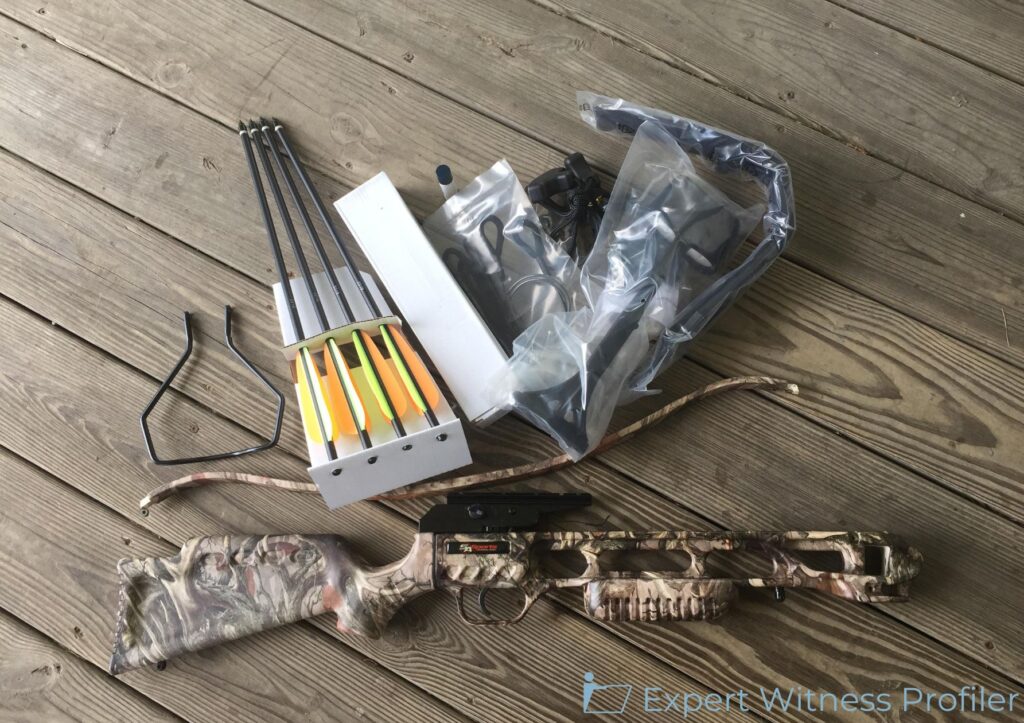
  • Engineering Expert Qualified to Opine on Crossbow Malfunction

    Engineering Expert Qualified to Opine on Crossbow Malfunction

    Scott and Melanie Campbell (“Plaintiffs”) brought this case against Ravin Crossbows, LLC and Velocity Outdoor Inc. (collectively, “Defendants”). This case arises from personal injuries sustained by Plaintiff Scott Campbell (“Scott”), an experienced hunter.

    On November 9, 2022, Scott was hunting from a ladder stand using a Ravin 10 Crossbow, manufactured by Ravin Crossbows. He attempted to shoot a deer, but the arrow fell a few feet away, and he fell from the stand, sustaining injuries. Scott had successfully used this crossbow multiple times before and understood its instructions and warnings.

    Scott’s injuries included a displaced intraarticular fracture of the distal radius with significant comminution of the dorsal and volar cortex. He also had signs of post-traumatic acute carpal tunnel syndrome.

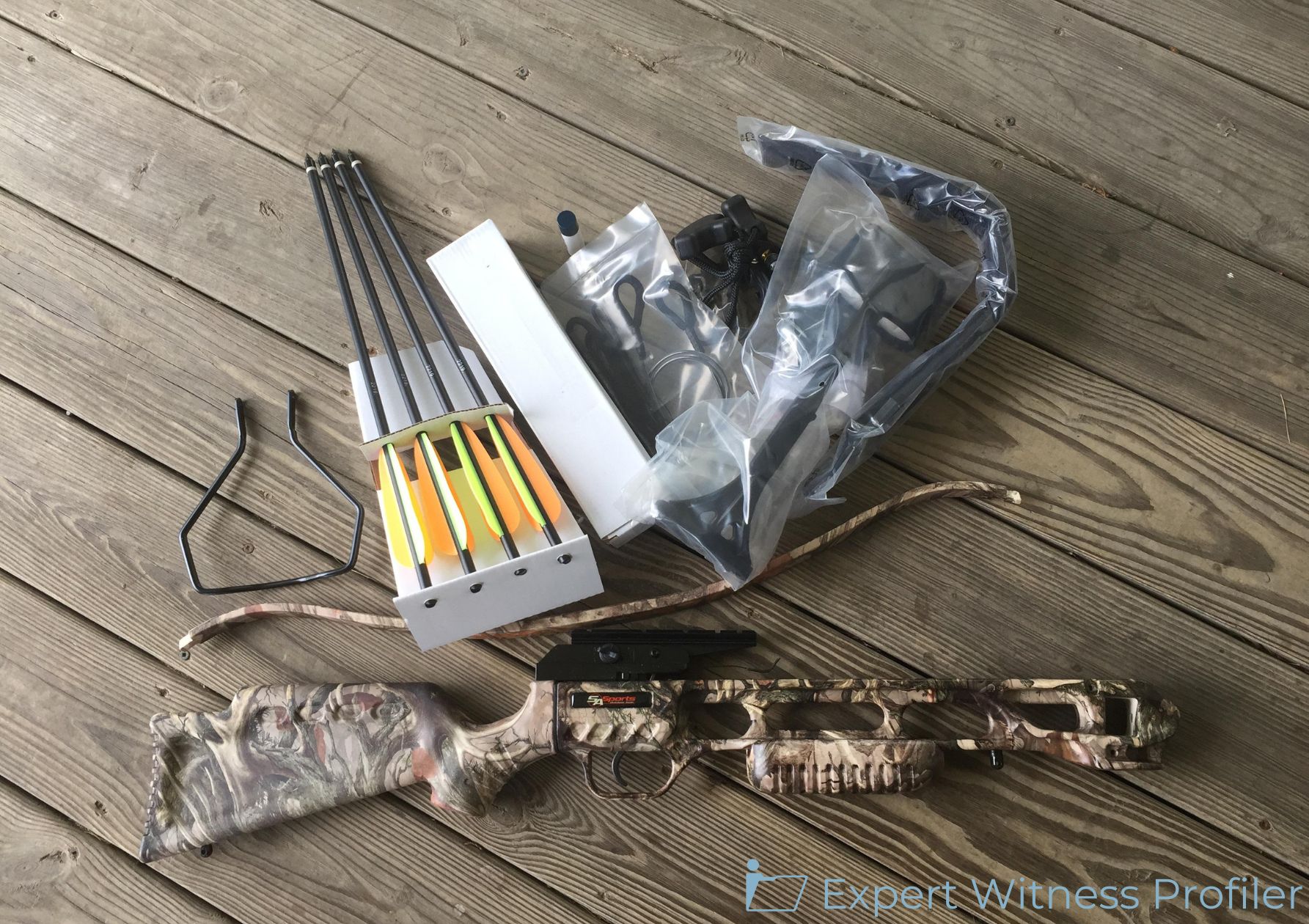
    Plaintiffs’ expert, Craig Clauser, an engineering expert, opined that the incident was a result of a derailment of a bowstring on the crossbow. In other words, Clauser believed that the accident happened because the bowstring came out of the groove at the end of the cam. Plaintiffs’ theory of liability hinges upon Clauser’s expert testimony.

    Defendants filed a motion to exclude the testimony of Craig Clauser under Daubert, challenging his qualifications and the reliability of his opinions.

    Engineering Expert Witness

    Craig David Clauser is a metallurgist and materials engineer by training. As part of his work experience, Clauser was responsible for employee safety and training and failure analysis investigation which is relevant to the instant matter. Clauser is also a member of various professional societies and has contributed to the ASM Handbook on Failure Analysis and Prevention.

    Want to know more about the challenges Craig Clauser has faced? Get the full details with our Challenge Study report.  

    Discussion by the Court

    A. Qualifications

    Defendants argued that Clauser should be excluded because he lacks the practical experience within the hunting industry necessary to make a reliable opinion about liability and causation. The Court disagreed.

    Clauser, after all, possesses skill or knowledge greater than the average layman in determining engineering issues. He need not have academic training in hunting to have an expert opinion on matters related to engineering.

    Defendants may prefer Clauser to be an expert in hunting and crossbows, but the law does not require that.

    B. Reasoning and Methodology

    1. Causation and Liability

    Defendants argued that Craig Clauser’s opinions lacked sound methodology, were speculative, and failed to meet reliability requirements, specifically pointing to his lack of mathematical calculations, drawings, or diagrams to test the reliability of his reasonable alternative designs.

    The Court found that Clauser’s opinions on causation and liability were reliable. His conclusions were based on a detailed, independent review of the physical crossbow and evidence like the broken arrow shaft as well as the “witness marks” left on the shaft of the crossbow as the arrow traveled up the crossbow, which the Court deemed a generally accepted and reliable method in engineering analysis, supported by “good grounds” and not mere speculation.

    2. Proposed Alternative Designs

    Defendants contended that Craig Clauser’s proposed alternative designs were speculative and unreliable because he did not conduct testing, calculations, or provide a concrete design for them, arguing this lack of rigorous methodology made his opinions inadmissible.

    The Court evaluated the reliability of each proposed design separately. Regarding the cam with increased groove depth, the Court held that this opinion was reliable. The Court determined it was based on Clauser’s engineering expertise and detailed analysis of the physical crossbow involved in the incident, including microscopic examination and analysis of witness marks, which provided “sound reasoning and good faith grounds” despite the absence of testing on a modified component.

    In contrast, the Court held that the opinion regarding cam shields or removable guards was unreliable. This proposal was deemed speculative by the Court, lacking any basis in testing, analysis of feasibility or potential dangers or evidence of existing designs on the market. A cam shield might have helped reduce the risk of injury but there is nothing to show that it would be a reasonable alternative design to the Ravin 10.

    C. Assistance to the Trier of Fact

    Defendants argued that Craig Clauser’s testimony should be excluded because he performed no testing or analysis to determine the root cause of the incident and failed to test his alternative designs, contending that this lack of empirical work meant his testimony would not provide relevant information to assist the jury.

    The Court found that Clauser’s opinions will assist the trier of fact.

    The Court’s reasoning was that Clauser’s testimony pertains directly to the alleged injuries Scott Campbell suffered, the potential causation, and the issue of liability. His specialized knowledge is relevant to determining the nature and extent of Scott’s alleged injuries in relation to the crossbow incident.

    Held

    The Court granted in part and denied in part Defendants’ motion to limit the testimony of expert Craig Clauser.

    Key Takeaway:

    A cam shield might have helped reduce the risk of injury but there is nothing to show that it would be a reasonable alternative design to the Ravin 10. Additionally, there is no evidence that a cam shield exists on any current or past crossbow on the market, and Clauser did not prepare or present an actual design with a cam shield.

    Thus, it is apparent to the Court that Clauser’s opinion that a cam shield or removable guard is a reasonable alternative design lacks the requisite reliability for it to be admissible under Daubert.

    Case Details

    Case Caption: Campbell v. Ravin Crossbows, LLC
    Docket Number: 3:23cv1862 
    Court Name: United States District Court for the District of New Jersey
    Order Date: April 29, 2025
  • Otolaryngology Expert Testimony Excluded Due to Ruling Out COVID as Cause of Injuries

    Otolaryngology Expert Testimony Excluded Due to Ruling Out COVID as Cause of Injuries

    Carlos Gordoa and Ariani Reyes, along with their minor son, B.G., filed this personal injury action on May 16, 2022.

    Plaintiffs alleged that, while wearing his Apple AirPods Pro (1st generation) (“AirPods Pro”), their minor child B.G. experienced a transient, seconds-long exposure to an Amber Alert that apparently caused profound and permanent hearing loss in his right ear.

    Plaintiffs’ causation expert, Dr. Yoav Hahn, opined that B.G.’s exposure to the Amber Alert through his AirPods Pro earbud, which was no more than 113.5 decibels, caused an acoustic shock that resulted in a perilymph fistula (“PLF”) and caused B.G.’s hearing loss.

    Apple alleged that Hahn, Plaintiffs’ sole causation expert, is not qualified to offer a general causation opinion, did not offer a general causation opinion, and, in any event, did not identify any basis for a general causation opinion.

    Otolaryngology Expert Witness

    Yoav Hahn is a clinical physician specializing in the fields of otolaryngology and neurotology.

    Hahn completed a skull base surgery fellowship at the prestigious Michigan Ear Institute.  He is Director of Neurotology/Lateral Skull Base Surgery at Baylor University Medical Center and is Chief of Otolaryngology at Medical City Dallas Hospital. 

    Want to know more about the challenges Yoav Hahn has faced? Get the full details with our Challenge Study report.

    Discussion by the Court

    General Causation

    Hahn is Not Qualified to Render a General Causation Opinion

    Hahn reached his opinion based on his experience seeing thousands of patients in his years of practice.

    The Court held that Hahn is not qualified to provide an opinion as to general hearing loss causation because he has no relevant research or publication experience and has not engaged with the epidemiological data regarding hearing loss. Therefore, issues of general causation—the level of sound capable of causing the injury alleged here—are outside of Hahn’s expertise.

    Hahn Does Not Offer a General Causation Opinion

    Hahn has not attempted to answer the question of whether a 10-second exposure to noise stimulus of 113.5 decibels or less could cause a sudden profound hearing injury such as B.G.’s.

    However, the Court held that Hahn’s opinion did not address whether a 10-second exposure to noise stimulus of 113.5 decibels or less is capable of causing a profound hearing injury such as B.G.’s.

    And Plaintiffs cannot rely on Hahn’s differential diagnosis to establish general causation. Differential diagnosis cannot be used “to demonstrate general causation, because it assumes, without proving, that all of the potential causes considered are capable of causing the condition at issue. Indeed differential diagnosis assumes that general causation has been proven for the list of possible causes it eliminates.”

    Any General Causation Opinion is Unreliable

    The Court held that Hahn did not identify anything other than temporal proximity related to one case (the litigation for which he is being paid) to support an opinion that a short exposure to noise at 113.5 decibels can cause hearing loss such as that suffered by B.G. He did not perform any research. He did not identify any research. And he did not explain why the decades of peer-reviewed research showing hearing loss only occurs at levels exponentially higher than what B.G. experienced is incorrect. In short, there is no basis for Hahn to offer a reliable general causation opinion.

    Specific Causation

    Hahn’s Specific Causation Opinions are Unreliable

    First of all, the Court held that Plaintiffs’ failure to offer evidence as to general causation is fatal to Hahn’s specific causation opinion.  It is not that studies regarding noise-related hearing loss did not exist—it is that no study supports Hahn’s theory. 

    Second, the Court held that Hahn’s differential diagnosis—the predicate for his specific causation opinion—is unreliable. After all, Hahn’s differential diagnosis is based upon his having ruled out a virus as the cause of B.G.’s injury. Basically, Hahn’s reasoning is not scientifically grounded.

    He acknowledged many people infected with COVID are asymptomatic. And most critically, he testified there was nothing “physiologically or pathologically” that allowed him to rule out COVID as the cause of B.G.’s hearing loss. He nonetheless ruled out COVID as a possible cause of B.G.’s injuries because B.G. did not have the symptoms “we associate with COVID-19 in the majority of patients…the fevers, the feeling badly.” 

    Hahn’s exclusion of COVID was not convincing considering the fact that just because someone did not take a COVID test did not mean they could not have had COVID.

    Moreover, Hahn’s reliance on the temporal proximity between the Amber Alert and B.G.’s discovery of his injury did not salvage his opinion. That the Amber Alert was a theoretical cause is not enough to scientifically exclude COVID as a cause. 

    Held

    The Court granted Apple’s motion to exclude the testimony of Dr. Yoav Hahn.

    Key Takeaway:

    The blatant inconsistencies in Hahn’s reasoning render his opinion unreliable: while acknowledging many people with COVID are asymptotic, he nevertheless concluded B.G. could not have had COVID because the medical records do not show he had symptoms. Further, although he acknowledged hearing loss can be a symptom of COVID, he rejected it as a symptom of COVID in B.G without any scientific explanation. 

    Case Details:

    Case Caption: Reyes V. Apple, Inc.
    Docket Number: 3:22cv2900
    Court Name: United States District Court for the Northern District of California
    Order Date: April 28, 2025
  • Life Care Planning Expert’s Testimony on Future Medical Care Needs Admitted

    Life Care Planning Expert’s Testimony on Future Medical Care Needs Admitted

    A July 2022 vehicle collision in Gallup, New Mexico, triggered a lawsuit claiming severe injuries. Plaintiff Jimmy Woodall claimed that Defendant
    Curt Moeller made an “unsafe lane change,” forcing his tractor-trailer into a guardrail.

    Woodall alleged that the crash caused him “severe and disabling injuries.” Woodall sued the Defendants, demanding  medical expenses along with damages for physical and mental pain and suffering, physical impairment, loss of enjoyment of life, and lost wages. 

    To support his claim for these future medical care needs as related to the injury that he sustained, Woodall hired life care planner Todd Capielano. Capielano relied on the opinions of Woodall’s treating physicians to form his own assessment of the costs Woodall was likely to face. However, Defendants filed a motion under Daubert, challenging Capielano’s qualifications, reasoning, and methodology, as well as his reliance on the opinions of Woodall’s treating physicians.

    Life Care Planning Expert Witness

    Todd Capielano has a bachelor’s degree in rehabilitation counseling, which he obtained from Louisiana State University Medical Center, School of Allied Health Professions. He also has a master’s degree in human services counseling from the University of New Orleans.
    In 2015, Capielano obtained a certification for life care planning from the University of Florida.

    Discover more cases with Todd Capielano as an expert witness by ordering his comprehensive Expert Witness Profile report. 

    Discussions by The Court

    A. Qualifications

    Defendants contended that Capielano relied on the opinions of Woodall’s treating physicians to fill in the gaps in his expertise. Because Capielano is not a physician and is not qualified to diagnose Woodall’s conditions, the Defendants argued that he cannot form a life care plan. 

    However, the Court held that a life care planner’s reliance on the medical reports of other experts, even when the life planner does not have the same medical qualifications, does not make the life care planner unqualified.

    Given that Defendants raised no other challenges to Capielano’s qualifications as a life care planner, the Court finds him qualified to testify as an expert regarding Woodall’s future medical expenses.

    B. Reasoning and Methodology

    Because Woodall’s treating physicians couldn’t quantify the extent of the aggravation to Woodall’s preexisting injuries, Defendants argued that Capielano’s life plan must be questionable. Additionally, they argued that this flaw in the life care plan “would mislead the jury and prejudice Defendants.” 

    According to the Defendants, the life care plan incorrectly includes all of Woodall’s future medical expenses, while they should only be liable for the portion caused by the vehicle collision.

    However, Woodall responded that the alleged shortcomings in the underlying medical opinions used to create the life care plan are properly addressed on cross-examination, not by excluding the life care plan entirely. The Court agreed.

    Given that the jury already will be tasked with determining the extent to which Defendants’ conduct exacerbated Plaintiff’s condition, the Court added that it will not unfairly prejudice the Defendants or mislead the jury to have the jury conduct the same inquiry with regard to what portion of future expenses is attributable to Defendants’ conduct.

    Held

    The Court denied Defendants’ motion to exclude the opinions of Plaintiff’s expert Todd Capielano.

    Key Takeaways:

    • Defendants made no argument that Capielano’s qualifications are insufficient within the field of life care planning; rather, they appeared to argue that life care planning performed by a non-physician cannot support expert designation as a categorical matter.
    • The trial will almost certainly involve discussions and inquiries about the preexisting injuries Woodall had and the extent to which they may have been aggravated by the collision in question. That is, the jury will determine the extent to which Woodall’s injuries and present condition are attributable to Defendants’ conduct, if any.

    Case Details:

    Case Caption: Woodall v. W. Express, Inc.
    Doket Number: 1:23cv862
    Court: United States District Court for the District of New Mexico
    Order Date: April 24, 2025
  • Firearms & Ballistics Expert’s Observations of Glock Firearms is Relevant

    Firearms & Ballistics Expert’s Observations of Glock Firearms is Relevant

    Defendant Osman Malik Sesay (the “Defendant”) is charged in a seven-count Third Superseding Indictment. Counts Three and Four alleged that, on April 29, 2021, the Defendant possessed a Glock 26, 9mm semiautomatic pistol (“Exhibit 008”) and approximately 18 rounds of 9mm ammunition in furtherance of a drug trafficking crime. Counts Six and Seven alleged that, on July 16, 2021, the Defendant possessed several other firearms.

    The Government will have to prove that Glock firearm identified as “Exhibit 001,” installed with the conversion device identified as “Exhibit 001A,” constitutes a “machinegun.”

    During discovery, the Defendant disclosed the rebuttal report of his firearms expert Brian Luettke

    Luettke will opine, inter alia, that Exhibit 001A “was crudely made[,] . . . is not dimensionally correct in size to function as a machinegun conversion device[,]” and, specifically, “does not fit correctly into the rear part of [Exhibit 001’s] slide.”

    Government filed a motion to exclude Luettke’s testimony as “based on an erroneous understanding” of the statutory definition of “machinegun” and “not based on any reliable methodology.”

    Firearms & Ballistics Expert Witness

    Brian Luettke has 22 years of experience as an Bureau of Alcohol, Tobacco, Firearms, and Explosives (ATF) special agent, provided instruction to ATF agents on firearms, and served in multiple supervisory positions before retiring in 2020.

    Get the full story on challenges to Brian Luettke’s expert opinions and testimony with an in-depth Challenge Study.

    Discussion by the Court

    As such, the Court found that Luettke’s opinion that Exhibit 001A does not function as a machinegun conversion device is directly relevant to the offense charged in Count Six of the Third Superseding Indictment.

    Luettke determined that Exhibit 001A “is not dimensionally correct in size to function as a machinegun conversion device[,]” which tends to make it less probable that, when Exhibit 001 was possessed by Defendant, it satisfied the statutory definition of a “machinegun.” Specifically, if Luettke’s opinion is accepted, it would tend to make it less probable that Exhibit 001, with Exhibit 001A installed, “[was] designed to shoot, or [could] be readily restored to shoot, automatically more than one shot, without manual reloading, by a single function of the trigger.”

    Analysis

    The Court held that Luettke’s conclusions would assist the jury in deciding whether Exhibit 001, with Exhibit 001A installed, satisfies this portion of the statutory definition of “machinegun.”

    Luettke also test fired the separate Glock firearm identified as “Exhibit 008,” installed with a conversion device identified as “Exhibit 008A.”

    The Government argued that “the statutory definition does not require that the device fire reliably.” However, Luettke’s conclusions are not based solely on the inconsistent or unreliable automatic firing of Exhibit 001. They are also based Luettke’s own observations and measurements of Exhibits 001A and 008A.

    Therefore, Luettke’s opinion may assist the jury in determining, from the totality of the evidence, whether Exhibit 001, with Exhibit 001A installed, was “designed to shoot” or could be “readily restored to shoot” in the manner of a “machinegun” when the Defendant allegedly possessed them.

    The Government argued that Luettke failed to explain how his measurements supported his conclusion. The Court disagreed. Exhibit 001A was cracked and bowed when installed in Exhibit 001 at the time SA Eisenbise received the firearm, and she had to alter Exhibit 001A in order for the device to permit automatic firing of Exhibit 001. 

    Held

    The Court denied the Government’s motion to exclude the testimony of Brian Luettke.

    Key Takeaway:

    Luettke’s observations of both Glock firearms and both conversion devices demonstrated a technical connection between the size of a machinegun conversion device and its effectiveness as a machinegun conversion device for a given firearm.

    In sum, the Court found Luettke’s opinions to be relevant and based on reliable methods.

    Case Details:

    Case Caption: United States V. Sesay
    Docket Number: 1:21cr298
    Court Name: United States District Court, Maryland
    Order Date: April 18, 2025