The tenant-Plaintiffs in this case alleged that the Defendants, a national real estate investment and property management conglomerate, use illegal leases and engage in practices that violate the Plaintiffs’ rights under Washington’s Residential Landlord Tenant Act (“RLTA”).
The Plaintiffs also contend that the Defendants breached their duty of good faith and fair dealing. They sought damages, declaratory relief, and prospective injunctive relief.
Plaintiffs asserted additional claims which have been dismissed. Certain grounds for their claims under the RLTA, and for the breach of the duty of good faith and fair dealing, were dismissed. Additionally, their claims for violations of the Washington Consumer Protection Act, unjust enrichment, retrospective injunctive relief, rescission, restitution, and disgorgement have also been dismissed.
After their first motion to certify a class was denied without prejudice, the Plaintiffs moved for a second time for class certification, appointment of class representatives, and appointment of class counsel. Defendants filed a motion to exclude Plaintiffs’ damages expert, Robert Kneuper.
Economics Expert Witness
Robert Kneuper is currently a Managing Director and Expert Economist with McClave + Associates (“MC+A”), formerly Infotech Consulting. He has also served as an Adjunct Professor at Loyola University Chicago School of Law, Charleston Southern University, and Johns Hopkins University, where he has taught courses in antitrust economics, managerial economics, corporate finance, and political economy. With over 30 years of experience, Kneuper has worked as an antitrust, regulatory, and financial economist in both the federal government and private consulting. He has contributed to a wide variety of economic and financial consulting matters for private clients and government bodies.
Kneuper’s August 15, 2023 opinion was on the putative maintenance and repair subclass’s damages. The putative maintenance and repair subclass and its claims are not suitable for class certification. Accordingly, the Court decided that Kneuper’s opinion on Plaintiffs’ classwide RLTA repair and maintenance damages claims is not “relevant to the task at hand” relating to those claims.
September 17, 2024 Supplemental Opinion
In his September 17, 2024 supplemental declaration, Kneuper opined that “expert economic analysis is unnecessary” with respect to the other subclasses’ damages claims. He contended that fees charged could be presented to a factfinder in a “summary fashion, such as through a ‘summary, chart, or calculation’ which [he] underst[ood] is permitted under Rule 1006 of the Federal Rules of Evidence.” According to Kneuper, “a person with general familiarity and experience with reviewing financial documents (e.g. an accountant) could review and analyze Defendants’ ledgers and perform such calculations.”
The Court excluded Kneuper’s opinion, that no expert economic analysis is necessary to determine the remaining subclasses damage because there is no showing that this opinion will “help the trier of fact to understand the evidence or to determine a fact in issue.”
Further, to the extent that Kneuper opines on whether the subclasses’ damages evidence is admissible under Rule 1006 of the Federal Rules of Evidence, it was held that those are determinations for the Court.
Held
The Court granted in part and denied in part the Plaintiffs’ amended motion for class certification and for appointment of class representatives and class counsel.
The Court granted Defendants’ motion to exclude the opinions of Robert Kneuper, Ph.D.
Key Takeaway:
Kneuper’s opinion that no expert economic analysis is necessary to determine the remaining subclass’s damages was considered unhelpful. Moreover, Kneuper was not allowed to opine on whether the subclass’s damages evidence is admissible under Rule 1006 of the Federal Rules of Evidence because the Court was meant to determine that issue.
Case Details:
Case Caption:
Richmond Et Al V. Home Partners Holdings Llc Et Al
The dispute in this matter stems from the prenatal care provided in January 2021 to Brittany S. Gobble by David P. Russell, M.D. at Bristol Gynecology and Obstetrics, P.C. (“BGO”) and Haley L. Akin, M.D. The Plaintiffs accused Haley Akin, M.D. of failing to make a diagnosis of severe pre-eclampsia during the hospitalization of January 16-17, 2021, insisting that Gobble should have been kept in the hospital. In other words, Defendants failed to properly diagnose and treat Gobble for severe preeclampsia which developed during her pregnancy and resulted in injuries to her minor child.
David Russell, M.D. saw Gobble in the office on January 18, 2021, the day following discharge from the hospital. Russell is accused of failing to send Gobble to the hospital that day.
Preeclampsia is described as “a disorder of pregnancy associated with new-onset hypertension” and “often accompanied by new-onset proteinuria.”
Both Plaintiffs and Defendants have now disclosed multiple expert witnesses who they intend to call at trial to address the claims that Plaintiffs have asserted against Defendants. One of these experts who has been disclosed by Plaintiffs is Jack Ayoub, M.D. (“Dr. Ayoub”), whose testimony Defendants sought prohibit.
Plaintiffs retained Ayoub to opine as to the standard of care for the diagnosis and treatment of patients with preeclampsia and preeclampsia with severe features.
Obstetrics and Gynecology Expert Witness
Jack Ayoub is board certified in obstetrics and gynecology, completed an obstetrics and gynecology residency training program at The George Washington University Medical Center in Washington, D.C., and has long been affiliated with both the American College of Obstetricians and Gynecologist and the American Board of Obstetrics and Gynecology. Ayoub founded Virginia Obstetrics & Gynecology, P.C. in July 2009 and currently serves as the CEO of that practice, while also having a surgery affiliation with Stone Springs Hospital Center in Dulles, Virginia.
Ayoub has delivered between 4,000 and 5,000 babies and in the process has routinely managed patients with and without prenatal issues, including diabetes, preeclampsia, and preeclampsia with severe features, among other conditions. While Ayoub presently delivers 5 to 8 babies a month, in the past he has delivered between 25 and 30 a month.
Ayoub’s testimony should be excluded because he is not an expert on preeclampsia
Defendants specifically advised that Ayoub is a sole practitioner who practices in the areas of ‘minimally invasive gynecologic procedures, including laparoscopy, heavy menstrual bleeding, fibroids, myomectomy, pelvic pain and endometriosis.”
Defendants noted that Ayoub has not published, written an abstract, or conducted bench research on preeclampsia or preeclampsia with severe features nor on hypertension in pregnancy. They further claimed that Ayoub testified that every person who completes a residency in obstetrics and gynecology is an expert on these topics. Finally, they noted that Ayoub’s lack of qualifications are demonstrated by the fact that he did not know the definition of a term pregnancy.
Ayoub has a long history of serving as a board-certified physician practicing in the field of obstetrics and gynecology. He has delivered numerous children and has been responsible for the care of the mothers who bore those children and has testified that in providing prenatal care he has frequently treated patients with diabetes and preeclampsia both with and without severe features. While Defendants assert that Ayoub spends most of his time handling gynecological matters at this juncture rather than practicing in the field of obstetrics, the question is whether Ayoub was qualified under Rule 702 at the time Gobble was treated by Defendants to opine as to the standard of care for the diagnosis and treatment of preeclampsia and preeclampsia with severe features. Given Ayoub’s education, training and experience, the Court finds that he possesses the qualifications necessary to offer expert testimony on these issues.
Ayoub’s opinions are unreliable and unhelpful as an initial matter because Ayoub provided an incorrect definition of a “term” pregnancy under ACOG guidelines
Defendants contended that Ayoub was wrong regarding the definition of a term pregnancy in opining as to when the minor child should have been delivered in accordance with the applicable standard of care. However, in reviewing Ayoub’s testimony it appeared that he is familiar with the ACOG standards addressing when a child should be delivered. In the Court’s reading of Ayoub’s testimony, he appeared to agree that it is generally preferable for delivery to wait until thirty-seven weeks in cases where a patient is experiencing preeclampsia.
Defendants argued that Ayoub’s opinions are unreliable because he has opined that the headache Gobble was experiencing while hospitalized supported a diagnosis of preeclampsia with severe features. They claimed that the idea that a headache is supportive of this diagnosis has been “generally rejected.”
Defendants pointed out that Ayoub opined that the fetal heart monitor tracing from that date fell into Category I, the best category under the ACOG classification system.
The Court held that Ayoub’s opinions simply diverge from those of Defendants and their experts. Plaintiffs have demonstrated that Ayoub’s opinions regarding when Gobble should have been delivered have a factual basis and are supported by applicable ACOG guidelines, just like the opinions of Defendants and their expert witnesses have a factual basis and are supported by applicable ACOG guidelines. In short, it comes down to which version of the facts should be accepted, which is a decision solely for a jury and not the Court. Resolving factual disputes is beyond the role of the Court as a gatekeeper.
Ayoub’s opinions should be excluded because he failed to consider Gobble’s comparative fault and was unfamiliar with the impact of maternal smoking on an unborn child
Defendants further attacked the opinions offered by Ayoub because Gobble smoked during her pregnancy, and he is not familiar with the toxins contained in cigarette smoke or whether those toxins pass the placenta. They further claimed that Ayoub did not properly consider Gobble’s comparative fault in causing her minor child’s injuries, i.e., her smoking and her failure to report to the hospital sooner on January 20, 2021, despite not feeling her baby move for several hours.
Defendants asserted that Gobble was given verbal and written instructions regarding counting her baby kicks when discharged from the hospital. On the other hand, Gobble had testified that Russell advised her that the baby’s movement would slow significantly as she got closer to her due date. Plaintiffs note that Ayoub has opined that Gobble should have been delivered while initially hospitalized and if she had been, there would be no issue regarding whether she appropriately monitored fetal movement. The Court found that once again, the issue here is not one of whether Ayoub’s opinions have a proper basis but instead of significant factual disputes, which are the province of the jury.
Held
The Court denied the Defendant’s motion to exclude the testimony of Jack Ayoub, M.D.
Key Takeaways:
Fed. R. Evid. 702 specifically provides that an expert may be qualified to testify by their “knowledge, skill, experience, training or education.” While it may certainly be a feather in an expert’s cap to have published or conducted research in the field in which they are offering expert opinions, nothing in Rule 702 requires it.
Significant factual differences between what Plaintiffs state that Gobble was told about fetal monitoring and what Defendants contended that she had been told are the province of the jury. When it comes down to which version of the facts should be accepted, it is a decision solely for a jury and not the Court. Resolving factual disputes is beyond the role of the Court as a gatekeeper.
Case Details:
Case Caption:
Gobble Et Al V. Bristol Gynecology And Obstetrics, P.C. Et Al
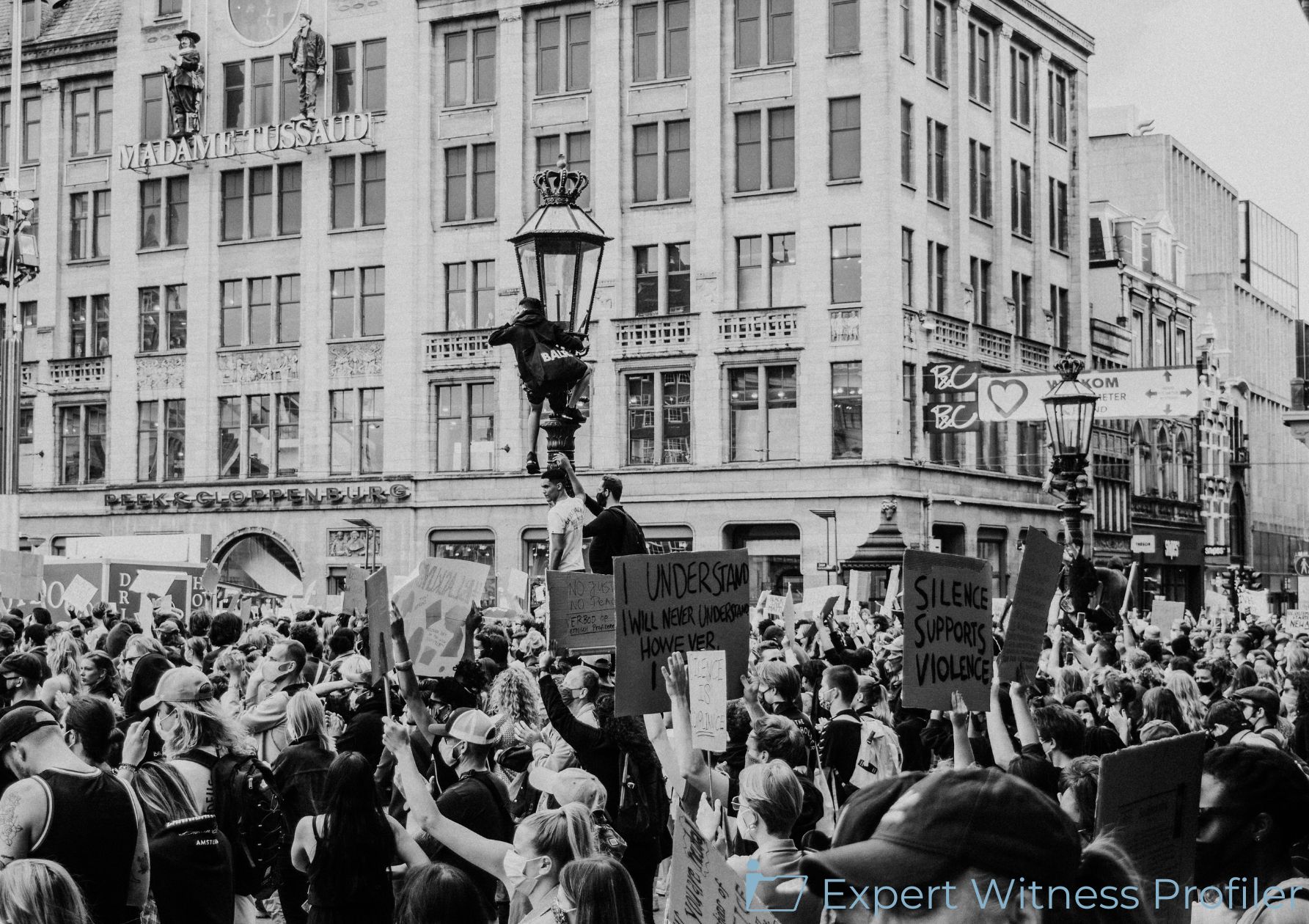
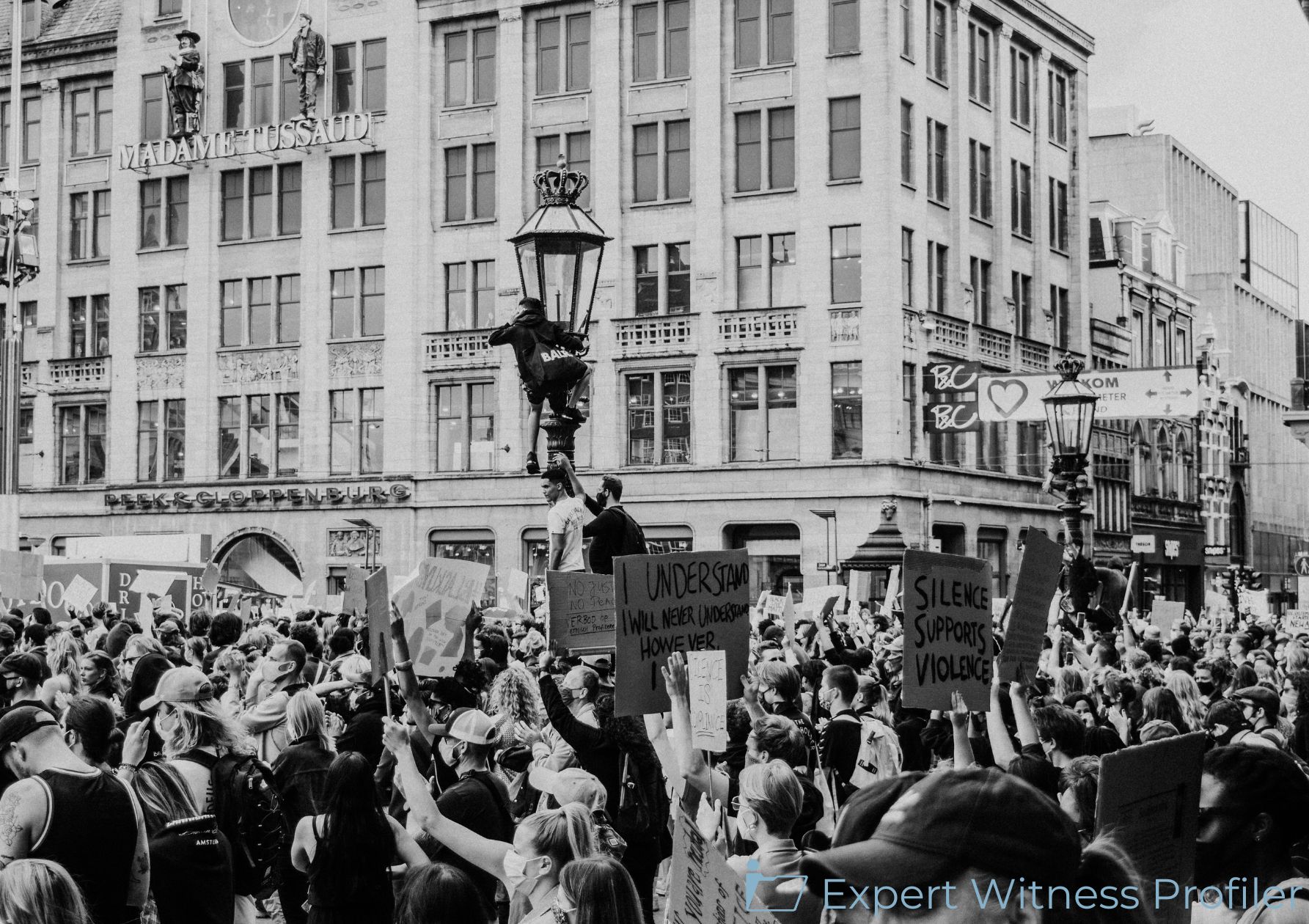
This matter involves an incident that occurred on May 29, 2020. At the time, the Plaintiff, David Zuniga, was present during the George Floyd protests in Grand Park, Downtown Los Angeles. Plaintiff and his experts contended that Defendant Officer Aaron Green struck him with a nonlethal projectile to his head. Officer Green, along with the other named officer Defendants, was assisting in controlling a crowd of protestors. The protestors unlawfully protested in the Grand Park area after the Court declared an unlawful assembly and issued a dispersal order.
Defendants filed a motion to preclude the report and opinions of Plaintiffs’ biomechanics expert, John Gardiner, on the grounds that such evidence is irrelevant, improper, misstates the law, speculative, and would unduly prejudice Defendants.
Plaintiff opposes Defendants’ motion on the grounds that Gardiner’s opinions are based on the sworn testimony of Plaintiff and several Defendants. Additionally, Gardiner relied on video from body cameras and medical records. Plaintiff also argues that Gardiner is qualified to opine on the cause of Plaintiff’s injury because he is a biomechanics expert that has testified in other cases.
Biomechanics Expert Witness
John Gardiner holds a Doctor of Philosophy in Bioengineering from the University of Utah and a Bachelor of Science in mechanical engineering from the University of Minnesota. He is a principal and senior biomechanical engineer at MEA Forensic. He joined the firm in 2002 and leads the Biomechanics Group in the Los Angeles office. Gardiner is responsible for conducting reconstruction and biomechanical analyses of a variety of events including automobile collisions, falls, sports injuries, and shootings.
The video evidence and testimony are consistent with Zuniga being located within a group of protestors on N Spring St. at the time he sustained this injury.
The video evidence and testimony indicate that multiple less-lethal rounds were fired in the general direction of Zuniga’s location north of the officers.
The horizontal nature of the laceration on the top of Zuniga’s head is consistent with contact from an approximately horizontally traveling less-lethal munition.
The description and appearance of Zuniga’s scalp laceration is consistent with contact by a bean bag round fired by Officer Green.
In forming his conclusions, Gardiner reviewed various materials. Specifically, these included body camera video, testimony, and medical records, all of which he analyzed in detail. As a result, his opinions were supported by the evidence available to him, as established in previous rulings.
The Defendants contended that Gardiner’s opinions were based on factual assumptions not supported by the record. They highlighted that, in his deposition, Gardiner admitted he could not specifically identify the Plaintiff in the video at the time of the shooting. Furthermore, he acknowledged that the Plaintiff might have moved from his last known location in the video before the less-lethal munitions were fired. However, the Plaintiff noted that Gardiner did not need to present his opinions with absolute certainty for his testimony to be admissible.
Held
The Court denied Defendants’ motion to exclude Plaintiffs’ biomechanics expert, John Gardiner’s opinions and testimony at trial.
Key Takeaways:
Gardiner has an extensive background and experience in biomechanics. This qualifies him to testify regarding the cause of the Plaintiff’s injury.
No part of Gardiner’s expert report indicated that any of his opinions are based on assumptions outside of the evidence provided. This includes body camera footage and medical records.
Gardiner’s opinion regarding the horizontal nature of the laceration and its consistency with less-lethal munitions is not a legal conclusion. It is an expert analysis of the injury’s cause.
Please refer to the blog previously published about this case:
This matter arises out of a medical malpractice action filed by Plaintiffs Tyler Grenier, individually, and Jenna Grenier, individually and as next friend of J.A.G., a minor, (collectively “Plaintiffs”) against Defendant United States of America (“Defendant”) for alleged medical negligence at Tripler Army Medical Center (“Tripler”) related to the medical care by Defendant’s employees for prenatal care and labor of Plaintiff Jenna Grenier (“Jenna”), and the subsequent delivery of J.A.G.
Severe physical injuries sustained by Jenna Grenier and J.A.G. are alleged as well as the negligent infliction of emotional distress to Plaintiff Tyler Grenier (“Tyler”) and Jenna; Plaintiffs’ loss of filial consortium; and Tyler’s loss of spousal consortium.
Plaintiffs sought to exclude testimony by Defendant’s expert witness, Cole D. Greves, M.D., as to two opinions that he has rendered: first, that the use of forceps did not cause the Minor Plaintiff’s injuries (“Opinion No. 8”); and second, his experience would suggest that the Minor Plaintiff’s injuries could be related to the E. coli infection and ensuing sepsis and potentially lead to additional challenges through his life course, and his Apgar scores suggest a significant hypoxic event or metabolic acidosis at birth.
Maternal Fetal Medicine Expert Witness
Cole Douglas Greves, MD, FACOG is a clinical perinatologist, medical director of the hospital’s antepartum and women’s intensive care unit, and assistant director of medical education. He also serves on the faculty of the University of Central Florida College of Medicine.
Greves completed his undergraduate degree at the University of Minnesota in Minneapolis and earned his medical degree from the University of North Dakota School of Medicine in Grand Forks, North Dakota. He completed his residency at Orlando Health and a fellowship in maternal fetal medicine at the University of Rochester – Strong Memorial Hospital in Rochester, New York.
Greves has conducted extensive research during his career. Currently he is the principal investigator on a Cesarean section study and co-investigator on a sepsis study. He also is a frequent presenter at medical conferences and meetings.
Plaintiffs argued that Greves is not qualified to render opinions regarding alternative explanations for the Minor Plaintiff’s injuries nor the “life course” for the minor plaintiff and thus his opinions are barred by Rule 702 of the Federal Rules of Evidence.
Since this matter is a non-jury trial, the Court held that there is less need for scrutinizing reliability prior to trial.
Therefore, the Court can evaluate during trial the credibility and reliability of Greves.
Held
The Court denied the Plaintiff’s motion to exclude testimony by Defendant’s expert witness, Cole D. Greves, M.D.
Key Takeaway:
Since this matter is a non-jury trial, the credibility and reliability of Greves’ opinions regarding alternative explanations for the Minor Plaintiff’s injuries or the “life course” for the Minor Plaintiff can be evaluated during trial.
Please refer to the blogs previously published about this case:
On November 30, 2022, Plaintiff, Cynthia Burgett, was at the Hy-Vee Fast & Fresh convenience store in Prairie Village, Kansas, to purchase gas. The gas station’s fuel pump islands are shaped like an “H” and also referred to by the parties as a “dog bone” shape. The fuel pump islands are elevated above the parking lot pavement. While at Defendant’s gas station, Plaintiff tripped over a fuel pump island and suffered serious injuries. Plaintiff’s alleged injuries are extensive and she asserts that she will need lifetime medical care as a result.
Plaintiff asserted a claim of negligence against Defendant. Plaintiff contended that the fuel pump island was an unreasonably dangerous tripping hazard, that Defendant had knowledge or should have known that it was dangerous, that the design was not in accordance with industry standards, and it lacked safety features of Defendant’s standard pump and the industry standards. Both parties will present expert testimony at trial. Plaintiff has identified two experts that will testify as to the dangerousness of the fuel pump island: Lila Laux, a human factors expert, and Albert Kerelis, a licensed architect. Defendant has identified Richard Serignese as a non-retained expert to testify about the design and maintenance of fuel pumps. The parties have filed motions to exclude the opinions of these experts.
Human Factors Expert Witness
Lila Laux has a doctorate in Industrial/Organizational Psychology with a specialization in Human Factors Engineering from Rice University. She has worked as a human factors engineer for more than 30 years. She now works as a Principal Human Engineer for a firm that provides human factors research and consultative services to the military, NASA, the Nuclear Regulatory Commission, public service organizations, and private businesses.
Albert Kerelis has a master’s degree in architecture and is licensed in several jurisdictions, including Kansas. He has over 27 years’ experience in architecture. For the past five years, Kerelis has worked for Robson Forensic providing expert analysis. He also continues to work as an architect for Facilities Design Group and has done so for twenty years by providing architectural services for residential, commercial, and industrial projects. This includes site analysis, code review, code compliance, schematic design, structural design, mechanical, electrical and fire suppression design.
Laux’s opinions include the following: Plaintiff behaved how most people would behave at a gas station; the fuel pump created a hazard because Plaintiff’s attention was not attracted to the “extended lobe in her path” and she was unlikely to see it; the extended lobe of the fuel pump created an unexpected trip hazard that caused Plaintiff to trip; it is unreasonable to expect that people walking between the store and the fuel pump would expect or detect the unmarked and undifferentiated pump pedestal protruding into their path; and it was foreseeable that customers could fail to detect the raised pedestal and trip as they walked to their vehicle.
Qualifications
Defendant made a cursory attempt to exclude Lila Laux’s testimony on the basis that she is not qualified.
A review of Laux’s resume shows that she has decades of experience on human factors and her opinions largely relate to how individuals and Plaintiff would navigate the obstacle of the fuel pump and whether they would be aware of the elevated fuel pump in their path based on her experience. The Court finds that she is qualified to offer such opinions based on her education and experience.
Helpfulness
Defendant argued that Laux’s opinions would not assist the jury in understanding the evidence or facts in this case because what ordinary people see in situations and how they understand their surroundings are within the common understating of a juror.
Here, the Court found that Laux’s opinions and testimony would not be helpful to the jury. Laux offers opinions regarding the types of customers that would go to a gas station, how customers would walk from the fuel pump to the convenience store, whether customers would expect to see or detect the raised fuel pump, and whether it was foreseeable that someone would trip on the raised fuel pump. Such opinions are not helpful here because the average juror has experience getting gas at a gas station. An average juror also has experience walking from a fuel pump to the convenience store to either pay for the gas or to go inside and purchase additional items.
Albert Kerelis
Kerelis is a licensed architect and will provide the following opinions at trial: 1) the edge of the fuel pump island was dangerous and caused Plaintiff to fall; 2) the edge of the fuel pump island was a low obstruction in a foreseeable pedestrian path that violated the standard of care for safe walkways; 3) the property owners should have known it was dangerous and provided warnings to pedestrians; 4) the failure to eliminate the hazardous condition or provide warnings was a violation of the standard of care for safe walkways and created the hazardous condition that caused Plaintiff’s injury; and 5) the owner violated nationally recognized standards of care and the city’s codes and ordinances.
Qualifications
Defendant asserted that Kerelis is not qualified to provide expert testimony on the fuel pump island because he has not prepared design drawings in the past five years, has not designed any projects in Kansas, and has not prepared a design with a fuel pump island in at least 15 years. Kerelis is a licensed architect with decades of experience who has designed hundreds of sites. He testified extensively regarding his experiences in site design and the related considerations of safety for pedestrians and users of sites when designing sites. The Court held that Defendant’s arguments called into question the weight of his testimony rather than his qualifications.
Reliability
Essentially, Defendant argued that the expert’s opinions are not reliable because he fails to cite any publications regarding the design and maintenance of fuel pump islands. Defendant took issue with Kerelis’ reliance on several national publications which he has identified as standards of care in the industry because they are not publications regarding the design and maintenance of fuel pump islands. Kerelis’ opinions, however, clearly stated that Defendant violated the standards of care regarding safe walkways and warnings regarding obstructions. His expert report cites to various publications, including a publication by ASTM International, formerly the American Society for Testing and Materials (ASTM), which is a “globally recognized leader in the development and delivery of professional consensus standards.”
In the report, Kerelis states that ASTM’s publication, “Standard Practice for Safe Walking Surfaces, is a nationally recognized standard of care for the safe construction and maintenance of walkways to prevent pedestrian falls.” That publication states that “in situations where a short flight stair or single step transition exists or cannot be avoided, obvious visual cues shall be provided to facilitate step identification.”
The Court held that Defendant’s arguments claiming Kerelis failed to cite publications on fuel pump islands are unpersuasive. The standards cited by Kerelis relate to obstructions in a walkway and based on the facts in this case and the expert opinions, a jury could conclude that the fuel pump island extended into the walkway.
Richard Serignese
Defendant identified Richard Serignese as a non-retained expert that will “testify that the shape, size, color, and condition of the fuel pump island is within industry standards and that Hy-Vee did not violate any standard of care in regard to the maintenance of the fuel pump islands.”
Serignese is the Vice Presicent and General Manager of Simon Surfaces and will testify based on his “knowledge, education, training, and experience in the fuel island industry.”
With respect to his opinions, Serignese testified that he actually doesn’t “know the exact industry standard” for fuel pump island designs and that his “understanding has always been people pick what they want to pick. It’s a matter of preference. I don’t know that — I don’t know what the — anybody could tell you what the exact industry standard is.” He then reiterated that he did not know the industry standard for fuel islands and admitted that he could not say that this particular design is or is not industry standard.
Defendant argued that Serignese’s inability to articulate an industry standard should not preclude him from testifying because his testimony is that he doesn’t think there is an industry standard. Defendant, however, offered Serignese as an expert who will testify as to the industry standard and that Defendant’s fuel pump island is within that standard. The Court held that Serignese is not qualified to opine as to these issues and his deposition makes clear that he has no opinion on these issues.
Defendant designated Serignese as an expert who will testify that Defendant met the standard of care for maintaining the fuel pump island. The Court held that his deposition testimony, however, made it clear that he has no expertise in that area.
Held
1. The Court granted the Defendant’s motion to exclude the testimony of Lila Laux.
2. The Court denied the Defendant’s motion to exclude the testimony of Albert Kerelis.
3. The Court granted the Plaintiff’s motion to exclude the testimony of Richard Serignese.
Key Takeaways:
Laux offers opinions regarding the types of customers that would go to a gas station, how customers would walk from the fuel pump to the convenience store, whether customers would expect to see or detect the raised fuel pump, and whether it was foreseeable that someone would trip on the raised fuel pump. Such opinions are not helpful here because the average juror has experience getting gas at a gas station.
Kerelis’ opinions, however, clearly stated that Defendant violated the standards of care regarding safe walkways and warnings regarding obstructions. His expert report cites to various publications, including a publication by ASTM International, formerly the American Society for Testing and Materials (ASTM), which is a “globally recognized leader in the development and delivery of professional consensus standards.” The Court held that Defendant’s arguments claiming Kerelis failed to cite publications on fuel pump islands are unpersuasive.
Case Details:
Case Caption:
Burgett V. Hy-Vee, Inc. Et Al
Docket Number:
2:23cv2173
Court:
United States District Court for the District of Kansas
This case stems from a dispute over a provision of a ground lease between Stewart Development, LLC and 111 Veterans Boulevard, LLC. Stewart owned Heritage Plaza, a Class A office building in Metairie, Louisiana but leases the land on which it sits pursuant to a ground lease. 111 Veterans took over this ground lease in 2017. A few years later, in 2022, Stewart listed Heritage Plaza for sale, and 111 Veterans expressed interest in purchasing the building. However, purchase negotiations ultimately fell through. The next year, on March 16, 2023, 111 Veterans defaulted Stewart for allegedly violating the ground lease. In the default letter sent to Stewart, 111 Veterans explained Stewart breached the ground lease for failing to maintain $110,700,000 of casualty insurance, the amount equal to the replacement cost of the building (less depreciation of 10%) with a $10,000 or less deductible.
About three months after this letter was sent, Stewart filed this lawsuit seeking a declaratory judgment and alleging claims for breach of contract and Louisiana Unfair Trade Practice and Consumer Protection Act (“LUTPA”) violations. Stewart argues inter alia that 111 Veterans’ mandated amount of insurance coverage is not reasonably obtainable, that Stewart’s failure to obtain such coverage was not a violation of the ground lease, and that 111 Veterans breached the lease by placing Stewart in default. 111 Veterans argues inter alia that its required coverage is reasonably obtainable, and that Stewart did in fact breach the ground lease for failing to maintain such coverage.
Timothy Gold began his insurance career in 2005 and joined Hartwig Moss Insurance Agency in 2013. Gold holds both property and casualty as well as life, health and accident licenses.
In his report, Gold provided the following opinions:
There were no indicators from the commercial insurance market of pending issues acquiring property or flood coverage in southeast Louisiana prior to landfall of Hurricane Katrina on August 29, 2005;
For the coverage periods of 2021- 2024, it has been possible to obtain replacement cost, special form property insurance coverage excluding coverage for the peril of windstorm, for a significant property risk with an insured value in excess of $100,000,000 at a reasonable market cost;
For the coverage periods of 2021-2024 it has been possible to obtain property insurance coverage for the peril of windstorm for a building with insured values in excess of $100,000,000 with coverage limits in excess of $10,000,000 at a market cost;
And the cell captive program and parametric insurance policy Stewart Development, LLC utilized do not comply with paragraph 3(g) of the Fourth Amendment of the Ground Lease agreement.
Analysis
Stewart advanced numerous arguments in support of excluding Gold’s testimony. Specifically, Stewart argued that Gold’s testimony on Stewart’s parametric wind policy should be excluded because Gold did not read Stewart’s policy. Stewart claimed that Gold’s testimony on Stewart’s captive cell policy should be excluded because it is a legal conclusion. Plaintiff alleged that Gold’s opinions on the local insurance market before and after Hurricane Katrina in 2005 are speculative and warrant exclusion because Gold did not work in the insurance industry until 2006.
Moreover, Stewart claimed that Gold’s reliance on conversations with other industry brokers constitutes unreliable methodology for his opinions on insurance availability from 2021-2024. And Stewart asserted that Gold’s testimony is undermined by his failure to read the testimony of Eric Lowenstein, 111 Veterans’ corporate representative, and his misreading of key facts from the testimony of Jason Provenzano, 111 Veterans’ insurance broker, and Andrew Schutzman, president and owner of AMS Risk Management and Consulting, Inc.
111 Veterans opposed Stewart’s motion. Basically, 111 Veterans argued that Gold’s opinions meet the requirements of Rule 702, Rule 703, and Daubert, and that Stewart’s concerns constitute fodder for cross examination, not reasons for exclusion under Rule 702. Defendants further argued that, because this is a bench trial, Stewart’s concerns can be explored during trial with the judge as the gatekeeper and trier of fact.
The Court agreed with 111 Veterans. The purpose of a Daubert motion is “to ensure that only reliable and relevant expert testimony is presented to the jury.”
Held
The Court denied Stewart’s motion to exclude Timothy Gold’s opinions and testimony.
Key Takeaway:
The Court is “capable of assessing the probative value of the evidence and the weight [the expert’s] testimony should be given.” Moreover, as 111 Veterans points out, cross examination is the proper vehicle for Stewart’s concerns. In conclusion, vigorous cross-examination, presentation of contrary evidence, and careful instruction on the burden of proof are the traditional and appropriate means of attacking shaky but admissible evidence.
Case Details:
Case Caption:
Stewart Development, LLC V. 111 Veterans Boulevard, LLC
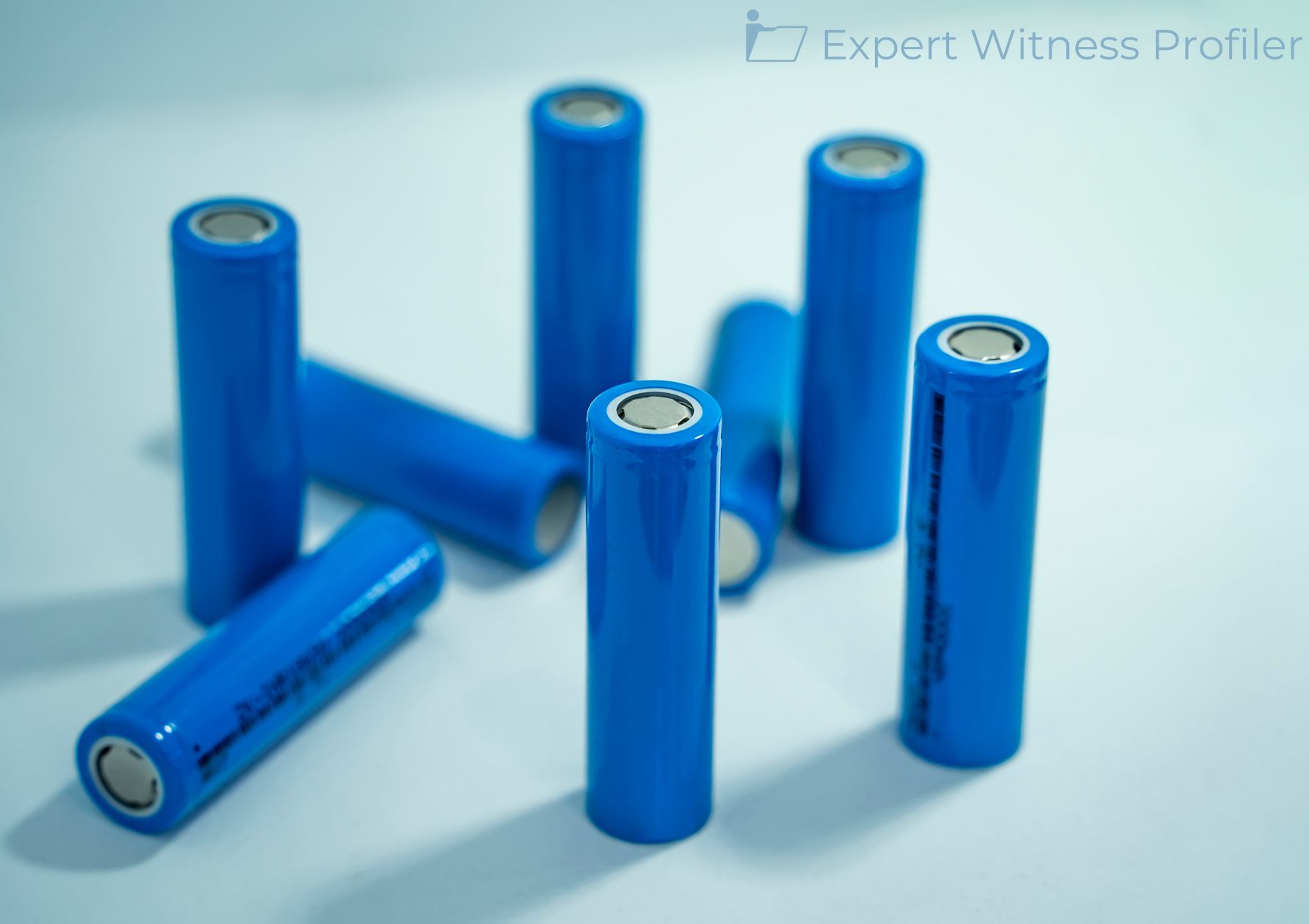
Raytheon Company (“Raytheon” or “Plaintiff”) is a large, international military and defense contractor holding several prime contracts with the United States Government. At their Fairdale location Raytheon maintains, stores, and services multiple mobile charging stations and storage locations for lithium-ion battery boxes (“LBBs”). The LBB’s were designed and manufactured by Saft but owned by the government pursuant to military contracts. Each LBB was stored within specially designed trailers commonly referred to as vaults.
Several of these prime contracts relate to the military’s ITAS/MITAS weapons system. The ITAS/MITAS weapon system is powered by large lithium-ion battery boxes (“LBBs”), several hundred of which were maintained, serviced, and stored at Raytheon’s facility in Louisville, Kentucky. The LBBs were stored in a series of containers known as LBB Vaults, which were supposedly explosion-proof.
On April 15, 2020, several of the LBBs inside LLB Vault #2 failed. Ahtna agreed to provide qualified sustainment services and other necessary support to Raytheon, which included management and oversight of Vault #2. No steps were taken by Raytheon to immediately remediate the hazard. The failed LBBs eventually ignited, leading to multiple fires on May 13 and May 14, 2020. The fires purportedly caused damage to Raytheon’s property. In this action, Raytheon seeks to hold the Ahtna Defendants and several of ASTS’ employees responsible for the damages allegedly stemming from this fire. The predicate for Raytheon’s claim is that the Ahtna Defendants breached the terms and conditions of an alleged contract between the parties pursuant to which the Ahtna Defendants were to supply field engineers and other support staffing to assist Raytheon in servicing the ITAS/MITAS weapons system.
Motion to Exclude
Doctor Tal Nagourney (“Dr. Nagourney”) is Ahtna’s expert witness in LBB design. In his opinion Nagourney discusses the LBB failures that occurred in April 2020, and how that incident relates to the fires in May 2020.
Tal Nagourney is an electrical engineer specializing in fire investigation and failure analysis of consumer electronics, appliances, batteries, USB devices, and semiconductor devices. He conducts scientific investigations to guide critical decisions.
His expertise is built on a foundation of research and experimental design from his doctoral studies in micro-electro-mechanical systems. As a forensic electrical engineer, he leverages this experience to lead an effective investigation, identify the root cause, and present the findings clearly to any audience.
In the field, Nagourney thoroughly documents the scene and ensures critical evidence is collected. In the laboratory, he performs meticulous testing to identify issues with design, manufacturing, and usage. Moreover, his experience with failures lends itself to design review, and he helps his clients avoid product failures that elude typical safety standard testing.
i. Legal Conclusions and Admissibility of Opinion Evidence
In his report, Nagourney stated (1) that “[t]he fire in Vault 2 on May 13, 2020 would not have occurred if LBBs 528 and 941 had not experienced exothermic failures one month prior on April 15, 2020” and (2) that “the LBB that ignited the May 13, 2020 fire was one of 14 compromised by the initial exothermic failures of LBBs 528 and 941. Had it not been compromised, the fire would not have occurred.”
The Court held that Nagourney’s contested opinions do not qualify as legal conclusions. The opinions do not touch on an ultimate issue of this claim, which is whether the LBBs were defectively designed such that they were the primary cause of the May event. Instead, they merely reflect the expert’s belief that the April and May fires in the Vault #2 were connected, not that Saft was responsible for either fire. Basically, his opinion does not define any legal standard or apply the facts of this case to any legal standard. And Nagourney’s opinion lacks any specialized legal language at issue, but instead, uses more scientific phrasing and conclusions such as, “would not have occurred” or “compromised.”
ii. Rule 702 Reliability Analysis
Saft argues that under Fed. R. Evid. 702’s “nonexclusive checklist for trial courts to consult in evaluating the reliability of expert testimony,” Nagourney’s testimony was unreliable, speculative, and inadmissible. Saft specifically alleged that the opinions were, (1) not tested, (2) not subjected to peer review and publication, (3) has an unknown error rate and unknown community acceptance rate, and (4) are unhelpful to the trier of fact.
a. Lack of testing
To begin with, Nagourney is a cause of accident expert. He conducted engineering analysis and a fire and explosion investigation using techniques found in NFPA 921, “Guide for Fire and Explosion Investigations.” Moreover, in making his own report Nagourney relied upon 84 different documents in some form. This included numerous incident and failure reports produced by Saft, Ahtna and Raytheon, videos and pictures of the April and May events, and reports and analysis about general hazards concerning LBBs. In fact, Nagourney was unable to perform independent testing of the LBB’s as they are government property and requests to conduct an examination were repeatedly denied by the other parties.
The Court held that since Nagourney was not only prevented from conducting independent testing of the LLBs but given the source and availability of data and information used by Nagourney in developing his opinion, independent testing is not needed.
b.Peer Review and Error Rate
Because Nagourney’s report is a cause of accident report which does not generally require independent testing, arguments regarding the lack of peer review or known error rates are irrelevant in determining whether the opinion meets the reliability requirement for purposes of admissibility.
Moreover, analysis of publication, peer review, error rate, and acceptance are all tied to testing. Since this Court has found that testing is not required, or particularly significant, in this case, Nagourney’s testimony is sufficiently reliable without peer review or known error rate. Therefore, those factors are inapplicable here.
c. Helpfulness to the Trier of Fact
Saft agued that Nagourney’s opinion “will not assist the trier of fact to understand the evidence or determine a fact in issue” for all the reasons previously alleged.
Nagourney’s qualifications as an expert witness are not challenged. Therefore, Nagourney’s report and opinions are based on his examination of provided facts and evidence and rely upon his technical and specialized knowledge of LBB’s to opine as to the cause of the May fires. Under Fed. R. Evid. 702 this is helpful to the trier of fact in determining whether Saft had manufactured or designed defective LBBs, key fact at issue regarding whether Ahtna could indemnify Saft for damages arising from the May event. Moreover, the Court has already examined Daubert factors that Saft cumulatively alleges here and finds that they do not make Nagourney’s opinion unreliable. The Court concluded that Nagourney’s opinions are helpful to the trier of fact.
Vouching for Another Expert
Saft alleged that the testimony in Nagourney’s supplemental report is inadmissible under Fed. R. Evid. 703 as it’s use of engineer Keith Thobe’s report is merely “vouching for the truth of what another expert told him.”
However, Federal Rule of Evidence 702 and 703 make clear that experts can rely on the data of others in certain circumstances. The drafters of the Federal Rules of Evidence “specifically contemplated that experts would rely on others with specialized knowledge.’” In conclusion, the Court held that Nagourney’s usage of data from an engineer in his own supplemental report is nothing more than the use of data from a source with specialized knowledge, a practice contemplated and permitted by the Federal Rules of Evidence.
Held
The Court denied Saft’s motion to exclude the testimony of Tal Nagourney.
Key Takeaways:
Firstly, Nagourney’s opinions do not touch on an ultimate issue of this claim, which is whether the LBBs were defectively designed such that they were the primary cause of the May event.
Secondly, Nagourney was unable to perform independent testing of the LBB’s as they are government property and requests to conduct an examination were repeatedly denied by the other parties.
Thirdly, Nagourney’s report and opinions are based on his examination of provided facts and evidence and rely upon his technical and specialized knowledge of LBB’s to opine as to the cause of the May fires.
Fourthly, Nagourney’s usage of data from an engineer in his own supplemental report is nothing more than the use of data from a source with specialized knowledge, a practice contemplated and permitted by the Federal Rules of Evidence.
Case Details:
Case Caption:
Raytheon Company V. Ahtna Support And Training Services, Llc Et Al
Philip and Nancy Fairman’s home sustained severe flooding during Hurricane Ian. After the storm, they filed a damage claim with their insurer, Defendant American Strategic Insurance Corp (“ASI”), to seek compensation for the losses. ASI acknowledged coverage but disputed the extent of the damage. When the Fairmans and ASI could not reach a settlement, the Fairmans initiated a lawsuit to pursue their claim further.
To facilitate discovery, the Court conducted a status conference and issued a scheduling order, requiring both parties to submit their Rule 26 expert disclosures by August 30, 2024. However, ASI failed to disclose its structural engineering expert witness, Brian Lindsey and did not provide the Fairmans with his report until nearly a month later, on September 26, 2024. ASI attributed this delay to an “oversight.”
In response, the Fairmans filed a motion to strike ASI’s delayed expert disclosure. They also asked the Court to bar ASI from using Lindsey’s report or testimony in dispositive motions. Additionally, they asked that Lindsey be barred from testifying at trial, asserting that ASI’s failure to meet the deadline could adversely affect their case.
Structural Engineering Expert Witness
Brian Lindsey, P.E., has over 20 years of forensic experience in cases involving damage assessments of design/construction defects, collapse of structures, vehicle impacts, structural fire damage, water intrusion, foundation movement, snow load failures, site drainage, wind damage, hail damage, exterior wall cladding damage and roofing systems damage.
Federal Rule of Civil Procedure 26 governs expert witness disclosures, aiming to prevent surprises in litigation and ensure parties can adequately prepare their cases. The rule mandates that parties disclose the basis of their expert opinions on time. Compliance with Rule 26 is not aspirational; it is mandatory. When a party fails to meet these obligations, Rule 37(c) grants the court discretion to exclude the expert unless the violation was substantially justified or harmless.
ASI, having violated Rule 26, bore the burden of proving that its noncompliance was either justified or harmless. Substantial justification exists when reasonable minds could differ on the need to comply. Harmlessness, however, involves considering factors such as the element of surprise, the opposing party’s ability to address it, potential disruption to the trial, the evidence’s significance, and the reason for the failure to disclose.
ASI did not argue that its conduct was substantially justified, nor did it address the factors necessary to establish harmlessness. Instead, ASI attributed the delay in disclosing its expert to an “oversight” and sought leniency, claiming no intentional violation or prejudice to the Fairmans. However, these explanations do not meet the required standard. Courts have consistently held that excuses such as oversight or clerical errors are insufficient to justify noncompliance with Rule 26.
Consequently, ASI failed to satisfy its burden. The Court held that ASI cannot call Brian Lindsey as a witness or use his report as evidence in motions, hearings, or trial proceedings.
Held
The Court granted the Plaintiffs’ motion to strike Defendant American Strategic Insurance Corp.’s Rule 26 expert disclosure as untimely. Further, structural engineering expert witness Brian Lindsey’s report and expert testimony were stricken and excluded from further consideration in the lawsuit.
Key Takeaways:
The Court excluded ASI’s structural engineering expert witness, Brian Lindsey, and his report due to ASI’s failure to comply with Federal Rule of Civil Procedure 26, which mandates timely disclosure of expert witnesses to prevent trial surprises and ensure adequate case preparation.
ASI did not provide substantial justification for its month-long delay nor argued that the delay was harmless. Instead, ASI claimed the missed deadline resulted from an “oversight.” The Court found this explanation insufficient, emphasizing that clerical errors and oversight do not excuse Rule 26 violations. In conclusion, the Court granted the Fairmans’ motion to strike Lindsey’s testimony, barring ASI from using his evidence at any stage of the litigation.
Case Details:
Case caption:
Fairman v. Am. Strategic Ins. Corp.
Docket Number:
2:23cv788
Court:
United States District Court for the Middle District of Florida, Fort Myers Division
In 2007, SCANA received legislative approval to construct two nuclear reactors at the V.C. Summer Nuclear Generating Station in Fairfield County, South Carolina” (the “Nuclear Project”). Deloitte served as SCANA’s external auditor for over 70 years. International Brotherhood of Electrical Workers Local 98 Pension Fund alleges that, “[t]hroughout the Class Period, Deloitte repeatedly violated its professional responsibilities, failed in its role of gatekeeper and deceived investors about SCANA’s accounting for, and expected completion of” the Nuclear Project.
Deloitte allegedly “gave unqualified, ‘clean’ audit reports on SCANA’s financial statements and internal control over financial reporting, misleading investors into believing that SCANA would complete the Nuclear Project in time to obtain $1.4 billion in nuclear tax credits[,] despite voluminous evidence that SCANA could not possibly achieve this goal.”
The Consolidated Complaint alleged that SCANA, its investors, government regulators, and Deloitte understood that the success of the Nuclear Project depended on SCANA obtaining $1.4 billion in federal production tax credits and being able to raise energy rates on consumers to cover construction costs.
Plaintiff International Brotherhood of Electrical Workers Local 98 Pension Fund filed a motion for class certification, appointment of class representative, and appointment of class counsel (the “Class Certification Motion”) while Deloitte filed a motion to exclude the damages-related opinion offered in Dr. Matthew D. Cain’s expert report.
Economics Expert Witness
Matthew D. Cain is a Ph.D in Finance, a Senior Fellow at the Berkeley Center for Law and Business, and a Senior Visiting Scholar at Berkeley Law School, University of California. He teaches courses, delivers guest lectures, participates in academic seminars, and conducts research in various topic areas related to finance, economics, accounting, law, and business.
His research is focused on topics including empirical corporate finance, corporate governance, board independence, mergers and acquisitions, hostile takeovers, shareholder lawsuits, negotiations, financial contracting, disclosures of financial information, and shareholder activism. Cain worked at the SEC between 2014 and 2018 as a Financial Economist. Before working at the SEC, he was an Assistant Professor of Finance at the University of Notre Dame. Cain has also published research in leading peer-reviewed finance, accounting, law, and economics journals.
Deloitte did not challenge Cain’s qualifications, and the Court concluded that Cain is qualified to opine on the matters discussed in his reports.
Based on his analysis, Cain “formed the opinions that the market for shares of SCANA’s Common Stock was efficient during the Class Period” and that “damages in this matter can be calculated on a class-wide basis subject to a common methodology.” Deloitte challenged only Cain’s opinion regarding damages and, thus, the Court limited its discussion to Cain’s damages-related opinion.
Cain’s first report, dated April 30, 2021 (the “First Report”), explained that “[t]he ‘out-of-pocket’ method of calculating damages represents a standard and well-accepted methodology under Section 10(b) of the Exchange Act” and that the “approach calculates damages formulaically as the artificial inflation in the share price at the time of purchase minus the artificial inflation in the share price at the time of sale.”
Deloitte challenged Cain’s damages-related opinion on two bases. First, Deloitte argued that IBEW asserted two damages theories––a materialization of risk theory and a corrective disclosure theory––but that Cain’s report ignored the materialization of risk theory.
Deloitte’s Challenge Regarding the Materialization of Risk Theory
Deloitte contended that Cain’s report appears to be referencing corrective disclosures rather than risk.
However, as the Fourth Circuit has explained, “the ultimate loss causation inquiry under either the corrective disclosure theory or the materialization of a concealed risk theory is the same: whether a misstatement or omission concealed something from the market that, when disclosed, negatively affected the value of the security.”
The First Report stated that Cain will use the out-of-pocket method for calculating damages on a class-wide basis. The out-of-pocket method calculates the difference between the price at which the stock sold and the price at which the stock would have sold absent any artificial inflation cause by a Defendant’s alleged misrepresentations or omissions.
Accordingly, the Court concluded that Cain has offered a reliable damages model consistent with IBEW’s liability case and has demonstrated that IBEW’s damages are attributable to that theory of liability.
Deloitte’s Challenge Regarding Damages Attributable Only to Deloitte
Deloitte next argued that Cain failed to identify or offer a “methodology by which damages attributable to SCANA, its officers, or others could be separated from damages attributable to Deloitte.” However, at the class certification stage in a securities fraud class action, a methodology is not required “to make an allowance for any damages caused by things other than the Defendants’ alleged fraud.”
Moreover, Cain has explained that “event studies are widely-employed to calculate artificial inflation [and] measure stock price reactions to corrective disclosures which reveal the relevant truth that was concealed by alleged material omissions and/or misrepresentations.”
Additionally, Cain opined, “to the extent that reliable evidence is introduced to show that a material portion of the difference in the artificial inflation between the purchase and sale of the securities may be attributed to non-fraud related factors, the impact of such ‘confounding information’ on the price of SCANA securities can be determined on a common, classwide basis using various accepted methodologies.” Accordingly, the Court concluded that Cain’s damages-related opinion should not be excluded.
Held
The Court denied Deloitte’s motion to exclude damages-related expert opinion of Dr. Matthew D. Cain.
The Court granted IBEW’s motion for class certification, appointment of class representative, and appointment of class counsel.
Key Takeaways:
Cain’s damages-related opinion were admissible because Cain has offered a reliable damages model consistent with IBEW’s liability case and has demonstrated that IBEW’s damages are attributable to that theory of liability.
Moreover, at the class certification stage in a securities fraud class action, a methodology is not required “to make an allowance for any damages caused by things other than the Defendants’ alleged fraud.”
Case Details:
Case Caption:
International Brotherhood Of Electrical Workers Local 98 Pension Fund V. Deloitte & Touche Llp Et Al
This matter involves an incident that occurred on May 29, 2020, while Plaintiff, David Zuniga was present during the George Floyd protests in Grand Park, Downtown Los Angeles. During this time, Zuniga and his experts contended that he was struck with a nonlethal projectile to his head by Officer Aaron Green. Officer Green, and the other named officer Defendants were assisting in controlling a crowd of protestors who were unlawfully protesting in the Grand Park area, after an unlawful assembly was declared and a dispersal order had been given.
Plaintiff filed a motion to preclude Defendants’ law enforcement practices expert, Edward T. Flosi‘s opinions and to preclude him from testifying in this action on the grounds that Flosi’s opinions “are unreliable and do not meet the standards as required under Fed. R. Evid. Rule 702 and Daubert,” are speculative, attempt to resolve questions of fact and thus “invade the province of the jury,” and offer improper legal conclusions.
Law Enforcement Expert Witness
Edward Flosi is a law enforcement practices expert with over 35 years of experience. He has a Masters of Science in Emergency Services Administration from the California State University Long beach and a Bachelor of Science in Criminal Justice Administration. Flosi is currently an adjunct instructor in the Administration of Justice Department at West Valley College in Saratoga, California and is a Principal Instructor/President/CEO of PROELIA Defense and Arrest Tactics, LLC. He is also a Director of Training for ShotSpotter, Inc. He was previously a San Jose Police Sergeant and San Jose Police Officer, where he was a law enforcement instructor in the training unit and was a training unit supervisor.
Plaintiff first argued that Flosi’s opinions are generally unreliable because they “are based on the teachings of the Force Science Institute,” which Plaintiff contended is “a purveyor of unreliable pseudoscientific analysis engineered to justify officers’ use of force.” Plaintiff cites to another court case from this district in which the Court granted a motion in limine to exclude testimony from a “force science expert” associated with the Force Science Institute. In that case, the expert was not Flosi but a different individual who also had an extensive background in law enforcement. The Court noted that the expert’s “long career in law enforcement might qualify him as an expert in some subjects, but not in the subjects for which he is offered here, namely disciplines of behavioral science.”
Here, Defendants do not offer Flosi as a “force science expert.” Defendants’ expert disclosures stated that he will “testify about the tactics and uses of force employed by the individual Defendants in this action in relation to the conduct of Plaintiffs at the time of the subject incident. He will opine as to the use of force, if any, employed at the time of the incident, including human factors associated with threat perception, response and performance during rapidly unfolding encounters.” Plaintiff argued that Flosi’s opinions should be excluded “to the extent they are based upon FSI principles,” but no part of Flosi’s expert report indicated that any of his opinions are based upon this information. The Court found that Flosi’s extensive background and experience in law enforcement qualifies him to testify as to police practices and tactics, as Defendants’ expert disclosures state.
Legal Conclusions
Plaintiff also sought to exclude each of Flosi’s opinions because the opinions “reach legal conclusions that directly usurp the role of the jury.” Plaintiff further argued that Flosi “devoted significant portions of [his] analysis] . . . attempting to dictate what the evidence is,” which is improper.
The Court held that Flosi may testify as to his understanding of the facts, but not to legal conclusions based on what the evidence shows. For instance, the Court excluded Flosi’s opinion regarding whether it is “objectively reasonable” to fire a projectile impact weapon at a person that a reasonable officer would perceive as being armed and/or poses an immediate threat of violence or physical harm to an officer or another person. However, Flosi was allowed to testify as to whether such actions are consistent with current law enforcement practices and training.
Held
The Court granted in part and denied in part the motion to preclude Defendants’ law enforcement practices expert, Edward T. Flosi.
Key Takeaways:
Flosi’s extensive background and experience in law enforcement qualifies him to testify as to police practices and tactics. No part of Flosi’s expert report indicated that any of his opinions are based upon Force Science Institute principles.
Flosi’s opinion regarding whether it is “objectively reasonable” to fire a projectile impact weapon at a person that a reasonable officer would perceive as being armed and/or poses an immediate threat of violence or physical harm to an officer or another person constitutes a legal conclusion.
Case Details:
Case Caption:
David Zuniga V. City Of Los Angeles Et Al
Docket Number:
2:22cv3665
Court:
United States District Court for the Central District of California