Blog

  • Valuation Expert Witness’ Testimony is Excluded Because his Experience as a Marine Appraiser is not Demonstrated

    Valuation Expert Witness’ Testimony is Excluded Because his Experience as a Marine Appraiser is not Demonstrated

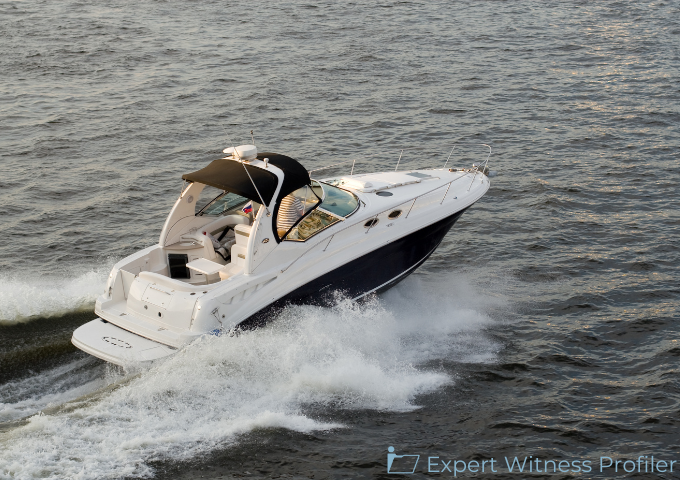
    Plaintiff Max Zach Corporation entered into a contract with Defendant Marker 17 Marine (“Marker 17”) to modify Plaintiff’s vessel, a 2006 48′ Fountain Express Cruiser (the “Boat”)by retrofitting and repowering it with four Mercury Outboard 400 Racing Motors, at a cost of about $315,000. The agreement also provided for the delivery of the Boat by Marker 17 to Plaintiff in Greenwich, Connecticut.

    The Boat was modified to specification by Marker 17, packaged, and loaded for transport from Wilmington, North Carolina to Greenwich, Connecticut. Marker 17 selected Defendant Premium Carriers Inc. (“Premium Carriers”) to assist with loading the Boat onto a trailer and to transport the Boat via land transport. The Boat was damaged when, in New Jersey, Premium Carriers accidentally flipped the trailer carrying the Boat en route to Plaintiff. Thereafter, Superior Towing and Transport, LLC towed the Boat from the accident site to its storage facility in New Jersey, where the Boat is still stored at a rate of $150 per day.

    In the Second Amended Complaint, the Plaintiff raised four causes of action:

    (1) negligence against Marker 17,

    (2) breach of contract against Marker 17,

    (3) conversion against Marker 17, and

    (4) violation of 49 U.S.C. Section 14706 against Premium Carriers.

    Plaintiff disclosed Scott Mitchell as his valuation expert witness whose testimony Defendants moved to preclude, arguing that Mitchell is unqualified to opine on the valuation of the Boat and that his testimony is unreliable and inadmissible. 
    Valuation Expert Witness

    Valuation Expert Witness

    Scott Mitchell is the owner and sales manager of Boardwalk Marina in Stratford, Connecticut. He has decades of experience as a certified boat dealer, which includes dealing in Fountain powerboats from 2004-2010.

    Want to know more about the challenges Scott Mitchell has faced? Get the full details with our Challenge Study report.

    Discussion by the Court

    A. Scott Mitchell’s Qualifications

    Mitchell, the owner and sales manager of Boardwalk Marina in Stratford, Connecticut, offered an opinion on the Boat’s valuation and the market value if sold as new today. The Defendants claimed that he did not employ the level of intellectual rigor necessary to opine as to the valuation of the boat.

    In response, the Plaintiff cited Mitchell’s decades of experience as a certified boat dealer.

    However, Mitchell’s expert report makes no reference to any experience as a marine surveyor or appraiser; instead, Mitchell states in the addendum to his expert report that his “qualifications derive from buying, repairing, building, and selling new and used boats since his entire adult life.” Further, at both his deposition and the hearing, Mitchell testified that he is not certified to do valuations, he does not belong to the American Society of Appraisers or any other association of appraisers, and he is not a licensed appraiser in any state.

    While Mitchell, as a dealer and reseller of boats, may be qualified to be an expert in boat sales and resale values, his qualifications and experience as a marine appraiser are not demonstrated. The Court cannot conclude that his knowledge of boat valuations is sufficient such that his opinion would likely assist the trier in fact in arriving at the truth and, accordingly, finds that Mitchell is not qualified to be an expert as to the valuation of the Boat. 

    B. Reliability of Mitchell’s Testimony

    Defendants argued that Mitchell’s testimony was unreliable for two reasons:

    (1) it did not follow any recognized methodology, including Uniform Standards of Professional Appraisal Practice (“USPAP”), and

     (2) it was speculative, contradictory, and assumptive.

    Mitchell’s opinion is unreliable because the Court cannot discern the exact methodology Mitchell used to valuate the Boat. Mitchell concludes in his report that the value of the Boat is $640,000, which is the sum of the $315,000 cost to “re-power” the Boat and the Boat’s $325,000 value based on 2021 prices. Nowhere in the report does Mitchell explain how he arrived at the $325,000 value of the Boat or what were the “2021 prices” on which he relied; rather, he simply states, without more, that the included exhibits of other boats “can be used to triangulate on value but moreover, support his conclusion of using the cost basis rather than market comps.”

    i. Mitchell’s testimony is also contradictory and misleading

    The Court’s confusion regarding Mitchell’s methodology is exacerbated by Mitchell’s contradictory and misleading testimony. As noted, Mitchell’s report suggests that he relied on the “cost basis” method only, and not on comparable sales, to valuate the Boat. However, at his deposition in June 2024, Mitchell testified that he used a “blend of comparables and cost basis” based on “[p]revious boat sales, current boat sales, current boat valuations, and then on the cost basis, what the guy paid to have the boat redone[.]”

    Mitchell again changed his explanation of the comparable sales and how he valued the Boat at the September 2014 hearing on the instant motion, further supporting the Court’s conclusion that his expert opinion is unreliable. Mitchell affirmed that to ascertain the $325,000 number in his valuation, he used a comparable “sale” of a 2006 48-foot Fountain listed for $388,944, and that the two other boats mentioned in the report were not comparables. 

    He thereafter conceded that none of these references or calculations were in his expert report or produced to Defendants. Moreover, because Mitchell testified at his deposition that the only records he used to calculate the $325,000 value were from the Boat Trader website, the Court held that Mitchell’s opinion is unreliable for being assumptive, contradictory, and, most importantly, rooted in inadequate methodology. Daubert and Federal Rule of Evidence 702 thus mandate the preclusion of Mitchell’s report and testimony.

    C. Relevance of Mitchell’s Testimony

    Since the Court held that Mitchell is not qualified to serve as an expert and his testimony is unreliable, the Court declined to address whether his testimony met the relevance standard under Federal Rule of Evidence 401.

    Held

    Therefore, the Court granted the Defendant’s motion to exclude Plaintiff’s valuation expert witness Scott Mitchell’s testimony

    Key Takeaways:

    The Court excluded Scott Mitchell’s expert testimony regarding the valuation of the Plaintiff’s boat due to two primary reasons:

    • Lack of Qualifications: While Mitchell, as a dealer and reseller of boats, may be qualified to be an expert in boat sales and resale values, his qualifications and experience as a marine appraiser are not demonstrated. The Court cannot conclude that his knowledge of boat valuations is sufficient such that his opinion would likely assist the trier in fact in arriving at the truth and, accordingly, finds that Mitchell is not qualified to be an expert as to the valuation of the Boat. 
    • Unreliable Methodology: In addition to the fact that Mitchell did not see or examine the Boat, or any comparable boats, prior to rendering his opinion as to the Boat’s valuation and that his report contains no comments or criticisms of Defendants’ vastly different appraisal that was prepared a month earlier, there is no indication from Mitchell’s expert report or deposition testimony that his “testimony is the product of reliable principles and methods” or that he “reliably applied the principles and methods to the facts of the case.”

      Case Details

    Case caption: Max Zach Corporation V. Marker 17 Marine Et Al
    Docket Number: 3:23cv1088
    Court: United States District Court for the District of Connecticut
    Dated: October 30, 2024
  • Insurance Expert Witness’ Testimony Limited Because it is Needlessly Cumulative

    Insurance Expert Witness’ Testimony Limited Because it is Needlessly Cumulative

    This lawsuit stems from claims of breach of contract and statutory and common-law bad faith.

    It all started when Plaintiff, Paul Schulz, was injured when his motorcycle struck an oil spill in the roadway, causing the front tire to slide out and the motorcycle to overturn. Shortly thereafter, Schulz filed a claim with his insurer, Shelter Mutual Insurance Company (“Shelter”), for uninsured/underinsured motorist (“UIM”) coverage. After speaking with Schulz about the accident and the injuries he sustained, the claims adjuster determined Schulz was 100% at fault for the accident and denied coverage. When Schulz hired an attorney, Shelter agreed to consider any other information that might bear on the claim and ordered the police report. Nine days later, Shelter again denied the claim on the basis that Schulz was more than 50% at fault.

    Defendant filed a motion to strike certain opinions of Plaintiff’s industry standard expert Brian Seigal.

    Insurance Expert Witness

    Brian Seigal has been involved in the insurance industry throughout his career since 1995, working in and being responsible for claims departments. He has a multi-line background in P & C and Health Insurance. He has managed claims departments for carriers and TPAs, with experience spanning primary, excess, and reinsurance levels. Over the years, he has managed and trained hundreds of adjusters and has been involved with thousands of claims. He has also held department reserve and settlement authority.

    Get the full story on challenges to Brian Seigal’s expert opinions and testimony with an in-depth Challenge Study. 

    Discussion by the Court

    Seigal should be precluded from relying on averments in Shelter’s amended answer to the complaint

    Shelter first argued Seigal should be precluded from relying on averments in Shelter’s amended answer to the complaint to draw conclusions about the adequacy vel non of Shelter’s investigation. Essentially, in response to a series of allegations regarding the cause of the crash, the nature of Schulz’s injuries, and Shelter’s initial investigation, Shelter responded that it was without sufficient information to admit or deny those allegations. Seigal opined these answers demonstrate Shelter’s investigation was inadequate because they suggest Shelter was unclear as to the basic facts of the accident, the nature and extent of Schulz’s damages, and the results of its own investigation.

    The Court held that the relevant facts regarding Shelter’s initial investigation are recited in Shelter’s claim file notes and were the subject of inquiry at the 30(b)(6) depositions of the corporate representatives. Expert testimony regarding Shelter’s pleadings about these same matters therefore also would be needlessly cumulative and wasteful of limited trial time.

    Seigal’s opinion suggests Shelter’s investigation was unreasonable for failing to engage experts to vet Schulz’s claim prior to the initiation of litigation

    Seigal stated there exist a variety of tools of which a carrier may take advantage to fulfill its duty of reasonable investigation, and while there is no formulaic approach, not pursuing a particular investigative avenue may indicate a lack of good faith in particular circumstances. Seigal suggests this case presented a circumstance in which the adjuster should have engaged one or more experts as part of the investigation of the claim.

    Shelter points out that the insured bears the initial burden of producing sufficient evidence to suggest his damages were caused by an event that comes within the coverage of the policy.

    The Court held that it is not objectionable for Seigal to opine that Schulz’s case was one which warranted the retention of one or more experts as part of Shelter’s investigation.

    Seigal testified that Shelter’s attempt to condition payment of Schulz’s policy limits on his execution of a release was impermissible and unreasonable

    Shelter sought to preclude Seigal from testifying that Shelter’s attempt to condition payment of Schulz’s policy limits on his execution of a release was impermissible and unreasonable.

    Shelter attached a Release and Trust Agreement to his settlement letter which, inter alia, would have required Schulz to release Shelter from “all liability under any Uninsured Motorist/Underinsured Motorist/Uninsured Motorist Property Damage policy provisions for bodily injury, sickness, disease, or property damage (collectively “damages”) arising from the accident.”

    The Court denied the motion to exclude this portion of Seigal’s testimony because the insurer breaches its duty not to unreasonably delay or deny payment of undisputed benefits, even if additional benefits remain in dispute. Shelter’s recommendations with regard to the payment of benefits suggested that Shelter acknowledged Schulz was entitled to a payment of more than $138,000, but suggested withholding the remainder of the policy limits until he signed a release.

    Seigal opined, in regard to the withholding of the Fisher payment, that “other courts in Colorado have dealt with similar issues and provided orders against carriers who utilized these practices”

    Lastly, and relatedly, Shelter objected to Seigal testifying, in regard to the withholding of the Fisher payment, that “other courts in Colorado have dealt with similar issues and provided orders against carriers who utilized these practices.” Seigal’s supplemental report suggested that he will provide these cases in a further supplemental appendix, and Schulz claims by his response that they have been provided to Shelter in discovery (although Shelter disputes that suggestion).

    Critically, however, these cases are nowhere to be found in the record before the court. It therefore is impossible for the court to determine whether these cases are indeed analogous, as Seigal suggests. Even if they were, the Court held that allowing Seigal to discuss these other cases at trial runs too great a risk of confusing and misleading the jury, as well as wasting time on matters that can be, at best, merely tangential to the issues this jury will be asked to decide.

    Held

    The Court granted in part and denied in part Defendant’s motion to strike certain opinions of Plaintiff’s industry standard expert Brian Seigal.

    Key Takeaway:

    • The insured bears the initial burden of producing sufficient evidence to suggest his damages were caused by an event that comes within the coverage of the policy. As a result, Shelter’s investigation was unreasonable for failing to engage experts to vet Schulz’s claim prior to the initiation of litigation.
    • According to Shelter’s recommendations with regard to the payment of benefits, Shelter was aware that Schulz was entitled to a payment of more than $138,000, but suggested withholding the remainder of the policy limits until he signed a release. However, the insurer breaches its duty not to unreasonably delay or deny payment of undisputed benefits, even if additional benefits remain in dispute.

    Case Details:

    Case Caption: Schulz V. Shelter General Insurance Company
    Docket Number: 1:23cv1657
    Court: United States District Court, Colorado
    Order Date: September 12, 2024
  • Psychology Expert Witness’ Testimony Admitted Because of His Involvement in a Research Project Related to TMS

    Psychology Expert Witness’ Testimony Admitted Because of His Involvement in a Research Project Related to TMS

    Wave Neuroscience alleged that Brain Frequency infringed four patents in this case. The vast majority of claims asserted in this litigation against Brain Frequency are method claims that relate to the performance of a medical procedure by medical practitioners on patients. Defendants claimed that Brain Frequency is immune because it is a “related health care entity” that merely facilitates the performance of those accused medical activities by medical practitioners.

    Section 287(c) of the Patent Act, known as the Physician’s Immunity Statute, mandates an exception to infringement claims asserted under Section 271 (a) and (b) of the Patent Act. In cases where infringement allegations involve medical practitioners or physicians performing medical procedures on patients in violation of an asserted method claim, these parties are immune from all remedies associated with the alleged infringement.

    The Plaintiffs contended that Brain Frequency is neither a medical provider nor a facility where medical providers practice medicine.

    Wave filed a motion to strike Brain’s expert report of Dr. Jared Dempsey under Federal Rule of Evidence 702. The Court granted Wave’s motion “without prejudice to the extent Brain can cure the deficiencies with Dempsey’s qualifications.” Two weeks later—on October 17, 2024—Brain filed a “Notice of Cure.” This included a revised declaration by Dempsey which, among other things, detailed his involvement in the Study. Brain also filed, under seal, the study itself. Brain contended that this information cured the deficiencies.

    Psychology Expert Witness

    Jared P. Dempsey, Ph.D. serves as Chief Scientist at Trac9 Informatics. Dempsey is actively involved in neurological and physiological research in addiction.

    Recent publications include preliminary evidence for a biological marker of addiction recovery, non-conscious emotional response to drug stimuli, and the influence of social anxiety on addiction treatment.

    Dempsey has also served as an expert reviewer for the Journal of Motivation and Emotion, Psychopharmacology, Journal of Psychopathology and Behavioral Assessment, American Journal on Addictions, Addiction, Psychiatry Research, European Psychiatry, Nicotine and Tobacco Research, and the Journal of Studies on Alcohol and Drugs.

    Dempsey was also actively involved in the development of a comprehensive symptom tracking and outcome data collection tool for addiction treatment, Trac9.

    Get the full story on challenges to Jared P. Dempsey’s expert opinions and testimony with an in-depth Challenge Study. 

    Discussion by the Court

    Initially, the Court held that Dempsey did not have the proper qualifications because there was insufficient evidence to demonstrate he had “advanced training or experience” in Transcranial Magnetic Stimulation (“TMS”). The Court found that the reference to a single research project related to TMS from May 2022–April 2024 (the “Study”) on Dempsey’s curriculum vitae, without further information, did not establish that he had a “hands-on or technology-facing” role.

    However, Dempsey attests that he directly participated in the treatment of subjects using TMS and EEG technology, that he outlined the precise treatment protocols used in the study, and that he participated in the actual application of TMS using EEG and certain software to gauge the effects. This appeared to be a “forward-facing role.” Dempsey further states he has worked on the Study since 2022 for over 1,000 hours, along with months of preparatory work.

    Wave’s Objections

    The Court held that Wave’s two objections are unavailing. First, Wave maintained that Dempsey is not qualified to opine as a person of ordinary skill in the art (“POSITA”). Its primary qualm is that Dempsey does not explain “the nature of actual TMS treatments provided.” But the Study itself explains the nature of the treatments. And the Court does not see how the “nature of the treatments,” or what the TMS treatments were targeted to, would affect whether Dempsey is a POSITA. Wave’s own proposed definition of a POSITA is not cabined to a specific type of TMS treatment.

    Second, Wave also claims that it will suffer undue prejudice if Brain is granted relief. The Court does not see how Dempsey’s testimony, if any, would prejudice Wave. Wave has been on notice of Dempsey’s testimony since at least May 2024 when Brain filed its opening claim construction brief. The October 2, 2024 status conference proceeded under the assumption that Dempsey would testify at the Markman hearing. The Court explicitly granted Brain an opportunity to cure the deficiencies in its designation. The Court added that any assumption on Wave’s part that Dempsey’s conclusions or testimony would be permanently excluded was unwarranted.

    Because Brain has cured the deficiencies in Dempsey’s designation as a POSITA, the Court vacated the order granting Wave’s motion to strike. Wave may, of course, seek appropriate discovery, including an abbreviated deposition of Dempsey, to inquire into issues that impact the credibility and weight of his testimony (e.g., his background, experience, and any other appropriate matters). Such discovery will be sufficient to cure any “prejudice” that Wave has suffered in the past three weeks.

    Held

    The Court held that the that the order granting motion to strike Brain Frequency’s expert Jared Dempsey is vacated, and Wave’s motion to strike Dempsey is denied.

    Key Takeaway:

    Initially, the Court held that Dempsey did not have the proper qualifications because there was insufficient evidence to demonstrate he had “advanced training or experience” in Transcranial Magnetic Stimulation (“TMS”). Two weeks later, Dempsey submitted a revised declaration which, among other things, detailed his involvement in the Study. The Court found that Dempsey directly participated in the treatment of subjects using TMS and EEG technology, that he outlined the precise treatment protocols used in the study, and that he participated in the actual application of TMS using EEG and certain software to gauge the effects.

    Case Details:

    Case Caption: Wave Neuroscience, Inc. V. Brain Frequency Llc Et Al
    Docket Number: 5:23cv626
    Court: United States District Court, Texas Western
    Order Date: October 22, 2024
  • Radiology Expert Witness’ Testimony Admitted Despite Claims of Being Cumulative

    Radiology Expert Witness’ Testimony Admitted Despite Claims of Being Cumulative

    On November 18, 2021, Plaintiff was driving his vehicle on LA 21 in St. Tammany, Louisiana, when he alleged that Reginald Mitchell (Defendant), attempted to merge into the left lane while operating a tractor-trailer, causing a collision. As a result of this collision, Plaintiff sustained injuries. Defendants retained Dr. Ryan T. Fitzgerald, a radiologist, and Dr. Everett G. Robert, a neurosurgeon, to testify as expert witnesses. 

    Robert opined that he would not recommend surgery and that Plaintiff’s injuries were not related to the automobile collision. Fitzgerald reviewed Plaintiff’s diagnostic imaging and he is expected to testify that the imaging “of the cervical and thoracic spine obtained post-Accident on February 19, 2022 revealed no objective findings of trauma but rather, exhibited chronic multilevel degenerative disease and numerous potential degenerative pain generators unrelated to the Accident.”

    As a result, the Plaintiff filed a Daubert motion in limine to exclude or limit Ryan T. Fitzgerald’s testimony.

    Radiology Expert Witness

    Ryan T. Fitzgerald earned his medical degree from the University of Arkansas for Medical Sciences (UAMS) College of Medicine. He specializes in neuroradiology. Fitzgerald joined Radiology Consultants in July of 2017 and is a member of the Radiology Support Communication and Alignment Network (R-SCAN) committee.

    Get the full story on challenges to Ryan T Fitzgerald’s expert opinions and testimony with an in-depth Challenge Study.

    Discussion by the Court

    Plaintiff claimed that Fitzgerald’s testimony should be excluded because it was cumulative of Robert’s testimony. According to Plaintiff, allowing Fitzgerald to testify would confuse the jury, waste time, and present repetitive evidence, which could unfairly prejudice Plaintiff. Alternatively, Plaintiff requested that Fitzgerald’s testimony be limited to avoid redundancy with Robert’s testimony.

    Defendants asserted Fitzgerald’s testimony would benefit the jury by adding clarity and fostering the jury’s understanding of the complex imaging presented to them at trial. They pointed out that Plaintiff did not raise a Daubert challenge to Fitzgerald’s testimony. Since Fitzgerald and Robert have different specialties, Defendants asserted that they formed their respective opinions based on different vantage points.

    A review of Robert and Fitzgerald’s expert reports reveals that their separate specialties led the doctors to approach their analyses of Plaintiff’s medical conditions from different vantage points. Robert is a neurosurgeon who performed an independent medical examination of Plaintiff. Fitzgerald is a radiologist, whose review was limited to the diagnostic imaging. Although Robert also referenced the diagnostic imaging, Fitzgerald has specific expertise in that area as a radiologist. Therefore, while there may be some overlap in their testimony, the Court held that the reports of Robert and Fitzgerald are not cumulative of each other.

    Coming to the same conclusion does not make the reports duplicative. Any objection to Robert and Fitzgerald’s conclusions are best addressed on cross examination. Considering that exclusion of evidence under Rule 403 should occur only sparingly, the Court will allow Defendants to call both experts. However, testimony at trial may be limited to the extent that it is cumulative and causes undue delay.

    Held

    The Court denied Plaintiff Shaun E. Howard’s Daubert motion in limine to exclude or limit the testimony of Ryan T. Fitzgerald.

    Key Takeaway:

    Robert is a neurosurgeon who performed an independent medical examination of Plaintiff. Fitzgerald is a radiologist, whose review was limited to the diagnostic imaging. Although Robert also referenced the diagnostic imaging, Fitzgerald has specific expertise in that area as a radiologist. Therefore, while there may be some overlap in their testimony, the Court held that the reports of Robert and Fitzgerald are not cumulative of each other.

    Please refer to the blog previously published about this case:

    Neurosurgery Expert Witness’ Testimony Admitted Despite Lack of Textual Support

    Case Details:

    Case Caption: Howard v. J&B Hauling, Llc, et al
    Docket Number: 2:22cv993
    Court: United States District Court, Louisiana Eastern
    Order Date: October 9, 2024
  • Nursing Expert Witness’ Opinions on the Propriety of Treatment Recommendations Admitted

    Nursing Expert Witness’ Opinions on the Propriety of Treatment Recommendations Admitted

    This matter stems from a motor vehicle accident that occurred on May 21, 2023 when the vehicle driven by Plaintiff, Juwan Brown, and occupied by his parents, Clarence and Tawanna Brown, was struck by a commercial vehicle driven by Dashawn Brooks.

    The commercial vehicle was owned by Penske Truck Leasing Co. and leased by Defendant Mayflower Laundry & Linen. As a result of the accident, Plaintiffs have alleged that they have sustained various injuries and damages.

    Defendants retained Lynda Kopishke “to provide a rebuttal report in response to the reports of Plaintiffs’ life care planning experts.” In her reports, Kopishke opined on the medical necessity of treatment that is recommended by Plaintiffs’ medical and vocational consultants and included in the life care plan for each Plaintiff. Plaintiffs argued that Kopishke’s opinions are “well beyond the scope of her expertise.”

    Nursing Expert Witness

    Lynda Kopishke, DL, MSN, RN received her diploma in Nursing from St. Francis Hospital School of Nursing in Wilmington, Delaware. After several years of successful practice, Kopishke attended Wilmington University, where she obtained a Bachelor of Science and a Master of Science in Nursing degree. At Widener University School of Law, Kopishke received her Doctorate of Laws in Health Care Policy.  She has served on various nursing boards at both the local and national levels. Kopishke’s practice settings include adult and neonatal intensive care, home health nursing, rehabilitation, Legal Nurse Consulting, and infusion therapy. 

    Get the full story on challenges to Lynda Kopishke’s expert opinions and testimony with an in-depth Challenge Study. 

    Discussion by the Court

    Plaintiffs focused on the qualification element of Rule 702, arguing that Kopishke, although she is a qualified nurse and life care planner, is not qualified to offer opinions related to the propriety of treatment recommendations because she is not a physician.

    However, the Court held that she holds bachelor of science and master of science degrees in nursing, and a doctor of laws in health care policy. She has worked as an interim care and direct care nurse, providing skilled nursing assessments for home health clients and acted as a manager supervising workers in a home health agency, worked as a rehabilitation specialist and nursing supervisor, and has been a nursing instructor for fifteen years. In addition, she has worked as a consultant for attorneys and insurers, providing medical expertise including in the area of life care planning. Although she may not be the most qualified to offer an opinion on the necessity of future treatments, procedures, and services, that is a matter of weight for the jury to determine.

    Held

    The Court denied the Plaintiffs’ motion to preclude the testimony of Lynda Kopishke.

    Key Takeaway:

    Kopishke has extensive experience as a rehabilitation specialist and nursing supervisor. Despite her lack of a medical degree, the Court refused to exclude her opinion on the medical necessity of treatment that is recommended by Plaintiffs’ medical and vocational consultants.

    Case Details:

    Case Caption: Brown Et Al V. Brooks Et Al
    Docket Number: 5:23cv2966
    Court: United States District Court, Pennsylvania Eastern
    Order Date: November 05, 2024
  • Human Factors Expert Witness’ Ergonomics Analysis Not Fully Excluded Despite Alleged Lack of Testing

    Human Factors Expert Witness’ Ergonomics Analysis Not Fully Excluded Despite Alleged Lack of Testing

    Stephen Ratcliffe has brought a lawsuit against BRP, the manufacturer, and Tidd’s Sport Shop, Inc. (Tidd’s), the dealer, of a 2019 Can-Am Maverick X3, a utility terrain vehicle (UTV), asserting negligence and strict liability claims arising out of an incident in which Ratcliffe’s Maverick X3 rolled onto its side and crushed his arm. The Plaintiff is pursuing design defect and failure-to-warn theories of recovery.

    Ratcliffe designated Dr. David R. Lenorovitz, a human factors and warnings expert, as a Plaintiff expert.

    Lenorovitz opined that the subject vehicle was not only defectively designed but also that the BRP-provided warnings were inadequate, insufficient, or inconsistent.

    BRP objected to what it characterizes as Lenorovitz’s “ancillary opinions.” Specifically, BRP described these opinions as “(i) criticizing the lack of clarity on if and how the vehicle-handling could be affected by occupancy load placement; and (ii) claiming that the Subject Vehicle’s 3-point seat belts are insufficient.”

    BRP contrasts these with what it describes as Lenorovitz’s “core opinions,” which include:

    • the warning to keep your hands inside the vehicle was ineffective to prevent a supposed reactive arm movement to brace oneself during a rollover;
    • the instruction to firmly grip the steering wheel conflicts with the instruction to “brace for impact;” and
    • the warnings in the Operator’s Guide and on-product warnings to “never do jumps, slides/skids (drifts), or doughnut type ‘tricks’ or ‘maneuvers” conflicts with BRP’s action of “engag[ing] the services of professional drivers and celebrity brand ambassadors that graphically perform. . . such maneuvers in widely accessible on-line video clips and advertising promotions.”

    BRP argued that Lenorovitz “conducts no case-specific testing, has no meaningful experience with side-by-sides, and ignores any
    evidence that does not support his narrative.”

    Human Factors Expert Witness

    David R. Lenorovitz obtained both an M.S. and PhD in Human Factors Engineering within the Industrial Engineering Department of the State University of New York at Buffalo in 1972 and 1975, respectively. He is board certified in human factors / ergonomics by the Board of Certification in Professional Ergonomics (BCPE). Since January of 2005, he has engaged in providing professional ergonomic consulting and forensic human factors services through my own consulting company, LENPRO Services, Inc.

    Get the full story on challenges to David Lenorovitz’s expert opinions and testimony with an in-depth Challenge Study. 

    Discussion by the Court

    Ratcliffe assured BRP that he does not intend to introduce Lenorovitz’s ancillary opinions on the Maverick X3’s handling or seatbelts at trial.

    The Court noted that BRP has not questioned Lenorovitz’s qualifications as a human factors and warnings expert. Lenorovitz is well-qualified as a human factors and warnings expert.

    In his report, Lenorovitz details the data and information he reviewed, including the transcripts of multiple depositions, his inspection of the actual Can-Am Maverick X3 in this case, his reference to American National Standards Institute (ANSI) standards, thirteen published articles, the documents and materials about the Can-Am Maverick X3 that were supplied to Ratcliffe, including the 2019 Operator’s Guide, his analysis of the “hazard control hierarchy” in this case, the sufficiency of the warnings, and his conclusions about deficiencies. From the Court’s perspective, Lenorovitz has satisfied his obligation to demonstrate that his expert opinions rest “on a reliable foundation” and are “relevant to the task at hand.”

    In summary, the Court rejected BRP’s Daubert/Kumho challenge to the expert testimony of Lenorovitz as the Plaintiff’s ergonomics, human factors, and warnings expert. The Court concluded that Lenorovitz’s proposed testimony met the requisite “threshold of reliability,” and therefore it “should be presented to a jury and ‘tested by the adversary process—by competing expert testimony and active cross examination.”

    In doing so, the Court has considered the 2023 amendments to Rule of Evidence 702 and makes this determination in accordance with the requirements of Rule 104(a).

    Held

    The Court grants Defendant BRP’ motion to the extent that it seeks to exclude so much of David Lenorovitz’s opinion testimony that constitutes ancillary opinions. The Court otherwise dismisses BRP’s motion in limine without prejudice.

    Key Takeaway:

    BRP complained that Lenorovitz did no testing. However, as the Plaintiff’s expert in ergonomics, human factors, and warnings, the Court concluded that Lenorovitz’s proposed testimony met the requisite “threshold of reliability.” In his report, Lenorovitz details the data and information he reviewed.

    Case Details:

    Case Caption: Ratcliffe v. BRP United States, Inc.
    Docket Number: 1:20cv234
    Court: United States District Court, Maine
    Order Date: November 5, 2024
  • Occupational Medicine Expert Witness’ Testimony Admitted Because He Performed Independent Research on Susac Syndrome

    Occupational Medicine Expert Witness’ Testimony Admitted Because He Performed Independent Research on Susac Syndrome

    This case concerns claims under the Family and Medical Leave Act and the Americans with Disabilities Act. Plaintiff, Jeremy West (“West”), was hired by Defendant BNSF in January 2014 as a conductor and later as an engineer after receiving his engineer certification. 

    In 2020, West was diagnosed with a rare medical condition, Susac Syndrome, which if untreated can cause severe headaches; confusion; problems with thinking, such as short-term memory loss, slow thought processing and reduced ability to solve problems; slurred speech; walking difficulties; and/or changes in personality. For the next year, he was treated with medication to manage his disorder. West applied and received intermittent FMLA leave in September 2020 to attend routine appointments related to his condition. West re-applied for FMLA leave in September 2021 to continue attending routine appointments. He was subsequently removed from his position at BNSF in September 21, 2021. West initiated the present action against BNSF alleging he was effectively terminated in violation of the ADA and FMLA.

    On September 3, 2024, BNSF filed a motion to exclude the testimony of West’s expert witness, Dr. Kevin Trangle.

    Occupational Medicine Expert Witness 

    Dr. Kevin Trangle has over 40 years of experience as a board-certified physician in internal medicine, occupational medicine, and preventive medicine. He obtained his medical degree from the University of Minnesota Medical School in 1978 and also holds an MBA in healthcare management from Case Western Reserve University. He has served as a medical director for numerous corporations and organizations. His experience encompasses all aspects of occupational medicine including diagnosis and treatment of work-related injuries, disability evaluations, return to work assessments, corporate wellness programs, and substance abuse programs.

    Trangle has provided expert consultation services for attorneys, government agencies, and insurers. He has given dozens of presentations to professional organizations on occupational health topics and has published extensively in medical journals. Trangle has particular expertise regarding workplace chemical exposures, having worked extensively with the chemical industry and conducted research on industrial solvents and chemical sensitivity issues. He has also managed corporate drug testing and substance abuse programs. 

    Get the full story on challenges to Kevin Trangle’s expert opinions and testimony with an in-depth Challenge Study. 

    Discussion by the Court

    At West’s behest, Trangle conducted a review of West’s medical records and produced an Independent Medical Evaluation (“IME”) report. In his report, Trangle opined that BNSF “erred in its determination that West could not safely return to his job as a Conductor. Specifically, Aquino’s characterization of West as having a condition which posed an unacceptable future risk of sudden incapacitation was unjustified and based on an improper FFD process . . . .” 

    BNSF argues Trangle’s report and proposed testimony should be excluded under Federal Rules of Evidence (“FRE”) 702 because his analysis is unreliable, irrelevant, and unduly prejudicial. Specifically, BNSF asserts that Trangle is not qualified to opine on risk assessments in the railroad industry and his conclusions do not rely on scientific, technical, or other specialized knowledge as required by FRE 702. BNSF argues Trangle’s proposed testimony is unreliable because it is based on subjective belief and unsupported speculation. 

    Analysis

    West sought to use Trangle’s report and proposed testimony to challenge BNSF’s risk assessment and subsequent finding that West presented a significant risk and needed to be removed from service.

    BNSF’s chief medical officer, Dr. Theodore Aquino, ultimately made the decision to pull West from service after a conversation with West’s neurologist, Dr. Jessica Craddock, and performing independent research on Susac Syndrome. Susac Syndrome is a very rare neurological condition that Aquino had admittedly not heard of prior to BNSF’s diagnosis. Aquino based his conclusion in large part on Craddock’s recommendation that BNSF should not be performing his job as a locomotive engineer. The Court held that Trangle has also examined BNSF’s medical records, Craddock’s findings and performed independent research on Susac Syndrome, thus his testimony is directly relevant to West’s challenge of Aquino’s findings.

    Qualifications

    BNSF argued Trangle is not qualified to opine on this matter because he has no relevant knowledge, skill, experience, training or education. The Court disagreed. Trangle specializes in occupational medicine and has relied on his specialized knowledge as an occupational medicine doctor in numerous cases related to risk tolerance under the ADA fitness for duty assessment framework. As for Trangle’s knowledge on Susac Syndrome itself, he appeared to have a similar level of background knowledge on the condition as Aquino given that neither were familiar with the condition before West’s diagnosis and this case. 

    Reliability

    BNSF argued that Trangle’s testimony is unreliable because his opinion is based on his subjective belief and is wholly speculative. Aquino came to his conclusions after a discussion with Craddock and independent research. Somewhat similarly, Trangle came to his conclusions after reviewing West’s medical records, Aquino and West’s deposition transcripts, West’s job requirements, and research articles.

    Trangle reviewed the underlying facts necessary to support his testimony challenging Aquino’s findings. For these reasons, the Court finds Trangle’s testimony to be both relevant to this case and reliable.

    Held

    The Court denied the Defendant’s motion to exclude the testimony of Dr. Kevin Trangle.

    Key Takeaway:

    Trangle was not familiar with Susac Syndrome before West’s diagnosis and this case but he has more than made up for the same by reviewing West’s medical records, Aquino and West’s deposition transcripts, West’s job requirements, and research articles.

    Case Details:

    Case Caption: West V. BNSF Railway Co
    Docket Number: 2:23cv106
    Court: United States District Court, Washington Eastern
    Order Date: November 01, 2024
  • Neurosurgery Expert Witness’ Testimony Admitted Despite Lack of Textual Support

    Neurosurgery Expert Witness’ Testimony Admitted Despite Lack of Textual Support

    This litigation arises out of an auto accident involving Plaintiff Shaun E. Howard and a Tractor-trailer driven by Defendant Reginald Mitchell.

    On November 18, 2021, Plaintiff was driving his vehicle on LA 21 in St. Tammany, Louisiana. As Plaintiff was driving in the left lane, Plaintiff alleged Mitchell, who was operating a tractor-trailer, attempted to merge into the left lane.

    As a result of this accident Plaintiff alleged that he suffered multiple injuries treated, in part, by Dr. Eric Oberlander. Defendants sought to exclude Oberlander’s testimony regarding Plaintiff’s possible development of adjacent segment disease due to the alleged failure of Oberlander to provide testimony on the methodology used to reach this opinion.

    Neurosurgery Expert Witness

    Eric Oberlander is an award winning spine specialist who has developed one of the largest practices in the country. Oberlander graduated from Virginia Tech with degrees in Engineering, French and Chemistry. He was one of the first American engineering students to study at the prestigious Ecole des Ponts et Chaussees in Paris, France. He received his medical degree from Virginia Commonwealth University and continued his training at the Medical College of Virginia, where he completed his Neurosurgical residency, and fellowship in complex and minimally invasive spinal surgery. Oberlander also served his country as a Lieutenant Commander in the U.S. Navy Reserve from 2003-2012.

    Oberlander joined The NeuroMedical Center in 2008 and served as The Spine Hospital of Louisiana’s elected Chief of Staff from 2012-2014. He is currently the team neurosurgeon for the LSU Athletic Department and has an active interest in concussion prevention and research.

    Get the full story on challenges to Eric Oberlander’s expert opinions and testimony with an in-depth Challenge Study. 

    Discussion by the Court

    Defendants clarified they are not challenging Oberlander’s qualifications, education, or experience, but rather the basis of Oberlander’s opinion on adjacent segment disease. Oberlander claimed he had a “file cabinet” full of materials he used to conclude that Plaintiff will more likely than not develop adjacent segment disease. Defendants stated they served a subpoena duces tecum on Oberlander for a copy of these files, but the materials sent in response included none related to adjacent segment disease.

    Oberlander’s deposition testimony indicated that he has been treating Plaintiff for about two years, reviewed Plaintiff’s imaging, and performed Plaintiff’s anterior cervical discectomy and fusion at C6-7. While Oberlander did not provide studies that helped him reach his conclusions on adjacent segment disease, the Fifth Circuit has held “where an expert otherwise reliably utilizes scientific methods to reach a conclusion, lack of textual support may go to the weight, not admissibility of the expert’s testimony.”

    In addition to being Plaintiff’s treating neurosurgeon, Oberlander’s deposition testimony discusses how cervical fusion, a procedure Oberlander performed on Plaintiff, causes stress on adjacent levels. Oberlander further discussed how subsequent MRIs post Plaintiff’s surgery revealed “adjacent level pathology.

    As such, this Court found that Oberlander’s testimony is reliable and relevant. The reliability inquiry requires the Court to assess whether the reasoning or methodology underlying the expert’s testimony is valid. Based on the evidence presented, Plaintiff has satisfied this burden. Although Defendants raised doubt as to Oberlander’s sources on which he bases his medical opinions, these issues are best addressed through “vigorous cross-examination” and “presentation of contrary evidence.”

    Held

    The Court denied Defendants’ Daubert motion to exclude evidence of Eric Oberlander regarding future adjacent segment disease and future surgery.

    Key Takeaway:

    Defendants did not dispute Oberlander’s sixteen years of experience or the fact that he is an award-winning spine specialist who operates daily. However, Defendants argued that Oberlander did not provide the specific medical literature he used to arrive at his conclusion regarding the development of adjacent segment disease. It should be noted that the Fifth Circuit has held that “where an expert otherwise reliably utilizes scientific methods to reach a conclusion, lack of textual support may go to the weight, not the admissibility, of the expert’s testimony.”

    Case Details:

    Case Caption: Howard V. J&B Hauling, Llc Et Al
    Docket Number: 2:22cv993
    Court: United States District Court, Louisiana Eastern
    Order Date: October 01, 2024

  • Chiropractic Expert Witness Cannot Step Outside his Demonstrated Skill in the Field of Chiropractic Medicine

    Chiropractic Expert Witness Cannot Step Outside his Demonstrated Skill in the Field of Chiropractic Medicine

    The present case involves an insurance dispute between Plaintiff Charles Mounce and Defendant USAA General Indemnity Company about subrogated funds and claims handling.

    On October 3, 2017, Mounce was injured in a motor vehicle collision while he was riding as a passenger in Pyles vehicle. The vehicle was covered under USAA Policy 024029075G71011 (Hereinafter “USAA Policy”). As such, Mounce was covered under the USAA Insurance Policy. The USAA Policy provides coverage to Mounce in the amount of $10,000 (hereinafter “USAA PIP”).

    On October 9, 2017, USAA informed Mounce that he was covered under Pyles’s PIP policy and explained its subrogation interest in damages received from Fox or his insurer, State Farm. Between November 2017 and October 2018, USAA paid Mounce’s medical providers a total of $9,910.45 for his various treatments. State Farm issued USAA payment for the subrogated amount of $9,910.45 in early September 2020. 

    On February 16, 2021, Mounce sent USAA an Insurance Fair Conduct Act (IFCA) notice stating that “USAA accepted settlement funds from the third party carrier when USAA was not entitled to those funds as Mounce was not fully compensated for his loss,” and “USAA must immediately disgorge those funds and send them to Mounce to help compensate him for his loss.”

    Plaintiff Mounce disclosed Michael W. Chan as his chiropractic expert witness to review his medical treatment. Chan was supposed to opine whether the treatment was appropriate and if the associated charges were reasonable. Meanwhile, Defendant USAA General Indemnity Co. filed a motion to exclude specific opinions provided by Michael Chan.

    Chiropractic Expert Witness

    Chiropractic Expert Witness

    Michael Chan has been practicing chiropractics since 1999. Besides his expertise as an accident reconstructionist, an injury biomechanist, and a practicing chiropractor, he owns the Integrative Injury Clinic. He pursued his Doctor of Chiropractic from the Palmer Chiropractic College-West in San Jose, California.

    Want to know more about the challenges Michael Chan has faced? Get the full details with our Challenge Study report.  

    Discussion by the Court

    Chan’s Experience and Qualifications

    Chan drew on his experience as an accident reconstructionist, injury biomechanist, and practicing chiropractor to reach conclusions about Mounce’s alleged injuries and treatment. His experience as the owner of the Integrative Injury Clinic was also relevant since he employed a physical therapist for whom he sets the billing rates.

    Chan opined that the October 3, 2017, collision caused injuries to Mounce’s neck and back. He noted that amount of the force seen in this collision was clearly sufficient to result in the injuries that were diagnosed, especially when you take into account the factors that put Mounce more at risk for acute and chronic injuries. Although Mounce had pre-existing musculoskeletal conditions, Chan believed that the treatment Mounce received was causally related to the 10/03/2017 collision on a more probable than not basis. Chan added that the cost was reasonable and within the norms billed by similar providers throughout the country, as well as the Pacific Northwest.

    Defendant USAA General Indemnity Co.’s Argument

    USAA did not aim to exclude Chan’s testimony entirely. It agreed that he was qualified to provide opinions on chiropractic treatment and its associated costs. However, the company argued that Chan lacked “the requisite knowledge, skill, experience, training, or education” to form the following opinions:

    • First, Plaintiff’s March 6 through May 23, 2018 physical therapy treatment was reasonable and necessary due to the October 3, 2017 accident
    • Second, the $2,805 that Aurora Village Physical Therapy charged Plaintiff for dates of service from March 6 through May 23, 2018 was reasonable and within the norms billed by similar providers.
    • Third, Plaintiff’s December 11, 2018 treatment with Steven Taylor, M.D. was reasonable and necessary
    • Finally, the $143 that the Plaintiff was charged for the December 11, 2018 date of service was reasonable and within the norms billed by similar providers.

    Analysis

    Since Chan was neither a trained nor licensed medical doctor, the Court held that it would be inappropriate for him to offer opinions to a jury about the need for or costs of treatments provided by Steven Taylor, a physiatrist. The fact that Chan’s specialty might share certain medical billing codes with services provided by Taylor did not render Chan qualified to opine about whether medical treatment was reasonable or necessary.

    As a chiropractor, Chan employed therapy modalities also used by other physical therapists, and as the owner of Integrative Injury Clinics, he employed and set the billing rates for a physical therapist. Therefore, the Court held that Chan has the required knowledge to reliably opine on the reasonableness, need for, and cost of Mounce’s physical therapy treatments.

    Just to be on the safe side, USAA mounts a colorable challenge to Chan’s bona fides as a physical therapy expert, but it does not go to admissibility. 

    Held

    The Court granted USAA’s motion in part. Basically, Chan may not testify that “Plaintiff’s December 11, 2018 treatment with Steven Taylor, M.D. was reasonable and necessary; and (4) the $143 Taylor charged Plaintiff for the December 11, 2018 date of service was reasonable and within the norms billed by similar providers.” USAA’s motion is denied in all other respects.

    Key Takeaway:

    Because Chan is neither a trained nor licensed medical doctor, the Court emphasized that Chan’s qualifications did not extend to evaluating medical treatment he was not trained to assess. Chan, however, has the requisite knowledge to testify as an expert on the reasonableness, need for, and cost of Mounce’s physical therapy treatments.

    Case Details:

    Case caption: Mounce V. USAA General Indemnity Company
    Docket Number: 2:22cv1720
    Court: United States District Court for the Western District of Washington
    Dated: November 1, 2024
  • Economics Expert Witness’ Conjoint Analysis and Damages Model Deemed Admissible

    Economics Expert Witness’ Conjoint Analysis and Damages Model Deemed Admissible

    Plaintiff David Swartz brought this case against Defendants Dave’s Killer Bread, Inc. and Flowers Foods, Inc. under the California Unfair Competition Law, alleging that Defendants violated Food and Drug Administration (“FDA”) regulations, and therefore California’s Unfair Competition Law (“UCL”), by including unlawful labels on their bread products.

    Plaintiff moved to certify a class on a single UCL claim. In response, Defendants filed a motion to strike the declaration of Plaintiff’s expert, Colin B. Weir.

    Defendants filed objections against the conjoint analysis and damages model provided by Weir and contended that his proposed methodology is not scientifically valid.

    Economics Expert Witness

    Colin B. Weir is Vice President at Economics and Technology, Inc. Weir conducts economic, statistical, and regulatory research and analysis, and testifies as an expert witness. Weir’s experience includes work on a variety of issues, including: economic harm and damage calculation; liquidated damages provisions; lost profits; false claims; diminution in value; merger/antitrust analysis; Early Termination Fees (ETFs); Late Fees; determination of Federal Excise Tax burden; and development of macroeconomic analyses quantifying the economic impact of corporate actions upon the US economy and job markets. Weir holds an MBA with honors from Northeastern University. He also holds a Bachelor of Arts degree cum laude in Business Economics from The College of Wooster.

    Want to know more about the challenges Colin B. Weir has faced? Get the full details with our Challenge Study report. 

    Discussion by the Court

    The Court held that Weir’s damages model satisfies the requirements articulated in Comcast Corp. v. Behrend. To the extent there are any flaws in the methodology, they go to weight, and not admissibility, and do not support striking the declaration. Also, Weir’s methodology sufficiently tests the liability theory upon which the Court allowed Plaintiff to proceed. It measures any premium associated with Defendants’ violation of the regulations at issue, and is therefore permissible.

    Scientific Validity of Weir’s Methodology

    1. The Model’s Pricing Assumptions

    Weir stated that his data set included “through the register transaction data” for California during the class period, sourced from Information Resources, in addition to other methods. The Court held that such real-world sales data is sufficient for admissibility.

    2. Conjoint Survey Scientific Validity

    Defendants provided seven methodological arguments regarding Weir’s survey methodology. 

    First, Defendants argues that Weir’s survey will artificially focus participants on the protein statements, but this argument did not persuade the Court because “district courts have found that alleged focalism bias goes to the weight of the expert’s opinion, not its admissibility.”

    Defendants’ second and third arguments urge that Weir’s surveys design relies on undocumented interviews. The Court held that the survey design interviews at issue are merely a tool used in a survey design, and failure to take notes does not warrant exclusion. Defendants may still “cross-examine” Weir “about the questions in his survey,” regarding its questions, methodology, and the lack of development drafts. 

    Defendants’ fourth and fifth arguments posit that Weir’s survey will cause confusion because some label statements do not perfectly replicate labels as they would be seen in a store. However, the Court held that criticisms about a survey’s failure to replicate real world conditions . . . go to the weight of the survey rather than its admissibility.

    Defendants’ sixth and seventh arguments criticized Weir’s methodology for not accounting for whether some consumers were or were not misled, or for different geographies, retailers, or time periods. Whether consumers were misled is not relevant to Plaintiff’s theory, however, and Weir’s analysis does account for different geographies, retailers, and time periods. The Court held that Weir has provided enough specificity, and any methodological issues with addressing changes over time can be addressed after the study is carried out.

    3. Market Simulation Scientific Validity

    After conducting a consumer survey, Weir will use a market simulation tool to provide an estimate of any price premium that purchasers paid solely as a result of front-of-package protein claims. Defendants argued that this step fails to account for competition because it does not include competitive offerings. Competitive offerings are accounted for in the data, however, because Weir includes questions about their labels in the survey. The simulator then holds competition constant to compare real world pricing and but-for world pricing. The Court held this method to be sufficiently scientific.

    4. Supply Side Equilibrium Analysis

    Defendants argued that Weir’s analysis should include a supply-side equilibrium analysis, rather than a method that considers supply-side factors through real-world pricing data. Moreover, this method did not account for the effect of a seller’s willingness to sell the products on the price of the products. Conjoint analyses “can adequately account for supply-side factors . . . when (1) the prices used in the surveys underlying the analyses reflect the actual market prices that prevailed during the class period; and (2) the quantities used (or assumed) in the statistical calculations reflect the actual quantities of products sold during the class period.” The Court held that Plaintiff satisfied both prongs.

    Held

    I. The Court granted Plaintiff’s motion for class certification under Rule 23(b)(3) for a class defined as:

    “All persons in the State of California who purchased the Products between December 29, 2017 and September 5, 2023.”

    II. The Court denied Defendants’ motion to strike the declaration of Colin Weir.

    Key Takeaways:

    • Weir has provided enough specificity because his analysis accounts for different geographies, retailers, and time periods.
    • Weir’s analysis adequately accounts for supply-side factors.
    • Defendants argued that Weir’s use of a market simulation tool fails to account for competition because it does not include competitive offerings. The Court held that competitive offerings are accounted for in the data, however, because Weir includes questions about their labels in the survey.

    Case Details:

    Case Caption: Swartz V. Daves Killer Bread, Inc. Et Al
    Docket Number: 4:21cv10053
    Court: United States District Court, California Northern
    Order Date: September 20, 2024