Blog

  • Insurance Expert Witness Barred From Opining On Electrical Equipment’s Sensitivity to Water Damage

    Insurance Expert Witness Barred From Opining On Electrical Equipment’s Sensitivity to Water Damage

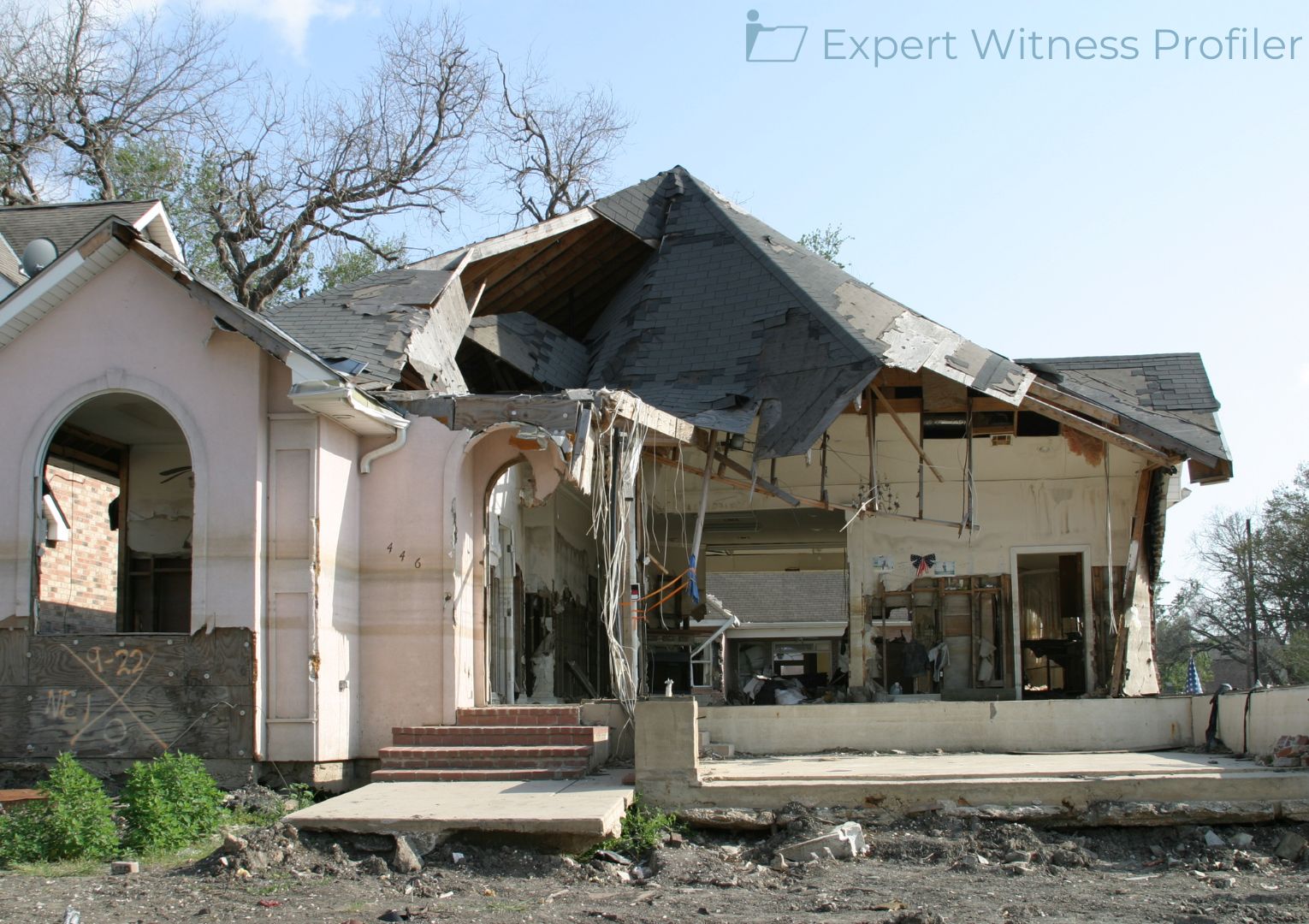
    On March 10, 2023, Subrigo International Corporation (“Subrigo”) initiated a lawsuit against Sentinel Insurance Company (“Sentinel”) in the Los Angeles Superior Court. Shortly thereafter, Sentinel transferred the case to the Federal Court. Subrigo’s claims arose from Sentinel’s refusal to cover property damage caused by flooding at its business location. Subrigo operated a data center in Los Angeles, which needed extensive infrastructure for its network, servers, electrical systems, and cooling. The insurance policy issued by Sentinel specifically covered loss or damage to the electrical equipment used in the data center.

    After Subrigo reported its claim, Sentinel contended that it was not liable for coverage. Sentinel argued that Subrigo had not provided adequate documentation to support the claim. As a result, Subrigo pursued legal action, claiming breach of the insurance contract and breach of the implied covenant of good faith and fair dealing.

    Subrigo retained insurance expert witness Gary Richman. He was tasked with assessing whether Subrigo had met its obligations in presenting its claim. Additionally, he needed to determine if Sentinel had properly investigated and evaluated Subrigo’s claim based on the relevant standards of care and the insurance policy’s terms.

    In response, Sentinel moved to exclude certain parts of Richman’s opinions, arguing they exceeded his insurance expertise. Sentinel claimed that Richman lacked the necessary scientific, technical, or specialized knowledge to testify on the contested areas which relate to “whether the conditions at Subrigo’s facility caused damage to the electronic and computer networking equipment in question” and “whether any damage could be repaired.”
    Insurance Expert Witness

    Gary Richman offers consulting, expert witness, and litigation support services to attorneys and consumers involved in disputed insurance claims.

    Since 1996, Gary has been the Principal at Richman Consulting LLC, where he offers expert analysis and insights in insurance claims and litigation. Before this, he worked at State Farm Fire & Casualty Company as both a Litigation Specialist and a Claim Specialist.

    He earned a Master of Education and a Bachelor of Arts from UCLA. Richman also holds several professional licenses, including a Public Insurance Adjuster license and a California Clear Teaching Credential in Social Studies.

    He was recognized as the first claims consultant to provide both a qualitative and quantitative analysis of an insurer’s wrongdoing as trial testimony. He has also helped to secure recoveries in excess of $200 million.  

    Get the full story on challenges to Gary Richman’s expert opinions and testimony with an in-depth Challenge Study.  

    Discussion by the Court

    A. Sentinel’s Argument

    Sentinel aimed to exclude certain parts of Richman’s expert opinion. The company argued that Richman, retained to evaluate the “reasonableness and adequacy of [Sentinel’s] claim handling,” also provided testimony on electronic equipment that exceeded his expertise.

    Sentinel pointed out certain highlighted sections of Richman’s testimony where Richman discussed the impact of water damage on Subrigo’s specialized electronic equipment. For instance, he stated that the water damage made the equipment “inoperable and completely unsalvageable” and that Subrigo could not have continued operations on the equipment as it would have been hazardous to employees and customers.

    Furthermore, Richman asserted that “water-damaged equipment will never again provide that level of dependability and reliability.” He explained that the electronics used by Subrigo were highly sensitive and likely to fail if their optimal working conditions were not maintained. Richman also described what those ideal conditions were and repeatedly claimed that testing the damaged equipment was pointless. He believed the extent of water exposure had rendered the equipment unserviceable.

    Sentinel emphasized that Richman’s technical knowledge about electrical equipment and its vulnerability to water damage exceeded his expertise as an insurance claims handler. During his deposition, Richman acknowledged that he had never handled insurance claims related to water damage to electrical equipment. He stated he would “defer to another expert regarding whether the computer items needed complete replacement” and “whether any functionality remained in these items.”

    Given Richman’s own admissions and the fact that his expertise primarily involved insurance claims handling, Sentinel sought to prevent him from providing testimony about the impact of water damage on specialized electronic equipment.

    B. Subrigo’s Counter-Argument

    Subrigo contended that Sentinel exaggerated the expertise requirements of Rule 702. They argued that Richman did not need the “very specific experience that Sentinel was demanding.” Subrigo also stated that Richman possessed “immense qualifications to serve as an expert in this case regarding insurance industry claim handling.”

    However, Subrigo did not directly address Sentinel’s specific arguments. Sentinel’s challenges focused solely on Richman’s capability to provide opinions about the complexities of Subrigo’s electrical equipment and how that equipment responded to water exposure.

    C. Analysis

    The Court agreed with Sentinel that Richman lacked the “minimal foundation of knowledge, skill, and experience” needed to provide expert testimony on the impact of water damage on specialized electrical equipment. While Richman could discuss how to handle insurance claims for advanced electrical equipment, he could not comment on the operability or functionality of that equipment after water exposure.

    Consequently, the Court determined that certain parts of Richman’s proposed expert testimony must be excluded as beyond his expertise. Furthermore, since Subrigo did not present focused arguments regarding the specific sections of Richman’s expert report highlighted by Sentinel, it waived its chance to demonstrate how those sections were supported by Richman’s qualifications.

    Held

    The Court granted Sentinel’s motion to exclude Plaintiff’s insurance expert witness, Gary Richman, from offering opinions that he is not qualified to express.

    Key Takeaway:

    Richman lacked even the minimal foundation of knowledge, skill, and experience required in order to give ‘expert’ testimony” on the effect of water damage on specialized electrical equipment. Though he can opine as to how insurance claims for advanced electrical equipment should be handled, he cannot opine as to the operability or functionality of that equipment following water exposure.

    Case Details:

    Case caption: Subrigo International Corporation V. Sentinel Insurance Company, Ltd. Et Al
    Docket Number: 2:23cv3354
    Court: United States District Court for the Central District of California
    Order Date: August 28, 2024

  • Intellectual Property Expert Witness Cannot Cloak her  Testimony on Validity with her Experience

    Intellectual Property Expert Witness Cannot Cloak her Testimony on Validity with her Experience

    EPP and Paveloc both construct and sell “erosion prevention” systems that are used in retaining walls. The systems are made up of interlocking hiocks. EPP has a patent on its “Channel Lock II block” (US Patent No. 8,123,435) (“the 435 patent”).

    At some point the business relationship soured. Paveloc stopped making the EPP product and began manufacturing a competing product, the ARP block. EPP alleges that the ARP block is a “knock off” of the Channel Lock II block and that Paveloc was making the ARP blocks using the same molds that FPP had provided to Paveloc to make the Channel Lock II product.

    In 2020, Fort Bend County Levee Improvement District No. 2 opened a new project for bidding. It awarded the contract for the project to TLC, a general contractor for construction projects. TLC took bids from subcontractors for erosion prevention blocks. Both Paveloc and EPP submitted hids. TLC accepted Paveloc’s bid. According to EPP, Paveloc got the project by using the ARP block, the alleged knockoff of EPP’s Channel Lock II block. 

    With the trial just a week away, Plaintiff supplemented its expert Evans’ report, offering opinions on the USPTO patent process and the validity of the ‘435 Patent as a rebuttal to Defendants’ claim of invalidity. 

    Defendants argued that this supplementation is untimely and circumvented this Court’s ruling that Evans is not a person of ordinary skill in the art, unqualified to give opinions on invalidity.

    At this point, the Court is faced with several evidentiary motions, including the Defendants’ motion to strike Andrea H. Evans’ supplemental report and Plaintiff’s omnibus motion in limine to exclude the testimony of Defendants’ expert—Dan Bullock.

    Intellectual Property Expert Witness

    Andrea Evans is a former patent and trademark examiner, has a civil and environmental engineering degree from Georgia Tech, and worked at an engineering company between college and law school. 

    She has been a licensed attorney in good standing by the State of Texas since 2003. Evans has been a member of the USPTO Patent Bar since 2007. She has been a member of the U.S. Supreme Court Bar since 2009.

    Get the full story on challenges to Andrea Evans’ expert opinions and testimony with an in-depth Challenge Study. 

    Engineering Expert Witness

    Daniel B. Bullock is a principal at Bullock, Bennett & Associates, LLC, an engineering and geoscience firm. He is a licensed professional engineer in Texas and also holds inactive professional engineer licenses in Arkansas, New Jersey, and Louisiana. He has over thirty years of professional experience working in the field of water resources and geotechnical engineering.

    Want to know more about the challenges Dan Bullock has faced? Get the full details with our Challenge Study report.

    Discussion by the Court

    Andrea Evans

    As a patent examiner, however, Evans did not work in the field of erosion prevention or cement block manufacturing, but instead, examined time-measuring devices, keyboards, and press printing systems. Consequently, this Court held that she is not a person of ordinary skill in the relevant art, and thus, she cannot opine on invalidity of the patent.

    The question then becomes whether Evans can offer substantially similar expert opinions regarding the validity or invalidity of the ‘435 Patent as she did in the excluded report simply by couching it in her patent-examiner experience.

    Evans is a patent attorney with extensive experience in patent law and procedure. As this Court has held, however, she is not a qualified technical expert on the issues of infringement or validity. Thus, she is not qualified to give opinions on issues that are “exclusively determined from the perspective of ordinary skill in the art.” To hold otherwise would be to convert every former patent examiner into a person of ordinary skill in every art, regardless of how tenuous their patent-examination experience is to the patent dispute at hand. 

    EPP may argue, Evans can testify to what a patent examiner may determine. The Court held that Evans cannot establish any similar connection between her experience in time-measuring devices, keyboards, and press-printing systems and the claimed invention of certain concrete revetment blocks. Thus, Evans cannot cloak her expert testimony on validity with her experience as patent examiner. That would amount to a circumvention of this Court’s order that she is not qualified as a person of ordinary skill in the art.

    Dan Bullock

    Plaintiff asserts in parts of its Omnibus Motion in Limine that the testimony of Defendants’ expert—Dan Bullock—should be excluded. The Court observed that the two subparts regarding Bullock are verbatim duplicates of Plaintiff’s earlier motion to strike the declaration of Dan Bullock.

    This Court has already ruled on the motion to strike. The Court denied the motions in limine because the Plaintiff has not provided any new facts, reasons, or authority for it to deviate from its earlier ruling.

    Held

    The Court granted Defendants’ motion to strike Andrea Evans to the extent the report purports to discuss invalidity and/or what a reasonable patent examiner would or would not conclude regarding the 435 Patent.

    Moreover, the Court denied Plaintiff’s motions in limine regarding the testimony of Defendants’ expert—Dan Bullock.

    Key Takeaway:

    Evans is not a qualified technical expert on the issues of infringement or validity. Thus, she is not qualified to give opinions on issues that are “exclusively determined from the perspective of ordinary skill in the art.” To hold otherwise would be to convert every former patent examiner into a person of ordinary skill in every art, regardless of how tenuous their patent-examination experience is to the patent dispute at hand. 

    Case Details:

    Case Caption: Pave/Lock/Plus Ii Llc V. Erosion Prevention Products Llc Et Al
    Docket Number: 4:20cv3557
    Court: United States District Court, Texas Southern
    Order Date: October 8, 2024
  • Court Accepts Latent Fingerprint Expert Witness’ Analysis Despite the Subjective Nature of Comparing Prints

    Court Accepts Latent Fingerprint Expert Witness’ Analysis Despite the Subjective Nature of Comparing Prints

    On August 14, 2022, a man dressed in black and wearing a camouflage baseball hat entered a Ross store on Coors Blvd. He approached the cash register with a box of tweezers but, instead of paying, allegedly pulled out a handgun and demanded money from two cash registers at the front of the store. After obtaining the cash, he left the tweezer box on the counter.

    An officer from the Albuquerque Police Department (APD) responded to the scene and interviewed witnesses. Crime Scene Specialist Laura Laskar later lifted latent fingerprints from the tweezer box. The APD Crime Lab analyzed these prints but found no matches in the fingerprint databases.

    Months later, at the request of Task Force Officer Isaac Romero, Lydia Lujan from the APD Crime Lab compared the latent print to known prints of Mr. Roper (Defendant). Following a one-to-one comparison, Lujan identified Roper as the source of the latent print, although she noted distortions and scattered ridge details on the print card. On September 3, 2024, the United States filed a notice of its intent to call Lujan as an expert witness in fingerprint analysis at trial.

    Defendant filed a motion to exclude the expert testimony of Lydia Lujan, Plaintiff’s Latent Fingerprint Expert witness.

    Latent Fingerprint Expert Witness

    Lydia Lujan has a bachelor’s degree in criminal justice and has spent over three decades in law enforcement. Specific to her testimony in this case, she worked as a Forensic Scientist — Latent Fingerprint Examiner from 2014 to 2023. During this time, Lujan completed several hundred hours of advanced training. She is a member of the “International Association for Identification” and has given numerous presentations on latent print identification.

    Get the full story on challenges to Lydia Lujan’ expert opinions and testimony with an in-depth Challenge Study

    Discussion by the Court

    Roper argues that the Court should exclude Lujan’s testimony because: (1) her anticipated testimony does not meet the admissibility requirements in Rule 702, and (2) her conclusion that Jason Roper was the source of the latent print collected from the scene of a robbery on August 14, 2022, and related opinions about fingerprint analysis overstates what the methodology reliably supports (3) Roper further argues that the ACE-V methodology “is subjective (4) he claims that Lujan impermissibly proposes to assert with “absolute or one hundred percent certainty” that he is the source of the latent print.

    I. Lujan is Qualified

    The Court found Lujan to have the specialized knowledge required to assist jurors in this case. After reviewing her credentials and prior testimony, it concluded that she was well-qualified. Lujan had previously testified as an expert in other cases, further solidifying her qualifications to testify here. Thus, Lujan was sufficiently qualified to testify as an expert witness in the field of latent fingerprint examination.

    II. Lujan’s Testimony is Reliable and Admissible

    The Court thoroughly analyzed Lujan’s testimony and deemed it reliable and admissible. It recognized that trial judges have discretion in deciding how to evaluate expert testimony. Once the testimony appears reliable, it should be admitted. The Court noted that any challenges to her testimony, including cross-examination or presenting contrary evidence, would allow the jury to decide how much weight to give it. Additionally, the Court dismissed arguments questioning the admissibility. It pointed out that these arguments only affected the weight of the testimony, not whether it should be allowed.

    A. Daubert Analysis

    The Court conducted a thorough Daubert analysis, recognizing that the factors outlined in Daubert serve as helpful guidelines for assessing an expert’s methodology. It began by examining whether the theory had been tested and noted that numerous studies had reported error rates in fingerprint analysis. The Court acknowledged that Lujan testified her methodology underwent peer review, specifically referring to the “V” in the ACE-V method, which emphasizes validation. The Court also highlighted that fingerprint identification had been extensively published in scholarly journals.

    Next, the Court considered the known or potential error rate, and found that the evidence indicated a low false positive rate of 0.1%, with literature suggesting the overall error rate is less than 1%. Each of the first three Daubert factors weighed in favor of the admissibility of Lujan’s testimony.

    The fourth factor involved the existence and maintenance of standards in the field. Although Roper challenged the subjective nature of the ACE-V method, Lujan explained that her extensive training and adherence to procedural standards enhanced the reliability of her analyses. This factor presented a mixed view regarding admissibility.

    Finally, the Court evaluated whether fingerprinting had achieved general acceptance within the scientific community. The Court concluded that the scientific community well-established and accepted fingerprint analysis as a reliable identification method.Consequently, the Court found that the overall Daubert analysis strongly favored the admissibility of Lujan’s testimony, asserting that Roper’s challenges pertained to the weight of the evidence rather than its admissibility.

    B. Analysis of Roper’s Argument

    Roper argued that Lujan’s expert opinion lacked sufficient facts, data, and methodology for reliability. He focused on the subjective nature of the ACE-V methodology. He claimed that the quality of the analyzed print was inadequate for proper comparison. However, the Court clarified that an expert’s opinion must reflect a reliable application of principles to the facts of the case. It asserted that the subjective nature of fingerprint comparison does not undermine its reliability.

    The Court noted that while the ACE-V method relies on subjective judgment, established standards exist within the fingerprint examiner community to ensure quality. Lujan testified that she had never produced a false positive result, only false negatives. This aligned with the inherent nature of fingerprint identification. The Court highlighted that errors in fingerprint matching are rare. It stated that Lujan’s testimony remained reliable and admissible under Rule 702.

    Regarding Roper’s specific concerns about the latent print being distorted, Lujan maintained that it was adequate for analysis. The Court stated that any doubts about the print’s quality were appropriate for cross-examination but did not warrant exclusion of her testimony. Further, The Court acknowledged that, given the average juror’s lack of familiarity with fingerprint identification, Lujan’s expert testimony would be beneficial.

    Additionally, the Court set parameters for Lujan’s trial testimony. It prohibited her from claiming a “one hundred percent” match, noting that she did not make such assertions during the hearing. Additionally, the Court allowed her to express her opinion that fingerprint analysis is more reliable than forensic DNA analysis, based on her “twin” theory, which emphasizes the uniqueness of fingerprints even among identical twins. The Court found no merit in Roper’s objections and declined to limit Lujan’s testimony in the ways he requested.

    Held

    The Court concluded that Lydia Lujan was qualified to provide expert opinion testimony in the case due to her knowledge, skill, experience, training, and education. It found that her extensive background in the fingerprinting field provided a reliable basis for her proposed testimony, which she aptly applied to the facts of the case.

    Key Takeaway:

    The Court found that fingerprint analysis met the Daubert standards, having undergone testing, peer review, and widespread acceptance, despite its subjective nature. Concerns about distortion in the prints were suitable for cross-examination but did not warrant the exclusion of her testimony. The Court emphasized that such testimony would aid the jury’s understanding, and any challenges would affect the weight rather than the admissibility. Additionally, the court set limits on her claims of certainty, maintaining the reliability of her conclusion.

    Case Details:

    Case Caption: United States v. Roper
    Docket Number 1:23cr1617
    Court: United States District Court for the District of New Mexico
    Order Date: October 8, 2024
  • Civil Engineering Expert Witness’ Testimony Premised on a Coefficient of Friction Measurement Test Excluded

    Civil Engineering Expert Witness’ Testimony Premised on a Coefficient of Friction Measurement Test Excluded

    Plaintiff Migdalia Rodríguez filed suit against Defendants WV Vacation Business LLC d/b/a Hotel Vista Azul and Cooperativa de Seguros Múltiples under Puerto Rico’s general tort statute. 

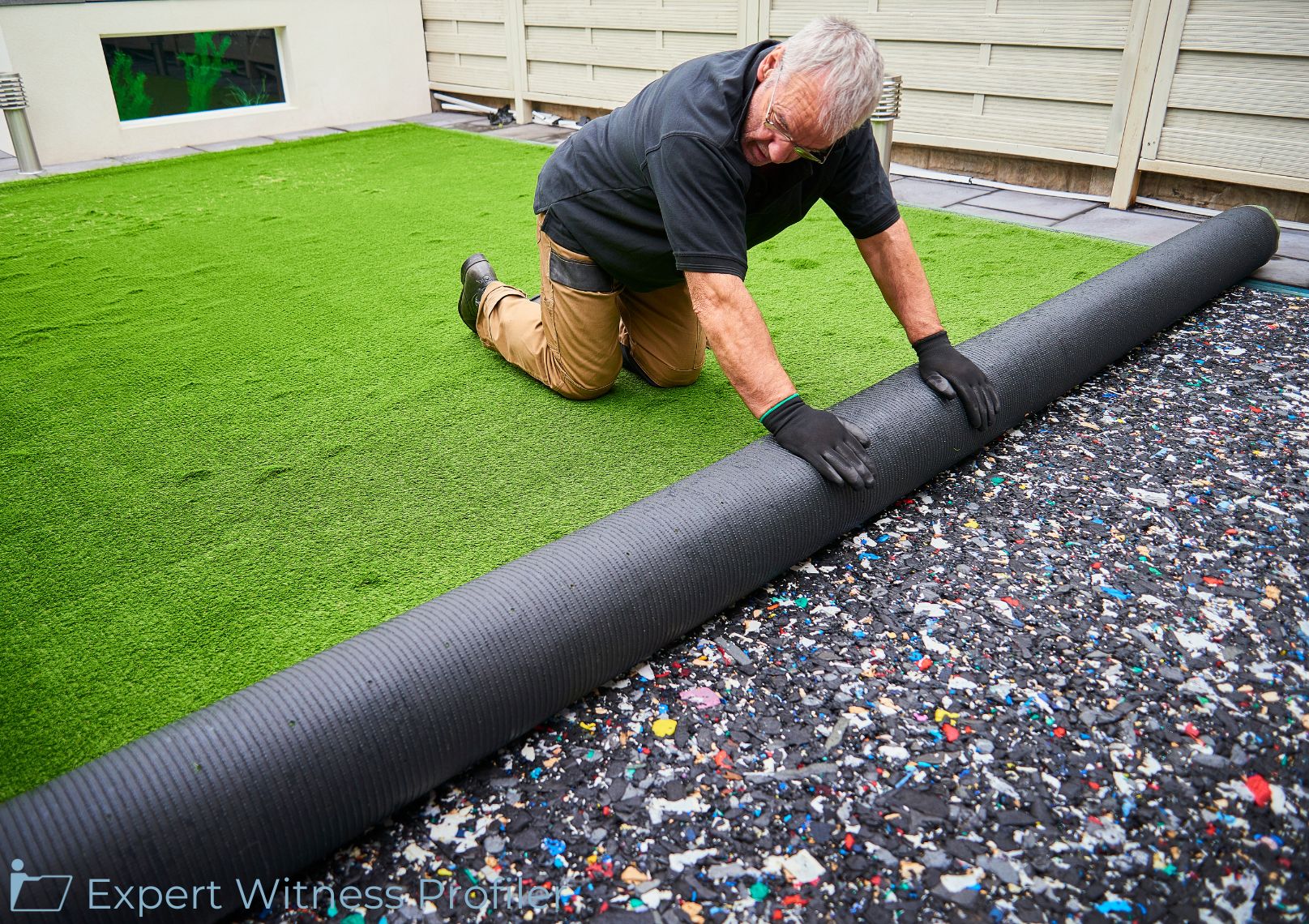
    She claims that while at the WV she slipped and fell on artificial grass. The Plaintiff filed a motion to exclude Engineer Berlin Ng Cortiñas’ testimony because, she claims, it is unreliable, irrelevant and may mislead the trier of fact. 

    Civil Engineering Expert Witness

    Berlin Ng Cortiñas is a civil and structural engineer, with 40 years of experience. During this time, his professional practice has been developed in following field of the engineering: structural analysis and design, construction, inspection and expert witness.

    Get the full story on challenges to Berlin Ng Cortiñas’ expert opinions and testimony with an in-depth Challenge Study. 

    Discussion by the Court

    The Court finds that Eng. Ng Cortiñas’ educational background and work experience qualify him as an expert in the field of structural and civil engineering. So, the first factor is satisfied. The Court also understands that his testimony would be based upon sufficient facts, reliable principles, and methods. He therefore also satisfies the second factor.

    However, the Court does not find that Eng. Ng Cortiñas’ testimony will assist the trier of fact because his testimony is premised on a coefficient of friction measurement tests performed under conditions that do not represent the conditions at the time of the alleged incident.

    Plaintiff challenged Eng. Ng Cortiñas’ expert testimony because the basis for his testimony would be his expert report, which relied on a coefficient of friction test performed on dry artificial grass which did not reflect the conditions of the artificial grass at the time of the alleged incident. After all, when Plaintiff fell, the artificial grass was wet, not dry.

    A test performed on dry artificial grass is not helpful to the trier of fact

    The parties do not contest that the artificial grass was wet at the time of the incident. Therefore, the Court does not see how a test performed on dry artificial grass will help the trier of fact since the test does not recreate the conditions at the time of the alleged incident. Saying that the coefficient of friction complied with the relevant standards (whichever those may be) when the artificial grass was dry is meaningless since the artificial grass was wet at the time of the incident at issue.

    Had Eng. Ng Cortiñas also performed a coefficient of friction test on wet artificial grass so that the jury could have had the opportunity to consider that test vis-à-vis the one performed on dry grass, his testimony could have been helpful to the jury. But alas, that was not done. Accordingly, the Court found that Eng. Ng Cortiñas’ testimony should be excluded under Rule 702 because it will not assist the jury and under Rule 403 because its probative value could be outweighed by a danger of misleading and confusing the jury with a test that does not replicate the conditions of the artificial grass at the time of the incident and therefore cannot show whether there was compliance with relevant standards.

    Held

    The Court granted Plaintiff’s motion to exclude Defendants’ expert witness, Eng. Berlin Ng Cortiñas.

    Key Takeaway:

    Plaintiff challenged Eng. Ng Cortiñas’ expert testimony because the basis for his testimony would be his expert report, which relies on a coefficient of friction test performed on dry artificial grass which did not reflect the conditions of the artificial grass at the time of the alleged incident. After all, when Plaintiff fell, the artificial grass was wet, not dry. Had Eng. Ng Cortiñas also performed a coefficient of friction test on wet artificial grass so that the jury could have had the opportunity to consider that test vis-à-vis the one performed on dry grass, his testimony could have been helpful to the jury. But alas, that was not done. 

    Case Details:

    Case Caption: Rodriguez V. Wv Vacation Business Llc D/B/A Hotel Vista Azul Et Al
    Docket Number: 3:22cv1430
    Court: United States District Court, Puerto Rico
    Order Date: September 30, 2024
  • Data Analysis Expert Witness’ Testimony Admitted Despite his Failure to Incorporate Extraneous Factors in his Analysis

    Data Analysis Expert Witness’ Testimony Admitted Despite his Failure to Incorporate Extraneous Factors in his Analysis

    Defendants, M&J Management Company, LLC, d/b/a The Sexton Companies own and operate multiple multi-family housing units in Indianapolis and St. Joseph County, Indiana. Defendants have an occupancy standard of two occupants per bedroom that applies to all floor plans, regardless of the age of the occupants. Plaintiff, Fair Housing Center of Indiana alleged that Defendants’ occupancy standard violates the Fair Housing Act and Indiana Fair Housing Act because it discriminates based on familial status. 

    Plaintiff proffered James Colbert as its expert to analyze whether Defendants’ occupancy standards have a disproportionate effect on households with minor children. While Defendants argued that Colbert’s findings were based on flawed logic and incomplete analysis, they waited until July 30, 2024, to move to preclude Colbert’s Rule 26 expert report and to exclude his testimony in this case.

    Data Analysis Expert Witness

    James Colbert has a master’s degree and has worked within the professional field of data analysis, including in-depth analysis of census data, for over 20 years.

    He works as a data manager at The Polis Center at Indiana University Purdue University Indianapolis.

    Get the full story on challenges to James Colbert’s expert opinions and testimony with an in-depth Challenge Study. 

    Discussion by the Court

    Defendants challenged Colbert’s expert report and testimony, arguing his opinion consisted primarily of unsupported factual and legal conclusions.

    While Defendants filed their motion to preclude Colbert’s testimony too late to address his qualifications at summary judgment, the Court will address Defendants’ concerns now, before trial. Given that the summary judgment standard is no longer at play, the Court is not bound by its summary judgment findings and instead takes a fresh look at Colbert’s report.

    Colbert is not qualified to give expert opinions on the issue of fair housing

    The Court held that Colbert possessed sufficient academic and practical expertise to qualify as an expert in the fields in which he seeks to testify—data analysis and statistical disparity.

    Defendants argued that Colbert is not qualified to give expert opinions on the issue of fair housing. Defendants claimed that Colbert has no experience, training, or education regarding the ownership and management of apartment complexes, the psychology behind tenants choosing where to live, and fair housing laws, and his background as a data analyst cannot support his opinions regarding apartments’ occupancy rules.

    However, the Court observed that Colbert does not offer opinions on topics or rely on any data that would require more extensive knowledge of apartment management, housing choice, or fair housing laws. Rather, Plaintiff acknowledged that it retained Colbert for the sole purpose of “crunching numbers and calculating relative impacts between various demographic groups.” Both sides agreed that Colbert’s background is in data analysis. Colbert’s CV indicates that he has a master’s degree and has worked within the professional field of data analysis, including in-depth analysis of census data, for over 20 years.

    Colbert’s opinion will not assist the trier of fact

    Defendants claimed that Colbert’s report is not helpful and is simply a layman’s opinion, speculative, and based on little more than broad census data.

    Relatedly, Defendants also argued that Colbert will mislead and confuse the jury in this case. However, this matter is set for a bench trial, not jury trial. “In a bench trial, once the Court has fulfilled its gatekeeping function, it becomes a trier of fact that needs to assess the evidence itself—not just the methodology underlying that evidence.” The Court held that whether Colbert will assist the Court, as a trier of fact, is not a concern at this stage.

    Colbert failed to incorporate extraneous factors in his analysis, and he did not consider alternative reasons why a household may decide not to live in Defendants’ apartment complexes

    A closer question, however, is whether Colbert’s methodology is scientifically reliable. Defendants argued that Colbert failed to conduct the testing necessary to determine whether Defendants’ occupancy standard caused a disproportionate exclusion of families with minor children from accessing housing.

    In addition, Colbert failed to incorporate extraneous factors in his analysis, and he did not consider alternative reasons why a household may decide not to live in Defendants’ apartment complexes. Instead, Colbert relied heavily on the opinion that all households in the relevant geographical groups that desired to live at Defendants’ apartment complexes were unable to do so because of Defendants’ occupancy standard.

    Plaintiff argued that the existence of other potential causes or explanations for the low number of households with children at Defendants’ complexes is irrelevant to Colbert’s analysis, because his analysis focused on the predictable effect of the occupancy cap on the rental household population of Indiana, Marion County, and St. Joseph County.

    It was noted that Colbert’s report does not consider potentially key additional relevant factors that might have explained the lack of families with children choosing to live at Defendants’ complexes, such as the fact that these apartments had less square footage, small appliances, no backyard, and limiting parking.

    Defendants’ concerns regarding Colbert’s report are well founded. The fact that Colbert never addresses any potential extraneous factors certainly casts doubt on the reliability of his opinion. However, ultimately, the Court agrees with Plaintiff that these concerns do not completely exclude Colbert from testifying at trial.

    At trial, Defendants—and the Court—will press Colbert on why he failed to consider any alternative explanation or major variable and can test the reliability of his testimony.

    Colbert’s report also does not define “rental household”

    Colbert’s report stated that the percentage of children living at Defendants’ complexes is lower than other rental households in the counties in which the complexes are located, but he does not explicitly define “rental household.”

    It appeared that rental household included all rental dwellings in the respective counties, including rental houses, rental townhomes, rental duplexes, rental lofts, and other rental multi-family apartment complexes with larger square footage, elevated appliances, and more parking options. Nevertheless, the Court held that Colbert’s report did not take into consideration the idea that households with more occupants, which tend to include households with children, may prefer to live in homes with larger square footage than the options available at Defendants’ complexes.

    Court cannot conclusively say Colbert’s calculations are speculative simply because they are grounded in PUMS data and Defendants’ own data about their residents

    First, Defendants did not dispute the existence of their two-per-bedroom occupancy policy. Second, Colbert primarily relied on American Community Survey Public Use Microdata Sample (PUMS) data obtained from the United States Census. Defendants have not offered any argument that using census or PUMS data was improper. Likewise, the Court cannot conclusively say Colbert’s calculations are speculative simply because they are grounded in PUMS data and Defendants’ own data about their residents. Defendants’ concerns, while valid, can be addressed through cross examination at trial, and further inquiry, if needed, from the Court.

    Also, Plaintiff seems to believe it can introduce Colbert’s report as evidence at the upcoming bench trial. While the Court has concluded that Colbert may testify at trial, Plaintiff will cannot introduce the report itself at trial. It is inadmissible hearsay. 

    Colbert can testify about the opinions in his report, and Defendants may use Colbert’s report to cross examine him and attempt to impeach him. However, Plaintiff cannot introduce Colbert’s report as evidence.

    Held

    The Court recognized Defendants’ concerns and agreed that the value of James Colbert’s testimony is uncertain. Nevertheless, the Court denied the Defendants’ motion to preclude Colbert’s testimony. This case remains set for a final pretrial conference at 1:30 pm on October 29, 2024, and for a bench trial on November 12, 2024.

    Key Takeaway:

    Colbert is adept at locating census data and applying statistical methods. However, Defendants’ concerns regarding Colbert’s report are well founded. Colbert’s report does not consider potentially key additional relevant factors that might have explained the lack of families with children choosing to live at Defendants’ complexes, such as the fact that these apartments had less square footage, small appliances, no backyard, and limiting parking.

    Ultimately, the Court agreed with Plaintiff that these concerns do not completely exclude Colbert from testifying at trial. At trial, the Court will be able to weed through the parties’ arguments regarding whether Colbert’s testimony and report demonstrate causation, a predictable effect, or something else.

    Similarly, Colbert’s report also does not define “rental household.” Colbert’s report states that the percentage of children living at Defendants’ complexes is lower than other rental households in the counties in which the complexes are located, but he does not explicitly define “rental household.” 

    Case Details:

    Case Caption: Fair Housing Center Of Central Indiana, Inc. V. M&J Management Company, Llc, d/b/a The Sexton Companies Et Al
    Docket Number: 1:22cv612
    Court Name: United States District Court, Indiana Southern
    Order Date: October 10, 2024
  • Law & Legal Expert Witness’ Testimony on Insurance Claims Handling Practices Admitted

    Law & Legal Expert Witness’ Testimony on Insurance Claims Handling Practices Admitted

    Plaintiff Debra O’Neal filed a lawsuit against Defendant State Farm Fire and Casualty Company (“State Farm”) under the Washington Insurance Fair Conduct Act (“IFCA”) for its handling and denial of her claim for coverage of personal property allegedly stolen from a storage facility.

    In response, State Farm moved to exclude O’Neal’s insurance expert witness, Robert J. Worth. They argued that he lacked the necessary qualifications and that some of his opinions were inadmissible legal conclusions.

    Insurance Expert Witness

    Law & Legal Expert Witness

    Robert Jeffrey Worth specializes in first party auto, homeowner and commercial litigation cases. He deals with claims involving disputed coverage matters; mold loss, failure to reasonably investigate and evaluate, efficient proximate cause and statute of limitations issues and commercial litigation of commercial general liability policy interpretation of regular employee verses day laborer regarding wrongful denial. Moreover, he obtained a Juris Doctor Degree from the University of West Los Angeles School of Law, Los Angeles.

    Above all, he has an extensive (nearly 15 years) claims background at Farmers Insurance includes the position of (national) Claims Training Administrator responsible for overseeing the company wide training of all liability claims representatives, claims supervisors and managers nationwide.

    Want to know more about the challenges Robert J. Worth has faced? Get the full details with our Challenge Study report.  

    Discussion by the Court

    Worth’s Testimony on Insurance Claims Handling Practices

    State Farm contended that Robert J. Worth was only qualified to testify in California insurance cases, not Washington cases. However, State Farm overlooked Worth’s extensive experience in the insurance industry across the country. The Court noted that Worth’s familiarity, or lack thereof, with Washington law could serve as a basis for cross-examination but did not justify exclusion. According to Daubert, vigorous cross-examination and the presentation of contrary evidence are the traditional and appropriate means of attacking shaky but admissible evidence.

    Similarly, the substance of Worth’s opinion and whether he considered all the evidence is an appropriate topic for State Farm’s cross-examination and defense, but is not a reason to exclude Worth.

    Worth’s Limitations on Legal Conclusions

    The Court finds that at various points in Worth’s expert report, Worth crosses the line between opining on State Farm’s compliance with industry standards and offering legal conclusions. For example, Worth’s opinions that State Farm “breached the implied covenant of good faith and fair dealing” and that State Farm violated various laws are impermissible legal conclusions.

    Similarly, the Court agrees with State Farm that certain aspects of Worth’s report on whether a “theft” occurred are improper legal conclusions such as opining on how “theft” should be interpreted in the policy and stating that certain evidence “supports the probability that the theft exists and was true.” These opinions intrude on the realm of the Court and are prohibited. However, as part of Worth’s opinion on insurance industry standards and claims handling practices, the Court allowed Worth to explore what State Farm should have considered “theft” when adjusting the claim, or what investigation State Farm should have conducted consistent with applicable industry norms.

    In summary, while the Court will not exclude Worth on this basis, he (and any other expert offered by either party) will not be permitted to offer legal conclusions at trial.

    Held

    The Court denied the Defendant’s motion to exclude the Plaintiff’s insurance expert witness, Robert J. Worth.

    Key Takeaways:

    Although the Court acknowledged that Worth’s familiarity with Washington law could be challenged during cross-examination, this did not warrant exclusion. Additionally, while the Court restricted Worth from presenting legal conclusions, it affirmed his ability to discuss industry standards and claims-handling practices relevant to the case as a result of which Worth was allowed to explore what State Farm should have considered “theft” when adjusting the claim, or what investigation State Farm should have conducted consistent with applicable industry norms.

    Case Details:

    Case caption: O’Neal V. State Farm Fire And Casualty Company
    Docket Number: 2:23cv232
    Court: United States District Court for the Western District of Washington
    Dated: October 4, 2024
  • Legal Conclusions Do Not Necessitate the Wholesale Exclusion of Insurance Expert Witness’ Testimony

    Legal Conclusions Do Not Necessitate the Wholesale Exclusion of Insurance Expert Witness’ Testimony

    Plaintiff Ashley Fawcett was in a car accident in 2017, while she was covered by an insurance policy issued by Defendant Standard Fire Insurance Company (doing business as Travelers Insurance Company (“Travelers”)). Fawcett opened claims with Travelers, and alleged in this lawsuit that Travelers unreasonably investigated and evaluated her claim for underinsured motorist (“UIM”) benefits.

    Travelers filed a motion to exclude the testimony of Fawcett’s expert Mary Owen because her opinions consisted of legal conclusions on the ultimate issue, namely whether Travelers’ conduct was unreasonable or violates insurance regulations. Travelers also contended that Owen lacked the experience or qualifications necessary to allow her to testify as an expert as to proper claim-handling procedures.

    Insurance Expert Witness

    Mary E. Owen is widely regarded as an authoritative expert in the field of insurance defense litigation. She is experienced in all aspects of civil litigation, from commencement to resolution, by way of dismissal, negotiated settlement, alternative dispute resolution, and jury trials.

    Get the full story on challenges to Mary E. Owen’s expert opinions and testimony with an in-depth Challenge Study.  

    Discussion by the Court

    Fawcett emphasized the portions of Owen’s testimony that pertained to issues of fact and accused Travelers’ expert of including legal conclusions in his testimony. Fawcett also contended that to the extent that any legal conclusions need to be excluded from Owen’s testimony, this issue is the proper subject of a motion in limine, rather than a broad motion to exclude.

    The Court agreed with this approach, finding that wholesale exclusion of Owen’s testimony and report would be inappropriate. Owen’s declaration submitted in support of Fawcett’s opposition to Travelers’ summary judgment motion does contain opinions regarding Travelers’ compliance (or non-compliance) with industry standards, but some portions could also be characterized as legal conclusions outside her purview as an expert.

    The report attached to Owen’s declaration references legal conclusions to a lesser degree: she opined that Travelers’ conduct violated certain standards and was unreasonable, but does not, for example, conclude that this conduct constitutes bad faith. The Court did not rely on Owen’s legal conclusions in resolving Travelers’ summary judgment motion, and it can excise the legal conclusions from Owen’s trial testimony via a motion in limine.

    Travelers’ second argument, as to Owen’s expertise, also failed to persuade the Court that Owen’s testimony should be excluded entirely. Travelers has not shown that Owen is categorically unqualified to serve as an expert in this case, given Owen’s years of experience in the relevant field.  To the extent that Travelers disputed whether Owen’s experience was sufficiently particularized as to be useful in this case, this argument goes to the weight that should be given to Owen’s testimony, rather than its admissibility.

    Held

    The Court denied Travelers’ motion to exclude Mary E. Owen’s testimony.

    Key Takeaway:

    While the Court acknowledged that expert witnesses cannot offer legal conclusions, it determined that fully excluding Owen’s testimony was unnecessary. The Court found that a motion in limine could resolve any concerns regarding legal conclusions in her testimony, allowing her opinions on industry standards to remain. Additionally, the Court ruled that any questions about Owen’s experience concerned the weight accorded to her testimony, not its admissibility.

    Case Details:

    Case Caption: Fawcett V. The Standard Fire Insurance Company
    Docket Number: 2:23cv248
    Court: United States District Court for the Western District of Washington
    Order Date: October 4, 2024
  • Civil Engineering Expert Witness’ Opinion that the Roof Requires Full Replacement is Not Mere Speculation

    Civil Engineering Expert Witness’ Opinion that the Roof Requires Full Replacement is Not Mere Speculation

    Plaintiff Franklin Square Condominium Owner Association alleged that a hailstorm on April 28, 2021, damaged its property at 817-831 Old Ranch Road 12, San Marcos, Texas 78666.

    Franklin Square filed a claim with its insurance company, Defendant AmGuard Insurance Company. Plaintiff alleged that AmGuard breached the insurance contract by failing to pay the full amount of the claim.

    Franklin Square designated two expert witnesses: Marc Camacho, a structural and civil engineer who would testify that a severe hailstorm on April 28, 2021, caused functional damage to the roof of the Property that would require full replacement; and Jeremy Duke, a general contractor who would testify on the cost to repair the Property and replace the roof. 

    Civil Engineering Expert Witness

    Marc Camacho has over fifteen years of experience in engineering forensics investigations and/or design related to residential, commercial, and various other buildings and installations. His expertise includes forensic analysis, inspection, evaluation, engineering design, report/repair recommendations, and review/rebuttal of third-party reports. Camacho has extensive
    experience in various construction material types, installation and evaluation protocols, and component failure mechanisms, with understanding of construction plan implementation, building code interpretation, industry standards, and identification of storm-related damage.

    Get the full story on challenges to Marc Camacho’s expert opinions and testimony with an in-depth Challenge Study. 

    Construction Expert Witness

    Jeremy Duke holds a degree in Kinesiology and Business from the University of North Texas and an Associate Degree in Science from Navarro Junior College. Jeremy has obtained multiple certifications, including Xactimate 28 Level 1, and holds a Texas Real Estate License, enhancing his expertise in the roofing and general construction industry.

    Since November 2014, Duke has been the owner of J. W. Duke Roofing and General Construction, where he has successfully managed various projects.

    Want to know more about the challenges Jeremy Duke has faced? Get the full details with our Challenge Study report. 

    Discussion by the Court

    AmGuard asked the Court to exclude Camacho’s testimony as unreliable. AmGuard also contended that Duke’s testimony should be excluded because his report did not comply with Rule 26, he is not qualified to give expert testimony on the cost to replace a roof, and his estimate on interior repairs is unreliable.

    Camacho’s Opinion Is Reliable

    For expert testimony to be reliable, it must “be grounded in the methods and procedures of science and . . . be more than unsupported speculation or subjective belief.”

    AmGuard argued that Camacho’s testimony that the Property’s roof must be replaced is unreliable because it is not supported by sufficient data or reliable methodology. AmGuard challenged Camacho’s opinion that hail damage to the concrete roof tiles “cannot be feasibly or effectively repaired” and remediation “will require full removal and replacement of concrete tile roof coverings” at the Property. 

    Camacho visited the Property on March 19, 2024, and inspected the roof and took photographs of the damage. His expert report stated that damage “consistent with historical impacts from hail” was present on roof tiles and metal components on the roof. AmGuard argued that the report is unreliable because Camacho only closely inspected a small percentage of the roof tiles and did not estimate the percentage of damaged tiles. However, Camacho testified that he viewed “all of the roof in general,” but that when performing a hail inspection, he “quite frequently will get down on his hands and knees to like really get up close and attempt to evaluate” only a fraction of a roof’s tiles. 

    Camacho also stated in his report that he observed several different types of hail damage on the roof and that the damage could not be feasibly or effectively repaired. Moreover, he explained how roofs can be damaged by hail and how functional damage reduces a roof’s water-shedding capability or lifespan. The Court found that Camacho’s opinion that the roof requires full replacement is grounded in a proper methodology and is not mere speculation.

    Duke’s Report Does Not Comply with Rule 26

    AmGuard argued that Duke’s testimony should be excluded because his report does not comply with Rule 26(a)(2)(B), which requires an expert report to include “a complete statement of all opinions the witness will express and the basis and reasons for them” and “the facts or data considered by the witness,” among other things.

    Duke’s report consisted of his resume; photographs of the damage; and a damage estimate report created using “a computer software program known as ‘Xactimate’ which is commonly used by construction contractors and adjusters to create estimate reports.” Duke neither stated the basis and reasons for the damage nor explains how his experience is reliably applied to the facts of this case. Therefore, the Court found that his report does not comply with Rule 26(a)(2)(B). 

    Franklin Square has not shown that its failure to comply with Rule 26(a)(2)(B) was substantially justified or harmless

    Rule 37(c)(1) requires courts to exclude expert testimony for failure to comply with Rule 26(a) unless the failure was substantially justified or harmless. Franklin Square contended that Duke’s report does comply with the rule and does not argue that its failure was substantially justified. Courts weigh four factors to determine whether a party’s violation is harmless: “(1) the importance of the evidence; (2) the prejudice to the opposing party of including the evidence; (3) the possibility of curing such prejudice by granting a continuance; and (4) the explanation for the party’s failure to disclose.”

    The Court held that the first factor weighs in favor of Franklin Square because Duke’s testimony on damages would be important to a determination of the amount of Franklin Square’s claim. The second and third factors weigh in favor of AmGuard. Without an adequate statement of the basis for Duke’s opinion, AmGuard is prejudiced in its ability to prepare for his deposition and cross-examination at trial. Moreover, Discovery has closed, AmGuard has filed a motion for summary judgment, and “a continuance would result in additional delay and increase the expense of defending the lawsuit.”

    Considering the four factors, the Court found that Franklin Square has not shown that its failure to comply with Rule 26(a)(2)(B) was substantially justified or harmless.

    Held

    The Court held that Defendant AmGuard Insurance Company’s motion to exclude or limit the testimony of Plaintiff’s designated expert witnesses is denied as to Marc Camacho and granted as to Jeremy Duke.

    Key Takeaways:

    • Camacho’s opinion that the roof requires full replacement is grounded in a proper methodology because he observed several different types of hail damage on the roof to arrive at his conclusions. He explained how roofs can be damaged by hail and how functional damage reduces a roof’s water-shedding capability or lifespan.
    • If a witness is “relying solely or primarily on experience, then the witness must explain how that experience leads to the conclusion reached, why that experience is a sufficient basis for the opinion, and how that experience is reliably applied to the facts.” Duke neither states the basis and reasons for the damage nor explains how his experience is reliably applied to the facts of this case. Therefore, the Court finds that his report does not comply with Rule 26(a)(2)(B).

    Case Details:

    Case Caption: Franklin Square Condominium Owner Association V. Amguard Insurance Company
    Docket Number: 1:23cv1012
    Court: United States District Court, Texas Western
    Order Date: September 1, 2024
  • Radiology Expert Witness’ Specific Findings As to the Plaintiff’s Spine Area Admitted

    Radiology Expert Witness’ Specific Findings As to the Plaintiff’s Spine Area Admitted

    On December 9, 2021, Plaintiff Darryl Everson was driving in Montz, Louisiana, when he claimed that Defendant David Rugg (“Rugg”) negligently felled a tree along the roadway. The Plaintiff contended that the tree landed on his car, causing injuries to his back and neck. Additionally, Plaintiff alleged that Rugg was employed by Defendant Romesberg Trucking Inc. (“RTI”), which was covered by Nautilus Insurance Company. He asserted that RTI and Rugg failed to exercise reasonable care in their tree-cutting activities near an active roadway. Specifically, Plaintiff claimed that they did not provide warnings, did not monitor approaching vehicles, inadequately trained Rugg, and created a dangerous situation.  

    Defendants retained Robert Morris to read and interpret MRI images of Plaintiff’s spine area, specifically his L1 through S5 disc spaces.

    Morris opined that all the disc spaces he reviewed were “unremarkable” except for the L4-L5 disc space, which Morris found to show a “small disc bulge with moderate central disc protrusion, resulting in moderate bilateral recess stenosis.” Overall, Morris opined that “the exact age of the disc bulge and protrusion at L4-L5 is indeterminate from this single exam.” He also found that “aside from the disc bulge and protrusion at L4-L5, the other levels appear normal.”

    Plaintiff filed a motion to exclude the expert testimony of Dr. Robert Morris, Defendants’ expert radiologist.

    Radiology Expert Witness

    Robert W. Morris attended medical school at the University of Mississippi School of Medicine. This was followed by radiology residency and a musculoskeletal radiology fellowship at the University of Alabama at Birmingham. After fellowship, he worked in private practice radiology for several years before joining the faculty at UMMC in February 2016.

    Get the full story on challenges to Robert W. Morris’ expert opinions and testimony with an in-depth Challenge Study. 

    Discussion by the Court

    Plaintiff contended that Morris’ testimony should be excluded because (1) Defendants failed to comply with 26(a)(2)(B) and (2) Morris’ methodology is not reliable.

    Defendant’s violation of Rule 26(a)(2)(B) can be rendered harmless by the recent continuance in this matter

    Defendants argued that they complied with Rule 26(a)(2)(B) by including Morris on their witness list. Moreover, they contended that Plaintiff could have obtained the information by deposing Morris. The Court held that these arguments are meritless because Rule 26(a)(2)(B) squarely puts the burden on the party presenting the experts to summarize ‘the facts and opinions,’ not on the opposing party to figure it out.

    Although the Court finds that Defendant’s violation of Rule 26 is not “substantially justified,” the Court concludes that the violation is “harmless.” This case has recently been continued, and Plaintiff now has several more months to review Defendants’ disclosures.

    Morris’ testimony is sufficiently reliable

    Prohibiting the jury from hearing about Morris’ opinions would increase the jury’s confusion

    Plaintiff argued that allowing Morris to testify would be duplicative and confusing to the jury because Defendant has engaged another medical expert to opine on causation. The Court disagreed. Even if the Court prohibited Morris from testifying, the Defendant’s medical expert might still refer to Morris’ report at trial. Accordingly, prohibiting the jury from hearing about Morris’ opinions from Morris himself would increase, rather than decrease, the jury’s confusion about the separate specialties and opinions of Morris and the medical expert retained to opine on causation.

    Morris will only be allowed to testify as to opinions expressed in his report

    Defendants mentioned various uses for Morris’ testimony such as proving that Plaintiff had a pre-existing condition, that his weight caused his injuries, and that there is a consensus in the medical community that middle aged people have cervical and lumbar abnormalities. While Defendants may feel that Morris’ two listed opinions support those propositions, the Court noted that Morris does not actually offer any of these opinions in his report. If, at trial, Defendants ask Morris to opine outside of the scope of the opinions listed in his report, the Court will sustain an objection at that time.

    To be clear, Morris will only be allowed to testify as to opinions expressed in his report including the specific “findings” as to each disc and the two opinions he provides: (1) “the exact age of the disc bulge and protrusion at L4-L5 is indeterminate from this single exam” and (2) “aside from the disc bulge and protrusion at L4-5, the other levels appear normal.”

    Although the Court allowed Morris to testify, the Court granted Plaintiff’s request that Morris’ testimony be limited to the opinions expressed in his report.

    Held

    The Court denied the Plaintiff’s motion in limine to exclude Dr. Robert Morris.

    Key Takeaway:

    The Court found that Morris’ testimony is sufficiently reliable. Given the nature of the radiological practice—analysis of discrete images—courts routinely allow expert radiologists to testify even where they have not reviewed the Plaintiff’s medical records or examined the Plaintiff.

    Please refer to the blog previously published about this case:

    Arborist Expert Witnesses’ Opinions on Tree Removal Safety Admitted

    Case Details:

    Case Caption: Everson V. Nautilus Ins. Co. 
    Docket Number: 2:23cv1360
    Court: United States District Court, Louisiana Eastern
    Order Date: October 9, 2024
  • Industrial Hygiene Expert Witness’ Testimony Regarding the Mitigation Performed Admitted

    Industrial Hygiene Expert Witness’ Testimony Regarding the Mitigation Performed Admitted

    Plaintiff, MacNair, owned the immovable property located at 526-528 Belleville Street, New Orleans, Louisiana 70114 which she insured through Chubb. MacNair lived on one side of her home and rented out the other side. On August 29, 2021, Hurricane Ida caused severe damage to MacNair’s property including the roof, all elevations and all rooms in the interior. MacNair immediately reported the claim to Chubb.

    Chubb, through its agents, sent adjuster, Mike Weaver (hereinafter referred to as “Weaver”), to the property to inspect the home for damages. Weaver took photos of MacNair’s property during his inspection. Despite the open and obvious damages, Weaver’s estimate totaled $13,988.97 (RCV) and $13,048.27 (ACV). After the $5,820.00 deductible, the amount for repairs totaled $7,228.27. As part of his adjustment of MacNair’s claim, Weaver eventually issued a report and estimate. Nonetheless, Chubb refused to reinspect the property, despite MacNair’s numerous requests.

    Plaintiff alleged she continued to contact Chubb and Minuteman; eventually, she and the tenant moved out. She retained an attorney in November 2021 and sought a reinspection, among other things. Believing her home to be quickly deteriorating, despite a tarp on the roof, Plaintiff hired 911 Restoration to perform gutting and water mitigation services at the home. 911 Restoration took some 116 photographs of the damages before commencing work. Between December 22, 2021, and March 9, 2022, 911 Restoration performed mitigation and gutting services.

    MacNair invoked appraisal. Chubb responded through its attorney that it would participate in appraisal, but after the appraisers conducted a joint inspection in May 2022, Chubb withdrew from the appraisal process and requested MacNair’s examination under oath. MacNair filed her petition for damages against Chubb on January 9, 2023.

    Both parties later filed motions to exclude each other’s expert testimony.

    Industrial Hygiene Expert Witness 

    George F. Coto is a Senior Industrial Hygienist at EFI Global, Inc. Coto’s expertise is water and mold damage assessment, asbestos investigation and management, environmental site assessments, and industrial hygiene assessments.

    He holds a Bachelor of Science in Environmental Science with a Minor in Chemistry from McNeese State University. Coto has worked as an environmental consultant for the past twenty-two (22) years, conducting environmental and personnel exposure assessments for state governments, insurance carriers, and private industry.

    Get the full story on challenges to George Coto’s expert opinions and testimony with an in-depth Challenge Study.   

    Appraisal and Valuation Expert Witness 

    Jeremy Belk has been a Louisiana-licensed adjuster since 2005. He has completed adjustments and appraisals for carriers, clients, and attorneys since 2005 in the state of Louisiana as well as other states. Since 2017 Belk has worked daily claims for various carriers, both residential and commercial. He is I.I.C.R.C. WTR certified (#70143683). He has also completed adjustments for various third-party administrators and carriers during this period in the states of Arkansas, Colorado, Georgia, Florida, Illinois, Indiana, Minnesota, Mississippi, Nebraska, North Carolina, South Carolina, Tennessee, Texas, and Utah. These included fires, floods, hail, tornadoes, and hurricanes claims.

    Want to know more about the challenges Jeremy Belk has faced? Get the full details with our Challenge Study report.   

    Discussion by the Court

    Plaintiff filed a motion to exclude the testimony of George Coto, an expert witness to be called by Defendant Chubb European Group, SE. In response, Defendant submitted a motion to exclude the testimony of Jeremy Belk, an expert witness to be called by Plaintiff. Both parties subsequently filed responses opposing each other’s motions.  

    A. Plaintiff’s Motion to Exclude George Coto 

    The purpose of Coto’s Report, produced in January 2024, is “to determine if the assessment and remediation conducted [by 911 Restoration] was reasonable and appropriate according to industry guidelines and standards and would support the work performed by 911 Restoration at the residence.”

    Plaintiff contended Coto’s testimony should be excluded as unreliable. She asserted Chubb limited Coto’s access to relevant information to obtain a skewed report by not providing him with their own independent adjuster’s report and the 132 photographs he had produced, as well as other information Coto admitted would have been relevant, such as interviews with witnesses who had first-hand knowledge of the damages.

    Plaintiff also asserted Chubb was given information that 911 Restoration had performed its mitigation work based solely on the inspection and the photographs of Glenn Willis, which she asserted was not true. Plaintiff next asserted that Coto had omitted a reference to wind-driven rain resulting from hurricane and tropical storms in his definition of Category 3 water infiltration. Thus, she contended that Coto’s report makes it appear that such infiltration can occur only from flooding due to rising water from rivers and streams and seawater or groundwater, when it can also arise from wind-driven rain.

    The Court held that Plaintiff’s challenge to the admissibility of Coto’s report and testimony is based on her belief that Coto should have considered other evidence and failed to do so, suggesting he may have been restricted intentionally by Chubb. The Court believed that her concerns regarding the evidence upon which Coto’s opinions are based can be addressed through cross-examination and the presentation of countervailing expert testimony.

    B. Defendant’s Motion to Exclude Jeremy Belk 

    According to Defendant, one year after Hurricane Ida had struck New Orleans, after Plaintiff had devised architectural plans to convert her double to a single, and after she had gutted the property, Plaintiff’s attorney contacted Jeremy Belk, a claims adjuster, to inspect the property and “to review the documents they sent [him] and give an assessment on the damages and write an estimate to go back as a single and a double.”

    Belk’s inspection occurred in November of 2022, according to Defendant, and his report, dated December 18, 2023, provides an estimate to convert the property to a single, which had already commenced, and an estimate to return it to a double. Belk’s report necessarily included total interior renovations of the property because it had already been gutted to the studs. Both estimates were of replacement costs rather than actual cash value, as required under the policy. Nothing in Belk’s report, Chubb asserted, attempted to connect the rebuild to damage from the hurricane.

    Defendant asserted that Belk’s opinions are unreliable, not based on a reliable methodology, and will not assist the jury. Defendant argued that the estimates are only of replacement value and do not account for depreciation and that Belk’s opinions as to converting the property to a single are based on what others told him, mainly Plaintiff. 

    The Court held that Defendant’s assertions of unreliability in Belk’s methodology are more properly attacks on the weight to give his opinions, based as they are on evidence and materials provided by others. The Court also held that Belk’s testimony as an adjuster is not scientific in nature. In other words, Belk’s testimony is related to his area of expertise.

    Held 

    • The Court denied Plaintiff’s motion to exclude Defendant’s industrial hygiene expert witness George Coto.
    • The Court also denied Defendant’s motion to exclude Plaintiff’s appraisal and valuation expert witness, Jeremy Belk. 

    Key Takeaway: 

    •  So long as the expert’s testimony is restricted to his area of expertise, “questions relating to the bases and sources of an expert’s opinion affect the weight to be assigned to that opinion rather than its admissibility and should be left for the jury’s consideration.” 
    • Plaintiff’s concerns regarding the evidence upon which Coto’s opinions are based can be addressed through cross-examination and the presentation of countervailing expert testimony.

    Case Details:

    Case Caption: Macnair V. Chubb European Group Se
    Docket Number: 2:23cv761 
    Court: United States District Court for the Eastern District of Louisiana 
    Order Date: September 27, 2024