This case involves a dispute concerning the contamination of the drinking water in Hoosick Falls, New York by perfluorooctanoic acid, a chemical commonly referred to as PFOA. Following multiple settlement agreements with certain Defendants, DuPont is the only remaining Defendant. Plaintiffs alleged that DuPont is liable for producing the PFOA that ultimately contaminated the water supply in Hoosick Falls. To bolster those allegations, Plaintiffs retained Dr. Michael Hickner to testify about the harms surrounding PFOA and DuPont’s knowledge thereof.
DuPont sought to preclude Hickner from offering the following opinions:
(1) The Barr Processor Mass Balance Study released in 2005 definitively demonstrated that PFOA was not destroyed during AFD processing and that IR heated ovens released into the air . . . PFOA vapor during processing;
(2) DuPont was aware since the 1980s that when AFD was heated to temperatures above 150 [degrees Celsius] APFO in the AFD would sublime to form PFOA vapors;
(3) DuPont was aware at least since the mid-1990s that PFOA was stable at 250 [degrees Celsius] and had a half-life of 31.5 minutes when heated to 300 [degrees Celsius];
(4) DuPont was aware since the 1970s that [released] PFOA . . . would not reach 300 [degrees Celsius] for more than a few minutes; and
(5) DuPont recognized in the 1980s that PFOA released from heating AFD could contaminate drinking water and began a program to capture and recycle PFOA released from its fine powder dryers using scrubbers and other technologies.
Chemical Engineering Expert Witness
Michael Hickner has a Ph.D. in chemical engineering and is a researcher and professor in materials engineering and materials sciences. At the time he completed his report, he was a professor of Materials Science and Engineering at Penn State University. In 2023, he became an endowed professor in the Department of Chemical Engineering at Michigan State University. Since 1998, he has conducted research regarding polymers and has worked with fluoropolymers such as those contained in AFD, which are the focus of this case Hickner has taught classes in chemistry, polymers, and materials science.
DuPont first sought to exclude Hickner’s opinion that the Barr Study definitively demonstrated that PFOA was not destroyed during AFD processing but instead was released into the air. DuPont does so on the basis that Hickner “offer[ed] nothing more than an interpretive narration of documents” to arrive at his conclusion.”
In formulating his opinion, Hickner summarized the findings of the Barr Processor Mass Balance Study “performed in response to EPA’s concerns about PFOA in the environment.” He stated that the “study demonstrated that 39-54% of [chemicals were] released through the air to the environment as PFOA through the [infrared] oven process.” He goes on to state a number of statistics detailed in the Barr Study. Hickner uses these statistics and other chemical data to support his ultimate finding that the Barr Study demonstrates that PFOA was released into the air rather than destroyed during processing.
DuPont takes issue with this method, arguing that the ultimate opinion is a “factual narrative based on nothing more than a review of documents and testimony.” The Court believed that the Barr Study summarized by Hickner is sixty-seven pages of highly technical and scientific data regarding AFD processing, infrared ovens, PFOA vapor release, and other scientific data. In other words, Hickner’s testimony would “streamline the presentation of that data to the jury, saving the jury time and avoiding unnecessary confusion.”
Opinions ## 2-5
Opinions two through five all concern what DuPont was “aware” of and “recognized” and when. Black’s Law Dictionary defines to “become aware of” as to have “specific knowledge of something.” The Court held that Hickner’s opinions all concern what DuPont knew and when. To allow such testimony would be to wrongly supplant the role of the jury. This is especially true because Hickner has no expertise in the field of corporate governance from which he could offer opinions about how knowledge held by some individuals in a corporation could be imputed to the corporation itself.
The Court added that Hickner may offer testimony on the scientific data supporting his ultimate conclusions provided he does not opine on DuPont’s knowledge.
Held
The Court granted in part and denied in part the Defendant’s motion to exclude expert testimony from Dr. Michael Hickner. Hickner’s testimony was limited to his opinion on the Barr Study, the general science behind chemical processing and PFOA, and what information was available about that science to individuals associated with DuPont.
Key Takeaway:
If expert testimony is permitted to aid a jury in understanding business practices, the Court is comfortable finding that expert testimony would aid the jury here where the scientific data at issue is dense, complex, and difficult to understand without specialized knowledge.
Case Details:
Case Caption:
Baker Et Al V. Saint-Gobain Performance Plastics Corp. Et Al
This case arises out of Plaintiffs’ employment with McKesson and their allegation that McKesson discriminated and retaliated against them by denying them religious accommodations to McKesson’s COVID-19 Vaccination Protocol and terminating their employment. Plaintiffs sought damages which, including lost wages, in the form of back pay and front pay, and fringe benefits.
Plaintiffs retained Larry D. Stokes, Ph.D., of Beta Business Consulting, LLC, as an expert witness to provide his opinions of the economic losses purportedly suffered by each Plaintiff.
Defendants claimed that Stokes’ reports and testimony are inadmissible because his lack of knowledge reveals them to be wholly unreliable.
Economics Expert Witness
Larry D. Stokes is a forensic economist with over 40 years of experience in litigation related economics. He founded the Beta Business Consulting, LLC which provides provides economic analysis reports, research and expert testimony for economic damage claims involving personal injury, wrongful death, employment (loss of earning capacity) and more.
Stokes based his opinions on Plaintiffs’ earnings history, including the value of fringe benefits. To begin with, economists typically rely on W-2’s, personal information supplied by Plaintiffs in answers to economists’ questionaries, and employers’ information about compensation.
The Court found that Defendants’ motion lists seven items Stokes did not recall at his deposition. However, Defendants have not shown that these seven items are information essential to Stokes’ opinions. For example, Defendants argue that “Stokes did not know how he was retained for this case or when he began working on the analysis,” but fail to explain how this information is necessary foundation for his opinions.
Defendants have not addressed the facts and data Stokes used in reaching his opinions. That he did not remember at his deposition seven questions asked by Defense counsel might make for fruitful cross-examination, but the Court held that his failure to remember when he was employed or what information was requested of Plaintiffs does not show he lacked reliable data.
Defendants also argued that Stokes’ opinions should be excluded at trial because he “conceded that there were multiple errors in his initial reports at least one of which was a ‘pretty obvious mistake’ which ‘had a substantial impact.”’ However, the Court found that Stokes’ initial reports were revised, and the conceded errors were corrected.
The motion also sought exclusion of Stokes’ opinions from trial because he relied on unverified information provided by Plaintiffs or their counsel. However, the Court held that there is no basis to expect an expert to personally interview Plaintiffs and verify their history. To the contrary, Fed. R. Evid. Rule 703 specifically authorizes experts to base opinions “on facts or data in the case that the expert has been made aware of or personally observed.”
Held
The Court denied the Defendants’ motion to strike the expert testimony and report of Plaintiffs’ expert witness Larry D. Stokes.
Key Takeaways:
Expert reports are hearsay and normally not admitted at trial, absent stipulation. Experts are expected to be prepared to discuss their opinions and the basis of their opinions when they are deposed. But if an expert does not remember how the data was gathered or who prepared what portion of a report, his opinion is not discarded if the report sufficiently details the information he relied on in reaching his opinions. Typically, the expert is allowed to review his report and refresh his memory.
That an expert makes errors that are later corrected in supplemental reports does not show that the expert’s opinions lack sufficient facts or data. A few inconsequential errors in an initial report that was later revised to correct the errors do not warrant the exclusion of the expert’s opinions.
This matter involves the Plaintiff insurers’ claim that Defendants unlawfully billed for medically unnecessary and illusory services, misrepresented the nature and extent of the services, and operated in violation of various laws specific to the healthcare and/or insurance sector.
According to the Plaintiff, Titan Defendants agreed to refer patients to the Stein Defendants in exchange for the Stein Defendants providing the patient with a false EMC diagnosis, which enabled the Titan Defendants to provide medically unnecessary chiropractic, physical therapy, and other services to the patient and to receive reimbursement for these services in excess of the ordinary $2,500 limit.
Defendants Joel D. Stein, D.O., P.A. and Joel D. Stein, D.O. (collectively the “Stein Defendants”) procured an expert report from James Padula, which includes the following three opinions that Plaintiffs seek to exclude:
The billing submitted through Stein P.A. to GEICO by the Stein Defendants was “appropriate.”
“[T]he therapies and treatments provided [by the Stein Defendants to GEICO insureds] were supported by the examinations and the results of diagnostic testing, and therefore medically necessary . . . .”
Based on the subjective complaints of the insureds and the objective findings from the testing and examinations, the Stein Defendants’ EMC findings were warranted.
Pain Management Expert Witness
James Padula has over 25 years of experience in treatment of spine and joint pain. Padula completed his Bachelor’s Degree at Villanova University. He graduated from New York College of Osteopathic Medicine with Honors. He completed his internship at Maimonides Medical Center and residency at North Shore University Hospital at Glen Cove. Padula is trained in interventional Pain Management and Minimally Invasive Surgeries. He also trains physicians in the field of pain management.
Plaintiffs argued that Padula’s opinions should be excluded as not based on “sufficient facts and data” under Rule 702 and, therefore, unreliable because he did not review the documents that he would have needed to review in order to render a reliable opinion on the subject topics. In particular, Plaintiffs claimed that Padula only reviewed treatment records for initial examinations, which would provide him a basis for rendering an opinion on whether the billing for initial examinations at Stein P.A. was appropriate, and nothing more.
Padula’s export report stated the following regarding what he reviewed: “I was provided with, and reviewed, 36 [patient files], randomly selected by a blind draw [from the patient files included in the Second Amended Complaint].”
Padula’s Expert Witness Report and Declaration are Inconsistent with Parts of his Deposition Testimony
In his declaration, Padula stated that he reviewed 20 of the 95 claims files compiled by Plaintiffs for their expert witness Merritt’s review. These claim files contained “the medical records of all of the treating doctors and results of diagnostic testing tests, and would have contained other relevant data to this analysis such as crash reports, the results of IME exams, Peer Review Reports, [and] Explanations of Review.”
Plaintiffs cited excerpts from Padula’s deposition testimony to argue that Padula only reviewed treatment records for initial examinations performed at Stein P.A., despite his opinions relating to a broader scope of services and billing. However, the Court held that Padula’s expert witness report and declaration describe a review process that would provide a reliable factual basis by which Padula could opine on the subject issues. Also, to the extent Padula’s expert witness report and declaration are inconsistent with parts of his deposition testimony, this goes to Padula’s credibility, not the admissibility of his opinions.
While Padula subsequently appears to have contradicted himself in his deposition testimony with respect to certain materials, Plaintiffs are asking the Court to credit one source of evidence over another, which is typically a task reserved for the jury. Even further, for many of the materials Padula testified in his deposition to not having reviewed, Padula separately claimed to have reviewed notes summarizing these materials.
Held
The Court denied Plaintiffs’ motion to exclude opinions of Stein Defendants’ expert James Padula, D.O.
Key Takeaway:
Padula’s expert witness report and declaration might be inconsistent with parts of his deposition testimony but only the jury can ask the Court to credit one source of evidence over another. The Court believed that Padula’s expert witness report and declaration describe a review process that would provide a reliable factual basis by which Padula could opine on the subject issues.
Case Details:
Case Caption:
Government Employees Insurance Co. Et Al V. Titan Wellness Center Of Fort Myers, L.L.C. Et Al
Docket Number:
0:22cv61648
Court:
United States District Court for the Southern District of Florida
This matter arises out of a medical malpractice action filed by Plaintiffs Tyler Grenier, individually, and Jenna Grenier, individually and as next friend of J.A.G., a minor, (collectively “Plaintiffs”) against Defendant United States of America (“Defendant”) for alleged medical negligence at Tripler Army Medical Center (“Tripler”) related to the medical care by Defendant’s employees for prenatal care and labor of Plaintiff Jenna Grenier (“Jenna”), and the subsequent delivery of J.A.G.
Severe physical injuries sustained by Jenna Grenier and J.A.G. are alleged as well as the negligent infliction of emotional distress to Plaintiff Tyler Grenier (“Tyler”) and Jenna; Plaintiffs’ loss of filial consortium; and Tyler’s loss of spousal consortium.
Defendant filed a motion to exclude the expert report and testimony of Plaintiffs’ expert witness, Jeri Morris, Ph.D., because she is not qualified to render opinions regarding the cause of the Minor Plaintiff’s brain injury and the applicable standard of care, and because her opinions are unreliable.
Neuropsychology Expert Witness
Jeri Morris has been in clinical practice for nearly 30 years, focusing on evaluating and treating those with neurological disorders and disabilities. She has been extensively involved in studying issues related to brain injury, PTSD, cognitive rehabilitation, and other areas of neuropsychology. Her work extends to training students of psychology, and being in a continuous state of study herself – regularly involved in research, publishing for peer-reviewed journals, and increasing her knowledge in this rapidly evolving field of science.
Morris provided a neuropsychological evaluation in her expert report. In her report, she stated the medical records that she reviewed, her interviews with Jenna and Tyler, the tests administered, the results of standardized testing, her observations of the Minor Plaintiff, and her impressions. Defendant did not dispute Morris’s qualifications as a neuropsychologist, nor does it raise an objection as to the tests she administered. Defendant objected to Morris giving opinions as to causation and standard of care rendered to the Minor Plaintiff. Plaintiffs affirmatively represented that Morris is not an expert witness who will render expert opinions as to the cause or causes of the Minor Plaintiff’s injuries nor regarding the standard of care of the medical practitioners involved in the birth and care of the Minor Plaintiff.
The Court did not permit Morris to give opinion testimony about causation and standard of care but allowed her to testify about the tests she administered to the Minor Plaintiff, and the results of those tests.
Morris provided her “impressions” and included a widely sweeping comment about the Minor Plaintiff’s future care: “Given the extensive nature of his impairments and his current profile, he can be expected to have significant cognitive, social, and other deficits and require assistance and the close availability of supervision by a trained caregiver throughout his lifetime on a 24-hour basis.”
The Court held that this statement regarding the Minor Plaintiff’s limitations and future care is not supported by identifiable principles and methodology and therefore did not meet the requirements of Rule 702.
Held
The Court limited the testimony of Plaintiff’s expert Jeri Morris.
Key Takeaway:
The Court excluded Morris’ opinions on causation and standard of care because she is not qualified to render opinions in these areas, and as to her opinion on future care because she failed to provide a basis for the opinion. Morris, however, is permitted to testify about the tests that she administered to the Minor Plaintiff and the test results.
Please refer to the blogs previously published about this case:
Charles Slaughter is a licensed physical therapist who owns a physical therapy clinic in Jackson, Mississippi. He brought this constitutional challenge to Mississippi’s Certificate of Need (CON) program because Mississippi has had a moratorium on issuing CONs to new home health care businesses for the past 42 years.
This case was initiated in the wake of the COVID-19 pandemic. Slaughter hoped to expand his business and offer in-home physical therapy to homebound patients during the pandemic. He says he was blocked from doing so. A set of Mississippi laws requires health care facilities to apply and receive a state-issued CON before opening, expanding, relocating, changing ownership, or even acquiring major medical equipment. Even if he were able to successfully apply and meet the requirements for approval of a CON, the Board of Health has made no recommendation to lift the moratorium as to at-home health facilities.
Slaughter alleged that the CON regime violated the equal protection and substantive due process clauses of the United States and Mississippi Constitutions.
Slaughter retained Dr. Thomas Stratmann as an expert witness and utilized Stratmann’s opinions to support his allegation that the CON laws and moratoria do not lower consumer costs, increase access to care, or increase the quality of care.
Mississippi Association for Home Care (MAHC) is a nonprofit whose members are licensed home health agencies that serve Mississippians. MAHC filed a motion to exclude Stratmann as Slaughter’s expert witness, claiming their long-established economic interests as CON holders, as well as care to indigent patients, would be impaired.
Economics Expert Witness
Thomas Stratmann holds a Ph.D. in economics from the University of Maryland. He is a Distinguished University Professor at Mason and holds an appointment as Professor of Economics at the Department of Economics and has a courtesy appointment at the Antonin Scalia Law School.
He has also coauthored policy briefs on CON laws, testified about CON laws before two state legislatures and served as an expert in five other lawsuits.
MAHC took numerous exceptions to Stratmann’s report. It argued that he is not a health care expert but rather an economist who has only worked in academia and presents “one-sided advocacy for free markets.” Additionally, MAHC argued Stratmann’s report is not helpful in determining if a rational basis existed at the time the CON laws were created because he bases his opinions on information after the enactment of the Mississippi home health CON laws.
MAHC also challenged the materials Stratmann used to create his report. It argued that while Stratmann’s report focuses on articles related to home health care costs, the report often ignores significant markers of success in home health care such as improvements in patients ADL’s.
MAHC took particular issue to the fact that Stratmann focused primarily on national information instead of Mississippi specific data from the Centers for Medicare and Medicaid Services (“CMS”). It says this shows that he lacks the fundamental knowledge of and experience with the services provided by home health agencies.
The Court found Stratmann qualified due to his “knowledge, skill, experience, training or education.” While an economist, he focused on CON laws and has both researched and written extensively on the topic. The Court disagreed with MAHC’s contention that Stratmann’s opinions “are not helpful in determining any material issues in this case.”
Defendants will have the opportunity to vigorously cross examine Stratmann on the facts and methods he relied on in forming his conclusions. Cross examination specific to the lack of CMS and Mississippi data in his report will be helpful to the Court, however, at this point the Court does not believe these claims alone are reason to exclude Stratmann.
Held
The Court denied MAHC’s motion to exclude Dr. Thomas Stratmann’s expert report.
Key Takeaway:
The Court is primarily concerned with MAHC’s contentions that “all of Stratmann’s opinions … are not based on sufficient facts and data” and that he “failed to consider or address the relevant Mississippi-specific facts and data in forming his opinions regarding improvements of health, quality, accessibility, acceptability and continuity of care.” However, Stratmann admittedly does research CON laws across the country, and this Court believes the national context and background on CON laws more likely than not will be beneficial to it during the bench trial.
Case Details:
Case Caption:
Slaughter V. Dobbs
Docket Number:
3:20cv789
Court:
United States District Court, Mississippi Southern
Plaintiff, Noah Ford rented an apartment in Colorado. He signed a Lease Agreement and additional lease documents and moved into the apartment on or about September 3, 2020. On or about July 4, 2021, Ford signed another Lease Agreement and additional lease documents to rent the same apartment for an additional year, for the period August 2, 2021 to August 1, 2022. On or about September 2, 2021, Ford gave notice that he intended to move out and did move out of the apartment. However, pursuant to the terms of the first Lease Agreement, and the second Lease Agreement, and as a result of his breach of such terms, Ford owed payment for the remainder of the lease term, along with additional other charges.
Ford failed to pay any part of the balance due, and the account was assigned to Defendant I.Q. Data for collection. I.Q. Data also marked the account as disputed for all purposes, including credit reporting. This disputed status remains on the account to date.
As a result of re-renting the apartment, the landlord later revised the balance due. As a result of identifying a duplicate entry, the landlord later revised the balance again. The current principal balance is $12,215.38, and that amount remains due. Ford purports to have disputed the debt with each CRA.
Plaintiff’s proposed expert, Thomas Tarter, sought to offer opinions on (1) whether Defendants violated the Fair Debt Collection Practices Act (“FDCPA”); (2) whether Defendants violated the Fair Credit Reporting Act (“FCRA”); and (3) whether Plaintiff was damaged by the conduct of Defendants.
Defendant filed a motion to exclude the expert testimony of Tarter.
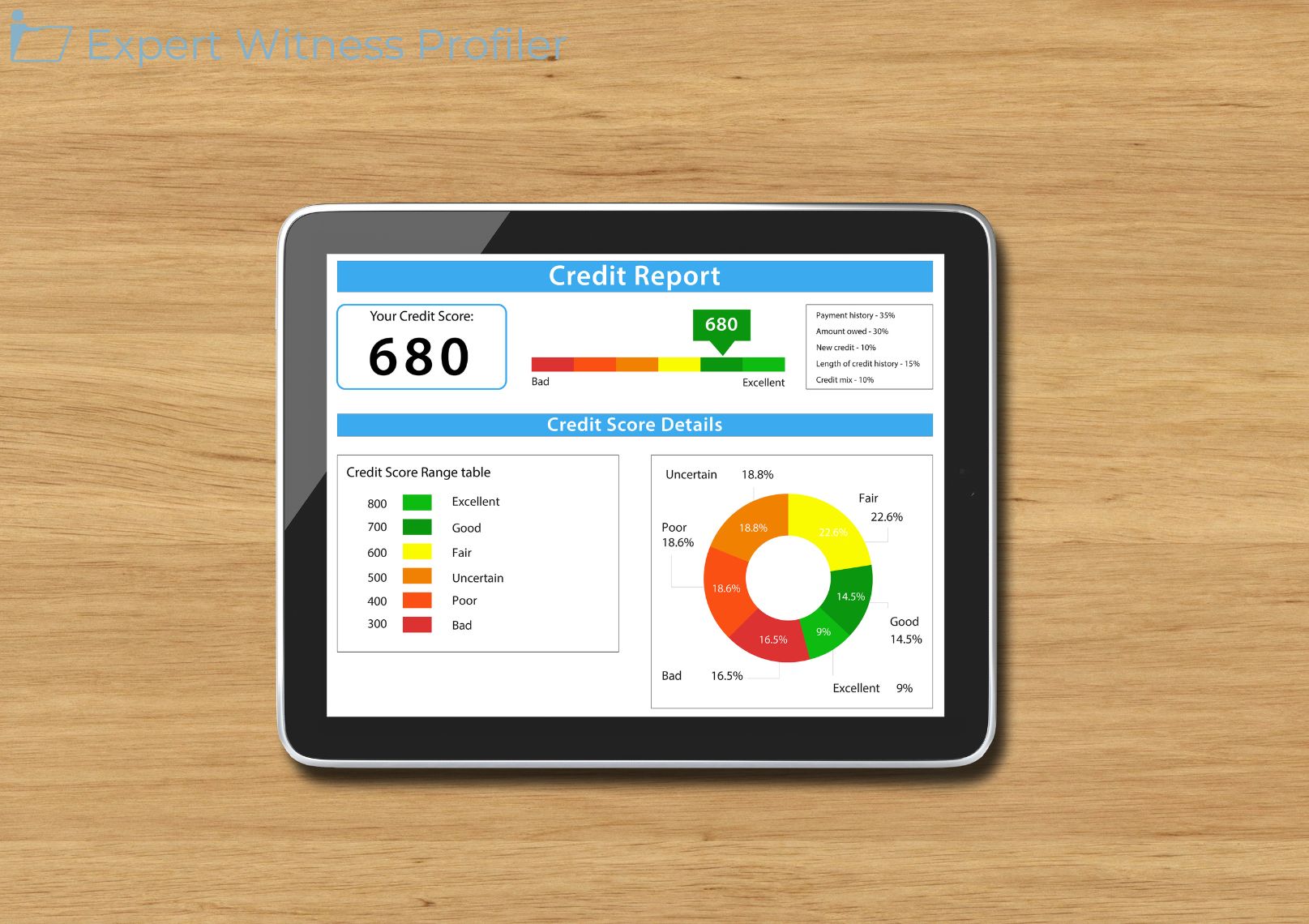
Credit Reporting Expert Witness
Thomas Tarter is the Managing Director of The Andela Consulting Group, Inc. (“ACG”), banking, business, credit industry, management and corporate finance consulting firm. He has more than 50-years of experience in commercial and consumer credit reporting, debt collection, credit origination, dispute resolution industry customs, standards and practices and credit damages.
The Court held that Tarter is not qualified to testify about the legal standards of, alleged violations of, or defenses to, the Fair Debt Collection Practices Act and Fair Credit Reporting Act.
In his expert report, Tarter admitted he had could not provide an estimate of Ford’s economic credit damages, the value of Ford’s lost sleep, or the value of time and energy Ford spent to correct his credit, because Tarter had not reviewed any supporting documentation. In his deposition, Tarter conceded he had not reviewed any discovery at the time of his report concerning Defendant’s policies on providing information to credit reporting agencies or how Defendant investigates disputed debts and claims of inaccurate reporting.
Ford stated that, at trial, Tarter will not quantify or assign a dollar value to Ford’s credit stigma, chilling, credit availability, credit expectancy, employment, or impact of a lower credit score. The Court excluded Tarter’s testimony about actual damages sustained by Ford and sought to exclude any testimony from Tarter regarding topics not set forth in either his expert report or deposition testimony.
However, Tarter has significant experience working in the financial and credit reporting industry, such as involvement in debt collection practices and seeking loan approvals involving personal lines of credit. The Court believed that this experience provides him with a reliable basis from which he may opine on these topics.
Held
The Court limited the testimony of Plaintiff’s expert Thomas Tarter.
Key Takeaway:
Even thought Tarter admitted he had could not provide an estimate of Ford’s economic credit damages, the value of Ford’s lost sleep, or the value of time and energy Ford spent to correct his credit, because Tarter had not reviewed any supporting documentation, his only saving grace remains his extensive experience.
Defendant Sayfullo Habibullaevic Saipov has been charged in a twenty-eight count indictment with, among other offenses, eight counts of murder in aid of racketeering and eighteen counts of attempted murder, arising out of an attack in New York City on October 31, 2017, in which Defendant Saipov-purportedly acting on behalf of the Islamic State of Iraq and al-Sham (“ISIS”)-is alleged to have driven a flatbed truck onto a cycling and pedestrian pathway on the west side of lower Manhattan, killing eight people and injuring at least eighteen others.
Convicting Saipov of these counts requires proof that ISIS is an enterprise engaged in racketeering activity, and that Saipov and ISIS entered into a manifest quid pro quo—murder for membership.
Specifically, the claims of responsibility and leadership messages are highly relevant as proof of the enterprise, and to demonstrate Saipov’s intent, motive, and purpose behind committing the charged crimes in Counts One through Count Twenty-Six.
The Government requests that Dr. Aaron Y. Zelin’s testimony regarding the ISIS leadership messages and claims of responsibility be deemed admissible expert testimony under Federal Rule of Evidence 702.
Terrorism Expert Witness
Dr. Aaron Y. Zelin is the Gloria and Ken Levy Fellow at the Washington Institute for Near East Policy, where he also directs the Islamic State Worldwide Activity Map project. Zelin is also a Visiting Research Scholar in the Department of Politics at Brandeis University, Founder of the widely acclaimed website Jihadology, and a contributing writer for War on the Rock’s Adversarial newsletter. He is author of the book Your Sons Are At Your Service: Tunisia’s Missionaries of Jihad (Columbia University Press), which was nominated for the Neave Memorial Book Prize in 2020. Zelin is currently working on a second book tentatively titled Heartland of the Believers: A History of Syrian Jihadism.
Zelin’s research focuses on Sunni jihadi groups in the Levant, North Africa, the Sahel, and Afghanistan as well as the trends of jihadi governance, online mobilization, and foreign fighting. Moreover, he has conducted field research in Tunisia, Turkey, Iraq, Lebanon, Palestine, and Israel. Zelin has also testified and served as an expert witness in front of the U.S. House of Representatives and with the Department of Justice in federal judicial terrorism trials.
Zelin will explain the means and method of ISIS, including the use of the internet and social media to disseminate its message, radicalize individuals, and communicate with individuals about committing acts of terror wherever necessary.
He will also explain the words and phrases used by ISIS, including those used to entice individuals to become “lone wolves” and provide a guide for those individuals to commit violent acts on behalf of ISIS to gain entry into ISIS. The Court believed that this testimony will assist the jury in understanding “ISIS’ enterprise status, the Defendant’s motive for committing his attack, and whether he provided material support to ISIS.” Moreover, the Defense has not identified a court, in this District or elsewhere, that precluded Zelin from testifying.
Held
The Court granted the Government’s motion to deem expert testimony of Dr. Zelin admissible.
Key Takeaway:
Zelin’s testimony was considered relevant to demonstrate Saipov’s intent, motive, and purpose behind committing the charged crimes in Counts One through Count Twenty-Six. The Court held that it was admissible as per the standards of Rule 702 and would help the jury in understandi “ISIS’ enterprise status.”
Case Details:
Case Caption:
United States of America V. Sayfullo Habibullaevic Saipov
Plaintiff, Wendy Marie Henshaw alleged that she slipped and fell on a liquid substance on Defendant Wal-Mart’s premises on October 28, 2021.
Henshaw filed a motion to strike Defendant’s expert witness Dr. Marc Fredric Glickstein. Henshaw noted that Defendant timely served its expert witness disclosure and listed Glickstein as an expert in diagnostic radiology; however, Defendant did not provide Plaintiff with Glickstein’s report.
Defendant contended that Glickstein has not yet prepared a report. Since Defendant is in the process of obtaining records and diagnostic studies for his review, the report will be provided to Plaintiff once it is completed.
Radiology Expert Witness
Marc Glickstein, MD, FACR, is a partner in a large private practice radiology group, on the senior medical staff of 8 area hospitals, and an assistant clinical professor of Radiology at University of CT School of Medicine. He has over 27 years of active clinical involvement in Neuroradiology, as well as General Radiology including MRI, Mammography, CT, and Ultrasound.
Rule 26 clearly states that, “Unless otherwise stipulated or ordered by the court, this disclosure must be accompanied by a written report—prepared and signed by the witness.” Rule 37 makes it clear that the party that failed to comply with Rule 26(a) bears the burden of establishing that its non-disclosure was either substantially justified or harmless.
The Court held that Defendant has both failed to comply with Rule 26(a) and failed to show that its non-disclosure was either substantially justified or harmless. Consequently, Defendant will be prohibited from using Glickstein to supply evidence on a motion, at a hearing, or at trial.
Held
The Court granted Plaintiff Wendy Marie Henshaw’s motion to strike Defendant’s expert, Dr. Marc Frederic Glickstein. Consequently, Glickstein was stricken from Defendant’s expert witness disclosure.
Key Takeaway:
Despite timely serving its expert witness disclosure, Defendant did not provide Plaintiff with Glickstein’s report. Defendant also failed to show that its non-disclosure was either substantially justified or harmless.
In March 2021, United States Department of Health and Human Services (“DHHS”) awarded Airboss Defense Group (“ADG”) a contract to supply 18,200,000 boxes of nitrile gloves by March 15, 2022. Under the contract, the government would pay ADG $12.98 per box of gloves and transportation costs of $2.85 per box. The total contract price was $288,106,000. Shortly after the contract award, Hutchins & Hutchins, Inc. (“H&H”), which represented various glove manufacturers, contacted ADG, and offered to assist ADG in meeting its obligations under the contract. Specifically, H&H arranged meetings between ADG and the glove manufacturer, Halyard.
On April 29, 2021, the two parties entered into an Non-Disclosure Agreement prepared by ADG. The negotiations which H&H facilitated between Halyard and ADG were initially unsuccessful and ADG purchased nitrile gloves from two other companies. But, in March 2022, ADG and Halyard entered into a contract for the purchase of nitrile gloves to fill a gap in deliveries from one of ADG’s other vendors. The company did not include H&H in its March 2022 deal with Halyard or obtain H&H’s permission to conclude any purchase of nitrile gloves. Because H&H “introduced” Halyard to ADG, and because ADG contracted with Halyard without first obtaining H&H’s written consent, the company alleges ADG violated the NDA’s non-circumvention provision and deprived H&H of profits it would have otherwise received through a finder’s fee or a resale.
Airboss Defense Group, LLC, filed a motion in limine to exclude expert testimony relating to (1) the total amount of damages and the calculation of such damages resulting from the alleged breach, (2) the opinions set forth in expert witness Roland Davis’ (“Davis”) supplemental report using the “Lehman Formula,” and (3) Davis’ testimony on the applicable gross profit margin.
Roland Davis’ Expert Reports
Davis opined that an 11.4%-13.4% gross margin from the ADG and Halyard transaction would have been “reasonable by the relevant industry standards” because the Waterstone Transaction gross margin “is well below Industry Standard Gross Margins.” In Davis’ second opinion, he opined that ADG would have expected that H&H would have benefited from the transaction between ADG and Halyard given the NDA, either through a resale of the product or through a finder’s fee.
On February 7, 2024, Davis supplemented his first expert report with a second report, rebutting ADG’s expert. In this supplemental report, Davis “opine[d] on accepted industry standards for calculating finder’s fees paid to intermediaries who bring businesses together and/or facilitate multimillion dollar commercial transactions between them.” Specifically, Davis opined that the “Lehman Formula” represents a standard method for calculating finder’s fees, although it is “often used in the mergers and acquisitions context.
Finally, Davis submitted two surrebuttal reports dated October 13, 2023, and June 25, 2024. These reports did not modify any of Davis’ prior opinions but responded to issues previously raised by ADG’s expert. Davis clarified the scope of his testimony in deposition, expressly stating that he would not be applying his gross profit margin opinion to any final calculation of damages. He also stated that his use of the Lehman Formula to determine an alternate value for the finder’s fee was urged on him by counsel and not something he independently would apply to a wholesale transaction like ADG’s glove purchase from Halyard.
Current Motion
ADG moved to exclude Davis’ testimony in its entirety. The company first argues that Davis should be precluded from opining on an amount of damages because Davis’ expert report does not include an opinion as to the total dollar amount of damages, and because Davis admitted in his deposition that he was not retained to provide a complete damages analysis. ADG also moved to exclude Davis’ opinions in his supplemental report, namely his use of the Lehman Formula.
ADG also moved to exclude testimony on the applicable gross profit margin, claiming that Davis’ opinion is not based on sufficient facts or data, is not the product of reliable principles and methods, and is based on cherry-picked data.
Business Valuation Expert Witness
Roland Davis serves as President of Davis Business Appraisers, Inc., where the company provides consulting services, business valuations, and machinery and equipment appraisals. Davis has decades of experience selling products to government agencies and appraising and valuing businesses engaged in similar government contract work.
He previously owned a company that sold products to the federal government as a wholesaler, and has twenty years of experience of M&A sales with experience selling federal government contractors and nine years of experience valuing private corporations, including government contractors and wholesalers.
I.Davis is Precluded from Opining on the Calculation of Damages or the Total Amount of Damages
H&H conceded that “H&H did not retain Davis to offer an opinion as to what H&H’s ‘total dollar amounts of damages’ are or the calculation of those amounts.” Further, H&H stated that Davis “has not offered and will not offer an opinion as to what H&H’s total damages are or any calculations of those total damages.”
Given H&H’s assertions both in writing and at the hearing, the Court granted ADG’s motion, precluding Davis from providing any opinion as to the total calculation of damages or the precise calculation of what H&H’s damages would be. However, the Court permitted Davis to testify as to certain gross profit margin percentages, which—depending on other evidence—may be relevant to H&H’s claimed damages.
II. Davis is Precluded from Opining About Finder’s Fees Using the Lehman Formula
ADG argued that Davis’ use of the Lehman Formula to calculate a finder’s fee must be excluded because Davis disavowed this opinion at his deposition. ADG also argued that Davis’ Lehman Formula testimony should be excluded because the formula is most often used in the mergers and acquisitions context, not in transactions concerning the sale of personal protective equipment.
The Court held that Davis did not reach this conclusion by his own independent analysis. If his testimony were admitted solely on the basis of a lawyer’s instruction, it would leave ADG without any ability to test the reliability of his opinion before the jury. Because Davis testified that the Lehman Formula was an inappropriate measure of damages, his expert opinion that the Lehman Formula could be used to calculate a finder’s fee must be excluded.
III. Davis’ Opinions on the Gross Profit Margin as it Applies to an Intermediary in the Sale of Goods are Sufficiently Reliable under Federal Rule of Evidence 702
ADG took issue with several aspects of Davis’ gross profit margin testimony as it applies to both a resale transaction and a transaction including a finder’s fee, arguing that the testimony should be excluded as to both types of transactions. ADG also argued that Davis should be precluded from testifying about ADG’s expectations surrounding the transaction in entering into the NDA with H&H.
The Court held that Davis is permitted to opine as to what an applicable, reasonable, and below industry standard gross profit margin would be with respect to a resale transaction. However, Davis is precluded from testifying as to how this same gross profit margin calculation would apply to a transaction including a finder’s fee. Finally, Davis is precluded from opining on ADG’s expectations in entering into the NDA with H&H.
A. Testimony About the Gross Profit Margin as it Relates to a Resale Transaction
Regarding Davis’ resale transaction conclusion, ADG broadly asserted that Davis’ testimony on the applicable gross profit margin must be excluded because Davis is not a qualified expert, his opinion is not based on sufficient facts or data, his opinion is based on both cherry-picked and overbroad data, and his testimony is not the product of reliable principles and methods.
First, ADG claimed that Davis is not qualified to testify to the applicable gross profit margin as he lacks experience in the area of government contracts or the sale of medical supplies. Davis has significant experience as a business owner and appraiser. He evaluated, sold, and appraised wholesalers and became familiar with the terms of transactions similar to the present case over a period of many years.
Davis examined many transactions but selected the Waterstone Transaction as his closest comparator
Davis properly cited this experience in support of his opinions. At the outset, his report explained that the following opinions were “based on [his] review of the documents above, literature, financial data given to [him] by H&H, and his education and experience.” Davis relied on his experience several times throughout his deposition, backing his responses to questions ranging from pricing to financial data.
Further, Davis did not produce the 11.4%-13.4% gross profit margin range based on the Waterstone Transaction alone. In fact, as outlined in his report, Davis explained that his opinion about the gross profit margin range “is justified by two different sources.” He cited a higher average gross profit margin percentage from companies comparable in size to H&H of 27.15% in 2021 and 26.46% in 2022 as revealed from the Bizminer’s financial report to inform his opinion.
Additionally, he relied on the DealStats financial report to inform his conclusion. This financial report examined wholesalers within NAICS code 423450, the same code H&H falls within, compiling data from December 4, 1998, to December 28, 2018.
Davis singled out the Waterstone Transaction in his analysis because he believed it was the “most credible comparator available from H&H’s resale history.”
This Court recognized that Davis’ testimony is not perfect. But these flaws do not render otherwise admissible expert testimony inadmissible.
B. Testimony About the Gross Profit Margin as it Relates to a Finder’s Fee and ADG’s Expectations in Entering into the NDA
Regarding Davis’ finder’s fee conclusion, ADG asserted that this opinion should be excluded because it is based on an improper and unsupported assumption that the 11.4%-13.4% gross profit margin would be applicable to two different types of transactions, “whether the ultimate transaction was (a) a resale transaction in which H&H purchased nitrile gloves from Halyard and resold them to ADG or (b) if ADG purchased nitrile gloves directly from Halyard and H&H would have received some sort of finder’s fee.”
ADG also argued that this Court should exclude any testimony Davis provided speculating as to what ADG’s expectations would have been or were concerning the NDA because Davis provided no analysis or independent basis in reaching this conclusion.
After arriving at his opinion on gross margin and without any reliable explanation, Davis equated the gross profit margin for a resale transaction and for a transaction involving a finder’s fee, failing to distinguish between each type of transaction. The Court held that Davis did not have any cited basis to conclude that a finder’s fee would have been calculated in the same way as a resale gross profit margin estimate. Further, Davis cannot testify that in entering the NDA, ADG would have expected to pay H&H any finder’s fee, much less what that finder’s fee would have been.
Held
The Court granted in part and denied in part Defendant’s motion in limine to exclude the testimony of Plaintiff’s damages expert Roland Davis.
Key Takeaway:
The Court held that Davis’ gross profit margin opinion is rooted in data from H&H’s business practices and industry sources, and is therefore admissible.
The Court held that because of Davis’ reliance on financial reports, H&H’s financials, and his own experience, the reasoning underlying his proffered opinion is reliable, and his opinion as to the gross profit margin of a resale transaction may be relevant to facts at issue.
However, Davis cannot testify that in entering the NDA, ADG would have expected to pay H&H any finder’s fee, much less what that finder’s fee would have been.
The Court held that this testimony is unsupported by data or Davis’ relevant experience. Because Davis put forth such assertions with no independent analysis and with insufficient support, Davis is precluded from testifying that a 11.4%-13.4% gross profit margin would apply to a finder’s fee, or that ADG would have expected to pay H&H a finder’s fee of any kind in entering into the NDA.
Case Details:
Case Caption:
Hutchins & Hutchins, Inc. V. Airboss Defense Group, LLC
This federal diversity action arises out of a commercial lease agreement for a three-story building located at 2555 Park Boulevard in the City of Palo Alto, California (“City”). Plaintiff KJ-Park, LLC (“KJ-Park”) retained Erik Schoennauer, a land use consultant, to testify about land use entitlement and permitting procedures relating to the subject property. Defendants Match Group, Inc. and Match Group, LLC (collectively, “Match Group” or “Defendants”) filed a motion to exclude Schoennauer’s opinions.
Land Use Expert Witness
Erik Schoennauer draws upon 33 years of experience in local land use and redevelopment processes, public/media relations, community outreach, and political consulting to serve the clients of The Schoennauer Company. Moreover, he has a unique combination of experience, spending half his career in government service and the other half in private business, with extensive involvement inneighborhood and community affairs.
Defendants Match Group movd to exclude Schoennauer’s opinions, primarily on the ground that his opinions are impermissible legal conclusions and that his opinions regarding KJ-Park’s alleged vested right with respect to the subject property are irrelevant. Additionally, Match Group argued that any probative value of Schoennauer’s opinions are “substantially outweighed by a danger of . . . confusing the issues, . . . wasting time, or needlessly presenting cumulative evidence,” and therefore are excludable under Federal Rule of Evidence 403.
Schoennauer’s opinions largely concern whether the circumstances presented give rise to KJ-Park’s alleged vested right in the subject property, or warrant the application of estoppel principles.
Legal Conclusion
Schoennauer proposed to testify that, in his opinion, KJ-Park received “authorizations” for use of the subject property exclusively as office space that “vested through approval of the site-specific RLUA and/or issuance of the Building Permit.” However, he may not properly testify or offer opinions about issues of law, including the legal interpretation or significance of documents or events, or what the law requires with respect to the vested rights doctrine or the doctrine of estoppel.
The Court concluded that Schoennauer’s opinions about whether KJ-Park obtained an alleged vested right, or whether estoppel principles apply, including his opinions regarding the settlement agreement between KJ-Park and the City, must be excluded.
Relevance
KJ-Park contended that Schoennauer should be permitted to testify regarding general land use and development industry standards and practices. The vested rights doctrine and principles of equitable estoppel concern the legal rights and obligations as between KJ-Park and the City. Therefore, KJ-Park cannot, as a matter of law, use the vested rights doctrine or equitable estoppel as theories by which to hold Match Group liable under the subject lease and guaranty.
In conclusion, the Court is not persuaded that testimony regarding general industry standards and practices is necessary or relevant to understand the evidence with respect to any matters that remain to be tried.
Held
The Court granted Match Group’s motion to exclude Erik Schoennauer’s opinions.
Key Takeaways:
Firstly, Schoennauer may not properly testify or offer opinions about issues of law, including the legal interpretation or significance of documents or events, or what the law requires with respect to the vested rights doctrine or the doctrine of estoppel.
Finally, testimony regarding general industry standards and practices is not necessary or relevant to understand the evidence with respect to any matters that remain to be tried.