Tag: Causation

  • Bioengineering Expert’s Testimony on Medical Causation Admitted

    Bioengineering Expert’s Testimony on Medical Causation Admitted

    Plaintiff Kai Evers commenced this diversity action against Defendants Bella Logistics, Inc. and Bradley Hoffman (collectively, “Defendants”) alleging that Hoffman, while acting in the scope of his employment for Bella Logistics, Inc., negligently operated a commercial tractor-trailer and caused the parties’ motor vehicles to collide.

    Plaintiff filed a motion in limine seeking to preclude Defendants from calling Kevin K. Toosi, M.D., Ph.D. as an expert witness.
    Bioengineering Expert Witness

    Kevin Khashayar Toosi, M.D., Ph.D. is a biomechanical forensic engineer and consultant, with a bachelor’s degree in engineering and master’s and doctoral degrees in bioengineering from the University of Pittsburgh. 

    Toosi also has post-doctoral fellowships in physical medicine and rehabilitation as well as urology from the University of Pittsburgh. Toosi received his medical degree in 1994 from Mashhad University of Medical Sciences in Iran and “went on to practice medicine as a Primary Care Physician for more than five years” prior to attending the University of Pittsburgh.

    Toosi has more than thirty years of experience in the areas of clinical medicine, injury biomechanics and injury causation.

    Get the full story on challenges to Kevin Toosi’s expert opinions and testimony with an in-depth Challenge Study.

    Discussion by the Court

    Plaintiff sought to preclude Toosi from testifying as to whether the accident at issue “caused or contributed” to Plaintiff’s injuries because “(1) he lacked the qualifications to render the medical causation opinions contained in his report, and (2) his opinions are not based on sufficient facts or data and therefore fail the reliability requirements of Federal Rule of Evidence 702.”

    Toosi’s Qualifications to Opine about Medical Causation

    The Court found that Toosi is qualified to testify about medical causation because he does indeed have medical training. Moreover, there is no basis to, as Plaintiff suggests, order the blanket preclusion of Toosi’s testimony.

    Plaintiff also overlooked the multiple New York state court decisions finding Toosi qualified to opine about medical causation.

    Accordingly, as the rejection of expert testimony is the exception rather than the rule, “vigorous cross-examination” and “the presentation of contrary evidence” are the appropriate remedies for Plaintiff’s objections to Toosi’s qualifications, rather than preclusion.

    The Reliability of Toosi’s Opinion

    Plaintiff argued that “Toosi lacked critical factual information when forming his conclusions” because “he did not inspect either vehicle, visit the accident scene, review repair records, or examine photographs of the damaged side of Defendants’ vehicle.”

    The fact that Toosi did not visit the accident location did not render his opinion unreliable. At bottom, Plaintiff’s contentions go to the weight of the evidence and are a subject for cross-examination, not admissibility. The Court held that Toosi’s opinion therefore rests on reliable principles and methods and reliable application of those principles and methods for purposes of his expert testimony.

    Toosi’s Opinion Is Relevant to the Case and Will Assist the Trier of Fact

    Toosi’s opinion is certainly relevant to the issues in this case. His specialized expertise in biomechanics, an issue that is complex and technical, is one that will also assist the jury in understanding causation of injury. The parties may disagree as to the conclusions reached by Toosi, “but ultimately the jury will be the judge of whether Plaintiff’s alleged injuries were caused by the accident, and it is the jury’s responsibility to assess what weight to give the proffered testimony as it attempts to answer this question.”

    Held

    The Court denied Plaintiff’s motion in limine to preclude Defendants from calling Kevin K. Toosi, M.D., Ph.D. as an expert witness.

    Key Takeaway

    Expert engineering testimony may rest on scientific foundations, the examination of which invokes the Daubert factors directly, but may also rest on the personal knowledge or experience of the engineer.

    Case Details:

    Case Caption: Evers V. Hoffman
    Docket Number: 1:25cv2423
    Court Name: United States District Court, New York Eastern
    Order Date: February 27, 2026
  • Emergency Medicine Expert Was Allowed to Opine on Medical Management

    Emergency Medicine Expert Was Allowed to Opine on Medical Management

    On September 27, 2022, Plaintiffs Aislyn Batista Acevedo, Ina Ruth Kessler Krugman, and minor A.D.S.B. (collectively, “Plaintiffs”) filed the instant suit on behalf of the late David Suárez (“Suárez”) against Ashford Presbyterian Hospital (“Presby”) and various other Defendants (collectively, “Defendants”).

    From September 29, 2021, until his death on October 23, 2021, Suárez was hospitalized at Presby and Doctors’ Center Hospital Bayamón (“Doctors’”). Plaintiffs alleged that, during the time that Suárez was hospitalized, Defendants failed to properly screen and treat Suárez in violation of the Emergency Medical Treatment and Labor Act (“EMTALA”).

    Plaintiffs also alleged that all Defendants are liable under Puerto Rico law for negligence and medical malpractice. To prove their claims, Plaintiffs intended to introduce at trial the expert testimony of Dr. Dainius A. Drukteinis regarding medical management. Defendants moved the Court to rule the proffered testimony of Drukteinis inadmissible.

    Emergency Medicine Expert Witness

    Dr. Dainius Albertas Drukteinis has been practicing emergency medicine for over twenty years.

    He graduated from Cornell Medical School in 2004. Drukteinis completed his emergency medicine training at NYU/Bellevue Hospital in New York City, finishing a four-year residency in 2008. He has served as an attending emergency medicine physician since 2008. He has previously served as an Assistant Professor of Emergency Medicine with the University of South Florida.

    Want to know more about the challenges Dainius Drukteinis has faced? Get the full details with our Challenge Study report.

    Discussion by the Court

    Drukteinis provides a detailed account of his medical opinion that the physicians and staff at both Presby and Doctors’ breached the prevailing standard of care by failing to perform an MRCP or ERCP procedure, conducting poor transitions of care between medical providers during the time that Suárez was hospitalized, and transferring Suárez to another hospital facility when there was no valid reason to do so.

    A. The expert report of Drukteinis reliably identifies a standard of care applicable to Defendants

    Defendants argued that the expert witness opinion of Drukteinis is lacking in relevance and reliability because it assigned the same standards of care as to all seventeen medical practitioners sued by Plaintiffs: “notwithstanding the gamut of specialties involved in this case,” Defendants argued, “Drukteinis’ report did not identify the specific standard of care applicable to each physician, specialist, nurse practitioner, professional service corporation, or hospital.”

    Defendants’ argument is belied by the content of the report, which expressly sets forth three standards of care broadly applicable to all physicians who were responsible for the care of Suárez.

    It is therefore unclear why Defendants would argue that the expert report is deficient; indeed, the report specifically identified each Defendant physician in an account of the “chain of responsibility,” and identified three specific standards of care applicable to all of them.

    Moreover, Defendants identified no legal authority holding that, in multi-defendant medical malpractice cases, an expert report must set forth its conclusions regarding the standard of care with particularity as to each respective Defendant. Nor did Defendants explain why the fact that the conclusions adopted by Drukteinis are broadly applicable to various Defendants would render those opinions any less reliable or relevant under Rule 702.

    B. Defendants failed to identify any additional legal grounds for the exclusion of the proffered testimony of Drukteinis

    Next, Defendants moved the Court to exclude Drukteinis as a witness for “failing to provide opinions regarding causation vis-à-vis each Physician Defendant.”

    Defendants were incorrect when they claimed that an expert witness in a medical malpractice case “must” articulate an opinion regarding causation in order to testify.

    Drukteinis is not a party to this case and did not bear the burden to prove anything; instead, in civil litigation it is the Plaintiff who bears the burden to prove all three elements of a negligence claim. Accordingly, the Court declined to exclude the testimony of Drukteinis from evidence.

    Held

    The Court denied Defendants’ motion in limine seeking a ruling that the proffered testimony of Dr. Dainius Drukteinis was inadmissible.

    Key Takeaway

    Defendants fundamentally misapprehended the purpose of Rule 702 and the role of expert witnesses in federal court.

    Even assuming for the sake of argument that Defendants are correct that Drukteinis provided no opinion regarding causation in his expert witness report — a conclusion that the Court did not adopt — Defendants failed to explain why that would render his proffered testimony relating to the duty and breach elements of Plaintiffs’ negligence claim unreliable. The Court found that it would not.

    Case Details:

    Case Caption: Batista-Acevedo V. Presbyterian Community Hospital, Inc.
    Docket Number: 3:22cv1468
    Court Name: United States District Court, Puerto Rico
    Order Date: February 10, 2026
  • Fire Investigation Expert Witness Was Allowed to Opine on the Defective Candle

    Fire Investigation Expert Witness Was Allowed to Opine on the Defective Candle

    Plaintiffs Robert and Jill Motto brought this action to recover for property damage to their home arising from a fire allegedly caused by a defective candle manufactured and sold by Defendants Newell Brands and The Yankee Candle Company.

    During the litigation, Plaintiffs retained two experts, Roger Spadt and Dr. John Golder, to investigate the origin and cause of the fire. These experts concluded that the candle was the cause of the fire. Defendants disagreed and have moved to preclude both experts’ testimony, arguing that their opinions do not satisfy the minimum reliability requirements set forth in Federal Rule of Evidence 702.

    Fire Investigation Expert Witnesses

    Roger A. Spadt has over forty years of public and private experience investigating fires. He has worked as Assistant to the State Police Fire Marshal, was a Fire Marshal himself in a Lehigh Township fire
    company, and has been a private fire investigator since 2015.

    Want to know more about the challenges Roger Spadt has faced? Get the full details with our Challenge Study report.

    John J. Golder is a former ATF officer and current forensic fire investigator with a Ph.D. in forensic sciences and over a decade of experience investigating product defects, including candles.

    Get the full story on challenges to John Golder’s expert opinions and testimony with an in-depth Challenge Study.

    Discussion by the Court

    A. Roger Spadt

    Based on his investigation, Spadt concluded that the fire was caused by the candle, which he deemed “the only competent ignition source within the area of the fire’s origin.”

    Defendants argued that Spadt’s testimony is not reliable because he failed to follow industry guidelines for methodology in fire investigations. Specifically, Defendants argued that he failed to properly analyze the origin of the fire according to the scientific standards set forth in NFPA 921.

    1. Industry Guidelines for Fire Investigations

    The National Fire Protection Association published an industry guide for investigations into the origin and cause of fires, “NFPA 921.” NFPA 921 sets forth the scientific methods the Association recommends investigators use to determine the cause of a fire. This scientific method generally requires an investigator to “define the problem, collect data, analyze data, develop hypotheses, test the hypotheses, and select a final hypothesis.”

    The parties disagreed about the degree to which an investigator must follow every provision of NFPA 921.

    Defendants characterize NFPA 921 as “the universally accepted peer-reviewed comprehensive guide to procedures and techniques for fire investigations in the United States.” Plaintiffs have the better argument. The plain text of NFPA 921 makes clear that it is not an exacting set of rules. Section 1.3 states that “deviations from these procedures . . . are not necessarily wrong or inferior.” It explains that “every fire and explosion incident is in some way unique and different from any other,” therefore the guidelines are “not designed to encompass all of the necessary components of a complete investigation or analysis of any one case.”

    2. Application of Industry Guidelines by Spadt

    It is clear from Spadt’s report that he employed a scientific method that generally comports with the approach outlined in NFPA 921. Spadt collected data by examining the fire scene, taking photographs of the damage, creating a field diagram, and conducting witness interviews.

    Spadt also considered alternative causes of the fire, including by examining the home’s branch circuit electric conductors and a ceiling fan as potential induction sources, but ruled out these options because they were inconsistent with the physical evidence and witness interviews.

    Finally, even if Spadt’s processes did not adhere to NFPA 921 standards, they independently satisfy Rule 702 and Daubert. Spadt applied the “methods and procedures of science” (in this case, electrical engineering and fire science) to the physical evidence and witness interviews he reviewed in this case, so his opinion rests on “good grounds.”

    At bottom, the various issues Defendants raised with Spadt’s testimony are probative of the weight his testimony should be afforded, not the reliability of his methodology. Accordingly, the Court denied Defendants’ motion to preclude Spadt’s testimony.

    B. John J. Golder

    To begin with, Golder reviewed photographs of the fire scene and witness interviews and conducted a burn test on the same type of Yankee candle. He also determined that the fire was caused by the candle, “which had been burning for an extended period, causing the candle to reach flashover conditions due to the inability of the metal container allowing the heat to dissipate.”

    Defendants argued that Golder’s testimony is unreliable because it is not based on sufficient facts or data, not the product of reliable principles and methods, and his conclusions are based solely on unfounded speculation.

    1. Insufficient Facts/Data

    Defendants argued that Golder’s opinion that the candle reached flashover conditions that resulted in an explosion igniting the materials on the dining room table was reached “without evidence.”

    However, Golder based his report on a variety of evidence. He examined the candle’s remains, reviewed photographs and x-rays of the damage to the house, reviewed deposition testimony of witnesses in this case, and conducted a burn test on an identical Yankee candle. Golder also consulted candle safety standards and peer-reviewed literature and employed his knowledge of forensic science, fire dynamics, chemistry, physics, and origin and cause investigations. All of these inputs constitute “good grounds” for Golder’s opinion.

    2. Unreliable Methods & Application of Methods

    Next, Defendants argued that Golder’s opinion is not based on any scientific method but on mere speculation and his own ipse dixit.

    However, Golder relied on his expertise in fire dynamics, fire science, physics, and chemistry, and used that background to examine the candle’s remains, review photographs, x-rays, and deposition testimony, and conduct a burn test of an exemplar Yankee candle. He also consulted relevant literature on fire causation from candles.

    In the conclusions section of his report, Golder articulated how his scientific analysis informed his opinion. For instance, he explained that when a glass container is placed into a metal container, it is harder for radiant heat to dissipate away from the glass, meaning the container acts as a heat sink to re-radiate energy back into the glass and cause a flashover. A flashover can cause the flame height to increase, which can break the glass and cause the fire to spread to nearby surfaces. These explanations bridge the gap between Golder’s conclusions and his data and methods.

    3. Defendants’ Remaining Arguments

    Defendants raised several additional issues with Golder’s report. Namely, that (1) he failed to consider alternative causes of the fire; (2) the burn test he conducted on an exemplar candle and metal holder was not adequately explained and/or sufficiently similar to the circumstances of the fire; and (3) Golder failed to consider the role that Plaintiffs played in causing the fire.

    Since these arguments are more probative of the weight to be afforded to Golder’s testimony than the reliability of his methods or conclusions, the Court held that Golder’s conclusions met the minimum reliability requirements of Rule 702. 

    Held

    The Court denied the Defendants’ motion to preclude the testimony of Plaintiffs’ experts Roger Spadt and Dr. John Golder.

    Key Takeaway

    Courts considering Daubert motions in fire damage cases have found that similar investigatory processes satisfied NFPA 921. Thus, Defendants are wrong that any minor deviation from the guidelines renders Spadt’s investigation unreliable.

    Case Details:

    Case Caption: Motto V. Newell Brands Inc.
    Docket Number: 2:24cv1338
    Court Name: United States District Court, Pennsylvania Eastern
    Order Date: February 05, 2026
  • Finance Expert Allowed to Opine on Loss Causation

    Finance Expert Allowed to Opine on Loss Causation

    Stadium Capital (“Stadium”), the Lead Plaintiff in this class action lawsuit, has sued Co-Diagnostics (“CoDx”), its CEO Dwight Egan, and its CFO Brian Brown, for allegedly making false or misleading statements in violation of the Securities Exchange Act of 1934.

    Defendants filed a motion to exclude the testimony of Stadium’s expert witness, Chad W. Coffman under Rule 702 and Daubert standards.

    Finance Expert Witness

    Chad William Coffman is the President of Peregrine Economics, a Chicago based firm that specializes in the application of economics, finance, statistics, and valuation principles to questions that arise in a variety of contexts, including, as here, litigation.

    He holds a Bachelor’s Degree in Economics with Honors from Knox College and a Master’s of Public Policy from the University of Chicago. He is also a CFA charter-holder.

    Discover more cases with Chad Coffman as an expert witness by ordering his comprehensive Expert Witness Profile report.

    Discussion by the Court

    Defendants filed a motion to exclude Coffman’s testimony because he allegedly failed to analyze and account for confounding factors essential to determining loss causation.

    Defendants argued that Coffman’s expert opinion is inadmissible because it fails to account for the “axiomatic” requirement of “adequately accounting for obvious alternative explanations.” They then argued that expert testimony on loss causation requires an accounting of confounding factors that Coffman did not provide.

    They pointed to three confounding issues that Coffman allegedly failed to disaggregate in his testimony on loss causation: (1) the financial results for the second half of the second quarter of 2022, (2) forward-looking statements about uncertain future sales and demand, and (3) the announcement of delays for the initial clinical trial of an at-home, point-of-care PCR test. 

    Analysis

    The Court held that Coffman’s testimony is reliable and thus admissible. First, he used the common and accepted method of an event study, which determined that the corrective disclosure caused a “statistically significant negative price movement in [CoDx’s] Common Stock beyond the 95% confidence level (as well as beyond the 99% confidence level).” That was after “controlling for market and industry factors,” as required. Second, Coffman stated in his report that he “also considered and analyzed the degree to which information arguably unrelated to the corrective information (i.e., confounding information) potentially impacted the stock price over the two-day trading period.” He noted that he “did not identify any confounding information.” Indeed, the most obvious cause of the over-30% price drop was the news about substantially decreased Logix Test sales and what that fact implied about future sales, not information about those low sales remaining stable for the second half of the quarter, another announcement about continued uncertainty surrounding future demand, or another announcement that the at-home PCR test wasn’t quite ready yet.

    Coffman testified at his deposition that the “confounding” information was either already baked into the market (or would have been if defendants had told the truth on their May call), or it was immaterial. So there wouldn’t be any material “confounding” information to consider.

    Held

    The Court denied Defendants’ motion to exclude Chad Coffman’s expert testimony.

    Key Takeaway

    The Defendants can try to rebut Coffman’s testimony or otherwise mitigate potential damages by showing that their “confounding” information contributed materially to the price drop. But the Court determined that Coffman’s testimony “can be helpful to the jury” as it evaluates those arguments. It is not required that an expert categorically exclude each and every possible alternative cause in order to render the proffered testimony admissible.

    Case Details:

    Case Caption: Stadium Capital Llc V. Co-Diagnostics, Inc.
    Docket Number: 1:22cv6978
    Court Name: United States District Court, New York Southern
    Order Date: January 14, 2026
  • Insurance Expert Was Allowed to Opine on Damage Causation

    Insurance Expert Was Allowed to Opine on Damage Causation

    This case involves allegations of underpayment and nonpayment under an insurance policy.

    Ategrity Specialty Insurance Company issued Policy No. 01-C-PK-P20064154-0 to 707 FWY Investments, LLC with effective dates of September 12, 2022, to September 12, 2023. Plaintiff leased out this structure to commercial tenants.

    The roof collapsed and then several severe rain and windstorms allowed water infiltration to the roof surfacing and sub-surfacing and the interior of the building. Plaintiff subsequently filed a claim under the policy.

    Defendant filed a motion to strike Plaintiff’s expert, Monty Stone, a public adjuster designated to testify on causation.

    Insurance Expert Witness

    Monty B. Stone has had many years of experience in the construction and roofing industry starting from July 2005 to January 2020 where he owned and operated his own construction company and installed all types of roofing systems, including the one at issue in this case.

    Stone has been a licensed Public Insurance Adjuster since 2018.

    Get the full story on challenges to Monty Stone’s expert opinions and testimony with an in-depth Challenge Study.

    Discussion by the Court

    Plaintiff designated Stone to testify as an expert in damages and causation. Defendant filed a motion to strike Stone’s opinions on causation—but not damages—arguing 1) he is not qualified, and 2) his testimony is not based on a reliable methodology.

    Defendant’s argument that Stone is unqualified rests on the fact that he is not an engineer—he is a public adjuster—and “working closely” with engineers is an insufficient basis to make one an expert in engineering. Defendant also pointed to the fact that Stone was not certified as a roof consultant or a roof observer at the time of the loss. Plaintiff responded that 1) Stone has been upheld has an expert in the face of nearly identical challenges, and 2) Defendant’s quibble is better suited for cross-examination.

    While he is not currently licensed, he has been in the past and has extensive work experience and training with identifying damage causation, reasonable repairs, and reasonable costs. Stone was also formerly a HAAG Certified Roof Inspector—the same company for which Defendant’s causation expert works. Because Stone is not required to be an engineer to testify as to causation, Defendant’s arguments regarding Stone’s experience are better suited for cross-examination, rather than a challenge based on qualification.

    Defendant also objected to the reliability of Stone’s testimony, arguing that he provides only “general statements without concrete examples” which amounts to “ipse dixit.”

    Plaintiff argued that “Defendant offered no comparison to other methodologies” and that Defendant’s own engineer relied on the same methodology—visual inspection—and performed no testing.

    Defendant presented no other reason for the Court to believe Stone’s physical inspection is not a proper methodology. In light of this, the Court found no reason to think Stone’s methodology was unreliable.

    Held

    The Court denied Defendant’s motion to strike the testimony of Plaintiff’s expert Monty Stone.

    Key Takeaway

    Although Defendant makes an argument based on Stone’s lack of schooling, that is only one among many ways to be qualified. Under Federal Rule of Civil Procedure 702, a witness may be qualified as an expert by “knowledge, skill, experience, training, or education.”

    Case Details:

    Case Caption: 707 FWY Investments LLC V. Ategrity Specialty Insurance Company
    Docket Number: 4:25cv114
    Court Name: United States District Court, Texas Northern
    Order Date: January 09, 2026
  • Engineering Expert’s Testimony on the Lack of a Clean-Out Tool Excluded

    Engineering Expert’s Testimony on the Lack of a Clean-Out Tool Excluded

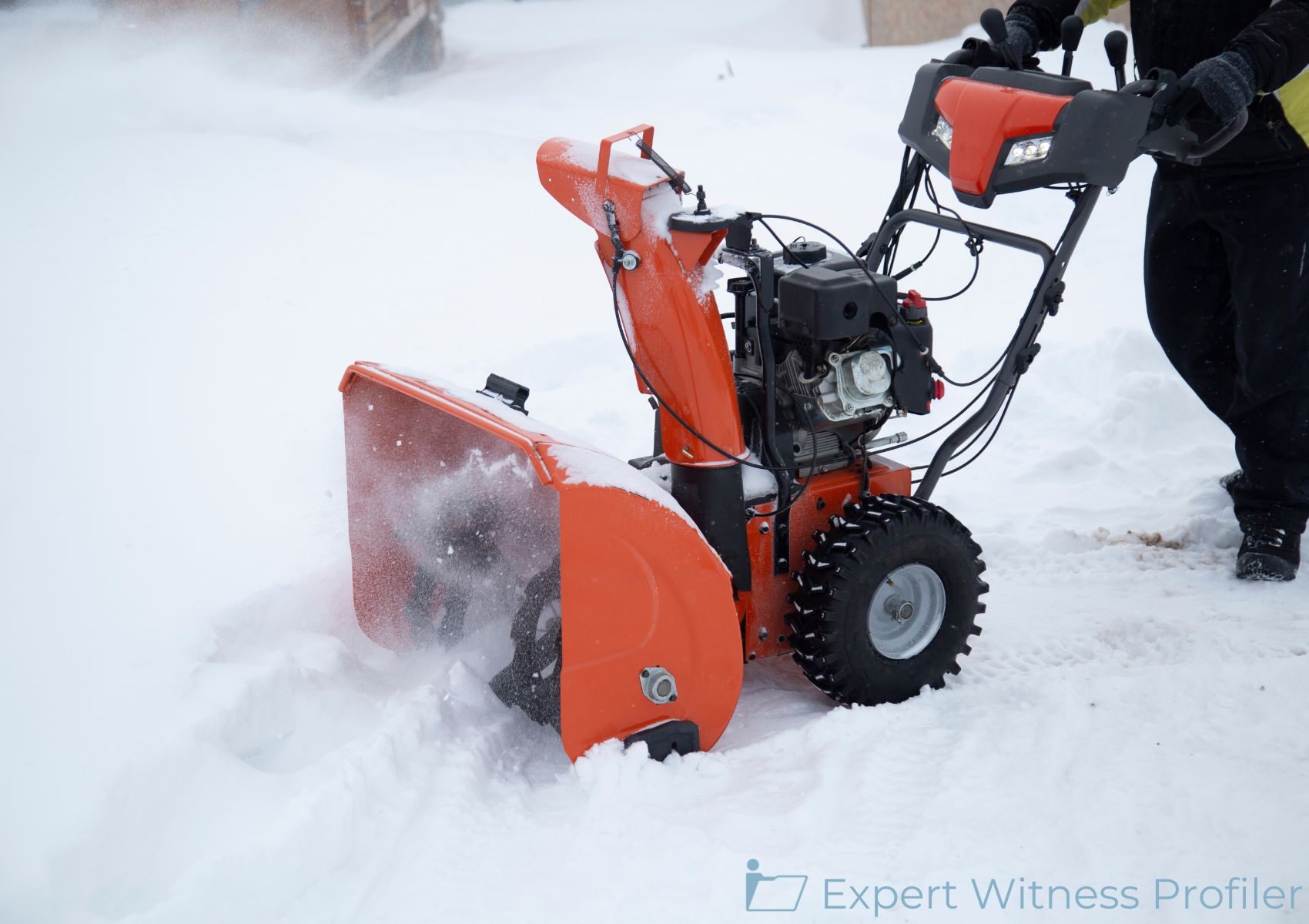
    Plaintiff David Vakili alleged that a snow thrower was defective because its design lacked a simple safety feature—a cleanout tool. To help prove his case, Vakili enlisted the support of Jack Krafchick, P.E., who authored an expert report finding the subject snow thrower defective and the cause of Vakili’s injuries. Defendants MTD Products Inc. and Tractor Supply Company filed a motion to exclude Krafchick’s report.

    Engineering Expert Witness

    Jack Krafchick, P.E. provided consulting engineering services to the insurance and legal community for over 30 years. This work has included analysis, accident reconstruction, and testimony covering a wide range of issues related to machine safety, project engineering, construction practices, and construction site safety.

    Fortify your strategy by reviewing a Challenge Study detailing grounds for excluding Jack Krafchick’s expert testimony.

    Discussion by the Court

    Krafchick evaluated MTD’s design of the subject snow thrower using the “Safety Hierarchy” technique. He concluded that it would have been impossible for MTD to eliminate the hazards of the impeller on the snow thrower completely, nor would it have been able to provide adequate safeguarding.

    While he recognized MTD provided warnings about the potential hazards with its snow thrower, Krafchick faulted the company for failing to include safety equipment with the machine. Specifically, he believed the company could have easily provided a cleanout tool, to help clear clogs of snow with the machine. Krafchick opined that it was MTD’s failure to include a cleanout tool that caused Vakili’s injuries.

    According to the Court, Krafchick’s report summarily concluded the “lack of a clean-out tool caused Vakili’s injury.” It is not clear what “methods and procedures of science” Krafchick used to come to his conclusion on causation. He is a “consulting engineer,” not a behavioral scientist. Neither Krafchick in his report nor Vakili in his briefing explain what qualifications Krafchick has in human psychology such that he could say that if a cleanout tool had been provided, Vakili would have used it.

    To the extent Vakili may wish to claim the idea of causation would be obvious, then Krafchick’s opinion would not “fit” the current case.

    Held

    The Court granted MTD’s motion in limine to the extent it wished to preclude Jack Krafchick from offering testimony on causation.

    Key Takeaway:

    An expert’s opinion must be one that “will help the trier of fact to understand the evidence or to determine a fact in issue.” Thus, if Krafchick is not using his expertise to offer an opinion, it is not one that could help the jury and must be excluded.

    Case Details:

    Case Caption: Vakili V. MTD Prods. Inc.
    Docket Number: 1:23cv104
    Court Name: United States District Court, Pennsylvania Middle
    Order Date: November 10, 2025
  • Biomechanics Expert’s Testimony on Law Enforcement Tactics Excluded

    Biomechanics Expert’s Testimony on Law Enforcement Tactics Excluded

    Plaintiffs alleged that Defendants former Washington County Sheriff’s Office (“WCSO”) Deputy Defendant Jeffrey Aaron Edwards (“Edwards” or “Deputy Edwards”) and former WCSO Deputy Brian Mizelle (“Mizelle” or “Deputy Mizelle”) used excessive force against them during a March 2, 2022, attempt to transport Plaintiff Gary Thomas (“Thomas”) to the Washington County Courthouse. The factual circumstances in this case primarily surround the transportation of Plaintiff Thomas from a patrol vehicle to the Washington County Courthouse and Plaintiff Mary Moore’s aggressively lunging at Edwards during that attempt, which caused her to be properly struck by Edwards.

    Thomas was placed under arrest by Deputy Edwards and was being transported inside the courthouse with the assistance of Deputy Mizelle when Moore interfered with Thomas’ arrest. Thomas became injured while he resisted arrest requiring Edwards and Mizelle to use force to maintain safety and control of this incident.

    Defendants Edwards, Barnes, and Mizelle offered the testimony of Albert Vangura to opine on the biomechanics of the interactions between Edwards and Plaintiffs, the cause of Plaintiffs’ injuries, and the position of Edwards’s hand when he struck Moore.

    Plaintiffs filed a motion in limine to exclude the testimony of Vangura.

    Biomechanics Expert Witness

    Albert Vangura is an engineering professional with nearly forty years of experience in biomechanical and human factors evaluations, product design and development, manufacturing, and testing.

    He holds a Master of Science Degree in Bioengineering from the University of Pittsburgh, a Bachelor of Science Degree in Exercise and Sports Science, and an Associate of Science Degree in Mechanical Engineering Technology, both from The Pennsylvania State University.

    Fortify your strategy by reviewing a Challenge Study detailing grounds for excluding Albert Vangura’s expert testimony.

    Discussion by the Court

    Reliability

    In their motion in limine to exclude Vangura’s opinions and testimony, the Plaintiffs argued that Vangura’s report and opinion lacked any reliable or
    recognized methodology; therefore, the Court should exclude them.

    The Court found that Vangura’s testimony lacked reliability. Vangura did not identify methods or principles underlying his ”bioengineering and biomechanical engineering investigation and analyses.” In fact, when asked about his methodology, Vangura responded that he used the ASTM E620-18. The ASTM E620-18 is not a methodology. It is three pages of standards about forensic or technical reports an expert can use in any field. In other words, it tells the expert how to write their report, not the methodology the expert should follow.

    Moreover, Vangura used one of the cited sources in his report, and he misapplied it. Specifically, Vangura cited Accidental Injury, a book that “looks at the applied biomechanics of accidental injuries.” Vangura used findings from Accidental Injury to analyze Moore’s facial injuries. It is undisputed that Defendant Edwards struck Moore in the face intentionally; thus, “observations from accidental injuries” are irrelevant and inapplicable. This fact undermined the reliability of Vangura’s report.

    Biomechanics experts frequently address causation issues, but experts addressing causation must demonstrate how and why they eliminated other causes when reaching their conclusions. Vangura never mentions if or how he eliminated other causes when he opines on proximate cause.

    Relevance

    Plaintiffs argued that Vangura’s testimony consisted of common sense observations. Vangura spent most of his report narrating and characterizing the video evidence, which requires no specialized knowledge and is within the function of the jury. Beyond the video narration, Vangura’s discussion and findings included opinions and testimony about the biomechanics of walking. Vangura admitted that he made findings by simply ”watching this video,” a factfinding exercise that is well within the jury’s function.

    The Court found that these findings “risk ‘supplanting a jury’s independent exercise of common sense’ and its role of determining the facts.”

    Qualification

    Plaintiffs argue that Vangura is not qualified to opine about law
    enforcement tactics and practices or the parties’ injuries and medical conditions. Vangura has an associate’s degree in mechanical engineering technology, a bachelor’s in exercise and sports science, and a master’s in bioengineering but no medical degree. Moreover, Vangura is not qualified to speak on proximate cause because his testimony rests on opinions about law enforcement tactics and practices.

    The Court found that Vangura’s testimony about the proximate cause of injuries in products liability cases does not qualify him to testify to proximate cause in an excessive force case, especially when his testimony goes beyond the purview of biomechanics and leads to hypotheticals about the necessity of arrests and an officer’s use of force.

    The Court also found that Vangura’s report consisted of improper opinions on the parties’ injuries. The parties agreed that biomechanical experts cannot make independent medical diagnoses or offer opinions about the specific causes of an injury.

    Lastly, the Court found that Vangura is not qualified to opine about whether Thomas was conscious after falling down the courthouse stairs despite consulting Thomas’s medical records. Vangura has not demonstrated that he has any knowledge, education, or training to (1) determine whether a person is conscious based on video evidence or (2) assess the relationship between loss of consciousness and a traumatic brain injury. Thus, Vangura is not qualified to opine on this topic.

    Held

    The Court granted the Plaintiffs’ motion in limine to exclude the testimony of Albert Vangura.

    Key Takeaway:

    Expert testimony may be admissible even though it does not rely on anything like a scientific method. But the expert must explain how his experience leads to the conclusion reached. why his experience is a sufficient basis for the opinion. and how his experience is reliably applied to the facts. Vangura failed to demonstrate how his experience as a biomechanics expert specializing in products liability and vehicle crashes led him to his conclusions, why that experience suffices to support his findings in an excessive force case, or how he applied that experience to the video evidence here.

    Case Details:

    Case Caption: Moore Et Al V. Barnes Et Al
    Docket Number: 2:23cv56
    Court Name: United States District Court, North Carolina Eastern
    Order Date: September 30, 2025
  • Expert Testimony on Driver Hiring and Retention Practices Admitted

    Expert Testimony on Driver Hiring and Retention Practices Admitted

    In July 2019, Plaintiff Amy Kessler was driving her car on Interstate 90 when she was rear-ended by a semitruck owned by Defendant McFarland Truck Lines, Inc. that, at the time, was being operated by Defendant Archie Gross within the scope of his employment with McFarland. As a result of the injuries she sustained in the collision, Kessler sued Gross and McFarland.

    Kessler offered several opinions from her trucking expert, Walter Guntharp. With its motion to exclude, McFarland challenged those of Guntharp’s opinions that fell within the following three categories: accident causation, trucking industry hiring standards, and Gross’s driving history.

    Trucking Expert Witness

    Walter A. Guntharp has worked as a truck driver and a truck-driving instructor, and he has held multiple positions relating to safety in the trucking industry over the course of nearly fifty years.

    Want to know more about the challenges Walter Guntharp has faced? Get the full details with our Challenge Study report

    Discussion by the Court

    A. Accident Causation

    Guntharp opined from his review of dashboard camera video capturing the incident that the accident was caused by Gross’s aggressive driving and failure to respond properly to the traffic conflicts produced by the construction zone. McFarland contended that Guntharp’s causation opinions must be excluded because he is not qualified as an accident reconstructionist and, even if he were, his causation opinions are not helpful to the trier of fact.

    Although Guntharp is qualified to provide expert opinions on whether, in the lead up to the accident, Gross was driving in accordance with accepted industry safety standards, it did not follow that Guntharp also has sufficient expertise to opine on what caused Gross to collide with Kessler.

    Even aside from Guntharp’s lack of expertise in accident reconstruction, the Court did not believe that his opinions on the cause of the accident would be helpful to the jury. In arriving at his conclusion that Gross’s unsafe driving was the cause of the crash, Guntharp relied mainly on the dashboard camera video of the accident. That same video will presumably be viewed by the jury. And Kessler will be free to offer Guntharp’s testimony about how Gross’s actions fell short of driving standards. But whether Gross’s substandard driving caused him to rear-end Kessler’s vehicle is a question better left solely to the jury. The jury is fully capable of considering the video footage in light of Guntharp’s testimony as to the applicable safe truck driving standards and determining causation for itself.

    B. Trucking Industry Hiring and Retention Standards

    To demonstrate that McFarland was negligent in hiring and retaining Gross as a truck driver, Kessler has offered several opinions from Guntharp about hiring standards in the trucking industry. McFarland challenged Guntharp’s qualifications to offer these opinions. Further, McFarland contended that Guntharp’s opinions on hiring and retention practices in the trucking industry are unreliable.

    The Court concluded that Guntharp’s long experience in the trucking industry qualifies him to testify as to the industry’s practices for hiring and retaining truck drivers.

    In attacking Guntharp’s methodology, McFarland focuses on his claim “that the standard in the trucking industry for hiring and retaining truck drivers is the ‘rule of three’: reasonably prudent motor carriers do not permit someone to drive a commercial motor vehicle if he has a combination of three or more moving violations and accidents in a three-year period.” McFarland contended that Guntharp’s assertion that the trucking industry adheres to a “rule of three” in hiring drivers is ipse dixit that lacks support from any reliable studies or data. The Court disagreed that Guntharp’s “rule of three” opinion is unsupported ipse dixit. Rather, Guntharp explained that his opinion is based on his years of experience in the trucking industry, as well as his review of the hiring and retention policies of thousands of trucking companies.

    Finally, McFarland asserted that Guntharp’s “rule of three” is undermined by the data on which he relies. It highlighted how some of the trucking company policies that Guntharp reviewed do not automatically disqualify a driver whose preceding three-year record includes any combination of three moving violations and accidents but instead consider the seriousness of the accident or violation. However, that Guntharp’s “rule” might not be ironclad speaks to the correctness of his conclusions rather than the reliability of his methodology.

    C. Gross’ Driving History

    The final category of opinions that McFarland sought to exclude are Guntharp’s commentary on Gross’s prior accident history. Based on his review of Gross’s record of accidents and traffic violations, Guntharp opined that “Gross could not safely operate a commercial motor vehicle because of a lack of caution and attention while driving” and “routinely operated his truck in an aggressive manner that jeopardized the safety of others.” Kessler made no effort to defend these opinions. And the Court agreed that Guntharp’s characterization of Gross as an unsafe driver is pure ipse dixit. Rather than explain how the circumstances of each individual incident demonstrate Gross’s carelessness or aggressiveness, Guntharp seems simply to conclude that because Gross was involved in multiple preventable accidents and received multiple citations, he must have been an inattentive and overly aggressive driver. 

    Held

    The Court granted in part and denied in part McFarland’s motion to exclude certain opinions of Kessler’s expert Walter Guntharp.

    Key Takeaway:

    The Court found that Guntharp is qualified to opine on driver hiring and retention practices in the trucking industry and employed a reliable terminology in concluding that trucking companies generally abide by a “rule of three” in considering a prospective driver’s history.

    Case Details:

    Case Caption: Kessler V. Gross Et Al
    Docket Number: 1:21cv3852
    Court Name: United States District Court, Illinois Northern
    Order Date: September 26, 2025
  • Orthopedic Surgery Expert’s Testimony on Knee Injury Admitted

    Orthopedic Surgery Expert’s Testimony on Knee Injury Admitted

    Plaintiff Maria Marano slipped and fell while at a Sam’s Club store. She subsequently filed a negligence lawsuit against Defendant Sam’s East, Inc., alleging that she sustained a meniscal tear in her knee as a result of the fall.

    Defendant disputes whether there is a causal connection between the fall and injury.

    Marano offered Dr. Thomas Parent, who surgically repaired her knee, as an expert witness. He testified that the fall caused Marano’s injury. Defendant filed a motion to exclude Parent under Federal Rule of Evidence 702 and Daubert.

    Orthopedic Surgery Expert Witness

    Dr. Thomas Parent, M.D., is a Board Certified Orthopedic Surgeon & Fellow of the American Academy of Orthopedic Surgeons with expertise in hand, wrist, shoulder & knee surgery. With over 25 years of experience, he specializes in regenerative medicine using biologics and stem cell therapy for tissue repair. Parent has a strong academic background with training from University of Pittsburgh School of Medicine and Loma Linda University Medical Center. He is committed to providing personalized care and has a history of community involvement and academic contributions in orthopedic surgery.

    Fortify your strategy by reviewing a Challenge Study detailing grounds for excluding Thomas Parent’s expert testimony.

    Discussion by the Court

    Parent came to his causation opinion after examining Marano, considering her medical history, reviewing MRIs, evaluating clinical symptoms, and ultimately performing surgery. This type of methodology is generally accepted for medical injuries.

    Although the Defendant criticized Parent for not performing a differential diagnosis to exclude alternative causes of the Plaintiff’s alleged injuries, the Court was not persuaded. The Defendant failed to present evidence of any other incident that could have caused the injuries treated by Parent. Nor is there any reason to doubt Parent’s treatment was inadequate to rule out other causes.

    Defendant also claimed that Parent’s opinions are unreliable because (1) they are based solely on what Marano told him; (2) he did not review any medical records that predate the fall; and (3) he failed to rule out any alternative cause. These arguments likewise failed to persuade the Court.

    Parent’s opinions are not based solely on what Marano told him. He has a treatment history with Marano, performed the surgery, and reviewed the only prior medical records (an MRI from 2015) available when forming his opinions. He testified that he would have considered an alternative explanation for the injuries if such information had been presented, but it wasn’t.

    Held

    The Court denied the Defendant’s motion to exclude the testimony of Thomas Parent, M.D.

    Key Takeaways:

    • A physician’s causation opinions need only be “sufficiently related to the information disclosed during the course of Plaintiff’s treatment.”
    • A doctor usually may primarily base his opinion as to the cause of a Plaintiff’s injuries on his history where the Plaintiff has sustained a common injury in a way that it commonly occurs.

    Case Details:

    Case Caption: Marano V. Sam’s East, Inc. Et Al
    Docket Number: United States District Court, Florida Middle
    Court Name: United States District Court for the Middle District of Florida, Fort Myers Division
    Order Date: September 18, 2025
  • Family Medicine Expert’s Standard-of-Care Testimony Excluded

    Family Medicine Expert’s Standard-of-Care Testimony Excluded

    This lawsuit arises out of medical care and treatment Courtney L. Mapes rendered to Plaintiff Bradley Medina on February 8, 2019 at Family Health Care Network. Medina brought a cause of action against Mapes for medical negligence based on the allegation that Mapes misdiagnosed him with a hamstring injury rather than an infection in his leg.

    Defendant filed a motion to exclude or limit “the scope of the opinions from Plaintiff’s designated rebuttal expert, Daria Majzoubi, M.D.,” asserting Majzoubi’s “proposed testimony exceeded the permissible scope of a rebuttal expert witness.”

    Family Medicine Expert Witness

    Daria Majzoubi, M.D. specializes in family medicine, and has been practicing medicine for over 13 years, starting his practice in the Central Valley in 2003. 

    Trained at George Washington University, Majzoubi did his Residency at Northwestern University.

    Fortify your strategy by reviewing a Challenge Study detailing grounds for excluding Daria Majzoubi’s expert testimony.

    Discussion by the Court

    Defendant explained, “Plaintiffs were given leave to designate Majzoubi strictly to rebut the opinions of Defendant’s Infectious Disease expert as it relates to issues of medical causation presented in this case” however, “Majzoubi’s report testimony focuses nearly entirely on the issue of standard of care” and “goes beyond the scope of her designation as rebuttal expert in this case.”

    Plaintiffs contended that Majzoubi’s expert report and causation testimony is essential to its case and precluding it would be unfair.

    Majzoubi spoke to standard of care only, which is an issue Plaintiffs must prove in their case in chief. The fact that he disagreed with the defense experts does not make him a rebuttal expert. Therefore, the Court held that Majzoubi’s designation cannot properly be characterized as rebuttal testimony.

    Plaintiffs also asserted that the Defendant would not suffer any prejudice or unfairness because Defendant has retained an expert. However, the Court granted Plaintiffs several extensions solely for the purpose of designating a rebuttal expert to respond to the opinions of Defendant’s retained infectious disease expert, but they did not do so. Also, Plaintiffs failed to provide the Court any explanation or argument relating to untimely/improper disclosure.

    Held

    The Court granted the Defendant’s motion to exclude or limit the scope of the opinions from Plaintiff’s designated rebuttal expert, Daria Majzoubi, M.D.

    Key Takeaway:

    If a party fails to provide information or identify a witness as required by Rule 26, the party is not allowed to use that information or witness to supply evidence on a motion, at a hearing, or at a trial, unless the failure was substantially justified or is harmless.

    The Court did not find the failure to timely designate Majzoubi to be “substantially justified or harmless.” 

    Case Details:

    Case Caption: Medina Et Al V. Mapes
    Docket Number: 1:21cv844
    Court Name: United States District Court, California Eastern
    Order Date: August 10, 2025