Tag: Causation

  • Occupational Medicine Expert Witness’ Testimony As to the Causation of the Subject Incident Admitted

    Occupational Medicine Expert Witness’ Testimony As to the Causation of the Subject Incident Admitted

    This lawsuit involves an alleged slip and fall in the Petco Store. Plaintiff, Lisa Brune alleged multiple injuries caused by the slip and fall and sought damages for same.

    Plaintiff complained that Petco failed to adhere to this Court’s Order. Then Plaintiff complained that the testimonies, opinions, and/or reports of David C. Randolph, M.D., Ph.D., and M.P.H. and Stacie Nunez did not meet the requirements under Federal Rule of Evidence 702 and Daubert.

    Plaintiff filed a motion to exclude the testimony of Defendant’s experts David C. Randolph, M.D., Ph.D., and M.P.H. and Stacie Nunez. Alternatively, Plaintiff moved to limit their testimony. Plaintiff complains that Defendant, Petco Health & Wellness, Inc. (“Petco”) failed to timely identify and provide expert reports for these witnesses. 

    Occupational Medicine Expert Witness

    David C. Randolph M.D., Ph.D, M.P.H is an active occupational medicine physician in Cincinnati, Ohio, in practice for 25 years. He is the former president of the American Academy of Disability Evaluating Physicians.

    His doctoral degree is in Epidemiology at the University Of Cincinnati College of Medicine.

    Get the full story on challenges to David C. Randolph’s expert opinions and testimony with an in-depth Challenge Study. 

    Vocational Rehabilitation Expert Witness

    Stacie Nunez is a licensed vocational rehabilitation counselor/ life care planner. She works at an established Louisiana rehabilitation counseling firm.

    Want to know more about the challenges Stacie Nunez has faced? Get the full details with our Challenge Study report. 

    Discussion by the Court

    Timeliness of Reports

    Plaintiff suggested that the Court clearly indicated that “Petco could provide a single report from an IME physician relating to Brune’s recommended neck surgery, not multiple reports from other unidentified experts.”

    This Court expressly stated that “the Court will grant an extension as to Defendant’s expert report deadline until August 30, 2024.”

    Plaintiff informed the Court that on August 30, 2024, at 7:55 p.m., Petco provided additional reports from David C. Randolph and Stacie Nunez but complained that these two experts were not previously identified, and their expert report opinions are outside the limited purpose of the expert opinions to address Plaintiff’s neck complaints.

    Petco has hired Randolph as an expert in the field of occupational medicine, and Stacie Nunez as a vocational therapist. Randolph’s opinion and analysis rests on the totality of Plaintiff’s medical condition and Nunez’s report opines on a life care plan. It appeared logical to the Court, considering Plaintiff’s numerous complaints of injuries, that these two experts could not provide relevant reports until after Petco was able to address Wolf’s recommended surgical treatment. Also, Plaintiff has ample time to depose these witnesses and prepare for trial considering these experts’ reports were provided on August 30, 20124, and the trial of this matter is November 18, 2024.

    Plaintiff also complained that Petco has provided no dates for her to depose Randolph and Nunez. However, the Court noted that Plaintiff has not filed a motion to compel the deposition of these witnesses. The Court found no basis to strike Petco’s experts based on Plaintiff’s complaints herein.

    Qualifications

    Plaintiff complained of Randolph’s qualifications in the field of occupational medicine. Specifically, Plaintiff argued that Randolph did not have the expertise to opine that Plaintiff’s fall did not cause her bilateral patellar fractures.

    Plaintiff challenged Randolph’s expertise in Epidemiology and argued that Plaintiff’s trip and fall is not associated with the distribution and determinates of diseases or disorders within groups of people.

    Randolph noted that he provided multiple, peer-reviewed medical references that apply specifically to Plaintiff’s clinical presentation. Randolph explained that he personally reviewed the totality of Plaintiff’s submitted medical records, and notes that a fractured patella is extremely painful that would preclude the ability to walk.

    Randolph’s review of Plaintiff’s medical records reflects a history of multiple joint complaints as well as multilevel degenerative changed in her neck and low back that dated back several years.

    The Court has reviewed Randolph’s curriculum vitae and notes that he has vast experiences in the medical field and finds that he is more than qualified to opine, provide testimony and issue a report as to the causation of the subject incident.

    Plaintiff also moved to strike the opinion, testimony, and report of Stacie Nunez as to Plaintiff’s alleged knee injury. Nunez relied on the opinions of Randolph. Plaintiff argued that should the Court entertain Plaintiff’s request to strike Randolph’s report and opinions, then likewise, Nunez’s report, opinions, and testimony should be stricken. The Court found no basis to strike Nunez’s opinion, testimony, and report.

    Limitations

    Alternatively, Plaintiff moved to limit Randolph’s testimony, report and opinions to exclude any issues regarding safety engineering, fall prevention, pedestrian safety, workplace safety, premises safety, human factors, ergonomics, post-accident evaluations, and/or any opinion as to whether the condition at issue that caused Plaintiff’s fall presented a hazardous condition.

    The Court notes that Randolph has experience in areas of acute injury, incident, safety guidelines as well as other related areas of medicine. However, it appeared that Randolph’s report did not include a majority of these areas. As such, the Court will deny and defer ruling until after traversal at the trial of this matter.

    Held

    The Court denied Plaintiff’s motion to exclude untimely identified and/or unqualified expert witnesses, David C. Randolph and Stacie Nunez, or alternatively, to limit their testimony.

    Key Takeaway:

    Plaintiff argued, without explanation, that Randolph is not qualified to opine as to safety engineering, fall prevention, pedestrian safety, workplace safety, premises safety, human factors, ergonomics, or post-accident evaluations, and as such moved to exclude Randolph’s opinions that are allegedly based on subjective interpretations and assumptions. The Court has reviewed Randolph’s curriculum vitae and noted that he has vast experiences in the medical field and found that he is more than qualified to opine, provide testimony and issue a report as to the causation of the subject incident.

    Case Details:

    Case Caption: Brune V. Petco Animal Supplies Inc
    Docket Number: 2:22cv6082
    Court: United States District Court, Louisiana Western
    Order Date: October 10, 2024
  • Firearms & Ballistics Expert Witness’ Testimony About the Unintentional Discharge Excluded

    Firearms & Ballistics Expert Witness’ Testimony About the Unintentional Discharge Excluded

    Plaintiff Michael Colwell alleged that a Sig Sauer P320, which he was issued in connection with his duties as a police officer in Troy, New York, discharged during a police training exercise even though Plaintiff never touched the trigger. Plaintiff testified that he put the gun in his holster during the exercise and was starting to move across his body to get his taser, or was “just about to get there,” when the gun discharged.

    As a result, Colwell brought this diversity action against Defendant Sig Sauer, the manufacturer of a Sig Sauer P320 handgun which Plaintiff alleges discharged unintentionally, into Plaintiff’s thigh. Colwell asserted claims for strict products liability, negligence, breach of implied warranty of merchantability, breach of express warranty, and negligent and intentional infliction of emotional distress. His wife, Julia Colwell, asserted a claim for loss of consortium.

    Defendants’ motions challenged the expert testimony of William Vigilante and James Tertin. The experts have opined that the lack of external safeties rendered the P320 defective because it is a single-action pistol with a short trigger pull, which makes it more likely to be actuated. Both experts have opined that the defective design was a cause of the unintentional discharge in this case.

    General Background Regarding the P320

    Tertin opined that the P320 had no external safeties. External safeties “help prevent unintended discharges by manually blocking the trigger from being pulled until the user decides they are ready to fire.” Competitors sell striker-fired handguns with external safeties, such as (1) thumb safeties and (2) tabbed trigger safeties. 

    Plaintiffs asserted that the failure to include a manual thumb safety and/or a tabbed trigger into the design of the P320 rendered the firearm defective and unreasonably dangerous. 

    Firearms & Ballistics Expert Witness

    James Tertin is currently the director of research and development for Magnum Research, a firearms manufacturer based in Pillager, Minnesota. In that role, he is responsible for designing and developing new firearms for the company.

    He has been a professional gunsmith since graduating in 1972 from the Gunsmithing School at Trinidad State College in Colorado; the oldest gunsmithing school in the United States. Over the past fifty years, he has been awarded seven firearm design patents.

    Get the full story on challenges to James Tertin’s expert opinions and testimony with an in-depth Challenge Study.   

    Human Factors Engineering Expert Witness

    William Vigilante graduated with a Doctoral of Philosophy and a Master’s of Science in Ergonomics (Human Factors) Psychology and a Bachelor of Science degree in Psychology (Cognitive track). He is also a Certified Professional Ergonomist by the Board of Certification in Professional Ergonomics. He has more than 25 years of experience in psychological and human factors research with a focus on human-machine interaction, control-display design, product design, hazard identification and mitigation, risk perception, situational awareness, perception-reaction time, and the design and testing of warning systems.

    Want to know more about the challenges William John Vigilante has faced? Get the full details with our Challenge Study report. 

    Discussion by the Court

    William Vigilante, Jr.

    Plaintiffs sought to present Vigilante’s testimony “that the P320’s lack of safety features was a proximate cause of Plaintiff’s unintended discharge.” Vigilante testified that “had Sig Sauer integrated a tab trigger safety into the design of the Sig P320, the subject unintentional discharge would most likely not have occurred and Michael Colwell would not have been injured.”

    The Court held that Vigilante’s knowledge of this particular incident is severely limited. He did not personally inspect the holster or the pistol. He read Plaintiff’s testimony but did not speak with Plaintiff or anyone with direct knowledge about the incident.

    The Court found that Vigilante’s causation opinion did not pass muster under Rule 702 because it is not “based on sufficient facts or data”; it is not “the product of reliable principles and methods” and it does not “reflect a reliable application of the principles and methods to the facts of the case.” 

    Plaintiffs have cited cases in which Vigilante’s proffered testimony had established a connection between the alleged design defect and the facts of the particular case. In one case, there was video footage of the incident, leading to an undisputed theory of how the pistol discharged. Here, however, there was no video footage, no explanation as to why Colwell’s pistol discharged, and no experimentation.

     James Tertin

    In forming his opinions, Tertin relied upon his inspection of the P320 pistol used by Plaintiff, his inspection of an exemplar P320, his review of several competitor pistols, and videos of other similar incidents.

    During his deposition Tertin testified that he did not review any file materials in this matter and understood the incident to have occurred as Plaintiff described it. Tertin did not inspect the Plaintiff’s holster and did not have an opinion as to whether Plaintiff’s hands were fully off the pistol at the time it discharged or what conclusions the police reached regarding the incident.

    Tertin acknowledged that he had no information about whether Plaintiff would have engaged a manual thumb safety in this instance if one had been available. To that end, there is nothing in the record to demonstrate that a manual safety would have been engaged if the P320 had one. According to the Court, without any evidence permitting an inference that a thumb safety would have been used, a finding that the lack of a thumb safety caused the accident is pure speculation.

    Tertin’s analysis hinges on “practical function” that because a pistol with a tabbed trigger has “one more step for safety,” Plaintiff’s pistol would have been less likely to fire if it had a tabbed trigger. Nevertheless, Tertin acknowledged that guns with tabbed triggers can discharge unintentionally too. It is worth noting that Tertin did not explain how a tabbed trigger would have prevented the accident if a foreign object, such as an article of clothing, had been caught in the trigger. 

    Held

    The Court granted Defendant’s motions in limine challenging the opinions of William Vigilante and James Tertin.

    Key Takeaways:

    • Vigilante’s causation opinion was excluded because of his severely limited knowledge of the incident.
    • Tertin’s conclusion that the lack of a thumb safety caused the accident is not supported by evidence permitting an inference that a thumb safety would have been used.

    Case Details:

    Case Caption: Colwell Et Al V. Sig Sauer, Inc.
    Docket Number: 1:21cv1200
    Court: United States District Court, New York Northern
    Order Date: September 17, 2024
  • Building and Construction Expert Witness’ Hurricane Damage Assessment Does Not Warrant Exclusion

    Building and Construction Expert Witness’ Hurricane Damage Assessment Does Not Warrant Exclusion

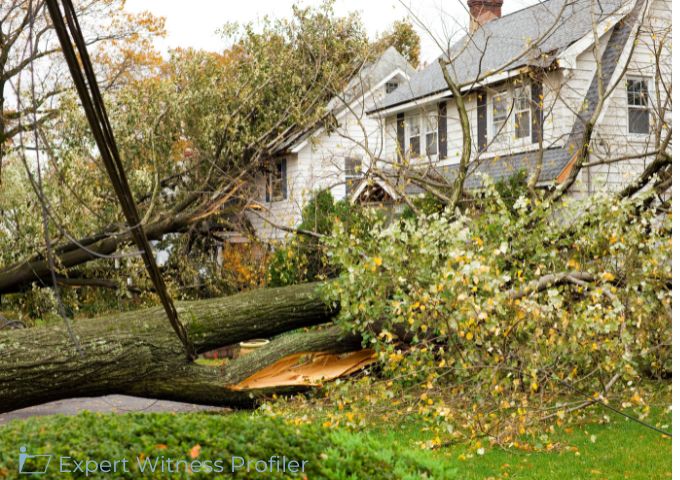
    It all started when Hurricanes Laura and Delta inflicted significant damage on Plaintiffs’ rental property on August 27, 2020, and October 9, 2020, respectively. Southern Fidelity Insurance Company (SFIC) insured the property at the time of the damage. However, SFIC subsequently declared bankruptcy, and the Louisiana Insurance Guaranty Association (“LIGA”) has since been substituted as the proper party.

    Plaintiffs claimed that the damage to their property had been undervalued. After LIGA was substituted for SFIC, LIGA retained Keystone to inspect the property. Plaintiffs then moved to exclude LIGA’s expert, Daniel Treas, claiming that his report was unreliable.

    Building and Construction Expert Witness

    Daniel Treas has over 15 years experience as a Construction Superintendent and in commercial construction, including 8 years in renovation and 5 years in project management. He has over 10 years experience in OSHA regulations. He has also served as an independent insurance adjuster with over 14 years of experience.

    Get the full story on challenges to Daniel Treas’s expert opinions and testimony with an in-depth Challenge Study.   

    Discussion by the Court

    Plaintiffs argued that Treas’ report was unreliable due to his failure to physically inspect the property and conduct a thorough review of the previous expert’s report. Furthermore, they pointed out discrepancies in the report and claimed that it was nearly identical to an earlier report prepared by the previous expert. According to the Plaintiffs, Keystone initially sent a building consultant, along with its engineer, to inspect the property on August 25, 2023. The building consultant authored a report dated September 15, 2023, but left Keystone shortly thereafter.

    Subsequently, Keystone hired Treas to prepare a report to support its estimate of damages caused by Hurricanes Laura and Delta.  

    The Plaintiffs complained that: (1) the Treas report is identical to the previous expert report, (2) Treas is not a licensed adjuster, (3) Treas did not personally inspect the property, and (4) Treas was not involved in this matter until July 2024. Moreover, they identified discrepancies between the two reports, such as a missing fan on the rear elevation porch, the type of exterior cladding on the house, and the wrong address noted in the report. Additionally, they contended that Treas improperly opined on causation.

    Treas is not a licensed adjuster

    In response, LIGA defended Treas’ qualifications, citing his extensive experience in various construction roles, including the estimator and catastrophe claims adjuster. LIGA explained that Treas relied on Keystone’s engineer regarding causation in order to prepare an estimate to rebuild the property.

    Treas report is identical to the previous expert report

    Regarding the similarity between the reports, LIGA noted that Treas testified the first 12 pages should be the same because they list the background information about the property. However, several differences exist between the reports, including additional damages not mentioned in the previous expert’s report, as well as overall discrepancies in the estimated damages.

    Ultimately, the Court did not find that exclusion was warranted simply because the two reports were very similar. As to the discrepancies, the Court found that this will go to the credibility of the witness and his report. The Court further noted that the instant matter is a bench trial, and Plaintiffs will be able to cross-examine and rebut LIGA’s report and Treas’ testimony. 

    Held

    The Court denied the Plaintiffs’ motion to exclude the expert testimony of Daniel Treas.

    Key Takeaway:

    According to Federal Rule of Evidence 402, evidence is generally admissible so long as it is relevant and not barred by the Constitution, a federal statute, the Federal Rules of Evidence, or other rules prescribed by the Supreme Court. Evidence should only be excluded in limine where it is “clearly inadmissible on all potential grounds.”

    The Court determined that the similarity between expert reports alone does not justify exclusion. It emphasized that any discrepancies identified concerned the credibility of the witness rather than the admissibility of the evidence. In a bench trial setting, Plaintiffs retain the opportunity to effectively cross-examine the expert. They can also challenge the opposing party’s findings. This underscores the importance of witness credibility in evaluating expert testimony.

    Case Details:

    Case Caption: Houston et al vs. Southern Fidelity Insurance Co.
    Docket Number:  2:22-CV-01198
    Court: United States District Court for the Western District of Louisiana, Lake Charles Division
    Order Date: October 1, 2024
  • Fraud Examination Expert Witness’ Testimony About the Effect of Misappropriated Trade Secrets Excluded

    Fraud Examination Expert Witness’ Testimony About the Effect of Misappropriated Trade Secrets Excluded

    This case stems from a trade secret dispute between University of Mississippi Medical Center (“UMMC”) and Defendant Dr. Spencer Sullivan, a former employee of UMMC. 

    The Court has resolved the issue of liability through its Order granting default judgment in favor of Plaintiff. The injury pleaded by UMMC is the loss of certain specific former UMMC hemophilia patients who transferred their medical treatment, including pharmacy services, to Mississippi Center for Advanced Medicine (“MCAM”) as a result of Defendants’ use of UMMC’s trade secrets. As it stands, it is conclusively established that MCAM’s misappropriation of UMMC’s trade secrets proximately caused those patients to leave UMMC for MCAM, and UMMC must now prove the amount of damages that naturally flow from those patients. The parties agree that the scope of damages is the only issue left to be tried.

    Plaintiff specifically moves to exclude “all of Justin Blok‘s opinions and testimony that are based on the rejected causation standard and that ignore the effect of the default judgment and other irrelevant opinions that touch upon liability.” 

    Fraud Examination Expert Witness

    Justin Blok has testified in a variety of litigation matters involving patent, trademark, and copyright infringement, theft of trade secrets, breach of contract, business valuation, bankruptcy, fraud, business interruption, personal injury, wrongful death, and wrongful termination. He has testified on
    behalf of both Plaintiffs and Defendants in the analysis and determination of economic damages, including lost profits, reasonable royalties, price erosion, unjust enrichment, diminution of value and insolvency analyses, valuation, and pre- and post-judgment interest.

    Want to know more about the challenges Justin Blok has faced? Get the full details with our Challenge Study report. 

    Discussion by the Court

     UMMC argued that portions of Blok’s report assumed Defendants were liable but did not correctly reflect the finding of liability established by this Court’s Order granting default judgment.

    Defendants contended Blok’s relevant testimony included “whether misappropriated trade secrets were legally available after a certain date, whether trade secrets were involved in certain patient interactions, the effect (if any) trade secrets had on Defendant MCAM’s pharmacy operations, and the like.” Defendants also stated that “Blok’s damages calculations are based, in part, on when MCAM legally obtained access to the trade secret information through uView or patient release forms.” Accordingly, Defendants argued that the Court should not preclude Blok from testifying as to the point at which Plaintiff’s damages no longer naturally flow from Defendant’s liability.

    UMMC’s reply emphasized that it did not seek to exclude Blok’s entire testimony but only the portions unrelated to damages. Plaintiff specifically referenced areas including whether the misappropriated trade secrets were legally available after a certain date, whether trade secrets were involved in certain patient interactions, and the effect trade secrets had on Defendant MCAM’s pharmacy operations.

    UMMC argued that each of these categories relate to causation for liability and not damages calculations. Plaintiff instead submitted that the current relevant areas include testimony relating to “alleged overstatement of MCAM’s gross profits, no analysis of MCAM’s actual reported operating profits, no analysis of MCAM’s clinic revenues or costs, or no analysis of certain pharmacy costs.”

    The Court held that while Defendants can still present evidence relevant to the appropriate damages calculation period, Defendants have not shown how the challenged areas of Blok’s testimony will help the jury determine the available damages in this matter. 

    Held

    The Court granted Plaintiff’s motion to exclude the challenged areas of Justin Blok’s testimony.

    Key Takeaway:

    Blok provided testimony relating to “whether misappropriated trade secrets were legally available after a certain date, whether trade secrets were involved in certain patient interactions, the effect (if any) trade secrets had on Defendant MCAM’s pharmacy operations, and the like.” However, the current relevant areas include testimony relating to “alleged overstatement of MCAM’s gross profits, no analysis of MCAM’s actual reported operating profits, no analysis of MCAM’s clinic revenues or costs, or no analysis of certain pharmacy costs.

    Case Details:

    Case Caption: The University Of Mississippi Medical Center V. Sullivan Et Al
    Docket Number: 3:19cv459
    Court: United States District Court for the Southern District of Mississippi, Northern Division
    Order Date: September 9, 2024
  • Neuropsychology Expert Witness Fails to Provide Any Basis for His Opinion On the Costs of Healthcare

    Neuropsychology Expert Witness Fails to Provide Any Basis for His Opinion On the Costs of Healthcare

    In May 2023, Joy and Brian Parnes filed this lawsuit against the Orange County School Board for disability discrimination and retaliation related to the education of their minor daughter, S.P. Pursuant to Rule 702, the Parneses seek to introduce the opinion testimony of Timothy Conway, Ph.D. in support of their theory that S.P. requires accommodations and the cost of those accommodations including private schooling.

    Neuropsychology Expert Witness

    Timothy Conway completed supervised pre-doctoral and post-doctoral training in the diagnosis and treatment of neurodevelopmental disorders in children and adults at The Morris Center [(TMC)]. Conway received his bachelor’s degree in psychology, and he holds a Ph.D. in clinical psychology with a concentration in neuropsychology. After completing his Ph.D., he completed a post-doctoral fellowship at the VAMC-Brain Rehabilitation Research Center of Excellence.

    Since 2008, Conway has owned or managed TMC clinics in Ocala, Florida; Ponte Vedra Beach, Florida; Birmingham, Alabama; Port of Spain, Trinidad and Tobago, West Indies; and NOW!, an EdTech company. Also, since 2008, he has been training and directing teams of healthcare professionals (occupational therapy, speech-language therapy, clinical psychology/neuropsychology) and educators in the transdisciplinary assessment and treatment of neurodevelopmental disorders. And he has co-authored numerous publications and provided training courses and workshops to professionals.

    Get the full story on challenges to Timothy Conway’s expert opinions and testimony with an in-depth Challenge Study. 

    Discussion by the Court

    Conway wrote in his expert report that S.P. “needs high intensity, high frequency, evidence-based intervention for her specific learning disorders, AD/HD and her developmental coordination disorder.”

    Conway is Qualified to Provide Opinion Testimony

    The Board claimed that because Conway is not licensed in Florida or another state, he is unqualified to serve as an expert in psychology, school psychology, occupational therapy, speech-language pathology, or K-12 educational needs. Here, the Board pointed to the lack of information in Conway’s expert report or curriculum vitae that he is a licensed psychologist, school psychologist, licensed occupational therapist, or licensed speech-language pathologist in Florida (or any other state). Also, the Board asserted that he is unqualified because he has never taught in a K-12 classroom in Florida and he is not a licensed educator in Florida. 

    Finally, the Board argued that Conway is unqualified because he “never personally treated, evaluated, or assessed S.P. in a clinical or school setting.”

    To the extent that the Board argued that Conway is unqualified because he is unlicensed in Florida, it has not stated how this renders Conway unqualified in this case. Moreover, the Board failed to explain its arguments that he is not licensed as a speech-language pathologist in any jurisdiction or as an educator in Florida. The Court held that argument goes to the weight that a trier of fact might give the testimony, but it does not preclude admissibility. 

    The Parneses submitted that Conway has evaluated S.P., reviewed her medical and school records (including those that the Board produced), and has spoken with S.P. and her parents on “numerous occasions regarding her education.” The Court held that his expert report was based on evaluation, information, and the status of [S.P.] at that time.

    Conway is Not Offering a Causation Opinion

    Since Conway’s report is limited to S.P.’s present treatment, education, and schooling needs, the Board argued that Conway’s “causation” opinions warranted exclusion. The Board submits that the “causation” opinions that Conway will offer are: (1) the alleged acts or omissions on the part of the Board, (2) the adequacy and appropriateness of any services and supports the Board provided S.P., and (3) whether the Board damaged or harmed S.P.

     The Parneses explained that Conway’s report does not opine as to “causation” because he is not going to offer a “causation” opinion. Thus, the Court excluded Conway’s opinions as to causation.

    Reliability of Conway’s Methodology

    The Board argued that Conway’s proposed opinions are not based on a reliable methodology and are simply ipse dixit that will not assist the jury.

    Conway’s opinions will help the jury to understand the parties’ positions

    First, the Court held that Conway’s opinions will help the jury to understand the parties’ positions and the remedies that the parties believe are appropriate or inappropriate. Conway’s opinions are not so speculative (or outside the bounds of what he does) that his opinions will fail to assist the jury. And while the Board argues that Conway’s lack of licensure means he will not assist the jury, as previously discussed “lack of board-certification [or a license] goes to weight, not admissibility.”

    Second, the records that Conway reviewed were produced to the Board and consisted of S.P.’s school records, medical records, and evaluations. Moreover, Conway interviewed S.P., her parents, and family members. Conway reviewed all of S.P.’s school records covering the past six to seven years and reviewed all evaluations of disabilities. The Court held that Conway’s opinions are based on sufficient facts and data.

    Third and fourth, the Court held that Conway’s proposed opinions as to the accommodations that S.P. requires to catch up with her peer group and to participate in public or private school are reliable. The Parneses stated that Conway used peer reviewed and accepted principles to evaluate S.P.’s school records and medical records. His opinion connects his experience and secondary sources to S.P.’s school and medical records such that it is the product of reliable principles and is based on reliable methodology.

    Conway’s opinions about the costs of private schooling and healthcare are unreliable

    When Conway submitted his estimates for healthcare costs, the Court found that he failed to provide any basis for them. Conway’s report does not set forth the cost of individual services. Likewise, there is no cost estimate for the online program (NOW!) that S.P. is enrolled in; it is not clear whether that program is included in the monthly figure or if it is a separate cost.

    Moreover, Conway did not submit that he has testified as an expert witness regarding medical coding or the reasonableness of medical billing. And he does not submit that his opinion on S.P.’s medical billing was the result of considering authoritative sources on the subject. Nor does he explain how he determined “typical” rates in the area, and there is no support for this determination other than Conway’s own report.

    Likewise, Conway’s opinion on the cost of private schooling is unreliable. As with Conway’s opinion on healthcare costs, he fails to provide “any explanation of the basis, facts, or data considered in reaching” his opinion as to S.P.’s continuing treatment and educational costs. And he does not cite to any other resource to support his opinions. As a result, his methodology is insufficiently reliable for him to offer an opinion on the continuing treatment and educational costs in this case. 

    Held

    The Court limited the testimony of expert Timothy Conway after excluding his opinions as to causation, healthcare costs, and schooling costs.

    Key Takeaway:

    Conway opined based on his experience “helping students with severe and many deficits,” his review of S.P.’s medical and school records, his evaluation of S.P., and speaking to the Parneses and family members. His company may charge certain rates, but there is insufficient information in his expert report to support his testimony as an expert regarding the costs of healthcare, educational services, or private school tuition in the community at large. Conway does not provide support for his calculation of the costs of S.P.’s potential treatment.

    Case Details:

    Case Caption: Parnes Et Al V. Orange County School Board
    Docket Number: 6:23cv854
    Court: United States District Court, Florida Middle
    Order Date: September 24, 2024

  • Human Factors Engineering Expert Witness’ Testimony About Gun Design Excluded

    Human Factors Engineering Expert Witness’ Testimony About Gun Design Excluded

    Plaintiff Ashley Catatao, an officer with the Somerville Police Department, was injured when her Sig Sauer P320 duty pistol fired in its holster without her pulling its trigger. She sued the gun’s manufacturer, Defendant Sig Sauer, Inc., alleging it designed the P320 defectively and the defect caused her injuries. Catatao submitted a report from William Vigilante, who is an expert on ergonomics and human factors. Sig Sauer filed a motion to exclude Vigilante’s testimony pursuant to Federal Rule of Evidence 702

    Some pistols come equipped with safety mechanisms that ensure they do not fire unintentionally. A thumb safety is a switch on the side of the pistol. Sig Sauer offered P320s with or without a thumb safety. The Somerville PD chose the P320 without a thumb safety as its duty pistol. Sig Sauer did not sell the P320 with a trigger safety.

    Human Factors Engineering Expert Witness

    William Vigilante has doctorate and master’s degrees in “Ergonomics (Human Factors) Psychology” as well as a bachelor’s degree in “Psychology (Cognitive track).” He has worked for over twenty-five years “on human-machine interaction, control-display design, product design, hazard identification and mitigation, risk perception, situational awareness, perception-reaction time, and the design and testing of warning systems.” He previously worked as a “Human Factors Engineer” at IBM Corporation, where he led teams in designing safe and user-friendly consumer and commercial products. Vigilante has authored scientific studies, presented work at “multiple professional conferences,” and conducted peer reviews in the field of human factors research.

    Get the full story on challenges to William Vigilante’s expert opinions and testimony with an in-depth Challenge Study. 

    Discussion by the Court

    Vigilante’s Tests

    Vigilante conducted tests on a model P320 and Glock 19. Vigilante placed each pistol into a Safariland Level III non-light-mounted holster, “inserted a probe in the gap” between the holster and the pistol, and attempted to actuate the pistol’s trigger.

    He did not mention the tests in his expert report. However, Catatao disclosed Vigilante’s tests shortly prior to Vigilante’s deposition in December 2023, more than two months after the Court’s October 6, 2023, disclosure deadline. The Court did not preclude them because they caused no prejudice to Sig Sauer. At the deposition, Sig Sauer asked Vigilante questions about his tests’ methodology, results, and conclusions.

    Rule 702

    Sig Sauer questioned Vigilante’s qualifications to testify as an expert on the P320’s design and on causation. Sig Sauer argued that Vigilante did not have any expertise in gun design. Plaintiff did not provide information about his professional experiences applying human factors and ergonomics research to firearms. Vigilante has experience shooting for sport and teaching others to use guns safely. But at most, those experiences indicate expertise in safe gun use, not in safe gun design. The Court held that Vigilante is not qualified to testify that Sig Sauer designed the P320 defectively.

    However, Vigilante conducted experiments to test whether a tabbed trigger could have prevented Catatao’s P320 from discharging. The Court held that his conclusion — that if a foreign object caused Catatao’s P320’s trigger to depress, “it is more likely than not that a tabbed trigger safety would have prevented this incident” — is reasonably related to his experiments, research, and expertise.

    Sig Sauer raised a number of concerns regarding the methodology of Vigilante’s tests. For example, Sig Sauer claimed Vigilante did not use Catatao’s holster model during his tests. But these are matters “affecting the weight and credibility of the testimony,” not its admissibility.

    Held

    The Court granted in part and denied in part the motion to exclude the testimony of Plaintiff’s expert William Vigilante.

    Key Takeaway:

    Vigilante was not qualified to testify that Sig Sauer designed the P320 defectively becuase his experiences indicate expertise in safe gun use, not in safe gun design.

    However, Vigilante conducted experiments to test whether a tabbed trigger could have prevented Catatao’s P320 from discharging and his conclusions were reasonably related to his experiments, research, and expertise.

    Case Details:

    Case Caption: Catatao V. Sig Sauer Inc
    Docket Number: 1:22cv10620
    Court: United States District Court for the District of Massachusetts
    Order Date: July 9, 2024
  • Ex parte communications between an attorney and an opposing party’s expert witness is not prohibited under Connecticut law

    Ex parte communications between an attorney and an opposing party’s expert witness is not prohibited under Connecticut law

    Epright sought to recover underinsured motorist benefits from Liberty Mutual in connection with a motor vehicle collision. Epright allegedly sustained multiple injuries, including an injury to her left shoulder. During her deposition, Epright testified that she had experienced shoulder pain since the date of the accident.

    Liberty Mutual retained an orthopedic surgeon, James Depuy, to provide testimony regarding damages and causation. During the deposition, Depuy stated that he had reviewed all of Epright’s medical records and that they contained no indication that Epright complained of shoulder pain until well after the accident. Depuy’s opinion was that the medical treatment Epright received with respect to her left shoulder was not related to the motor vehicle accident.

    Kevin Brignole, an attorney working for the firm representing the Plaintiffs, asked Depuy whether it would change his opinion if Depuy learned that Epright in fact had been complaining of shoulder pain since the date of the accident, to which Depuy responded that such information might change his opinion.

    Subsequently, without informing counsel for Liberty Mutual, Timothy Brignole, another attorney at the firm, instructed his paralegal, Sandra H. Bryan, to contact Depuy’s office to schedule an appointment for Depuy to perform a medical examination on Epright for a fee. That same day, Kevin Brignole filed a detailed expert disclosure with the trial court, indicating that Epright intended to call Depuy as an expert witness.

    Thereafter, Depuy conducted the medical examination of Epright, and opined that Epright’s shoulder injury was causally related to the accident.

    This case requires us to consider whether, under Practice Book § 13-4, an attorney may be sanctioned for engaging in ex parte communications with an expert witness who has been retained and disclosed by the adverse party for the purpose of providing testimony in litigation.

    Discussion by the Court

    The trial court imposed monetary sanctions after finding that attorneys with the firm engaged in impermissible ex parte communications with Depuy. The trial court determined that the firm’s communication with Depuy was a clear violation of the rules of expert discovery set forth in § 13-4. The Appellate Court reversed the order of the trial court, concluding that § 13-4 does not clearly prohibit ex parte communication between an attorney and an opposing party’s disclosed expert witness.

    The firm representing the Plaintiffs argued that neither Connecticut case law nor the rules of practice limit or prohibit a Plaintiff from contacting and thereafter disclosing the Defendant’s disclosed expert witness as the Plaintiff’s own expert.

    In 2008, the judges of the Superior Court amended Practice Book § 13-4, which amendment became effective in 2009. Prior to that time, the rule expressly limited the procedure for communication with an opposing party’s expert to interrogatories to an opposing party and/or formally noticed depositions of the expert.

    In 2009, the rule was amended, and the language that limited the methods of communication with an opposing party’s expert was removed. The current rule did not include the language that existed in the rule before the 2009 amendments, which expressly confined communication with an opposing party’s disclosed expert to interrogatories served on the opposing party or depositions.

    To conclude, the Connecticut Supreme Court affirmed the judgment of the Appellate Court.

    Held

    The Connecticut Supreme Court agreed with the Appellate Court that the trial court improperly imposed sanctions on the firm for conducting ex parte communications with an expert witness previously disclosed by Liberty Mutual.

    Key Takeaway:

    This case requires us to consider whether, under Practice Book § 13-4, an attorney may be sanctioned for engaging in ex parte communications with an expert witness who has been retained and disclosed by the adverse party for the purpose of providing testimony in litigation. The trial court determined that the firm’s communication with Depuy was a clear violation of the rules of expert discovery set forth in § 13-4. The Appellate Court reversed the order of the trial court, concluding that § 13-4 does not clearly prohibit ex parte communications between an attorney and an opposing party’s disclosed expert witness. The Connecticut Supreme Court agreed and, accordingly, affirmed the judgment of the Appellate Court.

    Case Details:

    Case Caption: Epright v. Liberty Mutual Insurance Company
    Docket Number: SC 20751
    Court: Connecticut Supreme Court
    Order Date: July 11, 2024
  • Safety Engineering Expert Witness’ Opinions About the Fall Hazard Admitted

    Safety Engineering Expert Witness’ Opinions About the Fall Hazard Admitted

    Plaintiff Guadalupe Garcia Al-Dahwa (“Al-Dahwa”) alleged that she suffered personal injuries as the result of a trip-and-fall accident in the parking lot of a movie theater owned by American Multi-Cinema, Inc. (“AMC”). Al-Dahwa averred that AMC had failed to warn her of the dangerous condition.

    Al-Dahwa, who said she suffered from a physical disability, contended she tripped and fell in a ‘designated walkway because the concrete in the walking area was cracked, broken, and not level.

    Plaintiff designated Jason English as a testifying expert witness. Jason English opined that the principal causative factor related to [Al-Dahwa’s] fall was the presence of an abrupt vertical rise and broken concrete disrepair in the accessible route providing access to the disabled parking area.

    AMC insisted that English’s proffered opinions will not help the jury understand the evidence or determine a fact issue. Second, AMC argued that the probative value of English’s opinions are substantially outweighed by the danger of unfair prejudice, confusing the issues, and misleading the jury. 

    Safety Engineering Expert Witness

    Jason English is a licensed Professional Engineer, holding a B.S. in Industrial Engineering with a specialty in Systems Safety Engineering and an M.S. in Safety Engineering from Texas A&M University. English has also completed post-graduate coursework in the Department of Architecture at Texas A&M, focusing on the evaluation and design of means of egress components. He is a member of the American Society of Safety Professionals, Human Factors and Ergonomics Society, National Safety Council, and International Code Council. Since 1999, English has worked as a professional engineering consultant, primarily consulting in the field of safety engineering, including workplace safety, premises safety, product safety, safety management, and human factors/ergonomics. He also serves on several safety standard development committees for the American Society of Testing and Materials International.

    Get the full story on challenges to Jason English’s expert opinions and testimony with an in-depth Challenge Study. 

    Discussion by the Court

    Reliability and Relevance Of English’s Opinions

    In AMC’s view, this is a relatively simple and straightforward case: Al-Dahwa “contended that she tripped and fell over a clearly visible area of concrete that was cracked and unlevel.” 

    In response, Al-Dahwa argued that English’s testimony will assist the jury because his knowledge and experience on the issues relevant to the case are beyond that of the average juror. 

    The Court found the subjects that English intended to address at trial were directly relevant to the elements of Al-Dahwa’s premises liability claim. For example, English planned on testifying that pedestrians, like Al-Dahwa, frequently fail to see hazards in front of them as they walk. This opinion, which English based on published human factors literature, was relevant to both the second element (whether the uneven surface on the walkway posed an unreasonable risk of harm) and the fourth element (proximate causation).

    English also intended to testify that the walkway where Al-Dahwa tripped and fell did not comply with the ADA, the TAS, and other applicable safety codes. This testimony was relevant to the third element of a premises liability claim—whether AMC failed to take reasonable case to reduce or eliminate the risk.

    Similarly, English’s proposed testimony that AMC should have “establish[ed] and implement[ed] a proper safety program to identify, evaluate, and correct hazards with the reasonable potential to cause serious injury” also addressed the third element.

    English’s Testimony Was Not Unfairly Prejudicial

    AMC argued that English’s testimony should be excluded under Rule 403 because it “would unfairly prejudice [AMC], confuse the issues, mislead the jury, and improperly bolster [Al-Dahwa’s] liability position.” The Court held that AMC was simply trying to recast its arguments concerning the reliability and relevance of English’s opinion through the lens of Rule 403. The Court already flatly rejected those arguments.

    Held

    The Court granted the Defendant’s motion to exclude the testimony of Jason English.

    Key Takeaways:

    • Once the proponent of an expert meets the threshold requirements of expertise, reliability, relevance, and helpfulness, the Court should generally admit the evidence.
    • English’s knowledge and experience related to the safety and accessibility codes applicable to where the incident occurred, safety engineering, when and how falls occur on premises are beyond that of the average juror. 

    Case Details:

    Case Caption: Garcia Al-Dahwa V. American Multi-Cinema, Inc Et Al
    Docket Number: 4:23cv2010
    Court: United States District Court, Texas Southern
    Order Date: July 11, 2024
  • Physical Medicine Expert Witness Fails to Consider Alternate Causes

    Physical Medicine Expert Witness Fails to Consider Alternate Causes

    The personal injury case stemmed from a rear-end collision on August 7, 2019. The Plaintiff, Sarah Ann Stratemeyer filed negligence claims against Kyle Thomas Pliler and his employer, Northstar Construction Management Company, Inc., seeking damages for bodily injuries, loss of e arnings, and loss of ability to earn money. At the time of the accident, Sarah was a nursing student at Renaissance Health Institute. In January 2022, she failed her nursing school exit exam, which she attributed to a mild traumatic brain injury allegedly sustained as a result of the accident. The Plaintiff intended to call two expert witnesses: Dr. Craig H. Lichtblau, a physical medicine and rehabilitation doctor, to testify about future medical costs and disabilities, and Dr. Julianne Frain, a vocational rehabilitation expert, to discuss limitations on the Plaintiff’s future ability to work.

    Defendants requested that the Court prohibit Lichtblau and Frain from testifying about Plaintiff’s pre-incident intellectual and cognitive functioning and Plaintiff’s inability to pass her nursing school exit examination as a result of the 2019 accident.

    Defendants attacked the testimony on three bases: (1) neither expert is qualified to opine on these matters; (2) the experts’ testimony is ipse dixit, unreliable, and unsupported by facts or evidence; and (3) the testimony would confuse the jury. 

    Vocational Rehabilitation Expert Witness

    Dr. Julianne Frain is a Certified Rehabilitation Counselor, Certified Life Care Planner, and Diplomate with the American Board of Vocational Experts. She is typically hired in the areas of vocational rehabilitation, life care planning, or both concentrations combined. Dr. Frain has 15 years of experience handling claims within various forms of injury and family law matters. She renders opinions on vocational assessment, disability, pre-and-post incident earning capacity, re-employment, rehabilitation, and life care planning. Additionally, she provides insights on the usual and customary costs of medical care.

    Get the full story on challenges to Julianne Frain’s expert opinions and testimony with an in-depth Challenge Study. 

    Physical Medicine Expert Witness

    Dr. Craig H. Lichtblau specializes in physical medicine and rehabilitation, focusing on medical functional capacity and impairment levels. His areas of expertise include disability evaluations, chronic pain management and defining impairment, disability and cost for future medical care.

    Fortify your strategy by reviewing a Challenge Study detailing grounds for excluding Craig Lichtblau’s expert testimony.

    Discussion by the Court

    Julianne Frain

    Frain, a vocational rehabilitation expert, provided testimony based on her evaluation of the Plaintiff and review of medical records. She focused on assessing the Plaintiff’s future earning capacity and loss of earning potential following the 2019 accident.

    In her analysis, Frain assumed the Plaintiff would have likely completed her nursing program if the accident had not occurred. She presented this as an assumption rather than a causation opinion. She explicitly stated that she did not have independent medical causation opinions. Instead, she relied on medical records and diagnoses from treating doctors and other medical experts involved in the case.

    During her deposition, Frain initially expressed uncertainty about whether the Plaintiff would have passed the exit exam without the accident. However, she later opined that the 2019 accident was a “contributing factor” and “likely” caused the Plaintiff to fail the examination. Frain declined to offer opinions on the Plaintiff’s pre-accident intellectual or cognitive functioning. She deferred to neuropsychological evaluations for such assessments.

    While not explicitly mentioned in the Court’s analysis, she likely included an assessment of the Plaintiff’s work capacity and potential job options in her report, as is typical for vocational rehabilitation experts.

    Craig Lichtblau

    Lichtblau, an expert in physical medicine and rehabilitation, provided testimony focused on the Plaintiff’s medical functional capacity and level of impairment following the 2019 accident. In his report, he opined that the Plaintiff had the functional capacity to work 8 hours per day on an uninterrupted basis. He recommended “sedentary light” positions and noted that the Plaintiff’s disability would increase as she aged. He also stated that she would suffer from acute, intermittent exacerbations of chronic pain and discomfort. Lichtblau attributed many of the Plaintiff’s current medical conditions to the 2019 incident. He repeatedly stated that her medical issues were “secondary” to the injuries sustained in the accident.

    During his deposition, he described the Plaintiff’s injuries and how they affected her post-accident levels of cognitive functioning. However, he did not directly address her pre-accident intellectual functioning in his report or deposition. Regarding the Plaintiff’s exit examination failure, Lichtblau declined to comment on the likelihood of her passing the exam in the future but stated that it would be “a very difficult road for her” due to her injuries. He did not provide a specific opinion on whether the 2019 accident caused the Plaintiff to fail her exit examination.

    Findings of the Court

    The Court found that both experts failed to properly disclose opinions on the Plaintiff’s pre-accident intellectual functioning and causation for failing the exit exam. This was required under Federal Rule of Civil Procedure 26(a)(2)(B)(i). The Court emphasized that expert reports must include “a complete statement of all opinions the witness will express and the basis and reasons for them.”

    For Frain, the Court noted that her report did not offer opinions on pre-accident intellectual functioning. She explicitly stated in her deposition that she would not opine on this topic. Regarding the Plaintiff’s failure to pass the exit examination, Frain’s report mentioned the accident as a contributing factor. However, she presented it as an assumption rather than a causation opinion.

    The Court also determined that the Plaintiff failed to adequately refute the Defendants’ arguments in her response. The Plaintiff’s brief focused on general qualifications and methodology rather than addressing the specific topics the Defendant sought to exclude.

    For Lichtblau, in addition to the disclosure issues, the Court conducted a Daubert analysis. It found that his testimony on these topics did not meet the reliability standard. The Court noted a lack of methodology for assessing pre-accident intellectual functioning. It also found a failure to consider alternative causes for the exam failure, such as the low overall passage rate.

    Held

    The Court barred Julianne Frain and Craig Lichtblau from offering opinions on the Plaintiff’s pre-accident intellectual functioning and the causal link between the 2019 accident and her exit exam failure.

    Key Takeaways

    1. Experts must properly disclose all opinions they intend to offer at trial in their reports, as required by Federal Rule of Civil Procedure 26(a)(2)(B)(i).

    2. Parties must adequately respond to and refute opposing arguments in motions, addressing specific points raised rather than making general arguments.

    3. Expert testimony must meet the Daubert standard for reliability, which includes having a sound methodology, considering alternative explanations, and avoiding impermissible analytical leaps.

    4. Courts may exclude expert testimony on specific topics even if the expert is generally qualified in their field, particularly when the expert lacks the necessary basis or methodology for those specific opinions.

    5. Assumptions used in an expert’s analysis should be clearly distinguished from causation opinions.

    6. Failure to consider obvious alternative explanations (such as the low overall passage rate for an exam) can render an expert’s opinion on causation unreliable.

    7. The Court’s gatekeeping role under Daubert is crucial in ensuring that only reliable and relevant expert testimony reaches the jury.  

    Case Details:

    Case Caption: Stratemeyer v. Northstar Constr. Mgmt. Co.
    Docket Number: 9:23cv80147
    Court: United States District Court for the Southern District of Florida
    Order Date: April 16, 2024
  • Biomechanics Expert Witness Allowed to Testify Despite not Visiting the Accident Scene

    Biomechanics Expert Witness Allowed to Testify Despite not Visiting the Accident Scene

    On August 28, 2019, Plaintiff Annie Perrone (“Plaintiff”) commenced this diversity action against Catamount Ski Resort, LLC (“Catamount Ski Resort”) and Catamount Development Corporation (“Catamount Development”; together with Catamount Ski Resort, “Catamount” or “Defendants”) alleging negligence and gross negligence in connection with injuries Plaintiff suffered while skiing at Catamount Ski Area. 

    Plaintiff and Defendants each sought to preclude or limit the testimony of the opposing party’s experts as per Rule 702

    Plaintiff sought to preclude Defendants’ biomechanical engineering expert, Irving Scher, Ph.D., “from testifying at trial regarding the causation of Plaintiff’s injuries.” Defendants sought to: (1) limit the testimony of Plaintiff’s testifying doctor, Thomas S. Eagan, M.D., and (2) preclude or limit the testimony of Plaintiff’s snow sports expert, Stanley Gale.

    Biomechanics Expert Witness

    Irving Scher is a Principal and Biomechanical Engineer at Guidance Engineering and Applied Research. He specializes in biomechanical engineering and accident reconstruction. Scher evaluates product safety and performance for recreational sports equipment, injury prevention products, and mechanical systems. Moreover, he investigates human injuries in accidents and product failures by using biomechanical engineering techniques that apply the principles of engineering to the human body.

    Discover more cases with Irving Scher as an expert witness by ordering his comprehensive Expert Witness Profile report.

    Orthopedic Surgery Expert Witness

    Thomas S. Eagan is Board Certified in Orthopaedic Surgery; as such, he is a Diplomate of the American Board of Orthopaedic Surgery. He has been president of the Fulton County Medical Society. Eagan received his medical degree from Albany Medical College, and continued his orthopaedic training at Dartmouth Medical College in New Hampshire. Also, he keeps in touch with advances in the field of orthopaedic surgery through his active participation in many respected medical societies, such as the American Medical Association, the American Academy of Orthopaedic Surgeons, and the New York State Medical Society.

    Get in-depth insights into Thomas Eagan’s expert witness experience by requesting his Expert Witness Profile today.

    Ski Safety Expert Witness

    Stanley Gale has 51 years of on-snow ski safety training and experience. He is a veteran ski patroller of almost 40 years. He has been a ski and snow safety expert witness for over 14 years. Gale routinely travels to ski resorts, tubing hills, sledding hills and snowmobile locations. As a result, he is well versed in the latest custom and practices for safety and mitigation of risk. Moreover, he is aware of the practical applications and day to day experiences of skiers and sledders. 

    Gain a comprehensive understanding of Stanley Gale’s qualifications and casework history with his Expert Witness Profile report.

    Discussion by the Court

    A. Plaintiff’s Motion in Limine

    1. Irving Scher, Ph.D.

    Plaintiff contended that Scher is “not a medical doctor” and did not have “the educational background or training” to provide an opinion as to the medical causation of Plaintiff’s pelvic fracture sustained in the ski accident.

    Defendants asserted that Scher will not testify as to Plaintiff’s medical injuries, and that he relied on the review of a board-certified radiologist to identify and confirm the injuries Plaintiff sustained to her pelvis. 

    The Court found Scher qualified to testify regarding general causation, including the efficacy of whether commercially available padding on an object a Plaintiff collided with while downhill skiing could have prevented or reduced the severity of a Plaintiff’s injury.

    Plaintiff further contended that because Scher never went to the accident site, he should not be able to testify that “a non-beginner skier should be able to stop or change direction to avoid open, obvious, visible, and marked snow making (or other obstacles) that are 135 feet away.” 

    The fact that Scher did not personally visit the site of the accident did not, by itself, make his testimony unreliable.

    B. Defendants’ Motion in Limine

    1. Thomas S. Eagan, M.D.

    Eagan’s Opinion is Based on the Review of Plaintiff’s Medical Records

    Defendants contended that Plaintiff was treated by “a number of orthopedists following her injury,” however, Plaintiff is only calling  Eagan, a “regular courtroom witness,” whose office is over 150 miles from Plaintiff’s residence, to testify. Defendants relied on several cases for the proposition that “a non-treating physician, hired only to testify as an expert witness, may not state the history of an accident as related to him by the Plaintiff or testify as to Plaintiff’s medical complaints . . . nor can the expert summarize and read statements and findings contained in the reports and records of Plaintiff’s treating physicians, where reports and records were not in evidence and treating physicians did not testify at trial.”

    In response, Plaintiff argued that Eagan’s opinion is not relying on hearsay, because he “conducted a physical examination of Plaintiff” and his opinion is based on the review of Plaintiff’s medical records.”

    The Court found that Eagan may testify based on his examination of Plaintiff and the medical records he relied on in forming his opinion which are admitted into evidence, as long as he lays the proper foundation.

    Eagan is qualified to testify as to the causal relationship between Plaintiff’s complaints and her reported injury

    Defendants next argued that there was “no evidentiary foundation” in the medical records for Eagan’s opinions that: (1) Plaintiff “suffered a torn labrum of the right hip”; (2) Plaintiff will “more likely than not develop arthritis of the right hip and require a hip replacement during her lifetime”; and (3) Plaintiff “is not able to perform heavy labor or place excessive loads on her injured pelvis.” The Court  held that Defendants’ arguments “were more appropriate for cross examination” of Eagan at trial.

    Defendants also asserted that Eagan was not qualified to testify based on his diagnostic tests “whether or not there is symptom magnification” by Plaintiff because this falls under the purview of a psychologist. The Court found that Eagan was qualified to testify as to the causal relationship between Plaintiff’s complaints and her reported injury, as long as he lays a proper foundation.

    Defendants argued that Eagan’s opinion that Plaintiff “will require cesarean section for delivery of any children” should be precluded because “there is no evidentiary basis.” The Court disagreed and held that Defendants’ challenge is an appropriate subject for cross-examination. 

    Defendants added that Eagan’s opinion regarding whether Plaintiff will require a cesarian section for delivery of any children is cumulative of Plaintiff’s OB/GYN witness. The Court did not have sufficient information regarding the OB/GYN witness’ testimony to determine whether Eagan’s testimony would be cumulative.

    2. Stanley Gale

    To begin with, Defendants first argued that Gale is not qualified to give expert testimony because he did not “have the levels of knowledge, experience, or skill in the area of accident reconstruction or ski area operations” necessary to provide an expert opinion. Defendants asserted that his opinions were “speculative and conclusory.” The Court found that Gale is qualified to testify as to the customs and practices of the ski industry, including safety standards and practices.

    Defendants next argued that Gale should be precluded from testifying that the snow gun was not marked, and his expert disclosure that the snow gun was not marked should be stricken. They contended that photographs obtained from Plaintiff showed that an orange lollipop marked the snow gun with which Plaintiff collided.

    Defendants asserted that because Gale previously gave testimony that properly placed Catamount lollipops [marking snow guns] met the State Code, Gale should be precluded from testifying that the snow gun was unmarked. The Court disagreed and refused to exclude Gale’s testimony regarding that aspect.

    Despite Defendant’s objections, the Court held that Gale had the requisite expertise to opine on practices related to padding a snow gun located on a ski trail. However, Gale must testify based on his personal knowledge, and he must explain how his personal experience leads to his conclusions.

    Moreover, Defendants contended that Gale should be precluded from testifying that a ski trail “is not limited to the groomed surface” because he previously testified “on multiple occasions that there is a difference between grooming beginner and expert trails.” The Court held that Gale’s previous testimony was insufficient to preclude him from testifying whether a ski trail is limited to the groomed surface.

    Held

    To sum it up, the Court denied Plaintiff’s motion in limine to preclude Irving Scher’s testimony. The Court reserved decision on Defendants’ motion in limine as to a certain aspect of Thomas Eagan’s testimony until trial but denied the Defendants’ motion in limine to preclude or limit Stanley Gale’s testimony.

    Key Takeaways:

    • The Court insisted on a proper foundation for each of the expert’s opinions. That is to say, Courts routinely examine the factual bases of expert opinions before arriving at a decision.
    • Above all, if the witness is relying solely or primarily on experience, they must explain how their personal experience leads to their conclusions.

    Case Details:

    Case Caption: Perrone V. Catamount Ski Resort, Llc Et Al
    Docket Number: 1:20cv563
    Court Name: United States District Court, New York Northern
    Date: May 09, 2024