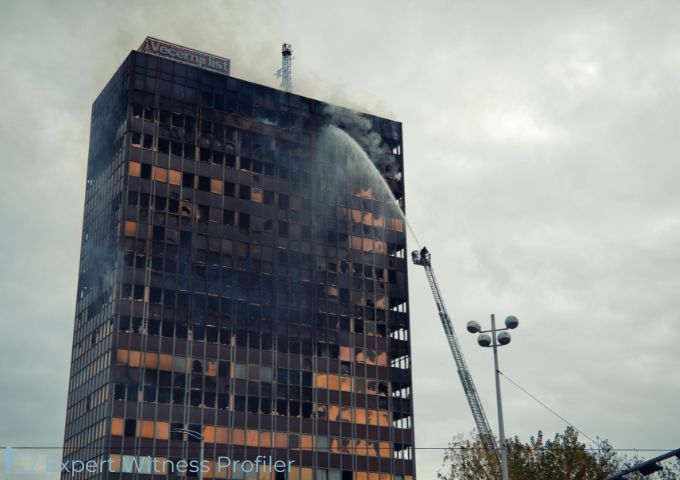
Plaintiffs’ home was damaged by a fire on June 21, 2021. At the time of the fire, Plaintiffs had an insurance policy with State Farm.
Plaintiffs alleged that Defendant State Farm failed to abide by the policy which allowed, at the insureds’ option, to either have the damage repaired or pay for the damage. Plaintiffs alleged that State Farm, without their consent issued payments to Plaintiffs and the mortgage holder rather than allowing Plaintiffs to decide whether to accept payment for the damage or repair the property.
Defendant sought to exclude the testimony of Pete Hennessey, Plaintiffs’ expert witness pursuant to Rule 26(a)(2)(B) of the Federal Rules of Civil Procedure, arguing that Hennessey’s report is insufficient.
Construction Expert Witness
Peter Hennessey has been building homes for over 25 years. He has personally built over three hundred residential homes and is one of the most respected home builders in the industry.
Hennessey stated that it is his opinion that it would be too risky and too expensive for the type of home to be rebuilt, to put it on top of the then existing foundation after the fire, which was not engineered to current standards.
The basis of the facts or data considered by Hennessey included an examination of the site, obtaining estimates from subcontractors and preparing a detailed building budget report, which he set out in an exhibit attached to his report.
However, the Court found that Hennessey’s report is entirely inadequate under Rule 26 standards. The most critical requirements of the Rule–the basis and reasons for the expert’s opinions and the data or other information considered–are totally lacking.
In other words, the mere submission of subcontractor estimates told Defendant nothing about the substance of Hennessey’s calculation of the damages and estimated repair costs and left it open to unfair surprise.
Although the surprise and prejudice could be cured by taking Hennessey’s deposition, the Court declined to require this of Defendant because doing so would shift the burden of disclosure onto Defendant whereas this burden is placed squarely on Plaintiffs by the Rule. Plaintiffs elected to designate Hennessey as an expert who may be used to provide evidence under Federal Rule of Evidence 702, 703 or 705, and then failed to provide the requisite information required by Rule 26(a)(2)(B).
However, Plaintiffs were granted additional time to comply with Rule 26(a)(2)(B) by submitting an expert report prepared and signed by Hennessey in accordance with the requirements of the Rule, if they wished to offer Hennessey as an expert witness.
Held
The Court granted Defendant’s motion to strike the testimony of Pete Hennessey.
Key Takeaway
Plaintiffs have offered nothing to establish that the failure to comply with Rule 26(a)(2)(B) was substantially justified. The surprise and prejudice to Defendant as a result of the failure are significant and have not been cured to date through supplementation or otherwise.
Plaintiff Sergio Romero was hired by Defendant Tribune Media Company (“Tribune”), a national media company that owns and operates various news outlets and television stations, as an Account Executive.
On or around June 21, 2023, Plaintiff was diagnosed with gastric adenocarcinoma, also known as stomach cancer. To accommodate Plaintiff’s cancer diagnosis, Defendant authorized a medical leave of absence for Plaintiff on October 23, 2023. By February 28, 2024, Plaintiff’s approved FMLA/CFRA leave had been fully exhausted.
After accommodating Plaintiff’s absence since October 2023, Defendant notified Plaintiff by letter on June 14, 2024 that his employment would be terminated on July 1, 2024 for failure to return from exhausted leave, resulting in Plaintiff filing a wrongful termination suit.
Defendant filed a motion to exclude the testimony of Plaintiff’s expert witness George A. Jouganatos, Ph.D. while Plaintiff filed a motion to strike or exclude the testimony of Defendant’s expert June Hagen, Ph.D.
Economics Expert Witness
George A. Jouganatos, Ph.D. has been a college lecturer for more than 35 years. He has taught economics, finance, management, ethics, and quantitative analysis at University of California, Davis, University of California, Santa Cruz, California State University, Sacramento, and University of San Francisco.
June Hagen is a vocational expert and Certified Disability Management Specialist with decades of experience in vocational assessments, labor market research, and disability evaluations. Hagen holds a Ph.D. in Clinical Psychology from the California Graduate Institute, an M.A. in Community/Clinical Psychology from Pepperdine University, and a B.A. in Psychology from Pepperdine University. She is certified by the American Board of Vocational Experts and has extensive experience in vocational rehabilitation and disability management.
A. Defendant’s Motion to Exclude Plaintiff’s Expert
Defendant argued that Jouganatos failed to submit a detailed and complete written expert report as required by Federal Rule of Civil Procedure 26 as his report failed to contain the facts or data considered by Jouganatos in forming his opinions.
To begin with, Jouganatos submitted a declaration in which he described his background and qualifications. In relevant part, he stated that his “assignment was to analyze the historic (‘back pay’) economic loss and the present value of future (‘front pay’) economic loss for Sergio Romero.” Moreover, he stated that he “employed a standard forensic economic methodology consisting of: (1) establishing a baseline earnings stream, (2) projecting earnings over worklife expectancy, (3) accounting for benefits, (4) applying wage growth, and (5) discounting to present value using a risk-free rate.”
The following relevant documents were among those reviewed: Complaint, Romero’s employment record at Tribune, pay advices 2020-2024, resume, and responses to economist’s questionnaire and follow-up questions. Jouganatos calculated back pay as extending from July 1, 2024 to June 1, 2026, and front pay from June 1, 2026 going forward 3.58 years, the remainder of Plaintiff’s projected “worklife.”
Having reviewed Jouganatos’s report, the Court found it sufficient for the purposes of Fed. R. Civ. P. 26(a)(2)(B)(ii). The report did not reproduce the questionnaire or responses and follow-up questions upon which the expert expressly relied. However, the scope of what Jouganatos testified to is limited and is adequately supported by documents in Defendants’ possession or that were obtainable by Defendant.
B.Plaintiff’s Motion to Exclude Defendant’s Expert
Plaintiff moved to exclude the statement of Defendant’s expert witness, vocational rehabilitation expert June Hagen, Ph.D., that Plaintiff could have found work within 23 weeks of his termination. Plaintiff asserted that this testimony should not be permitted because Hagen’s expert witness report failed to identify any substantially comparable positions that were available in December 2024; (2) Hagen’s reliance on Bureau of Labor Statistics to determine Plaintiff could have found comparable employment within 23 weeks from his termination is not based on any facts or evidence of substantially comparable positions in the Sacramento area; and (3) none of the open positions identified in Hagen’s expert witness report met the standard for “substantially similar employment.”
Hagan’s report identified the documents she reviewed, which included deposition transcripts, court filings, and discovery responses. The report included a summary of Plaintiff’s personal, medical, educational, and work history, as well as his employment skills and history of compensation. The report included a timeline of Romero’s job search, which Hagen stated that she sourced from Plaintiff’s deposition.
As a result, Plaintiff did not identify any procedural defect in the disclosure of Hagen under Rule 26.
Held
The Court denied Plaintiff’s motion to exclude the testimony of Defendant’s expert, June Hagen, without prejudice to a motion in limine to be scheduled at the Final Pre-Trial Conference.
The Court denied Defendant’s motion to exclude the testimony of Plaintiff’s expert, George Jouganatos, without prejudice to a motion in limine to be scheduled at the Final Pre-Trial Conference.
Key Takeaway
The expert report must be complete such that opposing counsel is not forced to depose an expert in order to avoid ambush at trial; and moreover the report must be sufficiently complete so as to shorten or decrease the need for expert depositions and thus to conserve resources.
From approximately January 1995 through 1997, Plaintiff Robert Wheeler was in the band “Throwin Stones.” In January 1995, Throwin Stones recorded the songs for its only studio album. One of those songs was called Coffee.
He alleged that John Mellencamp’s song Key West Intermezzo (I Saw You First) (“Key West”) copied the song Coffee.
Plaintiff retained Dr. Pablo D. Herrera Veitia as an expert musicologist to provide an analysis of the musical compositions Coffee and Key West Intermezzo (I Saw You First).
He purported to be an expert in “music theory, melodic analysis, sound design, and digital audio evaluation.” Based on his analysis, he posited that there were “clear and verifiable correspondences between” Coffee and Key West. According to him, the “alignment in lyrical placement and musical structure reinforced the impression of deliberate creative correspondence rather than coincidence.”
Herrera Veitia is an accomplished sound designer andcmusic producer, with extensive experience in critical listening, sample creation, and detailed sonic analysis.
To begin with, Plaintiff only offered to produce Herrera for a single hour, even though the Federal Rules permit depositions to last up to seven hours absent leave of the Court. It should be noted that Herrera is the only expert musicologist for whom Plaintiff produced a Rule 26(a)(2)(B) report, he is the only expert witness who could be permitted to testify for Plaintiff at trial. His opinions and testimony are therefore critical to Plaintiff’s case. Despite his importance, Plaintiff unilaterally refused to make him available for more than one hour.
Moreover, the record did not demonstrate that Plaintiff used his best efforts to ensure that Herrera would be able to meaningfully participate in the one hour for which he was made available considering Plaintiff knew in advance that Herrera was located in Cuba and had a poor internet connection. Despite this advance knowledge, it does not appear that Plaintiff took any steps to help mitigate these connectivity issues.
Additionally, after Herrera disconnected several times and gave incomprehensible responses due to his poor connection, Plaintiff offered to meet and confer with defense counsel to reschedule the deposition. Yet, not only did he refuse to reschedule the deposition, he did not even attempt to meet and confer with defense counsel to identify alternative dates. Under these circumstances, Plaintiff did not use his best efforts to produce Herrera for a rescheduled deposition after what was effectively a useless hour.
Based on all of this, the Court concluded that Plaintiff’s failure to produce Herrera for a meaningful deposition was not harmless.
Moreover, Defendants and their expert have non-frivolous criticisms and questions about Herrera’s background, methodology, and conclusions.
Held
The Court granted Defendants’ motion to exclude the testimony of Dr. Pablo Demetrio Herrera Veitia.
Key Takeaway
Allowing Plaintiff to rely on Herrera’s reports and opinions when Defendants have been deprived of an opportunity to meaningfully depose him would be highly prejudicial. The Court concurred with Defendants that the appropriate sanction for the violation was exclusion. Defendants were not able to subject Herrera’s opinions to the adversary process, and there was no cure once discovery had closed and trial was set to begin in a matter of weeks.
This litigation arises from Plaintiff Raymond Flanks’ (“Plaintiff”) wrongful conviction for first-degree murder in 1985. In particular, Plaintiff alleged that the Orleans Parish District Attorney’s Office (“OPDA”) secured his wrongful conviction in violation of his constitutional rights by withholding material exculpatory evidence.
Laurie Levenson is a law professor who was retained by Plaintiff to testify about her evaluation of OPDA’s Brady policies, practices, and customs.
However, Defendant Jason Williams, in his official capacity as Orleans Parish District Attorney, contended that Levenson provided an untimely supplemental report on December 17, 2025, and Levenson’s testimony should be limited to her original report.
Law And Legal Expert Witness
Laurie L. Levenson joined the Loyola faculty in 1989 and served as Loyola’s Associate Dean for Academic Affairs from 1996 to 1999. In addition, she has been a visiting professor at UCLA School of Law and USC Law School, and a D&L Straus distinguished visiting professor at Pepperdine School of Law. Moreover, in 2019, she co-founded (with Judge Sandra Klein) Girl Scout Troop 1085, a troop for girls experiencing homelessness. At Loyola, Professor Levenson is the Founding Director of the Loyola Project for the Innocent, the Loyola Center for Ethical Advocacy, and the Fidler Institute on Criminal Justice, and Senior Faculty for Loyola’s Journalist Law School.
While in law school, Laurie Levenson was chief articles editor of the UCLA Law Review. After graduation, she served as law clerk to the Honorable James Hunter III of the United States Court of Appeals for the Third Circuit. In 1981, she joined the United States Attorney’s Office for the Central District of California in Los Angeles, where she practiced as a trial and appellate lawyer and served as Assistant Chief of the Criminal Division.
Rule 26(e)(2) permits supplementation of an expert report, but “any additions or changes to [the] information must be disclosed by the time the party’s pretrial disclosures under Rule 26(a)(3) are due.” Under Rule 26(a)(3), “when the Scheduling Order is silent, supplemental reports are generally due 30-days pretrial.” The scheduling order in this case did not provide a deadline for supplemental reports.
Review of the updated expert report of Levenson confirms that this report is a true supplement. Levenson reviewed recent deposition testimony and discusses how that testimony impacts her prior opinions.
Specifically, Levenson cited testimony supporting the opinion in her original report that OPDA’s practices and customs lead to Brady violations because OPDA: (1) failed to disclose grand jury transcripts with impeaching and exculpatory information; (2) did not have a written Brady policy; (3) had insufficient training on Brady compliance for prosecutors; (4) created a prosecutorial culture that discounted the importance of complying with Brady; and (5) failed to acknowledge its problems with Brady violations.
Analysis
All of these opinions were found in Levenson’s original expert report, and the supplemental report merely cites deposition testimony that supports these opinions. Nevertheless, even though the report is a true supplement, it is still untimely because it was disclosed 26 days before trial, four days after the deadline set in Rule 26.
Nevertheless, the Court found that the late disclosure is harmless. Since Levenson will be permitted to remain in the courtroom to observe the trial testimony and offer an opinion based on the testimony as it evolves before the jury, the Court found that the four day delay in the supplemental disclosure, which merely supplements her opinion based on recent deposition testimony, is harmless.
Held
The Court denied Williams’ motion to strike the supplemental expert report of Laurie Levenson.
Key Takeaway
In the supplemental report, Levenson merely reviewed recent deposition testimony and discusses portions of the testimony that relate to the opinions set forth in her original report. This is similar to the role an expert plays at trial.
Please refer to the blog previously published about this case:
Plaintiffs are the estates of three decedents, Robert W. Petersen (“Mr. Petersen”), Mary Ann Simons, (“Ms. Simons”) and Charlotte Elaine Guilford (“Ms. Guilford”) (collectively, “Plaintiffs”). Plaintiffs were residents of Canyon Creek, an assisted living facility in Billings, Montana specializing in memory care, during the height of the COVID-19 pandemic in 2020. Plaintiffs alleged that Canyon Creek was negligent in the care of Mr. Petersen, Ms. Simons, and Ms. Guilford and that its negligent care caused their deaths.
One of Plaintiffs’ allegations in this case is that Canyon Creek failed to ensure that Petersen and Simons maintained acceptable parameters of nutrition and hydration as required by state statute and federal regulation.
Plaintiffs retained Janet McKee, a registered dietician, as their expert on the standard of care regarding how assisted living facilities monitor residents’ nutritional status and needs.
However, Defendants filed a motion to exclude McKee’s testimony under Federal Rule of Evidence 702, arguing that her opinions exceed the scope of her qualifications, are based on insufficient facts and data, and are not supported by a reliable assessment of the applicable standard of care. Defendants next filed a motion in the alternative to limit McKee’s testimony. They first argued that she lacked the qualifications to offer medical causation opinions or to use statutes or regulations to establish a duty and should therefore be prohibited from proffering such opinions. Second, they argued that any testimony about, reliance upon, or reference to opinions and information first disclosed during McKee’s deposition should be excluded from trial pursuant to Federal Rules of Civil Procedure 26 and 37.
Nutrition Expert Witness
Janet Sutton McKee holds a Master of Science in Food, Nutrition, and Institutional Management and a Bachelor of Science in Home Economics Education. She is a registered dietician and nutritionist and holds licenses in nine states.
Also, she is board certified as a specialist in gerontological nutrition and currently, she is the owner and manager of a nutrition and foodservice consulting company that services healthcare facilities, including acute care, skilled nursing and long-term care, residential psychiatric and behavioral treatment, and assisted living centers throughout the United States.
A. Motion to Exclude Testimony of Plaintiffs’ Expert Janet McKee
1. Qualifications
McKee has delivered extensive educational programs and presentations nationwide for healthcare associations, industry conventions, and professional groups, covering topics including nutrition’s role in fall prevention, geriatric care, quality assurance, pandemic response, and liability reduction.
Also, she has developed and taught nutrition courses at the university level and for healthcare professionals. Further, she has conducted and published clinical research and authored/co-authored numerous articles and chapters on clinical nutrition topics, liability risk management, and speciality dietetics.
In other words, the Court held that McKee’s knowledge, skill, experience, and education are relevant to the opinions she offers regarding Canyon Creek’s dietary standard of care duties.
2.Reliability
The Court determined that McKee’s opinions satisfy the preponderance standard for admissibility, albeit marginally. First, McKee’s opinions are based on sufficient facts and data.
Although McKee did not cite specific documents and conceded that she would have preferred to review additional material, the Court nonetheless acknowledges that her testimony appears grounded in record evidence, as shown by the “thousands of pages” she produced at her deposition.
Moreover, McKee’s opinions reflected a reliable application of her experience, training, and education to the facts of the case.
For example, McKee opined that Canyon Creek failed to weigh Mr. Petersen on admission and that its negligence caused his weight loss, malnutrition, falls, dehydration, and pressure wounds, as well as a decreased quality and length of life. At deposition, however, she acknowledged not knowing when Petersen was admitted, not possessing his pre-admission records, and not being aware of his prior quality of life or whether he had preexisting pressure injuries. Absent this information, Defendants argued that her opinions are unreliable.
However, McKee did offer opinions relevant to her experience and supported by the record regarding Petersen’s condition and treatment at Canyon Creek.
Because McKee’s opinions rest on sufficient facts and data and reliably apply her expertise to the facts of this case, the Court denied Defendants’ motion to exclude.
B. Alternative Motion to Limit Testimony
1. Causation Opinions and Establishing a Duty
In the alternative, Defendants next moved to limit, in limine, McKee’s testimony by prohibiting her from offering causation opinions or using statutes or regulations to establish a duty.
a. Causation Opinions
Defendants first argued that McKee should be prohibited from opining that Canyon Creek caused Plaintiffs’ medical diagnoses or that Canyon Creek “promoted” Plaintiffs’ medical outcomes.
Plaintiffs did not intend to elicit a causation opinion from McKee. Therefore, the Court granted the alternative motion to limit testimony as to eliciting causation opinions.
However, the Court agreed with Plaintiffs that McKee “is uniquely positioned to render an opinion on the risks attendant to poor nutrition.”
b. Establishing a Duty
Defendants next argued that McKee cannot use statutes or regulations to evidence a standard of dietary care because she only opined that Canyon Creek violated the cited statutes and regulations, not that the statutes and regulations embodied an applicable standard of care.
Because McKee failed to identify laws embodying the standard of care, Defendants argued that she is not qualified to determine which statutes and regulations establish a duty applicable to Canyon Creek.
Based on McKee’s testimony and qualifications discussed above, the Court allowed her to opine on how the regulations and statutes she identified inform the standard of care and create a duty in this case. Plaintiffs did not intend to elicit ultimate issue opinions from McKee.
The Court denied the alternative motion to limit testimony as to McKee’s use of statutes and regulations to identify a standard of care and establish a duty.
2. Federal Rules of Civil Procedure 26 and 37
a. Rule 26
The Court found that McKee introduced new opinions in her Violations Report and throughout her deposition that were neither adequately disclosed nor supplemented by Plaintiffs.
After reviewing McKee’s Initial Report alongside her Violations Report, the Court found that though the documents are fundamentally aligned, they differ in breadth and scope, in their regulatory and legal framing, and in their identification of infection control and systemic failures.
Disclosures by experts are not living documents that can be added to on a continuing basis. If the Court were to treat McKee’s disclosures in this fashion, then “the full disclosure requirement implicit in Rule 26 … would interfere with the Court’s ability to set case management deadlines, because new reports and opinions would warrant further consultation with one’s own expert and virtually require new rounds of depositions.”
In addition to improper disclosure, Plaintiffs failed to adequately supplement McKee’s Initial Report under Rule 26(e). It is obvious that the additional material McKee relied on and the new opinions she formed after her disclosure far exceed the scope of Rule 26(e), that is—”correcting inaccuracies or filling the interstices of an incomplete report.”
Accordingly, Plaintiffs violated Rule 26 when they failed to adequately disclose or supplement McKee’s Initial Report with the numerous new opinions from her Violations Report and the detailed analysis she provided at her deposition.
b. Rule 37
The Court found that the late disclosure was neither substantially justified nor harmless. Initially, the late disclosure deprived Defendants of a meaningful opportunity to prepare for, examine, and respond to McKee’s new opinions at her deposition. True, Plaintiffs complied with Defendants’ subpoena. However, had Defendants not subpoenaed McKee, they may not have learned about the new materials she relied on or her new opinions until trial. Plaintiffs offer no reason why the additional materials or new opinions were not properly supplemented under Rule 26(e) before McKee’s deposition, and therefore, the late disclosure was not justified.
The Court next rejected Plaintiffs’ contention that the late disclosure was harmless because Defendants violated the parties’ agreement not to produce expert notes.
McKee’s “notes” advanced her opinions far beyond the scope of her summary analysis in her Initial Report. And even though Defendants have known the totality of McKee’s opinions for over a year, it was Plaintiffs’ duty to adequately disclose and supplement under Rule 26.
Here, the Court ultimately concluded that the risk of any prejudice to Defendants at trial is mitigated by two factors. First, despite Plaintiffs’ procedural infraction, Defendants have had adequate time to prepare for trial since they learned of McKee’s late disclosure 15 months ago. Second, expert testimony is an essential component to litigating the parties’ case; as such, there are less drastic sanctions available than striking portions of McKee’s opinions that would promote a fair trial. The jury should be allowed to weigh the entirety of Plaintiffs’ experts’ opinions.
Therefore, the Court elects to impose the lesser sanction of allowing Plaintiffs to file McKee’s supplemental expert report and allowing Defendants to reopen McKee’s deposition.
Held
(1) The Court denied the Defendants’ motion to exclude the testimony of Plaintiffs’ expert Janet McKee.
(2) The Court granted in part and denied in part the Defendants’ alternative motion to limit testimony.
Key Takeaway
Although certain aspects of McKee’s testimony may lack foundation in pre-admission records or prior medical history, her analysis of Canyon Creek’s care practices are nonetheless grounded in her professional experience and supported by the record. Therefore, her opinions are reliable.
Please refer to the blogs previously published about this case:
Tim Waldorf sued State Farm Fire and Casualty Company for breach of contract and bad faith stemming from State Farm’s denial of insurance coverage for damages allegedly caused to Waldorf’s residence following a hailstorm.
State Farm filed a motion to strike the testimony of Aaron Brookens, one of Waldorf’s expert witnesses.
Construction Expert Witness
Aaron Brookens is the CEO and founder of Brookens Construction, a premier residential and multi‑family roofing and gutter firm serving Dane County and the greater Madison, Milwaukee, and Fox Valley regions.
State Farm filed a motion to strike Brookens’ testimony because Waldorf failed to comply with the expert disclosure requirements of Fed. R. Civ. P. 26(a)(2)(B).
Waldorf responded that Brookens was not specially retained to provide expert testimony in this litigation and therefore was not required to comply with the disclosure requirements of Rule 26(a)(2)(B). Rather, Waldorf maintained that Brookens is a hybrid expert witness subject to the disclosure requirements of Rule 26(a)(2)(C).
Expert Disclosure Requirements
The question is whether Brookens is subject to Rule 26(a)(2)(B) or Rule 26(a)(2)(C).
State Farm contended Brookens is a retained expert because he was not involved in the underlying claim until the day before the suit was filed when Waldorf’s counsel requested an estimate from Chuck Weber, the original contractor on the claim.
The Court agreed. For starters, Brookens did not have firsthand knowledge of the underlying facts of the claim as Waldorf argues; Weber did. Brookens did not personally inspect the property and based his opinion on the report and photos provided by Weber. Brookens’ opinions, therefore, were not formed through his own observations but at the request of Waldorf’s counsel and in connection with litigation.
Further, Brookens stated that he understood the estimate was being requested because counsel was filing a lawsuit. Because hybrid expert witnesses may not “testify to any opinions reached for the first time at the prompting of Plaintiff’s counsel or in conjunction with the lawsuit,” Brookens was acting as a retained expert subject to the disclosure requirements of Rule 26(a)(2)(B).
The fact that Brookens is not being provided monetary compensation for his services was also not dispositive.
Rule 37 Sanctions
State Farm contended that the failure to comply with Rule 26(a)(2) should result in the exclusion of Brookens’ testimony and opinion that the siding of Waldorf’s residence needs complete replacement.
Waldorf did not argue that the failure to provide an expert report was harmless or justified. Instead, he maintained that because Brookens is a hybrid expert he was only required to disclose the subject matter of his testimony and a summary of his facts and opinions under Rule 26(a)(2)(C). However, given the Court’s determination that Brookens is a retained expert subject to the requirements of Rule 26(a)(2)(B), Waldorf’s argument that he need only comply with Rule 26(a)(2)(C) failed. Moreover, Waldorf provided no justification for his failure to comply with Rule 26(a)(2)(B) beyond his contention that Brookens did not fall under this standard.
While Waldorf’s expert disclosures included Brookens’ notes and annotations to Weber’s photographs, this provided little to no explanation as to why, in this particular case, Brookens believed the flashing could not be replaced without replacing the entirety of the siding. Such testimony as Brookens’ offers on causation and damages in this case is clearly the province of a retained expert witness.
Furthermore, the Court found that Waldorf’s failure was not harmless. State Farm did not learn the basis of Brookens’ opinions until his January 31, 2025 deposition. And even then, Brookens acknowledged that even though the step flashing “typically” needs to be replaced when replacing the shingles, there “is a chance that when those shingles come off, that step flashing is in great condition . . . and it doesn’t need to be replaced. That is a possibility.”
Held
The Court granted the Defendant’s motion to strike the testimony of Aaron Brookens.
Key Takeaway:
A “misunderstanding of the law does not equate to a substantial justification for failing to comply with the disclosure deadline.” And the nature of Brookens’ involvement in providing an estimate, as well as the nature of his opinions, belies the notion that Waldorf reasonably believed Brookens was not subject to Rule 26(a)(2)(B). It was Weber, not Brookens, who inspected the residence for damage and provided an estimate based on what he observed firsthand.
Plaintiff Nicholas Price, a former Virginia inmate, filed this civil rights action against Defendant Kyle Smith, M.D. (“Dr. Smith”), alleging that Smith was deliberately indifferent to Price’s serious medical needs after he sustained significant knee injuries while playing basketball at Augusta Correctional Center (“ACC”).
Smith filed a motion to exclude the medical opinions of Price’s expert witness, Dr. Michael J. Katz.
Orthopedic Surgery Expert Witness
Michael Jesse Katz is board certified in Orthopedic Surgery. He has been a practicing physician for 40 years. He has treated thousands of patients with patellar tendon ruptures over the course of my career. Katz has served as an expert in many knee cases in the past.
Smith filed a motion to exclude the medical opinions of Katz on two main grounds: (1) that Katz’s expert designation does not comply with Federal Rule of Civil Procedure 26; and (2) that his medical opinions are inadmissible under Federal Rule of Evidence 702.
1. Katz’s expert medical report fails to comply with the disclosure requirements set forth in Federal Rule of Civil Procedure 26
Katz’s expert report did not fully comply with the disclosure requirements set forth in Federal Rule of Civil Procedure 26(a)(2)(B). Although the report contains some of the necessary components, it omitted several critical elements mandated by the Rule and thus falls short of the required standard for expert disclosures.
Katz stated his principal conclusion—that the delay in treatment for Price’s bilateral patellar tendon ruptures constituted a deviation from the standard of care and was the proximate cause of Price’s worsened condition. He further noted that such injuries require prompt surgical repair.
While this constitutes a basic statement of opinion, the Court held that it is brief and conclusory, lacking meaningful detail or explanation. Courts within the Fourth Circuit have found conclusory findings insufficient to satisfy the requirements of Rule 26(a)(2)(B)(i).
While Katz asserted that the ACC’s delay in providing medical care fell below the standard of care, he did not define the standard, nor did he explain the factual or clinical basis for his opinion.
Furthermore, Katz’s report failed to include a list of prior cases in which he has testified as an expert at trial or by deposition within the last four years, in violation of Rule 26(a)(2)(B)(v).
In sum, the Court held that Katz’s expert report failed to satisfy multiple subsections of Rule 26(a)(2)(B), including those related to the basis for his opinions, prior expert testimony, and compensation.
2. Katz’s medical opinion is not admissible under Fed. R. Evid. 702
While Katz listed the records he reviewed, they consisted solely of Augusta Health records from March 13 to March 24, 2021—after the alleged delay in care had already occurred. He did not review any medical records from ACC, the facility where the delay allegedly took place, nor did he examine any documentation regarding the care provided by Smith, the sole remaining Defendant in the case. Additionally, he opined that the delay caused the injury to worsen, but did not identify how it worsened, or any facts or records upon which he bases this opinion. The last medical records he reviewed were Augusta Health’s discharge records, eight days after surgery—when Price was still wearing knee immobilizers. He did not review the condition of Price’s knee, or the treatment thereof, before arriving at Augusta Health, nor did he evaluate the rehabilitation records that occurred after his stay at Augusta Health.
These omissions are critical. Katz’s conclusion—that the delay in treatment at ACC caused Price’s injury to worsen—depended upon knowing what care was provided, when, and by whom. Without having reviewed any records from ACC, the Court held that his opinion rests on an incomplete and selective factual basis.
Moreover, Katz did not define what the standard of care is, did not identify how it was violated, and did not indicate what constitutes “prompt” treatment under the circumstances. Katz was asked to opine on a question rooted in negligence: whether the delay in treatment “fell below the minimum standard of care.” But this did not address the constitutional threshold of deliberate indifference and thus had no relevance to the central legal question in this case.
Held
The Court granted Smith’s motion to exclude the medical opinions of Price’s expert witness, Dr. Michael Katz.
Key Takeaway:
Katz’s report failed to satisfy any of the four foundational prongs of Rule 702. It is not based on sufficient facts or data, did not reflect or apply reliable principles or methods, and is not relevant to the legal claim of deliberate indifference.
Plaintiff Tonya Armstead Miller brought five claims on behalf of herself and the estate of Roderick Marcell Inge relating to the fatal shooting of Mr. Inge.
Specifically, Miller alleged that Defendant Chief Brent Blankley “maintained a system of grossly inadequate training” that caused officers to violate Inge’s Fourth and Fourteenth Amendment rights (“Count One”); that Defendant Officers John Beasley and Elijah Rodriguez unlawfully seized Inge by shooting and killing him in violation of his Fourth and Fourteenth Amendment rights (“Counts Two and Three”); and that Officers Beasley and Rodriguez negligently caused the death of Inge in violation of Alabama law.
Defendants filed a motion to strike the report and affidavit of Plaintiff’s expert Daniel Busken.
Law Enforcement Expert Witness
Daniel Busken served as a municipal police officer for 35 years including 25 years as a chief of police. This service included responsibility for development of and compliance with progressive law enforcement policies and procedures. Chief Busken served on the Board of Directors for the Texas Police Chiefs Recognition Program. This program sets the standards for progressive and professional law enforcement practices throughout the State of Texas.
He earned his BS in Business and Economics from Culver-Stockton College, his MPA from Saint Louis University, and his MBA in Criminal Justice from Northcentral University.
Defendants contended (1) Miller did not timely produce the report to them, and (2) it is not in the appropriate form.
The Court ordered Miller to disclose any experts and their reports by April 29, 2024. No extensions of any deadlines affected this deadline. The parties agreed that Miller did not provide any notice that Busken had been retained as an expert witness for Miller until May 3, 2025 and did not produce Busken’s report until she responded to the motion for summary judgment on October 24, 2024. The notice provided on May 3, 2025 identified Busken and provided his curriculum vitae, but it did not include his expert report, his affidavit, or any of the conclusions he drew in his report.
Miller did not argue that her failure to comply with the deadline set by the Court’s order was harmless or substantially justified. Instead, she argued that Defendants did not object to her late notice of Busken or seek to depose him.
But Defendants’ failure to object or seek to depose Busken did not make Miller’s non-compliance with the deadline harmless or substantially justified. To the contrary, her late disclosure prejudiced Defendants by denying them access to the substance of his opinion until after they had already moved for summary judgment.
Held
The Court granted the Defendants’ motion to strike Daniel Busken’s report and affidavit.
Key Takeaway:
A party’s failure to provide information or identify a witness as required by Rule 26(a) precludes the party from using “that information or witness to supply evidence on a motion unless that failure was substantially justified or harmless.
Plaintiff, Lori Mendez suffered a head injury while she was shopping at a Hobby Lobby store in Reno on June 5, 2021. It all started when she reached for an item on a shelf that was higher up. The shelves were close together and as Mendez grabbed an item off of the lower shelf, the top shelf came unhooked and crashed down on her head.
Plaintiff filed a motion to to strike the Defendant’s supplemental expert report of Dr. Saman Hazany, MD, DABR.
Neuroradiology Expert Witness
Dr. Saman Hazany is an award‑winning, Harvard‑trained neuroradiologist based in greater Los Angeles, with extensive experience in the care of patients with traumatic brain injury, spinal cord injury, stroke, epilepsy, and brain tumor.
He holds board certification and the Certificate of Added Qualification (CAQ) in radiology and neuroradiology.
According to the Court’s scheduling order, the deadline for initial expert reports was March 25, 2024. On that date, Hobby Lobby served Plaintiff with its initial expert disclosure, which disclosed Hazany and included his November 22, 2023 initial expert report. That report listed 29 images that Hazany reviewed. On October 8, 2024, Hobby Lobby served Plaintiff with a supplemental report from Hazany, in which he reviewed an additional seven images. It is undisputed that these seven images were available to Hazany at the time of his initial expert report.
The Supplemental Report was Untimely
The Defendants did not appear to dispute that the disclosure was untimely. Because the parties agreed that Hazany had access to the seven images at the time of his initial report, the supplemental report was improper under Rule 26(e).
Striking is Warranted Under Rule 37
The Defendant primarily argued that sanctions are not warranted because the improper supplemental report was harmless. However, there is no dispute that the Defendants supplemental report reviews seven images not reviewed at all in the initial report. The supplemental report makes findings and conclusions as to several of these images, such as “No CT evidence for traumatic brain injury,” “Other etiologies including traumatic brain injury are unlikely,” and “No post-traumatic findings.”
In this case, the deadline for rebuttal expert disclosure was May 22, 2024. The Defendants did not serve the supplemental disclosure until October 8, 2024, which was only 15 days before discovery closed. As Plaintiffs pointed out, this meant that Plaintiff’s rebuttal expert had no opportunity to review and rebut the supplement.
The Court granted the parties multiple extensions of time during the discovery period, including an extension of the rebuttal expert deadline. Moreover, the prejudice cannot be cured when the discovery is closed.
Held
The Court granted the Plaintiff’s motion to strike the Defendant’s supplemental expert report of Dr. Saman Hazany.
Key Takeaway:
The late disclosure meant that Plaintiff’s rebuttal expert was not able to review and rebut the new conclusions and opinions present in Hazany’s supplemental report.
Any risk of prejudice or surprise cannot be easily be cured at this stage.
Kiel Green fell to the ground after hitting the back of his elbow on a pallet of metal shelving while returning from a wooden wagon display containing beef jerky. At the time Green entered Atwood’s, Defendant was in the process of conducting a “reset” and various departments and merchandise were in the process of being rearranged. As part of the reset, a pallet of metal shelving had temporarily been placed near the beef jerky.
Kiel and Melissa Green filed this action against Atwood Distributing, L.P. seeking to recover for negligence and loss of consortium arising from this incident, and requesting both compensatory and punitive damages.
Plaintiffs argued that the Court should strike Speck-Kern as an expert witness because: (a) Speck-Kern did not send the raw data from her Rule 35 examination of Green to Green’s neuropsychologist until the day Daubert motions were due, violating Rule 26(a)(2)(B)(ii); and (b) Defendant failed to disclose a deposition given by Speck-Kern in the last four years, violating Rule 26(a)(2)(B)(v) while Marini has failed to disclose a list of all other cases in which he has been deposed or testified in the last four years under Rule 26.
Psychology Expert Witness
Elizabeth Speck-Kern is the Founder and Partner of Arkansas Neuropsychology Associates, P.A. She performs neuropsychological, psychological, and forensic examinations on children and adults. She obtained her Ph.D. in School Psychology from the University of South Carolina.
Irmo D. Marini obtained his PhD in rehabilitation from Auburn University and a master’s degree in clinical psychology from Lakehead University in Thunder Bay, Ontario, Canada. He is a 2009 recipient of the National Council on Rehabilitation Education’s Distinguished Career Award in rehabilitation education, and 2010 recipient of the American Rehabilitation Counseling Association’s James F. Garrett Distinguished Career Award in rehabilitation research.
In response, Defendant filed an affidavit by Speck-Kern explaining these two lapses. The affidavit sets forth that Speck-Kern’s failure to timely transfer the raw data to Green’s neuropsychologist was the result of a series of increasingly unfortunate events.
Specifically, Plaintiffs’ counsel requested the raw data from defense counsel on February 7, the day after the Rule 35 examination, and defense counsel forwarded that request to Speck-Kern three days later. At that point, the raw data had not yet been compiled, and, unfortunately, Speck-Kern overlooked the emailed attachment that contained Plaintiffs’ request. As a result, the request went unanswered.
Subsequently, two months later—and approximately six weeks after the full disclosure deadline—on April 11, Plaintiffs’ counsel contacted defense counsel to explain that Green’s neuropsychologist never received the raw data and to renew his request. Defense counsel forwarded this second request to Speck-Kern on April 14. At that time, Speck-Kern and her assistant (the only other person in her practice) were dealing with multiple familial illnesses and deaths. Consequently, on May 5—the first day Speck-Kern and her assistant were both back in the office and the day Daubert motions were due—Speck-Kern forwarded the raw data to Green’s neuropsychologist.
As for Speck-Kern’s failure to disclose a prior deposition, she explained in her affidavit that, at the time she was retained and disclosed in this case, she did not recall any testimony she had given in the last four years. It was only when she reviewed Plaintiffs’ motion to strike and saw the attached portions of the testimony that she recalled the deposition.
Irmo Marini
Plaintiffs filed a motion to strike Marini as an expert on the basis that Marini has failed to disclose a list of all other cases in which he has been deposed or testified in the last four years under Rule 26.
However, Marini provided a list of all cases in which he has been retained—approximately seventeen pages long, mostly single spaced—in which he includes his client’s name, the type of opinion given, the attorney’s name, and the location.
While Plaintiffs argued that it did not denote which cases he offered testimony in, Defendant pointed out that Marini includes a “d” or “t” at the end of the client information for each case in which he testified.
Plaintiffs cited various out-of-circuit courts for the proposition that Rule 26(a)(2)(B)(v) requires the parties’ names, case number, court, and whether the testimony was by trial or deposition. There is no binding precedent on this matter, and “courts in this Circuit have not necessarily required such rigorous case data from experts, although this Court agreed that the sort of information required is largely ‘a matter of common sense.’”
Held
The Court denied Plaintiffs’ motions to strike the opinions of Elizabeth Speck-Kern and Irmo Marini. While Plaintiffs may seek leave to supplement their Daubert motion as to Speck-Kern—provided they file such motion within ten (10) days—the Court ordered Defendant to supplement Marini’s disclosures within fourteen (14) days.
Key Takeaway:
“When a party fails to provide information” under Rule 26(a), “the district court has wide discretion to fashion a remedy or sanction as appropriate for the particular circumstances of the case.” However, the exclusion of evidence is a harsh penalty and should be used sparingly.