Michelle Young, the surviving spouse of Ernest James Young and Amanda Fries, the daughter and heir of Young filed the underlying lawsuit alleging that Young’s death from pancreatic cancer was caused by his exposure to radioactive contaminants that were released by the Defendants’ negligent operation of a uranium processing plant in Gore, Oklahoma, near where Young grew up.
On December 6, 2024, Plaintiffs disclosed and provided the expert report of James Clark, Ph.D. On March 6, 2025, Plaintiffs submitted a report entitled ‘Supplemental Opinions’ of Clark, Ph.D. (“March Report”).
Defendants filed a motion to strike the March Report pursuant to Fed. R. Civ. P. 37(c)(1), arguing it is an improper attempt to supplement the December Report because it is an unauthorized sur-rebuttal expert report.
Toxicology Expert Witness
James Clark is a well-recognized toxicologist, air modeler, and health scientist specializing in dose reconstruction. He has 30 years of experience in tying together environmental contaminants measurements to human health impacts.
Defendants argued that Clark’s March Report is an improper supplement because it did not correct any inaccuracies or complete an incomplete disclosure in his December Report. Instead, Defendants argued, Clark’s March report added a completely new analysis regarding Young’s radionuclide absorption and exposure and offered four or five new sweeping opinions.
Plaintiffs first argued that Rule 26(a)(2)(D)(ii) expressly allowed rebuttal reports and that the March Report was Clark’s rebuttal response to criticisms set out in the opposing expert’s report. Plaintiffs next argued that Clark’s March Report was an appropriate supplement to his December Report because he simply filled in an incomplete aspect of his December Report – calculated the previously uncalculated radionuclide absorption in Young’s cremains. Finally, Plaintiffs argued that Clark’s March Report was timely because Rule 26(a)(3) provides for such supplement no later than the required pretrial disclosures.
Analysis
The Court noted that Plaintiffs sought neither to amend the schedule nor leave to file the March Report.
Moreover, Clark’s March Report was not a proper supplement to his December Report. In the December Report, Clark opined that Young’s cremains contained from 2 to 4.5 times as much radiation when compared to the average value in cremains of other Colorado residents. In his March Report, Clark took the additional step of calculating the additional radiation exposure by year experienced by Young based on the analysis of radiation in Young’s cremains as compared to other Colorado residents.
Since Clark merely attempted to “strengthen” or “deepen” his opinion expressed in the December Report by making calculations that he could have made in the December Report, the Court held that Clark’s March Report exceeded the bounds of permissible supplementation and is subject to exclusion under Fed. R. Civ. P. 37(c)(1).
Whether a Rule 26(a) Violation is Justified or Harmless
Defendants argued that they are prejudiced because of the late disclosure of Clark’s opinions in the March Report and because they will have to seek leave to file a sur-sur rebuttal report. Plaintiffs argued that Defendants will not suffer any prejudice or, to the extent they do, it is easily curable because the discovery deadline was extended by ninety days. While Plaintiffs are correct that the discovery and related deadlines were extended, the expert disclosure and rebuttal deadlines were not. It is apparent that permitting Clark’s March Report will likely disrupt the trial of this case.
Moreover, Clark acted willfully in that he knew or should have known that his opinions regarding Young’s radiation exposure would be stronger if accompanied by a radionuclide absorption analysis. After all, Clark could have performed the radionuclide absorption analysis as part of his December Report.
Held
The Court granted the Defendants’ motion to strike the Plaintiffs’ purported supplemental expert report of James Clark.
Key Takeaway:
A supplemental expert report that states additional opinions or rationales or seeks to “strengthen” or “deepen” opinions expressed in the original expert report exceeds the bounds of permissible supplementation and is subject to exclusion under Rule 37(c)(1).
Asserting various state and federal claims arising from alleged trademark infringement, Sacks Holdings, Inc. (the “Plaintiff” or “Sacks”) sued Grin Natural USA Limited, Grin Holdings Limited, Grin Natural US Limited, and Grin Natural Products Limited (collectively, the “Defendants” or “Grin”) for, inter alia, trademark infringement.
In July 2024, Defendants’ counsel contacted Julianne “Juli” Saitz at FTI Consulting, asking her “to take a look at” the instant “trademark infringement dispute,” as well as to “give [defense counsel Saitz’s] thoughts on potential damages.”
At 8:12 p.m. on Wednesday, October 30, 2024, Defendants produced a second expert report from Saitz (the “New Report”) as well as certain documents (the “New Evidence”) that contain “information relied on by Saitz in forming her opinions.”
Plaintiff sought to exclude the New Evidence and strike the New Report. Defendants opposed both Motions.
Accounting Expert Witness
Julianne Saitz has more than 25 years of experience providing forensic accounting and financial and economic analysis to attorneys in litigation and arbitration, as well as private general ledger accounting expertise.
Saitz holds a B.S. from New York University’s Stern School of Business. She is a Certified Public Accountant in New York, is Accredited in Business Valuation and is Certified in Financial Forensics by the American Institute of Certified Public Accountants.
First of all, Defendants failed to establish either harmlessness or substantial justification for their belated production of the New Evidence.
Defendants contended that the New Report qualifies as a “timely and proper” supplementation.
To begin, as Defendants tacitly concede, the Initial Report opines solely on the parties’ sales, whereas the New Report additionally opines on the parties’ profits. Thus, the New Report offers “new opinions” and calculations; it does not merely “offer[] more details on [Saitz’s] prior calculations” or otherwise supplement her prior opinions.
However, Defendants just failed to provide the (basic) information necessary to begin the five-day objection window until August 26, 2024, a delay that extended the objection window beyond the expert report deadline.
“Second,” Defendants maintained, they “created new financial statements after receiving guidance from Saitz on the details of costs and expense information necessary from deduction of sales to determine profits. That effort took until October.” The Court held that this argument does not show good cause for the violation of Rule 26.
The exclusion of the New Evidence independently necessitates exclusion of those portions of the New Report that rely thereon, and the determination that Plaintiff possesses priority rights to the disputed mark lessens the importance of the New Report’s calculation of Plaintiff’s profits to resolution of this action.
This case, filed more than seventeen months ago, goes to trial in less than three months and even Defendants’ proposed alternative sanction would interject further delay into these proceedings.
In sum, the Court held that the Defendants failed to establish good cause for their belated production of the New Report.
Held
The Court granted the Plaintiff’s motion to exclude the New Evidence and strike the New Report.
Key Takeaway:
Rule 26(e) requires a party to “supplement or correct its disclosure or response . . . if the party learns that in some material respect the disclosure or response is incomplete or incorrect.”
Case Details:
Case Caption:
Sacks Holdings, Inc. V. Grin Natural USA Limited Et Al
Docket Number:
1:23cv1058
Court Name:
United States District Court, North Carolina Middle
On July 22, 2022, Dr. Gregory Fox, individually and as parent of C.F., and Rita Fox, individually and as parent of C.F. (jointly, the Plaintiffs), filed a lawsuit challenging the state of Maine’s public school vaccination requirements.
Dr. Stephen B. Paulding, a board-certified family physician with over four decades of experience in primary care was presented as an expert witness by Dr. Gregory Fox. Department of Education Commissioner Pender Makin moved to exclude Paulding’s testimony comparing the risk of disease transmission by vaccinated and unvaccinated individuals pursuant to Federal Rule of Civil Procedure 26 and Federal Rule of Evidence 702, asserting Paulding did not prepare his report, his testimony would not aid the trier of fact, and his opinions are not based on reliable methodology or support.
Initially, the Court reviewed the submitted materials and, ultimately, concluded that the expert’s opinions did not align with established federal rules, necessitating their exclusion. Notably, the Court determined that Paulding’s expert report was not prepared by him, as required by Federal Rule of Civil Procedure 26(a)(2)(B). Instead, it was found that the report was drafted by Attorney Stephen Whiting, with Paulding merely signing it, a highly unusual circumstance that led to the exclusion of the expert’s testimony.
Family Medicine Expert Witness
Dr. Stephen Paulding earned his medical degree from Boston University Medical School in 1971, following a Bachelor of Science degree from Houghton College. His postgraduate training included an internship and residency from 1971 to 1973, after which he served in the United States Air Force Medical Corps from 1973 to 1974.
From 1974 until his retirement in 2016, Dr. Paulding maintained a private family medicine practice, providing comprehensive medical care across all age groups in Cumberland and Portland, Maine. His practice included routine office visits, house calls, and nursing home care, reflecting a commitment to patient accessibility and continuity of care.
To begin with, the Court investigated Commissioner Makin’s claim that Whiting authored the report. Furthermore, a thorough review of the deposition revealed that Paulding himself admitted, under direct questioning, that Whiting had drafted the report, and he simply agreed with it. Moreover, neither the attorney nor Fox were able to elicit contradictory testimony during subsequent questioning. In addition, the deposition revealed that Whiting also provided all the medical articles appended to the report, and that Paulding had not thoroughly reviewed them. Therefore, the Court concluded that Whiting wrote the report and supplied the supporting articles, a finding compelled by Paulding’s own deposition testimony.
Legal Implications of an Attorney-Authored Expert Report
Consequently, the Court addressed the legal implications of an attorney-authored expert report. Indeed, federal district courts in other circuits have uniformly disapproved of expert testimony revealed to be the exclusive product of counsel. Thus, the Court agreed with Commissioner Makin’s assertion that the report’s preparation violated Rule 26, which explicitly requires a report “prepared and signed by the witness.” Specifically, since Paulding did not prepare the report, it did not comply with this rule. Furthermore, the Court emphasized the clear distinction between an attorney editing an expert report for form or clarity and an attorney writing the report for the expert, concluding that Whiting had crossed this line.
Additionally, the Court rejected Fox’s argument that the challenge was untimely, as the discovery period concluded on July 19, 2024, and Paulding’s deposition at which Whiting’s authorship became clear was not held until July 8, 2024, leaving Defendants very little time to raise this issue within the discovery period.
Also, the Court affirmed that challenging the report at the Daubert stage was appropriate, as it pertained to the reliability of the testimony. Finally, based on Paulding’s uncontroverted testimony and the clear violation of Rule 26, the Court granted Commissioner Makin’s motion to exclude the expert’s testimony.
Held
The Court granted Defendant Pender Makin’s motion to exclude the testimony of Dr. Stephen Paulding.
Key Takeaway:
Expert reports must be the product of the expert’s own work and analysis, not that of their attorney. Having an attorney draft the report fundamentally undermines the expert’s role and the integrity of their testimony.
A mere “signing off” on a report written by someone else is insufficient. The expert must actively participate in the report’s creation, demonstrating their understanding and endorsement of its contents.
Please refer to the blog previously published about this case:
On October 24, 2019, William Harrison Sims (Plaintiff) was driving his 2004 BMW 330Ci (the “Vehicle”) in Florida when another vehicle unexpectedly turned left in front of him, causing a minor accident. As a result of the collision, the Vehicle’s front driver-side airbag was signaled to deploy. However, the airbag inflator unexpectedly ruptured and shot metal shrapnel into Plaintiff’s face and body, leading to severe, permanent, and life-altering injuries.
Defendants, BMW of North America (“BMW NA”) and Bayerische Motoren Werke AG (“BMW AG”), procured and installed the airbag inflator during the process of designing, manufacturing, assembly, and producing the vehicle. Plaintiff filed a lawsuit against both Defendants, alleging strict liability and negligence for procuring and installing the defective airbag.
Defendants moved to exclude testimony from Plaintiff’s expert, Perry Ponder (“Ponder”), and two demonstrative exhibits. Defendants argued that Ponder changed his opinion regarding the lane of travel occupied by the alleged at-fault driver, non-party Tameca Harris-Jackson (“Harris-Jackson”). Ponder testified at deposition that Harris-Jackson turned from one of the through lanes instead of the left lane before colliding with Plaintiff’s vehicle. Defendants also identified two demonstrative exhibits produced before Ponder’s deposition, which depicted the placement the alleged at-fault vehicle and Plaintiff’s vehicles leading up to the collision.
Accident Reconstruction Expert Witness
Perry L. Ponder, P.E., holds a Bachelor of Science in mechanical engineering from Florida State University and is a licensed professional engineer in the states of Florida and Illinois. Ponder specializes in accident reconstruction, failure analysis, and designing semi-trailers, truck components, underride crash protection, and patented adjustable structures. He has significant experience reconstructing accidents of various types: trucks, cars, pedestrian and cycles.
A. Plaintiff Failed to Meet His Fed. R. Civ. P. 26(a) Expert Disclosure Obligations
Defendants argued that Ponder, Plaintiff’s accident reconstruction expert violated Rule 26(a)(2) because he “renounced his former opinion that the Hyundai initiated its turn from the left lane of Good Homes Road while the deposition was underway.” Instead, he testified that the Hyundai turned from one of the through lanes of Good Homes Road and not from the left lane. Defendants contended that this new opinion was disclosed for the first time at the deposition.
Plaintiff countered that Defendants misunderstood or misrepresented the opinions expressed in Ponder’s report as compared to his deposition testimony. The Plaintiff emphasized that Ponder’s report did not specify which lane Harris-Jackson was traveling in when she initiated her left turn, only stating that she started her left turn from the northbound lanes of Good Homes Road. The Court agreed with Plaintiff, stating that Ponder did not offer an opinion in his report that Harris-Jackson was traveling in the left-hand lane when she initiated the turn and collided with Plaintiff
Moreover, Defendants failed to cite Ponder’s report to support their claim that he originally opined Harris-Jackson was traveling in the left-hand lane. Instead, Defendants cited the Crash Report created by the Orlando Police Department, a diagram of the collision prepared by a Trooper, and Harris-Jackson’s deposition. While Ponder reviewed these materials, the Court held that he did not adopt Harris-Jackson’s testimony or the police officer’s reconstruction as his opinion.
i.Reliability of Harris-Jackson’s Testimony
While Ponder cited Harris-Jackson’s testimony, in which she claims she stopped in the left lane and proceeded slowly after the traffic signal changed, he found Harris-Jackson’s testimony unreliable. Accordingly, Ponder did not offer a new opinion at the deposition. Even if he had, the Court held that Defendants had ample opportunity to cross-examine Ponder on the analysis employed to reach this opinion.
Furthermore, Ponder’s relative speed calculation for each vehicle was partially offered as a rebuttal to Defendants’ expert. At his deposition, Ponder conceded that Harris-Jackson could have turned from the left lane into Plaintiff’s path. However, he opined that “her orientation is more consistent with a turn that’s a bit more mature, so to speak, getting herself westward to take the 408 west.” He concluded that if Harris-Jackson had made the turn from the left-hand lane, “you’d expect more of a nose-to-nose kind of orientation as opposed to a square orientation (indicating) that we had in this impact.”
Regardless, the Court held that Ponder did not change his opinion at deposition, which is why the Defendants suffered no surprise or prejudice.
B. Demonstrative Exhibits
Defendants also challenged two demonstrative exhibits that displayed Good Homes Road intersecting with SR 408. Ponder’s report included diagrams prepared by law enforcement, as well as drone-generated top-down images of the crash scene. The Court held that the two demonstrative aids offered at the deposition are neither a surprise nor are they prejudicial because they are cumulative. Expert witnesses routinely create demonstrative exhibits on whiteboards or butcher paper at trial to drive home a point. To the extent that the demonstrative aids were untimely—which the Court does not find—their disclosure is harmless.
C. Ponder’s Testimony is Unreliable and Unhelpful
Defendants challenged Ponder’s accident reconstruction analysis, claiming it was unreliable and unhelpful. They argued that he failed to conduct independent testing, inspect or obtain an exemplar vehicle, drive an exemplar vehicle for work in the case, drive the intersection of the road in a Hyundai Sonata under the conditions to which he testified to or measure g-forces Harris-Jackson would have sustained had she turned from the through lane without stopping.
However, the Court held that the Defendants’ attack on Ponder’s analysis is boilerplate and unconvincing. They listed actions Ponder could have undertaken without explaining why he would need to take these steps. Ponder’s accident reconstruction analysis followed standard procedures, including a detailed crash scene examination, review of relevant documents as well as photographs of the 2010 Hyundai. It also considered the Crash Stiffness Coefficients for BMW vehicles and the deposition testimony. He also identified the final rest location of Plaintiff’s BMW and debris field and conducted a 3D scan of the subject BMW to quantify the damage.
Ponderthen applied the General Momentum Equations to discern that Plaintiff’s BMW was traveling about 29 mph at the moment of impact, while Harris-Jackson’s Hyundai was traveling about 24 mph, with a resulting delta V, or change in velocity of 23 mph and a principle direction of force of 30 degrees counterclockwise of its longitudinal axis for the BMW. Hefactored in the speed and weight of the BMW to opine that the momentum was inadequate to propel the vehicle beyond the south edge of the intersection. Ponder supports this opinion with photographic evidence.
Just because Ponder reached a conclusion that differs from a crash report prepared by a Trooper whose qualifications are unknown, the Court held that it not indicate the failure to employ “the same level of intellectual rigor that characterizes the practice of an expert accident reconstructionist.” The Court noted that Defendants did not articulate how examining or driving an exemplar vehicle would add to the analysis. It would not support the determination of the delta-V, PDOF, or relative speed of the subject vehicles. And while knowing the g-force experienced by Harris-Jackson would be interesting, the Court held that Defendants offered no support for their contention that the failure to calculate g-force undermines Ponder’s analysis.
The Court ruled that Ponder is a highly qualified expert whose analysis was reliable, well-supported, and helpful to the jury. His core opinions remained unchanged, and the two demonstrative exhibits did not prejudice Defendants.
Held
The Court denied Defendants’ motion to exclude the testimony of Perry Ponder, P.E.
Key Takeaway:
While the Court admitted Ponder’s testimony regarding his accident reconstruction analysis, including his calculations of the vehicles’ speeds, momentum, and impact angles, the Court did not accept Defendants’ argument that Ponder had violated Rule 26(a)(2) by changing his opinion during his deposition. The Court found no evidence that Ponder’s core opinion had changed and ruled that Defendants were not prejudiced by the introduction of the two demonstrative exhibits, as they were merely cumulative of the evidence that was already presented. Further, while Defendants challenged Ponder’s failure to conduct independent testing and measure g-forces, the Court found these objections unpersuasive, stating that Ponder’s methodology was consistent with standard practices in accident reconstruction. In conclusion, the Court affirmed that Ponder’s testimony was both reliable and helpful to the jury in understanding the technical aspects of the case.
Please refer to the blog previously published about this case:
On October 10, 2023, Kathleen Loveall (Plaintiff) initiated this wrongful death action on behalf of her husband, James Loveall, naming the Government as a defendant under the Federal Tort Claims Act. The Court established September 23, 2024, as the deadline for Loveall’s expert designations. Loveall requested extensions of this deadline three times, without opposition from the Government, and the Court granted each request. The final deadline for expert designations was set for November 13, 2024.
On that date, Loveall designated Rajesh Bhagat, M.D., and Christopher Bourean, M.D., as an expert witnesses. The Government subsequently moved to strike these expert designations, asserting noncompliance with the expert designation requirements of Federal Rule of Civil Procedure 26(a). Loveall did not file a response, and the time to do so has expired.
Internal Medicine Expert Witnesses
Rajesh Bhagat
Dr. Rajesh Bhagat graduated from University College of Medical Sciences, University of Delhi, India (1983). After two years as an intern and houseman at Safdarjang Hospital, Delhi, he joined Vallabhbhai Patel Chest Institute (VPCI), University of Delhi. As a PGY 1-3, he graduated with a Diploma and an MD in Respiratory Diseases with honors. He served another three years as a Registrar at the same institution, where his research interests included ABPA and Asthma. This research led him to Dr. Cockcroft at the Royal University Hospital in Saskatoon, Canada. As a Research Fellow of the Saskatchewan Lung Association, he worked on the detrimental effects of regular use of beta-2 agonists (1993-1995). These studies were cited in the NIH National Asthma Education and Prevention Program-2.
After three years of residency in Internal Medicine at the University of Missouri-Columbia (1995-1998), he worked as a fellow in Pulmonary & Critical Care Medicine at Duke University Medical Center, NC (1998-2002). At Duke, he conducted research on lung injury and fibrosis. Since 2002, at UMMC and the VA in Jackson, he has enjoyed being a clinician, administrator, teacher, and researcher. His current focus is paraquat-induced lung injury, as well as mentoring and advising fellows and faculty.
Dr. Christopher Michael Bourean specializes in hospital-based internal medicine. In April 2019, Bourean served as a resident at the G.V. (Sonny) Montgomery VA Medical Center (“VAMC”) in Jackson, Mississippi, where he gained valuable clinical experience.
The Government asked this Court to strike Loveall’s expert designations of Bhagat and Bourean as inadequate under both Rule 26(a)(2)(B) and Rule 26(a)(2)(C). Loveall’s designations state that Bhagat and Bourean’s expected testimony will be based on, among other things, their “treatment of the plaintiff and review of the medical records.” However, no written reports have been submitted for either physician, precluding compliance with Rule 26(a)(2)(B). Additionally, both Bhagat and Bourean executed declarations contradicting the opinions Loveall attributed to them, further undermining her designations. That Loveall’s designated experts are treating physicians does not excuse her from the obligation to properly disclose their opinions and the facts and data that form the bases of those opinions.
ii. Analysis
Even if a report were not required, Loveall’s designations fail to meet the standards of Rule 26(a)(2)(C). While Loveall sufficiently identified the subject matter of the witnesses’ testimony—critical care medicine for Bhagat and hospital-based internal medicine for Bourean—her disclosures do not satisfy the second prong of Rule 26(a)(2)(C). Specifically, Loveall expects both physicians to testify that the cause of death was acute respiratory failure likely due to pulmonary embolism, but she has provided no explanation of facts to support these opinions. Proper disclosure requires a clear and detailed explanation of the facts, data, and opinions to allow the opposing party to prepare rebuttal testimony. Instead, Loveall’s designations merely restate allegations from her complaint, rendering them insufficient under Rule 26(a)(2)(C).
The Court also found that striking the expert designations was an appropriate remedy. While Loveall identified the witnesses, her deficient disclosures and failure to properly comply with applicable rules warrant enforcement of local rules and scheduling orders. The testimony of Bhagat and Bourean is crucial to Loveall’s case, underscoring the importance of compliance with deadlines. The Government has demonstrated prejudice arising from continued delays, which impedes its ability to prepare for trial. Furthermore, the Court finds no reason to believe that a continuance would cure the deficient designations due to Loveall’s repeated extensions and her failure to respond to the Government’s motion. Because at least three of the four factors weigh in the Government’s favor, the Court finds striking Loveall’s designations is an appropriate remedy.
Held
The Court held that Loveall failed to comply with Federal Rule of Civil Procedure 26(a) and Local Uniform Civil Rule 26(a). It granted the Government’s motion to strike Loveall’s expert designations as unopposed under Local Rule 7(b)(3)(E) and found the Government’s arguments independently persuasive. Accordingly, the Government’s motion against Rajesh Bhagat and Christopher Bourean was granted.
Key Takeaway:
When deciding whether striking an expert witness is appropriate for such a failure, the Court considers four factors to determine if the failure was substantially justified or harmless: (1) the explanation for the failure to identify the witness, (2) the importance of the testimony, (3) the potential prejudice in allowing the testimony, and (4) the availability of a continuance to cure that prejudice.
Applying these factors, the Court found that Loveall failed to identify the witnesses properly. The Government demonstrated potential prejudice in its ability to prepare for trial if the testimony were allowed. The Court also determined that a continuance would not cure the deficiencies. This was especially true given Loveall’s repeated extensions and failure to act.
Case Details:
Case Caption:
Kathleen Loveall V. United States Of America
Docket Number:
3:23cv2998
Court:
United States District Court for the Southern District of Mississippi, Northern Division
Plaintiff Kimberly Allcorn filed a lawsuit to recover damages for injuries from a collision with a tractor-trailer. Defendant Kay Beach, driving the tractor-trailer, worked for Western Flyer Express, LLC at the time.
Both vehicles traveled northbound on a four-lane highway with a 65-mph speed limit. Allcorn was in the right lane ahead of Beach, who was in the left lane at 71 mph. As Allcorn changed lanes, moving slower than Beach, the tractor-trailer struck the rear of Allcorn’s vehicle despite applying the brakes.
There was a fact dispute as to whether Beach, had she been driving the speed limit, could have avoided the collision. On June 10, 2024, Allcorn designated Soan Chau as an accident reconstruction expert witness. Chau’s report concluded that if Beach had driven 65 mph, she could have avoided the crash.
On July 9, 2024, the Defendants provided the testimony of their own accident reconstruction expert witness, who found errors in Chau’s calculations. It was alleged that Chau’s report misrepresented Beach’s speed as 76 mph instead of 71 mph and claimed that even at 65 mph, the crash would have been unavoidable.
On August 7, 2024, the Plaintiff submitted a corrected report from Chau. Chau maintained that Beach could have avoided the crash at 65 mph.
The Defendants requested the Court strike the report, arguing it was untimely and exceeded the scope for revisions. The Plaintiff claimed the report was both proper and timely.
Accident Reconstruction Expert Witness
Soan Chau is a transportation consultant specializing in vehicular accident analysis, with over 30 years of experience in cases involving passenger vehicles, tractor-trailers, motorcycles, bicycles, and pedestrians. Throughout his career, Chau has analyzed over a thousand cases, contributing expertise in scene preservation, documentation, surveying, reconstruction, simulation, animation, and other transportation-related matters.
Soan Chau earned a Bachelor of Science in Civil Engineering from the University of Florida in 1993. He further pursued advanced studies at the University of Florida, completing all required coursework for a Master of Science in Traffic Engineering between 1997 and 1999.
He is also a certified Event Data Recorder (EDR or “black box”) analyst and retriever for both commercial vehicles and passenger cars.
Federal Rule of Civil Procedure 26(e) requires timely supplementation if a prior disclosure is materially incomplete or incorrect, and the information has not otherwise been provided during discovery. Additionally, under the present Court’s Local Uniform Civil Rule 26(a)(5), such supplementations must be made at appropriate intervals “and in no event later than the discovery deadline established by the case management order.”
The Court found no merit in the Defendants’ argument that supplementation is only required when based on new information unavailable at the time of the initial disclosure. Instead, Rule 26(e) clearly requires supplementation when a party learns of an error or omission, as occurred here.
The Defendants also argued that Chau’s supplemental report was unnecessary because their expert had already identified the errors. The Court held that this argument undermined the Defendants’ request for relief. If the corrections were already known, Chau had no obligation to provide them, and his supplemental report would have been gratuitous. However, the Plaintiff did not advance this position.
The Court concluded that once Chau learned of the errors in his calculations, he had a duty to correct them promptly. Chau complied with this duty by submitting a supplemental report within 30 days, well before the discovery deadline. The Court emphasized that Chau did not offer a new opinion disguised as a supplement. Instead, he corrected mathematical errors in his calculations without altering his opinion.
The Court found nothing improper in Chau’s actions, as his supplemental report adhered to both the letter and spirit of Rule 26(e).
Held
The Court denied the Defendants’ motion to strike the supplemental report of Plaintiff’s accident reconstruction expert witness Soan Chau.
Key Takeaway:
The Court admitted Soan Chau’s supplemental report, emphasizing the importance of timely corrections when an expert discovers errors in their calculations. Under Federal Rule of Civil Procedure 26(e), experts are required to correct any material inaccuracies in their disclosures, even if no new information is introduced.
The Court found that Chau’s corrected report, submitted within the required timeframe, was a necessary and appropriate response to the identified errors. Importantly, the Court noted that Chau’s supplemental report did not offer any new opinions but merely corrected mathematical errors without altering his original conclusions. In conclusion, the Court held that Chau’s actions complied with the letter and spirit of the Rule, denying the Defendants’ motion to strike the report.
Please refer to the blog previously published about this case:
Plaintiff Rebecca Leeper filed a Complaint for Damages against the Defendants, the City of Tacoma and Tel Thompson. The case arose from injuries she sustained in a sexual assault on July 17, 2018. In her Complaint, Leeper alleged that the City had prior knowledge of Thompson’s dangerous conduct, including a documented history of confrontational behavior and inappropriate sexualized conduct while working in his Tacoma Police Department uniform. Despite this knowledge, the City allegedly failed to implement reasonable protective or supervisory measures, leading to Leeper’s assault by Thompson. As a result, she claimed to suffer from emotional distress, including depression, anxiety, shame, fear, anger, sadness, embarrassment, and physical health problems such as hypervigilance and irritability.
Leeper moved to strike two rebuttal expert witnesses designated by the City of Tacoma, Ryan Spurling and Dr. Douglas Robinson. She argued that these witnesses were not offering rebuttal opinions and should have been disclosed earlier. Tacoma responds that no rule requires it to designate a primary expert to address the opponent’s expert expected opinions and evidence, but rather the defense is permitted to wait until after Plaintiff’s expert disclosures to disclose experts to rebut the same subjects.
Law Enforcement Expert Witness
Ryan Spurling‘s career in law enforcement has spanned more than 32 years. He has served in the law enforcement community with the Washington State Patrol (WSP), the Mason County Sheriff’s Office (MCSO), and as an expert witness for Use of Force (UOF) and Police practices.
Douglas Perry Robinson is a psychiatrist in Seattle, WA and has over 47 years of experience in the medical field. He graduated from University of Utah in 1976.
The Court found that both Spurling and Robinson met the requirements of Rule 26 as experts “intended solely to contradict or rebut evidence on the same subject matter identified by another party.”
Furthermore, and in any event, Leeper waited almost four years after the cutoff date for motions related to discovery and more than a year after remand and just weeks before trial to move to strike as untimely experts Tacoma disclosed in 2021. Any prejudice from the allegedly late disclosure could have been ameliorated if she had raised the issue much sooner.
Held
The Court denied the Plaintiffs’ motion to strike Tacoma’s expert witnesses, Ryan Spurling and Dr. Douglas Robinson.
Key Takeaways:
The party with the burden of proof on an issue should disclose its expert testimony before the other party is required to disclose an expert to rebut that opinion testimony. Furthermore, and in any event, Leeper waited almost four years after the cutoff date for motions related to discovery and more than a year after remand and just weeks before trial to move to strike as untimely experts Tacoma disclosed in 2021.
Case Details:
Case Caption:
Leeper V. City Of Tacoma Et Al
Docket Number:
3:20cv5467
Court:
United States District Court for the Western District of Washington
On October 27, 2020, Plaintiff Robert Stephen Sentilles was diagnosed with mesothelioma. He filed a lawsuit against several Defendants, including Defendant Huntington Ingalls Incorporated (“Avondale”), claiming that his disease resulted from asbestos exposure that occurred from the 1950s to the 1980s.
With respect to Avondale, Sentilles asserted that he was personally exposed to asbestos when he worked at the shipyard in 1969 and that he was secondarily exposed from his brother Tom Sentilles’s clothing. At his deposition, Sentilles testified that he was exposed to asbestos when he worked in Avondale’s insulation shop from May 28, 1969, to June 24, 1969, sewing asbestos blankets that were installed on vessels under construction in Avondale shipyard.
Avondale retained industrial hygiene expert witness James Shea to counter Sentilles’ testimony. Shea produced two reports on March 8, 2022, and September 3, 2024. He was deposed on September 26, 2024.
However, Sentilles filed a motion to exclude some of Shea’s testimony and calculations from trial because they were not explicitly explained in his reports and would be confusing to the jury.
Industrial Hygiene Expert Witness
James Vick Shea Jr., CIH, CSP, specializes in industrial hygiene, occupational safety, environmental health, ergonomics, and occupational medicine administration for general industry. He is the founder of SheaSolutions, an occupational health and safety consulting firm. He received his Master of Science in industrial hygiene from the Central Missouri State University.
Sentilles challenged Shea’s calculations of Sentilles’ dosage exposure to asbestos, that Shea handwrote the night before the deposition, contending these calculations should have been included in Shea’s original reports. Plaintiff argued that both the calculations and related testimony should be excluded because they include analysis related to take-home exposures that have been dismissed and are based on assumptions not supported by the facts, specifically that Sentilles washed his brother Tom’s clothes.
Analysis
The Court held that Shea’s calculations and his testimony regarding Sentilles’s total dose of asbestos attributable to Avondale comply with Rule 26 and will not be excluded. As Avondale points out, the basis for Shea’s calculations is included in his report and all he did for the deposition was write out the arithmetic. Thus, there is no undue surprise to Sentilles in this regard. Sentilles could have had his experts perform the same math with the information provided in Shea’s report.
Moreover, Sentilles can address Shea’s calculations at trial through vigorous cross-examination and the presentation of countervailing expert testimony. Further, Shea’s testimony regarding Sentilles’s take-home exposure is neither confusing nor inadmissible. Shea candidly admits that, for the purposes of his report, he made the assumption that, although the facts are otherwise, Sentilles’s laundered his brother Tom’s clothes because no epidemiological data exists for the scenario of simply being around a person wearing asbestos-containing work clothes. However, this discrepancy is easily explained to, and understood by, the jury and, again, can be addressed through vigorous cross-examination and the presentation of countervailing expert testimony.
Held
The Court denied Sentilles’ motion in limine to exclude Avondale’s industrial hygiene expert witness James Shea’s testimony.
Key Takeaway:
Shea’s calculations were clearly based on data provided in his reports. His testimony regarding Sentilles’ take-home exposure is neither confusing nor inadmissible.
However, Shea candidly admits that, for the purposes of his report, he made the assumption that, although the facts are otherwise, Sentilles’s laundered his brother Tom’s clothes but certain discrepancies are easily explained to, and understood by, the jury and, again, can be addressed through vigorous cross-examination and the presentation of countervailing expert testimony.
Case Details:
Case caption:
Sentilles v. Huntington Ingalls Inc.
Docket Number:
2:21cv958
Court:
United States District Court for the Eastern District of Louisiana
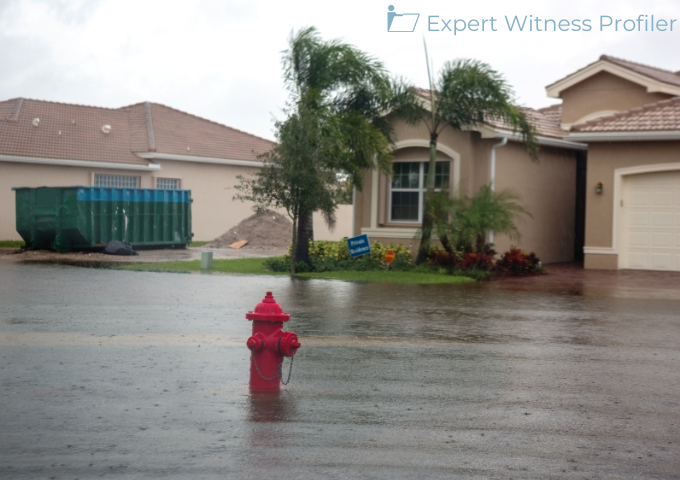
Philip and Nancy Fairman’s home sustained severe flooding during Hurricane Ian. After the storm, they filed a damage claim with their insurer, Defendant American Strategic Insurance Corp (“ASI”), to seek compensation for the losses. ASI acknowledged coverage but disputed the extent of the damage. When the Fairmans and ASI could not reach a settlement, the Fairmans initiated a lawsuit to pursue their claim further.
To facilitate discovery, the Court conducted a status conference and issued a scheduling order, requiring both parties to submit their Rule 26 expert disclosures by August 30, 2024. However, ASI failed to disclose its structural engineering expert witness, Brian Lindsey and did not provide the Fairmans with his report until nearly a month later, on September 26, 2024. ASI attributed this delay to an “oversight.”
In response, the Fairmans filed a motion to strike ASI’s delayed expert disclosure. They also asked the Court to bar ASI from using Lindsey’s report or testimony in dispositive motions. Additionally, they asked that Lindsey be barred from testifying at trial, asserting that ASI’s failure to meet the deadline could adversely affect their case.
Structural Engineering Expert Witness
Brian Lindsey, P.E., has over 20 years of forensic experience in cases involving damage assessments of design/construction defects, collapse of structures, vehicle impacts, structural fire damage, water intrusion, foundation movement, snow load failures, site drainage, wind damage, hail damage, exterior wall cladding damage and roofing systems damage.
Federal Rule of Civil Procedure 26 governs expert witness disclosures, aiming to prevent surprises in litigation and ensure parties can adequately prepare their cases. The rule mandates that parties disclose the basis of their expert opinions on time. Compliance with Rule 26 is not aspirational; it is mandatory. When a party fails to meet these obligations, Rule 37(c) grants the court discretion to exclude the expert unless the violation was substantially justified or harmless.
ASI, having violated Rule 26, bore the burden of proving that its noncompliance was either justified or harmless. Substantial justification exists when reasonable minds could differ on the need to comply. Harmlessness, however, involves considering factors such as the element of surprise, the opposing party’s ability to address it, potential disruption to the trial, the evidence’s significance, and the reason for the failure to disclose.
ASI did not argue that its conduct was substantially justified, nor did it address the factors necessary to establish harmlessness. Instead, ASI attributed the delay in disclosing its expert to an “oversight” and sought leniency, claiming no intentional violation or prejudice to the Fairmans. However, these explanations do not meet the required standard. Courts have consistently held that excuses such as oversight or clerical errors are insufficient to justify noncompliance with Rule 26.
Consequently, ASI failed to satisfy its burden. The Court held that ASI cannot call Brian Lindsey as a witness or use his report as evidence in motions, hearings, or trial proceedings.
Held
The Court granted the Plaintiffs’ motion to strike Defendant American Strategic Insurance Corp.’s Rule 26 expert disclosure as untimely. Further, structural engineering expert witness Brian Lindsey’s report and expert testimony were stricken and excluded from further consideration in the lawsuit.
Key Takeaways:
The Court excluded ASI’s structural engineering expert witness, Brian Lindsey, and his report due to ASI’s failure to comply with Federal Rule of Civil Procedure 26, which mandates timely disclosure of expert witnesses to prevent trial surprises and ensure adequate case preparation.
ASI did not provide substantial justification for its month-long delay nor argued that the delay was harmless. Instead, ASI claimed the missed deadline resulted from an “oversight.” The Court found this explanation insufficient, emphasizing that clerical errors and oversight do not excuse Rule 26 violations. In conclusion, the Court granted the Fairmans’ motion to strike Lindsey’s testimony, barring ASI from using his evidence at any stage of the litigation.
Case Details:
Case caption:
Fairman v. Am. Strategic Ins. Corp.
Docket Number:
2:23cv788
Court:
United States District Court for the Middle District of Florida, Fort Myers Division
Plaintiff Deana Hosie alleges that, on November 17, 2017, while dining at the Defendant Omni Hotels Management Corporation’s hotel restaurant, she tripped and fell over a box-shaped object on the floor, causing her serious injuries.
After disclosing expert Charles DePaolo, M.D., the Defendant indicated that DePaolo would not provide a report until “after his forthcoming independent medical examination of the Plaintiff.”
The Plaintiff declined the Defendant’s request to undergo an independent medical examination.
On June 13, 2024, the Plaintiff filed the present motion, seeking to exclude the expert testimony of DePaolo.
Orthopedic Sports Medicine Expert Witness
Charles DePaolo, MD, is a board-certified orthopedic surgeon and sports medicine physician who specializes in joint reconstructive surgery, direct anterior approach total hip arthroplasty, arthroscopic rotator cuff repair, cartilage preservation procedures, osteochondral transfer procedures and the use of platelet rich plasma (PRP) and stem cells. His goal is to relieve pain and return function to his patients’ everyday life.
The Defendant retained DePaolo to offer testimony regarding the “Plaintiff’s past, present, and future medical condition, including . . . whether such pain or limitation is connected to the injuries” the Plaintiff suffered in this case.
When the deadline passed on January 8, 2024, no report was forthcoming. Since the Rule 26 requirements were not met, the Court decided to exclude the testimony of DePaolo unless the Defendant could show that the failure to produce a report was substantially justified or harmless.
Plaintiff did not provide an expert report for the Defendant to respond to
First, the Defendant argued that its nondisclosure was substantially justified because the Plaintiff did not provide an expert report for the Defendant to respond to. A party, however, need not file an expert report for a treating physician. Here, the Plaintiff disclosed that her treating physician would testify at trial. The Court held that the Plaintiff did not need to disclose an expert report, and the Defendant was not substantially justified in failing to disclose its own expert report.
DePaolo needed to conduct a medical examination of the Plaintiff
Second, the Defendant asserts that its nondisclosure was substantially justified because DePaolo needed to conduct a medical examination of the Plaintiff, arguing that a review of the Plaintiff’s medical records “did not provide a sufficient basis for him to serve a report that would satisfy Rule 26(a)(2)(C).” In his Order denying the Defendant’s motion to compel an independent medical examination, the Magistrate Judge emphasized the Defendant’s failure to (1) timely and adequately pursue the Plaintiff’s medical records; (2) provide an expert report from DePaolo; (3) seek an extension of its deadline to disclose DePaolo’s report; and (4) move to compel an independent medical examination until March 1, 2024, nearly two months after the Defendant’s expert disclosure deadline. Further, since the Magistrate Judge entered his order denying the Defendant’s motion to compel in April, the Defendant has not supplemented or corrected its initial expert disclosure.
The Court held that the Defendant’s failure to disclose a report from DePaolo is not substantially justified due to the lack of an independent medical examination.
Court can “cure” any surprise caused by the Defendant’s failure to provide a report
The Defendant argued that allowing DePaolo to testify would be harmless to the Plaintiff.
The Defendant claimed that the Court can “cure” any surprise caused by the Defendant’s failure to provide a report by permitting DePaolo to listen to and “rebut” the Plaintiff’s treating physician’s trial testimony, then briefly pausing the trial to allow the Plaintiff time to formulate a cross examination.
The Court held that the Defendant’s proposal would minimize the Plaintiff’s opportunity to “adequately prepare” for DePaolo’s testimony, leaving the Plaintiff surprised and unequipped to conduct a sufficient cross-examination. This would not be harmless to the Plaintiff; it would disrupt the trial and unfairly surprise the Plaintiff without providing a sufficient cure.
Finally, the Defendant argued it is important for DePaolo to testify to give the jury “a more complete understanding of the Plaintiff’s injuries” and for the Defendant to “more fairly defend itself against the Plaintiff’s claim for significant damages.” The Court held that this is precisely the kind of information that DePaolo could have and should have rebutted in an expert report. The Defendant has had the Plaintiff’s medical records and has known of the Plaintiff’s claims for damages for some time. The fact that the Defendant has failed to provide a timely rebuttal to the Plaintiff’s evidence does not justify an ambush of the Plaintiff’s treating physician at trial.
Held
The Court granted the Plaintiff’s motion to exclude the expert testimony of Charles DePaolo.
Key Takeaway:
The Court held that the Defendant’s failure to provide a report from its expert is not substantially justified. Furthermore, disrupting the trial to formulate an expert opinion on the fly—without giving the Plaintiff time to analyze the expert’s opinion, depose the expert, and prepare a cross examination—would not be harmless.
Case Details:
Case Caption:
Hosie V. Omni Hotels Management Corporation
Docket Number:
1:22cv265
Court:
United States District Court for the Western District of North Carolina, Asheville Division