Category: Accident Reconstruction Expert Witness

  • Safety Expert’s Testimony on Label Warning Issues Admitted

    Safety Expert’s Testimony on Label Warning Issues Admitted

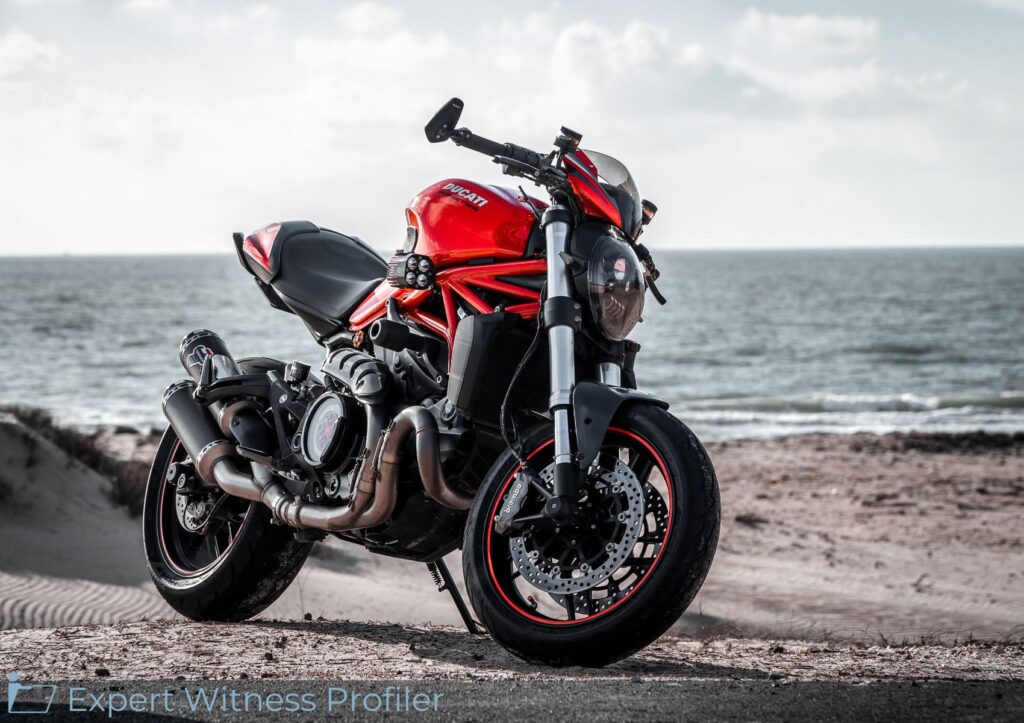
    This products liability case arises out of injuries sustained by Plaintiff Joseph Gonsoulin (“Gonsoulin”) while seated on an allegedly defective electronic motorcycle that unexpectedly took off and caused him to crash into a wall.

    As a result, Gonsoulin sued both the manufacturer of the Beta Explorer— Defendant Zhejiang Apollo Sports Technology (“Apollo”)—and the bike’s American distributor—Defendant Beta USA, Inc. (“Beta USA”).

     Gonsoulin’s theories of liability and the factual issues flowing from them are: (1) whether the Beta Explorer in question should have had a kill switch or a right rear foot brake, (2) whether the Beta Explorer’s throttle was overly-sensitive to the extent that it posed an unreasonably danger to its users; and (3) whether the Beta Explorer’s warnings were legible and substantively adequate. 

    Defendants Beta USA and Apollo filed motions to exclude the opinions of Gonsoulin’s expert witnesses: Mr. Robin L. Simmons, Mr. Edward L. Patterson III, and Mr. James P. Evans

    Motorcycles Expert Witness

    Robin L. Simmons is a motorcycle mechanic and service manager with over forty-five years of experience in the industry.  He specializes in motorcycle repair, maintenance, and safety inspections and holds technician certifications from several major brands like Kawasaki, Yamaha, and Suzuki.

    He has also testified as a motorcycle expert in at least two federal cases and received nationwide awards for his mechanic training videos related to topics, including but not limited to: transmission troubleshooting and hydraulic brake systems.

    Outside of his professional career, Simmons stated that he has been riding motorcycles for over 60 years, currently owns over eleven different dirt and street bikes, and holds a motorcycle endorsement on his driver’s license.

    Want to know more about the challenges Robin Simmons has faced? Get the full details with our Challenge Study report.

    Safety Expert Witness

    Edward L. Patterson III is a Motorcycle Safety and Operation Consultant and currently serves as the Program Manager for the Louisiana Department of Public Safety’s Motorcycle Safety, Awareness, and Operator Training Program.

    In that capacity, he oversees motorcycle safety instruction statewide and was certified as a Rider Coach Trainer and Master Instructor with the Motorcycle Safety Foundation—one of the country’s leading safety resources for motorcyclists. 

    Patterson has developed motorcycle safety curricula and instructional manuals that have been implemented internationally in countries like Indonesia, Zamia, Malawi, etc. In addition to his role involving motorcycle safety regulations, Patterson has also frequently testified as an expert in motorcycle accident cases across the state of Louisiana for over twenty-seven years. Finally, Patterson has been personally riding motorcycles for over fifty years and has a motorcycle endorsement on his license. 

    Discover more cases with Edward Patterson as an expert witness by ordering his comprehensive Expert Witness Profile report.

    Accident Reconstruction Expert Witness

    James Paul Evans is a licensed Professional Engineer and a nationally-certified accident reconstructionist with a mechanical engineering degree from Texas A&M University. He has more than thirty years of mechanical experience with motor vehicles and around twenty-one years of work in accident reconstruction involving motorcycles specifically.

    Evans’ work requires him to frequently conduct crash testing and assess vehicle accelerometer equipment, such as brakes, acceleration, and turn testing. 

    Evans has previously testified as an expert accident reconstructionist in more than 500 cases, both civil and criminal, across the country.

    Want to know more about the challenges James Evans has faced? Get the full details with our Challenge Study report

    Discussion by the Court

    a. Robin Simmons

    Simmons’ extensive background as a motorcycle mechanic, combined with the relatively simple nature of the design defect and warning issues associated with the Beta Explorer, supported the conclusion that he possessed the necessary expertise to testify at trial. Additionally, the Court found no indication in the record that the materials Simmons relied upon—such as the Beta Explorer itself and the Owner’s Manual—or the method he used to review them were unreliable for forming a proper expert opinion

    Simmons employed his “decades of practical experience diagnosing, repairing, and riding motorcycles to assess how the Beta Explorer functions, what mechanical risks are present, and how its features compare to industry norms.” To the extent that Defendants dispute Simmons’ credentials, the substantive nature of his expert opinions, or the depth of his experience with electric motorcycles specifically, they may raise these issues at trial during cross-examination.

    b. Edward Patterson, III

    The Court found that Patterson had the necessary background and expertise in motorcycles to testify about the design defect and warning label issues involving the Beta Explorer. His broad experience in motorcycle safety directly related to the very features at issue in this case, such as the absence of a kill switch and rear brake pedal. Accordingly, the Court concluded that Patterson was clearly qualified to testify as an expert on these matters.

    As for the facts, data, and methods Patterson used to prepare his expert report, the Court determined that they were more than sufficient to meet the requirements of Rule 702. He reviewed, among other things, the Beta Explorer’s warning labels, owner’s manual, and advertisements relied upon by both parties’ experts. He also examined and tested both the Beta Explorer and Apollo’s RFN Rally Pro motorcycle, and conducted a comparative analysis with other similarly situated electric motorcycles. His opinions were not based solely on experience, but also on a structured inspection, side-by-side comparisons with competing models, and hands-on operation of the product at issue.

    James Evans

    The Court concluded that Evans has the expertise necessary to testify regarding the Beta Explorer’s safety designs and warnings. Moreover, Evans has largely relied on the same materials as those reviewed by other experts in this case and individually conducted rigorous scientific testing on the throttle sensitivity in both the Beta Explorer and different electric motorcycles. Thus, it cannot be said that his facts and data upon which he relied or his methodology are so unreliable as to warrant a categorical exclusion of his testimony.

    Indeed, as Gonsoulin notes in his opposition, Evans “applied established accident reconstruction methodologies—such as velocity-time-distance calculations and mechanical analysis of throttle behavior—to quantify the Beta Explorer’s acceleration and speed during the incident.” To the extent Defendants argued that Evans’s reconstruction report would be unhelpful to the jury, the Court patently rejected such an argument, noting that his testimony is key to Gonsoulin’s case and proposes a likely scenario on how exactly this accident occurred. 

    Held

    The Court denied the Defendants’ Daubert motions regarding Joseph Gonsoulin’s expert witnesses, Robin Simmons, Edward Patterson III, and James Evans. 

    Key Takeaway:

    Gonsoulin’s experts have the necessary expertise to testify and otherwise will provide valuable testimony as to the cause of the accident. 

    Simmons employed his decades of practical experience diagnosing, repairing, and riding motorcycles to assess how the Beta Explorer functions, what mechanical risks are present, and how its features compare to industry norms. Patterson’s opinions are based on methodical inspection, side-by-side comparisons with competing motorcycle models, and real-world operation of the product in question. As for Evans, he “applied established accident reconstruction methodologies—such as velocity-time-distance calculations and mechanical analysis of throttle behavior—to quantify the Beta Explorer’s acceleration and speed during the incident.”

    Case Details:

    Case Caption: Gonsoulin V. Beta USA, Inc.
    Docket Number: 2:24cv1005
    Court Name: United States District Court, Louisiana Eastern
    Order Date: August 05, 2025
  • Accident Reconstruction Expert’s Testimony About the Lid Locking Mechanism Admitted

    Accident Reconstruction Expert’s Testimony About the Lid Locking Mechanism Admitted

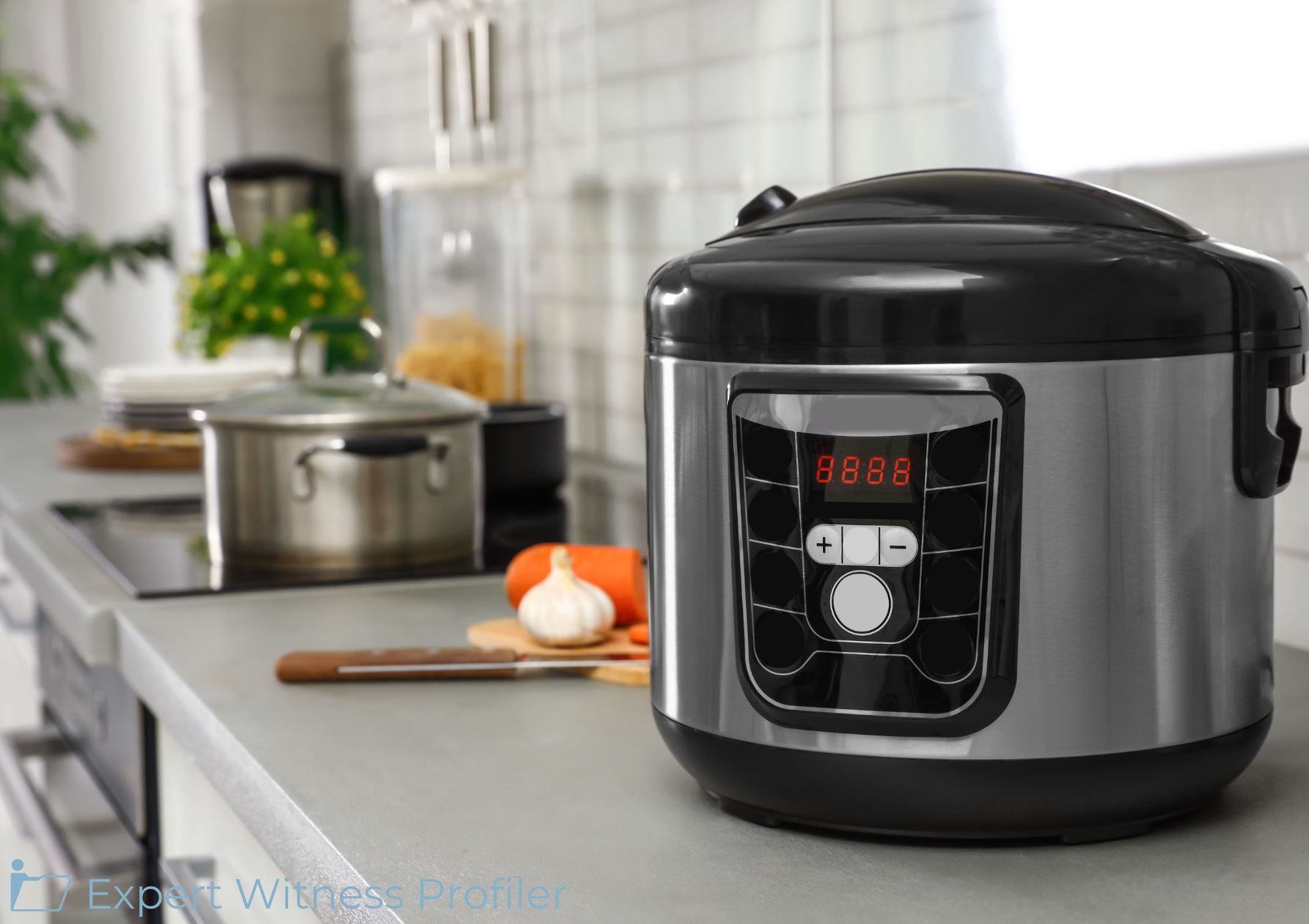
    This is a product liability case involving a Breville BPR600XL pressure cooker (the “Pressure Cooker”). Plaintiff, Hannah Frazier, claimed that suffered permanent injuries to her abdomen when the Pressure Cooker exploded, spraying super-heated liquid and steam across her body.

    The Plaintiff retained Jeffrey D. Hyatt of Specialized Testing & Forensic Laboratory to inspect and test the Pressure Cooker and provide an expert report (“Hyatt Report” or “Report”). Hyatt inspected and tested the Pressure Cooker using the UL (for “Underwriters Laboratory”) 136 “Standard for Pressure Cookers.” The Defendant, Breville USA, Inc., filed a motion to exclude Hyatt’s testimony under Rule 702 and Daubert.

    Accident Reconstruction Expert Witness

    Jeffrey D. Hyatt specializes in conducting mechanical component and system testing engineering, mechanical system failure analysis, identification of materials failure mechanisms and scientific accident reconstruction.

    Want to know more about the challenges Jeffrey Hyatt has faced? Get the full details with our Challenge Study report

    Discussion by the Court

    Breville did not challenge Hyatt’s qualifications as an expert; instead, it challenged the reliability of his principles and methodology.

    UL 136

    Breville contended that Hyatt’s testimony must be excluded in its entirety because Hyatt failed to establish that UL 136 applies or should apply to electrical pressure cookers, as opposed to stovetop pressure cookers.

    However, the Court held that Hyatt’s testimony is sufficient to create, at a minimum, a question of fact as to whether it is appropriate to apply UL 136 standards to electric pressure cookers.

    The Prescribed Testing Methodology

    Breville next argued that, even assuming UL 136 applies, Hyatt did not utilize the prescribed testing methodology set out in UL 136. Hyatt, however, acknowledged as much during his deposition and explained why he intentionally chose not to follow precisely some of the procedures recommended in UL 136. It is clear that this was no oversight on his part.

    Torque vs. Pounds Force

    Breville contended that, “even using the wrong standard and applying that standard’s principles and methodology incorrectly, Hyatt demonstrated that the Pressure Cooker required more force to open than can be exerted by an average male or female.” According to Breville’s expert, the 26.3 pounds of force measured by Hyatt is equivalent to 131.5 “inch-pounds of torque, which is well in excess of what an average [person] has been observed to exert.” However, UL 136 prescribed the method for testing the force necessary to open a pressurized lid, and it speaks in terms of pounds of force, not torque.

    The Measurement of the Locking Pin

    Breville took issue with Hyatt’s purported failure to measure the lid locking pin while it was under pressure. Breville also contended that “Hyatt does not provide any support for his claim that Breville intended to use all .291 [inches] of the lid locking pin while under pressure” or “include any facts or data to support his conclusion that the Pressure Cooker was designed to use the entire .291 [inches] of the lid locking pin.”

    Hyatt, however, explained that he made that assumption because he was not in possession of actual design documents from Breville to show what its intended design was, and he reserved the right to change his opinion if documents produced by Breville showed that, in fact, the manufacturer intended for the compressed pin to extend only .168 inches. In that event, Hyatt would modify his opinion to state that the compressed length of the locking pin was a design defect rather than a manufacturing defect that affected only the plaintiff’s Pressure Cooker.

    Hyatt’s opinion, in any event, is that the length of the pin in the case of this particular pot was insufficient to prevent it from opening under pressure. The Court held that Breville’s objections did not make his opinion unreliable or inadmissible.

    The Reliability of the Data in Figure 13

    Breville pointed out an error on a data chart in Hyatt’s Report purporting to show that the internal pressure of the Pressure Cooker was negative for the majority of the test. It asserted that Hyatt “fails to account for any condition that would make the internal pressure of the cooker less than zero for the majority of the test,” thus making the “data he offers in the chart . . . unreliable and insufficient.” As set forth above, Hyatt did explain this discrepancy in his deposition and accounted for it. It appeared that the only difference this error would have made would be to shift the maximum internal pressure of the Pressure Cooker by .5 psig, but it did not appear to have had any effect on Hyatt’s other calculations.

    Although this error might detract from Hyatt’s credibility before the jury, the Court held that it does not render his opinions unreliable or inadmissible.

    Breville’s Intentions

    Finally, Breville took issue with Hyatt’s finding that Breville intended for the Pressure Cooker to “meet the automatic locking requirements of UL 136” on the basis that this finding is not supported by sufficient evidence, given that the Pressure Cooker itself states that it was intended to comply with US 1026 and UL 1083.

    Hyatt made it clear in his deposition that UL 136 is the locking mechanism standard and that the “industry requires” any pressure cooker lid to remain locked while the contents are under sufficient pressure that liquid could be ejected if it were opened.

    The fact that the Pressure Cooker here has a locking mechanism that engaged below 0.25 psig of pressure indicated to him that Breville intended to comply with industry safety standards, irrespective of whether it identified UL 136 on the Pressure Cooker’s label. In other words, according to Hyatt, the design of Breville’s locking mechanism itself demonstrated Breville’s intent that its pressure cookers be safe and in compliance with industry standard.

    Whether Hyatt’s Testimony Will Assist the Jury

    Breville asserted that, for all of the reasons addressed above, Hyatt’s testimony would not assist the jury in understanding the evidence or determining a fact at issue in this case. The Court finds, as set forth above, that Breville’s arguments are more properly directed to the weight to be accorded Hyatt’s testimony by the jury rather than to its admissibility.

    Breville contended that Hyatt’s hypothesis—that the lid opened without resistance—contradicted his finding that it took 26.3 pounds of force to open while under pressure and that Hyatt “fails to explain how his conclusion that the Pressure Cooker required 26.3 pounds of force to open while under pressure has any bearing on whether a defect caused Plaintiff to be able to open the Pressure Cooker lid ‘easily’ and ‘with no resistance’ as she has testified to.

    But Hyatt addressed this purported inconsistency in his deposition as well. He testified that consumers whose pressure cookers he has tested frequently describe the lid as opening “with “no resistance” or as being “easy to open,” and he did not understand Frazier to mean literally that the lid had no resistance when she opened it.

    Held

    The Court denied Breville’s motion to exclude the testimony of Jeffrey D. Hyatt.

    Key Takeaway:

    Hyatt’s opinions are based on sufficient facts and data, are the product of reliable principles and methods, and reflect a reliable application of the principles and methods to the facts of this case.

    The Court denied Breville’s motion, insofar as it sought the exclusion of Hyatt’s testimony.

    Case Details:

    Case Caption: Frazier V. Breville USA, Inc.
    Docket Number: 3:23cv563
    Court Name: United States District Court, Tennessee Middle
    Order Date: July 24, 2025
  • Accident Reconstruction Expert’s Opinions About Visibility and Conditions at the Scene of the Accident Admitted

    Accident Reconstruction Expert’s Opinions About Visibility and Conditions at the Scene of the Accident Admitted

    This case involves a rear-end collision between Plaintiff Tyler Brown’s sedan and a sprinter van driven by Defendant Nikolay Muzyka.

    The accident occurred during the early morning hours of July 29, 2021. Defendant Muzyka, who was driving in the far right lane, began to slow down as he saw lights from emergency vehicles ahead. As he was slowing down, Defendant moved over two lanes into the far left lane. Plaintiff Brown, who was driving in the far left lane, collided with Defendant causing both cars to turn facing oncoming traffic. 

    Brwon sued Muzyka for negligence and negligence per se. Brown also sued Aleksei Dulepin—the owner of the sprinter van—and Amload, LLC—Muzyka’s employer. Defendants retained accident reconstructionist, Andrew D. Irwin, as Defendants’ testifying expert. Plaintiff filed a motion to preclude Irwin from offering certain opinions at trial. 

    Accident Reconstruction Expert Witness

    Andrew Damien Irwin is an Accident Reconstructionist with Aperture (formerly Scientific Analysis Inc). He uses his decades of experience to provide expert testimony, making use of aids such as accident site diagrams, maps, charts, and crime scene exhibits.

    He holds a Bachelor of Science in Architectural Engineering from the University of Texas at Austin and has completed specialized study in accident reconstruction at Northwestern University and Texas A&M University.

    Irwin is a member of multiple professional societies, including the National Association of Professional Accident Reconstruction Specialists (NAPARS), Society of Accident Reconstructionist (SOAR), Texas Association of Accident Reconstruction Specialists (TAARS), the American Society of Mechanical Engineers (ASME), and the Society of Automotive Engineers (SAE).

    Want to know more about the challenges Andrew D. Irwin has faced? Get the full details with our Challenge Study report

    Discussion by the Court

    Plaintiff asked the Court to prohibit Irwin from offering two categories of opinions. First, Plaintiff argued that Irwin should not be allowed to give his opinions about Plaintiff’s reaction time, considering the visibility and conditions at the time of the collision. Second, Plaintiff asked the Court to preclude Irwin from offering his opinions about Section 545.157 of the Texas Transportation Code, known as Texas’s “Move Over or Slow Down” law.

    Irwin’s Opinions about Visibility and Conditions at the Scene of the Accident are Admissible

    Plaintiff Brown objected to Irwin’s opinions that at the time of the accident “visibility was good” based on an aerial video of the location of the collision taken during the day, roughly two years after the accident.

    Brown argued that because this accident took place around one o’clock in the morning on a dark stretch of highway, Irwin’s opinions are incomplete, irrelevant, misleading, and will cause unfair prejudice if the opinions are based on an illustration of the accident scene that was taken during daylight hours.

    Brown also argued that Irwin’s opinions that there was sufficient visibility for Plaintiff to see and react to the sprinter van’s taillights or flashers and avoid a collision are unsupported speculation and merely Irwin’s subjective belief because Irwin did not perform a looming threshold analysis.

    Analysis

    Plaintiff did not point the Court to any cases holding that the failure to use a looming threshold analysis renders an accident reconstructionist’s testimony unreliable. Defendants argued whether Irwin relied on some incorrect facts or should have examined additional or different data is a valid subject of cross-examination, but it did not render Irwin’s opinions inadmissible. The Court agreed with Defendants.

    Irwin’s failure to perform a looming threshold analysis to account for the “dark-lighted” conditions at the time of the accident similarly concerned the weight of the evidence, not its admissibility. The fact that Irwin’s conclusions might be based on data or assumptions that are contracted by facts in the police report did not render Irwin’s conclusions inadmissible.

    Irwin’s Opinions do not Constitute Impermissible Legal Conclusions

    Plaintiff argued that Irwin offered incorrect opinions about Texas’s Move Over or Slow Down law, which impermissibly invaded the province of the judge and jury.

    What Plaintiff failed to mention is that Plaintiff’s counsel asked Irwin whether Defendant Muzyka followed the Move Over or Slow Down law. In other words, Irwin did not comment on or opine about the law in his expert report.

    While Irwin is not permitted to offer legal conclusions at trial, the Court held that the opinions contained in his expert report did not constitute impermissible legal conclusions.

    Held

    The Court therefore denied the Plaintiff’s motion to limit the opinion testimony of Defendant’s expert Andrew D. Irwin.

    Key Takeaway:

    The reliability of the data and facts underlying Irwin’s opinions concerned the weight of the evidence and is subject to cross-examination. In other words, it did not serve as a basis for excluding Irwin’s ultimate opinions.

    Plaintiff may cross-examine Irwin about whether his failure to use a looming threshold analysis to determine Plaintiff’s perception at night or whether any of the factors he did not account for materially affect his opinions.

    These factors concerned the weight of Irwin’s expert testimony, not its admissibility. The Court found that while Plaintiff may cross-examine Irwin as to these alleged deficiencies, Plaintiff has not established that Irwin’s opinions are unreliable and therefore inadmissible.

    Case Details:

    Case Caption: Brown V. Muzyka Et Al
    Docket Number: 6:23cv474
    Court Name: United States District Court, Texas Western
    Order Date: May 22, 2025
  • Accounting Expert Allowed to Testify About the Lifetime Loss of Earnings

    Accounting Expert Allowed to Testify About the Lifetime Loss of Earnings

    Plaintiff Kimberly Breuil claimed that she was injured in a motor vehicle accident that took place on October 8, 2021.

    Breuil claimed that her injuries have made it painful to look downward and difficult to lift objects. As a result, she is seeking future lost wages and diminished earning capacity totaling between $483,273 and $1,085,644. She alleged that these injuries forced her to resign from her job at the United States Postal Service and take a lower-paying job at Pizza Hut or a similar employer for the remainder of her career. Breuil asserted that she has already experienced, and will continue to experience, loss of income and earning potential.

    Defendants Liberty Land Carriers, LLC and Michael White filed motions to exclude three of Breuil’s experts, Brooke Liggett, Dr. Brett Miller and Brendan Bourdage arguing that they have failed to satisfy the requirements for admissible expert testimony set forth in Rule 702 and Daubert v. Merrell Dow Pharmaceuticals, Inc., 509 U.S. 579 (1993).

    Accounting Expert Witness

    Brooke A. Liggett is a Certified Public Accountant, a Master Analyst in Financial Forensics, a Certified Valuation Analyst, and is also certified in Financial Forensics. She is the owner of Liggett Forensic Accounting and Economics.

    She specializes in calculating economic damages in personal injury and wrongful death cases, as well as in business-related economic damages.

    Get the full story on challenges to Brooke Liggett’s expert opinions and testimony with an in-depth Challenge Study. 

    Orthopedic Surgery Expert Witness

    Dr. Brett Anthony Miller is a board-certified orthopedic surgeon and sports medicine specialist. Miller finished his undergraduate education at Washburn University in Topeka, Kansas, before earning his Doctor of Medicine degree from the University of Kansas School of Medicine in Kansas City, Kansas. There, he went on to complete both his internship and orthopedic surgery residency at the University of Kansas Medical Center. 

    Miller joined Orthopedic and Sports Medicine Center in 2004. At the practice’s office in St. Joseph, Missouri, Miller offers specialized care for sports-related and acute injuries using evidence-based medicine and modern operative techniques, including shoulder arthroscopy. 

    Want to know more about the challenges Brett Miller has faced? Get the full details with our Challenge Study report. 

    Accident Reconstruction Expert Witness

    Brendan P. Bourdage holds an M.S. in Kinesiology from California Polytechnic University, Humboldt. He has successfully completed numerous continuing education courses in crash analysis, collision reconstruction and investigation, as well as other training related to motor vehicle accidents. He holds licenses and registrations in engineering, traffic accident reconstruction, and functional movement, and has published articles and presented seminars on these topics.

    Discover more cases with Brendan Bourdage as an expert witness by ordering his comprehensive Expert Witness Profile report.

    Discussion by the Court

    Brooke Liggett

    Liggett, a Certified Public Accountant, initially calculated that the Plaintiff’s change in employment had resulted in a lifetime loss of earnings between $488,273 and $1,085,644.

    However, the Plaintiff clarified that Liggett did not offer any opinions on whether the accident caused the Plaintiff to leave her job at the United States Postal Service (USPS), whether she could have continued working there, or on any other causation-related issues. Instead, Liggett’s role was limited to comparing the Plaintiff’s former earning capacity at USPS to her income at the time. She relied on the Plaintiff’s own statements about her inability to continue working at USPS and based her calculations on the Plaintiff’s then-current job and income.

    Moreover, Liggett explicitly stated that she was not a vocational expert and was not offering vocational opinions. Her testimony was confined to calculating the financial losses related to earning capacity and retirement benefits, which was within the scope of her expertise as a CPA. Additionally, the Plaintiff asserted that Liggett had no opinions about whether the Defendants caused the Plaintiff’s injuries or whether those injuries led to a reduction in earnings.

    Consequently, the Plaintiff contended that, if the jury concluded the Defendants were responsible for the Plaintiff’s job loss, Liggett’s testimony would assist the jury in determining the amount of damages. Ultimately, the Court found that Liggett was qualified to testify about present value calculations. Any concerns raised by the Defendants could be addressed through cross-examination or the presentation of contrary evidence. Importantly, the record contained no indication that Liggett intended to offer opinions on causation or vocational matters, and any such testimony would not be permitted. She was allowed to testify strictly in her capacity as an accountant, relying on admissible evidence.

    Brett Miller

    Miller, an orthopedic surgeon, conducted an independent medical examination of the Plaintiff. The Defendants sought to prevent him from offering any opinions on the Plaintiff’s mental health conditions allegedly caused by the accident, arguing that he is not qualified to do so. In response, the Plaintiffs stated that they have withdrawn any opinions Miller may have had regarding the Plaintiff’s mental health or depression. Therefore, they argued, the Defendants’ motion is now moot.

    In reply, the Defendants maintained that the Court should formally exclude any such opinions, since Miller, as an orthopedic surgeon, is not qualified to opine on mental health issues. The Court noted that the Plaintiffs had clearly stated—both in their filings and on the record—that Miller would not offer any testimony or opinions related to the Plaintiff’s mental health or depression.

    If the Plaintiffs later attempt to introduce such opinions from Miller at trial, the Court will address any objections from the Defendants at that time. However, since the Plaintiffs have already withdrawn these opinions, they will not be allowed at trial. As a result, the motion to exclude is denied as moot.

    Brendan Bourdage

    The Defendants argued that Bourdage was not qualified to offer expert testimony on several issues, including the speed of impact during the collision, the change in velocity of the Plaintiff’s vehicle, the effect of the collision on the Plaintiff, and the Plaintiff’s injuries. Specifically, they claimed that Bourdage was not a medical expert and, therefore, should not have been permitted to testify about the Plaintiff’s injuries or their causes. Moreover, they contended that he lacked the necessary engineering background to provide biomechanical opinions.

    In addition, the Defendants moved to exclude Bourdage’s opinions entirely, asserting that his conclusions were not sufficiently connected to the facts of the case and would not assist the jury in resolving any factual disputes. Furthermore, they challenged the reliability of Bourdage’s methodology.

    After reviewing Bourdage’s CV and expert report, the Court found that the Defendants’ concerns were more appropriately addressed through cross-examination. Accordingly, Bourdage was permitted to present the opinions set forth in his report regarding how rear-end collisions could cause injuries, along with the general mechanisms and contributing factors involved in such injuries. However, because Bourdage was not a medical doctor, the Court ruled that he could not—and would not—be allowed to testify about the specific injuries the Plaintiff may have suffered in this collision.

    Held

    To begin with, all rulings by this Court on Daubert motions are preliminary in nature. The Court’s rulings are subject to change based on the evidence and testimony presented during trial.

    • The Court denied the Defendants’ motion to exclude the testimony of Brooke Liggett.
    • The Defendants’ motion to exclude the testimony of Dr. Brett Miller was denied as moot.
    • The Court denied the Defendants’ motion to exclude the testimony of Brendan Bourdage, PhD.

    Key Takeaways:

    1. There is nothing in the record to suggest that Liggett has any opinion about causation or any vocational opinions. Liggett may testify as an accountant relying on other admissible testimony.
    1. Bourdage is not a medical doctor and cannot, and will not, be allowed to testify as to what injuries this Plaintiff actually suffered in this collision.

    Case Details:

    Case Caption: Breuil Et Al V. White Et Al
    Docket Number: 3:23cv5048
    Court Name: United States District Court, Missouri Western
    Order Date: June 17, 2025
  • Accident Reconstruction Expert’s Opinion on Crew’s Inadequate Response Admitted

    Accident Reconstruction Expert’s Opinion on Crew’s Inadequate Response Admitted

    Plaintiff Sky Jet sought economic damages related to the destruction of the left engine of its 1996 Beech 1900D aircraft.  Defendant VSE overhauled an engine part called a fuel control unit (“FCU”). Sky Jet claimed that the fuel control unit malfunctioned during two attempts to start to the aircraft, causing elevated internal engine temperatures, also referred to as “hot starts.”

    Sky Jet sued VSE for negligence in its overhaul of the FCU. Defendant VSE has disclosed Mark Pottinger as its retained expert. Sky Jet filed a motion to exclude a causation opinion by Defendant’s expert Pottinger as unreliable and irrelevant.

    Accident Reconstruction Expert Witness 

    Mark Pottinger is an aircraft accident investigation course graduate at the USC Viterbi School of Engineering and an affiliate member of the International Society Of Air Safety Investigators (ISASI).

    He is an instructor at the Aviation Safety and Security Program of the Viterbi School Of Engineering.  In 2013, Pottinger started his own consulting firm specializing in accident investigations and reconstructions. He develops trial exhibits for parties involved in complex aviation litigation. Pottinger also consults with clients who are or expect to be parties to litigation due to aircraft accidents or aviation activities.

    Get the full story on challenges to Mark Pottinger’s expert opinions and testimony with an in-depth Challenge Study. 

    Discussion by the Court

    Mark Pottinger

    Pottinger disclosed four reports. His initial report, dated November 15, 2023, explained that an “engine makes power by taking ambient air and drawing it through the inlet and into the compressor section of the engine,” before passing into a “single centrifugal impeller.” Pottinger also explained the role of pilots during starting procedures and the need for the pilot to “be vigilant for abnormal start conditions” and to “take immediate action to manage an abnormal start” at the risk of engine damage. 

    Pottinger reviewed the maintenance records for the engine. He noted that problems with the engine began a few weeks before the FCU was replaced. 

    Pottinger also inspected the engine. One of the straightening vanes was broken and cracked, and it had a broken weld on the top crossbar. Pottinger stated: “The impact of the broken straightening vane on engine operation, or what caused the damage to the vane, have not been determined.”  However, he found that whatever the cause of the hot starts, the flight crew failed to appropriately react by aborting when the internal temperature reached 900 degrees. Both hot starts reached 1,000 degrees. 

    It should be noted that Pottinger supplemented his report three times. The last supplement, dated October 7, 2024, is at issue in the current motion. His specific opinion was that “[t]he fluctuating engine parameters and the poor starting performance of the subject engine resulted from the damaged diffuser straightening vane.”

    Plaintiff filed a motion to exclude Pottinger’s opinion in his October 7 report that “a broken engine component called a ‘straightening vane’ caused ‘poor starting performance’ or ‘abnormal engine operation.’”

    A. Undisclosed Opinions

    Plaintiff’s first argument is that Pottinger should not be allowed to offer a previously undisclosed opinion that “the broken diffuser vane caused the hot start.” In response, Defendant stated that Pottinger never made such an assertion and will not testify to that effect at trial.

    While this might appear to resolve the issue, Plaintiff, in its reply brief, accused Defendant of “playing semantic games,” arguing that Pottinger uses the terms “diffuser vane,” “straightening vane,” and “diffuser straightening vane” interchangeably—suggesting they refer to the same component. Plaintiff contends that Defendant is drawing an artificial distinction between these terms to claim that Pottinger never offered the disputed opinion. The Court observed, however, that Plaintiff’s own filings also use these terms inconsistently, making the distinction unclear on both sides.

    The Court found the parties’ arguments on this issue confusing. Pottinger’s October 7 report does, in fact, contain an opinion about a “damaged diffuser straightening vane,” making it unclear what opinion Plaintiff believes was not disclosed.

    As a result, the Court denied Plaintiff’s motion without prejudice. It emphasized that Pottinger’s opinions are documented in his report, and any testimony he offers at trial must align with what is stated there. However, due to the current lack of clarity in the record, the Court declined to make a definitive ruling on whether a specific opinion was disclosed or not. If necessary, Plaintiff may revisit the issue during trial.

    B. Reliability

    Pottinger’s October 7 report states that he had previously searched the Federal Aviation Administration’s Service Difficulty Report (“SDR”) system “for incidents that could be informative respecting the subject engine.” The two SDRs he discovered showed a damaged diffuser system causing increased temperatures and fluctuating engine parameters.

    His specific opinion about the damaged diffuser straightening vane was based on the SDRs.

    Plaintiff contended that “there is simply too great an analytical gap between Pottinger’s SDRs and any conclusion that the broken straightening vane caused hot starts.”

    Plaintiff did not dispute that, in general, relying on SDRs is improper. Instead, Plaintiff argued that the SDRs cited by Pottinger involve situations too different from this case, creating an unacceptable gap in his reasoning.

    The Court reviewed Pottinger’s reports along with the SDRs and agreed that there are some differences between those incidents and the present case. However, the Court finds that the gap in reasoning is not significant enough to make Pottinger’s opinions unreliable.

    Service Difficulty Report

    Plaintiff argues that the Service Difficulty Reports (SDRs) cited by Pottinger are not relevant for three reasons. First, the SDRs involved loose or broken diffuser tubes, whereas the engine in this case had a broken straightening vane. Based on this difference, Plaintiff claims the SDRs do not support the conclusion that a single broken straightening vane could affect engine performance.

    The Court disagrees. As noted earlier, there is considerable confusion regarding the terminology and how these components relate to one another. In fact, Plaintiff’s own reply brief quotes Pottinger’s testimony, in which he suggests that diffuser tubes and straightening vanes function as part of the same system. This implies that Pottinger himself sees less of a distinction between the parts than Plaintiff claims.

    Pottinger has also explained that both components work together to direct airflow into the engine, and that disrupting this airflow could adversely affect engine performance. Given this explanation, the Court finds that the fact the SDRs refer to diffuser tubes does not, by itself, make them irrelevant or render Pottinger’s opinion unreliable.

    Plaintiff’s second and third objections are that neither of the SDRs involved a hot start or engine damage. But the Court found this unpersuasive. Just because the engine in this case was damaged by a hot start doesn’t mean the SDRs are irrelevant simply because they didn’t involve hot starts. Both SDRs describe abnormal engine behavior, which is central to Pottinger’s opinion.

    The Court held that Pottinger’s reliance on SDRs where such irrevocable damage did not ultimately occur did not present so great an analytical leap—especially considering his emphasis on the crew’s inadequate response.

    C. Relevance

    Plaintiff’s third argument is that Pottinger’s October 7 report is not directly relevant to its claim that the fuel control unit (FCU) caused the hot starts. Plaintiff maintains that the central issue is whether the FCU was the cause and argues that Pottinger’s discussion of the diffuser or straightening vane has no bearing on that question.

    However, the Court found that Plaintiff’s view of the issue is too narrow. While Plaintiff’s theory focuses on the FCU as the cause of the hot starts, the broader question in the case is what caused the engine damage. Plaintiff believes the FCU was to blame, but Defendant offers alternative explanations—including Pottinger’s opinion that other engine defects contributed and that the crew’s failure to respond appropriately was ultimately responsible.

    Plaintiff also argued that Pottinger fails to connect his mention of “poor starting performance” to the hot start events. But this overlooked Pottinger’s opinion that the crew’s inadequate response played a key role in causing the damage.

    In conclusion, the Court finds that Pottinger’s opinions are sufficiently relevant to the issues in the case.

    Held

    The Court denied the Plaintiff’s motion to exclude certain expert testimony of Mark Pottinger.

    Key Takeaway:

    Pottinger “carried out an extensive investigation,” including inspecting the engine and maintenance records. His findings were that the engine was having issues unrelated to the FCU. His examination of the engine found damage to the diffuser straightening vane and he proffered that the general rule is that the most “upstream” damage is usually a starting point for determining what went wrong. 

    He was able to rule out all potential causes except the broken diffuser straightening vane and pilot error. So although Pottinger ultimately relied on the SDRs, they were not the exclusive basis of his opinions. Pottinger also testified as to the distinctions between the SDRs and this case and explained why they were still persuasive. 

    Case Details:

    Case Caption: Sky Jet M.G. Inc. V. VSE Aviation Services, LLC
    Docket Number: 2:23cv2210
    Court Name: United States District Court, Kansas
    Order Date: June 13, 2025
  • Testimony of Rehabilitation Expert Admitted Despite Reliance on Medical Opinions

    Testimony of Rehabilitation Expert Admitted Despite Reliance on Medical Opinions

    This is a personal-injury action arising out of a motor-vehicle accident between Plaintiff Jose Ricardo Olvera-Velazquez and Defendant Jose Hernandez De La Rosa. Defendant MVT Transportation LLC (“MVT”) has stipulated that Defendant De La Rosa was acting in the course and scope of his employment with MVT at the time of the accident.

    According to Plaintiff, his vehicle was struck by the 18-wheeler being driven by Defendant De La Rosa, causing severe injuries. Basically, this suit alleged claims of negligence against Defendant De La Rosa and claims against Defendant MVT for negligent hiring, retention, entrustment, supervision, and training of Defendant De La Rosa.

    Plaintiff has filed motions to exclude two of the Defendants’ experts, Dr. Mathew Greenston and Dr. Irmo Marini.

    Accident Reconstruction Expert Witness 

    Mathew Greenston is certified by the Accreditation Commission for Traffic Accident Reconstruction and is an emergency medicine physician. His education includes an undergraduate degree in mechanical engineering.

    Get the full story on challenges to Mathew Greenston’s expert opinions and testimony with an in-depth Challenge Study. 

    Rehabilitation Expert Witness

    Irmo Marini obtained his PhD in rehabilitation from Auburn University and a master’s degree in clinical psychology from Lakehead University in Thunder Bay, Ontario, Canada.

    Also, he is a 2009 recipient of the National Council on Rehabilitation Education’s Distinguished Career Award in rehabilitation education, and 2010 recipient of the American Rehabilitation Counseling Association’s James F. Garrett Distinguished Career Award in rehabilitation research.

    Want to know more about the challenges Irmo Marini has faced? Get the full details with our Challenge Study report. 

    Discussion by the Court

    Mathew Greenston

    The Plaintiff contended that (1) Greenston’s expected testimony included an impermissible legal conclusion; (2) portions of his expected testimony did not require an expert and are not helpful to the jury; and (3) his testimony is unreliable because he did not inspect the truck at issue.

    However, Plaintiff did not contend that Greenston is unqualified to testify. And Plaintiff has not identified problems with the reliability of the methodology he used either. Moreover, Defendants have satisfied their burden to demonstrate by a preponderance of the evidence that Greenston’s testimony is reliable. As a result, the Court held that the issues raised by the Plaintiff are matters more appropriately raised at trial with a motion in limine, through contemporaneous objection, or on cross-examination. 

    Irmo Marini

    To begin with, the Plaintiff argued that Marini impermissibly parrots the opinion of a medical doctor. However, the Court held that life planners like Marini must rely upon medical opinions to estimate the quantity of medical care someone will need over their lifetime. Significantly, it is undisputed that the medical doctor is expected to testify at trial to the opinions relied upon by Marini. 

    Therefore, the Court decided that Greenston and Marini should not be excluded as experts, so that the District Court is able to consider specific objections to aspects of their testimony as they arise at trial and/or through any motions in limine.

    Held

    In conclusion, the Court denied without prejudice the Plaintiff’s motion to exclude Defendants’ experts Mathew Greenston and Irmo Marini.

    Key Takeaway:

    According to Rule 703, an expert may base an opinion on facts or data in the case that the expert has been made aware of or personally observed. Thus, life planners like Marini must rely upon medical opinions to estimate the quantity of medical care someone will need over their lifetime. 

    Case Details:

    Case Caption: Olvera-Velazquez V. Mvt Transportation LLC
    Docket Number: 5:24cv28
    Court Name: United States District Court, Texas Western
    Order Date: May 08, 2025
  • Radiology Expert Barred From Providing Testimony Related to Biomechanics

    Radiology Expert Barred From Providing Testimony Related to Biomechanics

    This automotive product liability case arises from a rear-end collision involving a 2020 Honda Odyssey (“subject vehicle”) that resulted in serious injuries to Plaintiff James Assey. On June 16, 2021, Plaintiffs James and Joan Assey were traveling in the subject vehicle on Interstate 26 near Columbia, South Carolina, at approximately 55 miles per hour when the subject vehicle was rear ended by a 2018 Dodge Charger traveling approximately 101-108 miles per hour at impact (the “subject accident”).

    Plaintiffs contended that the subject vehicle contained defects that caused or contributed to Assey’s injuries. Specifically, the subject vehicle’s occupant restraint and protection systems, including, but not limited to, its seating system, airbag system, seat belt and head restraint, failed to provide safe and reasonable protection in an allegedly foreseeable rear end collision.

    Plaintiffs originally asserted claims for strict liability (design and manufacturing defect), negligence (design and manufacturing defect), negligent failure to warn, and loss of consortium.

    Defendant filed motions to exclude the expert testimony of Michael Markushewski and Bruce Distell.

    Accident Reconstruction Expert Witness

    Michael Markushewski has extensive experience in crashworthiness, occupant crash protection, emergency escape, crash safety and survival, and life support engineering. His career has focused on the research, design, testing and evaluation of vehicular and aircraft seating systems, seat belt restraint systems, inflatable restraints, ejection seats, crashworthy seating systems and protective devices.

    He is co-inventor of two (2) patents addressing occupant crash protection devices and seat design.

    Over his career Markushewski has been lead investigator and crash reconstructionist in the evaluation of occupant protection system performance in military and civilian aircraft and automotive ground vehicle mishaps to determine the mechanisms of injury. He has worked with the U.S. Army in the development of advanced seating and restraint systems to protect soldiers from mine-blast related injuries. He has also worked with the National Hockey League to research, develop and test designs to improve player safety.

    Get the full story on challenges to Michael Markushewski’s expert opinions and testimony with an in-depth Challenge Study

    Radiology Expert Witness

    Bruce Distell is a board-certified diagnostic radiologist with fellowship training in body, spine, and orthopedic imaging. He graduated from Muhlenberg College in 1982 with a B.S. degree and from the University of Pennsylvania School of Medicine in 1986. He completed his radiology residency and fellowships at Duke University and is currently the Section Chief of the Department of Radiology at Cape Fear Valley Health Systems and the Academic Department Chair of the Methodist University Cape Fear Valley Medical School. Distell is also an assistant professor at the Campbell University School of Osteopathic Medicine. According to Distell’s report, 90% of his time is spent on clinical work, such as reading x-rays, CTs, MRIs, and other imaging modalities, and 10% of his time is dedicated to teaching and administrative duties.

    Want to know more about the challenges Bruce Distell has faced? Get the full details with our Challenge Study report

    Discussion by the Court

    Motion to Exclude the Expert Testimony of Michael Markushewski

    Defendant argued that Markushewski’s opinions failed to meet the reliability requirements of Rule 702 because he relied on data about seat belt performance during 35-mile-per-hour frontal impact barrier crash tests using a fifteenth percentile dummy, and the accident was a rear-impact collision involving a larger than fiftieth percentile driver.

    According to Defendant, these “substantial differences render Markuskewski’s opinions speculative and unreliable.”

    The Court concluded that the issues Defendant raises regarding Markushewski’s methodology are fodder for cross examination and did not render Markushewski’s opinions unreliable.

    Motion to Exclude the Expert Testimony of Bruce Distell, M.D. Regarding Biomechanics

    Defendant contended that Distell’s report is an improper rebuttal opinion under Rule 26(a)(2)(D)(ii) of the Federal Rules of Civil Procedure and, furthermore, argued alternatively that Distell is not qualified to give expert opinions related to biomechanics.

    Regarding the timeline, despite a July 12, 2024 deadline for identifying expert witnesses, the Plaintiffs identified Distell on September 18, 2024.
    In contrast, Defendant’s expert had reviewed Assey’s medical imaging and concluded that Assey had pre-existing conditions that placed him at an increased risk of spinal injury and that there was no evidence of a hyperextension injury to the deep flexor muscles of his upper thoracic spine.
    However, Distell rebutted these conclusions by opining that Assey’s underlying spinal morphology would not have placed him in a higher risk category to suffer this type of injury, and also opined that Assey would not have sustained injuries but for his lower thoracic spine being positioned above the top of the seat back.

    Defendant argued that because he is a diagnostic radiologist trained in interpreting medical images, Distell is not qualified as a biomechanic to testify regarding the causal impact of Assey’s position within the Subject Vehicle.

    As a result, the Court concluded that Distell’s opinion that Assey would not have been injured but for his lower thoracic spine being positioned above the top of the seat back is an improper rebuttal opinion. Moreover, even if this improper rebuttal opinion was not prejudicial to Defendant, as Plaintiffs argue, the Court agreed with Defendant that Plaintiffs have not shown that Distell is qualified to offer an opinion on biomechanics.

    Furthermore, beyond the conclusory argument that Distell’s training as a diagnostic radiologist qualifies him to testify as to causation, Plaintiffs have not shown that Distell has the knowledge, skill, experience, training, or education to provide opinions in biomechanics.

    Held

    • The Court denied Defendant’s motion to exclude the testimony of Michael Markushewski.
    • The Court granted Defendant’s motion to exclude the testimony of Bruce Distell.

    Key Takeaways:

    1. First, Distell is not a biomechanic, and furthermore does not have experience in designing a motor vehicle. Therefore, Plaintiffs have not shown that Distell has the knowledge, skill, experience, training, or education to provide opinions in biomechanics.
    2. Markushewski’s testimony should “be attacked by cross examination, contrary evidence, and attention to the burden of proof, not exclusion.”

    Case Details:

    Case Caption: Assey Et Al V. American Honda Motor Co., Inc.
    Docket Number: 3:22cv2647
    Court Name: United States District Court, South Carolina
    Order Date: April 18, 2025
  • Accident Reconstruction Expert’s Testimony About Each Vehicle’s Damage Admitted

    Accident Reconstruction Expert’s Testimony About Each Vehicle’s Damage Admitted

    On March 12, 2021, Linda Maraldo was waiting at a red light in her 2017 Chevrolet Sonic. Behind her, Cynthia O’Hara was operating a United States Postal Service (“USPS”) box truck. When the light turned green, O’Hara took her foot off the brake, causing the truck to move forward and collide with Maraldo’s vehicle. Maraldo claims to have suffered neck and back pain as a result.

    Expert Opinion

    Government expert Dr. Jennifer Yaek conducted accident reconstruction and biomechanical analyses of the rear-end collision between Maraldo’s vehicle and the USPS box truck.

    In preparing her expert report, Yaek reviewed several sources of information, including: (1) information about the accident, (2) eight photographs of the vehicles involved in the crash and the site of the crash, (3) repair and maintenance records for both vehicles, and (4) Maraldo’s medical records.

    Yaek’s assessment of vehicle damage was solely based on the documents and photographs supplied by the government, as she did not conduct a physical inspection of either vehicle.

    1. Accident Reconstruction Analysis

    Yaek’s accident reconstruction analysis led her to conclude that the maximum change in velocity, or delta-V, of Maraldo’s vehicle was approximately 5 miles per hour, that the closing/impact speed of the USPS truck was approximately 6-6.5 miles per hour, and that the principal direction of force applied to Maraldo’s vehicle was 6 o’clock “with 12 o’clock being straight ahead on the vehicle.” 

    Yaek’s crush analysis began with calculating how much force acted on the rear of Maraldo’s vehicle and, similarly, on the front of the USPS truck. To calculate the force that acted on the rear of Maraldo’s vehicle, Yaek used photos of the vehicle’s “undeformed rear bumper and publicly available, peer-reviewed engineering and scientific literature.”

    Yaek next used the Crash Investigation Sampling System from the National Highway Traffic Safety Administration to evaluate her delta-V calculation relative to the delta-V values in two other accidents where a vehicle rear-ended a Chevy Sonic. 

    2. Biomechanical Analysis

    Yaek’s biomechanical analysis led her to conclude that the accident “did not provide sufficient forces to cause motion of Maraldo’s cervical or lumbar spine beyond the physiological range of motion, and would most likely not provide the type or magnitude of loading consistent with mechanisms for acute spinal injury beyond transient spinal strain.”

    Yaek used the laws of physics to determine that Maraldo would have moved initially rearward and then rebound forward during the collision. She compared the loads that Maraldo’s spine would have experienced during the accident to “injury tolerances” and “loading experienced in physical tasks and activities of daily living.”

    Yaek further drew on biomechanical and peer-reviewed studies in finding that Maraldo’s accident could not have resulted in disc herniation, protrusion, or bulging absent damage to adjacent bony structures.

    Daubert Motion

    Maraldo contended that Yaek’s accident reconstruction opinions are unreliable and based on speculation. Specifically, Maraldo asserted that Yaek did not perform a crush analysis and instead based her conclusions on a limited review of only one photograph of each vehicle. Furthermore, Maraldo argues that Yaek lacked crucial information regarding the distance traveled by the USPS truck until impact, the speed of the USPS truck, the starting positions of the vehicles pre-impact, or the resting positions of the vehicles post-impact. 

    Accident Reconstruction Expert Witness

    Jennifer L. Yaek has more than 25 years of extensive experience in accident reconstruction, vehicle dynamics, and data analysis.

    She received her Master’s degree and PhD in biomechanical engineering with a concentration in impact biomechanics and has provided expertise in human injury tolerance, occupant kinematics, and rigid body dynamics associated with transportation related impacts, inter alia, since 2012.

    In addition, Yaek has co-authored numerous publications, including a 2020 article on rear impact.

    Get the full story on challenges to Jennifer Yaek ‘s expert opinions and testimony with an in-depth Challenge Study. 

    Discussion by the Court

    A. Challenges to Accident Reconstruction Opinions

    First, Yaek’s crush analysis consisted of three parts: (1) calculating how much force acted on the rear of Maraldo’s vehicle, (2) calculating how much force acted on the front of the USPS truck, and (3) calculating the total crush that both vehicles dissipated. In performing the crush analysis, Yaek reviewed multiple photos of both vehicles and relied on “publicly available, peer-reviewed engineering and scientific literature” as well as the laws of physics. 

    The Court concluded that Maraldo did not adequately support her contention that a physical inspection of the vehicles was required for Yaek’s analysis. Specifically, Maraldo did not clarify the necessity of a physical inspection, the additional insights Yaek would have gained, or the specific information Yaek overlooked by not conducting one. This failure to provide a clear explanation weakened Maraldo’s position.

    In conducting her accident reconstruction analysis, Yaek reviewed a traffic crash report from Michigan, a USPS accident investigation worksheet, and the deposition testimonies of both Linda Maraldo and Cynthia O’Hara. Notably, Maraldo does not contest the foundation of Yaek’s delta-V calculation and principal direction of force determination. Consequently, the Court finds no apparent issues with Yaek’s accident reconstruction analysis that would render her opinions inadmissible. Furthermore, Maraldo argues that Yaek’s report lacked the expected level of intellectual rigor for an accident reconstruction expert.

    Yaek compared the current accident to two other rear-end collisions involving Chevy Sonics to evaluate her delta-V calculation against other delta-V calculations, utilizing details and calculations sourced from the National Highway Traffic Safety Administration’s Crash Investigation Sampling System. However, Maraldo has not provided any explanation as to why this sampling system is unreliable such that Yaek should have confirmed the details of the accidents in the system herself.

    B. Challenges to the Biomechanics Opinions

    Maraldo argues that Yaek’s biomechanical analysis is grounded on an unreliable accident reconstruction analysis and is unsupported by the literature that Yaek cited in her report.

     Maraldo claims that the peer-reviewed literature that Yaek cites does not address injury tolerance and the effect of forces on an aged spine like Maraldo’s.

    First, as discussed above, Yaek performed a reliable accident reconstruction analysis. To perform her biomechanical analysis, Yaek applied her delta-V calculation, principal direction of force determination, and the circumstances of the collision to describe how Maraldo’s body would have moved during the collision.

    Yaek also compared the forces that Maraldo’s neck and back would have experienced during the accident to the forces that one’s neck and back might experience in accidents of similar or greater severity and in activities of daily living. 

    The Court finds that this analysis and the resulting opinions are reliable.

    Second, Maraldo’s criticisms of the literature that Yaek cites are immaterial to any of the Daubert factors. At best, Maraldo’s critiques of the literature go to the weight of Yaek’s opinion, not its admissibility. 

    Held

    Because Dr. Jennifer Yaek’s opinions meet the admissibility standards of Federal Rule of Evidence 702, the Court will not exclude them. The the Court, therefore, denied Maraldo’s motion to exclude the government’s expert opinions and testimony.

    Key Takeaway:

    The Court affirmed Yaek’s methodologies, including her crush analysis, delta-V calculations, and comparisons to similar accidents and reliance on biomechanical studies, despite the Plaintiff’s challenges regarding the lack of physical inspection and the cited literature. The Court determined that the Plaintiff’s criticisms primarily went to the weight, not the admissibility, of the expert’s opinions.

    Case Details:

    Case Caption: Maraldo V. United States Of America Et Al
    Docket Number: 2:23cv10577
    Court Name: United States District Court, Michigan Eastern
    Order Date: March 31, 2025
    1. Accident Reconstruction Expert Disregards Physical Evidence

      Accident Reconstruction Expert Disregards Physical Evidence

      William Harrison Sims sustained facial injuries from shrapnel when his BMW’s airbag malfunctioned. He subsequently filed a lawsuit against BMW, claiming negligence and strict product liability.

      In the legal proceedings, BMW’s accident reconstruction expert, Amanda Duran, P.E., was accused by the Plaintiff of selectively endorsing a defense-favorable theory of the accident without sufficient justification.

      Defendants filed a motion requesting reconsideration of its February 13, 2025 order granting in part and denying in part Plaintiff’s motion to exclude the testimony of Duran.

      Accident Reconstruction Expert Witness

      Amanda Duran, P.E. is an automotive engineer specializing in motor vehicle crash investigation and reconstruction. Since 2003, she has worked at Carr Engineering, Inc.  To date, she has been involved in analyzing over 600 crashes, including more than 500 vehicle inspections and 400 scene inspections.

      Get the full story on challenges to Amanda Duran’s expert opinions and testimony with an in-depth Challenge Study. 

      Discussion by the Court

      Amanda Duran, P.E., was presented as the defense’s accident reconstruction expert. The Court partially granted the Plaintiff’s Daubert challenge, excluding Duran’s opinion on who failed to yield the right of way. The Court found this opinion unhelpful, as Duran couldn’t identify the responsible party, and the basic fact that someone failed to yield the right of way was deemed common knowledge.

      The defense’s motion for reconsideration, which simply reiterated prior arguments, was denied. The Court emphasized that reconsideration is not a platform for disputing rulings. Furthermore, the Court rejected the defense’s argument that because their challenge to the Plaintiff’s expert was denied, Duran should be allowed to offer unhelpful opinions.

      The Court also struck Duran’s opinion regarding the BMW’s lane of travel, again rejecting the defense’s rehashed arguments. The Court found Duran’s methodology flawed, as she disregarded physical evidence and relied excessively on Harris-Jackson’s testimony. The defense’s disagreement with this ruling was deemed insufficient for reconsideration.

      Finally, the defense argued that it was unfair for the Plaintiff’s expert, Perry Ponder, to testify when his conclusions differed from the crash report prepared by the Trooper. It should be noted that the Court refused to admit Duran’s testimony about the Plaintiff’s lane of travel because she prioritized Harris-Jackson’s account over concrete physical evidence. The Court rejected this argument, highlighting the difference in methodology: Ponder considered the Trooper’s crash report but reached a different, reasoned conclusion, while Duran disregarded physical evidence. The Court concluded that the experts’ approaches were not comparable and denied the motion for reconsideration.

      Held

      The Court denied the Defendants’ motion for reconsideration of the Court’s order to exclude the testimony of Amanda Duran, P.E.

      Key Takeaway:

      The Court emphasized the importance of sound methodology and reliance on evidence in expert testimony. After all, a motion for reconsideration is not a platform to reargue previous arguments.

      Please refer to the blogs previously published about this case:

      Accident Reconstruction Expert Witness’ Testimony Admitted Despite His Failure to Calculate G-Force 

      Neurology Expert Witness’ Injury Causation Testimony Admitted

      Accident Reconstruction Expert Witness’ Opinion Regarding Plaintiff’s Lane of Travel Ignored Physical Evidence

      Automotive Engineering Expert Witness’ Testimony Regarding the Latent Defect in Airbag Inflators Admitted

      Neuropsychology Expert Witness is Qualified to Offer Opinions on Causation

      Expert Witness Reliability: Sims v. BMW Case Examines “Parroting” Claims

      Case Details:

      Case Caption: Sims V. BMW Of North America LLC
      Docket Number: 6:22cv1685
      Court: United States District Court, Florida Middle
      Order Date: March 18, 2025

    2. Accident Reconstruction Expert Witness’ Opinion Regarding Plaintiff’s Lane of Travel Ignored Physical Evidence

      Accident Reconstruction Expert Witness’ Opinion Regarding Plaintiff’s Lane of Travel Ignored Physical Evidence

      Plaintiff, William Harrison Sims’ claims arise out of an October 24, 2019, two-vehicle collision involving Plaintiff, who was operating the 2004 BMW (“Subject BMW”). Tameca Harris-Jackson (“Harris-Jackson”) was operating the Hyundai that collided with the Subject BMW. Plaintiff alleges he sustained “severe, permanent, and life-altering injuries” due to the driver-side Takata airbag unexpectedly rupturing and shooting “metal shrapnel into his face and body.”

       Defendants procured and installed the airbag inflator during the process of “designing, manufacturing, assembling, and producing” the vehicle. Plaintiff brought this action for damages against both Defendants BMW of North America (“BMW NA”) and Bayerische Motoren Werke AG (“BMW AG”), alleging strict liability and negligence from procuring and installing the airbag.

      Amanda Duran, P.E. is the Defendants’ accident reconstruction expert. Plaintiff argued that Duran postulated several scenarios regarding how Harris-Jackson was driving and elected, without a rational basis, to endorse the theory that best suited the defense.

      Accident Reconstruction Expert Witness

      Amanda Duran, P.E. has been working in the automotive engineering field, primarily focusing on the investigation and reconstruction of motor vehicle crashes.

      From 2003 until the present, she has been an Engineer at Carr Engineering, Inc. In this role, she performed investigations to determine the causes, conditions, and circumstances of motor vehicle crashes. To date, she has personally been involved in analyzing the various aspects of more than 600 crashes, including more than 500 vehicle inspections and more than 400 scene inspections.

      Get the full story on challenges to Amanda Duran’s expert opinions and testimony with an in-depth Challenge Study. 

      Discussion by the Court

      Plaintiff sought to exclude Duran’s opinion that someone failed to yield the right of way because she cannot determine who that someone is. Next, Plaintiff moved to exclude Duran’s opinion that he was driving in the southbound right-hand lane when the crash occurred, as opposed to the left-hand lane. Plaintiff argued Duran ignored the physical evidence that contradicts her opinion, rendering it unreliable, unhelpful, and irrelevant. Plaintiff also sought to eliminate Duran’s opinion that the driver of the Sonata, Harris-Jackson, accelerated from a stop at a slow or moderate rate before the collision.

      A. Someone Failed to Yield the Right of Way

      The defense conceded that Duran did not determine whether Plaintiff or Harris-Jackson failed to yield the right of way before the two vehicles collided. The defense added that Duran did conclude that “the impact speed of Harris-Jackson’s vehicle [is] consistent with her testimony that her vehicle was stationary before proceeding into the intersection.”

      The Court was tasked with determining whether her testimony that somebody failed to yield the right of way survives the rigors of Daubert but Duran’s opinion that Harris-Jackson’s vehicle was stationary before she turned to enter the highway was of little assistance.

      Duran’s inability to determine which driver failed to yield the right of way failed the helpfulness prong of Daubert. The accident only occurred because one of the driver’s failed to yield the right of way. A jury does not need an expert to explain this fact. A collision at an intersection controlled by a traffic light occurs when one of the driver’s fails to yield the right of way. Accordingly, the Court held that Duran’s testimony did not concern a matter that is beyond the understanding of the average lay person.

      The defense argued that Duran’s testimony that she was unable to determine which driver failed to yield the right of way is helpful simply because the parties disagree on who is at fault. The Court held that Duran’s testimony that she does not know who failed to yield the right of way does not have a tendency to make a fact more or less probable than it would be without the evidence. In other words, Duran has no opinion as to which driver is at fault.

      B. Lane of Travel

      Plaintiff challenged Duran’s opinion that he was driving in the southbound right-hand lane when the accident occurred, contrary to Trooper Ndoumbe’s assessment that Plaintiff was traveling in the left-hand lane.

      Plaintiff argued that Duran’s opinion was not only unreliable, but also unhelpful because she conceded that Harris-Jackson could have accelerated from a stop at the stop bar with light or moderate acceleration rates and impacted Plaintiff’s BMW in either the right-hand or left-hand lanes.

      Duran’s Methodology is Unreliable because She Failed to Account for Physical Evidence Placing the Plaintiff’s Vehicle in the Right Lane

      Duran stated in her report that she did not identify any remaining evidence at the crash site relating to this accident. She did, however, review the accident report prepared by law enforcement. Duran also noted in her bullet-point summary of deposition testimony that Trooper Ndoumbe determined the area of impact by a “gouge on the roadway,” but the roadway has since been repaved. It should be noted that Duran did not factor the gouge
      mark and fluid identified by Trooper Ndoumbe into her analysis. It was never
      mentioned again in her expert report.

      Duran Offered No Explanation for her Decision to Ignore Physical Evidence and the Troopers’ Testimony in Favor of Harris-Jackson’s Version of Events

      Trooper Ndoumbe testified that the gouge mark and fluid were consistent with Plaintiff’s vehicle in the left lane at the moment of impact, as documented on his crash diagram.

      While the parties did not explain the significance of Plaintiff traveling in the right lane versus the left, it appears from the above that if Plaintiff’s vehicle was in the left lane, this would support Harris-Jackson’s testimony that she proceeded from a stopped position and proceeded slowly. Hence, Duran’s observation that “[r]epeating the above analysis with lower separation speeds and the adjusted post-impact trajectories, the speeds were more consistent [if Plaintiff was in the right lane] with witness testimony and typical driving behavior.” Duran ignored the gouge marks and fluid identified by Trooper Ndoumbe.

      Duran emphasized Harris-Jackson’s version of the events over physical evidence, thereby violating her working premise that “[t]he first step in reconstructing the subject crash and performing appropriate calculations to determine the speeds and Delta-Vs is to reconcile the physical evidence on the roadway, the photographs, and the vehicles.” Moreover, Duran offered no explanation for her decision to ignore physical evidence and the Troopers’ testimony in favor of Harris-Jackson’s version of events.

      Analysis

      The Court held that Duran failed to consider or account for contradictory data, which consisted of a gouge mark and fluid placing the initial point of impact in the left lane. Duran acknowledged in her report that “the first step” in reconstructing the accident and calculating the Delta-Vs is to reconcile the physical evidence with the analysis. She failed to do so, rending her analysis flawed.

      Duran stated in her report that “if the Hyundai accelerated from a stop at the stop bar to the area of impact in either lane, with either light or moderate acceleration rates, it could have reached the range of both of our [Ponder and Duran’s] calculated speeds (13 to 24 MPH).” Whether Plaintiff was traveling in the left lane or right was of no consequence to Duran’s speed calculations.

      C. Vehicle Speed

      Plaintiff challenged Duran’s methodology in calculating the speed of the Hyundai and whether that speed was reached from a stopped position.

      It was noted that Duran measured the radius of the typical path for a left turn onto the entrance ramp to be a radius of about 80 feet. Next, Duran calculated the force exerted on Harris-Jackson if she employed Plaintiff’s speed calculation as .05 G and ruled out this aggressive maneuver based on the forces and Harris-Jackson’s testimony.

      Duran then used her speed calculation (13 to 25 MPH) and concluded that o.255 G would be applied if Harris-Jackson made the turn without stopping and the maximum speed would be approximately 18 MPH. Similarly, if Harris-Jackson proceeded to turn from a stopped position, applying light or moderate acceleration rates, the speed would be between 13 to 24 MPH.

      Plaintiff was correct that Duran offered two competing opinions: either Harris-Jackson proceeded into the intersection from a stop or drove through. In both scenarios, Harris-Jackson would reach speeds within Duran’s calculated range and below the speed calculated by Ponder. The Court held that Duran’s opinion is helpful to the jury tasked with evaluating Harris-Jackson’s credibility. If Harris-Jackson testified she came to a stop before entering the intersection, Duran’s calculations support that testimony. Secondly, Duran’s calculations and opinions countered those of Plaintiff’s expert and went to the weight the jury will accord Ponder’s testimony. Alternative opinions are not per se unreliable or unhelpful.

      Held

      The Court granted in part and denied in part the Plaintiff’s motion to exclude the testimony of Amanda Duran.

      Key Takeaway:

      Duran committed the sin of omitting data—the gouge mark, fluid spill, the Trooper’s testimony, and cherry-picking data—giving undue weight to Harris-Jackson’s version of the events. Additionally, as Plaintiff noted, Duran’s opinion was unhelpful. Whether Plaintiff was traveling in the left lane or right was of no consequence to Duran’s speed calculations.

      While Duran’s opinion regarding Plaintiff’s lane of travel ignored physical evidence, the opinion that Harris-Jackson proceeded into the intersection from a stopped position was, however, supported by a reliable methodology.

      Plaintiff is correct that Duran offered two competing opinions: either Harris-Jackson proceeded into the intersection from a stop or drove through. However, Duran’s opinion is helpful to the jury tasked with evaluating Harris-Jackson’s credibility.

      Please refer to the blogs previously published about this case:

      Accident Reconstruction Expert Witness’ Testimony Admitted Despite His Failure to Calculate G-Force

      Neurology Expert Witness’ Injury Causation Testimony Admitted

      Case Details:

      Case Caption: Sims V. BMW Of North America LLC
      Docket Number: 6:22cv1685
      Court: United States District Court, Florida Middle
      Order Date: February 13, 2025