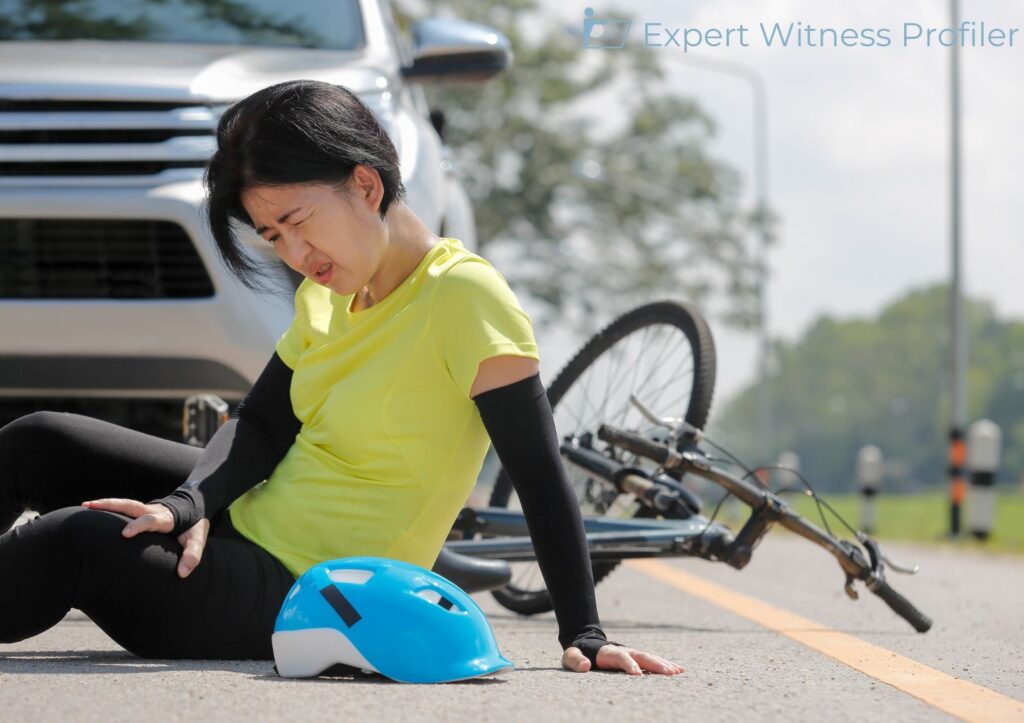
This Federal Tort Claims Act (FTCA) case arises out of an accident that occurred on January 5, 2021 between Plaintiff Avery Stinson and a U.S. Postal Service tractor-trailer driven by Stewart Henry. When the accident occurred, Plaintiff was operating a bicycle on a sidewalk and attempting to cross an intersection. At the same time, a U.S. Postal Service tractor-trailer was traveling in the same direction parallel to the sidewalk and initiated a right turn at the same intersection.The bicycle collided with the trailer portion of the tractor-trailer, and Plaintiff sustained injuries as a result of the accident.
Dean Nance has applied his training, experience, and skills in Accident Reconstruction on 100’s of motor vehicle crashes as a member of the Texas Department of Public Safety as a Trooper. During his service with the Texas Department of Public Safety, he completed all 6 Levels of training in Accident Reconstruction. He owns an Accident Reconstruction Investigations Company, and is licensed through the Texas Department of Public Safety Private Security Bureau as a Private Investigations Company.
Nance is also a member of professional societies which specialize in Accident Reconstruction: (TAARS) Texas Association of Accident Reconstruction Specialist, The Laser Scanner Forum, The American Association of Notaries, The Khan Academy of Science and Engineering, and The Crash Forum Group.
Nance’s report failed to meet the requirements of Rule 26(a)(2)
Defendant argued that Nance’s report failed to provide “a complete statement of all opinions the witness will express and the basis and reasons for them” and “the facts or data considered by the witness in forming them” as required by Rule 26.
The Court held that Nance’s report listed his qualifications as an accident reconstructionist and the evidence he reviewed and the tasks he performed in reaching his conclusions. For example, the report stated that Nance “documented the crash scene” and “made a map of the crash scene location using Google Earth Pro.” The report identified materials he consulted such as excerpts from J.J. Keller Truck Driving Training Manual and Smith System Driver Study Guide.
Plaintiff also provided Nance’s curriculum vitae, listing professional experience, specialized training and certificates, awards received, and state and federal court testimony as an accident reconstructionist.
Defendant also moved to strike Nance’s opinions in his report on the ground that the report “promoted an objectively false narrative without evidentiary support.” However, Defendant’s objection to Nance’s report as a “false narrative” amounted to a dispute regarding the facts Nance considered and the conclusions he reached. The Court held that these objections were not a basis to exclude his testimony under Rule 26(a)(2)(B).
Nance’s opinions were “conclusory, lacked evidentiary support, and were unreliable and inadmissible” under Rule 702 and Daubert
Defendant’s motion to exclude Nance’s testimony under Rule 702 and Daubert did not challenge Nance’s qualifications. Instead, Defendant argued that Nance’s “disregard of the evidence and his objectively false narrative” warranted the exclusion of his testimony.
The Court held that objections like those raised by Defendant “relating to the bases and sources of an expert’s opinion affect the weight to be assigned that opinion rather than its admissibility.”
Held
The Court denied the Defendant’s motion to exclude Plaintiffs’ expert Dean Nance.
Key Takeaways:
The factfinder generally should “hear the expert’s testimony and decide whether the predicate facts are accurate.”
Since the case will be tried before a judge and not a jury, most of the safeguards provided for in Daubert are not as essential.
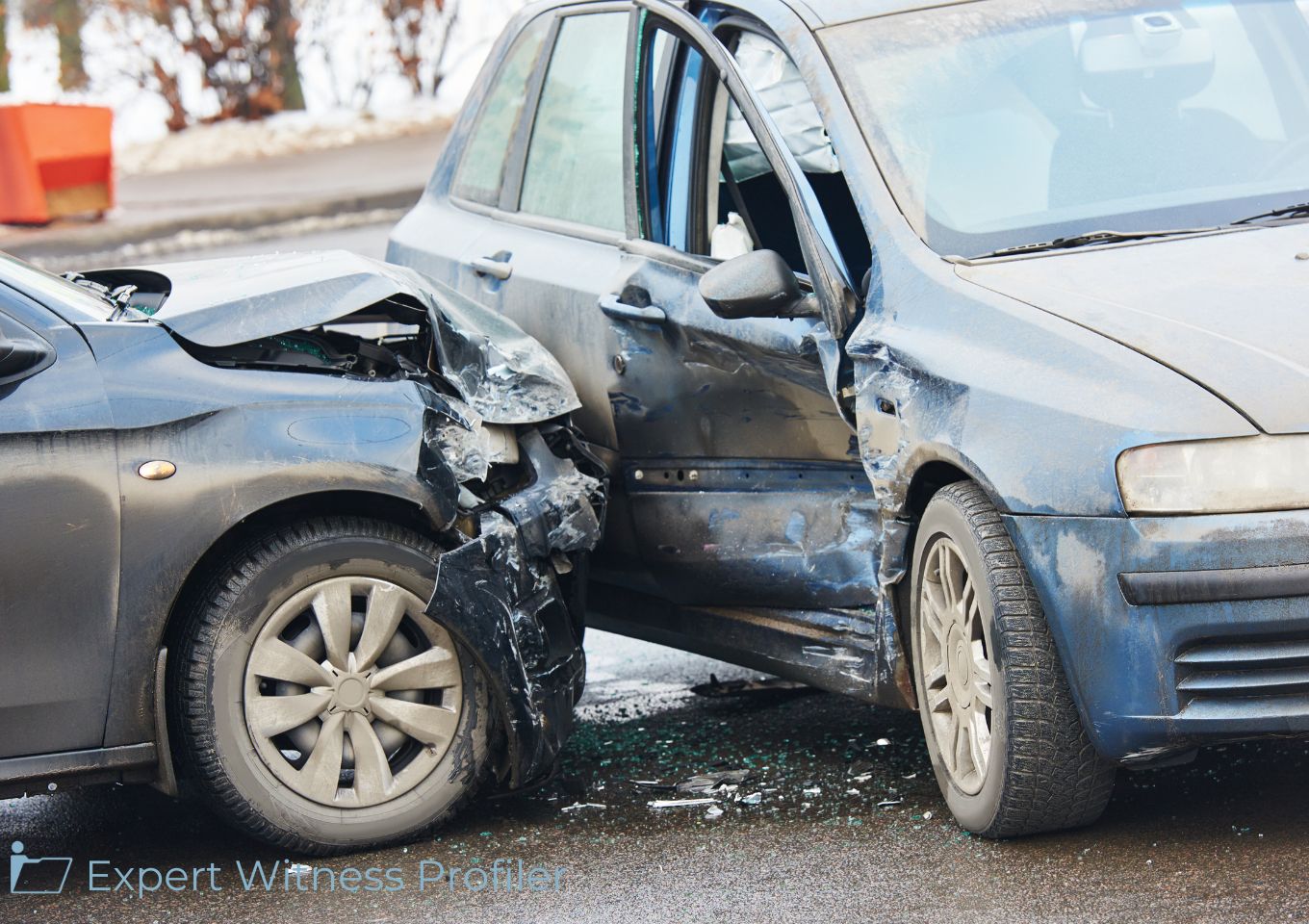
This case arose from a motor vehicle accident on Interstate 55 in Scott County, Missouri. Plaintiffs Benjamin Behel, David Wallace, and Joye Wallace filed a lawsuit against Defendants Berney Wescott, Heritage Transport LLC, Bobby James, and Tracy Reynolds for damages sustained in the accident.
Behel was driving southbound in the right lane with an attached trailer. Wescott was driving a semi-tractor trailer behind Behel in the same lane. James was driving behind Wescott in the same lane. At some point, Wescott’s vehicle struck the rear of Behel’s trailer. James then veered into the left lane to avoid a collision. Wescott’s vehicle jackknifed, causing his trailer to swing into the left lane and collide with James’ vehicle. This forced James’ vehicle into the median where he collided with Behel, whose vehicle had moved into the median after being struck by Wescott.
Plaintiffs designated William Hampton as an expert witness to analyze the accident. Hampton prepared a report with opinions to which Defendants objected. Defendants Bobby Lynn James and Tracy Lonny Reynolds filed a motion to exclude the opinions and testimony of Plaintiffs’ expert William Hampton while Defendants Heritage Transport, LLC, and Berney P. Wescott filed a motion to limit the testimony of Hampton.
Accident Reconstruction Expert Witness
William E. Hampton is an expert in accident investigation and reconstruction, particularly in motor vehicle and commercial trucking accidents. Through his company W.E. Hampton & Associates, Inc., where he serves as President, Hampton provides accident reconstruction services and evaluates commercial motor carrier compliance, inspection, and safety matters, including the hiring and retention of truck drivers. He has experience investigating the causes of trucking accidents and assessing whether commercial trucking companies and their drivers violated regulations or safety standards.
Discussions by the Court
In Opinion 6, Hampton presented an opinion, asserting that Berney Wescott operated his vehicle as a distracted driver. This distraction allegedly stemmed from playing a college football game on his phone and looking to the rear of his vehicle for an extended period. According to Hampton, Wescott’s diverted attention led him to approach the Behel vehicle closely. Defendants Wescott and Heritage Transport, LLC, objected to this opinion, contending that it should be excluded. They argued that the opinion lacked sufficient factual foundation and was based solely on Hampton’s speculation. Specifically, the Defendants claimed that there was insufficient evidence for Hampton to conclusively assert that Wescott’s act of listening to a football game on his cell phone was a direct cause or contributor to the crash.
Upon a thorough examination of Hampton’s Opinion Number 6 and his deposition, it is evident that his conclusion regarding Wescott being a distracted driver stemmed from considering the totality of circumstances, rather than attributing it solely to one factor, such as listening to a football game. Despite the Defendants’ objection, which seemed to misinterpret Hampton’s stance by asserting that he concluded Wescott was a distracted driver solely due to the football game, the Court found that Hampton did not make such a specific assertion. Consequently, the Defendants’ argument was deemed unfounded, leading to the denial of their request to exclude this portion of Hampton’s opinion.
In Opinion 12, Hampton stated that Bobby James was following the Wescott vehicle too closely, violating the standards outlined in the Commercial Motor Vehicle Driver Manual and industry norms. According to Hampton, James did not have adequate time and distance to avoid the vehicles of Wescott and Behel. Defendants James and Reynolds opposed this conclusion, arguing that it lacked sufficient factual basis. The essence of the Defendants’ argument boiled down to the assertion that, had the Wescott trailer not jackknifed, the collision would not have occurred. They contended that this fundamental premise justified the exclusion of Hampton’s conclusion.
Contrary to the Defendants’ position, the Plaintiffs assert that the central issue in the case revolves around whether the James vehicle was following the Wescott vehicle too closely before the events that caused injury to the Plaintiffs. They argue that if James had maintained an appropriate distance from Wescott, he would have had sufficient space to either come to a stop or execute an evasive maneuver, thereby preventing the collision with the Wescott tanker. The Plaintiffs support this argument by referencing Hampton’s report, where he suggests that, instead of following the Behel vehicle at a four-second interval, James should have maintained a minimum of seven seconds or a distance of 735 feet at their speed of 72 miles per hour. According to Hampton, if James had followed the Wescott vehicle at a safe distance, he could have avoided the crash by bringing his vehicle to a complete stop within 514 feet.
The Plaintiffs, along with Hampton, appear to argue either that (1) James should have maintained a greater distance from Wescott when he was in the right lane to prevent a rear-end collision with the Wescott trailer, or (2) James should have kept a greater distance from Wescott even while in the left lane to avoid a collision with the jackknifed Wescott trailer. If the contention is the former, this argument is deemed unsuccessful because James did manage to avoid colliding with Wescott when he successfully maneuvered into the left lane. The collision occurred only after James had transitioned into the left lane, at which point Wescott’s vehicle jackknifed, leading to the subsequent collision. Therefore, it is illogical to assert that James needed more following distance to swerve into the left lane and avoid rear-ending the Wescott trailer, as he had already done so.
If, on the other hand, their argument is the latter, it similarly lacks coherence. The requirement for maintaining a sufficient distance between vehicles is relevant in the context of following. However, once James maneuvered into the left lane, he ceased to be “following” Wescott; instead, he occupied the left lane while Behel and Wescott were in the right lane. In this scenario, Plaintiffs and Hampton would be advocating for a standard where, after moving into the left lane, James still had an obligation to maintain a significant distance behind the Wescott and Behel vehicles, even though those vehicles were not in his lane. Such a framework would imply that any vehicle within a distance less than 514 feet behind Wescott or Behel in either lane would be considered in violation, including a vehicle that had never been in the right lane or one lawfully attempting to pass. These scenarios conflict with both legal driving practices and common sense. The Court cannot fault James for driving in a lane where he had every right to be. Consequently, the Court remains unconvinced by Hampton’s conclusion that James was following the Wescott and Behel vehicles too closely.
Furthermore, Hampton’s conclusion is deemed unsupported and misleading, as a reasonable listener would likely infer from it that James’ following distance was a but-for cause of his collision with the Wescott trailer. However, as previously highlighted, James did not collide with Wescott’s trailer due to his following distance; instead, the collision occurred because he was in the left lane when Wescott’s vehicle jackknifed. The Court finds particular merit in the analysis presented in the Defendants’ briefing, emphasizing that James successfully changed lanes to the left and was in no different position than if he had been driving in the left lane all along. Consequently, Hampton should not be permitted to testify that being in the right lane, as opposed to the left lane, led to James following too closely, as in either scenario, James would have been in the left lane when the Wescott trailer jackknifed and collided with his semi.
Considering the aforementioned factors, the Court determines that Hampton’s conclusion stating, “Bobby James was following the Wescott vehicle too closely…and did not have the time and distance to avoid the Wescott and Behel vehicles,” lacks fundamental support to the extent that it provides no meaningful assistance to the fact-finder. The Court concludes that the probative value of such a conclusion is “substantially outweighed by a danger of…misleading the jury,” as per Federal Rule of Evidence 403. Consequently, the Court grants the Defendants’ request to exclude this specific portion of Hampton’s testimony.
In Opinion 13, Hampton stated, “The Federal Motor Carrier Safety Administration’s (FMCSA) Guide to Improving Highway Safety illustrates the unsafe actions of Berney Wescott, and Bobby James contributed to the causation of this crash, and defined the crash as preventable.” Defendants Wescott and Heritage argued for the exclusion of this opinion based on the phrase “contributed to the causation of this crash.” James and Reynolds, on the other hand, disputed Hampton’s conclusion that the FMCSA’s Guide to Improving Highway Safety defined the crash as preventable.
Defendants Wescott and Heritage argued for the exclusion of a portion of Hampton’s testimony, asserting that it constituted an impermissible legal conclusion. They contended that expert witnesses should not decide legal questions. The Court acknowledged the general principle that expert witnesses should not offer legal conclusions but emphasized that expert testimony is admissible if it is reliable and assists the jury in understanding the evidence or deciding a fact in issue. The Court cited the standard set by the Eighth Circuit,Archer Daniels Midland Co. v. Aon Risk Servs., 356 F.3d 850, 858 (8th Cir. 2004), stating that expert testimony can only be excluded if it is “so fundamentally unsupported that it can offer no assistance to the jury.” In this case, the Court found that Hampton’s opinion was fact-based, derived from an evaluation of the case’s facts, and not a mere statement of legal conclusion. As such, the Court denied the Defendants’ request to exclude this portion of Hampton’s testimony.
Defendants James and Reynolds argued for the exclusion of a specific portion of Hampton’s testimony concerning James. They contended that Hampton failed to adequately establish a connection between his conclusion and James’ conduct, a point uncontested by the Plaintiffs in their briefing.
Hampton, in his report, referenced the FMCSA’s Guide, stating that an accident where one vehicle rear-ends another is deemed preventable if the driver failed to adhere to safe following distances, maintain control of their vehicle, monitor traffic conditions, and assess whether the vehicle ahead is slowing down. After listing these criteria, Hampton concluded that “Wescott failed to follow these safe operating procedures, which were the causation of this crash.” However, James’ name was notably absent from Hampton’s discussion on preventability. Nowhere in the report or deposition did Hampton explicitly state that James also failed to follow these safe operating procedures. The Defendants highlighted this omission, noting that Hampton did not assert that James failed to follow the specified procedures in his report, nor did he provide an explanation of how James might have failed to do so. Instead, James’ name was included in the summary of opinions without further clarification.
Furthermore, the assertion that James could have prevented the accident is deemed inaccurate, especially considering Hampton’s deposition acknowledgment that he cannot dismiss the possibility that James might not have collided with the Wescott vehicle had it not been jackknifed.
Given the lack of a valid rationale supporting the conclusion that James’ actions could have prevented the crash, the Court has decided to exclude this specific portion of Hampton’s testimony concerning James.
In Opinion 11, Hampton stated, “Berney Wescott violated several regulations and statutes from the Federal Motor Carrier Safety Regulations and the State of Missouri, which led to the causation of this crash.”
Defendants Heritage and Wescott sought the exclusion of Hampton’s Opinion 11, arguing against the use of the word “causation.” The Court rejected their argument and consequently denied their request to exclude Hampton’s Opinion Number 11.
In the process of preparing his report, Hampton utilized a computer animation of the crash created by DKG Global, Inc. Defendants Wescott and Heritage expressed concerns about the animation, stating that it illustrates the accident sequence and includes “what if” scenarios depicting alternative outcomes under different circumstances. These Defendants asserted that Hampton might seek to use this animation as a demonstrative aid during the trial. They argued for Hampton’s exclusion from using the animation at trial, citing reasons such as a perceived lack of foundation and Hampton’s non-involvement in the creation of the animation.
The concerns raised by the Defendants regarding the use of the animation may or may not be valid, but their request is deemed premature. Plaintiffs themselves acknowledged that the determination of whether to use the animation at trial has not been finalized. The Court emphasized that if, at a later stage, it becomes evident that Plaintiffs intend to introduce the animation into evidence or present it as a demonstrative aid for the trier of fact, the Defendants can renew their objection. However, as of now, the objection is considered premature, and the Court has not granted the Defendants’ motion to exclude on this ground.
Held
The Court granted the motion filed by Defendants Bobby Lynn James and Tracy Lonny Reynolds to exclude the opinions and testimony of Plaintiffs’ expert William Hampton.
In contrast, the Court denied the motion in limine submitted by Defendants Heritage Transport, LLC, and Berney P. Wescott to limit the testimony of Hampton.
The Court finally ruled in favor of Defendants Bobby Lynn James and Tracy Lonny Reynolds and against Defendants/Cross-claimants Berney P. Wescott and Heritage Transport, LLC after the Court found that the Plaintiffs and Cross-claimants failed to provide sufficient, probative evidence which would permit a fact finder to rule in their favor.
Key Takeaways
In the legal proceedings, expert testimony provided by William Hampton has been a subject of contention, particularly regarding his opinions on the behavior of the involved parties in a vehicular collision. Hampton’s Opinion Number 6, which suggested that Berney Wescott operated his vehicle as a distracted driver, was challenged by Defendants who argued for its exclusion, asserting a lack of factual foundation and reliance on speculation. However, the Court found that Hampton’s conclusion was based on a comprehensive assessment of the circumstances, refuting the Defendants’ claim of a singular focus on the football game distraction. In contrast, Hampton’s Opinion 12, implicating Bobby James for following too closely, faced successful opposition from Defendants who argued that the crash would not have occurred if the Wescott trailer had not jackknifed. The Court ruled in favor of the Defendants, excluding this portion of Hampton’s testimony due to its lack of fundamental support and potential to mislead the jury. Furthermore, Hampton’s Opinion 13, involving the FMCSA’s Guide to Improving Highway Safety, faced objections for consisting of legal conclusions, but the Court rejected the exclusion request, considering Hampton’s opinion as fact-based and not fundamentally unsupported. The Court’s decisions highlight the importance of a nuanced evaluation of expert testimony, addressing concerns of foundation, coherence, and misleading implications.
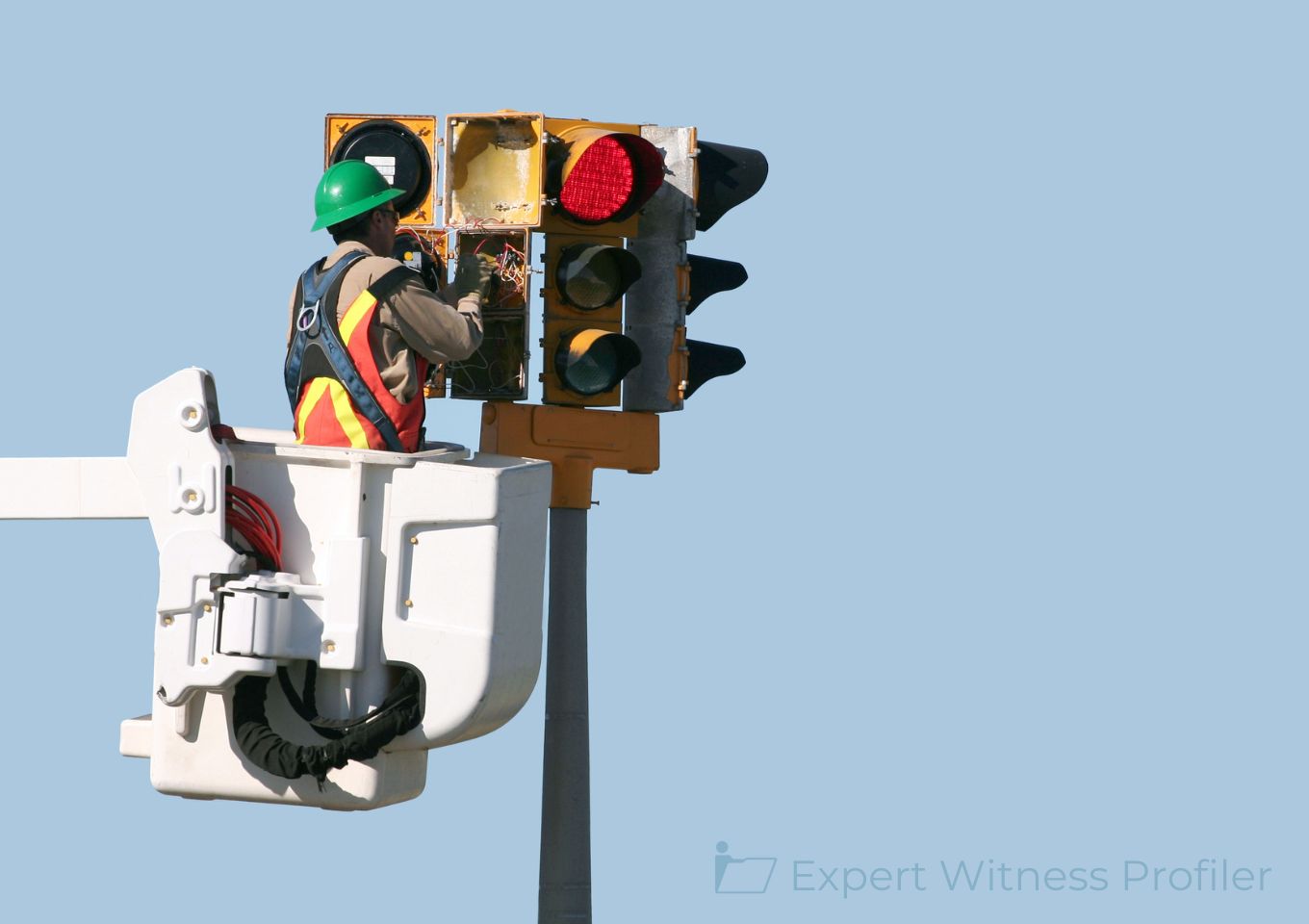
This case involves a vehicle accident that occurred on August 24, 2018 in Thomasville, Georgia. Plaintiff Grady Bryan was performing maintenance on a traffic light while positioned in a suspended lift bucket attached to a Georgia Department of Transportation (DOT) utility boom truck. Defendant David Swisher, a tractor trailer driver working for Defendant Greenwood Motor Lines, struck the DOT truck, causing Plaintiff Bryan to fall approximately 25 feet from the lift bucket to the ground.
The complaint was initially filed by the Plaintiffs in the State Court of Thomas County, Georgia, on December 1, 2020, naming American Lighting, David Swisher, and Greenwood as Defendants. Grady Bryan, one of the Plaintiffs, alleged negligence against all Defendants, asserting that he suffered severe physical and mental injuries from a fall, significantly impacting his ability to work and care for himself. Grady Bryan sought damages exceeding $10.8 million, encompassing medical expenses, lost past and future wages, lost earnings capacity, and past and future pain and suffering. Additionally, Kristi Bryan, another Plaintiff, sought an unspecified award for compensatory damages, citing a loss of consortium resulting from her husband’s injuries.
The Defendants removed the case to federal Court in December of 2020.
Subsequently, Defendants Swisher and Greenwood filed the Motion to Exclude Expert Testimony of Plaintiffs’ accident reconstruction expert, Sean Alexander.on June 1, 2023. The Plaintiffs then filed their Response to Defendants’ Motion. Following that, Defendants filed their Reply.
Accident Reconstruction Expert Witness
Sean M. Alexander has extensive professional experience investigating and reconstructing traffic accidents. He possesses 25 years of experience investigating accidents and 24 years of experience in a special Traffic Division of the Houston County Sheriff’s office. He also has been a consultant in accident reconstruction since 2000. He has completed numerous courses on accident reconstruction in the State of Georgia, and has actively participated in over 1,000 Accident Reconstructions. He has extensive experience both as a student and as a teacher and trainer in the accident reconstruction field, and is accredited by the Accreditation Commission for Traffic Accident Reconstruction. He is currently the President of C.A.R. Crash Analysis & Reconstruction LLC, in which he investigates and reconstructs motor vehicle crashes.
Discussions by the Court
Federal Rule of Evidence 702 governs the admission of expert testimony, requiring the court to perform a “gatekeeping” function. The court must assess the expert’s qualifications, the reliability of their methodology, and the helpfulness of their testimony to the trier of fact. The three-part inquiry involves evaluating the expert’s qualifications, the reliability of their methodology, and the assistance their testimony provides to the trier of fact. While qualifications may include scientific training or experience, it does not guarantee reliability. The court must ensure that the methodology is scientifically valid and can be applied to the facts in question. The exclusion of expert testimony is the exception rather than the rule, and minor flaws may not render it inadmissible. The court reviews these determinations for abuse of discretion, allowing considerable leeway to the district courts.
The Defendants requested the Court to exclude the testimony of Sean Alexander, an accident reconstructionist retained by the Plaintiff. The Defendants argued that Alexander, a non-engineer with over 17 years of experience in a Georgia county sheriff’s department, was contacted by the Plaintiffs about a month after the accident and did not personally conduct inspections or measurements. Instead, two other non-engineers from his office, former law enforcement officers, were sent to inspect the accident scene on his behalf.
The parties did not dispute Sean Alexander’s qualification as an accident reconstructionist. A review of Alexander’s deposition and report affirmed his competence to testify on the relevant matters related to accident reconstruction.
The Defendants argued that Sean Alexander was not qualified to provide testimony on human factors, asserting that he lacked the expertise of a human factors expert. Consequently, according to the Defendants, Alexander could not opine on whether Defendant Swisher had the capability to determine the Georgia Department of Transportation (GDOT) vehicle’s positional location in proximity to the lights for at least 1,000 feet away. They further contended that Alexander was not qualified to testify on whether Defendant Swisher faced “no vertical obstructions for a thousand feet that would have obstructed his view” or express opinions regarding Defendant Swisher’s ability to “see and perceive at night”. Additionally, the Defendants argued that Alexander’s assessment of photographs taken during the daytime with a non-full frame camera was flawed, citing their expert Allen Powers‘ explanation of the potentially misleading nature of zoomed-in photographs.
Upon a thorough review of Sean Alexander’s deposition and his report, the Court determined that neither the report nor deposition extensively focused on human factors to warrant the exclusion of Alexander’s testimony. The primary purpose of Alexander’s report was to reconstruct the accident and illustrate the vehicle positions at the time of impact for the jury’s understanding of the accident site. Importantly, Alexander clarified that he was “to some extent” qualified to offer opinions on human factors but emphasized that he was not providing opinions or calculations on human factors. Instead, his opinion was to demonstrate that clear targets were visible from a distance of a thousand feet, leaving it to Defendant Swisher to convey what he saw before the collision to the jury. Alexander explicitly stated that he would not determine whether Defendant Swisher should or should not have seen targets or stimuli but asserted that his opinion, based on evidence, was that there were “no vertical obstructions” from a thousand feet where Defendant Swisher was. Furthermore, Alexander mentioned referencing studies on reaction time and perception time during report preparation but clarified that he did not provide opinions on when or whether Defendant Swisher “should have recognized the flashing lights” at the time of the accident
Regarding depth perception, Alexander testified that the pictures were taken at 100-foot increments starting at a thousand feet and at 50 millimeters, representing the eye focal length of a person’s vision, not necessarily Defendant Swisher’s. The purpose of the pictures was to show reference-wise depth perception and what was available, not specifically what Defendant Swisher would or should have seen. Alexander clarified that the non-full-frame camera pictures were not intended to provide an exact representation of Defendant Swisher’s perspective but rather to demonstrate the absence of physical obstructions blocking his vision.
After a comprehensive review of Sean Alexander’s report and deposition, the Court determined that the primary purpose of Alexander’s opinion was to illustrate the alignment and positions of the vehicles at impact, as well as the distance and time required for the Peterbilt to avoid colliding with the bucket at the time of the accident. Alexander explicitly stated that he did not provide opinions on human factors or whether Defendant Swisher should have recognized the utility vehicle. Alexander emphasized that it was Defendant Swisher’s responsibility to testify about his visual perception during the approach to the collision and whether he noticed or recognized the utility vehicle. The Court acknowledged the limits of Alexander’s methodology, his explicit delineation of opinions, and his reliance on available evidence to reach findings. The Court found Alexander qualified as an expert in accident reconstruction, noting that any discussion of human factors was marginal and within the bounds of his expertise. For example, Alexander referred to reaction time only in a general sense, relevant to accident reconstruction, demonstrating to the jury that, based on the evidence, there were no physical obstructions in the area at the time of the accident.
Defendants argued that Alexander made an unfounded assumption that Plaintiff Bryan placed the bucket in front of the traffic signal, despite Plaintiff testifying that he positioned it behind or at the back of the signal. In response, Plaintiffs asserted that a review of Plaintiff’s deposition revealed his numerous memory issues regarding the events surrounding his injury. The Plaintiffs argued that Alexander’s report about the bucket’s location remained consistent with the Defendants’ expert opinion regarding the Plaintiff’s distance from the traffic signal.
Regarding the assumption dispute, Alexander’s deposition showed that he testified that the bucket could be either “in front or behind the light,” emphasizing that the tractor-trailer’s position would remain the same. The Court concluded that Alexander did not take a stance on whether the bucket was in front or behind the light, as he stated that it did not alter the tractor-trailer’s position.
Regarding the Defendants’ claim that Alexander only reviewed the police report and Defendant Swisher’s deposition, the Court noted that Alexander’s report listed a comprehensive set of items and references he reviewed to prepare his expert report. Even if, hypothetically, Alexander did not review every deposition or document, the Court observed that his conclusions or opinions would be limited in nature, possibly suggesting that his opinions should carry less weight rather than being inherently unreliable. The Court referenced Daubert and Quiet Tech. DC-8, Inc. v. Hurel-Dubois UK Ltd., 326 F.3d 1333 stating that vigorous cross-examination, presentation of contrary evidence, and careful instruction on the burden of proof are appropriate means of addressing evidentiary concerns. The Court found that Alexander’s opinion or methodology, based on the available evidence, was not deemed unreliable.
Defendants argued that Alexander’s opinion or report would confuse the jury, citing alleged inaccuracies in the location of impact and the use of daytime photographs with a non-full frame camera. In response, Plaintiffs characterized Defendants’ claims as a “generalized, specious announcement” lacking specific explanations.
After reviewing Alexander’s report and deposition, the Court concluded that Alexander’s opinions and findings were beneficial to the jury, particularly in providing a demonstration and insight into the accident site. The Court found that Alexander’s accident reconstruction could aid the jury in understanding the events and assessing the validity of Plaintiffs’ claims.
Held
The Court denied Defendants’ Motion to Exclude Expert Testimony of Plaintiffs’ expert Sean Alexander as the Court could not find any valid grounds for excluding Alexander’s expert testimony. The Court has not arrived on an outcome for this case since the remaining issues involved in this case still await resolution.
Key Takeaways
This case demonstrates several important principles regarding the admissibility of expert witness testimony. First, the Court serves a critical gatekeeping role in assessing expert qualifications, reliability of methodology, and helpfulness to the jury. However, the exclusion of expert testimony is meant to be the exception rather than the rule.
Second, minor flaws in an expert’s reasoning or methodology typically do not warrant exclusion. Instead, issues with the weight of an expert’s opinions are better addressed through cross-examination and presentation of contrary evidence at trial.
Third, expert testimony that touches on issues outside the witness’s core area of expertise is not necessarily inadmissible. Here, even though the accident reconstructionist briefly referenced human factors issues, he made clear he was not offering definitive opinions on the driver’s perceptions. His core testimony reconstructing the accident itself was deemed admissible.
Finally, assumptions made by experts do not necessarily undermine admissibility if they do not affect the overall reliability and methodology. Here, the expert’s assumption about the bucket’s location did not change his analysis of the vehicles’ positions at impact. Allowing the testimony and testing assumptions on cross-examination was appropriate.
This case arises from a car accident that occurred on October 8, 2021 in San Antonio, Texas. Plaintiff Lesley Aguilar was a passenger in a vehicle driven by Defendant Hector Collazo-Diaz. Collazo-Diaz worked as a delivery driver for Defendant DoorDash at the time. He was traveling westbound on Rittiman Road and approached an intersection with IH 35 N Access Road. At the same time, a third party driver David Hidalgo was traveling northbound on the access road. Hidalgo had the right of way to proceed through the intersection. As Hidalgo entered the intersection, Collazo-Diaz failed to yield the right of way and collided with Hidalgo’s vehicle, causing injuries to Aguilar.
Aguilar filed a negligence lawsuit against Collazo-Diaz and DoorDash in June 2022. She alleged that DoorDash was vicariously liable for Collazo-Diaz’s negligence either as his employer or as a joint venture partner. Aguilar also brought direct negligence claims against DoorDash for negligent hiring, training, and supervision of Collazo-Diaz.
Aguilar designated Leonard Vaughan as an expert witness to reconstruct the accident and opine on factors that contributed to it, including alleged traffic violations by Collazo-Diaz. Vaughan had over 50 years of experience in accident reconstruction. He reviewed the accident scene, crash photographs, deposition testimony, and the police report.
After inspecting the accident scene, analyzing crash photographs, reviewing applicable deposition testimony, and evaluating the San Antonio Police Department crash file, Vaughan produced a report expressing the following opinions:
David Hidalgo was driving his 2014 Chevrolet Equinox on the northbound access round of IH-35 as he approached the site of the incident.
According to the police report, Hidalgo stopped at the intersection before crossing Rittman Road.
Hector Collazo-Diaz was driving his 2020 Mitsubishi Eclipse on [sic] westbound Rittman Road as he approached the site of the incident.
Collazo-Diaz slowed down but did not stop at the intersection.
Collazo-Diaz stated in his interrogatory response that there was a power outage at the time of the incident.
Collazo-Diaz testified that he was traveling at the speed limit of 35 approaching the intersection.
As Collazo-Diaz approached the intersection, the headlights of the Chevy Equinox would have been visible entering the intersection to Collazo-Diaz’ [sic] left.
Collazo-Diaz stated that after slowing to 25-30, he proceeded forward without stopping because he didn’t see a reason to stop.
Collazo-Diaz stated that he knows that when traffic lights are not operational, a motorist is supposed to treat the intersection like a 4-way stop.
Collazo-Diaz stated that he did not see the traffic lights because they were obscured by the overpass behind the traffic lights.
Collazo-Diaz also stated that he did not know he was approaching a major intersection, thinking instead that it looked like an exit from the overpass.
Collazo-Diaz should have stopped his vehicle enough to accurately assess the safety of moving through [sic] intersection.
DoorDash, through their driver Hector Collazo-Diaz, violated Texas Transportation Code when Collazo-Diaz failed to appropriately reduce his speed as he approached this collision.
DoorDash argued that several of Vaughan’s Opinions 1-6 and 8-11 were essentially restatements of uncontested facts, contending that these should have been presented to the jury through fact witnesses rather than expert testimony. Furthermore, DoorDash claimed that Opinions 7, 12, and 13 which were related to visibility, duty, and liability, lacked a solid factual foundation and were speculative. They also asserted that Vaughan’s opinions failed to meet the requirements of Rule 403, potentially causing confusion or prejudice that outweighed their value. Lastly, DoorDash objected to Vaughan’s opinion on vicarious liability, asserting that it went beyond his expertise.
DoorDash moved to exclude Vaughan’s testimony in full. It argued the factual recitations were not expert opinions and invaded the jury’s role. It also contended Opinions 7, 12 and 13 were unreliable speculation, impermissible legal conclusions, and should be excluded under Rule 403.
Accident Reconstruction Expert Witness
Leonard D. Vaughan has a Bachelor of Science degree in Law Enforcement and attended the Texas Department of Public Safety Training Academy. Vaughan was an instructor of accident investigation and reconstruction and advanced accident reconstruction at the Middle Rio Grande Law Enforcement Training Academy from 1979 through 1986. He was also an instructor of accident reconstruction from 1979 through 1986 at the Texas Department of Public Safety Training Academy and advanced accident investigation and reconstruction from 1983 through 2004 with the Texas Department of Public Safety. In 1993, Leonard Vaughan received the Director’s Award from the Texas Department of Public Safety. Vaughan has been a charter member of the International Association of Accident Reconstruction Specialists.
Discussions by the Court
The Court first discussed Leonard Vaughan’s qualifications as an accident reconstruction expert. It noted that under Rule 702 and Fifth Circuit precedent, the key factors for determining expert qualifications include professional rank, teaching courses taught by the proposed expert, degrees/certificates, certification by professional associations, whether the proposed expert has been excluded by other courts, conducting studies, taking measurements and collecting data, relying solely on public data, and maintaining expertise. The Court found that Vaughan’s long career, accident reconstruction certificates, teaching experience, and membership in a professional association satisfied these requirements. Thus, the Court was assured Vaughan was qualified as an expert.
Next, the Court addressed DoorDash’s argument that Vaughan’s factual recitations were not true expert opinions and invaded the jury’s role. The Court recognized the risk of an expert merely summarizing facts the jury could understand itself. However, it noted experts were permitted to make assumptions based on facts in the record. Vaughan drew selectively on the record when making assumptions underlying his opinions. As long as the facts were the type accident reconstruction experts rely on, Vaughan could base opinions on them. His recitation of facts did not constitute a credibility determination. Any disputes about his factual assumptions could be addressed through cross-examination and contrary evidence at trial. Thus, the Court found the factual opinions admissible.
The Court then turned to the reliability of Vaughan’s opinions on the visibility of Hidalgo’s headlights and Collazo-Diaz’s duty to fully stop at the intersection. DoorDash argued these lacked scientific methodology because Vaughan did not take measurements, analyze vehicle data, interview the drivers, etc. It claimed his analysis was similar to the excluded expert in another case who relied solely on photos and “common sense.” The Court found Vaughan’s review of photos, the scene, maps, and depositions was sufficiently reliable methodology given his experience for the purpose of admitting his opinion as to the visibility of Hidalgo’s headlights (Opinion 7). The facts relied upon went to the weight, not admissibility, of his testimony. The visibility opinion was also relevant and not unduly prejudicial under Rule 403.
However, the Court agreed with DoorDash that Vaughan’s opinions on Collazo-Diaz’s duty to stop and DoorDash’s vicarious liability were impermissible legal conclusions. Vaughan lacked expertise to opine on vicarious liability based on the employment relationship considering that whether a worker is an employee or an independent contractor depended on “whether the employer has the right to control the progress, details, and methods of operations of the work” as was held in Painter v. Amerimex Drilling I, Ltd. More importantly, his conclusions on the proper standard of care, breach, and vicarious liability invaded the Court’s and jury’s roles. Experts cannot offer legal opinions or instruct on applying law to facts. Thus, the Court granted the motion to exclude the legal conclusions, while denying it as to the rest of Vaughan’s opinions.
Held
In conclusion, the Court granted DoorDash’s motion as to the legal conclusions in Opinions 12-13. It otherwise denied the motion without prejudice to DoorDash raising objections at trial. Vaughan may testify, but certain aspects of his opinions were questionable. His testimony could be excluded or discounted as unreliable depending on the trial evidence.
The Court has not arrived on an outcome for this case since the remaining issues involved in this case still await resolution.
Key Takeaways
This case illustrates the importance of scrutinizing expert qualifications and preventing experts from offering legal conclusions. The Court demonstrated its gatekeeping role under Daubert by thoroughly assessing accident reconstructionist Leonard Vaughan’s credentials before allowing his testimony. His extensive experience satisfied the key qualification factors.
The Court also emphasized that experts may make assumptions based on facts in the record, but those assumptions must have evidentiary support. Critically examining an expert’s factual basis is key.
However, the Court enforced the principle that experts cannot provide legal conclusions. Vaughan’s opinions on the proper standard of care and vicarious liability were impermissible legal conclusions that usurped the Court and jury’s authority. Although experts can opine on ultimate issues, they cannot instruct on how the law applies or offer opinions on legal questions.
In summary, this case highlights the need to qualify experts, vet their methodologies and assumptions, and preclude legal opinions. Vigorous cross-examination at trial can address shaky expert opinions, but courts must act as gatekeepers and exclude testimony invading the legal province. Careful scrutiny of expert foundations, reasoning and conclusions is crucial.