Blog

  • Urban Planning Expert Was Allowed to Opine on Sign Regulations

    Urban Planning Expert Was Allowed to Opine on Sign Regulations

    Plaintiffs Cozy Inn, Incorporated and its owner Stephen Howard sued the City of Salina, Kansas for constitutional violations after the City stopped Howard from painting a display on the side of the building that housed his restaurant.

    The artist Howard hired, Colin Benson, began painting the display on Friday, November 3, 2023. Three days later, however, Salina officials informed him that they believed the display was too large to be permitted under the City’s sign code. Then, because the officials determined that the display was a sign subject to the sign code’s regulations, they told Howard that the display would be too large to qualify for a sign permit and directed him to pause work on the display. The display is a sign, according to Salina, because it “pertains to or references the goods or services for sale.” In particular, Salina’s position is that the display “advertises hamburger, chopped onions, pickles, ketchup, and mustard” by depicting those images as part of the display. 

    Howard and Cozy Inn filed a motion to exclude the testimony of Salina’s expert witness, Mark White.

    Urban Planning Expert Witness

    S. Mark White is a planner and attorney recognized as an expert in zoning and subdivision law, form-based zoning and New Urbanism, land use and takings litigation, housing, development of comprehensive growth management plans, and implementation systems.

    He has a Masters in Urban and Regional Planning and has practiced as a professional planner for thirty-four (34) years.

    Want to know more about the challenges S. Mark White has faced? Get the full details with our Challenge Study report.

    Discussion by the Court

    White sought to offer seven opinions. To begin with, White stated that Salina’s sign code “establishes time, place and manner metrics that are not content-based.” His second opinion was that Salina’s sign code “is supported by substantial and compelling interests in the area of urban planning and code administration.” Moreover, White asserted that the sign code “directly and materially furthers its recited purposes,” “is not vague,” and “has numerous procedural safeguards.” He then opined that the sign code “is reasonable in scope in that it targets issues related to wall signs, without unnecessarily expanding its reach to artistic murals.” And finally, White said that the restrictions in Salina’s sign code “are reasonable, generally accepted regulations of the size, shape, placement, and design of signs.”

    Howard and Cozy Inn moved to exclude White as an expert at trial. To begin with, they argued that White’s opinions invaded the province of the factfinder by applying the law to the facts and making impermissible legal conclusions. Moreover, they argued that White’s opinions are unreliable because they “are based on inappropriate speculation and conjecture” and because they contradict a treatise that White authored.

    Analysis

    The Court agreed that White’s opinions largely mirror the legal standards that the issues in this lawsuit turn on. But it is unnecessary to entirely exclude White as an expert witness because the parties requested a bench trial. The concern that the Plaintiffs raise typically arises in cases that will be tried by a jury because it is important to ensure that experts do not “go so far as to usurp the exclusive function of the jury to weigh the evidence and determine credibility.”

    The Plaintiffs have not identified any authority excluding testimony as an impermissible legal conclusion in a bench trial. As a result, exclusion is not necessary because, to the extent White’s testimony stated impermissible legal conclusions, it can be ignored.

    Moreover, White bases his opinions on the knowledge and experience he has gained as “a planner and attorney recognized as an expert in zoning and subdivision law, form-based zoning and New Urbanism, land use and takings litigation, housing, development of comprehensive growth management plans, and implementation systems.”

    Second, White used reliable methods to evaluate the data he gathered through his experience and reach conclusions based on it. For example, White examined Salina’s sign code and comprehensive plan to explain the city’s purported justifications for its sign regulations are traffic safety, aesthetics, and public health. Then, he reviewed several studies and reports regarding the impact that signs and public art can have on those interests. And he concluded, relying on that data and his expertise, that Salina’s sign regulations served the purposes they are intended to serve.

    Salina’s contention that White’s opinions in this case differ from what he has previously said does not compel a different result. That his views may be seen as evolving or inconsistent goes to the weight, not the admissibility, of his testimony.

    Held

    The Court denied the Plaintiffs’ motion to strike or exclude the opinions of S. Mark White.

    Key Takeaway:

    An expert may base an opinion on facts or data in the case that the expert has been made aware of or personally observed. White reviewed Salina’s sign code, its comprehensive plan, its purported interests, and other municipalities’ sign codes. This gave White sufficient facts and data on which he could rely to opine on the connection between Salina’s sign code and its proffered justification for its speech restrictions.

    Case Details:

    Case Caption: Cozy Inn, Incorporated Et Al V. Salina, Kansas, City Of
    Docket Number: 6:24cv1027
    Court Name: United States District Court for the District of Kansas
    Order Date: November 19, 2025
  • Corrections Expert’s Testimony on the Risk of Harm Excluded

    Corrections Expert’s Testimony on the Risk of Harm Excluded

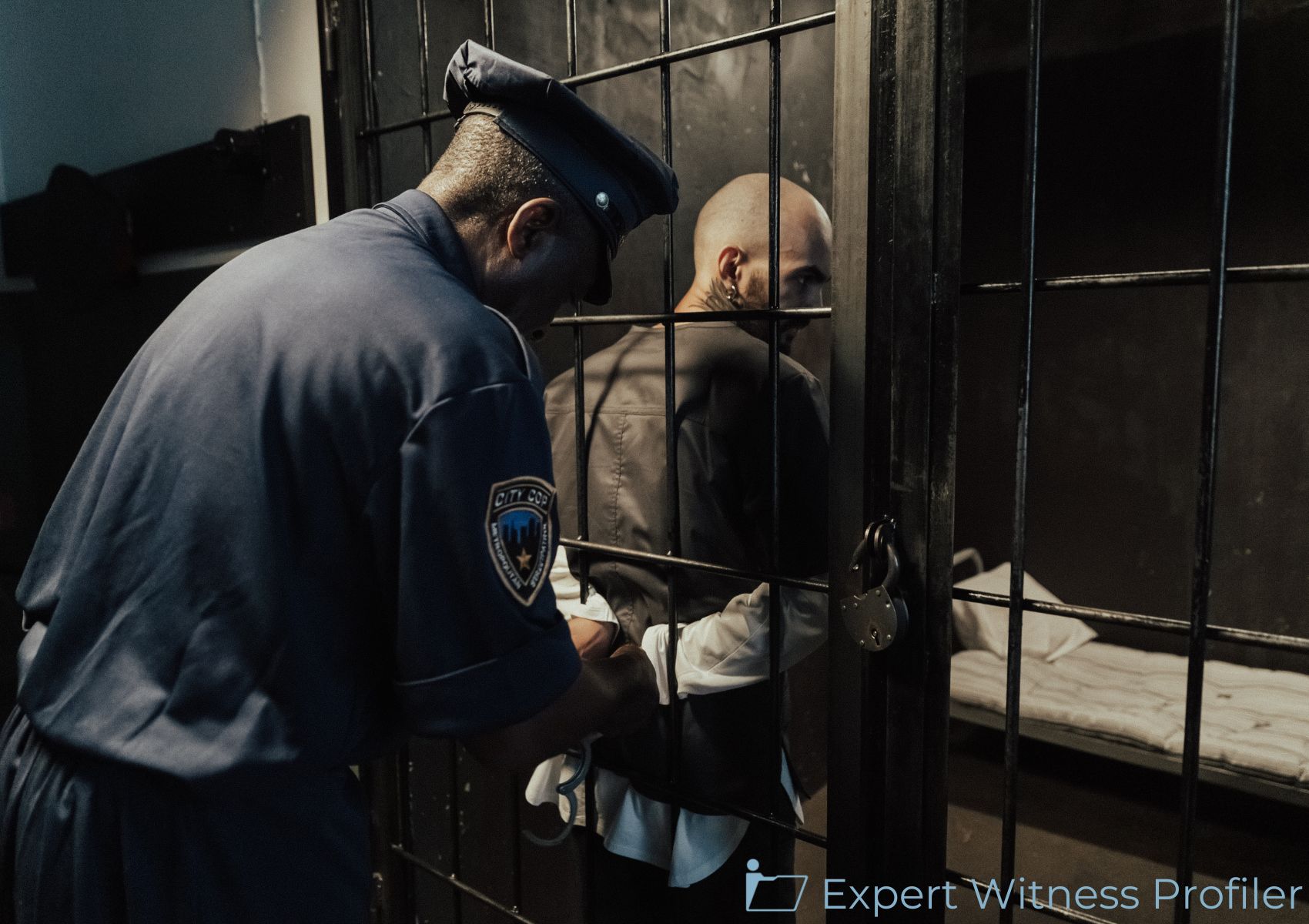
    Plaintiff, Brandon Motton, brought the present lawsuit alleging a Fourteenth
    Amendment claim for failure to protect from harm arising from his detention at the Rock Island County Jail.

    Plaintiff retained Arthur Wallenstein as the jail practices expert in this case. Defendant sought an order barring testimony from Wallenstein.

    Corrections Expert Witness

    Arthur Wallenstein has over 35 years of experience working for governmental agencies with responsibility for inmates in county jails and county correctional institutions.

    Get the full story on challenges to Arthur Wallenstein’s expert opinions and testimony with an in-depth Challenge Study.

    Discussion by the Court

    Wallenstein was retained to evaluate Correctional Officer Cory Ruark’s (“CO Ruark”) conduct when transporting Hayes on March 25, 2021, including but not limited to (1) whether a reasonable officer would have appreciated the risk in placing inmate Brandon Motton and inmate Zaccheus Hayes together in the same space in the Lower N dayroom; (2) the steps that would have abated this risk; and (3) the risk of harm presented to Motton by failing to take these steps.

    Wallenstein opined that Zaccheus Hayes’ March 25, 2021 assault of Brandon Motton was due to the failure of CO Ruark to properly escort, control, and supervise inmate Zaccheus Hayes upon his return to housing unit Lower N.

    However, the parties agreed that jail officials housed Plaintiff in Lower N, an area of the jail “used for inmates who must be separated from other inmates for disciplinary, administrative, or protective custody reasons.” Also, the reasons for this type of confinement (violation of a rule, poses a safety threat to self or others, protective custody, and medical) are not beyond a juror’s common experience or comprehension.

    This case does not involve the use or non-use of restraints outside of handcuffs that may require an expert’s explanation, nor does it involve the relevance a detainee’s prior history may have in determining the risk of harm the detainee presents to others.

    To sum up, the Court found that Wallenstein’s expected testimony was not likely to assist the jurors in resolving any issues of fact.

    Held

    The Court granted the Defendant’s request to bar the testimony of Arthur Wallenstein.

    Key Takeaway:

    In conclusion, expert testimony is not required for jurors to appreciate the fact that detainees may sometimes need to be housed separately from others and that the jail has dedicated an area for that purpose.

    Case Details:

    Case Caption: Motton V. Ruark
    Docket Number: 4:21cv4093
    Court Name: United States District Court, Illinois Central
    Order Date: November 20, 2025
  • Construction Expert’s Testimony on Defective Flooring Excluded

    Construction Expert’s Testimony on Defective Flooring Excluded

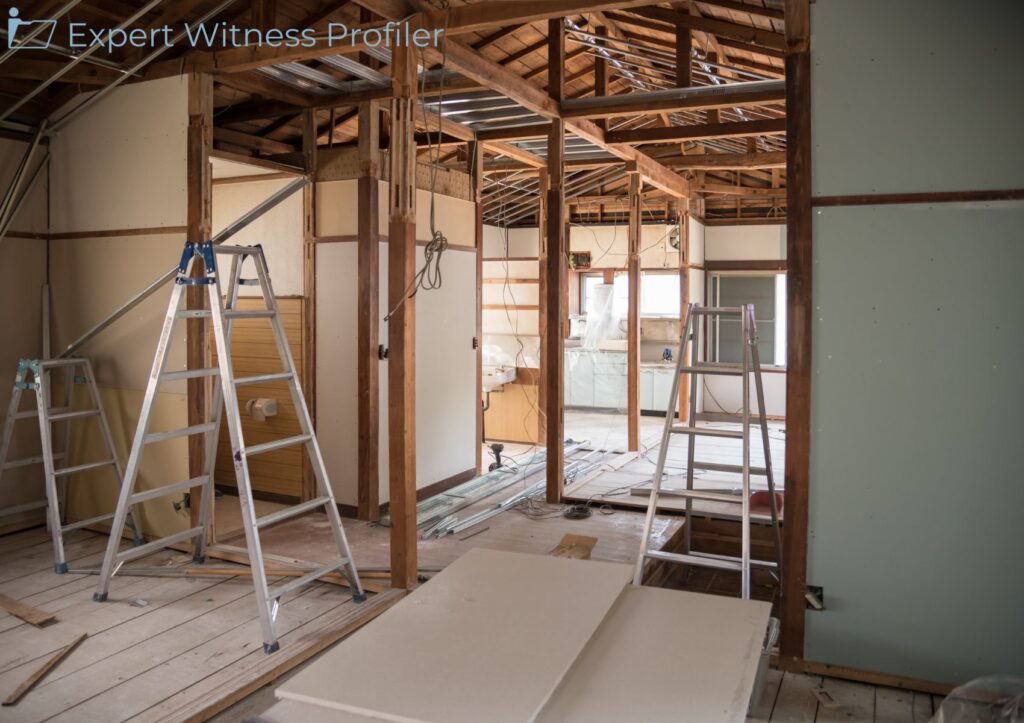
    This dispute arises out of an interior design contract between Plaintiff Michael Lukacs and Purvi Padia Design LLC to provide interior design services for his 25,000 square foot home in New Jersey.

    Lukacs alleged that PPD was contractually responsible to oversee his home renovation project. He further alleged that the installed work is subpar and he suffered damages as a result of inadequate oversight by PPD and poor installation by the subcontractors. According to Lukacs, the work is so flawed that everything must be torn out and replaced.

    Plaintiff hired Paul Johnson (“Johnson”) as his proffered expert in construction and luxury home design.

    On October 30, 2024, Johnson issued his written expert report, concluding, in part, that the flooring was defective due to poor installation. Additionally, during his deposition in this matter, on March 4, 2025, Johnson testified that hardwood damage was caused by installation failure. 

    Defendants filed a motion to preclude the testimony of Johnson. Specifically, Defendants asserted that Johnson’s conclusions are ipse dixit opinions, which conflict with previous opinions in separate cases regarding the same Property, and he failed to identify the basis for his conclusions. 

    Construction Expert Witness

    Paul L. Johnson has decades of experience in the luxury home renovation industry. He is also the founder/operator of two successful construction firms.

    Johnson provided construction services to the 5 General Services Administration of the Federal Government (GSA), maintained many 6 multi-million-dollar sales years, and served as the owner representative for a 13.2- 7 million-dollar construction/renovation project in Bethesda, MD.

    Get the full story on challenges to Paul Johnson’s expert opinions and testimony with an in-depth Challenge Study.

    Discussion by the Court

    The Court found that under Rule 702 and Daubert, the testimony of Johnson was inappropriate and inadmissible.

    Johnson’s October 2024 report consisted of four opinions. To begin with, Opinion 1 stated that PPD’s contract with Plaintiff made PPD the “primary entity responsible for oversight of the entire project.” This opinion, however, offered an improper legal interpretation of the contract as it sought to define Defendants’ duties under the contract.

    Opinion 2 stated that Defendant Purvi Padia was “negligent and was the proximate cause of the significant damage to the Plaintiff’s home.” Opinion 2 suffered from the same fatal defect as Opinion 1 as it is a glaring improper legal conclusion.

    Moreover, Opinion 3 concluded that “Padia and PPD misrepresented her abilities to Plaintiff and hid cost overruns known to her.” Johnson provided no basis for this opinion and his report failed to mention any specific misrepresentation made by PPD or Padia to Plaintiff.

    Lastly, Opinion 4 relates to damages and avers that Plaintiff’s damages include, but are not limited by, the costs to: retain new design professionals; remove and replace all of the hardwood flooring; replace all stonework; and repaint the entire interior of the home. Johnson’s opinion regarding damages is unreliable as it is conclusory and not sufficiently tied to the facts of the case.

    Johnson did not outline any reliable methodology, nor did he point to any industry standard within his opinion. Additionally, the Court emphasized that Johnson’s conclusions regarding damages, specifically the need to replace all of the hardwood flooring, are directly contradicted by another report he issued based on the same site examination in a separate lawsuit. This inconsistency is beyond conducting cross-examination at trial as Johnson’s conclusions are patently unreliable.

    Held

    The Court granted the Defendants’ motion to preclude the testimony of Plaintiff’s expert Paul L. Johnson.

    Key Takeaway:

    As an expert witness, Johnson was prohibited from rendering a legal opinion and could not opine on whether Padia was negligent and that such negligence was the proximate cause of damage to Plaintiff’s home.

    Moreover, a juror can determine whether Defendants made misrepresentations to Plaintiff without the need for the specialized knowledge, skill, or training of Johnson. 

    Case Details:

    Case Caption: Lukacs V. Purvi Padia Design LLC
    Docket Number: 2:21cv19599
    Court Name: United States District Court, New Jersey
    Order Date: November 18, 2025
  • Psychology Expert Was Not Allowed to Opine on PTSD Symptoms

    Psychology Expert Was Not Allowed to Opine on PTSD Symptoms

    Defendant Bryant Wilson (hereinafter “Defendant”) was charged with voluntary manslaughter and possession of contraband in prison, following a prison fight at USP Canaan that resulted in the stabbing death of Defendant’s victim on November 28, 2021.

    Defendant did not contest that the fight happened, nor that the death of his victim resulted; rather, he asserted that he acted in self-defense.

    On November 10, 2025, Defendant notified the Government that he wished to offer the expert testimony of Dr. Stephen M. Timchack, PsyD at trial, pursuant to Rule 702 of the Federal Rules of Evidence. He indicated that Timchak would testify to Defendant’s symptoms consistent with Post Traumatic Stress Disorder (“PTSD”).

    Psychology Expert Witness

    Dr. Stephen M. Timchack, PsyD has extensive training and background in both clinical and forensic psychology.

    Timchack has held faculty positions at Wilkes University, Misericordia University, and the University of Scranton.

    Want to know more about the challenges Stephen Timchack has faced? Get the full details with our Challenge Study report.

    Discussion by the Court

    Psychiatric evidence cannot serve as a defense unless it renders the Defendant legally insane, and even if the Defendant is deemed insane, such evidence is inadmissible unless it negates the mens rea of the crime charged.

    Here, the Government thoroughly analyzed this issue with respect to the mens rea requirement of voluntary manslaughter.

    Defendant did not dispute the Government’s argument; instead, Defendant narrowly focused on admissibility of the psychiatric evidence for purposes of his self-defense claim. Thus, Defendant essentially conceded that his PTSD evidence did not truly negate mens rea.

    The PTSD evidence did not negate mens rea, so it was inadmissible. Furthermore, Defendant’s analogous reasoning did not hold up under scrutiny. As the Government noted,

    “Battered woman’s syndrome focuses on the perceived threat posed by the batterer on the battered, while PTSD, as shown by Timchak’s report, focuses on a more general, perceptual perceived threat posed to the PTSD-sufferer by his surroundings . . . Here, [Defendant] was not under duress or defending himself against his “batterer” or someone who had assaulted him in the past. So [Defendant’s] PTSD is much less probative to the disputed issues here than those in the cases relied on by the Defendant.”

    Even if the Court were to find that PTSD negates the mens rea of voluntary manslaughter in this case, the psychiatric evidence would still be inadmissible as both irrelevant and confusing to the jury.

    Held

    The Court granted the Government’s motion in limine to preclude the expert testimony of Dr. Stephen Timchak.

    Key Takeaway:

    Simply, PTSD does not constitute insanity, nor does PTSD negate the mens rea for voluntary manslaughter. The Court posits, as a theory, that PTSD could have inflamed Defendant’s reaction such that he carried out the killing in the heat of passion. In other words, PTSD likely offers an explanation, not a negation.

    Case Details:

    Case Caption: USA V. Wilson
    Docket Number: 3:24cr239
    Court Name: United States District Court, Pennsylvania Middle
    Order Date: November 17, 2025

    Please refer to the blog previously published about this case:

    Prison Expert Was Not Allowed to Opine on Proper Staff Procedure

  • Computer Forensics Expert’s Testimony on Apple Notes Admitted

    Computer Forensics Expert’s Testimony on Apple Notes Admitted

    This case stems from the brief relationship between two coworkers, Plaintiff/Counter-Defendant, Tony Blevins and Defendant/Counter-Plaintiff, Jolene Read, the nature of which is hotly debated. Both parties previously worked at MainSpring, Inc. (“MainSpring”), an information technology firm located in Frederick, Maryland. It is uncontested that the parties had sexual interactions on multiple occasions in the summer and fall of 2022, but the parties have different accounts of the nature of those interactions.

    Throughout the course of their relationship, Blevins and Read met on several occasions, engaged in consensual sexual intercourse, spent hours on the phone together and exchanged hundreds of private messages with each other via text messages, Microsoft Teams and in a shared Apple note.

    Plaintiff filed a motion to exclude the testimony of Defendant’s expert Ashraf Massoud.

    Computer Forensics Expert Witness

    Ashraf Massoud has over 14 years of experience in state law enforcement, including computer forensics investigations, criminal investigations, and internal affairs investigations. He successfully developed the computer forensic program for a large state government agency in California, which he then managed for 14 years.

    Want to know more about the challenges Ashraf Massoud has faced? Get the full details with our Challenge Study report.

    Discussion by the Court

    Defendant stated that Massoud would testify about the Apple Note at issue in the case, which Plaintiff alleged “facilitated private and intimate communications” between the parties during the 2022 relationship.

    Plaintiff argued that Massoud’s analysis boils down to a text comparison of different versions of the shared Apple Note, which would be within the realm of the jury’s expertise.

    Defendant contended that Massoud’s testimony provided necessary technological explanations to the factfinder regarding what Apple Notes are, the features of Apple Note, and the editability of such Notes.

    Ultimately, the Court agreed with Defendant that the testimony of Massoud should not be excluded in its entirety, but there may be limits on the scope of Massoud’s testimony. Massoud’s report showed that he has the experience and technical expertise required to provide expert testimony on these questions.

    Massoud will also be permitted to testify as an expert on the differences between the text of the different copies of the Apple Note to the extent that the comparison proceeds from the Cellebrite extraction, and requires an explanation of the information provided by that extraction. He may not, however, testify as an expert solely to point out differences in printed documents that are visible to anyone. As Plaintiff pointed out, finding those discrepancies in the text is something the factfinder is more than capable of doing; an expert is unnecessary.

    Held

    The Court granted in part and denied in part the Plaintiff’s motion to exclude the testimony of Ashraf Massoud.

    Key Takeaway:

    The authenticity of the Apple Note that the parties used to communicate is a hotly contested issue. Given that the nature of their communications would provide information about the nature of their relationship, having an expert opine on Apple Notes generally, what kind of information is stored, and how individuals can interact within and edit the Notes would be helpful to the factfinder.

    Case Details:

    Case Caption: Blevins V. Read
    Docket Number: 8:24cv22
    Court Name: United States District Court, Maryland
    Order Date: November 19, 2025
  • Human Factors Expert’s Testimony on Shopping Cart Maintenance Admitted

    Human Factors Expert’s Testimony on Shopping Cart Maintenance Admitted

    This case arises from the injuries sustained by Plaintiff, Jessica Loseke, and her husband while they were shopping at Menards in Omaha, Nebraska. They were loading a “refurbished cart” with bags of water softener when the cart broke and injured Loseke’s knee.

    Loseke filed a motion in limine to preclude the testimony of Defendant’s expert witness, Alex J. Balian, from being admitted at trial. Defendant, Menard, Inc., a Wisconsin Corporation (“Menards”), filed a motion in limine to exclude the testimony of Plaintiff’s expert William N. Nelson, BSME, MS, MBA, and any other evidence of and/or reference to Nelson’s opinions.

    Retail Store Expert Witness

    Alex J. Balian has been in the retail industry as an owner, operator, and consultant for more than 65 years.

    He has testified as a safety and operations expert in all areas of retail
    store operations and public facilities involving supermarkets, commercial buildings, restaurants, warehouse facilities, home improvement stores and specialty stores for more than thirty years.

    He has qualified as a retail safety expert and given expert testimony in state and federal courts in matters pertaining to retail operations throughout the United States.

    Want to know more about the challenges Alex Balian has faced? Get the full details with our Challenge Study report.

    Human Factors Expert Witness

    William N. Nelson has over 20 years of experience in the application of Biomechanics, Ergonomics, Human Factors and Product Development. His consulting experience is very broad: from industrial to sports; from federal government to private enterprise; from medical institutions to aerospace.

    Nelson’s past work has involved customized training for injury prevention; ergonomic job analysis resulting in a rotation schedule which utilized biomechanical, physiological and skill level data; human factors analysis of Cumulative Trauma Disorder in production processes; development of workstation set up and design.

    Get the full story on challenges to William Nelson’s expert opinions and testimony with an in-depth Challenge Study.

    Discussion by the Court

    Opinions of Alex Balian

    Plaintiff argued that Balian’s proffered testimony is not reliable. Plaintiff stated that “Balian’s opinions are primarily based on his personal experience in the retail industry, rather than on any scientific or technical methodology. His report lacks any empirical data or testing to support his conclusions regarding the safety of Menards’ shopping cart inspection procedures.”

    Opinions of William Nelson

    Defendant argued that “Nelson’s opinions are unreliable. He believed that Menards should have some sort of “preventative maintenance” program, and that Menards should hire employees who are trained in welding to inspect carts. These opinions are not based on any retail-industry specific standards but rather drawn based on his own belief.”

    Analysis

    The Court has carefully reviewed the argument of the parties as well as the briefs, the evidence presented, and in particular, the opinions of both Nelson and Balian.

    Nelson is an engineer who has a working knowledge of welding requirements, and Nelson applied engineering principles from his educational background, studies, and work experience. With regard to Balian, the Court likewise found his testimony relevant and of assistance to the trier of fact in this case. Balian has served as a consultant for retail store operations, where he has advised, trained, and executed policies and procedures in supermarkets and other public facilities.

    Held

    • The Court denied Plaintiff’s motion in limine to preclude the testimony of Alex Balian.
    • The Court denied Defendant’s motion in limine to exclude the testimony of William Nelson.

    Key Takeaway:

    Both experts appeared to have the educational knowledge, training and experience to testify in this case. Their testimony appeared to be such as would assist the trier of fact without invading the province of the jury.

    Case Details:

    Case Caption: Loseke V. Menard, Inc.
    Docket Number: 8:23cv537
    Court Name: United States District Court, Nebraska
    Order Date: November 19, 2025
  • Transportation Expert’s Testimony About Safety Considerations Admitted

    Transportation Expert’s Testimony About Safety Considerations Admitted

    This case arises out of injuries sustained by Brandon Jensen on his bicycle when he collided with a semi-truck who made a left turn through his lane of travel. The semi-truck was driven by Defendant Michael Beale. Beale was working for Crete Carrier at the time of the accident.

    The Plaintiffs designated Larry D. Baareman as an expert in traffic reconstruction and transportation. The Defendants filed a motion in limine to exclude the testimony of Baareman. 

    Transportation Expert Witness

    Larry Dale Baareman has several decades of experience driving trucks and training other truck drivers. He has taught State and Federal motor carrier regulations for over 32 years and is also a State of Michigan licensed CDL Instructor. He has 29 years of experience as a State of Michigan certified CDL Examiner.

    Want to know more about the challenges Larry Baareman has faced? Get the full details with our Challenge Study report.

    Discussion by the Court

    The Defendants maintained that Baareman’s testimony should be excluded because it duplicates other testimony, would be a waste of judicial economy, and consisted of conclusory opinions that are not properly within the scope of expert testimony that would aid the trier of fact.

    Given Baareman’s qualifications and experience, the Court found that Baareman could properly offer his opinions about safety considerations while driving a truck, especially concerning left turns and the use of the truck horn during emergency situations.

    But the Court directed the witness to avoid using the term “right-of-way.” The Plaintiffs’ accident reconstruction expert, Dr. Jay Przybyla, used this term while testifying on November 12, 2025, and the Court instructed the jury to disregard that testimony.

    Whether Defendant Michael Beale should have yielded the right-of-way to Jensen is really a question about whether Jensen was “so close to the turning vehicle as to constitute an immediate hazard.” But this is a question of fact for the jury.

    In addition, the application of right-of-way principles to the facts of this case is not so technical or difficult to synthesize that an expert opinion would aid the trier of fact. Accordingly, the Court found that expert witnesses should avoid opining about who had the right-of-way.

    Held

    The Court denid the Defendants’ motion in limine to exclude testimony from Larry Baareman.

    Key Takeaway:

    While the Court has allowed the parties to present accident reconstruction experts to offer their opinions about timing and distance, any opinions about who had the right-of-way would come perilously close to an opinion on the ultimate issue presented to the jury.

    Case Details:

    Case Caption: Jensen V. Crete Carrier Corporation
    Docket Number: 1:23cv105
    Court Name: United States District Court for the District of Utah, Northern Division
    Order Date: November 17, 2025

    Please refer to the blog previously published about this case:

    Transportation Engineering Expert’s Testimony on Accident Reconstruction Admitted

  • Mechanical Engineering Expert’s Testimony on  Liability Admitted

    Mechanical Engineering Expert’s Testimony on Liability Admitted

    In June 2019, Plaintiff Anthony Rivieccio severed two fingers on his left hand while using a 10-inch Ryobi table saw, model number BTS10S (“Saw”).

    Rivieccio introduced the liability expert report of Arthur G. Coons, P.E. Coons claimed that the Saw’s blade height adjustment mechanism was defective. According to Coons, the mechanism was defective because “the gap between the washer and the mounting plate . . . was improperly adjusted during assembly at the factory.”

    Defendants filed a motion to strike the Coons Report in March 2025. They argue that the Court should exclude the Coons Report because Coons’ testing constituted spoliation and fraudulent concealment.

    Mechanical Engineering Expert Witness

    Arthur G. Coons is a licensed professional engineer in the state of New York. He has been a licensed engineer for over 45 years. He has a master’s degree in mechanical engineering from Union College. Coons’ professional career has been centered around designing, building, and installing industrial machinery.

    Want to know more about the challenges Arthur Coons has faced? Get the full details with our Challenge Study report.

    Discussion by the Court

    A. Spoliation

    The decision to impose spoliation sanctions follows a two-step inquiry. First, the Court determines if spoliation has occurred. Then, the Court considers whether and what sanctions are warranted. Spoliation occurs if (1) “the evidence was in the [nonmoving] party’s control”; (2) “the evidence is relevant to the claims or defenses in the case”; (3) “there has been actual suppression or withholding of evidence”; and, (4) “the duty to preserve the evidence was reasonably foreseeable to the [non-moving] party.” The party seeking sanctions bears the burden of proof as to each element of the prima facie claim.

    B. Fraudulent Concealment

    New Jersey law permits Plaintiffs to recover in an independent action for harm caused in a prior proceeding by an adversary’s spoliation.

    To prove the tort, a Plaintiff must establish five elements:

    (1) The Defendant had a legal obligation to disclose evidence in connection with an existing or pending litigation;

    (2) the evidence was material to the litigation;

    (3) the Plaintiff could not reasonably have obtained access to the evidence from another source;

    (4) the Defendant intentionally withheld, altered, or destroyed the evidence with purpose to disrupt the litigation; and

    (5) the Plaintiff was damaged in the underlying action by having to rely on an evidential record that did not contain the evidence Defendant concealed.

    Analysis

    The first, second, and fourth prongs of the spoliation test are easily met. Plaintiff had physical possession of the Saw; the Saw is relevant to this case because it purportedly caused Plaintiff’s injury; and because Plaintiff alleges the Saw caused his injuries, he had a reasonably foreseeable duty to preserve it.

    The third prong, “actual suppression,” merits closer consideration; however, “the mere destruction or loss of evidence in and of itself does not make out a claim for actionable spoliation; more must be shown.”

    Defendants offered no proof of bad faith. They did not allege or argue that Plaintiff and Coons ran tests on the Saw “in order to prevent it from being used by the adverse party.” This record “simply does not have evidence . . . supporting bad faith intent.”

    Defendants, therefore, did not establish actual suppression or actionable spoliation. Their fraudulent concealment claim fell short for the same reason: Defendants failed to prove Plaintiff “intentionally withheld, altered, or destroyed the evidence with purpose to disrupt the litigation.”

    The Defendants stated that, if the Court denied the instant motion, they would seek to depose Coons and file a renewed motion to strike pursuant to Daubert. The Court, therefore, denied the instant motion without prejudice and granted the Defendants leave to depose Coons and file a renewed motion to strike.

    Held

    The Defendants’ motion to strike the testimony of Arthur Coons was denied without prejudice by the Court.

    Key Takeaway:

    A finding of bad faith is pivotal to a spoliation determination. Here, Defendants offered no proof of bad faith. Defendants, therefore, did not establish actual suppression or actionable spoliation.

    Case Details:

    Case Caption: Rivieccio V. Ryobi Technologies, Inc.
    Docket Number: 2:21cv14208
    Court Name: United States District Court, New Jersey
    Order Date: October 31, 2025
  • Cellular Analysis Expert’s Testimony Involving the Use of CDR and TAR Admitted

    Cellular Analysis Expert’s Testimony Involving the Use of CDR and TAR Admitted

    The Defendant, Jerry Ray Brown, was charged with one count of attempted bank robbery.

    Brown ostensibly attempted to take by force, violence, and intimidation from the person and in the presence of bank employees, money belonging to and in the care, custody, control, management, and possession of the FNB Community Bank in Choctaw, Oklahoma. 

    Defendant filed a motion in limine challenging the testimony of Special Agent Andrew Kerstetter.

    Cellular Analysis Expert Witness

    Andrew Kerstetter has been with the Federal Bureau of Investigation in Oklahoma City since October 2007. As a Special Agent with FBI, he is a member of the FBI’s Cellular Analysis Survey Team (CAST) program, is assigned to the Oklahoma City Safe Streets Task Force and Violent Crime Squad and has participated in numerous types of FBI investigations.

    Get the full story on challenges to Andrew Kerstetter’s expert opinions and testimony with an in-depth Challenge Study.

    Discussion by the Court

    Defendant did not appear to contend that any particular methodology employed by Agent Kerstetter failed under Daubert. Rather, Defendant contended that CAST analyses in general are not based on reliable scientific principles and cannot be used to “pinpoint” Defendant’s location. However, as stated above, the government has clarified that the CAST analysis did not pinpoint Defendant’s phone at a precise location, but only placed the phone in a general location.

    Defendant also argued that the CAST analysis “is based on the false assumption that a cell phone connects or is located to the closest cell phone tower at the time a call is placed or received.” However, the government’s explanation of Agent Kerstetter’s CAST analysis did not support Defendant’s argument. 

    Based on the government’s description of Kerstetter’s testimony, the Court anticipated that Kerstetter’s report would analyze the subject phone’s call detail records (‘CDRs’) and timing advance records (‘TARs’) to approximate the distance between the phone and connecting tower in order to provide a general location.

    Other courts have deemed such analyses of CDRs and TARs sufficiently reliable under Daubert

    Held

    The Court denied the Defendant’s motion in limine challenging the testimony of Andrew Kerstetter.

    Key Takeaway:

    As noted by the government, courts routinely allow expert testimony involving cell-tower analyses to determine the general location of a phone, provided that proper foundation for the testimony is laid.

    Case Details:

    Case Caption: USA V. Brown
    Docket Number: 5:25cr188
    Court Name: United States District Court, Oklahoma Western
    Order Date: October 31, 2025
  • Psychiatric Expert Was Allowed to Opine on Occupational Experiences

    Psychiatric Expert Was Allowed to Opine on Occupational Experiences

    Mamnoon Khan (“Khan” or “Plaintiff”) brought this action against Sedgwick Claims Management Services, Inc. (“Sedgwick”), Kim Hottel (“Hottel”), and Colleen Van Tuyl (“Van Tuyl”) (together, “Defendants”), alleging workplace maltreatment and racial discrimination.

    Dr. Joshua Kriegel is a board-certified psychiatrist that has been treating Plaintiff since August of 2023.

    Defendants Sedgwick Claims Management Services, Inc. (“Sedgwick”), Colleen Van Tuyl and Kimberly Hottel filed a motion to disqualify Kriegel from testifying at trial as Plaintiff’s designated expert witness.

    Psychiatry Expert Witness

    Joshua Kriegel, M.D. is a board certified psychiatrist licensed in Massachusetts and faculty member at UMass Chan Medical School.

    He completed his medical degree at Boston University School of Medicine and his adult psychiatry residency at the UMass Chan Medical School.

    Want to know more about the challenges Joshua Kriegel has faced? Get the full details with our Challenge Study report.  

    Discussion by the Court

    On the record before the Court, Kriegel appears only to have drawn the conclusion that Plaintiff suffers from PTSD related to cumulative experiences over ten years in the workplace, including, at least in part, an incident with a coworker that involved a knife.

    Kriegel’s specialized training and knowledge, his role as Plaintiff’s treating psychiatrist, and the evidence he received through his treatment of Plaintiff together appear adequate to support his expert opinion. Even if those experiences predated Plaintiff’s employment at Sedgwick, they are relevant for purposes of damages.

    On the other hand, the fact that he is Plaintiff’s treating psychiatrist did not free him of the requirements of Rule 702 of the Federal Rules of Evidence, which will govern his testimony assuming that he is admitted as an expert.

    Held

    The Court denied the Defendants’ motion to disqualify Dr. Joshua Kriegel as Plaintiff’s expert.

    Key Takeaway:

    Kriegel’s testimony is relevant and helpful to the jury. As Plaintiff’s treating physician, he is uniquely situated to provide testimony regarding Plaintiff’s symptoms and their causes.

    Case Details:

    Case Caption: Khan V. Sedgwick Claims Management, Inc.
    Docket Number: 1:22cv11893
    Court Name: United States District Court, Massachusetts
    Order Date: November 17, 2025