Blog

  • Psychology Expert  Allowed to Opine on the Causes and Effects of Sexual Harassment

    Psychology Expert Allowed to Opine on the Causes and Effects of Sexual Harassment

    Raeshon Strickland filed a lawsuit against Associated Foods Stores, Inc., alleging that she was subjected to sexual harassment and a hostile, intimidating, and offensive work environment. Strickland further contended that she experienced retaliation after opposing or reporting the misconduct.

    Defendant filed a motion to exclude part of the expert report prepared by Plaintiff’s expert, Dr. Louise F. Fitzgerald, Ph.D. while Plaintiff filed a motion to exclude Defendant’s expert Dr. Nancy B. Cohn, Ph.D. under Rule 702

    Psychology Expert Witnesses

    Dr. Louise F. Fitzgerald, Ph.D., is a Professor Emerita at the University of Illinois at Urbana-Champaign with a distinguished career dedicated to understanding and addressing gender-based violence, workplace sexual harassment, and women’s psychological well-being.

    Fitzgerald received her Ph.D. in Psychology from The Ohio State University in 1979, following her M.A. from the same institution and a B.A. in Psychology (magna cum laude) from the University of Maryland. Her academic journey has been marked by a steadfast commitment to investigating sexual harassment, particularly in institutional settings such as academia, the military, and the workplace.

    Want to know more about the challenges Louise Fitzgerald has faced? Get the full details with our Challenge Study report.

    Dr. Nancy B. Cohn, Ph.D. is a fellowship-trained forensic psychologist. Her areas of expertise include evaluations for the criminal courts, family court and civil matters.

    She has a Ph.D. in Clinical Psychology from the University of Utah.

    Get the full story on challenges to Nancy Cohn’s expert opinions and testimony with an in-depth Challenge Study.

    Discussion by the Court

    a. Defendant’s Motion to Partially Exclude

    Fitzgerald’s testimony pertains to “the nature, extent and causation of the [alleged] injures, damages, losses, and harms sustained by [Plaintiff],” among other things.

    Defendant sought to exclude only Part II of her report, which contains “a review of the scientific literature on sexual harassment: its nature, organizational causes, and its psychological consequences to the individuals who experience it.” Defendant did not challenge Fitzgerald’s qualifications, but argues that Part II of the report is not reliable or relevant under Rule 702, and is unfairly prejudicial under Rule 403.

    The Defendant first argued that Part II of Fritzgerald’s report is not relevant because it “provided academic theories of sexual harassment,” with no “analysis specific to [Plaintiff] or [Defendant]” regarding “the alleged emotional distress suffered by Plaintiff because of her employment at AFS,” and because it will not “advance a material aspect of the case.”

    Upon reviewing Part II, the Court concluded it is relevant. The studies found in Part II provide the scientific knowledge upon which Fitzgerald’s conclusions are based in part and are not themselves conclusions about the case. Rather, and in addition to the studies, Fitzgerald’s ultimate opinions rest on “the facts of the present case,” and “methods of clinical science.”

    Here, Part II discussed the causes of sexual harassment, emotional and psychological consequences of sexual harassment, and organizational climate for sexual harassment. Because the scientific studies cited to in Part II go beyond mere discussion of gender stereotypes, the Court found that Part II will help the trier of fact understand issues that are not “well within a layperson’s common knowledge.”

    b. Plaintiff’s Motion to Exclude

    Plaintiff argued that Cohn’s report is unreliable because (1) she did not conduct a psychological evaluation of Plaintiff; (2) she did not ask to review the documentation from Plaintiff’s expert’s evaluation; (3) she did not understand the diagnostic importance of the specificity of certain trauma symptoms; and (4) her report contains certain factual errors and faulty assumptions.

    However, Cohn’s testimony does not seek to diagnose Plaintiff, but instead opines as to the purported flawed reasoning of Fitzgerald. The Court agreed with Defendant that it is reasonable for Cohn to rely on only the relevant documents available in the case, including Plaintiff’s therapy records, Fitzgerald’s report, pleadings, deposition transcripts, and other court filings.

    The Court further agreed with Defendant that the mere fact Cohn did not review the underlying data of Fitzgerald’s evaluation of Plaintiff, alone, does not cause Cohn’s expert report as a whole to be unreliable under Rule 702. 

    Held

    • The Court denied Defendant’s partial motion to exclude the testimony of Louise Fitzgerald.
    • The Court denied Plaintiff’s motion to exclude the testimony of Defendant’s expert witness, Nancy Cohn.

    Key Takeaway:

    Courts have excluded expert testimony involving gender stereotypes on the grounds that such testimony could be understood by a lay person. Fitzgerald’s report discusses causes and effects of sexual harassment in the workplace, as opposed to general stereotypes.

    Case Details:

    Case Caption: Strickland V. Associated Food Stores
    Docket Number: 1:23cv30
    Court Name: United States District Court, Utah
    Order Date: September 30, 2025
  • Expert Testimony on Driver Hiring and Retention Practices Admitted

    Expert Testimony on Driver Hiring and Retention Practices Admitted

    In July 2019, Plaintiff Amy Kessler was driving her car on Interstate 90 when she was rear-ended by a semitruck owned by Defendant McFarland Truck Lines, Inc. that, at the time, was being operated by Defendant Archie Gross within the scope of his employment with McFarland. As a result of the injuries she sustained in the collision, Kessler sued Gross and McFarland.

    Kessler offered several opinions from her trucking expert, Walter Guntharp. With its motion to exclude, McFarland challenged those of Guntharp’s opinions that fell within the following three categories: accident causation, trucking industry hiring standards, and Gross’s driving history.

    Trucking Expert Witness

    Walter A. Guntharp has worked as a truck driver and a truck-driving instructor, and he has held multiple positions relating to safety in the trucking industry over the course of nearly fifty years.

    Want to know more about the challenges Walter Guntharp has faced? Get the full details with our Challenge Study report

    Discussion by the Court

    A. Accident Causation

    Guntharp opined from his review of dashboard camera video capturing the incident that the accident was caused by Gross’s aggressive driving and failure to respond properly to the traffic conflicts produced by the construction zone. McFarland contended that Guntharp’s causation opinions must be excluded because he is not qualified as an accident reconstructionist and, even if he were, his causation opinions are not helpful to the trier of fact.

    Although Guntharp is qualified to provide expert opinions on whether, in the lead up to the accident, Gross was driving in accordance with accepted industry safety standards, it did not follow that Guntharp also has sufficient expertise to opine on what caused Gross to collide with Kessler.

    Even aside from Guntharp’s lack of expertise in accident reconstruction, the Court did not believe that his opinions on the cause of the accident would be helpful to the jury. In arriving at his conclusion that Gross’s unsafe driving was the cause of the crash, Guntharp relied mainly on the dashboard camera video of the accident. That same video will presumably be viewed by the jury. And Kessler will be free to offer Guntharp’s testimony about how Gross’s actions fell short of driving standards. But whether Gross’s substandard driving caused him to rear-end Kessler’s vehicle is a question better left solely to the jury. The jury is fully capable of considering the video footage in light of Guntharp’s testimony as to the applicable safe truck driving standards and determining causation for itself.

    B. Trucking Industry Hiring and Retention Standards

    To demonstrate that McFarland was negligent in hiring and retaining Gross as a truck driver, Kessler has offered several opinions from Guntharp about hiring standards in the trucking industry. McFarland challenged Guntharp’s qualifications to offer these opinions. Further, McFarland contended that Guntharp’s opinions on hiring and retention practices in the trucking industry are unreliable.

    The Court concluded that Guntharp’s long experience in the trucking industry qualifies him to testify as to the industry’s practices for hiring and retaining truck drivers.

    In attacking Guntharp’s methodology, McFarland focuses on his claim “that the standard in the trucking industry for hiring and retaining truck drivers is the ‘rule of three’: reasonably prudent motor carriers do not permit someone to drive a commercial motor vehicle if he has a combination of three or more moving violations and accidents in a three-year period.” McFarland contended that Guntharp’s assertion that the trucking industry adheres to a “rule of three” in hiring drivers is ipse dixit that lacks support from any reliable studies or data. The Court disagreed that Guntharp’s “rule of three” opinion is unsupported ipse dixit. Rather, Guntharp explained that his opinion is based on his years of experience in the trucking industry, as well as his review of the hiring and retention policies of thousands of trucking companies.

    Finally, McFarland asserted that Guntharp’s “rule of three” is undermined by the data on which he relies. It highlighted how some of the trucking company policies that Guntharp reviewed do not automatically disqualify a driver whose preceding three-year record includes any combination of three moving violations and accidents but instead consider the seriousness of the accident or violation. However, that Guntharp’s “rule” might not be ironclad speaks to the correctness of his conclusions rather than the reliability of his methodology.

    C. Gross’ Driving History

    The final category of opinions that McFarland sought to exclude are Guntharp’s commentary on Gross’s prior accident history. Based on his review of Gross’s record of accidents and traffic violations, Guntharp opined that “Gross could not safely operate a commercial motor vehicle because of a lack of caution and attention while driving” and “routinely operated his truck in an aggressive manner that jeopardized the safety of others.” Kessler made no effort to defend these opinions. And the Court agreed that Guntharp’s characterization of Gross as an unsafe driver is pure ipse dixit. Rather than explain how the circumstances of each individual incident demonstrate Gross’s carelessness or aggressiveness, Guntharp seems simply to conclude that because Gross was involved in multiple preventable accidents and received multiple citations, he must have been an inattentive and overly aggressive driver. 

    Held

    The Court granted in part and denied in part McFarland’s motion to exclude certain opinions of Kessler’s expert Walter Guntharp.

    Key Takeaway:

    The Court found that Guntharp is qualified to opine on driver hiring and retention practices in the trucking industry and employed a reliable terminology in concluding that trucking companies generally abide by a “rule of three” in considering a prospective driver’s history.

    Case Details:

    Case Caption: Kessler V. Gross Et Al
    Docket Number: 1:21cv3852
    Court Name: United States District Court, Illinois Northern
    Order Date: September 26, 2025
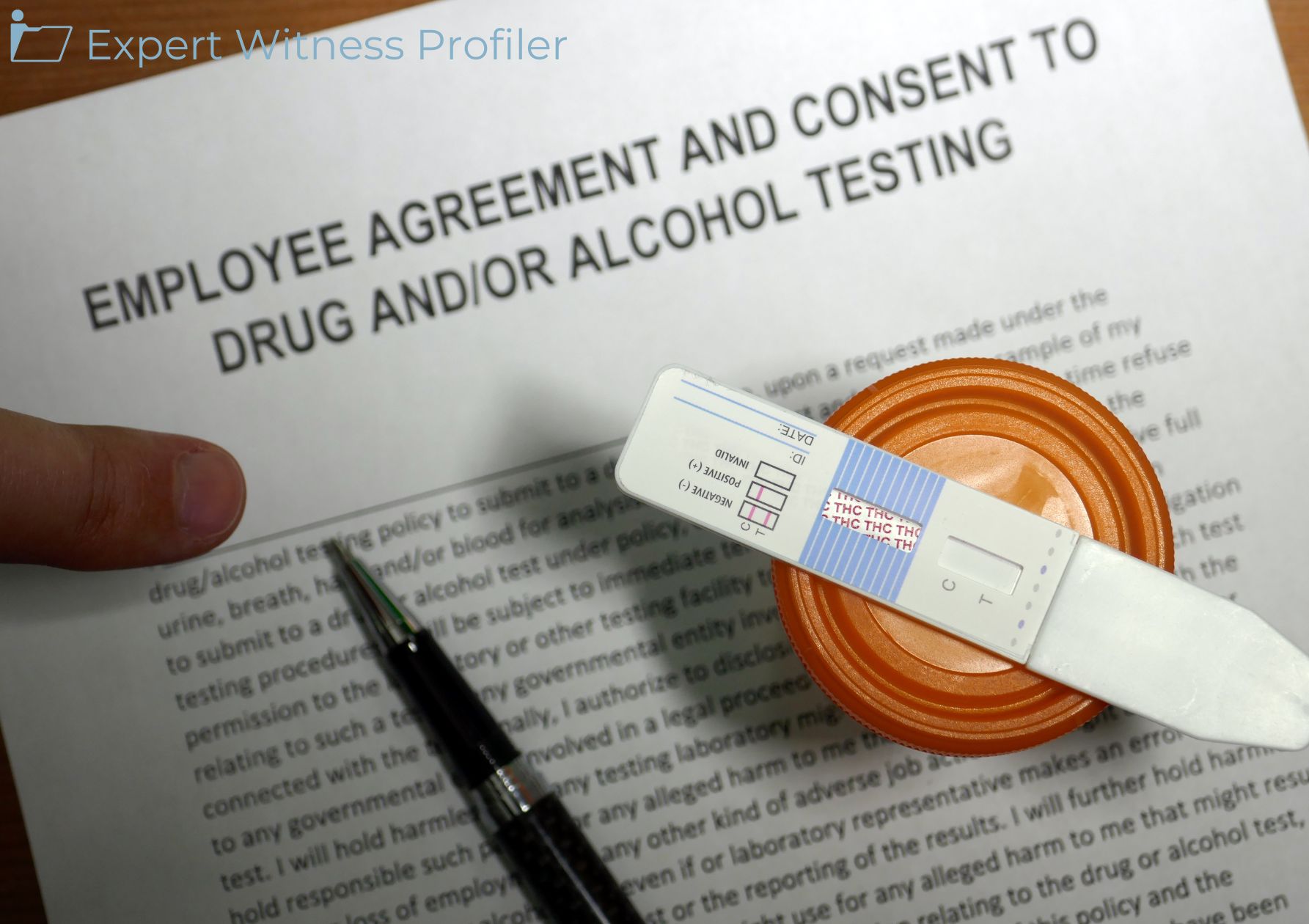
  • Toxicology Expert’s Testimony on Hair Follicle Testing Admitted

    Toxicology Expert’s Testimony on Hair Follicle Testing Admitted

    Plaintiff Darius Danzy filed this suit against CSX Transportation Inc. in this action under Title VII of the Civil Rights Act of 1964, as amended (“Title VII”) alleging “unlawful employment practices on the basis of race.”

    Plaintiff’s claims arise out of a pre-employment drug-screening that Defendant administered to Plaintiff through third party drug testing companies, Psychemedics Corporation (“Psychemedics”) and Omega Laboratories, Inc. (“Omega”).

    According to the Plaintiff, Defendant discriminated against him because of his race as a “Black-African American” by subjecting him to narcotic testing that disparately impacts the “class of Black African Americans” due to the allegedly unreliable and inaccurate method of hair follicle testing used by Defendant through Psychemedics in its pre-employment drug screening.

    The Defendant retained Dr. R.H. Barry Sample to review the testing performed by Psychemedics of Plaintiff’s underarm hair specimen.

    Plaintiff sought to exclude the testimony of Sample and the hair test results provided by Psychemedics pursuant to Rules 702 and 104(a) of the Federal
    Rules of Evidence.

    Toxicology Expert Witness

    Dr. R.H. Barry Sample is a forensic toxicologist with a Ph.D. in the field of Pharmacology from Indiana University and has worked in the field of forensic toxicology for over thirty-five years.

    For over twenty years Sample worked as the Director of Science and Technology for Quest Diagnostics, “one of the largest forensic workforce (workplace) drug testing laboratory providers in the United States.” Sample served two separate four-year terms as a member of the Substance Abuse and Mental Health Services Administration (“SAMHSA”) Drug Testing Advisory Board (“DTAB”) and advised on the SAMHSA drug testing activities and laboratory certification program.

    Sample continues to serve as a commissioner and laboratory inspector for the College of American Pathologists (“CAP”) in its Forensic Drug Testing (“FDT”) accreditation program (“CAP-FDT”). Sample has been licensed or certified by various states as a laboratory director in the area of forensic workforce drug testing.

    Want to know more about the challenges R.H. Barry Sample has faced? Get the full details with our Challenge Study report.

    Discussion by the Court

    Sample opined that Psychemedics’ test results are accurate and scientifically reliable and that Omega’s test results confirmed the accuracy of Psychemedics’ test results.

    Plaintiff primarily brought a relevance-based argument that hair follicle testing itself is legally improper as this methodology is not included in the regulations of SAMHSA.

    A. Relevance

    According to the Plaintiff, SAMHSA in its 2020 Proposed Hair Guidelines explicitly excludes Benzoylecgonine (“BZE”) as a reliable confirmatory marker due to its low concentrations in hair and the absence of validated thresholds.

    Plaintiff contended that “Congress explicitly assigned SAMHSA the exclusive
    role to regulate drug testing in Federally regulated industries through the Omnibus Transportation Employee Testing Act.”

    Sample served two (2), four-year terms as a Member of the SAMHSA Drug Testing Advisory Board which advises the Assistant Secretary of SAMHSA, on the review of the direction, scope, balance, and emphasis of the SAMHSA drug testing activities and the drug testing laboratory certification program.

    The Court found that his experience provided him with unique insights into the scope and requirements of SAMHSA drug testing. Sample acknowledges that “only urine drug testing is possible under DOT rules” and that the hair sample test that Defendant undertook “is not covered by the requirements of the DOT, Federal Railroad Administration (‘FRA’), or [SAMHSA].”

    Sample noted that “neither the DOT nor SAMHSA (which the DOT relies on for technical guidelines) have published final requirements for hair testing.”

    The Omnibus Transportation Employee Testing Act of 1991 directed the Secretary of Transportation to develop regulations for the testing of employees for drugs and alcohol in four sectors of the transportation industry, including railroads.

    Notably while the statute requires that “laboratories and testing procedures for controlled substances, incorporate the Department of Health and Human Services scientific and technical guidelines,” they do not prohibit a private employer in the railroad industry from conducting additional drug testing procedures beyond those prescribed by the DOT.

    In sum, the Court held that Sample’s opinions are outside the common experience of lay persons and, therefore, explains the unique process of hair follicle testing for drug usage.

    B. Reliability

    Plaintiff’s primary objections to Sample’s report focus on its reliability. Specifically, Plaintiff contended that there is a lack of reliable, scientific evidence surrounding the use of BZE as a biomarker in hair testing.

    However, Sample provided a thorough summary of the documents he reviewed in support of his report, as well as the work he undertook in forming his opinions.

    Sample noted that both of the laboratories that tested Plaintiff’s hair follicle “are accredited under the CAP-FDT Accreditation Program for hair testing as well under the New York State Department of Health – Clinical Laboratory Evaluation Program for hair testing” and that they both hold “ISO/IEC 17025 accreditation.”

    Plaintiff’s critique did not make detailed arguments finding fault with specific elements of Sample’s methodology or approach. Rather, Plaintiff appeared to argue that because other sources, including the federal government, have allegedly come to different conclusions, Sample ’s methodologies must be flawed. The Court, however, held that Plaintiff’s objections relate to the weight to be given to Sample’s opinions, not their admissibility.

    The Court found that the Defendant has demonstrated by a preponderance of the evidence that Sample and his report satisfied the standard for expert
    scientific testimony.

    Held

    The Court denied the Plaintiff’s motion to exclude the testimony of Dr. R.H. Barry Sample.

    Key Takeaway:

    The Court’s reliability analysis focuses on the “‘principles and methodology’ employed by the expert, not on the conclusions reached.”

    In addition to his own experience, Sample explained that his opinion is based on “peer-reviewed scientific literature regarding forensic workforce drug
    testing.” Sample also cited peer-reviewed sources in support of his
    conclusions.

    Case Details:

    Case Caption: Danzy V. CSX Transportation, Inc.
    Docket Number: 5:23cv621
    Court Name: United States District Court, North Carolina Eastern
    Order Date: September 19, 2025
  • Consumer Credit Expert’s Opinion on Damages Limited

    Consumer Credit Expert’s Opinion on Damages Limited

    This matter arises out of Plaintiff Tyler Oatway’s July 2023 ill-fated attempt to purchase a car from used car dealer Definitive Motors. Definitive Motors obtained Oatway’s credit reports from the three major credit reporting agencies (“CRAs”) through Defendant 700 Credit, LLC, which is a reseller of consumer information.

    According to Oatway, 700 Credit and Experian Information Solutions, Inc. (“Experian”) falsely reported him as “deceased,” and Oatway was unable to purchase the vehicle. Subsequently, Oatway filed suit under the Fair Credit Reporting Act (“FCRA”). 

    700 Credit filed a motion to exclude the opinions of Oatway’s expert Douglas Hollon.

    Consumer Credit Expert Witness

    Douglas A. Hollon holds a Bachelor of Science in Business Finance. He has received FCRA certifications from the Consumer Data Industry Association, and he has earned additional certifications.

    He has worked in the consumer finance reporting industry since 2005, when he began working for Experian. His work for Experian spanned 14 years from 2005 through 2019 in the National Consumer Assistance Center—Experian’s main dispute processing center—where he helped consumers “resolve their issues” and “[p]rovid[ed] leadership advice to current supervisors.”

    He handled “escalated credit report disputes” submitted on consumers’ behalf by attorneys and government entities. He has also received “specialized training involving fraud (identity theft) disputes” and testified on Experian’s behalf as a Rule 30(b)(6) witness. In addition to his experience at Experian, he has studied “regulatory agency publications, case law, deposition transcripts, company manuals or publications, and other related documents,” contributing to his “extensive knowledge of other Consumer Reporting Agencies’ (CRAs) and Data Furnishers’ credit dispute operations.” Since 2020, Hollon has been the owner of Credit Experts of North Texas, LLC. Over the course of his career, he has “assisted tens of thousands of customers.”

    Want to know more about the challenges Douglas Hollon has faced? Get the full details with our Challenge Study report

    Discussion by the Court

    Hollon opined that 700 Credit “failed to maintain adequate procedures to ensure accuracy in its reports regarding Plaintiff.” Hollon also opined that 700 Credit “does not have any policies or procedures to review consumer reports with a deceased notation before sending the reports to third parties.”

    Hollon’s Opinion is Excluded in Part

    700 Credit’s Arguments

    700 Credit filed a motion to exclude Hollon’s opinions in their entirety for two reasons.  First, it contended that Hollon “improperly offers a legal opinion that the Red Flag Summary qualifies as a ‘consumer report’—a statutory term whose interpretation is reserved for the Court.” Second, 700 Credit avers that Oatway “failed to make [Hollon] available for a deposition after 700 Credit timely noted his deposition to occur before the discovery cutoff.” 

    Because the characterization of the Red Flag Report as a consumer report is a legal issue as set forth above, the Court excluded Hollon’s opinion on that issue. However, since the Court found that the Red Flag Report is a consumer report, it did not exclude his opinions as unreliable solely because they flow from that conclusion.

    The Court also excluded as a legal conclusion Hollon’s opinion that 700 Credit is legally responsible “for the data they report” and did not fulfill its legal obligation by simply forwarding what it receives from another CRA. 

    Turning to 700 Credit’s request that Hollon be excluded as a discovery sanction, the Court found that 700 Credit is not entitled to such relief. 700Credit relies only on Federal Rule of Civil Procedure 37(d)(1)(A)(i) in support of its request, but as the language it quotes makes clear, that rule applies only when “a party or a party’s officer, director, or managing agent . . . fails . . . to appear for that person’s deposition.” Hollon is not a party or other listed person, so this section is inapplicable.

    Even if 700 Credit had relied on an applicable rule—which it did not—it would not be entitled to exclusion. True enough, Rule 26(b) requires parties to make their experts available for deposition. However, “the Rule 37(c)(1) sanction” of exclusion “is not triggered by a violation of Rule 26(b).” 

    Oatway has not met his burden under Rule 702

    The Court found that Oatway has not met his burden under Rule 702 with respect to much of Hollon’s proposed testimony.

    First, much of Hollon’s report is commentary on other evidence in the record. The Court also found that some of Hollon’s opinions are obvious and thus not helpful to the trier of fact, including that 700 Credit had inconsistent information about Oatway because “dead persons do not apply for credit or make payments on loans.”

    Hollon also failed to explain how he reached his conclusions. To begin with, Hollon did not explain what 700 Credit should have done—or required its customers (the furnishers of the information) to do—or whether its process deviated from industry standards. He failed to address altogether the reliability or trustworthiness of the sources from whom 700 Credit obtained its resold information (e.g., Experian and the Social Security Administration). Instead, Hollon pronounced in conclusory fashion that 700 Credit’s practice of transmitting information it received from “various sources” “failed to assure maximum possible accuracy.” 

    In addition, Hollon opined that 700 Credit did not conduct a reasonable investigation when Oatway complained, but again, he did not explain his methodology or his conclusory opinion.

    Last, Hollon opined to some limited degree on the harm Oatway suffered and the harm consumers typically suffer as a result of inaccuracies on consumer reports. Oatway can speak to his own damages, and Hollon’s recitation of his damages is unhelpful (especially considering that Hollon is not qualified to opine on Oatway’s emotional distress), so the Court excluded that portion of Hollon’s damages opinion. The Court found, however, that Hollon is qualified to speak, in general terms and as found relevant at trial, about the sort of damages that are typically caused by errors on consumer reports. 

    Held

    The Court granted in part and denied in part 700 Credit’s motion to exclude the opinions of Oatway’s expert Douglas Hollon.

    Key Takeaway:

    The role of an expert is not to “simply comment on all the evidence,” and an expert’s mere recitation of facts, detached from accompanying analysis, is improper under Rule 701.

    Case Details:

    Case Caption: Oatway V. Experian Information Solutions Inc Et Al
    Docket Number: 2:24cv523
    Court Name: United States District Court, Washington Western
    Order Date: September 19, 2025
  • Orthopedic Surgery Expert’s Testimony on Knee Injury Admitted

    Orthopedic Surgery Expert’s Testimony on Knee Injury Admitted

    Plaintiff Maria Marano slipped and fell while at a Sam’s Club store. She subsequently filed a negligence lawsuit against Defendant Sam’s East, Inc., alleging that she sustained a meniscal tear in her knee as a result of the fall.

    Defendant disputes whether there is a causal connection between the fall and injury.

    Marano offered Dr. Thomas Parent, who surgically repaired her knee, as an expert witness. He testified that the fall caused Marano’s injury. Defendant filed a motion to exclude Parent under Federal Rule of Evidence 702 and Daubert.

    Orthopedic Surgery Expert Witness

    Dr. Thomas Parent, M.D., is a Board Certified Orthopedic Surgeon & Fellow of the American Academy of Orthopedic Surgeons with expertise in hand, wrist, shoulder & knee surgery. With over 25 years of experience, he specializes in regenerative medicine using biologics and stem cell therapy for tissue repair. Parent has a strong academic background with training from University of Pittsburgh School of Medicine and Loma Linda University Medical Center. He is committed to providing personalized care and has a history of community involvement and academic contributions in orthopedic surgery.

    Fortify your strategy by reviewing a Challenge Study detailing grounds for excluding Thomas Parent’s expert testimony.

    Discussion by the Court

    Parent came to his causation opinion after examining Marano, considering her medical history, reviewing MRIs, evaluating clinical symptoms, and ultimately performing surgery. This type of methodology is generally accepted for medical injuries.

    Although the Defendant criticized Parent for not performing a differential diagnosis to exclude alternative causes of the Plaintiff’s alleged injuries, the Court was not persuaded. The Defendant failed to present evidence of any other incident that could have caused the injuries treated by Parent. Nor is there any reason to doubt Parent’s treatment was inadequate to rule out other causes.

    Defendant also claimed that Parent’s opinions are unreliable because (1) they are based solely on what Marano told him; (2) he did not review any medical records that predate the fall; and (3) he failed to rule out any alternative cause. These arguments likewise failed to persuade the Court.

    Parent’s opinions are not based solely on what Marano told him. He has a treatment history with Marano, performed the surgery, and reviewed the only prior medical records (an MRI from 2015) available when forming his opinions. He testified that he would have considered an alternative explanation for the injuries if such information had been presented, but it wasn’t.

    Held

    The Court denied the Defendant’s motion to exclude the testimony of Thomas Parent, M.D.

    Key Takeaways:

    • A physician’s causation opinions need only be “sufficiently related to the information disclosed during the course of Plaintiff’s treatment.”
    • A doctor usually may primarily base his opinion as to the cause of a Plaintiff’s injuries on his history where the Plaintiff has sustained a common injury in a way that it commonly occurs.

    Case Details:

    Case Caption: Marano V. Sam’s East, Inc. Et Al
    Docket Number: United States District Court, Florida Middle
    Court Name: United States District Court for the Middle District of Florida, Fort Myers Division
    Order Date: September 18, 2025
  • Human Trafficking Expert’s Testimony About Shell Companies Admitted

    Human Trafficking Expert’s Testimony About Shell Companies Admitted

    Jane Doe 3, a victim of Jeffrey Epstein’s abuse, sued Darren K. Indyke and Richard D. Kahn in their capacities as the executors of Jeffrey Epstein’s estate for participating in a sex-trafficking venture in violation of the Trafficking Victims Protection Act (TVPA).

    Doe’s rebuttal expert, Jane Khodarkovsky, is a former state and federal prosecutor who served in various roles as a human-trafficking specialist. 

    Doe engaged Khodarkovsky to “offer her expert testimony regarding sex trafficking and how shell companies, funnel accounts, and other tools can be used by gatekeepers, such as lawyers, bankers and accountants, to support and promote sex trafficking networks.” Khodarkovsky opined that “the use of shell companies is one way in which criminal networks, including in sex trafficking, conceal the source and nature of their criminal activity,” and “Defendants had knowledge of red flag indicators that they reasonably should have known were part of an illicit sex trafficking network.”

    Defendants filed a motion to exclude Khodarkovsky’s testimony in full.

    Human Trafficking Expert Witness

    Jane Khodarkovsky spent almost a decade as a state and federal prosecutor. She served as a Trial Attorney and Human Trafficking Finance Specialist for the U.S. Department of Justice, Money Laundering and Asset Recovery Section (DOJ/MLARS) from December 2018- April 2022. For almost three years, Khodarkovsky served as the sole Human Trafficking Finance Specialist for the entire DOJ.

    In January 2023, she founded Chazak Consulting LLC, a sole member limited liability consulting firm focused on providing consulting services related to anti-money laundering and human trafficking, child exploitation, and blockchain related matters.

    Also, Khodarkovsky earned her Juris Doctor from the University of Michigan Law School, and Bachelor in Arts from Barnard College, summa cum laude.

    Fortify your strategy by reviewing a Challenge Study detailing grounds for excluding Jane Khodarkovsky’s expert testimony

    Discussion by the Court

    To begin with, the Court agreed that some portions of Khodarkovsky’s testimony are inadmissible. Whether Defendants knew or recklessly disregarded that Epstein was engaged in sex trafficking is “a central issue in this case.” Khodarkovsky crossed the line by concluding that “Defendants had knowledge of red flag indicators that they reasonably should have known were part of an illicit sex trafficking network.”

    Additionally, as all parties seem to agree, Khodarkovsky may not testify about the scope of the TVPA.

    However, the Court disagreed with Defendants that the rest of Khodarkovsky’s testimony is inadmissible under Rule 702 or 403. Khodarkovsky is experienced in investigating human trafficking, and her opinions regarding how shell companies are used by sex traffickers to enable their operations, as well as how Epstein used his shell companies, will assist the jury in determining whether Epstein was engaged in a sex-trafficking enterprise and, without opining directly on the issue, whether Defendants knew or recklessly disregarded that fact. To the extent that certain financial or bank regulations are relevant to her testimony, she may describe those, given that they inform her opinions on corporate-structuring and transactions.

    Held

    The Court granted in part and denied the Defendants’ motion to exclude the testimony of Jane Khodarkovsky.

    Key Takeaway:

    Whether Defendants knew or should have known that Epstein was engaged in sex trafficking is a question for the jury, not the experts. In other words, Khodarkovsky can’t offer testimony on what Defendants knew or should have known, which is for the jury to figure out.

    Case Details:

    Case Caption: Doe 3 V. Indyke Et Al
    Docket Number: 1:24cv1204
    Court Name: United States District Court, New York Southern
    Order Date: September 15, 2025
  • Survey Research Expert’s Testimony on Economic Harm and Damages Admitted

    Survey Research Expert’s Testimony on Economic Harm and Damages Admitted

    Linda Sunderland and Benjamin Binder, amongst others, filed this putative class action against Defendant PharmaCare U.S., Inc., asserting consumer protection and breach of warranty claims based on its Sambucol product, a dietary supplement that is alleged to contain a proprietary extract of black elderberry.

    Defendant filed a motion to exclude Plaintiffs’ experts, Dr. J. Michael Dennis (“Dr. Dennis”) and Mr. Colin Weir (“Mr. Weir”). Dennis performed a consumer perception survey, a materiality survey, and opined on damages. Weir helped to design and support Dennis’ methodology on damages.

    Survey Research Expert Witness

    J. Michael Dennis is the Senior Vice President of the National Opinion Research Center, which is a survey research organization affiliated with the University of Chicago. Also, Dennis has worked in survey research for more than 20 years, has authored more than 60 articles, and has been found qualified by numerous courts to provide expert opinions on consumer surveys.

    Want to know more about the challenges J. Michael Dennis has faced? Get the full details with our Challenge Study report. 

    Economics Expert Witness

    Colin B. Weir is President at Economics and Technology, Inc., a research and consulting firm specializing in economics, statistics, regulation and public policy. He conducts economic, statistical, and regulatory research and analysis and often testifies as an expert witness before state and federal courts.

    Moreover, his experience includes work on a variety of issues, including: “calculating economic harm and damage, and analyzing liquidated damages provisions; lost profits; false claims; diminution in value; merger/antitrust analysis; Early Termination Fees (ETFs); Late Fees; determination of Federal Excise Tax burden; and development of macroeconomic analyses quantifying the economic impact of corporate actions upon the US economy and job markets.”

    Want to know more about the challenges Colin B. Weir has faced? Get the full details with our Challenge Study report. 

    Discussion by the Court

    To begin with, Defendant raised several grounds for why these experts’ opinions should be excluded. First, Defendant argued that Dennis’ consumer perception survey was unreliable, biased, and misleading because the statements used in the survey did not match the Products’ labels (i.e., “this is the unique black elderberry extract” as opposed to “Sambucol is the unique black elderberry extract”). Thus, Defendant argued that the questions posed to survey participants do not match Plaintiffs’ theory of liability. 

    Second, Defendant argued that Dennis’ materiality survey is similarly unreliable because the design shown to the survey participants was manufactured for the survey and not an image of the actual product or packaging.

    Third, Defendant argued that Dennis’ damages model is irrelevant and unreliable because it is based on the tested claim, not the class claims.

    Finally, Defendant argued that Dennis’ price premium model is irrelevant because it fails to distinguish between injured and uninjured class members, it is not sufficiently defined, and it is based on a “willingness-to-pay” benchmark rather than measuring an actual price premium.

    After reviewing the parties’ arguments and briefing on these issues, the Court agreed with the many district courts in this circuit that the more appropriate place to consider these arguments is on how much weight to give to the competing expert testimony, rather than their admissibility.

    Held

    The Court denied the Defendant’s motion to exclude the testimony of J. Michael Dennis and Colin Weir.

    Key Takeaway:

    Many of the arguments for exclusion of the testimony is not on whether the types of surveys are acceptable, but whether certain criteria used in the respective surveys pass muster. However, the Ninth Circuit has stated that as a general matter, “challenges to survey methodology go to the weight given the survey, not its admissibility.”

    Case Details:

    Case Caption: Sunderland Et Al V. Pharmacare U.S., Inc. Et Al
    Docket Number: 3:23cv1318
    Court Name: United States District Court, California Southern
    Order Date: September 11, 2025
  • Financial Analysis Expert’s Testimony on Employee Compensation Admitted

    Financial Analysis Expert’s Testimony on Employee Compensation Admitted

    This case arises from a contract dispute between Plaintiff Alorica Inc. and Defendant Tech Mahindra (Americas) Inc. concerning customer service outsourcing for AT&T.

    Defendant asserted that Plaintiff’s conduct caused damages, including employee time lost to negotiating an amendment, addressing issues from the alleged breach, and repairing Defendant’s AT&T relationship.

    To quantify these damages, Defendant retained David N. Fuller, a Chartered Financial Analyst, Accredited Senior Appraiser, and Certified Fraud Examiner. Fuller relied on payroll records for three employees and a declaration from Defendant’s corporate representative identifying the number of workdays those employees devoted to the relevant tasks. Using this information, Fuller calculated daily salary rates and multiplied them by the days reported, resulting in a damages figure of $33,900.77.

    Plaintiff filed a motion to strike and exclude Fuller’s testimony under Federal Rule of Evidence 702. Plaintiff contended that Fuller merely performed basic arithmetic without applying specialized expertise, arguing that his testimony would improperly lend undue credibility to Defendant’s damages claim.

    Financial Analysis Expert Witness

    David Neil Fuller is a Chartered Financial Analyst, Accredited Senior Appraiser, and Certified Fraud Examiner. He is currently employed as the President of Value Incorporated (“VALUE”), a financial valuation consulting firm located in Irving, Texas.

    His educational background includes a Master of Business Administration degree from Southern Methodist University with a concentration in Finance, and a Bachelor of Arts degree from Austin College with a concentration in Economics.

    Get the full story on challenges to David Fuller’s expert opinions and testimony with an in-depth Challenge Study

    Discussion by the Court

    I. Admissibility Under Rule 702

    A. Fuller is qualified

    First, there is no dispute that Fuller is a Chartered Financial Analyst, Accredited Senior Appraiser, and Certified Fraud Examiner. Plaintiff did not challenge his credentials directly but argues that he failed to apply them in forming his opinions.

    Therefore, the Court held that Fuller’s background and certifications establish that he is qualified under Rule 702 to provide opinions on damages and financial analysis.

    B. Fuller’s specialized knowledge will help the trier of fact

    Plaintiff contended that his opinion is unhelpful because it is limited to “elementary-level arithmetic” requiring no expertise. Defendant responded that even simple calculations can be admissible when framed by specialized knowledge, and that Fuller’s testimony will aid the jury by organizing payroll data and time allocations into a coherent damages model. The Court agreed that Fuller’s testimony may assist the trier of fact by explaining how employee salaries and reported workdays translate into a damages figure. That the math is simple does not, by itself, render the opinion inadmissible.

    C. Fuller’s testimony is based on sufficient facts and data

    Fuller relied on payroll records and the Franklin Declaration to determine employee compensation and time spent on tasks. Alorica argued that Fuller failed to verify these sources and simply accepted the numbers provided.

    The Court found that Fuller’s reliance on payroll records and a sworn declaration provided a sufficient factual basis to satisfy Rule 702(b). The Court agreed that any challenge to those inputs’ reliability spoke to the weight of the testimony, not its admissibility.

    D. Fuller’s testimony is the product of reliable principles and methods reliably applied to the facts of the case

    Fuller divided bi-weekly salaries by ten to calculate daily rates and multiplied those rates by the number of workdays listed in the Franklin Declaration, yielding a damages estimate of $33,900. Plaintiff characterized this as parroting numbers without methodology, while Tech Mahindra framed it as applying financial expertise to convert compensation data into damages.

    The Court concluded that Fuller’s methodology is straightforward but reliable for the limited purpose it serves. 

    II. Admissibility Under Rule 403

    Plaintiff argued that permitting Fuller to testify would unfairly prejudice the jury because cloaking simple arithmetic in the authority of expert testimony would lend improper weight to Defendant’s damages claim. Defendant responded that any weaknesses in Fuller’s analysis can be explored on cross-examination and that the testimony poses no risk of confusion or undue prejudice.

    The Court agreed with Defendant. Fuller’s testimony, though based on simple calculations, is probative of Defendant’s damages theory. Concerns about the simplicity of the arithmetic are properly addressed through cross-examination and competing evidence, not exclusion under Rule 403.

    Held

    The Court denied Plaintiff Alorica Inc.’s motion to strike and exclude Defendant Tech Mahindra (Americas) Inc.’s expert David Fuller.

    Key Takeaway:

    The Court found that Fuller applied his methodology consistently and transparently to the facts. While his calculations are not complex, they are replicable and tied to the data sources identified. To the extent Plaintiff believed Fuller should have done more independent verification, those criticisms are better addressed through cross-examination than exclusion.

    Case Details:

    Case Caption: Alorica Inc. V. Tech Mahindra (Americas) Inc.
    Docket Number: 4:24cv30
    Court Name: United States District Court for the Eastern District of Texas, Sherman Division
    Order Date: September 05, 2025
  • Safety Engineering Expert’s Testimony on the Structural Failure of the Ladder Excluded

    Safety Engineering Expert’s Testimony on the Structural Failure of the Ladder Excluded

    Plaintiff Andrew Christensen alleged that he was injured while working at Plaintiff Jessica Lawrence’s home, using an aluminum stepladder, Model W-2112-065, which was manufactured by Defendant Louisville Ladder, Inc. Plaintiff Lawrence had purchased the Ladder from Walmart, Inc.

    Christensen asserted products liability claims against Louisville Ladder based on the alleged injury.

    Louisville Ladder filed a motion to exclude the testimony of Plaintiff Christensen’s expert, Frank L. Burg.

    Safety Engineering Expert Witness

    Frank Lewis Burg is an expert in various domains, particularly general industry and construction safety and health, alongside expertise in ergonomics. His investigative experience spans injuries related to cranes, rigging, road construction accidents, falls, railroad incidents, electrical mishaps, machine guarding, gas and oil well incidents, hazardous chemicals, and cases involving human factors engineering and FELA (Federal Employees Liability Act). Beyond investigations, Burg conducts training seminars, OSHA-style audits, and offers expert testimony in his field of expertise.

    Want to know more about the challenges Frank Burg has faced? Get the full details with our Challenge Study report.  

    Discussion by the Court

    Defendant argued, among other things, that Burg should be excluded because he is not qualified to render an opinion on a manufacturing defect.
    Defendant also argued that his opinions have insufficient factual foundation, are not founded in proper methodology, and only provide bottom-line conclusions without sufficient support. Finally, Defendant argued that his testimony should be excluded because he has disclosed a preliminary report only.

    Burg, a registered professional safety engineer with Accident Prevention Corporation concluded his report by writing that Christensen’s injuries were “caused by a structural failure of the Louisville Ladder. There is no indication that Christensen did anything that would cause the catastrophic failure seen in the photographs.”

    Burg characterized his report as preliminary, and at his deposition, he testified that his opinions were not final. He further admitted during his deposition that he added a statement to the report that he normally does not, reserving the right to have the Ladder examined further and potentially change his opinions because he “wrote [the] report with very limited information.” He also stated that should this case go to trial, he would want to have the Ladder tested and obtain testimony from a metallurgist or structural engineer.

    Analysis

    Burg is a qualified expert in safety practices and hazard prevention, but he is not a design expert or metallurgist. He lacked the education, training, and experience to offer an opinion that there was a construction defect in the Ladder that caused the accident.

    Moreover, Burg did not visit the scene of the accident. He did not perform any testing or complete his own investigation. In fact, he did not even inspect the Ladder. Instead, he talked to Plaintiff Christensen and relied on materials provided to him. In other words, Burg’s opinions that the Ladder had a construction defect and the defect caused Plaintiff Christensen’s injuries are based on photographs and interviews

    The Court found that in forming his opinions, Burg did not employ a proper methodology, and the opinions lacked sufficient support.

    Held

    The Court granted Defendant Louisville Ladder, Inc.’s motion to exclude the testimony of Frank Burg.

    Key Takeaway:

    Burg did not apply a methodology, and he failed to provide any explanation of the analysis he used in forming his opinions that the Ladder had a construction defect, and the defect caused the Ladder to collapse, other than to state that there is no other possible cause.

    In short, there is nothing within his report that relies upon any specific method or scientific principles that would be otherwise unavailable to the trier of fact. Burg is being offered to give the opinions that the damage to the Ladder was not merely from a fall, but rather that the Ladder collapsed, and the collapse was caused by a construction defect.

    Case Details:

    Case Caption: Christensen Et Al V. Louisville Ladder, Inc. Et Al
    Docket Number: 4:23cv136
    Court Name: United States District Court, Missouri Eastern
    Order Date: September 05, 2025
  • Accounting Expert’s Testimony on Business Expenses Admitted

    Accounting Expert’s Testimony on Business Expenses Admitted

    De Tomaso Automobili Holdings N.A. LLC (“De Tomaso”) creates, develops, and sells luxury automobiles. Norman Choi is its current owner. Ryan Berris is its former Chief Executive Officer and Chief Marketing Officer. Berris sued Choi and De Tomaso for, inter alia, breach of contract and wrongful discharge. 

    Berris sued Choi and De Tomaso for, inter alia, breach of contract and wrongful discharge. 

    Defendants filed a motion to exclude testimony purporting to show that Berris’ travel expenses were reasonable. De Tomaso did not have a written, formal expense policy in place when Berris incurred these expenses. Berris proposed to offer the expert testimony of John Imperiale, a certified public accountant who currently serves as a Senior Director in the Expert Services practice at a financial and risk advisory firm, to give the jury “additional context and guidance regarding what may constitute proper business expenses.”

    Accounting Expert Witness

    John T. Imperiale has over 14 years of experience advising clients and managing engagement teams in the areas of forensic accounting investigations, financial reporting, asset tracing, financial fraud investigations, and quantification of damages. Imperiale is also experienced in accounting and auditor malpractice matters and related Generally Accepted Accounting Principles (GAAP) and Generally Accepted Auditing Standards (GAAS) guidance and damages.

    Prior to joining Kroll, he was an associate in the audit practice of a national public accounting firm. He received his B.B.A in finance and accounting from Villanova University and his M.B.A. from the Fordham University Graduate School of Business.

    Want to know more about the challenges John Imperiale has faced? Get the full details with our Challenge Study report.

    Discussion by the Court

    Defendants argued that the Court should exclude Imperiale’s opinions because he merely “regurgitates” what Berris has told him, and because his opinions are not based on reliable principles or methods. 

    As to Imperiale’s methods, because De Tomaso did not have an expense policy in place, Imperiale used “professional accounting and taxation guidelines issued by the Financial Accounting Standards Board (‘FASB’) and the U.S. Internal Revenue Service (‘IRS’) in order to provide a general framework for what are generally and customarily accepted as valid business expenses.” Under these guidelines, Imperiale opined that “the principal analysis of whether a particular expense is considered to be a ‘business expense’ turns on if it is ‘common and accepted in your industry’ and ‘helpful and appropriate for your trade or business,’” as well as whether “the expense was incurred in ‘carrying out other activities that constitute the entity’s ongoing major or central operations.’”

    Although the IRS and FASB guidelines do not directly control the issues in this case, absent a written expense policy, the jury has no benchmark against which to measure the reasonableness of Berris’ expenses. The Court agreed with Berris that insight into what constitutes a business expense under tax and accounting standards may assist the jury in drawing the line between business and personal expenses in this context, which in turn will assist the jury in determining whether Berris breached his fiduciary duty to De Tomaso by reimbursing certain expenses.

    As for Defendants’ argument that Imperiale is merely bolstering Berris’ testimony, although he relies in part on Berris’ factual statements, the Court held that Imperiale does not merely “regurgitate[] what a party has told him,” but rather analyzes whether Berris’ expenditures are reasonably considered business expenses if Berris’ factual assertions are taken as true.

    Held

    The Court denied the Defendants’ motion to preclude the testimony of John Imperiale.

    Key Takeaway:

    The Court will put in place appropriate guardrails at trial to ensure that Imperiale isn’t simply acting as a mouthpiece for otherwise inadmissible evidence and isn’t vouching for Berris’ credibility. Imperiale should make clear that he was asked to assume the truth of the stated reasons for the various expenses, and that he is not testifying as to the veracity of those reasons.

    Case Details:

    Case Caption: Berris V. Choi Et Al
    Docket Number: 1:23cv4305
    Court Name: United States District Court for the Southern District of New York
    Order Date: September 04, 2025