Blog

  • Emergency Medicine Expert’s Testimony on Jail Policies Admitted

    Emergency Medicine Expert’s Testimony on Jail Policies Admitted

    Jeff Trevillion, as Special Administrator for the Estate of Louis Perales,
    deceased (“the Estate”), filed a claim for cruel and unusual punishment against the arresting officer and the jail staff in their individual capacities, and Sheriff Scott Owen (“Owen”) in his official capacity as Sheriff of Washington County, Oklahoma.

    The Estate alleged that the Defendants’ policy of placing intoxicated inmates into holding cells until they “sobered up” constituted a deliberate indifference to Louis Perales’ serious medical needs.

    Owen filed a motion to exclude the testimony of Michael Jobin, M.D., an expert witness called by by the Estate.

    Emergency Medicine Expert Witness

    Michael J. Jobin, M.D., has been employed as a board-certified emergency room physician throughout his career, during which he has evaluated intoxicated patients and provided medical clearance examinations for patients in law enforcement custody. In that role, Jobin regularly decided whether arrestees who were intoxicated with alcohol or other drugs were fit for incarceration. 

    Want to know more about the challenges Michael Jobin has faced? Get the full details with our Challenge Study report.  

    Discussion by the Court

    Jobin is qualified to testify as an expert

    Owen argued that Jobin is not qualified to testify as an expert about either Perales’ medical needs or the jail staff’s actions and policies regarding intoxicated inmates because Jobin lacked specialized training in cardiovascular diseases or drug intoxication and has never worked in a jail or provided medical care in a jail setting. 

    However, Jobin is a board-certified emergency room physician who has provided medical clearances for patients in law enforcement custody throughout his career. 

    Jobin served on the Colorado Board of Medical Examiners, where he reviewed complaints made by prisoners about the medical care they received while in prison. 

    Jobin has previously served as an expert witness in cases in which he testified about inmates and medical care. In those instances, he was asked to review the basic emergency care policies of jail facilities, which he evaluated relative to the jail’s medical capabilities. In this case, he intended to offer his opinion that adequate medical evaluation procedures and emergency medical treatment for acute intoxication would have prevented Perales’ death by ensuring he was treated and monitored in a hospital.

    Further, while Jobin has not worked in a jail and is not trained regarding jail policies, his proposed testimony covers only whether the jail’s policies followed “normal medical practice” for an emergency setting, one which he compares to a “low-level emergency department.”

    The Court held that Jobin’s testimony on the jail’s policies is limited to his opinions about proper emergency medical policies and practices, and is therefore within the reasonable confines of his forty-five years of expertise in emergency medicine, including working as an emergency medicine professor and physician in multiple hospitals’ emergency departments and evaluating the medical needs of arrestees.

    Jobin’s opinions are reliable

    Owen argued that the expert opinions Jobin offered are unreliable because they are not based on sufficient facts or data and because some of the materials that he considered were unreliable.

    Jobin reviewed the following facts to reach his opinion: Perales’ medical records, which included the Oklahoma State Bureau of Investigation report, ambulance records, and autopsy report; Perales’ jail records; the jail’s general policies; the jail’s policies relating to Perales; the police body camera footage from Perales’ arrest showing the EMTs attempting to take Perales’ blood pressure; the officers’ deposition testimony that Perales was cleared in the field for transport to the jail but without formal paperwork; and the jail video showing Perales flailing his arms in the holding cell. From these materials, Jobin concluded that adequate emergency medical care and procedures likely would have prevented Perales’ death. 

    The Court is persuaded that the facts that Jobin examined to develop his expert opinion are sufficient, even if not exhaustive. Jobin relied on his decades of experience in emergency medicine in assessing whether the facts showed that adequate procedures were in place to care for Perales.

    Jobin may not render legal opinions

    Owen argued that Jobin’s statement in his deposition that Perales’ death was caused by “deliberate indifference” is a legal opinion that Jobin is not qualified to offer.

    During his deposition, Jobin testified that he thought there was “deliberate indifference” in the jail’s actions in this case because the jail staff did not show proper regard to Perales’ well-being. Jobin admitted that he did not know an exact legal definition of “deliberate indifference,” and that he learned this phrase from another case in which he served as an expert.

    “Deliberate indifference” is an ultimate issue of law in this case, and its use by a witness would likely confuse the jury as to its role.

    As a result, the Court precluded Jobin from using the phrase “deliberate indifference” in his testimony.

    Held

    The Court granted in part and denied in part the Defendant Scott Owen’s motion to exclude the testimony of witness Dr. Michael Jobin.

    Key Takeaway:

    Jobin’s opinions are within the “reasonable confines of his subject area” of emergency medicine. His experience as an emergency room physician means that he is familiar with standard emergency medicine procedures and how to treat common conditions. Even if Jobin is not an expert in cardiology or drug intoxication specifically, he has made assessments about whether arrestees are fit for incarceration or need medical treatment outside of the place of incarceration. This necessarily involves assessing whether an arrestee’s medical condition will become dangerous if not treated in an acute care setting.

    Case Details:

    Case Caption: Trevillion V. Owen Et Al
    Docket Number: 4:22cv473
    Court Name: United States District Court, Oklahoma Northern
    Order Date: October 10, 2025
  • Accounting Expert’s Opinions on the Potential Damages Admitted

    Accounting Expert’s Opinions on the Potential Damages Admitted

    Go Global Retail sued Defendants Dream On Me Industries and Dream On Me, Inc. (collectively DOM) for misappropriation of trade secrets, breach of contract, and unjust enrichment.

    Go Global is a “private equity and brand investment firm” that often buys up “distressed retail assets.” It uses its in-house research and industry know-how to try to spot profitable opportunities. When it learned that Bed Bath & Beyond planned to auction off assets of its subsidiary, buybuy BABY (BBBY), Go Global started to structure a bid.

    During that process, Go Global—together with DOM and at least thirty potential investors—were granted access to a data room that contained hundreds of documents with BBBY’s financial information, so that they could conduct due diligence. 

    Using that data, Go Global developed three alleged trade secrets: its Financial Model, its Bidding Strategy, and its Technology Plan. 

    But the alleged trade secrets alone weren’t enough to win a bid: Go Global needed financing. It eventually turned to DOM. After the parties talked about bidding on BBBY’s assets jointly, Go Global sent DOM a nondisclosure agreement (NDA), and DOM’s Chief Marketing Officer, Avish Dahiya, signed it.

    Like Go Global, DOM already had access to BBBY’s historical financial data. But it didn’t have access to Go Global’s Financial Model. So after DOM signed the NDA, it downloaded the contents of Go Global’s data room, which included the Financial Model.

    DOM filed a motion to exclude the opinions of Go Global’s expert Alan Schachter.

    Accounting Expert Witness

    Alan A. Schachter, CPA, ABV, CFF, CVA, CFE has been a senior executive and partner in various consulting and accounting firms for 40 years. His experience includes assisting government agencies, private companies and their counsel with complex valuation, economic damages, and compliance issues. During his professional career, he has been very active in several types of matters that relate to intellectual property, healthcare, financial services, franchising, white-collar criminal defense, personal injury, matrimonial, wrongful termination, partnership disputes, and other civil & criminal matters.

    Want to know more about the challenges Alan Schachter has faced? Get the full details with our Challenge Study report

    Discussion by the Court

    DOM asserted that because Schachter’s damages model relied on terms of a planned joint bid that are “entirely speculative,” it flunked the Daubert test. 

    But the factual basis is the NDA itself: If DOM had complied with the Non-Circumvention Obligation, then DOM would have had to bid for BBBY with Go Global. Given that DOM won the bid on its own, it isn’t “entirely speculative” that Go Global would have won a bid as DOM’s partner. And any argument that DOM would have chosen not to bid at all rather than bid with Go Global is foreclosed by DOM’s admission that it was “always going to submit a bid for the [BBBY] assets, with or without Go Global.” 

    Next, DOM challenged Go Global’s lost profits theory on the grounds that Schachter’s calculation “ignores the actual financial performance of BBBY since it was acquired by DOM which shows net losses of approximately $17.4 million.” 

    But to the extent DOM argues that Schachter relies on “unrealistic assurances provided by Go Global” in preparing his model, that boils down to whether Go Global is correct that it would have turned BBBY profitable had it bought the company with DOM—a question that is firmly within the province of the jury.

    The Court permitted Schachter to testify at trial about the opinions in his report.

    Held

    The Court denied DOM’s motion to exclude the testimony of Go Global’s damages expert, Alan Schachter.

    Key Takeaway:

    Alan Schachter calculated damages in the form of actual losses, unjust enrichment, and reasonable royalty for the Damages Period. Schachter’s testimony was grounded on sufficient facts and data in accordance with the Daubert standard.

    Case Details:

    Case Caption: Go Global Retail, LLC V. Dream On Me, Inc.
    Docket Number: 1:23cv7987
    Court Name: United States District Court, New York Southern
    Order Date: September 26, 2025
  • Food Science Expert’s Testimony on the Condition of Berries Excluded

    Food Science Expert’s Testimony on the Condition of Berries Excluded

    This case involves a breach of contract claim and a negligence claim regarding Stahlbush’s sale of black raspberries to Bama. Bama principally manufactures food products for the quick service restaurant industry. The dispute was over whether Stahlbush berries used by Bama in pies it produced were contaminated with stones. 

    Plaintiff filed a motion in limine to exclude certain opinions of Defendant’s experts, Dr. Siobhan Reilly and Mr. Gregory Gadawski

    Siobhan Reilly tested 10 boxes of berries and 61 boxes of fruit pies “to determine the presence of foreign materials in the product.” Defendant sought to introduce the results of Reilly’s testing. Plaintiff argued that Reilly’s opinions should be excluded because the product that she tested was not randomly sampled or a scientifically representative sample of the products at issue. Defendant argued, in rebuttal, that Reilly did not conclude that no rocks could have been present in Bama’s pies; instead, Reilly would testify that “some of the supposedly contaminated pies may have contained, not rocks, but organic matter common to blackberries.”

    Plaintiff also argued that there is “no credible evidence” that it should have ceased producing pies on March 6, 2017 and accordingly, any opinion of Gadawski calculating Plaintiff’s damages based upon the assumption that it should have ceased production on that date is purely speculative and not based in evidence. Defendant argued that Gadawski’s opinions, even if hypothetical, are grounded in the facts and issues in this case and entirely permissible. 

    Food Science Expert Witness

    Dr. Siobhan Reilly has over 25 years of experience in industrial food safety, food microbiology, and probiotic research. Reilly earned her Ph.D. in Food Science and Microbiology from Oklahoma State University. She is a member of the International Association of Food Protection, the Institute of Food Technologists, and the Pet Food Institute.

    Want to know more about the challenges Siobhan Reilly has faced? Get the full details with our Challenge Study report

    Accounting Expert Witness

    Gregory A. Gadawski, CPA/ABV, CVA, CFE, CIRA is a member of the Oregon Society of Certified Public Accountants (OSCPA), the American Institute of Certified Public Accountants (AICPA), the National Association of Certified Valuation Analysts (NACVA), the Association of Certified Fraud Examiners (ACFE), and the Association of Insolvency and Restructuring Advisors (AIRA). He has served as an expert witness/consultant in a variety of complex litigation matters including breach of contract, business valuation, fraud, alter ego, lost profits, marital dissolution, personal injury, wrongful death, intellectual property infringement, fraudulent conveyance, solvency, and others.

    Discover more cases with Gregory Gadawski as an expert witness by ordering his comprehensive Expert Witness Profile report.

    Discussion by the Court

    Reilly will not be permitted to testify regarding the condition of any berries or pies that she did not personally test

    The Court was not persuaded by Defendant’s arguments that Reilly’s testing need not be of a random, representative sample. In addition, it was unclear to the Court whether Defendant’s reference to “supposedly contaminated pies” referred to the pies that Reilly tested or to the pies that caused Bama to cease production and file suit. Consequently, if Reilly sought only to testify as to the condition of the berries and pies tested (and which are not the subject of the suit), then it would seem her testimony is of limited relevance.

    Furthermore, Defendant failed to demonstrate that Reilly tested a random, representative sample of product. From Reilly’s deposition testimony, it did not appear that any kind of methodology was employed to obtain a random, representative sample.

    Specifically, Reilly testified that there were “hundreds, for sure, maybe even thousands” of boxes of berries in cold storage. Yet, without any apparent selection criteria, she took only 10 boxes of berries for testing. It was further established that the 10 boxes of berries were all drawn from two of eight lots of berries, and there was confusion on Dr. Reilly’s part regarding the significance of the lot numbers. Although she testified that her selection was “random” in that there was “no design to how the population was presented,” she also admitted there was “no opportunity to position the population and randomize it so that I could strategically pull a random sample.”

    Ultimately, Reilly’s testimony and report, and the fact that only berries from two of eight lots were examined, led the Court to believe that no efforts at all were made to obtain a random, representative sample and that, instead, the product was taken in a haphazard manner.

    Gadawski’s proposed testimony is admissible

    Plaintiff argues that Gadawski’s testimony is hypothetical and not based in fact.

    Firstly, there is nothing improper about an expert presenting opinions or testimony based upon hypotheticals, and Plaintiff has cited no authority to the Court suggesting otherwise. Plaintiff’s objection that there is no factual basis for the challenged opinion is similarly unavailing — the factual basis appears to be that this is when Plaintiff first learned that there may have been an issue with the shipment of berries. Whether a jury will credit this testimony or draw the conclusions advocated by Defendant is up to the jury, not the Court.

    Held

    The Court partly granted and partly denied the Plaintiff’s motion in limine to exclude portions of the expert reports of Siobhan Reilly and Gregory A. Gadawski.

    Key Takeaway:

    Though Reilly stated that it was not possible to “position the population and randomize it” so that she could pull a random sample, neither she nor Defendant explains why this is so. Defendant failed to demonstrate that Reilly tested a sufficiently random, representative sample and, accordingly, she will be precluded from offering any opinion as to any product that she did not personally test.

    Case Details:

    Case Caption: Bama Companies, Inc., The V. Stahlbush Island Farms, Inc.
    Docket Number: 4:18cv45
    Court Name: United States District Court, Oklahoma Northern
    Order Date: September 29, 2025
  • Law Enforcement Expert’s Testimony on Dog Handling Practices Admitted

    Law Enforcement Expert’s Testimony on Dog Handling Practices Admitted

    The claims in this case can be traced back to an unfortunate chain of events, as a routine three-officer search degenerated in the blink of an eye to chaos in a cramped apartment, the arrests of four family members, and a police dog attack that caused severe injuries to Plaintiff. 

    On March 11, 2019, Plaintiff Kim Saddlers was arrested for battery on a law enforcement officer, a felony charge that the Polk County Sheriff’s Office later nolle prossed. During her arrest, which occurred in her home, Saddlers was bitten by a police dog, causing a wound that required 30 sutures to repair. She alleges that 1) there was neither actual nor arguable probable cause to arrest her for any offense, and 2) that the force inflicted during her false arrest was excessive, and thus both unreasonable under the Fourth Amendment and constituting a battery under Florida common law.

    As a result, Saddlers brought this civil rights action against the Defendants, Benjamin Blommel and Chad Landry, police officers employed by the City of Lakeland. 

    Plaintiff filed a motion to exclude the testimony of defense expert Kenneth Wallentine.

    Law Enforcement Expert Witness

    Kenneth R. Wallentine worked as a law enforcement officer in Utah, formerly serving as the Chief of Law Enforcement for the Utah Attorney General, and serving as Bureau Chief of the Utah Department of Public Safety, Peace Officer Standards and Training Division, among a number of other positions across the fields of law enforcement, police use-of-force and accountability research, teaching, legal practice, and expert legal services.

    Want to know more about the challenges Kenneth Wallentine has faced? Get the full details with our Challenge Study report

    Discussion by the Court

    Defense Expert Ken Wallentine’s Testimony

    Plaintiff asked the Court to exclude three opinions under Daubert and Rule 702. The first is Wallentine’s statement that “Officer Landry’s decision to deploy [police dog] Nox to search for and track the unidentified suspect from the stolen car and his actions in tracking with Nox were reasonable and were consistent with accepted policies, practices, and training for police service dog teams.”  The second opinion is that “[t]he unintentional bite to Plaintiff occurred as the officers were acting consistently with the actions of reasonable and well-trained officers attempting to defend themselves and to make lawful arrests of their assailants.”  Finally, Plaintiff moved for exclusion of Wallentine’s opinion that “[c]iting Plaintiff for the offenses for which she was arrested was consistent with the actions of a reasonable and well-trained officer.”

    Plaintiff’s Motion to Exclude Expert Testimony

    The Court declined to exclude the first opinion and its underlying analysis because it provided background as to why it was that Plaintiff and Defendants crossed paths in the first place and why a police dog was used. Moreover, the Court agreed with Defendants that the leadup to the events could not only inform the jury, generally, but also have a direct bearing on Defendants’ culpability as to the claim for negligence, and specifically on whether either officer breached his duty to use reasonable care in conducting their investigation and during the subsequent altercations. 

    Plaintiff argued that this second opinion improperly purports to “divine Landry’s state of mind in employing his police dog to arrest Saddlers, and thus addresses the excessive force issue in the case.”

    Defendants responded that the opinion did not speculate about Landry’s state of mind and instead draws upon Wallentine’s experience and the facts of this case to conclude that the canine was not instructed to apprehend Plaintiff and instead acted in accordance with his instinctual drive and trained behavior to protect his handler, Landry. The Court agreed with Defendants as to this second opinion and will not exclude it.

    Plaintiff challenged a third opinion in Wallentine’s report. Considering the facts in light of his knowledge and experience in the areas of police training and the prosecutorial process, Wallentine opined that the Lakeland Police Department followed processes consistent with common practice throughout the United States and consistent with the actions of a reasonable well-trained officer.

    Instead of explaining why Wallentine’s opinions are similarly defective, Plaintiff presented the broad argument that his “proffered testimony in this case suffers from the same deficiencies identified in an out-of-circuit district court opinion which is not binding on this Court.”

    Held

    The Court denied the Plaintiff’s motion to exclude the testimony of defense expert Kenneth Wallentine.

    Key Takeaway:

    Plaintiff failed to establish that the expert testimony would not be helpful to the trier of fact. Instead, the Court found that Ken Wallentine’s opinions would likely be helpful to the jury based on his qualifications, experience, analysis of the records, evidence, deposition testimony, and based on his expertise as a law enforcement officer, professor, police dog trainer, and investigations supervisor.

    Case Details:

    Case Caption: Saddlers V. City Of Lakeland, A Florida Municipality Et Al
    Docket Number: 8:22cv2127
    Court Name: United States District Court, Florida Middle
    Order Date: September 29, 2025


  • Sales Expert Was Allowed to Opine on the Failure of the Swing Scaffolding System

    Sales Expert Was Allowed to Opine on the Failure of the Swing Scaffolding System

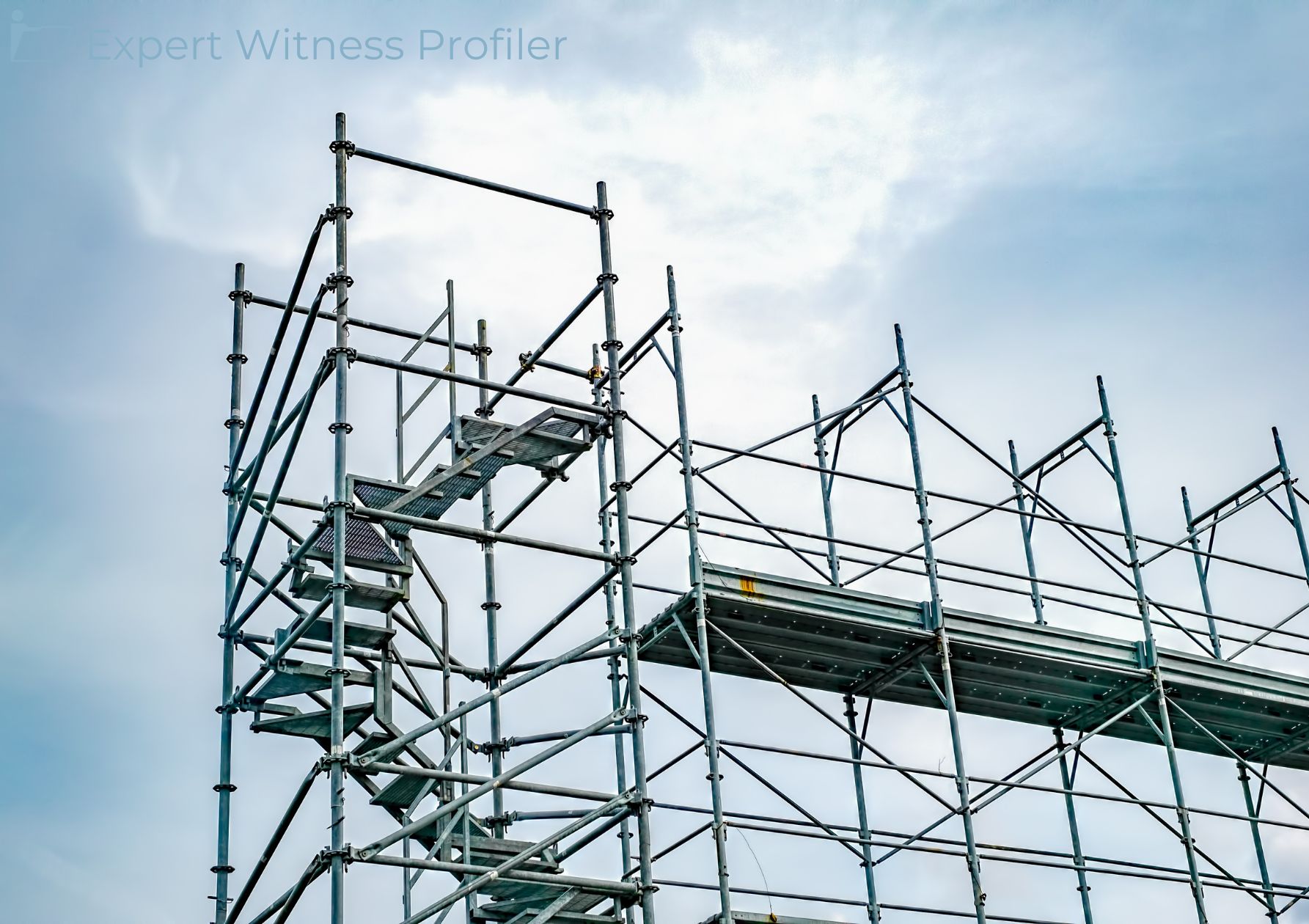
    This personal injury suit began at a construction site at Ochsner’s Lafayette General Medical Center. Charles’ employer, FL Crane & Sons, Inc. (“FL Crane”), was hired to install “z-girts, insulation, and stucco” on the Project building. To work on the building’s side, FL Crane procured swing scaffolding from Max Access. The scaffolding system they used was called the “Rolling Roof Rig.”

    On May 16, 2022, while Charles was working atop the Rolling Roof Rig at the Project, other workers lifted three porta potties for cleaning. Inadvertently, the porta potties, while being hoisted up, caught the tieback line that secured the scaffolding system. This entanglement caused the scaffolding system to collapse, severing Charles’ right arm in the process.

    Max Access argued that (1) Plaintiffs’ proffered witness, Brant Lacombe is not a qualified witness and (2) even if he is, his opinions did not satisfy Rule 702.

    Sales Expert Witness

    Brant Lacombe has fifteen years of experience as a swing scaffolding salesperson in addition to his designation as an OSHA-competent trainer who teaches employees how to use swing scaffoldings.

    Want to know more about the challenges Brant Lacombe has faced? Get the full details with our Challenge Study report

    Discussion by the Court

    1. Expert’s Qualification

    Here, it is undisputed that Lacombe is not an expert by way of education—his college degree is in criminal justice, not engineering.

    Ordinarily, Lacombe’s experience as a salesperson would be deemed too far removed from the scope of his testimony—why a scaffolding system, like the one he sold, failed. 

    Lacombe’s duties as a salesperson included not only sales, but also assisting crews with rigging to ensure the “job get[s] done.” Lacombe first said that he performed such tasks “plenty of times in [his] career,” but later states, “it wasn’t [his] primary function” and only did so “a handful of times over [his] career.”

    Max Access also asserted that Lacombe’s OSHA-related training was inadequate. Specifically, they argued that his initial OSHA 10 training was from “years ago” and he only had one other employer-administered two-to-three-day class.

    Given his experience with assisting crews in rigging swing scaffolds and his OSHA competency, the Court is unconvinced by Max Access’ arguments that Lacombe is not qualified as an expert.

    2. Expert’s Opinions

    a. Lacombe’s First Opinion

    Lacombe’s first opinion is that:

    Max Access, LLC had an obligation to properly assemble the swing stage scaffolding and rigging. Proper assembly requires insertion of the codder pins through the beam splice as well as the hole in the beam tube. The purpose of inserting the codder pins through the beam and the beam tube is to prevent the connection from being separated.

    As Max Access pointed out, however, this statement is not an opinion. Max Access agreed it had the above-stated obligation. Nevertheless, Plaintiffs argued that this testimony is necessary to show “why Max Access was obligated to set up the swing stages.” But Plaintiffs made no showing, let alone a showing by a preponderance of the evidence, on how this will assist the factfinder in “understand[ing] the evidence or determin[ing] a fact in issue.” 

    Thus, the Court concluded Lacombe cannot proffer his first opinion as it failed to meet Rule 702(a)’s requirement that the opinion “help the trier of fact to understand the evidence or determine a fact in issue.” 

    b. Lacombe’s Second Opinion

    Lacombe’s second opinion is that:

    The swing scaffolding failed because the roof rigging separated at the beam and the beam tube. Photos taken of the beam splice on the 5th floor show that the pin was inserted through the beam splice. Photos of the back beam on the 11th floor show that the holes in the beam had not been torn or damaged. This shows that the back beam was not secured with the pins. The pins went through the beam but not the beam tube.

    Again, the parties did not dispute the facts stated in Lacombe’s opinion. And Plaintiffs conceded that “the jury is capable of understanding the concept.” Nevertheless, they argued that the opinion will “aid the jury’s understanding of important parts” of the case. The Court agreed. Lacombe relied on his experience in the swing scaffolding industry to determine and the photographs taken post-accident—showing the beam holes were not “torn or damaged”—to suggest the pins did not penetrate the beam, only the splice tube.

    As such, the Court found Lacombe’s second opinion complied with Rule 702‘s strict requirements.

    c. Lacombe’s Third Opinion

    Lacombe’s third opinion is that:

    OSHA certified training for swing scaffolding does not address specific types of swing scaffolding. There are differences in design in the type of scaffolding that require different assembly. For instance, Spider does not use the exact same design as Sky Climber. One can thus be certified as a competent person but still have to follow manufacturing guidelines and may be unfamiliar with the scaffolding design. Due to differences in design, competent persons assembling and inspecting scaffolding must follow the manufacturer’s warning to ensure proper assembly and safety of the swing stage.

    The crux of why Plaintiffs proffered this testimony is to show that Charles’ employer, FL Crane, had a competent person on site per OSHA regulations and that inadequate warnings led to the accident. This Court’s ruling on Defendant Sky Climber, LLC’s motion for summary judgment, however, found, as a matter of law, that FL Crane did not have a competent person on site. Accordingly, the Court found this argument is moot.

    Held

    The Court granted in part and denied in part Max Access’ Rule 702 motion concerning Brant Lacombe.

    Key Takeaway:

    Lacombe relied on his experience in the swing scaffolding industry to determine and the photographs taken post-accident—showing the beam holes were not “torn or damaged”—to suggest the pins did not penetrate the beam, only the splice tube. 

    This represented “a reliable application” of a “reliable principle” to “sufficient facts” of the case and will “help the trier of fact to understand the evidence or determine a fact in issue”—namely, why the swing scaffolding system failed the way it did. 

    Case Details:

    Case Caption: Craft Et Al V. Max Access LLC Et Al
    Docket Number: 6:22cv5899
    Court Name: United States District Court, Louisiana Western
    Order Date: September 30, 2025
  • Anesthesiology Expert’s Testimony on Unprofessional Conduct Excluded

    Anesthesiology Expert’s Testimony on Unprofessional Conduct Excluded

    This is an employment discrimination case brought by a former employee of the U.S. Department of Veterans Affairs (“VA”). The Plaintiff, Dr. Elizabeth Schacht, was employed by the VA as an anesthesiologist from 2015 until August 20, 2018, when her supervisors revoked her clinical privileges and removed her from federal service. Schacht claimed the VA discriminated against her based on her sex (female and pregnancy) and national origin (Colombian), in violation of Title VII. She further alleged that the VA discriminated against her based on her disability (pregnancy-related complications) in violation of the Rehabilitation Act, and in retaliation for her statutorily protected activities.

    Schacht initially appealed her termination and the revocation of her clinical privileges to the VA Disciplinary Appeals Board (the “DAB”). In December 2019, the DAB heard Schacht’s appeal and upheld the VA’s decision. 

    Schacht appealed the DAB’s decision to the United States District Court for the District of Columbia. On August 11, 2022, after remand, the D.C. District Court found that the DAB provided a “sufficient, reasonable explanation” for its evidentiary decisions. On March 20, 2023, Schacht filed this case. Schacht asserted four claims arising out of her employment with the VA: (1) a disparate treatment claim and hostile work environment claim under Title VII of the Civil Rights Act of 1964 (“Title VII”) for discrimination based on sex, pregnancy, and national origin; (2) a retaliation claim under Title VII; (3) a disability discrimination claim under the Americans with Disabilities Act (“ADA”) and the Rehabilitation Act; and (4) a retaliation claim under the ADA and the Rehabilitation Act. 

    Schacht endorsed Mercedes Susan Mandell, a highly qualified and well-respected anesthesiologist and academician, to testify as to her expert opinion regarding pretext evidence in this case. Defendant filed a motion to exclude each and every one of Mandell’s opinions.

    Anesthesiology Expert Witness

    Mercedes Susan Mandell, M.D., Ph.D. served as the Director of the Liver Transplant Program at the University of Colorado for 30 years. She received her medical degree from University of Toronto Faculty of Medicine. She has a long history of supervising anesthesiologists.

    Fortify your strategy by reviewing a Challenge Study detailing grounds for excluding Mercedes Susan Mandell’s expert testimony.

    Discussion by the Court

    Mandell’s report has four “objectives;” (1) “to determine if Schacht met the standard of care and if the cases supported the VA’s claims of unprofessional behavior;” (2) “if the disciplinary investigation and actions followed policy published by the VA;” (3) “the quality and reliability of the claims made against Schacht;” and (4) “if the actions taken against Schacht were consistent with the standards of clinical care and professional conduct enforced by state organizations responsible for medical licensing (Medical Board)”. 

    The Court first turned to the VA’s argument that Mandell’s report should be excluded because her opinions are barred by collateral estoppel, also known as issue preclusion. 

    The VA argued that Mandell’s opinions should be excluded on the basis of issue preclusion because “Mandell addresses an issue already decided; the DAB action has now been finally adjudicated on the merits; Plaintiff was a party in the DAB and the appeals; and she had a full and fair opportunity to litigate.” 

    The Court found that the DAB proceedings have been fully adjudicated because the D.C. District Court affirmed the DAB’s findings and the D.C. Circuit affirmed the D.C. District Court’s judgment. Furthermore, Schacht was a party to the DAB proceedings.

    Therefore, the Court will determine, for each of Mandell’s opinions, whether the issue that is the subject of her opinions was identical to the issue presented in the DAB proceedings, and whether she had a full and fair opportunity to litigate the issue in the DAB proceedings. 

    Mandell’s Report

    In a section entitled “Objective 1: Specifications,” Mandell’s report first examined the claims described in the specifications to determine whether Schacht met the standard of care and whether the cases supported the VA’s claims of unprofessional behavior.

    Subsequently, the Court found that Mandell’s opinions—that the specifications did not support the VA’s claims that Schacht engaged in unprofessional conduct—were identical to the issues already decided in the DAB proceedings.

    Furthermore, Mandell’s report attempted to resurrect these issues by opining that Schacht did not breach the standard of care and by providing additional facts that allegedly showed that Schacht’s conduct was not unprofessional.

    Finally, for each specification, Mandell’s report conducted a similar analysis that effectively relitigated the issue of whether there was substantial evidence to support the specifications and, by extension, the VA’s charge of unprofessional conduct.

    Schacht did not have a full and fair opportunity to litigate her discrimination claims

    The Court turned to Schacht’s argument that she did not have “a full and fair opportunity to litigate her discrimination claims . . . because the Board refused to admit evidence pertaining to Schacht’s discrimination case.”

    Whether Schacht had a full and fair opportunity to litigate her discrimination claims, while relevant to claim preclusion, is not relevant to the inquiry under issue preclusion. 

    To the extent that Schacht argued that she did not have a full and fair opportunity to litigate whether substantial evidence supported the specifications because she could not introduce supplemental evidence in the DAB proceedings, the Court rejected that argument. 

    The DAB explained that it excluded Schacht’s supplemental evidence because it was untimely and the evidence was not relevant.

    The Court turned to Mandell’s opinions that the evidence supporting the specifications “lacked credibility” and that “there were not enough facts to support the deficiency claims.”

     In upholding the charge of unprofessional conduct against Schacht, the DAB necessarily decided that the evidence supporting the specifications was credible. 

    Therefore, Mandell’s opinions relitigated credibility determinations that were already made by the DAB and which were upheld on review in federal court.

    The Court found that Schacht had a full and fair opportunity to litigate these issues in the DAB proceedings.

    Because Mandell’s opinions are barred by issue preclusion, the Court granted the VA’s motion to exclude the opinions in her report.

    Held

    The Court granted the Defendant’s motion to exclude the opinions of Dr. Mercedes Susan Mandell. 

    Key Takeaway:

    The consideration of a party’s prior full and fair opportunity to litigate an issue often will focus on whether there were significant procedural limitations in the prior proceeding, whether the party had the incentive to litigate fully the issue, or whether effective litigation was limited by the nature or relationship of the parties.

    The Court did not find, and Schacht did not point to, any significant procedural limitations in the DAB proceedings, a lack of incentive to litigate the issue fully, or that the nature or relationship of the parties limited effective litigation. 

    Case Details:

    Case Caption: Schacht V. Collins
    Docket Number: 1:23cv709
    Court Name: United States District Court for the District of Colorado
    Order Date: September 24, 2025
  • Law Enforcement Expert’s Testimony on the Officers’ Tactics Admitted

    Law Enforcement Expert’s Testimony on the Officers’ Tactics Admitted

    Plaintiffs Michael Gomez (“Gomez”), Joseph Lowe (“Lowe”), Ian Joi, and Alejandro Baez and Josephine Cartagena, as co-representatives of the Estate of Jayden Baez (“Baez”) (collectively, “Plaintiffs”) filed an Amended Complaint against Defendants Scott Koffinas (“Koffinas”), Ramy Yacoub (“Yacoub”), and Chris A. Blackmon (collectively, “Defendants”).

    Plaintiffs alleged that Defendants Koffinas and Yacoub—members of the Osceola County Sheriff’s Department (“OCSD”)—exhibited “excessive and unreasonable force” in responding to Plaintiffs’ suspected petty theft at a Target store in Kissimmee, Florida.

    To support their allegations, Plaintiffs offered the expert testimony of Jeronimo “Jerry” Rodriguez (“Rodriguez”), a law enforcement practices expert. Defendants filed a motion to exclude certain portions of Rodriguez’s testimony, specifically, his opinions on the OCSD officers’ tactical approach to apprehend Plaintiffs. 

    Law Enforcement Expert Witness

    Jeronimo “Jerry” Rodriguez spent 26 years with the Los Angeles Police Department, retiring in 2013 at the rank of Captain.

    For years Rodriguez consulted and guided municipalities on high profile police-involved incidents as a member of the agency. However, in retiring as a Law Enforcement Expert in 2021, he has been recruited to work on high-profile and sensitive cases.

    Rodriguez is a graduate of the FBI National Academy Class 234 and holds a master’s degree in Leadership from St. Mary College of California, as well as a bachelor’s degree in Business Management.

    Want to know more about the challenges Jeronimo Rodriguez has faced? Get the full details with our Challenge Study report

    Discussion by the Court

    Reliability

    Defendants first argued that the Court should exclude certain portions of Rodriguez’s testimony because the lack of a national standard for apprehending subjects makes his criticisms of the officers’ tactics unreliable. 

    As shown in his expert reports, depositions, and curriculum vitae, Rodriguez used his law enforcement experience and knowledge, and training in police practices, to evaluate the facts of the instant case and form his opinions. Therefore, the Court found Rodriguez’s methodology sufficiently reliable. 

    Therefore, the lack of an express national standard did not make Rodriguez’s testimony unreliable. Defendants cited no authority for this proposition, nor is the Court aware of any.

    Assistance to the Trier of Fact

    Defendants next contended that Rodriguez’s inability to cite to a national standard rendered his testimony unhelpful to the jury, noting that it would risk misleading jurors into confusing his criticisms with constitutional norms.

    The Court held that Rodriguez’s testimony is relevant and would be helpful to the jury. Specifically, his testimony would help the jury understand why a score of deputies, using a vehicle blocking maneuver, found it necessary to shoot 31 times into a vehicle containing four shoplifting suspects, killing Baez and injuring the other Plaintiffs. Moreover, the lack of an express national standard for police practices did not diminish the testimony’s helpfulness. There is no risk that jurors will confuse his opinions with constitutional norms. While Rodriguez’s testimony embraces an ultimate issue, it did not tell the jury what result to reach—the jury will decide how much credibility to give his opinions when making that determination.

    Held

    The Court denied the Defendants’ motion to exclude portions of Rodriguez’s opinion testimony except for the portion of the Defendants’ motion that sought to exclude Rodriguez’s testimony regarding the officers’ use of a vehicle block to practice their training, which was denied as moot.

    Key Takeaway:

    Defendants’ arguments regarding the unhelpfulness of Rodriguez’s testimony are simply meritless. The necessary and appropriate use of force by law enforcement is beyond the understanding of an average lay person and would therefore assist a jury. 

    Case Details:

    Case Caption: Gomez Et Al V. Koffinas Et Al
    Docket Number: 6:23cv1824
    Court Name: United States District Court, Florida Middle
    Order Date: October 09, 2025
  • Product Development Expert Was Not Allowed to Opine that the Fan is Not Defective

    Product Development Expert Was Not Allowed to Opine that the Fan is Not Defective

    Allstate insured L&J Home Improvements, LLC (“L&J”), which was owned and operated by Julie and Luis Hernandez. In or around 2003, L&J purchased a two-story, wood frame residence built in 1888 that is located at 231 N. Walnut St. in Colorado Springs, Colorado (the “residence”). After the purchase, L&J performed a remodel on the residence in or around 2006. The remodel included an updated electrical system and fixtures. 

    As part of the remodel, an electrical contractor installed three identical bathroom exhaust/ventilation fan/lights (“fan units”). One fan unit was installed in the upper-level half bath, one fan unit was installed in the lower-level bathroom, and one fan unit was installed in the upper-level bathroom. 

    A resident, who shared the upper-level bathroom where the fan was located, said that the fan was often left on after bathroom use and the fan had begun to make a noise when turned on several weeks before the incident.

    A fire occurred in the residence the evening of February 25, 2021 (the “incident”). The Colorado Springs Fire Department (the “CSFD”) conducted an investigation. The CSFD considered the fan as an ignition source.

    Defendant Broan-Nutone manufactured and sold the fan. When the fan was manufactured in the fall of 2005, Broan-Nutone considered itself subject to the following certification requirements created by Underwriters Laboratories (“UL”).

    Allstate brought claims against Broan-Nutone for strict product liability, negligence, breach of the implied warranty of merchantability, and breach of the implied warranty of fitness.

    On February 9, 2024, Broan-Nutone provided Allstate with its expert disclosures. It listed David Farchione as a non-retained expert who did not need to provide an expert report. Plaintiff filed a motion to exclude the testimony of Farchione.

    Product Development Expert Witness

    David Farchione has a bachelor’s in engineering from the Milwaukee School of Engineering, where he graduated and entered the workforce in 1996 working for UL in relation to UL product certifications.

    Farchione gained experience in product development, design, manufacture, and failure analysis during his four years working for UL and approximately fifteen years working for Broan. During his career, he has worked in engineering and consulting regarding certifications obtained from UL, which includes certifications specific to exhaust fans, like the Model Fan.

    Fortify your strategy by reviewing a Challenge Study detailing grounds for excluding David Farchione’s expert testimony.

    Discussion by the Court

    Qualification

    Allstate challenged Farchione’s qualifications to provide an expert opinion that the fan was not defective. Allstate argued that Farchione’s only basis for opining that the fan is not defective is that it is UL certified and that it was designed, built, and evaluated by engineers.

    Broan-Nutone did not assert that Farchione was involved in the design, manufacturing, or evaluation of the fan, either through Farchione’s work at UL or his work at Broan-Nutone.

    Allstate did not contest Farchione’s qualifications to testify about the UL certification process and how it works, given his experience working at UL and his experience at Broan-Nutone with UL product certification. However, the issue is whether Farchione’s experience with UL certifications allows him to express opinions, drawn only from the UL certification process, that the fan was not defective. The Court found that for Farchione to testify that the fan at issue in this case was not defective would go beyond the “reasonable confines of his subject area.” 

    Neither Broan-Nutone in its response, or Farchione in his deposition, has explained why Farchione’s UL knowledge allowed him to opine that the fan at issue in this case had no defect. For instance, Farchione did not state that the UL documentation for the fan involved testing for design defects or manufacturing defects. 

    The Court found that Broan-Nutone has not explained why Farchione is qualified, solely based on his knowledge of the UL certification process, to bridge the gap between a product being “UL certified” and the product being “not defective” without any examination or testing of the fan at issue.

    Methodology

    Allstate also argued that Farchione’s opinion that the fan was not defective should be excluded because he lacked a reliable methodology for his conclusion.

    As the Court has already noted, Farchione did not conduct any testing or evaluation of the fan. As a result, he applied no testing methodology in opining that the fan is not defective. Moreover, neither Farchione nor Defendant identified any methodology that he applied in concluding that, because the fan was UL certified and was designed by engineers, it is not defective.

    Allstate challenged the basis for Farchione’s opinion that the fan was “fit for sale,” a conclusion which Farchione reached based on the fact that “[t]here’s been ultimately millions of these [fans] sold over the years. And there’s not any huge issues with these particular problems — or these particular products.”  When Allstate asked Farchione to provide more specific figures regarding the number of problems with this model of fan, he stated that “I don’t know how many exactly, but it’s, you know, tens.”

    As a result, the Court found that Farchione’s testimony about sales data is not admissible. First, Broan-Nutone failed to establish that data given to Farchione by his (or the Defendant’s) attorneys constitutes the kind of data that would reasonably be relied upon by experts on product defects. Second, Farchione did not identify any other source of data he relied upon. Thus, Farchione’s opinion that the fan is fit for sale, insofar as that opinion relied on sales data, lacked a factual basis. 

    Held

    The Court granted in part and denied in part the Plaintiff’s motion to exclude the testimony of David Farchione.

    Key Takeaway:

    Farchione was not allowed to testify that the fan was not defective based on the fan’s UL certification or because sales data showed that there were few complaints about the fan.

    The Court is not required to admit opinion evidence that is connected to existing data only by the ipse dixit of the expert and may conclude that there is simply too great an analytical gap between the data and the opinion proffered.

    Case Details:

    Case Caption: Allstate Indemnity Company V. Broan-Nutone, LLC
    Docket Number: 1:23cv743
    Court Name: United States District Court, Colorado
    Order Date: October 09, 2025
  • Accounting Expert’s Alter Ego Opinion Excluded

    Accounting Expert’s Alter Ego Opinion Excluded

    Plaintiffs NetJets Aviation, Inc., NetJets Sales, Inc., and NetJets Services, Inc. brought this action for declaratory judgment. NetJets sought a declaration that Defendants Stephen G. Perlman and the Stephen G. Perlman Revocable Trust are the alter egos of RS Air, LLC, a bankrupt entity. NetJets obtained a judgment of over $1.7 million against RS Air in bankruptcy court. If NetJets is successful in this action, then Perlman and the Trust will be liable for the judgment against RS Air. 

    Defendants submitted the report of Terry Lloyd to resolving the alter ego claim. NetJets filed a motion to strike Lloyd’s report.

    Accounting Expert Witness

    Terry Lloyd is a managing director of Finance Scholars Group (“FSG”), a consultancy. He was previously a partner/managing director with BDO Seidman and Huron Consulting Group. He has been a certified public accountant (“CPA”) since 1983 and a Chartered Financial Analyst (“CFA”) since 1993. He has published and spoken to legal, accounting, and financial groups, including law schools.

    He has been qualified as an expert in federal, state, tax, bankruptcy courts and arbitration venues.

    Get the full story on challenges to Terry Lloyd’s expert opinions and testimony with an in-depth Challenge Study

    Discussion by the Court

    Lloyd concluded his report with the opinion that “the weight of the evidence” showed that Perlman was not the alter ego of RS Air.

    NetJets argued that Lloyd’s report is inadmissible because he purports to render an opinion on the ultimate issue in this case — whether Perlman was the alter ego of RS Air. 

    The Court agreed that Lloyd’s legal conclusions are inadmissible, and therefore will exclude them from consideration.

    However, the Court denied the motion to strike the entire report because Lloyd’s report analyzed discrete factual issues, such as RS Air’s adequacy of capitalization and its observance of corporate formalities, which are relevant to the factors which must be considered in resolving an alter ego claim.

    Held

    The Court granted in part and denied in part NetJets’ motion to strike the testimony of Terry Lloyd.

    Key Takeaway:

    In addition to general legal conclusions which are considered inadmissible, Lloyd’s expert report focuses on factual, company-specific matters such as adequacy of capitalization and observance of corporate formalities and is therefore directly relevant to evaluating an “alter ego” claim.

    Case Details:

    Case Caption: Netjets Aviation, Inc. Et Al V. Perlman Et Al
    Docket Number: 2:22cv2417
    Court Name: United States District Court, Ohio Southern
    Order Date: October 09, 2025
  • Hotel Security Expert Was Not Allowed to Opine on the Adequacy of Training

    Hotel Security Expert Was Not Allowed to Opine on the Adequacy of Training

    Jane Doe K.R. sued Defendants, Choice Hotels, Choice Hotels International, Inc., and Choice Hotels International Services Corp. under the Trafficking Victims Protection Reauthorization Act (TVPRA).

    Plaintiff alleged that between March and May 2013, she was the victim of sex trafficking at an Orlando, Florida hotel owned and operated by WHG, a franchisee of the Choice Hotels Defendants.

    According to Plaintiff’s hotel security expert, Salvatore Caccavale, “the incident involving Plaintiff was foreseeable and predictable. Inconsistent documented staff training and the failure to adhere to corporate policies contributed to the ease of [the] trafficking of [Plaintiff] at the subject hotel location.  Hotel ownership [i.e., Defendants] and their employees should have recognized the correlation between drug use and trafficking at their hotel and collaborated with local law enforcement. It is reasonable to conclude that the hotel management and staff knew that [Plaintiff] was being trafficked.”

    Defendants challenged Caccavale’s qualifications and the overall reliability of his methodology before making reliability and helpfulness arguments against each of his opinions.

    Hotel Security Expert Witness

    Salvatore Caccavale has over 40 years of experience as a hospitality business and security executive, both at the property level, and subsequently with oversight for the Americas for Hilton branded hotels.

    Presented by HospitalityLawyer.Com, Caccavale is the recipient of the Thomas G. Davis Loss Prevention Lifetime Award, and the beneficiary of Hilton Hotel’s 2001 Global Spirit of Pride Award. Caccavale has been recognized and honored by many levels of local, state, and federal law enforcement agencies over the years for his assistance in executing their duties.

    Want to know more about the challenges Salvatore Caccavale has faced? Get the full details with our Challenge Study report.

    Discussion by the Court

    Qualification

    Defendants did not dispute that Caccavale is generally qualified to opine on matters related to hotel safety and security; however, they maintained that he cannot offer opinions as to human trafficking because he is not qualified in that area of expertise. The Court notes that each of Caccavale’s opinions in this case concerns hotel safety and security. 

    Methodology

    Defendants described three ways in which Caccavale did not follow the methodology endorsed by the International Association of Professional Security Consultants. First, the Defendants asserted that Caccavale did not conduct threat and vulnerability assessments at the physical property, as required. Second, according to Defendants, Caccavale looked to calls for service without sufficiently contextualizing them with other crime records such as incident reports. Third, Defendants argued, Caccavale improperly relied on CrimeCast information postdating the alleged 2013 trafficking incident and could not provide details about how the CrimeCast report was compiled. However, regarding these points, Caccavale testified that he conducted a vulnerability assessment based on calls for service, the CrimeCast report, and online reviews of the hotel, and the CrimeCast report shows past crime risk scores for the area around the Orlando hotel in 2010.

    While Caccavale’s opinion about the predictability of the alleged sex trafficking incident may be helpful in determining whether Defendants knew or should have known about Plaintiff’s alleged sex trafficking, he was not allowed to opine on the adequacy of the training at the Orlando hotel because Caccavale admitted to not knowing what training policies were in place at the time of the alleged sex trafficking incident.

    Defendants challenged Caccavale’s statement that they “should have recognized the correlation between drug use and trafficking at their hotel.” Plaintiff responded that opining as to a correlation between drug use and trafficking does not equate to opining that drug use always indicates trafficking. The Court agreed. Moreover, the jury will be called upon to decide whether Defendants, through their management and staff, had actual or constructive knowledge of Plaintiff’s trafficking at trial. Therefore, Caccavale’s statement that “it is reasonable to conclude that the hotel management and staff knew that [Plaintiff] was being trafficked” amounts to an impermissible legal conclusion.

    Held

    The Court granted in part and denied in part Defendants’ Daubert motions concerning Salvatore Caccavale.

    Key Takeaway:

    The Court addressed Defendants’ general arguments on qualifications and methodology in addition to the opinion-specific arguments. Defendants’ opinion-specific arguments fare better than their general challenges to Caccavale’s qualifications and methodology but are not wholly persuasive. Caccavale’s testimony is helpful in determining whether Defendants knew or should have known about Plaintiff’s alleged sex trafficking. 

    Case Details:

    Case Caption: Doe K.R. V. Choice Hotels Et Al
    Docket Number: 6:23cv1012
    Court Name: United States District Court, Florida Middle
    Order Date: October 09, 2025