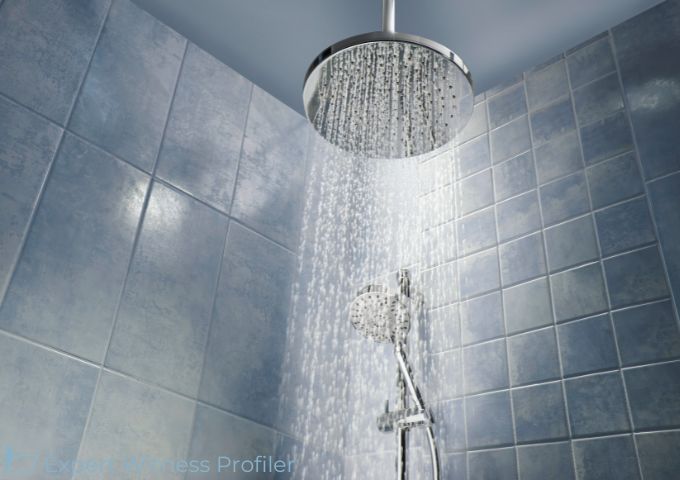
Plaintiff, Anna Ortega, alleged that hot water from a hotel room shower “caused a large second degree burn on [her] left lower leg.” The incident occurred on February 11, 2024 at the L’Auberge Casino Resort Lake Charles.
Plaintiff has retained Dr. Derek Lou, a plastic surgeon to provide an opinion on her injuries. Lou opined that Plaintiff sustained second degree burns to her lower left leg and right shoulder/upper back as a result of the February 2024 shower incident. Defendant sought to exclude that testimony under the standards set forth in Rule 702.
Plastic Surgery Expert Witness
Derek C. Lou is a Harvard-trained, board-certified plastic surgeon with advanced training and decades of experience in the management of burn injuries.
He is also an Associate Professor in Plastic Surgery at the UT Medical Branch in Galveston, TX.
Defendant did not dispute Lou’s qualifications. Instead, it maintained that his opinions do not adequately account for the discrepancies in the appearance of Plaintiff’s leg injury as it presented to different providers and for the lack of evidence that the shower water was hot enough or on for long enough to cause the claimed injury.
Defendant first maintained that there is no evidence that Plaintiff was exposed to water that was hot enough to cause a second-degree burn within seconds. But Defendant likewise presented no evidence of the highest possible temperature that could have emitted from its allegedly defective commercial water heater.
Ortega’s account of the incident, including using the affected leg to turn off the hot water, provided a plausible explanation for several seconds of exposure.
As for the burn’s delayed healing, Defendant correctly points out that there is no record that Plaintiff ever used Silvadene. Accordingly, Lou’s hypothesis regarding prolonged Silvadene usage is unsupported. But the infection itself might explain any discrepancies. The photographs from the scanned medical records do not show much detail. While her medical records describe blisters and redness, they also note an active infection of the wound and associated itching. Thus, Defendant failed to sufficiently undermine the basis of Lou’s opinions on Plaintiff’s leg injury.
As for the shoulder/upper back injury, Lou also briefly opined that Plaintiff had suffered a second degree burn to this area. Plaintiff never sought any follow-up care after her urgent care visit on the date of the incident. But she has submitted an affidavit stating that she was simply unaware of the scar because it was on her back, along with a photograph of the affected area.
The Court found that Lou is sufficiently qualified to offer an opinion based on his examination and Plaintiff’s account of the exposure.
Held
The Court denied the Defendant’s Daubert motion to exclude the testimony of Derek Lou.
Key Takeaway
Rejection of expert testimony is the exception rather than the rule, and the court’s role as gatekeeper “does not replace the traditional adversary system and the place of the jury within the system.”
This matter arises from damage to Plaintiffs Jacob and Suzanne Kuehn’s home caused by a water loss in December 2023.
The Kuehns sued Safeco Insurance Company of America (“Safeco”) alleging breach of contract, violation of the Consumer Protection Act (“CPA”), bad faith, and violation of the Insurance Fair Conduct Act (“IFCA”).
In advance of trial, Plaintiffs identified construction expert David Zaborowski while Defendant disclosed two rebuttal expert witnesses: construction rebuttal witness Nathan George and claims-handling rebuttal witness Joseph Hampton.
Plaintiffs filed a motion to exclude the testimony of both George and Hampton while Defendant sought to exclude the testimony of Zaborowski.
Construction Expert Witnesses
David Zaborowski has 23 years of experience in the insurance restoration industry as a general contractor. He specializes in property insurance estimating and appraisal work.
Nathan T. George is an active contractor with 25 years of continuous hands-on experience gained through both his carpentry work in the field and his involvement in running a successful restoration construction company.
Joseph D. Hampton is a retired attorney with 40 years of experience in insurance law, representing both insurers and insureds and provides expert testimony on insurance law, including contractual and extracontractual liability and claim handling.
(1) Hampton’s Testimony About the Remodeling Project
Plaintiffs argued that Hampton’s assertions that their remodeling project would have occurred even absent the December 18, 2023, water damage are not based on sufficient facts and rely on speculation.
Defendant and Hampton pointed to a series of Plaintiffs’ email correspondence to support the assertion that the remodel was planned before the water damages, but all of the referenced communications occurred after the date of water damage. The Court agreed with Plaintiffs that communications with potential vendors starting in 2024 (ranging from approximately one to over eight months after the loss date) are not a basis to opine that Plaintiffs intended to remodel their kitchen in 2023.
(2) Hampton’s Testimony About the Cabinets
Plaintiffs argued that Hampton’s testimony that Plaintiff Jacob Kuehn “did an honorable thing” by removing cabinet costs and must have concluded the policy did not cover them, must be excluded because it is unsupported speculation.
Defendant did not assert that Hampton offered rebuttal when he opined that Plaintiff Jacob Kuehn’s actions were “honorable,” and that he must have concluded the cabinets were not covered by the insurance policy. Moreover, Plaintiffs are correct that Hampton conceded that he does not know why Plaintiff Jacob Kuehn removed the cabinet estimate. Therefore, the Court agreed that Hampton is offering speculative testimony, which must be excluded.
(3) Hampton’s Testimony About Xactimate Pricing
Plaintiffs asserted that Hampton’s testimony about Plaintiffs’ use of Xactimate pricing from September 2025 is unreliable because Hampton “admitted that he does not have the qualifications to go ‘line by line through an Xactimate estimate, deconstruct it, analyze it, and come up with his own opinions,’” and that “such work falls ‘within someone else’s expertise and purview.’”
However, Hampton critiqued the use of Xactimate from September 2025, because the insurance policy requires repair costs to be determined “shortly following the loss,” which, in this case, was in December 2023. The Court held that Hampton’s opinion is reliable because he bases it off the insurance policy and Zaborowski’s report. Any critique of Hampton’s inability to go line by line through the estimate goes to the weight of the evidence he presents and is for the jury to decide.
(4) Hampton’s Testimony About the Insurance Fair Conduct Act (“IFCA”) Letter
Plaintiffs argued that the Court should exclude Hampton’s testimony about the IFCA notice because it offered improper rebuttal, improper legal conclusions, and is barred by Federal Rule of Evidence 408.
First, Plaintiffs asserted that “Hampton opined that Plaintiffs’ IFCA notice letter was sent ‘simply to enable an IFCA suit.’” While Hampton will not be allowed to speculate as to Plaintiff’s motivation for sending the letter, the Court held that Hampton’s opinion on this subject constitutes proper rebuttal.
Second, the Court found that Hampton’s testimony about the IFCA is almost entirely devoid of legal conclusions, with the exception of one opinion that must be excluded. Hampton asserted that Plaintiffs were not inviting negotiation because “the sole purpose of an IFCA notice letter is to enable a later suit pursuant to the IFCA,” rather than offering an opinion that, based on his experience handling claims, letters of this nature are not used to invite negotiations.
In his rationale for his opinion that the opposing expert is wrong that Defendant did not negotiate in good faith, Hampton is essentially concluding that the law rebuts opposing testimony.
(5) The Scope of Hampton’s Testimony
Plaintiffs sought to exclude testimony from Hampton that they argued “exceeded permissible expert boundaries” because they offered opinions on the reasonableness of conduct and legal conclusions. The Court partly agreed.
(a) Reasonableness and Case Law Conclusions
Regarding coverage for the kitchen cabinets, Hampton opined, “That part of the damaged building was the lower cabinets, not the entire set. It is a reasonable claim handling practice, and permitted in Washington, to determine the extent of damage to property, and only pay for repair or replacement of the actually damaged portion where the policy language permits such allocation.”
There are two issues with the proffered opinion. First, it deems the claim-handling practice “reasonable,” which opined on the ultimate issue of the reasonableness of Defendant’s conduct and is not allowed. Second, the statement offered a legal conclusion—namely, that Washington law permits Defendants to only pay for the damaged cabinets, but not the upper, undamaged cabinets—which is also not allowed.
However, Hampton can still testify as to generally accepted claims-handling practices in relation to the cabinets.
Hampton opined that “it is not unreasonable for a field adjuster to schedule an inspection a mere five days after initial contact” and later stated that “it is common for an insured’s contractor’s estimate to lack the details necessary for a reasonable ‘apples to apples’ comparative analysis of the competing estimates.”
Hampton can testify about what the common practice is or about typical scheduling timelines, but he cannot offer an opinion as to the reasonableness of such acts.
Regarding the IFCA letter that Plaintiffs sent, Hampton’s opinions that “no reasonable person” would accept the terms in the letter, and that the letter was not an attempt to “open a reasonable settlement discussion” offer conclusory opinions on the ultimate issue as to whether Defendant acted in bad faith. As such, they are not allowed.
The remainder of Hampton’s opinions are allowed, as they are based on his experience in legal practice and handling claims.
(b) Legal Landscape in Washington
Plaintiffs argued that Hampton’s statements referring to the legal landscape in Washington should be excluded.
Although Hampton goes on to cite the Revised Code of Washington, the Washington Administrative Code, and a Washington Supreme Court case, this testimony is based on his experience handling insurance claims.
(c) Statutory Law
Similarly, Plaintiffs argued that certain assertions Hampton made should be excluded because they make legal conclusions based on “statutory law.” The Court disagreed.
Although Hampton mentioned the Revised Code of Washington, but this is in reference to the basis of Hampton’s opinion that “the sole purpose of an IFCA notice letter is to enable a later suit pursuant to the IFCA,” meaning that Plaintiffs were not “inviting a discussion to amicably resolve a dispute.”
(d) Breach of Contract
Hampton stated, “the opposing expert says that industry standards require an insurer as part of paying to replace damaged property with like kind and quality to replace undamaged property if necessary to achieve a uniform appearance when replacing damaged property, unless there is clear policy language to the contrary.”
The report goes on to rebut the opposing expert’s assertions by stating that “Here, there is policy language to the contrary, and the allocation is allowed.” Accordingly, this testimony does not offer a legal conclusion.
(e) Catchall
Finally, Plaintiffs sought to exclude all remaining testimony from Hampton. Plaintiffs base this request on the assertion that “because so much of his testimony is excluded under the rules, Hampton’s remaining opinions are unhelpful and inadmissible.”
Because the Court denied many of Plaintiffs’ requests and found that Hampton’s testimony would still be helpful, the request to exclude the remainder of Hampton’s testimony was denied.
b. Nathan George
Plaintiffs argued that George’s opinions are not grounded in sufficient facts, reflect unsupported assumptions, lack reliable application, and exceed the permissible scope of rebuttal testimony.
(a) George never visited Plaintiffs’ propertyand instead relied on photos
First, Plaintiffs argued that because George never visited Plaintiffs’ property and instead relied on photos taken after the mitigation work, his opinions are not grounded in sufficient facts or data. However, an expert may base an opinion on facts or data in the case that the expert has been made aware of or personally observed.
(b) George’s conclusions regarding damage to the subfloor are unsupported assumptions, not reliable analysis
Next, Plaintiffs argued that George’s conclusions regarding damage to the subfloor are unsupported assumptions, not reliable analysis. George made it clear that his opinion regarding mold on the floors and treatment are based off his years’ long knowledge, as well as his annual re-review, of the Environmental Protection Agency (“EPA”) Guidelines.
Additionally, Plaintiffs argued that because George did not review Defendant’s estimate and instead relied on Plaintiffs’ expert’s description, George did not reliably apply any methodology to facts. But, George offered the opinion that, despite Zaborowski’s issue with the method, Defendant’s decision to combine the sketch of the kitchen and dining room, label it all as “kitchen,” and aggregate the square footage is proper and does not change the result. This opinion is developed from his extensive experience writing estimates based off square footage for flooring. It is standard rebuttal testimony because he responds directly to an opinion that Plaintiffs’ expert provided.
(c) George’s opinion as to what would have caused damaged subfloorshould be excluded
Plaintiffs argued that George’s opinion as to what would have caused damaged subfloor, and how he evaluated whether the subfloors were damaged, should be excluded. However, Zaborowski’s opinion was that it was necessary to remove the subfloor. As part of George’s rebuttal testimony, it is only logical for him to explain why he believes it is not necessary, which includes an explanation as to why, in his professional experience, he did not believe the subfloor was damaged.
(d) George’s reliance on EPA standards for mold remediation is not rebuttal testimony
Lastly, Plaintiffs argued that George’s reliance on EPA standards for mold remediation is not rebuttal testimony. But, again, in order to explain why he disagrees with Zaborowski’s conclusion, George has to be able to explain why. And the basis for his opinion as to mold on floors is based off his years’ long knowledge, as well as his annual re-review of the EPA guidelines.
c. David Zaborowski
Defendant argued that Zaborowski’s testimony is not reliable because it is not based on sufficient facts or data. In support, Defendant points to the following: the insurance policy agreement, Plaintiff Jacob Kuehn’s repair cost range, the fact that Zaborowski gave his estimate roughly a year after the house was repaired and did not consider the actual costs paid, and the fact that he included costs that were not ultimately in the final repair cost. But Zaborowski made it clear that he is “tasked to consider what [Plaintiffs] should have been paid on the claim, not what they paid to have the repairs done.”
And a central issue in this case is whether Defendant acted reasonably and in good faith when asked to pay for the repairs to Plaintiffs’ home. Those questions must be viewed through the lens of what was reasonably owed at the time of denial.
Moreover, what Defendant omits in its brief, and does not respond to in its reply, is that Zaborowski used the Xactimate software to calculate repair costs—software that George uses “all the time,” and which Hampton states estimators “typically” use.
Zaborowski’s methodology is sound, and the Court is more concerned with that than with the correctness of his conclusion.
Given that the Court found Zaborowski’s methods reliable, any questions as to his total estimate and reasons for arriving at the final number go to the weight of his credibility. They can be tested through cross-examination and are for the jury to decide.
Rule 403 Challenge
Defendant argued that Zaborowski’s testimony is prejudicial and will confuse the jury. Defendant may disagree that some of the line items in Zaborowski’s estimate should not have been included, but Zaborowski was tasked with determining what Defendant should have paid Plaintiffs, not what they did pay them. Ultimately, this is a dispute that should be decided by the jury.
Moreover, this testimony will not mislead the jury, as Defendant will have the opportunity to point out any line items that were not in the actual repair cost, and Zaborowski will be able to explain why he believes they should have been—a concept that is not overly complicated for a jury to decipher.
Held
The Court granted in part and denied in part Plaintiffs’ motion to exclude Joseph Hampton’s and Nathan George’s testimony.
The Court denied Defendant’s motion to exclude David Zaborowski’s testimony.
Key Takeaway
Reliability requires the court to assess whether an expert’s testimony has a reliable basis in the knowledge and experience of the relevant discipline. In making its reliability determination, a court is concerned with the soundness of the methodology, not with the correctness of the expert’s conclusions.
Case Details:
Case Caption:
Kuehn V. Safeco Insurance Company Of America
Docket Number:
2:24cv1785
Court Name:
United States District Court for the Western District of Washington
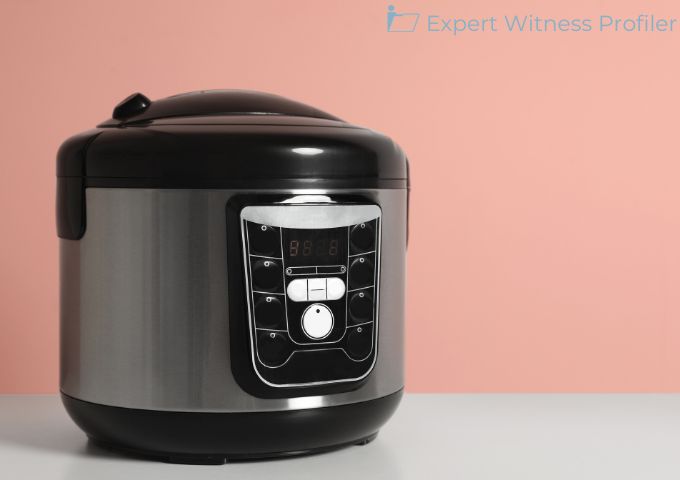
Grace Pennington filed a complaint alleging that she was seriously injured by an Instant Pot ULTRA Pressure Cooker she had purchased from Kohl’s Corporation.
The Defendant filed a motion to exclude the opinions of the Plaintiff’s expert, Dr. David M. Rondinone.
Mechanical Engineering Expert Witness
David Michael Rondinone holds an M.S. degree and a Ph.D. degree in Mechanical Engineering from the University of California, Berkeley, majoring in material behavior and design and minoring in structures and dynamics and electronic controls. He also holds a B.S. degree in Engineering Physics and a B.A. degree in Astrophysics from the University of California, Berkeley.
He has worked for more than 30 years in the areas of failure analysis, design, and risk assessment of consumer and industrial equipment, including pressure cookers.
I.Rondinone failed to consider whether the Plaintiff’s misuse caused the incident
The Defendant sought to exclude all of Rondinone’s opinions as unreliable because the Defendant asserted that he failed to consider whether the Plaintiff’s misuse caused the incident.
The “incident summary” in Rondinone’s expert report stated that the Plaintiff first “noted that the floating lock pin was in the ‘Up’ position,” so she manually released the pressure until “the floating lock pin depressed into the ‘Down’ position” before attempting to open the lid. None of the evidence shows that the Plaintiff attempted to remove the lid while the float valve was up. The Defendant’s theory that the Plaintiff misused the Instant Pot by attempting to open it while the float valve was up is not supported by evidence. Rondinone is not required to consider an alternative cause of injury that is not supported by evidence. The Court will not exclude Rondinone’s opinions as unreliable for this reason.
II. Rondinone did not employ a reliable methodology
The Defendant next argued that Rondinone did not employ a reliable methodology to conclude the Instant Pot’s float valve may have been clogged because he did not test the Instant Pot and did not observe clogging in the float valve.
Rondinone explained that “prior testing and experience” has shown that food can clog pressure cooker valves. Based on this, Rondinone concluded that “the float valve in the subject cooker is exposed to potential clogging from food.”
Because Rondinone is entitled to rely on prior testing and experience with similar pressure cookers to determine that the pressure cooker in this case was susceptible to clogging due to its exposed float valve, the Court cannot conclude that Rondinone’s methodology is so fundamentally flawed that the Court must exclude his opinion on a reliability basis.
III. Rondinone’s opinion that the float valve may have clogged is irrelevant
The Defendant also argued that Rondinone’s opinion that the float valve may have clogged is irrelevant because there is no evidence of clogging in this case.
Rondinone generally opined that float valve clogging can occur, he does not opine that in this case the float valve was clogged at the time of the incident or that clogging could have caused the incident. Instead, he stated that a boil-over is “the most likely scenario.”
Based on Rondinone’s description of a boil-over, it has nothing to do with a clogged float valve. The Court, as a result, excluded Rondinone’s opinions about float valve clogging as irrelevant.
The Defendant argued that Rondinone’s opinion that the Plaintiff may have accidentally depressed the float valve while releasing steam from the Instant Pot is speculative and unsupported. Stating that it is “possible” that the Plaintiff depressed the float valve does not meet the standard of reliability. Nor did Rondinone tie this possibility to any defect in the pressure cooker’s design. Rondinone did not opine that the placement of the float valve is a design defect or that it makes the pressure cooker unreasonably dangerous. This opinion is not reliable or relevant to the facts of the case and must be excluded.
For similar reasons, the Court excluded Rondinone’s opinions about the Defendant’s failure to perform an Failure Modes and Effects Analysis (“FMEA”) because they are not tied to any defect in the pressure cooker’s design.
IV. Rondinone’s opinions about the boil-over event and the Defendant’s related warnings
The Court last addressed Rondinone’s opinion that the Plaintiff’s injuries were caused by a boil-over event. Unlike his excluded opinions, this opinion is relevant to the Plaintiff’s claims. Rondinone opined that other manufacturers warn users of the risk of a boil-over event and how that risk may be mitigated.
The adequacy of the Defendant’s warnings is relevant to the Plaintiff’s warning defect claim. Further, Rondinone directly tied the warning to his proposed cause of the Plaintiff’s injuries. The Court will not exclude Rondinone’s opinions about the boil-over event and the Defendant’s related warnings.
Held
The Court granted in part the Defendant’s motion to exclude Dr. David Rondinone’s opinions.
Key Takeaway
When assessing reliability, the focus must be solely on principles and methodology, not on the conclusions that they generate.
The soundness of the factual underpinnings of the expert’s analysis and the correctness of the expert’s conclusions based on that analysis are factual matters to be determined by the trier of fact, or where appropriate, on summary judgment.
Case Details:
Case Caption:
Pennington V. Kohl’s Corporation
Docket Number:
2:23cv1736
Court Name:
United States District Court for the Eastern District of Wisconsin
This case arises out of Plaintiffs’ claim that structural damage to their home at 496 Southwood Drive in Madisonville, Kentucky, was caused by coal mine subsidence.
Val Smith and Gwen Smith obtained a homeowners’ policy from American Strategic Insurance Corp. (“ASIC”) and claimed that mine subsidence caused structural movement and cracking.
ASIC denied the claim based on the findings of NV5, a technical engineering consulting firm. In early 2024, the Smiths requested that ASIC reconsider its 2021 denial of their mine-subsidence claim.
ASIC reopened the claim and requested that NV5 perform a supplemental evaluation of the AML documentation. NV5 issued a 20-page supplemental report, again concluding that the Smith residence had not experienced mine subsidence. ASIC reaffirmed its denial on February 16, 2024.
The Smiths brought claims for breach of contract and bad faith under the common law the Kentucky Unfair Claims Settlement Practices Act (“UCSPA”).
Plaintiffs disclosed the expert reports of their causation witness, Harold R. Gaston, as well as the damages opinion testimony of David Garrigan. ASIC disclosed the causation opinion testimony of Norman R. Meeks and Thomas Smith to Plaintiffs.
Both parties sought to exclude the testimony of the opposing party’s experts.
Civil Engineering Expert Witnesses
Harold Ray Gaston received a B.S. in Civil Engineering from the University of Kentucky in 1982.
He has more than 32 years of experience completing civil and structural design and years of experience investigating structural issues with residential and commercial buildings.
He also has provided engineering reports/ testimony in multiple legal cases.
Thomas Walker Smith has 16 years of civil/structural engineering design, project management, and construction management experience with commercial public building projects, pipeline projects, building mechanical system projects and pump station projects.
David Garrigan is an expert in the field of delivering commercial, institutional, historic renovation, and specialty construction on projects as he works as a commercial builder and contractor with over 30 years of experience. He has been the Founder and Owner of Garrigan Building and Construction since 2013.
ASIC did not dispute that Gaston’s opinions and the bases for them were ultimately disclosed through his letters, the reliance materials, and his deposition testimony. Rather, ASIC argued that Gaston’s expert disclosures were not themselves enough to satisfy the disclosure requirements of Rule 26(a)(2)(B). Plaintiffs argued that Gaston’s letters satisfied the disclosure requirements of Rule 26(a)(2)(B), but that even if they did not, the late disclosure of the reliance materials did not warrant exclusion under Rule 37.
After review of the record, the Cout found that Gaston’s deposition testimony was within the scope of opinions expressed in his expert reports.
On the other hand, ASIC’s complaint that the Plaintiffs did not actually disclose the materials Gaston relied on to form his opinions until the day before his deposition is well taken. The Court therefore must consider whether this violation was “harmless or is substantially justified.”
The testimony that Gaston intended to give at trial appears to be within the scope of the opinions disclosed in his report. There is no apparent risk that if Gaston testifies at trial, ASIC will be surprised by his testimony. Nor, as a result, is there a substantial likelihood that allowing Gaston’s testimony would disrupt trial. As for the ability to cure the violation, to the extent ASIC believes that it was prejudiced by Plaintiffs’ late disclosure, ASIC may move to compel additional discovery—but ASIC has not done so here or explained what additional information it might seek and so the Court will not order further discovery at this time.
ii. Whether Gaston’s Opinions Satisfy Rule 702
Next, ASIC contended that Gaston’s opinions, and by extension, Garrigan’s, did not “meet Rule 702‘s requirements of reliability and relevance.”
Here, Gaston testified that he based his opinions on, among other things, the “presence of a large mine void” beneath the Property in relation to its location, and the “pattern and extent of structural damage.”
Based on this data and his experience in similar cases, Gaston concluded that the damages to the Property were the result of mine subsidence and not soil or water issues alone.
ASIC has not explained how Gaston’s reliance on core samples, for example, is unreliable, given that the record shows it is also the methodology employed by Kentucky Environmental and Energy Cabinet’s Division of Abandoned Mine Lands Reclamation (“AML”) to determine the presence of a mine subsidence issue.
ASIC’s final contention that “Gaston’s opinions . . . would not assist the trier of fact” also fails. Essentially, ASIC argued that because Gaston cannot distinguish between damage documented at the Property before Plaintiffs purchased the Property or prior to the Policy period, his opinion would be unhelpful to the jury in determining causation. ASIC is correct that Gaston’s testimony is limited to “whether or not mine subsidence had” occurred and whether it had “affected the [Property].”
And because nothing in the record shows that Gaston determined when the alleged damage to the Property occurred, it is true that Gaston’s testimony does not resolve the ultimate coverage issue. However, Gaston’s testimony does address the threshold issue of whether the damage to the Property is of the type that the Policy covers—i.e., whether it was caused by mine subsidence or other excluded causes, such as earth movement. As a result, the relevancy requirement of Rule 702 is satisfied.
iii. ASIC’s Objections to Garrigan’s Opinions
With respect to ASIC’s request to exclude Garrigan’s opinions under Rule 37, although Garrigan’s “Scope of Work” letter was deficient under Rule 26, the Court found that ASIC learned that Garrigan visited the Property with Gaston and based his report on that visual inspection, his experience as a professional, his knowledge of the Kentucky Building Code, and Gaston’s specific recommendations regarding the foundation. Indeed, ASIC failed to identify any information that it was unable to discover through Garrigan’s deposition.
ASIC overstated the required qualifications and methodology for Garrigan’s opinions in case. Garrigan’s testimony in this case is limited to providing an estimate of repair costs for the damages Gaston attributes to mine subsidence. Garrigan need not be qualified as “an engineer, geologist, or subsidence specialist” to do so.
Rather, Garrigan is entitled to rely on Gaston’s opinions as to the cause of the observed damages, as well as the necessity of certain foundational repairs.
Likewise, while ASIC alleged that Garrigan’s “methodology amounted to walking around, making assumptions, and writing an estimate,” ASIC has not explained how this methodology necessarily renders Garrigan’s estimate unreliable. Garrigan’s methodology is based on his “personal knowledge and experience” estimating the cost of residential repair projects, as well as the engineering opinions of Gaston and other reliance materials discussed at his deposition on which Garrigan’s background knowledge of residential repair is based. Courts regularly admit damages testimony based on similar methodologies.
2. Plaintiffs’ Motions to Exclude Meeks and Smith
i. Plaintiffs’ Objections to Meeks’ Opinions
Plaintiffs sought to exclude the testimony of Meeks pursuant to Rule 702. First, they argued that “Meeks is unqualified to offer his opinions in this case.” Plaintiffs asserted that Meeks’ experience as a “career geologist that works only for insurance companies, state and federal agencies, and hospitals” is insufficient because he lacked certain specialized experience with coal mine subsidence.
Contrary to Plaintiffs’ assertion, Meeks is not required to have previously “worked for individuals like the Smiths. . . . given a deposition . . . . [or] written or published anything on coal mine subsidence” for him to be qualified to opine in this matter. Nor was Meeks required to have background knowledge of the coal industry. The Court held that Meeks’ opinions are based on his experience as a geologist—not a coal industry professional.
Second, Plaintiffs contended that Meeks’ opinions are unreliable because he relied on “upon the results he obtained in his [Standard Penetration Testing (‘SPT’)] methodology” to the exclusion of contrary evidence.
Contrary to Plaintiffs’ assertions, the record shows that Meeks had a sufficient factual basis for his opinions. In addition to the results of the SPT analysis, Meeks conducted a “visual inspection” and put in an “open records request . . . for records pertaining to historical mining activities that potentially occurred beneath the property.”
Further, Meeks did consider whether there was a void beneath the Property. Meeks found that the AML maps indicated rooms and pillars but disputed “that that room had collapsed” based on the results of his SPT analysis.
ii. Plaintiffs’ Objections to Smith’s Opinions
According to Plaintiffs, “Smith’s reports are inadmissible for three independent reasons”:
First, Smith is unqualified to offer his opinions in this case. Second, Smith’s opinions necessarily require full and complete determination of the existence of coal mine subsidence based solely on SPT soil analysis, without regard to other accepted testing techniques and/or methods to make that determination. This extraordinary analytical gap in his methodology invalidates each of his opinions. Third, Smith’s primary opinion- that the Smith home is not damaged by coal mine subsidence, is unreliable and fails to address the ‘specific practices’ of this case.
Based on his education and experience as a structural engineer, the Court found that Smith is qualified to offer his opinions that the alleged damage was consistent with structural movement attributable to soil behavior identified by Meeks and other construction-related issues.
Moreover, the fact that Smith relied on Meeks’ conclusions regarding subsurface conditions does not make Smith’s methodology unreliable under Rule 702. Smith testified that it is standard practice in subsidence investigation to rely on geologists’ findings in conjunction with visual inspections and analysis of other data, such as relative floor elevations, crack patterns, floor deflection, foundation behavior, and construction issues.
Nor have Plaintiffs shown that Smith’s conclusions were the result of an unreliable application of his methodology to the facts of the case. For instance, the fact that Smith did not return for a site visit after the damage to the Property worsened goes to the weight of his conclusions but does not make his opinion unreliable.
Held
The Court denied ASIC’s motion to exclude the proposed opinion testimony of Harold Gaston and David Garrigan.
The Court denied Plaintiffs’ motions to exclude the testimony of Norman Meeks.
The Court denied Plaintiffs’ motions to exclude the testimony of Thomas Smith.
Key Takeaway
While Rule 26(a)(2)(B) requires a complete statement of all opinions to be expressed and the basis and reasons therefore, it does not require that a report disclose all information that might be elicited on direct examination to establish the admissibility of the expert opinion under Daubert.
Plaintiff Brigid “Bridie” Farrell alleged that Defendant Gabel groomed and sexually abused her from June 1997 to January 1998.
Plaintiff filed a motion to exclude the expert testimony of Defendants’ expert, Dr. Charles Saldanha, pursuant to Rule 702 of the Federal Rules of Evidence.
Psychiatry Expert Witness
Charles Edwin Saldanha graduated from Emory University with a Bachelor of Arts in Economics and completed his Doctor of Medicine degree at the Duke University School of Medicine. After internship at the Brigham and Women’s Hospital, he completed residency in Psychiatry at the University of California, San Francisco (UCSF) and a fellowship in Forensic Psychiatry at Yale University. He is certified in Psychiatry with Added Qualifications in Forensic Psychiatry by the American Board of Psychiatry and Neurology.
Saldanha has practiced in the areas of emergency psychiatry, inpatient psychiatry, and community psychiatry with a focus on persons with serious mental illness.
Saldanha has performed over 60 forensic psychiatric evaluations and has testified over 25 times in court proceedings and depositions.
Plaintiff is an adult who alleged that she suffered from psychiatric conditions due to sexual abuse she suffered as a teenager. She argued that Saldanha is not qualified as an expert “due to his lack of experience in child psychiatry.”
Saldanha, however, has “superior knowledge, education, experience, or skill” in general and forensic psychiatry. Saldanha describes his work experience to “include clinical work with diverse behavioral health populations spanning a range of ages, primary diagnoses, comorbidities, and psychosocial backgrounds, including persons who have suffered sexual assault and abuse.”
Accordingly, the Court concluded that, based on Saldanha’s education, experience and skill, he qualifies as an expert to give his opinion on Plaintiff’s emotional injuries as a result of the sexual and mental abuse.
2. Reliability
Saldanha opined that, “though Plaintiff’s records indicate that some treaters have also diagnosed PTSD or listed it as a rule out diagnosis, the information available does not support this diagnosis.” To arrive at this conclusion, Saldanha reasoned that, “since the abuse, Plaintiff has not shown a consistent presence of avoidance of stimuli associated with the abuse or marked alterations in arousal and reactivity, domains of symptoms which are present in PTSD.” Saldanha noted that, “since this episode of abuse, Plaintiff has not shown persistent avoidance of or efforts to avoid memories, thoughts, or feelings related to the events or people, places, activities, or situations related to the abuse.” Saldanha further asserted that, although “psychological testing performed as part of the evaluation showed significant emotional distress, it did not support the diagnosis of PTSD.”
The Court concluded that, by outlining the symptoms that he looks for when identifying cases of PTSD and explaining why, in his opinion, Plaintiff is not experiencing these symptoms, Saldanha adequately explained the methodology he used to reach his conclusion.
Saldanha explained that, in his opinion, the symptoms Plaintiff described were more consistent with major depressive disorder than with PTSD. Saldanha clearly articulated that, because Plaintiff was not exhibiting avoidance of stimuli or changes in reactivity, he did not believe that a PTSD diagnosis was appropriate.
Furthermore, the Court concluded that Plaintiff’s contention that Saldanha is merely acting as an “advocate for a cause” and that, therefore, the Court should exclude his testimony as unreliable, is unavailing. To the contrary, in his report, Saldanha acknowledged that Plaintiff is experiencing psychological issues such as major depressive disorder.
3. Relevance
In this case, whether Plaintiff suffered psychological injury as a result of Defendant Gabel’s alleged abuse is a critical issue in this case. Saldanha’s expert opinion is directly relevant to both the psychological issues from which Plaintiff suffers and the cause of those problems.
Accordingly, the Court found that Saldanha’s expert testimony is relevant to the issues in this case.
Held
The Court denied Plaintiff’s motion to exclude the testimony of Dr. Charles Saldanha.
Key Takeaway
The Court noted that, in assessing reliability, the principles and methodology employed should be assessed, not the outcome of those methods. Moreover, it is not unusual for reasonable minds to differ even when both apply reliable methodology in reaching such differing conclusions. For all these reasons, the Court concluded that Plaintiff’s displeasure with Saldanha’s conclusion is not a ground for excluding him from testifying.
Case Details:
Case Caption:
Farrell V. The United States Olympic & Paralympic Committee
Docket Number:
1:20cv1178
Court Name:
United States District Court for the Northern District of New York
This case involves a contract dispute between the Douglas and Amy Mottram and Robert Radke. Prior to 2018, the Mottrams entered into four joint ventures with Radke, in which Radke would buy land in California, on which the Mottrams would construct homes to be resold for mutual profit. Beginning in 2018, the Mottrams and Radke decided to pursue a similar strategy in Kauai, purchasing two plots of land (“Lot C” and “Lot D”) using funds from both parties. The parties did not enter into a written contract for this Kauai joint venture, and, perhaps predictably, its exact nature and terms are in dispute.
What is clear is that by 2023, the business relationship between the Mottrams and Radke had disintegrated due to, inter alia, conflict over the division of profits from Lot D, personal usage of the Kauai properties, and the Mottrams’ alleged siphoning of funds for a separate project with a third-party. On March 17, 2026, the Mottrams filed the instant motion, asserting that the Court should disqualify Radke’s proffered expert witness, Ross R. Murakami, on the grounds that his expert opinions failed to meet the standards of Federal Rule of Evidence 702.
Accounting Expert Witness
Ross R. Murakami has extensive experience in the real estate, construction, government, insurance, distribution, and retail industries, with over thirty-five years of experience providing audit, accounting, and consulting services to organizations based in Hawai‘i and the Pacific Basin and on the West Coast.
The Mottrams argued that Murakami’s expert report relied in part on information provided during settlement negotiations in violation of Rule 408.
The Mottrams argued that the portions of Murakami’s report that rely upon the spreadsheet, namely Tables 7, 8, and 14 of Section III, should be excluded under Rule 408.
Rule 408 is clear in stating that “a statement made during compromise negotiations” cannot be used to “prove or disprove the validity or amount of a disputed claim.” Rule 408 is clear in stating that “a statement made during compromise negotiations” cannot be used to “prove or disprove the validity or amount of a disputed claim.” The spreadsheet, prepared and provided as it was for the purposes of settlement, and used by Murakami to support his damages opinions, is unambiguously protected by Rule 408.
During oral argument, Radke’s counsel proposed that Murakami be permitted to amend the portions of his report that rely on the spreadsheet. The Court declines to open that window. Put simply, a party is not entitled to correct a problem of their own making, particularly one so glaring as a violation of Rule 408.
II. Insufficient Facts
The Mottrams next argued that Murakami’s opinions should be excluded because he relied upon inaccurate interpretations of the record. The Mottrams claimed that those opinions failed to account for contradictory facts in the record and instead relied on mere assumptions provided by Radke’s counsel; therefore, they are not based on sufficient facts and data.
The Court takes no position as to whether the Mottrams are correct in arguing that there is evidence contradicting Murakami’s opinions, precisely because doing so at this time is unnecessary and contrary to the Court’s assigned role.
III. Reliability
The Mottrams argued that Murakami was unable to identify or utilize any reliable accounting standards or authorities supporting his methods.
Radke, on the other hand, argued that Murakami abided by professional standards in his analysis and that, beyond this, the field of forensic accounting does not have a single, uniform methodology to which he should have adhered.
To begin, the Court agreed with Radke that Murakami’s expert opinions are not rooted in scientific evidence, given that forensic accounting is a specialized field in which factors like error rates or peer review are not accepted indicators of reliability.
Accordingly, the focus of the reliability inquiry “depends heavily on the knowledge and expertise of the expert, rather than the methodology or theory behind it.”
The Court is not convinced, however, by the Mottrams’ arguments. The Mottrams go too far in asserting that Murakami’s deposition testimony is proof of a lacking methodology. Murakami testified that there was not a single “professional standard” for calculating certain figures in his analysis, but-as Radke argued-that is merely a result of forensic accounting not having universal, scientific standards in the same way as other fields of expertise.
Finally, the Mottrams also asserted that Murakami did not apply his methodology reliably because “Radke’s counsel instructed Murakami to assume that Radke’s share of the profits should be based on his share of capital contributions,” which the Mottrams argue was a flawed understanding of the case. Again, however, whether to exclude an expert does not depend on the “correctness of the expert’s conclusions,” and Murakami’s reliance on an assumption provided by counsel did not offer a basis to find he applied his methodology unreliably.
The Court found that Murakami’s expert opinions have demonstrated sufficient reliability, and the Mottrams’ motion to disqualify on those grounds is denied.
Held
The Court granted in part and denied in part the Mottrams’ motion to disqualify expert witness, Ross Murakami.
Key Takeaway
While Rule 703 permits experts some leeway in basing their opinions on inadmissible evidence, courts have determined that it cannot be used to admit evidence excluded by Rule 408.
Plaintiffs Alanna Dunn, Reginald Haymon, Adam Day, Eric Zeider, Cameron Leonard, and Jason Wilson filed this class action alleging that the deliberate indifference of Cuyahoga County and the Cuyahoga County Sheriff’s Department caused them to be over-detained in the Cuyahoga County Jail after the legal basis for their detention ceased to exist.
Plaintiffs retained Lacey Keller, a data scientist, as an expert witness to review and standardize files produced by the County relating to releases occurring between February 23, 2021 and December 31, 2023 while the County retained Dr. Sean Malone, a consultant who primarily works in statistics, finance, and economics, to rebut Keller’s analyses.
The County sought to preclude Keller’s report while Plaintiffs sought to preclude Malone’s report.
Data Science Expert Witness
Lacey R. Keller is a seasoned data scientist with over 15 years of experience applying data to litigation, law enforcement, and investigations.
She has been deposed nearly 30 times and has testified in over a half-dozen trials. She also joined the Washburn University faculty in 2025.
Plaintiffs’ counsel asked Keller to conduct a variety of analyses, including calculating the time it took the County to release individuals after a triggering action, among other analyses on the timing of certain events relating to releases.
For detainees with release-triggering event and no holds on their release, Keller found most were released in under 6 hours, and 95% were released in under 10 hours.
In most cases, Keller found a booking hold added an additional 90 minutes to the release time. Once a booking hold was removed, the release usually occurred within the hour.
Analysis
The County argued that Keller’s report is unreliable and cannot be used to either (a) show the average time it took to release a detainee; or (b) ascertain whether a person is a member of the proposed class because the detainee’s time to release was greater than 12 hours.
For the relevant time period, Keller identified 58,091 unique custody sessions. From there, Keller applied a series of exclusions to the data.
The County argued that Keller’s methodology and opinions are unreliable because they solely rely on limited data not suited for determining release times.
The County also faulted Keller’s report for not determining whether the data provided by Plaintiffs’ counsel could be used to determine actual time to release.
First, information counsel provided to an expert does not render the opinions on which the expert relies insufficient. Second, there is a reasonable factual basis for Keller’s opinions. The report explained the sources from which the data came. It explained the exclusions applied to the custody sessions to obtain a sub-dataset that contains only custody sessions where there is an available release triggering event and subsequent release (among other information).
Keller then explained how she conducted each calculation to arrive at her stated averages and conclusions. While the County vigorously challenges whether the underlying data can be used to calculate release times, those criticisms challenge the ultimate conclusions and not the reliability of Keller’s methodology or analysis.
Whether the calculations are correct, accurate, or credible, is a separate question. As a result, the Court found that Keller’s methodology was reliable.
Sean Malone
Malone’s main conclusions are: Keller’s methodology for calculating time to release is unreliable because it is based on insufficient data and incomplete methods; Keller’s opinion is based on insufficient facts because it does not consider the individualized facts affecting time to release; Keller wrongfully groups together detainees leading to inaccurate time calculations; and Keller inappropriately excluded detainees which creates inaccurate time calculations.
Analysis
Plaintiffs argued that Malone is not qualified to opine on how to calculate over-detention of detainees because he is not an expert in release policies.
Plaintiffs added that Malone’s expert opinions amount to “nothing more than legal conclusions about what facts are relevant and necessary” to an over-detention analysis.
Lastly, Plaintiffs contended that Malone’s report is not the product of any reliable principles or methods.
Malone’s experience in statistics plainly relates to his criticisms of Keller’s methodology for collecting data. It is appropriate for an expert in statistical analysis to criticize statistics prepared by another expert witness. And while Plaintiffs argued that Keller’s analysis is merely an “objective” calculation of the “time to release,” Malone’s report properly offered criticism of Keller’s underlying data, including her selection and purported manipulation of data. Malone’s criticism of the “limited” dataset Keller used to develop averages for “time to release” is appropriate rebuttal testimony.
Because Malone is qualified to criticize the statistical analysis performed by Keller, and because his report properly challenges the data and methods used by Keller, the Court refused to exclude his report.
Held
The Court denied the County’s motion in limine to preclude Lacey Keller’s expert report.
The Court denied the Plaintiffs’ motion to strike the expert report of Dr. Sean Malone.
Key Takeaway
Malone’s criticism of the dataset Keller used and the methods she used to calculate her “time to release” analysis is proper expert rebuttal.
In this breach-of-contract suit stemming from an exclusive license to present a live touring show of the popular children’s show, CoComelon, Plaintiff/Counterclaim Defendant CCM Touring LLC and Counterclaim Defendant S2BN Entertainment Corporation (“S2BN”) (collectively, the “CCM Parties”) sought to exclude the opinions and testimony of Eric Grilly and George Wade, experts for Defendant/Counterclaimant Moonbug Entertainment Ltd. and Counterclaimant Treasure Studio Inc.
The Moonbug Parties also sought to exclude certain opinions and testimony of Michael Olsen and Felix Barrett, experts for the CCM Parties.
Entertainment Industry Expert Witnesses
Eric Grilly is a seasoned live entertainment executive who has worked in the live entertainment industry for over twenty years and in the live family entertainment and touring section for over fifteen years.
George Wade is an expert in the licensing of intellectual property rights, specializing in live entertainment licensing practices. Wade has over 44 years of experience in the location-based entertainment industry and has worked in the acquisition and licensing of intellectual property for location-based entertainment applications for the past three decades.
Michael Olsen has worked exclusively in the entertainment industries since 1979, during which time he has worked on more than 500 live shows and productions and gained experience in virtually every facet of a live production.
Felix Barrett is the founder and artistic director of a British theater company that specializes in participatory and immersive productions and is well-known for creating “Sleep No More,” a retelling of Shakespeare’s “Macbeth.”
First, the CCM Parties argued that Grilly’s opinion as to Moonbug’s lost royalty revenues is actually a “lost profits” opinion that should be excluded because it “improperly relies on speculative financial projections instead of the actual financial performance of two live CoComelon tours.”
Grilly based his opinion on financial projections created by others, which he did not independently verify in the context of projecting future earnings for a new business venture.
To be sure, an expert’s use of assumptions or projections in calculating lost profits is not necessarily fatal, if the assumptions or projections are reliable. But, here, Grilly took no steps to independently assess the reliability of the projections prepared by CCM or Round Room, or the assumptions relied on in preparing those projections.
Second Opinion
Next, the CCM Parties attacked Grilly’s opinion that CCM failed to use its best endeavors to tour CoComelon Live. Grilly opined that CCM failed to tour CoComelon Live consistent with industry practice concerning the frequency of live family entertainment shows.
However, testimony about industry norms and customs in this regard is likely to help a jury evaluate the ultimate issues in the case, not confuse it, because Moonbug contends that the failure of CCM to use its best endeavors to tour—i.e. to tour consistent with industry practice—amounts to a breach of the agreement or a breach of the covenant of good faith and fair dealing.
Third Opinion
Additionally, the CCM Parties misstate Grilly’s testimony when they argue that he opines that CCM breached the best endeavors provision of the CoComelon Live Agreement. But Grilly never opined that CCM breached the agreement. Nor does Grilly opine that CCM breached any best endeavors clause in the contract. Instead, Grilly offered testimony about the industry custom for the frequency with which live family shows typically tour and ultimately opines that CCM’s touring plan did not align with those industry practices.
Consequently, the Court found that Grilly’s testimony on whether CCM used best endeavors to tour CoComelon Live—as understood in industry parlance—is admissible.
Fourth Opinion
Finally, Grilly opined that CoComelon Live did not make a profit because its operational expenses were too high. Moonbug concedes that Grilly “cannot testify” that the high operational costs “is the reason that CCM ultimately stopped touring.”
But Grilly has not opined that the high operational costs are the reason CCM stopped touring. Instead, Grilly opined that the high operational costs were the reason the tour did not make a profit and was not successful.
That the tour’s operational costs were high and led to financial losses is well within Grilly’s area expertise and permissible expert testimony.
In sum, the Court found all of Grilly’s opinions are admissible, save for his lost royalties opinion.
B.George Wade
First Opinion
First, the CCM Parties attacked Wade’s assertion that “the central question is whether CoComelon Party Time should be considered a singular immersive experience or classified as a live theatrical offering.” The CCM Parties argued that this question is irrelevant and will not assist the trier of fact.
Wade opined that CoComelon Party Time is “a singular immersive experience” and not a “show.” He opined that industry practice distinguishes between “show” rights and “immersive” rights. Wade’s opinion goes to whether CoComelon Party Time is of the same ilk of entertainment offering as CoComelon Live, such that it was a “show” and thus part of the exclusive rights granted under the agreement. Therefore, the Court found that Wade’s testimony is relevant and helpful to the jury.
Second Opinion
Second, the CCM Parties aver that Wade “improperly interprets the evidence” by opining that Moonbug mitigated the risks of consumer confusion through “routing insulation.”
The CCM Parties provided no authority to support their contention that Wade’s opinion about Moonbug’s risk mitigation (or lack thereof) must be excluded because he purportedly ignored two pieces of evidence favorable to the CCM Parties. To the contrary, an expert need not agree with “witness testimony concerning the objects of his analysis.”
Third Opinion
Third, the CCM Parties contended that Wade improperly opined on a party’s mental state. Specifically, the CCM Parties pointed to Wade’s opinion that “S2BN appears to be aware of the distinction between theatrical shows (like CoComelon Live) and immersive experiences (like CoComelon Party Time and CoComelon Play Date) and how they utilize different rights.”
Wade opined that the CCM Parties “appeared to be aware” of the distinction between theatrical shows and immersive experiences in a way that is “consistent with industry custom.”
This opinion is impermissible because Wade goes beyond the bounds of explaining what another party in the relevant industry would have commonly understood based on industry practice. Instead, Wade extrapolates from the factual record that he believes the CCM Parties were purportedly aware of a distinction between a show and an immersive experience, relying on documents for which he has no personal knowledge. The Court held that Wade is speculating on a party’s mental state and usurping the jury’s role of interpreting the evidence and drawing inferences and conclusions from that evidence.
Fourth Opinion
Finally, the CCM Parties faulted Wade for including “irrelevant and unhelpful information” in his report, such as a historical overview of amusement parks, a discussion of the impact of the industrial revolution on amusement parks, a discussion of the impact of virtual and augmented reality on immersive experiences, and a forecast of the future of location-based entertainment, among other things.
Experts may explain background material to the extent it is relevant to their analyses and useful to the jury, and any excessive factual narration can be curtailed at trial.
Wade’s testimony in this regard offers a backdrop of the industry at issue—the live entertainment or “location-based entertainment industry”—and provides context for his opinion as to the regular customs and practices of that industry.
Of course, to the extent Wade at trial provides such historical testimony and the testimony is excessive, duplicative, or irrelevant, the CCM Parties may object, but it is not a basis for exclusion at this stage.
Accordingly, the Court found all of Wade’s opinions are admissible, except his testimony as to the CCM Parties’ awareness of the distinction between theatrical shows and immersive experiences.
C. Michael Olsen
Qualification
The Moonbug Parties argued that Olsen is not qualified to opine on “licensing practices within the live touring industry” or “matters related to the actual planning of a tour (such as tour routing, touring cadence, or the meaning of ‘show’ within the industry and whether that meaning includes ‘immersive experiences’).”
The Court held that Olsen’s general live entertainment industry experience, with regards to theatrical shows and concerts, coupled with Olsen’s specific experience at Round Room with live touring family shows specifically, suffice to permit him to testify as an expert here.
Legal Conclusions
The Moonbug Parties accused Olsen of providing improper legal conclusions concerning the interpretation of the CoComelon Live Agreement.
Experts are permitted to testify about the “custom and usage” of terms in a particular industry. In addition to the customary usage of industry terms, experts may also testify about whether a party’s actions comport with industry customs and standards. However, Olsen overstepped his role by opining on a question for the jury—namely, whether Moonbug breached the right of exclusivity, rendering CCM’s decision to stop touring reasonable.
D. Felix Barrett
The Moonbug Parties attacked only Barrett’s third opinion—that immersive experiences implicate different rights from live shows—on the grounds that it is an improper legal conclusion.
Barrett responded to Wade’s opinion, explaining that in his experience, immersive experiences and live shows do not involve separate rights unless there are express contractual provisions saying so.
That opinion directly responded to Wade’s opinion that the two types of productions involve distinct rights, and it also addresses what Wade believes is industry practice. As the CCM Parties correctly argue, the Moonbug Parties cannot simultaneously argue that Wade is offering testimony about industry custom while attacking the CCM Parties’ expert as impermissibly offering a legal conclusion. At bottom, Wade and Barrett are both offering the same type of opinion about the industry custom surrounding the rights associated with two types of productions. Because Barrett exclusively discusses customs, standards, and generalities surrounding the rights associated with different types of productions, the Court found this testimony both helpful to the jury and admissible.
Held
The Court granted in part and denied in part the CCM Parties’ motion to exclude the testimony of Eric Grilly and George Wade.
The Court granted in part and denied in part the Moonbug Parties’ motion to strike the testimony of Michael Olsen and Felix Barrett.
Key Takeaway
It is well settled that an expert cannot offer evidence about a party’s state of mind. An expert’s testimony must be directed to matters within the witness’ scientific, technical, or specialized knowledge and not to lay matters which a jury is capable of understanding and deciding without the expert’s help.
The claims in this action for negligence, gross negligence, and vicarious liability arise out of damage caused to The Jones Company’s (“TJC”) 2024 Embraer Phenom 300E aircraft (“the aircraft”). On December 30, 2024, the aircraft was flown to New Orleans Lakefront Airport, where Signature Flight Support, LLC was providing fixed-base operator services, including ground handling operations.
According to TJC, on that same day, while Defendant Phillip Everett was towing the unpowered aircraft, the leading edge of the aircraft’s left wing struck a fire hydrant, damaging the underside of the wing.
TJC retained Keith M. Bransky as an aircraft appraisal expert to provide an opinion with respect to the aircraft’s “pre-damage market value and post-repair diminution in value.”
Signature sought to exclude Bransky as an expert witness on three grounds: (1) that Bransky is not qualified as an expert to opine on the aircraft’s diminution in value, (2) that his opinions are “neither reliable nor relevant,” and (3) that his “testimony will not aid the trier of fact.
Aviation Expert Witness
Keith M. Bransky has thirty-four years of aircraft appraisal experience, including experience “working as a licensed aircraft mechanic, professional pilot, and aircraft broker.”
Bransky is certified as an “Accredited Senior Appraiser with the American Society of Appraisers” (“ASA”), has authored and published articles and textbook chapters on the topic of diminution of value for damaged aircraft, and is currently authorized as a Federal Aviation Administration (“FAA”) inspector.
He obtained a bachelor’s degree in aviation management from Southern Illinois University in 1980 and an associate of applied science degree, also from Southern Illinois University in 1980.
Signature contended that Bransky is not qualified to testify as an expert in this matter because he “lacks ‘specialized knowledge’ of the type of aircraft at issue.”
With more than three decades of experience in aircraft maintenance and appraisals, the Court found that Bransky is suitably qualified to advance an expert opinion on the aircraft’s pre-damage market value and post-repair diminution in value.
B. Bransky’s Opinion is Reliable
Signature challenged the reliability of Bransky’s opinion on two grounds: his general methodology, and his consideration of information concerning the potential impact of corrosion on the aircraft’s value.
First, Signature argued that Bransky’s opinions are unreliable because they are subjective and lack a validated methodology. As TJC correctly noted, Signature’s own expert utilized a nearly identical test for assessing diminution in value.
The Daubert inquiry is “flexible,” particularly where the expert relies on professional experience rather than strictly scientific analysis. Considering the near identical methodologies that the Signature and TJC experts advance, the Court can hardly conclude that Bransky’s methodology is wholly unreliable.
Moreover, Signature’s only challenge to the factual information upon which Bransky relies concerned the impact of corrosion in his diminution of value analysis.
Signature’s core complaint with Bransky’s opinion is the uncertainty surrounding whether there is an increased risk of corrosion that will negatively impact a buyer’s perception of the aircraft’s value. Whether future damage to property is certain to result is not determinative of an expert opinion’s admissibility.
To the extent Signature disagreed with Bransky’s methodology or consideration of potential corrosion in rending his opinion, such issues go to the weight of his testimony.
C. Bransky’s Testimony is Relevant and Will Assist the Trier of Fact
Signature asserted that Bransky’s testimony is irrelevant or “its probative value is substantially outweighed by risks of prejudice, confusion of the issues, or waste of time,” on two specific grounds. To begin with, Signature challenged Bransky’s classification of the damage to the aircraft as “moderate” because FAA regulations only define “major” and “minor” repairs and thus his “subjective” use of “moderate” is confusing. Also, Signature argued that any testimony from Bransky with respect to whether the wing repairs were “permanent” or “temporary” are outside his expertise and risk “confusing the trier of fact.”
The Court found that there is a low, and easily remedied, risk of confusion should Bransky describe the damage as “moderate” in the context of his appraisal. Regardless, describing the damage history of an aircraft is obviously relevant for appraising its value and Bransky’s testimony will “provide insight on a topic which the jury could not itself assess with common knowledge and experience.”
Second, Bransky’s report indicated that he was not offering his own opinion that the repair was permanent, rather that the repair itself would impact the value of the aircraft.
Signature has not specifically identified in what respect it would object to the relevance of Bransky’s testimony regarding the permanence of repairs—i.e., whether it takes issue with a particular use of the words “temporary” and “permanent” or with respect to his analysis of the potential future need for additional repairs. The Court has already concluded that Bransky may testify to the market perception that the repaired wing is more susceptible to future damage and that his testimony must be limited to the analysis in his report.
Held
The Court denied Signature’s motion to exclude testimony from TJC’s expert witness, Keith M. Bransky.
Key Takeaway
Perceived flaws in an expert’s valuation methodology are matters properly to be tested in the crucible of adversarial proceedings; they are not the basis for truncating that process.
Alzamend Neuro, Inc is a clinical-stage biopharmaceutical company focused on developing treatments for Alzheimer’s disease and other neurodegenerative diseases. To advance the development of a new treatment called ALZN002, Alzamend sought to conduct a phase I/IIA clinical trial to evaluate its safety, tolerability, and preliminary efficacy.
Biorasi, LLC is a contract research organization or clinical research organization (“CRO”) engaged in the business of providing clinical research services, clinical research professionals, and contract clinical, technical, and other related services.
Alzamend asserted claims for breach of contract and fraudulent inducement after the ALZN002 Trial was derailed.
Biorasi filed a motion to exclude the testimony of Plaintiff’s expert witness Dr. Frederick H. Hausheer while Alzamend sought to exclude the testimony of Biorasi’s rebuttal experts, Emily Friedrich and Aimon Iftikhar.
Pharmacology Expert Witness
Frederick Herman Hausheer, M.D. is a physician-scientist and biopharmaceutical research executive with over 37 years of experience in clinical drug development, including extensive Phase I–III clinical trial management under FDA and other international regulatory frameworks.
He earned his M.D. from the University of Missouri-Columbia (completing medical school in three years), completed his internship and residency training there. He has held board certifications in Internal Medicine (since 1985) and Medical Oncology (since 1987). Hausheer completed a fellowship in Medical Oncology (in two years, with promotion to faculty) at the Johns Hopkins Oncology Center and Hospital, concentrating in Pharmacology and Experimental Therapeutics research and development.
Emily Friedrich is a licensed Project Management Professional certified in Good Clinical Practices. Friedrich also holds a Bachelor of Science in Molecular Genetics and Biochemistry with a minor in Chemistry from the University of Pittsburgh granted in 2007 as well as a Master of Science and a Doctor of Philosophy in Biomedical Engineering from Carnegie Mellon University.
She completed postdoctoral training at Northwestern University Feinberg School of Medicine in the Department of Surgery and held a Research Instructor position at the University of Illinois at Chicago in the Department of Pharmacology. Friedrich also served as a Biomedical Research Program Manager at a military treatment facility.
Dr. Aimon Iftikhar specializes in clinical research and development of medical devices with a focus on assessing clinical efficacy and accuracy in real-world settings. She has a Bachelor of Science degree in Biomedical Engineering with minors in Mathematics and Materials Science and Engineering from the University of Connecticut, a Master of Science degree in Biomedical Engineering from Carnegie Mellon University, and a Doctor of Philosophy in Bioengineering with a concentration in Tissue Engineering & Regenerative Medicine from the University of Pittsburgh.
Though Biorasi contended that Hausheer relied exclusively on assumptions to form his opinions, Hausheer’s report cited an extensive list of references and supporting documents reviewed including training materials, training logs, resumes, protocol deviation logs, emails, meeting minutes, call notes, as well as various plans regarding protocol deviation, quality management, and risk management.
Biorasi also contended that Hausheer’s opinions are merely ipse dixit, but Hausheer explained that the conduct of the ALZN002-01 clinical trial “is guided by the International Council for Harmonisation (ICH) Good Clinical Practice (GCP) guidelines, which are universally recognized as industry standards of practice and are consistent with FDA regulations.” References to Good Clinical Practice guidelines are frequent throughout Hausheer’s report regarding industry standards for qualified personnel and training, trial plans, monitoring, quality management, and blinding and communication controls.
The Court found that Hausheer’s opinions are not based on mere ipse dixit, but rather the result of reviewing record evidence and measuring the evidence against established industry standards in the context of his own substantial professional experience.
ii. Helpfulness
Biorasi argued that Hausheer’s opinions are not helpful for the same reasons it argued they are unreliable. However, the Court already found Hausheer’s opinions to be based on a reliable methodology. Moreover, the Court found Hausheer’s opinions would assist the trier of fact.
B. Alzamend’s Motion to Exclude Dr. Emily Friedrich and Dr. Aimon Iftikhar
i. Qualifications
The Court found that both Friedrich and Iftikhar possess substantial clinical experience and possess certifications in the industry standards relied on by Alzamend’s expert, Hausheer.
ii. Methodology
Alzamend argued that because Biorasi’s proposed experts lack experience in double-blinded trials, their methodology is unreliable.
However, Alzamend cited no case law or statutory authority for its contention that rebuttal experts who possess both clinical experience and certifications in the relevant industry standards should be excluded because they lack adequate double-blinded clinical experience.
The Court found this methodology to be sufficiently reliable. Alzamend’s assertions of lack of experience in double-blinded studies goes to the weight, not the admissibility of the testimony and may be the subject of cross-examination.
iii. Helpfulness
Alzamend argued that the rebuttal experts’ opinions are not helpful because they impermissibly usurp the role of the fact finder.
However, the Court found that the rebuttal experts’ opinions will assist the trier of fact in this case. The rebuttal experts’ assessment of the double-blinded trial, considering their substantial experience and analysis of industry standards, concerned matters that are beyond the understanding of the average lay person.
As to Alzamend’s categorical objections to credibility determinations, weighing competing evidence, or rendering factual conclusions, Biorasi contended that the rebuttal experts are merely pointing to evidence that contradicts the assumptions relied on by Hausheer. The Court agreed with Biorasi, and it is permissible for an expert to review facts and extrapolate opinions from those facts based on experience and industry standards.
Held
The Court denied Biorasi’s Daubert motion to exclude the testimony of Plaintiff’s expert witness Dr. Frederick Hausheer.
The Court denied Alzamend’s Daubert motion to exclude the testimony of rebuttal experts, Emily Friedrich and Aimon Iftikhar.
Key Takeaway
The qualification standard for expert testimony is not stringent and so long as the expert is minimally qualified, objections to the level of the expert’s expertise go to credibility and weight, not admissibility.