This is a strict products liability and negligence case against Adams, the manufacturer of a plastic Adirondack chair that failed and rendered Ronald Scanlan a quadriplegic.
The Defendant filed motions to exclude opinions of three of the Plaintiff’s expert witnesses: Russell Dunn, Clifford Tribus and Joellen Gill. The Plaintiff filed a motion to exclude opinions of the Defendant‘s expert witness, Dr. David Jones.
Economics Expert Witness
David DeHaven Jones has over 40 years of experience in Economics and Forensic Economics. He earned his BA from the College of Wooster in 1966, and his MA and Ph.D. from Indiana University in 1968 and 1975, respectively.
Among other roles, Jones served as a Professor of Economics at the University of St. Thomas and as the Director of Policy Analysis at the Minnesota Department of Economic Development. He has authored numerous publications, including “A Note on Life Expectancy and Mortality Adjustment,” Journal of Legal Economics.
Russell Franklin Dunn is a Ph.D. chemical engineer, who has spent his career working in plastics manufacturing and teaching plastics engineering and safety at Vanderbilt University.
Clifford Boehe Tribus is a fellowship-trained, board-certified spine surgeon. He is a graduate of Johns Hopkins Medical School. His fellowship training was in spine surgery. He has been a professor of neurosurgery and orthopedics at the University of Wisconsin Medical School for over 30 years.
Joellen Gill attended Georgia Tech and Wright State Universities for her undergraduate work, earning a BS in human factors engineering in 1979. Her nearly four-decade career includes 15 years in aerospace and national defense industries as a human factors engineer specializing in safety and risk management.
Gill started part time at ACS in 1994 after completing a master’s degree in engineering, accepted a full-time position in 2005, then, after obtaining certification as a Human Factors Professional, was lead engineer on her first case just a year later. She is also a licensed tribometrist and a Certified Safety Professional.
The Plaintiff sought to exclude Jones’ testimony regarding the “mortality adjustment” and “worklife adjustment” applied to reduce the Plaintiff’s future damages.
Jones’s worklife adjustment to the Plaintiff’s future earning capacity is improper under Wisconsin law. To calculate the Plaintiff’s lost future earning capacity, the finder of fact must determine how many years the Plaintiff is expected to work and then assess the Plaintiff’s earning capacity for those years. For example, it would not make sense for the jury to determine that the Plaintiff could have worked until age 65, but then to reduce his earning capacity based on the likelihood that he would not be working at age 65. Jones’ “potential earnings loss” table reduced the Plaintiff’s potential earnings in each year based on a probability that the Plaintiff would not be working.
That necessarily underestimated the Plaintiff’s future earnings in the years that the jury decided the Plaintiff likely would be working. The Court granted the Plaintiff’s motion to exclude evidence of Jones’ worklife expectancy opinions as irrelevant and confusing to the jury.
The Court also excluded Jones’ “mortality adjustment” opinions for similar reasons. To support an award of future health care expenses under Wisconsin law, (1) there must be expert testimony of permanent injuries, requiring future medical treatment and the incurring of future medical expenses; and (2) an expert must establish the cost of such medical expenses.
Russell Dunn
The Defendant contended that Dunn’s opinions are not reliable because he relied solely on testing that ATS performed on the chair. This argument has no merit; an expert is entitled to base his opinion on reports or data generated by another.
The Defendant next argued that Dunn’s opinions related to risk management lacked sufficient scientific and factual foundation because he relied on two documents when forming these opinions and excluded consideration of the Defendant’s quality assurance standard operating procedures.
At trial, the Defendant will have the opportunity to cross-examine Dunn regarding the documents he did or did not consider when forming these opinions.
Next, the Defendant argued that Dunn’s alternative design proposals are not supported by sufficient facts or data or are not the product of reliable principles and methods. However, the Court found that Dunn’s report was sufficient to place the Defendant on notice that the Plaintiff may argue that the addition of antioxidants to the chair’s polymer is a safer alternative design.
The Defendant argued that Dunn’s opinions on the root cause of the chair’s failure are not reliable because he failed to consider the Plaintiff’s intoxication at the time of the accident. The fact that an alternative explanation or contributing cause existed did not make Dunn’s opinion unreliable.
The Defendant argued that Dunn’s opinions related to the Defendant not meeting the outdoor furniture industry’s standard of care were not supported by sufficient facts or data. Dunn was entitled to rely on the representative’s sworn testimony to conclude that the Defendant did not test for oxidative degradation. Therefore, the Court cannot conclude Dunn was wrong in relying on the information the Defendant produced in discovery.
Clifford Tribus
The Defendant argued that the Court should exclude the Plaintiff’s expert Clifford Tribus because he was not timely disclosed as a principal expert and was improperly designated as a rebuttal expert.
Tribus’ report rebuts the Defendant’s biomechanical expert’s conclusion that the severity of the injury indicates the Plaintiff must have been in motion when the injury occurred. Tribus was properly designated as a rebuttal expert.
The Defendant also argued that Tribus’ opinions are not based on sufficient facts or data and are unreliable. Tribus testified that he relied on the Plaintiff’s CT scan and MRI imaging to determine that a low velocity fall could have caused the Plaintiff’s injuries; he did not review any scholarly publications or perform additional research. This is despite the fact Tribus wrote in his report that he had reviewed literature regarding Diffuse Idiopathic Skeletal Hyperostosis (DISH).
Moreover, Tribus’ repeated statements that he formed his opinion based on a “generic approach” to DISH injuries does not explain the “methodologies and principles” underlying his opinion in this specific case. Further, though Tribus stated in his opinion that “the literature demonstrates” that DISH patients could suffer severe consequences from slow falls, his testimony reveals that he could not identify any piece of “literature” upon which he relied to form this opinion. That calls into question the reliability of his conclusions. The Court cannot determine if the “literature” on which Tribus relied is sufficient because Tribus does not identify that literature.
Joellen Gill
The Defendant contended that Gill is not qualified as a chair designer and cannot opine about the chair’s design.
Gill never opined about how the Defendant could remedy the alleged hazards of the chair by changing the physical design of the chair. Gill did opine about possible warnings that the Defendant could have used to reduce the risk inherent in the design, using her knowledge of human behavior. But the presence or absence of a warning label has nothing to do with the physical design of the chair. Gill did not opine on chair design, so whether she is qualified to opine on chair design is irrelevant. Because the Defendant provided no other basis for exclusion, the Court denied the Defendant’s motion to exclude with regard to these opinions.
The Defendant also argued that Gill did not consider any facts outside of the Plaintiff’s counsel’s version of events.
Gill’s opinion is that the Plaintiff’s decision to sit on the chair arm was foreseeable human behavior. Gill elaborated in her deposition that her “opinions are focused on were the actions that were engaged in by this person who was injured, were they consistent with foreseeable human behavior. And, in this case, somebody sitting on the arm of a chair to facilitate a conversation is—it was certainly foreseeable behavior.”
The Plaintiff’s state of mind or motivations—that is, why he chose to sit on the chair arm—are not encompassed in Gill’s opinion about whether the decision to sit on the arm of a chair is foreseeable human behavior. So the Plaintiff’s decision-making process and whether that decision-making process was impaired by his intoxication are not relevant to Gill’s opinion that his actions were consistent with the foreseeable behavior of an outdoor chair user.
Held
The Court granted the Plaintiff’s motion to exclude portions of Dr. David Jones’ opinions.
The Court denied the Defendant’s motion to exclude portions of Dr. Russell Dunn’s opinions.
The Court granted the Defendant’s motion to exclude Dr. Clifford Tribus’ opinions.
The Court denied the the Defendant’s motion to exclude Joellen Gill’s opinions.
Key Takeaway
The expert must explain how that experience leads to the conclusions reached, why that experience is a sufficient basis for the opinion, and how that experience is reliably applied to the facts.
This civil action arises from a motor vehicle accident involving Plaintiff Sarah Kollman on February 20, 2019. The other driver, Taylor Bonello, was at-fault for the collision, which Plaintiff alleged caused her physical injuries.
At the time of the collision, Bonello was insured for liability with Progressive Insurance company for $100,000.000. Plaintiff had an underinsured motorist (UIM) policy with Defendant State Farm Mutual Automobile Insurance Company. After receiving permission from Defendant, Plaintiff settled with Bonello for the $100,000.000 policy limit. Plaintiff then demanded the full UIM limits of $100,000.000 from Defendant under her policy. Defendant refused to pay, saying that all of Plaintiff’s damages were covered by the money she received from Progressive. In response, Plaintiff brought the instant lawsuit for breach of contract and breach of implied duty of good faith and fair dealing.
Plaintiff sought to limit the opinions and testimony of two of Defendant’s proposed expert witnesses, Dr. Haley Burke and Keith Olivera while Defendant sought to limit the testimony of Plaintiff’s proposed expert Jeremy A. Sitcoff.
Neurology Expert Witness
Haley A. Burke is board-certified in neurology, psychiatry and interventional pain management. Burke has first-hand experience and training working with breast cancer patients who had similar surgeries from when she studied at Anderson Cancer Center in Houston, Texas.
Keith R. Olivera is an attorney duly licensed to practice law in Colorado who has practiced in excess of 30 years in various fields of insurance, including good faith/bad faith law. He is an expert in the fields of civil litigation and insurance industry standards.
Jeremy Andrew Sitcoff has been licensed to practice law in Colorado for over twenty-seven years. For more than twenty-two years approximately 85% of my practice has been devoted to insurance coverage, claims handling practices and procedures, and insurance breach of contract and bad faith on behalf of policyholders.
Plaintiff argued that Burke, who is certified in neurology, psychiatry, and pain management, is not qualified to make opinions regarding the Traffic Accident Report or Plaintiff’s lumpectomies and breast reconstructive surgery, Lyme disease, sinus and eye surgery, mental health, dental health, shoulder pain, and gastrointestinal issues.
1. Burke’s qualifications
Burke did not render an opinion regarding the Traffic Accident Report; she merely reiterated how the State of Colorado defines an “01” severity for an injury. The Court cannot identify where in Burke’s report Plaintiff claimed that she stated an opinion on the Traffic Accident Report. In addition, Burke’s discussion of PTSD is included as part of a summary of another provider’s neurocognitive testing of Plaintiff. As none of these comments involve Burke’s own opinions or “scientific, technical, or other specialized knowledge,” they are not properly challenged under Rules 702 and 403.
Next, the fact that Burke did not cite any articles or provide a more detailed basis for her opinion that Plaintiff’s sinus and cataract surgery, mold exposure, fall, gluten intolerance, and Lyme disease potentially contributed to her symptoms did not necessarily make these opinions unreliable.
The Court found that Burke is qualified to opine on the possible effects of Plaintiff’s lumpectomies, breast reconstructive surgery, shoulder pain, and mental health. The Court also found that Burke is qualified to know that these “are major surgeries and would be expected to contribute to stress and pain for many people.”
Finally, Burke is also qualified and permitted to comment on the tests and practices employed by other providers who treated Plaintiff. As long as a subject is within an expert’s area of expertise, as is the case here, he or she may conclude whether he or she agrees with another’s data and opinions. Burke’s comments are not attacks on the other providers’ credibility but rather their substantive practices.
2. Burke’s Rebuttal Report
In contrast to Burke’s initial report, the rebuttal report is largely an attack on the credibility of Plaintiff’s experts. She specifically called into doubt the qualifications of Plaintiff’s experts and the believability of their testimony.
Therefore, the Court appropriately excluded portions of Burke’s rebuttal commenting on the qualifications of Plaintiff’s expert witnesses.
Other parts of the rebuttal report, such as the section discussing the records from Parker Vision Specialists, are appropriately limited to contradicting Plaintiff’s expert’s opinions and do not put forward new arguments or theories. Therefore, these portions of the report are admissible.
B. Keith Olivera
Plaintiff argued that several opinions of Defendant’s insurance expert, Olivera, should be excluded because he impermissibly drew legal conclusions, cited unreliable industry standards, and included irrelevant information.
1. Legal conclusions
Plaintiff cited 21 opinions that it argued are legal conclusions regarding the reasonableness of Defendant’s actions and complicity with industry standards.
The Court agreed that throughout Olivera’s report, he impermissibly conflated Colorado insurance industry standards with case law to draw conclusions about the reasonableness of Defendant’s actions.
Defendant stipulates to striking opinions 10, 11, 15, and 19. In addition, opinion 14 is not an application of either industry or legal standards to the facts of the case. While it is Olivera’s opinion that Burke’s testimony supported Defendant’s position, opinion 14 is not a conclusion regarding whether Defendant’s evaluation of or reliance on Burke’s report was in line with industry or legal standards. Therefore, the Court found Plaintiff’s argument is not applicable to opinion 14 and will not strike it.
Out of the remainder of the 21 opinions cited by Plaintiff in this section of their motion, opinions 4, 5, 6, 9, 12, 13, 16 are permissible testimony regarding Defendant’s conformity with industry standards, not legal standards. On the other hand, opinions 2, 8, 17, 18, 20 are impermissible conclusions regarding the reasonableness of Defendant’s conduct, which is a matter of law. The Court also excluded opinions 1, 3, 7, and part of 21 because they are conclusions resulting from application of case law and statutory law to the facts of the case.
2. Support for industry standards
Plaintiff challenged 7 of Olivera’s opinions as based on industry standards that are not codified and have not been shown to be generally accepted. The Court disagreed, finding that at the beginning of his report, Olivera adequately stated a basis for the industry standards he cited.
In his report, Olivera “identifies what he perceives as the relevant insurance industry standards, explains those standards, and states that he relied on his experience in the insurance industry in forming his opinions as to whether State Farm met those standards.”
He clearly tied each of his opinions to an identified industry standard and stated the basis for that standard, citing Colorado case law, statutes, and his 40 years of experience in the insurance industry. Therefore, the Court found that the seven challenged opinions are not unsupported ipse dixit statements but are instead based on clearly articulated sources.
3. Ties to factual observations
Plaintiff argued that Olivera’s report failed to connect the case law and standards cited in pages 6-7 of his report to the facts of this case.
As discussed above, Olivera may not directly opine on whether Defendant’s conduct was unlawful under the case law and statutes cited. However, courts in this district have noted that case law and statutes inform insurance industry standards, and experts are permitted to testify whether a Defendant’s conduct “conformed with specific industry standards, including ones identified in Colorado statutes.”
Therefore, Olivera cannot tie the case law and statutes in pages 6-7 of his report directly to the facts of the case. However, as Olivera used the law and statutes to provide a basis for the industry standards he applied throughout his opinion, his discussion of them is admissible.
4. Methodology and supporting facts
Plaintiff argued that Olivera failed to provide any methodology or supporting facts for two of his opinions. However, Plaintiff’s argument reads not as a challenge to Olivera’s methodology but rather as a rehash of her argument that Olivera did not provide a basis for the industry standards cited. The Court has already discussed that Olivera provided sufficient bases for the industry standards he applied. To the extent Plaintiff disagreed with Olivera’s conclusion that it was consistent with industry standards for Defendant to consider Burke’s IME report, she may address her disagreement through cross-examination at trial.
5. Rebuttal Opinion
Plaintiff objected to Olivera’s rebuttal statement that he disagreed with Sitcoff’s “discussion of the case law, statutes, and regulations that provide Colorado insurance industry standards” to the extent it is inconsistent with his own.
Plaintiff argued that it is unclear what Olivera specifically opposes. Olivera’s general statement of disagreement is supported by the lengthy discussion of case law, statutes, and regulations included in his initial report and to which he refers to as the basis for his disagreement in the rebuttal. He did not seek to introduce new facts or information to support his disagreement. Therefore, the Court found that Plaintiff is adequately on notice for the basis upon which Olivera disagreed with any of Sitcoff’s contrasting opinions.
C. Jeremy Sitcoff
Defendant argued that eight of Sitcoff’s opinions are not supported by any referenced industry standard and that he impermissibly drew legal conclusions from applying the law to the facts of the case.
The Court excluded Opinions 2, 5, 6, and 7 as impermissible legal conclusions because they commented on the reasonableness of Defendant’s investigation, which was a legal determination reserved for the jury. In contrast, the Court held that Opinions 3, 4, and 8 drew conclusions based on industry standards rather than legal standards and were therefore admissible.
Held
The Court granted in part and denied in part Plaintiff’s motion to limit the testimony of Defendant’s retained expert Haley Burke.
The Court granted in part and denied in part Plaintiff’s motion to limit the testimony of Defendant’s insurance industry expert Keith Olivera.
The Court granted in part and denied in part Defendant’s motion to exclude the opinions of Jeremy Sitcoff.
Key Takeaway
Physicians frequently rely on medical knowledge, physical examination, and patient history to form opinions, all of which are “routinely admitted in federal courts because this methodology is widely accepted among the relevant scientific community.”
Case Details:
Case Caption:
Kollmann V. State Farm Mutual Automobile Insurance Company
Plaintiff Amcor Flexibles North America, Inc. (Amcor) brought this action against Defendant Reynolds Packaging, LLC (Reynolds), asserting claims for negligence, indemnification, and breach of warranty arising out of Amcor’s purchase from Reynolds of allegedly defective zippered, food-storage pouches.
Reynolds sued the Third-Party Defendant Reynolds Presto Products, Inc. (Presto), the manufacturer of the zipper component used in the pouches, for breach of implied warranty.
Reynolds offered the opinion of Matthew Furrer in support of its contention that Presto’s zippers were defective.
Mechanical Engineering Expert Witness
Matthew J. Furrer is the owner and a primary consulting engineer at Krenz Engineering. He holds a bachelor’s degree and master’s degree from the Mechanical Engineering department at the University of Wisconsin – Madison.
Amcor manufactures flexible packaging materials, many of which are used to package food products. Tru Fru, one of Amcor’s customers, ordered zippered, food-storage pouches for its chocolate-covered frozen and/or freeze-dried fruit products. Amcor subcontracted with Reynolds to produce the pouches from the film Amcor provided, and Reynolds purchased the plastic zippers that made the pouches resealable from Presto. Reynolds incorporated the zippers into the pouches and then shipped the finished product to co-packers to be filled with Tru Fru product. During the packaging process, a fuzz-like plastic contaminant known as “angel hair” was found in some of the packages.
Furrer, a mechanical engineer, did not dispute the finding of the joint investigation that the zipper guide originally on the Hudson-Sharp machine was a cause of the angel hair in the finished Tru Fru product. In fact, Furrer did not analyze the zipper guide and made no attempt to determine whether the machine caused the problem. Nor did Furrer dispute that once the Hudson-Sharp zipper guide was modified, no further angel hair contamination was noted. Instead, Furrer’s opinion was that there could have been another cause of the angel hair contamination, namely, that the zippers provided by Presto were defective in that they had angel hair accumulations at the time the zipper material was delivered to Reynolds and before it was incorporated into the pouches.
Analysis
Regardless of whether Furrer is qualified by his education, training, or experience, the Court is satisfied that Reynolds has failed to establish by a preponderance of the evidence that his methodology is reliable or that the proffered testimony is relevant.
To begin with, Furrer’s methodology involved conducting a test that had little resemblance to the actual operation of the machines used to produce the pouches, and the test was conducted on zipper material that had previously been rejected by Reynolds as nonconforming because of the presence of strings.
It is undisputed that this rejected material was not used to produce the pouches that were delivered to Tru Fru’s co-packagers and were later found to contain the angel hair contaminant. This is not a test that could produce a reliable answer to the question of whether the zipper material actually used to produce the Tru Fru pouches was defective.
Held
The Court granted Presto’s motion to exclude the expert opinion of Matthew Furrer.
Key Takeaway
Furrer is unable to offer more than speculation as to whether the zipper material actually utilized in the Tru Fru pouches was defective. In other words, his opinion that it could have been defective is insufficient to assist the factfinder. It is therefore irrelevant and thus inadmissible.
Case Details:
Case Caption:
Amcor Flexibles North America Inc V. Reynolds Packaging LLC
Plaintiff Tony Joyner alleged that on January 19, 2024, he went to a Walmart store located at 8730 Liberty Road, Randallstown, Maryland. While Joyner “was in the process of utilizing the customer restroom facilities . . . the toilet seat disconnected from the toilet bowl, causing him to fall from the toilet, hit his head, and suffer personal injuries.”
Plaintiff designated licensed architect Sylvia B. Deyé as a liability expert to opine on whether the water closet where Plaintiff’s fall occurred was dangerous in a manner that caused Plaintiff’s fall, and whether Walmart created the dangerous condition.
Walmart filed a motion to exclude the testimony of Deyé on the grounds that her opinions were not based on scientific, technical, or specialized knowledge; lacked a sufficient factual basis; intruded upon the ultimate issue to be decided by the jury; and encompassed legal conclusions.
Architecture Expert Witness
Sylvia Beatrice Deyé has a master’s degree in architecture and is a registered architect in Maryland and other states. She is a member of several professional associations for architects and has over 30 years’ experience working as an architect.
In connection with her work as an architect, Deyé has selected plumbing fixtures, specified plumbing fixtures on drawings, and inspected plumbing fixtures after installation. Since 2018, Deyé has also served as an expert consultant in commercial and personal injury litigation.
Deyé’s report consisted of four findings. Deyé opined that: (1) “the unsecured toilet seat was unreasonably dangerous”; (2) “Walmart should have known through adequate inspections and cleaning procedures that the incident toilet seat was not secured to the toilet bowl”; (3) Walmart’s “failure to identify that the incident toilet seat was not secure created the unreasonably dangerous condition that was the cause of Joyner’s injury”; and (4) “Walmart’s failure to have replaced the incident toilet seat and identify that the seat was not stable failed to comply with nationally recognized and accepted industry standards for safe plumbing fixtures and created the unreasonably dangerous condition that was the cause of Joyner’s injury.”
Following a January 15, 2026 site visit to the Walmart store in question, Deyé supplemented her original report. In her supplemental report, Deyé discussed her inspection of the incident toilet, other toilets, and the conclusions of Walmart’s expert, and concluded that the opinions stated in her original report remain unchanged.
Analysis
Although Walmart argued that Deyé lacked expertise regarding commercial toilets, her deposition testimony reflected that she had experience inspecting toilets installed in both residential and commercial settings.
First, Deyé’s observations regarding the method of installing the toilet seat at issue and the fact that an unstable toilet seat can be dangerous are matters of common knowledge.
Second, the fact that Deyé’s proposed testimony was not based on scientific, technical, or specialized knowledge, rendered it unreliable and thus inadmissible. Deyé offered no more than her own ipse dixit to support her four proffered opinions, which is “the hallmark of an unreliable opinion.”
The Court held that Deyé’s opinions were not based on specialized or technical knowledge, which detrimentally affected both the relevance and reliability of her proposed testimony.
The opinions offered in Deyé’s supplemental report were also excluded. Because Deyé’s supplemental report sought to “add information that is missing from the original report” and does “not attempt to correct the original report because it is misleading,” it is untimely.
In her supplemental report, Deyé noted that during her site inspection—which occurred nearly two years after the incident in question—she observed that toilet seats in the men’s and women’s restrooms were not secured. The condition of the restrooms, one of which is not at issue in this case, nearly two years after the fact has no bearing on whether Walmart had actual or constructive notice of the defective condition at the time Joyner was injured.
Held
The Court granted Defendants’ motion to exclude the testimony of Sylvia B. Deyé.
Key Takeaway
Installing a toilet seat does not require specialized or technical knowledge. Accordingly, Deyé’s testimony on this issue was not helpful to the jury and warranted exclusion.
Case Details:
Case Caption:
Joyner V. Walmart, Inc.
Docket Number:
1:25cv1300
Court Name:
United States District Court for the District of Maryland
This case arises from officers’ alleged excessive use of force during an investigation of a 911 call regarding Plaintiff Henry Barnhill (“Barnhill”).
Defendants City of Hemet, Brett Maynard, Joshua Bishop, Pedro Aguila, Douglas Klinzing, Jamie Gonzalez, and Catherine Tipton (collectively, “Defendants”) filed two motions (1) to exclude certain opinion and testimony of expert Dr. Ryan O’Connor and (2) to exclude certain opinion and testimony of expert Roger Clark.
Emergency Medicine Expert Witness
Ryan Scarritt O’Connor is a 20-year attending ER physician who is board-certified and has completed several clinical rotations in neurology, ophthalmology, biomechanics, general surgery, and traumatic medicine, among others, and holds a Master of Science in criminalistics with education in crime scene reconstruction.
Roger Alma Clark is a retired law enforcement professional with 27 years of experience in the Los Angeles County Sheriff’s Department (LASD). He was hired on December 1, 1965, and served until his retirement on March 31, 1993. Throughout his distinguished career, he held several key positions, including six years as a Deputy Sheriff, six years as a Sergeant, and 15 years as a Lieutenant. Roger retired with a California Peace Officer Standards and Training (POST) Advanced Certificate and is a graduate of the POST Command College, class #5, 1988.
Defendants sought to exclude the opinions of Barnhill’s medical expert, O’Connor, regarding his conclusions that the incident resulted in Barnhill sustaining certain injuries.
Defendants based their arguments on the fact that (1) O’Connor is an ER doctor, rather than a specialist in ophthalmology; (2) O’Connor relied more heavily on the officers’ statements as opposed to the video evidence; and (3) O’Connor failed to take into consideration all of Barnhill’s medical history. However, given O’Connor’s education, credentials, and experience, the Court held that Defendants’ concerns speak to the weight, rather than admissibility under FRE 702 and Daubert.
Roger Clark
To begin with, Defendants sought to exclude opinions by Barnhill’s police-practices expert, Roger Clark, regarding his “legal conclusions concerning the officers’ use of force, standards within the City of Hemet and the Hemet Police Department, the officers’ mental and emotional states and intentions, interpretations of the videos taken from officers’ body cameras, and all other conclusions and opinions based on Clark’s flawed methodology, which omits important information contained in the footage and is admittedly impermissibly intertwined with Plaintiff’s counsel’s opinions.”
To the extent that Clark offered legal conclusions, such as that the officers used unreasonable or excessive force during the incident, the Court granted the motion to exclude. Clark was also precluded from opining on the officers’ intent or emotional states and on the medical cause of Barnhill’s injuries.
However, to the extent that Clark’s testimony was limited to whether the officers’ conduct was consistent with California Peace Officer Standards and Training (“POST”) standards governing the use of force, the Court denied the motion. This basically included determinations based on Clark’s review of the video evidence demonstrating how Barnhill was responding during the incident, which were relevant to whether the officers’ conduct comported with POST standards in light of Barnhill’s actions.
Held
The Court denied Defendants’ motion to exclude the testimony of Ryan O’Connor.
The Court granted in part and denied in part the motion to exclude the testimony of Roger Clark.
Key Takeaway
In conclusion, a jury could rely on expert testimony as to whether police conduct comported with POST standards.
This action arises out of the execution of search warrants on three properties owned by one or more of the Plaintiffs, John Andros and his wife, Julie Andros (together the “Androses”), Kings Parkway, LLC d/b/a 67 Motors (“67 Motors”), and Ideal Transport, LLC. The locations searched were the Androses’ home located at 172 Primrose Lane, Homerville, Georgia (“Residence”), the office and real estate on which 67 Motors is located at 67 West Plant Ave., Homerville, Georgia, and the office and real estate on which Ideal Transport is located at 174 Primrose Lane, Homerville, Georgia.
Although the three warrants were later quashed, an employee of National Insurance Crime Bureau (“NICB”), Special Agent Trent Van Lannen (“Van Lannen”), participated in the search at 67 Motors. Van Lannen was not physically present for the searches conducted at the Residence nor at Ideal Transport. Although Van Lannen used the title Special Agent he is not a law enforcement officer. NICB is a private company put together by large insurance companies to combat fraud. During the time he was present at 67 Motors, Van Lannen did not inform employees present at 67 Motors that he was not a law enforcement officer. Nor did any of the employees inquire whether he was a law enforcement officer.
NICB sought to exclude the testimony of Plaintiffs’ expert witness Gary Vowell.
Law Enforcement Expert Witness
Gary Vowell has been a certified police officer in Georgia since 1977. He retired as the head of the Georgia Department of Public Safety in 2020. He has taught numerous courses dealing with policing in classrooms across the State of Georgia.
NICB did not contest Vowell’s expertise. Nor did it contend that he is unqualified to opine on police procedures. Rather, NICB argued that Vowell’s testimony should be excluded because his opinions (1) on Van Lannen’s actions create duties where none exist in the law, (2) go to the ultimate issue in the case, and (3) are speculative to the extent he opines that had Van Lannen read the warrant, Van Lannen would have known he was not allowed to participate in the search. NICB also asserted that Vowell’s opinions are not helpful to the jury and are unnecessary because there are no aspects of Vowell’s opinions that cannot be adequately argued by counsel and understood by the jurors.
Plaintiffs argued that Vowell’s opinions provide information about law enforcement practices in a specialized professional context; i.e., law enforcement standards and the scope of permissible civilian participation.
While the full extent of Vowell’s testimony is unclear at this time, it appeared that it is intended to provide the jury with knowledge of law enforcement practices and procedures when a private citizen is involved in execution of search warrants as well as the responsibilities and reasonableness of actions taken by such private citizen. At this point, the Court found that it is not appropriate to preclude such testimony.
Held
The Court denied Defendant National Insurance Crime Bureau’s motion to exclude the testimony of Plaintiffs’ expert Gary Vowell. Of course, as permitted, the Court may reconsider upon the actual evidence presented at trial and each party continues to bear the responsibility to raise necessary or appropriate objections.
Key Takeaway
The standard to determine helpfulness is whether the expert testimony “concerns matters that are beyond the understanding of the average lay person.” Here, a lay juror would not know the practices and procedures regarding allowing private citizens to be present at, or to participate in, the execution of a search warrant, whether Van Lannen’s actions were consistent with those practices and procedures, or whether those actions were reasonable, considering Van Lannen’s own assertion of expertise in assisting law enforcement.
This putative class action involves claims that a manufacturer falsely marketed its pediatric nutrition beverage as helping children grow taller. Joanne Noriega sued Abbott Laboratories (“Abbott”), claiming that the packaging and marketing of its beverage, PediaSure Grow & Gain (“PediaSure”), has thus misled consumers. Noriega claimed that she purchased PediaSure for her grandson based on Abbott’s representation that PediaSure is “Clinically Proven to Help Kids Grow (the “challenged statement”). That claim, she alleged, allowed Abbott to charge a price premium for the product.
Abbott filed motions to exclude the testimony of Dr. Gita Johar (as to consumer perception of the challenged statement), Dr. Daniel Hoffman (as to scientific studies of PediaSure’s effects on growth), and Dr. William Ingersoll (as to the price premium attributable to the challenged statement). Noriega filed motions to exclude the testimony of Dr. Ran Kivetz (as to the materiality of the challenged statement) and Dr. Melvin Heyman (as to scientific studies).
Marketing Expert Witnesses
Dr. Gita V. Johar is a professor at Columbia Business School, where she has taught classes on marketing, branding, and research methods since 1992. She earned her PhD in marketing from the New York University School of Business. She has served as a fellow and president of the Society for Consumer Psychology, and as an editor of the Journal of Consumer Research, Journal of Marketing, and Journal of Consumer Psychology. Johar has published papers on topics including deceptive advertising, corrective advertising, refutation of false beliefs formed based on advertisements, effectiveness of disclosures in advertising, and inferences and false beliefs based on advertising claims.
Dr. Ran Kivetz is a marketing professor at Columbia Business School, where he teaches courses related to marketing strategy, consumer acquisition and retention, and behavioral economics. He earned his PhD in business from Stanford Graduate School of Business and a master’s degree in psychology from Stanford University. His research focuses on buyers’ purchasing behavior, survey design, and the effect of product characteristics on purchase decisions. He has published numerous articles on topics related to consumer behavior and decision-making.
Kivetz has achieved recognition for his contributions to consumer research, including from the Journal of Marketing Research and Society of Consumer Psychology. He serves on the editorial boards of three journals, evaluating marketing research surveys for publication.
Dr. Daniel J. Hoffman is a professor in the Department of Nutritional Sciences at Rutgers University, where he has taught for the last 25 years. He earned his PhD in human nutrition from Tufts University, a certificate in epidemiology from the World Health Organization, and a master’s degree in cell biology from The Catholic University of America. Between 2012 and 2022, in addition to teaching, he served as director of the Center for Childhood Nutrition Research at the New Jersey Institute for Food, Nutrition and Health.
Dr. William Robert Ingersoll is an associate professor and chair of business and entrepreneurship at Azusa Pacific University, where he teaches courses in industrial organization, econometrics, and microeconomic theory. He earned a PhD and master’s degree in economics from the University of Arizona. He represents that he has testified as an economic damages expert in a variety of state and federal cases.
Dr. Melvin Bernard Heyman is a professor in the Department of Pediatrics at the University of California, San Francisco School of Medicine (“UCSF”). He earned his medical degree from the University of California, Los Angeles (“UCLA”); completed a residency in pediatrics at Los Angeles County-University of Southern California Medical Center; and completed a fellowship at UCLA in pediatric gastroenterology and nutrition. Since 1981, he has worked in pediatric health and medicine, conducting thousands of clinical visits during his career, many of which addressed children’s nutritional needs. Between 1990 and 2016, Heyman served as chief of UCSF’s pediatric gastroenterology division and organized nutritional support services for pediatric patients. He has held leadership roles on local and national committees, including the American Board of Pediatrics and the American Academy of Pediatrics Committee on Nutrition, and has served as editor-in-chief of the Journal of Pediatric Gastroenterology and Nutrition.
Johar was retained by Noriega to opine on whether the PediaSure label and commercials would lead a reasonable consumer to believe that the product is clinically proven to help kids grow in height.
Johar’s expert report assesses whether the PediaSure label and commercials would lead a reasonable consumer to believe that the product is clinically proven to help kids grow in height. Based on her assessment of the PediaSure label and commercials, Johar opined that Abbott has misled consumers to believe that PediaSure has been clinically proven to help kids grow in height.
a. Reliability of Johar’s Methodology
Abbott argued that Johar’s methodology is unreliable because she did not undertake an empirical consumer survey, which it contended departed both from “accepted practice” in the field and from Johar’s own academic research practices.
The Court held that Johar’s education and experience, taken together with the relevant academic literature on which she relied, supplied an adequate basis for the testimony she proposed to give.
Abbott noted that Johar lacked specific expertise as to children’s nutrition drinks. Given her extensive experience in consumer product marketing, however, that fact, though fair game for cross-examination, did not support precluding her as unqualified to testify here.
b. Relevance of Johar’s Consumer Perception Opinions
Abbott argued that Johar’s testimony would not be helpful to the jury because “her opinions are purely subjective.”
The Court found that Johar’s testimony would be helpful to the jury. Notwithstanding Abbott’s portrait of her testimony, she did not propose to set out her personal beliefs, as a consumer, about the meaning of the challenged statement on the label. Instead, she proposed to opine, as a marketing professor, based on her experience and research, about how a reasonable consumer would view and process the challenged statement in the context of PediaSure’s packaging.
Daniel Hoffman
Hoffman was retained by Noriega as a nutrition and growth expert to opine as to whether PediaSure has been—as the challenged statement represents—clinically proven to help kids grow.
Hoffman addressed Abbott’s claims substantiation guidance (“CSG”)—an internal manual that addresses health benefit claims, the evidence necessary to substantiate such claims, and the claims development process. He opined that the CSG “sets mandates to be followed” by Abbott and is not “merely aspirational.”
a. Opinions About the CSG
Abbott sought to preclude Hoffman’s testimony about the CSG on the grounds that he is unqualified to opine on an internal Abbott document and cannot properly opine on Abbott’s state of mind.
To begin with, the Court found that Hoffman is not an expert in marketing, claims substantiation, or Abbott’s internal practices. When asked at his deposition what qualified him to interpret the CSG, he answered his “research education.”
Moreover, the CSG’s guidance, if relevant at trial, would not be “beyond the ken of the average juror” to grasp.
Finally, Hoffman’s proposed opinion testimony that Abbott failed to comply with the CSG’s ostensibly mandatory guidance is not the province of an expert.
b. Reliability of Hoffman’s Analysis of Abbott’s Studies
Abbott argued that Hoffman employed an unreliable methodology in finding Abbott’s studies of PediaSure unsound.
A fair-minded review of Hoffman’s report supported the reliability of his methodology in evaluating Abbott’s studies. He drew upon his experience (both as a researcher in the field of pediatric growth and nutrition, and as an editor of scientific journals) and academic articles about standards applicable to clinical studies, randomized trials, and medical research involving human subjects.
c. Relevance of Hoffman’s Opinions on Abbott’s Studies
Abbott next argued that Hoffman’s opinions as to the scientific rigor of Abbott’s studies are irrelevant because they are based on “academic publication standards.”
However, the Court found that Hoffman’s report sets out standards that must be satisfied for a study to be considered “transparent,” “objective,” “scientifically vetted,” “scientifically rigorous,” and “unbiased.”
Few of the 36 journal articles on which Hoffman relied in support of those standards appear to relate to “academic publishing,” and even those appear to be generally applicable.
That Hoffman’s analysis of Abbott’s studies tracks analyses he conducted in his editorial roles is no impediment to the admissibility his testimony.
d. Opinions Not Stated in Expert Report
Abbott sought to preclude Hoffman’s opinions related to (1) Abbott’s compliance with Federal Trade Commission (“FTC”) health claims guidance and (2) how a reasonable consumer would interpret the challenged statement.
It was in his deposition that Hoffman articulated for the first time his opinions about Abbott’s compliance with FTC guidance and consumers’ perceptions of the challenged statement.
Noriega did not contend that these opinions were disclosed earlier or justify the failure to do so. The Court thus cannot find their non-disclosure substantially justified.
Moreover, Hoffman’s education and experience is in “nutritional sciences and growth,” he is therefore unqualified to opine on FTC compliance or consumer perception.
Because Noriega failed to timely disclose Hoffman’s opinions on FTC compliance and consumer perception, and because they are independently inadmissible, the Court excluded such testimony.
William Ingersoll
Noriega’s expert, Ingersoll, proposed to opine that: (1) products bearing the label “Clinically Proven to Help Kids Grow” are on average “more favorably viewed” than ones that state, “Helps Kids Grow”, or that make no statement about growth; and (2) consumers are willing to pay more—in the amounts above—for the product bearing the challenged statement than the growth-only statement or no statement.
a. Relevance of Ingersoll’s Survey Results
Abbott argued that Ingersoll’s survey failed to calculate a price premium keyed to Noriega’s theory of consumer deception.
Because Noriega’s theory is that the challenged statement misled consumers to believe that PediaSure promotes height growth, Abbott argued, the survey, to be helpful, needed to “isolate a price premium traceable to Abbott’s purported misrepresentation about height.”
Ingersoll’s survey tested the premiums attributable to the label statements, “Clinically Proven to Help Kids Grow,” and “Helps Kids Grow.” But on their faces, those statements do not exclusively concern height. Their references to growth can also—or alternatively—be read to encompass other forms of growth (e.g., weight, body composition, and/or muscular development).
As a result, the Court held that Ingersoll’s survey aimed at quantifying price-premium damages did not “fit” Noriega’s theory of liability.
Ingersoll could have tested the price premium traceable to a hypothetical height-growth-specific statement. Or he could have tested the value that respondents place on various promised health benefits (e.g., height growth compared to weight gain). Either approach might have enabled him to isolate the price associated with the alleged misrepresentation about height. Ingersoll’s failure to do so resulted in a broad conclusion—that consumers are willing to pay more when PediaSure contains the challenged statement—that is not tailored to Noriega’s theory of the case nor helpful to a jury tasked with isolating the damages (via a price premium theory) attributable to a misrepresentation about height. This flaw is sufficiently fundamental to require exclusion of his proposed testimony.
b. Reliability of Ingersoll’s Survey Methodology
Abbott argued that Ingersoll’s conclusions are separately irrelevant because the survey he used showed a “truncated version of the challenged statement” which excluded the footnote disclaimer.
The Court found that Ingersoll’s failure to test the disclaimer undermined the reliability of his conclusions as to the price premium attributable to the challenged statement. As Abbott noted, the disclaimer supplied context for the statement’s claim of clinical proof: a person who read and understood the disclaimer could be alerted to the fact that the evidence of PediaSure’s growth benefits “came not in studies of all children but rather those who were ‘at risk of malnutrition.’”
More broadly, Ingersoll’s election not to address the disclaimer in his report is strong evidence of motivated reasoning—that his analysis was not “reliable at every step,” but instead was result-driven.
Ran Kivetz
Kivetz was retained by Abbott to assess whether the challenged statement, as modified by the disclaimer, was a driver of consumers’ decisions to purchase and/or pay a price premium for PediaSure.
Kivetz conducted an empirical consumer materiality survey to test the effect of the challenged statement on consumers’ likelihood of purchasing and willingness to pay for PediaSure, and to ascertain the reasons and motivations driving consumers’ purchase of the products.
He drew two conclusions based on the survey’s results. First, Kivetz concluded that the challenged statement did not drive consumers to purchase PediaSure. Second, Kivetz concluded that consumers are not willing to pay more for PediaSure when the challenged statement is present compared to when it is absent.
a. Reliability of Kivetz’s Survey Design
Noriega argued that, for three reasons, the design of Kivetz’s consumer survey was unreliable.
First, Noriega argued that Kivetz erred in conducting a between-group, rather than within-group, study. Even if a within-group study would have been more effective for assessing materiality, the Court held that Kivetz’s decision to conduct a between-group study did not render his survey unreliable.
Second, Noriega claimed that Kivetz’s study “suffers from . . . the ceiling effect.” Because approximately 90% of individuals in both the test and control groups stated that they were probably or definitely likely to purchase PediaSure, Noriega argues, there was “no room” to perceive the effect of the challenged statement. That his survey might have been better designed, however, does not render it unreliable.
Third, Noriega argued that Kivetz’s use of open-ended questions “produced incorrect and unreliable data.”
The survey asked consumers why they were definitely/probably likely or unlikely to buy the product, and instructed respondents to “be specific and include details.” It then asked for “any other reason or reasons” for their purchase likelihood, and again instructed them to be specific. Respondents were thus prompted to provide a fulsome explanation for their purchase decision—not just the first reason that occurred to them. The survey also asked respondents closed-ended questions in addition to the two open-ended questions. Respondents were asked about their purchase likelihood (which required choosing between six answer choices) and willingness to pay (which required a numeric response). Accordingly, the questions here do not come close to requiring exclusion of the survey.
b. Reliability of Survey Coding
Noriega next argued that Kivetz’s methodology for coding the survey responses was unreliable, and that the responses did not support his conclusions. She argued that Kivetz failed to provide instructions to anonymous assistants, who made “highly subjective” coding decisions, and to keep data that would allow Noriega to determine how each response was coded. But Kivetz provided the coders with a “coding frame,” which contained a list of specific categories in which the responses could be classified. And Noriega did not dispute that Abbott produced the raw survey data, which was also attached to Kivetz’s report. Noriega accordingly could have, based on the raw data, coding frame, and results, reconstructed how responses were coded. The Court found her objections on this basis unavailing.
c. Opinions Based on Caselaw
Noriega argued that Kivetz’s testimony should be excluded insofar as it “offers legal conclusions.” Kivetz references caselaw once in his report.
In support of his statement that the survey he conducted is “routinely used in academic, industry, and litigation settings,” he cited cases that accepted his consumer surveys and found that they “conclusively showed that the challenged claims were not material.” It should be noted that an expert’s testimony on issues of law is inadmissible.
Melvin Heyman
Abbott’s expert Heyman opined that there is ample clinical support for a claim that PediaSure helps kids grow, including in both height and weight.
a. Qualifications to Opine on Height Growth
Noriega argued that Heyman is unqualified to opine on pediatric height growth because he lacked specialized training or experience in the field.
Although Heyman did not appear to have expertise in pediatric height growth specifically, that does not render his qualifications inadequate. Courts admit testimony of experts who have “educational and experiential qualifications in a general field closely related to the subject matter in question,” but lack expertise in “the specialized areas that are directly pertinent.”
b. Reliability of Heyman’s Methodology
Noriega argued that Heyman’s analysis is unreliable due to a lack of textual support for his assessment of Abbott’s studies. The Court held that Heyman’s testimony is reliable because he has shown how his experience led to his conclusion. Although Heyman’s failure to cite relevant authority might undermine the strength of his conclusions, it does not invalidate them.
Second, Noriega argued that Heyman’s analysis is unreliable because he failed to rely on the CSG, which constitutes “considerable contradictory evidence.” As noted, however, the CSG is an internal Abbott document that supplies guidance for substantiating marketing claims. It was unnecessary for Heyman to consider it in analyzing the findings of Abbott’s studies, or whether the studies were scientifically rigorous.
Heyman also addressed the AL-48 study, which he opined was a “scientifically rigorous clinical study that affirms . . . the height-related findings of prior PediaSure studies.” Noriega argued that Heyman’s analysis is unreliable because it is premised on the AL-48 study, which is “unfinished, unwritten, and unpublished.”
The Court found the AL-48 study was not relevant, because it was completed after the time period on which Noriega’s claims are based (and after the proposed class period). Accordingly, the Court excluded Heyman’s testimony insofar as it references or relies on that study.
c. Relevance of Opinions About Non-Height Growth
Noriega argued that Heyman’s testimony would be unhelpful to jurors because he “avoids opining on height growth specifically,” instead addressing other forms of growth that are “wholly irrelevant” to Noriega’s claims.
The Court found this argument unavailing because Heyman did opine on height growth. His conclusions as to the height findings of Abbott’s studies are central to his proposed testimony.
d. Relevance of Opinions About L.V ‘s Medical Records
Noriega argued that Heyman’s testimony related to L.V.’s medical records is irrelevant. The Court agreed.
Even taking as true Heyman’s assessment that L.V. grew while he consumed PediaSure, such would not make it more likely that PediaSure helps kids grow. There are myriad reasons why L.V. might have grown during the relevant period, such as his genetics, age, diet, sleep, and physical activity. Heyman did not opine that PediaSure caused L.V.’s height growth, nor could he responsibly do so.
If L.V. grew during the relevant period, that fact would be fair game to use to impeach that aspect of Noriega’s testimony. But a medical expert is not necessary to establish it. L.V.’s medical records, which reflect the weight and height recorded at his appointments in July 2021 and March 2023, are comprehensible to a layperson. Abbott has not contended that expert testimony is needed to decode them on this point. Accordingly, such testimony would be improper.
Held
The Court denied in full Abbott’s motion to exclude Dr. Gita Johar’s testimony.
The Court granted in part and denied in part Abbott’s motion to exclude Dr. Daniel Hoffman’s testimony.
The Court granted in full Abbott’s motion to exclude Dr. William Ingersoll’s testimony.
The Court granted in part and denied in part Noriega’s motion to exclude Dr. Ran Kivetz’s testimony.
The Court granted in part and denied in part Noriega’s motion to exclude Dr. Melvin Heyman’s testimony.
Key Takeaway
Trial courts serve as gatekeepers, responsible for ‘ensuring that an expert’s testimony both rests on a reliable foundation and is relevant to the task at hand.
Whether a witness is qualified as an expert is a threshold question that precedes the Court’s relevance and reliability inquiries. It is critical that an expert’s analysis be reliable at every step. To ensure relevance, the Court must assess whether the expert’s testimony fits the facts of the case.
Plaintiff Shonna Hunter brought a religious discrimination claim against her former employer Defendant PeaceHealth.
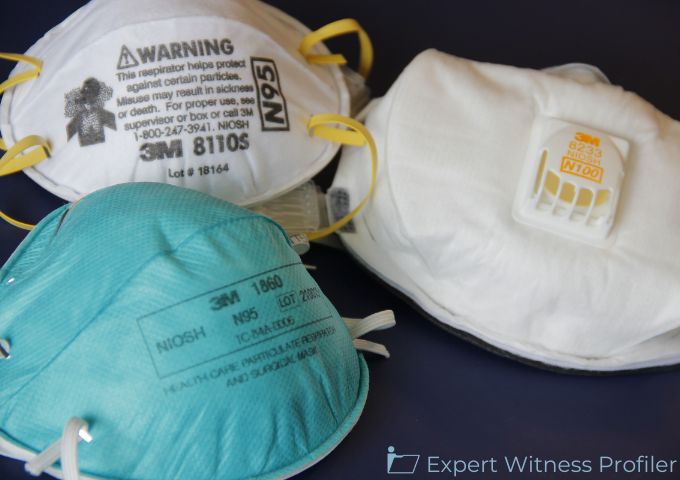
Plaintiff offered the expert testimony of Dr. Michael J. Mina, MD, Ph.D., who opined that PeaceHealth could have accommodated Plaintiff with N95 respirator and “regular testing” in lieu of vaccination.
Dr. Michael J. Mina, MD, Ph.D. is a physician-scientist and public health expert with extensive expertise in vaccine and infectious disease immunology, vaccinology, epidemiology, infectious disease dynamics, and diagnostics.
Mina opined that PeaceHealth could have accommodated Plaintiff with an N95 respirator and “regular testing” because she would have posed a “markedly lower risk of infecting others” than a vaccinated individual.
On reviewing Mina’s documents, the Court found that Mina made scant cross-reference to scientific or medical sources.
Moreover, with few exceptions, Mina’s sources were not available in August 2021. The undue hardship analysis is confined to the information available to the employer when it made its undue hardship decision.
To the extent that Mina’s opinion is based on scientific or medical sources that were unavailable to PeaceHealth when it made its undue hardship decision in August 2021, the Court held that any part of Mina’s opinion that is not based on scientific or medical data that was available in August 2021 is irrelevant and inadmissible under Daubert and Rule 702.
2. Mina’s testimony is not reliable
a. Mina’s opinion is not supported by the relevant sources
Mina contended that, in August 2021, PeaceHealth knew or should have known that N95 respirators and “regular testing”—not vaccination—”were the best tools available” to stop viral spread.
Mina’s first source, “The Barnstable County Outbreak Report” (“Outbreak Report”), is a CDC report that describes a “significant COVID transmission that occurred during the summer of 2021 in one Massachusetts town related to large public gatherings.” Mina ignored the authors’ warning that “data from this report are insufficient to draw conclusions about the effectiveness of COVID-19 vaccines against SARS-CoV-2, including the Delta variant, during this outbreak.” And the Report nowhere discusses masking and testing or any other mitigation method as an alternative to vaccination. For these reasons, the Court and others have determined that testimony as to vaccine efficacy based on this report is unreliable and have excluded such testimony in prior similar cases.
Mina’s second and third sources are CDC COVID-19 guidance documents from late July 2021: a slide deck (July 29, 2021) and a CDC article (July 30, 2021).
Though the July 29 CDC report (slide deck) included emerging data about breakthrough infections, it also contained data that showed that breakthrough cases were less contagious.
And the July 30 CDC report concluded that Delta “increased the urgency to expand vaccination coverage.” Not one of Mina’s sources recommended N95 respirators and “regular testing” in lieu of vaccination to control COVID-19, even after the appearance of Delta and the increase in breakthrough infections. Instead, masking was recommended only as an adjunct to vaccination. The Court concluded that the three timeframe-relevant CDC sources on which Mina relied did not support his opinion.
b. Mina’s opinion is not supported by the August 2021 scientific consensus
Mina agreed that the August 2021 data showed that vaccines, unlike other mitigation methods, were effective in preventing severe illness and death from SARS-CoV-2. Mina disputed vaccine efficacy only as to transmission. He opined that the “scientific data available to PeaceHealth . . . clearly indicated that N95 masking and regular testing,” not vaccination, “were the best tools available to protect the unvaccinated from becoming infected with and transmitting COVID Delta and later Omicron.”
In August 2021, professional medical and public health organizations and government agencies also recommended vaccine mandates for healthcare workers. Finally, in 2021, when Mina was still a professor at the Harvard School of Public Health, he also appeared to have supported vaccine mandates.
In sum, the August 2021 scientific consensus provided no support for Mina’s opinion that PeaceHealth could have accommodated Plaintiff and hundreds of other employees with N95 respirators and “regular testing” in lieu of vaccination without increasing the health and safety risks to its employees and to its patient population.
Further, Mina failed to address the practical shortcomings of using N95 respirators and “regular testing.” He did not meaningfully address the common-sense observation that respirators do not work if they are not worn properly and continuously and that employees need to remove them to eat or drink and would likely even remove them to ease discomfort—events that could happen repeatedly during a single eight-hour shift.
Held
The Court granted PeaceHealth’s motion to strike Dr. Michael Mina’s testimony.
Key Takeaway
Mina’s opinion is not the product of reliable scientific methodology. An expert must show the court that they have used reliable methodology based on facts and data to reach their conclusions.
“Cherry-picking” facts and data, as Mina has done, undermines principles of the scientific method and is a quintessential example of applying methodologies (valid or otherwise) in an unreliable fashion.
Case Details:
Case Caption:
Hunter V. Peacehealth
Docket Number:
6:22cv187
Court Name:
United States District Court for the District of Oregon
On September 24, 2024, Plaintiff Pharilyn Chhang filed the operative second amended complaint against Defendants West Coast and Sergio Madrigal, alleging causes of action under the Fair Housing Act (FHA), California Fair Employment and Housing Act (FEHA), wrongful eviction; invasion of private right to occupancy; and breach of duty. Plaintiff claimed that she is a disabled person who requires her emotional support animal, Onyx, to reside with her.
Defendants intended to call Robert S. Griswold to testify as an expert witness “regarding the standard of care for a property owner/manager as it relates to accommodation requests, insurance issues and costs, ineligible risks and liability exposure and related issues.” However, Plaintiff filed a motion to exclude Griswold.
Plaintiff also filed a motion to preclude Defendants’ expert witness Kevin J. Valine.
Real Estate Expert Witness
Robert Stephen Griswold is a recognized expert on management of all types of residential real estate. He has actively managed over 70,000 residential units and several million square feet of commercial, industrial, self-storage, and retail properties nationally in the last 40+ years.
He is a 3-time graduate of the distinguished Marshall School of Business at the University of Southern California with a BS (’81), MBA (’86), and MSBA (2nd Masters) (’88) in real estate and related disciplines.
The Court found that the standard of care is not relevant to the claims at issue. Additionally, the expert did not appear to have expertise in disability accommodations consistent with the claims herein, nor did it appear that the expert reviewed the insurance policy exclusions.
As a result, the motion was granted as to Griswold’s opinions that Plaintiff’s request for an emotional support animal was denied on “legitimate grounds,” and that Defendants met the applicable standard of care in their ownership, operation, property management, and maintenance with respect to Plaintiff’s request. The motion was further granted as to Griswold’s opinion regarding undue hardship, the feasibility of a reasonable accommodation, and that Defendants acted reasonably by offering to temporarily allow Plaintiff to keep Onyx on the property while Plaintiff sought to relocate. Finally, the motion was granted as to Griswold’s opinion that allowing Plaintiff to keep Onyx on the property would have violated the insurance carrier’s exclusions.
However, the Court denied the motion as to Griswold’s opinion that the property’s insurance could have been non-renewed or canceled for allowing an animal on a breed-restriction list; that permitting Plaintiff to keep such an animal would expose Defendants to financial repercussion; and that a loss of insurance would have imposed a significant burden on the property’s residents and occupants, subject to Defendants laying a proper foundation that the applicable insurance policy excluded the animal in question.
II. Kevin Valine
The Court also found that Valine’s opinions regarding the appropriate standard of care for a reasonably prudent insurance broker were not relevant to the claims at issue.
Although Defendants argued at the hearing that Valine had opined that granting Plaintiff’s accommodation would have exposed Defendants to an “uninsured exposure to risk of catastrophic proportion,” that statement appeared within his broader analysis that “D&D met the standard of care for a reasonably prudent insurance broker.”
As a result, the Court concluded that expert testimony on this issue is unnecessary, as it would not assist the trier of fact given the irrelevance of the standard of care.
Held
The Court granted Plaintiff’s motion to preclude Defendants’ expert witness Kevin J. Valine.
The Court granted in part and denied in part Plaintiff’s motion to preclude Defendants’ expert witness Robert Griswold.
Key Takeaway
Certain expert opinions offered by Griswold and Valine were deemed inadmissible because the standard-of-care analysis had no bearing on the claims at issue.
Dave Neil Speedie (Father) filed a petition under the International Child Abduction Remedies Act (ICARA), the statute that implements the Hague Convention on the Civil Aspects of International Child Abduction (the Convention).
Father sought the return of his minor children, L.S. and I.S., from Washington, where they are presently in the custody of Alexi Dawn Speedie (Mother).
Mother served her expert witness disclosures and identified Dr. Jeffrey L. Edleson as a proposed witness. She stated: “This expert witness will not produce a report. He will testify at trial.” Mother also stated in the disclosure that Edleson will explain how research on children’s exposure to domestic violence, including coercive control, presents a grave risk of psychological and physical harm as well as an intolerable situation for the two children who are the subject to this Hague petition.
Dr. Jeffrey L. Edleson is a Distinguished Professor of the Graduate School and the Harry & Riva Specht Chair Emeritus in Publicly Supported Social Services at the University of California, Berkeley, School of Social Welfare.
He is ranked as one of the top scholars in the world studying domestic violence, being a leading authority on children exposed to domestic violence.
Mother contended that Edleson will not “present evidence under FRE 702, 703, or 705,” but will testify as a “court educator on the topic of children’s exposure to domestic violence.” Thus, Mother argued, Edleson need not provide an expert report.
It is clear to the Court that Mother intended to offer Edleson for expert testimony. In the witness disclosure, Mother said that Edleson would “explain how research on children’s exposure to domestic violence, including coercive control, presents a grave risk of psychological and physical harm as well an intolerable situation for the two children who are the subject to this Hague petition.” Mother also referred to Edleson as an “expert witness.”
Mother’s invocation of the concept of “court educator” as opposed to expert witness is unavailing, since they strike the Court as the same thing.
Because Edleson’s proposed testimony is that of an expert, Mother’s disclosure of his identity should have been “accompanied by a written report.” And because Mother has not shown that this failure was substantially justified or is harmless to Father, the Court excluded his testimony.
Held
The Court granted Father’s motion in limine to exclude the testimony of Jeffrey L. Edleson, Ph.D.
Key Takeaway
Under Rule 26, a party must disclose to the other parties the identity of any witness it may use at trial to present evidence under Federal Rule of Evidence 702, 703, or 705. And this disclosure must be accompanied by a written report-prepared and signed by the witness-if the witness is one retained or specially employed to provide expert testimony in the case.