Blog

  • Construction Expert Barred from Testifying on Established Damages

    Construction Expert Barred from Testifying on Established Damages

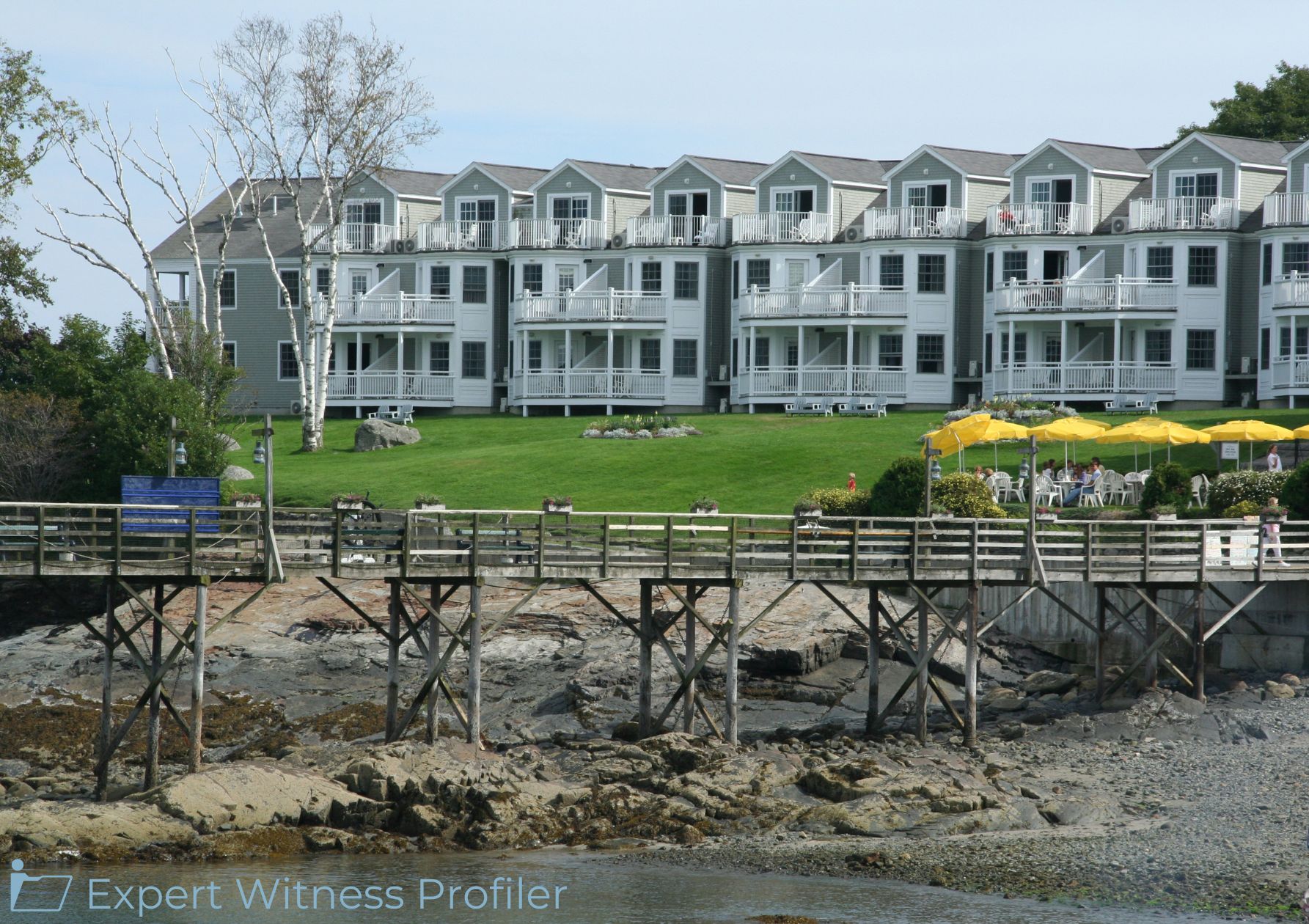
    The case arises from Belmere, L.P.’s claim that Steadfast Insurance Company failed to timely and adequately pay it proceeds due under its commercial lines policy after Belmere invested $26 million of its own funds to repair a 249-unit apartment complex in Houma, Louisiana that it alleged suffered “catastrophic damage” during Hurricane Ida.

    Through its lawsuit, Belmere sought (i) additional coverage under its policy with Steadfast, and (ii) penalties, attorneys’ fees, and interest for Steadfast’s alleged bad faith. 

    Steadfast filed a motion in limine to exclude the opinions of experts Mr. Byron Earls and Mr. Christopher Lipp.

    Belmere retained Earls to (i) “investigate the scope of completed repairs based on information provided”; (ii) “generate comparative estimates for typical building types”; and (iii) “generate a report providing an opinion on the projected measurement of loss based on extenuating circumstance[s] after the event.”

    Lipp, on the other hand, was retained to provide a “technical assessment of the exterior building envelope components inclusive of the roof, exterior walls and windows” with a focus “on the severity of the impacts of water intrusion sustained at Belmere, and its need to replace building materials that were ruined after becoming wet.”
    Construction Expert Witness

    Byron Earls has over 20 years of experience in building construction, both commercial and residential. He also has over 7 years of experience as a catastrophic adjuster handling catastrophic claims nationwide including large fire and water losses.

    Get the full story on challenges to Byron Earls’ expert opinions and testimony with an in-depth Challenge Study

    Engineering Expert Witness

    Christopher Lipp has performed numerous envelope assessments, and investigations and has prepared construction documents based on those investigations. Lipp is experienced in the evaluation of distressed facade elements, including windows, doors, curtain walls, storefront systems, stucco, brick and fiber cement panels on both historic and new construction.

    Want to know more about the challenges Christopher Lipp has faced? Get the full details with our Challenge Study report

    Discussion by the Court

    Byron Earls

    Steadfast made the following contentions: (i) Earls’ methodology is insufficient to meet Daubert standards for reliability and will otherwise result in jury confusion; (ii) his expert report fails to address causation; and (iii) his testimony is irrelevant to determining the alleged cost of repairs, which will result in jury confusion.

    Since Belmere conceded that Earls’ testimony will not be used to establish the measure of its damages—”which are established by its own out-of-pocket costs”; accordingly, the Court granted Steadfast’s motion to the extent that it sought to exclude testimony or any part of the Earls’ report that estimated damages that have already been established by Belmere’s “repair bill.”

    While Earls’ testimony may be relevant for the purpose of rebutting an assertion by Steadfast that specific repair costs were excessive or that the property was not restored using like-kind and like-quality materials, but, the Court held that in its current form, the “proposed opinion [did not] assist the trier of fact to understand or determine a fact in issue.”

    The Court declined to admit any testimony or portion of the Earls report that estimated damages that have already been established by actual costs. If Steadfast presented an argument that the costs incurred by Belmere are somehow excessive or relate to betterments, the Court will allow Earls to opine in general terms (i) as to the reasonable nature of the actual costs or (ii) for the purpose of rebutting the contention that the costs amounted to betterments. As to the reasonable nature of the amount paid by Plaintiff, in no event will the expert state the specific amount of his estimate; merely that he estimated the amount of damages to be greater than the amount paid by Plaintiff. 

    Christopher Lipp

    Steadfast contended in brief fashion that Lipp’s testimony should be excluded for the following three reasons: (i) he did not inspect the property; (ii) he did not provide any opinion on the issue of causation of the alleged damages or the sufficiency of the repairs; and (iii) his “expert report and associated opinions rely heavily on the flawed, irrelevant, and unreliable opinions included in Earls’ report.”

    As a threshold matter, the Court denied Steadfast’s motion to the extent it sought to exclude Lipp’s testimony because (i) Lipp was qualified to render an opinion on his respective subject matter, and (ii) Steadfast has otherwise failed to provide the Court with enough analysis on the issue to make a ruling.

    However, the motion against Lipp’s report was granted to the extent that it relied on the Earls report.

    Held

    The Court granted in part and denied in part Steadfast’s motion in limine to exclude experts Byron Earls and Christopher Lipp.

    Key Takeaway:

    According to Rule 402, expert testimony must be relevant—not merely in the general sense that all testimony must be relevant, but specifically in the sense that the expert’s proposed opinion would assist the trier of fact in understanding or determining a fact in issue.

    Case Details:

    Case Caption: Belmere, L.P. V. Steadfast Insurance Company
    Docket Number: 2:22cv2689
    Court Name: United States District Court, Louisiana Eastern
    Order Date: June 30, 2025
  • Tire Expert’s Impact Damage Theory Admitted

    Tire Expert’s Impact Damage Theory Admitted

    This suit arises from a motor vehicle accident that occurred on September 7, 2018, in Vinton, Louisiana. Plaintiffs alleged that Billy Smith was operating a 2016 Kenworth T880 while traveling westbound on Interstate 10 on that date.

    The vehicle was outfitted with Chinese-manufactured steel belt radial truck tires, distributed by CMA under the trade name “Double Coin tires.” The accident occurred when Smith’s tires suffered a catastrophic tread/belt separation, overturning the vehicle and severely injuring Smith. Smith passed away on September 4, 2021, and his surviving spouse and four adult children were substituted as Plaintiffs. 

    Defendants sought to introduce testimony from tire failure expert Joseph L. Grant. Plaintiffs filed a motion to exclude that testimony under the standards set forth in Federal Rule of Evidence 702 and Daubert.

    Tire Expert Witness 

    Joseph Lawrence Grant possesses over thirty years of experience as a forensic tire analyst, along with over fifty years of experience in the tire industry. He has held multiple managerial and directorial positions during his employment with tire manufacturing companies and has been published several times. 

    Want to know more about the challenges Joseph L. Grant has faced? Get the full details with our Challenge Study report

    Discussion by the Court

    Plaintiffs contended that Grant’s testimony is unreliable because: (1) he did not review the tire’s design or manufacturing specifications, (2) there is little evidence supporting his theory of impact damage causing the tire’s failure, and (3) he failed to exclude possible alternative causes.

    Review of design and manufacturing specifications

    A physical examination of both the tire and its companion tire, as well as each tire’s wheel, allowed Grant to form his opinion on why the tire failed. If the cause of the tire’s failure can be diagnosed through physical examination, the Court held that reviewing the tire’s specifications may not be necessary. In other words, Grant’s findings are not unreliable simply because he reached them without reviewing certain documents.

    Challenges to Grant’s impact damage theory

    Grant opined that an earlier impact weakened the tire’s durability, and subsequent use of the then damaged tire eventually caused it to fail, leading to the accident at issue.

    The Court found Grant’s opinion to be supported because under the Examinations section of his report, Grant observed several detached steel belts and rusted steel cords on the tire. He reasoned that the steel belt detachments resulted from an impact to the tire, which was left either unrepaired or improperly repaired. The steel cords, then left exposed, were able to rust, severely weakening the tire. After prolonged use, the tire ultimately failed.

    Grant noted that, upon a physical examination, the steel cords were not faulty and were in line with industry standards. Moreover, Grant observed many penetrations within the tire’s tread, indicating that it “had been used in service [in areas] where the tire was subjected to conditions” that would likely cause impact damages to occur. 

    The Court found fault with Plaintiffs’ assertion that Grant could not identify what caused the impact considering Grant did identify the impact object as having “an [approximately] half-inch diameter.”

    While any number of potential impact objects could possess a similar diameter, it is reasonable that an expert like Grant could diagnose impact damage as the cause of a tire’s failure but be unable to identify the particular object that impacted the tire. 

    Besides, Grant cited several academic papers and guides as authorities supporting his conclusions. Grant listed the case-specific materials he reviewed when forming his opinion. Among them are his physical examination of the tire, companion tire, and their wheels; x-rays and photographs of the tire; the accident report; and Plaintiff’s responses. 

    Challenges to Grant’s failure to consider alternative causes

    Finally, Plaintiffs argued that Grant failed to exclude other potential causes of the tire’s failure. In his report, Grant excluded a design or manufacturing defect from having caused the tire’s failure. He found that the tire complied with federal regulations and industry standards, because it had been tested and stamped. Grant explained that, in order to be sold, all tire must “pass a series of durability standards,” including strength and endurance tests. The subject tire was properly stamped as having passed those tests.

    Furthermore, Grant referred to a 2005 NHTSA publication, which stated that “design and manufacturing defects are extremely rare,” because the tire industry has committed decades of research to ensuring functional, defect-free products. Noting this, Grant determined that neither a design or manufacturing defect could have caused the tire’s failure and excluded both as alternative causes. Therefore, the Court found no basis for excluding Grant’s testimony. 

    Held

    The Court denied the Plaintiff’s Daubert motion to exclude the testimony of Joseph L. Grant.

    Key Takeaways:

    • Grant’s findings are not inaccurate simply because he reached them without needing to review certain documents. The Court held that any challenge to his conclusions on this ground is more appropriate for cross-examination.
    • The Court held that Grant’s finding of impact damage as the cause of the tire’s failure was a reasonable conclusion.

    Case Details:

    Case Caption: Smith V. China Manufacturers Alliance LLC Et Al
    Docket Number: 2:19cv1111
    Court Name: United States District Court, Louisiana Western
    Order Date: July 1, 2025
  • Mechanical Engineer’s Testimony on Blender Design Excluded

    Mechanical Engineer’s Testimony on Blender Design Excluded

    Plaintiff Lori Lynne Hoff brought a product liability claim against Defendants Capital Brands, LLC and NutriBullet, LLC under the New Jersey Products Liability Act, alleging a design defect in the NutriBullet 600 blender.

    On February 17, 2020, Hoff used the blender to make celery juice, combining water and chopped celery below the max fill line. After sealing and inserting the blender cup into the power base, the unit began operating. As Hoff reached out to stop the machine around the ten-second mark, the blender exploded. The contents splashed onto her face and eyes, and she suffered a cut to her pinky finger, dizziness, and a temporary loss of vision. She later received emergency room treatment.

    Hoff’s expert, Derek King, inspected the blender and concluded that over pressurization caused the cup to separate from the base. Defendants later filed a motion to exclude Hoff’s expert.

    Mechanical Engineering Expert Witness

    Derek A. King holds an M.S. degree in Electrical Engineering from Ohio University, and a B.S. degree in Mechanical Engineering from the University of California, Berkeley. He is also a registered professional engineer in the State of California.
    From 2009 to the present, he has worked as an engineer for Berkeley Engineering and Research in the areas of failure analysis, design, and risk assessment of consumer and industrial equipment, including consumer blenders.

    Want to know more about the challenges Derek King has faced? Get the full details with our Challenge Study report.  

    Discussion by the Court

    The Court addressed Defendants’ motion to exclude Plaintiff’s expert, Derek King, under Daubert and Federal Rule of Evidence 702. Defendants argued that King’s opinions were both irrelevant and unreliable. Because Plaintiff’s design defect claim hinged on King’s expert testimony, Defendants also moved for summary judgment, asserting that without admissible expert evidence, Plaintiff could not prove causation or a feasible alternative design.

    Plaintiff’s Claim Required a Reasonable Alternative Design

    Under the New Jersey Products Liability Act (NJPLA), a design defect claim requires the plaintiff to show that a practical and safer alternative design existed. Plaintiffs often rely on expert testimony to establish this point. King proposed two such alternatives: an automatic timer and a pressure relief mechanism. The Court reviewed whether these opinions met the requirements of relevance and reliability under Daubert.

    Automatic Timer Deemed Irrelevant

    King suggested that a one-minute automatic timer could have mitigated pressure buildup in cases involving excessive run time. However, Plaintiff testified that she ran the blender for fewer than ten seconds, far below the threshold King’s design targeted. King himself acknowledged that a timer would not have been necessary in Hoff’s situation. The Court therefore found that King’s timer proposal did not “fit” the facts of the case and would not assist the jury in understanding what happened. As such, the Court ruled the timer design irrelevant.

    Pressure Relief Design Found Unreliable and Unhelpful

    King also proposed that a pressure relief mechanism, such as a blowout plug or pressure valve, could have prevented the incident. He based this design on general engineering knowledge and prior use of similar mechanisms in pressure cookers. However, King did not test this design in a blender or with carbonated ingredients, which were suspected to be the cause of the overpressurization. Defendants argued, and the Court agreed, that the lack of testing made the methodology weak and speculative.

    Further, the Court emphasized that none of King’s identified causes of overpressurization, heat, carbonation, or prolonged blending, were clearly present in the incident. His opinion asked the jury to consider hypotheticals and possibilities beyond the scope of the actual case. The Court concluded that this opinion would confuse rather than clarify the central issues and thus failed the relevancy (fit) requirement under Daubert.

    Held

    The Court granted the Defendant’s motion to exclude the testimony of Derek King.

    Key Takeaway:

    Expert testimony must be both reliable and directly relevant to the facts of the case. In Hoff v. Capital Brands, the Court excluded Plaintiff’s expert, Derek King, finding that his proposed alternative designs, an automatic timer and a pressure relief mechanism, either didn’t apply to the incident or lacked testing to support their feasibility. Without admissible expert evidence, Plaintiff could not proceed with her design defect claim under the New Jersey Products Liability Act.

    Case Details

    Case Caption: Hoff v. Capital Brands
    Docket Number: 3:21cv16215
    Court Name: United States District Court, New Jersey 
    Order Date: June 30, 2025
  • Obstetrics and Gynecology Expert’s Testimony on Mesh Porosity and Stiffness Admitted

    Obstetrics and Gynecology Expert’s Testimony on Mesh Porosity and Stiffness Admitted

    Connie Thacker is one of tens of thousands of individuals who have filed suit against Ethicon for injuries after treatment with Ethicon’s pelvic mesh devices. 

    Thacker filed a motion asking the Court to preclude defense expert Dr. Salil S. Khandwala from offering testimony on certain subjects. 

    Obstetrics and Gynecology Expert Witness

    Dr. Salil Siddhartha Khandwala is board-certified in obstetrics and gynecology with a subspecialty board certification in female pelvic medicine and reconstructive surgery. He has been in the practice treating women’s health issues since 2000.

    He taught as an Assistant Professor in the Division of Urogynecology and Pelvic Reconstruction Surgery department at the University of Maryland from 1998-2002.

    Want to know more about the challenges Salil S. Khandwala has faced? Get the full details with our Challenge Study report

    Discussion by the Court

    Khandwala’s testimony regarding degradation and contraction in the Ethicon mesh devices

    Khandwala was expected to testify that Ethicon’s pelvic mesh devices do not degrade or contract. Thacker argued that this testimony should be excluded because it is unreliable. Thacker contended that Khandwala’s opinions are based on (1) his statement that he “does not believe,” in those issues with respect to Ethicon’s mesh devices; and (2) a flawed methodology.

    However, Khandwala stated that his opinions on these subjects are based on his review of several studies and his own clinical experience using similar mesh devices. He also made several citations to scientific literature.

    For example, with respect to his opinion on degradation, Khandwala stated that “I have never seen [degradation] in my personal experience using this sling in over 300 cases spanning a period of 10 years and recent published scientific literature has found that Prolene mesh in fact does not degrade [citation omitted].”

    The Court found Khandwala’s opinions—that Ethicon’s pelvic mesh devices did not degrade or contract—to be reliable.

    Khandwala’s testimony regarding mesh porosity and stiffness

    Thacker suggested that Khandwala’s opinions on porosity and stiffness are unreliable because he “has never published on the porosity of mesh and has never personally examined the pore size of any of the Ethicon meshes absent observations with the naked eye.” Thacker argued that such gross examinations, on their own, are insufficient to render Khandwala’s opinions on porosity and stiffness reliable.

    The Court held that Khandwala’s testimony, however, is not solely based on the occasional examination of Ethicon’s products. Rather, the portion of his report that Thacker challenges demonstrated that Khandwala’s testimony on this subject is based on his knowledge relating to the conditions of Ethicon’s mesh products in cases where they are correctly implanted.

    And Khandwala’s knowledge on that subject was derived from both clinical and scholarly review. In fact, his expert report is replete with references to not only his own clinical experience as the basis for his knowledge relating to the conditions of Ethicon’s mesh products after implantation, but it also included numerous references to his review of relevant articles, studies, and other materials.

    Held

    The Court denied the Plaintiff’s motion to exclude the testimony of defense expert Dr. Salil S. Khandwala, M.D. 

    Key Takeaway:

    Khandwala’s opinions regarding degradation and contraction did not rest on unsupported speculation or a flawed methodology. Basically, he stated that his opinions on these subjects are based on his review of several studies and his own clinical experience using similar mesh devices.

    As a result, the Court broke no new ground in finding that Khandwala’s testimony was supported by appropriate validation and rested on a sufficient methodology.

    Case Details:

    Case Caption: Thacker V. Ethicon, Inc. Et Al
    Docket Number: 5:20cv50
    Court Name: United States District Court, Kentucky Eastern
    Order Date: July 01, 2025
  • Digital Forensics Expert’s Analysis of Website Activity Considered Relevant

    Digital Forensics Expert’s Analysis of Website Activity Considered Relevant

    This is a copyright infringement action filed by CoStar Group, Inc. and CoStar Realty Information, Inc. (collectively, “CoStar”) in September 2020 against Commercial Real Estate Exchange Inc (“CREXi”).

    CoStar is a company that provides commercial real estate (“CRE”) information, analytics, and online property listing marketplaces. It owns and operates LoopNet.com, a digital marketplace platform for CRE listings. CoStar contended that CREXi has engaged in “mass infringement” of CoStar’s photographs. Apparently, CREXi and its BPOs copied listing information, including images, from LoopNet when a listing could only be found on LoopNet, and that CREXi would take screenshots of photos or otherwise crop out CoStar’s watermarks from photos to build out listings on its website.

    CREXi filed a Daubert Motion to exclude the opinions of CoStar’s expert, Mr. Daniel Roffman. CoStar retained Roffman to opine on CREXi’s access to the LoopNet website.

    Digital Forensics Expert Witness

    Daniel E. Roffman is Vice President in the Forensic Services Practice. He has over 20 years of digital forensics and information security consulting experience, helping clients protect their most valuable information, and investigating allegations of trade secret theft and cyber incidents.

    He has extensive testimony experience working on behalf of both plaintiffs and defendants and has served as a court-appointed neutral expert on theft of trade secret cases. Roffman has also testified on a range of other digital forensic subjects including software piracy, cyber investigations, and electronic document authenticity issues.

    Want to know more about the challenges Daniel Roffman has faced? Get the full details with our Challenge Study report

    Discussion by the Court

    Roffman was supposed to analyze LoopNet logs and identify what activity in those logs can be attributable to CREXi and its representatives (including CREXi employees and third-party vendors CREXi retained to complete certain work).

    To begin with, Roffman explained how IP addresses can be used to identify users and track their activity on a website, LoopNet’s tools for logging activity (referred to as “hits”) on its website during a “session,” and how users “anonymous online campaigns” attempt to mask user activity through virtual private networks (“VPNs”), outsourcing tasks to third-party business process outsourcing companies (“BPOs”), and rotating through multiple IP addresses in a single session.

    Rule 403

    Basically, CoStar’s theory of copyright infringement is that CREXi copied its images from LoopNet “on a massive scale,” including by having BPOs copy images from CoStar, crop out CoStar’s watermark logo, and upload them onto CREXi’s website, and that this activity was a company policy at CREXi.

    Given that CoStar’s theory of the case is “mass infringement” by CREXi, the Court found that Roffman’s opinions are not substantially more prejudicial than probative. 

    Accordingly, Roffman’s analysis of the volume of activity on LoopNet’s website attributable to CREXi is relevant to and probative of whether CREXi employees and BPOs copied images off of LoopNet.

    Rule 702

    CREXi contended that Roffman’s opinions are unreliable because IP addresses identify a computer network, not an individual user. But if an IP address is identified as a computer network associated with CREXi, including activity from users on that computer network would likely show activity by users associated with CREXi. Roffman’s testimony attempts to identify LoopNet activity by CREXi and its BPOs. To the extent CREXi contended that this does not accurately capture activity attributable to CREXi, the Court held that it is free to challenge Roffman’s approach on cross-examination.

    Next, CREXi argued that Roffman’s opinions unreasonably assumed that activity from certain IP addresses containing no indicators, which appeared in the same sessions as IP addresses with an indicator, is also attributable to CREXi. Roffman explained why he “swept in” activity from IP addresses with no indicator of CREXi—if a user accessed LoopNet from a “CREXi Referring Website” once, only the activity from that particular session would appear as associated with CREXi. Other activity from that IP address where a user did not access LoopNet through a CREXi Referring Website would be left off of the activity log results. Thus, Roffman included activity from these IP addresses to capture potential CREXi activity where a VPN or rotating IP addresses were employed.

    Roffman relied on both IP addresses and sessions, which capture multiple IP addresses associated with one user in a session. He acknowledged that his approach to this analysis “may still be over inclusive,” despite taking measures to remove some data that appeared associated with CoStar’s clients, CoStar, and private IP addresses. 

    Held

    The Court denied the Defendant’s Daubert motion to exclude the opinions of Daniel E. Roffman.

    Key Takeaway:

    Roffman sufficiently explained his methodology, which is sound and based on his expertise in digital forensics. Again, to the extent CREXi disagreed with Roffman’s methodology because the results may be overinclusive, it is free to challenge his opinions on cross-examination. But questions that go to weight, not admissibility, are for the jury to decide—not the Court.

    Case Details:

    Case Caption: Costar Group, Inc. Et Al V. Commercial Real Estate Exchange Inc.
    Docket Number: 2:20cv8819
    Court Name: United States District Court, California Central
    Order Date: June 26, 2025
  • Accounting Expert’s Testimony on Alter Ego Issues Limited

    Accounting Expert’s Testimony on Alter Ego Issues Limited

    The Plaintiffs had purchased timeshares at the Westgate Smoky Mountain Resort. They alleged that the Defendants, comprising various entities linked to the resort, operated a high-pressure sales scheme. According to the Plaintiffs, this scheme persuaded prospective buyers to invest in the vacation timeshare program without properly disclosing critical and legally mandated information.

    On March 13, 2020, Plaintiffs disclosed Alec Fahey as their expert witness. Fahey stated that the Plaintiffs asked him “to determine whether alter ego and control factors [he] analyzed establish, from a financial and accounting standpoint, that the Defendants are alter ego of each other and whether Central Florida Investments, Inc. controlled the other Defendants.”

    Defendants filed a motion to exclude Fahey’s opinions pursuant to Rule 702 of the Federal Rules of Evidence and the Daubert standard.

    Accounting Expert Witness

    Alec Fahey is a certified public accountant, a certified fraud examiner, and is certified in financial forensics. He is a member of the American Institute of Certified Public Accountants and to the Association of Certified Fraud Examiners.

    Fahey’s professional background includes over 26 years of experience in financial and accounting investigations” and “8 years of experience in tax compliance, auditing, and financial reporting conducted in accordance with Generally Accepted Auditing Standards and Generally Accepted Accounting Principles.” He has also “conducted and managed the accounting and financial evaluation aspects of many litigation and insurance matters related to the measurement of business damages, financial impact analysis, as well as financial fraud investigations.” In addition, he has been the project manager and a participant in financial investigation assignments, including those involving rental property and real estate.

    Get the full story on challenges to Alec Fahey’s expert opinions and testimony with an in-depth Challenge Study

    Discussion by the Court

    Defendants first argued that Fahey lacked the necessary qualifications. They next claimed that his “sole opinion amounted to a legal conclusion.” They further contended that he disregarded Tennessee law and failed to use a valid methodology. Finally, Defendants maintained that the foundation for his opinions was inadequate and that his conclusions were unreliable.

    Fahey’s Qualifications

    Defendants stated that “Fahey is a forensic accountant who did not analyze a single accounting-related document and whose sole opinion is a legal conclusion that Defendants are all alter egos of one another.” According to Defendants, “Fahey has never before offered opinions without reviewing accounting or financial records.”

    Defendants stated that since his work did not involve forensic accounting, “Plaintiffs cannot meet their burden to establish that Fahey is qualified to offer his opinion because they cannot establish that his qualifications provide a basis to answer the specific question, that his supposed specialized knowledge is more than a subjective belief, or that it is more than a summary of information from the parties.”

    Defendants’ primary argument is that Fahey “did not look at any financial or accounting records.” But Plaintiffs contended that “Defendants provided few, if any, financial documents for him to review.” And, as Plaintiffs pointed out, Fahey did “review numerous financial records of the Homeowners’ Association, which gave a financial picture of the Defendants and their alleged commingling of funds.”

    During his deposition when asked about his alter ego analysis, Fahey testified, “I’ve been doing this work for many years. I have studied, I’ve taken courses, and I have developed from personal education and outside education about this analysis.” As a result, the Court found Fahey qualified to render his opinions in this case.

    Fahey’s Alleged Legal Conclusion

    According to Defendants, “Fahey’s formal, written opinion is that ‘Defendants are alter egos and interdependent of each other.’” They asserted that this opinion is an inadmissible legal conclusion.

    While Fahey may discuss the significance of certain facts that are indicative of Defendants’ alleged alter ego, the Court found that Fahey’s opinion asserting Defendants were alter egos amounted to a legal conclusion.

    Fahey’s Methodology

    To the extent Fahey employed any methodology,” Defendants asserted that “it was the wrong methodology because it directly contradicted Tennessee law.” 

    Plaintiffs responded that Fahey “investigated complex business records from an accounting and forensic perspective and drew logical conclusions and opinions about the connectedness and relationships between the entities in question.”

    Specifically, Defendants argued that Fahey’s opinions did not address the elements to pierce the corporate veil.

    During his deposition, Fahey testified that different states apply different factors, and that he utilized the factors he understood to be applicable, but he did not specifically look at the list of factors that would apply in Tennessee. However, the Court did not find Fahey’s opinions to be so lacking in reliability as to render it to be the “exception to the rule.”

    The Basis for Fahey’s Opinions

    Defendants claimed that “Fahey’s work consisted of conducting online research as to public records for various Defendants.” They submitted that he did not review Plaintiffs’ depositions and that he was not aware several of Defendants’ practices that he referenced in his report were common in American business.

    Fahey details the items that he reviewed to prepare his opinions. During his deposition, Fahey stated that he was not sure if it was common for related entities to share a brand name but that it was possible.

    Defendants asked whether it was “common for related entities to use one merchant processing account to accept payments,” and Fahey responded that it was possible, but it would create a problem with separating the operations. As a result, the Court found that Defendants’ challenges were not grounds for excluding Fahey.

    Held

    The Court granted in part and denied in part the Defendants’ motion to exclude the opinions of Alec Fahey.

    Key Takeaways:

    • Mere weaknesses in the factual basis of an expert witness’ opinion bear on the weight of the evidence rather than on its admissibility.
    • Rule 704 requires that an expert’s testimony be helpful to the jury. Legal conclusions are not considered helpful because they “do little more than tell the jury what result to reach.”

    Please refer to the blog previously published about this case:

    Hospitality Expert’s Testimony on Corporate Structure Excluded

    Case Details:

    Case Caption: Moore Et Al V. Westgate Resorts Ltd., L.P.
    Docket Number: 3:18cv410
    Court Name: United States District Court, Tennessee Eastern
    Order Date: June 27, 2025
  • Expert Testimony on Human Resources Practices Limited

    Expert Testimony on Human Resources Practices Limited

    Plaintiff Brian Kniffen brought claims against Defendant East Wenatchee Water District under the Washington Law Against Discrimination, the federal Americans with Disabilities Act, and the Washington common law tort of wrongful discharge in violation of public policy.

    Kniffen was a Utility Field Inspector (“UFI”), and his job consisted, at least in part, of inspecting various entities served by the water district, which involved opening and closing water valves. In May 2019, Kniffen experienced an on-the-job injury to his back while torquing a valve.

    After the injury, Kniffen was restricted with respect to lifting, squatting, and crawling. In August of 2019, he underwent an extraforaminal discectomy, a procedure on his lower back, and continued to work on a light duty basis, including the assistance of another employee to turn valves. In June of 2020, Kniffen called for assistance with a water valve, but no one was available, and he reinjured his back while twisting. As a result, he reopened his original worker’s compensation claim from May 2019.

    Defendant sought to exclude Plaintiff’s expert witness, Allison West‘s testimony on its human resources practices.

    Human Resources Expert Witness

    Allison Kracov West received a Bachelor of Arts from the University of Colorado, Boulder, and a Juris Doctor from Golden Gate University School of Law in 1994. She maintained a practice in employment law in San Francisco until she opened a consulting service in 2000, dealing with workplace investigations and human resource training.

    West has delivered trainings on employment issues to public and private entities and has been a speaker at human resources association conferences. She holds certificates demonstrating proficiency in human resource practices and attends continuing education courses.

    Want to know more about the challenges Allison K. West has faced? Get the full details with our Challenge Study report

    Discussion by the Court

    Defendant moved to exclude West’s testimony, arguing that she offered legal conclusions and made speculative assertions about human resource practices. Plaintiff assured that West will not provide testimony at trial on what reasonable accommodation law is or any legal conclusions about whether the law was violated, but argued that her opinion is well supported and will provide the jurors with additional context beyond the scope of general knowledge.

    Defendant argued that West’s testimony would offer nothing more than what the jurors may deduce for themselves after the presentation of evidence and is essentially full of legal conclusions.

     In forming her opinion and amendment, West reviewed the record as well as a “variety of resources that assist Human Resource (HR) professionals to develop industry standards that are recognized as ‘standard,’ ‘reasonable,’ or ‘best practices’ for the handling of employer-employee issues in all aspects of human resources.” Given her background in employment law and consulting work, West appeared to be well versed in such standards.

    Analysis

    The Court agreed with Defendant that some of West’s testimony unduly usurped the role of the Court and the jury, and therefore is excluded. West’s report detailed instruction on Washington State law, included findings that appeared speculative—such as the assertion that potential points for accommodation “fell through the cracks”—and offered conclusions that were properly left for the jury.

    Though Plaintiff argued that the ultimate issue of law is whether an accommodation is reasonable, not whether Defendant failed to engage in the interactive process, the Court disagreed, finding them intertwined. Therefore, to be admissible at trial, West had to limit her testimony to: (1) what the accommodation and interactive process looks like, including the proper role of administrators; (2) examples of reasonable accommodations; (3) how employers typically engage in the process of accommodating disabled employees; and (4) what steps Defendants took in the accommodation and interactive process. 

    By focusing her opinion on these specific topics, West could help the jury evaluate whether the Defendant followed human resource standards—without directly stating a legal conclusion herself.

    Held

    The Court granted in part the Defendant’s motion to exclude the testimony of Allison West.

    Key Takeaway:

    The admissibility of expert testimony, whether scientific or not, must assist the trier of fact to determine a fact in issue by providing information “beyond the common knowledge. While an opinion is not objectionable just because it embraces an ultimate issue, an expert witness cannot give an opinion as to her legal conclusion, i.e., an opinion on an ultimate issue of law. 

    Case Details:

    Case Caption: Kniffen V. East Wenatchee Water District
    Docket Number: 2:23cv344
    Court Name: United States District Court, Washington Eastern
    Order Date: June 27, 2025
  • Hospitality Expert’s Testimony on Corporate Structure Excluded

    Hospitality Expert’s Testimony on Corporate Structure Excluded

    The Plaintiffs had purchased timeshares at the Westgate Smoky Mountain Resort. They alleged that the Defendants, comprising various entities linked to the resort, operated a high-pressure sales scheme. According to the Plaintiffs, this scheme persuaded prospective buyers to invest in the vacation timeshare program without properly disclosing critical and legally mandated information.

    In June 2020, Defendants disclosed Howard Nusbaum as an expert. Nusbaum provided an overview of timeshare history and its industry. He then set forth his disagreements with Plaintiffs’ expert, Mr. Kenneth Christopher Free.

    Plaintiffs filed a motion to exclude certain opinions of Mr. Howard Nusbaum

    Hotel And Hospitality Expert Witness

     Howard C. Nusbaum was the president and chief executive officer (“CEO”) of American Resort Development Association (“ARDA”) from 2000 to 2019.

    For the past thirty-seven years, he has held leadership positions in hotels and resorts with the last twenty years focused solely on timeshare standards, education, and communications with the goal of sharing these best practices.

    Want to know more about the challenges Howard Nusbaum has faced? Get the full details with our Challenge Study report

    Discussion by the Court

    Nusbaum’s Opinions Regarding Defendants’ Sales Practices

    According to Plaintiffs, “Nusbaum opined that ‘Free’s assertions that somehow [Defendants] did not adequately or clearly disclose information about the use plan and booking availability is truly perplexing and is just plain wrong.’”

    Plaintiffs argued that Nusbaum’s opinion was not grounded in sufficient facts and relied on three unsupported bases. First, they claimed that Nusbaum relied on Defendants’ Public Offering Statement (“POS”) and made “a legal argument masquerading as an expert opinion.” Second, they argued that Nusbaum relied on Defendants’ experience, which they considered irrelevant. Finally, they asserted that Nusbaum based his opinion on his belief that Defendants had sufficient inventory.

    The Court had already excluded Free’s testimony regarding inadequate disclosures, finding it unhelpful to the jury. In light of that ruling, Plaintiffs’ challenge to Nusbaum’s critique of Free’s opinions appeared moot. To the extent Defendants sought to rely on Nusbaum’s opinions, the Court found them unhelpful for the same reasons it had excluded Free’s.

    Although Defendants argued that “Nusbaum opines that the disclosures in the POS ‘meet industry standards’,” Nusbaum, like Free, failed to explain the specific industry standards he referenced.

    Accordingly, to the extent Plaintiffs’ challenge was not moot, the Court concluded that Nusbaum’s opinions regarding Defendants’ sales practices were not helpful and should be excluded.

    Nusbaum’s Opinions about Corporate Structure

    Plaintiffs stated that, “Nusbaum’s opinion that Defendants’ use of multiple company entities is ‘legal’ is obviously, a legal conclusion, and thus, inadmissible.” In addition, Plaintiffs submitted that “Nusbaum’s opinion is not based on any information or data about the specific interrelationships between the various [Defendant] entities that are Defendants in this case.”

    The Court agreed that Nusbaum’s discussion of Defendants’ structure is not reliable.  Nusbaum stated that he did not “read any financial documents showing the interrelationship of the various Defendant entities in connection with the Resort.”  And his expert report reflected that he “did not review any documents regarding the relationships between the various Defendant entities.”

    Nusbaum’s Opinions about Free’s Experience

    According to Plaintiffs, “Nusbaum takes particular issue with the background and qualifications of Plaintiffs’ expert Kenneth Free.” But Plaintiffs stated that “Nusbaum . . . had no first-hand knowledge of Free’s role in the founding of Hilton Grand Vacations Company (HGV), which predated Nusbaum’s entry into the industry by nearly a decade.”

    Upon review, the Court held that Nusbaum’s statements appeared to be factual testimony as opposed to expert testimony. Even if Nusbaum’s statements could be considered expert testimony, Plaintiffs did not challenge any methods of collecting the information for his commemorative publications; instead, they challenged that Nusbaum did not review certain records or talk to certain individuals. These challenges go to the weight of Nusbaum’s statements.

    Plaintiffs also argued that “Nusbaum has no first-hand knowledge of Free’s role.”  But Nusbaum’s statement flows from his “two-decade experience” in the timeshare industry and his role in collecting information for the commemorative book.  If Plaintiffs believe that Nusbaum’s statements are speculative or constitute hearsay, they may object to them at a later date.

    Held

    The Court granted in part and denied in part the Plaintiffs’ motion to exclude certain opinions of Howard Nusbaum.

    Key Takeaways:

    • It is not proper for the Court to exclude expert testimony merely because the factual bases for an expert’s opinion are weak.
    • Claiming that an industry standard exists is not the same as discussing that standard.

    Case Details:

    Case Caption: Moore Et Al V. Westgate Resorts Ltd., L.P.
    Docket Number: 3:18cv410
    Court Name: United States District Court, Tennessee Eastern
    Order Date: June 27, 2025
  • Expert Testimony on the Professional Standard of Law Enforcement Officers Excluded

    Expert Testimony on the Professional Standard of Law Enforcement Officers Excluded

    Plaintiff Suzanne Stewart filed a gender discrimination and retaliation suit against the City of Arcola after Mayor Fred Burton terminated Stewart’s employment as “a direct result of policy violations related to insubordination and [her] unprofessionalism.”

    Plaintiff filed a motion to strike the opinion of Defendant’s expert Michael W. Thaler.

    Law Enforcement Expert Witness

    Michael W. Thaler has extensive experience in law enforcement. He served as a law enforcement officer for over 40 years, during which he has served as the Assistant Chief of Police and Executive Assistant Chief of Police for the City of Houston and the Chief of Police for the City of Pasadena. 

    Want to know more about the challenges Michael W. Thaler has faced? Get the full details with our Challenge Study report

    Discussion by the Court

    Defendant argued that Thaler offered an opinion on whether Plaintiff’s conduct could be considered insubordination. However, the Court held that Thaler’s declaration went well beyond that scope.

    Thaler purported to analyze “the civil action filed on behalf of Suzanne Stewart regarding her allegations of being discriminated against and terminated when she complained of ‘inappropriate comments’ made by the Mayor which were directed at her.” However, that merely summarized the case. It was the responsibility of the Court to analyze the civil action, not that of a non-lawyer expert.

    He further wrote that his “conclusions and opinions are based on an analysis of these materials by applying his law enforcement and administrative experience, education, and training regarding application of the applicable provisions of Texas and federal laws … Texas Administrative Code, Title 37; Texas Local Government Code 614; and Texas Occupational Code § 1701.452(a), (b).”

    The Court found that these were attempts by a non-lawyer expert to present legal conclusions under the guise of a legal analysis on a case-dispositive issue.

    At times, Thaler opines without rendering conclusions of law. For example, he writes that “there is no greater show of disrespect to the authority of a superior than to publicly challenge the decisions of a ranking officer with the type of profane laden language and unsupported salacious accusations as those made by the Plaintiff.” Nevertheless, the Fifth Circuit has recognized that expert testimony is unnecessary if “the jury could adeptly assess this situation using only their common experience and knowledge.”

    The Court concluded that Thaler’s opinion was, at best, unnecessary and, at worst, untethered to his qualifications.

    Held

    The Court granted the Plaintiff’s motion to strike the opinion of Defendant’s expert Michael W. Thaler.

    Key Takeaway:

    Experts cannot render conclusions of law or provide opinions on legal issues. A jury, using their common experience and knowledge, could adeptly assess that publicly challenging a supervisor with profanity-ridden language while accusing them of extramarital affairs is indeed disrespectful.

    Case Details:

    Case Caption: Stewart V. City Of Arcola
    Docket Number: 4:23cv4387
    Court Name: United States District Court, Texas Southern
    Order Date: June 24, 2025
  • Food Science Expert Witness Barred from Testifying Over Lack of Medical Credentials

    Food Science Expert Witness Barred from Testifying Over Lack of Medical Credentials

    This dispute arose from Plaintiff Denise Young’s claim that she suffered from Salmonella Gastroenteritis due to food poisoning after consuming a meal her son purchased for her on June 11, 2022, from a Chipotle restaurant in Newark, New Jersey.

    Young’s son purchased a Pollo Asado Bowl with Queso Blanco from Chipotle at 6:48 PM on June 11, 2022 and delivered it to her. This dish, Pollo Asado comprises chicken, black beans, tomato salsa, white rice, corn salsa,
    fajita veggies and queso blanco.

    Defendant Chipotle Mexican Grill of Colorado, LLC filed a motion to exclude the testimony of Plaintiff’s expert, Marvin E. Winston.

    Food Science Expert Witness

    Marvin E. Winston is an experienced food scientist. He has over thirty years of experience supporting attorneys and insurance companies by resolving a wide range of issues and offering reliable assistance in legal matters.

    Want to know more about the challenges Marvin E. Winston has faced? Get the full details with our Challenge Study report. 

    Discussion by the Court

    Defendant contended that Winston’s report was procedurally deficient and therefore inadmissible. Specifically, Plaintiff failed to (a) produce the report in a timely manner, (b) include the expert disclosures required under Rule 26(a)(2)(B), and (c) provide Winston’s CV. Defendant further argued that the report was substantively flawed, asserting that Winston’s conclusions were speculative, his methodology unreliable, and his testimony unlikely to assist the trier of fact in resolving the key factual disputes.

    Defendant emphasized that although Winston identified himself as a “Consulting Food Scientist,” he provided no explanation or supporting materials to clarify what that title meant in the context of Plaintiff’s allegations or how it qualified him to offer the opinions in the report. Additionally, Winston had not conducted any testing of the food in question. Defendant also maintained that Winston was unqualified to make a medical diagnosis or establish a causal link between Plaintiff’s meal and her alleged illness, and argued that the report lacked any meaningful probative value.

    Plaintiff argued that she disclosed Winston as an expert to the Defendant and the Court and that any failure to make disclosures is “harmless because the Defendant received and read the report and had an opportunity to formulate a reply to challenge the CV as well as the, qualifications data and other cases which during the last 4 years Winston has testified as a witness.” 

    Analysis

    Putting aside the procedural deficiencies and Plaintiff’s failure to comply with Rule 26(a)(2)(B), the substantive issues Defendant raised are significant and as such, the Court found that the proposed testimony of Winston did not satisfy the requirements of Rule 702.

    While the Court did not doubt Winston’s purported qualifications as a “Consulting Food Scientist” and that he testified as an expert in other proceedings related to that title, he is not qualified to opine on the medical causation for Plaintiff’s symptoms on June 12, 2022 here.

    Winston is not a medical doctor and, as Defendant stated in its moving brief, there is “no evidence or expert material presented to explain what” Winston’s purported food science expertise “means in the context of the Plaintiff’s allegations, or how if at all it qualifies him to offer the opinions contained therein.”

    Additionally, Winston identified no methodology to support his conclusion that Plaintiff “was served food at Chipotle Mexican Grill which resulted in her contracting food poisoning”—a medical diagnosis— and Winston himself admitted that he is uncertain as to what the “causative organism” of Plaintiff’s symptoms was because no tests were performed to make such a determination.

    The Court did not see anything in Winston’s report that led to the conclusion that Plaintiff suffered from salmonella poisoning as alleged, and more significantly, the Court did not see anything in the Winston Report that would help the trier of fact determine whether Plaintiff suffered salmonella poisoning from consuming Defendant’s food.

    Held

    The Court granted the Defendant’s motion to exclude the testimony of Marvin E. Winston.

    Key Takeaway:

    As the 2023 Amendments to Rule 702 make clear, “the rule has been amended to clarify and emphasize that expert testimony may not be admitted unless the proponent demonstrates to the court that it is more likely than not that the proffered testimony meets the admissibility requirements set forth in the rule.” Without proper medical qualifications and any identified
    methodology, Winston’s opinion simply will not help the trier of fact.

    Case Details:

    Case Caption: Young V. Chipotle Mexican Grill Of Colorado, LLC Et Al
    Docket Number: 2:22cv7452
    Court Name: United States District Court, New Jersey
    Order Date: June 26, 2025