The matter before the Court stems from Plaintiff USI Insurance Services LLC’s (“USI”) lawsuit against Defendants Alliant Insurance Services Incorporated (“Alliant”), William J. Havard III, Robert Engles, Jenise Purser, and Justin Walsh (collectively, “Defendants,” or without referring to Alliant, the “Individual Defendants”) relating to allegations that, among other things, they engaged in the improper solicitation of USI’s clients on Alliant’s behalf after resigning from USI.
Defendants filed a motion to exclude certain trial testimony and the opinions of USI’s industry expert witness, Thomas R. Linn.
Insurance Expert Witness
Thomas Richard Linn has extensive experience in the insurance industry, having served as the Executive Vice President of Marsh, Berry & Company, Inc., one of the nation’s largest insurance agency consulting firms. Throughout his 22-year tenure at MarshBerry, Linn advised industry players on financial and organizational development and served as an intermediary to insurance-related mergers and acquisitions totaling more than $2 billion.
Defendants objected to Linn’s testimony concerning (1) certain “market multiples” derived from other undisclosed insurance transactions and (2) opinions on the enforceability and interpretations of the restrictive covenants in the Individual Defendants’ employment agreements.
Market Multiples
USI planned to offer Linn’s testimony on the process for buying, selling, and acquiring books of business (“BOB(s)”) in the commercial insurance industry and the typical pricing for such assets. Linn opined that industry uses “multiples of revenue” as a rule of thumb to price of a firm or BOB and “multiples of EBITDA” to calculate the sale price. He further provided specific ranges of multiples for revenue and for EBITDA in which the range covers standard business risks in the insurance industry and unique, transaction-specific risks.
Defendants attacked Linn’s factual basis for reaching the proffered multiples. According to Defendants, Linn based his multiples every transaction he worked on during his twenty-two-year career, including those concerning the sale of entire insurance brokerage firms and isolated BOBs.
Defendants also pointed out that when their counsel asked him to identify specific comparable transactions involving the sale of BOBs underlying his multiples, Linn refused to identify the names, revenues, locations, and acquisition prices as confidential and indicted that he based the multiples on the “the judgment [he] . . . gained after 22 years of experience.”
Linn testified that he spoke with partners who worked at his former company for “touch points and points of reference for which he used to form [his] opinion” regarding the status of the marketplace and current pricing multiples. These conversations related to the sale of entire brokerage firms, not BOBs, and Linn did not receive any information regarding any specific transactions.
He further testified that asking about BOBs in particular was unnecessary because the valuation of a BOB incorporates a discount from the valuation of the entire firm, which remained the same since the time he was with the company.
Analysis
Though it is possible that business assets like BOBs may sell at some multiple that accounts for various discounts or premiums based on various performance and market-based factors as a matter of general principle, Linn opined to a specific range of multiples by applying that rule, i.e., the principle, to a set of unidentified facts.
The proffered range of multiples is not a matter of general principle but rather a conclusion drawn from analytical reasoning based on Linn’s facts and experience. But Linn, however, refused to disclose the facts, i.e., the transactions, underlying the range, removing the Court’s ability to evaluate whether those transactions provide a sufficient factual basis to support his opinion.
Linn indiscriminately included every transaction from his career without explaining how the various factors impacted his analysis to arrive at specific numbers that define the boundaries of the range. Consequently, Linn failed to link his experience in valuing BOBs with his conclusion on the range of multiples, and by never explaining how the relevant factors apply to determine a particular multiple, the Court is left with no basis to determine whether he reliably applied such factors to reach his ultimate conclusion.
Additionally, by failing to explain how the particular factors apply to discount a BOB, Linn’s testimony on a range provided the jury with no guidance on how to determine the appropriate multiple within that range. Therefore, the Court excluded Linn’s testimony pertaining to the specific range of market multiples. This exclusion, however, is narrow because the Defendants’ challenge pertains to the ranges themselves and not the general principles underlying the sales process. Linn may testify to the other general market-based principles addressed prior to arriving at the specific multiple.
Enforceability and Interpretations of the Restrictive Covenants
The parties disputed whether Linn should have been permitted to testify that the restrictive covenants in the Individual Defendants’ employment agreements reflected industry standards and remained reasonable. Their disagreement focused on the relevance of his opinion to the covenants’ enforceability. They raised these arguments before the Court issued its summary-judgment ruling, which resolved the enforceability question. After that decision, any additional testimony became unnecessary and irrelevant.
Held
The Court granted the Defendants’ motion to exclude certain testimony of Thomas R. Linn.
Key Takeaway:
An expert must establish the reliability of the principles and methods, “along with the particular method of analyzing data thereby obtained, to draw a conclusion regarding the particular matter to which the expert testimony was directly relevant.” In other words, without more, Linn generated his proffered range of multiples based on mere ipse dixit.
Case Details:
Case Caption:
USI Insurance Services LLC V. Alliant Insurance Services Incorporated Et Al
In this commercial property damage insurance case, Plaintiff Prairie Walk Condominium Association sought to recover millions of dollars in benefits to repair damage to approximately fifteen buildings at its condominium complex resulting from a July 16, 2018, hailstorm, as well as treble damages for alleged unreasonable delay/denial of insurance benefits.
Plaintiff disclosed as a retained expert Greg Z. Gerganoff of Rocky Mountain Safety Consulting, Inc., to provide opinions about construction safety standards for the restoration project.
Defendant filed a motion to strike certain opinions of Plaintiff’s expert Gerganoff. The Court previously denied the Defendant’s motion to strike as moot. However, the motion did not persuade the Court that any of Gerganoff’s opinions should be stricken under either Rule 702 or Rule 403.
Safety Expert Witness
Greg Zdravko Gerganoff is a board-certified safety professional and the owner of Rocky Mountain Safety Consulting, Inc. He provides safety consulting to various industry clients including mining, oil and gas, construction, manufacturing, residential property managers, and insurance companies.
Defendant asserted that Gerganoff’s incorporation of Occupational Safety and Health Administration guidance into his opinions is a “stunning admission” that his “opinions are nothing more than the very type of ipse dixit that the U.S. Supreme Court mandates be rejected under Rule 702.” However, the Court held that Gerganoff’s opinions are supported by a reliable methodology, will be helpful to a jury determining the necessary cost of repairs, and do not present an appreciable risk of confusion. Basically, forming an opinion about safety standards based on guidance from a federal administration is far from ipse dixit—to the contrary, such an opinion has clear grounding beyond the expert’s mere “say-so.”
Defendant also quibbled with Gerganoff’s interpretation of certain OSHA regulations. However, the fact that the technical language of these guidelines may not encompass his specific suggestions did not render them inherently unreliable or unhelpful in this case, particularly since Gerganoff did not opine that his recommendations carry the force of law.
Defendant argued that Gerganoff’s opinions are irrelevant because the insurance policy only entitles Plaintiff to “the amount actually and necessarily needed to repair or replace covered property damage.” While there is potentially some merit to this argument, what exactly the insurance policy means by “necessary”—and whether that term connotes bare legal necessity as defined by OSHA or some higher level of necessity as defined by the prevailing industry standards—is ultimately a question on which the parties have the burden of convincing the jury.
Finally, Defendant argued that Gerganoff’s opinions should be excluded because they are overly prejudicial and misleading. Given that obscure construction safety standards are not within the realm of common knowledge, the Court held that any such potential risk did not substantially outweigh the potential helpfulness of Gerganoff’s opinions.
Held
The Court denied the Defendant’s motion to strike certain opinions of Plaintiff’s expert Greg Z. Gerganoff.
Key Takeaway:
Forming an opinion about safety standards based on guidance from a federal administration is far from ipse dixit—to the contrary, such an opinion has clear grounding beyond the expert’s mere “say-so.” This does not run afoul of the oft-quoted axiom that an expert’s opinion must be “based on actual knowledge, not subjective belief or unsupported speculation.”
Case Details:
Case Caption:
Prairie Walk Condominium Association V. American Insurance Company
This case centered on a trademark dispute involving the mark IDHAYAM, which means “heart” in Indian languages and was used in connection with sesame oil sales. Defendant Meenakshi Overseas LLC sold sesame oil under the IDHAYAM name and held a federal trademark registration for it. Plaintiff V.V.V. & Sons Edible Oils Limited, who also marketed sesame oil under the IDHAYAM mark, asserted that it had used the mark first and sought to cancel the Defendant’s registration along with related relief.
Plaintiff retained Thomas J. Maronick to perform a survey purporting to measure the likelihood of confusion between the Parties’ respective IDHAYAM sesame oil products.
Maronick issued an expert report describing and interpreting the results of this survey on October 30, 2024. He opined that the “level of likelihood of confusion found here, i.e., 46.7%, supports a conclusion that there is a likelihood of confusion between the two brands of sesame oil among consumers who buy Indian and Asian food.”
Plaintiff has also identified Janarthanan Rajaratnam, a director of Pankaj Exports Private Limited (“Pankaj”), as a non-retained expert who Plaintiff intends to use as a witness at trial. Pankaj is an export company located in India that has been involved in shipping IDHAYAM branded goods manufactured by Plaintiff to various parts of the world, including the United States. Plaintiff has indicated Rajaratnam will testify about various customs and practices of importers in meeting the requirements of U.S. Customs and the U.S. Food and Drug Administration (“FDA”), as well as about the importation practices of the Parties to this action.
The Defendant filed motions to exclude the testimony of Plaintiff’s expert witness, Maronick, as well as that of non-retained expert Rajaratnam.
Marketing Expert Witness
Thomas Joseph Maronick is an Emeritus Professor of Marketing in the School of Business and Economics at Towson University in Towson, Maryland. His educational background includes a BA in Philosophy from St. Thomas Seminary, an MSBA from the University of Denver with a major in Marketing, a Doctorate in Business Administration (“DBA”) from the University of Kentucky with a major in Marketing, and a JD from the University of Baltimore, School of Law. He is an inactive member of the Maryland Bar.
At Towson University, he taught undergraduate and graduate courses in strategic marketing, consumer behavior, and marketing research. He has also taught graduate and executive development courses in strategic marketing and marketing research at several universities in the Baltimore and Washington, D.C., areas.
His professional background includes serving as the Director of Impact Evaluation in the Bureau of Consumer Protection at the Federal Trade Commission (“FTC”) from 1980 to 1997. In that capacity, he was the in-house marketing expert for all divisions of the Bureau, advising attorneys and senior management on marketing aspects of cases being considered or undertaken by Commission attorneys.
Motion to Preclude Expert Testimony of Thomas J. Maronick
The Defendant contended that: (1) Maronick surveyed an overly broad audience, failing to limit participants to Indian consumers or to those who regularly purchased Indian food; (2) he omitted a control group; and (3) he failed to replicate real-world market conditions. According to the Defendant, the survey used low-quality photos that obscured distinguishing language on the packaging and excluded images of third-party products—factors that may have led respondents to perceive the parties’ products as more similar than they were. Due to these alleged flaws, the Defendant asserted that Maronick’s report was “completely useless” and likely to mislead the jury, and therefore should be excluded from trial.
The Court agreed with the Plaintiff’s position, as stated in their Opposition, that all survey respondents had indicated that they purchased Indian food, even if only occasionally. Therefore, the Defendant failed to demonstrate that the survey sample was clearly inappropriate. If the Defendant wished to argue that the survey group should have been more narrowly defined, the Court noted they remained free to do so at trial.
Regarding Maronick’s omission of a control group, the Parties disagreed on whether a control was necessary or useful for this type of survey. The Court concluded that this dispute pertained to the weight of Maronick’s testimony, not its admissibility.
Lastly, the Court found that the photos used in the actual survey (as opposed to the lower-quality copies submitted to the Court) were much clearer. It also held that including third-party product images could have overcomplicated the survey and reduced its effectiveness. As with the other objections, the Court ruled that these concerns affected the weight of the evidence, not its admissibility, and could be addressed during trial.
Motion to Preclude Expert Testimony of Janarthan Rajaratnam
The Defendant argued that Rajaratnam’s testimony should be excluded for three reasons: (1) he did not qualify as a proper non-retained expert, but instead acted as a retained expert because he intended to base his testimony on documents and information produced during the litigation and provided to him for review; (2) the Plaintiff had failed to fully comply with the disclosure requirements of Federal Rule of Civil Procedure 26 for either non-retained or retained experts; and (3) Rajaratnam lacked adequate qualifications to testify regarding U.S. Customs and FDA importation requirements and practices.
In their Opposition, the Plaintiff largely conceded that their expert disclosures were inadequate and that Rajaratnam was not a proper expert witness. Instead, the Plaintiff contended that Rajaratnam should be allowed to testify as a fact witness under Federal Rule of Evidence 701, citing his personal knowledge of U.S. Customs and FDA requirements gained through years of experience importing food products into the United States, as well as his familiarity with the importation of IDHAYAM products by both parties over several years.
The Court agreed that Rajaratnam could not testify as an expert witness due to the Plaintiff’s failure to comply with the Federal Rules’ disclosure requirements. However, the Court declined to bar him from testifying as a lay witness.
The Defendant objected, arguing that Rajaratnam had not been properly disclosed as a fact witness and should therefore be precluded from testifying in that capacity. Nonetheless, the Court noted that while Rajaratnam was originally identified as a non-retained expert, he had been timely disclosed as a witness nearly eight months earlier. Moreover, the Defendant had the opportunity to depose him on January 22 and 24, 2025. Given this, the Court found that any potential prejudice to the Defendant was not significant enough to justify excluding Rajaratnam’s testimony entirely.
Held
The Court denied the Defendant’s motion to preclude the testimony of expert witness Thomas J. Maronick.
The Court denied the Defendant’s motion to preclude the testimony of non-retained expert witness Janarathanan Rajaratnam.
Key Takeaway:
Technical flaws in a survey—such as the format of the questions or how the survey is conducted—affect the weight of the evidence, not its admissibility. In essence, concerns about methodology, survey design, reliability, the expert’s experience and reputation, or critiques of the conclusions go to the weight of the survey, not whether it can be admitted.
Case Details:
Case Caption:
V.V.V. & Sons Edible Oils Limited V. Meenakshi Overseas LLC
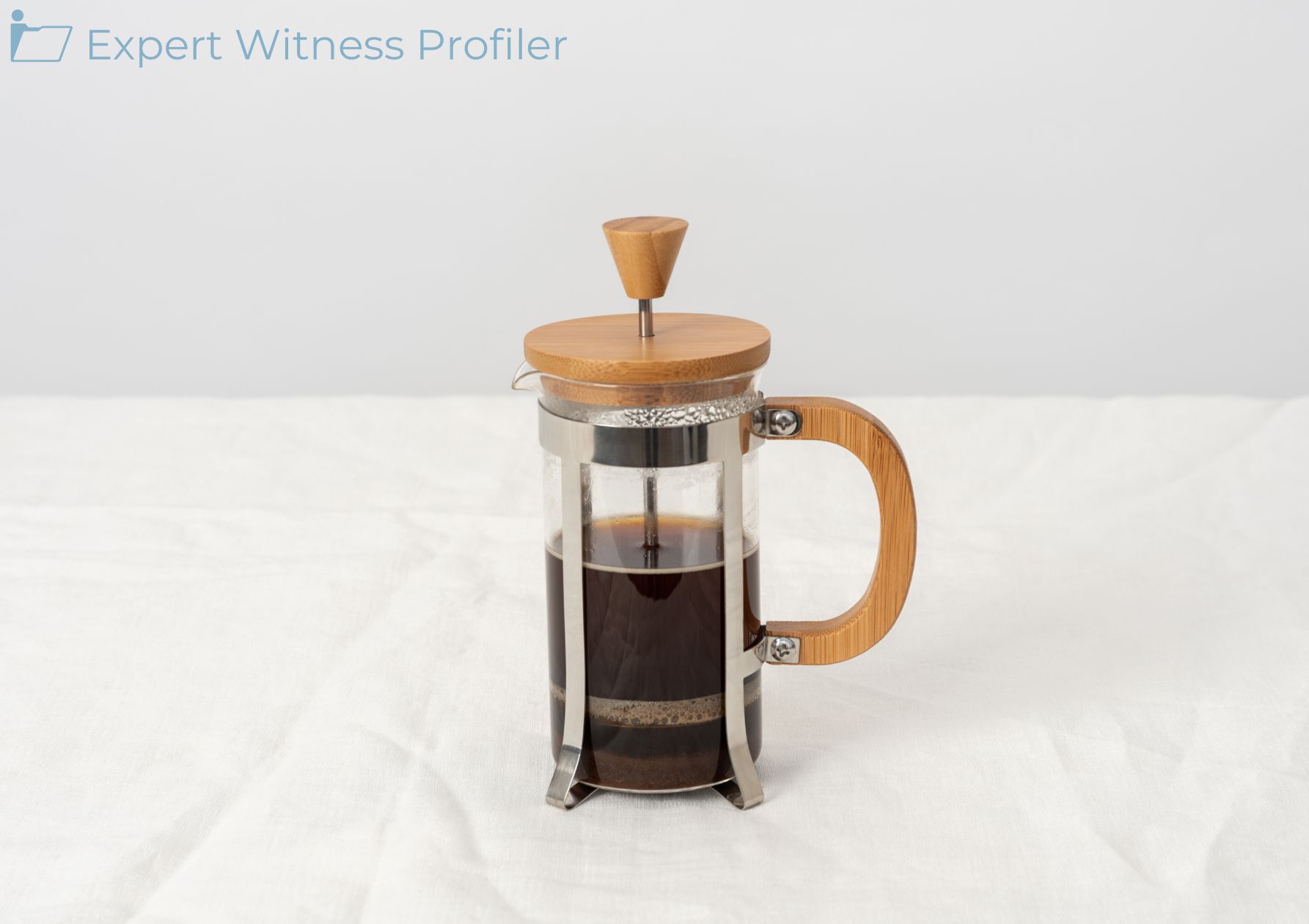
Plaintiff, Wade Mullen, filed a products liability lawsuit against Defendant Bodum USA, Inc. (“Bodum”), claiming damages for injuries he suffered when his Bodum French press shattered and splashed him with hot coffee.
Bodum filed a motion to exclude the testimony of Mullen’s expert Mingxi Zheng, an engineer who inspected the shattered French press.
Mechanical Engineering Expert Witness
Mingxi Zheng has 8 years of experience in the general field of materials science, mechanical engineering design, metallurgy, failure analysis and materials characterization. At her previous engineering roles, she has spent time in both active manufacturing environments and R&D phase companies developing new technologies.
Bodum contended that Zheng’s report should be excluded on reliability grounds, first, because it consisted of analytical gaps concerning what caused the French press to shatter, and second, because Zheng failed to support her analysis of alternative French press designs with any testing of those proposed alternatives.
To be precise, Bodum argued that that Zheng’s report consisted of four analytical leaps: First, Zheng assumed that the scratches and stainless steel residue found on the inside of the French press’ glass carafe came from the metal coil on the press’ plunger “without having done any testing or analysis to determine if in fact there was any contact between the stainless steel plunger component and the glass.”
Second, Zheng concluded that the defects resulting from the contact between the plunger’s metal coil and the carafe could cause the French press to shatter without testing to determine whether such contact “could actually cause a scratch of sufficient dimension and depth to reduce the tensile strength to the point where thermal stress could cause a fracture.”
Third, Zheng conducted no testing to support her conclusion that thermal stress from the hot coffee caused the French press to facture. And fourth, Zheng did not rule out alternative causes for the French press’ shattering.
Causation
The Court considered Zheng’s opinion that, “more likely than not,” the plunger’s protruding coil is what scratched the press’ glass carafe and created crack initiation sites. Zheng reached this conclusion after she analyzed the metal residue observed by the crack initiation site and found it to be made of stainless steel, the same material contained in the press’ plunger and the protruding coil. Zheng concluded that thermal fracturing occurred after observing (1) Wallner lines perpendicular to the carafe’s surface, (2) cracks that formed near-ninety-degree angles with the edge and surface of the glass, and (3) the absence of branching crack patterns, all of which are indicators of thermal stress.
While Bodum objected to Zheng’s failure to conduct additional testing to determine what level of thermal shock would be necessary to shatter the French press given the existence of the imperfections observed on the glass carafe, the Court held that testing is not an ‘absolute prerequisite’ for an expert’s theory of causation to be admissible in a design defect case.
The Court also refused to exclude Zheng’s opinions for failing to rule out fracture due to any other alternative cause.
Alternative Designs
In her report, Zheng explained that she reviewed Bodum’s website and found, based on the company’s image of the replacement part containing the metal coil, that a protruding coil “is the normal condition for this part.” She extrapolates that the protruding coil is a design or manufacturing defect because it allows for the extra pressure of a sharp exposed edge to scratch the inner surface of the glass carafe, which may bring about “compromising contact.”
Based on this finding, Zheng concluded that three alternative design options exist that would reduce or eliminate glass fracture. First, Bodum could—and has—designed a French press with a non-glass carafe. Second, Bodum could use silicone or a different temperature-resistant soft material on the edge of the plunger to act as a barrier between the plunger’s steel components and the carafe. And third, Bodum could weld or tack down the protruding coil to prevent it from scratching the glass.
The Court held that Zheng’s opinion on alternative designs is not grounded in the methods and procedures of science but is rather a conclusion that any lay person could draw by visually inspecting the plunger and searching the internet for varieties of French presses.
Held
The Court granted in part and denied in part the Defendant’s motion to exclude the testimony of Plaintiff’s expert Mingxi Zheng.
Key Takeaway:
The law is clear that an expert need not rule out every alternative in forming an opinion. Although the most convincing expert reports are likely to address alternative causal mechanisms, for an opinion to be admissible, an expert need address only obvious alternative explanations for the phenomenon in question. Here, there is no obvious alternative that could explain the French press’ shattering, nor did Bodum propose any.
EcoFactor, Inc. (EcoFactor) owns U.S. Patent No. 8,738,327, which relates to the operation of smart thermostats in computer-networked heating and cooling systems.
In January 2020, EcoFactor sued Google in the Western District of Texas, alleging Google’s Nest thermostats infringed claims of the ‘327 patent, among other patents.
Before trial, Google filed a motion to exclude the testimony from EcoFactor’s damages expert, David Kennedy, under Federal Rule of Evidence 702 and Daubert. The district court, however, held that Kennedy’s testimony that $X is an established royalty for the patented technology was indeed supported by reliable methodology.
Google appealed the district court’s denial of the motion to exclude Kennedy’s testimony. Google argued that the district court abused its discretion in denying a new trial on damages because Kennedy’s expert opinion was unreliable.
Intellectual Property Expert Witness
David A. Kennedy is an expert in intellectual property valuation and negotiating the economics of patent sales and licensing agreements. He has been acknowledged as one of the World’s Leading IP Strategist by Intellectual Asset Management for each of the last 11 years.
Kennedy has bought and sold patent portfolios and negotiated license agreements in commercial transactions and helped clients establish royalty rates for individual patents and large portfolios of implementation and standard essential patents.
As part of his analysis, Kennedy considered lumpsum settlement licenses between EcoFactor and three licensees: Daikin Industries, Ltd. (Daikin); Schneider Electric USA, Inc. (Schneider); and Johnson Controls Inc. (Johnson).
Kennedy offered his expert opinion on “the amount of patent damages in this case,” and ultimately concluded that Google LLC (“Google”) should pay damages based on a royalty rate of $X per unit. Kennedy’s testimony is also supported by license agreements between EcoFactor, Inc. (“EcoFactor”) and Johnson Controls, Inc. (“Johnson”), Daikin Industries, Ltd. (“Daikin”), and Schneider Electric, USA (“Schneider”).
Apart from the licenses themselves, the only evidence upon which Kennedy relied was the testimony of Eco-Factor’s CEO, Shayan Habib. Habib testified that the lump-sum payments for each of the three licenses was calculated by multiplying the licensee’s past and future projected sales by the $X per unit rate. Habib also testified about Google’s sales compared to the sales of Johnson, Daikin, and Schneider, and he concluded that “as it relates to the smart thermostat business, they’re actually either quite new or very small in our space specifically.”
Kennedy’s Opinion that the Licenses Showed Industry Acceptance of an $X per unit Royalty Rate was not Based on Sufficient Facts or Data
To estimate a reasonable royalty in this case, Kennedy’s damages opinion employed the hypothetical negotiation or “willing licensor-willing licensee” framework, which “attempts to ascertain the royalty upon which the parties would have agreed had they successfully negotiated an agreement just before infringement began.”
The Federal Circuit held that the existing licenses upon which Kennedy relied were insufficient, individually or in combination, to support his conclusion that prior licensees agreed to the $X royalty rate and therefore the district court abused its discretion in failing to exclude this testimony.
There is also evidence in the record supporting Google’s contrasting belief that none of Schneider, Daikin, or Johnson ever agreed to an $X rate. For example, the Schneider and Daikin agreements (though not the Johnson agreement) provided that the “[lump-sum] amount [paid by each licensee] is not based upon sales and did not reflect or constitute a royalty.”
In other words, the plain language of the Daikin, Schneider, and Johnson license agreements did not support Kennedy’s testimony that the licensees agreed to pay the $X per unit royalty rate.
The “whereas” recital of the Schneider license indicated that EcoFactor believes $X is a reasonable royalty, but it made it equally clear that Schneider did not agree that $X per unit is a reasonable royalty. Also, the “whereas” recital of the Johnson license indicated EcoFactor’s representation of its unilateral belief that $X constituted a reasonable royalty and did not provide a basis for Kennedy to testify that Johnson agreed to the $X rate. Same with Daikin.
Moreover, the federal circuit stated that Habib’s testimony did not provide a sufficient basis for Kennedy’s testimony that Daikin, Schneider, and Johnson agreed to pay a royalty of $X per unit.
Held
The Federal Circuit ruled that the district court should have granted Google a new damages trial because David A. Kennedy’s expert testimony—claiming the licenses proved the industry accepted an $X-per-unit royalty rate—lacked the solid facts and data that Rule 702 requires.
Key Takeaway:
The Court found that David Kennedy’s testimony that the licensees agreed to the $X per unit royalty rate was not supported by sufficient facts or data as required by Rule 702, rendering his opinion unreliable and inadmissible. The plain language of the licenses contradicted Kennedy’s assertion, and Habib’s testimony did not provide a sufficient factual basis. The Court held that the district court failed in its gatekeeping role under Daubert by allowing Kennedy to testify despite the lack of factual support for a critical premise of his opinion.
Kuantay Reeder was convicted by a jury of second-degree murder in 1995. He spent approximately 26 years in prison before his conviction was vacated and he was released.
Reeder now sues the Orleans Parish District Attorney’s Office (“OPDA”), alleging that suppression of favorable evidence during his criminal proceedings caused him to be wrongfully convicted and imprisoned.
Reeder has retained Christian Bolden, Ph.D. to provide expert testimony in support of his claim for damages. Defendant, Jason R. Williams, in his official capacity as Orleans Parish District Attorney, filed a motion to exclude the testimony of Bolden.
Criminology Expert Witness
Christian L. Bolden, Ph.D. is an associate professor and department chair of Criminology and Justice at Loyola University New Orleans. He is a sociologist and criminologist specializing in street gangs, human trafficking, and the life histories and reentry trajectory of individuals who were incarcerated more than 20 years.
As part of his work, Bolden has interviewed numerous individuals who were formerly serving life or de facto life sentences in Louisiana. Bolden teaches undergraduate and graduate courses on the causes, consequences, and experiences of incarceration.
Bolden interviewed Reeder by telephone to discuss Reeder’s experiences in prison and the problems that Reeder has faced following his release. Bolden has produced an expert report in which he has opined that Reeder is experiencing symptoms consistent with the criteria for post-incarceration syndrome.
The possible existence of a particular species of PTSD called post-incarceration syndrome (PIS) that may be experienced by ex-prisoners who are released from serving a life sentence was discussed in an article published in 2013 by two researchers. For the article, the researchers conducted exploratory research by interviewing 25 ex-prisoners, and based on the results the researchers argued that additional research into PIS should be conducted. They also argued in favor of modifying the PTSD diagnosis found in the Diagnostic and Statistical Manual of Mental Disorders, fifth edition (DSM-V), to include criteria for PIS as a subtype of PTSD. For whatever reasons, this did not occur.
To begin with, Bolden testified that he has never testified as an expert on PIS and was not aware of any other expert who had testified in court as an expert in PIS. Bolden described his area of expertise as “the experiences of incarceration,” and that PIS is “just one minor thing that fits into that.”
Moreover, Bolden denied that he was diagnosing Reeder with PIS because sociologists do not diagnose individuals, and they do not study individual behavior, Bolden admitted that he was not qualified to diagnose individual persons with mental health disorders. Basically, Bolden clarified that he was not diagnosing him with PIS but rather is opining that Reeder’s symptoms match the characteristics of PIS; that he fits the pattern.
Motion to Exclude
Williams argued that PIS has not been generally accepted or proven in the scientific community, that Bolden’s expertise does not allow him to opine as to whether Reeder suffers from it (assuming that PIS is even a legitimate mental health syndrome), and therefore that Bolden’s opinions are irrelevant.
Williams added that Bolden’s testimony, which relied completely on the diagnosis provided by Reeder’s expert psychologist, is cumulative of her testimony.
The Court found that Bolden’s testimony should be excluded for nearly all the reasons raised by Williams. PIS was presented as a mental health disorder, but Bolden himself admitted he was not qualified to diagnose Reeder with PIS or any other psychological condition. His expertise pertains to groups and group characteristics, not individual diagnoses. At most, Bolden could state that Reeder—who had already been diagnosed with multiple mental health disorders by a qualified psychologist—showed symptoms similar to those seen in some other former prisoners. However, that opinion is not probative of Reeder’s claim for damages.
Moreover, since Reeder intended to testify personally about his traumatic prison experiences, Bolden could not speak on his behalf.
Held
The Court granted the Defendant’s motion to exclude the testimony of Christian Bolden.
Key Takeaway:
The Court may exclude relevant evidence if its probative value is substantially outweighed by a danger of one or more of the following: unfair prejudice, confusing the issues, misleading the jury, undue delay, wasting time, or needlessly presenting cumulative evidence.
Case Details:
Case Caption:
Reeder V. Williams Et Al
Docket Number:
2:22cv4614
Court Name:
United States District Court for the Eastern District of Louisiana
This case stemmed from an incident that occurred at Oslo Gardermoen Airport on August 23, 2019. Plaintiff Susan Hardy had flown with United Airlines from New Orleans to New Jersey. From there, she boarded a connecting flight to Oslo, Norway, operated by Defendant Scandinavian Airlines System. According to her claims, she fell while disembarking in Oslo due to a five-to-six-inch gap between the aircraft door and the passenger boarding bridge (PBB), which caused her to suffer injuries.
Plaintiff engaged expert Matthew G. Robinson, as an “aviation safety expert, accident investigator and reconstructionist.”
Robinson was asked “to determine the causes of injury to” Plaintiff. He reached four conclusions: (1) The Defendant “violated requirements to ensure” the vertical gap between the aircraft’s floor and the PBB was equal to the lower lip of the aircraft doorsill, providing a level boarding surface; (2) The Defendant “violated International requirements to report” and investigate Plaintiff’s injury; (3) The Defendant’s “failure to warn passengers of the” gap between the aircraft floor and the PBB “led to” Plaintiff’s injury; and (4) The Defendant’s failure to conduct a safety investigation is clear evidence of “a pathological and/or bureaucratic organizational culture.
Scandinavian Airlines System filed a motion in limine to limit or exclude the testimony of Robinson.
Aviation Safety Expert Witness
Matthew G. Robinson, ATP, CFI-I has been the President of the Southern California Safety Institute (“SCSI”) since 2013. Robinson teaches courses in Witness Interviews, Photo-documentation, ICAO requirements, and Evidence Collection and Preservation among others. His work at SCSI also includes instruction on Safety Management Systems and Human Factors.
Since 2008, Robinson has also conducted technical investigations and provided analysis, reports and testimony in the litigation arena for Robson Forensic, Inc. and now for his own company, Flight Forensics.
Robinson is a Certified Human Factors Analysis and Classification Professional. He also has a master’s degree in aviation systems safety from Embry-Riddle Aeronautical University.
Defendant did not contest Robinson’s qualifications as an aviation safety expert; he clearly is an expert and will be allowed to testify in this area. Instead, Defendant filed a motion to exclude his first and third opinions because they are based on unreliable methodologies. Defendant also argued that Robinson’s fourth opinion should be excluded because (1) the opinion did not follow a reliable methodology, (2) there was an analytical gap between the opinion and its basis, and (3) the opinion was unduly prejudicial.
Robinson May Not Offer his First Opinion that Defendant Violated a “Requirement” that a Level Boarding Surface be Provided
Defendant moved to exclude Robinson’s opinion that Defendant “violated requirements to ensure the vertical gap between the aircraft cabin floor and [PBB] was equal to the lower lip of the aircraft doorsill.”
Defendant argued that “too great an analytical gap exists between Robinson’s opinions and the underlying facts” because Robinson based his opinion on the Federal Aviation Administration’s (“FAA”) Advisory Circular No. 150/5220-21C (the “FAA Advisory Circular”). Defendant challenged Plaintiff’s reliance on this document, emphasizing that it held no legal authority in Oslo.
In response, Plaintiff acknowledged that “the FAA Advisory Circular is not binding on [Defendant] under European law.” Nevertheless, Plaintiff maintained that the FAA Advisory Circular “is an internationally recognized best practice and technical benchmark.” In a supplement to his expert report, Robinson himself conceded that the FAA Advisory Circular is “advisory,” “informational,” and “not regulatory.”
Given that the FAA Advisory Circular is not binding under European law and is expressly “advisory/informational” and “not regulatory,” the Court ruled that Robinson could not testify that Defendant violated a “requirement” prohibiting a vertical gap between the aircraft door and the PBB. However, the Court also held that Robinson’s opinion on the matter was not entirely unreliable. He was permitted to testify, based on his expertise, about the types and functioning of PBBs, the best practices concerning the height of a PBB relative to aircraft doors, whether Defendant’s actions aligned with those best practices, and the measured distance of the vertical gap on the flight in question.
In short, the Court concluded that Robinson’s opinion regarding the gap should be challenged through cross-examination, the introduction of opposing evidence, and clear jury instructions on the burden of proof—not through a Daubert motion.
Robinson May Offer his Third Opinion on the Cause of Plaintiff’s Injuries
The Defendant moved to exclude Robinson’s opinion that Plaintiff’s fall resulted from (1) the height difference between the aircraft door and the PBB, and (2) Defendant’s failure to warn Plaintiff of this height difference.
The Defendant sought to exclude Robinson’s causation opinions, arguing that he improperly relied on an unsworn interview with the Plaintiff rather than her later, contradictory sworn deposition testimony. During the March 10, 2025 interview, the Plaintiff told Robinson that the flight crew failed to warn passengers about the gap between the aircraft door and the passenger boarding bridge (PBB), and she also described how the accident occurred. Robinson’s expert report, dated March 13, 2025, reflected this account.
However, during her deposition on April 17, 2025—about a month later—the Plaintiff testified that she could not recall whether the crew issued any warning or how she had fallen.
The Defendant contended that Robinson’s decision to credit unsworn testimony over sworn testimony “improperly infringes on the role of the trier of fact.” Despite this, the Court ruled that Robinson’s opinion was not rendered unreliable merely because it partially relied on his interview with the Plaintiff.
Whether Robinson relied upon adequate information goes to the weight to be assigned to his testimony, as it involved the bases and sources upon which he relied in reaching his conclusions in this case. The difference between Plaintiff’s recall during Robinson’s interview and during her deposition “may be attacked on cross-examination, but the Court cannot say that the [reliance on Plaintiff’s interview] reached the level of ‘altered facts and speculation’ designed to bolster Plaintiff’s position.”
Robinson May Not Offer his Fourth Opinion on Defendant’s Organizational Culture
The Defendant moved to exclude Robinson’s fourth opinion that “Defendant’s failure to conduct a safety Investigation and provide safety recommendations is clear evidence of a pathological and/or bureaucratic organizational culture.”
Quoting the Handbook of Aviation Human Factors (the “Handbook”), Robinson included in his report the statement that pathological organizations handle anomalies or problems through suppression, which “does not make the problem go away.”
Despite Robinson’s education, work experience, and certification as an HFACS Professional, the Court found his qualifications insufficient to support an expert opinion on the Defendant’s organizational safety culture. His formal training in this area amounted to, at most, twenty-four hours over three days.
The Court noted that Robinson relied solely on three points to support his opinion: the Defendant’s failure to investigate the Plaintiff’s incident, its failure to address the gap between the aircraft door and the PBB, and the Handbook in support of his organizational safety culture opinion. As a result, the Court concluded that even if Robinson were qualified to testify on organizational safety culture, his opinion in this case lacked reliability.
During his deposition, Robinson failed to identify specific evidence backing his conclusions. He did not refer to any materials reflecting the Defendant’s actual operations, corporate culture, or established patterns and practices. Ultimately, his opinion appeared to rest entirely on his interpretation of the Handbook and the absence of a post-incident investigation.
To add to that, the Court held that the probative value of Robinson’s opinion that Defendant’s corporate culture caused the Plaintiff’s injuries is substantially outweighed by the danger of unfair prejudice against Defendant, confusing the issues, misleading the jury, and wasting time.
Held
The Court granted in part and denied in part the Defendant Scandinavian Airlines System’s motion in limine to limit or exclude the testimony of Matthew G. Robinson.
Key Takeaways:
The number of sources on which an expert may reasonably rely is virtually infinite and such sources include interviews and general knowledge or experience.
Cross-examination, presentation of contrary evidence, and careful instruction on the burden of proof is the proper means of attacking Robinson’s opinion regarding the gap between the aircraft floor and the PBB, not a Daubert motion.
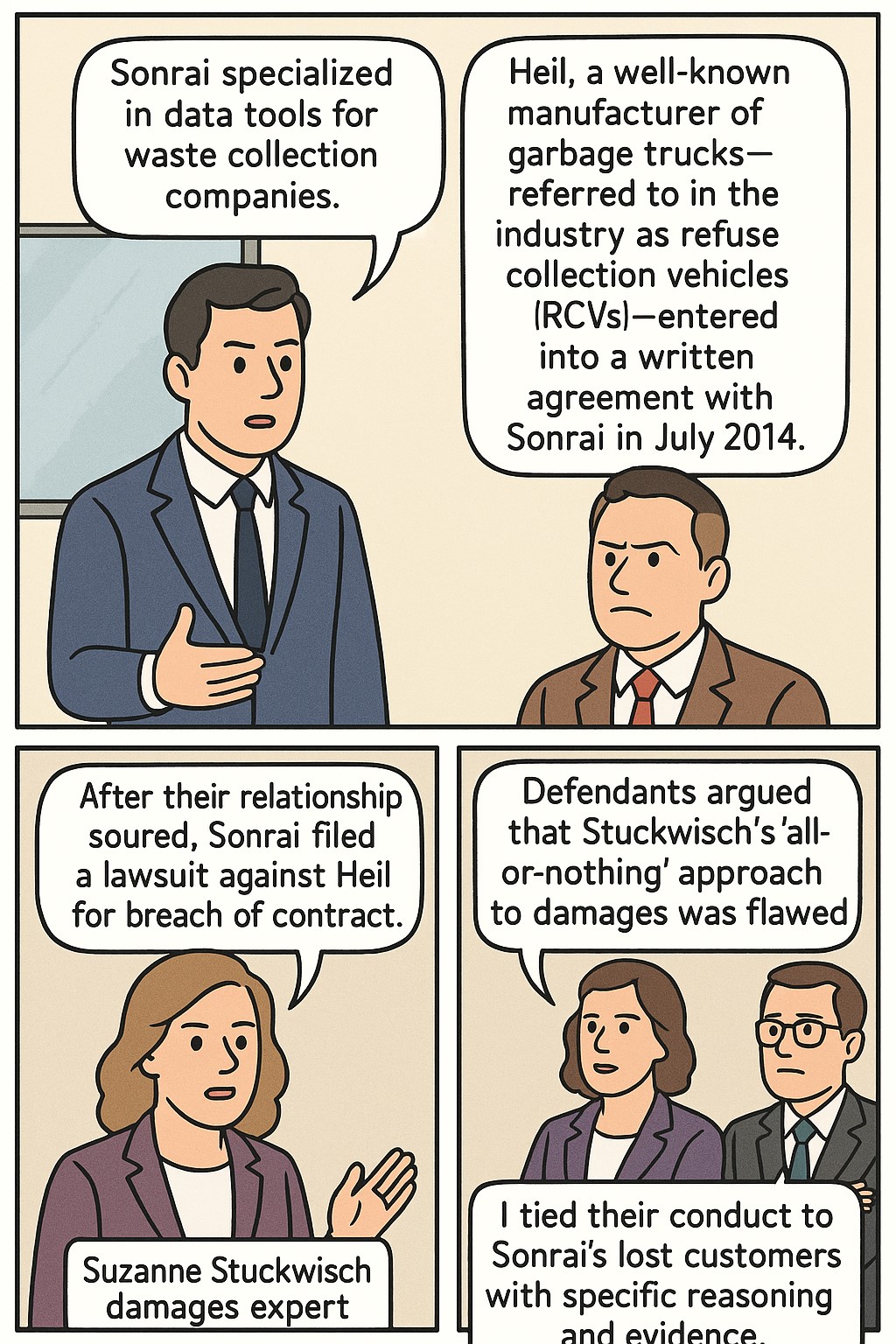
Sonrai specialized in data tools for waste collection companies. Heil, a well-known manufacturer of garbage trucks—referred to in the industry as refuse collection vehicles (RCVs)—entered into a written agreement with Sonrai in July 2014. The purpose was to facilitate the exchange of confidential information and explore a potential partnership, where Sonrai’s data product, “Vector,” could be integrated with Heil’s RCVs.
Over the next year, both companies shared proprietary information and operated under the terms of the agreement. In May 2015, Heil made an offer to acquire Sonrai, but Sonrai declined. The relationship began to deteriorate, and by September 2016, Heil chose a different path. It acquired a company called 3rd Eye, opting to use 3rd Eye’s competing data product, “Enhance,” instead of continuing with Sonrai.
Following this turn of events, Sonrai filed a lawsuit against Heil for breach of contract. Sonrai also accused Anthony Romano of breaching his fiduciary duties to Sonrai. Sonrai also alleged that Anthony Romano had breached his fiduciary duties owed to the company. Heil, in turn, countersued, also alleging a breach of contract.
Defendants raised certain arguments about the reliability of Sonrai’s damages expert Suzanne Stuckwisch‘s testimony.
Economic Damages Expert Witness
Suzanne M. Stuckwisch has more than 30 years of experience in economic and financial analysis and engineering consulting. She holds a B.S. in Mechanical Engineering, an M.B.A., and an M.S. in Economics.
Stuckwisch has experience across a wide range of industries, including but not limited to waste and recycling.
The Defendants first challenged Stuckwisch’s expert report by arguing that she failed to follow any recognized methodology in calculating Sonrai’s alleged lost profits. The Court disagreed. It found that her report clearly laid out how she determined the length of Sonrai’s relationships with each customer, projected potential sales, and accounted for the costs of producing Vector units. She analyzed damages on a customer-by-customer basis—an approach the Court had previously deemed acceptable. As a result, the Court concluded that her methodology was valid and properly applied.
Damages Model
Next, the Defendants claimed that Stuckwisch’s damages model relied too heavily on a single, speculative assumption: that all five waste haulers would have adopted Vector across their entire fleets. But the Court had already addressed this point in its summary judgment ruling. It noted that Stuckwisch had explained the rationale behind her assumption and emphasized that it was up to the jury to weigh the credibility of that assumption. Her report referenced evidence from the waste industry showing that third-party companies had made commitments to install Vector fleetwide.
All-or-Nothing Approach
Lastly, the Defendants contended that Stuckwisch’s “all-or-nothing” approach to damages was flawed because she failed to consider other possible causes for Sonrai’s lost profits—something they argued was required under AICPA standards. In response, Stuckwisch clarified that her analysis again followed a customer-by-customer model: once a customer was lost, the associated revenue was lost entirely. The Court found this approach reasonable. It emphasized that Stuckwisch did not simply assume the Defendants caused the losses—she tied their conduct to Sonrai’s lost customers with specific reasoning and evidence.
Additional Incremental Operation Costs
Fourth, Defendants argued that Stuckwisch’s testimony was unreliable because her calculation of additional incremental operation costs, which are a necessary component of lost profits, was previously stricken and never included in any amended reports.
The Court agreed that Stuckwisch’s testimony would be unreliable without the deduction of additional incremental operation costs. But precluding Stuckwisch from testifying about those additional incremental operation costs was not the appropriate remedy. Instead, the proper path forward was to allow Stuckwisch to supplement her report and allow Defendants to depose her on the new report, and supplement their own rebuttal report if they wished.
Alternative Explanations
Finally, the Court issued this opinion following a hearing held on June 9, 2025, during which it preliminarily denied the Daubert motion. After that hearing, Stuckwisch submitted a supplemental report and sat for a deposition. On the first day of trial, the Defendants raised three new arguments to exclude her testimony.
First, they challenged Stuckwisch’s assumption that Sonrai would incur no cost for working capital. According to her, Chris Flood—Sonrai’s CEO—told her that his family’s business, which generated over $100 million in annual revenue, would cover Sonrai’s working capital needs. Defendants claimed this assumption was unfounded. However, the Court noted that the same assumption appeared in her 2021 report under the section on incremental operational costs. For the reasons already discussed, the Court declined to exclude her testimony on this basis.
Second, Defendants argued that Stuckwisch failed to consider an alternative cause: that Romano had the right to leave Sonrai at any time. But they did not explain how this constituted an “obvious alternative explanation” undermining the reliability of her analysis. The Court held that such arguments were better suited for cross-examination.
Third, the Defendants contended that Stuckwisch wrongly assumed that Vector faced no competition in the but-for world, effectively treating it as a monopoly product. She based this assumption on her understanding that no comparable product existed in the marketplace. The Court found this assumption to be reasonable, though it acknowledged that Defendants were free to challenge it during trial.
Held
The Court denied the Defendants’ Rule 702 motion to exclude the testimony of Suzanne Stuckwisch.
Key Takeaways:
An expert need not rule out every alternative cause. Arguments about alternative explanations can be explored on cross-examination.
Stuckwisch’s opinion reliably applies the lost profits principles and methodology to the facts of the case and the Court will not prejudge the ultimate correctness of her conclusions. Her reasoning satisfies Rule 702’s reliability standard. Defendants’ criticisms can be explored on cross-examination.
Case Details:
Case Caption:
Sonrai Systems, LLC Et Al V. Anthony M. Romano Et Al
Plaintiff Sheheryar Ahmad sued Defendant Spinnaker Insurance Co., his insurer, for breach of contract based on Defendant’s refusal to cover damages caused by frozen and burst pipes in Ahmad’s home.
The Plaintiff argued that although the insurance policy excluded coverage for damage caused by frozen pipes, his claim qualified for an exception to that exclusion because he had taken “reasonable care to maintain heat” as required by the policy.
Plaintiff’s home consumed seven thermal units of natural gas between December 14, 2022 and January 14, 2023, the period during which the pipes froze and burst. To establish that seven therms sufficed to maintain reasonable heat, Plaintiff relied on the expert testimony of Dr. Brian K. Bramel.
The Defendant, however, filed a request to exclude Bramel’s testimony regarding the home’s internal temperature at the time of the frozen pipes.
Engineering Expert Witness
Dr. Brian K. Bramel is a principal at his own engineering firm and holds undergraduate and graduate degrees in Mechanical and Civil Engineering.
He also serves as an adjunct professor in the Department of Architecture at the University of the District of Columbia.
Bramel’s report applied the Manual J calculation, a standard thermodynamics methodology generally used to size heating equipment and developed by the Air Conditioning Contractors of America (ACCA) and the American Society of Heating, Refrigerating and Air-Conditioning Engineers (ASHRAE).
In its ordinary function for equipment sizing, Manual J is used to “determine the therms necessary in order to reach a chosen temperature inside a structure.”
However, per Bramel, the methodology can be used “in reverse,” using basic algebra, to determine the interior temperature based on measurements of the “features of the subject premises” and total energy used in this context.
Bramel’s Application of the Manual J Calculation
The Manual J calculation determines “the energy required for a house based on the interior and exterior temperature differences.” A key element of the calculation is the “resistance factor” of the structural elements in Plaintiff’s home, which refers to the energy lost through the walls, floor, roof, and windows.
Under the equation, the total “energy input to the building from the gas and electric” is equal to the “thermal resistance of the assembly” multiplied by the “area” of the resistance and the difference between the outdoor and indoor temperatures.
Bramel summarized the equation as follows: Qin = U A (tinside – toutside), where Qin refers to the “energy input to the building from the gas and electric,” U refers to “thermal resistance of the [structural] assembly,” A refers to “area” of the resistance, and (tinside – toutside) refers to the temperatures inside and outside, respectively.
Reliability of Bramel’s Methodology
The Defendant contended that Bramel’s testimony should be excluded because he had inappropriately repurposed a well-established methodology—typically used for sizing heating equipment—and applied it to a completely different context. While there was no dispute that Manual J is a reliable method for determining appropriate equipment size, the Court found that the Plaintiff failed to show it was suitable for use outside of that context, particularly for calculating internal temperatures in reverse.
Bramel himself acknowledged during both his deposition and live testimony that he was unaware of any scientific or engineering publications endorsing this reverse application of the method. He claimed the approach remained reliable because it involved basic algebra applied to standard thermodynamic principles. However, the Court concluded that Bramel’s modification of the Manual J methodology significantly weakened his argument, as altering a known calculation for a novel use called into question its scientific reliability.
Bramel’s hypothesis was not only untested but, by his own admission, untestable. The Plaintiff failed to present any evidence showing that Bramel’s method had ever undergone testing. During the evidentiary hearing, when questioned about whether his methodology had been tested, Bramel merely asserted that it was valid—offering no data or studies to support that claim. Furthermore, he acknowledged that a key component of his analysis—the calculation of total “internal gains”—could not be tested, as it was based on what he described as “a reasonable guess” grounded in an “engineering assumption.”
Application of Methodology to the Facts
The Court found that Bramel’s use of the Manual J methodology failed to meet the reliability standards required under Daubert and Rule 702. It pointed to multiple instances where Bramel relied on inconsistent and unsupported assumptions, all of which significantly weakened the credibility of his testimony.
First, Bramel did not provide a clear or consistent justification for overriding Manual J’s default outdoor temperature value of 14 degrees Fahrenheit. From the beginning, he struggled to explain the meaning of the “outdoor 99% db” variable used in Manual J. During his deposition, he spent more than ten transcript pages attempting to respond to defense counsel’s questions on the topic but failed to articulate a coherent understanding. Despite this, Bramel replaced the preset value with his own figure of 33 degrees Fahrenheit, yet he was unable to offer a satisfactory explanation for making that manual override.
Second, Bramel’s report offered neither a rationale for considering the additional variable of “internal gains” in his calculation nor an explanation of how he reached his ultimate assumed value.
Third, Bramel’s assumptions about the structure of the Plaintiff’s home conflicted with the actual facts. He classified the home as “tight,” a designation in Manual J reserved for structures that are “sealed by meticulous workmanship” and exhibit the “lowest level of air leakage.” However, Bramel admitted during both his deposition and the hearing that industry standards require the use of “blower door tests” to assess a home’s tightness. He conducted no such test in this case, undermining the credibility of his classification.
Furthermore, Bramel’s analysis assumes Plaintiffs home comprises one window, despite both photographs and inspections “revealing the house had 10 times that many windows.”
Held
The Court granted Defendant’s request to exclude the testimony of Dr. Brian K. Bramel.
Key Takeaways:
If the Court, or any other experts, cannot test a critical assumption in Bramel’s methodology, then there is no “objective basis” to test the reliability of the methodology overall.
The cumulation of errors, inconsistencies, and absence of support render Bramel’s analysis entirely unreliable under Rule 702.
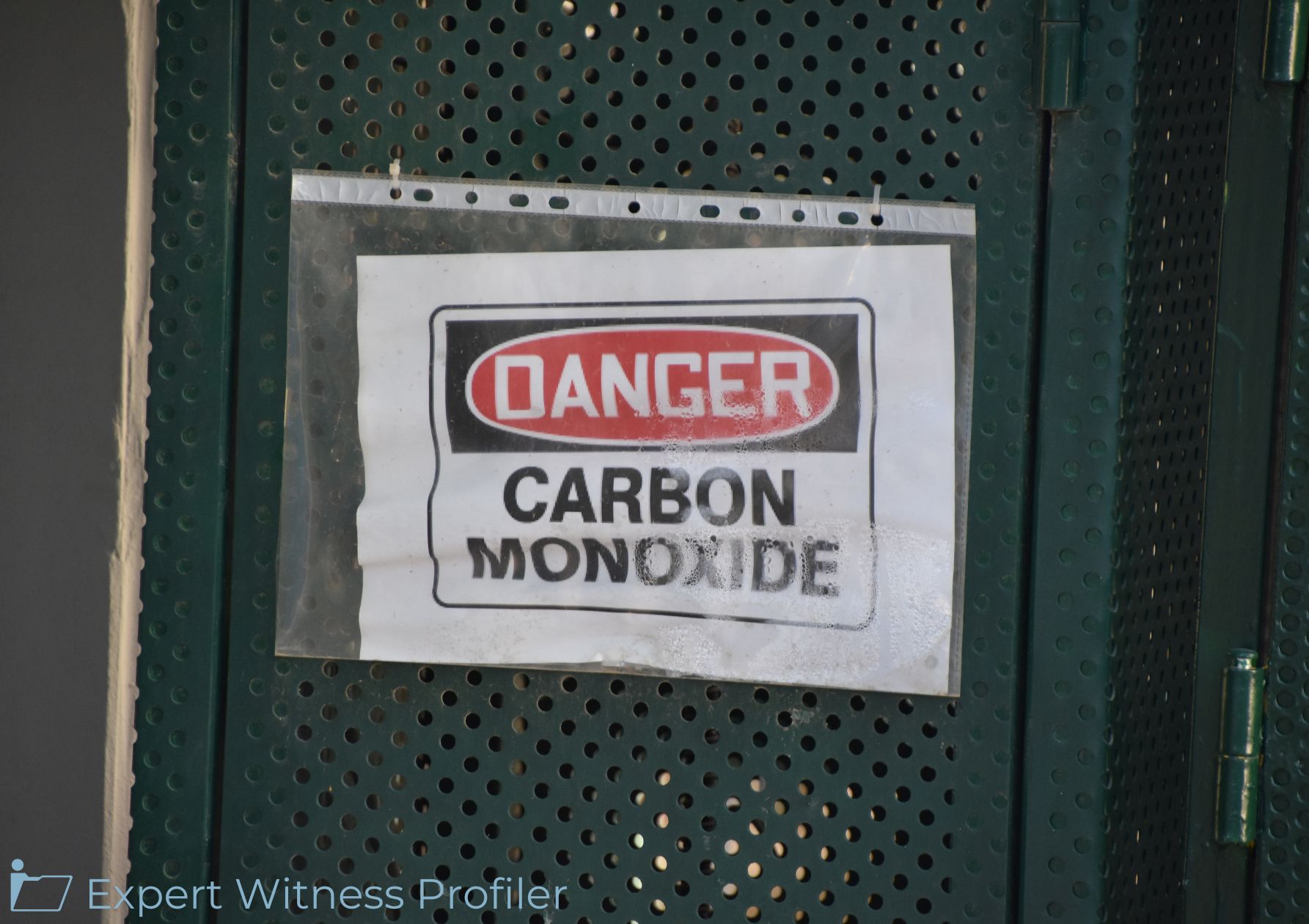
This case arises out of an alleged design defect and failure to warn regarding a 2017 Toyota Tacoma. Lee Griffin was the primary driver of a 2017 Toyota Tacoma. After Griffin died due to accidental carbon monoxide poisoning from an automobile inadvertently continuing to run in the garage, Caroline Griffin filed suit individually and as executor of Lee Griffin’s estate.
Dr. Randall Tackett received his BS from Jacksonville University in 1975. He then received an MS degree in pharmacology and toxicology from Auburn University in 1977 and his Ph.D. in pharmacology and toxicology from the University of Georgia in 1979. Following a two-year postdoctoral fellowship at the Medical University of South Carolina, he returned to the University of Georgia as an assistant professor in the Department of Pharmacology and Toxicology.
He later served as a Professor and Associate Department Head in the Department of Clinical and Administrative Pharmacy at the University of Georgia College of Pharmacy.
Angela A. McGrath has a Bachelor of Science in Statistics, a Master of Arts in Applied Statistics, 27 years of experience in consulting, and experience teaching statistics.
She is the Principal Consultant and Director of Automotive Research at Cirque Analytics, an economic, statistical, and financial consulting company headquartered in Jackson Hole, WY. She has developed extensive experience in formulating, conducting, and directing statistical and other quantitative analyses.
Harry Pearce has over 24 years of expertise in the field of structural crashworthiness. He gained industry experience with nine years at General Motors, serving as the Lead Structural Design Engineer for multiple vehicles.
With his knowledge and experience with vehicle sealing, Pearce has addressed claims of Carbon Monoxide (CO) intrusion. He has performed Electro Magnetic Interference (EMI) testing in anechoic chambers and Brake Override System (BOS) testing at Exponent’s Test and Engineering Center.
Nathan Todd Dorris is a human factors specialist with extensive experience in product safety and the evaluation of instructions, warnings and other safety communications for a broad range of products and industries.
Randall Tackett stated two opinions in his expert report:
1. Griffin consuming 1.2 standard drinks within the hour before death is inconsistent with the evidence described above. Rather, the timeline of events is consistent with Lee Griffin ingesting higher amounts of alcohol earlier on July 4, 2022, which his body would have metabolized from the time he ingested the alcohol until his death.
2. It is more likely than not that on the evening of July 4, 2022 Griffin’s blood alcohol concentration was at a level that could have affected his reaction time, hearing, judgment, memory, reasoning and ability to detect danger including his ability to turn off his Toyota Tacoma and/or recognize that it was still running in the garage.
Motion to Exclude
In this case, Tackett attempted to estimate the decedent’s blood alcohol content (BAC) at various times before death using a method known as retrograde extrapolation. The Plaintiff did not dispute the scientific validity of this technique in general. Instead, she argued that Tackett lacked the necessary factual basis to apply it reliably in this case.
Specifically, the Plaintiff pointed out several critical unknowns: the exact time of death, the time the vehicle was parked, and any concrete details about when, what, or how much alcohol the decedent consumed. The Defendants contended that these gaps in information should affect how much weight the jury gives Tackett’s testimony, not whether it should be allowed at all. The Court disagreed.
The main issue, according to the Court, was the absence of reliable timing data. Without knowing when key events occurred, it was unclear how far back Tackett should extrapolate. His estimates ranged from one to two hours before death to as far as 14–15 hours earlier. As a result, his BAC estimates varied widely—from 0.046 to 0.297—depending on assumptions about timing and the decedent’s metabolism rate. Notably, there was also no evidence that the decedent had consumed any alcohol before parking the car, further undermining the reliability of Tackett’s conclusions.
Angela McGrath
The Defendants have proffered Angela McGrath as an expert witness to testify about the following opinions:
a. [The United States Consumer Product Safety Commission (“CPSC”)] death certificate data shows that vehicles with and without keyless ignition have inadvertently been left running in enclosed spaces.
b. Available CPSC death certificate data does not show a consistently increasing trend of accidental carbon monoxide poisoning from passenger vehicle exhaust in enclosed spaces.
c. The proportion of combustion engine vehicles on the road with keyless ignition is increasing over time, however, even by 2021, the majority of vehicles still have conventional keys.
d. While number of registered vehicles with keyless ignition and without [automatic engine time-out (“ETO”)] has increased steeply since 2011, the rates of accidental carbon monoxide poisoning from passenger vehicle exhaust in enclosed spaces has exhibited no corresponding, consistently increasing trend.
Motion to Exclude
The Plaintiff argued that McGrath’s opinions were unreliable because the CPSC database she relied on did not distinguish between carbon monoxide poisoning deaths caused by vehicles with keyless ignition systems and those with traditional mechanical ignitions. As a result, the Plaintiff contended that no meaningful statistical analysis could be done to compare the risks associated with each type of ignition system.
In response, the Defendants claimed the Plaintiff had misrepresented McGrath’s testimony. They asserted that McGrath was not attempting to directly compare the risks of carbon monoxide deaths between mechanical and keyless ignition systems. However, this argument fell short.
The Court noted that McGrath’s analysis implicitly relied on such a comparison. Her underlying logic was that if keyless ignition systems were more dangerous, the overall number of accidental carbon monoxide deaths would have increased after their introduction. Because the death rate did not rise, she inferred there was no added risk. Therefore, despite the Defendants’ assertions, McGrath’s analysis did, in fact, depend on comparing the two types of ignition systems—making the Defendants’ denial unconvincing.
Moreover, the Defendants’ argument rested on the assumption that, absent a defect, accidental carbon monoxide deaths would have remained constant from 2011-2021. The Court found this assumption questionable. Public awareness campaigns, increased usage of carbon monoxide detectors, or other safety measures could have contributed to a decline in deaths over time—independent of any defect. McGrath’s analysis failed to account for such alternative explanations.
Ultimately, the Court held that McGrath’s testimony offered nothing more than a basic correlation and lacked consideration of other plausible factors. As such, her statistical analysis could not be reliably used to show the absence of a defect.
Nathan Dorris
The Plaintiff sought to exclude four categories of opinions that Dorris asserted: (1) that the Tacoma’s warnings were sufficient, (2) that drivers lose focus while using their vehicles, (3) that the Plaintiff and decedent should have had carbon monoxide detectors in their home, and (4) that the Tacoma was not defective because it complied with regulatory and voluntary standards.
Inattentive Drivers
The Plaintiff sought to exclude Dorris’ opinions regarding how driver inattentiveness could lead individuals to leave their engines running and fail to respond to alerts or other feedback.
In response, the Defendants argued that “ Dorris’ discussion of driver distraction is just one component of the opinions he expresses in this case and is background to his primary opinions specific to the 2017 Toyota Tacoma’s Smart Key System and the subject incident.”
The statements in question included: “ [d]rivers that are distracted or inattentive (for whatever reason) can inadvertently leave their vehicle’s engine running, regardless of the type of ignition system employed,” and “[n]ot only can inattention result in execution errors and omitted actions, but it may cause individuals not to respond to alerts or other feedback.”
Dorris was not particularly clear about whether these statements—or others like them—were independent expert opinions or merely facts supporting other opinions. Even the Defendants appeared uncertain. On one hand, they described these statements as “ background to his primary opinions,” but on the other, they defended his ability to offer them as standalone opinions.
While Dorris may not opine directly that a driver’s inattentiveness causes errors, the Court held that if that fact properly supported a valid expert opinion offered by Dorris, he was permitted to rely on it.
Sufficiency of the Warning
Dorris opined that the warning provided by Toyota are “reasonable and appropriate.” The Plaintiff asserted that that opinion is unhelpful because it does not offer any analysis outside of what the jury can do itself.
Whether a warning is legally sufficient depends upon the language used and the impression that such language is calculated to make upon the mind of the average user of the product. The Court held that the adequacy inquiry here takes the perspective of the user of the product. Therefore, the jury is fully capable of determining whether the adequacy of the warning(s) at issue here without the help of an expert.
Carbon Monoxide Detectors
The Plaintiff argued that “ Dorris attempted to opine that the Griffins should have equipped their home with carbon monoxide detectors.”
However, the only relevant statement on the page of Dorris’s report cited by the Plaintiff read:
“ In a publication dated 08/2020, the Georgia Department of Public Health explicitly discussed CO exposure can cause ‘sudden illness or death’; potential sources of CO exposure include automobile exhaust; to install CO detectors ‘in every room used for sleeping’; ‘DO NOT leave a motor vehicle running in an enclosed garage.“
This statement appeared under the section titled “ Exhaust Fumes and CO Are Well Known Hazards.” Aside from the quoted portion referencing carbon monoxide detectors, there was no other mention of detectors—either in that section or anywhere else in the report.
The Court did not view this as Dorris offering an opinion that the Plaintiff or the decedent should have installed carbon monoxide detectors in their home. Instead, the Court found that he was merely citing a source he relied upon to support his broader conclusion that “ Exhaust Fumes and CO Are Well Known Hazards.”
Importantly, the Plaintiff did not challenge Dorris’s qualifications to reach that conclusion, nor did they argue that the conclusion itself was unhelpful.
Compliance with Relevant Standards
The Plaintiff moved to bar Dorris from testifying that the Toyota Tacoma was not defective simply because it complied with minimum regulatory standards.
In response, the Defendants argued that the jury had a right to consider federal compliance when evaluating whether the vehicle’s design was reasonable. They further claimed that Dorris relied on compliance as just one of several factors in concluding the Tacoma was not defective. However, the Court sided with the Plaintiff.
Dorris had stated that the lack of an automatic engine shutoff did not make the Tacoma defective, in part because ” at the time the subject vehicle was manufactured and sold (and even today), such a feature is not required by any regulation or voluntary standard.” In other words, he based his opinion on the fact that the Tacoma complied with federal regulations.
The Court found this reasoning insufficient and ruled that it warranted exclusion. Accordingly, the Court held that Dorris would be precluded from opining that the Tacoma was in compliance with federal regulation.
Harry Pearce II
The Plaintiff sought to exclude four of his opinions from testimony: (1) opinions going to intent, motive, or state of mind, (2) opinions about the source of the carbon monoxide, (3) opinions about the efficacy of carbon monoxide detectors would have had in this case, (4) opinions “parroting” Jeya Padmanaban.
Intent, Motive, and State of Mind
The Plaintiff argued that Pearce should not be allowed to testify about Toyota’s subjective state of mind.
On that point, the Plaintiff was correct—Pearce could not offer opinions about what the Defendants were thinking, such as “ Toyota did not want to [install auto shutoff] because of the concern of introducing a new risk of hot car deaths.” Such statements improperly speculate on Toyota’s intent or motivations.
However, the Defendants were also partially correct. Pearce was permitted to rely on Toyota’s internal documents and employee testimony to form his expert opinions. He “ may testify as to whether information contained in Defendants’ internal documents indicated certain risks.” The Court clarified that while Pearce could interpret the content of internal materials to identify risk indicators, he could not speculate on Toyota’s actual intent or decision-making process.
Source of Carbon Monoxide
The Plaintiff moved to exclude any opinion from Pearce regarding the source of the carbon monoxide that caused her and the decedent’s injuries.
When asked directly whether he had an opinion on the source of the carbon monoxide in this case, Pearce responded, “ I was not asked to do that so I do not have an opinion on that.“
Despite this, the Defendants added a qualification. They stated that Pearce would not offer an opinion on the matter “ unless Plaintiff opens the door to this subject through her attorneys’ examination of Pearce or the testimony of other witnesses she presents at trial.“
But as the Defendants were well aware, the Plaintiff had already retained an expert specifically to testify about the source of the carbon monoxide. And since causation is a central element of the Plaintiff’s claims, it was almost certain the Plaintiff would “open the door“ to this issue during trial.
That, however, did not give the Defendants license to question Pearce on a subject about which he had explicitly disclaimed any opinion. If the Defendants wished to challenge the Plaintiff’s expert on the source of the carbon monoxide, they should have retained their own rebuttal expert.
Carbon Monoxide Detectors
Pearce intended to opine that, “[w]ith multiple sources of CO in a home, the best protection from CO exposure is the installation of CO detectors in the home. Auto engine shut-off only protects from the one vehicle on which it is installed.”
The Plaintiff objected to this because it depended on two assumptions: (1) that any carbon monoxide detectors in the house would have worked and (2) that the Plaintiff and the decedent would have responded to the carbon monoxide detector if it did work.
However, the Court held that Pearce has extensive experience from which he could derive his opinion.
Parroting
The Plaintiff argued that any testimony by Pearce regarding a 2015 paper published by Jeya Padmanaban would be irrelevant and amount to inadmissible “parroting.”
In response, the Defendants clarified that they did not intend to have Pearce testify about Padmanaban’s research. Instead, Pearce had included the study merely as general background material.
The Defendants confirmed that they would not raise the Padmanaban study at trial unless the Plaintiff opened the door to that line of testimony. Based on this clarification, the Court denied this portion of the Plaintiff’s motion to exclude.
Held
The Court granted the Plaintiff’s motion to exclude Randall Tackett’s testimony.
The Court granted the Plaintiff’s motion to exclude Angela McGrath’s testimony.
The Court granted in part and denied in part the Plaintiff’s motion to exclude Nathan Dorris’ testimony.
The Court granted in part and denied in part the Plaintiff’s motion to exclude Harry Pearce’s testimony.
Key Takeaways:
An expert’s testimony is not relevant and may be excluded if it is directed to an issue that is well within the common sense understanding of jurors and requires no expert testimony.
Experts may not testify that a party was in compliance with a federal regulation. Whether someone has violated or is in compliance with the law is a legal conclusion.
Expert testimony about a party’s intent, motive, or state of mind is inadmissible.