Blog

  • Opinions of the Geology Expert Witness Regarding Copying of the Patented Technology Excluded

    Opinions of the Geology Expert Witness Regarding Copying of the Patented Technology Excluded

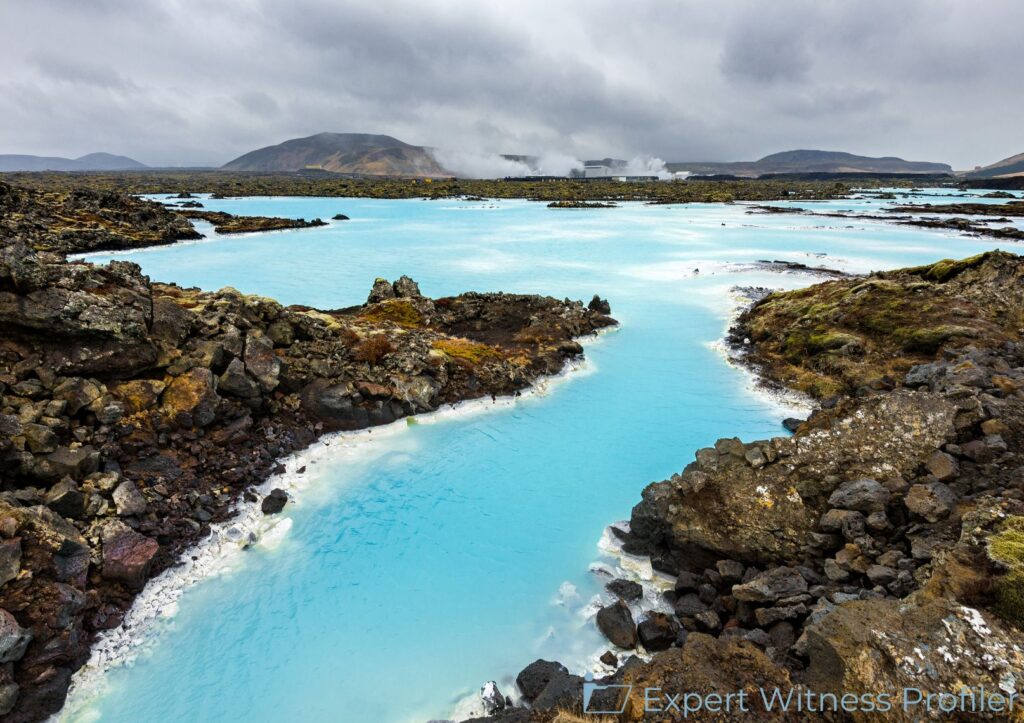
    This case involves an alleged breach of a non-disclosure agreement (the NDA) and patent infringement stemming from the management, construction, and operation of a large lagoon in St. George, Utah (the Lagoon) by Defendants, Desert Color Manager, LLC, Desert Color St. George, LLC, and Pacific Aquascape International, Inc.

    Specifically, Plaintiffs Crystal Lagoons U.S. Corp. and Crystal Lagoons Technologies Inc. (collectively, “Crystal Lagoons”) alleged that, after agreeing to the terms of the NDA, the Desert Color Defendants breached the NDA by disclosing designs, plans, technical information, and other confidential information to Defendant Pacific.

    Plaintiffs then alleged that all Defendants infringed on U.S. Patent No. 8,062,514 (the ‘514 Patent) due to their management and construction of the Lagoon, which allegedly employs Crystal Lagoons’ patented technology. In its most basic sense, the ‘514 Patent is a patented structure to contain a large body of water for recreational use.

     The ‘514 Patent involves, among other things, the design and construction of a structure to contain a water body larger than 15,000 m³, the use of a plastic liner to cover the bottom and walls of the structure, the use of a recycling system that uses pipes with injectors that also allow the application of chemicals, the use of a water inlet line and inlet chambers through which water is extracted to feed the fresh water feeding pipe system of the structure, and the use of a system of skimmers positioned along the border of the structure.

    Plaintiffs retained Christopher D. Lidstone as an expert to opine on the infringement and validity of the ‘514 Patent, and they retained Richard F. Bero as an expert to opine on the issue of damages. Defendant filed motions to exclude the opinions offered by Lidstone and Bero.
    Accounting Expert Witness

    Richard F. Bero is the executive vice president of The BERO Group’s Economic Damages division. He is a certified public accountant (CPA) and a certified valuation analyst (CVA). Bero received his BBA in Accounting and Finance from the University of Wisconsin-Madison.

    Bero provides accounting and financial consulting services and expert testimony pertaining to economic damages and valuation issues in a wide range of litigation matters with an emphasis on commercial litigation and intellectual property matters.

    Get the full story on challenges to Richard Bero’s expert opinions and testimony with an in-depth Challenge Study. 

    Geology Expert Witness

    Christopher D. Lidstone is principal of CDLidstone, LLC, Fort Collins Colorado. He was formerly president and founder of Lidstone and Associates and managed that firm for 29 years until July, 2015. He sold Lidstone and Associates to Wenck Associates and served as a Principal and Regional Manager for that firm until January of 2021. In his current position as owner of CDLidstone LLC he continues his water resources engineering and geological career throughout the United States and internationally. He serves as a consultant to not only the mining but environmental industry as well as several municipalities, state and federal government. He has completed geological exploration and due diligence services in the US, Canada and Mexico and has completed work in Indonesia, Australia and Papua New Guinea.

    His work expertise addresses both ground water and surface water studies including water supply, water development, erosion and sedimentation, flood control, geomorphic stability, geochemistry and water quality studies.

    Want to know more about the challenges Christopher Lidstone has faced? Get the full details with our Challenge Study report. 

    Discussion by the Court

    Christopher D. Lidstone’s Expert Opinions Regarding the Absence of Non-Infringing Alternatives, Long-Felt Need, and Copying Are Inadmissible

    Lidstone is a water geologist, not a recreational water structure designer

    First, Defendants argued Lidstone is a water geologist, not a recreational water structure designer. As such, he cannot be considered a person of “ordinary skill in the art,” which is necessary to opine on the infringement and validity of the ‘514 Patent.

    Plaintiffs responded by pointing to, among other things, Lidstone’s 42 years of experience in the field of hydrology; his degrees in Geological Sciences and Geomorphology; his work experience with the design and construction of water supply, water treatment, and storage projects for public water supplies; his experience previously serving as a technical expert in other patent cases related to groundwater storage; his experience teaching courses on the building blocks for pools, like the use of liners, flocculation, disbursement, cation exchange, water, and concrete; and more.

    The Court agreed with Plaintiffs that Lidstone has specific, relevant experience related to the ‘514 Patent to qualify him as a person of ordinary skill in the art with respect to water structure design generally, and there is no requirement that Lidstone have specific design experience with recreational water structures to opine on the validity and potential infringement of the Patent. After all, the potential  for recreational use of these structures is only a small part of the invention.

    Lidstone lacks a factual basis for his opinion that the ‘514 Patent is a “foundational” patent

    Second, Defendants argued that Lidstone lacked a factual basis for his opinion that the ‘514 Patent is a “foundational” patent.

    Defendants added that Lidstone never defined what the term “foundational” means, and they emphasized the potential lack of relevance of Lidstone’s testimony regarding the nature of the ‘514 Patent.

    However, the Court held that Lidstone defined “foundational” as being the original, or foundational, patent filed by an applicant directed to a particular subject matter. Indeed, Lidstone identified the ‘514 Patent family as the first family of patents filed in the United States by Crystal Lagoons related to this technology, and he acknowledged the fact that other patents issued from the same initial application.

    Lidstone relied on no data or facts whatsoever to support his opinion that there are no non-infringing alternatives to the technology of the ‘514 Patent

    To prove the absence of acceptable, non-infringing alternatives, the patentee may prove either that the potential alternative was not acceptable to potential customers or was not available at the time of infringement.

    Plaintiffs pointed to Lidstone’s opinions on the “foundational” nature of the ‘514 Patent as the basis for this opinion.

    It was unclear to the Court how this opinion independently constituted a sufficiently reliable basis for an “absence of non-infringing alternatives” opinion. The most relevant expert testimony the Court could identify potentially relating to this issue is when Lidstone testified how “the technology covered by the ‘514 Patent constituted a significant departure from the technologies for building and maintaining large bodies of water for recreational purposes available at the time” as it allowed for “the design, construction, and operation of sustainable, clear lagoons of virtually unlimited sizes.”

    Critically missing from Lidstone’s report and testimony, however, are any facts or analysis suggesting how at the time of Defendants’ alleged infringement there was an absence of acceptable, non-infringing alternatives.

     At best, Lidstone provides an opinion on the novelty of the invention but cabins it to the exact moment Crystal Lagoons first patented its lagoon technology in the United States (in 2007)—he did not opine on the existence of non-infringing alternatives when Defendants allegedly infringed on the Patent by designing and building the accused Lagoon (between 2019 and 2020).This did not reliably demonstrate how in 2019, at the time of the alleged infringement, there was an absence of acceptable, non-infringing alternatives. Twelve or more years of technological advancements may have altered the lagoon technology landscape significantly, and it is a crucial consideration for any expert opinion regarding whether non-infringing alternatives existed at the time of infringement. The Court held that the expert testimony is unreliable and inadmissible.

    Defendants argued that Lidstone has no factual basis for his opinion that the ‘514 Patent fulfilled a “long-felt need”

    Plaintiffs contended that Lidstone’s factual basis for this opinion permissibly rests on (1) his opinion that the ‘514 Patent is a foundational patent, and (2) the increase in demands for lagoons after the ‘514 Patent was issued.

    Lidstone’s rebuttal expert report consisted of only two, conclusory sentences that the ‘514 Patent “fulfilled a long felt need to develop and treat large bodies of water such as lakes and ponds.”

    He later testified he based his long-felt-need conclusion on the nature of the patent, the history that predated the patent, and what happened after the patent came into play.

    Specifically, Lidstone indicated how, based on his understanding of the relevant pool-related technology, “prior to this patent, there were no large lagoons that had been developed, and subsequent to the patent, lagoons were built,” but he admittedly could not identify any statements or other evidence prior to 2006 indicating a long-felt need.

    The Court is unpersuaded that merely pointing to some level of eventual demand for a patented product renders reliable expert testimony regarding long-felt but unresolved need. If this were the case, all patented products that happen to generate sales over the life of the patent would essentially enjoy a presumption of satisfying a long-felt need. While a rapid increase in demand for the patented product may be suggestive of long-felt need, Lidstone did not analyze the rate of increase of demand for lagoons. He only analyzed and described Crystal Lagoons’ current success in the lagoon industry.

    Defendants argued that Lidstone lacked sufficient facts and data supporting his opinion that the ‘514 Patent has been commercially successful

    Defendants admitted Lidstone takes about a page of his report discussing various indicators of Plaintiffs’ commercial success, but they insisted Lidstone never analyzed data to reach his opinion that the commercial success resulted from the ‘514 Patent.

    The Court held that Lidstone’s opinions on this subject are reliable and relevant as they adequately demonstrate and describe how the ‘514 Patent is advantageous to Crystal Lagoons’ commercial success. Lidstone described various indicators of Crystal Lagoons’ ongoing commercial success in his rebuttal report, and he linked the success to the ‘514 Patent by relying on his previous opinion that the technology of the ‘514 Patent provides the foundation for Crystal Lagoons’ technology to create large bodies of water for swimming and recreational use.

    As discussed above, the Court held that his opinion on this subject is also reliable and admissible. Moreover, a correct understanding of Crystal Lagoons’ business model, which Lidstone understood, also supported his commercial success opinion. Crystal Lagoons generates revenue by issuing a collective license of all its intellectual property—which necessarily includes the’514 Patent—to lagoon builders for the design, construction, and operation of its lagoon technology. Notably, Crystal Lagoons did not design, build, and operate artificial water lagoons, nor did it license its Patents and other intellectual property on a patent-by-patent basis; instead, it licenses all of its technology only when it has ongoing involvement in a project such as providing (and getting paid for) its ongoing systems fees services.

    Defendants argued that Lidstone failed to link any “industry praise” to the actual inventions of the ‘514 Patent

    Lidstone’s explained how “based on the invention of the technology of the ‘514 Patent,” Fischmann (the inventor of the ‘514 Patent), has been honored many times with prestigious international awards, including Entrepreneur of the Year, Innovator of the Year, Businessman of the Year, the Innovation Stevie Award, the Real Innovator Award, the Green Apple Award, and two Guinness World Record Awards related to lagoons built and operated using Crystal Lagoons’ technology.

    He also explained how hundreds of lagoon projects around the world currently use Crystal Lagoons’ technology.

    As explained above, these awards presented to Fischmann for his lagoon-related inventions necessarily relate, at least in part, to the ‘514 Patent because this Patent is included in each sale of Crystal Lagoons’ collective license, and the technology likely forms a part of each resulting lagoon. Lidstone’s analysis and opinions on this subject are reliable and admissible.

    Defendants argued that Lidstone failed to provide any factual basis to support his conclusion that Defendants “copied” the ‘514 Patent

    Plaintiffs did not direct the Court to any reliable support for Lidstone’s opinions regarding copying of ‘514 Patent technology; they only argued that Lidstone’s opinions regarding Defendants’ infringement were sufficient to support his copying opinion. But precedent forecloses this argument. A review of Lidstone’s expert reports and deposition testimony reveals he similarly conflated the terms “copying” and “infringement.” Tellingly, the only explicit support for his copying opinion is his analysis of another lagoon’s infringement of the ‘514 Patent in a related case.

    And when pressed about the basis for his copying opinion, Lidstone testified how “[he] look[ed] at similarities in designs and so forth,” but he admitted, “[w]hat Pacific Aquascape did to get there, I don’t know.” A reliable copying opinion would have focused on what Defendants “did to get there,” i.e., their efforts to replicate a specific product, not on the mere similarities between the accused device and the patent claims. The Court therefore concluded that Lidstone’s opinions and testimony on this subject are unreliable and inadmissible.

    Richard F. Bero’s Expert Testimony Regarding Infringement Damages is Unreliable and Inadmissible

    Defendants dedicated a few sentences of their Motion to argue Bero’s opinions regarding commercial success, breach of contract damages, and unjust enrichment damages are unreliable. But the Court found that this testimony was sufficiently supported and reliable to be admissible.

    Patent infringement damages are customarily computed by calculating lost profits or a reasonable royalty, and Defendants challenged the admissibility of Bero’s testimony with respect to each calculation.

    The Federal Circuit is clear that “apportionment is an important component of damages law generally, and . . . it is necessary in both reasonable royalty and lost profits analysis.”

    Under the entire market value rule—which has been described as a “narrow exception” to the apportionment requirement and potentially applies regardless of whether the patentee relies on a reasonable royalty or lost profits calculation—the patentee may rely on the entire market value of the accused product if the patentee demonstrates that “the feature patented constitutes the basis for customer demand.”

    Here, Plaintiffs do not sell products. Instead, as explained above, Crystal Lagoons primarily generates revenue by issuing a collective license of all its intellectual property to lagoon developers, which includes the ‘514 Patent, for the design, construction, and operation of its lagoon technology.

    The Court held that Bero “never conducted any market studies or consumer surveys to ascertain whether the demand for [the collective license] is driven by the [‘514 Patent]” in dispute. Ultimately missing from Bero’s opinions are any sufficiently reliable facts or data suggesting the ‘514 Patent is what motivates consumers to purchase the Crystal Lagoons’ portfolio of property.

    Movant’s Ignorance of the Law is Insufficient to Demonstrate Excusable Neglect 

    Plaintiffs made an oral motion seeking to allow Bero additional time to submit a supplemental expert opinion, which would address some of the deficiencies with his expert report. Federal courts are clear that a movant’s ignorance of the law is insufficient to demonstrate excusable neglect; accordingly, Plaintiffs have not satisfied their burden under Rules 6(b)(1)(B) and 16(b)(4) to modify the already expired expert discovery deadline.

    Held

    The Court granted in part both motions to exclude Plaintiffs’ experts Christopher D. Lidstone and Richard F. Bero.

    Key Takeaways:

    • Even though Lidstone may lack experience with designing water structures primarily used for recreation, Lidstone’s experience with designing other water structures qualifies him to opine on key issues relevant to the structure-related claims of the ‘514 Patent.
    • Evidence of long-felt need is closely related to the failure of others, though they are distinct considerations. This evidence is particularly probative of obviousness when it demonstrates both that a demand existed for the patented invention, and that others tried but failed to satisfy that demand.
    • When the patented invention is a component of a commercially successful machine or process, the patentee need only “come forward with evidence sufficient to constitute a prima facie case of the requisite nexus,” and show “a legally sufficient relationship between that which is patented and that which is sold.” In this case, the ‘514 Patent necessarily forms a part of each sale of the collective license, and likely plays a part in the development of each resulting lagoon.
    • Plaintiffs and Bero rely solely on the “foundational” and “core” nature of the ‘514 Patent, the fact that the ‘514 Patent is included in every purchase of Crystal Lagoons’ collective licenses, and the lack of viable lagoons in the marketplace to make an impermissible inference that the Patent drives consumer demand for all of Crystal Lagoons’ intellectual property. None of these are adequate bases to justify Bero’s reliance on the entire market value rule. 

    Case Details:

    Case Caption: Crystal Lagoons Us Corp Et Al V. Desert Color Manager Et Al
    Docket Number: 2:20cv851
    Court: United States District Court, Utah
    Order Date: February 4, 2025
  • Court Excludes Data Analysis Expert Witness’ Opinions on the Issue of Fair Housing

    Court Excludes Data Analysis Expert Witness’ Opinions on the Issue of Fair Housing

    Plaintiff, the Fair Housing Center of Central Indiana (“FHCCI”) sued Defendants, M&J Management Company, LLC, d/b/a The Sexton Companies, Sexton Carlyle, LLC, Remington Court, LLC, and Sexton Windsor, LLC (collectively, the “Defendants” or “M&J Management”) based solely on Defendants’ occupancy policy requiring no more than two occupants per bedroom (“Defendants’ Occupancy Standard”).

    FHCCI claimed Defendants’ Occupancy Standard discriminates based on familial status in violation of the federal Fair Housing Act (“FHA”), and the Indiana Fair Housing Act (“IFHA”), by creating a disparate impact.

    The Fair Housing Center of Central Indiana is a private, non-profit Indiana corporation headquartered in Indianapolis that provides fair housing services throughout the state. Plaintiff’s mission is to ensure and enhance equal housing opportunities by eliminating housing discrimination through advocacy, enforcement, education, and outreach. Plaintiff receives 1,650 to 1,800 complaints and inquiries per year from the public, though typically only 30-40 complaints per year relate to minor children.

    Plaintiff hired James Colbert to tabulate census data and analyze whether Defendants’ occupancy standard has a disproportionate effect on households with minor children. Colbert is a data manager and analyst for the Polis Center. 

    Defendants argued that Colbert lacked proper training and qualifications to render an opinion regarding causation in a fair housing case, his report consisted of unsupported factual and legal conclusions, and his testimony was unreliable and unhelpful.

    When the Defendants initially filed a motion to preclude Colbert, the Court recognized their concerns, agreed that the value of Colbert’s testimony was uncertain, but nevertheless denied the motion. Subsequently, Defendants renewed their motion to strike Colbert.

    Data Analysis Expert Witness

    James Colbert has been employed by the Polis Center since February of 2004 in one capacity or another, including as a student intern, full time
    employee and contractor.

    During the last 19 years he has worked with many data sets including Census data. His experience with Census data includes collection of published data, analysis, transformation, and dissemination.

    Get the full story on challenges to James Colbert’s expert opinions and testimony with an in-depth Challenge Study. 

    Discussion by the Court

    James Colbert

    To perform his analysis, Colbert used the American Community Survey (ACS) Public Use Microdata Samples (PUMS). The ACS data is collected from a data sample of about 1% of the U.S. population through a yearly survey collected by the U.S. Census using questionnaires. PUMS data is public microdata that looks at individual-level responses to the ACS.

    When reviewing PUMS data, an analyzer can only review data from the state level or from a Public Use Microdata Area (PUMA), which is an area that contains at least 100,000 people. PUMS data only accounts for a limited number of variables for data collected from households: tenure (owned or rented), number of people in households, age of occupants, rents, and rent adjustment variables. There are no variables for square footage of the household, type of household (apartment or house), amenities, public transportation, or a tenant’s preference. The surveys rely on self-reported data, so the data is only accurate if the respondent answered accurately. 

    He examined data from 2017 to 2021. Colbert considered whether rental households with minor children would be disproportionally affected by a landlord’s occupancy standard of two persons per bedroom by calculating a “risk for disparity ratio.” He concluded that for the three apartment complexes in question, the percentage of children living at the apartments are lower than the percentage of children living in rental households in larger geographies in which the complexes are contained. 

    Analysis

    To establish a prima facie case of disparate impact, Plaintiff must first identify an outwardly neutral policy and compare how that policy affects a protected class compared with others.

    Defendants’ occupancy standard is an outwardly neutral policy that impacts a protected class, because it excludes households with three or more minor children from renting at Defendants’ apartment complexes. However, Plaintiff’s prima facie case must go one step further and demonstrate the essential element of robust causality. 

    Plaintiff claimed that because households with more occupants tend to include families with minor children, and Defendants do not have a high percentage of families with children residing at the apartments in question, then Defendants’ occupancy standard must cause the low percentage of families with children, and there can be no other explanation.

    The Court held that Plaintiff failed to demonstrate robust causality. Plaintiff largely relied on testimony from its expert, James Colbert. 

    Qualification

    The Court held that Colbert is not qualified to give opinion on the issue of fair housing. He is not a statistician or an expert in statistics, and he has no specific training or work experience on housing, occupancy standards, fair housing, housing discrimination, housing laws, or managing and owning multifamily housing. Colbert and Plaintiff failed to explain how Colbert’s experience in data management leads to his conclusion that Defendants’ occupancy standard had a disparate impact on families with children, why his experience is a sufficient basis for the opinion, or how Colbert’s experience reliably applied to the facts. Colbert had no education related to PUMS data, no experience collecting ACS or PUMA data, and no involvement in the compilation of the data he used to form his opinion.

    Even if the Court found Colbert qualified to give an opinion, his opinions were excluded because his methodology is not based on sufficient facts and data. Colbert admitted his techniques were never subject to peer review or publication. Neither Plaintiff nor Colbert presented evidence related to the known potential rate of error to Colbert’s techniques.

    Methodology

    When making his findings, Colbert only considered four variables: whether someone rented or owned, the age of occupants, rent, and rent adjustment variables. Colbert never looked at floor plans of Defendants’ properties, and he knew nothing about their square footage. The Court found that Colbert failed to consider any extraneous variables or potential key relevant factors that might have explained the lack of families with children choosing to live at Defendants’ properties, such as less square footage, small appliances, school districts, or parking.

    Colbert did not compile the PUMS or ACS data he relies on, so he could not account for its veracity. In addition, when comparing this data with Defendants’ properties, Colbert relied on a snapshot in time: tenant rosters for the properties at issue on August 9, 2022. Tenants renting apartments change daily, and without any further data points, it is impossible to know if the data he relied on was consistent with any point in time beyond that moment on August 9.

    The Court held that the analytical gaps between the data and Colbert’s conclusions are too great. Colbert’s methodology is not limited to prospective tenants or actual applicants. Rather, his analysis assumes all families with children who currently rent (in any type of housing) want to live at Defendants’ apartments but were excluded from doing so, which resulted in a disparate impact on many families with children. However, Colbert’s methodology resulted in a skewed result, as it is not clear what number of families captured actually desired to live at Defendants’ apartments. Colbert failed to consider any alternative causal variables.

    The Court held that the Plaintiff must present reliable evidence showing that the Defendants’ occupancy policy caused a disparity, but they failed to do so. Colbert explicitly stated that he was not opining on causation.

    Held

    The Court granted Defendants’ renewed motion to exclude Plaintiff’s expert James Colbert. Even if his testimony were allowed, it would not be sufficient to establish a prima facie case of disparate impact under the FHA or IFHA.

    Key Takeaway:

    It was noted that Colbert’s theory and techniques were never subjected to peer review or publication. Colbert had no knowledge as to whether occupancy increasing results in increased vermin, increased wear and tear, or faster devaluation of property. In conclusion, Colbert did not have an opinion on whether Defendants’ policies caused a discriminatory effect. 

    Please refer to the blog previously published about this case:

    Data Analysis Expert Witness’ Testimony Admitted Despite his Failure to Incorporate Extraneous Factors in his Analysis

    Case Details:

    Case Caption: Fair Housing Center Of Central Indiana, Inc. V. M&J Management Company, Llc, D/B/A The Sexton Companies Et Al
    Docket Number: 1:22cv612
    Court: United States District Court, Indiana Southern
    Order Date: February 5, 2025
  • Structural Engineering Expert Witness’ Testimony on the Age and Cause of the Damage to the Roof Admitted 

    Structural Engineering Expert Witness’ Testimony on the Age and Cause of the Damage to the Roof Admitted 

    This is a removed action by Plaintiff Wings Platinum LLC , an insured, against its insurer, Defendant Westchester Surplus Lines Insurance Company, arising from the denial of Wings’ claim for coverage following a wind and hail storm. Wings asserted claims for breach of contract; unfair settlement practices, and breach of the duty of good faith and fair dealing.

    Wings alleged that, on April 9, 2021, a severe wind and hail storm caused significant damage to the Property’s roof and exterior. Plaintiff submitted a claim under the Policy for wind and hail damage to the Property that it maintained was caused by the storm, seeking the cost to repair the roof. Westchester retained Robert J. Herrera, an engineer at Stephens Engineering, to investigate Wings’ claim. Herrera first inspected the property on September 9, 2021, and he authored three reports. However, Wings filed a motion to strike Herrera’s testimony and opinions. 

    After Westchester denied Wings’ claim on or about April 21, 2022, Wings sued Westchester in State Court, and Westchester removed the lawsuit to this Court.

    Structural Engineering Expert Witness

    Robert Herrera was hired by Stephens Engineering Consultants, Inc. in 2020
    where he uses his years of design engineering experience in the field of forensic investigations. Herrera has performed forensic investigations for a wide variety of residential and commercial structures to determine cause and/or extent of stormrelated damage to roofing and exterior claddings of buildings, water intrusion, structural damage and collapse, differential foundation movement, vehicle impacts, and construction defects.

    Herrera is currently a senior forensic engineer, the team leader for Texas, and an integral part of the training of new forensic engineers for Stephens.

    Get the full story on challenges to Robert Herrera’s expert opinions and testimony with an in-depth Challenge Study. 

    Discussion by the Court

    Herrera’s first report, dated September 30, 2021 (the “First Report”), concluded that identified fractures in the thermoplastic membrane of the roof were not caused by wind or hail. The second report, a supplement produced after a follow-up investigation of the building on February 28, 2022 and dated March 22, 2022 (the “Second Report”), identified fractures in the membrane consistent with impact, but it maintained that those fractures were not caused by a weather event in 2021 and were instead caused by a storm in April 2017. The third report, a second supplement dated June 23, 2022 (the “Third Report”), responded to additional materials that Wings had provided and maintained the conclusions reached in the Second Report.

    Plaintiff’s Argument in Support of the Motion

    Wings sought to exclude Herrera’s testimony on the basis that he is not qualified to opine as an expert on the age of the damage to the roof and that his opinions regarding the age of the hail damage on the roof are not reliable because they lack any reasonable basis and are not the result of sound scientific principles and methods.

    Wings posited that Herrera had insufficient training to be qualified as an expert for purposes of determining the time when the roof was damaged by hail. 

    It contended that Herrera’s prior engineering experience is not relevant to the issue on which he opines—the age of the hail strike damage—and that Herrera’s mere one year and one month of experience at the time of his First Report is insufficient to qualify him as an expert.

    Wings also contended that Herrera’s opinions regarding the age of the hail strikes are not reliable because they are entirely subjective and lack “any sort of basis, rubric, metric, or standard” by which to judge them, and because Herrera could not explain how his determination of the age of the damage could be duplicated or tested. 

    Analysis

    Qualification

    Neither Westchester nor Herrera articulates how Herrera’s specific experience designing commercial and residential structures as a project engineer qualifies him to opine on the age of the hail damage. The Court held that Herrera’s training and experience at Stephens, however, qualify him to offer these opinions as an expert.

    In his affidavit, Herrera avers that he received on-the-job training when he began working at Stephens in 2020 that was “specific to identifying and assessing wind- and hail-related damage to roofs, including the type of roof at issue in this lawsuit.” 

    He shadowed senior engineers for 3 to 4 months before beginning to inspect buildings independently, and, at the time he inspected the roof at 3950 Platinum Way, he had inspected approximately 200 buildings for storm damage.

    At the time of his affidavit, he had inspected approximately 750 properties for storm damage. The Court finds this experience and training sufficient to qualify Herrera to offer his expert opinion on the age and cause of the damage to the roof at 3950 Platinum Way under Rule 702.

    Reliability

    Herrera testified in his deposition that he was able to examine fractures in the roof and determine, “to a reasonable degree of engineering certainty,” that the fractures were more than one year old and thus were not due to a recent hail event. This observation and judgment, in connection with his review of weather research and Roof Technical Services, Inc.’s (“RTS’s”) report from its analysis of the roof samples, formed the basis for Herrera’s opinion.

    The Second Report explained that the fractures on the roof attributed to hail damage were consistent with hailfall on or about April 25, 2017 because the damage was consistent with hail larger than that reported at the property in the April 2021 storm. The Court was satisfied with Westchester’s showing of reliability in this instance. 

    In other words, Wings’ deep reservations about Herrera’s opinions concerned the weight of his testimony, not its admissibility, and will be better addressed through vigorous cross-examination and the presentation of contrary evidence. 

    Held

    The Court denied Plaintiff’s motion to strike the testimony and opinions of Defendant’s expert Robert J. Herrera.

    Key Takeaway:

    Herrera received on-the-job training when he began working at Stephens in 2020 that was “specific to identifying and assessing wind- and hail-related damage to roofs, including the type of roof at issue in this lawsuit.”

    He reviewed weather research and Roof Technical Services, Inc.’s (“RTS’s”) report from its analysis of the roof samples to conclude that the damage to the roof was not caused by a recent hail event.

    Case Details:

    Case Caption: Wings Platinum Llc V. Westchester Surplus Lines Insurance Company
    Docket Number: 3:23cv2145
    Court: United States District Court, Texas Northern
    Order Date: February 4, 2025
  • Law And Legal Expert Witness Cannot Opine on the Standard of Care of Non-Lawyers

    Law And Legal Expert Witness Cannot Opine on the Standard of Care of Non-Lawyers

    Joy Banner brought this suit against Defendants Michael Wright, St. John the Baptist Parish, and Jaclyn Hotard (collectively “Defendants”) alleging violations of her First Amendment right to freedom of speech during a St. John the Baptist Parish council meeting.

    Richard Stanley, an attorney-expert, has been hired by Defendants to opine about “whether a person could reasonably believe that a statute, which in one District Court case was held unconstitutional ‘as applied,’ was still valid in other applications.” Banner alleged that she was only allowed to speak for five seconds before she was interrupted by Defendant Parish President Jaclyn Hotard and then by Defendant Chairman Michael Wright. Plaintiff filed a motion to exclude Stanley’s testimony.

    Wright recited Louisiana Revised Statute § 42:1141.4(L)(1) which provided that:

    “It shall be a misdemeanor, punishable by a fine of not more than two thousand dollars or imprisonment for not more than one year, or both, for any member of the Board of Ethics, its executive secretary, other employee, or any other person, other than the person who is subject to the investigation or complaint, to make public the testimony taken at a private investigation or private hearing of the Board of Ethics or to make any public statement or give out any information concerning a private investigation or private hearing of the Board of Ethics without the written request of the public servant or other person investigated.”

    Banner alleged that the Defendants threatened her with criminal sanctions based on the content of her speech. According to Banner, the law they threatened her with had been long ruled unconstitutional – both facially and as applied.

    Law And Legal Expert Witness

    Richard C. Stanley represents clients throughout Louisiana and the surrounding region in complex commercial litigation and in the representation of lawyers and law firms in connection with issues of ethics and professional liability.

    He handles cases in both state and federal courts at the trial and appellate levels. His clients include two of Louisiana’s largest electric utilities (Entergy and Cleco), as well as numerous out-of-state clients with litigation in Louisiana. He has been recognized as Lawyer of the Year by Best Lawyers in America in multiple categories, including Bet-The-Company Litigation (2019), Real Estate Litigation (2020), Legal Malpractice Law – Defense (2014, 2016, 2018) and Antitrust (2012, 2015). 

    Get the full story on challenges to Richard Stanley’s expert opinions and testimony with an in-depth Challenge Study. 

    Discussion by the Court

    Plaintiff argued that Stanley’s expert testimony should be excluded from trial because (1) Stanley is offering a legal opinion which is in the province of the judge; (2) Stanley’s opinions are irrelevant; and (3) Stanley conceded that he could only opine as to what a reasonable lawyer would do, not a non-lawyer. In opposition, Defendants argued that Stanley did not intend to offer legal opinions, rather he plans to testify as to the reasonable standard of care of an attorney.

    A. Plaintiff’s Argument in Support of the Motion

    Plaintiff contended that Stanley is a partner at the law firm Stanley Reuter Alford Owen Munson & Paul, LLC, a firm that has represented Saint John the Baptist Parish.

    First, Plaintiff argued that Stanley’s testimony should be excluded because his opinion is a legal opinion, and explaining the law to the jury is the province of the judge, not an expert witness.

    Plaintiff contended that Stanley’s methodology includes legal analysis, which an expert witness is prohibited from offering at trial.

    Next, Plaintiff argued that Stanley’s testimony should be excluded because it was irrelevant. Plaintiff stated that the statute Stanley has been asked to interpret was found unconstitutional “as applied” and on its face. Plaintiff contended that Stanley’s opinions are about the reasonableness of a “person who is either advised by a lawyer or who has the equivalent information as if they were advised by a lawyer.”

    Lastly, Plaintiff contended that Stanley’s testimony should be excluded because he testified that he could only opine as to what a reasonable lawyer would do, not a reasonable non-lawyer.

    B. Defendants’ Argument in Opposition to the Motion

    Defendants contended that Stanley’s testimony is not a legal opinion, rather Stanley intended to testify regarding the standard of care of a reasonable lawyer because a reasonable lay person, even without the advice of counsel, would have no reason to conclude that Louisiana Revised Statute § 42:1141.4(L)(1) is unconstitutional in all applications.

    While Plaintiff argued that Stanley’s testimony should be excluded because the standard of care on which he bases his opinion is that of a lawyer, Defendant contended that the standard of care of an lawyer is higher than the standard of care of lay person.

    Defendants conceded that neither Wright nor Hotard are lawyers, and Stanley’s expert opinion is that their actions at the Council meeting did not fall below the reasonable standard of care under the circumstances. Defendants asserted that Plaintiff has not attempted to challenge the constitutionality of the underlying statute.

    C. Plaintiff’s Argument in Further Support of the Motion

    Plaintiff asserted that neither Hotard nor Wright are attorneys, and this Court has excluded an advice-of-counsel defense. Moreover, this case does not involve negligence or malpractice wherein “standard of care” is an element of the claim. Plaintiff averred that Defendants have not offered any authority that requires a showing of a “standard of care” in a First Amendment case.

    Analysis

    This Court reviewed Stanley’s expert report and found that it clearly invaded the province of the Court to instruct the jury on any applicable law. In his report, Stanley opined that it was reasonable for a lawyer to believe a statute, which in one District Court case was held unconstitutional ‘as applied,’ was still valid in other applications. In addressing Plaintiff’s First Amendment claim, the jury must determine whether the restriction on Plaintiff’s speech was “reasonable in light of the purpose served by the forum.” Consequently, Stanley’s opinions touched on various legal issues in this matter to be determined by the factfinder. This Court cannot allow Stanley’s opinion as it runs afoul of the Federal Rules of Evidence.

    Further, the Court found that Stanley’s testimony was irrelevant. Stanley testified that he can only opine on the standard of care of lawyers, not non-lawyers. Defendants in this matter are not lawyers. Stanley admitted he cannot testify as to the standard of care of a non-lawyer. Even without Stanley’s opinion, the jury may hear testimony from fact witnesses and consider said testimony alongside the jury instructions regarding the applicable law and make their own determination of whether Defendants’ assumptions and actions were reasonable.

    Held

    The Court granted Plaintiff’s motion to exclude Defendants’ attorney-expert Richard Stanley under Daubert.

    Key Takeaways:

    • Stanley’s opinions touched on various legal issues in this matter to be determined by the factfinder because the jury must determine whether the restriction on Plaintiff’s speech was “reasonable in light of the purpose served by the forum.”
    • Stanley testified that he can only opine on the standard of care of lawyers, not non-lawyers. Defendants in this matter are not lawyers. Stanley admitted he cannot testify as to the standard of care of a non-lawyer.

    In conclusion, being a lawyer does not disqualify one as an expert witness. Lawyers may testify as to legal matters when those matters involve questions of fact. However, there is only one legal answer for every cognizable dispute. There being only one applicable legal rule for each dispute or issue, it requires only one spokesman of the law, who of course is the judge.

    Case Details:

    Case Caption: Banner V. Wright Et Al
    Docket Number: 2:23cv7296
    Court: United States District Court, Louisiana Eastern
    Order Date: January 15, 2025
  • Insurance Adjuster Expert Witness’ Testimony Admitted Despite Methodological Deficiencies in Gathering Prices

    Insurance Adjuster Expert Witness’ Testimony Admitted Despite Methodological Deficiencies in Gathering Prices

    Plaintiff Ram Krishana Inc., a Louisiana business owned by Mukesh and Kailash Zaveri, operated as Motel 6 (“Hotel Property”) at 2022 Ruth Street, Sulphur, Louisiana. ANK Holdings, LLC, a Louisiana limited liability company with the same Mukesh and Kailash Zaveri as its only members, owned a restaurant (“Restaurant Property”) at an adjoining address.

    Defendant Mt. Hawley Insurance Company issued Ram Krishana an insurance policy covering both the Hotel and Restaurant Properties for the period from  June 27, 2020, to June 27, 2021.

    This case involves an insurance claim relating to alleged damages to Plaintiff’s hotel complex resulting from Hurricanes Laura and Delta, which occurred in August and October 2020, respectively.

    On July 12, 2024, Mt. Hawley filed a Daubert motion to exclude Plaintiff’s insurance adjuster expert witness, Jeffrey Major, from testifying on causation and amount of loss.

    Insurance Adjuster Expert Witness

    Jeffrey S. Major is a licensed public insurance adjuster in over 40 states and territories including being a licensed public adjuster and registered appraiser in the State of Louisiana and a licensed public adjuster in New York.

    He has been adjusting, substantiating and estimating property damage claims to repair and replace property for Reserve, Actual Cash Value (ACV), and Replacement Cost Value (RCV) purposes for over 30 years.

    He has estimated using the property damage estimating program Xactimate for over 18 years.

    Want to know more about the challenges Jeffrey Major has faced? Get the full details with our Challenge Study report.  

    Discussion by the Court

    Expert Report

    In his expert report, Major provided his estimate of damage to the Properties. He opined that Mt. Hawley improperly estimated damages, undervalued the claim, and failed to make proper actual cash value payments in a timely manner. Major estimated the actual cash value of the loss is $1,342,605.08. His expert report relied in part on estimates calculated in a software program called Xactimate.

     Xactimate supplies default prices, but users can, as Major did here, input prices themselves. 

    Mt. Hawley’s Arguments

    Mt. Hawley did not challenge Major’s qualifications. The Court reviewed Major’s training and experience and concluded that Major was qualified to testify about replacement cost valuation and insurance adjustment considering he has adjusted numerous insurance claims arising from hurricanes in the Louisiana area.

    Rather, Mt. Hawley argued that Major’s opinions were unsupported and unreliable based on the price inputs underlying his cost estimates using Xactimate. Mt. Hawley did not argue that Xactimate is an unreliable tool for cost estimation in the insurance industry and Ram Krishana cited several cases approving the use of this common software program. Instead, Mt. Hawley claimed that Major’s opinions are unreliable because the cost information that he purportedly entered into the Xactimate tool for some prices was based only on his general experience and no documentation or objective substantiation for those estimates was provided.

    Major had gathered prices from “actual builders who did the work in this event,” “invoices from contractors and their estimates,” invoices he reviewed, and interviews with contractors, as well as work he did as an adjuster on similar claims during the relevant period.

    Numerous courts have considered Daubert challenges to experts who used Xactimate, but deviated from the default prices or otherwise purportedly erred, and have found that such challenges go to the weight to give an expert’s opinions, not the admissibility of their testimony. 

    La Gorce

    Mt. Hawley cited La Gorce Palace Condominium Ass’n, Inc. v. Blackboard Specialty Insurance Co., 586 F. Supp. 3d 1300 (S.D. Fla. 2022) in support of Major’s exclusion. However, the Court found the case distinguishable from the matter at hand.

    In that case, which involved a jury trial, the Court excluded the testimony of an expert who used Xactimate. Like Major, that expert input at least some of his own costs. However, the expert in La Gorce could not describe the methodology he relied on for calculating input values, did not explain an intelligible process for identifying which damages he deemed to preexist the hurricane nor even identify the damages he excluded on this basis, and could not provide any measurements associated with his estimated costs. The Court also questioned how the expert determined the cost of repair for such a large property over just two days. 

    In the present case, however, Major identified the particular prices that he independently input into Xactimate. He explained that the costs came from builders who did work in the storm that damaged Plaintiff’s property and his own experience in adjusting similar claims. While Major apparently did not have any documentation to support his estimates, deficiencies in his methodology for gathering prices did not reach the level of the methodological deficiencies in La Gorce, in which the expert could not explain how he gathered data or formed his damage estimations. Also, the expert testimony in La Gorce would have been presented to a jury rather than to the Court in a bench trial, as here.

    Analysis

    Hawley may well have strong cross-examination fodder based on the fact that Major has not produced records or written substantiation of the estimates that he included that were based on his expertise and experience. Such critiques will be closely scrutinized by the Court in determining the weight, if any, to afford Major’s opinions.

    Given that this case is set to be tried to the bench, unless the disputed evidence is wholly irrelevant or so speculative as to have no probative value, it is appropriate for the Court to take in the evidence freely and separate helpful conclusions from ones that are not grounded in reliable methodology.

    Held

    The Court denied Mt. Hawley’s Daubert motion to exclude the testimony of Plaintiff’s insurance adjuster expert witness, Jeffrey Major.

    Key Takeaway:

    The Court held that Major sufficiently explained his methodology and established its reliability, despite the apparent lack of documentation to support his estimates. Major identified the particular prices that he independently input into Xactimate and explained that the costs came from builders who did work in the storm that damaged Plaintiff’s property and his own experience in adjusting similar claims.

    Major did not produce records or written substantiation of the estimates that he included but the Court still refused to entirely exclude Major’s testimony.

    Case Details:

    Case caption: Ram Krishana Inc. v. Mt. Hawley Ins. Co.
    Docket Number: 1:22cv3803
    Court: United States District Court for the Southern District of New York
    Date: February 3, 2025
  • Safety Expert Witness’ Lack of Consideration of Certain Documents did not Render his Opinion Unreliable

    Safety Expert Witness’ Lack of Consideration of Certain Documents did not Render his Opinion Unreliable

    This lawsuit arises out of the designation of Sassine Avenue as a “no truck route.” Plaintiff, Kirk Thomas, engages in various agricultural and commercial pursuits, many of which involve the use of his property. Consequently, commercial vehicles commonly travel to and from Thomas’s property.

    Plaintiffs Thomas and KT Trucking and Cattle, LLC,  asserted that the only safe way for a commercial vehicle to access Thomas’s property is via Sassine Avenue in Port Arthur, Texas. Port Arthur, however, has designated Sassine Avenue as a “no truck route,” which prohibits large commercial vehicles from using Sassine Avenue to enter Thomas’s property.

    On March 15, 2024, Plaintiffs designated Raegan Droddy as a testifying expert. Plaintiffs anticipated that Droddy’s testimony would demonstrate that Sassine Avenue provides the only means for commercial vehicles to access Thomas’s property safely. 

    Defendants maintained that Droddy should be struck as an expert because he is not qualified to opine on the matters contained in his report. Alternatively, Defendants asserted that Droddy’s report was unreliable because it was based on insufficient facts and data. Therefore, Defendants asked this Court to strike Droddy as an expert.

    Safety Expert Witness

    Raegan Droddy is a retired Texas State Trooper with approximately 24 years of experience working for the Texas Department of Public Safety (“DPS”).

    For 13 of his 24 years of experience, Droddy worked in the Commercial Vehicle Enforcement Service. Droddy also served as a crash scene investigator and taught multiple classes on Texas traffic laws and basic crash Investigations. Droddy currently owns and operates Droddy DOT Safety Consulting, Inc., where he conducts safety assessments and audits, provides safety presentations for trucking companies, and reviews company policies, procedures, shipping papers, driver qualifications, and crash paperwork.

    Want to know more about the challenges Raegan Droddy has faced? Get the full details with our Challenge Study report. 

    Discussion by the Court

    Droddy’s Qualifications

    Defendants contended that Droddy was not qualified to testify as an expert on the subject matter contained in his report because he did not have the requisite experience, education, or knowledge. Defendants asserted that Droddy’s report consisted of “numerous engineering opinions regarding the safety and availability of access to Thomas’s property.” Droddy did not have an engineering degree. Consequently, Defendants claimed that Droddy is not qualified to testify on the engineering opinions contained in his expert report.

    Plaintiffs successfully neutralized Defendants’ concerns regarding Droddy’s qualifications in one broad-sweeping stroke. Droddy’s report did not contain opinions that require him to have an engineering degree. Droddy bases his report on his knowledge and experience that he acquired during 24 years of service with the DPS. Droddy’s report focused on basic measurements, observations, and data. Droddy’s report then analyzed those facts under the purview of his specialized knowledge of commercial vehicles, traffic regulations, and highway safety hazards. Droddy did not attempt to opine on the structural integrity of the road, nor does he attempt to apply complex mathematical formulas beyond his training and expertise. At its core, Droddy’s report opined on matters of traffic safety, not matters of engineering. Moreover, an engineering degree is not required to evaluate the safety of certain vehicular maneuvers.

    Furthermore, the Court held that Plaintiffs have met their burden of demonstrating, by a preponderance of the evidence, that Droddy is qualified to testify on matters of traffic safety and commercial vehicles. Droddy has extensive education regarding commercial vehicles, including his attendance at the Commercial Vehicle Crash Inspection School as recently as 2023. Consequently, in light of Droddy’s extensive experience with commercial vehicles, commercial crash scene investigations, and highway law enforcement, the Court concluded that Droddy is qualified to testify on matters of traffic safety.

    Droddy’s Reliability

    Droddy discussed safety issues associated with commercial vehicles utilizing different roads to access Thomas’s property. As a result, the Court must evaluate whether Droddy’s report is predicated on sufficient facts and data. In his report, Droddy relied on his personal observations of Spur 93 and Sassine Avenue, the measurement of a KT Trucking vehicle, the width of the proposed access point on Spur 93, the relevant speed limits and traffic signals, photographs of Thomas’s property, online maps, and the Texas Department of Transportation and Safety’s most recent average daily traffic count for Spur 93. A review of Droddy’s report demonstrated that he methodically gathered facts to form the basis of his opinion. Additionally, Droddy’s report outlines the interplay between various facts and states the impact of those interactions on the safety of certain vehicular maneuvers. Accordingly, the analytical gap between the facts Droddy gathered and the conclusions he reached is narrow. Therefore, Plaintiffs have established that Droddy’s report is substantiated by sufficient facts and data.

    Defendants, however, contended that Droddy’s report was unreliable because Droddy admitted that he was unsure whether he reviewed a map of Port Arthur’s “no truck” routes and that he did not review its zoning ordinances. Defendants also emphasize that Droddy failed to interview anyone besides Thomas when gathering facts and data.

    The Court held that Droddy’s lack of consideration of certain documents and sources did not render his opinion unreliable.

    Held

    The Court denied the Defendants’ motion to strike Plaintiffs’ expert Raegan Droddy.

    Key Takeaway:

    • Droddy is qualified to testify on matters of traffic safety considering his  extensive experience with commercial vehicles, commercial crash scene investigations, and highway law enforcement.
    • Droddy’s report outlines the interplay between various facts and states the impact of those interactions on the safety of certain vehicular maneuvers. Accordingly, the analytical gap between the facts Droddy gathered and the conclusions he reached is narrow. The Court held that Droddy’s lack of consideration of certain documents and sources did not render his opinion unreliable.


    Case Details:

    Case Caption: Thomas V. City Of Port Arthur, Texas
    Docket Number: 1:23cv282
    Court: United States District Court for the Eastern District of Texas
    Order Date: January 31, 2025
  • Law And Legal Expert Witness Improperly Speculates about the Defendant’s Motivation

    Law And Legal Expert Witness Improperly Speculates about the Defendant’s Motivation

    This is an insurance bad faith case stemming from Westfield’s handling of a first-party property insurance claim following a fire.

    Plaintiffs JME Investments, LLC (“JME”) and Hiway Bar, LLC (“Hiway Bar”) (together, “Plaintiffs”) filed claims after a kitchen fire damaged their property on July 12, 2020. The fire burned a building owned by JME. Constructed in the 1890s, the building had been leased to Hiway Bar since 2018 for $4,000 per month. Hiway Bar operated a restaurant and bar on the ground floor and leased the three residential apartments on the second floor, particularly to tourists and hunters during the hunting season.

    Defendant Westfield Insurance Company insured the building for $625,500. However, JME later admitted that it “woefully” underinsured the property. Still, the parties agreed that Westfield has paid Plaintiffs over $900,000 on their claims arising from the fire loss.

    Plaintiffs retained Damian J. Arguello to evaluate and opine as to whether Westfield’s handling of Plaintiffs’ insurance claims was consistent with industry standards. Arguello submitted two expert reports: an initial affirmative report on March 10, 2023, followed by a supplemental report on May 15, 2024, which addressed specific issues raised in Westfield’s counterclaims.

    Subsequently, Westfield filed a motion to exclude the opinions and testimony of Damian J. Arguello.

    Law And Legal Expert Witness

    Damian J. Arguello is an insurance coverage attorney, expert witness, and former adjunct law professor whose legal practice focuses on representing and counseling commercial policyholders, business and trial attorneys, and insurance agents and brokers regarding insurance issues.

    In his consulting and expert witness practice, Arguello also draws from his pre-law school experience as a claims adjuster for several insurance companies and as a claims manager and errors & omissions risk manager for a major insurance brokerage to consult and deliver testimony on insurance company claims handling and insurance agent/broker professional liability.

    Arguello’s insurance industry experience also includes reengineering an insurance company’s claims best practices in conjunction with consultants with McKinsey & Company.

    Want to know more about the challenges Damian J. Arguello has faced? Get the full details with our Challenge Study report.   

    Discussion by the Court

    Defendant’s Arguments

    Arguello submitted an initial report in connection with the Plaintiff’s common law bad faith claim. Westfield contended that this report was littered with factual inaccuracies and improper legal conclusions considering various opinions in the report were highly unreliable, prejudicial, and unhelpful to the jury. Moreover, Westfield challenged Arguello’s supplemental report in which, according to Westfield, Arguello improperly speculated about Westfield’s motivation for asserting its counterclaims, including that Westfield filed the counterclaims to “distract the factfinder’s attention from Westfield’s deficient claim handling,” and that Westfield sought to “perpetuate this litigation by raising its counterclaims extremely late in the litigation.”

    As required by the Court’s Uniform Practice Standards, Westfield recited the ten opinions in Arguello’s affirmative report that it considered improper due in part to the “litany of factual errors” predicating these opinions. After analyzing the ten opinions, the Court declined to exclude them at that time. The Court had already outlined the numerous factual disputes in this matter. Westfield was free to challenge any perceived factual errors through cross-examination of the expert. The Court emphasized that its role as a gatekeeper under Daubert “is not intended to serve as a replacement for the adversary system.”

    Helpfulness to the Trier of Fact

    Westfield challenged Arguello’s claims-handling opinion, in which he stated, “in my opinion, Westfield’s handling of JME’s and Hiway’s claims failed to meet applicable standards of care for a reasonable insurer under the facts and circumstances of this loss.” The Court permitted Arguello to testify, consistent with his expertise in the insurance industry, about the relevant insurance industry standards concerning an insurer’s duty to investigate claims, including whether Westfield’s conduct was consistent with that of a reasonable insurer. However, Arguello may not go any further by testifying that Westfield’s handling of Plaintiffs’ claim was unreasonable. 

    The Court emphasized that expert testimony must assist the jury, as required by Federal Rule of Evidence 702(a). To ensure testimony remains helpful, “an expert may not state legal conclusions drawn by applying the law to the facts, but an expert may refer to the law in expressing his or her opinion.” The Court acknowledged that “the line between a permissible opinion on an ultimate issue and an impermissible legal conclusion is not always easy to discern.” In this instance, the Court found that Arguello’s challenged opinion goes right up to that line but does not cross the thin line.

    Legal Conclusions

    Westfield challenged seven opinions from Arguello’s supplemental report, because they apparently constituted improper legal conclusions. For example, Arguello stated, “[i]n my opinion, the available evidence doesn’t support Westfield’s counterclaims.” In another instance, he opined, “in my opinion, Plaintiffs provided ample cooperation with Westfield’s investigation”.

    It was noted that Plaintiffs did not address any of these seven opinions with specificity in their response. Instead, Plaintiffs asserted high-level arguments that Arguello’s opinions were “properly grounded in the standard of care for insurance claims handlers and were relevant to the determination of materiality.” Plaintiffs added that this post-litigation conduct was relevant to Westfield’s on-going duty of good faith and fair dealing. 

    While the Court acknowledged that an insurer’s “duty of good faith and fair dealing continues unabated during the life of the insurer-insured relationship, including through a lawsuit or arbitration between an insured and the insurer,” Arguello’s opinions, especially his opinion that the evidence does not support Westfield’s counterclaims, were improper because this type of testimony will invade the province of the jurors, who will be tasked with evaluating whether the evidence supports Westfield’s counterclaims. 

    Reliability

    The Court questioned Arguello’s ability to speculate as to Westfield’s rationale and motivation for filing its counterclaims, concluding that such testimony would be inherently unreliable. Further, the Court was well-informed of the timing of Westfield’s counterclaims when it determined that good cause existed to permit Westfield leave to amend its answer to bring the counterclaims. He appeared to question the Court’s ruling, which was another reason his counterclaims opinions were impermissible

    Held

    The Court granted in part and denied in part Westfield’s motion to exclude opinions and testimony of Damian J. Arguello.

    Key Takeaways:

    Westfield challenged Arguello’s expert opinions, arguing they contained factual inaccuracies, improper legal conclusions, and speculative reasoning. The Court ruled as follows:

    i) Testimony on Industry Standards – Arguello could testify about the relevant insurance industry standards concerning an insurer’s duty to investigate claims but could not state that Westfield’s claim handling was unreasonable.

    ii) Opinions on Counterclaims – The Court rejected Arguello’s opinion that “the available evidence doesn’t support Westfield’s counterclaims,” determining that such testimony would improperly invade the jury’s role in evaluating the evidence.

    iii) Speculation on Westfield’s Motives – The Court found Arguello’s testimony questioning Westfield’s rationale and motivation for filing counterclaims inherently unreliable.

    Case Details:

    Case Caption: JME Investments, Llc Et Al V. Westfield Insurance Company
    Docket Number: 1:22cv1012
    Court: United States District Court for the District of Colorado
    Order Date: January 30, 2025
  • Risk Management Expert Witness’ Testimony on Economic Injury Conditionally Admitted

    Risk Management Expert Witness’ Testimony on Economic Injury Conditionally Admitted

    In June 2008, USA experienced the collapse of the housing market and the worst financial crisis since the Great Depression.

    For homeowners who put down less than 20% for the purchase of their homes, most were required to purchase private mortgage insurance to protect their lenders in the event of default. Many of those private mortgage insurers, in turn, entered into agreements with reinsurers whereby they paid or “ceded” to the reinsurer a portion of the premiums received in exchange for the reinsurer’s assumption of a percentage of the risk of loss.

    Each of the six named Plaintiffs in this case were required to purchase private mortgage insurance in connection with mortgage loans obtained from the lender defendants, PHH Mortgage Corporation and PHH Home Loans, LLC. Atrium Insurance Corporation (“Atrium”), an affiliate of Defendant PHH Corporation, is the reinsurer for Plaintiffs’ loans pursuant to its reinsurance agreements with the private mortgage insurers. According to the Plaintiffs, Atrium receives “millions of dollars” in premiums but assumes “little or no risk of loss” in connection with its obligations under the reinsurance agreements as evidenced by the lack of any paid claims in the years 2000 through 2007.

    After more than a decade of litigation asserting other theories, Plaintiffs now claim they have standing based on a theory that they suffered economic harm from the reinsurance Atrium provided in the form of higher mortgage insurance premiums.

    Defendants filed a motion to exclude the testimony of Dr. Robert E. Hoyt, whom Plaintiffs offer as an expert on insurance, reinsurance, insurance economics, and risk management to establish their Article III standing. 

    Risk Management Expert Witness

    Robert E. Hoyt is the Moore Chair, Professor of Risk Management and
    Insurance and Department Head of the Department of Insurance, Legal Studies & Real Estate in the Terry College of Business at the University of Georgia.

    He earned his M.A. (1983) and Ph.D. (1987) degrees in risk and insurance from the Wharton School at the University of Pennsylvania. He joined the Terry College of Business faculty in 1988, where he teaches corporate risk management and insurance.

    Get the full story on challenges to Robert Hoyt’s expert opinions and testimony with an in-depth Challenge Study. 

    Discussion by the Court

    Hoyt opined that “the captive reinsurance agreements utilized by Defendants which do not involve a real risk transfer simply increased transaction costs and in turn the premiums paid by private mortgage insurance buyers (borrowers/class members).”

    For purposes of his report, counsel for Plaintiffs told Hoyt to “assume” the following:

    The jury will find: 1) that there was no real transfer of risk to Atrium under the subject captive reinsurance agreements; and 2) that the amounts paid to Atrium by the primary mortgage insurers were not commensurate with the value of reinsurance services (if any) provided by Atrium.

    Defendants argued that because Hoyt’s reliance on these assumptions was unfounded, his testimony cannot help the trier of fact determine a fact in issue.

    Here the jurisdictional fact in issue is whether Plaintiffs suffered economic injury from Defendants’ assumed Real Estate Settlement Procedures Act of 1974 (“RESPA”) violation.

    Defendants first contended that an expert may not assume liability to establish the harm necessary for standing. They relied on the familiar principle that “[s]tanding is an independent threshold issue that must be established before proceeding to the merits of a claim.”

    Defendants next argued that allowing Hoyt to testify as to harm “will confuse the jury on the issue of liability,” requiring his exclusion.  In substance, their argument invokes Rule 403, though they do not cite it. 

    Analysis

    The topic for Hoyt’s testimony—whether Defendants’ (assumed) RESPA violation injured Plaintiffs—is not the jury’s province, because injury is not an element of the latter’s claim. Instead, the Court decided that question as it would any other factual challenge to standing not intertwined with the merits. 

    Because the Court must decide whether Plaintiffs suffered economic injury, the Defendants’ Rule 403 challenge to Hoyt’s testimony failed.

    Finally, Defendants argued that the assumptions counsel provided to Hoyt are unsubstantiated and refuted by the record. As a general matter, they are correct as to the governing legal principle: An expert witness may not rely on assumptions supplied by counsel that lack factual support in the record because such assumptions, and any testimony based on them, are speculative. However, the flip side of that principle is that an expert may base an opinion on assumptions from counsel provided they are based on evidence that either has been or will be admitted. 

    Defendants’ arguments failed because the Court had previously held—based on evidence proffered by Plaintiffs—that there is a genuine issue of fact as to Hoyt’s two assumptions. That holding is the law of the case, and therefore those assumptions are supported by evidence to be introduced at trial. 

    Besides, there is no dispute here that Hoyt’s training and experience will help the Court—the factfinder for these purposes—”determine a fact in issue,” i.e., whether Plaintiffs suffered any economic injury. 

    The Court conditionally admitted Hoyt’s testimony for purposes of a bench trial as to whether Plaintiffs suffered any economic injury if the jury later finds the two assumptions provided to him by counsel are substantiated. After the hearing, which will also encompass the contested Rule 702 issues, the Court will determine whether to exclude Hoyt’s testimony.

    Held

    The Court denied Defendants’ motion to exclude Robert Hoyt insofar as they seek such relief on grounds other than Federal Rule of Evidence 702(b)-(d) and otherwise reserved judgment pending the conclusion of a bench trial on economic harm where his testimony shall be conditionally admitted.

    Key Takeaway:

    While the governing legal principle states that an expert witness may not rely on assumptions supplied by counsel that lack factual support in the record, the flip side of that principle is that an expert may base an opinion on assumptions from counsel provided they are based on evidence that either has been or will be admitted.

    As a result, when Defendants argued that the assumptions counsel provided to Hoyt are unsubstantiated and refuted by the record, Defendants’ arguments failed because the Court had previously held—based on evidence proffered by Plaintiffs—that there is a genuine issue of fact as to Hoyt’s two assumptions.

    Case Details:

    Case Caption: Munoz, Et Al. V. PHH Mortgage Corporation, Et Al.
    Docket Number: 1:08cv759
    Court: United States District Court, California Eastern
    Order Date: January 31, 2025
  • Elevator and Escalator Expert Witness’ Testimony on Elevator Malfunction Admitted

    Elevator and Escalator Expert Witness’ Testimony on Elevator Malfunction Admitted

    In September 2019, Plaintiff Nathan White, a security guard at the Cosmopolitan Hotel in Las Vegas, inhaled fumes from a malfunctioning elevator while responding to a smoke alarm in the elevator’s brake room. Days later, Defendant TKE’s (formerly known as Thyssenkrupp Elevator) employees recklessly destroyed the relevant elevator parts. Plaintiff sued Defendant TKE under strict products liability and negligence theories.

    It has been 10 years since TKE designed, manufactured, assembled, sold, and installed the TAC 50-04 elevator. The company also exclusively maintained the elevator. In 2019, TKE complied with Nevada’s annual inspection by hiring a third-party company to inspect the elevator, including the brakes. Limited records indicated that the exterior parts of the elevator brake apparatus had been inspected during a June 2019 service call. However, it should be noted that TKE did not perform its annual “brake teardown” maintenance that year, which its own internal procedures required.

    Both parties hired elevator experts to explain why the elevator brake malfunctioned. TKE’s expert, John Halpern, concluded that TKE had taken reasonable care to maintain the elevator. However, an unpredictable malfunction in the bushing of the brake arm allowed the brake pad to rub on the brake drum, leading to smoke in the brake room.

    Plaintiff’s elevator and escalator expert witness, John Koshak, disagreed, concluding that the elevator brake failed as TKE had failed to undertake adequate preventative maintenance. TKE moved to exclude Koshak’s testimony.

    Elevator and Escalator Expert Witness

    Elevator and Escalator Expert Witness

    John Winfield Koshak has worked in the elevator industry for the last several decades. He belongs to the American Society of Mechanical Engineers (ASME) and the American National Standards Institute (ANSI), he is a certified elevator inspector, and he has earned various other accolades and accomplishments in the world of elevators.

    Want to know more about the challenges John Koshak has faced? Get the full details with our Challenge Study report.  

    Discussion by the Court

    1. Qualified by Knowledge, Skill, Experience, or Training

    According to the Fed. R. Evid. 702, the Court was required to consider whether Koshak was qualified by knowledge, skill, experience, and training to opine on this case.

    Plaintiff hired Koshak to testify about faults in the Defendant’s maintenance of the elevator.

    At the hearing, Defendant argued that while Koshak may be qualified as an expert on elevators generally, he is not an expert on the model of the elevator that malfunctioned. To survive Defendant’s motion to exclude Koshak, it would be enough to show that Koshak was qualified to speak about elevator maintenance generally. It should be noted that Koshak worked in elevator design at TKE’s predecessor company while the relevant elevator was being developed. Moreover, he has also been found qualified to speak as an expert by other courts.

    The Court held that Koshak’s qualifications from professional societies, his experience working in elevator design at Defendant’s predecessor company while the relevant elevator was being developed, and his qualification as an expert by other courts qualified Koshak to opine about elevator maintenance and mechanics in this case.

    2. Helpfulness to the Jury

    Under Fed. R. Evid. 702(a), the Court must consider whether Plaintiff has shown that Koshak’s technical knowledge about elevator maintenance and analysis of the incident at the Cosmopolitan will help the jury understand the evidence.

    The Court found that Koshak is more than familiar with industry standards for elevator maintenance, understands how to interpret elevator fault codes and maintenance logs, and has demonstrated that he could answer questions about how elevators work.

    It was noted that the element of breach in the Plaintiff’s negligence case would require the jury to assess the standard of care for maintaining elevators and interpret circumstantial evidence. It may also require a high-level understanding of how elevators work.

    In conclusion, the Court found that Koshak’s specialized knowledge would be useful to the jury, and held that Plaintiff has met his burden to show as much.

    3. Sufficient Facts or Data

    According to Fed. R. Evid. 702(b), the Court was required to consider whether Koshak’s testimony was based on sufficient facts or data.

    The Court found that Koshak has used sufficient data to reach at least some of the conclusions in his report. He used relevant ASME standards in assessing elevator maintenance; and he reviewed and interpreted the fault logs, error codes, and available maintenance records from the subject elevator.

    Defendant argued that specific paragraphs in Koshak’s report and statements from his deposition revealed that Koshak did not sufficiently consult the record for his testimony and that he lacked knowledge of important facts of the case, like which elevator arm malfunctioned.

    However, Plaintiff contested the salience of these errors. The Court found that Plaintiff had shown that Koshak used sufficient data and facts to survive a motion to exclude his testimony entirely. While Defendant may later seek to exclude specific sections of Koshak’s report or limit the scope of Koshak’s testimony, it has failed to show that any alleged errors justify excluding Koshak’s entire report.

    4. Reliable Principles and Methods

    Under the Fed. R. Evid. 702(c)., the Court had to consider whether Plaintiff had shown that Koshak’s testimony was the product of reliable principles and methods.
    The Court observed that Koshak’s testimony relied on translating and interpreting elevator fault codes, maintenance standards, maintenance logs, and the function of elevator components like the bushing (the component that seemed to have failed). It was held that Koshak’s interpretation of these codes, standards, and maintenance logs, as well as his explanation of how components function, could be replicated and challenged in an objective sense by reference to authoritative sources.

    Additionally, Defendant challenged Koshak’s “deductive” method as unreliable. Koshak’s deductive method involves considering several possibilities of what caused the elevator malfunction, eliminating the ones that seem unlikely, and positing that the remaining causes are likely. The Court found that Koshak’s testimony used reliable methods and principles.

    5. Reliable Methods Applied to Relevant Facts

    Under Fed. R. Evid. 702(d)., the Court held that Plaintiff had shown that Koshak’s opinion reflects an application of reliable principles and methods to the facts of the case.
    To sum up, Koshak applied his knowledge of maintenance standards and methods of translation and interpretation of technical codes to the maintenance records, fault logs, opposing expert report, and deposition testimony relevant to the case.

    Conclusion

    The Court held that Koshak was qualified as an expert under FRE 702. At the November 15 hearing, the parties requested an evidentiary hearing regarding both experts. To the extent the parties wish to challenge the scope of expert testimony, the Court will entertain motions in limine identified in the proposed joint pretrial order and consider at that point the need for an evidentiary hearing.

    Held

    The Court denied Defendant’s motion to exclude Plaintiff’s elevator and escalator expert witness John Koshak.

    Key Takeaway:

    Koshak’s expert testimony satisfied all four requirements under Federal Rule of Evidence 702.

    1. Despite lacking a college degree, the Court found that Koshak’s extensive industry experience, professional certifications, and previous work with TKE’s predecessor company qualified him to testify about elevator maintenance. The Court rejected TKE’s argument that Koshak needed specific expertise with regard to the exact elevator model in question.
    2. The Court recognized that Koshak’s technical knowledge would be invaluable in helping the jury understand complex elevator maintenance standards and fault codes, which were crucial for determining if TK Elevator breached its duty of care.
    3. The Court found that Koshak based his conclusions on sufficient data, including ASME standards, fault logs, and maintenance records, even though there were some minor factual discrepancies.
    4. The Court deemed his methodology reliable, particularly his systematic approach to analyzing fault codes and his “deductive method” of eliminating unlikely causes of malfunction.

    Case Details:

    Case caption: White V. Tk Elevator Corporation
    Docket Number: 2:21cv1696
    Court: United States District Court for the District of Nevada
    Dated: January 29, 2025
  • Psychology Expert Witness’ Testimony on Plaintiff’s Suicidal Ideation Admitted

    Psychology Expert Witness’ Testimony on Plaintiff’s Suicidal Ideation Admitted

    Plaintiff was raped in September 2018, when she was a student at Louisiana Tech University. Her attacker—known to her only as “Daniel”—was also a Tech student, having recently transferred from University of Louisiana Lafayette (“UL Lafayette ). At the time, Plaintiff did not know that “Daniel” was a sexual predator who had been reported for rape and other sexual misconduct on five prior occasions.

    However, the Board of Supervisors of Louisiana State University and Agricultural and Mechanical College (“LSU”) allegedly knew “Daniel’s” identity—Victor Daniel Silva—and his past.

    Despite five alleged assaults, a rape arrest, and banishment from LSU, Plaintiff contended that Silva was not suspended, expelled, criminally prosecuted, or even meaningfully investigated. Instead, in the face of new allegations, Silva was allowed to transfer repeatedly among LSU, UL Lafayette, and Louisiana Tech. Even after Plaintiff reported her rape to Louisiana Tech—Silva’s sixth alleged assault—Silva transferred back to UL Lafayette and graduated with a clean academic record.

    The Board of Supervisors of the University of Louisiana System (“ULS”)-
    which supervises both UL Lafayette and Louisiana Tech—allegedly knew of Silva because he transferred repeatedly between UL Lafayette and Tech, and was placed on academic probation after he was arrested for rape.

    Plaintiff filed her complaint on May 25, 2022, asserting claims of deliberate indifference under Title IX and negligence under Louisiana state law against ULS.

    Defendant Board of Supervisors of the University of Louisiana System filed a motion in limine and Daubert motion to exclude or limit the testimony of Plaintiff’s expert witness Julie Medlin.

    Psychology Expert Witness

    Julie Medlin is the Director of Medlin Treatment Center. She is a licensed psychologist and trauma expert who has over 29 years of clinical experience in evaluating and treating children, adolescents, and adults. She obtained her bachelor’s degree in psychology from Harvard University, and her master’s and doctoral degrees in Clinical Psychology from the University of Florida. Dr. Medlin specializes in assessments and conducts psychological, sexual trauma, psychosexual, and forensic evaluations. She served as the forensic evaluator for the Wilbanks Child Endangerment and Sexual Exploitation (CEASE) Clinic at the University of Georgia School of Law. She has expertise in the fields of trauma, sexual abuse, and sexual deviancy.

    Get the full story on challenges to Julie Medlin’s expert opinions and testimony with an in-depth Challenge Study.

    Discussion by the Court

    Federal law requires publicly-funded universities to immediately and effectively investigate reports of sexual assault to eliminate the threat and prevent its reoccurrence. Louisiana law requires coordinated intervention among public universities and local law enforcement to identify and remove sexual offenders from college campuses.

    ULS asked the Court to prevent Medlin from testifying, because Plaintiff failed to comply with her disclosure requirements under Federal Rule of Civil Procedure 26. ULS’ motion additionally invoked Federal Rule of Evidence 702 and Daubert V. Merrell Dow Pharmaceuticals, 506 U.S. 579, 590 (1993).

    Rule 26

    To merit exclusion of Medlin’s testimony on account of Plaintiff’s failure to timely disclose a list of matters in which Medlin had previously testified as an expert witness would be an overly punitive sanction for an error the Court considered relatively mundane. Exclusion of testimony for a violation to Rule 26 may be justified by four factors: “(1) the importance of the evidence; (2) the prejudice to the opposing party of including the evidence; (3) the possibility of curing such prejudice by granting a continuance; and (4) the explanation for the party’s failure to disclose.”

    The Court held that the offered evidence is important to Plaintiff’s case, as Medlin is her sole psychological expert, and the prejudice to ULS is negligible given that Medlin was otherwise timely and properly designated as an expert and given that the requested list of matters was provided a full year before the scheduled trial date. Lastly, this negligible prejudice can be cured by allowing Medlin’s deposition to be reopened on a limited basis upon ULS’s motion.

    Sex Offenders

    ULS requested that the Court bar Medlin from testifying to the topic of sex offenders and/or whether Silva should have been convicted of a sexual offense. Plaintiff did not contest this exclusion, and stated that Medlin would not be offered to testify to these issues. ULS’ Motion on these grounds was therefore denied for present purposes as unnecessary. Should Medlin seek to testify to matters outside of her expertise at trial, the Court will limit her testimony accordingly.

    Suicidal Ideation

    ULS also requested that the Court exclude Medlin’s statement in her expert report that following Plaintiff’s deposition, her suicidal thoughts returned. The gravamen of ULS’ argument is that Medlin did not write this statement down in these words in the notes she contemporaneously took during her evaluation of Plaintiff. 

    Medlin explained that because she took her notes contemporaneously, she did not record Plaintiff’s statements verbatim. 

    A review of Medlin’s notes from her evaluation of Plaintiff shows that contrary to ULS’ position, Medlin did make a notation indicating that Plaintiff’s suicidal ideation—which she had reportedly not experienced for a long time—was caused by the deposition. Moreover, in her sworn testimony Medlin averred that Plaintiff explicitly stated that she experienced suicidal ideation because, in Plaintiff’s opinion, she was asked victim-blaming questions by ULS’s counsel. Medlin was able to recall the flavor of some of these questions, which were, according to Plaintiff, questions that essentially asked why she did not resist if she was assaulted. Given that Medlin has sworn that she was directly told by Plaintiff that her deposition caused her suicidal ideation to return, the Court held that Medlin’s inclusion of the statement in her expert report is the antithesis of “fundamentally unsupported.”

    Moreover, Medlin directly opined that the clinical significance of Plaintiff’s statements was not that uncouth actions on behalf of ULS’s counsel were the cause of her feelings—Medlin could not opine to the veracity of this—but that Plaintiff’s feelings from and processing of the deposition were “really reflective of her emotional state and how fragile she is.” The Court held that this opinion appeared to be squarely within Medlin’s expertise and will not be excluded at this time.

    Held

    The Court denied Defendant Board of Supervisors of the University of Louisiana System’s motion in limine and Daubert motion to exclude or limit the testimony of Plaintiff’s expert witness Julie Medlin.

    Key Takeaway:

    Medlin made a notation indicating that Plaintiff’s suicidal ideation—which she had reportedly not experienced for a long time—was caused by the deposition. Plaintiff was asked victim-blaming questions by ULS’ counsel.  Medlin was able to recall the flavor of some of these questions, which were, according to Plaintiff, questions that essentially asked why she did not resist if she was assaulted. 

    Medlin concluded that Plaintiff’s feelings from and processing of the deposition were “really reflective of her emotional state and how fragile she is.” The Court held that this opinion appeared to be squarely within Medlin’s expertise.

    Case Details:

    Case Caption: Doe V. Board Of Supervisors Of The University Of Louisiana System Et Al
    Docket Number: 3:22cv338
    Court: United States District Court, Louisiana Middle
    Order Date: January 30, 2025