Blog

  • Design Defect Theories Employed by Mechanical Engineering Expert Witness Deemed Unreliable

    Design Defect Theories Employed by Mechanical Engineering Expert Witness Deemed Unreliable

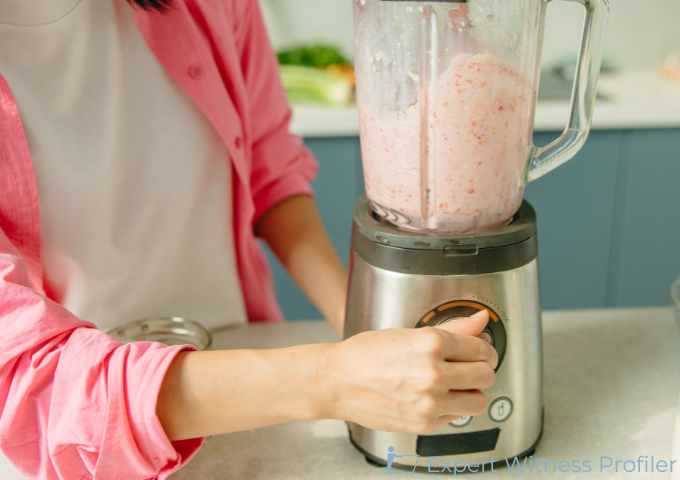
    On August 23, 2021, Plaintiff Virginia Huss used a Ninja BL660 blender, designed and manufactured by Defendant SharkNinja Operating LLC, to blend a mixture of chocolate chips that she had microwaved for 60 to 90 seconds. After blending, Huss attempted to twist open the blender lid and the lid shot off the blender cup, causing scalding hot fudge to explode and burn her face, chest, arms, and hands. As a result, Huss initiated this product liability against SharkNinja.

    In her amended complaint, Huss focused on the ‘cool to explosively hot’ theory, which posits that the blender’s fast-moving blade heats cool or room temperature food which creates friction and, ultimately, causes the blender contents to explode when the user opens the blender cup.

    Huss Filed the Following Allegations in Support of her Cool to Explosively Hot Theory:

    a. The blender is defectively designed because “the extremely fast-moving blade of the blenders heat the contents of the sealed bullet-shaped canister, which can (and does) unexpectedly explode when being used in its normal and intended manner by consumers. In a matter of a short amount of time, the fast-spinning blades can unexpectedly heat up its contents, such that if the blender explodes, the user is at risk of severe burns or lacerations and injuries requiring medication attention.”

    b. “During the normal, as-directed use of the blender, a consumer puts cool or room temperature food into the plastic ‘bullet’ cup. Once the cup is secured to the blade assembly and placed onto the unit’s base, the user is able to run the blender by pressing down on the cup. The blades then rotate, creating friction as they cut and chop the cup’s contents, which in turn causes the contents to heat up.”

    c. “As the temperature rises inside the cup, the pressure from the frictional energy also rises. The temperature can get so hot that the pressure inside the cup forces the cup to separate from the blade while the blender is still running. This can cause the hot contents of the cup to explosively project outward without warning, landing on anyone and anything nearby.”

    d. “Even if the cup does not separate from the blender while in use, the user is still at risk. If the contents of the cup are hot and under pressure when the cup is opened, the hot contents can again be explosively ejected onto the user, causing se[ve]re lacerations from a detached blade.”

      Derek King

      King set forth three other design defect theories in his expert report:

      (i) that the threaded connection between the blender cup and the blade assembly is “susceptible to slippage and so it may separate…before venting can occur” (the “Thread Slippage Theory”)

      (ii) that “the threaded connection was under load (from internal pressure) and also at an elevated temperature” and “it is likely that one or both materials experienced some softening due to temperature which contributed to the threads failing to keep the blade assembly fastened to the cup long enough for the pressure to vent” (the “Softening Materials Theory”)

      (iii) that Huss had observed that the blade assembly “kind of untwists itself the rest of the way,” which King found was “consistent with the force from internal pressure being transferred into a rotational motion due to the slope of the threaded connection between the cup and blade assembly” (the “Spontaneous Untwisting Theory”)

      In response, SharkNinja filed a motion to exclude the expert testimony of Derek King.
      Mechanical Engineering Expert Witness

      Derek A. King has a Bachelor of Science degree in Mechanical Engineering from the University of California, Berkeley and a Master of Science in Electrical Engineering from Ohio University. He has worked as an engineer for Berkely Engineering and Research since 2009 “in the areas of failure analysis, design, and risk assessment of consumer and industrial equipment, including industrial pressure vessels and consumer propane tanks, pressure cookers and blenders.”

      Want to know more about the challenges Derek A. King has faced? Get the full details with our Challenge Study report.

      Discussion by the Court

      King’s Testimony

      King was tasked with providing his opinions regarding the following topics:

      (1) “Whether or not the blender would enable and allow the incident to occur”; and

      (2) “What design aspects of the subject blender enable and/or fail to mitigate the risks of pressurization and burn injury.”

      By “applying well-established engineering principles” and performing “exemplar testing,” King concluded that “a sealed blender cup will heat and pressurize due to the blending process, thus establishing the possibility that the subject blender could create the hazard and risk consistent with Huss’ description.”

      As to his “exemplar testing,” King provided a spreadsheet which reflected the following headings: (1) T(s); (2) External °F; (3) Internal °F; (4) Pressure PSI; (5) Note; (6) T-start; and (7) Recipe. Oddly, the Court noted that King provided no explanation whatsoever in his Report regarding the meaning of the headings, exactly what the variables of his tests were, and what the outcomes of his tests were. SharkNinja described King’s test results as follows:

      • “The only testing of the incident recipe that King conducted involved blending a chocolate-chip mixture heated to 121°F. But this testing did not result in any pressurized ejection of hot content.”

      • “King blended incident recipe ingredients that were preheated to 121°F for one minute and 49 seconds in a BL660 single-serve cup, and this testing did not demonstrate any explosive projection of the cup’s contents.”

      It should be noted that Huss did not dispute SharkNinja’s characterizations of King’s testing and did not otherwise discuss the testing other than to assert that King considered Huss’ testimony that the chocolate chips were “lukewarm” temperature and “applied it to his analysis.”

      Analysis

      Absent an explanation from King or Huss — or disagreement regarding SharkNinja’s characterization — of the meaning of the data contained on King’s testing spreadsheet or how the testing was carried out in general and what results it yielded, the Court proceeded to analyze King’s opinion with the following premise in mind: King’s testing involved blending ingredients that had previously been heated to 121°F for one minute and 49 seconds, and that testing did not result in an explosive projection of the blender’s contents.

      1. Whether King Is Qualified

      SharkNinja did not challenge King’s qualifications as to his design defect opinions. However, the Court found, in accordance with its gate-keeping obligation and the standard set forth in Rule 702, that King’s undergraduate and graduate degrees in mechanical and electrical engineering along with his work experience since 2009 “in the areas of failure analysis, design, and risk assessment of consumer and industrial equipment, including blenders” is sufficient to qualify him to testify regarding design defects in blenders. 

      2. Whether King’s Methodology Is Scientifically Reliable

      The Court also considered whether Huss had sustained her burden of showing that that it is more likely than not that King’s methodology is scientifically reliable and that his testimony will aid the trier of fact.

      a. Cool to Explosively Hot Theory

      SharkNinja argued that King did not have a reliable foundation to provide expert testimony regarding the cool to explosively hot theory because he did not conduct any testing with cool or room temperature ingredients. It asserted that King’s test involved blending a mixture of chocolate chips, sweetened condensed milk, and vanilla extract preheated to 121°F for one minute and 49 seconds in a BL660 single-serve cup blender and that even though he started with preheated ingredients (versus cool or room temperate ingredients) and blended the ingredients longer than Huss did (one minute and 49 seconds versus “probably less than a minute”), “his testing did not demonstrate any explosive projection of the cup’s contents.”

      Accordingly, it argued, King “should be precluded from opining that blending cool or room temperature ingredients for any length of time can result in ‘contents being forcefully expelled from the blending cup under pressure and at high temperature.’” 

      SharkNinja’s main critique of King’s methodology for his opinions regarding the cool to explosively hot theory was that King was not able to re-produce an explosive projection when he blended chocolate chips, sweetened condensed milk, and vanilla extract for a longer period of time than Huss, and that the ingredients he blended were preheated to 121°F rather than being cool or at room temperature as necessary to test the cool to explosively hot theory. 

      Court’s Decision

      The Court acknowledged that “an expert need not wear a lab coat nor cite peer-reviewed studies to reliably lend his expertise to the trier of fact—experience is an equally valuable teacher.”

      But, at bottom, King still had to explain the methodology that he used and how his experience led him to his conclusions. He did not do so and, moreover, the testing he did perform used different conditions than the cool to explosively hot theory, making his methodology regarding his opinion that the blender had a design defect based on that theory unreliable.

      b. Thread Slippage Theory

      While SharkNinja agreed with King’s premise that ‘blending creates friction, friction causes heat, and, given enough time, a marathon blending session can eventually generate sufficient heat and pressure within a sealed cup to cause the blended contents to eject out energetically when the cup is opened,’ it argued, however, that King’s opinions that this can take place after one minute of blending is not supported by testimony or “any other reliable foundation.”

      Specifically, SharkNinja noted that King blended preheated ingredients for one minute and 49 seconds and “did not identify any thread slippage or pressurized ejection of contents” from the blender cup, and that the thread slippage theory is speculation and unreliable. 

      SharkNinja asserted that there is an “analytical gap” in King’s analysis because “whether the blade assembly can ‘shift’ does not address whether the threads between the blade assembly and the BL660 cup can, in fact, ‘slip.’” It noted that King did not identify any testing to support his finding and that Huss does not argue that this theory has been subjected to peer review or publication, is generally accepted in the engineering community, or has a known or potential error rate. 

      Court’s Decision

      The Court rejected Huss’ argument that SharkNinja can simply cross-examine King to address any shortcomings in his methodology. This notion is contrary to the 2023 amendment to Rule 702, which requires the Court to determine whether an expert’s methodology is reliable rather than leaving that determination to the jury. 

      As to SharkNinja’s issues with King’s methodology, King opined that “a potential opportunity for venting before sudden separation is present in the intermittent thread design, however, geometric analysis shows that the threaded connection is susceptible to slippage and so it may separate…before venting can occur.” He described the blender’s threading in detail, but did not set forth any methodology for how he reached his conclusion that thread slippage could have occurred after less than one minute of blending and caused the contents of Huss’ blender to explode. The Court held that King’s methodology regarding his opinion on the thread slippage theory is non-existent and, therefore, unreliable.

      c. Softening Materials Theory

      SharkNinja argued that King “did not attempt to substantiate his softening materials theory with any testing or other reliable foundation,” instead simply noting the deflection temperature of the materials that make up the blender’s construction and stating that it is likely those materials softened during use.

      SharkNinja noted that King examined the blender but “did not state that he observed any evidence of softening in either the blade assembly or the single-serve cup,” that his testing “did not demonstrate any evidence of either component softening,” and that he did not cite any support for his theory in scientific literature or otherwise. 

      Court’s Decision

      The Court rejected Huss’ contention that SharkNinja can simply address shortcomings in King’s methodology through cross-examination and proceeded to consider the issues that SharkNinja raised.

      While King stated in his report that “An overview of the material properties indicates that cup material has a deflection temperature of approximately 200 °F, while the blade assembly deflection temperature is approximately 100 to 300 °F. Huss’ description of a pressurized release and sustaining burn injuries indicates that the threaded connection was under load (from internal pressure) and also at an elevated temperature. It is likely that one or both materials experienced some softening due to temperature which contributed to the threads failing to keep the blade assembly fastened to the cup long enough for the pressure to vent,” he did not indicate that he tested the blender, observed softening of the components’ materials, or employed any other methodology to reach his conclusion.

      He merely stated that ‘it is likely’ the materials ‘experienced some softening’ based on their deflection temperatures, which ‘contributed to the threads failing to keep the blade assembly fastened.’ The Court held that his speculative conclusion is not supported by any methodology. In other words, King’s methodology relating to the softening materials theory is not reliable.

      d. Spontaneous Untwisting Theory

      SharkNinja argued that King simply states that Huss’ observation that the blade assembly untwists itself is consistent with the use of the blender, but “offers no reliable foundation for this opinion,” “does not attempt to substantiate his opinion by citing to any scientific literature (or anything at all other than Plaintiff’s deposition testimony),” and “did not disclose any evidence of the BL660 blade assembly untwisting itself based on the slope of the threaded connection during his own testing of the incident recipe.”

      Basically, SharkNinja contended that King “does not identify any testing that would support his spontaneous untwisting theory,” and noted that his testing with preheated ingredients did not result in the blender cup spontaneously untwisting from the blade assembly. 

      King opined that ‘Huss’ observation that the blade assembly “kind of untwists itself the rest of the way” is consistent with the force from internal pressure being transferred into rotational motion due to the slope of the threaded connection between the cup and blade assembly.’

      He did not state that he tested this theory and observed spontaneous untwisting or set forth any other methodology that he used in reaching this conclusion. He simply baldly stated that Huss’ observation is consistent with the use of the blender and the slope of the threaded connection. The Court held that King’s methodology regarding the spontaneous untwisting theory is speculative and not reliable.

      The Court found that Huss has not sustained her burden of showing by a preponderance of the evidence that King’s methodology as it relates to the cool to explosively hot theory, the thread slippage theory, the softening materials theory, or the spontaneous untwisting theory is reliable.

       3. Whether King’s Testimony Would Aid the Trier of Fact

      SharkNinja argued that King’s opinions would not aid the trier of fact because they were speculative in nature and not based on a reliable methodology.

      The Court held that King’s opinions are not grounded in a reliable methodology — they are not based on any physical testing and King does not set forth any other methodology to explain how he reached his conclusions. The speculative nature of his opinions relating to all four design defect theories will not aid the trier of fact. The Court found that Huss has not shown that it is more likely than not that King’s testimony will aid the trier of fact.

      In sum, Huss has not sustained her burden of showing by a preponderance of the evidence that King’s methodology is reliable and that his opinions would aid the trier of fact.

      Held

      The Court granted the Defendant’s motion to exclude the testimony of Plaintiff’s expert Derek King.

      Key Takeaway:

      Despite King’s qualifications in mechanical and electrical engineering and his experience in failure analysis and design, the Court held that he failed to demonstrate a scientific basis for his conclusions regarding the alleged design defects of the Ninja BL660 blender. His testing did not replicate the conditions claimed by the Plaintiff, and he did not substantiate his theories—such as the cool to explosively hot theory, thread slippage theory, softening materials theory, and spontaneous untwisting theory—with physical testing, mathematical models, or citations to scientific literature. The Court determined that King’s unsupported conclusions would not aid the jury in evaluating the alleged design defects, rendering his testimony inadmissible.

      Case Details:

      Case Caption: Virginia Iris Huss vs. Sharkninja Operating LLC
      Docket Number: 1:23cv1435
      Court: United States District Court for the Southern District of Indiana, Indianapolis Division
      Order Date: January 21, 2025
    1. Roofing Expert Witness Allowed to Testify Despite Not Complying with Expert Disclosure Requirements

      Roofing Expert Witness Allowed to Testify Despite Not Complying with Expert Disclosure Requirements

      Eric Krajewski alleged that he submitted a claim for hurricane damage that Scottsdale Insurance Company will not pay despite coverage under the parties’ insurance policy. To recover the funds reportedly owed, Krajewski sued for breach of contract.

      Krajewski timely disclosed an expert—Phaion Hicks. But according to the record before the Court, Krajewski never provided a corresponding report.

      According to Scottsdale, Krajewski has not properly disclosed Hicks as an expert under Federal Rule of Civil Procedure 26(a)(2). Specifically, Krajewski failed “to provide the required expert report.” Scottsdale now moves to “strike Hicks as an expert in this matter and preclude the use of his testimony and opinions at trial.”

      Scottsdale labeled Hicks as a retained expert. The Court reasoned that if Hicks was hired to assess and repair Krajewski’s house rather than offer expert testimony in a lawsuit, then this would put him in the non-retained category.

      Even treating Hicks as a non-retained expert, the Court found that Krajewski’s disclosure fell short.

      Roofing Expert Witness

      Phaion Hicks is a professional engineer, certified general contractor and certified roofing contractor. He has years of experience in the field of engineering and regularly performs evaluations to determine the cause, origin, and duration of water damage and roof damage in Florida. Hicks is expected to offer expert opinion based on inspection of the property at issue.

      Want to know more about the challenges Phaion Hicks has faced? Get the full details with our Challenge Study report. 

      Discussion by the Court

      While a non-retained expert need not provide a full report, a party must do more than “identify generic subject areas of anticipated testimony, without identifying the actual substance or content of the opinions.”

      While Krajewski’s expert disclosure outlines some of the subjects Hicks will discuss, the Court held that there is no legitimate summary of the facts and opinions. For example, the disclosure states Hicks will “offer expert opinion based on inspection of the property at issue.” Nowhere, however, does Krajewski provide the opinions formed from Hicks’ inspection.

      Krajewski did not provide a conforming report by the expert disclosure deadline. And his decision not to respond to Scottsdale’s motion leaves the record silent about whether his conduct was substantially justified or harmless.

      The Court held that exclusion was not required because Hicks’ testimony is seemingly critical. Without him, Krajewski’s case may end. Since the discovery is still ongoing, Krajewski’s conduct, at least at this point, does not warrant excluding testimony that may prove essential to his case when any prejudice can still be cured.

      Held

      1. The Court granted in part and denied in part Scottsdale’s motion to strike Phaion Hicks as an expert in this matter and preclude the use of his testimony and opinions at trial;
      2. Krajewski must update his disclosure for Hicks by January 31, 2025. It is Krajewski’s burden to assess whether Hicks is retained or non-retained and modify the disclosure accordingly.
      3. If Scottsdale needs additional time beyond the current discovery deadline to depose Hicks or amend its own expert disclosures, the Court will entertain such an extension.

      Key Takeaway:

      Rule 37(c)(1) continues to give the Court discretion to award alternative sanctions. Exclusion is considered a drastic remedy since it can dictate the outcome and preclude a decision on the merits.

      Case Details:

      Case Caption: Krajewski V. Scottsdale Insurance Company
      Docket Number: 2:24cv189
      Court: United States District Court, Florida Middle
      Order Date: January 22, 2025
    2. Construction Expert Witness Allowed to Opine on the Reasonableness of the Use of Xactimate

      Construction Expert Witness Allowed to Opine on the Reasonableness of the Use of Xactimate

      In November 2021, a fire caused severe damage to the home of Michael and Alexis Wright, located in Goldendale, Washington, a rural area about 70 miles from Yakima, Washington. The Wrights filed a claim with their insurer, State Farm, which immediately confirmed coverage. 

      In January 2022, the adjuster assigned to the Wrights’ file, Timothy Treat, finalized his initial estimate for the structural repair of the Wrights’ home. He used a software called Xactimate, which used data on labor and material costs to estimate total repair costs. Xactimate yielded an estimate for the Wrights’ home repair in the amount of $181,277.82.

      According to the Wrights, because they lived in Goldendale, a rural location, it took them several months to find a contractor willing to perform the repair.  By June 2022, they found a company willing to do the work for an estimated total cost of $259,244.61—nearly $80,000 above State Farm’s Xactimate estimate. 

      In November 2022, after extensive back-and-forth, the Wrights brought contractual and extracontractual claims against State Farm, alleging that State Farm failed to properly investigate and cover their losses.

      Among other arguments, the Wrights asserted that State Farm uses Xactimate, which “is designed with input and pricing data primarily sourced from the insurance industry,” to intentionally achieve “cost containment.”

      State Farm intended to offer opinion testimony from construction and repair expert Eugene Peterson “regarding [among other topics] the reasonableness of State Farm’s use of Xactimate to create repair estimates in this matter.”

      Wrights argued that Peterson’s opinion testimony was unsubstantiated, speculative, lacked foundation, amounted to legal opinions, and otherwise did not comport with Fed. R. Evid. 702 and 703.

      Construction Expert Witness

      Eugene Peterson is a Past President of both the Utah Home Builders Association and the Greater Salt Lake Home Builders Association. He is the CEO of Advise And Consult, Inc., expert witnesses & consultants for restoration, personal property & construction related matters in both the United States and Canada. He has facilitated peer group meetings for Business Networks, Inc., and for several years was an advisor, consultant & certified trainer for Xactware, Inc. (construction estimating software). Peterson has worked with the Xactimate since 1991, including beta testing new iterations of the program, training contractors on how to use the software, and creating the first online Xactimate training syllabus. 

      He also actively participates in the insurance appraisal process as either an umpire or appraiser.

      Want to know more about the challenges Eugene Peterson has faced? Get the full details with our Challenge Study report. 

      Discussion by the Court

      While Peterson admitted that State Farm estimates are written using the price lists from Yakima, Washington, which is over 70 miles from the loss location in Goldendale, he stated that the adjuster chose and applied an option found in the Xactimate estimating software for rural settings to account for the rural location. He explained, “when this option is applied, the software automatically factors and applies additional dollars to each line item to account for the increased labor and materials costs and the difficulty of working in a rural setting.” Likewise, Peterson added that this “‘rural/remote’ setting factors in some of the difficulties of material accusation, by bumping pricing of materials so that purchase can be made locally.”

      However, when Treat was asked during his deposition whether he was familiar with the “site access” drop-down feature, he testified, “I have not seen this.” Likewise, when Peterson was deposed in October 2024, he admitted that he “cannot say for certainty that Treat did use the “rural/remote” feature.”

      State Farm has shown, by a preponderance of evidence, that Peterson’s opinions are relevant and reliable

      The crux of the Wrights’ motion to exclude is that Peterson’s testimony was unreliable because he “based his opinion on a false premise, the premise that Treat knew of and used a critical feature of the software program which adjusts for remote sites such as the Wrights’ home.”

      In their reply brief, the Wrights provided other, additional grounds on which to question the reliability and relevance of Peterson’s opinions. For example, they pointed to Peterson’s allegedly false assertion that “Plaintiff Michael Wright completed the painting of their home.”  And they disputed the relevance and reliability of Peterson’s opinion “as to the value of Plaintiffs’ home.”

      Because these later arguments were improperly raised in a reply brief, the Court declines to consider them.

      The Court is not persuaded that his potential factual error about State Farm’s use of the “rural/remote” feature renders his entire opinion testimony unreliable

      The core issue in this case is whether Peterson’s statements about State Farm’s use of the ‘rural/remote’ feature in the Xactimate software render his entire opinion testimony unreliable.

      The Court held that Peterson easily clears the expertise threshold set by Daubert and Rule 702 because he has been working with Xactimate for over thirty years. Most of the opinions expressed in Peterson’s report are in fact unrelated to the “rural/remote” feature. To exclude such expert testimony would hinder objective factfinding and unduly prejudice State Farm.

      The Court cannot conclude that Peterson’s assertion about Treat’s use of the “rural/remote” feature was indeed false. The Wrights cited Treat’s deposition, in which he allegedly stated that he had never seen the “rural/remote” feature. But the portion of the deposition transcript they cited was missing from their evidentiary filing.

      Even assuming that Treat did express unfamiliarity with the “rural/remote” feature in his deposition—meaning Peterson was likely incorrect about its use here—the Court held that this error concerned the weight, not admissibility, of Peterson’s testimony.

      In summation, the Wrights are free on cross-examination to ask Peterson, for example, whether he knows for certain that Treat used the “rural/remote” feature when estimating the Wrights’ home repair costs. And they are also free to ask him whether, hypothetically, failure to use this feature would lead to an underestimate of rural home repair costs. Such testimony might aid their case. But they have not presented grounds to exclude his testimony entirely.

      Held

      The Court found that State Farm has met its burden of proving by a preponderance of the evidence that the opinion testimony of its construction and repair expert, Eugene Peterson, is relevant and reliable. The Court denied the Wrights’ motion to exclude Peterson’s expert testimony.

      Key Takeaway:

      When the baseline requirement of reliability is met, the factual basis of an expert opinion goes to the credibility of the testimony, not the admissibility, and it is up to the opposing party to examine the factual basis for the opinion in cross-examination.

      Peterson is well-versed with Xactimate and is clearly qualified to opine on State Farm’s use of the ‘rural/remote’ feature in the Xactimate software. Besides, most of the opinions expressed in Peterson’s report were in fact unrelated to the “rural/remote” feature. The Wrights are free to address their doubts during cross-examination.

      Case Details:

      Case Caption: Wright Et Al V. State Farm Fire & Casualty Company
      Docket Number: 2:23cv179
      Court: United States District Court, Washington Western
      Order Date: January 21, 2025
    3. Automotive Engineering Expert Witness’ Testimony Survives Rule 37 Exclusion Sanction

      Automotive Engineering Expert Witness’ Testimony Survives Rule 37 Exclusion Sanction

      Vicki Oetjens had surgery in October of 2020. Had all gone to plan, a diseased portion of her colon would have been removed, then the healthy ends would have been stapled together. But when the surgical stapler was deployed, no staples fired. This left a hole in Vicki’s large intestine requiring surgical repair. Vicki had to use an ostomy bag until she had a second surgery to reverse the first and reconnect her intestine. When Vicki developed a hernia at the site of her incision, that second surgery led to a third.

      So in June of 2022, Vicki and her husband Eric Oetjens sued the entities that manufactured the stapler: Medtronic USA, Inc., Medtronic, Inc., and Covidien LP (collectively “Covidien”).

      The Oetjens identified Larry Petersen as a third proposed expert witness. Per their expert disclosures, Petersen is “expected to testify concerning the mechanical use of the subject 28 [mm] EEA Circular Stapler.” 

      Covidien protests that the Oetjens’ failure to submit an expert report for Petersen violates Rule 26(a)(2)(B) and warrants exclusion of his testimony under Rule 37(c)(1).

      The parties agreed that Petersen is a retained expert witness who, pursuant to Rule 26(a)(2)(B), cannot offer expert testimony without first tendering a written expert report. They also agreed that no such written report has been produced. So the only question is whether the Oetjens can avoid Rule 37(c)(1)’s exclusion sanction by showing that their failure to comply with Rule 26(a)(2)(B) “was substantially justified or is harmless.”

      Automotive Engineering Expert Witness

      Larry Petersen is an automotive engineer whose litigation support work, in a primary engineering analysis and expert testimony role, includes detailed design, failure analysis and accident reconstructions including automotive components including engine, transmission, driveline, brake and suspension and engine/transmission control components.

      Get the full story on challenges to Larry Petersen’s expert opinions and testimony with an in-depth Challenge Study. 

      Discussion by the Court

      The Oetjens, seemingly pointing to Rule 37(c)(1)’s exception for “substantially justified” nondisclosure, responded that they cannot yet produce an expert report for Petersen for two reasons. First, they cited “outstanding discovery requests,” asserting that Petersen cannot offer an expert opinion on whether Covidien’s stapler fired without stapling or failed to fire at all until the Oetjens receive “an exemplar stapler to inspect” and depose a Rule 30(b)(6) Covidien representative with “a working knowledge of the mechanics of the stapler,” specifically whether the stapler can cut without stapling.

      Further, said Covidien, the Oetjens should have timely submitted an expert report for Petersen, “then supplemented it if necessary—or sought additional time.”

      It should be noted that Petersen’s testimony is contingent upon whether Covidien raises a user error argument. They say they identified Petersen as an expert witness “for the sole purpose of having an independent engineer available . . . in the event that [Covidien] takes the position that there was some type of user error on the part of the medical staff or that a mechanical issue arises with regard to the use of the stapler.” If Covidien argues user error, then the Oetjens will provide an expert report for Petersen. Otherwise, the Oetjens may not need Petersen’s expert testimony at all, or they may use Petersen only “as a potential engineering rebuttal witness” such that “there would be no need for an expert report.”

      Because the parties stipulated to stay Covidien’s expert disclosure deadline pending the resolution of its motions, it should be noted that Covidien “will not be prejudiced by allowing Petersen to submit his expert report, if necessary, once the outstanding discovery has been provided.” 

      On this key point, therefore, the Court found that the Oetjens’ failure to timely provide an expert report for Petersen is ultimately harmless.

      Held

      The Court denied without prejudice the Defendants’ motion to strike Larry Petersen’s testimony. It provided Covidien with the opportunity to depose Petersen and retain a rebuttal expert witness prior to trial. This will eliminate any prejudice to Covidien and aid in efficiency should Petersen’s expert report prove unnecessary.

      Key Takeaway:

      While Covidien made strong arguments that the Oetjens should have proceeded differently with respect to Petersen’s expert disclosures, the Court concluded that the Oetjens’ missteps were not ultimately prejudicial, so exclusion is not necessary on that ground.

      Petersen was identified as an expert witness for the sole purpose of having an independent engineer available in the event that [Covidien] takes the position that there was some type of user error on the part of the medical staff or that a mechanical issue arises with regard to the use of the stapler. Considering Petersen’s testimony was contingent upon whether Covidien raised a user error argument, it was likely that Oetjens may not need Petersen’s expert testimony at all.

      Case Details:

      Case Caption: Oetjens Et Al V. Medtronic, Plc Et Al
      Docket Number: 2:22cv11220
      Court: United States District Court, Michigan Eastern
      Order Date: January 16, 2025
    4. Banking Expert Witness Not Allowed to Opine on the Materiality of Documents Submitted

      Banking Expert Witness Not Allowed to Opine on the Materiality of Documents Submitted

      A grand jury indicted Rasta Khalid Walid (“Walid”) on 17 counts, including failure to pay legal child support, bank fraud, false statements to a bank, engaging in monetary transactions, and false, fictitious, and fraudulent claims.

      Walid filed a notice disclosing the proposed testimony of two expert witnesses he intended to use at trial:

      1. Conor Newman, a certified public accountant, offers testimony regarding issues of Walid’s use of general accounting principles and Walid’s understanding of the tax code and regulations.
      2. Steve Bryant, a banking and paycheck protection program (“PPP”) expert, offers testimony regarding issues related to PPP loans.

      In response, the Government filed a motion in limine to exclude Walid’s expert testimony of Conor Newman and Steve Bryant.

      Banking Expert Witness

      Accounting Expert Witness

      Conor Newman is a Certified Public Accountant with Boyle, Deveny, and Meyer, a Montana accounting firm that provides consulting and tax services across the United States. He is responsible for services in the areas of compiled financial statements, tax consulting and compliance, and accounting system software consulting.

      Get the full story on challenges to Conor Newman’s expert opinions and testimony with an in-depth Challenge Study.  

      Banking Expert Witness

      Steve Bryant is the Vice President of Commercial Lending at First Security Bank of Missoula, a division of Glacier Bank.

      Bryant has been in commercial lending since 2008. In 2020, Bryant played a critical role in reviewing and approving or declining Paycheck Protection Program (PPP) loans.

      Want to know more about the challenges Steve Bryant has faced? Get the full details with our Challenge Study report.  

      Discussion by the Court

      The Court ruled in part from the bench on the scope of expert testimony. It allowed the parties to reserve further objections during the trial. The Court sought to clarify the scope of expert testimony at trial.

      Conor Newman

      Walid sought to elicit testimony from Newman regarding issues of Walid’s use of general accounting principles, the complexity of the tax code, and the procedural requirements for submissions like Walid’s. Newman made several findings in his report that addressed Walid’s mental state during the preparation of the report. Some of Walid’s charges requires the government to prove that Walid knew the claim was false, fictitious, or fraudulent. Newman sought to testify that Walid “held the incorrect belief” that Walid thought he had properly filed the forms. However, the Court held that Newman’s testimony with regard to Walid’s knowledge of whether he knew what he was filing was potentially fraudulent properly would be limited.

      The Court held that Newman could testify to what Walid’s filings looked like compared to others in similar circumstances for the jury to make inferences about Walid’s state of mind at the time he filed his taxes. The Court held that Walid may also testify to his own experience about what he knew at the time the claims were filed but may not use Newman to convey to the jury, Walid’s state of mind at the time he prepared his taxes.

      Steve Bryant

      Walid also sought to elicit testimony from Bryant regarding issues related to Paycheck Protection Program (“PPP”) loans. Specifically, Bryant sought to testify about documents relevant to approving or denying PPP loans and offer an opinion on the submissions for PPP loans from Walid to certain banks.

      The Government contended that Bryant should not be allowed to testify to the materiality of what Walid submitted. Count 15 in the Indictment, requires Walid to have made statements that were “material” and “had a natural tendency to influence or were capable of influencing” a financial institution. The parties agree that this testimony properly may be limited through objection at trial and instructing the jury on the legal definition of “material”.

      The Court allowed Walid’s expert to testify based on their expert opinion on a review of Walid’s submissions to the Internal Revenue Service and financial institutions, but Walid’s proposed experts shall not testify to Walid’s willfulness or Walid’s personal knowledge of filing fraudulent, fictitious, or false claims. The Court reserves ruling on any other expert testimony until trial.

      Held

      The Court granted in part the Government’s motion in limine as follows:

      1. Walid’s expert Newman shall not testify to whether Walid knew the claim Walid filed was false, fictitious or fraudulent.

      2. Walid’s experts shall not testify to an ultimate issue of the crime charged.

      3. Walid’s expert Bryant shall not testify to Walid’s intent to defraud any financial institution.

      4. Walid’s expert Bryant shall not testify to the materiality of documents submitted by Walid to any financial institution.

      Key Takeaway:

      The Court allowed Newman to testify about Walid’s use of general accounting principles and Walid’s understanding of the tax code and regulations but prohibited him from opining on Walid’s mental state or willfulness in filing fraudulent claims. Similarly, the Court allowed Bryant to discuss documents and processes related to Paycheck Protection Program (PPP) loans but barred him from testifying about Walid’s intent to defraud financial institutions or the materiality of submitted documents. These limitations preserved the jury’s role in determining Walid’s intent his state of mind.

      Case Details:

      Case caption: United States v. Walid
      Docket Number: 6:23cr12
      Court: United States District Court for the District of Montana, Helena Division
      Dated: January 17, 2025
    5. Psychology Expert Witness’ Supplemental Report on Complex PTSD Struck as Untimely

      Psychology Expert Witness’ Supplemental Report on Complex PTSD Struck as Untimely

      Plaintiff Arthur Williams (“Plaintiff”) filed this action against Defendants East Meadow Union Free School District, Matthew Melnick, Scott Eckers, Alisa Baroukh, Eileen Napolitano, Joseph Parisi, Marcee Rubenstein, Melissa Tell, Dr. Kenneth Card, and Dr. Patrick Pizzo (collectively, “Defendants”), alleging discrimination based on race, color, and age, as well as a hostile work environment and retaliatory actions.

      The Plaintiff, a former employee of East Meadow Union Free School District, alleged that the Defendants discriminated against him based on his race and age and created a hostile work environment during his employment. In 2016 Defendant Patrick Pizzo, District Assistant Superintendent for Business and Finance, encouraged Plaintiff to apply for a position as Assistant to the Superintendent for Administration and Special Projects, for which he was subsequently hired. Despite his superior performance in that role, Plaintiff claimed that he was treated differently than his white counterparts and was subjected to excessive scrutiny and performance evaluations.

      Following the Superintendent’s retirement, Pizzo made discriminatory comments on account of Plaintiff’s age and race and such conduct worsened upon Plaintiff attempting to report the conduct. Pizzo placed Plaintiff on a performance improvement plan, and ultimately Pizzo terminated Plaintiff from his position. 

      Discovery deadlines were extended numerous times for a host of reasons throughout the protracted history of this case. Following a status conference on July 10, 2024, the dates were extended so that expert in chief reports were due no later than July 15, 2024, rebuttal reports were due no later than September 11, 2024, and the end date of all expert discovery was October 2, 2024. The parties were forewarned that “[t]his will be the final extension of discovery dates and deadlines.” 

      Final Discovery Deadline Violation

      Dr. Michael J. Vernarelli, Plaintiff’s forensic economist expert submitted his initial report on August 16, 2022, and, following his deposition, produced his supplemental report on October 14, 2024. Similarly, Dr. Darlene Powell Garlington , a clinical psychologist, submitted her initial report on July 12, 2024, was deposed by Defendants on October 2, 2024, and then submitted a supplemental report on November 6, 2024. It should be noted that both expert reports were served after the final discovery deadline.

      Defendants filed a motion to strike both supplemental reports under Federal Rule of Civil Procedure 37, claiming they were not only untimely but also went beyond the permissible scope of supplemental reports. Plaintiff filed timely opposition to the motion on December 23, 2024.

      Economics Expert Witness

      Michael J. Vernarelli is a forensic economist and a noted academic. He has significant experience consulting with Plaintiff and Defense attorneys, performing appraisals of loss of lifetime earnings and economic value in
      cases of wrongful death, personal injury, age discrimination, and equitable distribution in addition to providing expert testimony.

      Get the full story on challenges to Michael J. Vernarelli’s expert opinions and testimony with an in-depth Challenge Study. 

      Psychology Expert Witness

      Darlene Garlington is a nationally-recognized, licensed clinical psychologist, certified school psychologist, and media psychologist. She is a renowned author of eleven books which focus primarily on building resilience, parenting, family dynamics, spirituality, multiculturalism, co-parenting, male-female relationships and diversity.

      Want to know more about the challenges Darlene Garlington has faced? Get the full details with our Challenge Study report

      Discussion by the Court

      The Vernarelli Reports:

      Vernarelli’s initial and supplemental reports were prepared to calculate the lost back pay and front pay for Plaintiff as a result of his allegedly wrongful termination.

      On October 14, 2024, Vernarelli amended his initial report, which he had submitted on August 16, 2022. In his amended expert disclosure, Vernarelli explained that during his deposition, he realized that he needed to deduct Plaintiff’s Social Security benefits as mitigating income for both lost back pay and lost front pay through Plaintiff’s projected retirement date. He admitted to making a “big oversight” and discovered “an error” in not taking into account these benefits in calculating either back pay or front pay. Vernarelli acknowledged that his calculation method was flawed because he did not account for the fact that this is a civil rights/discrimination case and not a personal injury case where social security benefits ordinarily are not an offset until post-verdict.

      Moreover, Vernarelli failed to, but now admits he needed to, account for the higher Social Security benefits Plaintiff would receive upon turning 70—his projected age of retirement. As Vernarelli stated, this meant Plaintiff’s pre-retirement damages should be lower while his post-retirement damages should be higher. Indeed, Vernarelli initially concluded Plaintiff was entitled to lost earnings (back and front pay) of $892,308 and lost pension benefits (front pay) of $296,475. Conversely, in his amended report, after taking into account the Social Security benefits, Vernarelli determined Plaintiff’s lost earnings (back and front pay) should be $702,848 while his lost pension benefits (front pay) should be $545,192, thereby increasing the total damage assessment by $59,257.00.

      The Garlington Reports:

      Garlington’s initial report, submitted on July 12, 2024, was based on a psychological assessment of Plaintiff’s mental and emotional well-being. In this report, Garlington concluded that Plaintiff suffered from Post-Traumatic Stress Disorder (PTSD) with co-occurring depression and anxiety, referencing bouts of low confidence and cognitive difficulties like inability to focus or recall events. Garlington added that PTSD is a “disease of non-recovery,” and concluded that symptoms “do not dissipate or become manageable to be able to function as the individual did prior to the trauma.” 

      On November 6, 2024, Garlington submitted an amended report after reviewing additional medical records provided by Plaintiff. These records included findings from Dr. Abraham Glasman, a neurologist who began treating Plaintiff in 2022, and Dr. Christine Weber, who conducted a neuropsychological consultation with Plaintiff in August 2022. Glasman diagnosed Plaintiff with “mild cognitive impairment,”  and eventually updated it to “dementia with unspecified severity without behavioral disturbance, psychotic disturbance, mood disturbance and anxiety.” Weber diagnosed Plaintiff with “unspecified dementia with behavioral disturbance” after noting a slow and continuous progression of cognitive decline and corresponding symptoms.

      Garlington concluded that Plaintiff had developed Complex PTSD (CPTSD), which she attributed to the ongoing nature of his traumatic experiences.

      The Parties’ Arguments

      Argument by Defendant

      Defendants argued that both the supplemental reports should be struck due to their untimeliness. This case is in the Daubert and summary judgment briefing stage, thus reopening discovery on these experts’ new information would prejudice Defendants through increased costs and delays. Moreover, Vernarelli had ample  opportunity to “update and revise” his initial findings as he had access to Plaintiff’s financial information for calculating damages, specifically Social Security damages, yet has failed to indicate why he did not revise his initial report sooner. Furthermore, Defendants posited that Vernarelli “significantly altered his prior damages assessment” by lowering Plaintiff’s pre-retirement damages while increasing post-retirement damages. 

      With respect to Garlington, Defendants argued that she “drastically revised” her conclusions after reviewing Plaintiff’s prior medical and psychological treatment records. In other words, her supplemental report introduced entirely new theories on which Defendants have had no discovery at all. With the new diagnosis, Defendants claimed that the scope of the first report expanded and is now inconsistent with the initial report.

      Argument by Plaintiff

      Plaintiff contended that the supplemental reports were a direct result of information raised at the experts’ respective depositions, ones scheduled for the last and second to last day of expert discovery.

      Plaintiff specifically argued that Vernarelli’s supplemental report was in direct response to his realization during his deposition that his Social Security calculation was “not fully accurate.” Moreover, as alleged, his initial report did not account for the higher Social Security benefits Plaintiff would have received upon retirement at 70 years old. Such a drastic change in damages, as Plaintiff contends, “is a reflection of the accurate calculations.” Similarly, as argued, Garlington amended her report to provide a “fair and accurate depiction of Plaintiff’s psychological state” after learning, during her deposition, of prior medical reports diagnosing Plaintiff with dementia. 

      Analysis

      Courts “will not admit supplemental expert evidence following the close of discovery when it expounds a wholly new and complex approach designed to fill a significant and logical gap in the first report.” To allow such new evidence to be presented would undermine the purpose of the discovery rules, circumvent the discovery schedule that was ordered by the Court, and prejudice a Plaintiff. 

      a. Vernarelli’s Report

      Vernarelli, though his amended report sought to clarify an “inaccurate” calculation, nothing in the record indicates that the Social Security damages were “unknown or unavailable” to him. In fact, Vernarelli had access to all of Plaintiff’s financial information, including Social Security damages, when he formed his initial report. Additionally, Plaintiff sought to submit Vernarelli’s supplemental report in order to correct his flawed approach to his damages calculation. At bottom, the Court held that Vernarelli’s inaccurate damages calculation resulted from his utilization of a damages calculation tailored towards personal injury cases, not civil rights or discrimination cases. Having chosen to utilize an incorrect methodology in calculating damages, as Vernarelli has done here, does not warrant admitting a supplemental report aimed at correcting that flawed method. 

      b. Garlington’s Report

       Garlington offered several new diagnoses in her amended report, like CPTSD and dementia, that stretched far beyond the scope of her conclusions enunciated in her initial report. The Court held that Garlington’s supplemental report offers new medical opinions and conclusions, rather than clarifying or elucidating the conclusions in her original report.

      In considering whether to preclude supplemental experts reports under Federal Rule 37(c)(1), courts, in exercising their discretion, usually consider the following four factors: 

      1. The Party’s Explanation for the Delay in Advancing the New Evidence
      2. Importance of the Precluded Evidence
      3. Prejudice Suffered by the Opposing Party
      4. Possibility of a Continuance

      i. The Party’s Explanation for the Delay in Advancing the New Evidence

      In conclusory fashion, Plaintiff stated that Vernarelli realized the Social Security benefits needed to be deducted and that he did not take them into account despite the fact that Vernarelli had access to this financial information when he formed his initial report. As to Garlington, it is argued that she did not know about the other expert’s reports before she was deposed, namely because Plaintiff allegedly withheld medical information from her. The Court noted that Garlington had numerous opportunities to ascertain this information as the discovery schedule was extended at several different points during this almost four-year litigation.

      Plaintiff offered nothing to the Court explaining why Garlington could not obtain this new evidence before examining Plaintiff herself, or why Vernarelli did not account for Social Security damages in his initial report before discovery closed.

      ii.  Importance of the Precluded Evidence

      The reports were important as each were crucial to different elements of Plaintiff’s damages. The Court recognized that evidence affecting even a relatively small portion of total damages could be sufficiently important to weigh against preclusion which is why this factor favors admitting Vernarelli’s report. Moreover, relevant to Garlington, previously conducted medical examinations and subsequent findings were important because they formed the basis for a change in diagnosis.

      iii. Prejudice Suffered by the Opposing Party

      The case was approaching four years since its commencement on June 11, 2021. Allowing these supplemental reports would necessitate reopening expert discovery, potentially leading to further depositions, reports, and motion practice, thereby resulting in increased time and resources to an already lengthy litigation nearing its end. The Court found this factor heavily favored preclusion keeping in mind the purported prejudice Defendants stood to suffer.

      iv. Possibility of a Continuance

      The Court held that a continuance was not appropriate as the case has been ongoing for almost four years, other discovery motions have been filed in addition to the current motion to strike, and discovery deadlines, particularly as to experts, have been continuously extended.

      In sum, the Court excluded the supplemental reports offered by Vernarelli and Garlington.

      Held

      The Court granted Defendants’ motion to strike the supplemental expert reports of Michael J. Vernarelli and Darlene Powell Garlington.

      Key Takeaway:

      Vernarelli noted that his calculation method was wrong because he did not account for the fact that this is a civil rights/discrimination case and not a personal injury case where social security benefits ordinarily are not an offset until post-verdict. Similarly, Garlington’s revised report, which introduced new diagnoses of CPTSD and dementia, was deemed improper because it went beyond her initial psychological findings. The Court applied a four-factor test, considering the delay in submitting the reports, their importance to Plaintiff’s damages, the prejudice to Defendants, and the unavailability of a continuance. Ultimately, the Court ruled that allowing the reports would unfairly extend the litigation, increase costs, and introduce new, unvetted theories, thereby prejudicing the Defendants.

      Case Details:

      Case Caption: Williams vs. East Meadow Union Free School District Et Al
      Docket Number: 2:21cv3310
      Court: United States District Court for the Eastern District of New York
      Order Date: January 16, 2025
    6. Accounting Expert Witness’ Disgorgement Analysis Using Full Absorption Method Admitted

      Accounting Expert Witness’ Disgorgement Analysis Using Full Absorption Method Admitted

      Plaintiff Multiple Energy Technologies, LLC (“MET”) accused Under Armour of false advertising in relation to certain products that contain bioceramic powder. MET contended that Under Armour inaccurately claimed that the Federal Food and Drug Administration had determined that those products enhanced recovery.

      Under Armour sells activewear and sleepwear products directly to consumers. This includes the sale of products containing a competing bioceramic product known as Celliant, which is manufactured by Hologenix, LLC (“Hologenix”). Under Armour advertises these products separately from their other product offers and as helping to promote recovery, especially for athletes.

      Plaintiff MET brought four claims against Defendant Under Armour, Inc.: violation of the Lanham Act, violation of the Sherman Act, misappropriation of trade secrets; breach of non-disclosure agreement; tortious interference with contract; tortious interference with prospective business expectancies; unjust enrichment; unfair competition; conversion; a claim for an accounting; and a claim for injunctive relief.

      Under Armour retained Jerome Schmitt to rebut MET’s damages expert, Peter Wrobel. MET filed a motion to exclude the expert testimony of Under Armour’s accounting expert witness, Jerome Schmitt.

      Accounting Expert Witness

      Accounting Expert Witness

      Jerome B. Schmitt is a Certified Public Accountant (CPA) and is accredited in business valuation, certified in financial forensics, and a Certified Fraud Examiner.

      He has extensive experience in calculating damages—including claims for monetary relief in trademark infringement, false advertising, and other Lanham Act cases—and in the valuation of intellectual property, including trademarks and trade names. 

      Schmitt earned his Bachelor of Science in Business Administration in Accountancy from John Carroll University in 2000. He followed this with a Master of Business Administration degree from the same institution in 2002.

      Want to know more about the challenges Jerome B. Schmitt has faced? Get the full details with our Challenge Study report. 

      Discussion by the Court

      Schmitt concluded that any disgorgement of Under Armour’s profits from the sale of Recover products would not exceed $151,162. This was based on several assumptions and methods, including the following:

      1. He assumed that the appropriate time frame for the disgorgement analysis spanned from July 1, 2017, to December 31, 2020.
      2. He applied the “full absorption” method and determined that certain costs qualified as appropriate deductions  for purposes of calculating the profits subject to disgorgement.
      3. He assumed factors beyond the alleged advertising, such as contributions from Under Armour’s brand value and advertising of the Recover products beyond the alleged false statements, should be taken into account in calculating profits subject to disgorgement.
      4. He used the relief from royalty method to discount damages due to Under Armour’s brand value.

      MET argued that Schmitt’s opinions:

      I. addressed topics beyond his qualifications.

      II. used unreliable methodology for calculating damages.

      III. presented a serious risk of confusing the jury and were unfairly prejudicial.

      The Court addressed each of these arguments.

      I. Schmitt has not opined on topics beyond his expertise

      MET claimed that Schmitt offered opinions that he was unqualified to give, regarding:

      (1) the appropriate time frame for measuring damages arising out of false advertising;

      (2) the value of Under Armour’s brand and how that value reduced the amount of profit realized from false advertising;

      (3) the impact of Under Armour’s advertisements beyond the alleged false statements; and

      (4) reasons as to why Under Armour would or wouldn’t enter into a contract with MET. 

      Time frame for measuring damages

      Based on evidence in the record and for the purpose of his analysis, Schmitt assumed that a potential disgorgement of Under Armour’s profits would be limited to sales of Recover products from July 1, 2017, to December 31, 2020.

      The Court found this assumption regarding the appropriate time frame perfectly acceptable. The Court observed that MET confused Schmitt’s assumption for calculating Under Armour’s profits attributable to false advertising as an opinion about marketing and advertising.

      It was held that his assumption about the appropriate time frame for measuring damages relied on evidence in the record. Specifically, it was based on responses to interrogatories indicating that Under Armour’s advertisements referencing the FDA had ended by March 2020. Additionally, the Court found that MET did not identify any specific instances of alleged false advertising after 2020. Therefore, the Court was held that the assumption was permissible.

      Brand valuation

      Schmitt opined that Under Armour’s brand contributed to Under Armour’s ability to make sales of Recover products. He applied the relief from royalty method to reduce Under Armour’s profits from the sale of Recover product by the value of the Under Armour brand.

      MET argued that Schmitt was not qualified to opine on Under Armour’s brand value or the impact that it had impact on profits. However, the Court disagreed.

      Given his qualifications as a CPA with extensive experience in calculating damages and the valuation of intellectual property, the Court found that Schmitt was qualified to opine on brand valuation and on how Under Armour’s brand and intellectual property contributed to the profit on sales of Recover products.

      Impact of Under Armour’s advertisements beyond the alleged false statements

      Schmitt opined that Under Armour’s advertisements for Recover products “contain additional language and concepts that are not alleged to be false advertising.” These included references to “fast recovery, the use of bioceramic powder, and the product’s functionality.” He stated that, assuming a finding of liability, it was appropriate to account for the contribution of such language relative to the alleged false advertising.

      Analysis

      To begin with, the Court found that Schmitt was qualified to opine on factors that could appropriately be considered as part of the disgorgement analysis. The Court found that, contrary to MET’s argument, Schmitt did not opine on the impact that the advertising at issue had on sales of particular products, particularly because he did not purport to calculate the amount of profits attributable to the effect of advertising that is not alleged to be false.

      When MET argued that Schmitt’s testimony on causation was inappropriate, the Court found that Schmitt stated in his report and deposition testimony that his analysis was based on “an assumption that there will be a finding of liability.” Schmitt further explained that, while the damages expert is not necessarily opining as to the liability of the alleged act, the damages expert cannot simply calculate damages that are untethered to the act.

      In conclusion, the Court found that Schmitt’s damages opinion “did not attempt to define the law applicable to the case.” Instead, the conclusions he drew in his report, such as the propriety of accounting for the effect of “positive” advertising when assessing profits for disgorgement, were based on his apportionment analysis under the Lanham Act.

      Schmitt merely opined that the disgorgement calculation could be further reduced by the profits that are not attributable to the alleged false advertising. To sum up, this fell into the category of “facts leading to a legal analysis,” not a “legal conclusion.”

      Analysis of Wrobel’s “reasonable royalty” calculation

      MET argued that Schmitt inappropriately opined on “reasons as to why Under Armour would or would not enter into a contract with MET.” However, the Court interpreted Schmitt’s report differently. Schmitt instead opined that Wrobel’s “reasonable royalty” calculation was speculative because of his assumption that, but for the alleged misconduct, Under Armour would have entered into an agreement with MET instead of Hologenix.

      Schmitt disputed this assumption by citing the record. He noted “a number of factors that influenced [Under Armour’s] decision to switch from” MET to Hologenix, “that are independent of the alleged false advertising or other alleged wrongful conduct.”

      The Court found that, in rebutting Wrobel’s expert report, Schmitt made permissible assumptions. In other words, these assumptions were “reasonably based on the evidence in the record.” It added that any weaknesses in the facts and assumptions underlying Schmitt’s opinion could be explored on cross-examination.

      II. Schmitt may use the full absorption method to calculate costs, but the Court will hold in abeyance its decision on the relief from royalty method

      A. Full absorption method

      To determine the profits available for disgorgement, Schmitt applied the full absorption method. This method “deducts costs that assist in the production, distribution, or sale of the products at issue, irrespective of whether or not such costs are considered fixed or variable.” After reviewing Under Armour’s financial reports and having a discussion with an Under Armour employee, he concluded that certain costs included in Under Armour’s selling, general, and administrative expenses contributed to the sales of the Recover products at issue. He then deducted these costs from the revenue on Recover products.

      MET argued that Schmitt’s use of the full absorption method was inappropriate because Under Armour would have incurred much of those fixed costs without selling the infringing product which is why the method failed to show that the costs and profits excluded from the disgorgement analysis were not attributable to the infringing product.

      The Court decided not to exclude Schmitt’s testimony applying the full absorption method. Generally, in trademark infringement cases, courts have used two methods for apportioning costs:

      a) The incremental approach “under which only direct costs of production are deducted.”

      b) the full absorption approach “under which overhead costs are apportioned to production of the infringing item.”

      According to the Court, MET was correct that, for a disgorgement analysis under the Lanham Act, the infringer “bears the burden of proving all elements of cost or deduction” and “has the burden to isolate the profits which are attributable to” the infringement.

      However, MET’s criticisms of Schmitt’s application of the full absorption method concerned the weight of his testimony, not its admissibility. The Court held that these criticisms should be addressed through cross-examination of Schmitt, a crucial part of which would be his decision to use the full absorption method.

      B. Relief from royalty method

      To value the contribution of Under Armour’s intellectual property to the sale of its products, Schmitt used the relief from royalty method. Under this method, he applied a “market-based royalty for the subject intellectual property at issue as a reasonable proxy for the profit or value it contributes to the sale of products that use the intellectual property.” 

      Basically, to establish what the applicable royalty rate would be for the Under Armour brand, he looked at one instance in which Under Armour licensed its name and logo to an apparel distributor, through which Under Armour received a 14% royalty of the net revenue of apparel sold with its name or logo. He then reduced Under Armour’s profits from the sale of Recover products by 14%, to reflect the royalty that Under Armour “was relieved from paying by virtue of owning its brand.” 

      MET argued that Schmitt’s use of the relief from royalty method was improper because a hypothetical royalty amount isn’t a proper deduction when evaluating Lanham Act damages.

      While Under Armour argued that “courts accept the apportionment of profits for contributions made by a Defendant in generating those profits,” it had not sufficiently established that the relief from royalty method had been subjected to peer review or that it is a generally accepted method for calculating proper costs or deductions in the Lanham Act context.

      While the novelty of Schmitt’s methodology was “not a per se reason for exclusion,” the Court lacked a basis to decide whether his methodology was sufficiently reliable. Therefore, the Court declined to rule on whether Schmitt’s testimony applying the relief from royalty method should be excluded. The Court intended to hold an in limine hearing, with Schmitt in appearance-as to the relief from royalty methodology and its reliability.

      III. The Court won’t exclude Schmitt’s report and testimony under Rule 403

      MET argued that based on the purported deficiencies, Schmitt’s testimony presented a serious risk of confusing the jury and prejudicing MET as per Rule 403.

      Balancing the probative value against the prejudice, the Court found that the probative value of Schmitt’s expert opinions was high. In other words, it was held that there was no danger of unfair prejudice. If any confusion or potential prejudice arose, the Court declared that it was open to curative jury instructions to assist the jury.

      Held

      The Court held that it would leave open the issue of whether Schmitt’s application of relief from royalty methodology is admissible under Rule 702. However, it denied MET’s motion to exclude expert Jerome Schmitt’s report and testimony in all other respects. 

      Key Takeaways:

      The Court denied MET’s motion to exclude Jerome Schmitt’s testimony in all other respects for three main reasons:

      1. Qualification and Expertise: The Court found that Schmitt did not exceed the scope of his expertise. His opinions regarding the timeframes, brand valuation, and advertising impact were all within his qualifications given his extensive experience in damages calculation and intellectual property valuation. The Court noted that Schmitt based his assumptions on evidence in the record and didn’t make impermissible legal conclusions.
      2. Methodology: The Court accepted Schmitt’s use of the “full absorption” method to determine the profits available for disgorgement. The Court viewed MET’s criticism of the method as a challenge to its weight, not its admissibility. It determined that cross-examination could address these issues.
      3. Rule 403 Balancing: The Court determined that Schmitt’s testimony had high probative value that outweighed any potential prejudice. Therefore, any risk of jury confusion could be addressed through curative jury instructions.

      Please refer to the blogs previously published about this case:

      Case Details:

      Case caption: Multiple Energy Techs., LLC v. Under Armour, Inc.
      Docket Number: 2:20cv664
      Court: United States District Court for the Western District of Pennsylvania
      Dated: January 13, 2025
    7. Mechanical Engineering Expert Witness Allowed to Testify Because She Explained the Forces Involved in Plaintiff’s Fall

      Mechanical Engineering Expert Witness Allowed to Testify Because She Explained the Forces Involved in Plaintiff’s Fall

      F/V Mary Virginia is a vessel owned and operated by Westbank Fishing,
      LLC. Plaintiff Timothy Milne sustained personal injuries while working as a second engineer aboard the F/V Mary Virginia. Milne alleged that on May 14, 2023, he slipped on a slick substance and fell approximately 14 feet from the gunnel of a purse boat to the deck of the Mary Virginia, injuring his lower back and right wrist.

      Milne received emergency medical treatment and was referred to Scott Tucker for an orthopedic evaluation of his back and wrist. Tucker cleared Milne to return to work with no restrictions on September 7, 2023. However, Milne told his captain that he could not work due to back pain. Milne was diagnosed with back strain and sought treatment from Stephen Rynick. Westbank sought a second opinion from Everett Robert, who performed an independent medical examination and opined that Milne’s back pain is attributable to conditions predating the May 14, 2023 accident.

      On May 9, 2024, Milne sued Westbank seeking damages under the Jones Act and for maintenance and cure. To defend against Milne’s claims, Westbank hired Marzieh Ardestani. Ardestani visited the Mary Virginia, inspected the ship and purse boats as they were positioned at the time of the accident, and took photographs and measurements. She reviewed these photographs and measurements, schematic diagrams of the purse boat, deposition testimony, Robert’s report, Milne’s medical records, and scholarly articles to prepare her report.

      However, Milne argued that Ardestani cannot offer opinions on medical causation and sought to exclude or limit her testimony in that respect.

      Mechanical Engineering Expert Witness

      Marzieh Ardestani holds a Ph.D. in mechanical engineering with special emphasis on human biomechanics and a certification in accident reconstruction, as a biomechanics expert.

      Get the full story on challenges to Marzieh Ardestani’s expert opinions and testimony with an in-depth Challenge Study. 

      Discussion by the Court

      To begin with, Ardestani explained in her report that she analyzed the mechanics of the fall to determine the forces that Milne would have experienced in a 14-foot fall. Specifically, she posits that “Milne’s account, describing a slip-induced fall, sliding down, bracing with right hand and landing on his lower back, cannot coexist within a single dynamic fall.” Moreover, Ardestani further opined that Milne most likely experienced a sliding fall, which “typically results in less forceful contact with the ground,” as opposed to a slip-induced fall. However, she concluded that, in either case, his “spine would not have experienced hyperflexion,” which would have been necessary for the fall to cause his injuries.

      Analysis

      Milne does not contest Ardestani’s qualifications to testify as an expert in biomechanics. However, Milne specifically argues that Ardestani’s report contains impermissible opinions on medical causation.

      The Court held that Ardestani explained the forces involved in Milne’s fall and addressed whether those forces were likely to have caused the injuries alleged by Milne – as this Court has permitted biomechanics experts to do.

      To sum up, Ardestani does not opine on the “precise cause of a specific injury,” but posits that the forces of Milne’s fall would not have caused his injuries.

      Thus, Ardestani’s report is within the scope of her expertise in biomechanics. In other words, any concerns Milne may have regarding the bases and sources of her opinions go to the weight, not admissibility, of the testimony and can be addressed through cross-examination and the presentation of countervailing expert testimony.

      Held

      In conclusion, the Court denied Milne’s motion in limine to exclude the testimony of Marzieh Ardestani.

      Key Takeaway:

      Ardestani’s report is within the scope of her expertise in biomechanics because she does not opine on the “precise cause of a specific injury,” but posits that the forces of Milne’s fall would not have caused his injuries. Her report does not constitute impermissible opinions on medical causation.

      Case Details:

      Case Caption: Milne V. Westbank Fishing, LLC
      Docket Number: 2:24cv1179
      Court: January 16, 2025
      Order Date: United States District Court for the Eastern District of Louisiana
    8. Architecture Expert Witness Barred from Testifying About Slope and Cross-Slope Because His Opinions Were Not Timely Disclosed

      Architecture Expert Witness Barred from Testifying About Slope and Cross-Slope Because His Opinions Were Not Timely Disclosed

      On March 19, 2018, Ralph Monte (“Monte”) visited the Defendant Sherwin-Williams Development Corporation’s store at 4473 South Semoran Boulevard in Orlando, Florida. While attempting to negotiate the ramp from the parking lot to the sidewalk, a wheelchair-bound Monte fell and sustained injuries. He claimed that the fall occurred because Defendant negligently maintained the premises and/or failed to warn him of a dangerous condition. Subsequently, Ralph Monte and his wife, Amarillis Monte filed this premises liability lawsuit under Florida law.

      The Plaintiffs retained Robert Henry Burke, a forensic architect, as an expert witness to assess whether the conditions of the Defendant’s premises contributed to Monte’s accident. Burke visited the accident site twice, reviewed photographs taken by Monte and the Plaintiffs’ counsel, analyzed images pulled from the Internet in May 2019, and spoke with Monte on May 19, 2021. Burke produced his final expert report on May 30, 2024, a few days before the June 4, 2024 deadline to disclose expert reports.

      In response, Defendant filed a motion to exclude Burke’s testimony regarding the slope and cross-slope of the ramp and whether or not the slope or cross-slope contributed to Monte’s accident. The Defendant argued that:

      • Burke’s opinions were not timely disclosed
      • He is unqualified to render these opinions
      • His opinions are not reliable or helpful

      Architecture Expert Witness

      Robert H. Burke Jr., AIA, served as NCARB president in 1992 and holds the distinction of being the only Florida architect to serve as both chairman of the Florida Board of Architecture and Interior Design and president of NCARB. A graduate of the University of Florida, Burke has received the Distinguished Alumnus and Distinguished Service Awards from the School of Architecture. In 1974, he co-founded his architectural firm, now known as BHM Architecture, which grew into one of central Florida’s most respected architectural practices. In 2013, he established RHBj Consulting to provide litigation support services for design and construction matters across Florida.

      Want to know more about the challenges Robert Henry Burke Jr. has faced? Get the full details with our Challenge Study report

      Discussion by the Court

      After assessing the premises’ conditions with regard to the relevant building codes, Burke opined that:

      • The ramp was improperly placed in an access aisle.
      • A one-inch change in level at the top of the ramp and sidewalk violated relevant code provisions.
      • The slope of the ramp was measured to be between 12.1% and 12.8%, while the relevant code allows a maximum slope of 8.33%.

      After the ramp was removed following Monte’s accident, Burke calculated the slope by holding a twelve-inch digital level to the “clean concrete surface along the adjacent concrete curb” that was created by the ramp’s removal. In his view, these opinions “portray hazardous conditions and caused or contributed to Monte’s wheelchair fall accident.” He added that the premises were subject to other code violations.

      When Defendant deposed Burke on August 2, 2024, he admitted that the methodology used to determine the slope of the ramp was inaccurate and could not be relied upon. Rather, a new calculation that he prepared the day before his deposition was “more accurate.” Accordingly, Burke stated that he was formally withdrawing his opinion regarding the slope of the ramp. Similarly, while Burke testified at his deposition that he had, since preparing his expert report, determined that the ramp was subject to a cross-slope that also contributed to Monte’s injury, he conceded that his report did not contain any opinion regarding cross-slope. Defendant reports that as of September 30, 2024, Burke had “not issued an updated report to reflect these new opinions and the opinions that were withdrawn.” 

      Analysis

      When the Defendants moved to exclude some of Burke’s testimony, the Plaintiffs filed an untimely response. The Defendant moved to strike the Plaintiffs’ untimely response, and the Court granted the motion. Essentially, the Defendant’s motion to exclude is unopposed. Furthermore, the Court noted that the Plaintiffs failed to meet their burden of demonstrating the admissibility of Burke’s opinions.

      Opinions Were Not Timely Disclosed

      The Court noted that the Plaintiffs failed to provide a supplemental expert report updating Burke’s opinions as to the slope and cross-slope. In other words, Plaintiffs failed to file a supplemental report detailing the new methodology employed by Burke to calculate the slope of the ramp and discussing how he determined that the ramp was subject to cross-slope.  The case management and scheduling order required Plaintiffs’ expert report to be disclosed by June 4, 2024. Indeed, even if Plaintiffs had filed a supplemental expert report immediately after Burke’s deposition—which they did not—the Court would have had the discretion to exclude that supplemental report because the date to file expert disclosures had passed. 

      Reliability of Opinions

      Even if the Court were to consider the untimely response, it found that Burke’s opinions were not reliable as per the Daubert standard. Initially, Burke calculated the slope of the ramp using a methodology that he later admitted was unreliable. Despite recognizing the error in his initial approach, Burke did not provide an updated report to correct or clarify his revised opinion. As a result, the Court concluded that the Plaintiffs failed to establish the reliability of Burke’s opinions regarding the slope.

      The Court also noted that Burke did not explain how he determined that the ramp was subject to a cross-slope contributing to Monte’s injury, rendering his opinion on the cross-slope unreliable as well.

      Held

      The Court granted the Defendant’s motion to exclude certain testimony provided by the Plaintiff’s architecture expert witness, Robert Henry Burke.

      Key Takeaways:

      The Court granted Defendant’s motion to exclude Burke’s testimony due to the Plaintiff’s failure to timely disclose revised opinions. Additionally, the Court found that Burke’s opinions were unreliable. His opinion regarding the ramp’s slope relied on an inaccurate methodology, and no supplemental report was provided after he withdrew his initial opinion. Furthermore, Burke did not adequately explain the cross-slope issue or its contribution to the accident, leading the Court to exclude his testimony for lack of reliability and untimely disclosure.

      Please refer to the blog previously published about this case:

      Neurosurgery Expert Witness’ Causation Testimony Regarding Elbow Infection Excluded

      Case Details:

      Cae Name: Monte Et Al V. Sherwin-Williams Development Corporatio
      Docket Number: 6:23cv288
      Court: United States District Court for the Middle District of Florida, Orlando Division
      Order Date: January 14, 2025
    9. Claimants’ Arguments Address the Weight of the Government’s Experts’ Statements

      Claimants’ Arguments Address the Weight of the Government’s Experts’ Statements

      On March 2, 2022, President Biden instructed the Department of Justice (“DOJ”) to seize the assets of wealthy Russians as part of his administration’s response to the Russian operations in Ukraine. Specifically, the Government sought forfeiture of the M/Y Amadea, International Maritime Organization (“IMO”) No. 1012531, including all fixtures, fittings, manuals, stocks, stores, inventories, and each lifeboat, tender, and other appurtenance thereto (the “Amadea”).

      Eduard Yurievich Khudainatov commissioned the building of the Amadea in or about 2012. Khudainatov put the Amadea on the market in 2018, but due to its unique style and the Covid pandemic, it never sold. In addition, Khudainatov received and rejected offers to buy the Amadea at prices he considered too low. In a civil in rem forfeiture action, the moving party—here, the government—has the burden of proof to show why the Court should order the property sold.

      The government retained Captain Sean P. Meagher to opine on the M/Y Amadea and practices aboard the Amadea while Anders Åslund was engaged to shed light on the “the estimated historical and current net worth of Russian businessman Eduard Khudainatov and the business activities that generated his wealth.”

      Eduard Khudainatov and Millemarin Investments, Ltd. (collectively, ‘Claimants’) sought to exclude the testimony of Anders Åslund and Sean P. Meagher. Claimants put forth arguments attacking, inter alia, the experts’ qualifications, the evidentiary basis for their opinions, and the propriety and usefulness of those opinions.

      Economics Expert Witness

      Anders Åslund is a leading specialist on Eastern European economies, especially Russia and Ukraine. He was a Professor of International Economics and the founding Director of the Stockholm Institute of Transition Economics at the Stockholm School of Economics from 1989-94.

      Want to know more about the challenges Anders Åslund has faced? Get the full details with our Challenge Study report. 

      Maritime Expert Witness

      Sean P. Meagher is a managing partner of Marinus Vectors, a company founded by senior professionals in maritime, intelligence, special operations, and international industries. He attended the Naval honors school Tabor Academy, pursued his undergraduate studies at the University of Massachusetts Boston, and continued his education at Massachusetts Maritime Academy.

      Discover more cases with Sean Meagher as an expert witness by ordering his comprehensive Expert Witness Profile report.

      Discussion by the Court

      Here, Claimants asked this Court to perform its “gatekeeping role,” by excluding the Government’s experts’ testimony. However, upon careful review of Claimants’ submissions, the Court found that Claimants’ arguments go to the weight, and not the admissibility, of the Government’s experts’ statements. 

      To the extent that Claimants wish to challenge the reliability of the Government’s experts, the Court held that they may do so via, inter alia, “vigorous cross-examination” and by “presenting contrary evidence.”

      The proceeding for which Claimants sought to exclude these experts’ testimony is an evidentiary hearing to resolve the Government’s motion to strike for lack of standing. In this proceeding, the Court will be the factfinder; there is no jury. It is well established that, in such a proceeding, the trial court’s gatekeeping role is relaxed, and expert evidence should generally be admitted subject to a later finding by the Court that the evidence is not reliable under Rule 702

      At this point, however, the Court will reserve judgment on the substance of the arguments raised in Claimants’ motions in limine with respect to the Government’s experts.

      Held

      The Court denied without prejudice Claimants’ motions in limine with respect to Anders Åslund and Sean Meagher.

      Key Takeaway: 

      Disagreements over the strength of an expert’s credentials, faults in the expert’s methodology, or the “lack of textual authority” for the expert’s opinion, “go to the weight, not the admissibility, of his testimony.” Claimants make arguments of this nature in their motions in limine. And such arguments are not enough to overcome the fact that the Government’s experts’ testimony facially meets the criteria outlined in Rule 702. 

      Case Details:

      Case Caption: United States V. Amadea
      Docket Number: 1:23cv9304
      Court: United States District Court, New York Southern
      Order Date: January 15, 2025