Andre Pauwels, the Plaintiff, filed an unjust enrichment claim against The Bank of New York Mellon Corporation and The Bank of New York Mellon, collectively referred to as “BNYM.”
In short, Pauwels, who previously served as a consultant for BNYM, alleged that BNYM was unjustly enriched by its continued use of his “proprietary computational model”—the Pauwels Model—which is used to analyze proposed tax-equity investments in wind energy projects and monitor the investment BNYM chose to pursue.
Pauwels sought to quantify the amount by which BNYM was unjustly enriched through the expert testimony of Slim Bentami. Bentami, in his Report and proposed testimony, opined on the cost BNYM, or a similar large bank, would expend to recreate the Pauwels Model from scratch. BNYM filed a motion to exclude Bentami’s testimony from trial.
Risk Management Expert Witness
Slim Bentami has over 30 years of experience in the finance industry. He previously held various leadership roles within the Risk Division at Goldman Sachs, where he was responsible for “ensuring that the models used by the firm were fit for purpose and error free.”
BNYM argued, in short, that Bentami’s report and anticipated testimony (1) support a theory of damages which is not cognizable as a matter of New York law, (2) rely on insufficient facts or data; and (3) use an unreliable methodology.
BNYM primarily attacked Bentami’s relatively terse explanation of why various staff members would be necessary as a part of his “hybrid equivalent” team replicating the Pauwels Model in-house.
Bentami justifies the composition of such a team as follows:
“Based on my experience and analysis, I would expect a team of quantitative modeling professionals of various levels to be dedicated to the development of a Pauwels Model equivalent from scratch. In my opinion, such a team would likely consist of (1) one Managing Director (“MD”) level person experienced with this type of investment; (2) two senior Vice President (“VP”) level persons experienced with this type of investment as well as with enterprise systems and processes; and (3) three Associate level staff who would perform the brunt of the development. Such staff would typically be part of a structuring modeling team and/or quantitative development team. The necessity for three associate-level staff follows from the need for redundancy and for cross-validation of work.”
I. Bentami’s Report Is Relevant Under Rule 702
BNYM first argued that Bentami’s report and testimony should be “excluded because they merely attempt to quantify a theory of damages that is not recoverable as a matter of law.”
Pauwels contended that Bentami’s opinions speak to the “value of the thing that BNYM took from Plaintiff” by quantifying the “development cost” of the Pauwels Model.
It should be noted that Pauwels performed consulting work for BNYM from 2014 to 2017. Pauwels stopped monitoring BNYM’s investments in September 2017, when BNYM replaced him with Deloitte LLP, Deloitte Tax LLP, and Deloitte USA LLP (together, “Deloitte”). The parties disputed the extent to which Deloitte used the Pauwels Model when it took over this monitoring work.
Bentami is offering an opinion on the costs that would be incurred if BNYM or an equivalent bank sought to replicate the Pauwels Model. He did not opine on the costs Pauwels himself incurred to create the Pauwels Model or the third-party costs BNYM avoided through the use of the Pauwels Model. Notably, as BNYM has argued, Bentami’s valuation “does not even correspond to . . . the costs that BNY[M] purportedly avoided paying to Deloitte in performing the ongoing investment monitoring work.”
BNYM attempted to preclude admission of Bentami’s report and testimony on the basis that it does not, and cannot, accurately reflect BNYM’s avoided costs through a reduction in the work done by Deloitte. Bentami’s report, however, clearly indicated that it attempted to measure BNYM’s own cost to replicate the Pauwels Model, rather than its avoided costs with respect to Deloitte.
Accordingly, the Court found that Bentami’s opinions could support a legally cognizable theory of damages.
II. Bentami’s Report Should Be Excluded as Unreliable under Rule 702
Despite Bentami’s substantial experience developing financial models inside large financial institutions, Bentami did not explain with any specificity how his experience led him to reach certain conclusions.
Bentami provided a relatively terse explanation of why various staff members would be necessary as a part of his “hybrid equivalent” team replicating the Pauwels Model in-house.
For example, Bentami includes no detail as to why a “Managing Director” and two “senior Vice Presidents” would be necessary to recreate a model one man created himself. And without the benefit of any explanation from Bentami, the Court did not see how it “follows” that three associate level staff would also be necessary to satisfy the need for “redundancy and cross-validation of work.”
Bentami’s estimation of the compensation paid to each of these team members was accomplished through a similarly superficial exercise. He simply stated that, “based on his experience and analysis, he estimated the team compensation costs,” for which he lists annual compensation figures.
Bentami’s unexplained equivalence between one hour of Pauwels’ work and one hour of his “hybrid equivalent” team of seven people was also puzzling.
Bentami’s conclusions regarding the length of time an in-house team would spend developing an equivalent to the Pauwels Model appeared to be based exclusively on unsupported, approximately one-to-one equivalence between an hour of Pauwels’ time and an hour of hybrid-equivalent team time. He offered no indication as to why his experience would lead him to opine that this rough equivalence in productivity would be sufficient as even a crude proxy for the work necessary to replicate the Pauwels Model.
It should be noted that Bentami only reviewed two out of the twelve Pauwels Model spreadsheets created to analyze BNYM’s investments.
Held
The Court granted BNYM’s motion to strike Slim Bentami’s report and preclude his testimony.
Key Takeaway:
Bentami did not offer even anecdotal evidence as to why such a team composition would be necessary or why this team would work a “hybrid-equivalent” number of hours to Pauwels, through specific reference to his own experience or what is customary in the industry. An expert basing his opinion solely on experience must do more than aver conclusorily that his experience led to his opinion. Bentami provided no detail to support his assumptions beyond a generalized reference to his expertise. And he did not explain “how his experience supports his conclusion” as to the required team composition, compensation, or time spent on the replication project.
Because critical steps of Bentami’s methodology are supported by nothing more than his “ipse dixit,” the Court found his methodology to be unreliable.
Plaintiff Armen Avoyan brought this action against the United States alleging negligence under the Federal Tort Claims Act (“FTCA”), arising out of a motor vehicle accident between the Plaintiff and a United States Postal Service employee, Azad Hovhannesian.
The government, however, sought to exclude the testimony of Plaintiff’s expert, Dr. Lawrence R. Miller, as to the reasonable value of medical expenses.
Pain Management Expert Witness
Lawrence Ross Miller, M.D., F.I.P.P is a physician who has been board-certified in internal medicine, nephrology, anesthesiology, and pain medicine. He has practiced medicine for three decades, operating multiple locations throughout Los Angeles.
The government contended that Miller is not a qualified expert pursuant to Federal Rule of Evidence 702 because he lacks specialized training or certification in the area of expense valuation, and that he proffers testimony that is not the product of reliable principles and methods.
However, the Court found that Miller is a qualified expert because he has several decades’ worth of experience as a doctor setting fees, reviewing bills, working with insurers, and observing market rates.
Furthermore, the government objected that Miller did not employ a reliable methodology to determine the reasonable value of Plaintiff’s medical expenses.
Nevertheless, the Court disagreed. Miller’s methodology of determining what was reasonable consisted of taking the median of the range of possible charges that could be charged for any given medical service.
Finally, the government objected that Miller did not systematically keep track of the prices he saw, which rendered his methodology unreliable. This objection, however, goes to weight and credibility, not admissibility, and may be explored through cross-examination.
The government also noted that Miller has a lien on this lawsuit. Basically, the government appeared to suggest both that Miller may be biased because he is invested in a favorable outcome for the Plaintiff, and that Miller may have artificially high prices that reflect the risk and delay in getting paid.
As to the former, Plaintiff and Miller explained that the arrangement means only that Miller will be paid at the conclusion of the lawsuit, not that Miller will be paid only if Plaintiff wins the lawsuit. California courts have permitted this arrangement. As to the latter, Miller admitted this. In any case, both of these subjects also go to weight and credibility, and are appropriately addressed through cross-examination.
Held
The Court denied the government’s motion to exclude the testimony of Plaintiff’s expert, Lawrence R. Miller.
Key Takeaway:
No one denies that an expert might draw a conclusion from a set of observations based on extensive and specialized experience. In other words, Miller’s experience is sufficient to qualify him to testify as to the reasonableness of medical bills even without special training or education on that topic.
Plaintiffs Lawrence Lieberman, Linda Lieberman, and the Estate of Myron Lieberman asserted claims for negligence and wrongful death against Defendant Target Corporation.
This matter involves a slip-and-fall incident that occurred at a Target store on December 9, 2021. The man who fell, Myron Lieberman, fractured his hip in the fall. He was taken to the hospital, where he underwent surgery the next morning and was discharged without complications two days after that. On December 24, 2021, fifteen days after the fall, Lieberman passed away.
Defendant filed a motion to exclude the testimony of Plaintiffs’ medical causation expert, Dr. Marvin Pietruszka.
Pathology Expert Witness
Marvin Pietruszka, M.D., M.Sc., F.C.A.P. is a forensic pathologist and forensic toxicologist who is board certified in anatomic and clinical pathology, occupational medicine, and forensic toxicology.
He earned his M.D. at the Autonomous University of Guadalajara in 1972, completed his Pathology Residency at the University of Pittsburgh, School of Medicine in 1976, and also received a Masters Degree in Forensic Toxicology in 2004 from the University of Florida.
Pietruszka has been doing IME’s for the past 11 years and has testified in several cases. He has been doing Med/Legal work since 1997. He is licensed to practice medicine in California, Texas and Pennsylvania. Pietruszka is a Clinical Associate Professor of Pathology, University of Southern California, serves as a Director at both the Psychemedics, a toxicology laboratory and at H.I.B.M. a genetic research laboratory and is a pathologist at Forensic Autopsy Services.
Plaintiffs offered Pietruszka to opine on: (1) the effects of Defendant’s employees’ actions on the date in question; (2) how the employees should have acted in response to Leiberman’s injury; (3) how Lieberman’s risk of injury would have been reduced had his hip been immobilized and had he been immediately transported the hospital; and (4) Lieberman’s chance of survival had Defendant’s employees acted properly.
However, the Defendant argued that Pietruszka was not qualified to give these opinions under Rule 702(a) and that the opinions lacked a reliable factual basis and methodology under Rule 702(b) and (c).
A. Qualifications Under 702(a)
To begin with, Pietruszka lacks specialized experience or training in emergency medicine, trauma medicine, or acute care.
Plaintiffs’ counsel stated at oral argument that Pietruszka has decades of experience examining mortality rates in elderly individuals after hip fractures. But this expertise is not reflected in his research, publications, or courses taught. Instead, his CV describes research in various other areas such as immunizations, cancer, diabetes, and genetic mutations.
Therefore, the Court held that Plaintiffs have not shown by a preponderance of the evidence that Pietruszka is qualified as an expert by his “knowledge, skills, experience, training, or education” to opine on the treatment of Lieberman after his fall or the consequences of that treatment.
B. Factual Basis and Methodology Under Rule 702(b) and (c)
Pietruszka’s report lists nine conditions that are the most frequent causes of death in hip fracture cases: pneumonia, urinary tract infection, deep wound infection, myocardial infarction, stroke, sepsis, septic shock, pulmonary embolism, and deep vein thrombosis.
After listing these common causes of death, Pietruszka opined that the most probable cause of Lieberman’s death was deep vein thrombosis that resulted in a pulmonary embolism. While these are two of the nine conditions Pietruszka identified as frequent causes of death after hip fractures, he did nothing to rule out the other seven common causes.
Pietruszka did briefly explain why he settled on deep vein thrombosis and pulmonary embolism as the causes of Lieberman’s death. He states that Lieberman’s “continued lower extremity pain several weeks after undergoing surgical treatment for the hip fracture suggests there was significant tissue injury at the site of the fracture.”
He attributed this tissue injury to Defendant’s moving of Lieberman from the fall site, an act he asserts “would have caused more extensive tissue damage that would result in clot formation.” But Pietruszka did not explain how the pain experienced by Lieberman in the two weeks after his fracture and surgery, or the tissue damage he assumed, were any different from the pain and tissue damage that would have been caused by the fracture itself and the surgery performed the following day, during which a metal rod was inserted into Lieberman’s femur.
Stated differently, the Court held that Pietruszka provided no facts or reliable methodology the jury can use to conclude that Lieberman’s death was caused by the actions of Defendant’s employees rather than by the fall, hip fracture, and surgery of an 80-year-old man.
C. Rule 702 Conclusion
Plaintiffs have not shown by a preponderance of the evidence that Pietruszka is qualified to give the trauma and emergency care opinions he offers in this case, as required by Rule 702(a). Nor have they shown by a preponderance of the evidence that his opinions are based on sufficient facts and data or reliable principles and methods, as required by Rule 702(b) and (c). The Court accordingly granted Defendant’s motion and excluded Pietruszka’s testimony from the evidence in this case.
Held
The Court granted the Defendant’s motion to disqualify Dr. Marvin Pietruszka.
Key Takeaway:
In differential diagnosis, the expert “assumes the pertinence of all potential causes, then rules out the ones as to which there is no plausible evidence of causation, and then determines the most likely cause among those that cannot be excluded.”
When eliminating a potential cause, the “expert must provide reasons for rejecting alternative hypotheses using scientific methods and procedures and the elimination of those hypotheses must be founded on more than subjective beliefs or unsupported speculation.”
Pietruszka provided no explanation of how, in Lieberman’s case, he eliminated the other seven common causes of mortality following hip fractures.
Mohammed Zafaranchi is charged with conspiracy to commit wire fraud, wire fraud, money laundering, and destruction of records in a federal investigation.
The indictment alleged that Zafaranchi operated a series of call centers that defrauded homeowners by charging them for mortgage modification services that were not as represented.
Seeking a new trial, Defendant contended that the Court erroneously excluded testimony from his expert witness, Jack Cohen.
Real Estate Expert Witness
Jack G. Cohen is a private money real estate lender, real estate developer, investment property manager, and is well-experienced in real estate mortgages and finance, and purchase and sales transactions. He is also employed as a San Fernando Realty Real estate investment director (California Bureau of Real Estate).
Defendant sought to have Cohen opine on the Everett call center’s compliance with mortgage modification and marketing industry norms and standards, in rebuttal to the Government’s anticipated expert regarding the same.
Nevertheless, the Court barred Cohen’s testimony because he lacked the requisite specialized knowledge to opine on such issues.
Specifically, according to Cohen’s curriculum vitae, he has no specialized mortgage modification training, experience, or knowledge. Furthermore, his report contained only generalized representations of industry norms supported solely by his personal observations. Thus, it lacked a discussion of or reference to objective sources, such as the regulatory authorities governing the Everett call center.
Moreover, Cohen’s CV and report also failed to demonstrate his specialized knowledge or experience in advertising and marketing techniques more generally.
Defendant next suggested, irrespective of the exclusion of Cohen’s testimony, that in accordance with Federal Rules of Evidence 403 and 704 (the latter being implied), the Court should have excluded Randall Lowell‘s testimony.
Lowell is a licensed real estate broker and mortgage broker, and has many years in the mortgage modification field. He has a mortgage loan underwriting certification and a U.S. Department Housing and Urban Development (“HUD”) housing counselor certification.
Basically Lowell is an undisputed industry expert. And during trial, he testified at length regarding the industry standards, regulatory framework, and guidance governing and informing mortgage modifications and related services. The Court concluded that this was admissible because it would assist the jury in determining whether Defendant, vis à-vis the Everett call center, solicited modification services to the public with the intent to “devise a scheme or plan to defraud, or a scheme or plan for obtaining money or property by means of false or fraudulent pretenses, representations, or promises.”
Held
The Court committed no error in barring Jack Cohen’s testimony.
Key Takeaway:
Cohen has no mortgage-specific educational certifications or mortgage modification knowledge or experience. In sum, Cohen’s knowledge, background, experience, and training fall well short of what Rule 702(a) requires.
Defendant, Goran Gogic, was charged in a multi-count indictment with crimes related to international narcotics trafficking, in violation of the Maritime Drug Law Enforcement Act (“MDLEA”).
Subsequently, the parties filed several motions in limine concerning evidence of electronic communications that were purportedly seized and decrypted by European law enforcement.
As explained in the parties’ briefs, the communications in question were seized and decrypted by law enforcement authorities in Europe as part of a joint investigation that involved French, Belgian, and Dutch officials. Furthermore, the Government obtained electronic records of certain such communications from a French official through a Mutual Legal Assistance Treaty (“MLAT”) between the United States and France.
In order to obtain these records, a Department of Justice (“DOJ”) officer sent a written MLAT request for content associated with specific Sky user accounts, each denominated by a five-character “Sky PIN,” believed to belong to Defendant. The MLAT request specifically identified, among others, Sky PINs 28A508 and 5UIP0T as belonging to Defendant. Thereafter, French officials complied with the MLAT request and transmitted electronically a large set of spreadsheets and media files (the “Sky Evidence”).
Finally, the Defendant notified the Government of his intention to call three expert witnesses: Yehudi Moszkowicz, Andreas Milch, and Lee Koch. The Government moved to preclude any testimony and argument regarding the legality or propriety of the European law enforcement operation through which the Sky Evidence was obtained, and to preclude Defendant’s proposed experts from testifying.
Law and Legal Expert Witnesses
Yehudi Moszkowicz is a Dutch criminal defense attorney with a degree in “audio- engineering” who has experience representing clients in Europe in cases that involve encrypted phone evidence.
Moszkowicz’s two proffered reports concerned the structure and internal communications of the European governments that participated in the joint investigation, with emphasis on the purported involvement of the United States.
His analysis is based on his review of government documents and media reports that describe, inter alia, the role of Europol and the use of Dutch software to analyze communications captured from the Sky network.
The Court held that Moszkowicz’s report did not reflect any specialized knowledge and merely summarized documents that—if they had been admissible—could have been understood by a lay person. Additionally, while such information might have borne on issues raised in Defendant’s prior suppression motion, it was of minimal relevance to any issue at trial. The diplomatic details of the underlying investigation simply did not bear on the reliability of the resulting intelligence. Insofar as the defense intended to elicit Moszkowicz’s opinion about the reliability of the Sky Evidence at issue in the case, such testimony would have been speculative because, inter alia, he had not even personally reviewed the discovery.
Lee Koch
Koch’s expected testimony consisted of a single page “report” indicating that he had reviewed Sky Evidence and “agreed on all points” with the report of Milch and stated that the Sky Evidence “should be suppressed” because it was “incomplete, open to manipulation, unverifiable to an original dataset . . . contained multiple errors, contained multiple omissions, was collected and processed by unknown and unverified tools, and lacked timestamps or GPS data.”
Consequently, the Court held that the primary opinion set forth in the letter was a legal conclusion—namely, that the Sky Evidence “should be suppressed”—which would not constitute relevant or permissible testimony at trial.
Andreas Milch
Milch reviewed the Sky Evidence and drafted two lengthy reports evaluating the reliability of the data and highlighting various “anomalies” in the Chat Spreadsheets.
Those reports addressed a wide range of topics related to the Sky Evidence, including, inter alia, the functionality and format of the encryption used on the Sky network, the European “hack” operation, and various features of the Chat Spreadsheets and Media Folders. Milch’s conclusion was that the “integrity” of the Sky Evidence could not be verified due to the format in which it had been transmitted. The Court held that the integrity of the Sky Evidence is relevant to issues at trial, as it bears on the reliability of the Government’s evidence of the conspiracy.
The Court found that some (but not all) of Milch’s analysis was based on sufficient facts and sound methods—namely the close review of the Chat Spreadsheets and associated Media Folders. His speculation about the tools and methods of European law enforcement, by contrast, did not rest on a sufficient foundation. Finally, the Court held that Milch’s explication and analysis of certain topics would be helpful to the jury, who are likely to be unfamiliar with topics such as encryption, metadata and digital forensic standards that bear on the reliability of the Sky Evidence.
The Court permitted Milch to testify as an expert about the functionality and format of Microsoft Excel as well as the format and content of the Chat Spreadsheets, including metadata, in addition to general digital forensic standards and methods.
However, Milch was barred from testifying about the method by which European law enforcement captured, stored, analyzed, or decrypted communications from the Sky network and the use if artificial intelligence.
Held
The Court granted the Government’s motion in limine to preclude expert testimony as to Yehudi Moszkowicz and Lee Koch but denied it as to Andreas Milch.
Key Takeaway:
Milch is qualified to opine on the format and reliability of the Sky Evidence based on his certification as an IT forensics specialist and experience litigating multiple cases involving similar evidence. Federal Rule 702 does not require that an expert attend a specific type or number of trainings for a specific length of time, and the Second Circuit has advised that ‘the words qualified as an expert by knowledge, skill, experience, training, or education’ must be read in light of the liberalizing purpose of Rule 702.
Plaintiff C.B. alleged that Defendants Moreno Valley Unified School District and Superintendent Martinrex Kedziora (collectively “MVUSD” or “District”) cornered him on school grounds and tackled and handcuffed him on at least four separate occasions for exhibiting disability-related behavior.
Plaintiffs move for attorneys’ fees as the prevailing party under 42 U.S.C. § 1988. Under 42 U.S.C. § 1988 (“Section 1988”), a Court may, in its discretion, award reasonable attorneys’ fees in a suit seeking to vindicate rights under 42 U.S.C. § 1983. The Defendants filed an opposition to the Plaintiffs’ motion for attorneys’ fees. In support of the opposition, the Defendants filed the declaration of legal fee expert, Grant Stiefel.
Plaintiff filed a motion to strike the Stiefel Declaration, arguing that it contained impermissible legal argument and was inadmissible under Federal Rule of Evidence 702.
Attorney Fees Expert Witness
Grant Stiefel is an attorney fee consultant, testifying expert, and the principal of Litigation Limited, a boutique legal auditing firm. He has testified as a legal fee expert in over 160 lawsuits, including federal and state courts, private arbitrations, State Bar courts, and attorney-client fee arbitrations.
He received his juris doctor from the University of Southern California School of Law in 2000.
Considering the fact that the Stiefel Declaration is forty-two pages long while the Defendants’ opposition brief is barely four pages long, it appeared to the Court that the Defendants attempted to outsource the job of arguing the opposition to Stiefel, in violation of the Court’s local rules, legal precedent, and the rules of the State Bar. Moreover, Stiefel has not been an active licensee of the bar since 2017.
In other words, the Defendants presented no legal argument in their perfunctory four-page opposition. On the other hand, the Stiefel declaration was replete with impermissible legal arguments. For instance, Stiefel opined that “the Plaintiff’s counsel block-billed 694 hours. At counsel’s requested hourly rates, these block-billed fees total $446,450. Assuming a blockbilling discount rate of twenty percent, the total recommended lodestar reduction would be a conservative deduction of just 139 hours.”
The Court found that these violations are serious enough to warrant striking the offending declaration. As a result, the Plaintiff’s motion for attorneys’ fees was granted and the Plaintiff’s counsel was awarded $5,303,493.30 in attorneys’ fees.
Held
The Court granted the Plaintiff’s objections and request to strike the declaration of Grant Stiefel.
Key Takeaway:
Legal argument is reserved for the moving papers and should not be inserted into declarations. The Defendants in this case defer to their expert for legal analysis, but legal analysis is not the appropriate role of an expert.
Plaintiff Deoz Miller-Harris, formerly a detainee at the Onondaga County Justice Center (“OCJC”) alleged that the Defendants Onondaga County (the “County”) sheriff’s office employees Dustin Saddock, Ryan Whitmore, Anthony Tineo, Thomas Fodaro, Vedad Hujdur, and James Quigley (the “Individual Defendants”) violated his civil rights by using excessive force against him on September 16, 2021, and that the County negligently supervised, trained, and retained the Individual Defendants.
Subsequently, the Defendants identified two expert witnesses they intended to call at trial: (1) retired sheriff Gerry D. Billy and (2) neurologist Dr. Robert Knapp. In response, Plaintiff filed a motion in limine seeking to limit the testimony of both experts.
Corrections Expert Witness
Gerry D. Billy completed six full terms (24 years) as the Sheriff of Licking County, Ohio, and has been in the profession of law enforcement and corrections for over three decades.
In addition, he has authored a number of articles in national publications on jail, law enforcement and management related topics and he was also the co-author of Ohio’s Basic Correctional Officer’s Training curriculum.
Furthermore, Billy has served as a consultant to the U.S. Department of Justice, the National Institute of Corrections, the Bureau of Justice Statistics, the Bureau of Indian Affairs, and the U.S. Attorney General’s Office.
Robert Knapp is a neurologist Board Certified by the American Board of Psychiatry and Neurology. He received his medical degree from the University of Pittsburgh School of Medicine in 1982. He has been a practicing neurologist for over 40 years.
According to Defendants, Billy “will opine all actions of the sworn staff were commensurate with standard corrections training, procedures and practices, and were properly deployed to maintain safety and security.”
However, Plaintiff contended that Billy should not be permitted to: (1) testify to a factual narrative, which would usurp the role of the witnesses; (2) offer his opinion about the credibility of other witnesses, which would usurp the role of the jury; or (3) provide an opinion on the ultimate issue in the case, i.e., whether Defendants used excessive force.
In turn, Defendants clarified that Billy would not offer factual narratives, assess witness credibility, or provide ultimate legal conclusions. Instead, they explained that Billy’s testimony would focus on technical corrections practices beyond the understanding of laypersons, including force techniques employed by the deputies and whether such techniques conformed to professional standards.
After considering both sides, the Court ruled that Billy was precluded from testifying to a factual narrative because he lacked personal knowledge of the underlying facts. Additionally, he was barred from assessing witness credibility or drawing legal conclusions. Nonetheless, the Court denied Plaintiff’s motion to the extent that he sought to preclude Billy’s testimony “in its entirety.”
b. Knapp
Plaintiff contended that Knapp should not be permitted to refer to specific instances of his past drug use, discuss post-incident psychiatric conditions such as grandiosity, depression, and mild homicidal ideations, or conflate psychiatric diagnoses with their symptoms. Conversely, Defendants argued that Knapp’s testimony about Plaintiff’s drug use was relevant to damages and alleged injuries, and his discussion of post-incident conditions would provide important context for evaluating the etiology of Plaintiff’s seizure disorder.
After review, the Court held that Knapp could not testify regarding specific instances of the Plaintiff’s past drug use, as such testimony would be highly prejudicial, only marginally probative, and likely to confuse or mislead the jury. Nevertheless, the Court allowed Knapp to testify about the Plaintiff’s post-incident diagnoses because such expert testimony might assist in rebutting or mitigating damages.
Held
The Court granted in part and denied in part the Plaintiff’s motion in limine to limit the testimony of Gerry D. Billy.
The Court granted in part and denied in part, without prejudice to renew at trial if necessary, the Plaintiff’s motion in limine to limit the testimony of Robert Knapp.
Key Takeaway:
When an expert intends to offer an opinion relevant to the application of a legal standard, the expert’s role is limited to describing sound professional standards and identifying departures from them.
Plaintiff River Assets, LLC, a company organized under the laws of Illinois, is in the business of operating barges that transport bulk materials. In January 2022, Plaintiff purchased a 33-year-old “spud barge,” model DM-110.
River Assets and the DM 110 were insured under a Hull policy through U.S. Specialty Insurance Company (“USSIC”) through Continental Underwriters Ltd., LLC, with the barge and its equipment having a total scheduled value on that policy of $1,730,000.
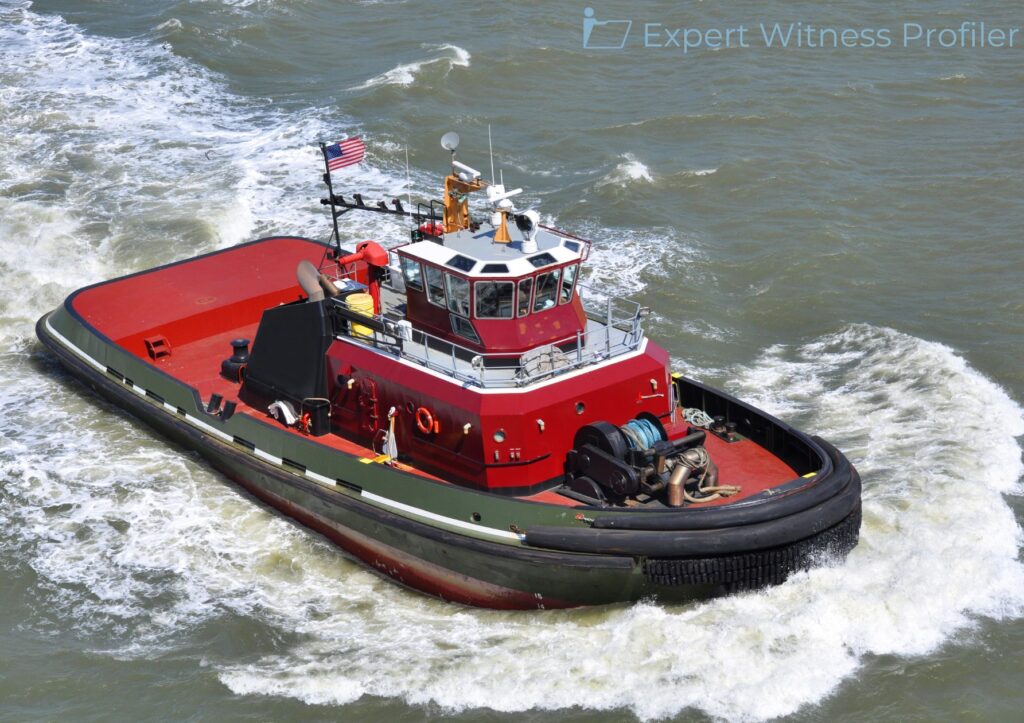
On November 9, 2022, a tugboat operated by Defendant Knight Towing, LLC, began a voyage towing four barges, including the subject DM-110 owned by River Assets, across Mobile Bay en route to Orange Beach.
As the tow progressed, the DM-110 began to take on water and eventually on November 14, 2022, the DM-110 sank in shallow water, where it remained until salvage operations refloated the barge on November 23, 2022.
River Assets avers that the sinking was caused by the crew of the tugboat in that they “failed to exercise reasonable care in securing the tow and towing the DM 110 across Mobile Bay in adverse weather conditions.” Both parties hired surveyors who inspected the DM110 in the few months following the salvage operation to determine the extent of the damage and the cause of the incident.
River Assets sought an order excluding cumulative expert testimony on the part of Defendant, US Specialties Insurance Company. Specifically, US Specialties has offered both Kyle Smith and Guy Plaisance as marine surveyors to offer expert opinions in this matter. According to River Assets, both witnesses have similar qualifications, similar opinions and rely on the same information in forming those opinions.
Marine Surveyor Expert Witness
Kyle J. Smith has been a marine surveyor for over twenty years. He also has extensive experience as a licensed mariner. He has conducted hundreds of marine survey inspections and investigations, including preparing many expert reports.
River Assets filed its motion to exclude the testimony and opinions to the extent that they offer opinions that are cumulative of each other but does not state which expert should be excluded. River Assets did not dispute the admissibility of either expert’s report or potential testimony or dispute their qualifications.
Rather, River Assets contended that the experts’ testimony and opinions should be excluded pursuant to Fed. R. Evid. 403 and 702, arguing that “a Court may exclude relevant evidence if its probative value is substantially outweighed by a danger of wasting time or needlessly presenting cumulative evidence.”
Similarly, USSIC argued that the respective experts have distinct qualifications. Specifically, “a review of Captain Plaisance’s CV reflects that, in addition to being a marine surveyor for over twenty years, he also has extensive experience as a licensed mariner.” By contrast, “Kyle Smith, on the other hand, has 38 years of experience in the marine business, but does not have mariner’s credentials.”
In this case, there is significant disagreement over valuation of damages and the causation of the sinking as it relates to the general condition of the DM-110 at the time of the sinking. Accordingly, there is reasonable probability that the testimony of Smith and Plaisance could be not only distinct but aid the factfinder in distinct issues dispositive to this matter. As a result, the Court found that the experts’ opinions regarding the subject vessel are all clearly relevant and connected to the facts concerning the issue of causation and valuation of damages for the sinking of the vessel.
Held
The Court denied Plaintiff’s motion in limine to exclude duplicative expert testimony.
Key Takeaway:
Expert testimony is properly excluded when it is not needed to clarify facts and issues of common understanding which jurors are able to comprehend for themselves. Though it may be true that the expert opinions both implicate the seaworthiness of the vessel, it does not mean that the information is not relevant to other claims, such as valuation and the condition of the DM-110 in and out of the water following the sinking. As a result, there is reasonable probability that the testimony of Smith and Plaisance could be not only distinct but aid the factfinder in distinct issues dispositive to this matter.
Plaintiff Leflore County Board of Supervisors filed suit against Meritor over a state-approved waste disposal that occurred almost two decades ago.
In 2006, Meritor’s predecessor, ArvinMeritor, sent some waste to Plaintiff’s landfill (the “Landfill”) as part of a state-approved cleanup of the Moose Lodge Road Disposal Area (“MLRDA”). And now, almost two decades later, Plaintiff claimed that the MLDRA waste it received as part of that state-approved cleanup was wrongfully characterized as non-hazardous.
Plaintiff held Meritor responsible for all costs necessitated by the waste disposal at the landfill.
Defendant Meritor, Inc. filed a motion to strike the second supplemental report of Plaintiff’s expert D. Scott Simonton.
Engineering Expert Witness
David Scott Simonton is a Registered Professional Engineer with over thirty (30) years of professional experience in State environmental and public health protection regulatory agencies, private consulting and academia.
The Plaintiff initially submitted Simonton’s expert report on November 25, 2024, which was the deadline for the Plaintiff’s expert designation imposed by the original Case Management Order. Notably, this initial report consisted of a cost estimate of $170,382.50 for “waste characterization,” based on the Plaintiff’s belief that Meritor had disposed of hazardous wastes in a certain limited area of the Leflore County municipal landfill.
Subsequently, on January 29, 2025, after Simonton’s initial expert report was produced, the parties deposed Leflore County’s landfill operator, Waste Connections, whose representative testified that it had no way to determine where the allegedly hazardous waste had been disposed of within the landfill. This testimony, in turn, formed the alleged basis for the opinion offered in Simonton’s second supplemental report.
Following the Waste Connections deposition, Simonton submitted his first supplemental report on April 15, 2025, and later, his rebuttal report on June 5, 2025. However, neither report included a new or revised cost estimate that accounted for Waste Connections’ position that the location of the contaminated soils could not be determined. Thereafter, Meritor deposed Simonton on June 30, 2025, and the discovery period closed on August 8, 2025.
Finally, on August 29, 2025, the Plaintiff submitted Simonton’s second supplemental report—the subject of the present motion—which included a “Remedial Investigation cost estimate” totaling $3,163,902.50. This report sought to address the alleged uncertainty regarding the location of the contaminated soil within the Leflore County municipal landfill and justified the need for an expanded investigation involving increased sampling.
Analysis
The Plaintiff’s expert designation deadline was November 25, 2024, and any supplement to Simonton’s expert report was due no later than the discovery deadline of August 08, 2025.
I. Whether the second supplemental report contains new opinions
The Plaintiff argued that the estimate in the second supplemental report “was merely a recalculation of [Simonton’s] mathematical formulas based on new information, i.e., Meritor’s lack of knowledge of where it caused the hazardous wastes to be dumped.” However, Meritor contended that the supplemental report introduced “an entirely new theory of damages” that had not been previously disclosed and lacked good cause. The Court agreed.
Simonton’s second supplemental report presented a Remedial Investigation (“RI”) cost estimate based on entirely new criteria and considerations—all known to the Plaintiff as early as January 2025 but not included in the initial or previously supplemented reports.
Regardless of whether the earlier reports contained opinions about the need for an RI (a point the parties dispute), the second supplemental report offered an entirely new cost estimate based on Waste Connections’ opinion that the location of the contaminated soils at the municipal landfill could not be determined. This stood in contrast to the prior assumption that Meritor had disposed of hazardous wastes only in a certain limited area. As a result, the Plaintiff’s attempt to introduce new opinions through an untimely supplement was deemed improper.
II. Whether the new opinions are substantially justified or harmless
The Plaintiff offered no explanation for the failure to supplement Simonton’s opinion at any point during the seven-month period after Waste Connections’ deposition and before the expiration of the discovery deadline. This delay certainly mitigates against the alleged importance of the opinion. Despite the Plaintiff’s arguments to the contrary, the prejudice to Meritor is clear: the second supplemental opinion is neither a minor amendment nor a recalculation. The discovery period is closed, and the motions deadline has passed. Meritor has had no opportunity to seek discovery regarding this opinion or have its own expert review and respond in their report. Finally, to continue the trial setting and reopen discovery to mitigate the prejudice to Meritor would require the Court to ignore the Plaintiff’s failure to establish the first three factors.
The Court concluded the untimely disclosure of Simonton’s second supplemental report was not substantially justified or harmless.
Held
The Court granted Meritor’s motion to strike the second supplemental report of Plaintiff’s expert D. Scott Simonton.
Key Takeaway:
The second supplemental report of Simonton contained opinions markedly different from those set forth in the original, first supplemental, and rebuttal reports and was made beyond the permissible deadline for supplementing expert disclosures under Rule 26.
Case Details:
Case Caption:
Leflore County Board Of Supervisors V. Meritor, Inc. Et Al
Docket Number:
4:24cv33
Court Name:
United States District Court, Mississippi Northern
It all started when the Plaintiffs, Lance and Kevin McCulloch, purchased Chandler Gas and Store on May 27, 2021. They alleged that the Marathon’s mandated point-of-sale, back-office management system, and computer system (collectively, the “Required Operations System’), which controlled both the gas pumps and registers in the C-store, frequently malfunctioned.
The Plaintiffs claimed that they have lost profit in several areas due to the malfunctioning of the Marathon operations system.
Both sides filed expert-exclusion motions: Chandler Gas filed a motion to exclude the opinions of John Umbeck and Marathon filed a motion to exclude the opinions of Max McDevitt.
Economics Expert Witnesses
John R. Umbeck is a professor of economics at Purdue University who has more than 40 years of experience researching the petroleum industry and the marketing of petroleum products.
Max J. McDevitt is an economist at the consulting firm, The Fontana Group, Inc., and has “assisted with” over two dozen cases related to franchisee issues, generally in the automotive industry. He has a doctorate in economics from Boston University.
Umbeck explained that he was retained by Marathon to determine whether Chandler Gas was profitable and the amount of damages the business might have incurred due to the alleged point-of-sale problems. Based on his review of “all of the available information,” Umbeck drew eight “conclusions,” which the Court will treat as the opinions Umbeck hopes to offer at trial:
The Chandler station was profitable when operated by Prima Investments.
The Chandler station was profitable when operated by the McCullochs.
The financial data shows no evidence of any significant financial harm to the station during the time of the alleged failure of the operating system.
The actual computer problems, using Verifone data, shows no evidence of any significant loss of gasoline sales.
The customer reviews show no evidence of customers being upset about any inconvenience caused by the computer problems.
Based on opinions 3–5, the alleged failure of the operating system would have no significant negative impact on the expected future revenues or the market value of the business when sold.
The business experienced a significant decrease in the volume of fuel it sold, compared to the sales when operated by Prima. However, these lost fuel sales were caused by the new retail pricing policy implemented by the McCullochs and not the alleged problems with the operating system.
Any loss in value the business might have incurred during this time period was caused by the Plaintiffs.
b. Analysis
Opinions 1 and 2 Regarding Profitability
Chandler Gas argued Umbeck’s first two opinions should be excluded because they are not relevant.
Those opinions addressed the profitability of the station under its prior owner (Prima) and then after Chandler Gas took over. Chandler Gas claimed hundreds of thousands of dollars in damages based on alleged lost sales volume. Umbeck’s opinion that the station was profitable during the relevant period and that observed volume declines were more consistent with pricing decisions than computer outages bore directly on causation and damages.
Evidence of profitability is relevant because it provides economic context against which the jury can assess the plausibility and magnitude of Chandler Gas’s claimed losses. A central issue to this case is whether any alleged operating system outages actually caused a measurable financial impact. Evidence showing the operations before Chandler Gas assumed control and that the business remained profitable during the relevant period will assist the jury in understanding the evidence or determining a fact in issue. And although profitability alone does not disprove damages, it is probative of whether the alleged operating system issues caused significant economic harm, and the weight to be given to that evidence is a matter for the jury, not a basis for exclusion.
The Court found that Umbeck’s testimony provided relevant background and probative evidence that may assist the jury in evaluating the scale of Chandler Gas’ claimed damages.
Opinions 3 and 4 Regarding Operating System Failures
Chandler Gas contended that Umbeck failed to consider relevant evidence about the frequency and severity of operating system failures or outages, making his opinions unreliable.
To determine the impact the operating system had on sales, Umbeck looked exclusively to “a Verifone log” that included 75 problems each assigned a unique case number. He did not explain why he only looked at Verifone logs and did not consider other sources that could have demonstrated system outages.
The majority of Verifone problems were, according to Umbeck, “resolved in 5 minutes or less.” Apparently based solely on his personal experience with computer problems, Umbeck contended that customers did not leave a station and go elsewhere if a problem can be resolved within five minutes. Umbeck provided no evidentiary basis for this five-minute view of consumer behavior. Umbeck then identified the problems that “took more than 15 minutes to resolve.”
As a result, the Court refused to admit Umbeck’s opinions based on his “analysis of the actual computer problems.”
Even if Umbeck were qualified to analyze computer problems—which he is not—he has neither demonstrated any expertise in consumer behavior nor provided a basis for his assumption that a delay of less than five minutes would have no effect.
Finally, Umbeck seemed to expect the Court and factfinders to draw meaningful conclusions from a chart containing gross fuel sales revenue, C-store revenue, and total sales revenue. Umbeck presented a chart with these figures and blankly states “the table shows no significant decline in revenues from fuel sales or store sales.”
Yet there is zero explanation or analysis to show why differences the chart shows in revenue should be considered insignificant. Umbeck thus provided no reliable reasoning supporting his conclusion that no significant loss of revenues occurred over the relevant time period.
Opinion 5 Regarding Customer Reviews
Umbeck obtained 36 customer reviews through Google Maps from the relevant period and concluded that there is no evidence of customers being upset about the computer problems, and thus “no evidence of a significant loss of business due to the alleged computer problems.”
The Court found that Umbeck’s conclusion did not meet the Daubertstandard. Even assuming the accuracy of the customer reviews, the Court determined that Umbeck had provided no reliable method for extrapolating economic harm from qualitative anecdotal feedback. His methodology appeared to consist of reviewing a relatively arbitrary collection of consumer reviews of Chandler Gas, and nothing more. The Court further found that nothing in Umbeck’s background qualified him to perform a qualitative analysis of customer reviews obtained through his own unexplained research on Google Maps.
Opinion 6
Opinion 6 relied entirely on excluded Opinions 3 through 5, and therefore depends on unreliable and inadmissible testimony. Although inadmissible evidence may be considered in formulating expert opinions, Umbeck may not rely on evidence that itself is unreliable.
Umbeck’s conclusion depends substantially on Opinions 3-5, which have been excluded as methodologically unreliable. Because the foundation for Opinion 6 is unreliable and that opinion is otherwise broad and unsupported by independent valuation methodology, the Court excluded it.
Opinion 7 Regarding the Causation of Lost Profits
Umbeck’s opinion 7 concluded that any decrease in fuel sales volume during the relevant period was caused by Chandler Gas’s pricing decisions and not the alleged operating system failures. Chandler Gas argued that this opinion—which is based primarily on price differentials between Chandler Gas and the nearby Circle K station—should be excluded because it is “flawed and unreliable” and prejudicial.
To provide support for Opinion 7, Umbeck used data on the station’s average monthly retail prices before, during, and after Chandler Gas’s ownership. Umbeck first compared Chandler Gas’s prices with those of its eight closest competitors, which seems to show nearly identical pricing between 2018 and 2024. But then Umbeck provided stronger support for his conclusions. He demonstrated a gradual decline in monthly average gasoline sales for Chandler Gas and a gradual increase in the differential between the retail price offered by Chandler Gas and the wholesale price at which it purchased the gasoline.
Finally, Umbeck compared the monthly price of Chandler Gas with a competitor Circle K station just under one mile away. Umbeck’s data showed that Chandler Gas’s average monthly retail price was often a few cents below Circle K’s price for the last half of 2021, but several cents higher than Circle K’s in 2022 (and even up to more than fifteen cents higher in November 2022). In the same chart, Umbeck also showed a mostly-gradual decline in the average monthly volume of gasoline sold by Chandler Gas.
From this data, Umbeck concluded the retail prices set by Chandler Gas—and not the computer problems—caused the volume of gasoline sales to drop. This testimony is relevant to causation and damages because it offers an alternative explanation for the decline in sales volume, which is a key contested issue in the case.
Opinion 8 Regarding Plaintiffs Having Caused All Loss in Value
Umbeck’s opinion 8 stated that “any loss in value the business might have incurred during this time period was caused by the Plaintiffs.”
Unlike Umbeck’s pricing analysis in opinion 7, Umbeck did not identify a valuation methodology or provide an evidentiary basis for this opinion. Umbeck did not perform a discounted cash flow analysis, comparable sales analysis, or any other recognized valuation technique. Nor did he provide an economic model linking the alleged causes (e.g., pricing decisions) to any measurable diminution in business value. In fact, Umbeck’s report included essentially no discussion or reasoning to support this opinion; there was not a single sentence about the business value or how Chandler Gas might have caused any loss in value.
The Court found this opinion too unreliable to satisfy the necessary standard because it did not have an adequate analytical or methodological basis.
Rebuttal Report
Chandler Gas also objected to portions of Umbeck’s rebuttal report, arguing that Umbeck impermissibly exceeded the scope of proper rebuttal. Accordingly, the Court declared that Umbeck would be permitted to offer rebuttal testimony only to the extent it directly responded to or contradicted McDevitt’s opinions.
II. Marathon’s Motion to Exclude McDevitt
McDevitt intended to introduce the following opinions at trial:
Chandler Gas lost an estimated 907,708 gallons of fuel sales between June 2021 and July 2024
Chandler Gas lost an estimated $1,731,972 in C-Store sales between June 2021 and July 2024
Chandler Gas lost an estimated $333,040 in fuel profits between June 2021 and July 2024
Chandler Gas lost an estimated $388,532 in C-Store profits between June 2021 and July 2024
Chandler Gas lost an estimated $721,572 in total profits (combined fuel and CStore) between June 2021 and July 2024
Chandler Gas’s estimated loss of value on the sale of business assets was $784,604
b. Analysis
Marathon challenged McDevitt’s qualifications on the basis he lacked specialized experience in retail gasoline markets and the petroleum industry.
However, the Court found that McDevitt is not going beyond his specialized field of applied economics. Though he did not appear to have extensive experience in the petroleum industry, he did have the necessary background to conduct damages modeling and offer opinions on lost profits, sales, and value.
Marathon also challenged McDevitt’s methodology. Marathon contended that McDevitt’s damages opinions were based on biased assumptions, particularly that all lost sales were caused by operating system glitches rather than price increases or competition. The Court found, however, that McDevitt’s clearly stated assumptions did not extend into territory that would warrant excluding his testimony. McDevitt had reviewed historical data, incorporated alternative pricing scenarios, and based his damage calculations on the station’s actual financial records.
The record indicated at least some basis for McDevitt’s assumptions that the operating system malfunctions resulted in declined sales and values.
Marathon further asserted that McDevitt ignored basic principles of economics like the law of demand. Though Marathon may contend that McDevitt’s analyses were flawed because Chandler Gas raised its prices above competitors, this argument did not render McDevitt’s testimony inadmissible. He did not rely on unsupported speculation and the fact that he did not conduct independent causation analysis is no issue.
Lastly, Marathon argued that McDevitt’s opinions should be excluded because the opinions would mislead the jury and cause unfair prejudice.
The Court held that McDevitt’s calculation of damages has probative value given the issues at hand, and any risk of prejudice or confusion can be mitigated through cross-examination, the presentation of Umbeck’s competing analysis, and appropriate jury instructions.
Held
The Court granted in part and denied in part Chandler Gas’ motion to exclude the opinions of John Umbeck.
The Court denied Marathon’s motion to exclude the opinions of Max McDevitt.
Key Takeaway:
Expert testimony that helps the jury evaluate competing causal explanations for damages claims is within the scope of Rule 702.
Economic experts like Umbeck may rely on historical price data and market comparisons to form opinions about the effect of pricing on sales. Here, Umbeck presents data showing evidence of patterns between price changes and volume shifts. Since the analysis is informed by Umbeck’s background as an economist and relevant experience within the petroleum industry, it sufficiently satisfies the Daubert standard.
Case Details:
Case Caption:
Chandler Gas & Store Inc. V. Treasure Franchise Co. LLC
Docket Number:
2:23cv400
Court Name:
United States District Court for the District of Arizona